- Categories
- Categories
Last 5 Viewed
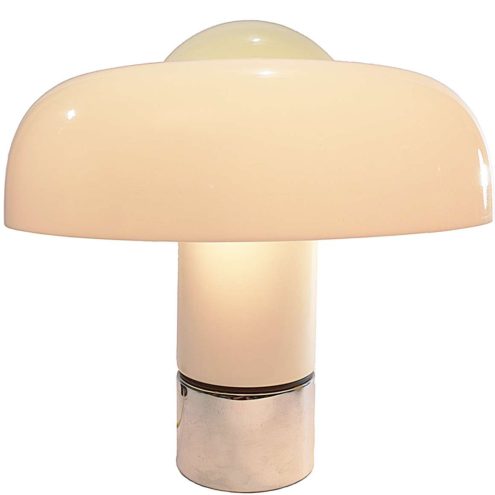
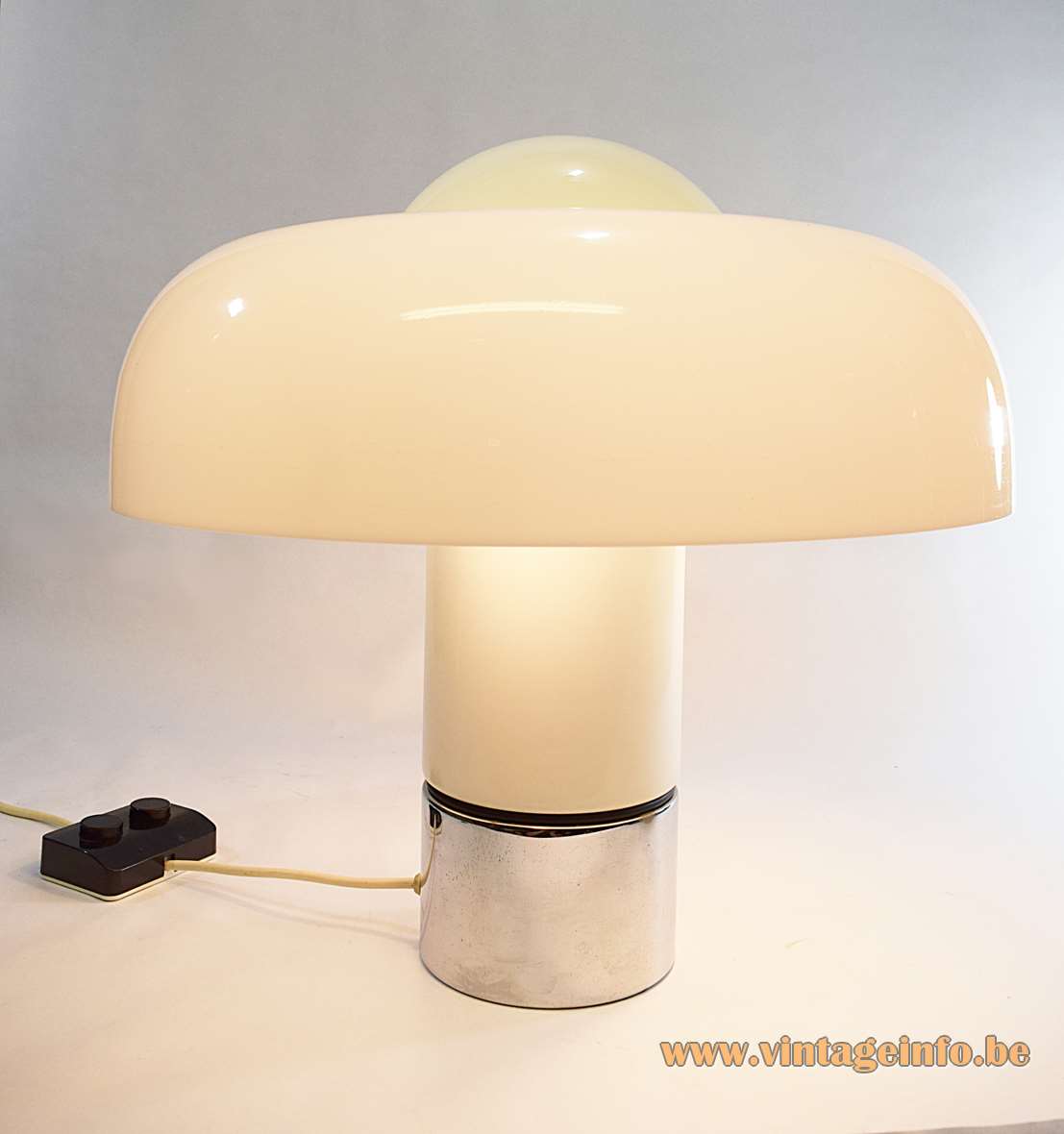
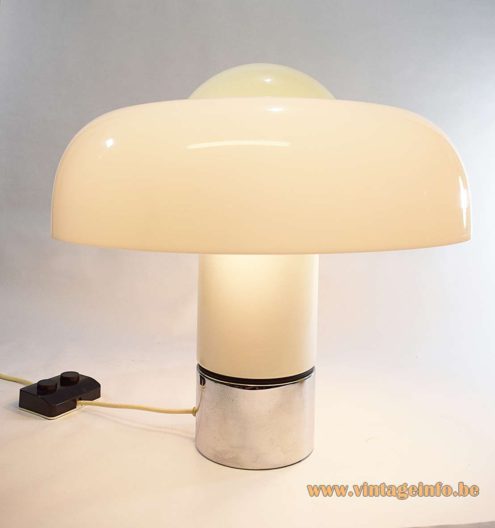

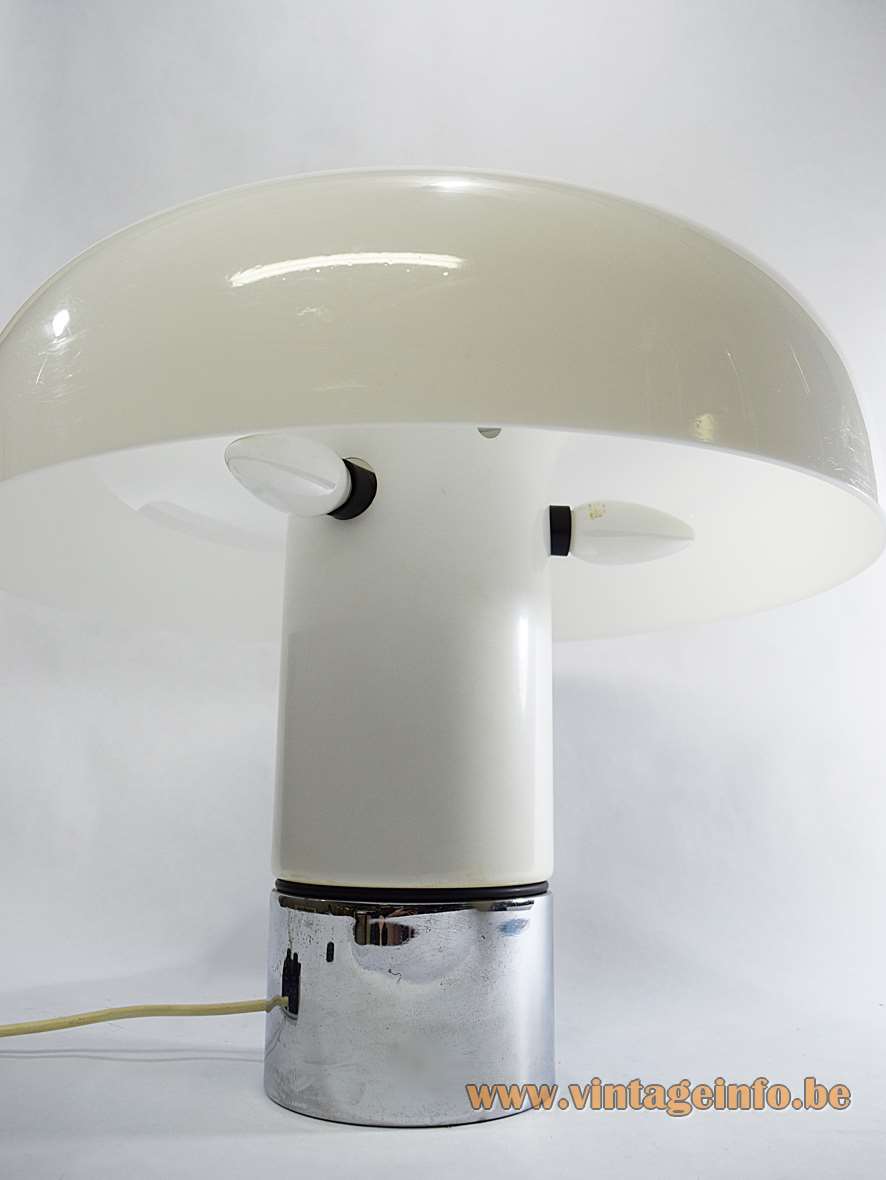

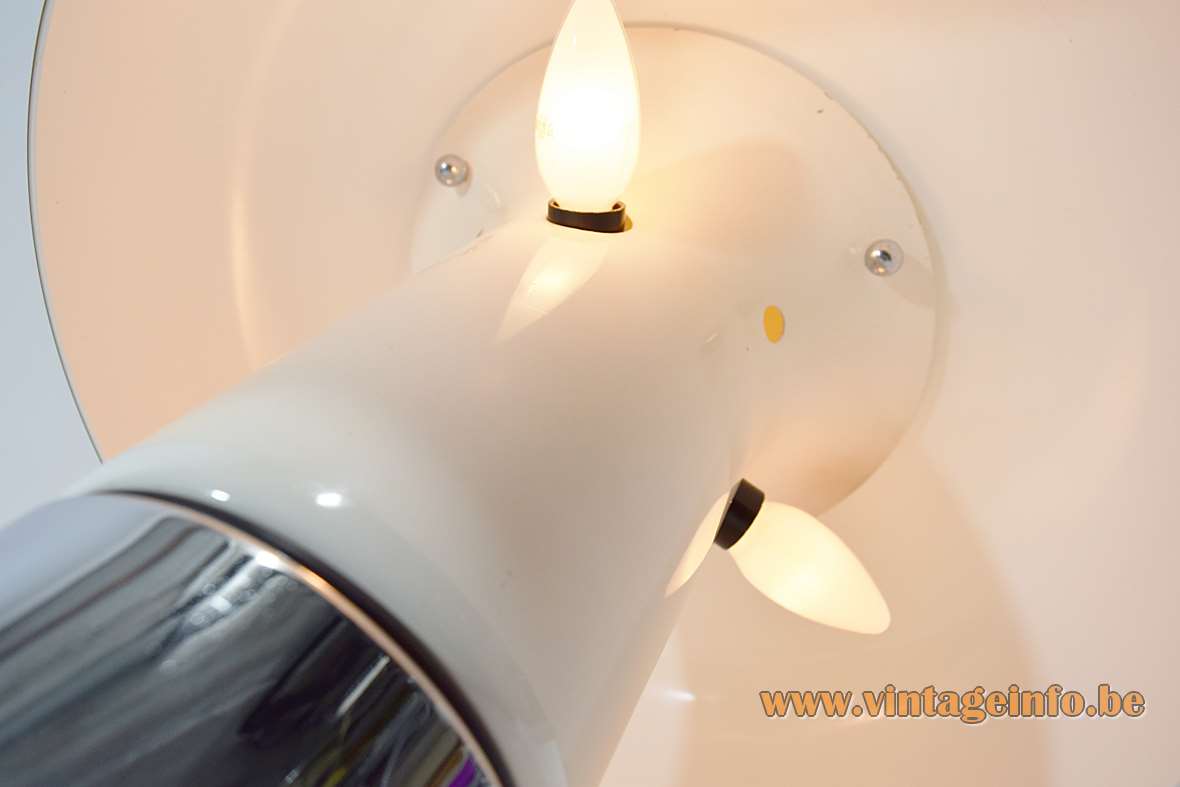

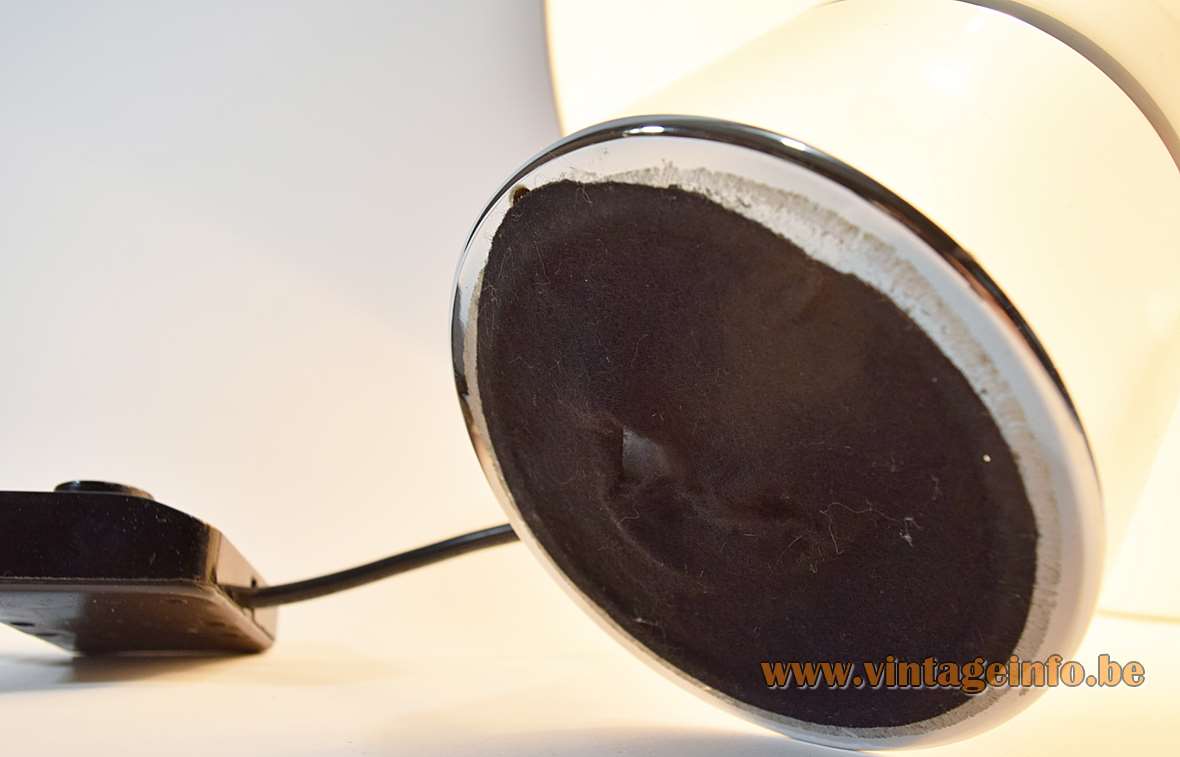
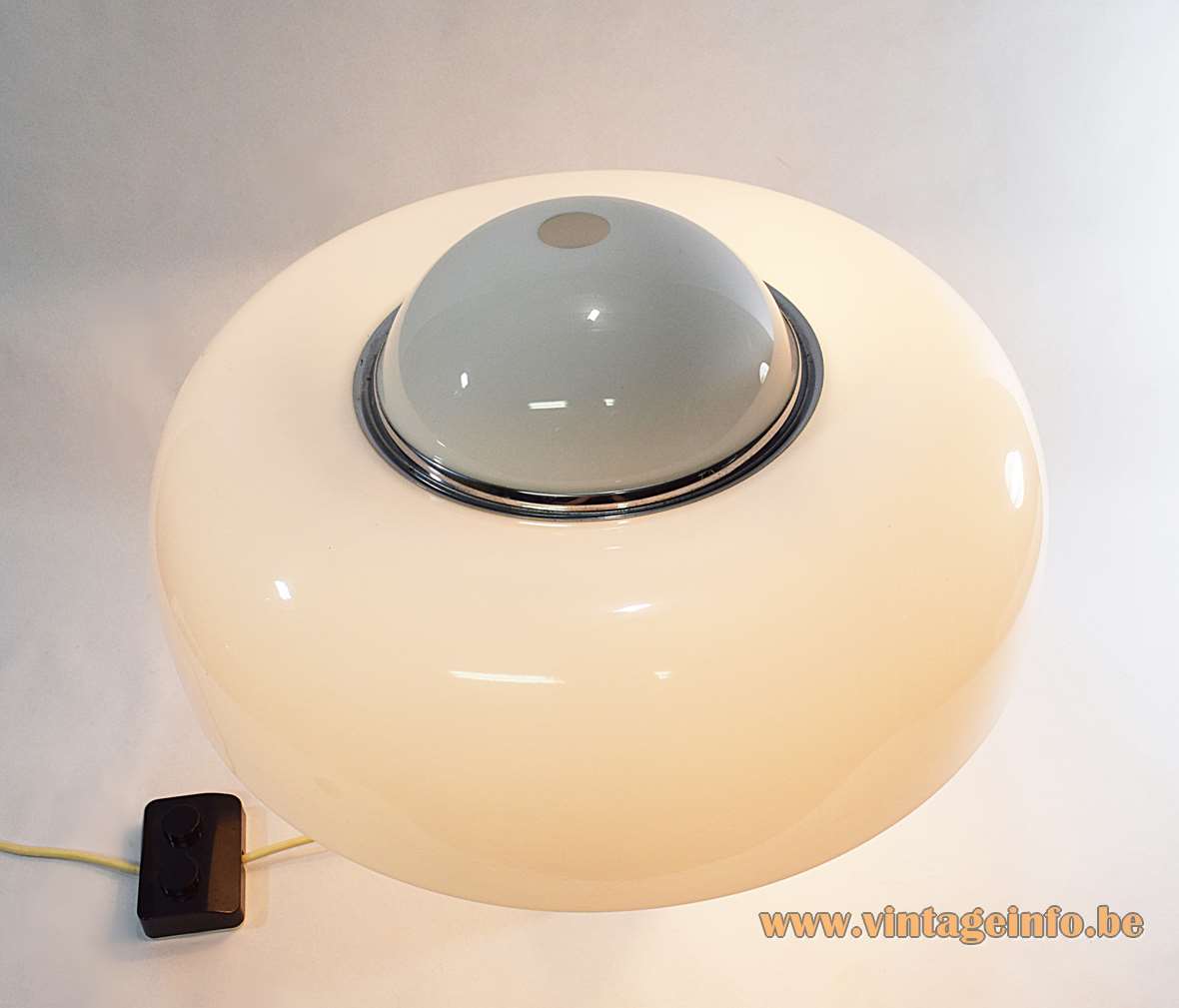
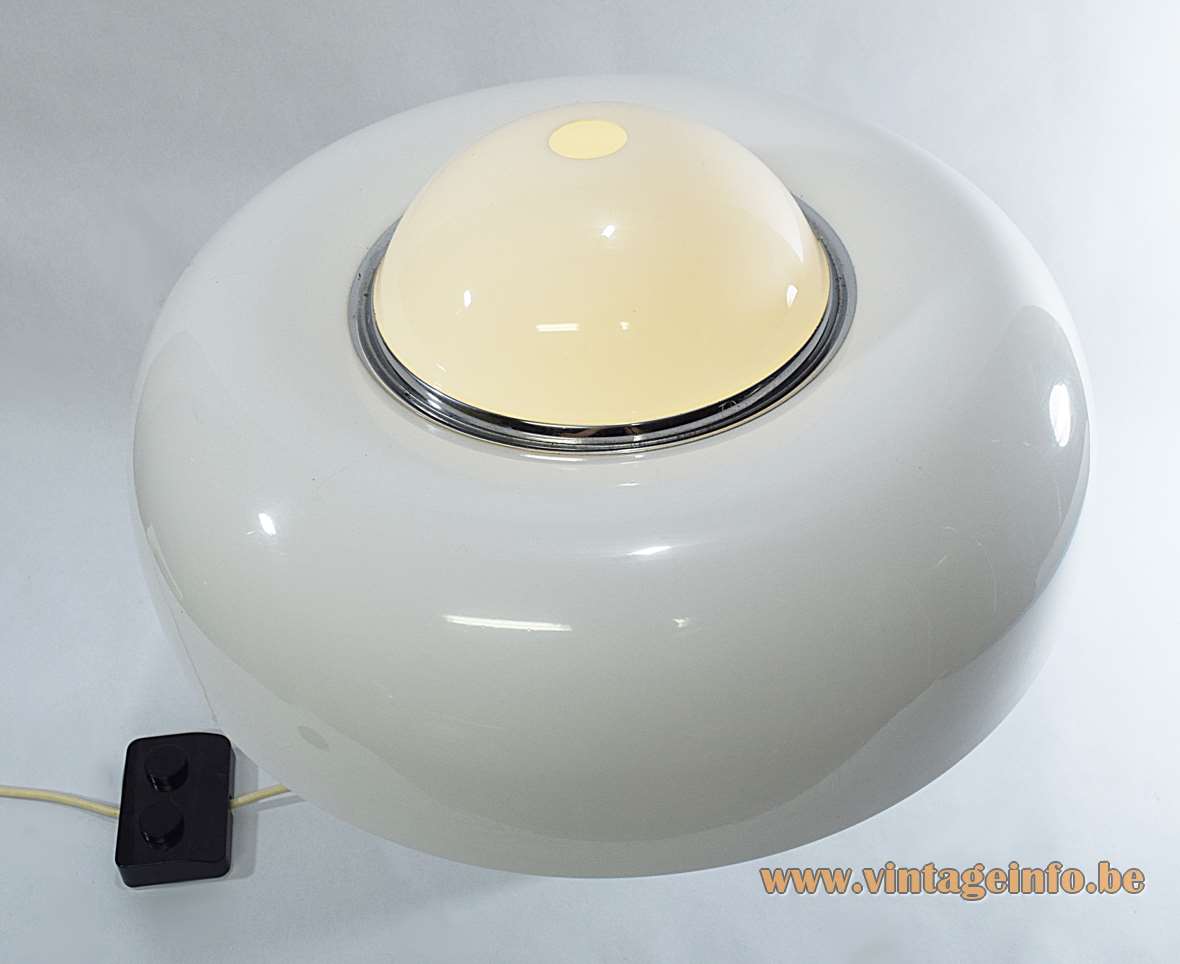

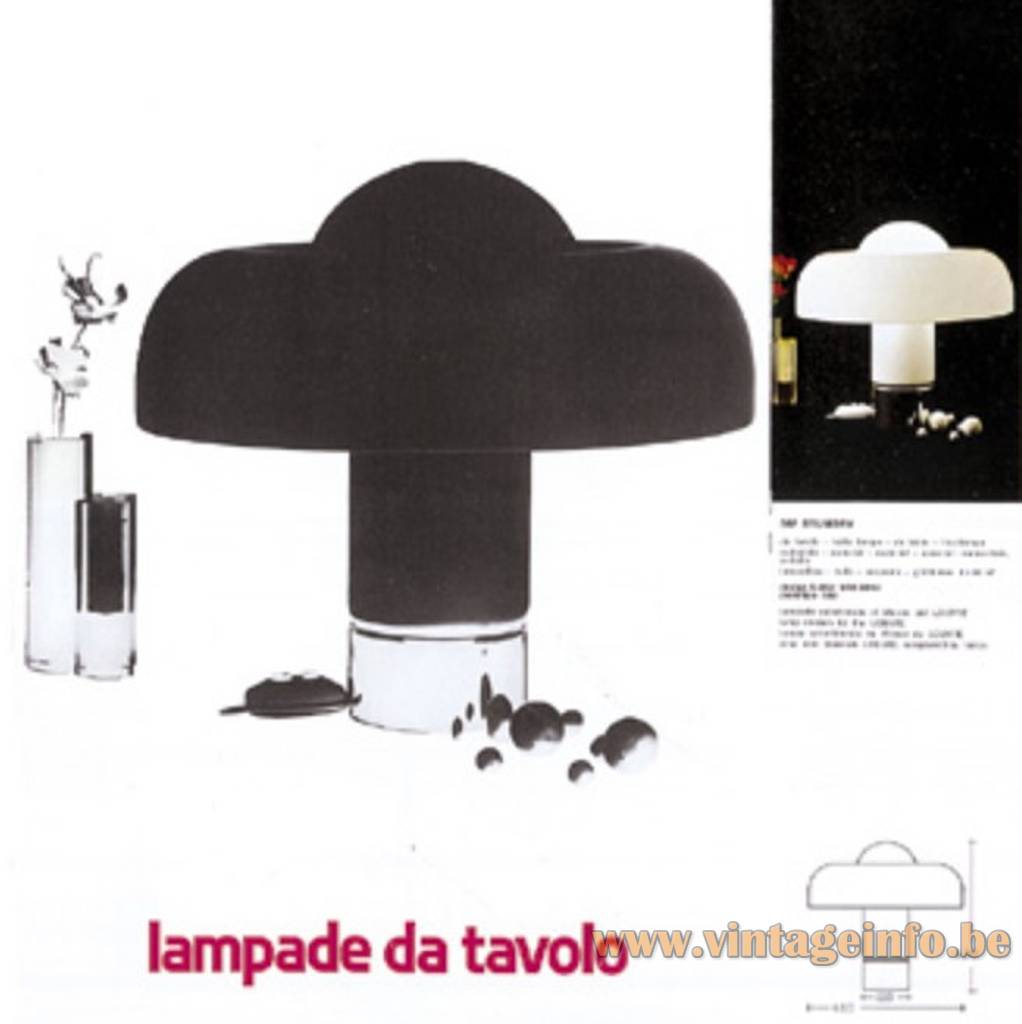
White Harvey Guzzini Brumbry Table Lamp – 1970s Catalogue Picture
In this catalogue photo the Brumbry table lamp together with the Play table lamp, a design by Luciano Buttura. On the same page a sketch with the dimensions of these lamps.
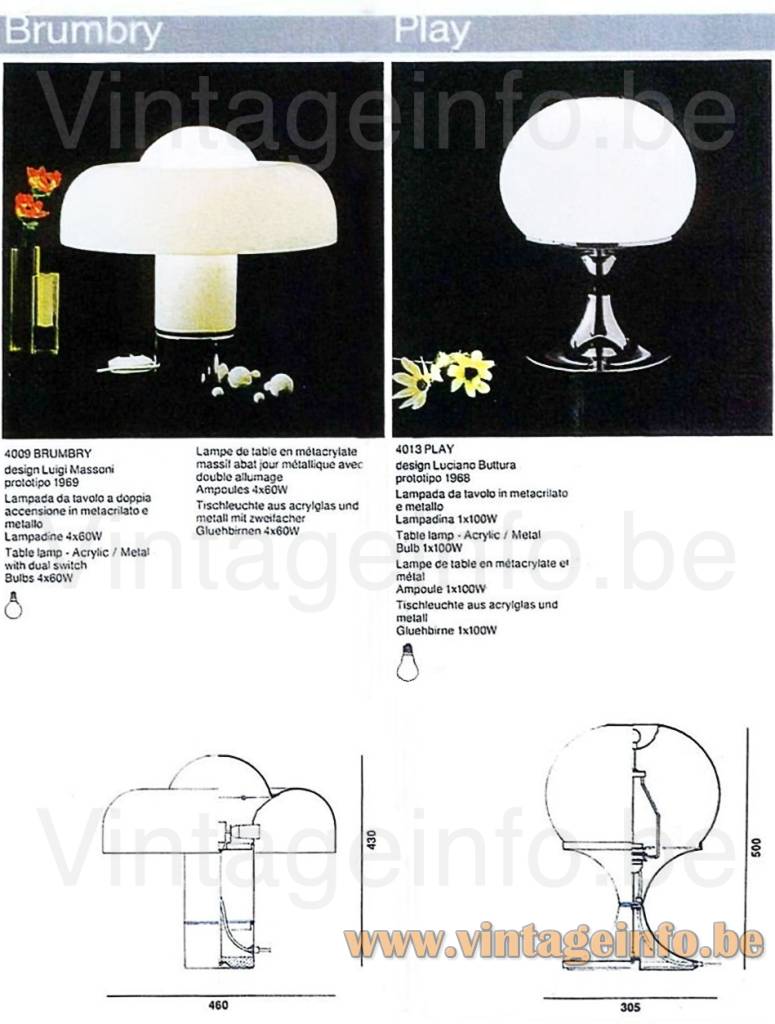
White Harvey Guzzini Brumbry Table Lamp – 1970s Catalogue Picture
Stylized image of the Brumbry table lamp with a photo of a white version and a sketch.
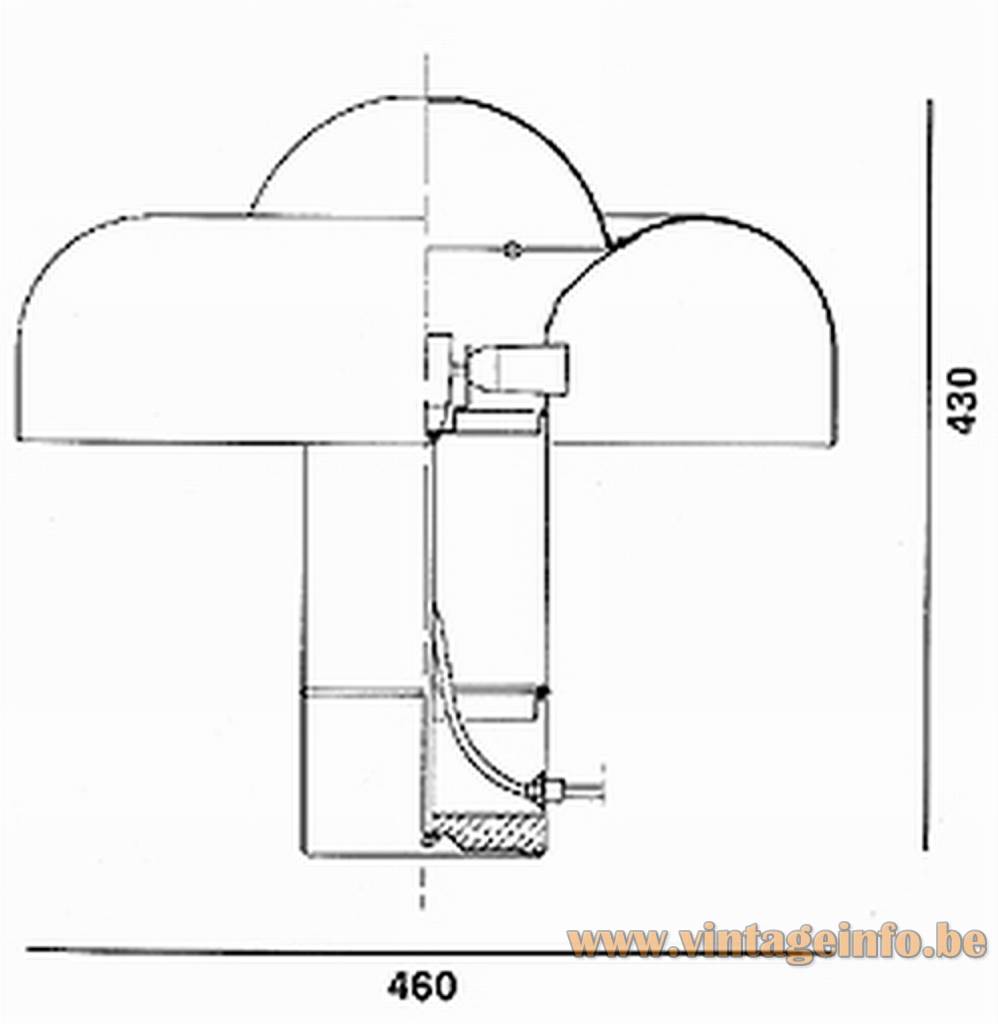
White Harvey Guzzini Brumbry Table Lamp – Sketch
Dimensions and cross-section of the Brumbry table lamp.
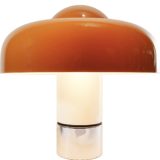
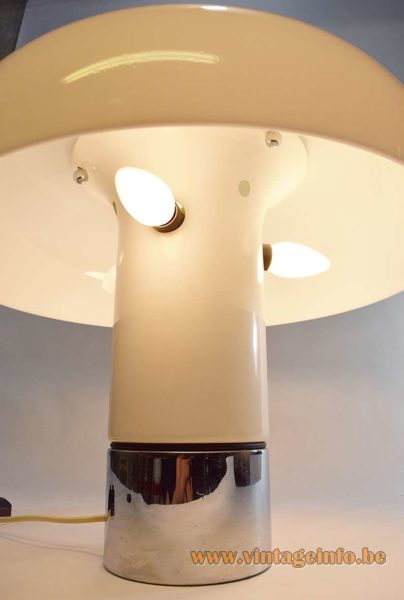
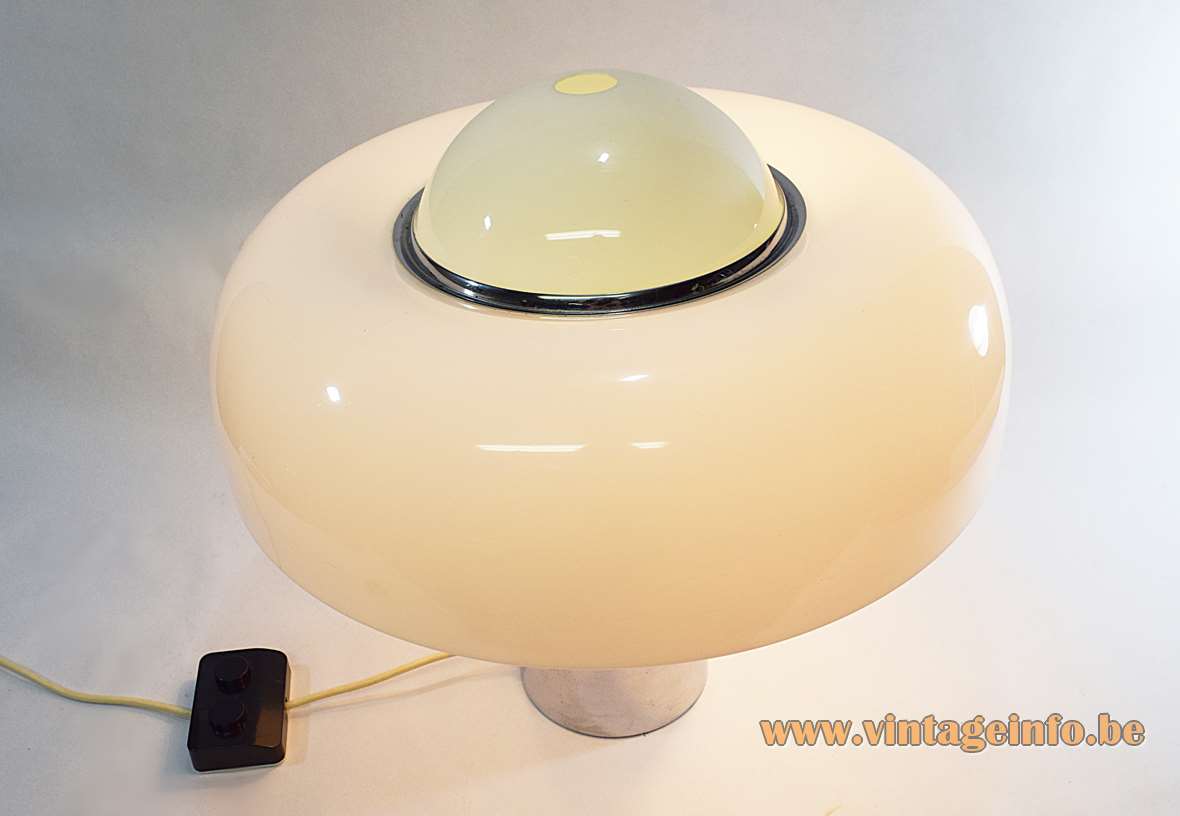
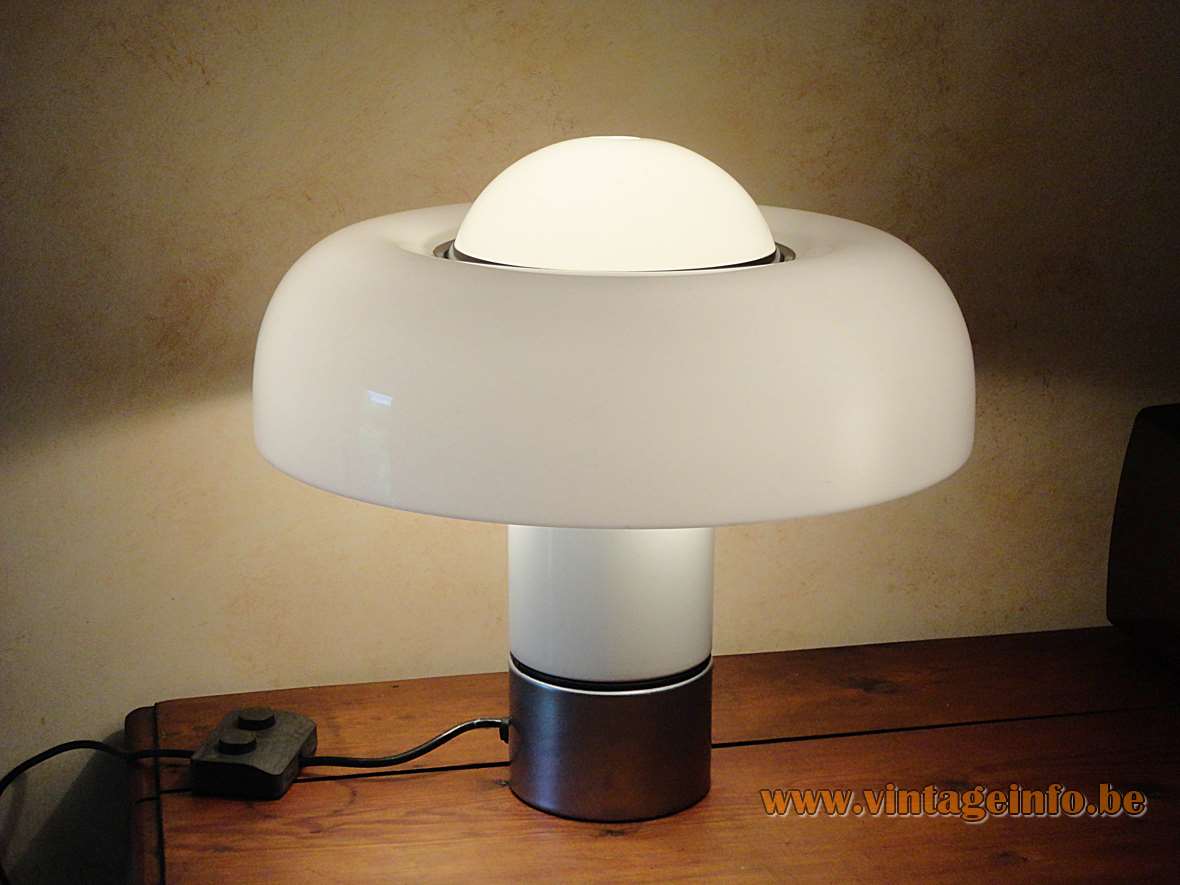
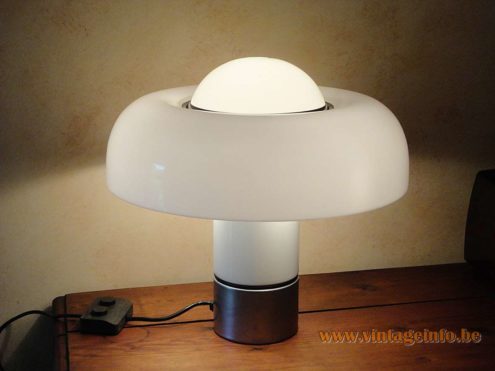
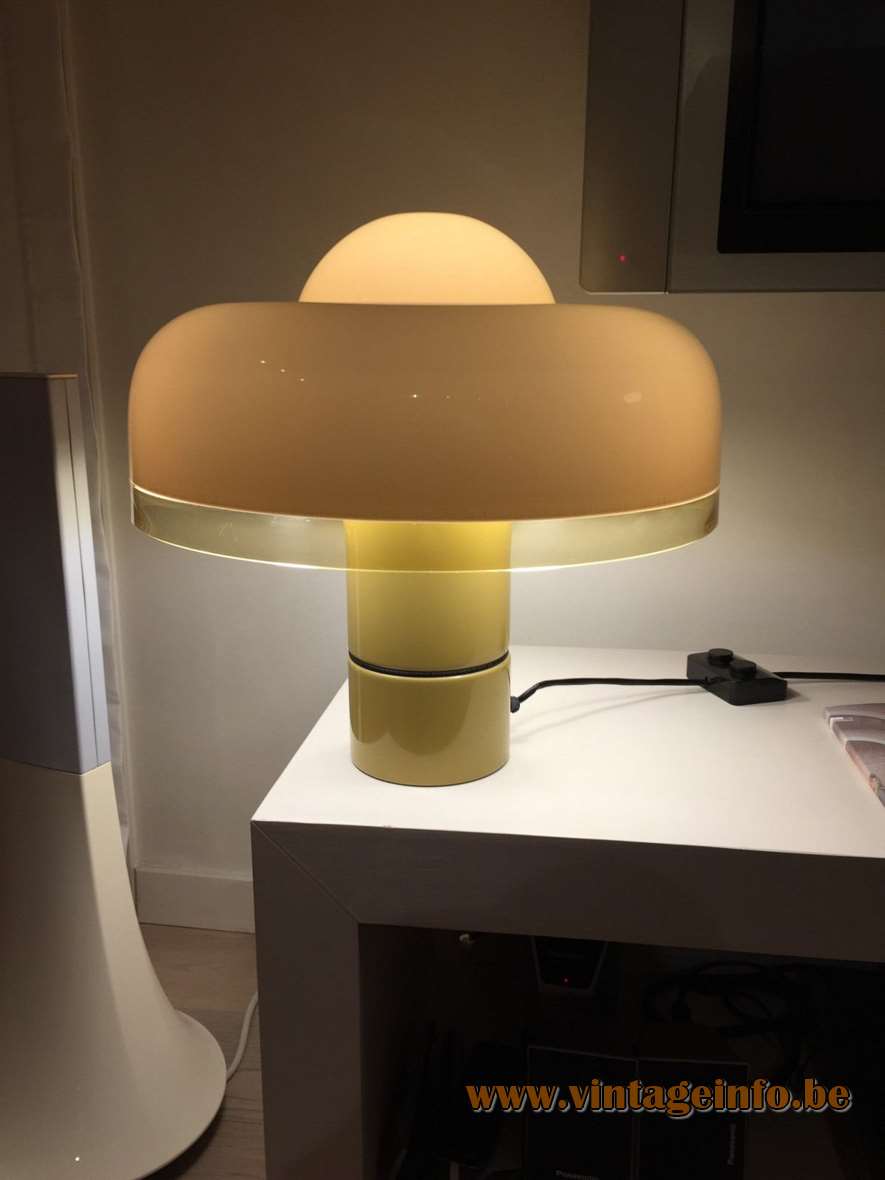
White Harvey Guzzini Brumbry Table Lamp
This is a white Harvey Guzzini Brumbry table lamp from around 1980 with an unusual lampshade; one of the examples for combining translucent and white, also used for the Baobab lamp series (1978-1992).
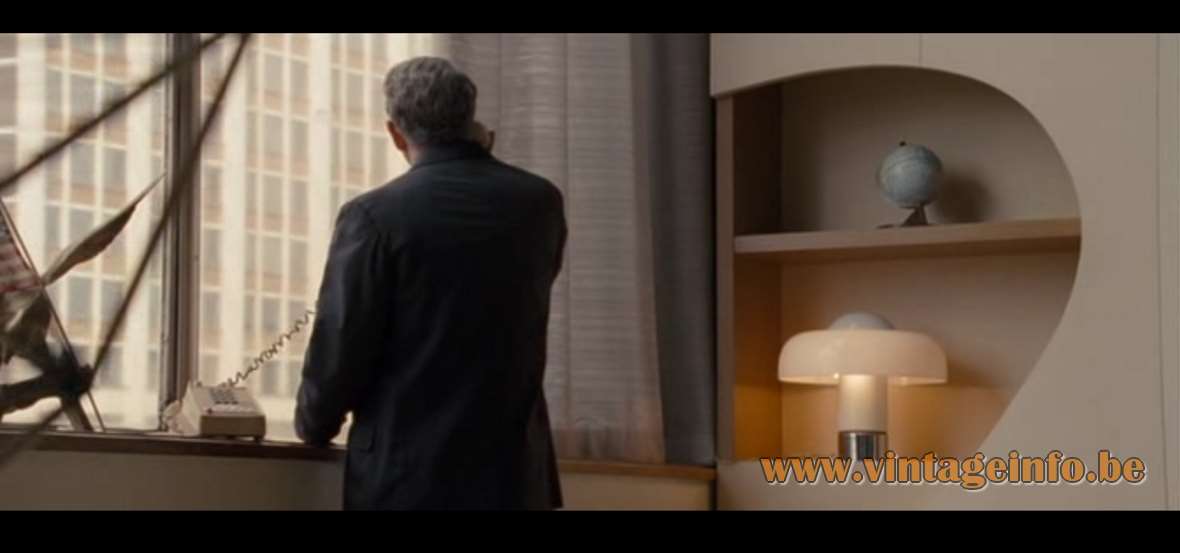
Lamps In The Movies
Made In Dagenham (2010)
A white Harvey Guzzini Brumbry table lamp was used as a set decoration in the 2010 British film “Made In Dagenham“, a dramatization of the 1968 strike at the Ford car plant in the city of Dagenham, where female workers walked out in protest against sexual discrimination. This scene is in the headquarters of Ford in Michigan, USA. A little mistake, because the Brumbry went in production in 1969…
Paris (2015 – 2016)
A white Harvey Guzzini Brumbry table lamp was used as a set decoration in the 2015 – 2016 French mini series Paris in the official residence of the French prime minister.

L’Instinct de Mort – Public Enemy Number One (2008)
A white Harvey Guzzini Brumbry table lamp was used a prop in the 2008 movie L’Instinct de Mort – Public Enemy Number One (Part 2). The story of french gangster Jacques Mesrine: Public Enemy N°1.
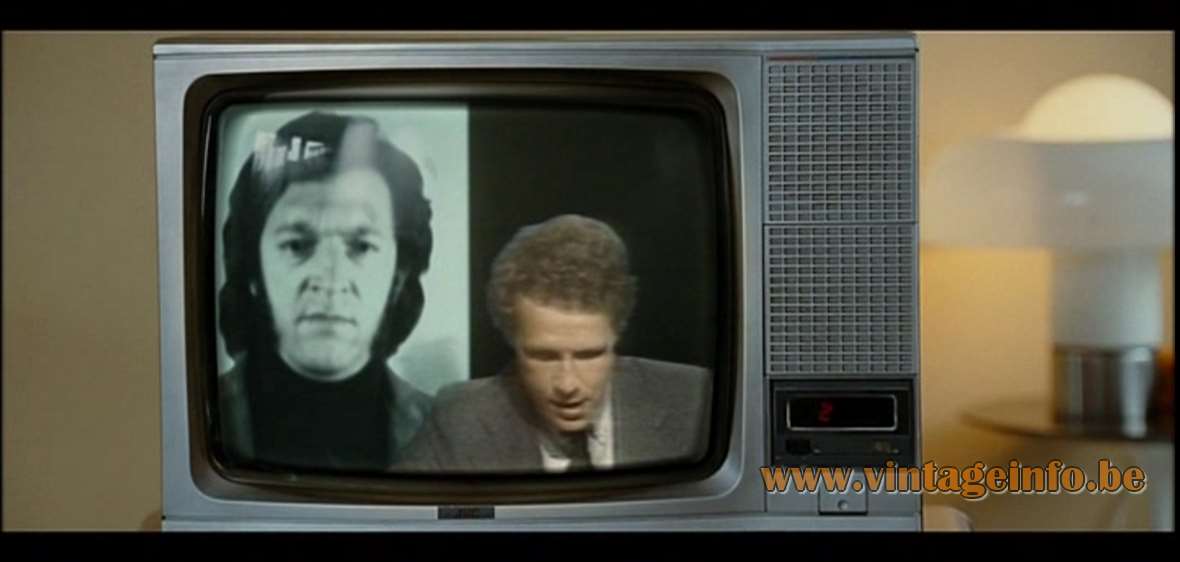
Un Flic (1972)
A Harvey Guzzini Brumbry table lamp was used as a set decoration in the 1972French crime movie Un Flic (Dirty Money). Starring Catherine Deneuve and Alain Delon.
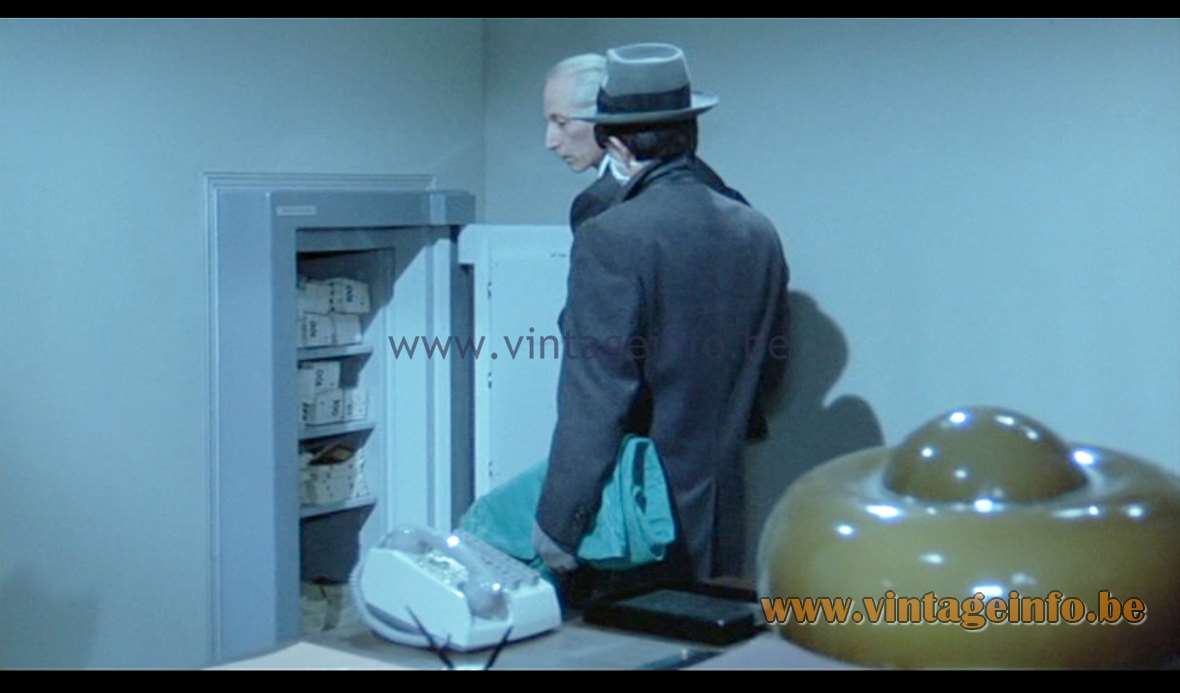
36 Quai des Orfèvres (2004)
A white Harvey Guzzini Brumbry table lamp was used as a set decoration in the 2004 French crime film 36 Quai des Orfèvres.Starring Daniel Auteuil and Gérard Depardieu.
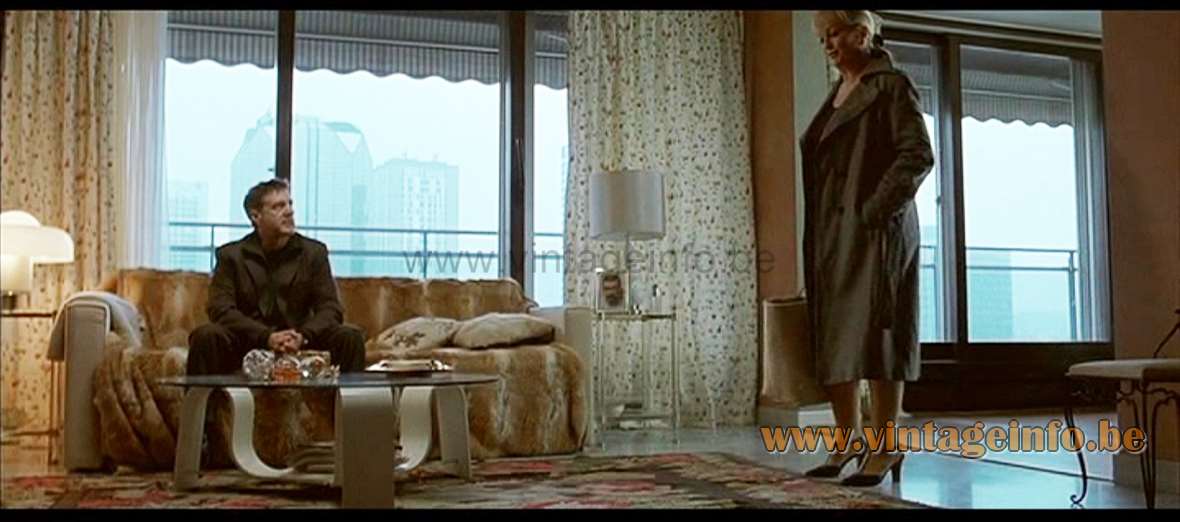
Banlieue 13 (2004)
A white Harvey Guzzini Brumbry table lamp was used as a set decoration in the 2004 French action film Banlieue 13 (District 13). Directed by Luc Besson.Starring David Belle and Cyril Raffaelli.
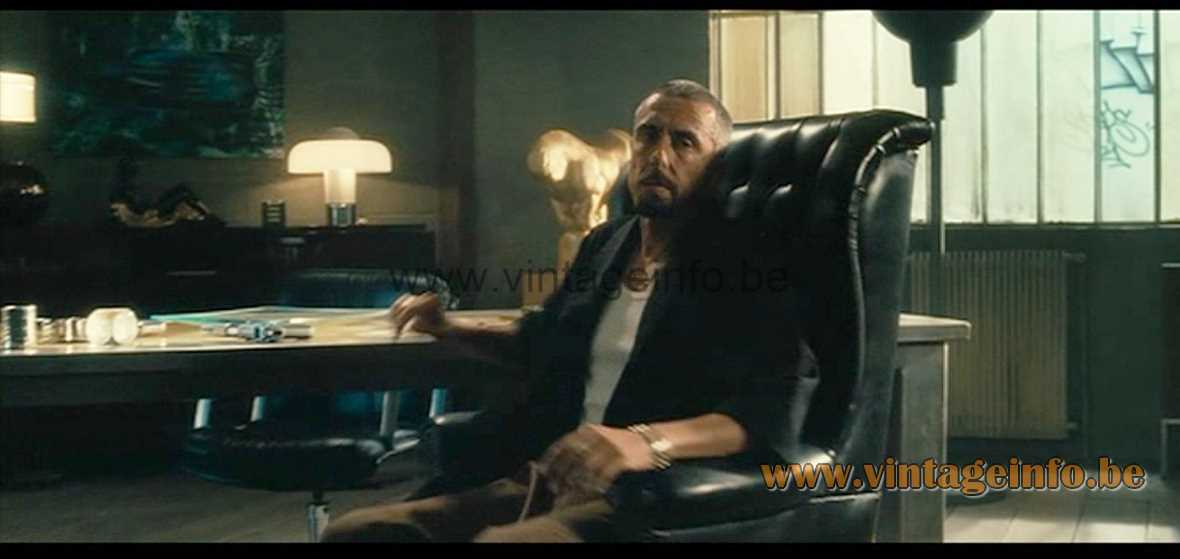
Prête-Moi Ta Main (2006)
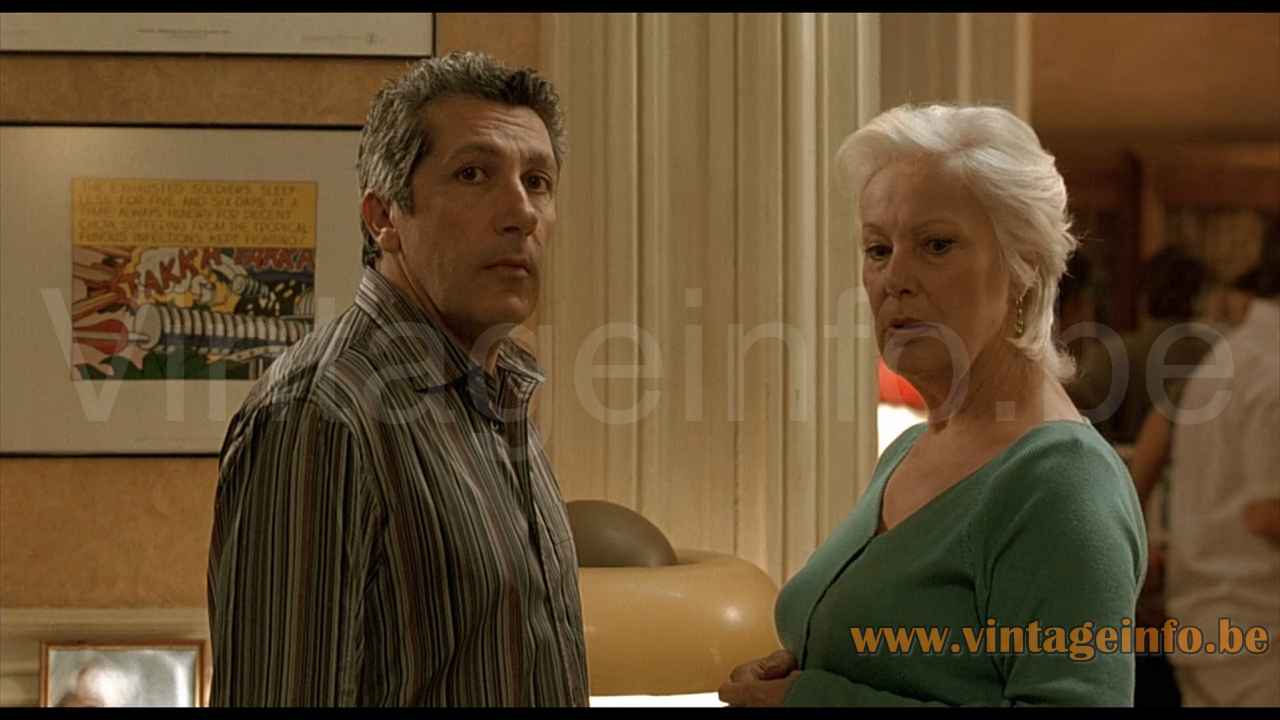
A Harvey Guzzini Brumbry table lamp was used as a set decoration in the 2006 French romantic comedy film Prête-Moi Ta Main (I Do). Starring Alain Chabat, Charlotte Gainsbourg and Bernadette Lafont.
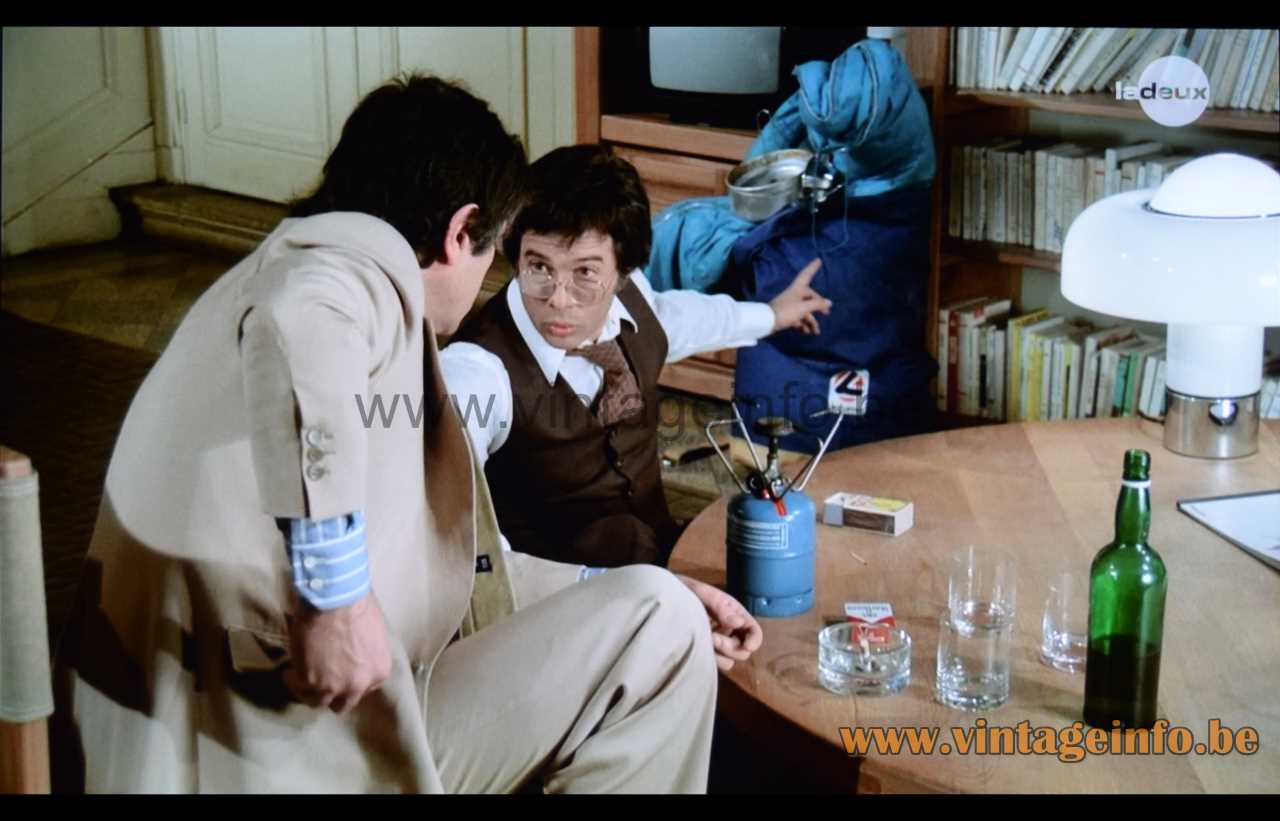
Un Éléphant Ça Trompe Énormément (1976)
A white Harvey Guzzini Brumbry table lamp was used as a set decoration in the 1976 French comedy film Un Éléphant Ça Trompe Énormément (Pardon Mon Affaire). Starring Jean Rochefort, Claude Brasseur and Guy Bedos. Many other lamps appear in this movie.
Many thanks to Dragoslav of Design70Shop for the all the help. You can find his shop on Etsy over here.
White Harvey Guzzini Brumbry Table Lamp
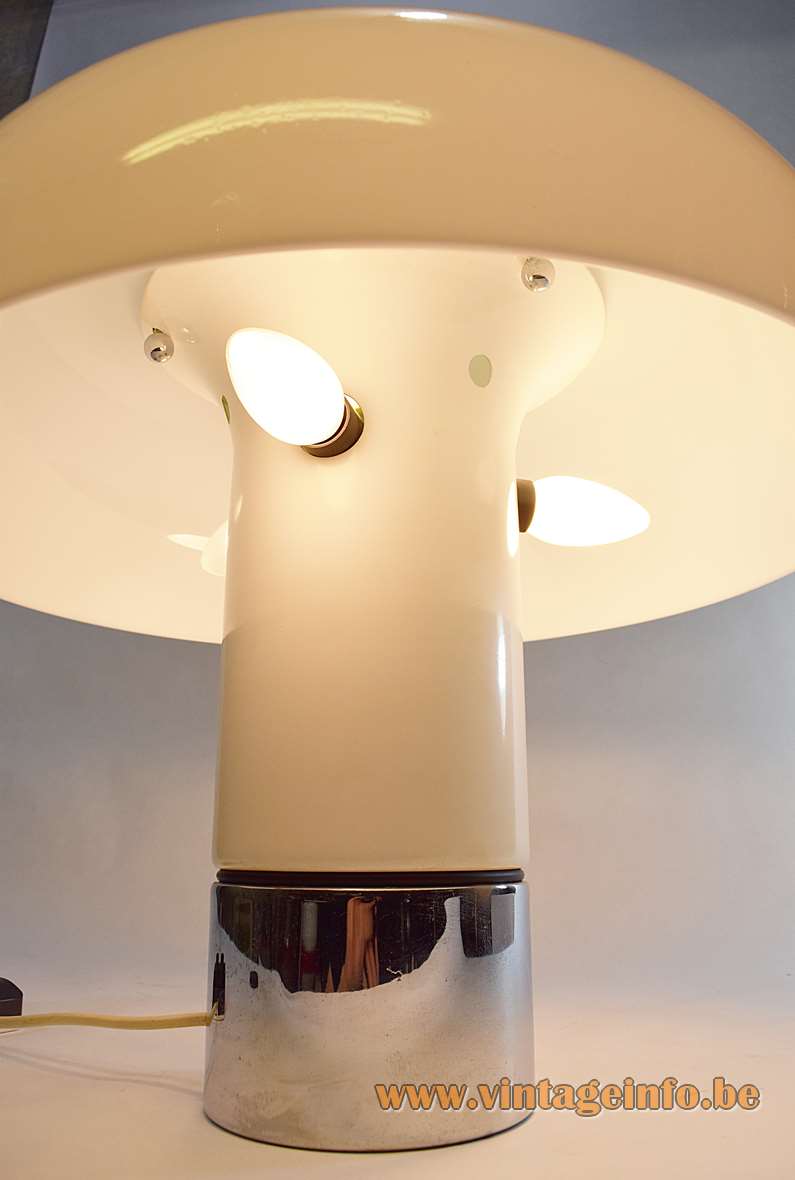
Materials: Round chromed metal (iron) base. Cement counterweight inside. Rubber O-ring. White lacquered metal tube. Chromed ornamental ball screws. White acrylic mushroom lampshade. Chromed iron ring on top of the lampshade. Some metal parts 4 Bakelite E14 sockets.
Height: 43 cm / 16.92”
Width: ∅ 46 cm / 18.11”
Base: ∅ 13 cm / 5.11”
Electricity: 4 bulbs E14, 4 x 60 watt maximum, 110/220 volt.
Any type of light bulb with an E14 socket can be used, preferably a white/opaque or frosted light bulb. Clear bulbs create stripes on the lampshade.
Period: 1960s – Mid-Century Modern.
Designer: Luigi Massoni (1930 – 2013).
Manufacturer: Harvey Guzzini, Recanati, Italy.
Other versions: This White Harvey Guzzini Brumbry table lamp comes in several colours. White and gradient brown are the two most sold. Also orange/red lamps were made and sometimes you find a green or eggplant coloured one. Other colours exist. You can view a rare edition (translucent and white) of the late 1970s on this page.
The top dome and main lampshade can be switched on independently for up lighting, down lighting or both at once.
Harvey Guzzini Brumbry often incorrectly named Brumbury.
Project year: 1969
Year of production starting: 1969
Year of production ending: 1982
Commercial code: 507 – Period: 1969 – 1972
Commercial code: 4009 – Period: 1973 – 1982
Prototypes
Prototypes of this lamp were made from 1967 until 1974.
Acrylic: often named by its commercial name: Perspex, Plexiglas, Crylux, Acrylite, Lucite, is a thermoplastic.
Luigi Massoni
Luigi Massoni was born in Milan, Italy, on 22 January 1930. He was an architect, industrial designer, publisher and editor. He trained at the Collettivo di Architettura in Milan and gained his first professional experience between 1953 and 1955. From the 1960s onwards he divided his time between Milan and the Marche region; he later settled in Recanati, where he died in 2013.
In the mid-1950s he began working for Alessi, where he created his famous bar set. In 1957 he designed, together with Carlo Mazzeri, the well-known cocktail shaker and shortly afterwards the Serie 5 containers, which are still in production today.
Il Mobile Italiano & Mobilia
Together with architect Carlo De Carli, Massoni helped to renew Italian furniture design in the late 1950s. Between 1957 and 1960 they founded and edited the magazine “Il Mobile Italiano”, one of the early platforms devoted to modern Italian furniture. In 1959 Massoni brought together a group of furniture manufacturers to create Mobilia, one of the first centres dedicated to the promotion of Italian design.
Boffi Cucine
Also in 1959 he began working for Boffi Cucine as a designer and production coordinator, developing some of the first modular systems for the home and kitchen. For Boffi he created the Dogu kitchen and bathroom, the Xila kitchen and bathroom, the Punto bathroom, the E15 kitchen, the AL15 kitchen and the A1 cupboard, designs that are now considered milestones in Italian kitchen design.
Publishing and communication
Massoni was deeply involved in design communication. He was editor and director of the magazine “Marmo Tecnica Architettura” from 1956 to 1963 and later of “Forme” from 1962 onwards. Through these publications he played an important role in connecting designers, craftsmen and industry, and in promoting a modern culture of industrial and craft-based production in Italy. His works were widely published in major Italian and international magazines and received numerous prizes and acknowledgements.
Guzzini group and other companies
From the early 1960s Massoni began a long collaboration with the Guzzini group. He worked for Fratelli Guzzini and Harvey Guzzini (later iGuzzini) as product and graphic designer, art director and consultant for corporate image and communication, designing numerous lamps and household objects and even the Harvey / DH logo.
Over the course of his career he also designed for a wide range of other Italian companies, including: Poltrona Frau (furniture, e.g. Dilly Dally coiffeuse and beds), Mobilia (furniture such as the Clessidra dining table), Nazareno Gabrielli (leather goods), Gallotti & Radice (glass tables and furniture), Palini (school furniture), Cedit and Gabbianelli (ceramic tiles and objects), Sirrah (lighting), Venini (glass).
In later years he also collaborated, often through the studio 967 Architetti Associati, with brands such as Poltrona Frau, Fratelli Guzzini and Upper.
Harvey Guzzini
In 1962, Luigi Massoni meets the brothers Raimondo, Giovanni and Giuseppe Guzzini in Milan: it is the beginning of a fruitful collaboration. He worked for Fratelli Guzzini and Harvey Guzzini, what later changed in iGuzzini, until 1976. Not only he was the art director but the coordinator of communication and advertising campaign, bringing, as pointed out by Adolfo Guzzini “a purification of the form” and “rationality as a new social status “. He also designed the logo of Harvey Guzzini as you can see on this page.
Luigi Massoni designed some of the most beautiful lamps for Harvey Guzzini, such as the Brumbry, the Alvise, the Moana, theToledo, the Medusa, and many others.
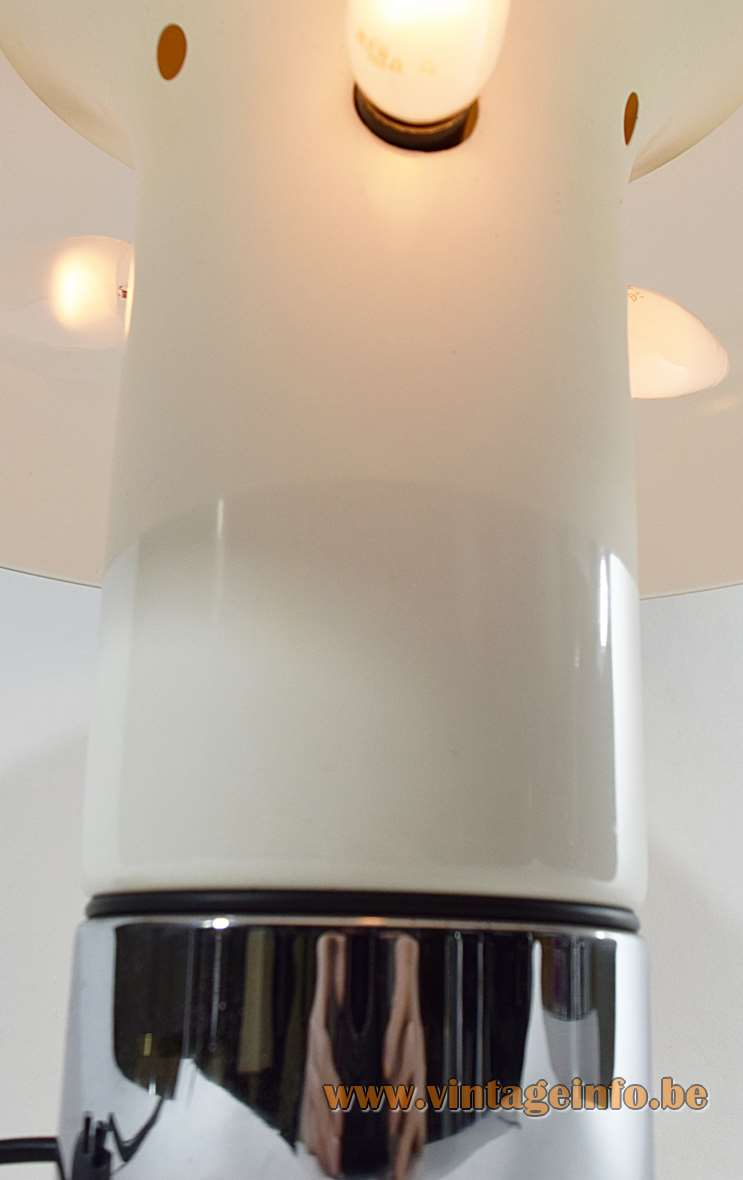
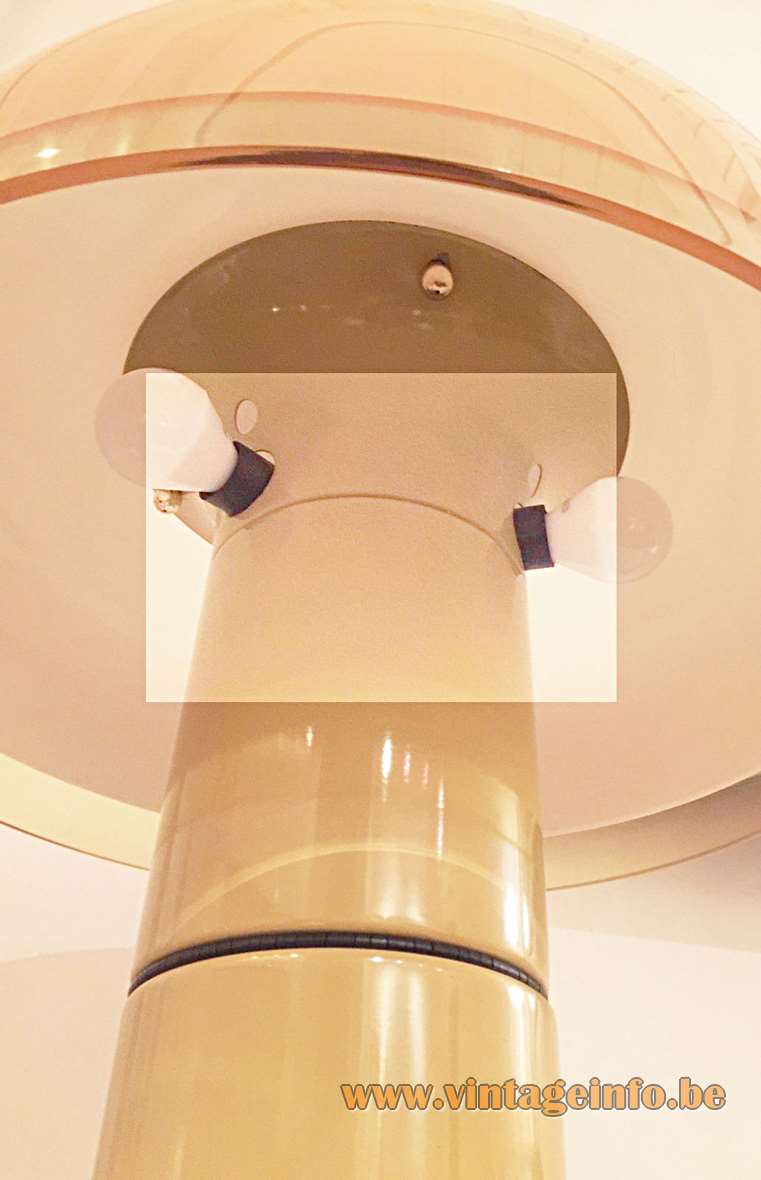
White Harvey Guzzini Brumbry Table Lamp – Lamp Bases
First editions have a different lamp base, the white painted metal is made from one piece.
Harvey Guzzini / iGuzzini illuminazione
In the late 1950s the Guzzini family from Recanati (Marche, Italy) set up a small workshop for enamelled copper objects. On 30 June 1959 the brothers Raimondo, Giovanni, Virgilio, Giuseppe and Giannunzio Guzzini, sons of Mariano Guzzini, officially founded Harvey Creazioni for the production of decorative copperware. The name “Harvey” was inspired by the 1950 film Harvey with James Stewart and his imaginary rabbit friend.
Very soon the company moved from the ground floor of the family home in Recanati to a new factory in nearby Le Grazie, where the first lamps were developed. Early lighting models were designed by external designers such as Karl Roters and Charles F. Joosten (Josteen), who had already worked for Fratelli Guzzini on plastic tableware.
In the early 1960s Harvey became a true family business when more brothers joined, and in 1962 industrial designer Luigi Massoni was brought in to lead the design team. Massoni worked for both Fratelli Guzzini and Harvey Guzzini until the mid-1970s and played a key role in the transition from enamelled copper to moulded plastics such as polymethyl methacrylate (PMMA). Under his direction the company developed many of the iconic “space age” domestic lamps that defined the brand.
During the 1960s and 1970s Harvey Guzzini became one of the standard-bearers of Italian mid-century lighting design. The in-house design office, often referred to as Studio 6G or Ufficio Progetti, and external designers created a long series of acrylic pendant, table and floor lamps that combined coloured domes, chrome details and multi-light switching. These domestic lamps were distributed widely in Europe and beyond, for example through Habitat in the UK.
Design House
In the late 1960s Harvey Guzzini also introduced the Design House (DH) label for a more explicitly “design-led” range. Under this name, the company presented its products at international exhibitions and in dedicated Design House catalogues. Lamps shown in one of these catalogues include Alicante, Noppo, Ibis, Azalea, Cigno, Moon, Selene, Poliedra, Focus, Tam Tam, Squared, Taw, Cespuglio, Nastro, Moana, Nitia, Lampione, Lucciola, Piuma and Diaframma. In 1969, Harvey Guzzini also opened a Harvey Guzzini – DH store in central Milan, underlining the more design-oriented positioning of this range.
Harveiluce
Around the same period, the Harveiluce name appeared on several models, sometimes alongside or later replaced by Harvey Guzzini or iGuzzini labels. Harveiluce was thus used only for a relatively short time in the late 1960s and early 1970s, mainly as another trade name for the same family of designs that would later be marketed under the iGuzzini brand.
DOMA
In the 1970s iGuzzini also used the Doma name for a line of plastic furniture and accessories. The Doma collection included space age storage trolleys, coat racks, chairs, ashtrays and decorative spheres, often in injection-moulded ABS with metal details, designed by Luigi Massoni, Dino Pelizza, Fabio Lenci and others. These pieces were marketed under the same corporate umbrella as Harvey Guzzini and iGuzzini lighting, and the iGuzzini logo introduced in 1974 covered products sold under sub-brands such as DH, Doma and Atelier.
iGuzzini
In 1974 the company name was changed from Harvey Guzzini to iGuzzini, and in 1981 to iGuzzini illuminazione. From the mid-1970s onwards the firm progressively shifted its focus from domestic “space age” lighting to architectural and technical lighting for public and professional spaces. Today iGuzzini is an international lighting group based in Recanati, known for collaborations with architects and designers such as Gae Aulenti, Gio Ponti, Rodolfo Bonetto, Piero Castiglioni and many others, and since 2019 it has been part of the Swedish Fagerhult Group.
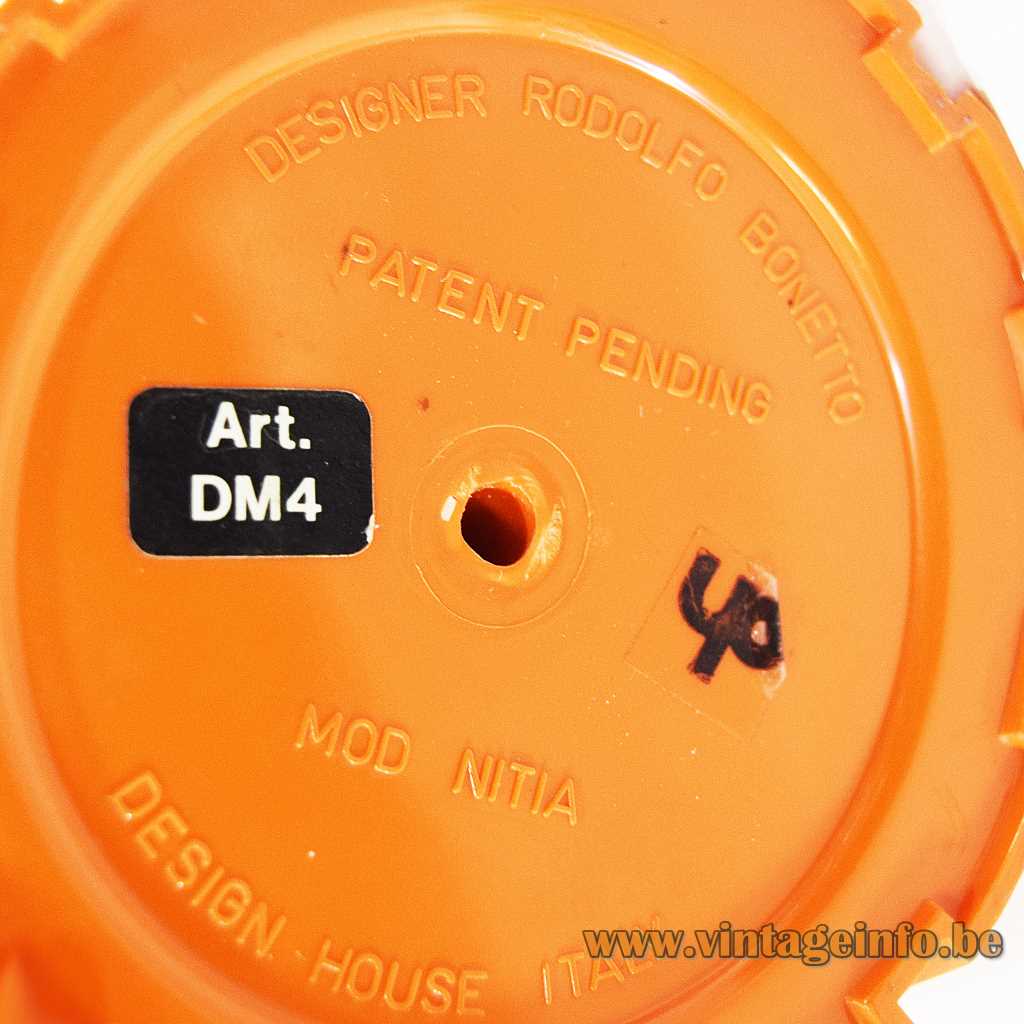
In 2022–2023 iGuzzini launched the iGuzzini Echoes programme: a series of re-editions of classic 1960s–1970s designs, updated with LED technology and recycled / recyclable materials. The first models to return were Polsino (Gio Ponti, re-edition 2022) and Zurigo (Luigi Massoni, re-edition 2022), followed by Nitia (Rodolfo Bonetto, re-edition 2023), Clan (Flash, Bud, Clan) and Sorella (all credited to the historic Harvey / Harveiluce design team, re-edition 2023).
Although the brand identity and product range have evolved towards professional lighting, the vintage Harvey Guzzini domestic lamps from the 1960s and 1970s – as well as the recent Echoes re-editions – remain an important chapter in the history of Italian plastic design.
Designers
Designers who worked for the company include: Luigi Massoni, Luciano Buttura, Sergio Brazzoli, Ermanno Lampa, Giuseppe Cormio, Emilio Fabio Simion, Karl Roters, Charles F. Joosten, Fabio Lenci, Bruno Gecchelin, Gio Ponti, Rodolfo Bonetto, Gae Aulenti, Piero Castiglioni, Carlo Bimbi, Nilo Gioacchini, Antonella Ducci Valera, Carlo Urbinati, Felice Ragazzo, Ennio Lucini, Cesare Casati, Gianfranco Frattini, Ambrogio Pozzi, Francesco Piccaluga, Aldo Piccaluga, Makio Hasuike, Renzo Piano, Dean Skira, Maurici Ginés, Artec Studio, Enzo Eusebi, Jean-Michel Wilmotte, Arup, Norman Foster, Mario Cucinella, Massimo Iosa Ghini, Massimiliano e Doriana Fuksas, Jean-Marie Duthilleul, Roberto Pamio, Paul Andreau, Laura Maria Mandelli, Giuseppe De Goetzen, Franco Bresciani, Studio D.A.
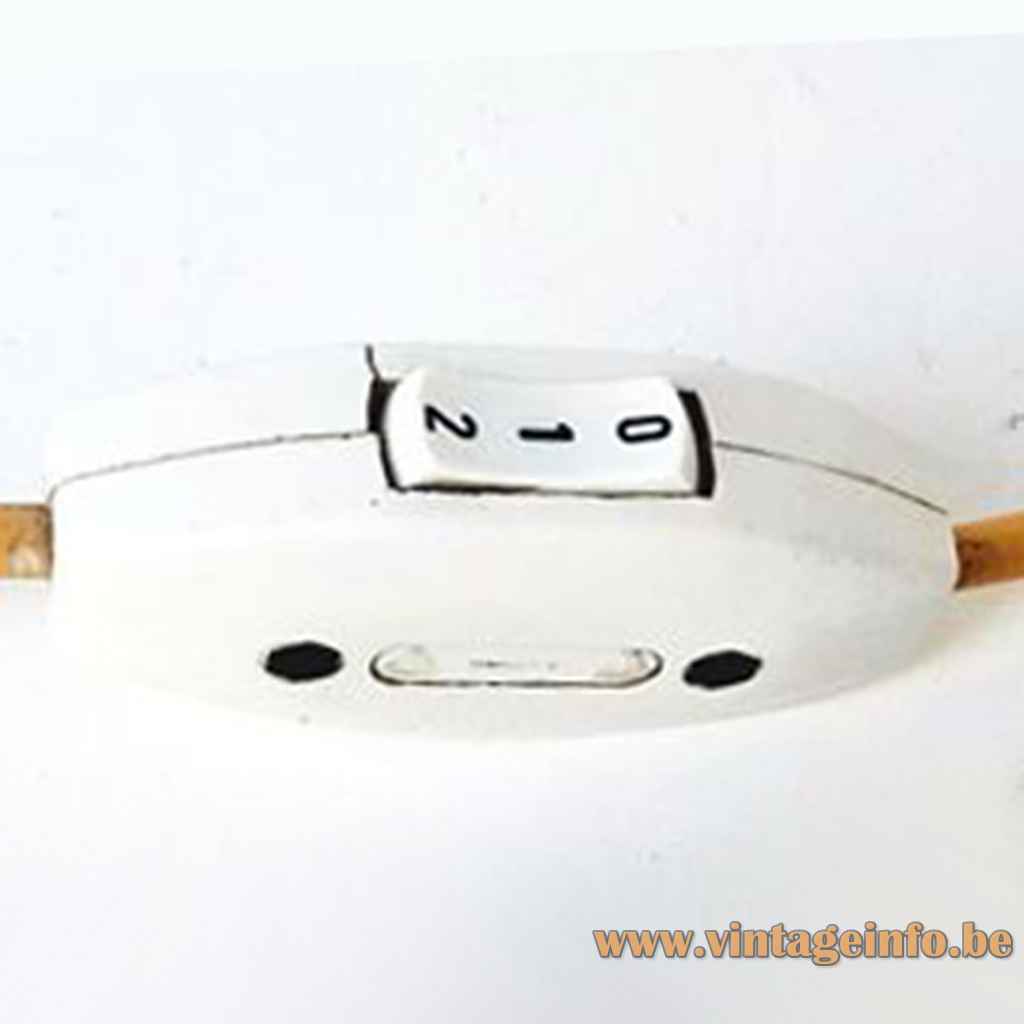
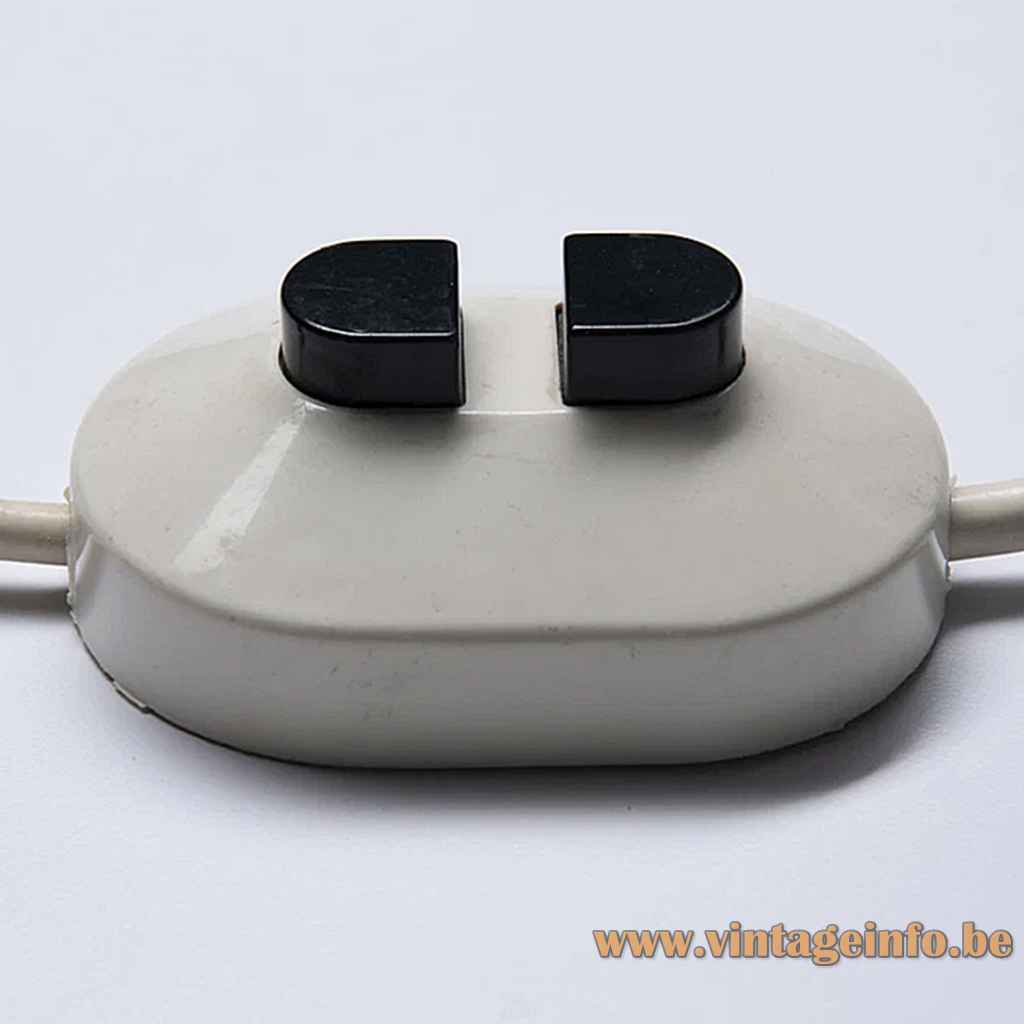
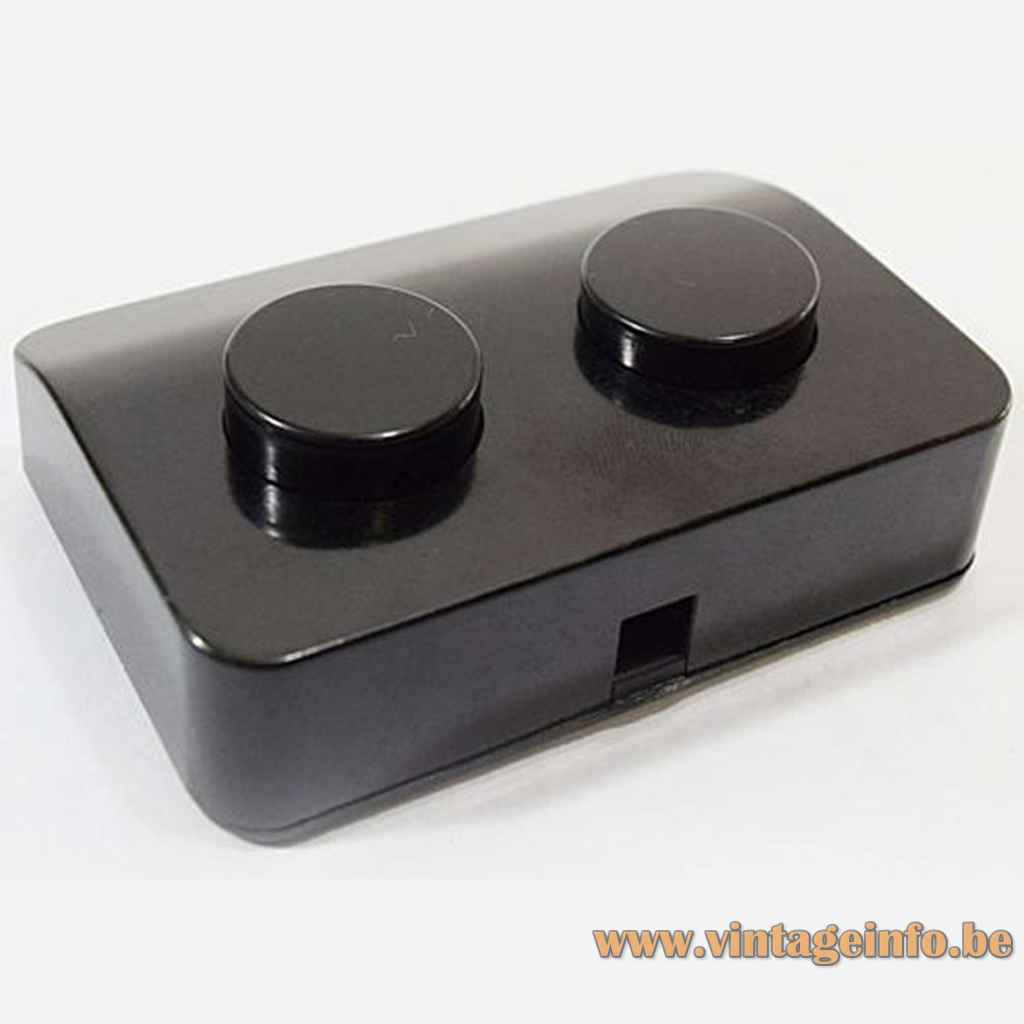
White Harvey Guzzini Brumbry Table lamp – Switches
The first switch was found on a red Brumbry table lamp. It is a switch from the 1960s. For the moment it is unclear if it was a replacement for one of the two other switches used, or it is the very first switch ever used. I have only seen it once.
The black and white switch was used in the early years of production of the Brumbry. It was made by VLM Components and it was in production until at least the 1990s. It exists in several colours and was also made in white and black.
The black Bakelite D-662 switch, also from VLM Components and designed by Achille Castiglione in 1968, was used for all the newer lamps, probably from around the early 1970s. This double single pole foot switch is still in production (2020). In 2025 still in some shops for sale.
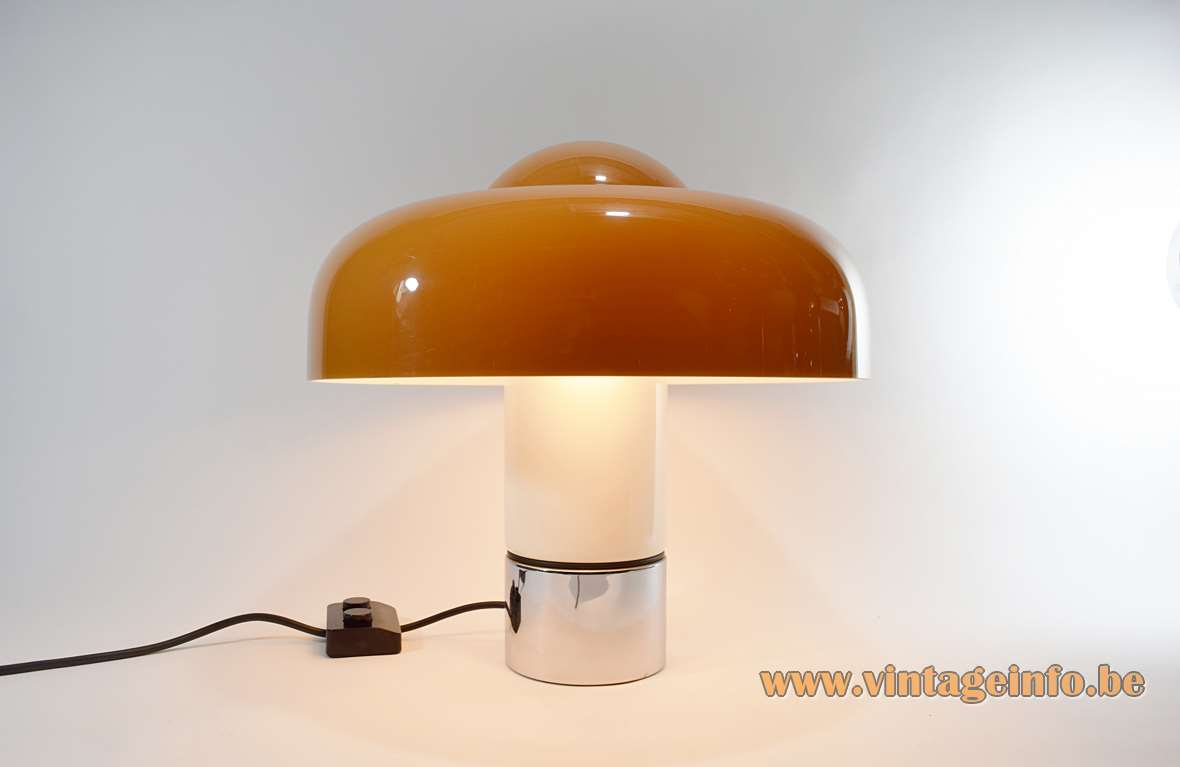
White Harvey Guzzini Brumbry Table Lamp – Brown Edition
This version with a brown lampshade is also on Vintageinfo, you can find it here.
Links (external links open in a new window)
Films
Made In Dagenham (2010) – Wikipedia
Made In Dagenham (2010) – IMDb
Paris (2015 – 2016) TV series – IMDb
L’Instinct de Mort (2008) film – Wikipedia
L’Instinct de Mort (2008) film – IMDb
Un Flic (1972) film – Wikipedia
36 Quai des Orfèvres (2004) film- Wikipedia
36 Quai des Orfèvres (2004) film – IMDb
Banlieue 13 (2004) – Wikipedia
Un Éléphant Ça Trompe Énormément (1976) film – Wikipedia
Un Éléphant Ça Trompe Énormément (1976) film – IMDb
Prête-Moi Ta Main (2006) film – Wikipedia
Prête-Moi Ta Main (2006) film – IMDb
Vintageinfo
Logo used between 1959 and 1964. Inspired by the 1950 film “Harvey“, starring James Stewart.
Logo used between 1965 and 1977. This logo was designed by Luigi Massoni.
The architect Massoni was invited to work with Harvey as the company’s art director, a move that gave further impetus to the idea of collaborating with designers.
Between 1967 and 1971, Ennio Lucini designed the catalogue tor the DH brand, under which lamps for home lighting were marketed.

Logo used from 1974 until today, designed by Advema G&R Associati. This logo embodied the company’s entire output, which was marketed under other brands such as DH, Doma and Atelier.
It was during this period that the company began making technical products. Spot and flood lights in particular.
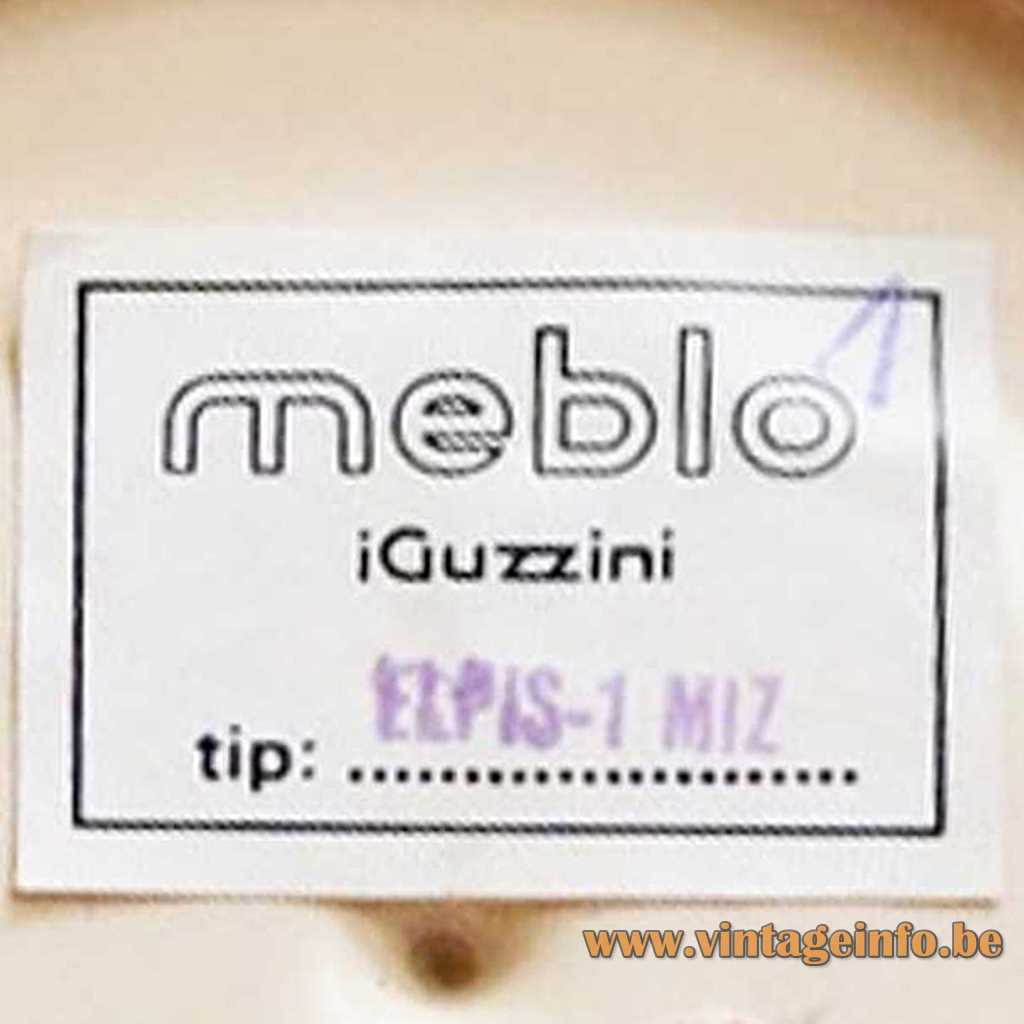
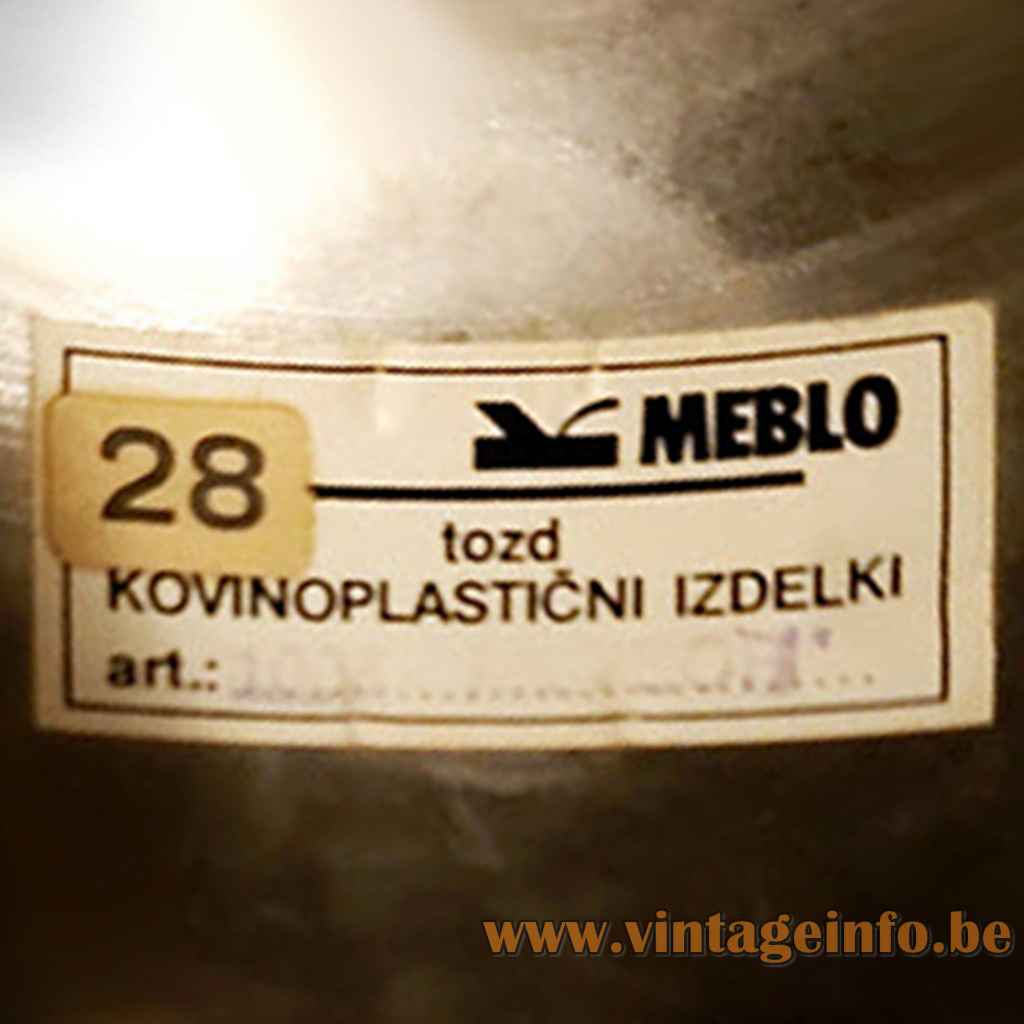
White Harvey Guzzini Brumbry Table Lamp – Company Labels & Logos