- Categories
- Categories
Last 5 Viewed
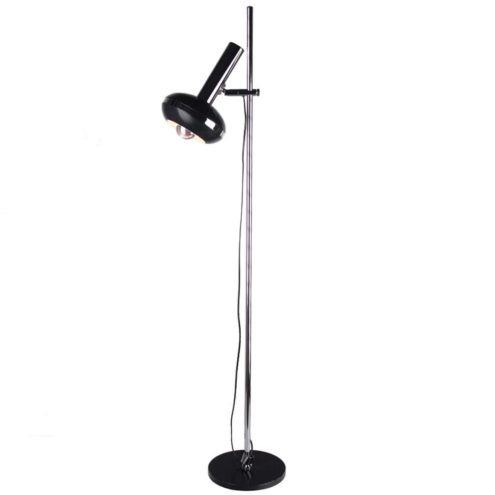
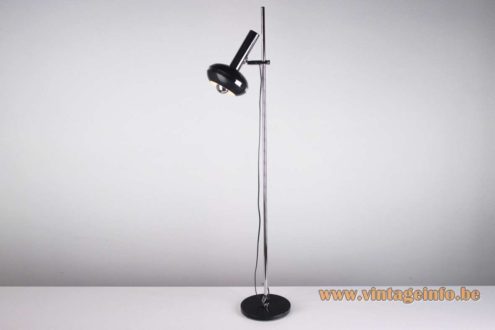
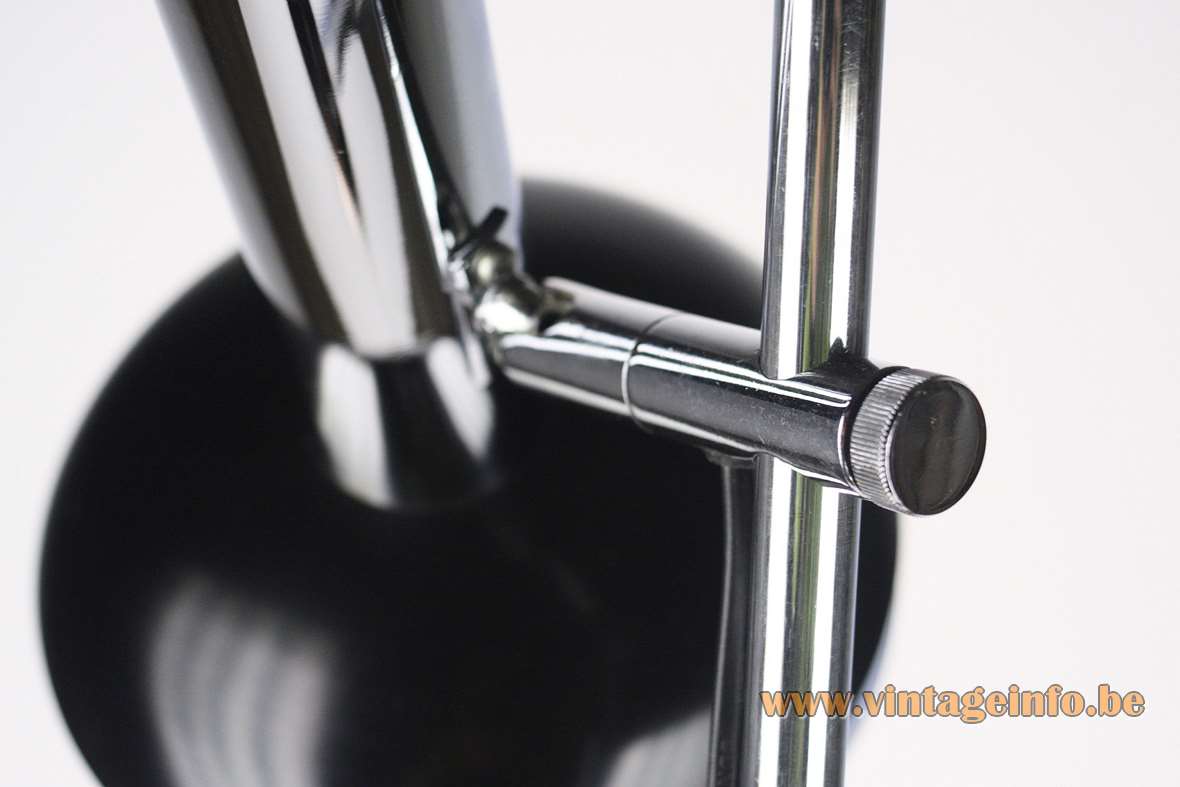
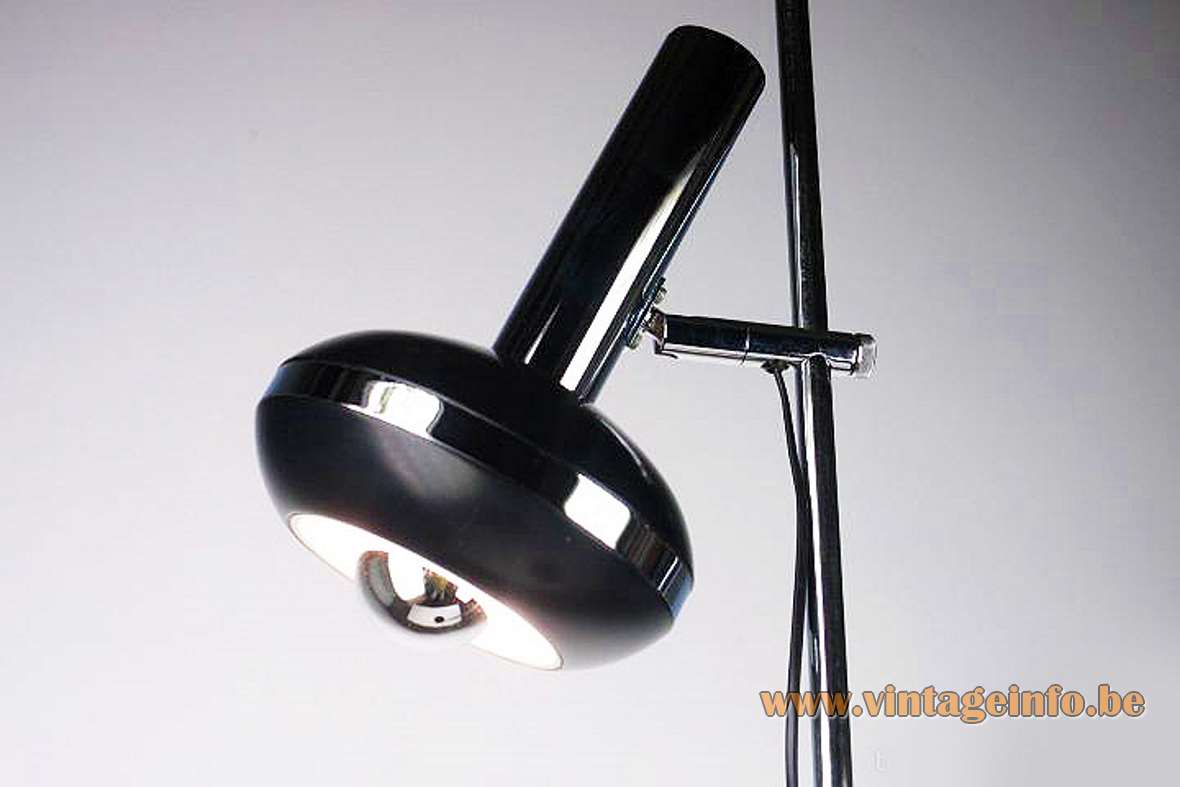
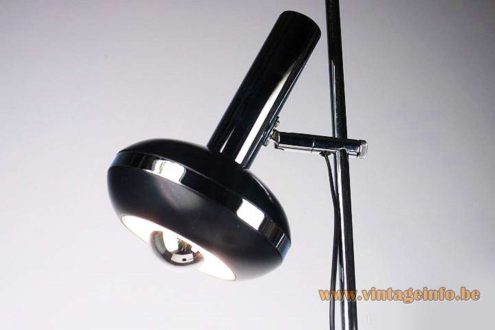
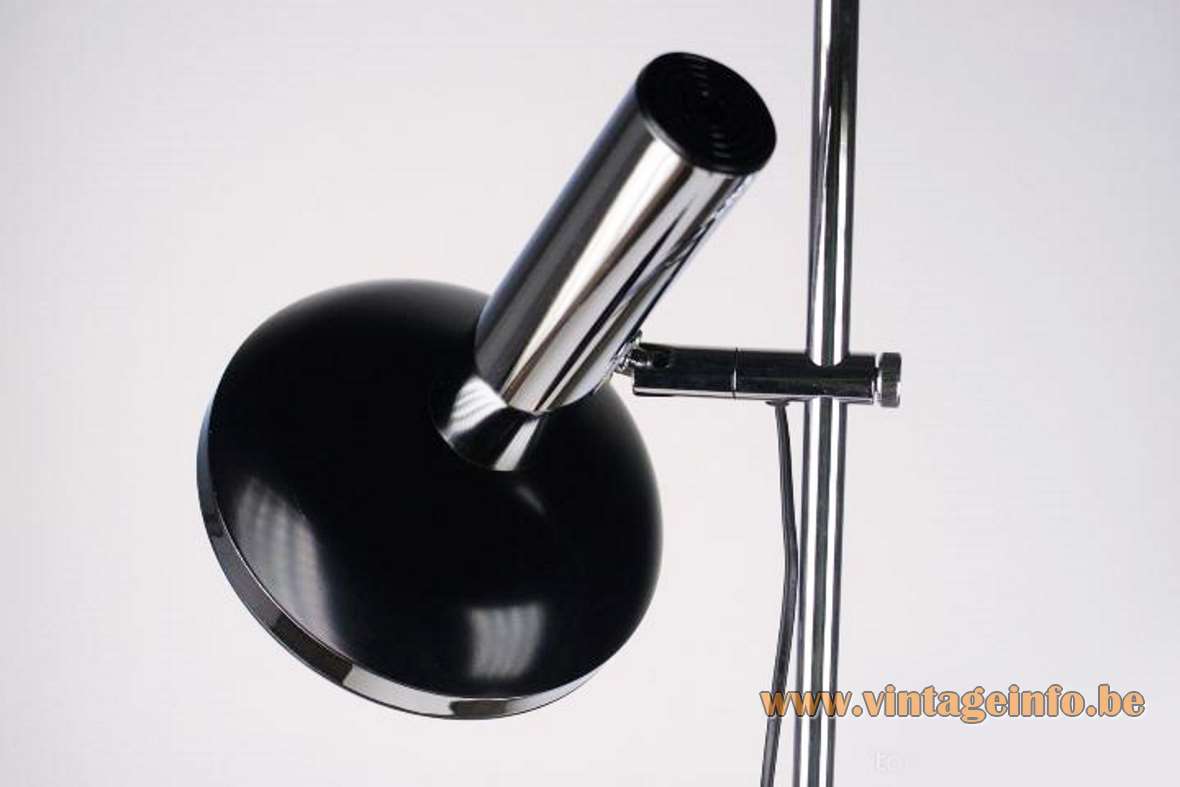
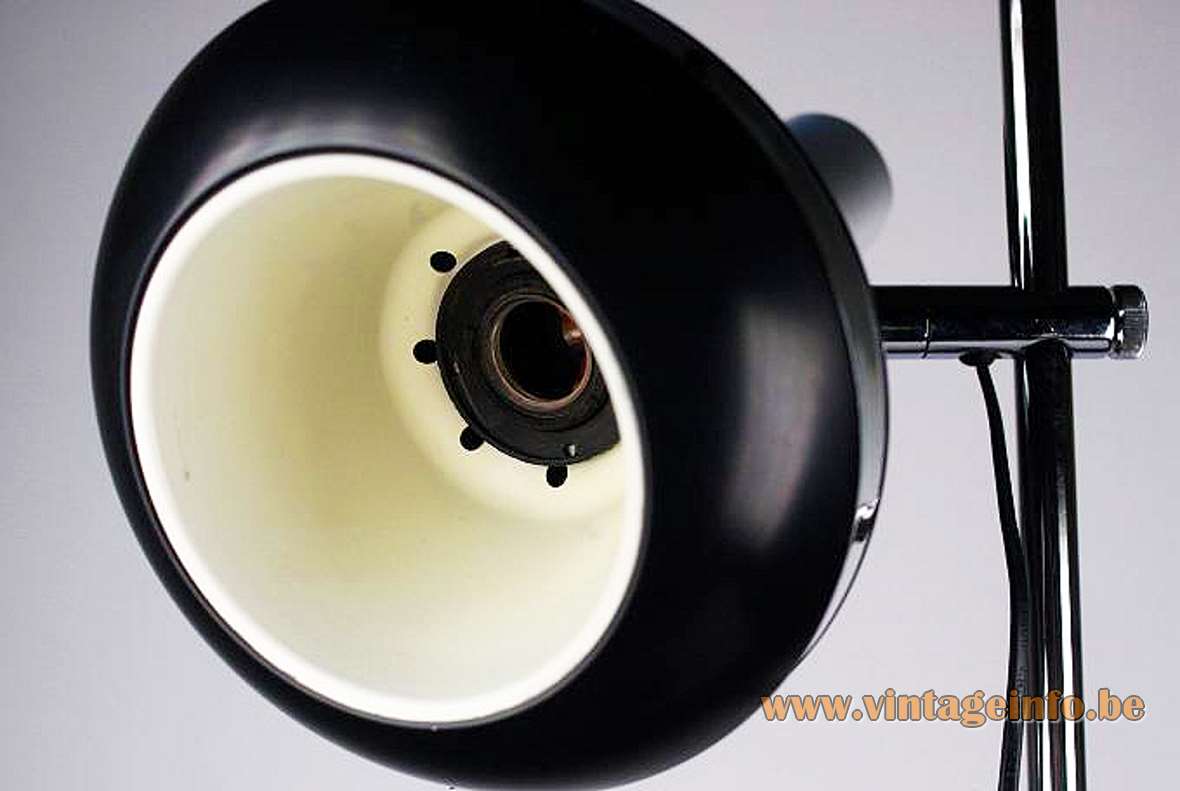
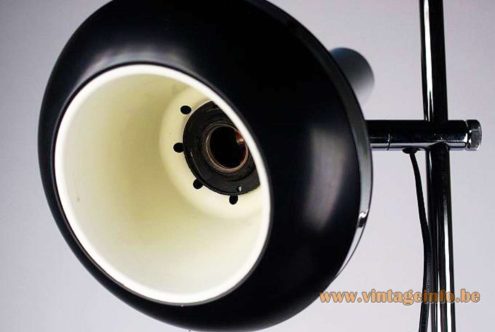
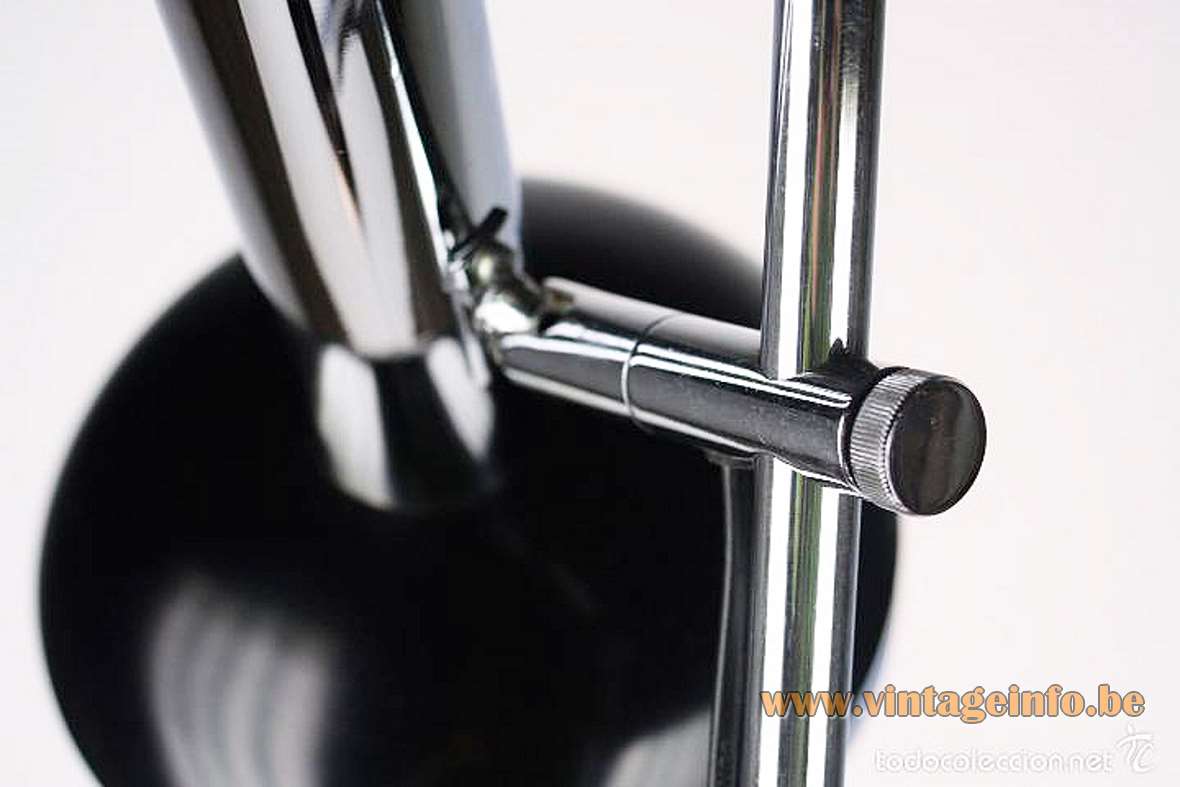
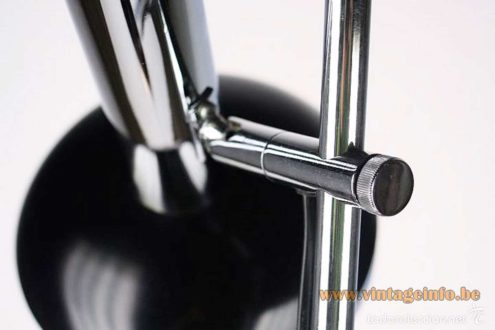
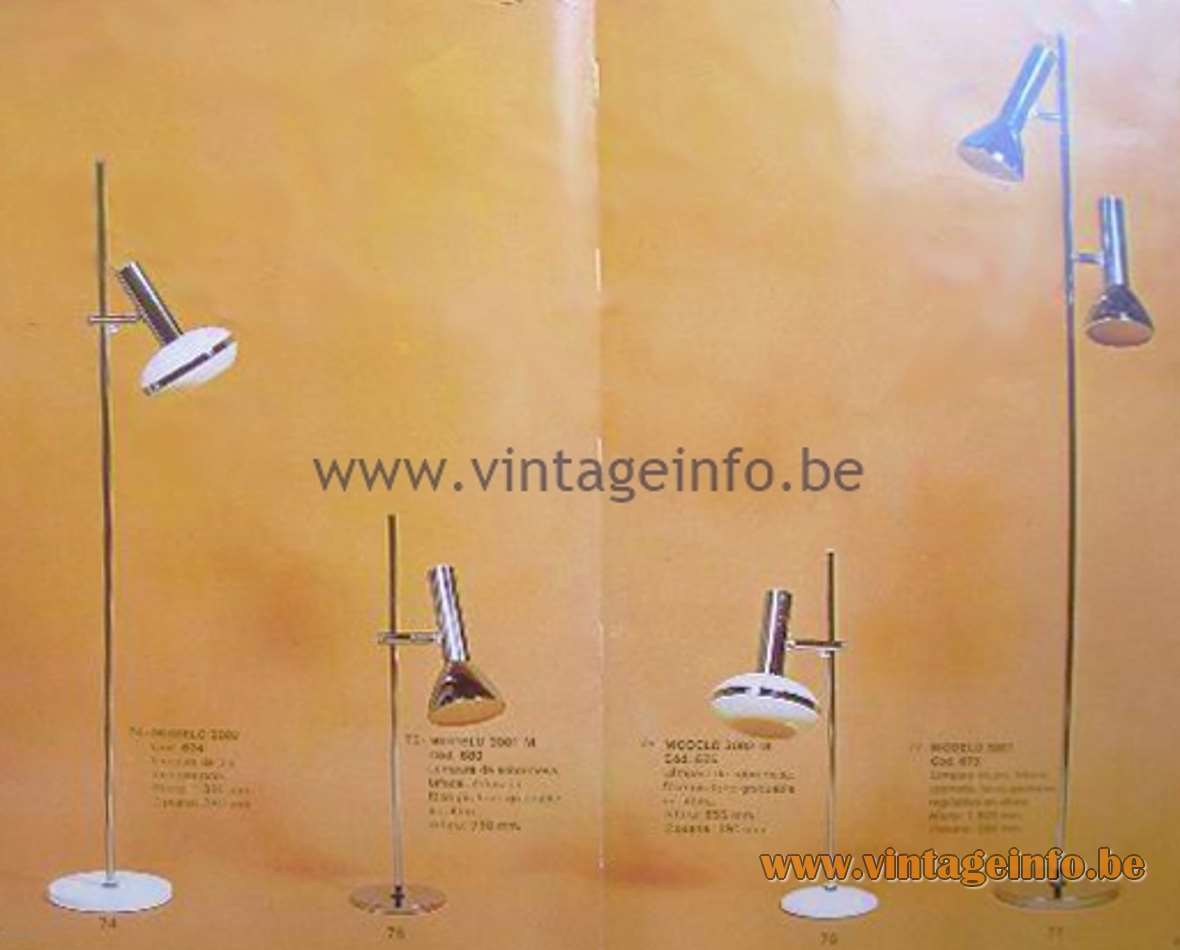
Fase Black & Chrome Floor Lamp – 1970s Catalogue Picture
Lamps In The Movies
About Time (2013)
An orange Fase table lamp was used as set decoration in the 2013 British science-fantasy comedy-drama film About Time, with Domhnall Gleeson, Rachel McAdams and Bill Nighy in the leading roles.

Links (external links open in a new window)
OMI – Otto Meinzer GmbH & Co website
Gebrauchmuster – Wikipedia (in German)
About Time (2013) film – Wikipedia
Vintageinfo
Massive Belgium Fase style lamp
Hustadt-Leuchten wall lamp with a red lampshade
Many thanks to Lluís fromEclectique Vintage for the photos.
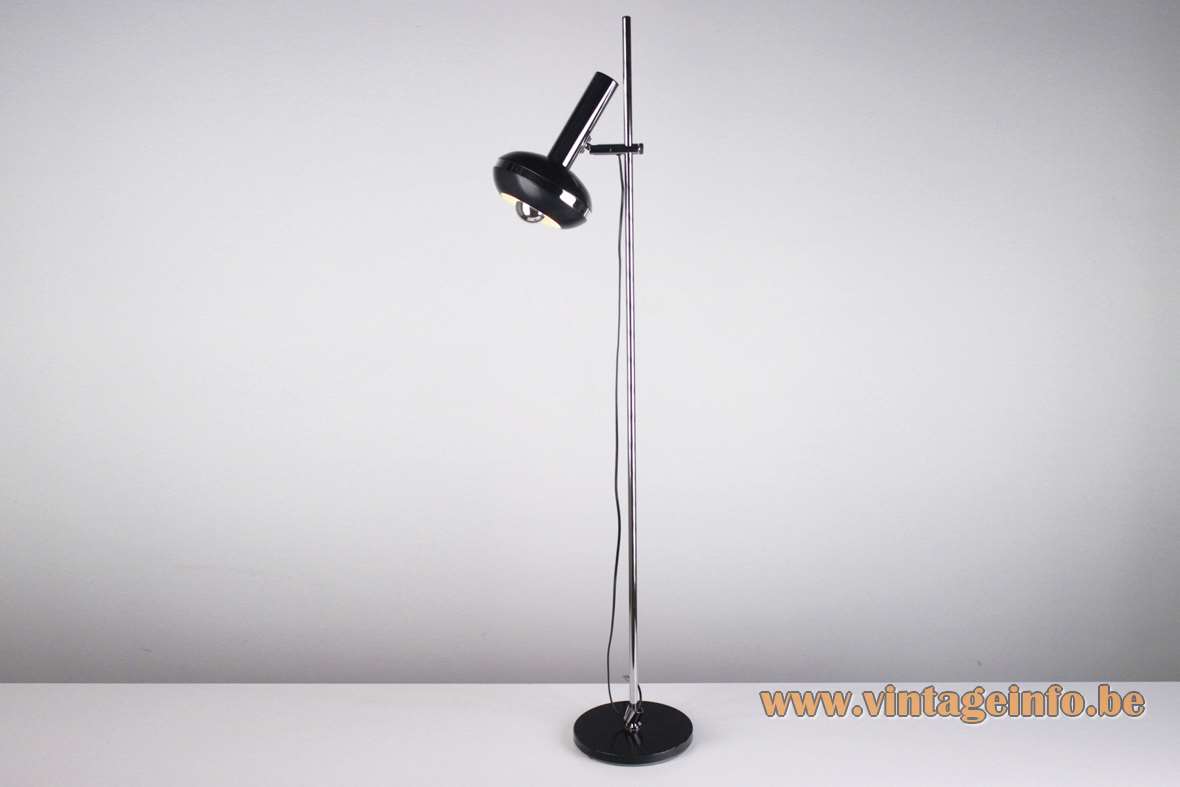
Fase Black & Chrome Floor Lamp
Materials: Round black painted flat base. Cast iron counterweight inside the base. Chromed metal rod and arm (iron). Adjustable black painted round aluminium lampshade with a chrome ring & chrome tube. Bakelite E27 socket.
Height: 140 cm / 55.11”
Lampshade: ∅ 17 cm / 6.69”
Base: ∅ 24 cm / 9.44”
Electricity: 1 bulb E27, 1 x 60 watt maximum, 110/220 volt.
No specific type of light bulb is required; different types can be used.
Period: 1970s – Mid-Century Modern.
Designer: To be appraised.
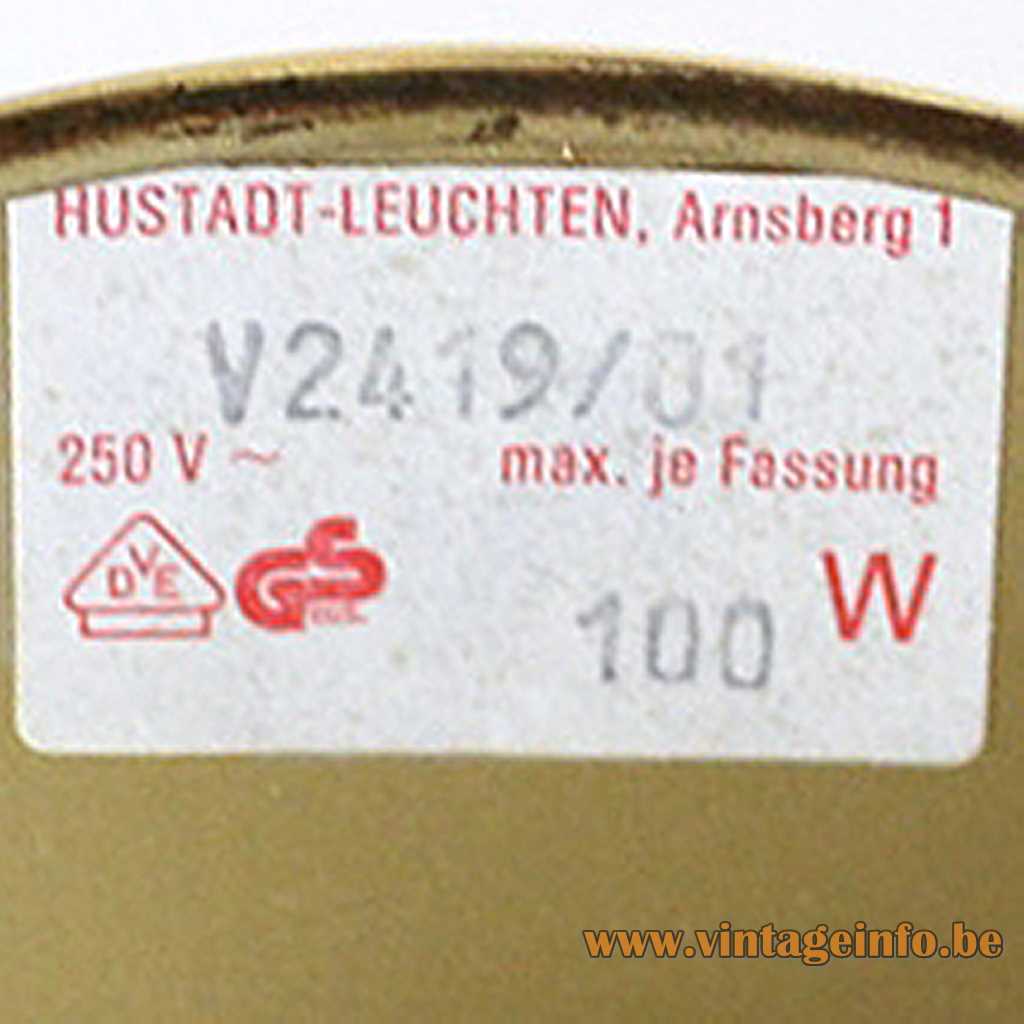
Manufacturer: Walter Hustadt GmbH & Co. KG Leuchten, Am Schindellehm 7-9, 59755 Arnsberg, Germany.
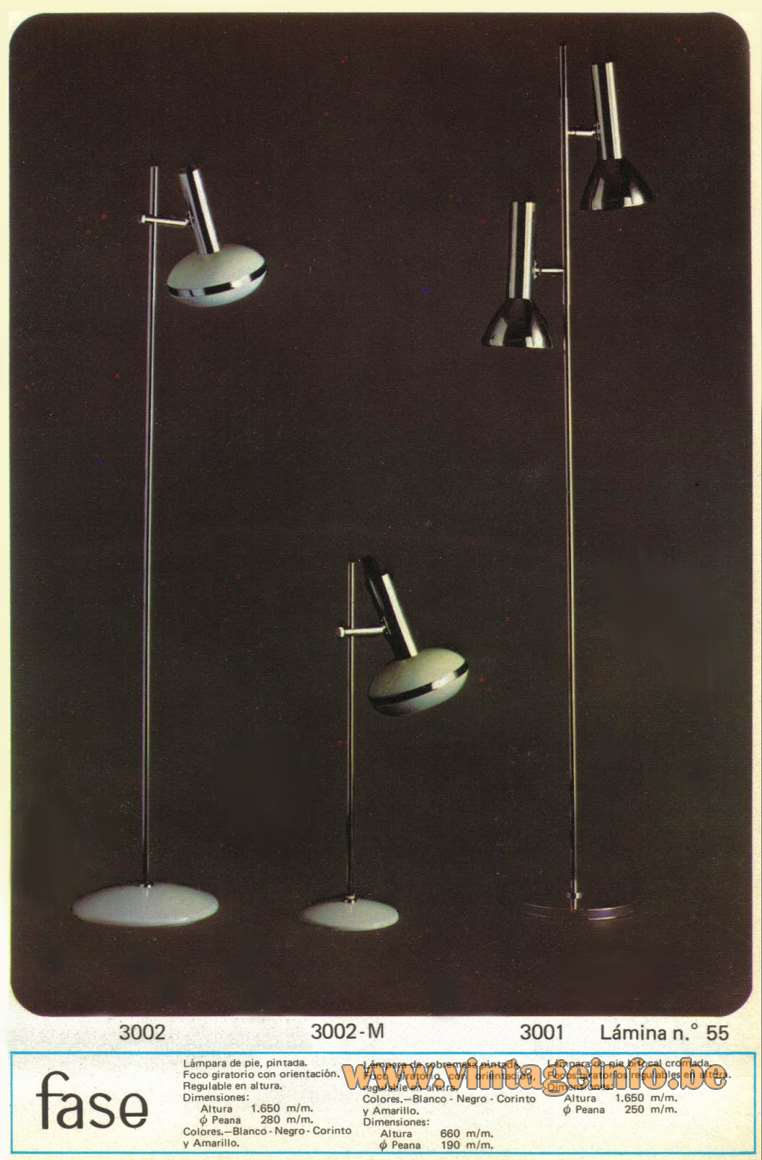
Other versions: This Fase black & chrome floor lamp was also produced as a double-light floor lamp, a table lamp and a wall lamp. The series was made in several colours.
These lamps were also sold by Fase in Spain. The catalogue pictures shown on this page are taken from the 1974 and 1974–1975 catalogues. Fase sold many lamps made by other companies. More information can be found here. This black and chrome floor lamp is a Fase model.
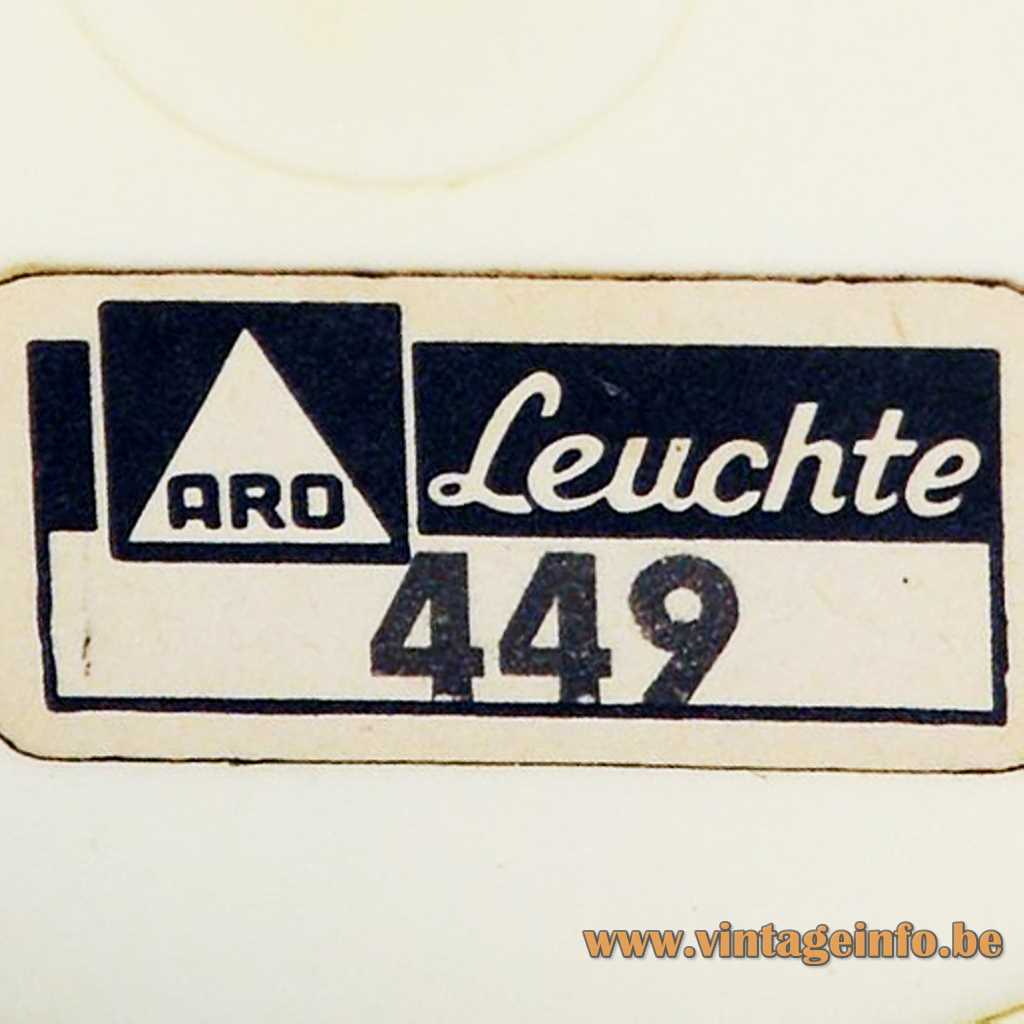
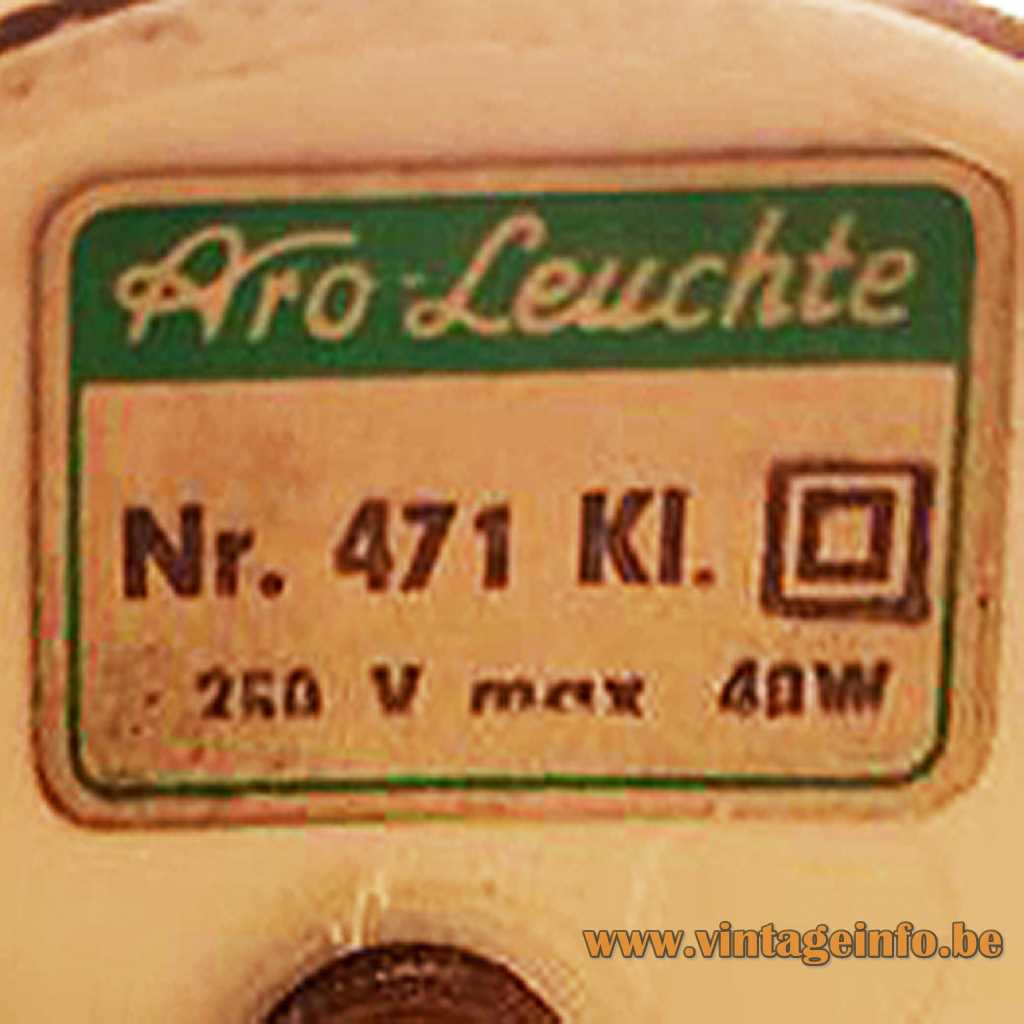
Similar lamps were also sold by the German company Aro Leuchte.
The other lamps shown in the catalogue pictures — the two chrome models and the chrome-and-black floor lamp — were also sold by both companies, and probably by others as well. These lamps are often presented as designs by Koch & Lowy, but that is incorrect.
Koch & Lowy
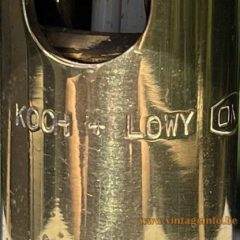
When searching online for the OMI mark found on the chromed knee joint, you will often come across lamps described as designs by Koch & Lowy for OMI. This is incorrect. Koch & Lowy was not a design studio, but an American lighting company, and had nothing to do with the design of this lamp. Today, Koch & Lowy is owned by Chapman Manufacturing Company, Inc. of Avon, Massachusetts.
The confusion most likely comes from the fact that Koch & Lowy used OMI joints in some of the lamps they produced. On those examples, the company name was sometimes stamped next to the OMI logo.
Some sources mention OMI Switzerland, but there appears to be no trace of a Swiss company by that name. Others refer to OMI DBGM, because this marking can sometimes be found on the knee joint.
DBGM does not refer to a company. It stands for Deutsches Bundesgebrauchsmuster, the German term for a registered utility model. This form of legal protection was used in Germany and Austria. Put simply, the knee joint was made by a company called OMI, while the construction or mechanism itself was protected for a limited period, usually up to ten years. It may best be described as a form of protection similar to, but less extensive than, a patent.
Hustadt-Leuchten
Hustadt-Leuchten was founded in September 1962 as Walter Hustadt GmbH & Co. KG Leuchten. Not much information about the company is available. It officially ceased trading in May 2014, although it had already gone bankrupt about five years earlier.
Hustadt-Leuchten consistently produced high-quality lighting, and several of its lamps can be found on this website. The company received a number of design awards over the years. One of the best-known designers who worked for Hustadt-Leuchten was Klaus Hempel, who also designed lamps for the well-known German manufacturer Gebr. Kaiser & Co. Leuchten.
OMI
The OMI company was Otto Meinzer GmbH & Co. Metallwarenfabrik of Iserlohn, Germany. The name OMI stands for Otto Meinzer Iserlohn. The company manufactured chromed brass joints for the lighting industry, and these joints were stamped with the OMI mark. The company was founded more than fifty years ago and never produced lamps itself.
The switch of this lamp is stamped to indicate that it was approved for use in Denmark, Sweden, Norway and Germany.
Companies known to have used OMI parts include Ateljé Lyktan in Sweden, Massive in Belgium, Fase in Spain, Hustadt-Leuchten, Solken-Leuchten in Germany, Abo Randers in Denmark, and many others.
FASE
Fase (Fábrica de Artículos de Sevilla Electrónica) was founded in Madrid in the early 1960s by entrepreneur Pedro Martín García together with designer Luis Pérez de la Oliva. The company would grow into one of the most iconic Spanish lighting manufacturers of the late Franco era and the Spanish design transition period.
One of their earliest and most recognisable designs was the Boomerang 64 desk lamp from 1964. You can find it here on Vintageinfo. The Boomerang became a symbol of Spanish modern desk lighting and was widely used in administrative and governmental offices.
Initially, Fase distributed their self-produced lamps locally around Madrid. Due to growing success, the company opened a factory in Torrejón de Ardoz, on the outskirts of the capital. Production expanded rapidly during the late 1960s and 1970s.
Although best known for lighting, Fase also produced complementary objects such as ashtrays, office bins and coat racks, often in matching finishes.
During the final years of the Franco regime, Fase supplied lamps to governmental institutions, including offices connected to the administration and the Guardia Civil. After the death of Francisco Franco in 1975 and Spain’s transition to democracy, the company gradually embraced more internationally inspired aesthetics, including elements influenced by Italian modernism and Bauhaus design principles.
Throughout the 1970s, Fase expanded strongly into export markets. Lamps were distributed in Belgium, The Netherlands, Luxembourg, Great Britain, Norway, France, Italy, Germany, Portugal, the United Arab Emirates, Japan, Hong Kong, Morocco, the United States and Canada. In total, Fase exported to more than thirty countries.
The 1980s and decline
During the 1980s, Fase followed the market trend toward halogen lighting. This technological shift marked a stylistic break from their earlier heavy, articulated steel constructions. The transition proved commercially difficult. In the early 1990s, the company received a substantial fine from the Spanish tax authorities due to fiscal irregularities. Financial pressure increased, and production gradually ceased. Fase was officially dissolved in 1996.
Before its final closure, the manufacturing license was reportedly transferred to the German company Ma-Of, which produced slightly modified versions of certain classic Fase models, often with additional chrome detailing. When production stopped abruptly, significant warehouse stock remained. This explains why many Fase lamps are still found today in unused condition, sometimes boxed and labelled (NOS – New Old Stock).
Designers
Several designers contributed to the company’s success: Gabriel Teixidó designed, among others, the Iberia and Meca series, well known for their technical articulation and minimalist elegance. Tomás Díaz Magro created domestic-oriented designs such as the Apolo, Minifase and Impala models. The most prolific designer was Luis Pérez de la Oliva, responsible for a large part of Fase’s core catalogue.
Distributed designs
Besides its own production, Fase also distributed designs by other manufacturers. The Japanese Yamada Shomei‘Manon’ table lamp can be found here on Vintageinfo. The Prisma table lamp was produced in Italy by F.A.A.I. Arredo. Fase also marketed the Sinus stacking ashtray by German manufacturer Helit, a 1967 design by Walter Zeischegg. The design is part of the permanent collection of the Museum of Modern Art (MoMA) in New York.
Fase Black & Chrome Floor Lamp – 1970s Catalogue Picture
Fase Black & Chrome Floor Lamp – Company Labels & Logos