- Categories
- Categories
Last 5 Viewed
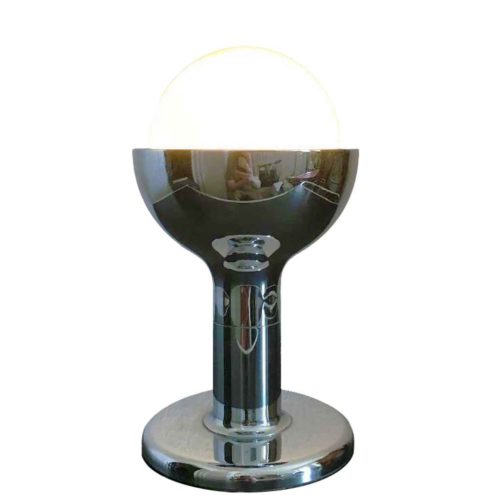

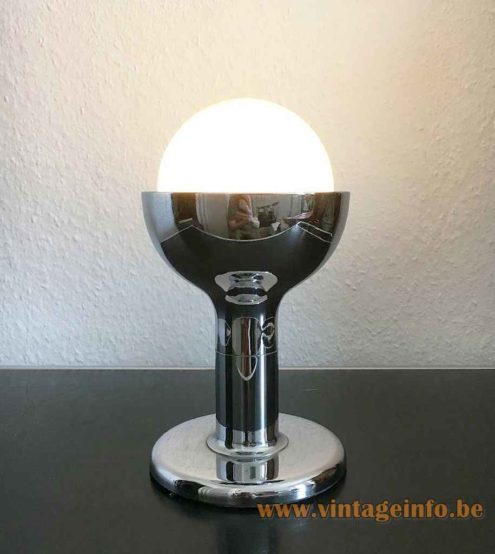
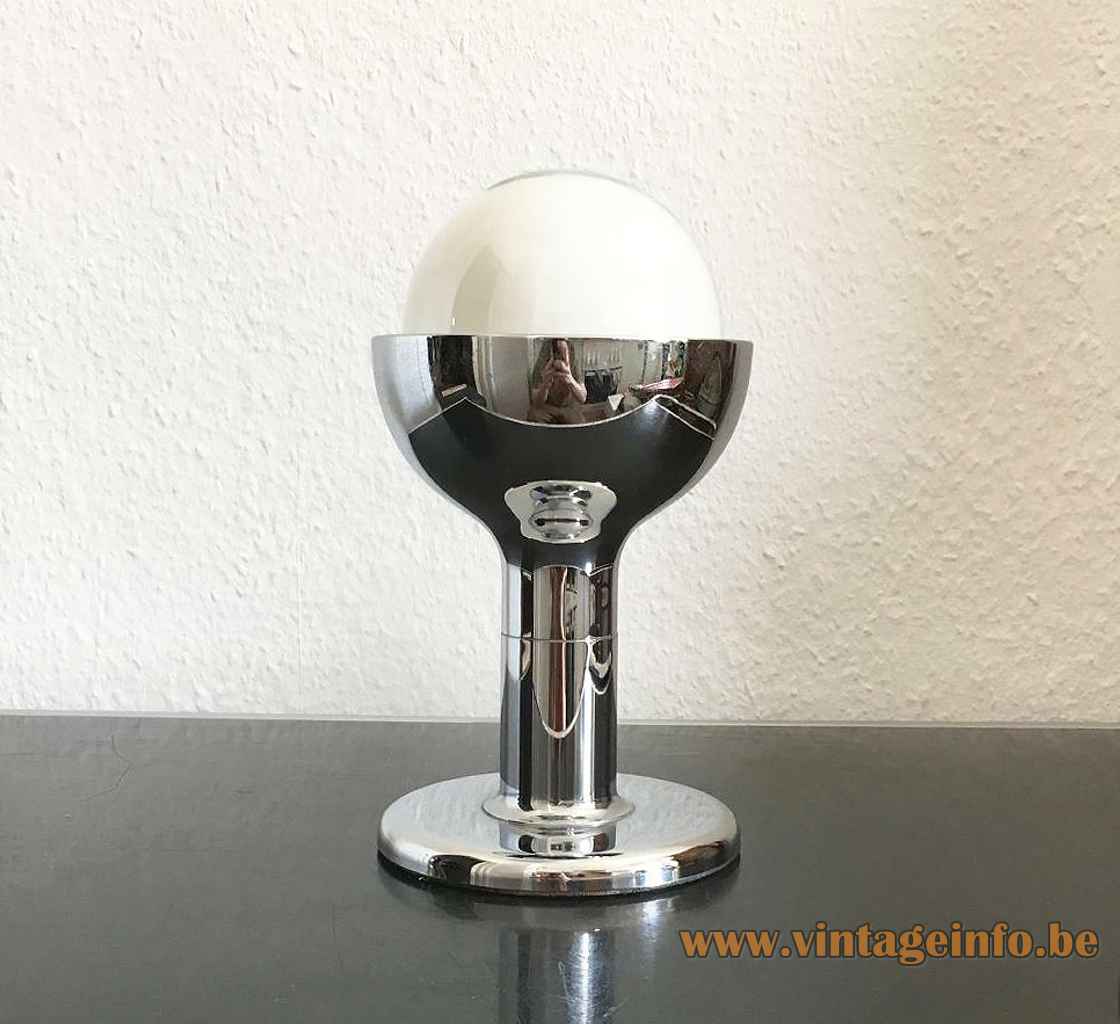
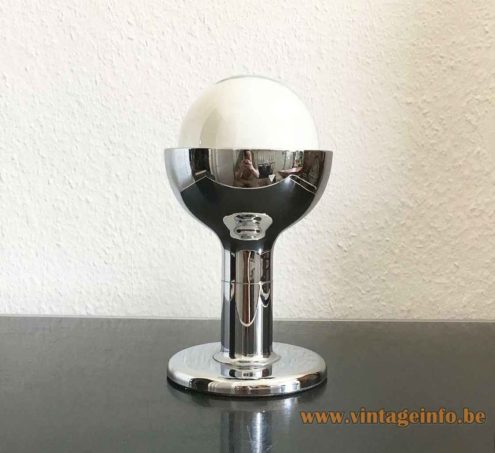
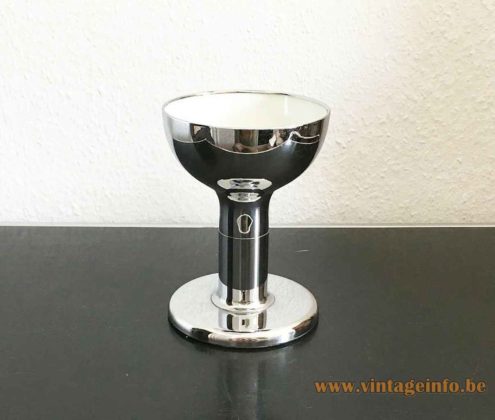
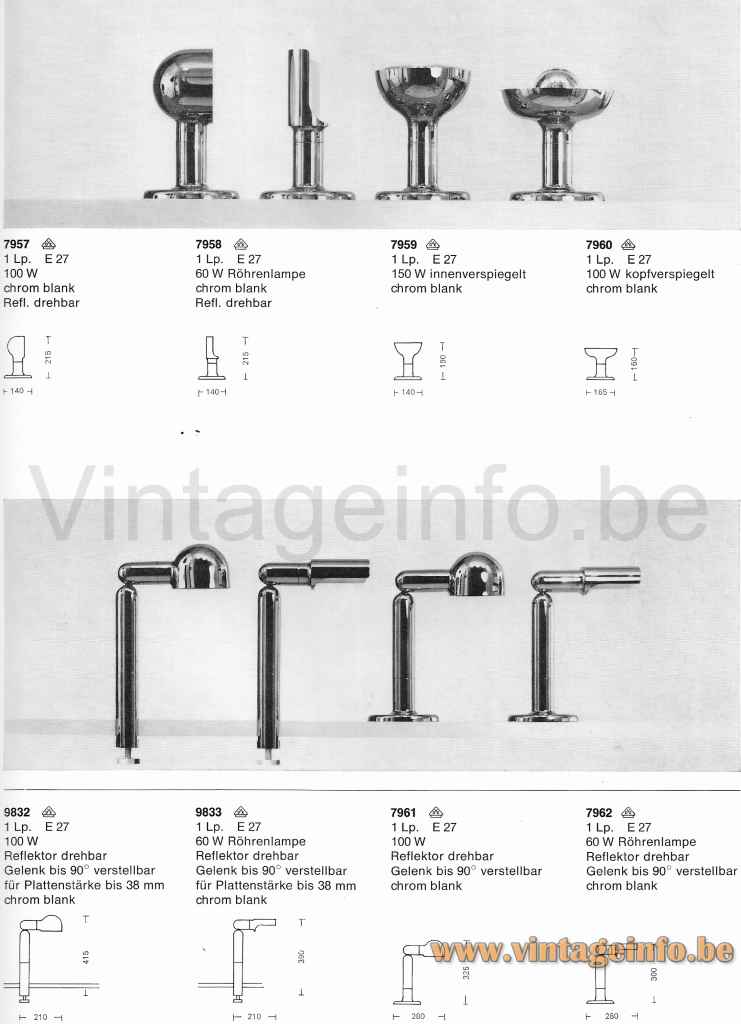
Cosack globe table lamp – 1970 catalogue picture
It is model 7959. Here together with models 7957, 7958, 7960, 7961, 7962, 9832 and 9833. Model 7962 received an iF Design Award in 1972.
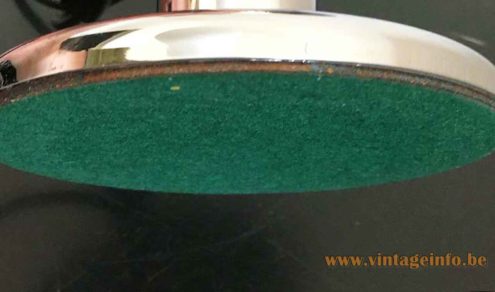
Many thanks to Frank from nullviernull raum+kommunikation for the pictures. You can find his shop over here on Pamono.
Many thanks to Max from AfterMidnight for the catalogue picture.
Cosack Globe Table Lamp
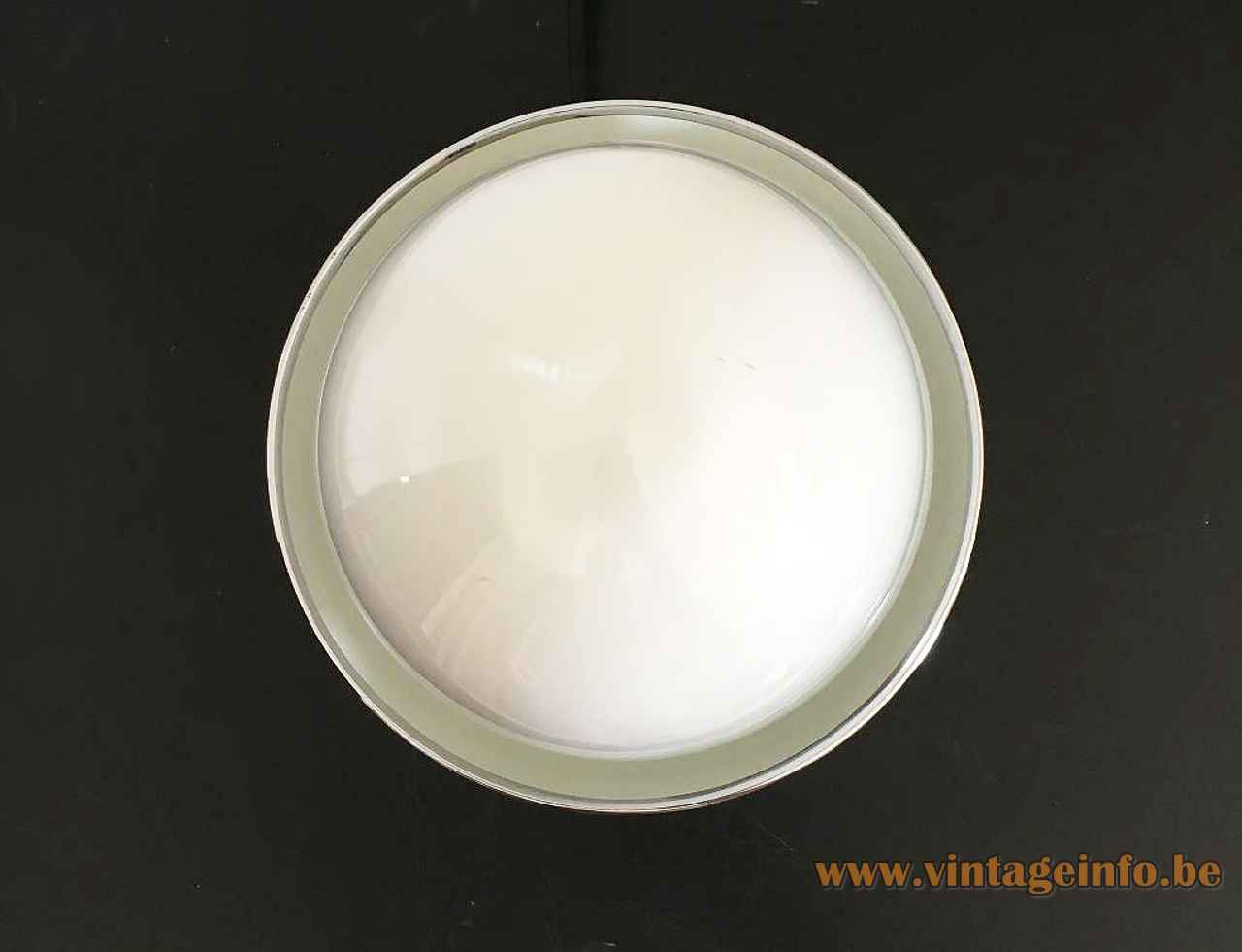
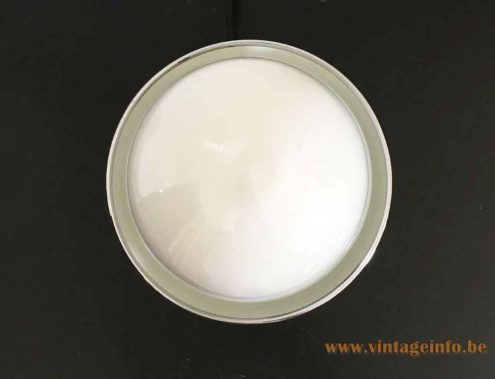
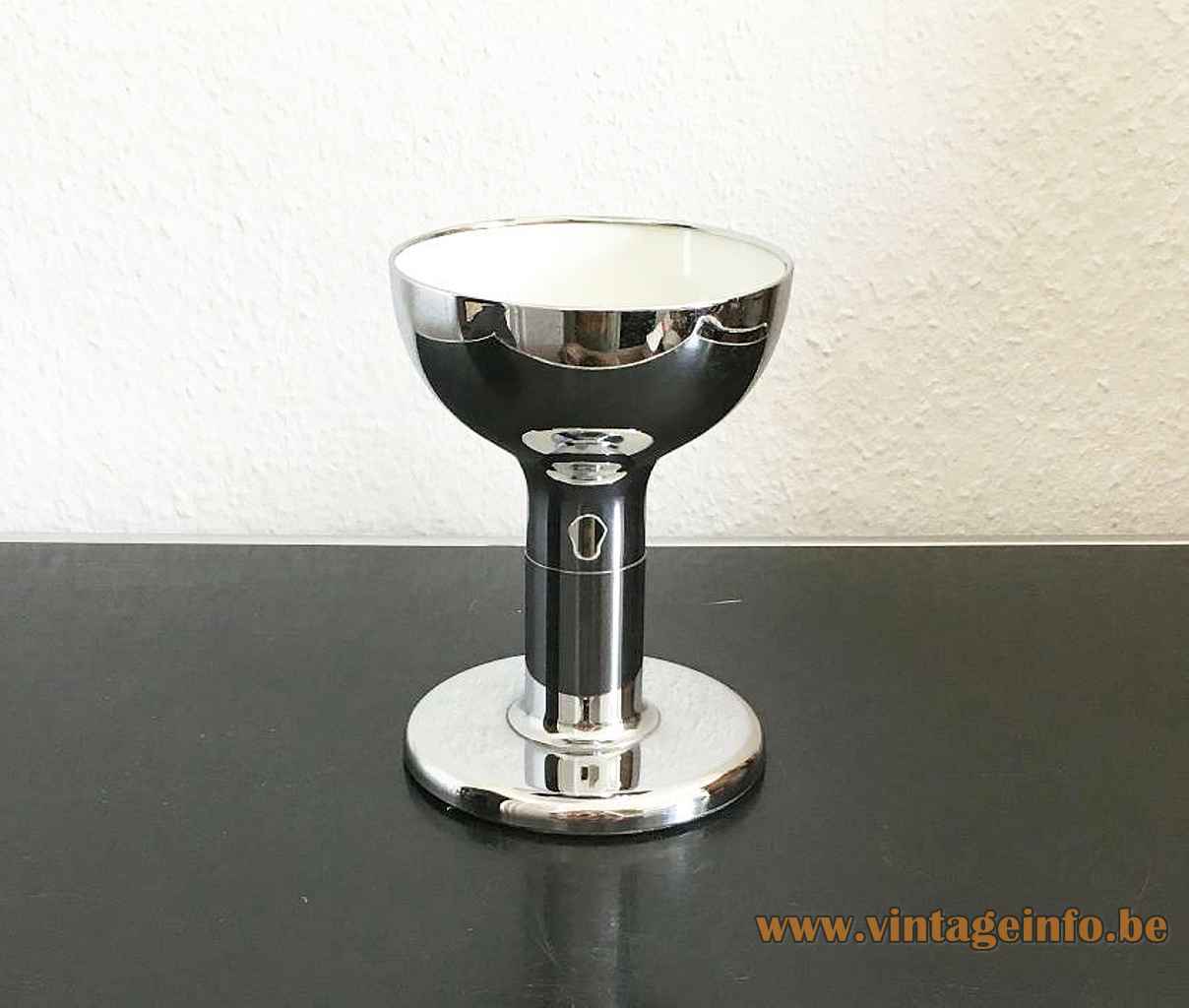
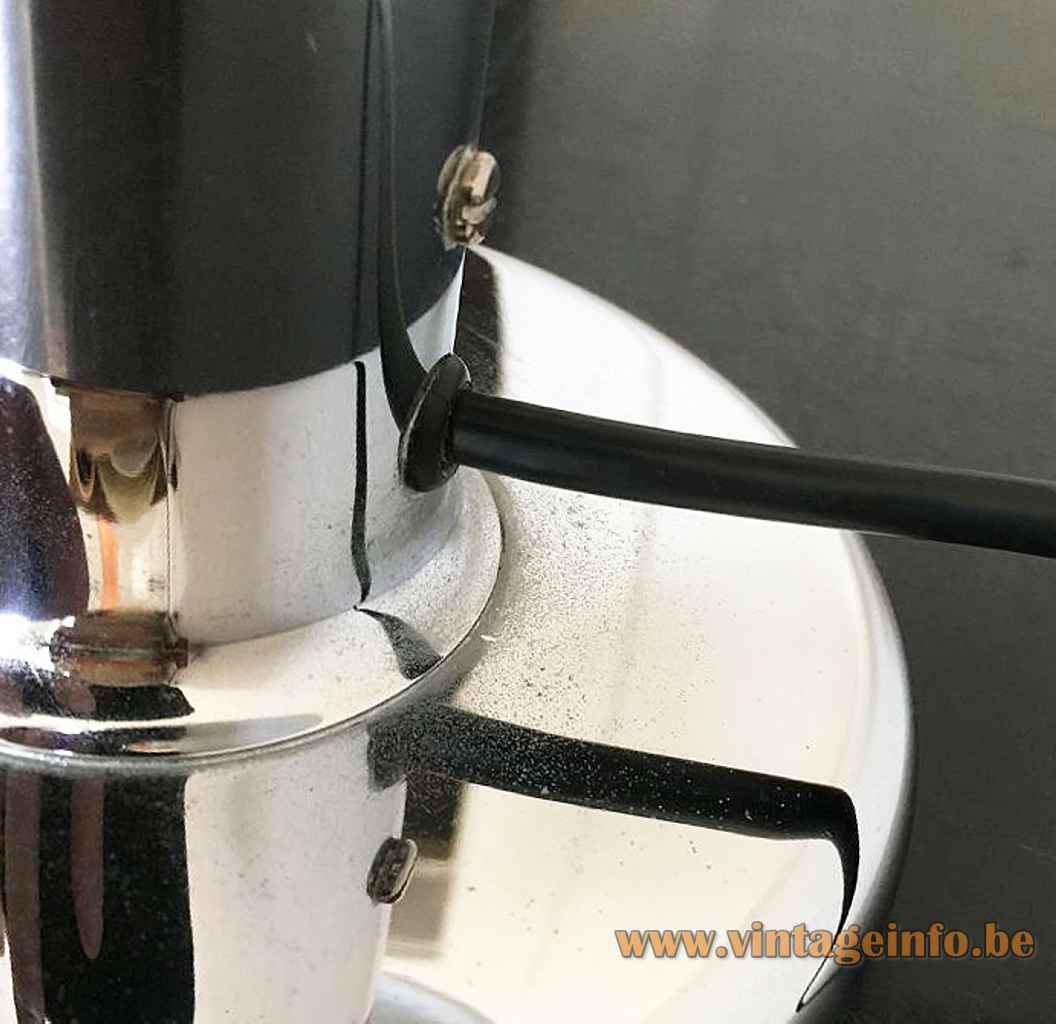
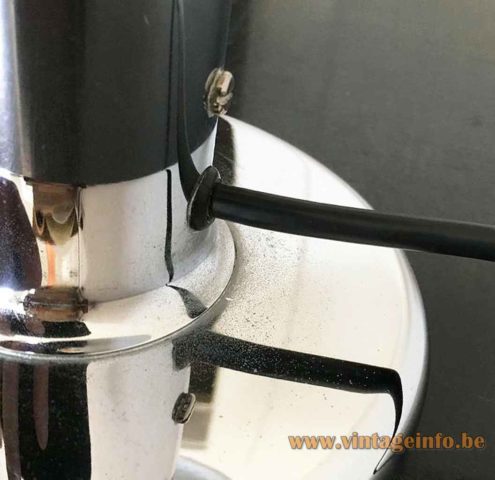
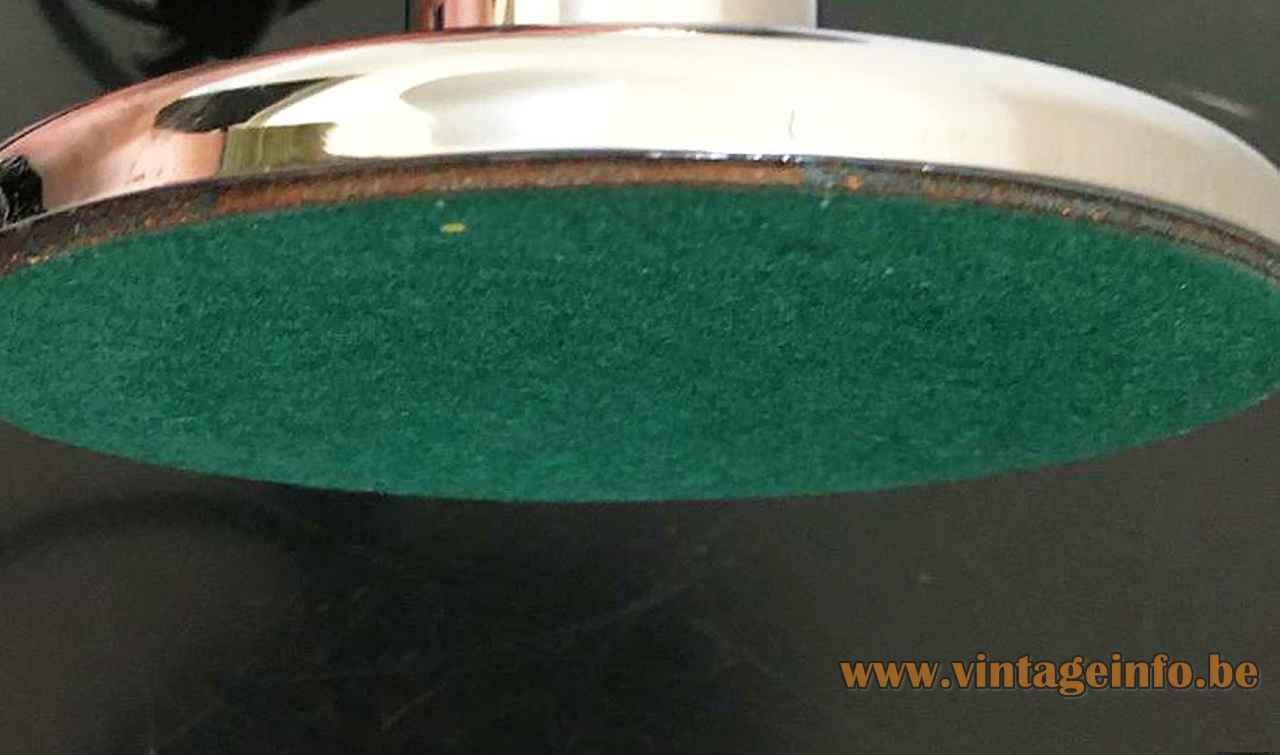
Materials: Round & flat chromed metal (iron) base. Cast iron counterweight inside. Thick chrome rod and “chalice”. It is painted white inside. White opal glass globe lampshade. Metal E27 socket.
Height: 25,5 cm / 10.03”
Lampshade: ∅ 16,5 cm / 6.49”
Base: ∅ 16,5 cm / 6.49”
Electricity: 1 bulb E27, 1 x 150 watt maximum, 110/220 volt.
No specific type of light bulb is required; different types can be used.
Period: 1970s – Mid-Century Modern.
Designer: Ursula Stürzenhofecker.
Manufacturer: Gebrüder Cosack, Neheim-Hüsten, Germany.
Other versions: This Cosack globe table lamp exists in several variations en heights.
Cosack Leuchten (Gebrüder Cosack)
Gebrüder Cosack was a long-established German lighting manufacturer based in Neheim-Hüsten (today part of Arnsberg, North Rhine-Westphalia), one of the historic centres of the German lighting industry. The company is widely regarded as the oldest lamp factory in Neheim.
The firm was founded in 1848 by Theodor Cosack, Egon Cosack and Friedrich Cosack as a metal-processing company in Neheim-Hüsten. In its early years, the business produced lighting equipment, including oil and safety lamps, alongside other metal goods. The company later also operated a foundry, enabling the in-house production of cast metal components.
Archival records document Cosack’s continuous activity from the 19th century onward, including a cashbook covering the years 1872–1882 and a copy book from 1905/06. These sources underline the company’s long industrial history and its early importance within the Neheim lighting industry.
After the Second World War, Gebrüder Cosack repositioned itself and followed a modern design direction. During the post-war years the company briefly used the GECOS name and logo as a form of post-war branding. By the late 1950s the company had returned to using the name Cosack Leuchten, as confirmed by surviving catalogues.
During the post-war decades, Cosack became particularly well known for high-quality interior lighting, often executed in brass and copper, and widely used in restaurants, cafés and public interiors. The company combined solid industrial manufacturing with contemporary design and careful material choices.
Designers associated with Cosack include Gottfried Stürzenhofecker, Ursula Stürzenhofecker, K. H. Kinsky, Hans Wilfried Hegger, Hans-Joachim Groth, Burkhard Panteleit, Joachim O. Becker, Prof. Friedrich Becker, Waldemar Rothe and Jan Armgardt.
Cosack received numerous design awards and is credited with 15 iF Design Awards, confirming its importance within post-war German industrial design. Several Cosack lamps were also exhibited in major design contexts, such as the exhibition “Die gute Industrieform”.
The company is generally reported to have gone bankrupt in 1984. Nevertheless, catalogues from as late as 1989–1990 are known, indicating that Cosack lighting products continued to be marketed into the late 1980s.
Some Cosack lamps were also sold in Belgium, where they appear in catalogues of the Belgian company Boulanger. Cosack lamps also appeared in the catalogues of the American lighting company Koch + Lowy, indicating that several Cosack designs were distributed in the United States.
Note: the name GECOS should be understood as a temporary post-war brand name used by Gebrüder Cosack, not as a separate company and not as the original or permanent company name.
Links (external links open in a new window)
If Design Awards for Gebrüder Cosack
Vintageinfo
Glass globe table lamp model 7974
Wrinkle paint bedside table lamp
Cosack Globe Table Lamp – Company Labels