- Categories
- Categories
Last 5 Viewed
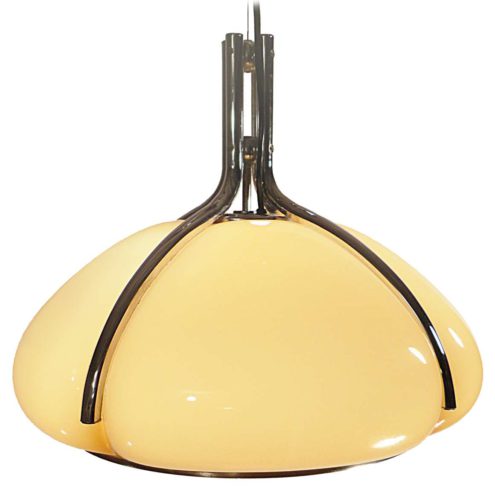
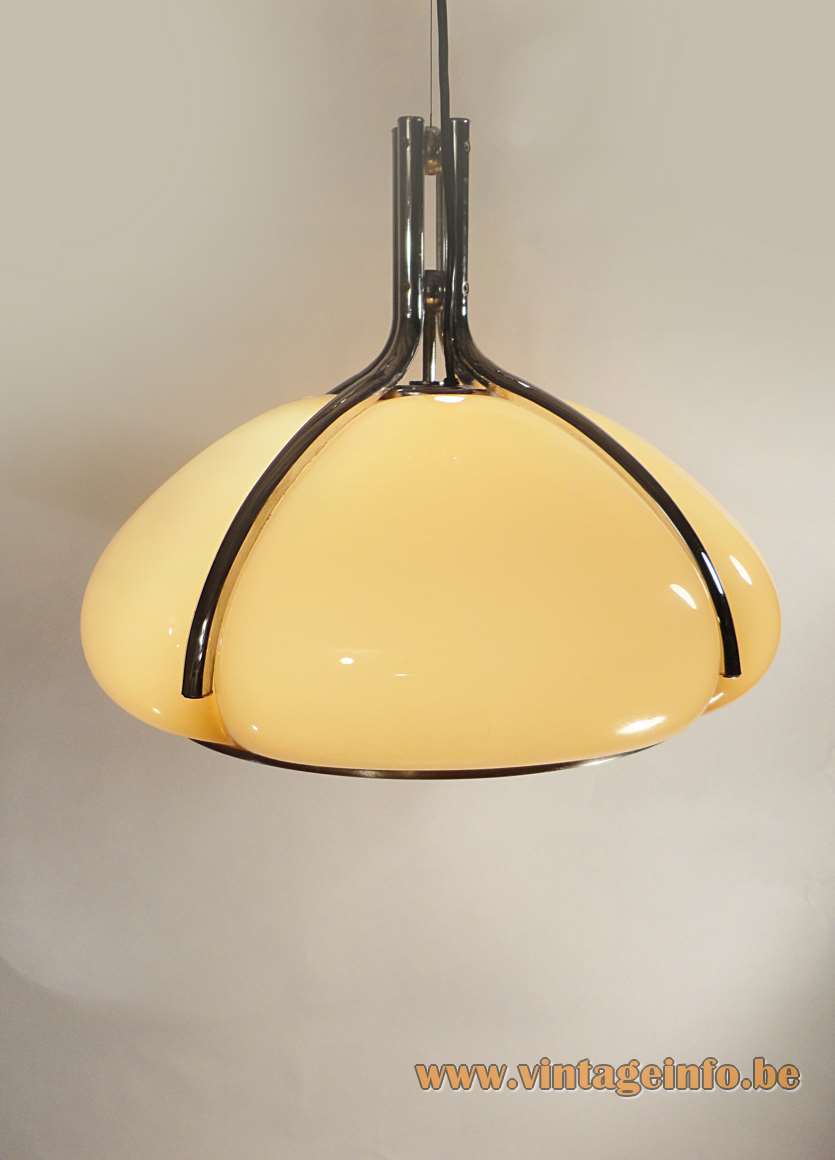
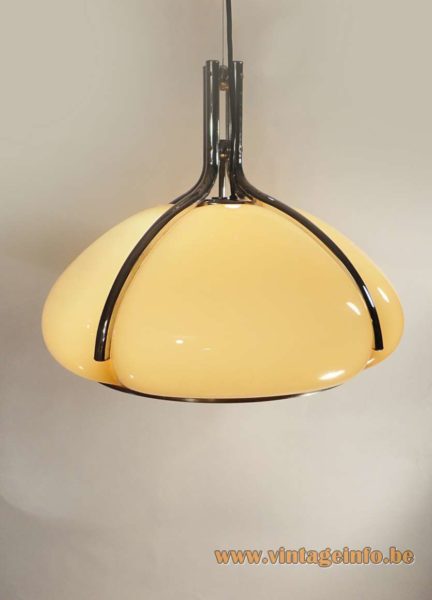
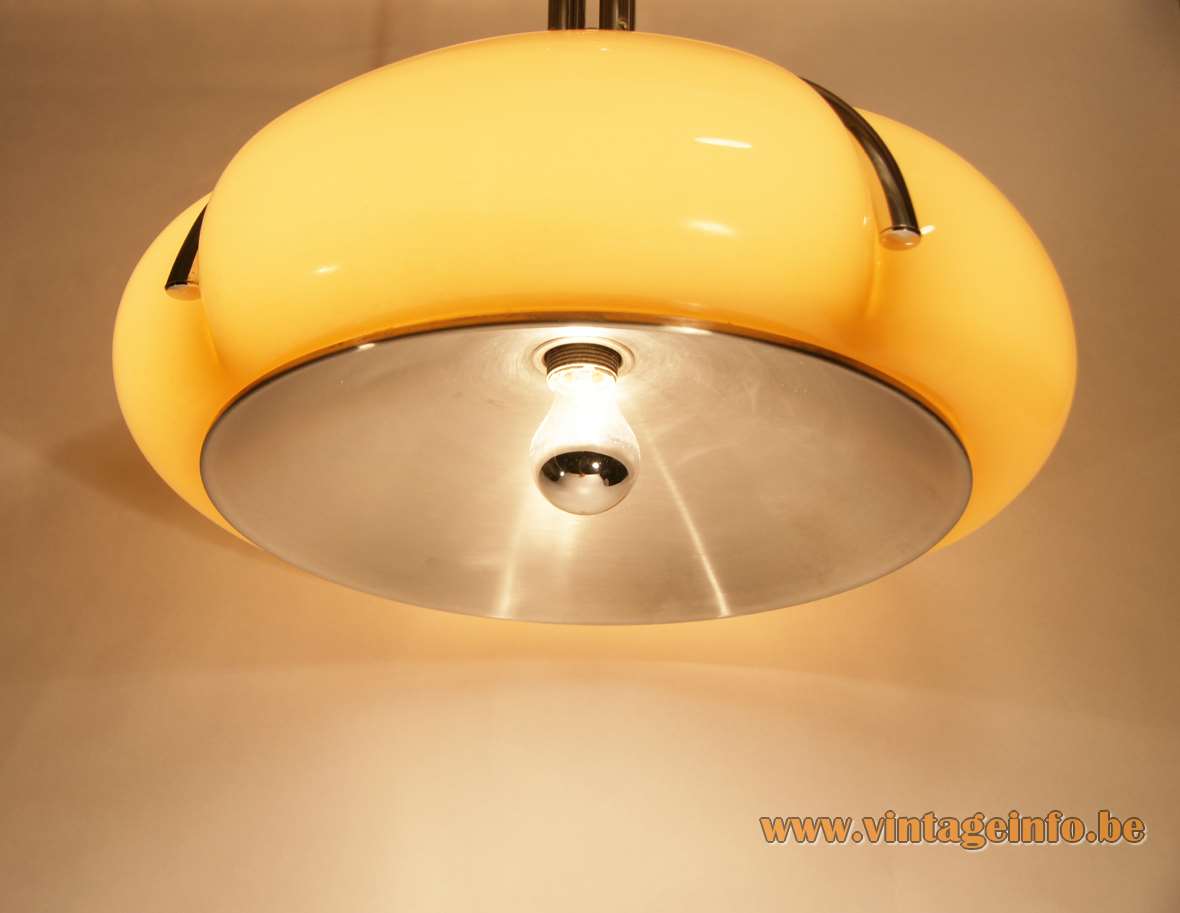
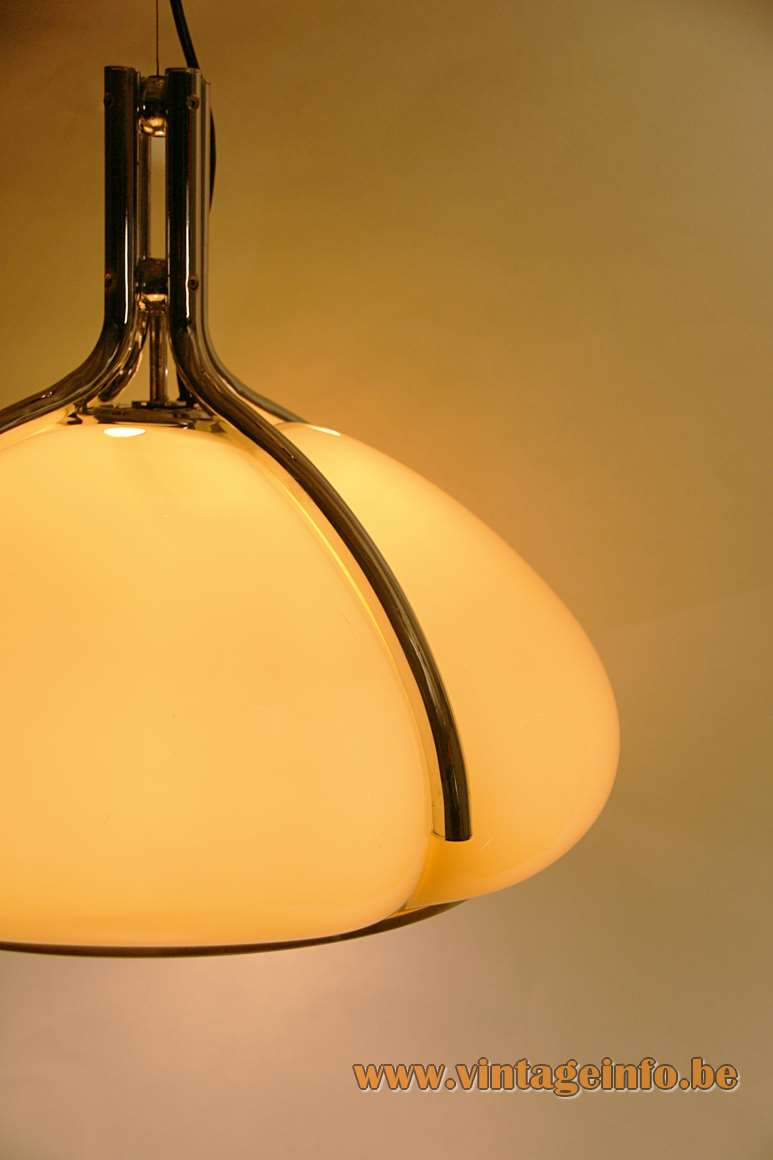
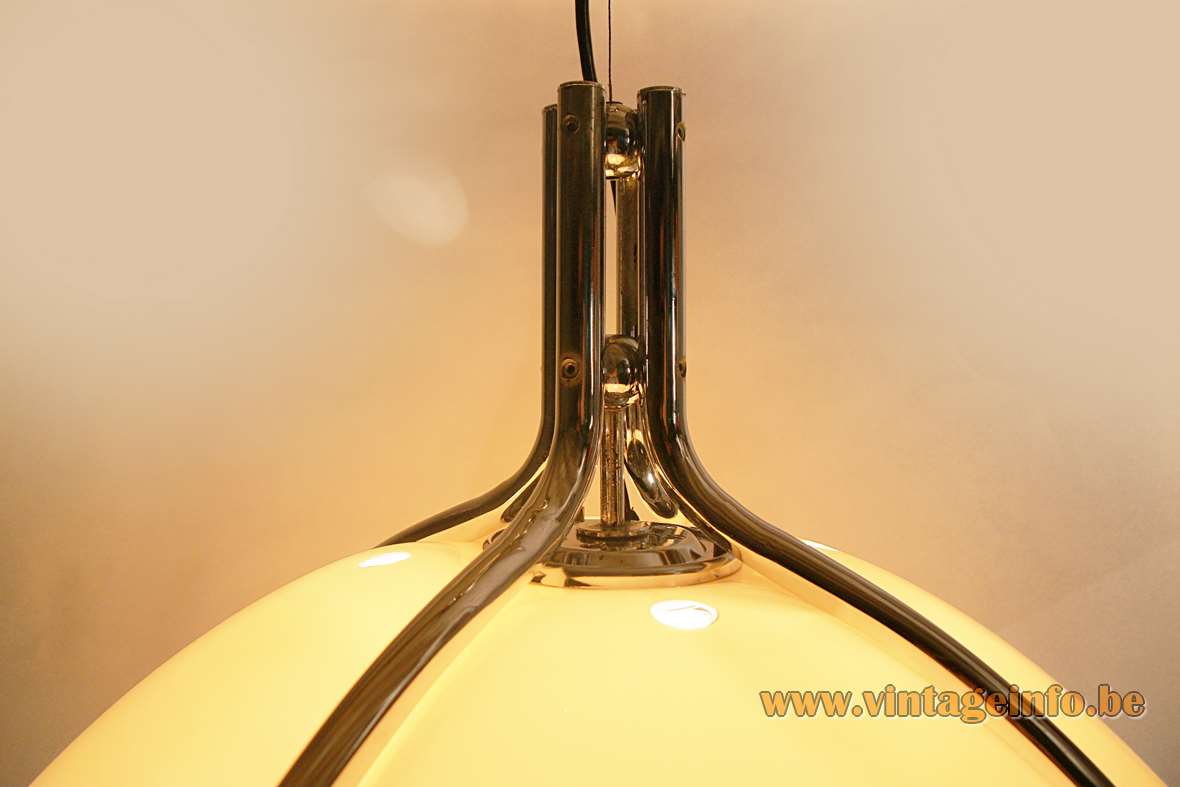
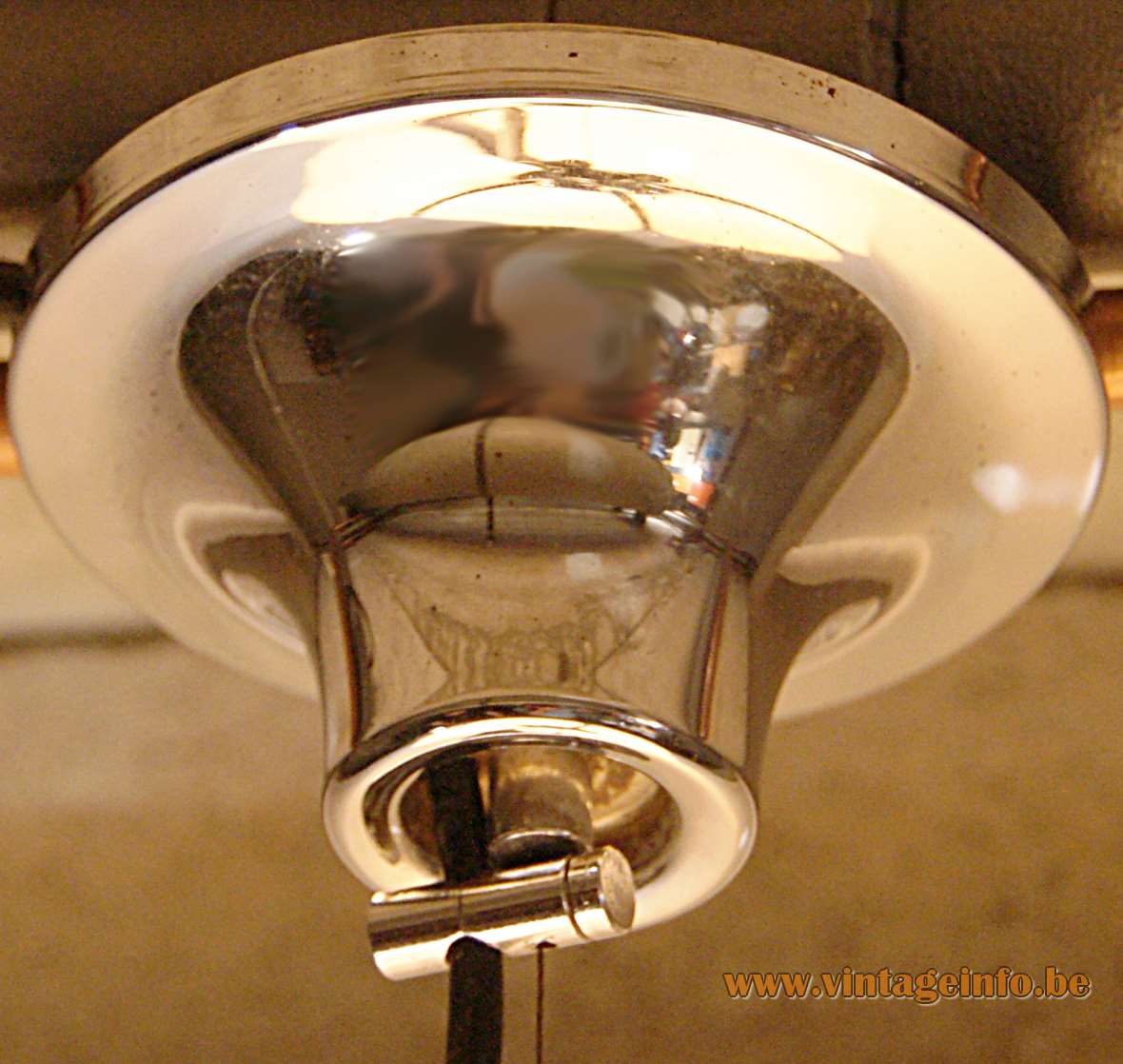
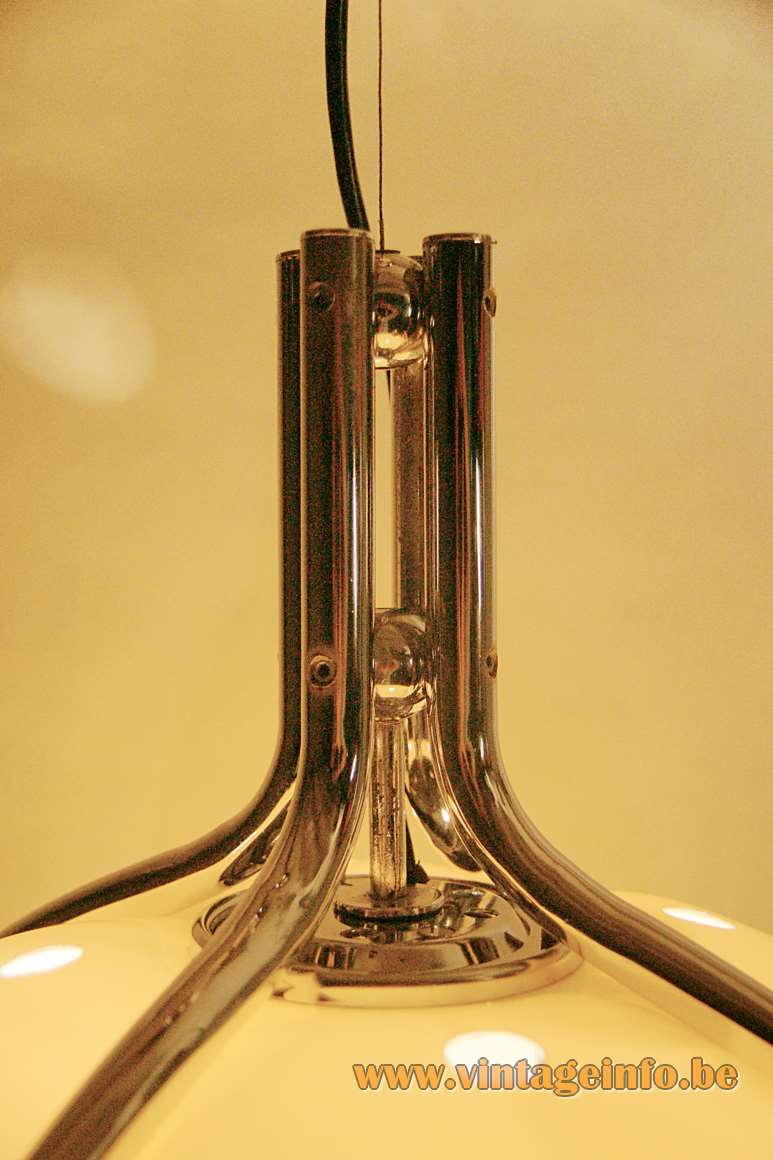
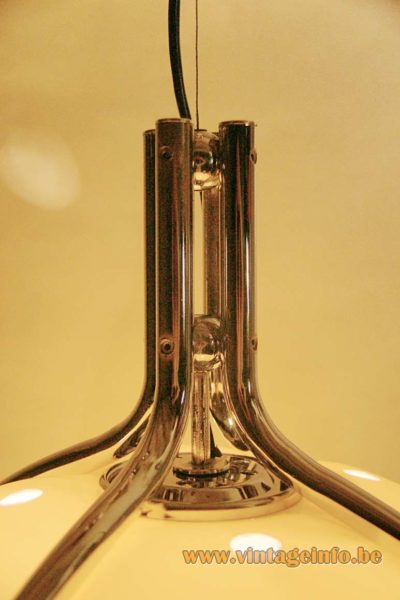
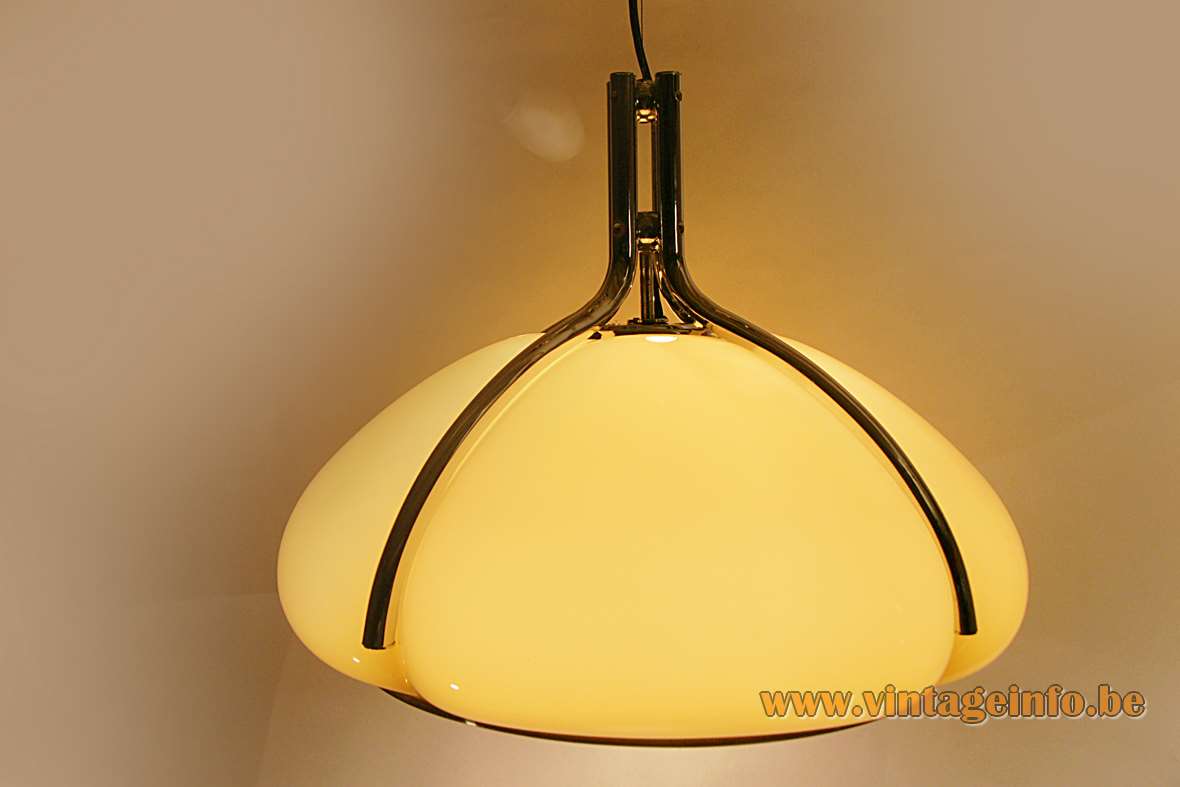
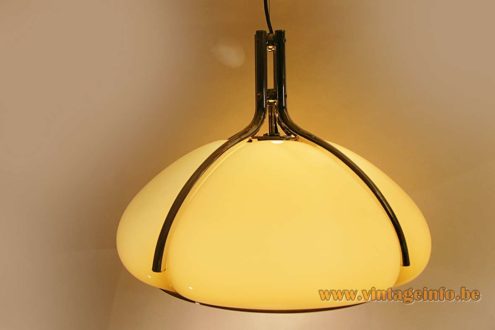
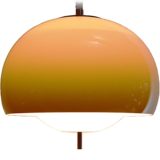
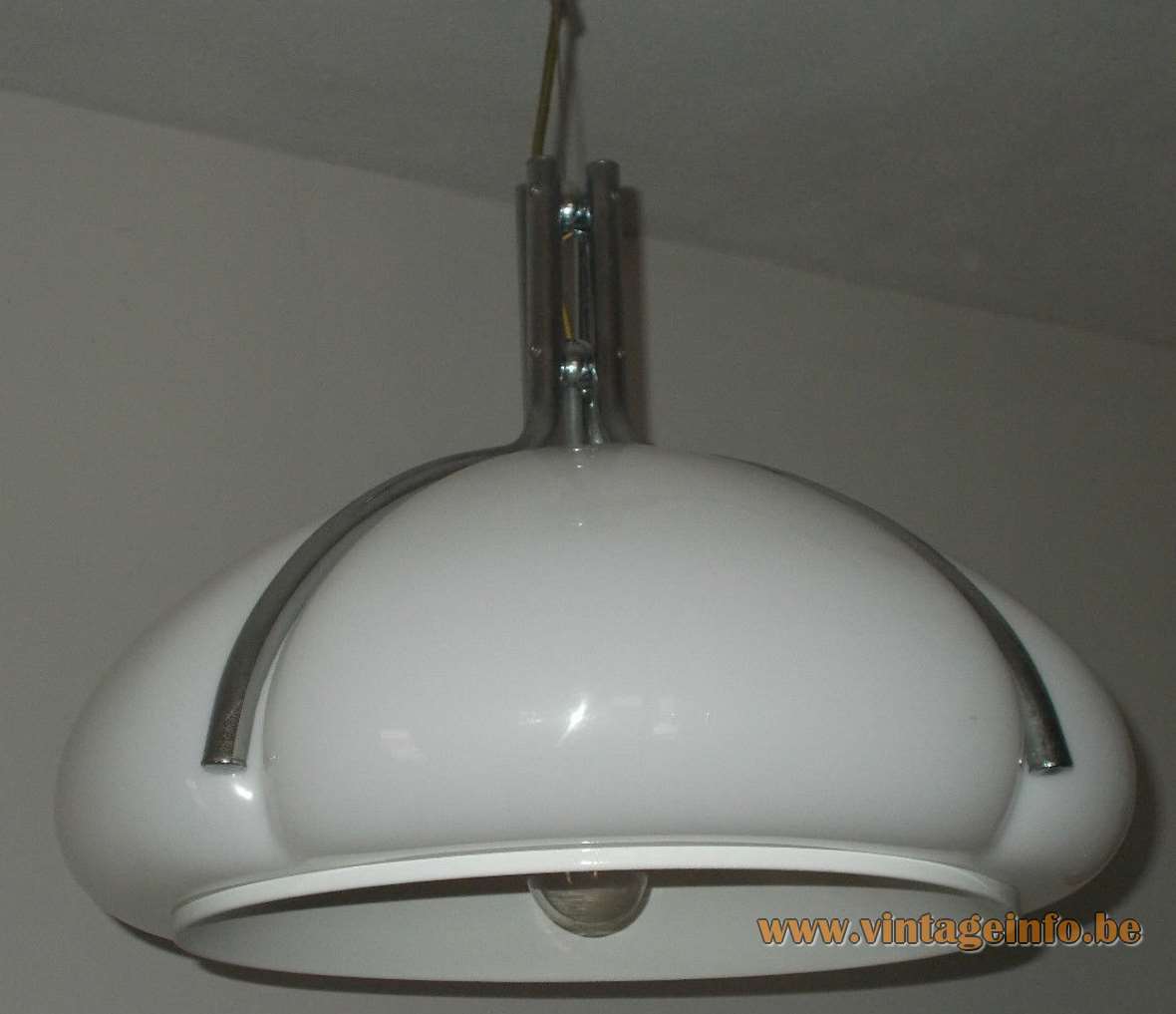
Harvey Guzzini Quadrifoglio Pendant Lamp
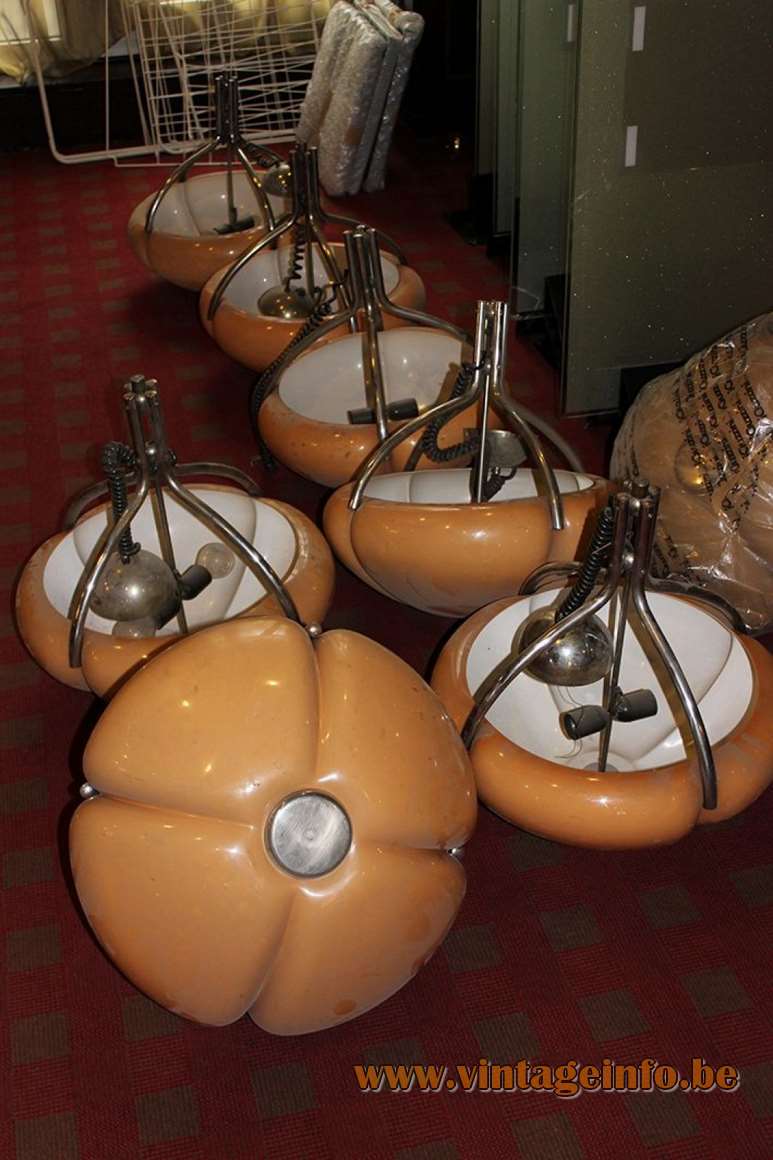
Harvey Guzzini Quadriofoglio pendant lamps used in a café in Paris, France. As you can see these lamps were rebuild to hang upside down.
Lamps In The Movies
Endeavour TV series season 7 episode 2 (2020)
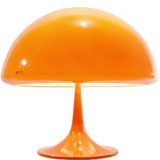
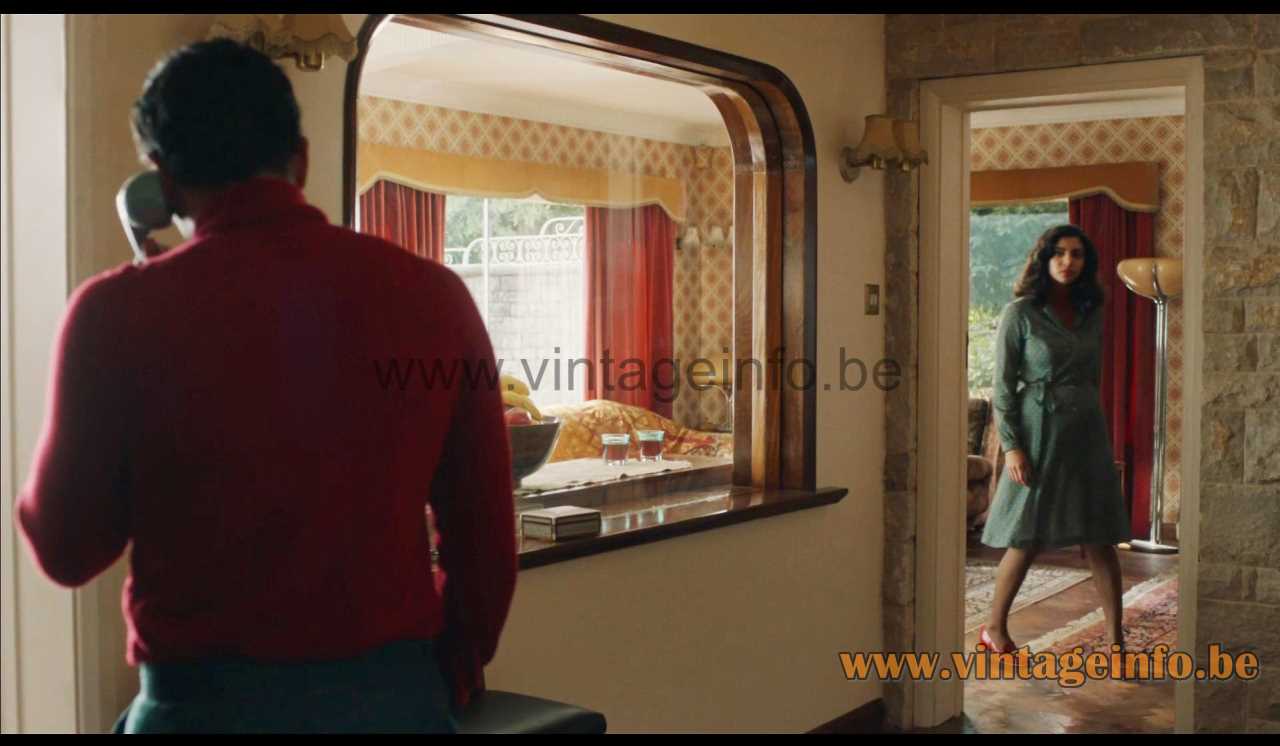
The Quadrifoglio table and floor lamp were used as a set decoration in the Endeavour TV series season 7 episode 2 (Raga) from 2019, aired in 2020. Many lamps appear in this episode which is situated in 1970. Among others the FLOS IC floor lamp designed by Michael Anastassiades in 2014…
Un Éléphant Ça Trompe Énormément (1976)
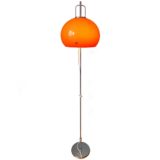
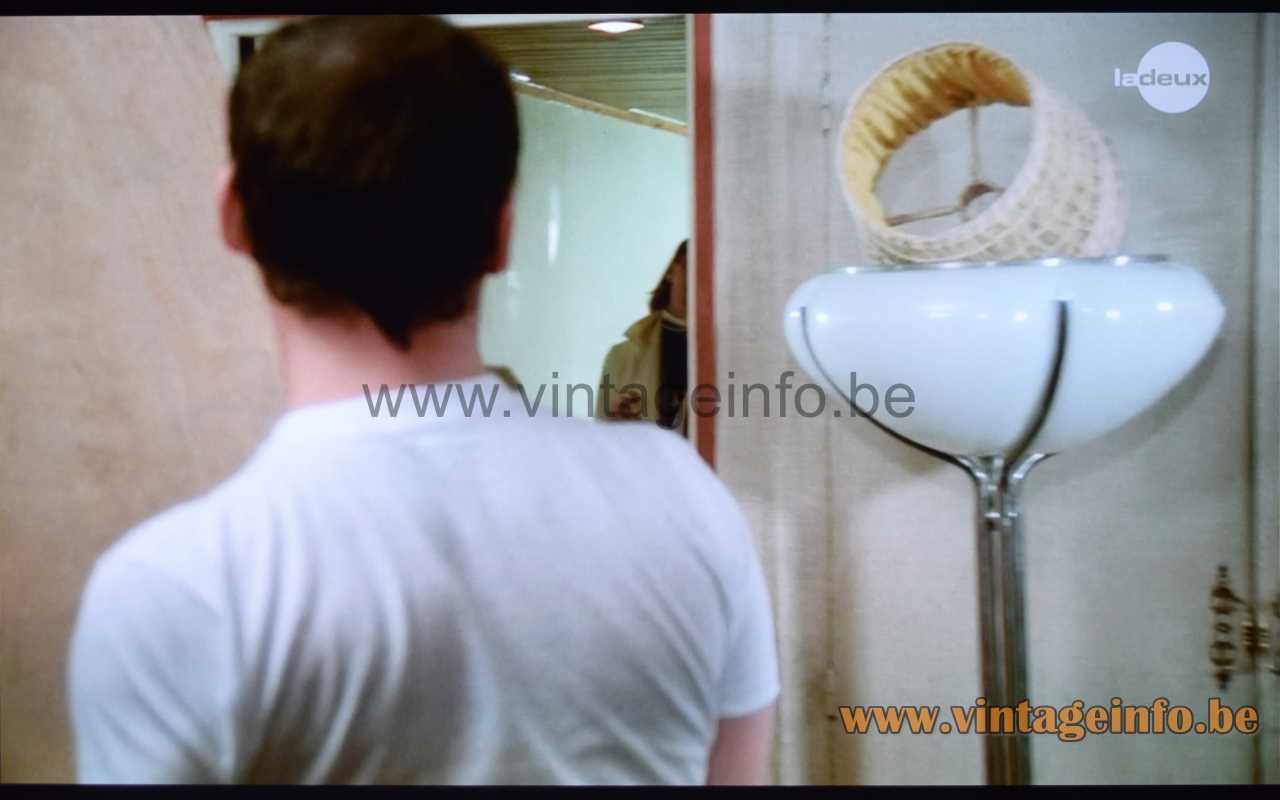
A Quadrifoglio floor lamp was used as a set decoration in the 1976 French comedy film Un Éléphant Ça Trompe Énormément (Pardon Mon Affaire). Starring Jean Rochefort, Claude Brasseur and Guy Bedos. Many other lamps appear in this movie.
The Infiltrator (2016)
Two Quadrifoglio floor lamps were used as a set decoration in the 2016American biographical crime drama film The Infiltrator. Starring: Bryan Cranston, Diane Kruger and Benjamin Bratt.

Black Doves (2024)
A Quadrifoglio table lamp was used as a set decoration in the 2024British spy thriller television series Black Doves (season 1, episode 4). Starring: Keira Knightley, Ben Whishaw and Sarah Lancashire.
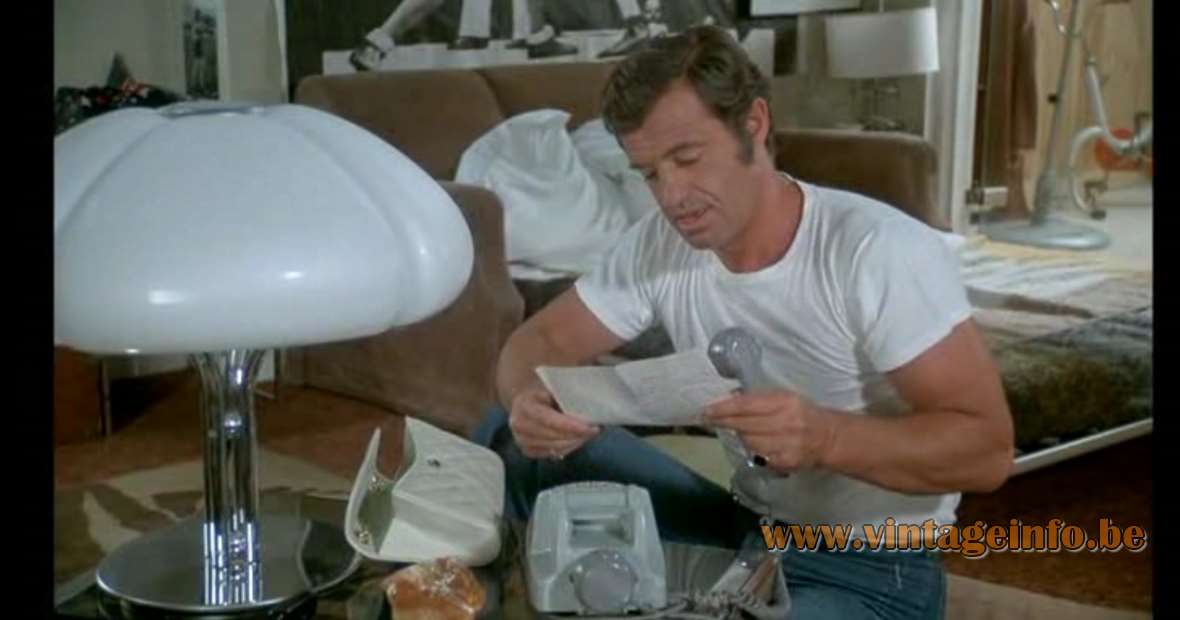
Le Corps De Mon Ennemi (1976)
The Quadrifoglio table lamp was used as a set decoration in the French film Le Corps De Mon Ennemi (Body of my enemy) from 1976 with Jean-Paul Belmondo. Many Harvey Guzzini lamps together with Stilnovo and Raak lamps appear in this movie.
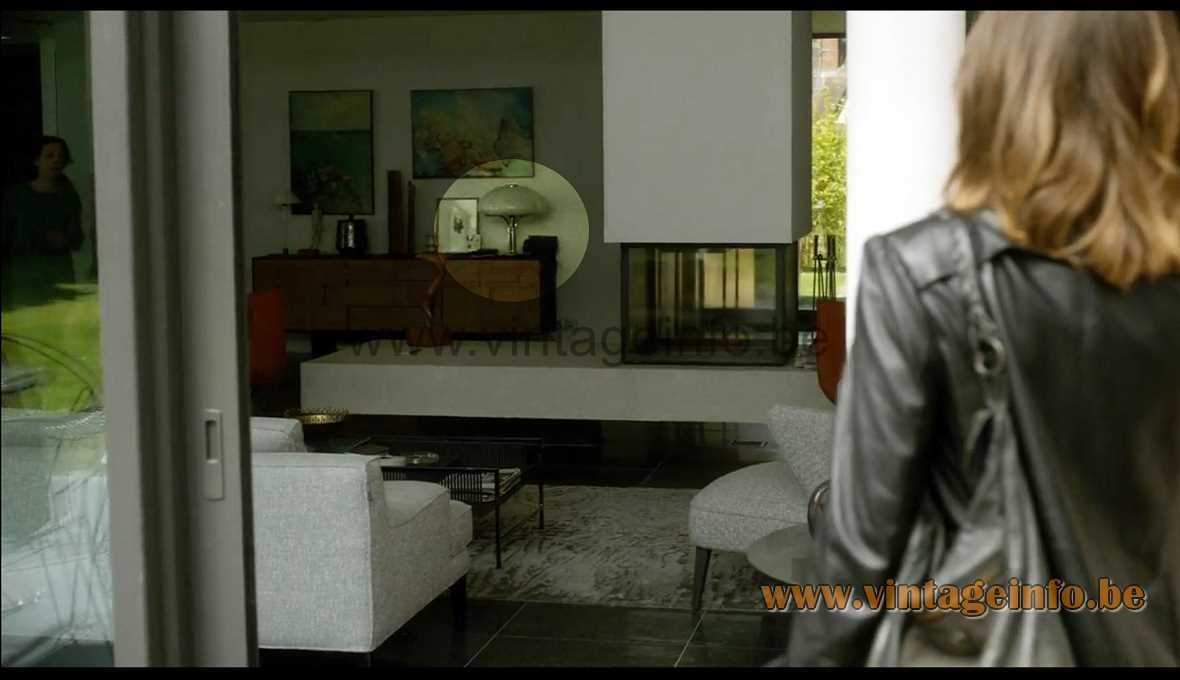
Dix Pour Cent TV Series S3E1 (2018)
The Quadrifoglio table lamp was used as a set decoration in the French TV series Dix Pour Cent (10%). English title: Call My Agent. Here in episode 1 of season 3 (2018).
The Little Drummer Girl (2018)
The Quadrifoglio table lamp and floor lamp were used as a set decoration in The Little Drummer Girl, a TV Mini-Series from 2018. Based on the novel of the same name by John le Carré published in 1983.


Abigail (2019)
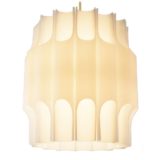
A Harvey Guzzini Quadrifoglio style pendant lamp was used in the 2019Russian steampunk fantasy adventure film Abigail. Starring Yevgeny Melentyev, Viktor Denisyuk and Aleksandr Kurinsky. This pendant lamp has wood rods instead of chrome rods and it has a slightly different shape and it is without the chrome diffuser below. In all probability it is a former Eastern Bloc country lamp. It is not made by Harvey Guzzini or Meblo. These lamps always appear in these countries.

Harvey Guzzini Quadrifoglio Pendant Lamp
Materials: Brown degrading plastic (acrylic) lampshade, white on the inside. 4 chromed metal (iron) curved rods. Chrome reflector. Chrome canopy. Steel wire. 3 Bakelite sockets.
Cord Length: 80 cm / 31.49’’
Height: 46 cm / 18.11”
Width: ∅ 50 cm / 19.68”
Electricity: 2 bulbs E14, 2 x 60 watt maximum (inside the lamp shade) and 1 bulb E27, 1 x 75 watt maximum (below under the diffuser) – 110/220 volt.
Any type of light bulb can be used, but white or frosted bulbs are preferred for the E14 bulbs inside the acrylic lampshade. A silver cupped light bulb below. The lights can work separately if the wiring in the house is provided for this purpose.
Period: 1960s, 1970s – Mid-Century Modern.
Designer: Studio 6G, the Harvey Guzzini design-team led by Luigi Massoni.
Manufacturer:Harvey Guzzini, Recanati, Italy, today named iGuzzini.
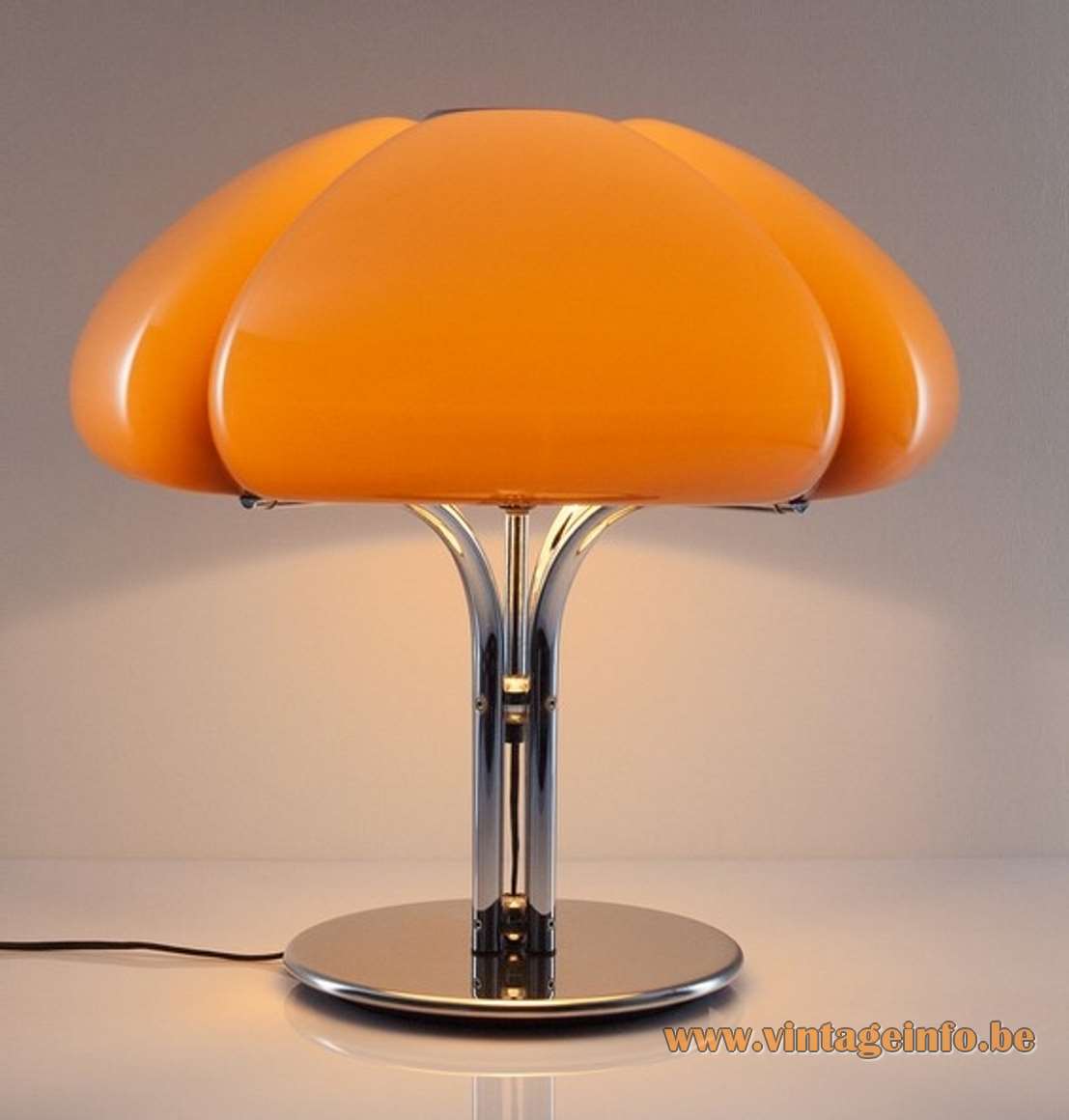
Other versions: The Harvey Guzzini Quadrifoglio pendant lamp exists also as a floor lamp and table lamp. It was at least also made in white, yellow, green and orange. A version exists with a white metal diffuser instead of a chrome one.
Quadrifoglio, the Italian word for four-leaf clover.
Gae Aulenti
This Harvey Guzzini Quadrifoglio pendant lamp is often attributed to Gae Aulenti (1927-2012), but those are false assumptions. Gae Aulenti started to work for the iGuzzini company in 1983 and created together with Piero Castiglioni the (industrial) Cestello lamp series for the Palazzo Grassi in Venice, Italy; 15 years after the Quadrofoglio was designed. Source: the website of iGuzzini and the book: “Culture of an Italian Region. The Marche, Guzzini and design“, written by Augusto Morello, published in 2002. The Cestello lamp series was in production from 1985 until 1992.
The Quadrifoglio pendant lamp has some similarities with the Pipistrello lamp Gae Aulenti designed for Martinelli Luce. Most likely the story originated that way. Several designer books are wrong, unfortunately.
USSR
The Russians made a copy of it, or better, a pendant lamp in this style. Also in acrylic, but with wooden rods instead of chrome.
Acrylic: often named by its commercial name: Perspex, Plexiglas, Crylux, Acrylite, Lucite, is a thermoplastic.
Project year: 1968
Table Lamp
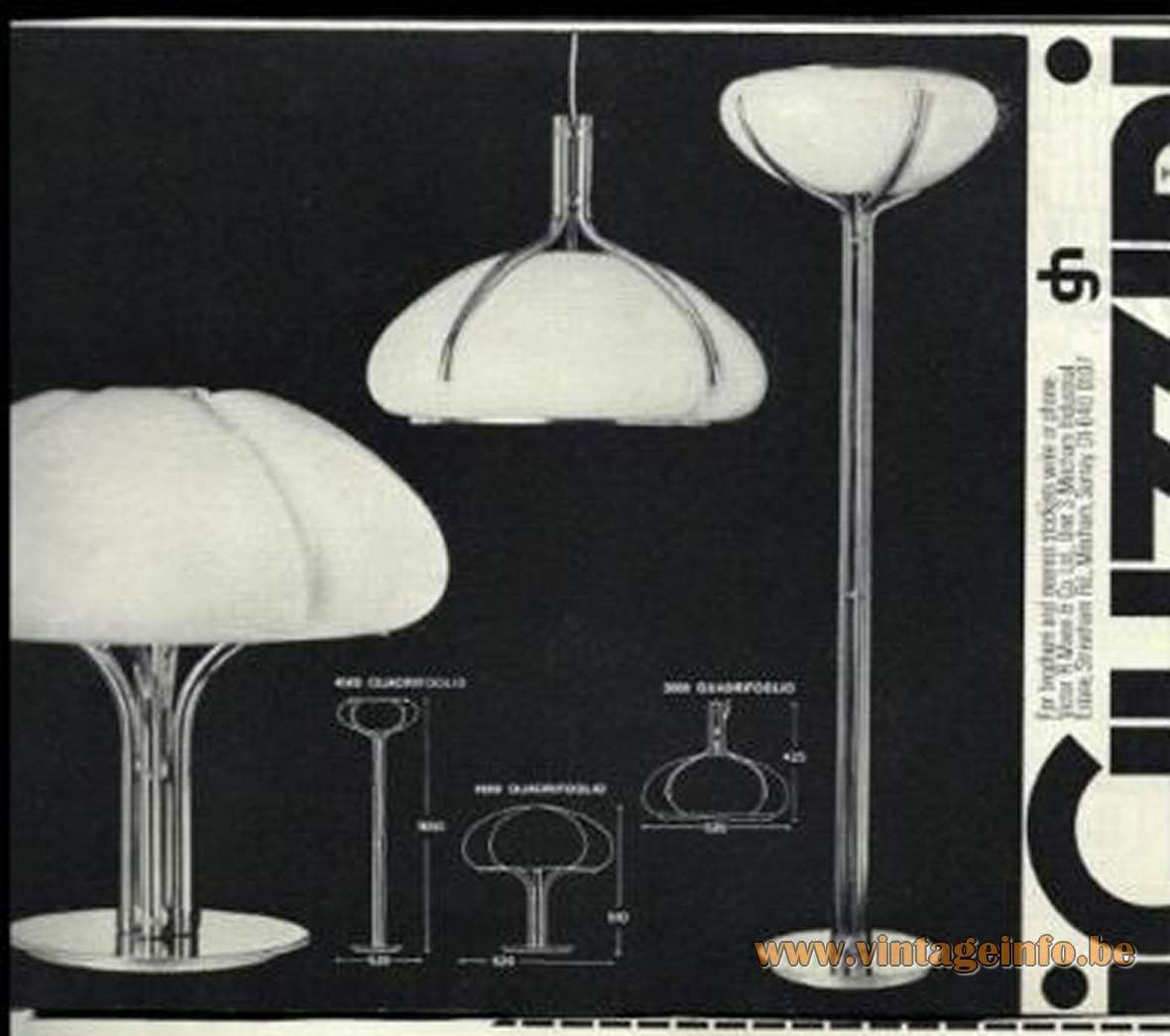
Commercial code: 4000
Produced: 1968 – 1978
1968 – +- 1972: 3 E14 sockets
1972 – 1978: 1 E27 socket
Floor Lamp
Commercial code: 4500
Produced: 1968 – 1976
Pendant Lamp
Commercial code: 3000
Produced: 1968 – 1978
Harvey Guzzini Quadrifoglio Pendant Lamp – 1970s Catalogue Picture
Harvey Guzzini / iGuzzini illuminazione
In the late 1950s the Guzzini family from Recanati (Marche, Italy) set up a small workshop for enamelled copper objects. On 30 June 1959 the brothers Raimondo, Giovanni, Virgilio, Giuseppe and Giannunzio Guzzini, sons of Mariano Guzzini, officially founded Harvey Creazioni for the production of decorative copperware. The name “Harvey” was inspired by the 1950 film Harvey with James Stewart and his imaginary rabbit friend.
Very soon the company moved from the ground floor of the family home in Recanati to a new factory in nearby Le Grazie, where the first lamps were developed. Early lighting models were designed by external designers such as Karl Roters and Charles F. Joosten (Josteen), who had already worked for Fratelli Guzzini on plastic tableware.
In the early 1960s Harvey became a true family business when more brothers joined, and in 1962 industrial designer Luigi Massoni was brought in to lead the design team. Massoni worked for both Fratelli Guzzini and Harvey Guzzini until the mid-1970s and played a key role in the transition from enamelled copper to moulded plastics such as polymethyl methacrylate (PMMA). Under his direction the company developed many of the iconic “space age” domestic lamps that defined the brand.
During the 1960s and 1970s Harvey Guzzini became one of the standard-bearers of Italian mid-century lighting design. The in-house design office, often referred to as Studio 6G or Ufficio Progetti, and external designers created a long series of acrylic pendant, table and floor lamps that combined coloured domes, chrome details and multi-light switching. These domestic lamps were distributed widely in Europe and beyond, for example through Habitat in the UK.
Design House
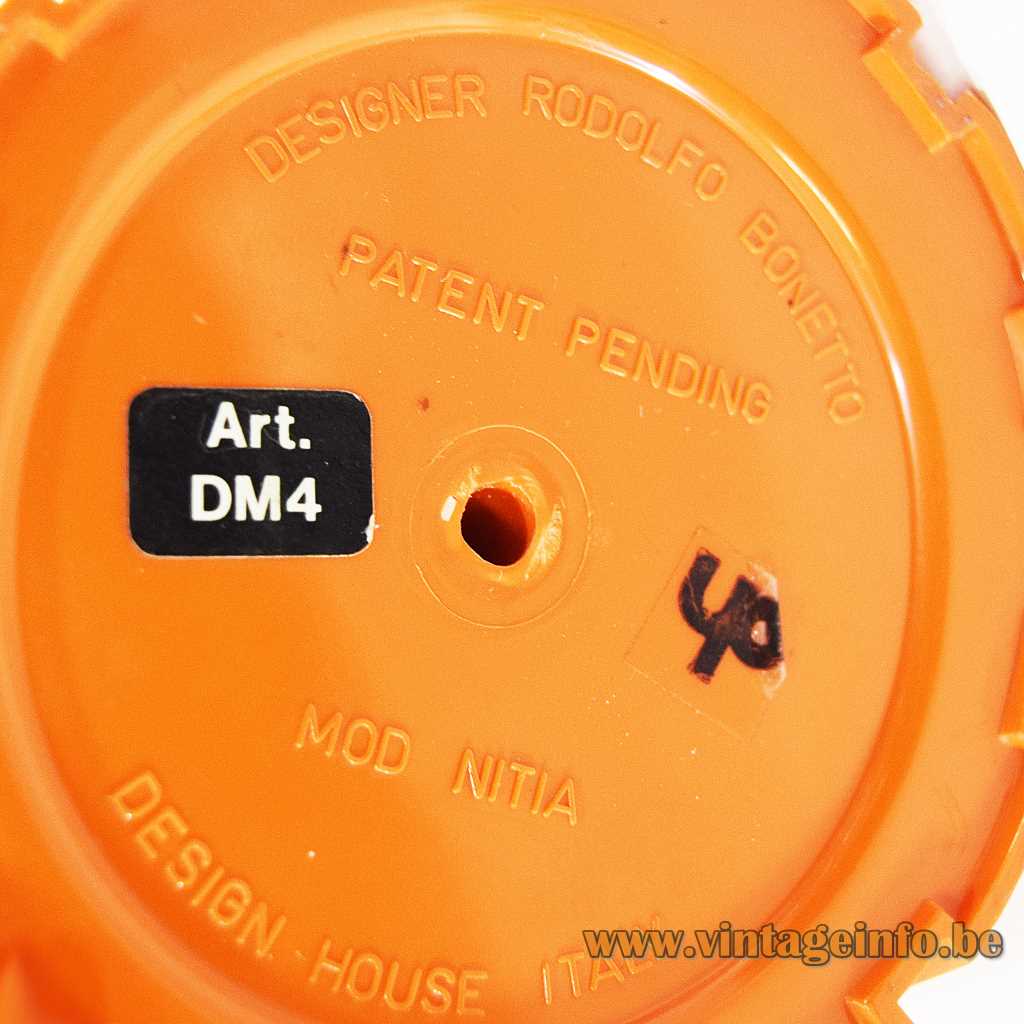
In the late 1960s Harvey Guzzini also introduced the Design House (DH) label for a more explicitly “design-led” range. Under this name, the company presented its products at international exhibitions and in dedicated Design House catalogues. Lamps shown in one of these catalogues include Alicante, Noppo, Ibis, Azalea, Cigno, Moon, Selene, Poliedra, Focus, Tam Tam, Squared, Taw, Cespuglio, Nastro, Moana, Nitia, Lampione, Lucciola, Piuma and Diaframma. In 1969, Harvey Guzzini also opened a Harvey Guzzini – DH store in central Milan, underlining the more design-oriented positioning of this range.
Harveiluce
Around the same period, the Harveiluce name appeared on several models, sometimes alongside or later replaced by Harvey Guzzini or iGuzzini labels. Harveiluce was thus used only for a relatively short time in the late 1960s and early 1970s, mainly as another trade name for the same family of designs that would later be marketed under the iGuzzini brand.
DOMA
In the 1970s iGuzzini also used the Doma name for a line of plastic furniture and accessories. The Doma collection included space age storage trolleys, coat racks, chairs, ashtrays and decorative spheres, often in injection-moulded ABS with metal details, designed by Luigi Massoni, Dino Pelizza, Fabio Lenci and others. These pieces were marketed under the same corporate umbrella as Harvey Guzzini and iGuzzini lighting, and the iGuzzini logo introduced in 1974 covered products sold under sub-brands such as DH, Doma and Atelier.
iGuzzini
In 1974 the company name was changed from Harvey Guzzini to iGuzzini, and in 1981 to iGuzzini illuminazione. From the mid-1970s onwards the firm progressively shifted its focus from domestic “space age” lighting to architectural and technical lighting for public and professional spaces. Today iGuzzini is an international lighting group based in Recanati, known for collaborations with architects and designers such as Gae Aulenti, Gio Ponti, Rodolfo Bonetto, Piero Castiglioni and many others, and since 2019 it has been part of the Swedish Fagerhult Group.
In 2022–2023 iGuzzini launched the iGuzzini Echoes programme: a series of re-editions of classic 1960s–1970s designs, updated with LED technology and recycled / recyclable materials. The first models to return were Polsino (Gio Ponti, re-edition 2022) and Zurigo (Luigi Massoni, re-edition 2022), followed by Nitia (Rodolfo Bonetto, re-edition 2023), Clan (Flash, Bud, Clan) and Sorella (all credited to the historic Harvey / Harveiluce design team, re-edition 2023).
Although the brand identity and product range have evolved towards professional lighting, the vintage Harvey Guzzini domestic lamps from the 1960s and 1970s – as well as the recent Echoes re-editions – remain an important chapter in the history of Italian plastic design.
Designers
Designers who worked for the company include: Luigi Massoni, Luciano Buttura, Sergio Brazzoli, Ermanno Lampa, Giuseppe Cormio, Emilio Fabio Simion, Karl Roters, Charles F. Joosten, Fabio Lenci, Bruno Gecchelin, Gio Ponti, Rodolfo Bonetto, Gae Aulenti, Piero Castiglioni, Antonella Ducci Valera, Carlo Urbinati, Felice Ragazzo, Ennio Lucini, Cesare Casati, Gianfranco Frattini, Ambrogio Pozzi, Francesco Piccaluga, Aldo Piccaluga, Makio Hasuike, Renzo Piano, Dean Skira, Maurici Ginés, Artec Studio, Enzo Eusebi, Jean-Michel Wilmotte, Arup, Norman Foster, Mario Cucinella, Massimo Iosa Ghini, Massimiliano e Doriana Fuksas, Jean-Marie Duthilleul, Roberto Pamio, Paul Andreau, Giuseppe De Goetzen, Franco Bresciani, Studio D.A.
Quadrifoglio Floor Lamp
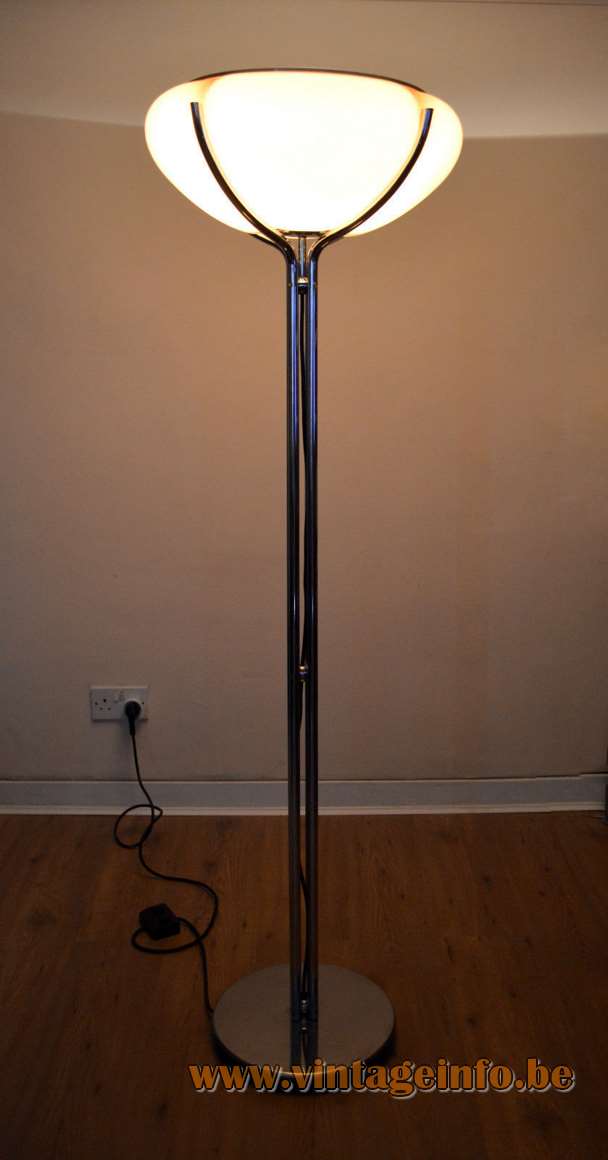
White Harvey Guzzini Quadrifoglio Pendant Lamp
Quadrifoglio Table Lamp
Meblo and Sijaj Hrastnik
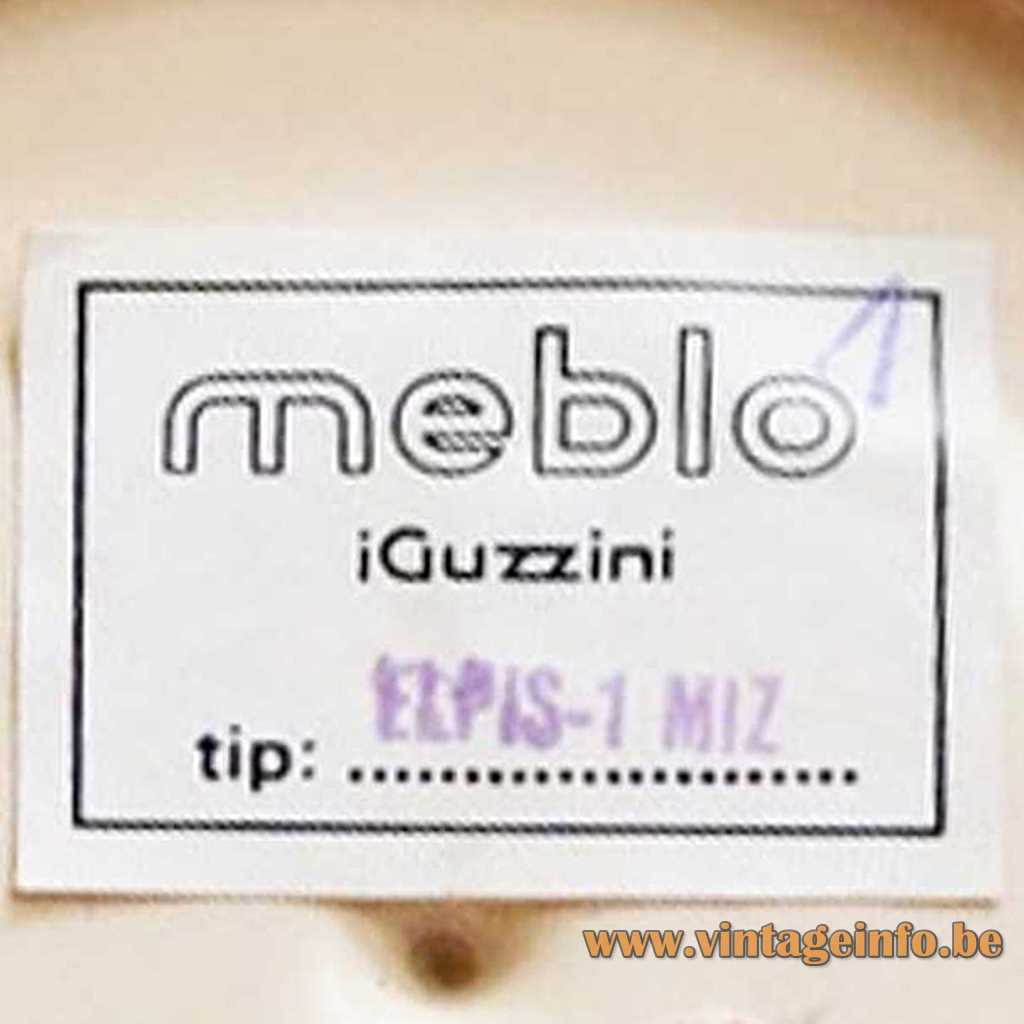
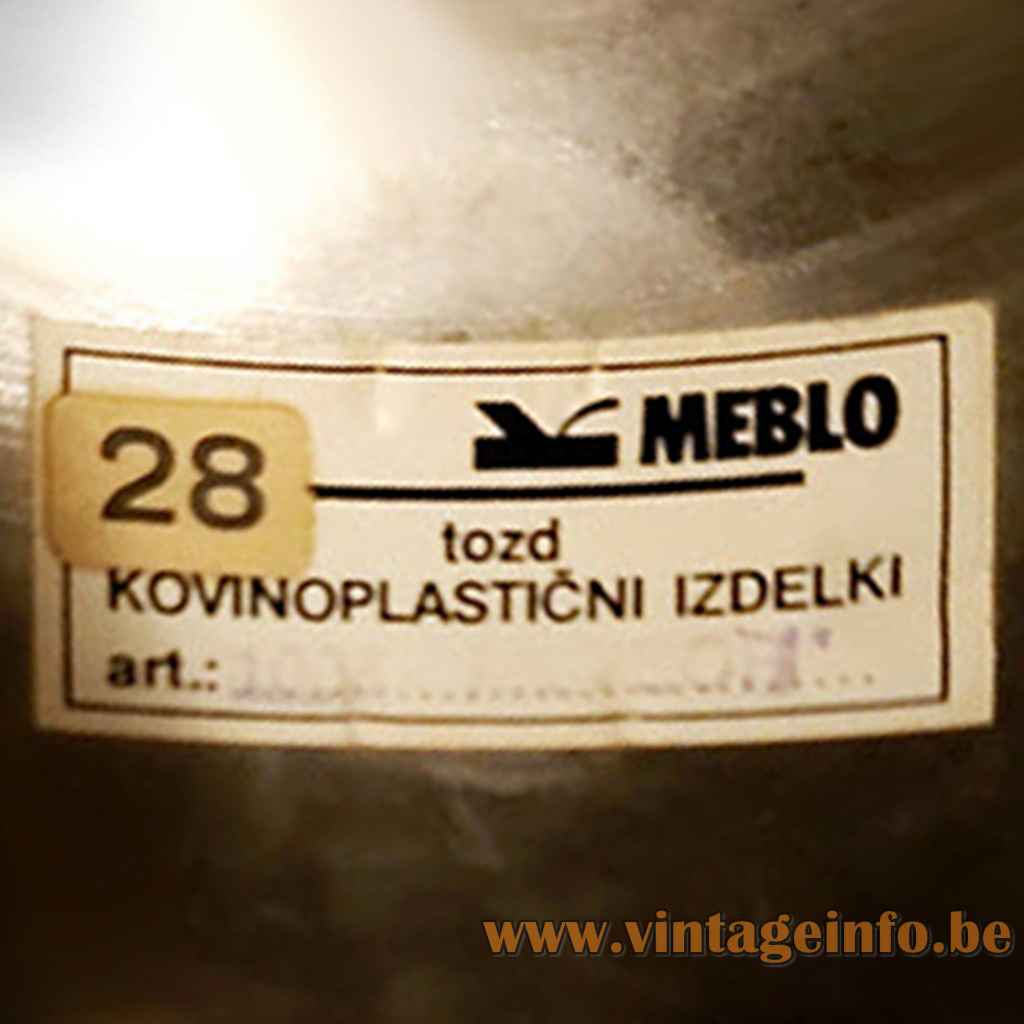
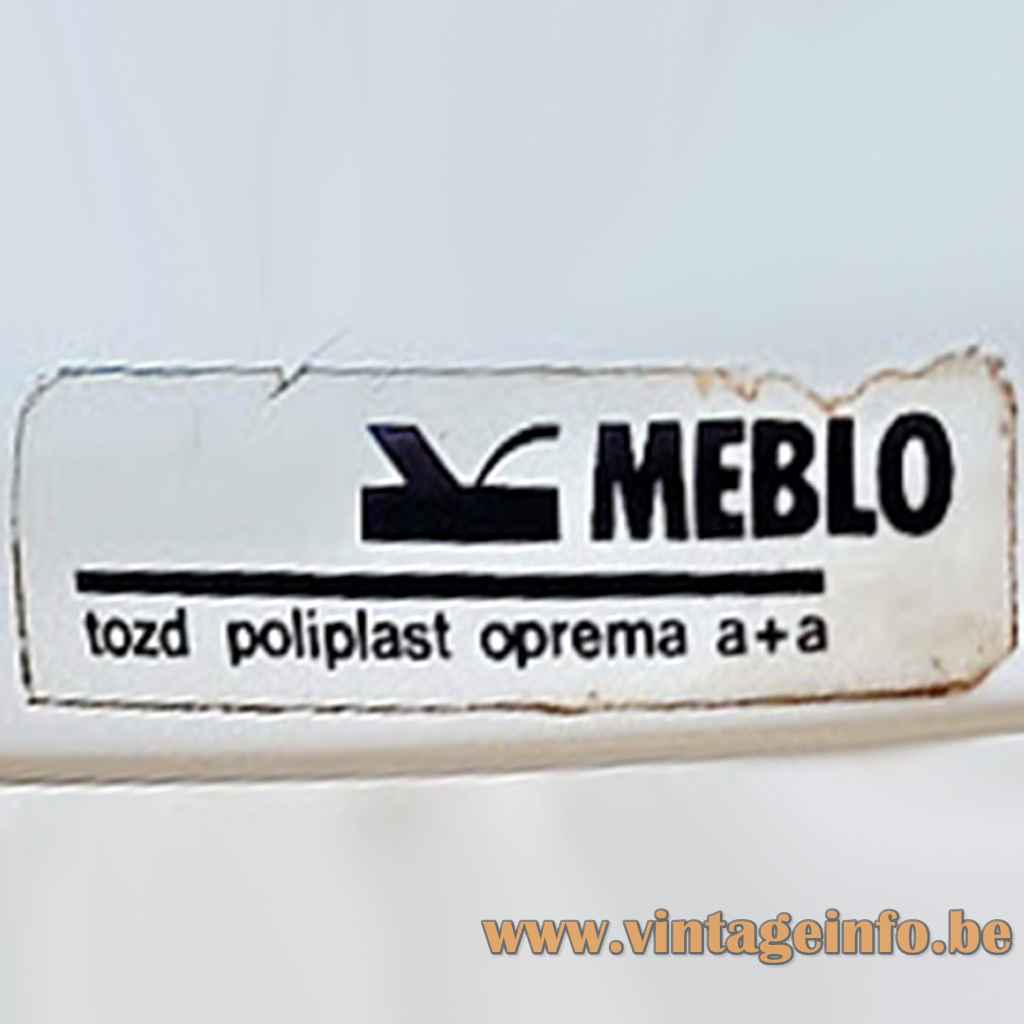
Outside Italy, Harvey Guzzini lamps were sometimes distributed under local brand names. In former Yugoslavia they were first sold by the Slovenian company Sijaj Hrastnik and later produced and marketed by Meblo.
Meblo grew out of a furniture factory founded in Gorizia in 1948. The company initially produced high-quality wooden and upholstered furniture, and from the 1960s onwards added lighting and a wide range of plastic household products. In cooperation with Harvey Guzzini, Meblo manufactured and sold many Italian designs under its own label – hence the familiar “Meblo – Guzzini” markings on some lamps.
Sijaj Hrastnik, another Slovenian manufacturer, also sold Harvey Guzzini models in Yugoslavia before Meblo took over this role. Today the successor company MebloJOGI specialises in mattresses rather than lighting.
Links (external links open in a new window)
Luigi Massoni on the Boffi website
Le Corps De Mon Ennemi (1976) film – Wikipedia
Le Corps De Mon Ennemi (1976) film – IMDb
The Little Drummer Girl (2018 miniseries) – IMDb
The Little Drummer Girl (2018 miniseries) – Wikipedia
Call My Agent! – Dix Pour Cent (2015 – 2020) TV series – Wikipedia
Call My Agent! – Dix Pour Cent (2015 – 2020) TV series – IMDb
Endeavour (2013 – 2023) TV series – Wikipedia
Un Éléphant Ça Trompe Énormément (1976) film – Wikipedia
Un Éléphant Ça Trompe Énormément (1976) film – IMDb
The Infiltrator (2016) film – Wikipedia
The Infiltrator (2016) film – IMDb
Abigail (2019) film – Wikipedia
Black Doves (2024) TV series – Wikipedia
Black Doves (2024) TV series – IMDb
Vintageinfo
Harvey Guzzini – iGuzzini lamps
Many thanks to Dragoslav of Design70Shop for the all the help. You can find his shop on Etsy over here.
Logo used between 1959 and 1964. Inspired by the 1950 film “Harvey“, starring James Stewart.
Logo used between 1965 and 1977. This logo was designed by Luigi Massoni.
The architect Massoni was invited to work with Harvey as the company’s art director, a move that gave further impetus to the idea of collaborating with designers.
Between 1967 and 1971, Ennio Lucini designed the catalogue tor the DH brand, under which lamps for home lighting were marketed.

Logo used from 1974 until today, designed by Advema G&R Associati. This logo embodied the company’s entire output, which was marketed under other brands such as DH, Doma and Atelier.
It was during this period that the company began making technical products. Spot and flood lights in particular.
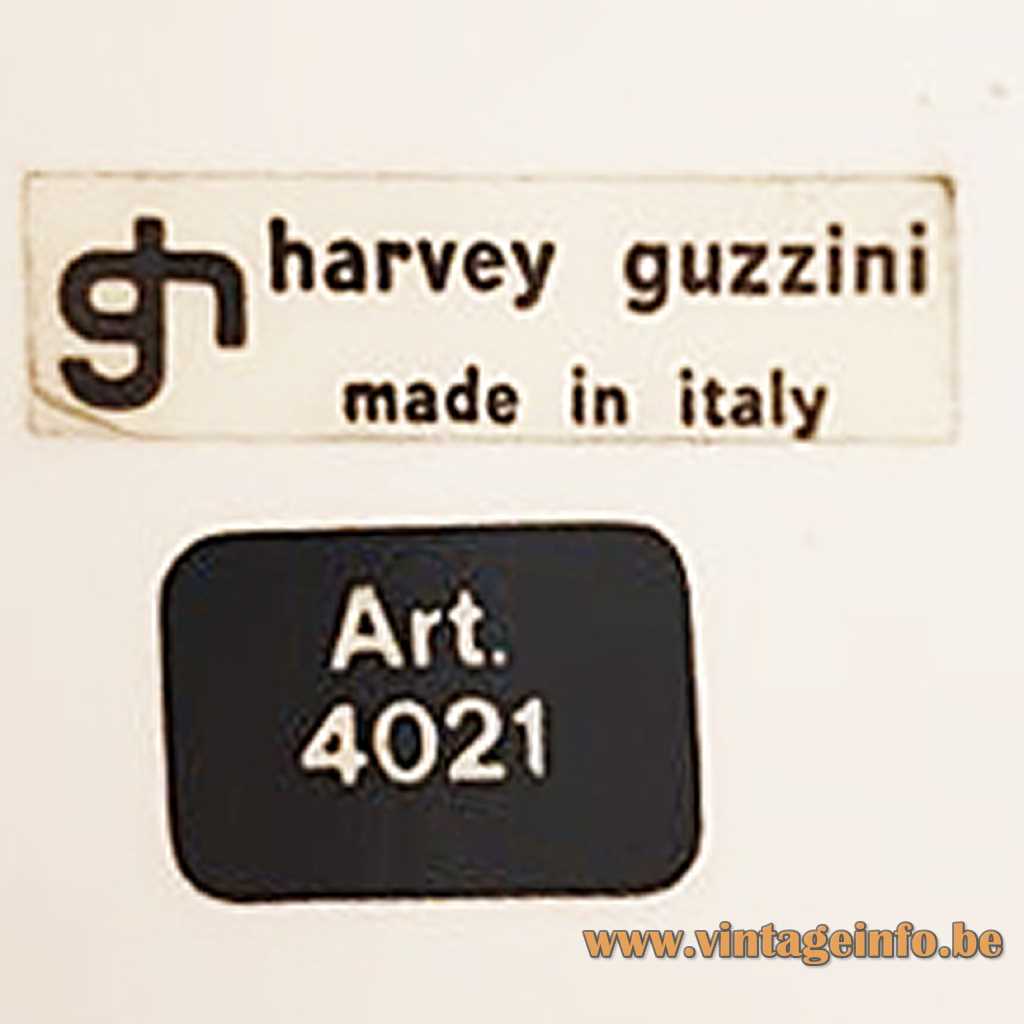
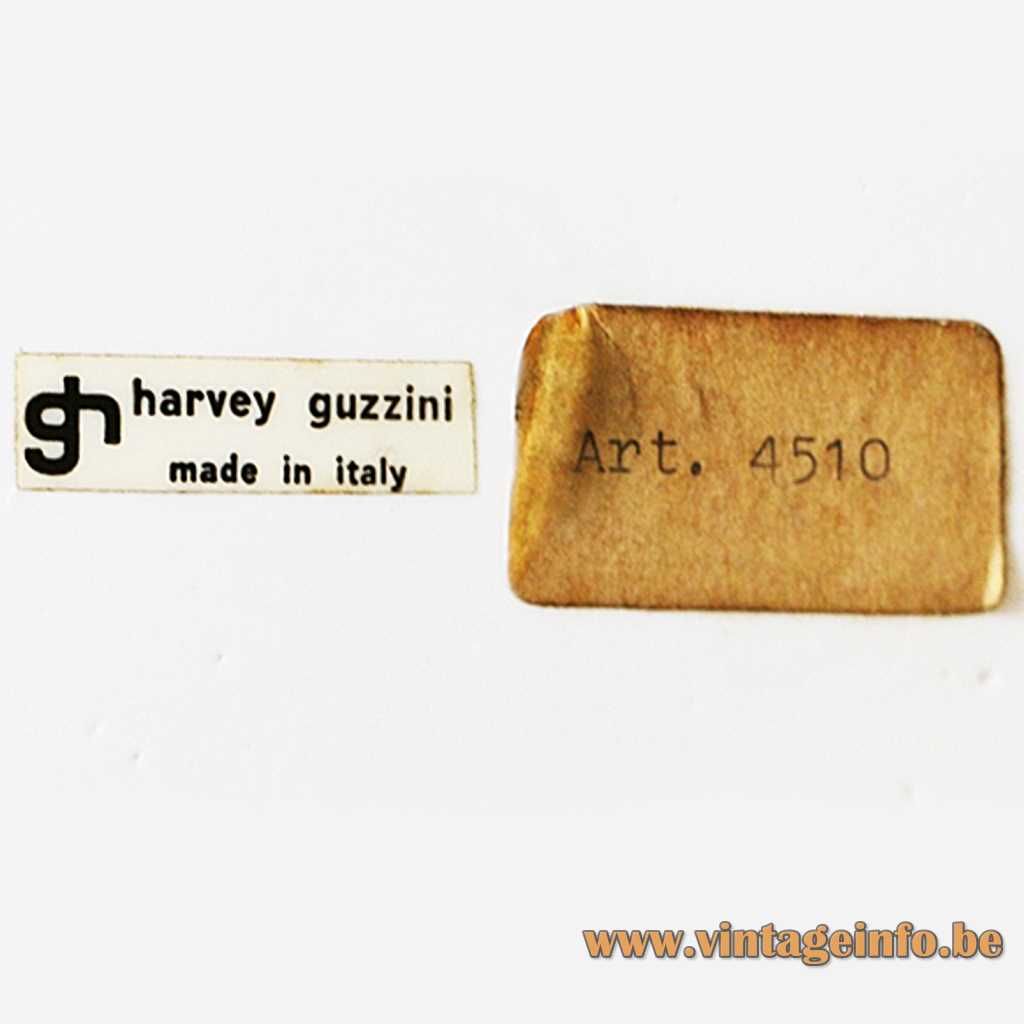
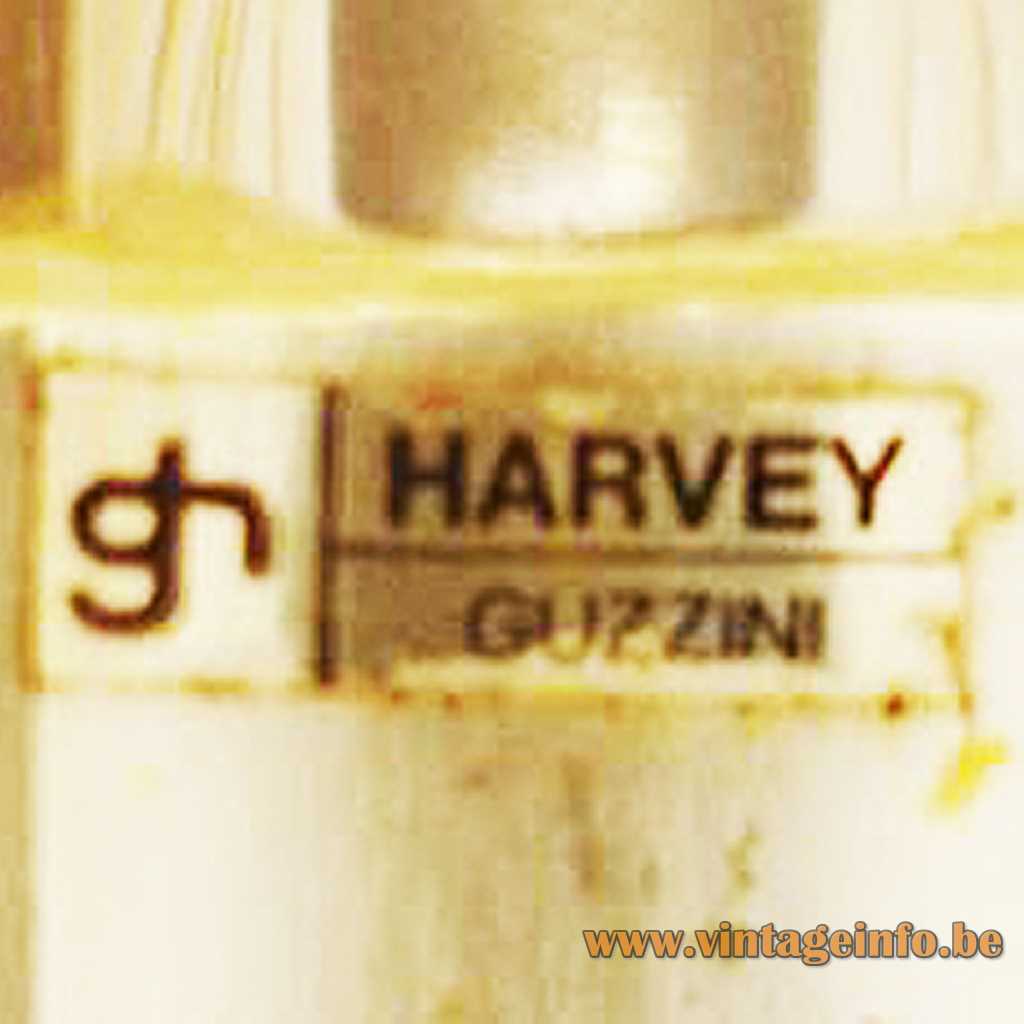
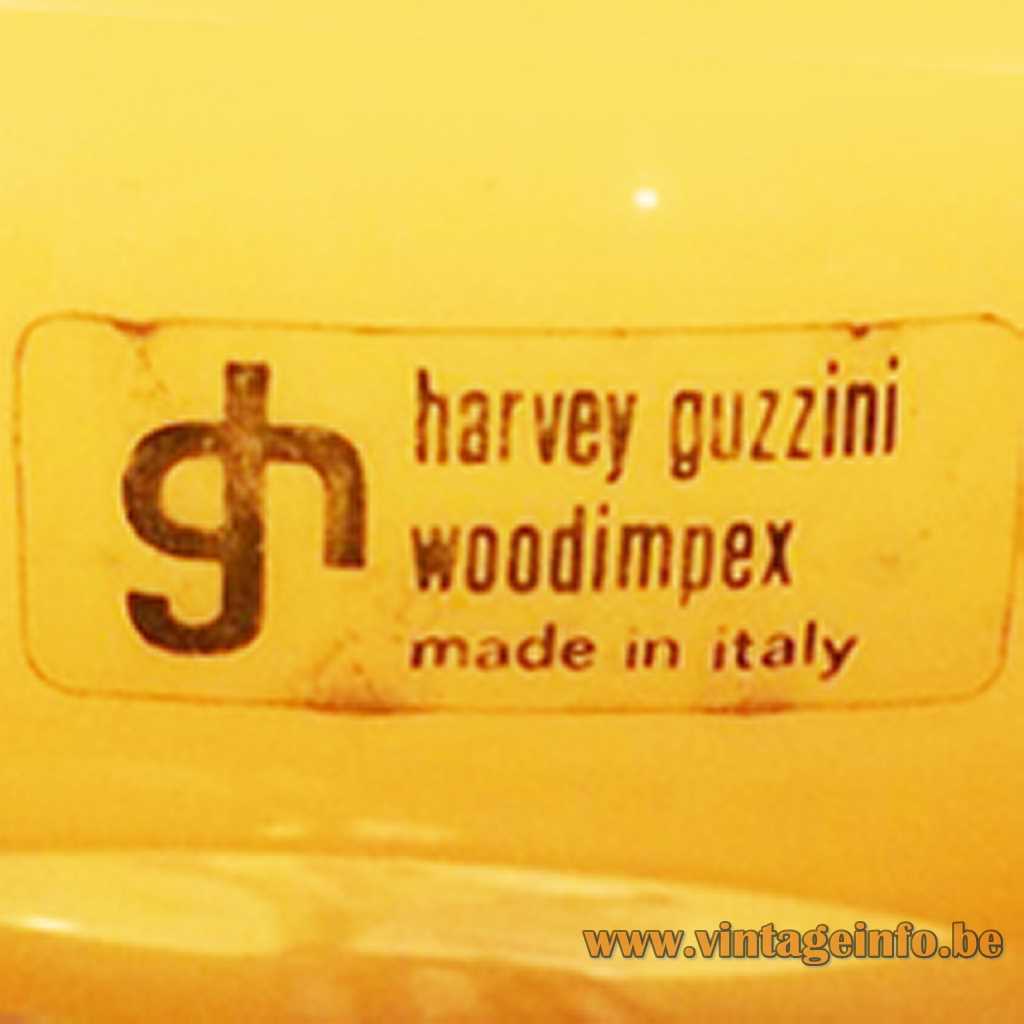
Harvey Guzzini Quadrifoglio Pendant Lamp – Company Labels & Logos