- Categories
- Categories
Last 5 Viewed
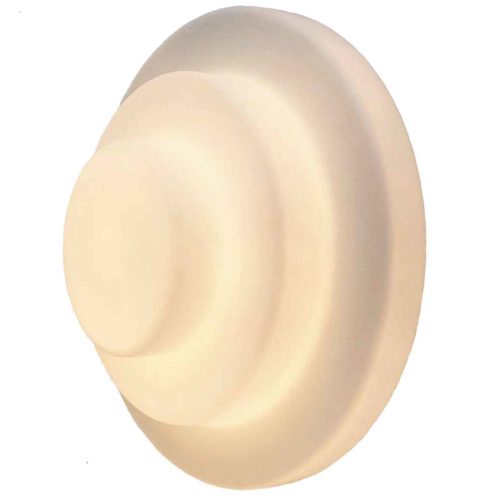
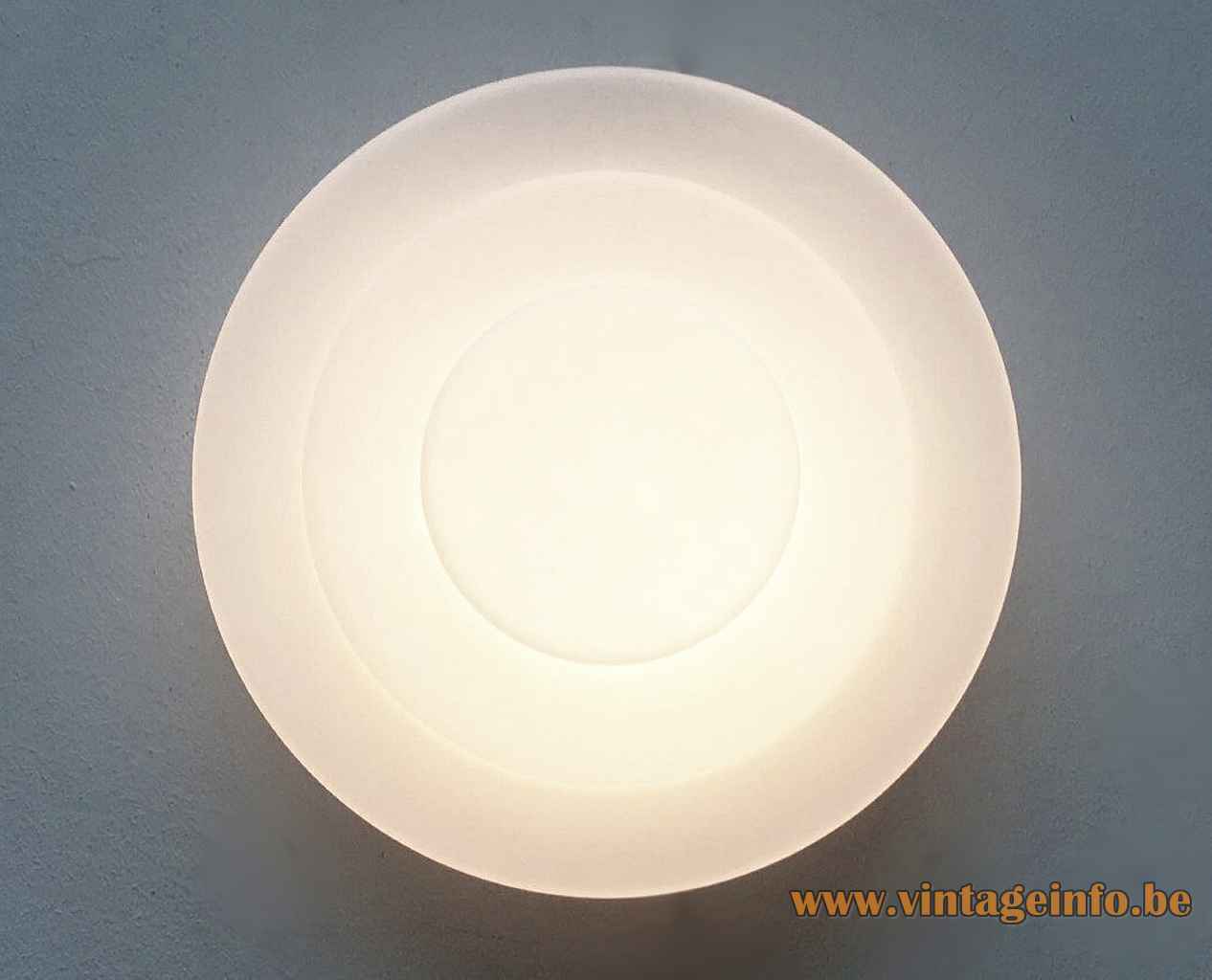
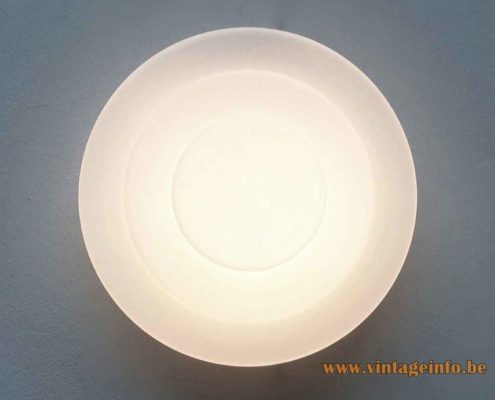

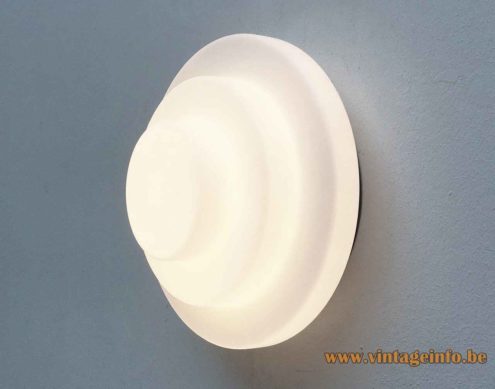
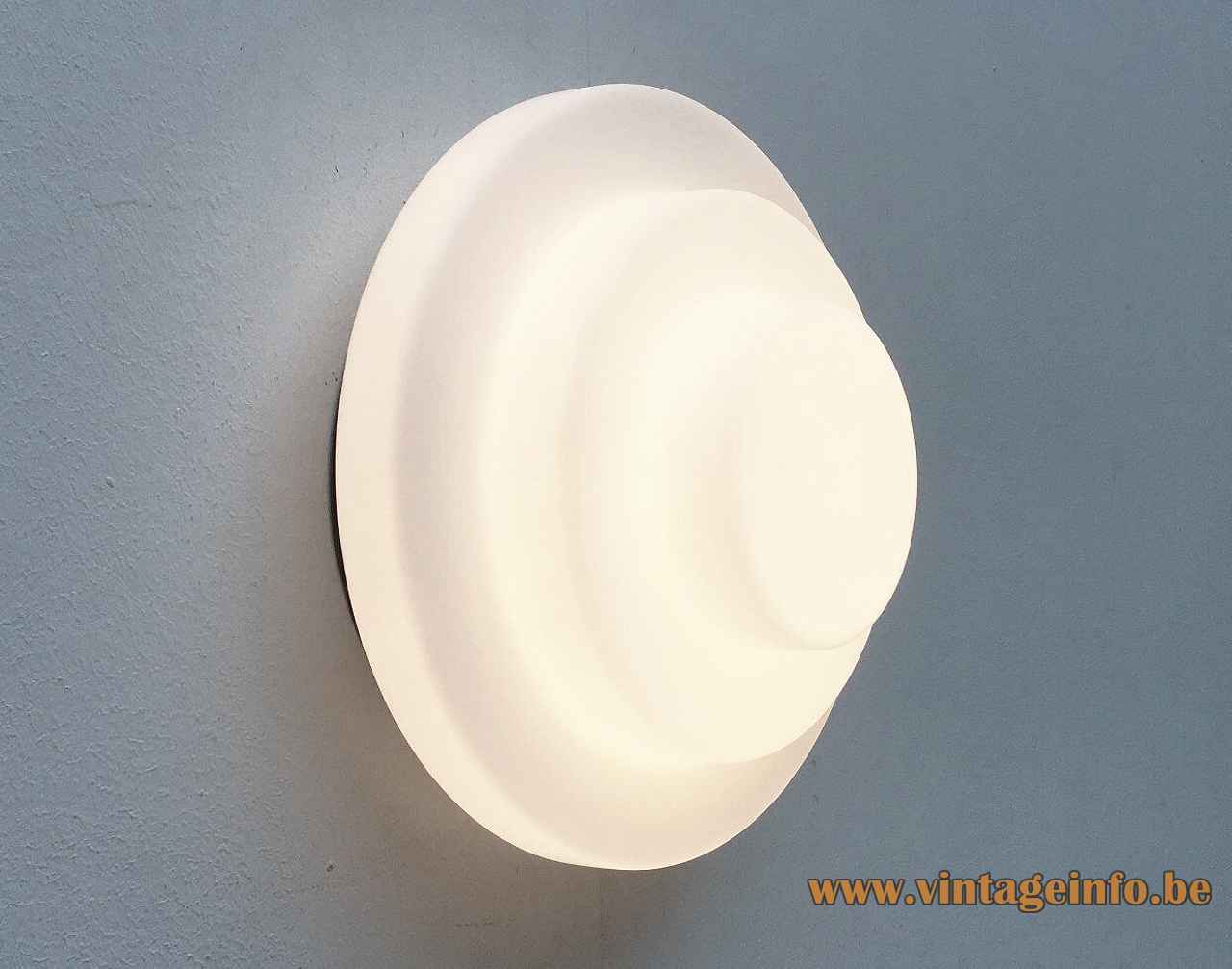
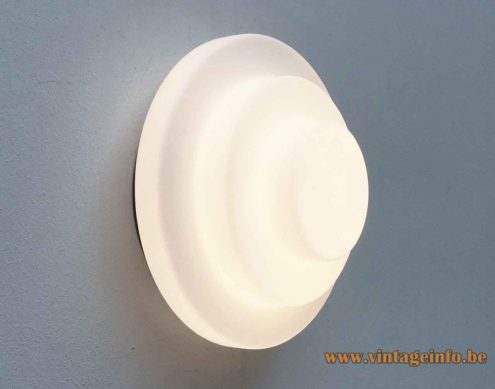
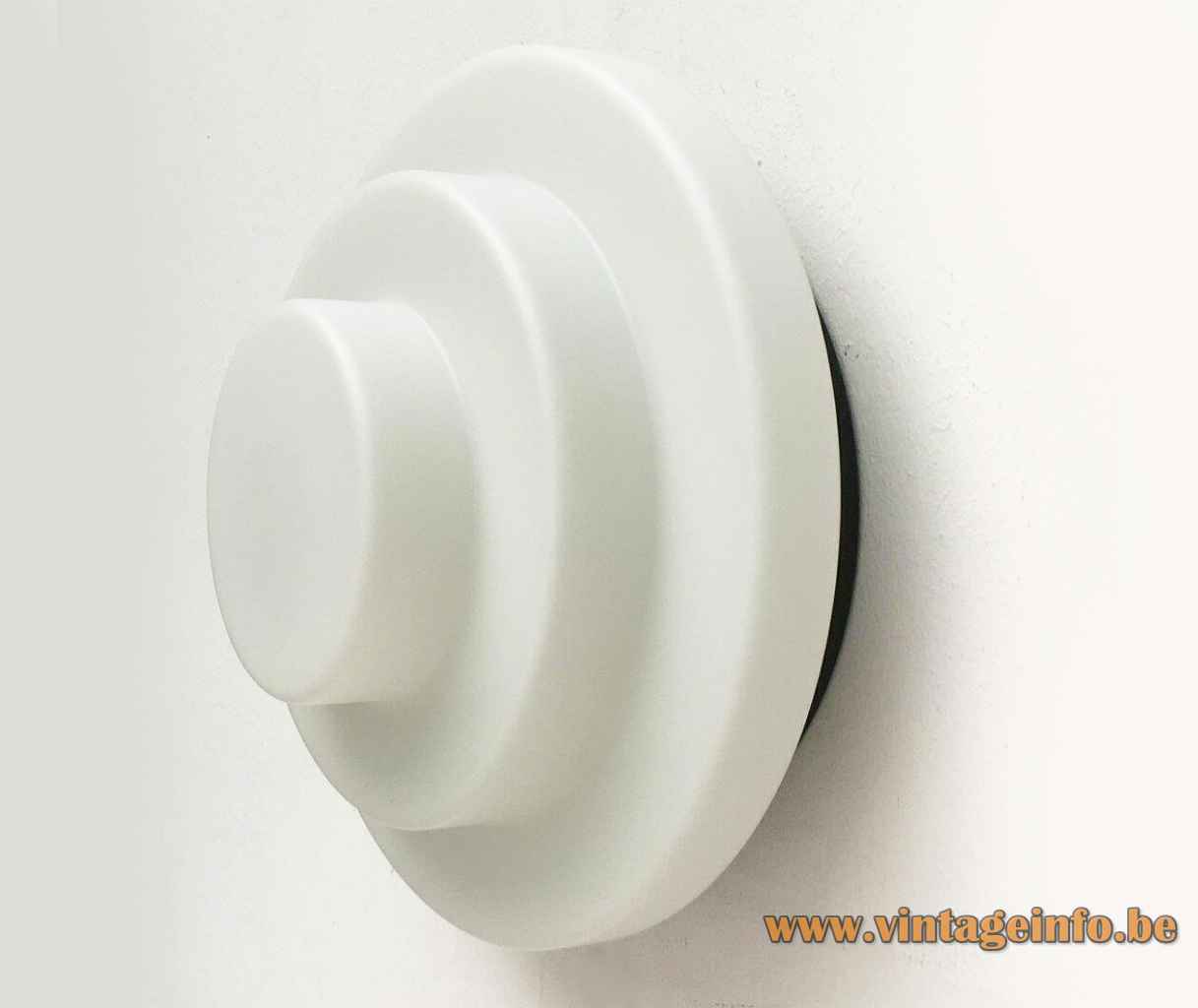
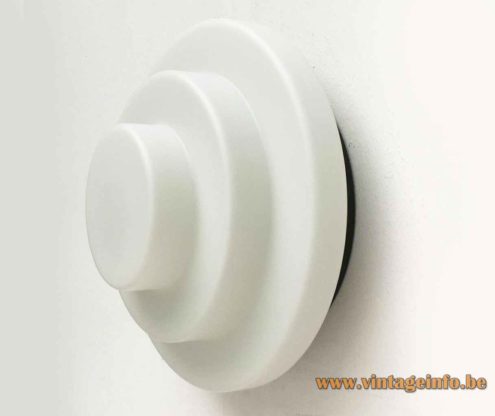
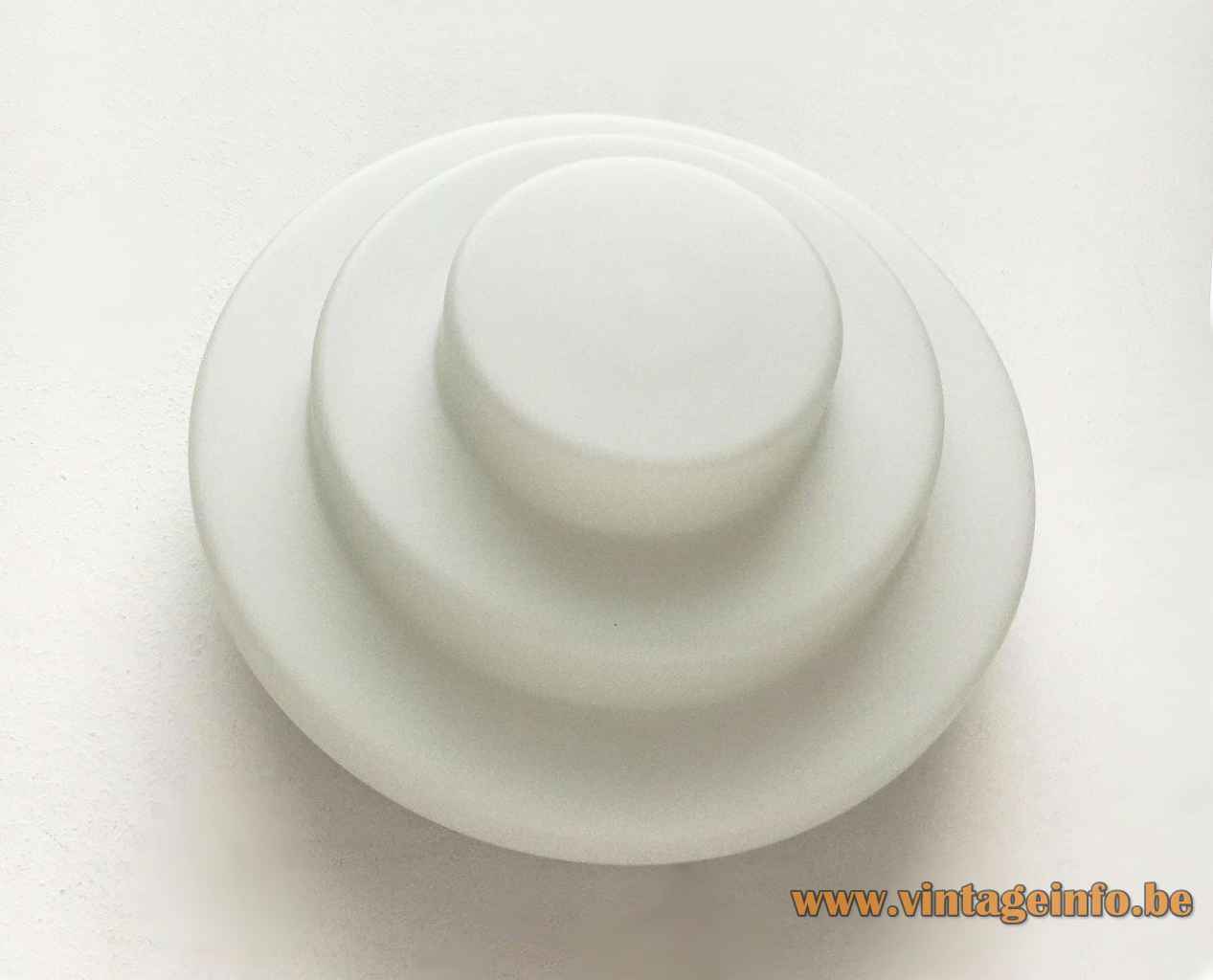
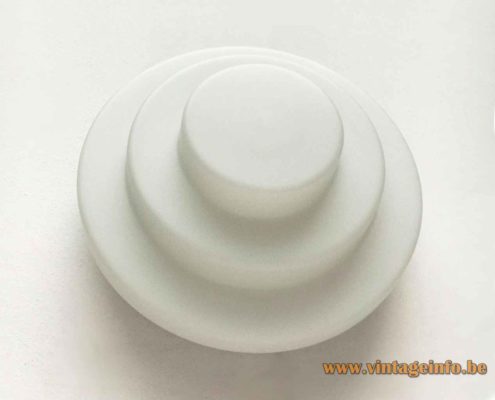
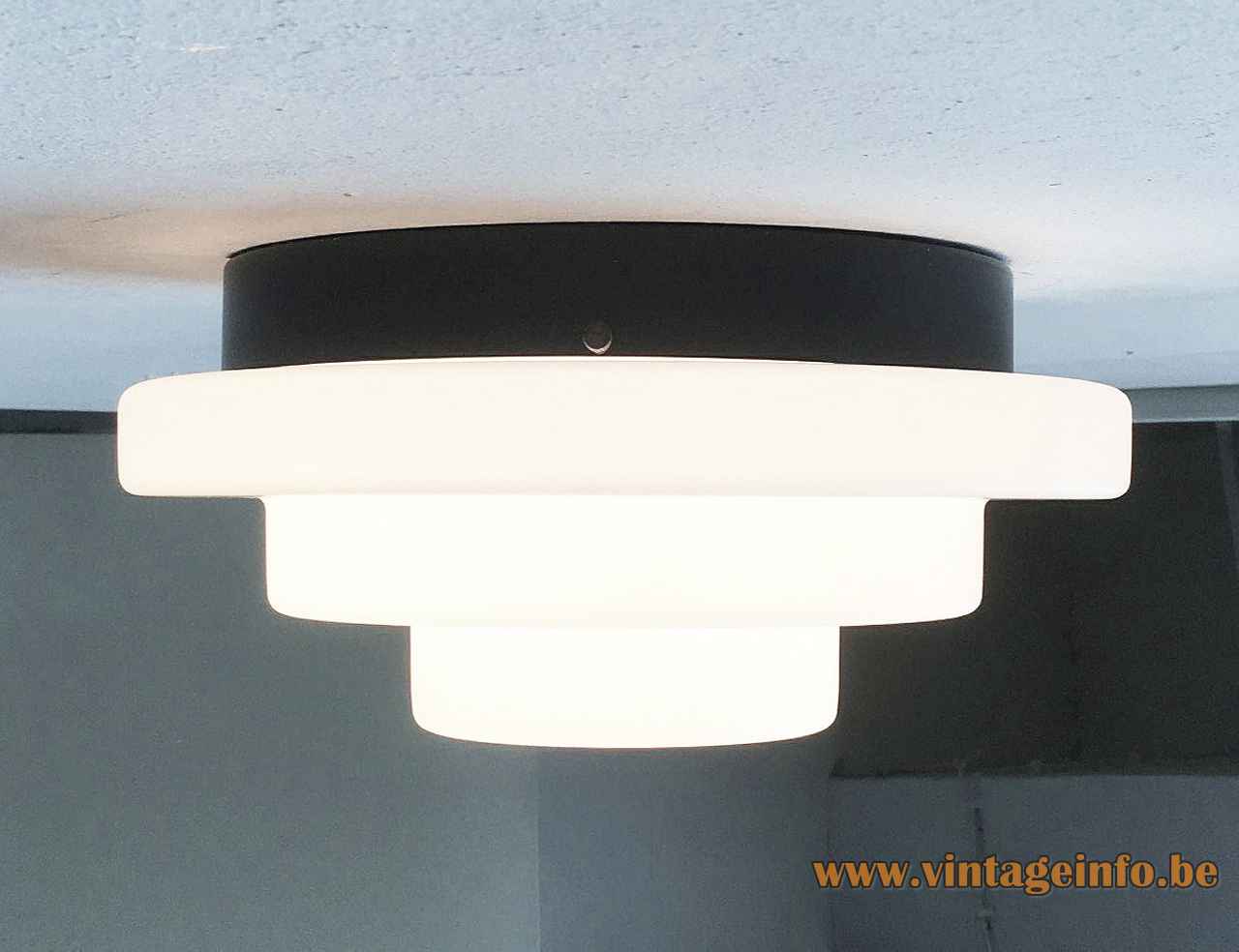
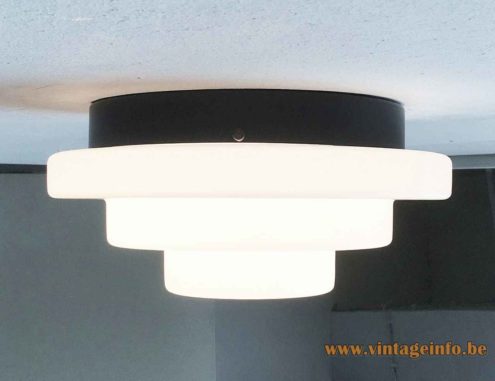
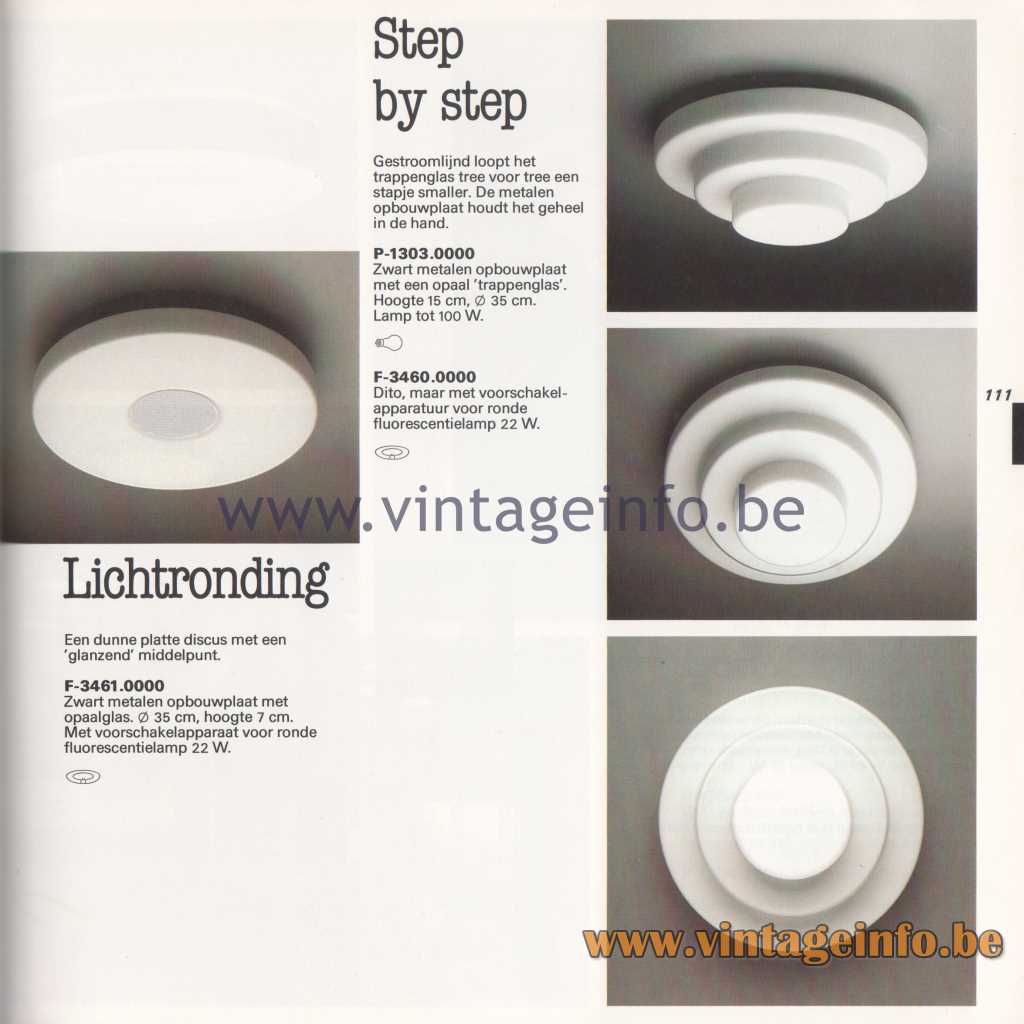
Raak Step By Step wall lamp P-1303 – 1982 catalogue picture
Raak Step By Step Wall Lamp
Materials: Round black painted metal mount. Round frosted white opal glass lampshade. Porcelain E27 socket.
Width: ∅ 35 cm / 13.77”
Height: 15 cm / 5.90”
Electricity: 1 bulb E27, 1 x 100 watt maximum, 110 /220 volt.
Any type of light bulb can be used. Not a specific one preferred. But for white glass it is best to use frosted or white bulbs.
Period: 1980s.
Designer: To be appraised.
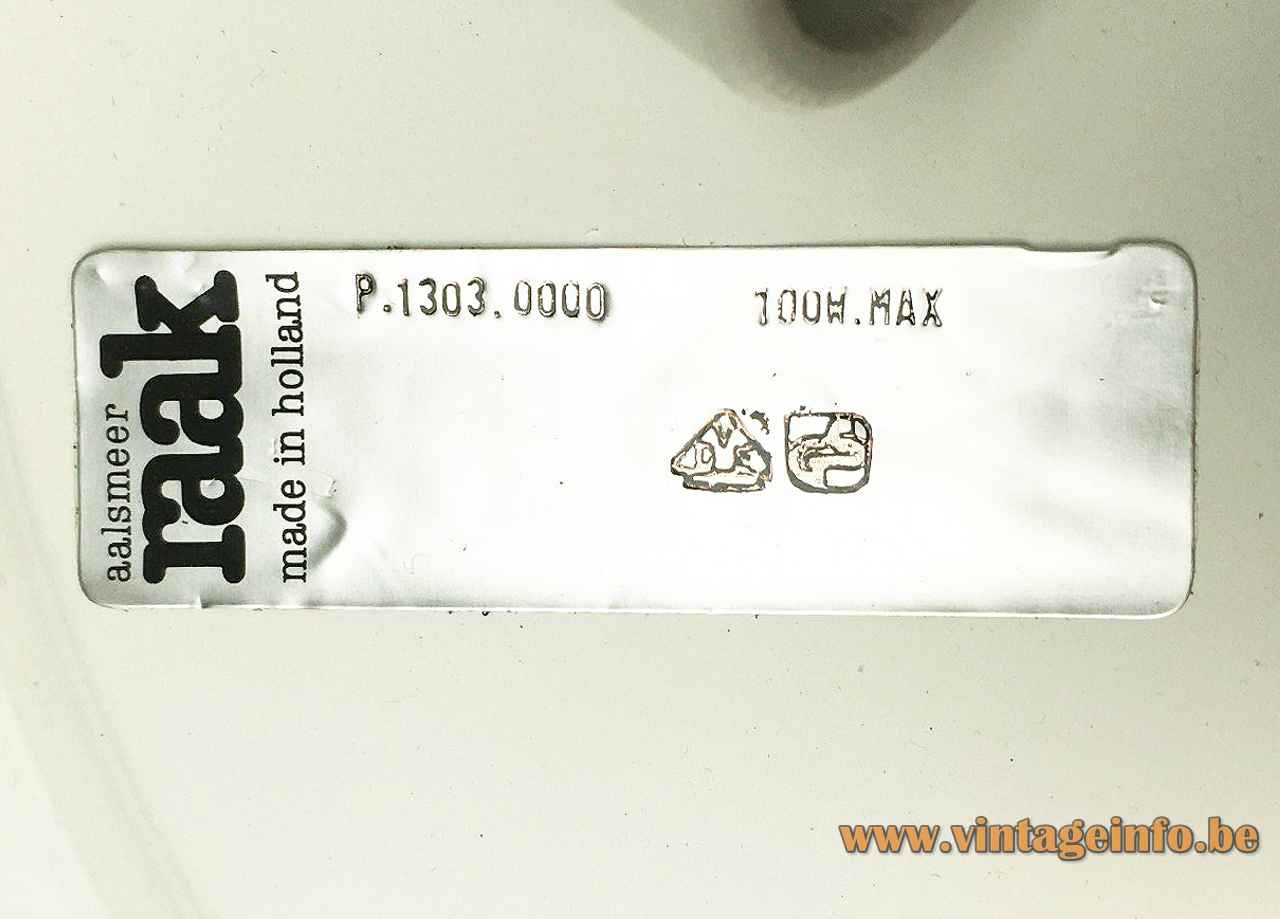
Manufacturer:Raak, Aalsmeer, The Netherlands.
Other versions: The Raak Step by Step wall lamp also exists in a version with a circular 22 watt fluorescent tube, as shown in the 1982 catalogue. It does not appear in the catalogues from the 1960s or 1970s.
The catalogue text describes the design as follows: the stepped glass narrows gradually, while the metal mounting plate keeps the composition visually balanced.
Unfortunately, the designer is not mentioned in the 1982 catalogue. The designers listed at the beginning of the catalogue are Youri Agabekov, Bertrand Balas, Maija-Liisa Komulainen, Nanny Still-McKinney, Sergio Asti, Paul Driessen and Giotto Stoppino. It is therefore possible that this lamp was designed by one of them.
Raak
The Dutch lighting company Raak was founded in 1954 by Carel O. Lockhorn (18 June 1923 – 6 October 2004), who had previously worked for Philips Lighting in Eindhoven. The Dutch word raak can be understood as “on target” or “to hit the mark”, a fitting name for a company that became known for its progressive and carefully considered lighting designs.
Raak is best known for its distinctive Dutch modern lighting of the 1960s and 1970s. Many of their best designs combine glass and metal in a way that feels both elegant and futuristic. Their lighting often has a strong architectural presence, while still retaining a warm and decorative quality. Because of this, Raak became one of the most recognizable names in post-war European lighting.
Over the years, Raak collaborated with a remarkable range of Dutch and international designers and architects, among them Bertrand Balas, Evert Jelle Jelles, Frank Ligtelijn, Ger Vos, Jan Jasper Fayer, Li Helo, Maija-Liisa Komulainen, Nan Platvoet, Nanny Still-McKinney, Nico Kooi, Sergio Asti, Tapio Wirkkala, Willem van Oyen, Rico Baltussen, Kees Terlouw, Yki Nummi, Tobia Scarpa, Berend Bodenkamp, Arihiro Miyake and others.
Collaborations
Raak also worked together with several other lighting and glass companies. For the well-known Globe series, the glass was produced by the German company Peill+Putzler. Raak also sold lamps made by Peill+Putzler, including models designed by Aloys Ferdinand Gangkofner. For the Discus flush mount, the glass was made by the German company Bega. In the late 1950s, Raak also cooperated with the Belgian glass manufacturer Val Saint Lambert for the Stalactites flush mounts. In addition, Raak marketed several lamps produced by Staff Leuchten in Germany, as well as models connected to other European manufacturers.
Carel Lockhorn sold the company in 1974 to ITT, although he remained director until 1977. In 1980, Raak merged with BIS Lighting from Aalsmeer in The Netherlands and continued under the name BisRaak. In 1986, the company became independent again. By then, the collection had changed considerably: the more expressive and decorative character of the 1960s and 1970s gradually gave way to a more restrained, architectural look, often in black, white and grey.
In 1999, Raak merged with Artilite B.V. and Indoor B.V. and became CLA: Centrum voor Lichtarchitectuur B.V. in Drachten. The term Lichtarchitectuur had already been used by Raak as a slogan from the early years onward. CLA was founded by Egbert Keen. The company was declared bankrupt on 19 May 2011.
Raak received 26 iF Design Awards. As the company only began entering the competition in 1980, that number might otherwise have been even higher.
Many thanks to Frank from nullviernull raum+kommunikation for the pictures. You can find his shop over here on Pamono.
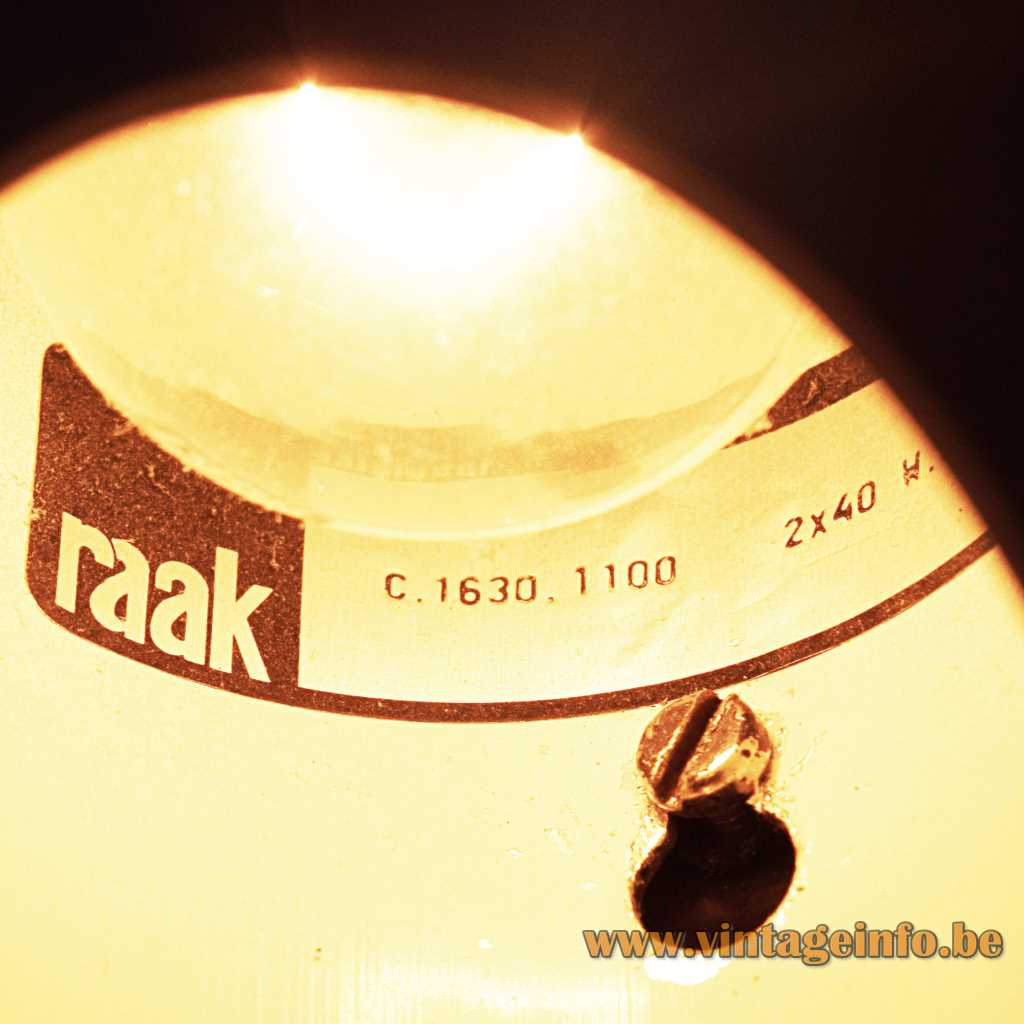
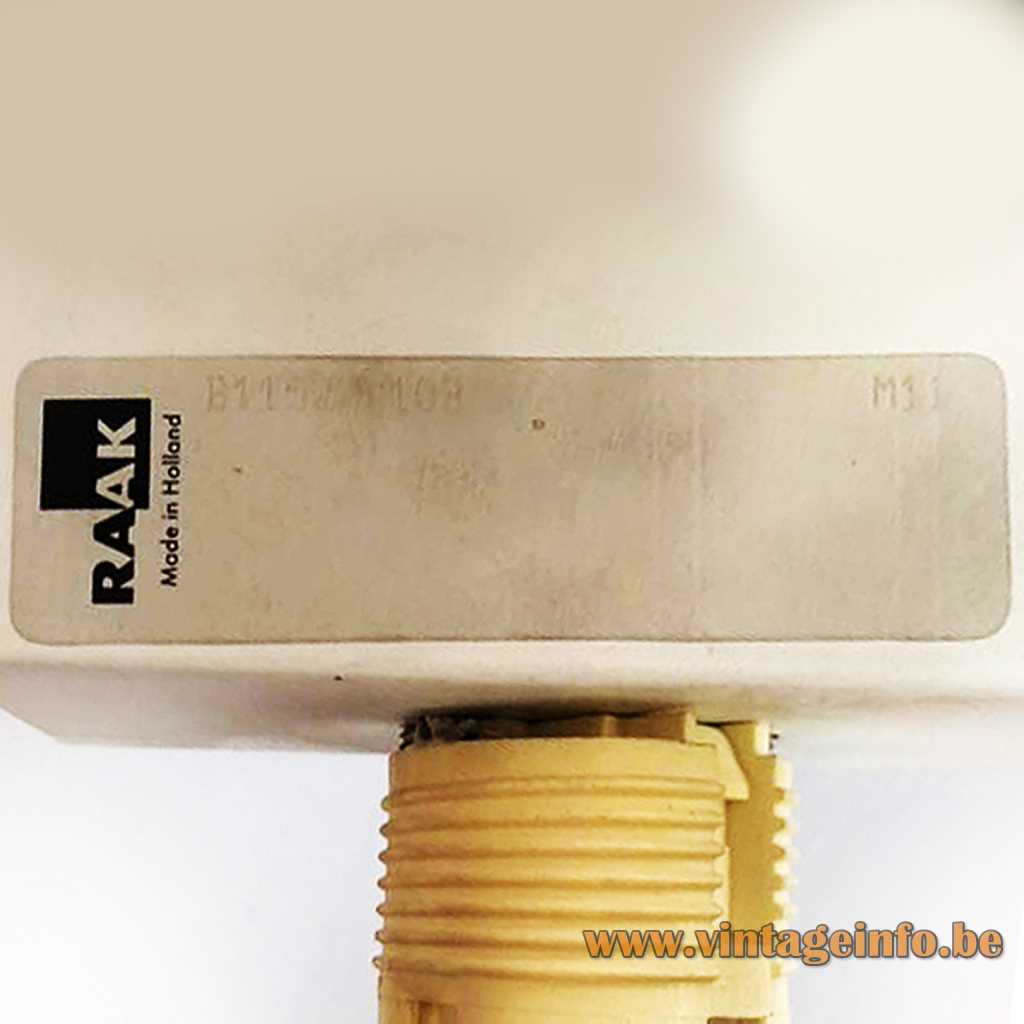
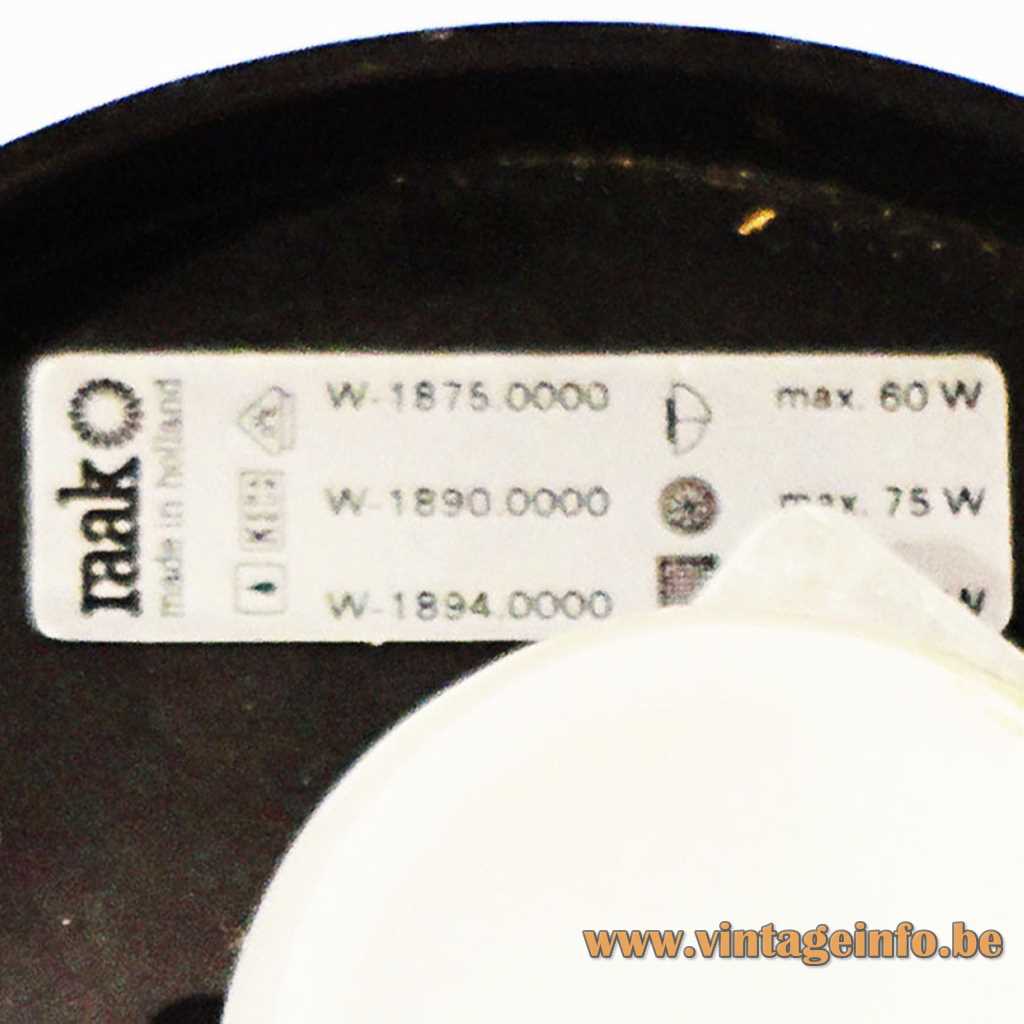
Raak Step By Step Wall Lamp – Company Labels