- Categories
- Categories
Last 5 Viewed
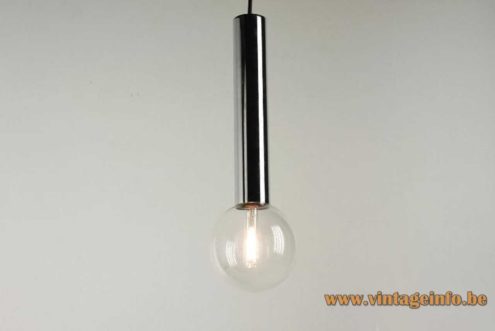
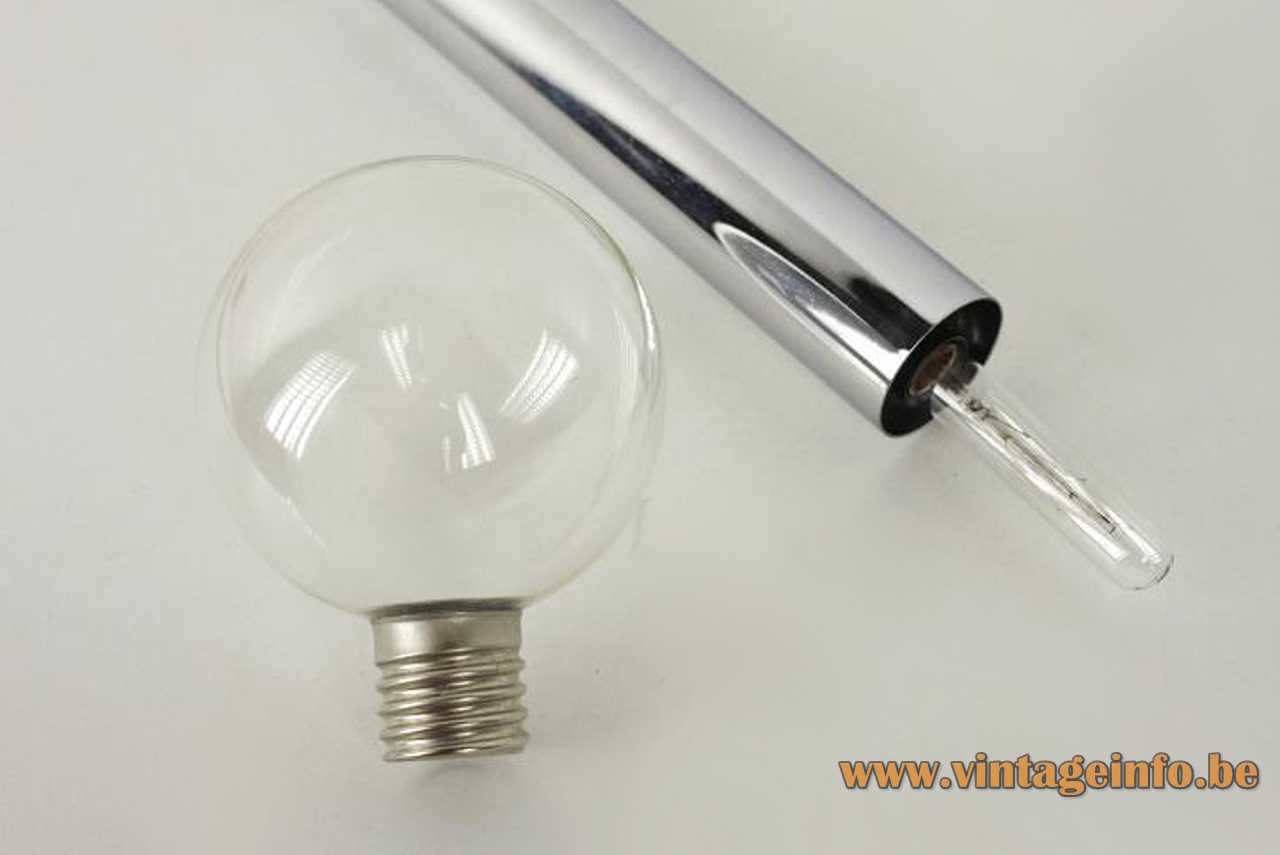
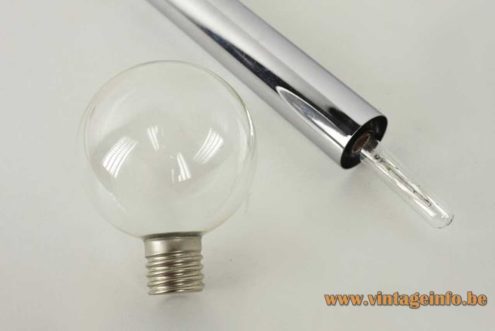
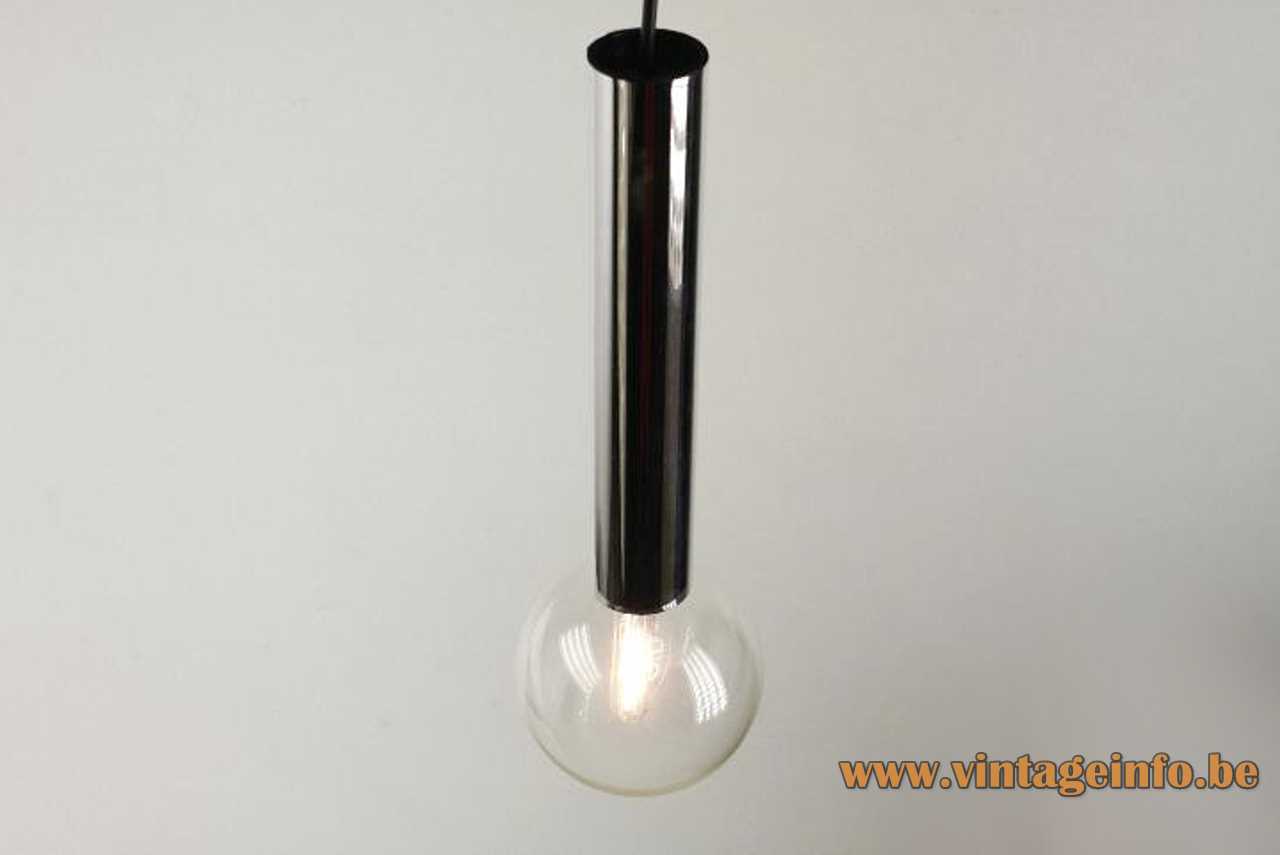
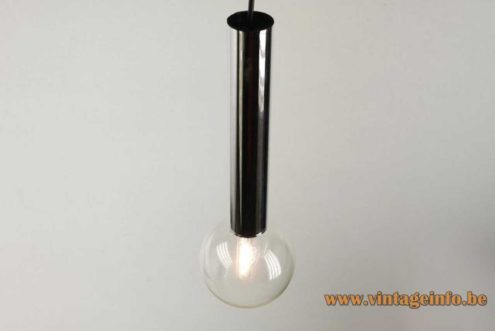
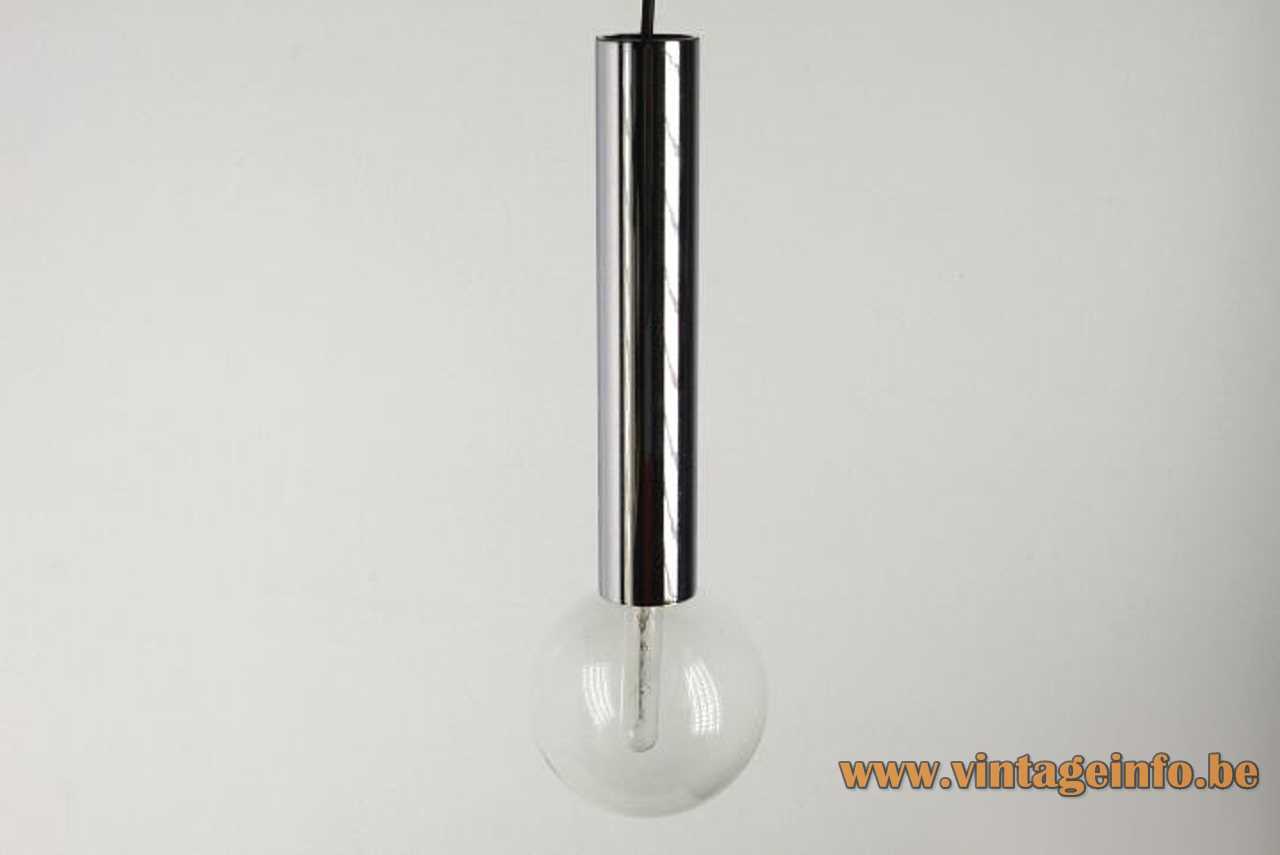
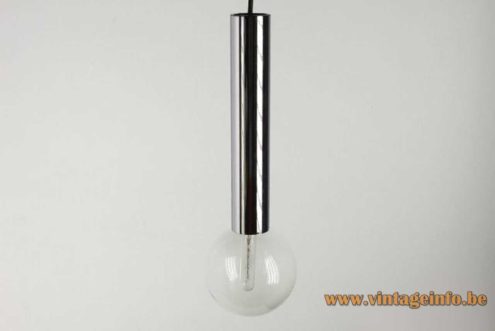

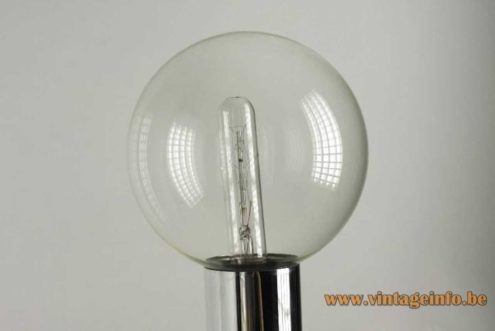
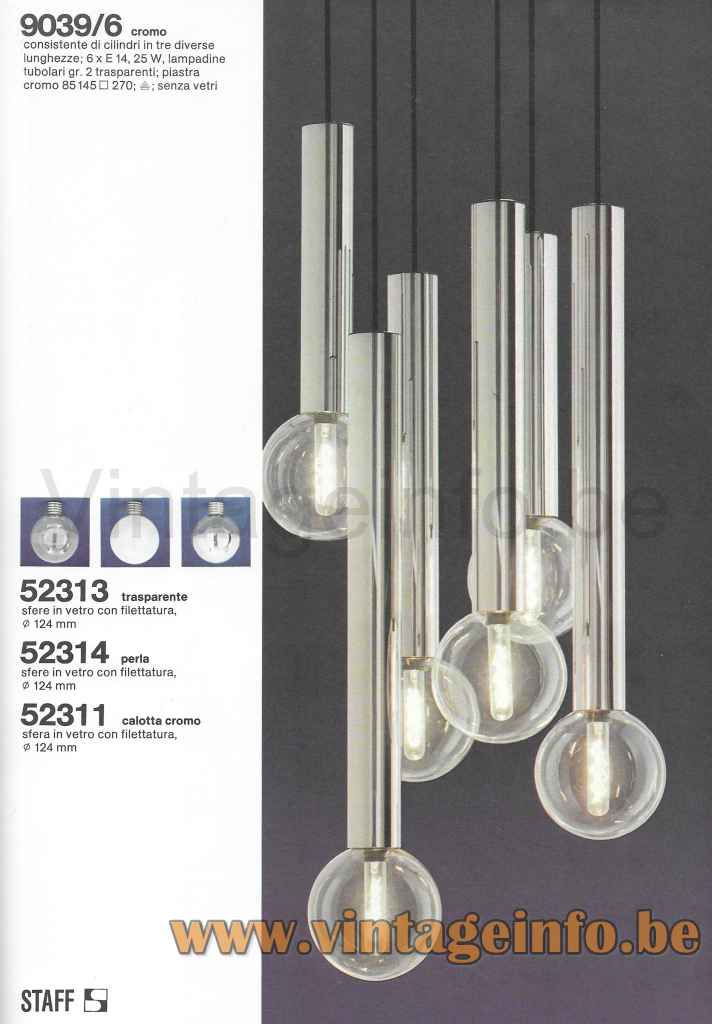
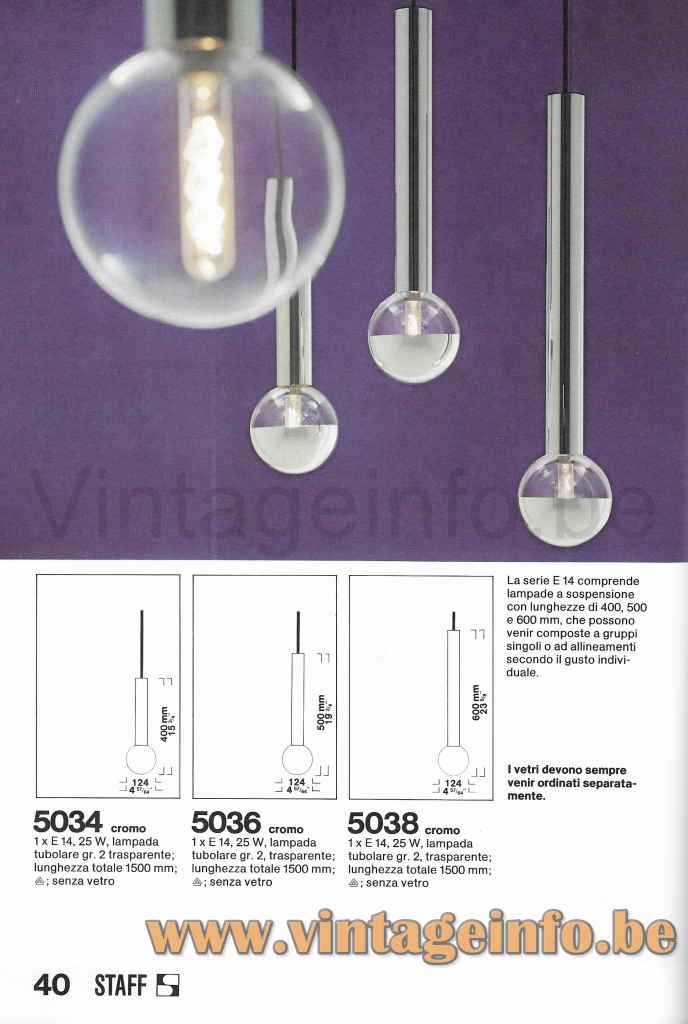
Motoko Ishii Staff Pendant Lamp – 1974 Catalogue Pictures
2008 – “Messages of light from Japan on the Seine”, Paris by Akari-Lisa Ishii & Motoko Ishii. Commemorating 150 years of Japan-France relations.

Links (external links open in a new window)
History of the company can be found here: 60 Years of Light from Lemgo – Zumtobel plant celebrates historic milestones
R.A.W: Motoko Ishii – Women in Lighting
Many thanks to Lluís from Eclectique Vintagefor the photos.
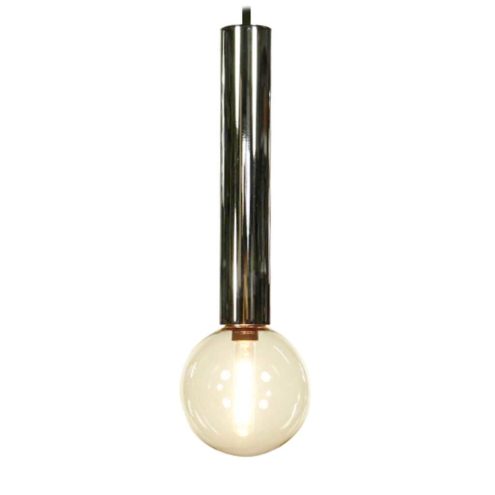
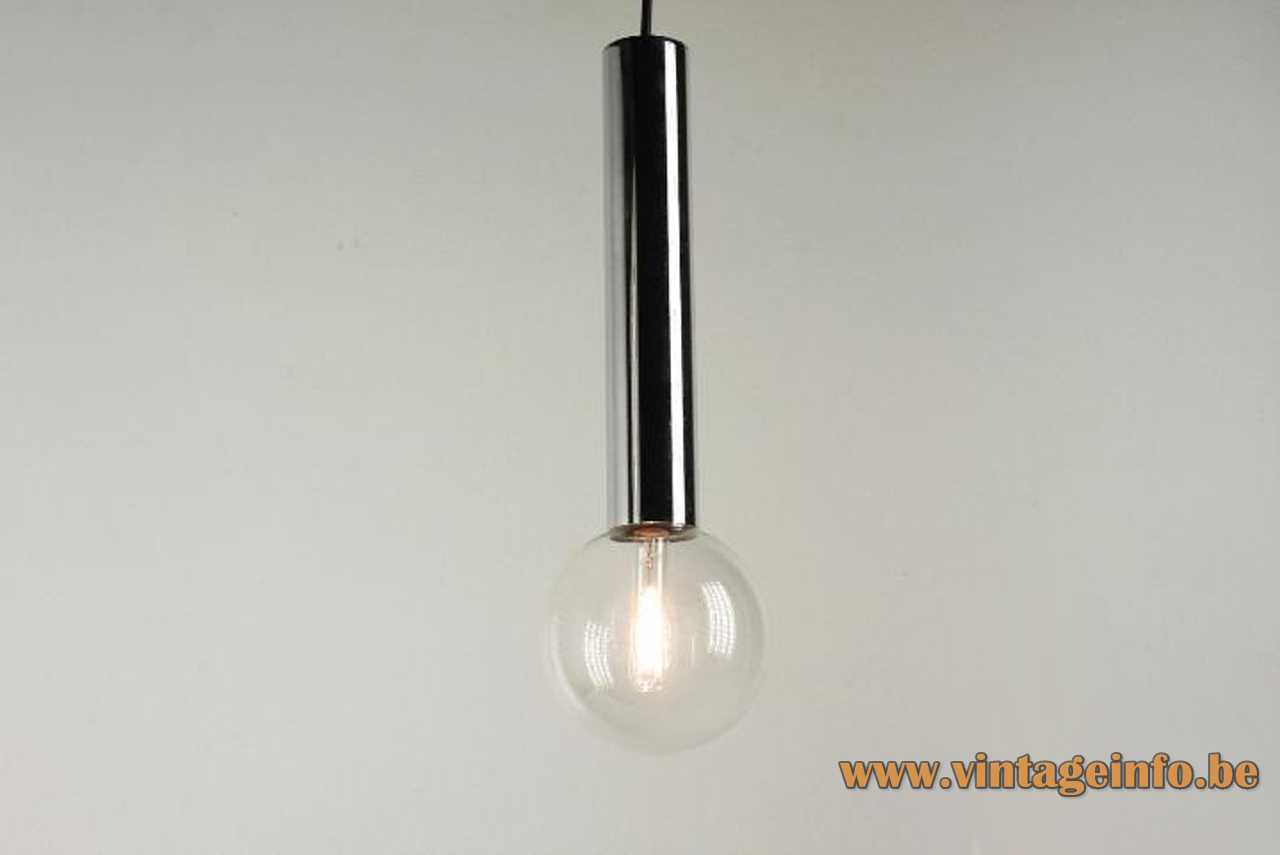
Motoko Ishii Staff Pendant Lamp
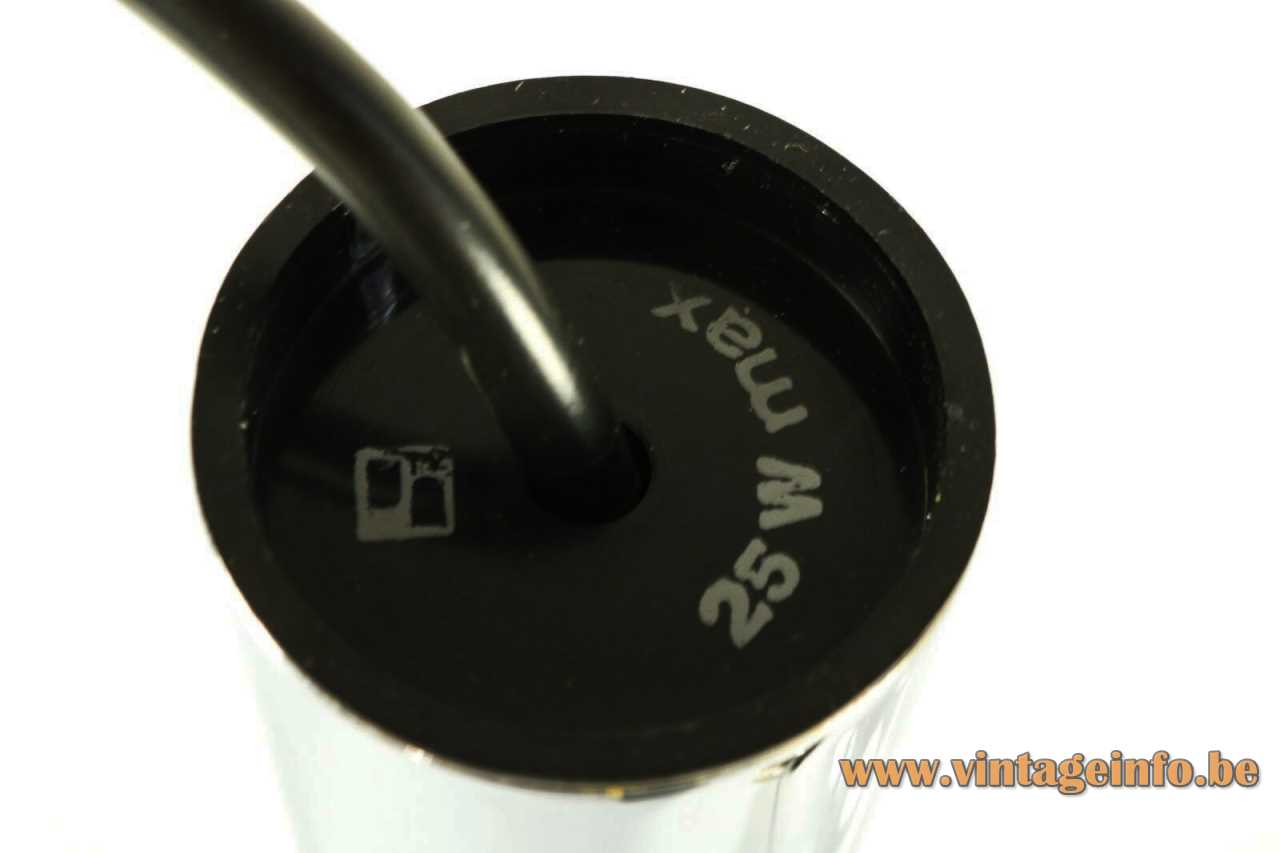
Materials: Long chrome tube with a black plastic lid on top. Clear glass globe lampshade with a metal screw-thread. Bakelite E14 socket.
Height: 40 cm / 15.74”
Width: ∅ 15 cm / 5.90”
Electricity: 1 bulb E14, 1 x 25 watt maximum, 110/220 volt.
Not any type of light bulb can be used. It has to be an elongated tubular bulb.
Period: 1970s – Mid-Century Modern.
Designer: Motoko Ishii.
Manufacturer:Staff & Schwarz Leuchtenwerke GMBH, Lemgo, Germany.
Other versions: This Motoko Ishii Staff pendant lamp exists in many versions. Cascading pendant lamps together. Big and small chandeliers. A sputnik chandelier and so on. All with this screw-in glass globes. They exists in clear, white, frosted and silver tipped glass.
These series of lamps received an iF Design Award in 1977.
Motoko Ishii
Motoko Ishii, born October 15, 1938 is a lighting designer from Japan. In 1965, she went to Finland to study designing lighting equipment. She worked at lighting-design offices in Finland and Germany until 1967. In Germany Motoko Ishii studied architectural illumination. Returning to Japan in 1968, she established the Ishii Motoko Design Office.
For Staff and the Yamagiwa Electric Co. LTD, she designed many lamps. You can find the awarded ones on the iF Design Award website. These lamps were sold by both companies.
Motoko Ishii’s Staff designs are often confused with the designs of Rolf Krüger. You can find his designs for Staff over here.
Staff
Staff Leuchten – Staff & Schwarz Leuchtenwerke (lighting plant) was founded in 1945 in Lemgo, (West) Germany by Alfred Staff (1908–1989) and Otto Schwarz (1902–1951). After the war they left the Soviet occupation zone and set up a small three-man business in Lemgo producing consumer goods in wood and metal, repair work and pesticide against the Colorado potato beetle. The location in Westphalia-Lippe was chosen deliberately: the area already had veneer and lighting manufacturers, which made it a natural base for a new lighting company.
In 1946 Staff produced its first wrought-iron lamps, followed by large orders for spa complexes in the region. After the death of Otto Schwarz in 1951,Alfred Staff took over all shares and shifted the focus from project lighting to serial production of innovative, design-oriented luminaires.
From the late 1950s onwards the company became one of Germany’s most decorated lighting manufacturers. Staff was among the first winners of the “Gute Industrieform” (today iF Design) awards at the Hanover Fair, and over the next three decades collected more than 200 design prizes. In the 1960s the firm built up an international sales network, introduced the Variolux electronic dimmer (1966) and launched Lite-Trac (1967), one of the first VDE-compliant track lighting systems, which helped to position Staff as a pioneer in architectural and technical lighting.
Staff collaborated with numerous designers, including Rolf Krüger, Motoko Ishii, Kazuo Motozawa, Arnold Berges, Gerhard Beigel, Alfred Kalthoff and others. Several Japanese designs originally created for Yamagiwa – such as Motozawa’s Saturno series – were marketed in Europe by Staff, while some Staff models were licensed to other brands. In the 1970s the company published a joint catalogue with Stilnovo, and lamps from Staff appeared in catalogues from Raak, the Netherlands, and the Danish Lyfa, among others.
In the early 1990s the Austrian Zumtobel Group gradually acquired the company: in 1993 it took a majority stake, and by 1994 owned 100% of the shares. The lighting activities were continued under the brand Zumtobel Staff, with the Staff name remaining in use until 2006. The Lemgo factory is still one of Zumtobel’s key production sites for spotlights and lighting systems.
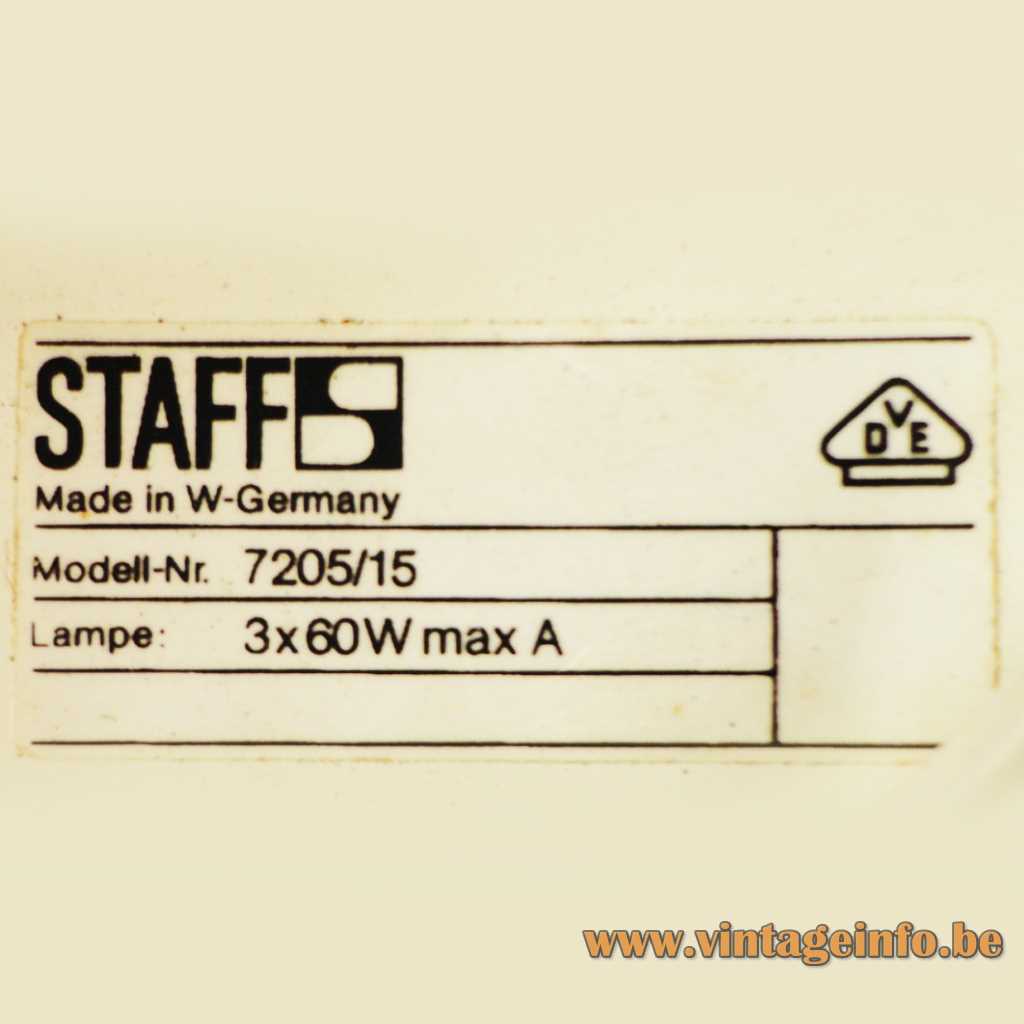
Motoko Ishii Staff Pendant Lamp – Company Labels & Logos