- Categories
- Categories
Last 5 Viewed
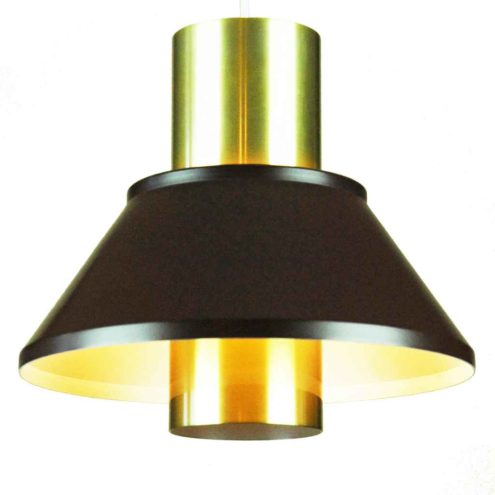
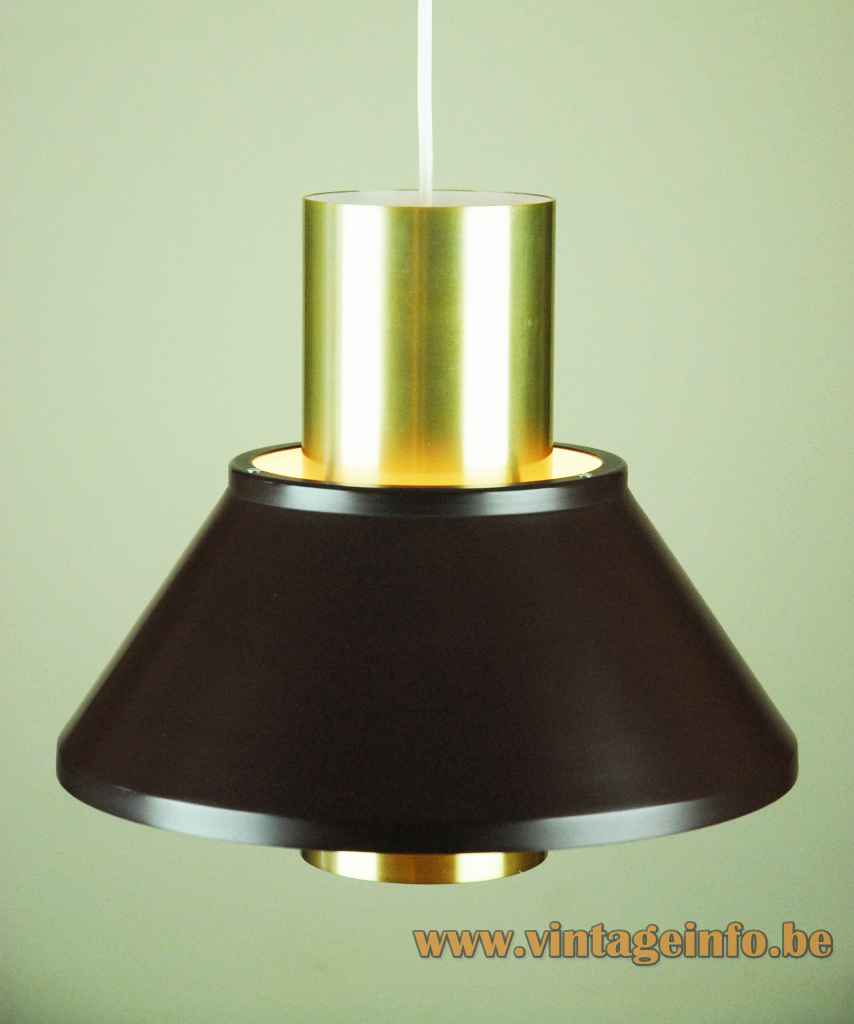
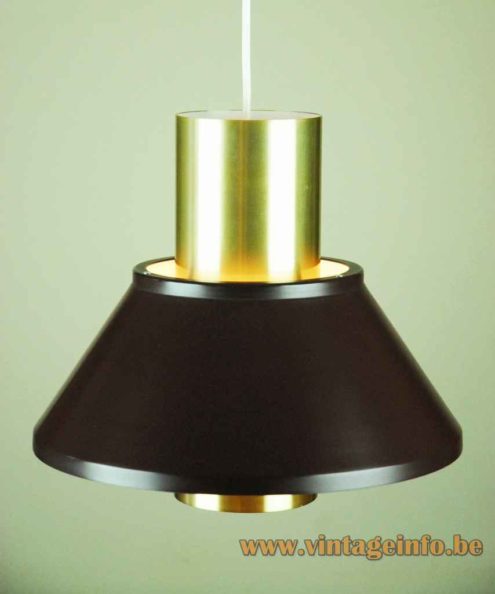
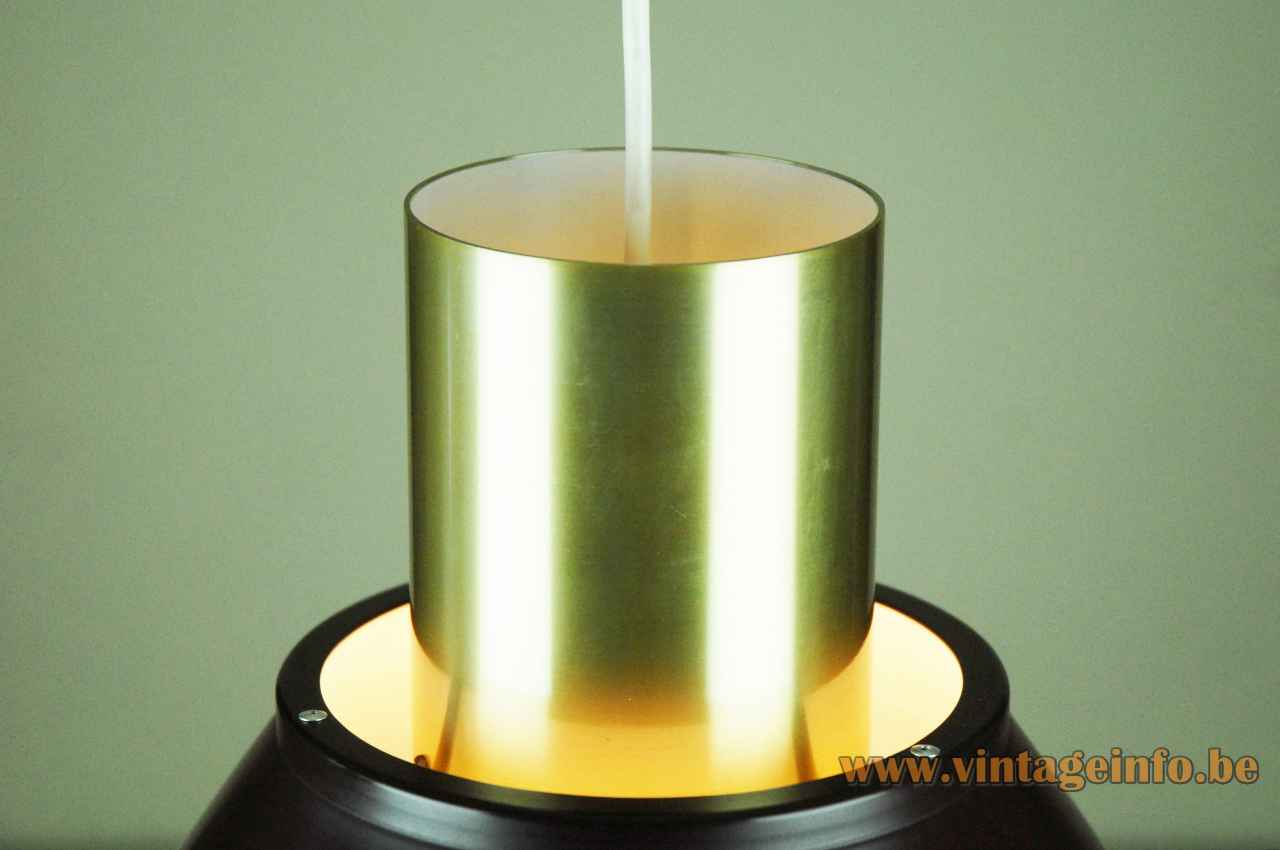
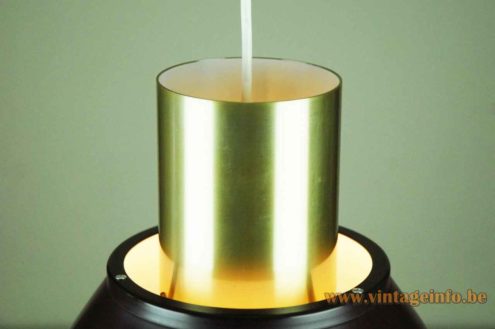
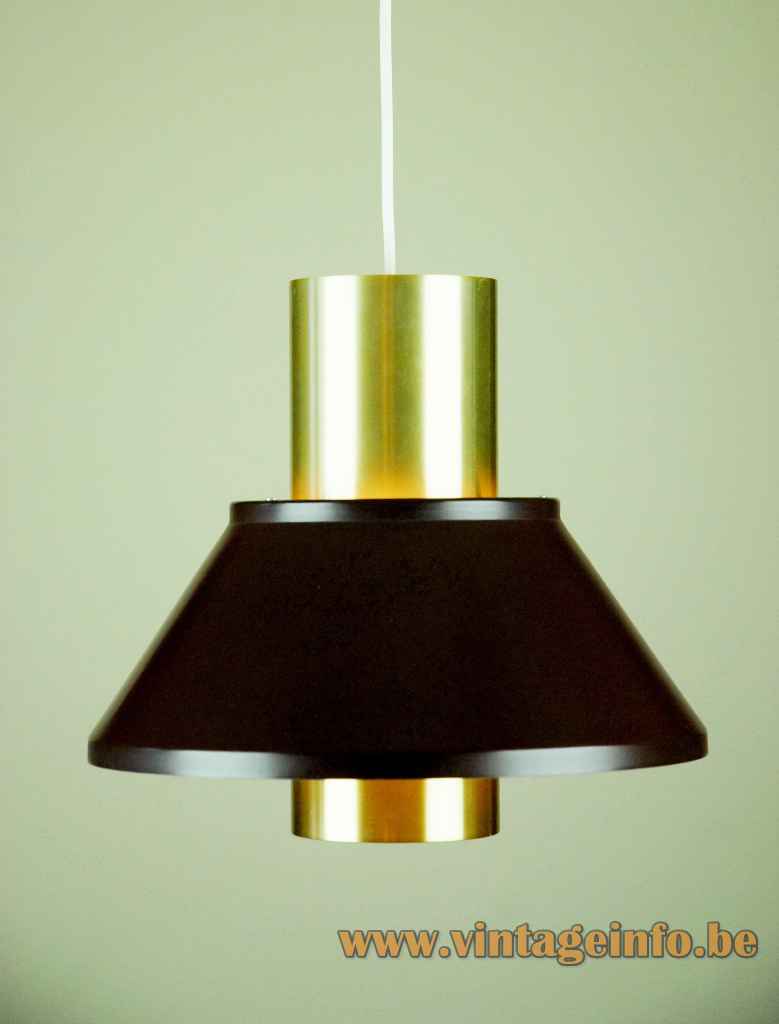
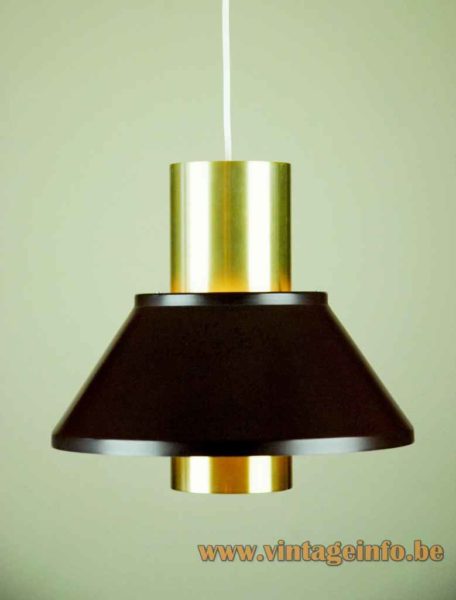
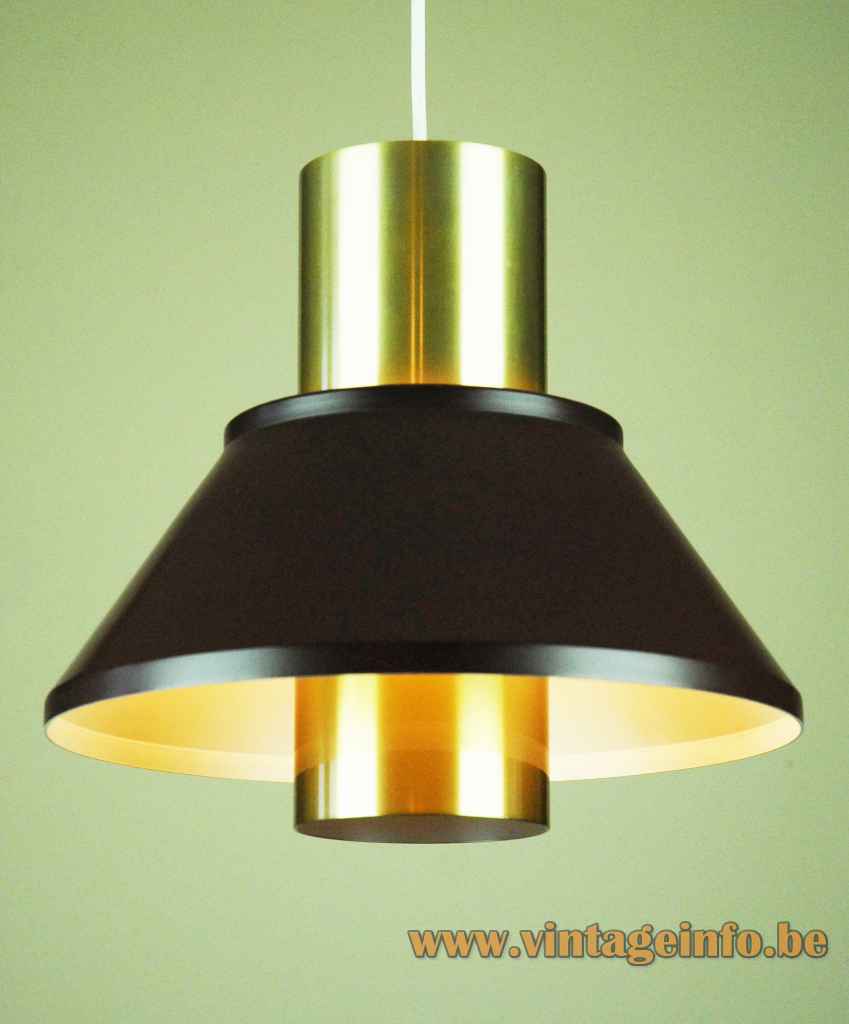
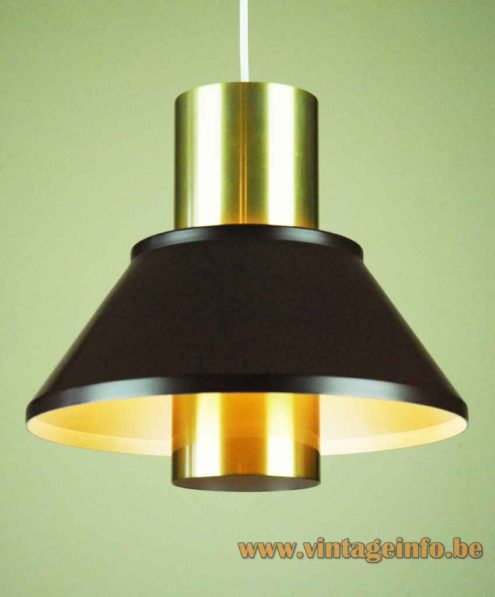
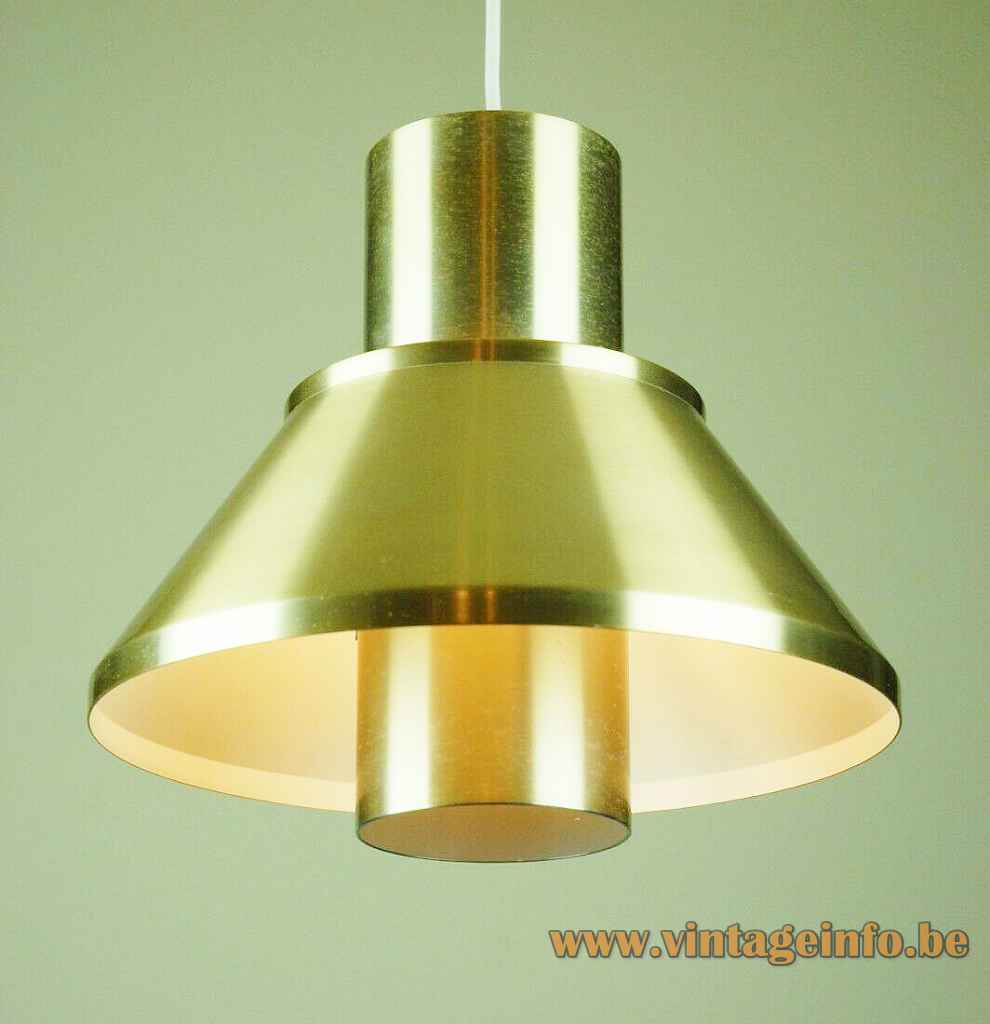
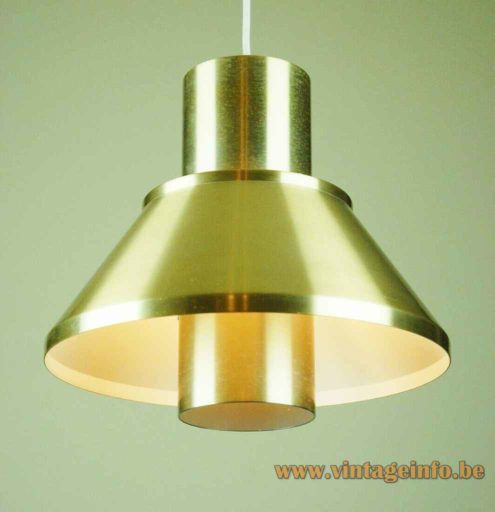
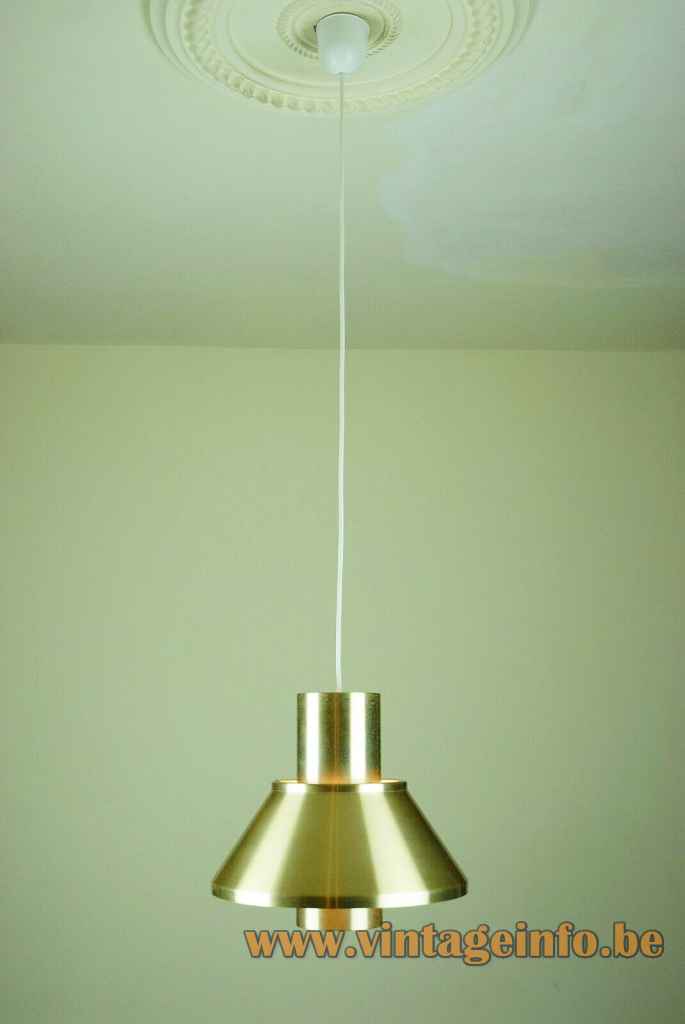
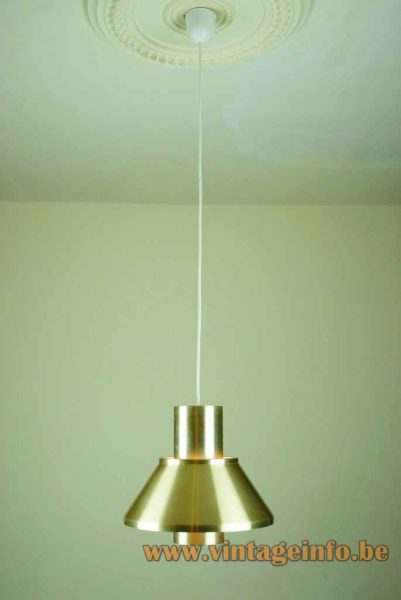
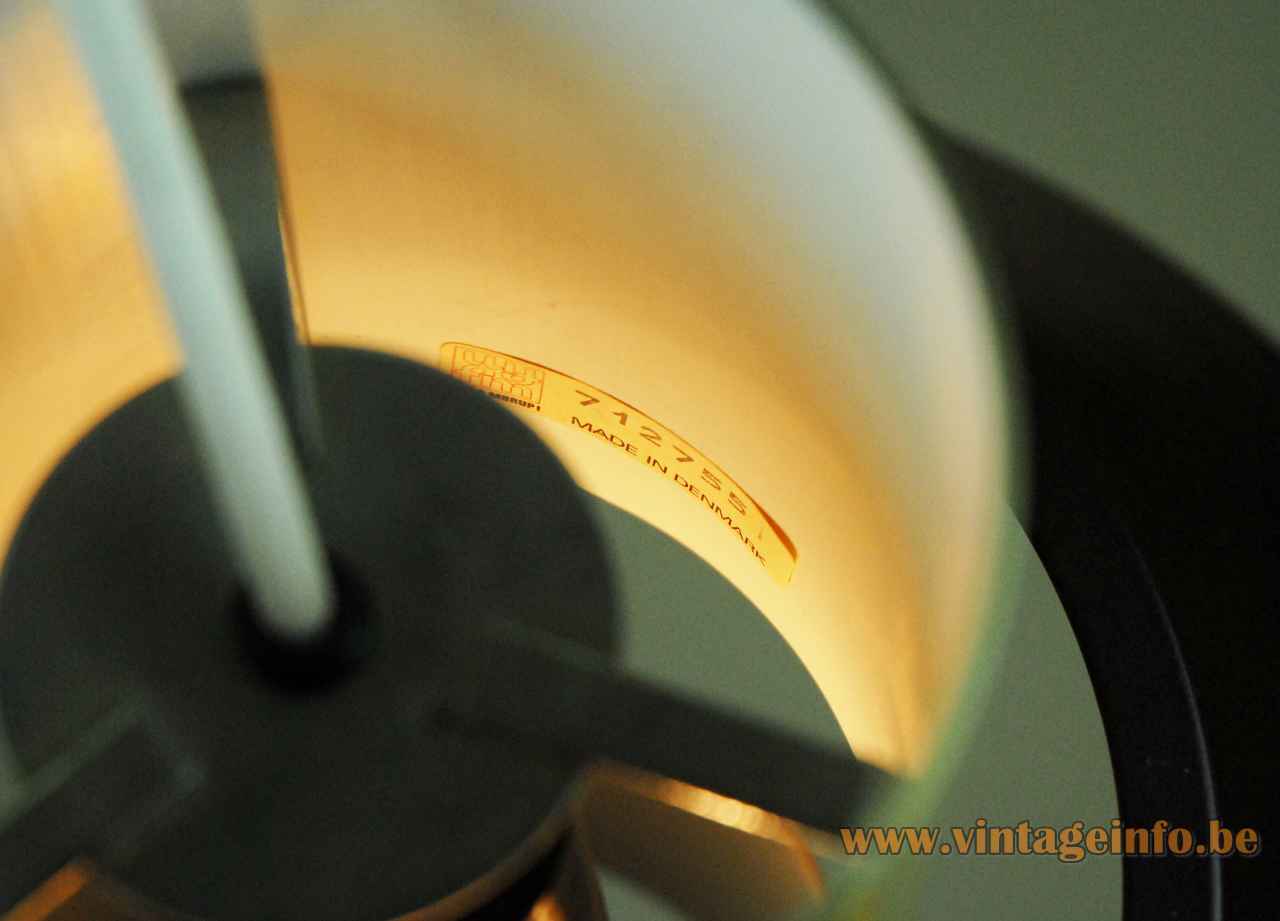
Jo Hammerborg Life Pendant Lamp – 1976 Catalogue Picture
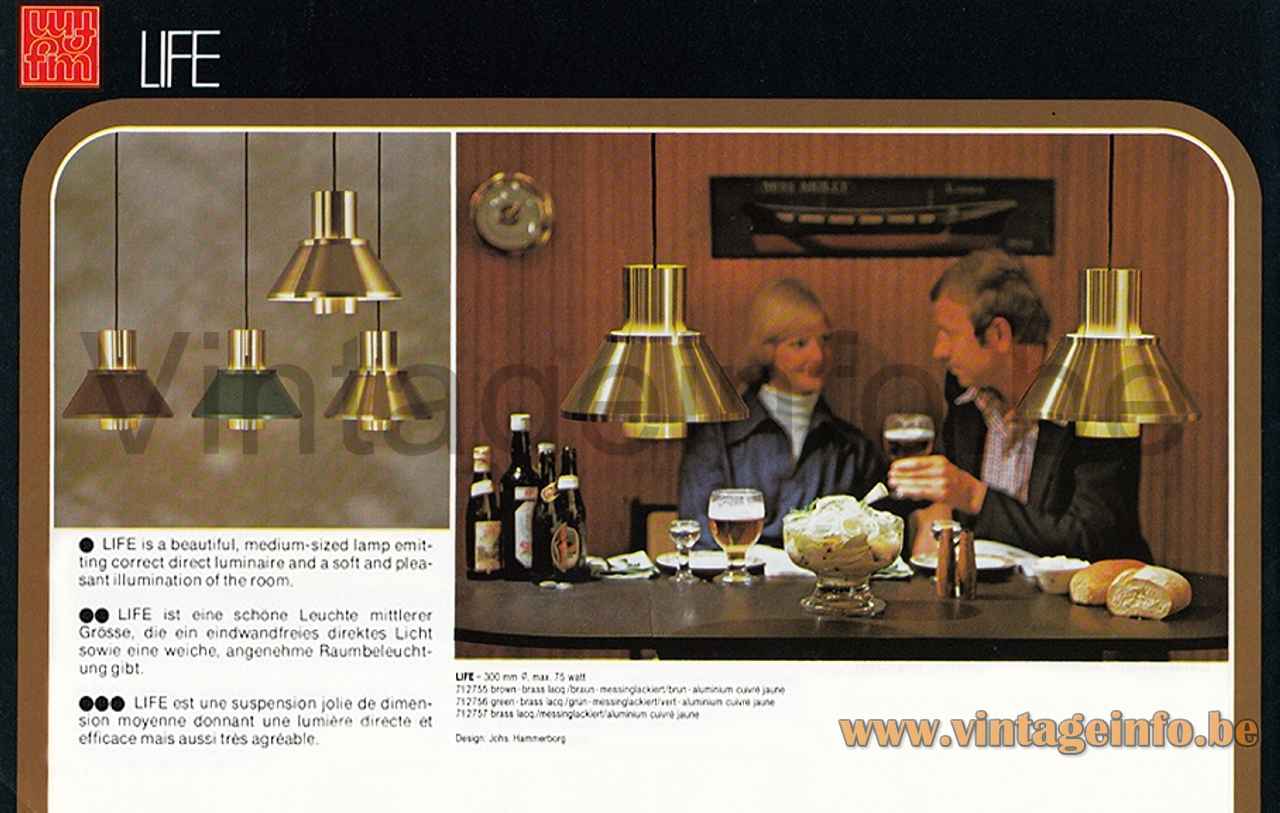
Jo Hammerborg Life Pendant Lamp – 1976 Catalogue Picture
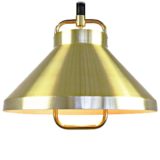
LIFE is a medium-sized lamp, not only suited in the home over dining tables, coffee tables – alone or in a grouping – but also especially suited for restaurants, pubs, etc. It emits correct direct luminaire and creates pleasant lighting of the room. LIFE is made in brass lacquered aluminium and with thermo-lacquered shade in brown and green or with brass lacquered shade. LIFE, modern design with a touch of romance.
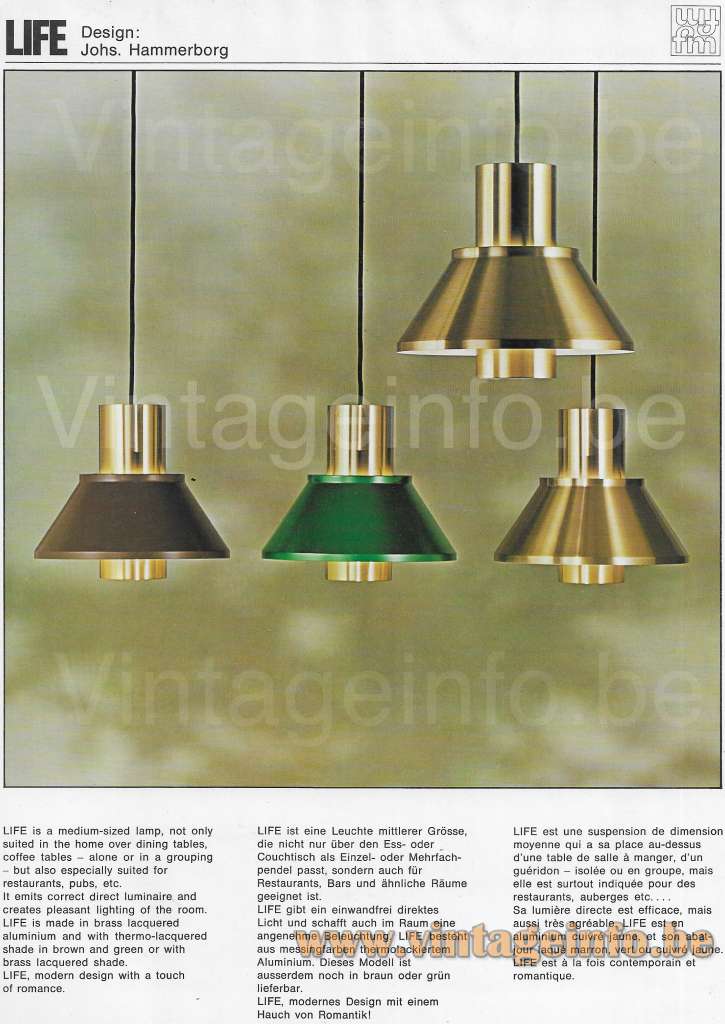
Jo Hammerborg Life Pendant Lamp – 1976 Catalogue Picture
Models: 712755, 172756 & 712757, available in 2 sizes: 30 cm / 11.81” and 25,8 cm / 10.15”.
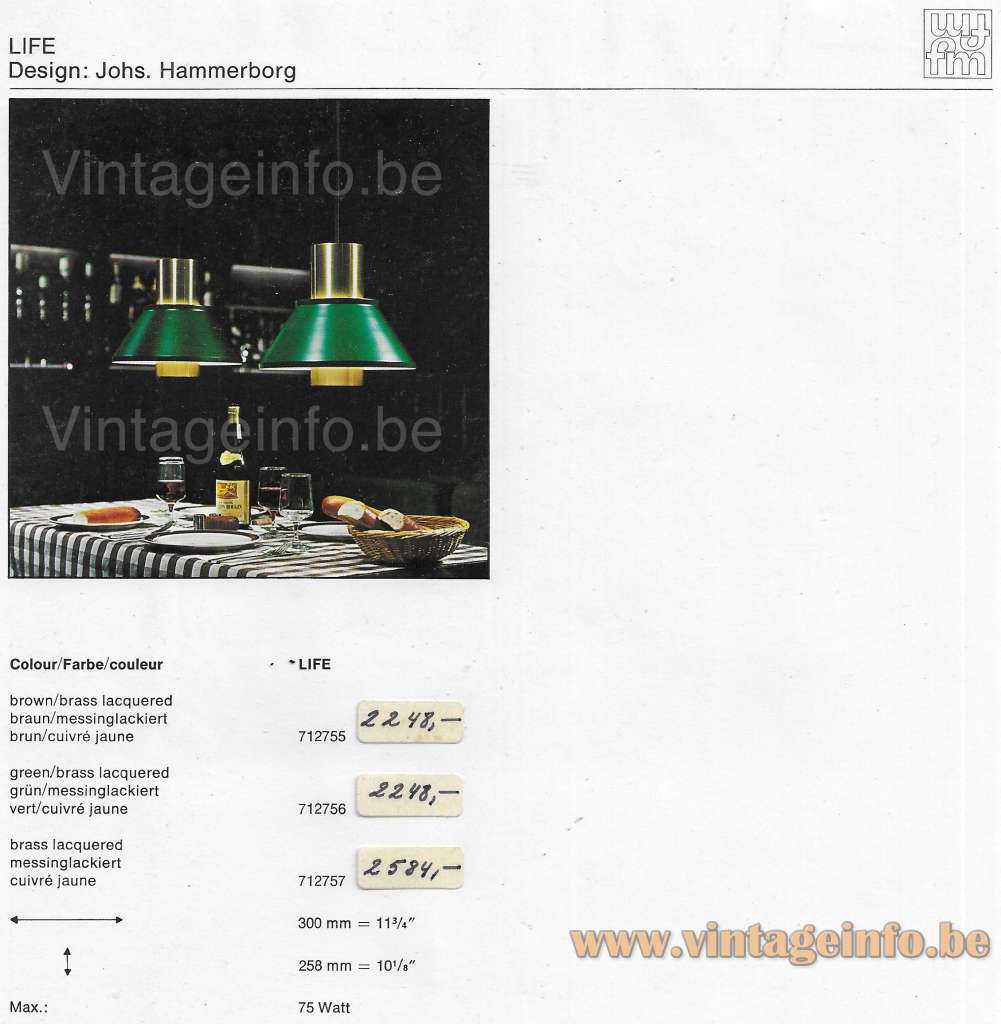
Lamps In The Movies
Kastanjemanden (2021)
A Jo Hammerborg Life pendant lamp was used as a set decoration in the 2021Danish TV crime series Kastanjemanden (The Chestnut Man) Season 1, Episode 1. It also appears in episode 6 (photo below). Starring Danica Curcic, Mikkel Boe Følsgaard and David Dencik.
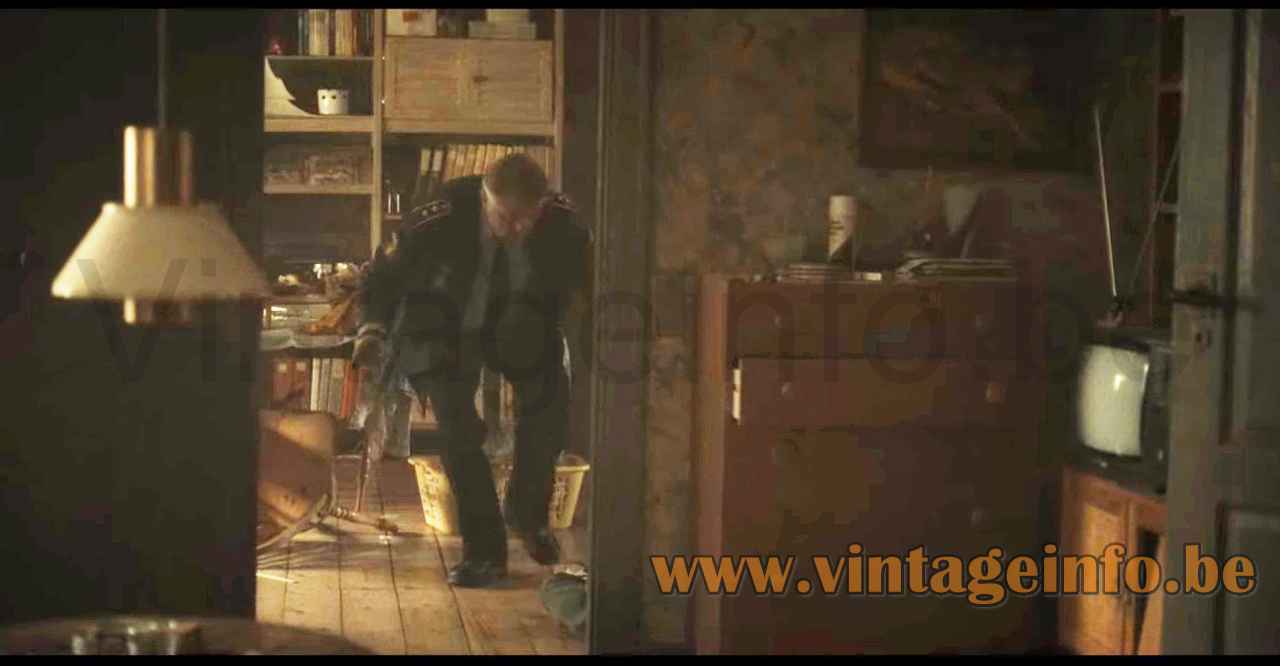
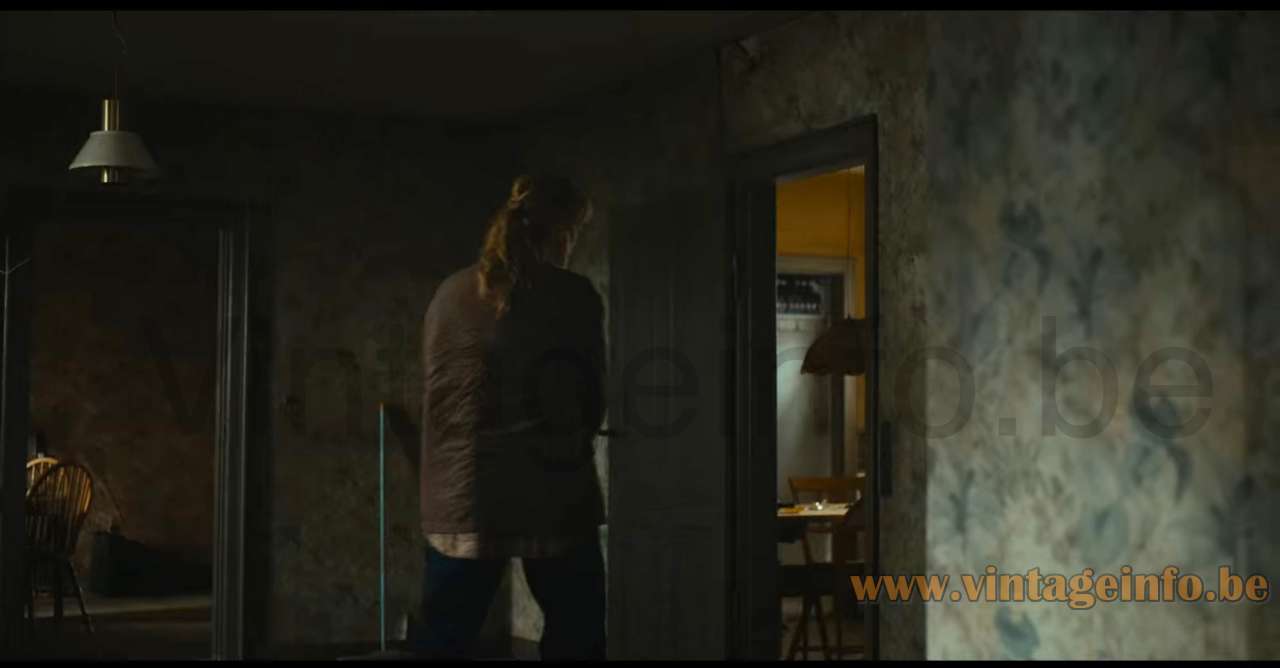
Jo Hammerborg Life Pendant Lamp
Materials: Round & conical gold anodised aluminium lampshade with a tube. Some metal parts. Bakelite E27 socket.
Cord: 120 cm / 47.24”
Height: 27 cm / 10.62”
Width: ∅ 30 cm / 11.81”
Electricity: 1 bulb E27, 1 x 75 watt maximum, 110/220 volt.
Any type of light bulb with an E27 screw base can be used.
Period: 1970s – Mid-Century Modern.
Designer: Jo Hammerborg (1920-1982).
Manufacturer:Fog & Mørup A/S and Holmegaard, Denmark.
Other versions: This Jo Hammerborg Life pendant lamp was made in a few colours and in two sizes: 30 cm / 11.81 inches and 25.8 cm / 10.15 inches.
Fog & Mørup also produced another lamp with the same name in the 1960s. It was made in glass, in a droplet-like shape. You can find it here. That model was also designed by Jo Hammerborg.
Jo Hammerborg
Johannes (Jo) Hammerborg was born on 4 February 1920 in Randers, Denmark. He grew up in a middle-class family, trained as a silversmith in the early 1940s, and during the German occupation took part in the Danish resistance movement as a saboteur. In 1944 he enrolled at the Royal Danish Academy of Fine Arts in Copenhagen, and in 1949 he began working as a silversmith at Georg Jensen.
In 1957 Hammerborg became head of design at Fog & Mørup, a position he held until 1980. Under his direction, the company experienced its most successful period, both artistically and commercially. He reshaped the visual identity of Fog & Mørup with a modern, highly disciplined design language and strict attention to detail, not only in the lamps themselves, but also in packaging, labelling and presentation.
Hammerborg designed approximately 180 lamps for Fog & Mørup. The first years of his tenure were especially productive: between 1957 and 1963, 24 of those designs were already put into production. His work is characterised by clarity, balance and a strong sense of proportion, qualities often linked to his background as a silversmith.
Outside his work as a designer, Hammerborg was an enthusiastic sportsman, pilot and parachutist. He died on 23 July 1982, aged 62, in a parachuting accident on Bornholm.
Fog & Mørup
Fog & Mørup was founded in 1904 by Ansgar Fog (1880–1930) and Erik Mørup (1879–1972), originally as a metalwork wholesaler. In 1906 the company moved to Copenhagen and gradually developed into one of Denmark’s leading lighting manufacturers. Its strongest creative period began after Jo Hammerborg joined the company in 1957 as head of design, helping to establish Fog & Mørup as a major name in Danish modern lighting.
Designers and architects associated with the company include Jo Hammerborg, Claus Bonderup, Torsten Thorup, Sidse Werner, Sophus Frandsen, Jørgen Bo, E. Balslev, Peter Avondoglio, Karen Clemmensen, Ebbe Clemmensen and Hans Due.
Lyfa
Lyfa was founded in 1903 as Kjøbenhavns Lampe- og Lysekronefabrik. By the mid-20th century it had become one of the most important Danish lighting manufacturers, working with designers such as Bent Karlby, Louis Weisdorf, Piet Hein, Finn Juhl, Nils and Eva Koppel and others. In the late 1970s, Lyfa merged with Fog & Mørup, although both brands continued for a time to be marketed separately.
In the early 1980s, the combined Lyfa–Fog & Mørup business was taken over by Lyskær, after which the Fog & Mørup name gradually disappeared. Lyskaer–Lyfa remained active until 1991, when it was incorporated into Horn Belysning A/S.
Horn Belysning
Horn Belysning A/S, originally E.S. Horn, was founded in 1952 in Aalestrup, Denmark. In 1963 the company adopted the name Horn Belysning. It grew into a major volume producer for the Scandinavian and European market and counted IKEA among its important customers. By the 1980s, Horn was one of the largest lighting companies in Denmark.
In 1991, Horn Belysning acquired Lyskaer–Lyfa, which by then also included brands such as Lyfa, Fog & Mørup and ABO. In 2005, Horn was restructured: the outdoor lighting activities were sold to Nordlux, while the remaining company was relaunched as Lightyears. Lightyears was later acquired by Fritz Hansen.
Links (external links open in a new window)
Lightyears – Republic of Fritz Hansen
Horn Belysnign history -Danish Vintage Design
The story of Fog & Mørup, Danish modern lighting superstar: www.classic-modern.co.uk/fog_morup
Many thanks to Craig from From our house to Bauhaus for the beautiful pictures. You can find his shop on Ebay over here.
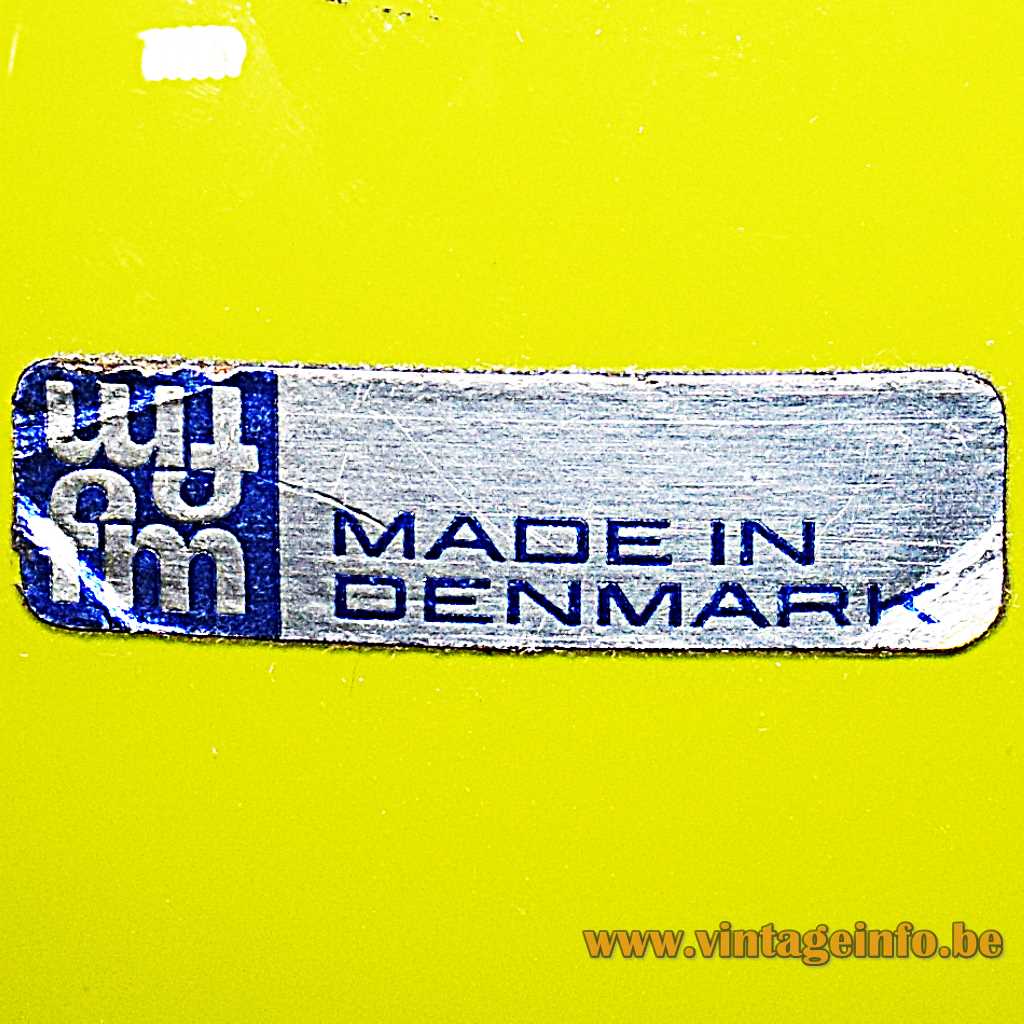
Jo Hammerborg Life Pendant Lamp – Company Labels & Logos