- Categories
- Categories
Last 5 Viewed
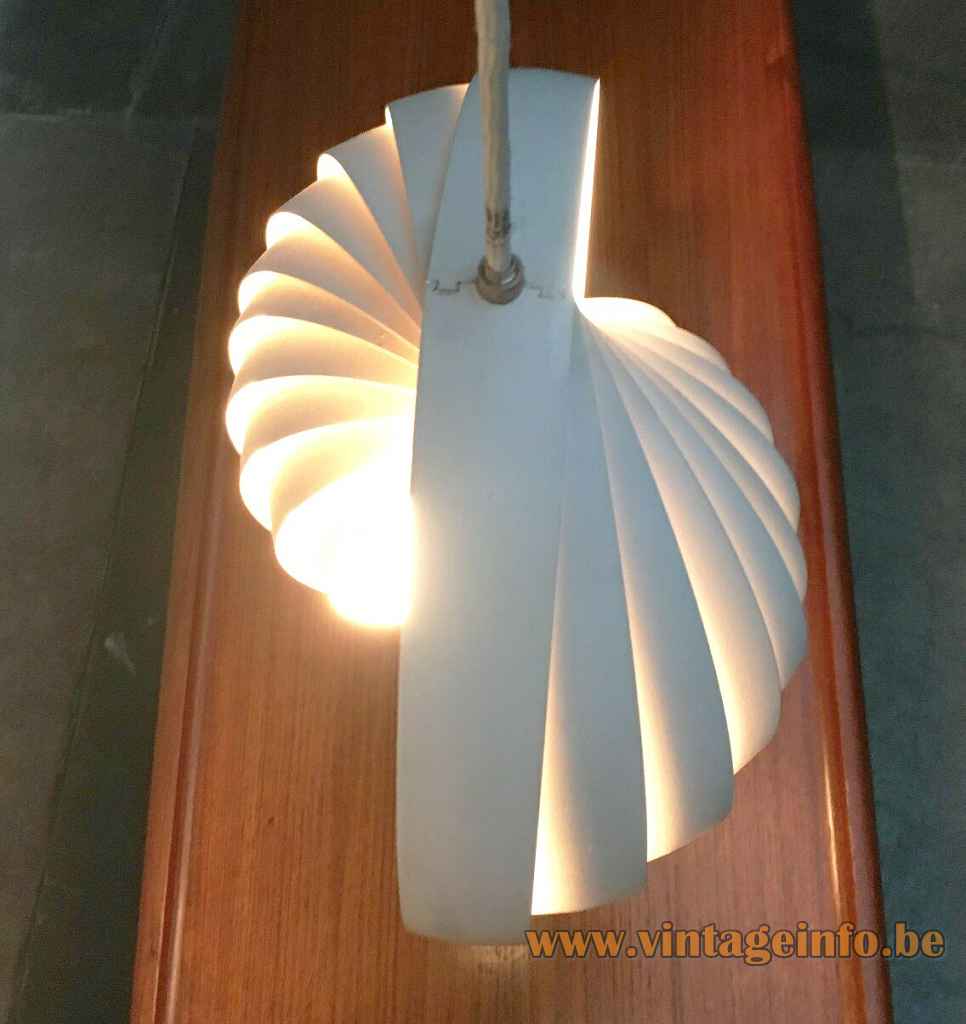
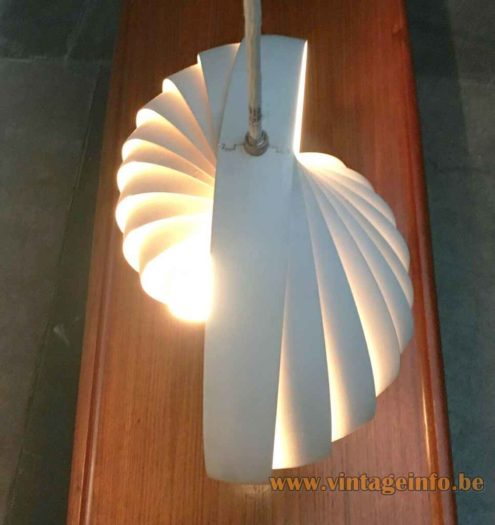

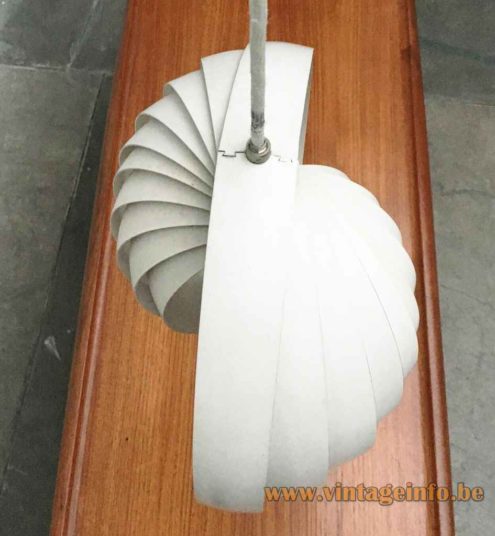
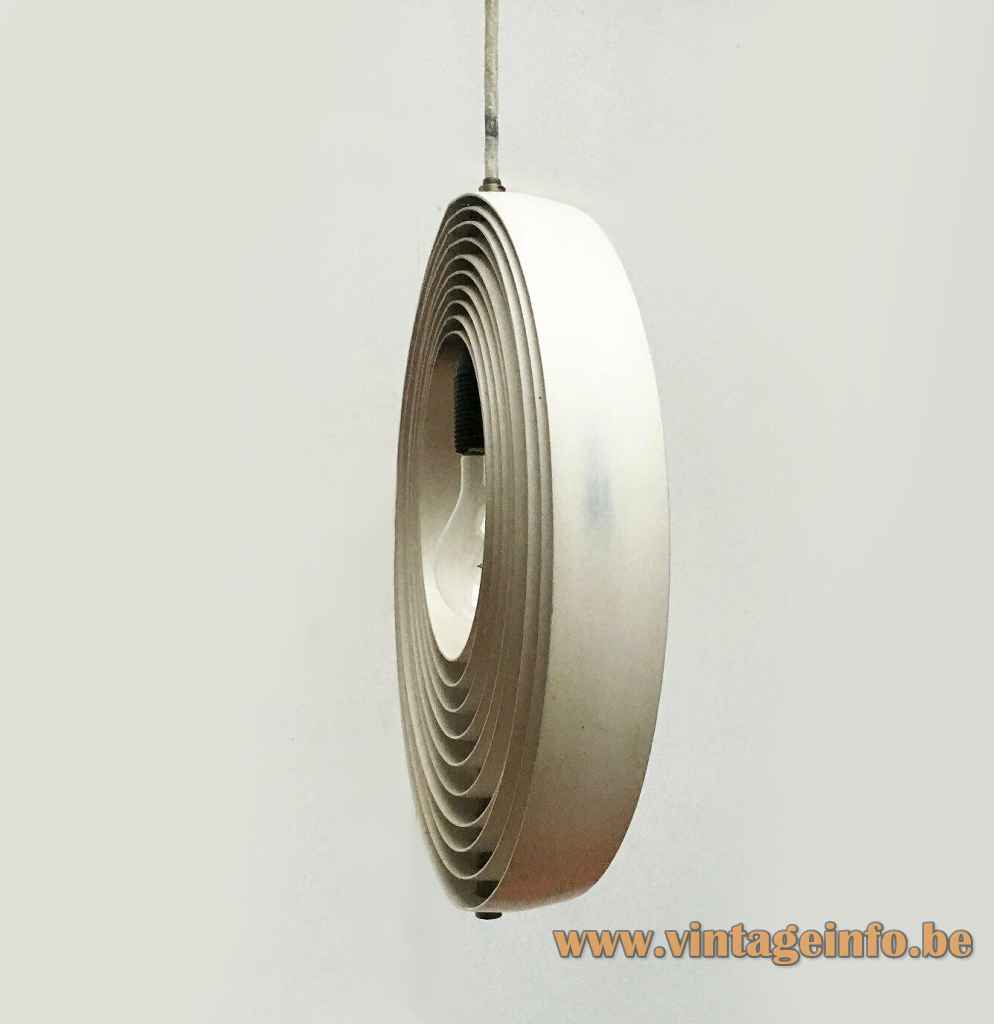
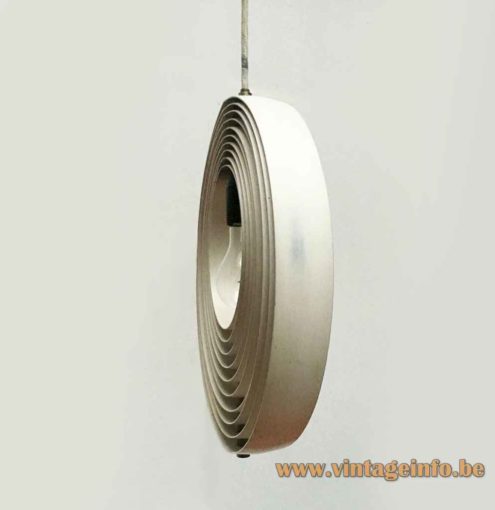
Louis Poulsen
Louis Poulsen is a Danish lighting manufacturer with roots going back to 1874, when Ludvig R. Poulsen founded a business in Copenhagen. Originally a trading company, the firm gradually shifted towards electrical supplies and lighting as electricity became more widely used. In 1896 Ludvig’s nephew Louis Poulsen joined the company, and after Ludvig’s death in 1906 Louis continued the business. In 1914Sophus Kaastrup-Olsen became a partner, and the company name changed to Louis Poulsen & Co.
A decisive turning point came in 1924, when Poul Henningsen began his long collaboration with the company. His scientific approach to glare-free lighting and reflective multi-shade systems became central to the identity of Louis Poulsen and strongly influenced modern lighting design. Since then, the company has continued to combine functional light, architectural clarity and carefully considered form, following the idea that a lamp should not merely be an object, but a tool to shape light.
Over the decades, Louis Poulsen has produced both iconic domestic lighting and large-scale architectural lighting for public and professional spaces. The company remains one of the best-known names in Danish lighting design, with a strong emphasis on the quality, direction and atmosphere of light.
Designers
The designer most closely associated with Louis Poulsen is Poul Henningsen (PH). Other major names linked to the company include Arne Jacobsen, Verner Panton, Vilhelm Lauritzen and Vilhelm Wohlert.
Over time, Louis Poulsen also collaborated with a wide range of designers, architects and studios, including Alfred Homann, Andreas Hansen, Eila & John Meiling, Henning Klok, Axel Wedel Madsen, Jørgen Bo, Ole Valdemar Kjær, Jens Møller-Jensen and Bent Gantzel-Boysen.
Among later and more recent collaborations are Louise Campbell, Øivind Slaatto, Christian Flindt, Clara von Zweigbergk, nendo (Oki Sato), Olafur Eliasson, GamFratesi, Anne Boysen, Peter Bysted, Anu Moser, Shoichi Uchiyama, Gabriel Tan and Finn Juhl.
Lamps In The Movies
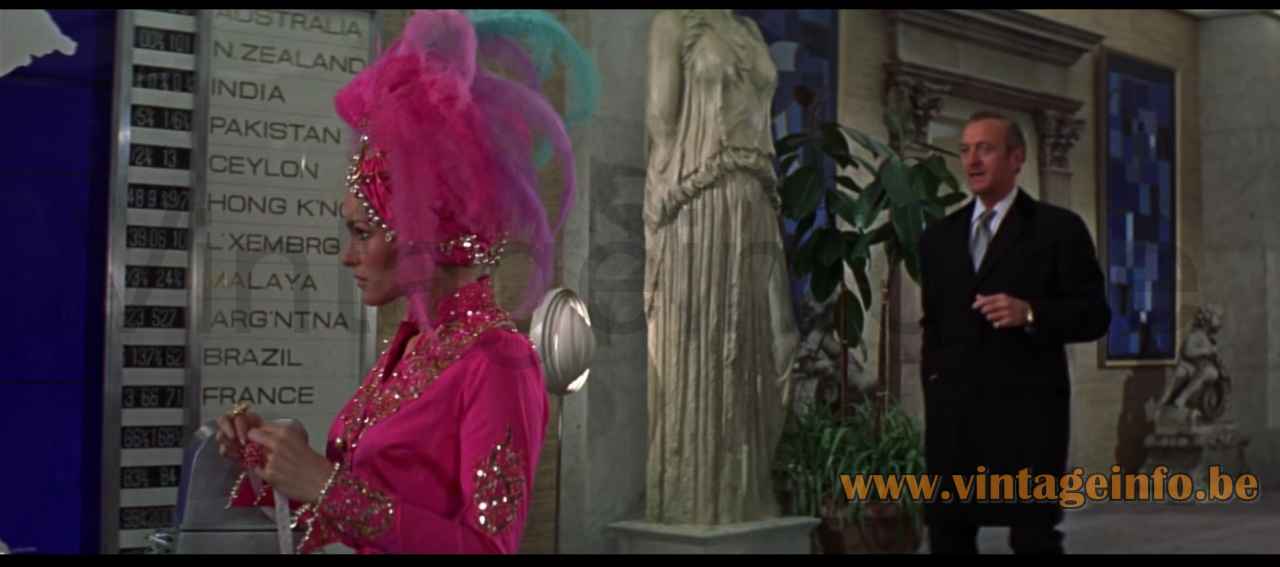
Casino Royal (1967)
A Moon floor lamp, producer unknown, was used as a set decoration in the 1967 James Bond spy comedy film Casino Royal. Starring Peter Sellers, David Niven and Ursula Andress.
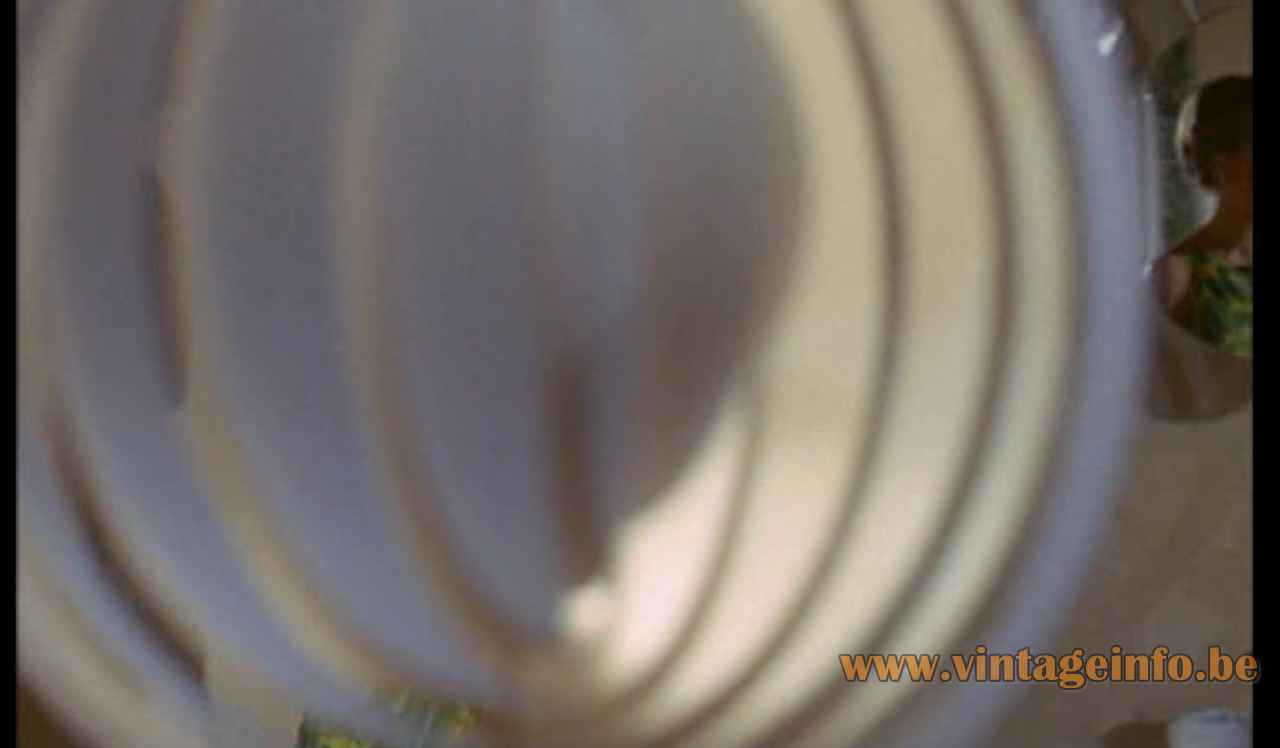
La Piscine (1969)
The Verner Panton Moon pendant lamp was used as a set decoration in the 1969 Italian/French film La Piscine (The Swimming Pool) with Alain Delon, Romy Schneider, Jane Birkin and Maurice Ronet. Unfortunately this photo was the best shot.
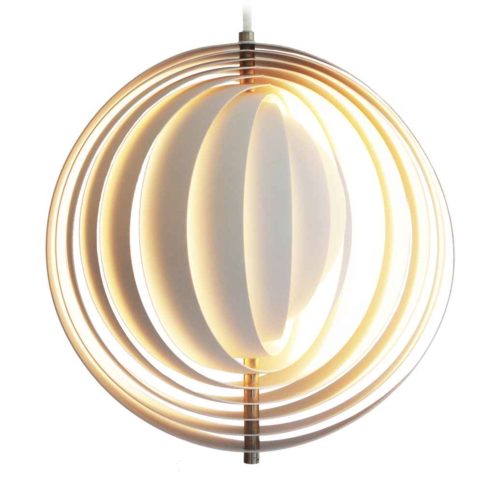
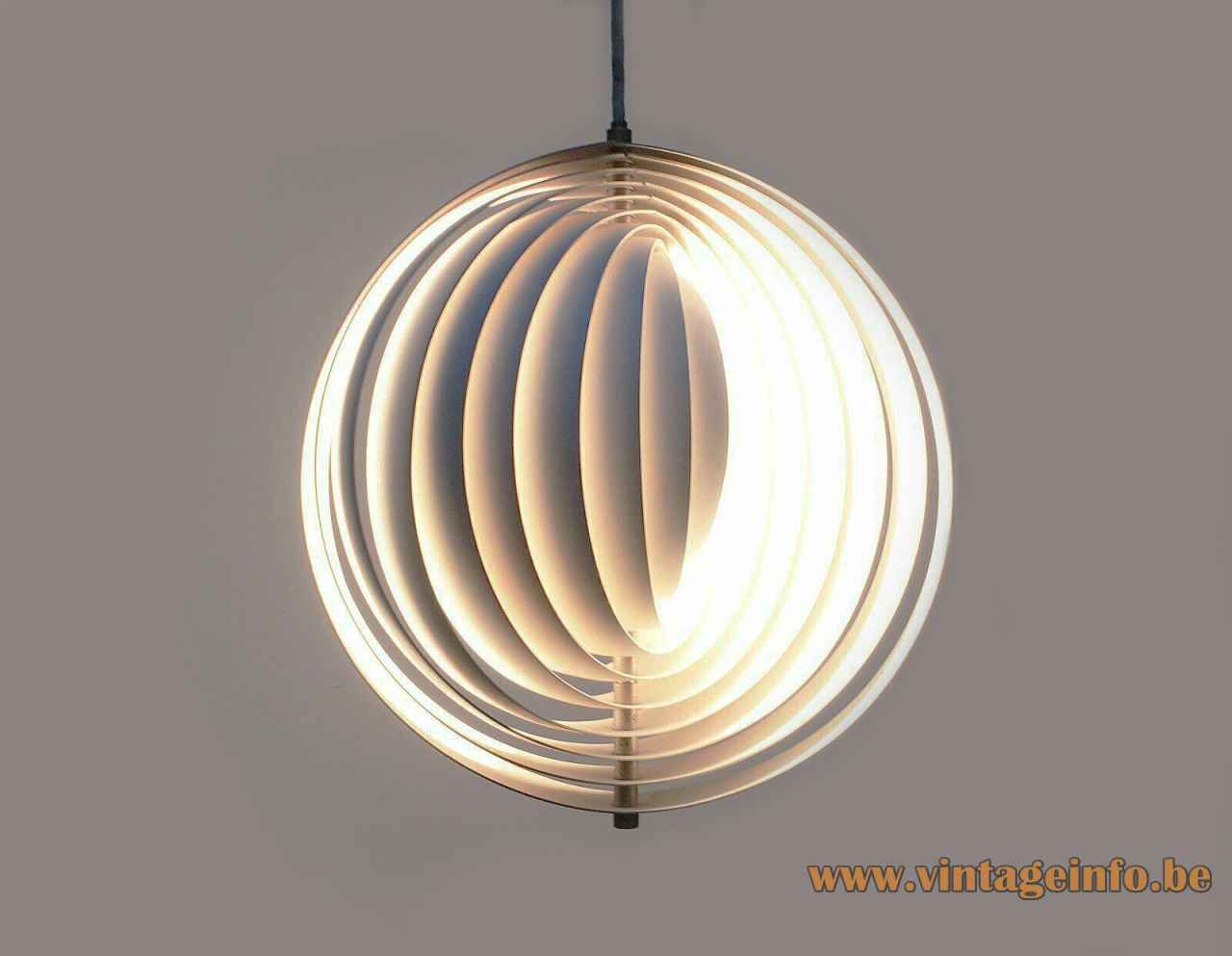
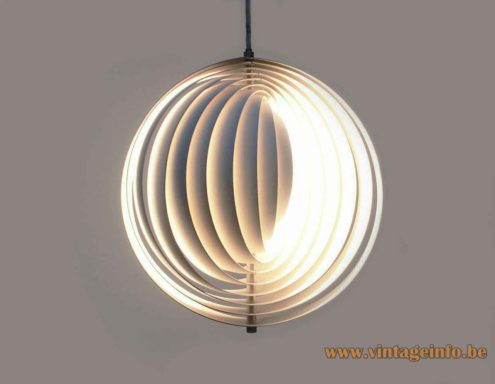
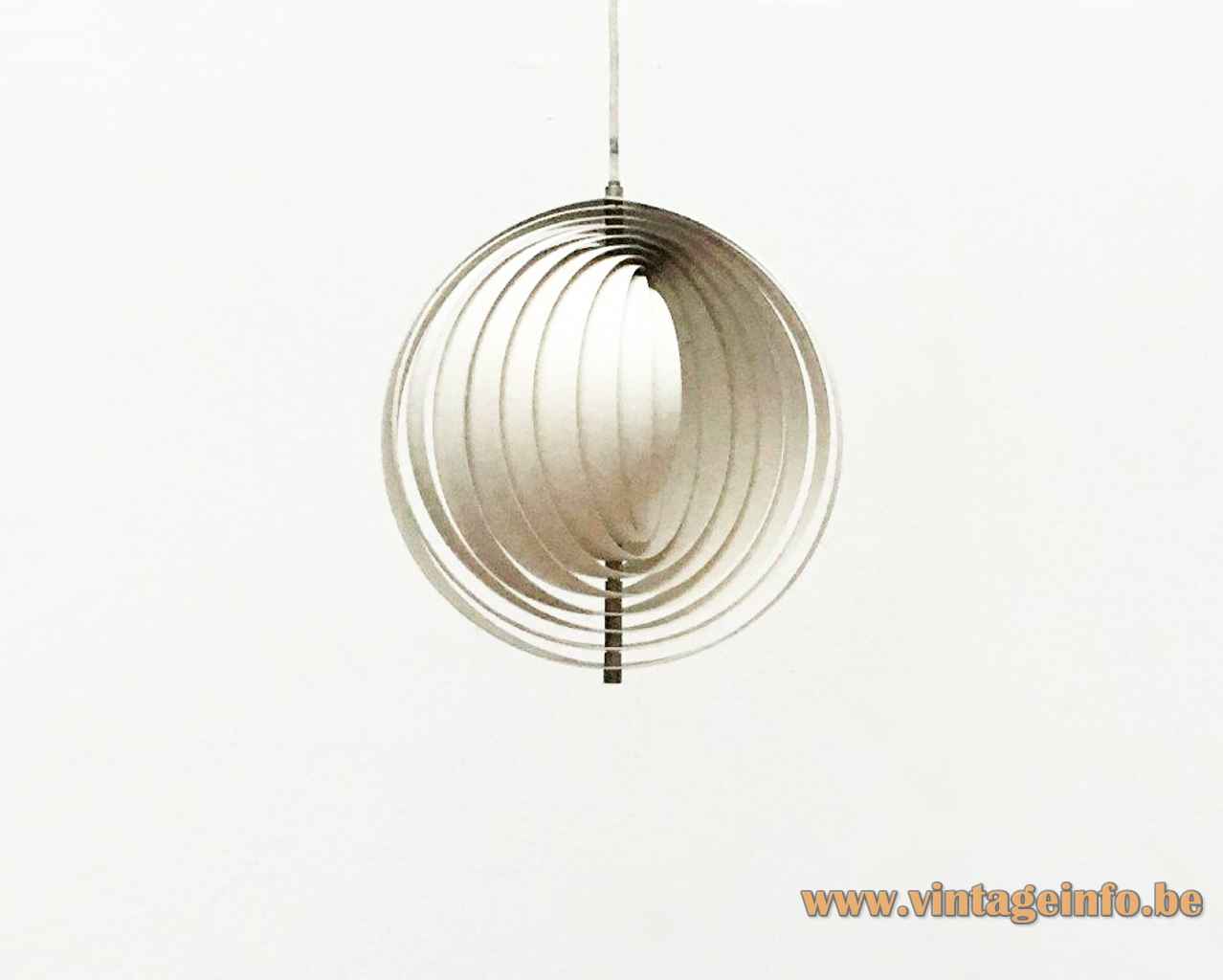
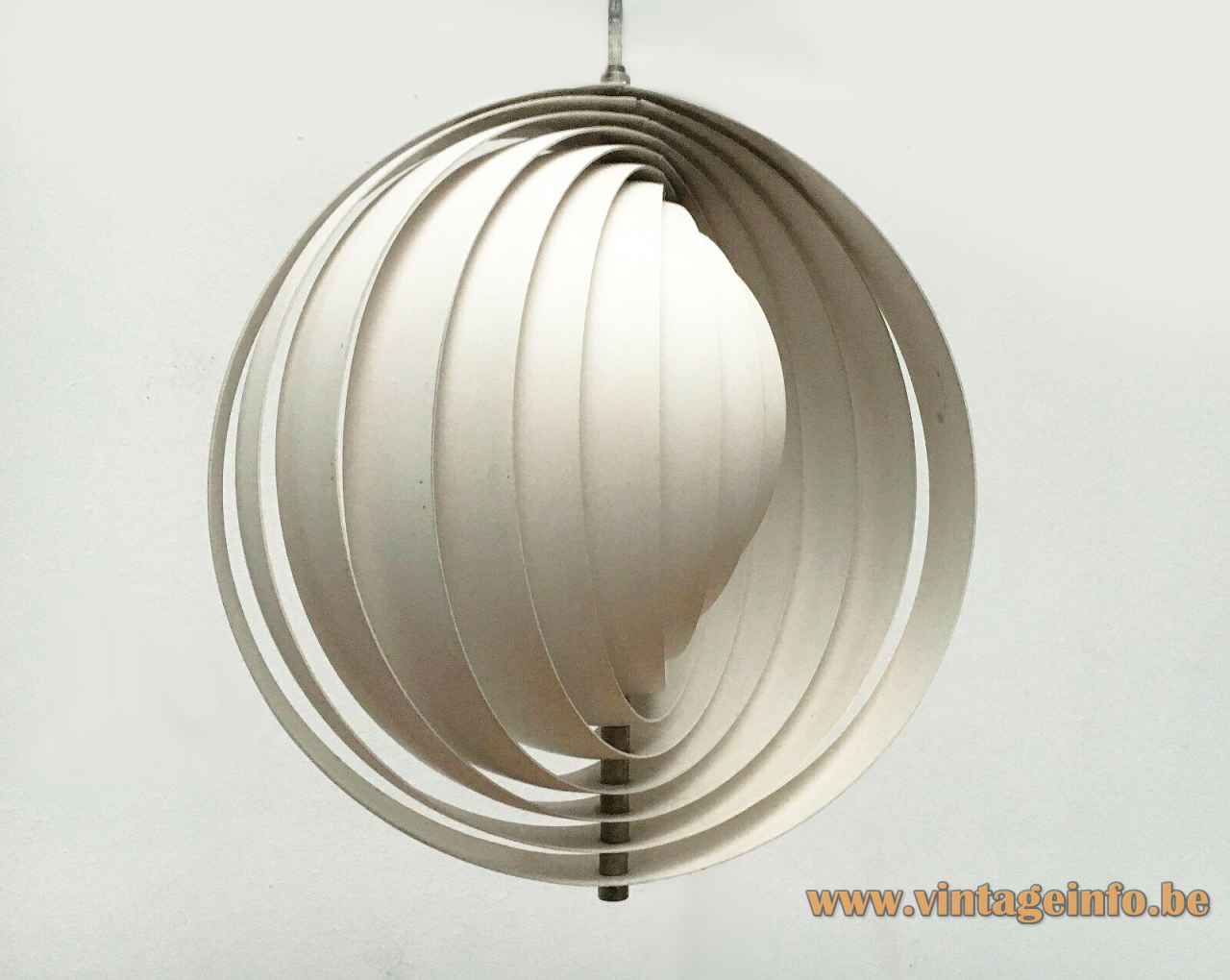
Verner Panton Moon Pendant Lamp
Materials: 10 adjustable white painted aluminium slats globe lampshade. Chrome ornamental nut, rings & parts. Metal rod inside. Bakelite E27 socket.
Cord: 90 cm / 35.43”
Width: ∅ 35 cm / 13.77”
Height: ∅ 38 cm / 14.96”
Electricity: 1 bulb E27, 1 x 60 watt maximum, 110/220 volt.
Any type of light bulb can be used, not a specific one preferred.
Period: 1960s – Mid-Century Modern.
Designer: Verner Panton (1926-1998) in 1960.
Manufacturer: Louis Poulsen & Co A/S, Copenhagen, Denmark.
Other versions: The Verner Panton Moon pendant lamp was produced in several versions and by different manufacturers over time. This example is the early aluminium version made by Louis Poulsen. The design was later reissued by Verpan, and both metal and plastic versions are known.
The lamp was produced in two sizes. The example shown here measures Ø 35 cm (approximately 13.77 inches), while a larger version of about Ø 44.5 cm (approximately 17.51 inches) also exists.
Originally named Visir (or Visir lampe), the Moon pendant lamp is one of Verner Panton’s earliest lighting designs. It dates from 1960 and was introduced to the market in 1961.
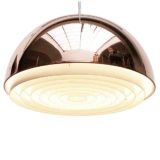
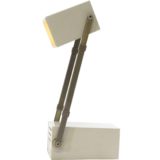
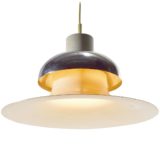
The Visir / Moon design has been widely copied over the years. While the original model is a pendant lamp, other manufacturers later produced table and floor lamps clearly inspired by the same idea. Comparable layered and disc-based lighting designs were also created by designers such as Henri Mathieu, Louis Weisdorf and Nico Heilmann.
Verner Panton
Verner Panton (13 February 1926 – 5 September 1998) was a Danish designer and is widely regarded as one of the most influential furniture, lighting and interior designers of the 20th century. He was born in Gamtofte, Denmark, and studied architecture at the Royal Danish Academy of Fine Arts in Copenhagen from 1947 to 1951. During his final study years he worked in the studio of Arne Jacobsen, an experience that had a lasting influence on his understanding of form, space and colour.
Between 1953 and 1955 Panton travelled extensively through Europe, studying contemporary architecture, design and emerging materials. In 1955 he established his own design studio, later based in Switzerland, from where he developed a highly individual and experimental body of work. He became especially known for his radical use of colour, organic forms and new materials such as plastics, both in furniture and lighting design, as well as in complete interior environments.
Among his most iconic designs are the Panton Chair and a series of lamps from the late 1960s and early 1970s, including the Flowerpot, which reflect the optimistic and experimental spirit of that period. Panton’s work often challenged conventional ideas of living spaces and played a key role in shaping the visual language of late modern design.
Over the years, Verner Panton worked with several manufacturers, each period resulting in distinct lighting designs. For Louis Poulsen, he designed some of his most famous lamps, including this Flower Pot, Topan, Panthella and Moon, all of which show his interest in glare-free light and strong, simple forms.
With J. Lüber AG in Switzerland, Panton developed a series of more experimental and decorative lighting designs, such as the Fun, Spiral, Globe and Shell lamps. These designs often combined metal, plastic and reflective elements, and were closely linked to his interior concepts from the late 1960s and early 1970s.
Later, several of Panton’s lighting designs were reissued or newly produced by Verpan, the company dedicated to his legacy. This includes re-editions of lamps such as the Fun, Spiral, Moon and Globe, as well as other lighting objects originally conceived for interiors and exhibitions. Through these different collaborations, Panton’s lighting designs evolved from functional metal lamps to sculptural, atmospheric light objects that remain influential today.
Verner Panton received numerous international awards during his lifetime and remains a central figure in 20th-century design history.
Links (external links open in a new window)
Moon pendant lamp on the Verner Panton website
Moon pendant lamp on the Verpan website
Verner Panton biography – Wikipedia
Pantonworld – The Verner Panton Collector
Casino Royale (1967) film – Wikipedia
Casino Royale (1967) film – IMDb
Vintageinfo
Lamps in the Moon style
Many thanks to Frank from nullviernull raum+kommunikation for the pictures. You can find his shop over here on Pamono.
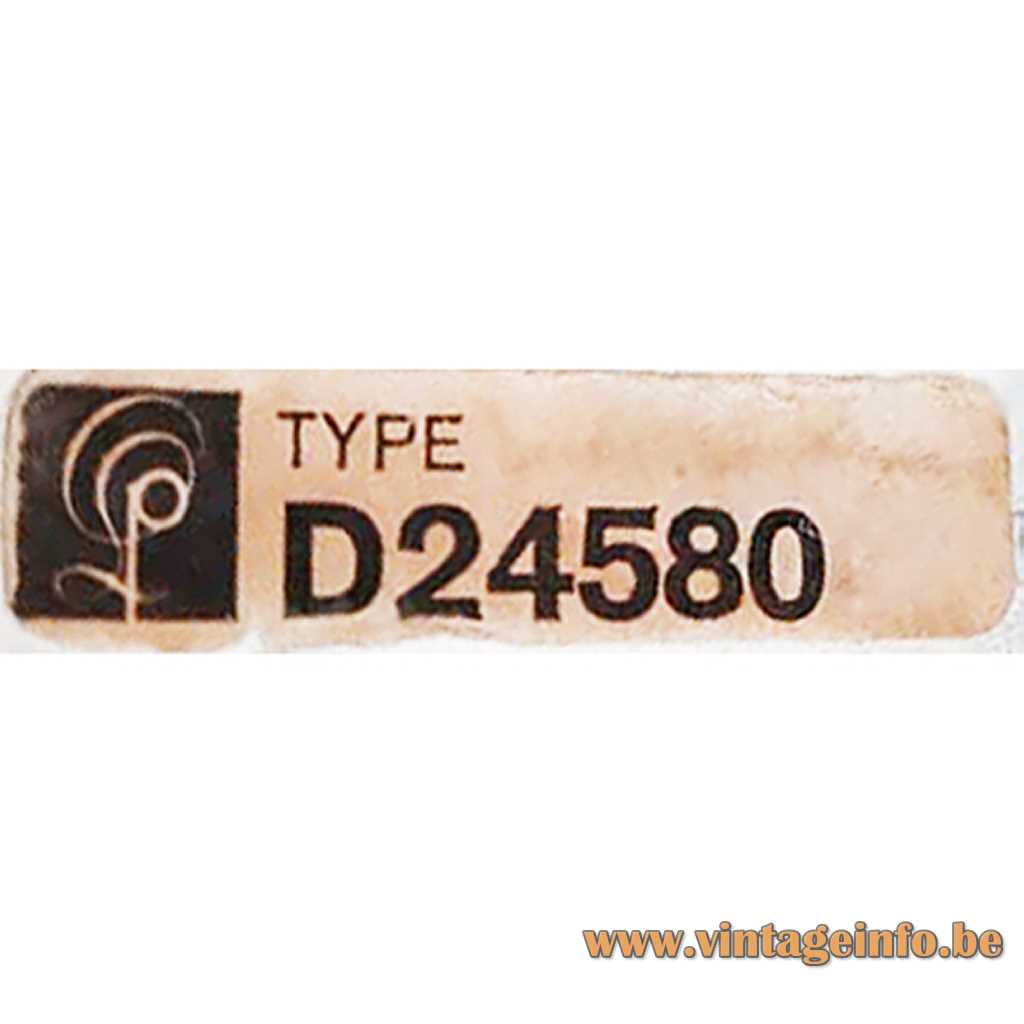
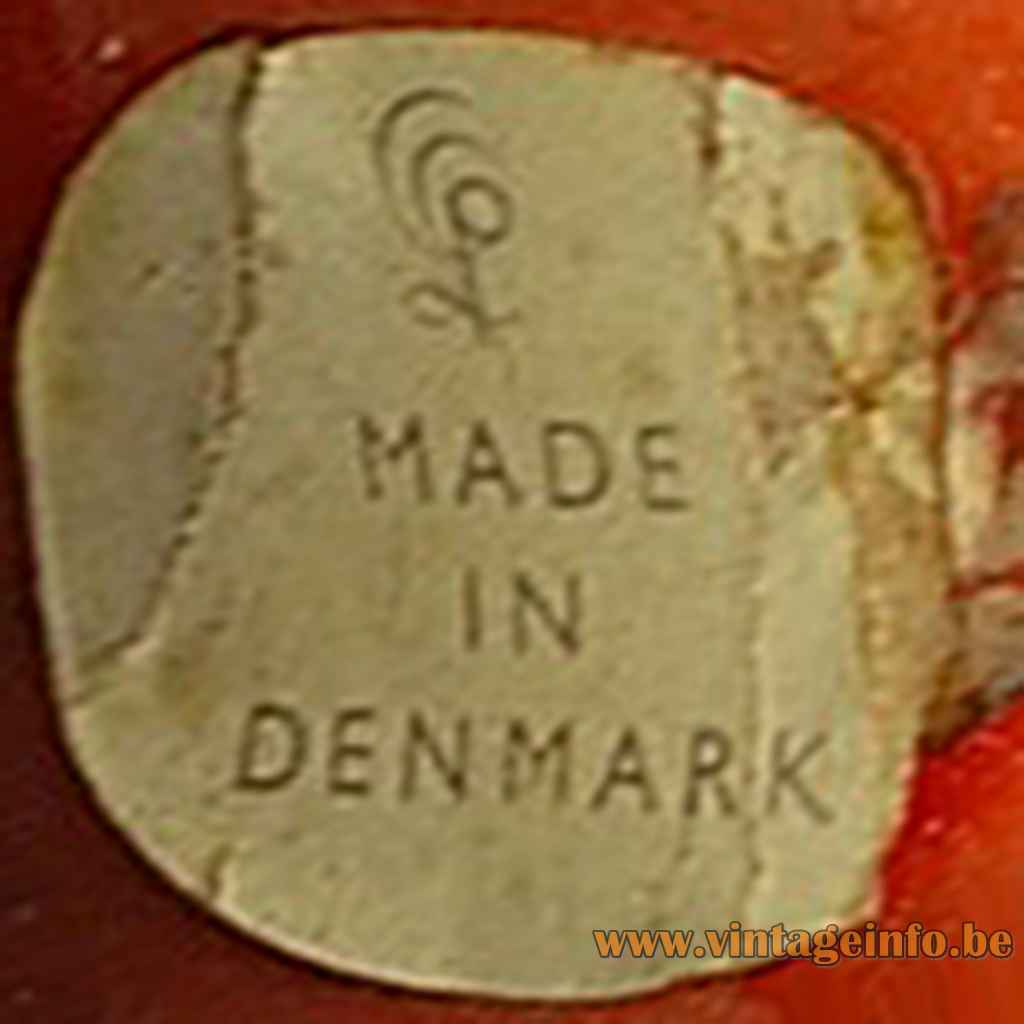
Verner Panton Moon Pendant Lamp – Company Labels