- Categories
- Categories
Last 5 Viewed
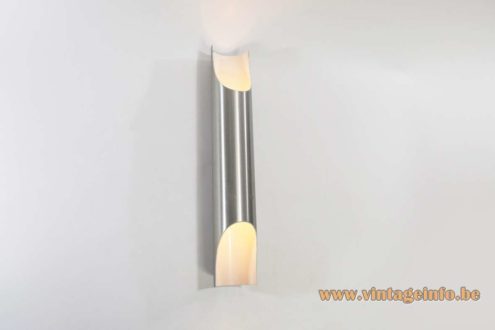
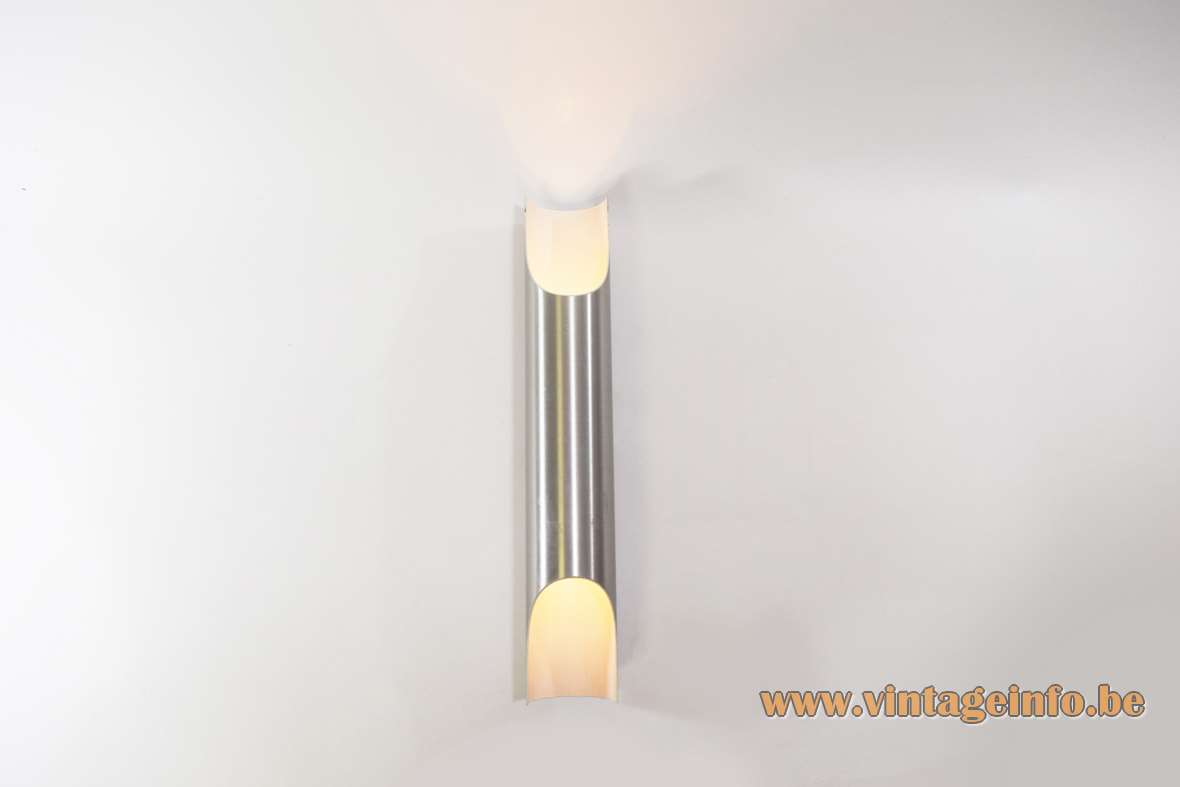
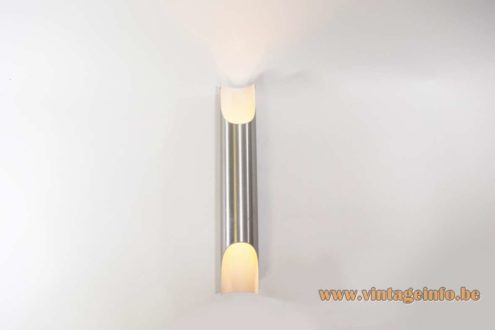
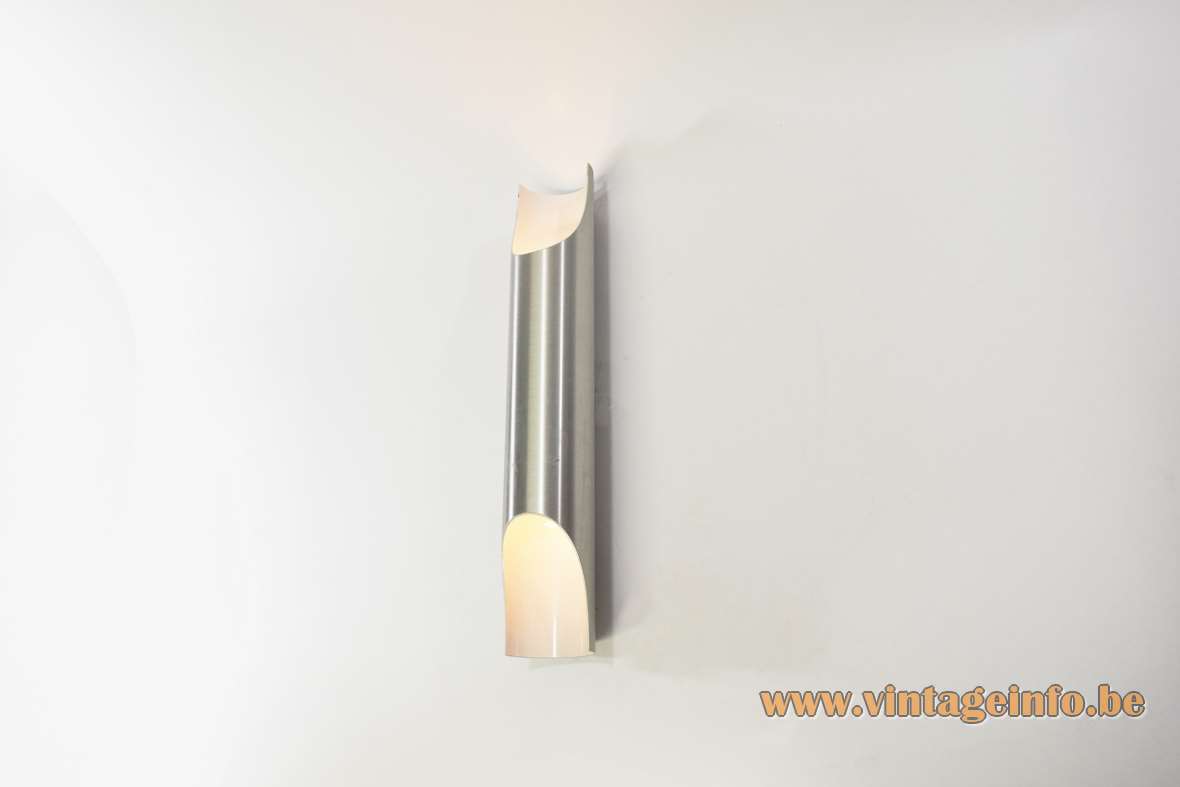

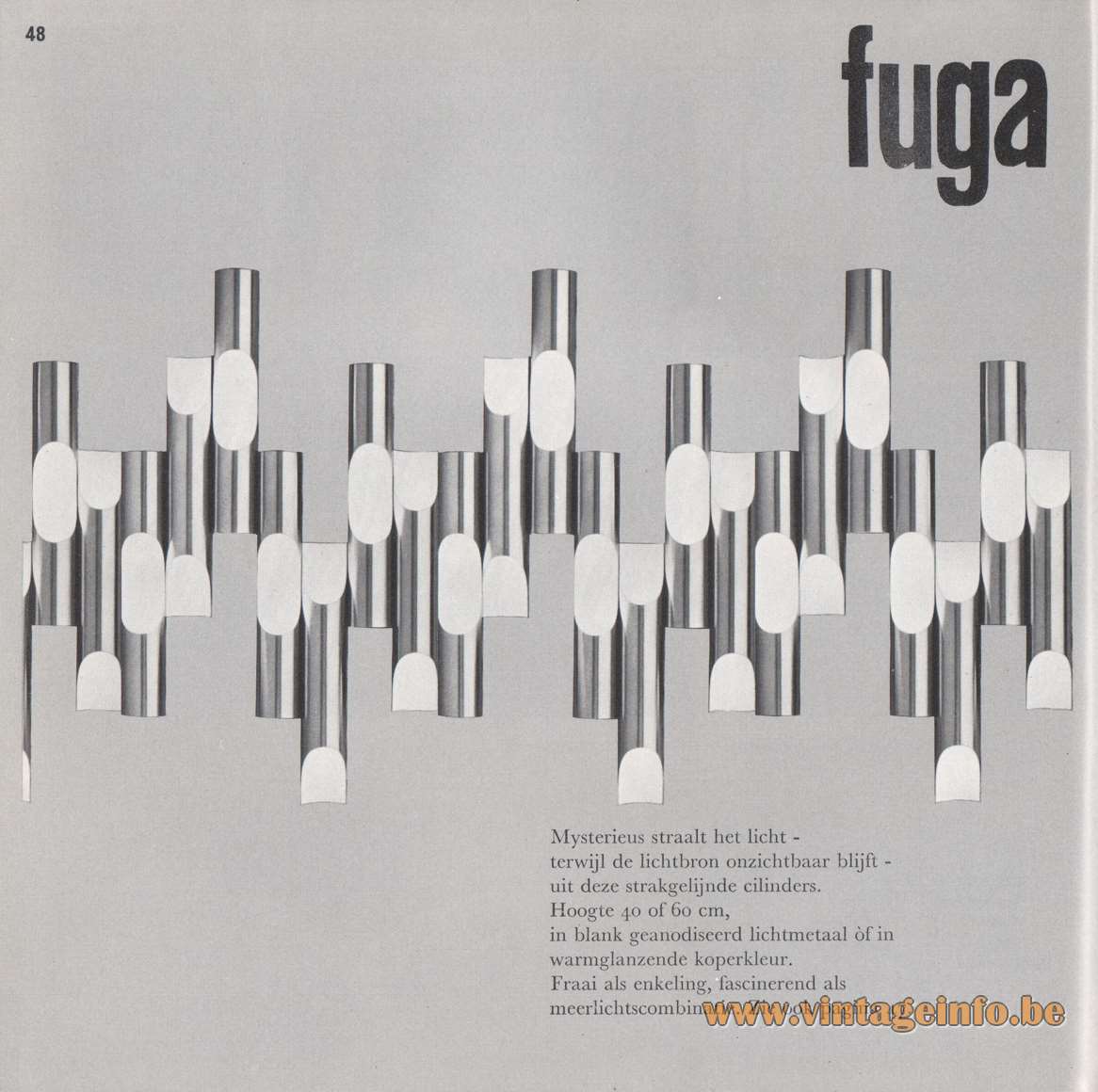
Text in Dutch from the original catalogue
Fuga – een metalen compositie van Maija Liisa Komulainen, architecte uit Finland en enthousiast teamlid van de raak ontwerpgroep. Rijzige orgelpijpen in blank metaal, desgewenst gerangschikt tot een strak front in meerdere versies. Een ontwerp afgestemd op elke ruimte: van ontvangsthal tot woonkamer. Van restaurant tot schouwburg.
C-1639/40 – drielichts, hoogte 40 cm, breedte 21 cm, koperkleurig of blank lichtmetaal.
Mysterieus straalt het licht terwijl de lichtbron onzichtbaar blijft uit deze strakgelijnde cilinders.
Hoogte 40 of 60 cm, in blank geanodiseerd lichtmetaal of warmglanzende koperkleur.
Fraai als enkeling, fascinerend als meerlichtscombinatie.
Translated text
Fuga – a metal composition by Maija Liisa Komulainen, architect of Finland and enthusiastic team member of the touch design group. Rear organ pipes in white metal, if desired, arranged for a tight front in multiple versions.A design tailored to every room: from the lobby to the living room. From restaurant to theater.
C-1639/40 – triple light, height 40 cm, width 21 cm, copper or white light metal.
Mysteriously shines the light while the light source remains invisible from these straight-line cylinders.
Height 40 or 60 cm, in anodised anodised light metal or warm-glossy copper color.
Beautiful as single, fascinating as multi-purpose combination.
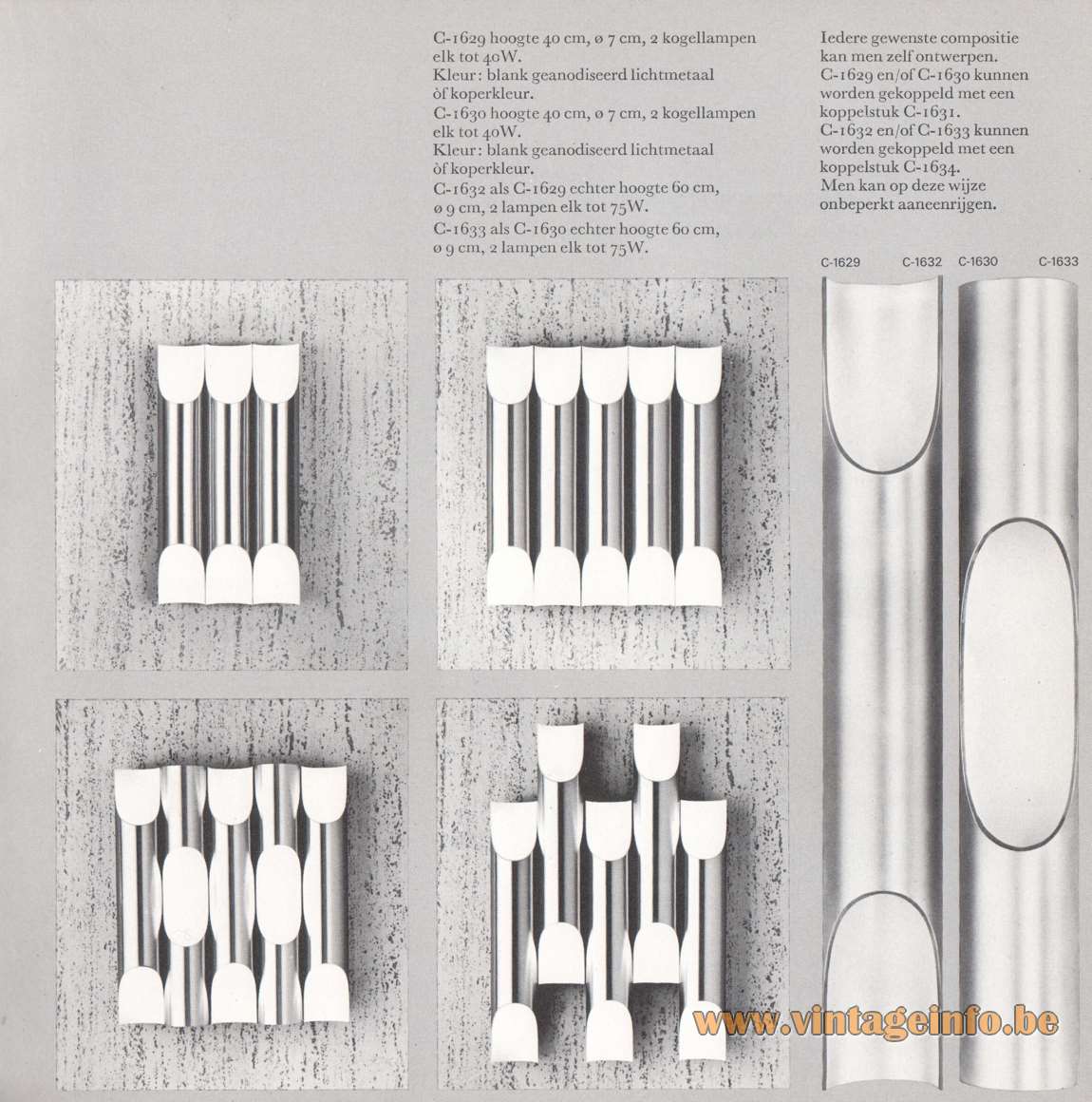
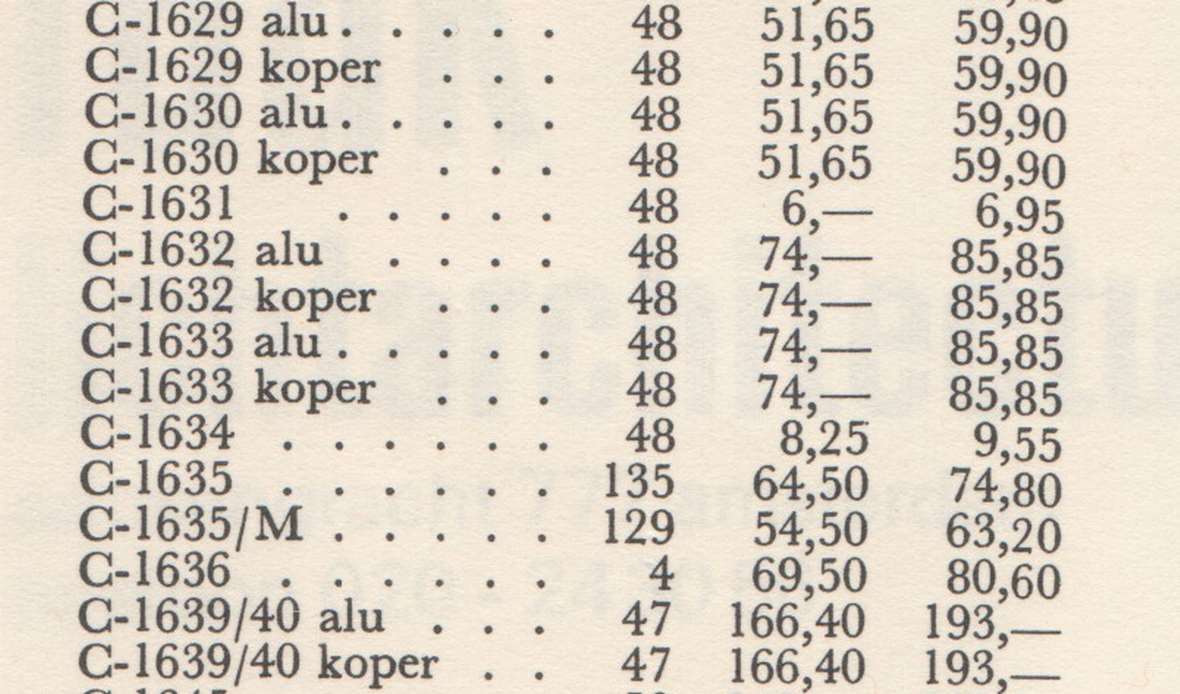
Numbers used for these lamps and parts: C-1629 C-1639 C-1630 C-1632 C-1633 C-1634.
Pricing in Dutch gulden in January 1973 (x 2 for euro and dollar), the 1st number (48, 135,129,4,47) is the page in the folder. The last number is the price with taxes.
Lamps In The Movies
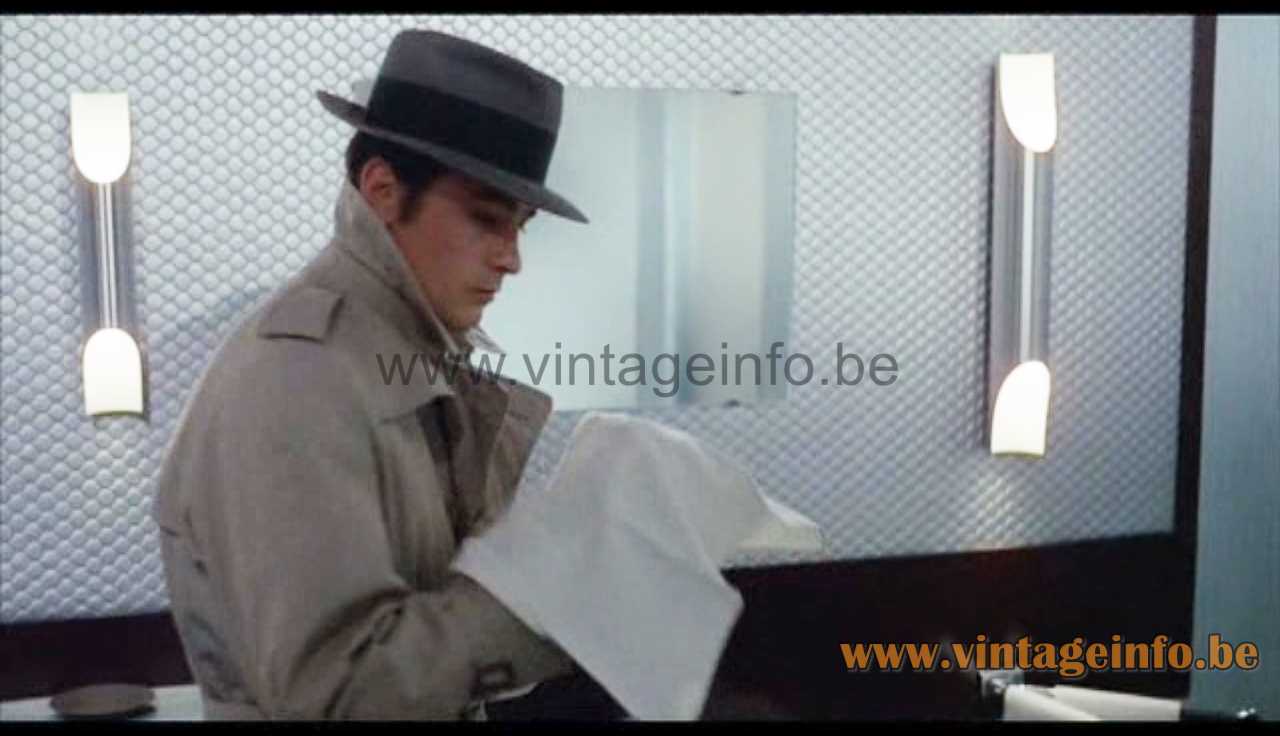
Le Samouraï (1967)
The Raak Fuga aluminium wall lamp appears in the 1967 neo-noir crime film Le Samouraï. Starring Alain Delon, François Périer and Nathalie Delon.
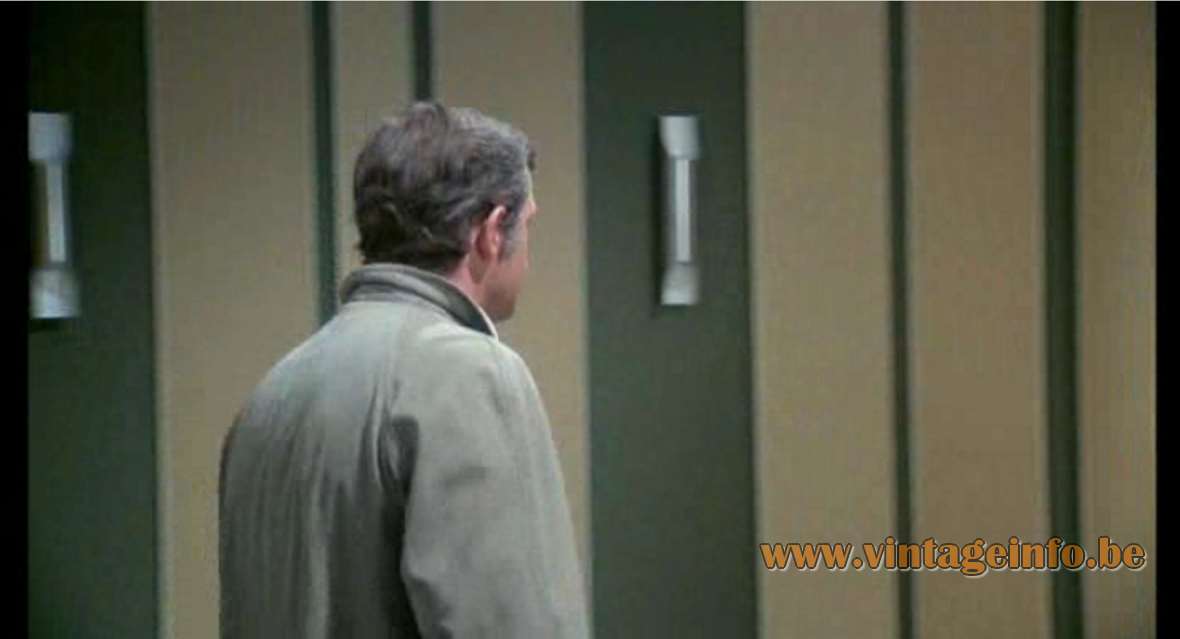
Le Corps De Mon Ennemi (1976)
The Raak Fuga aluminium wall lamp was used as a set decoration in the 1976 French film Le Corps De Mon Ennemi (Body of my enemy). Starring Jean-Paul Belmondo, Bernard Blier and Marie-France Pisier. Many Raak lamps together with Stilnovo and Harvey Guzzini lamps appear in this movie.
Links (external links open in a new window)
Le Gendarme Se Marie (1968) – Wikipedia
Le Gendarme Se Marie (1968) – IMDb
Jo, the film from 1971 – Wikipedia
Oscar, the film from 1967 – Wikipedia
Oscar, the film from 1967 – IMDb
Le Corps De Mon Ennemi (1976) – Wikipedia
Le Corps De Mon Ennemi (1976) – IMDb
High-Rise (2015) film – Wikipedia
Le Samouraï (1967) film – Wikipedia
Le Samouraï (1967) film – IMDb
L’Homme Orchestre (1970) film – Wikipedia
L’Homme Orchestre (1970) film – IMDb
Le Tatoué (1968) film – Wikipedia
The Art Of The Steal (2013) film – Wikipedia
The Art Of The Steal (2013) film – IMDb
Vintageinfo
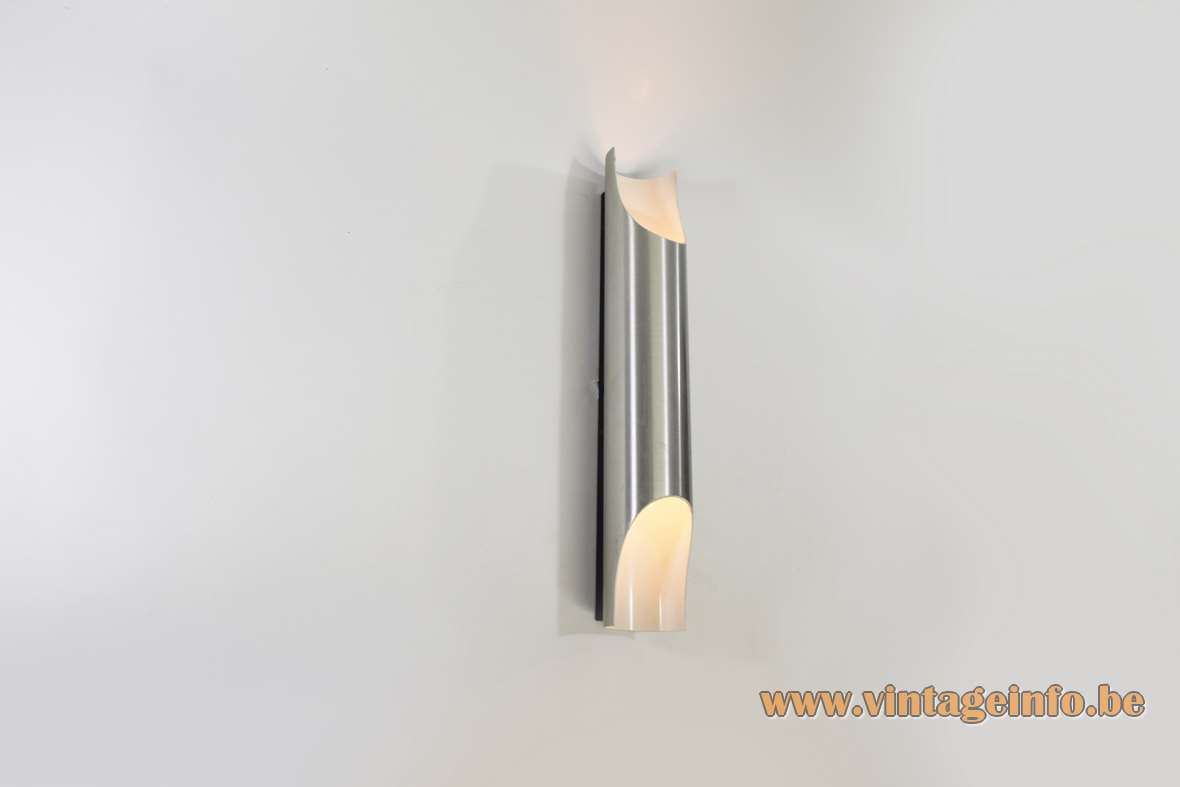
Raak Fuga Aluminium Wall Lamp
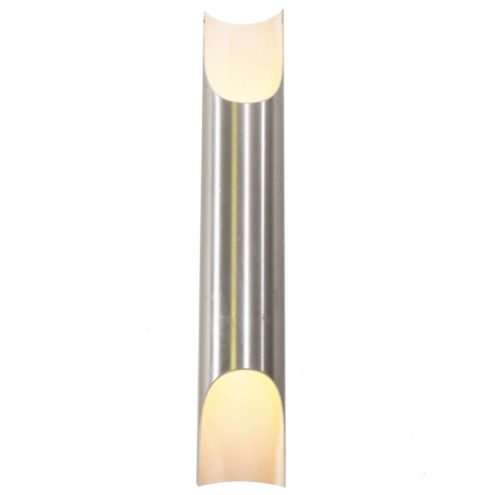
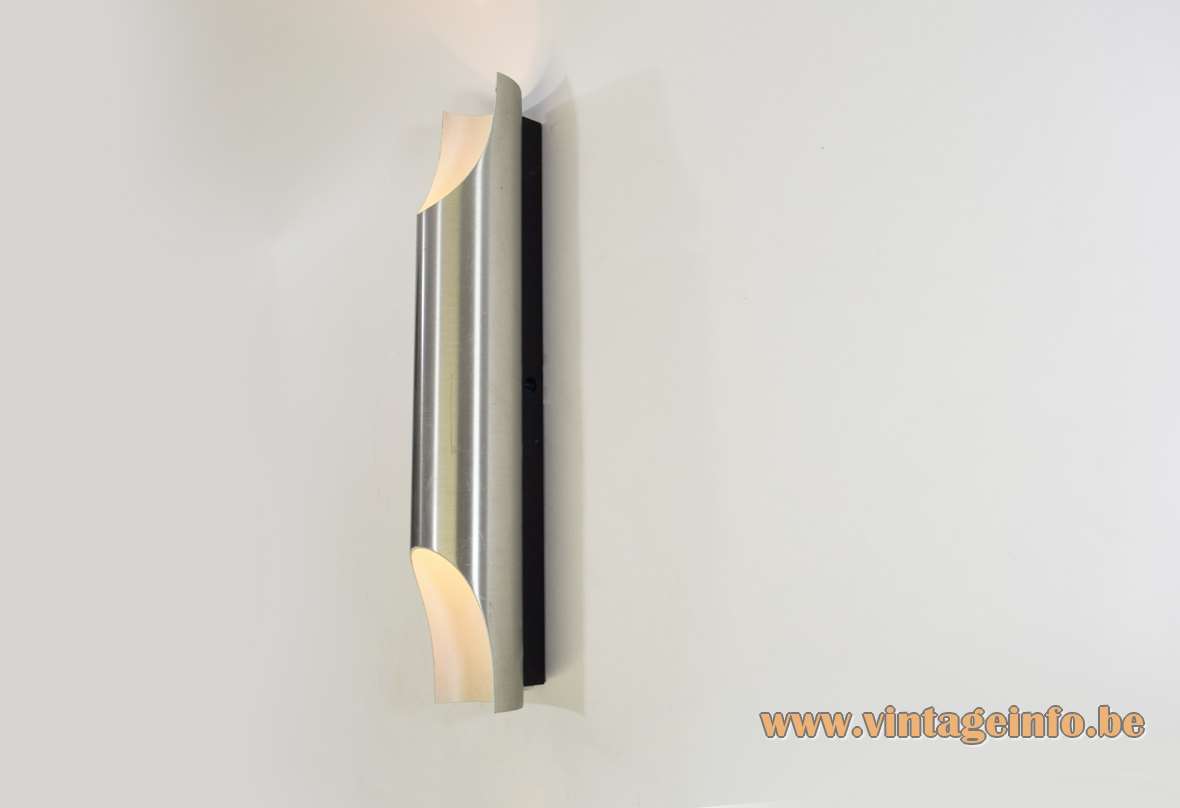
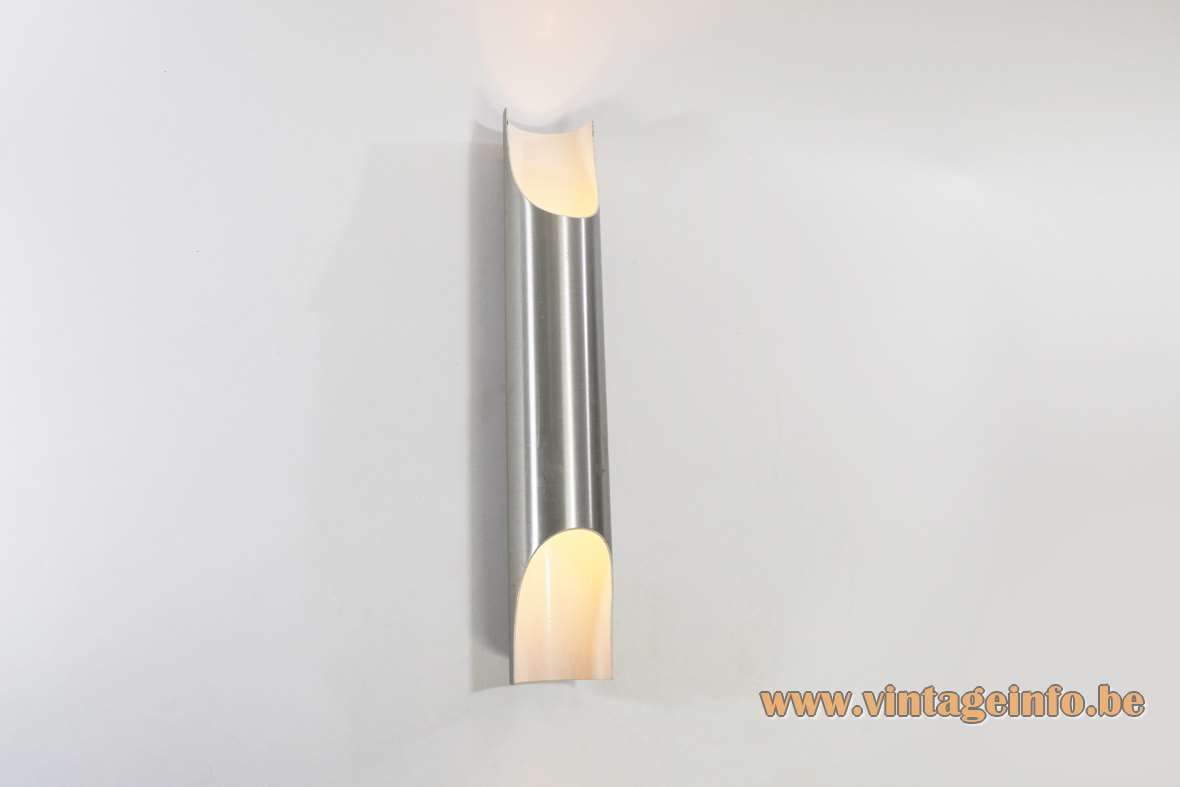
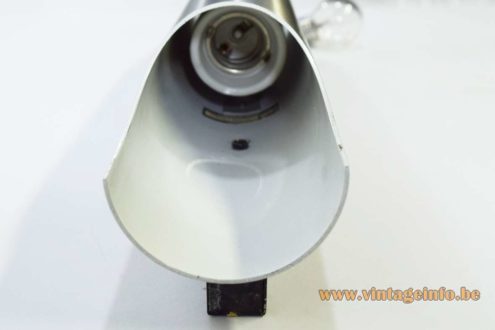
Materials: Brushed anodised aluminium tubular lampshade, made in an organ style. Painted white on the inside. Black painted rectangular iron wall mount. 2 porcelain E27 sockets.
Height: 40 cm / 15,75”
Width: ∅ 7 cm / 2.75”
Electricity: 2 bulbs E27, 2 x 40 watt maximum, 110/220 volt.
Not any type of light bulb can be used. Round small bright (bullet) bulbs are preferred.
Period: 1950s, 1960s, 1970s – Mid-Century Modern.
Designer: Maija Liisa Komulainen.
Manufacturer:Raak Lichtarchitectuur, Amsterdam, The Netherlands.
Other versions: This Raak Fuga aluminium wall lamp also exists in copper-coloured anodised aluminium. It was produced as a single-tube wall lamp, as a table lamp, and in configurations of three or five tubes. A larger version (60 cm – 23.62”) was made as well. This large model was always sold as a single unit and was never combined with other tubes.
Maija-Liisa Komulainen
Maija-Liisa Komulainen was a Finnish architect, interior designer and industrial designer, born on 29 January 1922. She is best known for her sculptural and highly original designs in metal, furniture and lighting.
Komulainen became one of the most striking foreign designers associated with Raak Amsterdam. Her lighting designs for the company stand out for their architectural character and their inventive use of folded and shaped metal. Rather than focusing on decoration, she created lamps in which form, rhythm and indirect light played the leading role.
Among her best-known designs for Raak are the Fuga wall lamps, with their organ pipe-like composition and concealed light sources, and the mushroom-like Cantharel lamp, another highly recognizable design from the same period. Her work combines a strong modernist sense of form with a surprisingly warm lighting effect.
Maija-Liisa Komulainen received several international awards for her designs and remains one of the more distinctive names connected to the Raak design team. Although she is less widely known today than some of her contemporaries, her lamps are among the most original and atmospheric models produced by the company.
Among her best-known designs for Raak are the Fuga wall lamps. Their rhythmic, organ pipe-like composition became one of the most recognizable lighting designs associated with Maija-Liisa Komulainen, even if similar ideas also appeared elsewhere in the period.
Raak
The Dutch lighting company Raak was founded in 1954 by Carel O. Lockhorn (18 June 1923 – 6 October 2004), who had previously worked for Philips Lighting in Eindhoven. The Dutch word raak can be understood as “on target” or “to hit the mark”, a fitting name for a company that became known for its progressive and carefully considered lighting designs.
Raak is best known for its distinctive Dutch modern lighting of the 1960s and 1970s. Many of their best designs combine glass and metal in a way that feels both elegant and futuristic. Their lighting often has a strong architectural presence, while still retaining a warm and decorative quality. Because of this, Raak became one of the most recognizable names in post-war European lighting.
Over the years, Raak collaborated with a remarkable range of Dutch and international designers and architects, among them Bertrand Balas, Evert Jelle Jelles, Frank Ligtelijn, Ger Vos, Jan Jasper Fayer, Li Helo, Maija-Liisa Komulainen, Nan Platvoet, Nanny Still-McKinney, Nico Kooi, Sergio Asti, Tapio Wirkkala, Willem van Oyen, Rico Baltussen, Kees Terlouw, Yki Nummi, Tobia Scarpa, Berend Bodenkamp, Arihiro Miyake and others.
Collaborations
Raak also worked together with several other lighting and glass companies. For the well-known Globe series, the glass was produced by the German company Peill+Putzler. Raak also sold lamps made by Peill+Putzler, including models designed by Aloys Ferdinand Gangkofner. For the Discus flush mount, the glass was made by the German company Bega. In the late 1950s, Raak also cooperated with the Belgian glass manufacturer Val Saint Lambert for the Stalactites flush mounts. In addition, Raak marketed several lamps produced by Staff Leuchten in Germany, as well as models connected to other European manufacturers.
Carel Lockhorn sold the company in 1974 to ITT, although he remained director until 1977. In 1980, Raak merged with BIS Lighting from Aalsmeer in The Netherlands and continued under the name BisRaak. In 1986, the company became independent again. By then, the collection had changed considerably: the more expressive and decorative character of the 1960s and 1970s gradually gave way to a more restrained, architectural look, often in black, white and grey.
In 1999, Raak merged with Artilite B.V. and Indoor B.V. and became CLA: Centrum voor Lichtarchitectuur B.V. in Drachten. The term Lichtarchitectuur had already been used by Raak as a slogan from the early years onward. CLA was founded by Egbert Keen. The company was declared bankrupt on 19 May 2011.
Raak received 26 iF Design Awards. As the company only began entering the competition in 1980, that number might otherwise have been even higher.
Lamps In The Movies
Louis de Funès movies
Oscar (1967)
The Raak Fuga aluminium wall lamp was used as a set decoration in the Edouard Molinaro comedy film Oscar from 1967. A movie with French comedy actor Louis de Funès (1914-1983). Lamps by Raak, Artemide, Maison Jansen, and many other producers appear in this film.
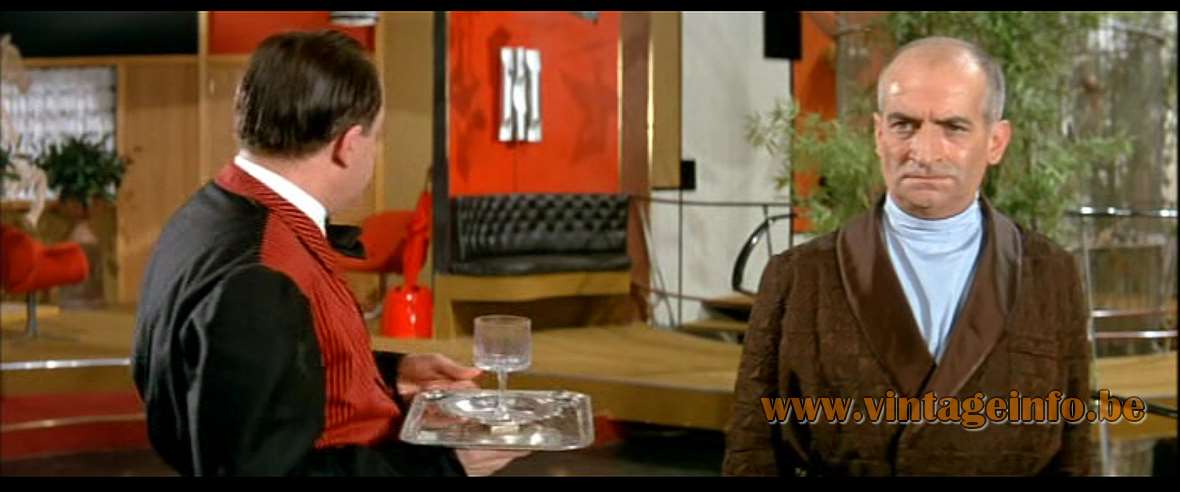
Le Gendarme Se Marie (1968)
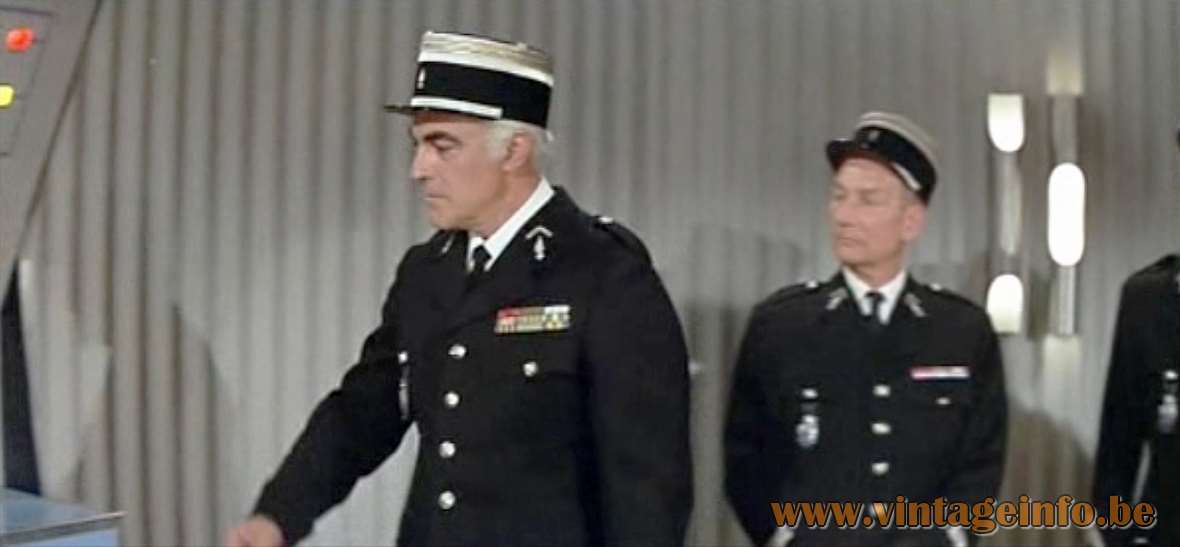
The Raak Fuga aluminium wall lamp appears in the 1968 Louis de Funès film Le Gendarme Se Marie (The Gendarme Gets Married) starring Louis de Funès, Geneviève Grad as his daughter and Claude Gensac as his future wife Josépha Cruchot.
Le Tatoué (1968)
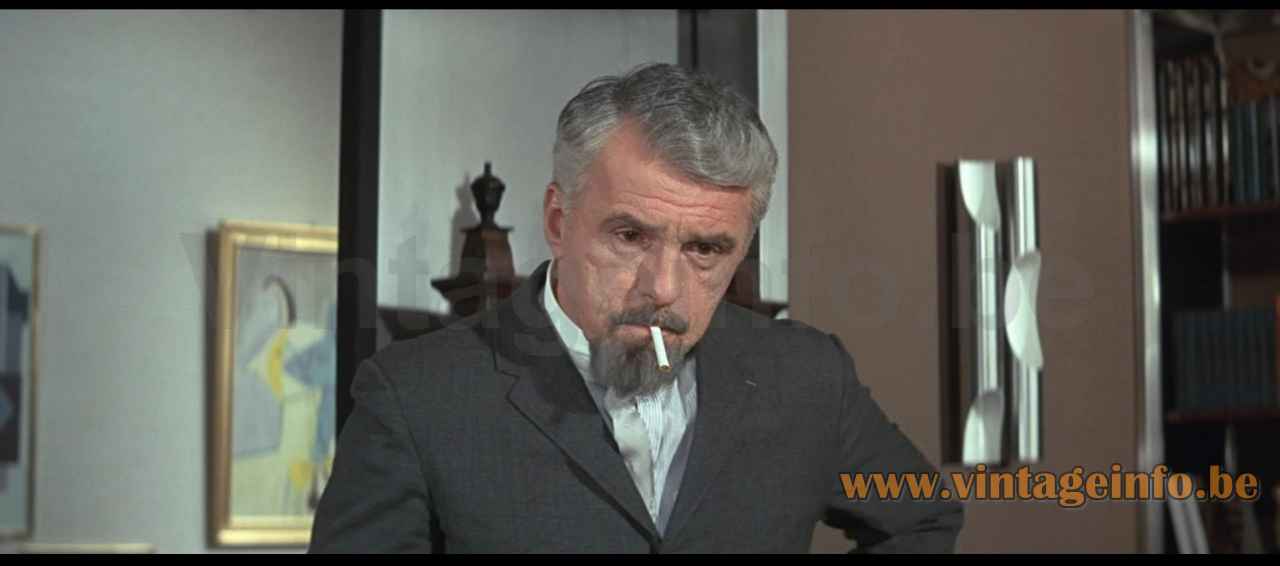
The Raak Fuga aluminium wall lamp appears in the 1968 Louis de Funès film Le Tatoué (The Tattoo) starring Louis de Funès, Jean Gabin and Paul Mercey.
L’ Homme Orchestre (1971)
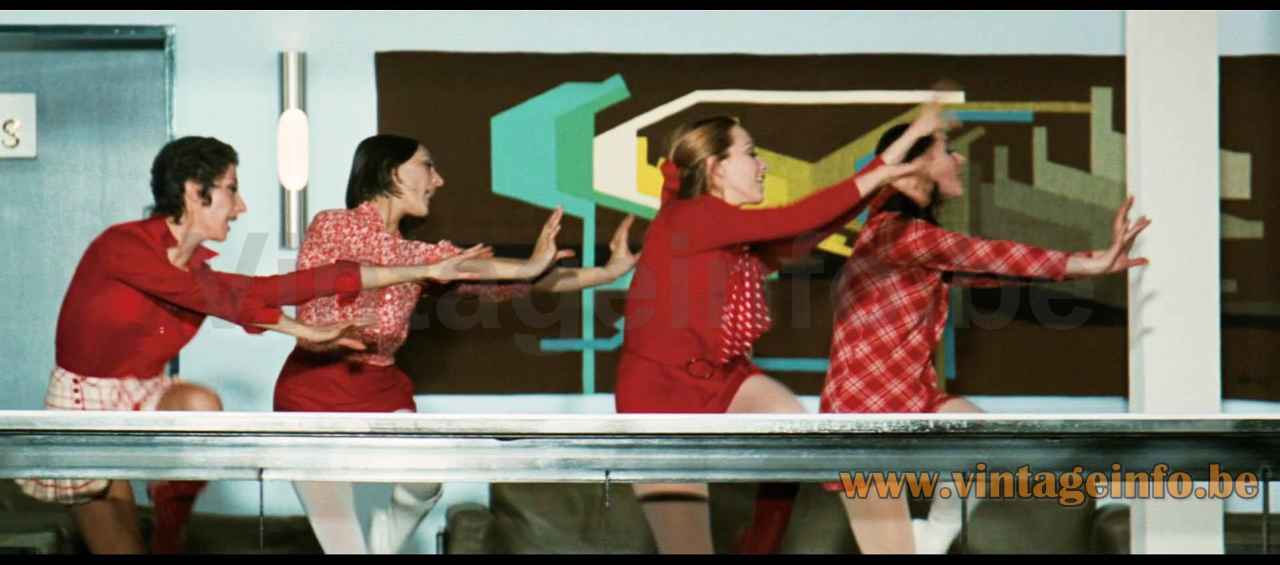
The Raak Fuga aluminium wall lamp was also used as a set decoration in the 1970 French comedy film L’ Homme Orchestre (The Band). Starring Louis de Funès, Noëlle Adam and Olivier de Funès. Several other lamps appear in this film.
Jo (1971)
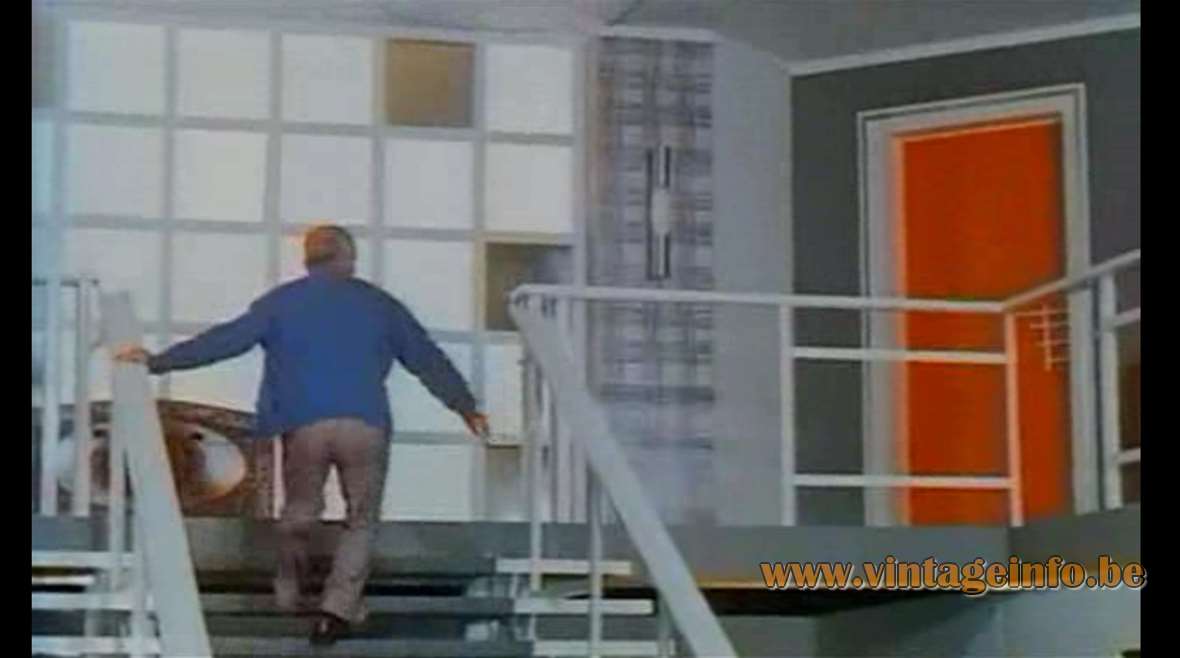
The Raak Fuga aluminium wall lamp was used as a set decoration in the Jean Girault movie Jo from 1971. It is also known in English as Joe: The Busy Body or The Gazebo. A movie with the famous French comedy actor Louis de Funès (1914-1983). Also Cassiopée chandeliers made by Max Sauze and Lita wall lamps by Jacques Biny appear in this comedy. A Pan wall lamp designed by Bent Karlby for Lyfa is also present.
Lamps In The Movies – Other films
Ballon (2018)
The Raak Fuga aluminium wall lamp was used as a set decoration in the German film Ballon from 2018. A movie about two families from the GDR who flew to West Germany with a homemade hot-air balloon in 1979. It was used in an East German house what is very unlikely at that time. Raak was a Dutch lighting company and the East was communist and had his own lighting firms, cars, motorcycles and so on. Everything that was sold came from behind the Iron Curtain. Here together with the Staff Oyster wall lamp, what is also unlikely, because that is a West German lamp.
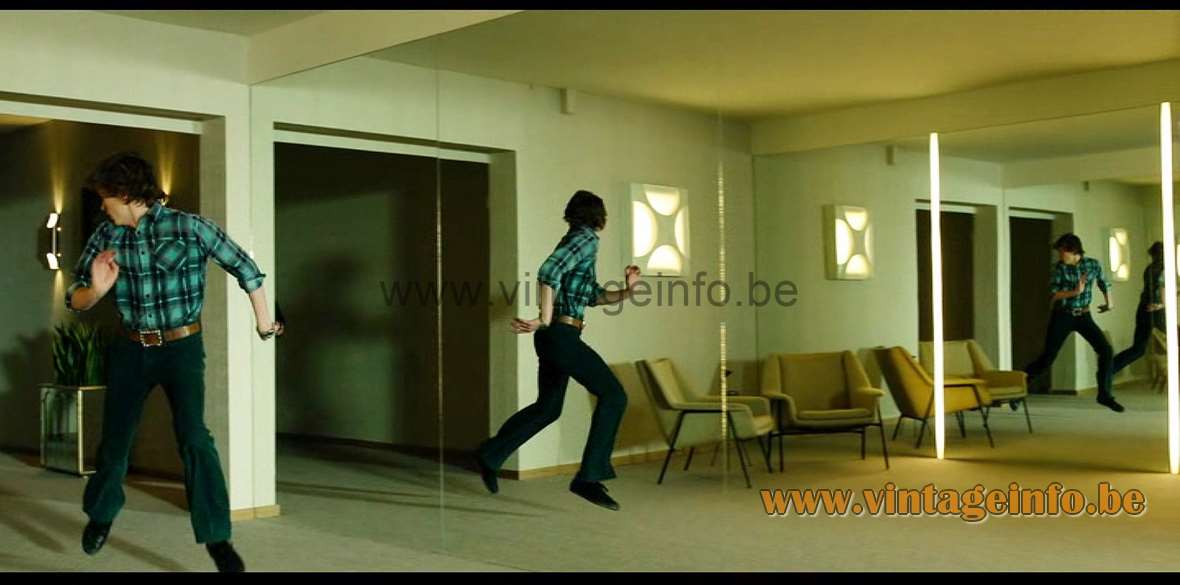
High-Rise (2015)
Several big versions of the Raak Fuga aluminium wall lamp were used as a set decoration in the British dystopian horror film High-Rise from 2015. Starring Tom Hiddleston, Jeremy Irons and Sienna Miller. Many lamps appear in this film. You can find the others over here.
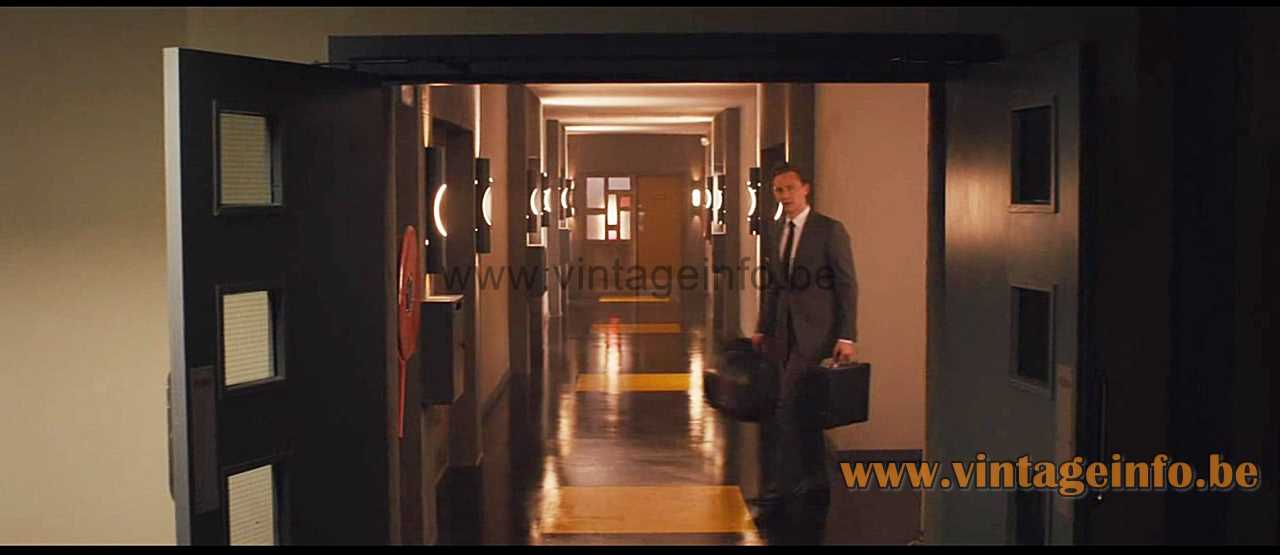
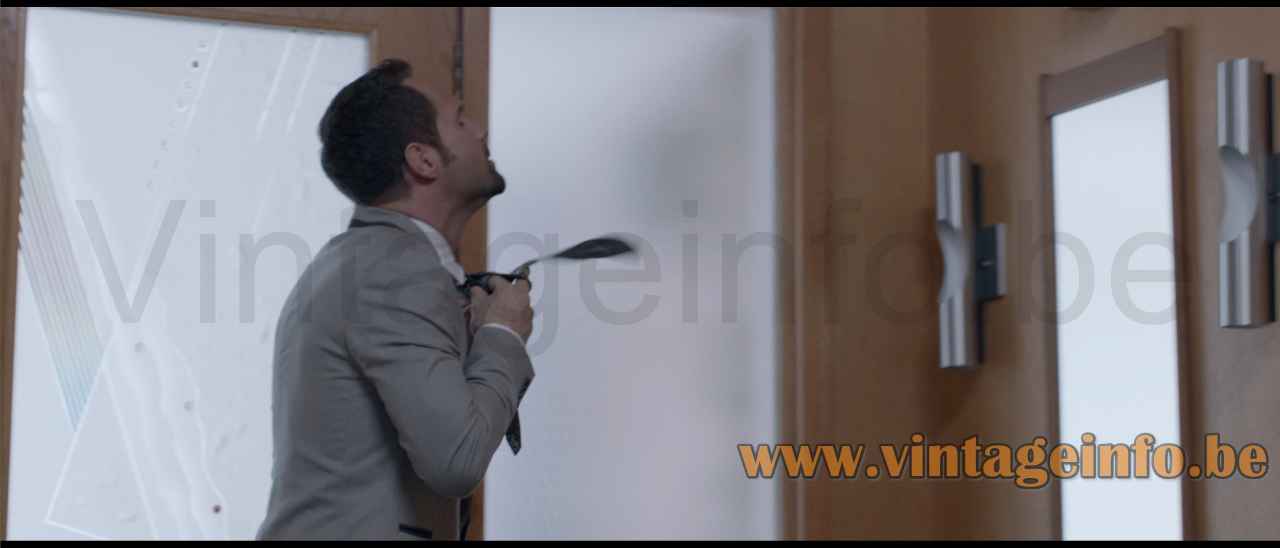
The Art Of The Steal (2013)
2 single Raak Fuga wall lamps were used as a set decoration in the 2013Canadian comedy film The Art Of The Steal. Starring Kurt Russell, Jay Baruchel and Katheryn Winnick. The metal wall mount of this couple lamps is not original. Lamps made by the Canadian Rougier, Reggiani, FLOS, AV Mazzega and Quality System appear in this film. A Fuga wall lamp made of 3 tubes is also featured in the film.
Prototype
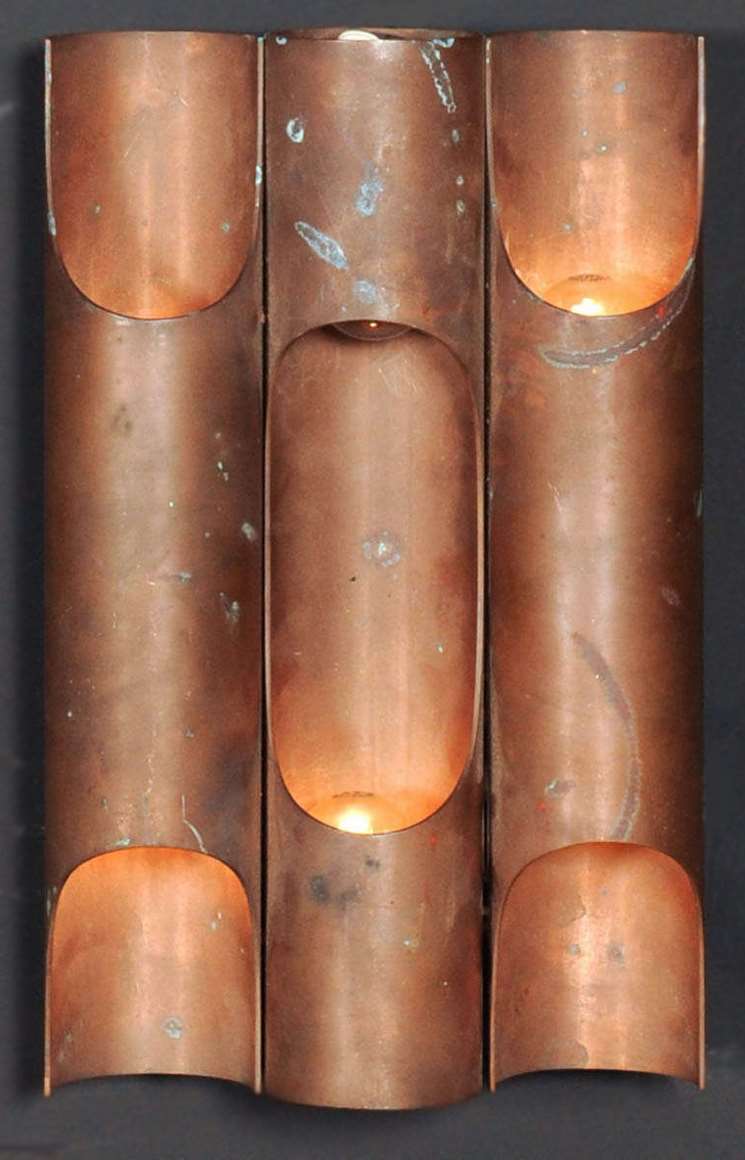
A prototype made of copper and wood can be found on the 1stdibs website: One of a kind prototype of the “Fuga” sconce for the firm Raak
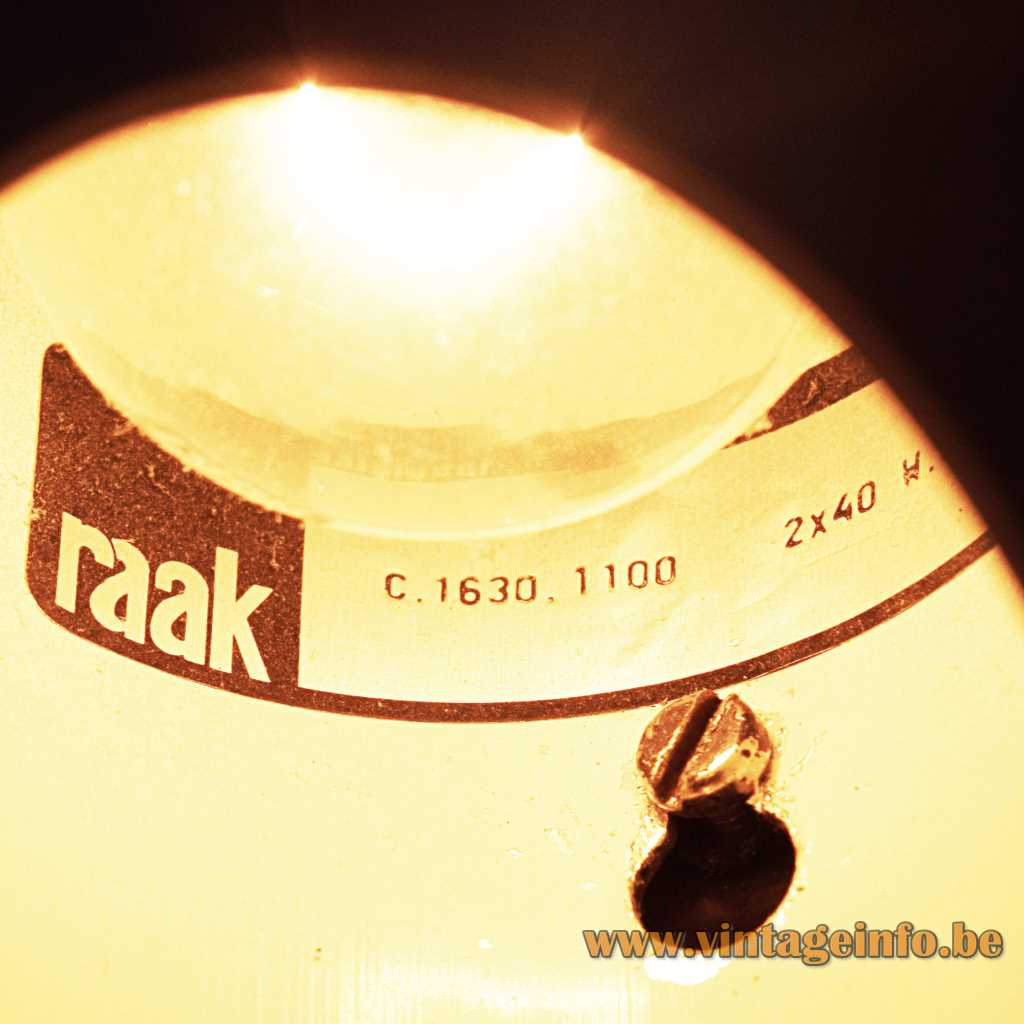
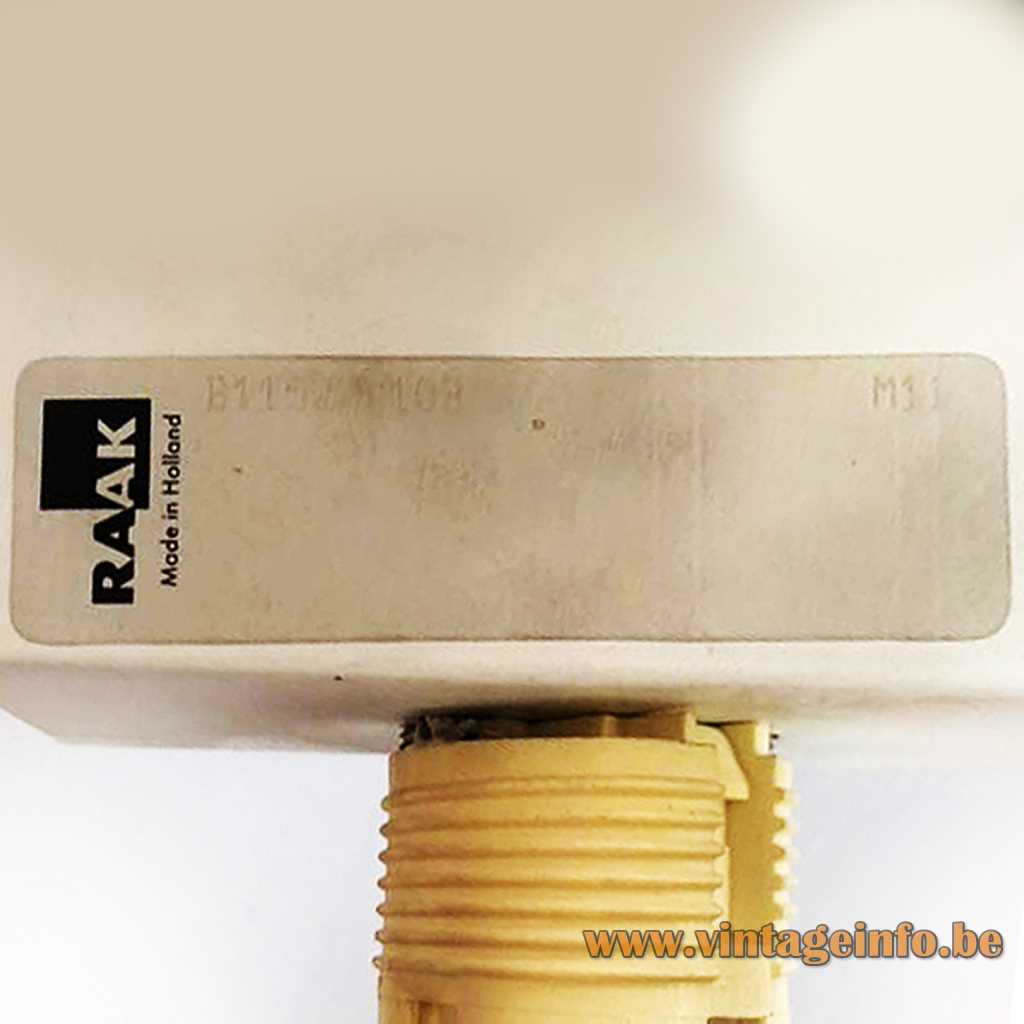
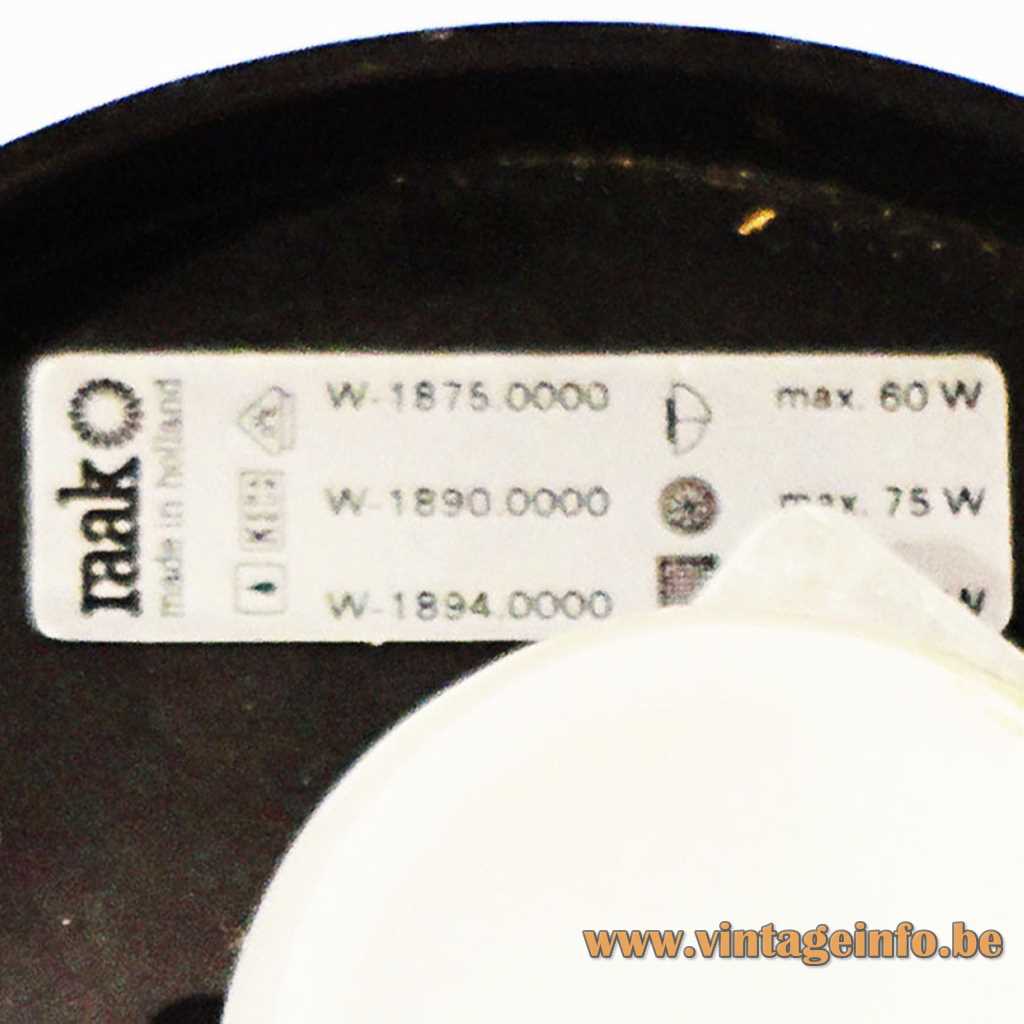
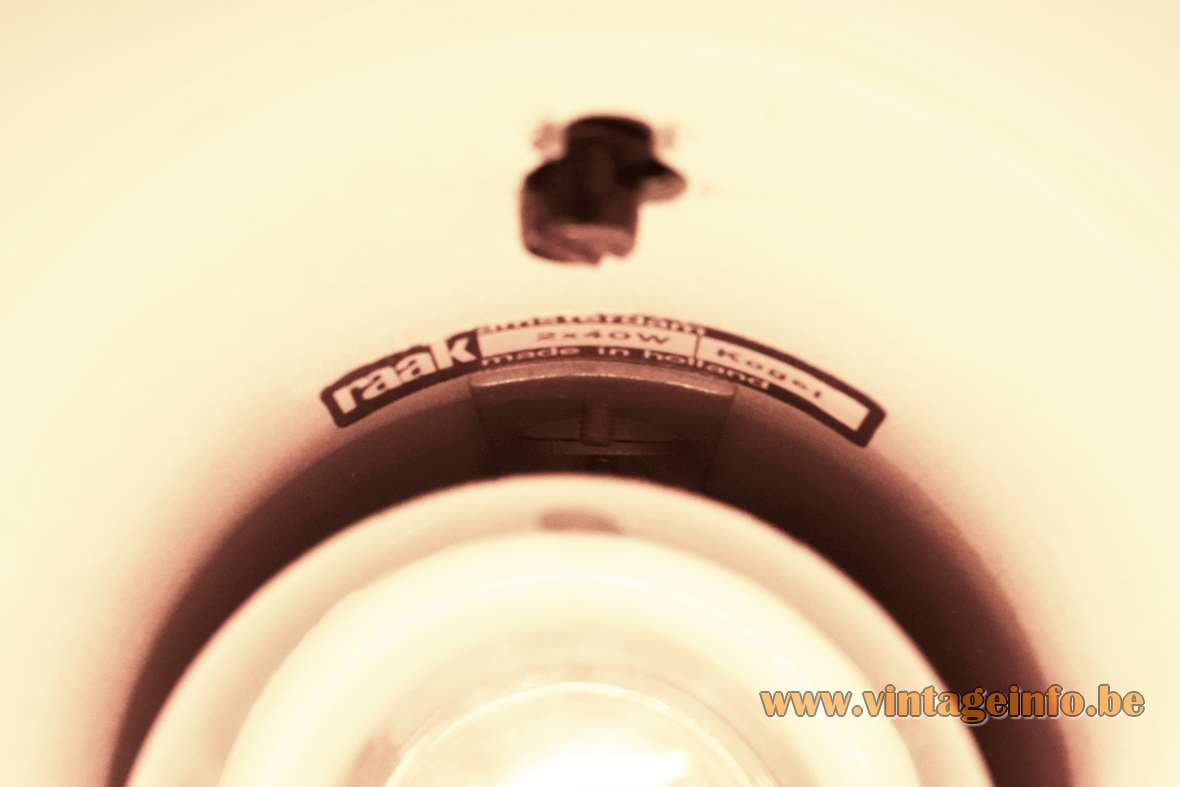
Raak Fuga Aluminium Wall Lamp – Company Labels