- Categories
- Categories
Last 5 Viewed


Vintageinfo links
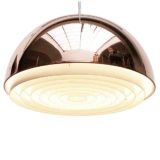
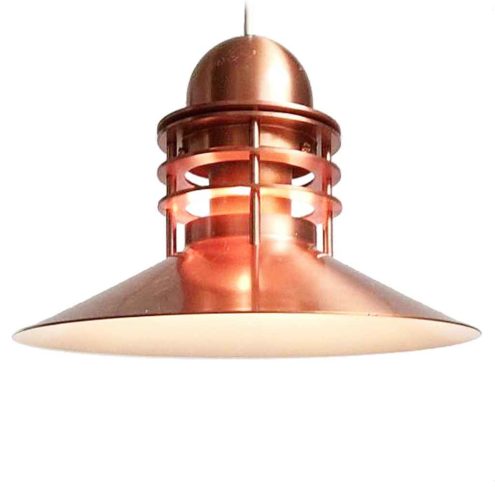
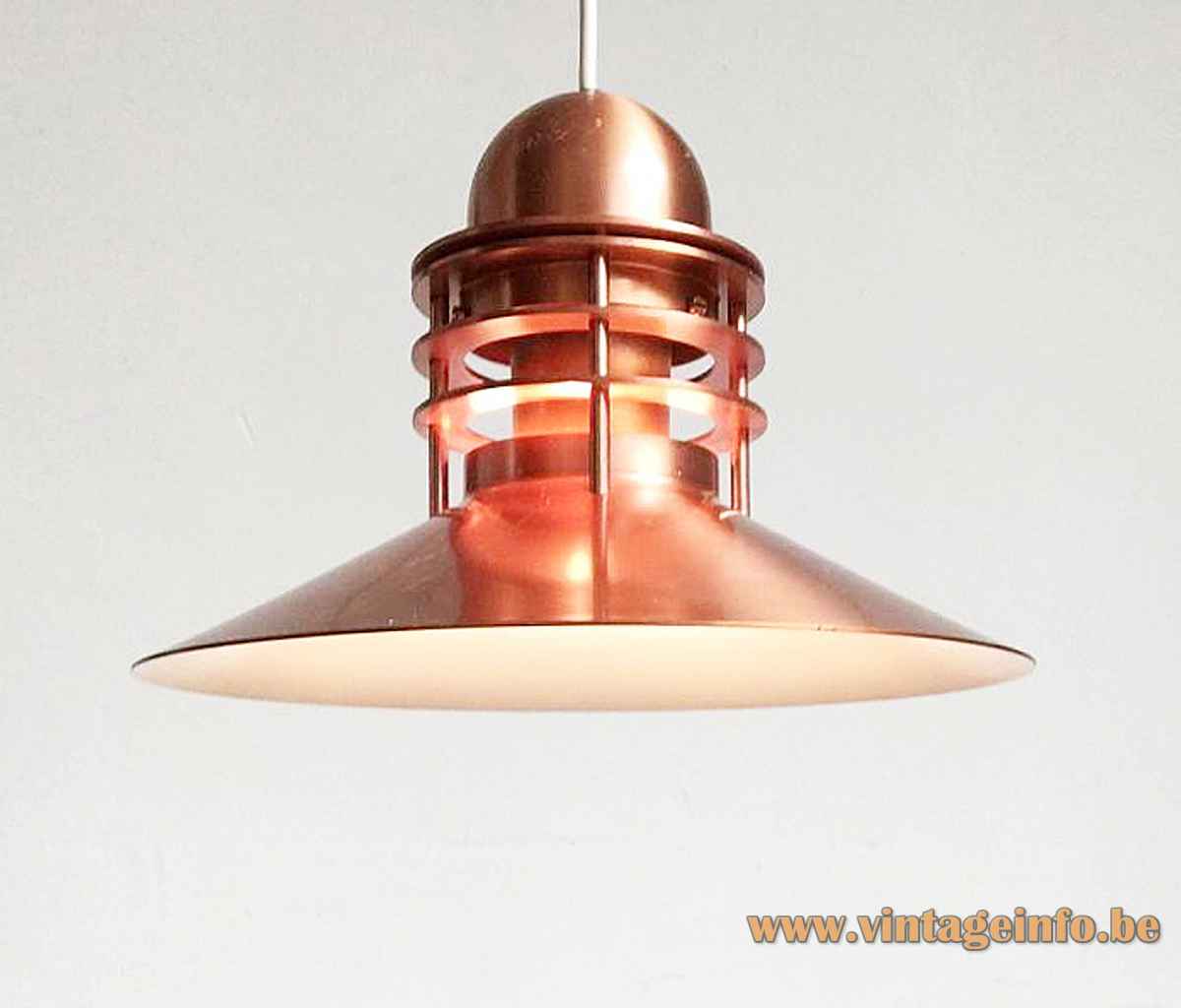
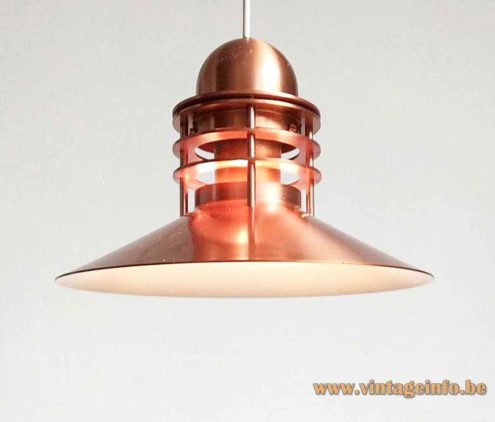
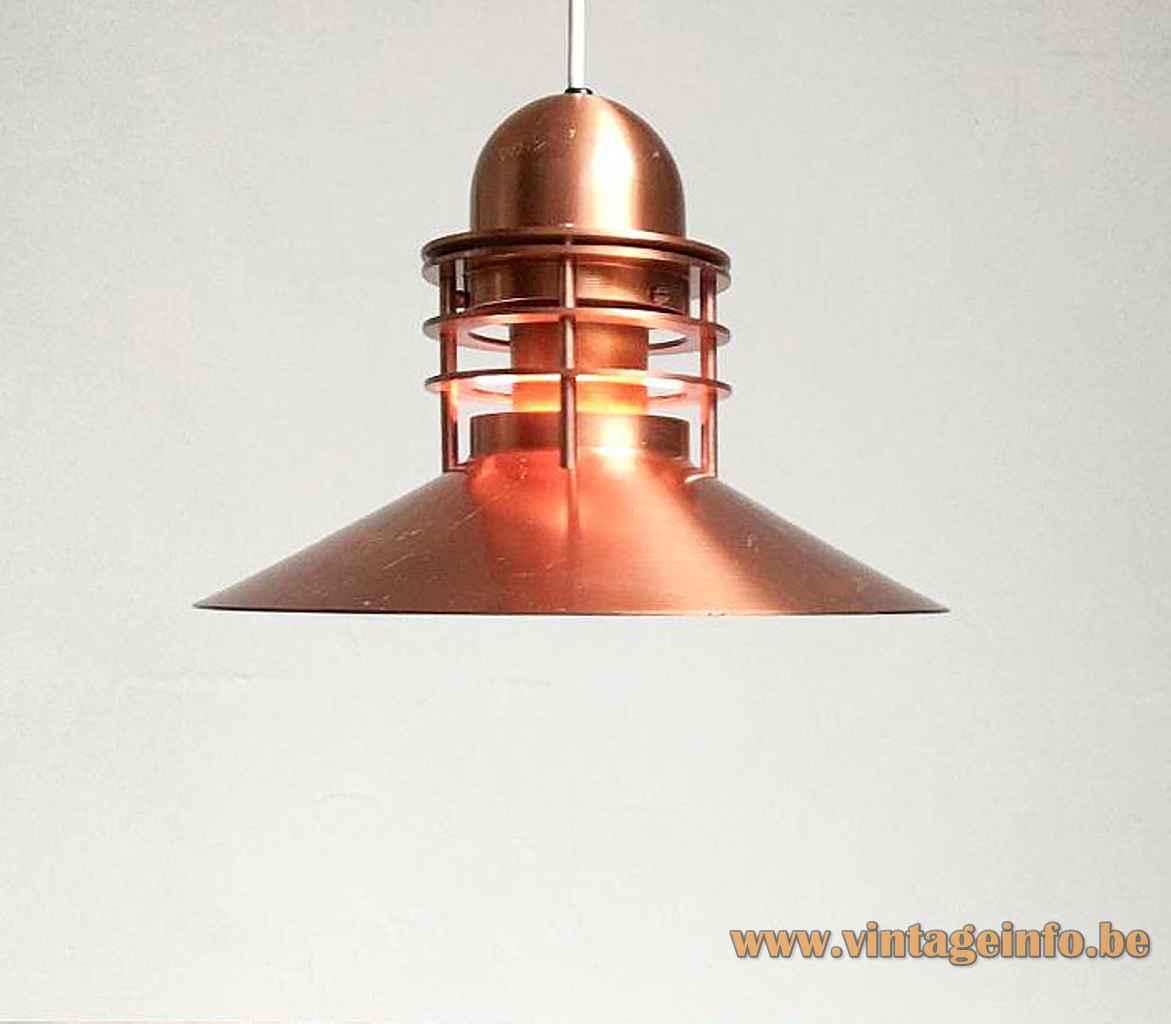
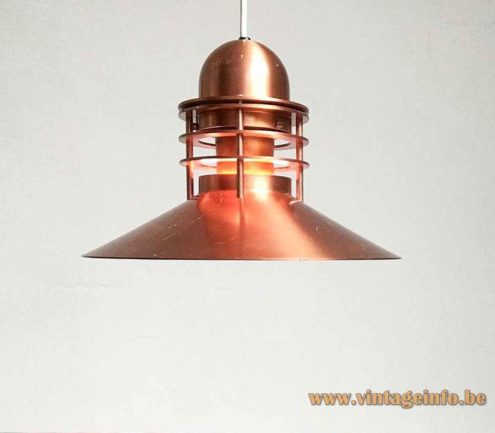
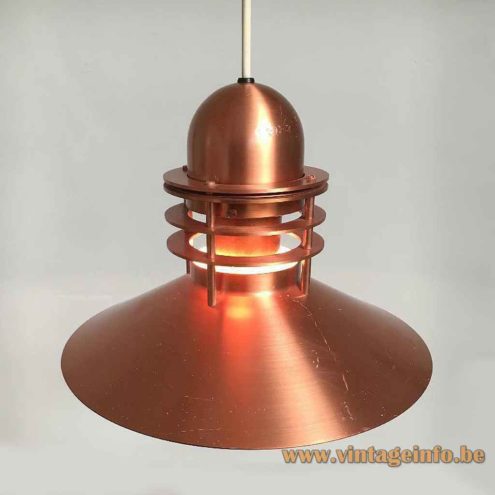
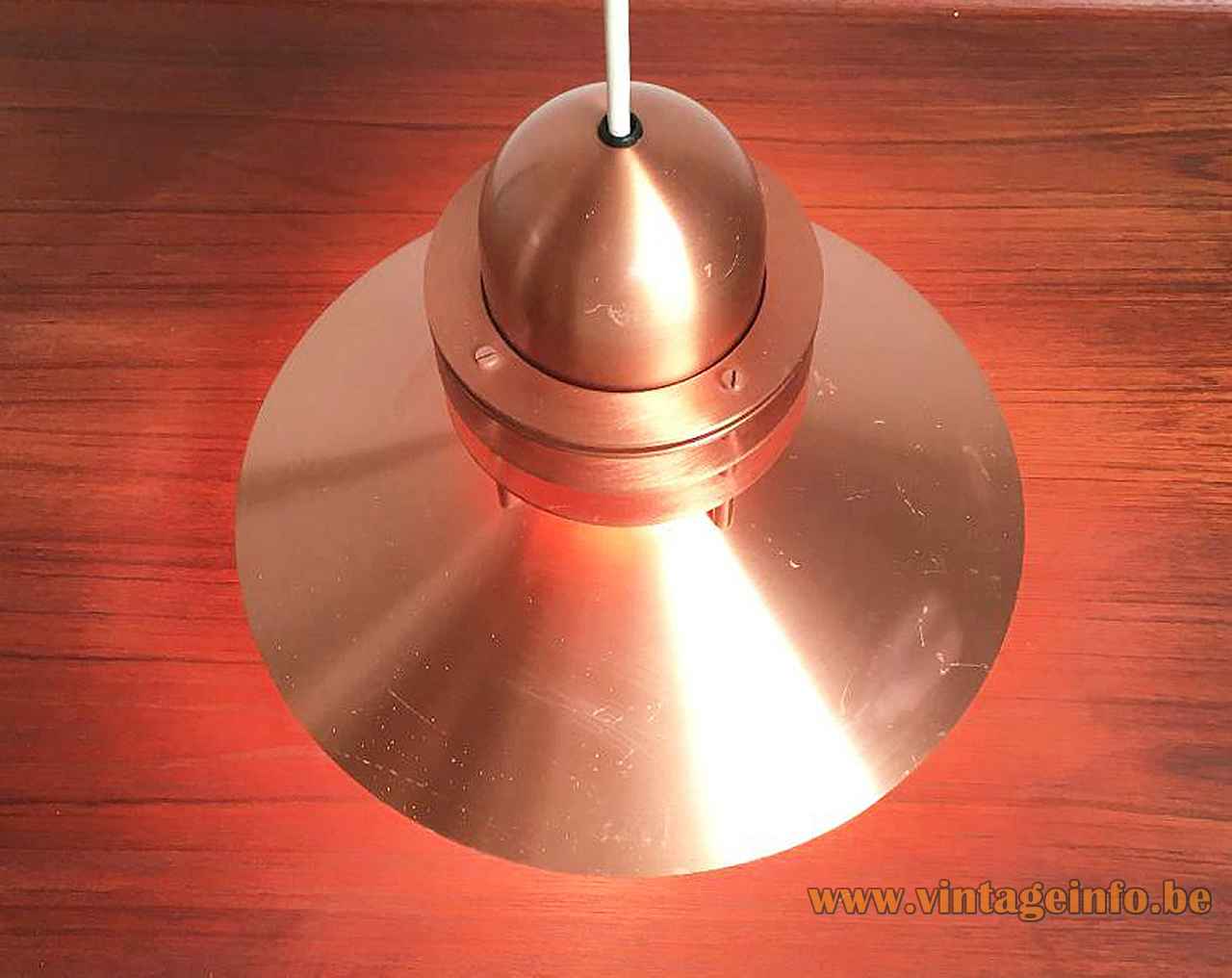
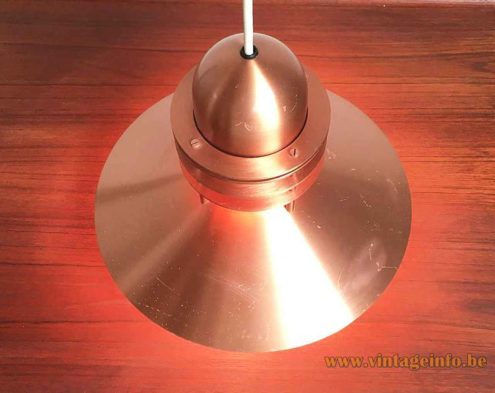
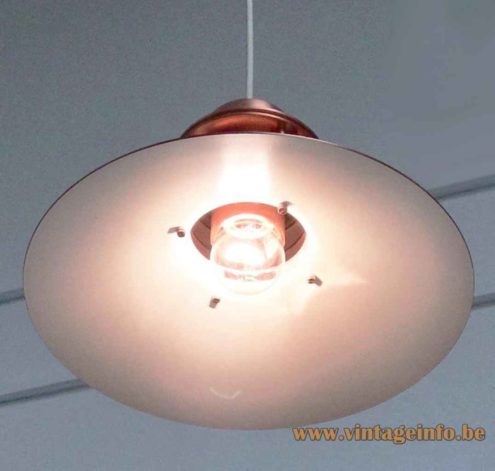
Louis Poulsen Nyhavn pendant lamp
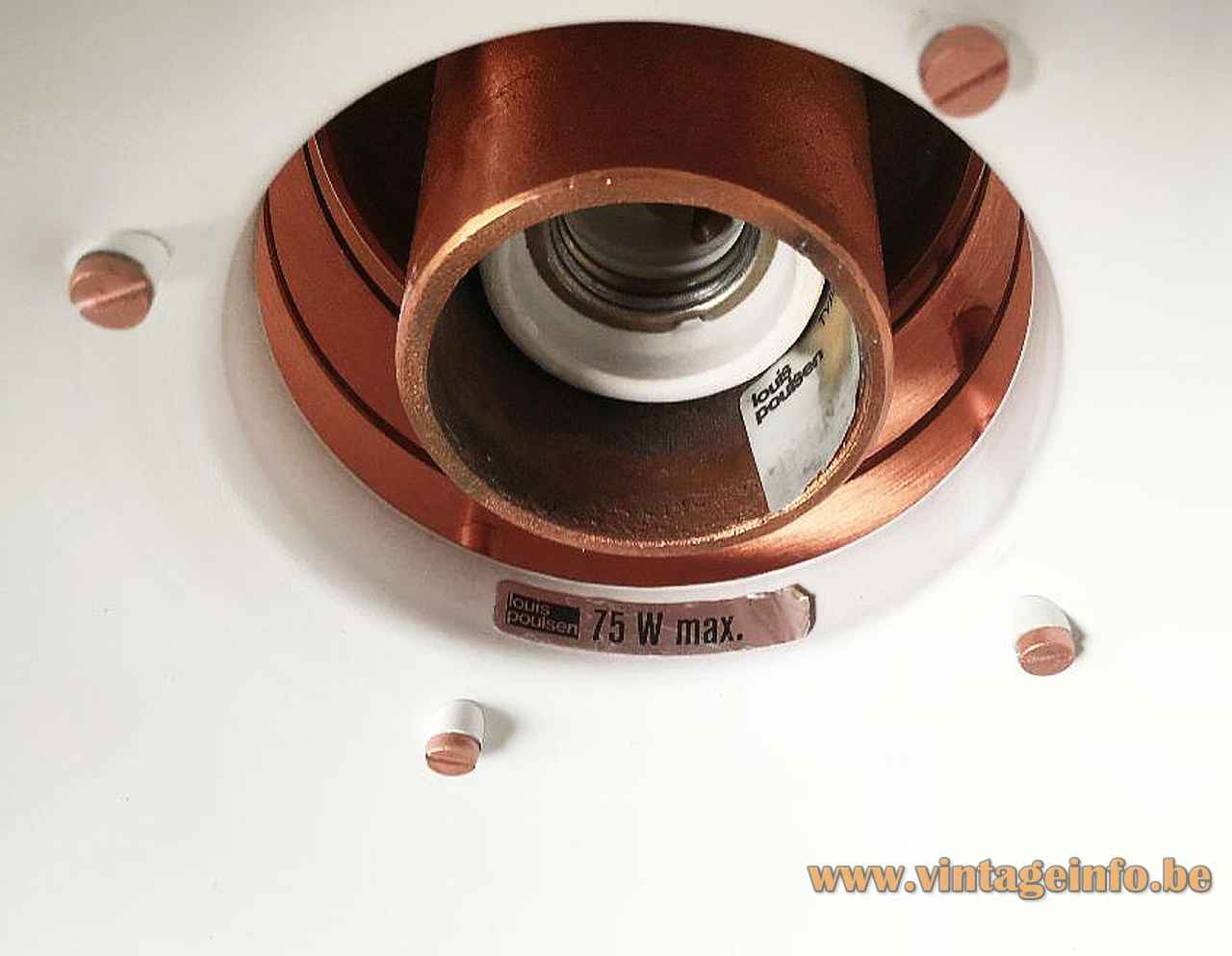
Materials: Round copper lampshade, painted white inside. Copper rings and parts. Porcelain E27 socket.
Cord: 100 cm / 39.37”
Height: 21 cm / 8.26”
Width: ∅ 31 cm / 12.20”
Electricity: 1 bulb E27, 1 x 75 watt maximum, 110/220 volt.
Any type of light bulb can be used, not a specific one preferred.
Period: 1960s, 1970s – Mid-Century Modern.
Designer: Alfred Homann and Ole Valdemar Kjær in 1989.
Manufacturer: Louis Poulsen & Co A/S, Copenhagen, Denmark.
Other versions: The Louis Poulsen Nyhavn series was produced in several versions and a limited range of colours, including pendant lamps, indoor and outdoor wall lamps, and street lamps.
Lamp series
The first design in this lamp series dates from 1978, when it was introduced as a wall lamp. A street pole version followed in 1983, and this model was redesigned in 1990. The pendant lamp was added in 1989. In 1990 the Bollard was introduced, followed by the Boulevard street lantern in 1992. In that same year, the Maxi Wall lamp was also added to the series.
All versions of this lamp series can be found on the official website of Alfred Homann. The original wall lamp received the Gute Industrie Form award in 1978 and the iF Design Award in 1982.
Alfred Homann
Alfred Homann, born in 1948, is a Danish architect and designer. He studied architecture at the Royal Danish Academy of Fine Arts, graduating in 1976. During his student years, he worked at the architectural office of Vilhelm Wohlert, an experience that had a lasting influence on his approach to architecture and design.
In 1978Homann established his own practice. He later became co-founder and partner of Penta Design in 1984, and in 1987 he founded Homann Design Inc. in the United States.
For Louis Poulsen, Alfred Homann designed a substantial range of lighting models. These include the Strata flush mount and the Homann wall lamp in 1979, the Homann M2 wall lamp in 1986, the Rappe Louis desk lamp in 1987, and the Homann Bollard street lamp in 1990. Later designs include the Pulsar flush mount series from 1992, the Kipp Post street lamp in 1996, the Kipp Wall and Bollard from 1999, the AH lamps from 2001 and 2004, the AH Mini in 2014, and the Homann Park street lamps introduced in 2017.
Alfred Homann has received numerous awards for his work. Further information can be found on his official website.
Ole Valdemar Kjær is a Danish architect and designer, and the founder of Kjær Design ApS, based in Hørve, Denmark. His studio is active in both architecture and product design.
Louis Poulsen
Louis Poulsen is a Danish lighting manufacturer with roots going back to 1874, when Ludvig R. Poulsen founded a business in Copenhagen. Originally a trading company, the firm gradually shifted towards electrical supplies and lighting as electricity became more widely used. In 1896 Ludvig’s nephew Louis Poulsen joined the company, and after Ludvig’s death in 1906 Louis continued the business. In 1914Sophus Kaastrup-Olsen became a partner, and the company name changed to Louis Poulsen & Co.
A decisive turning point came in 1924, when Poul Henningsen began his long collaboration with the company. His scientific approach to glare-free lighting and reflective multi-shade systems became central to the identity of Louis Poulsen and strongly influenced modern lighting design. Since then, the company has continued to combine functional light, architectural clarity and carefully considered form, following the idea that a lamp should not merely be an object, but a tool to shape light.
Over the decades, Louis Poulsen has produced both iconic domestic lighting and large-scale architectural lighting for public and professional spaces. The company remains one of the best-known names in Danish lighting design, with a strong emphasis on the quality, direction and atmosphere of light.
Designers
The designer most closely associated with Louis Poulsen is Poul Henningsen (PH). Other major names linked to the company include Arne Jacobsen, Verner Panton, Vilhelm Lauritzen and Vilhelm Wohlert.
Over time, Louis Poulsen also collaborated with a wide range of designers, architects and studios, including Alfred Homann, Andreas Hansen, Eila & John Meiling, Henning Klok, Axel Wedel Madsen, Jørgen Bo, Ole Valdemar Kjær, Jens Møller-Jensen and Bent Gantzel-Boysen.
Among later and more recent collaborations are Louise Campbell, Øivind Slaatto, Christian Flindt, Clara von Zweigbergk, nendo (Oki Sato), Olafur Eliasson, GamFratesi, Anne Boysen, Peter Bysted, Anu Moser, Shoichi Uchiyama, Gabriel Tan and Finn Juhl.
Many thanks to Frank from nullviernull raum+kommunikation for the pictures. You can find his shop over here on Pamono.
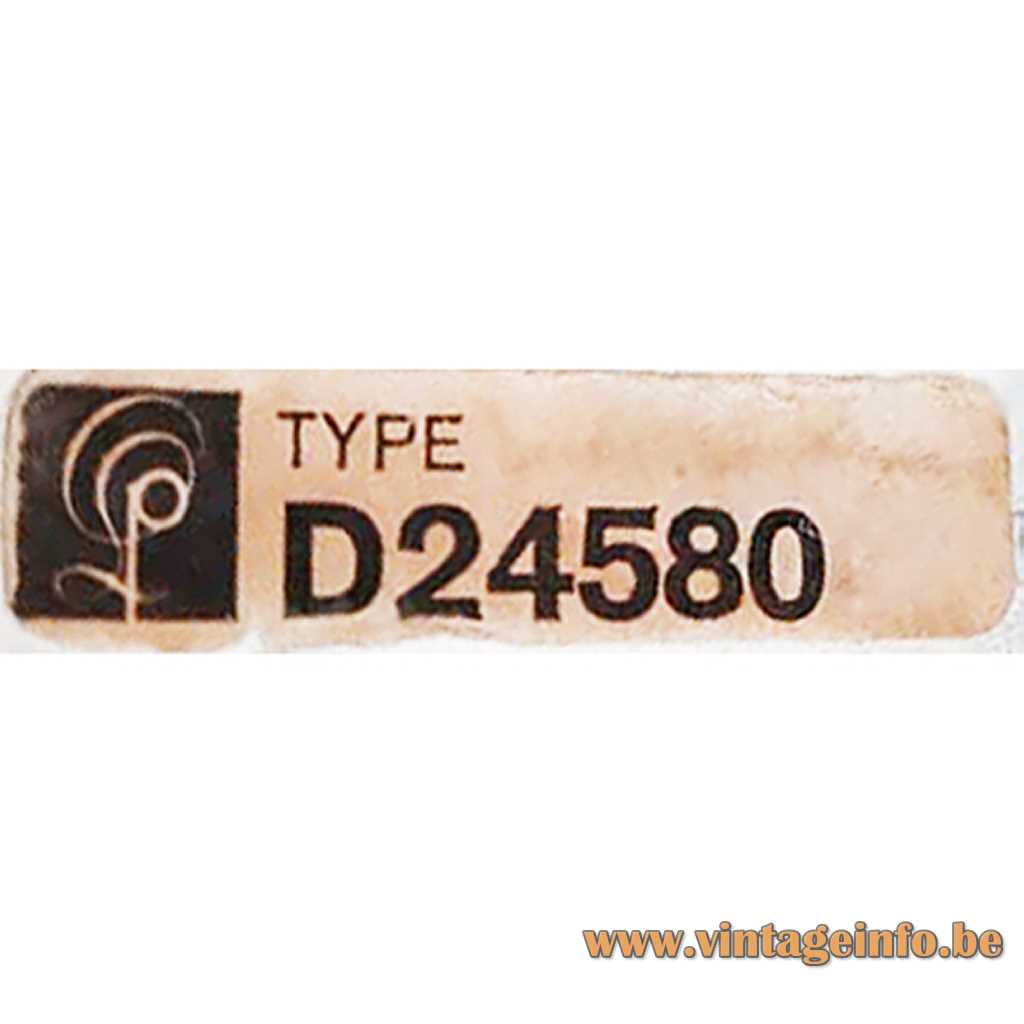
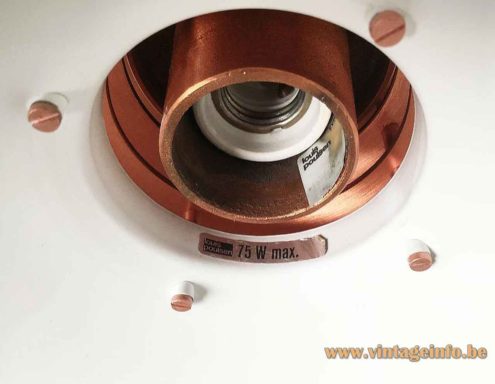
Louis Poulsen Nyhavn Pendant Lamp – Company Labels