- Categories
- Categories
Last 5 Viewed

Links (external links open in a new window)
This lamp in the book Danish Lights – 1920 to Now
Bent Gantzel-Boysen lamps – Google Images
Complete history of Louis Poulsen on the Louis Poulsen website
The LamPetit table lamp on the iFDesign website
Awards and prizes for Louis Poulsen over the years
Vintageinfo – Comparable lamps
Well-Lite folding pyramid table lamp
Louis Poulsen lamps
Links (external links open in a new window)
This lamp in the book Danish Lights – 1920 to Now
Bent Gantzel-Boysen lamps – Google Images
Complete history of Louis Poulsen on the Louis Poulsen website
The LamPetit table lamp on the iFDesign website
Awards and prizes for Louis Poulsen over the years
Vintageinfo – Comparable lamps
Vintageinfo – Louis Poulsen lamps
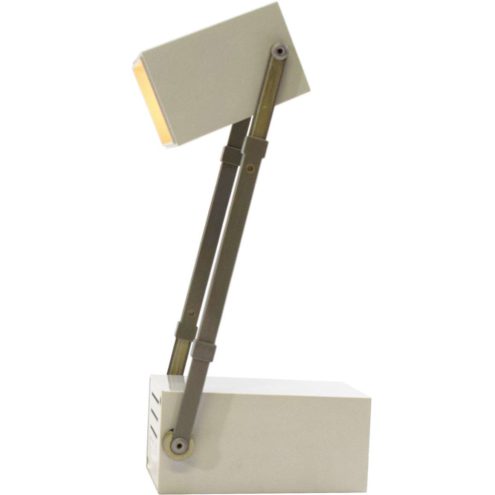
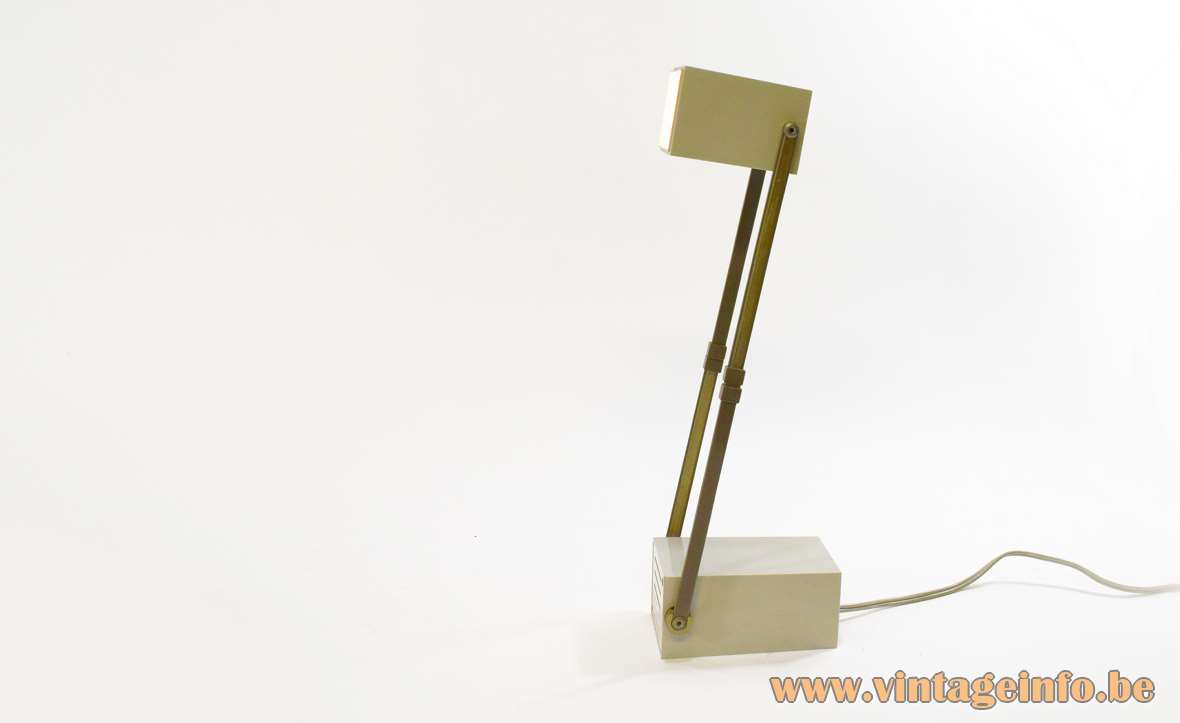
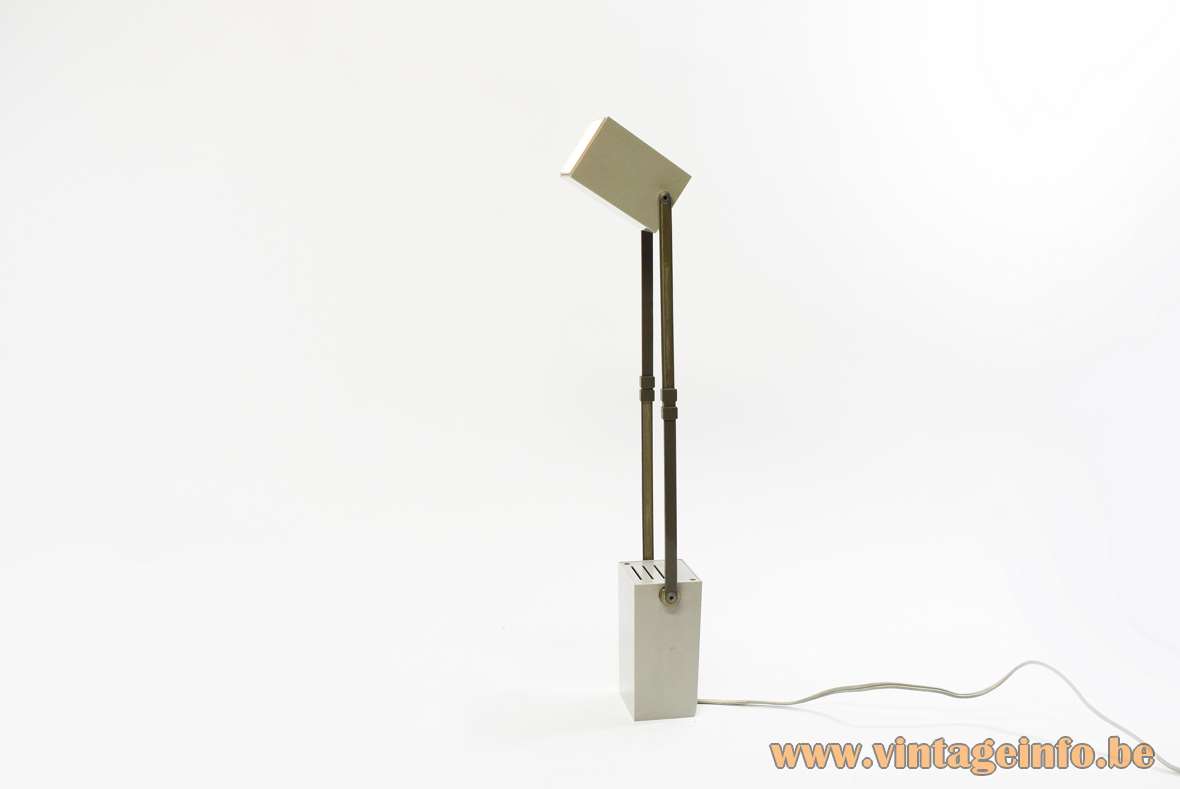
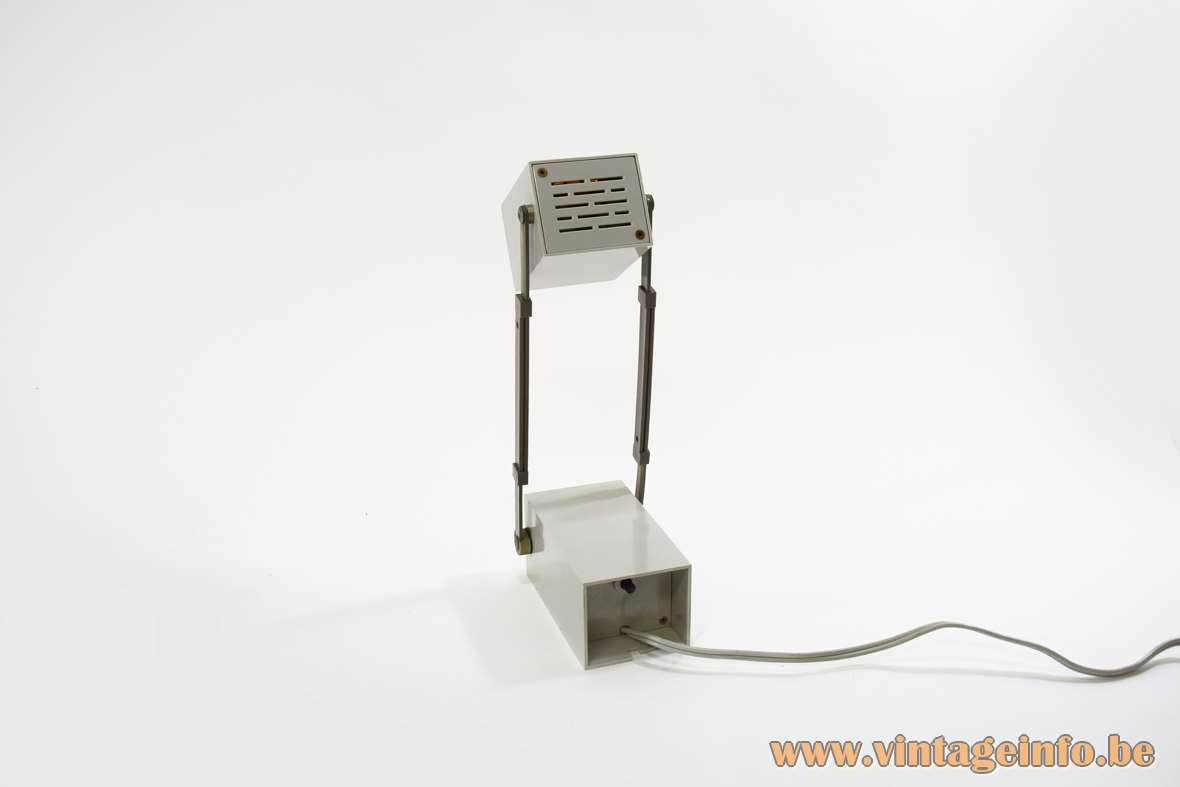
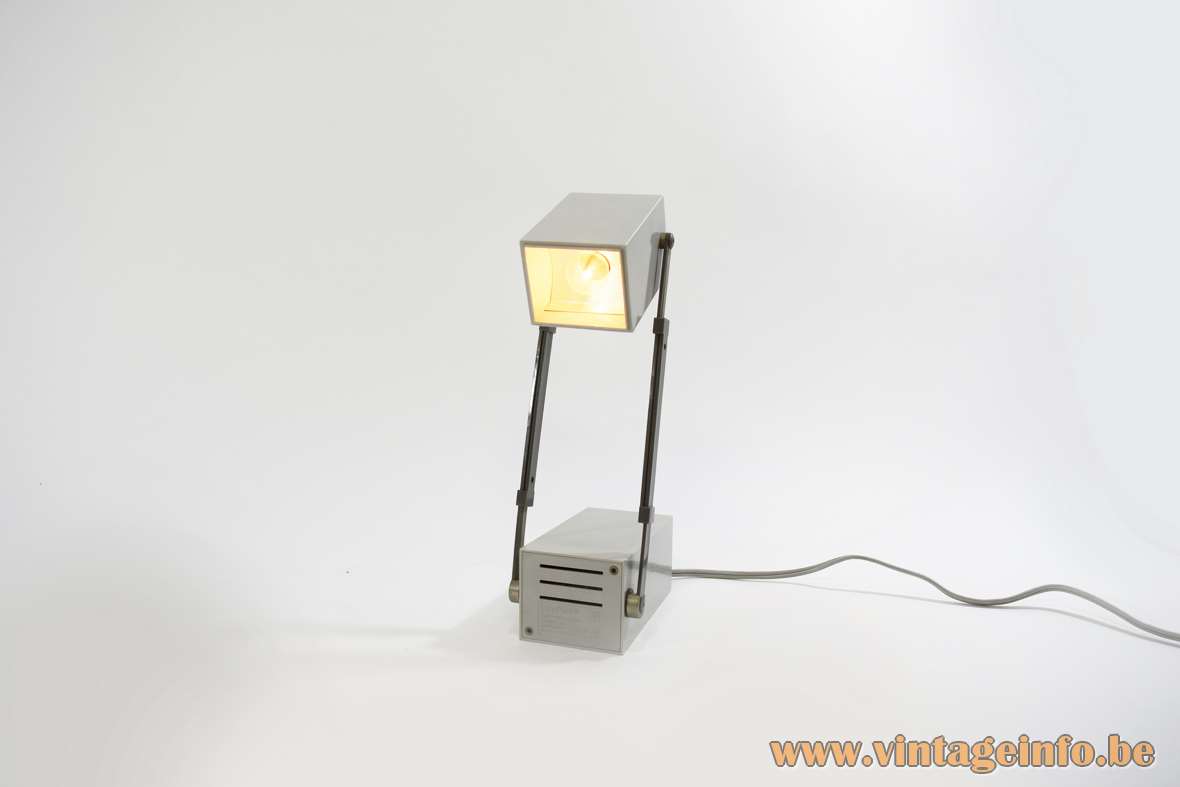
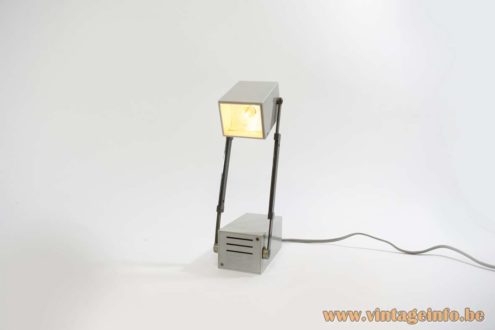
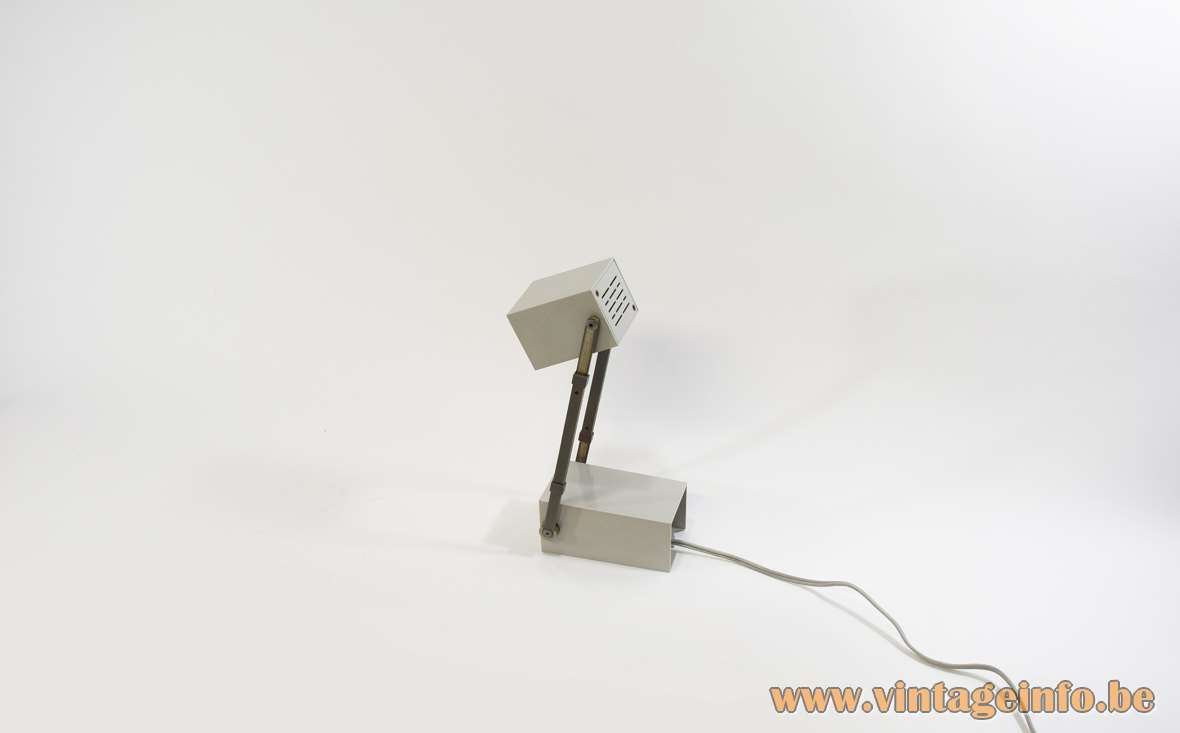
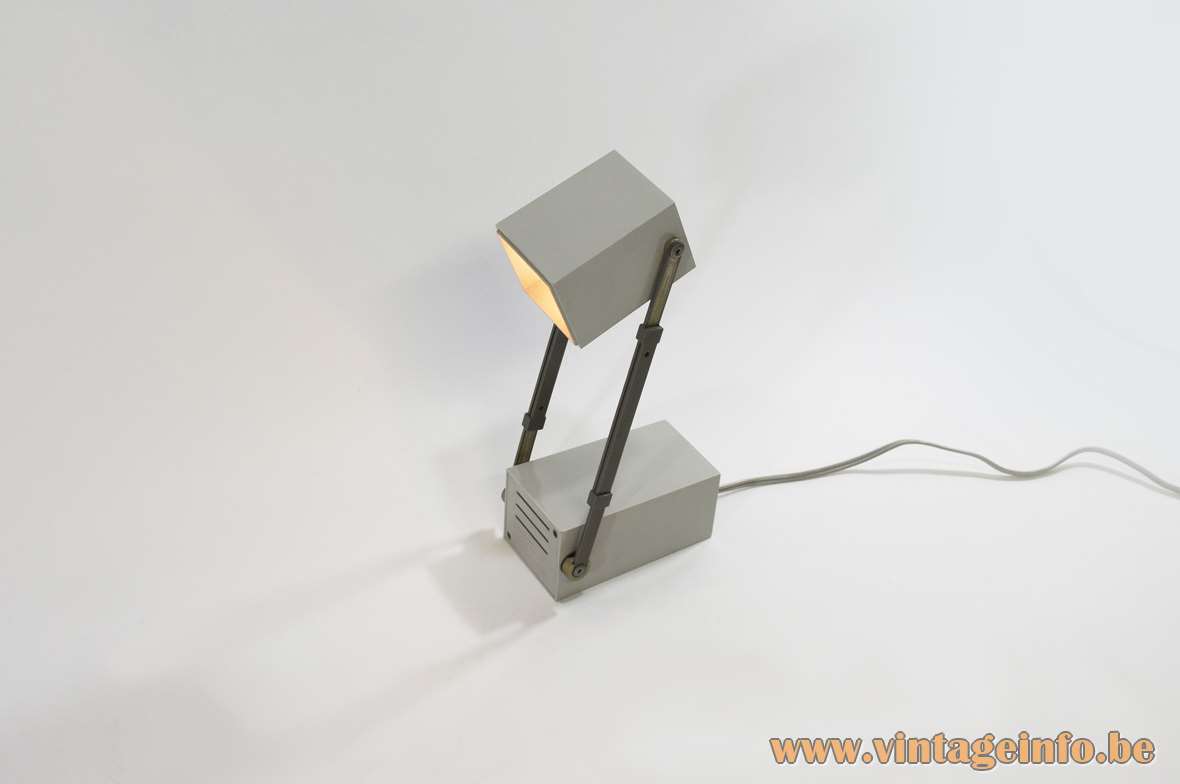
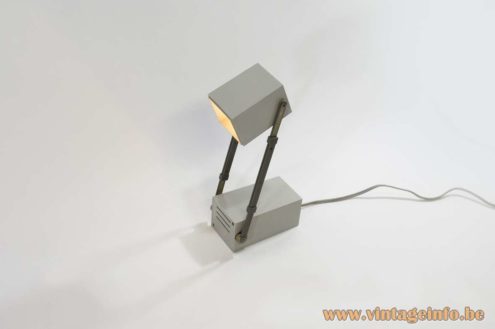
LamPetit Table Lamp or Wall Lamp
Materials: Foldable square beam conical light made of grey plastic. Dark grey plastic arms, chromed brass rods inside. Aluminium reflector. Metal B15 socket. Built-in transformer 220 volt, 12 volt.
Height: from 20,1 cm until 40,5 cm / 7.91”- 15.94”
Base: 12,2 x 6,7 cm / 4.80 x 2.63”
Electricity: 1 bulb B15, 1 x 25 watt maximum, 12 volt. The lamp has a transformer 220 to 12 volt. Any type of car light bulb can be used, not a specific one preferred.
Period: 1960s, 1970s – Mid-Century Modern.
Designer: Bent Gantzel-Boysen in 1966.
Manufacturer: Louis Poulsen, Copenhagen, Denmark.
Other versions: The LamPetit table lamp was produced in black, orange and grey.
The switch on the back has three positions: off, full power and half power. It uses the same principle as the Japanese Taki Light Iris table lamp from the same period.
LamPetit: The name Lampetit is related to the Finnish word lampetti, meaning a wall lamp or sconce. The lamp was originally intended for use as a wall lamp, and the recess in the base allows it to be hung on the wall. Today, however, it is more often used as a bedside lamp or desk lamp. The name may also have been chosen because it sounds like the French phrase for a small lamp.
The LamPetit table lamp received an iF Design Award in 1971.
Bent Gantzel-Boysen
This table lamp is often attributed to Verner Panton, but that attribution is incorrect. The design is generally credited to Bent Gantzel-Boysen (1930–2008), a Danish designer with a background in electromechanics and engineering, who joined Louis Poulsen in 1956. During the 1970s, he became head of the company’s design team.
The LamPetit table lamp was already published in a Louis Poulsen catalogue in 1966 and later became one of the designs most often mistakenly linked to Verner Panton. Gantzel-Boysen is also associated with the IT series and with the PH 80 lamps, created in 1974 as a tribute to Poul Henningsen on what would have been his 80th birthday.
In the late 1970s, Bent Gantzel-Boysen started designing lamps for IKEA. Among his best-known later designs is the colourful DUETT pendant lamp from the early 1980s. More information about that model can be found here.
Verner Panton
Verner Panton designed several important lamps for Louis Poulsen, including the Flowerpot pendant lamp, the VP Globe pendant lamp, the Panthella table and floor lamps, and other well-known lighting designs. More information about the Panthella floor lamp can be found here.
Louis Poulsen
Louis Poulsen is a Danish lighting manufacturer with roots going back to 1874, when Ludvig R. Poulsen founded a business in Copenhagen. Originally a trading company, the firm gradually shifted towards electrical supplies and lighting as electricity became more widely used. In 1896 Ludvig’s nephew Louis Poulsen joined the company, and after Ludvig’s death in 1906 Louis continued the business. In 1914Sophus Kaastrup-Olsen became a partner, and the company name changed to Louis Poulsen & Co.
A decisive turning point came in 1924, when Poul Henningsen began his long collaboration with the company. His scientific approach to glare-free lighting and reflective multi-shade systems became central to the identity of Louis Poulsen and strongly influenced modern lighting design. Since then, the company has continued to combine functional light, architectural clarity and carefully considered form, following the idea that a lamp should not merely be an object, but a tool to shape light.
Over the decades, Louis Poulsen has produced both iconic domestic lighting and large-scale architectural lighting for public and professional spaces. The company remains one of the best-known names in Danish lighting design, with a strong emphasis on the quality, direction and atmosphere of light.
Designers
The designer most closely associated with Louis Poulsen is Poul Henningsen (PH). Other major names linked to the company include Arne Jacobsen, Verner Panton, Vilhelm Lauritzen and Vilhelm Wohlert.
Over time, Louis Poulsen also collaborated with a wide range of designers, architects and studios, including Alfred Homann, Andreas Hansen, Eila & John Meiling, Henning Klok, Axel Wedel Madsen, Jørgen Bo, Ole Valdemar Kjær, Jens Møller-Jensen and Bent Gantzel-Boysen.
Among later and more recent collaborations are Louise Campbell, Øivind Slaatto, Christian Flindt, Clara von Zweigbergk, nendo (Oki Sato), Olafur Eliasson, GamFratesi, Anne Boysen, Peter Bysted, Anu Moser, Shoichi Uchiyama, Gabriel Tan and Finn Juhl.
LamPetit Table Lamp
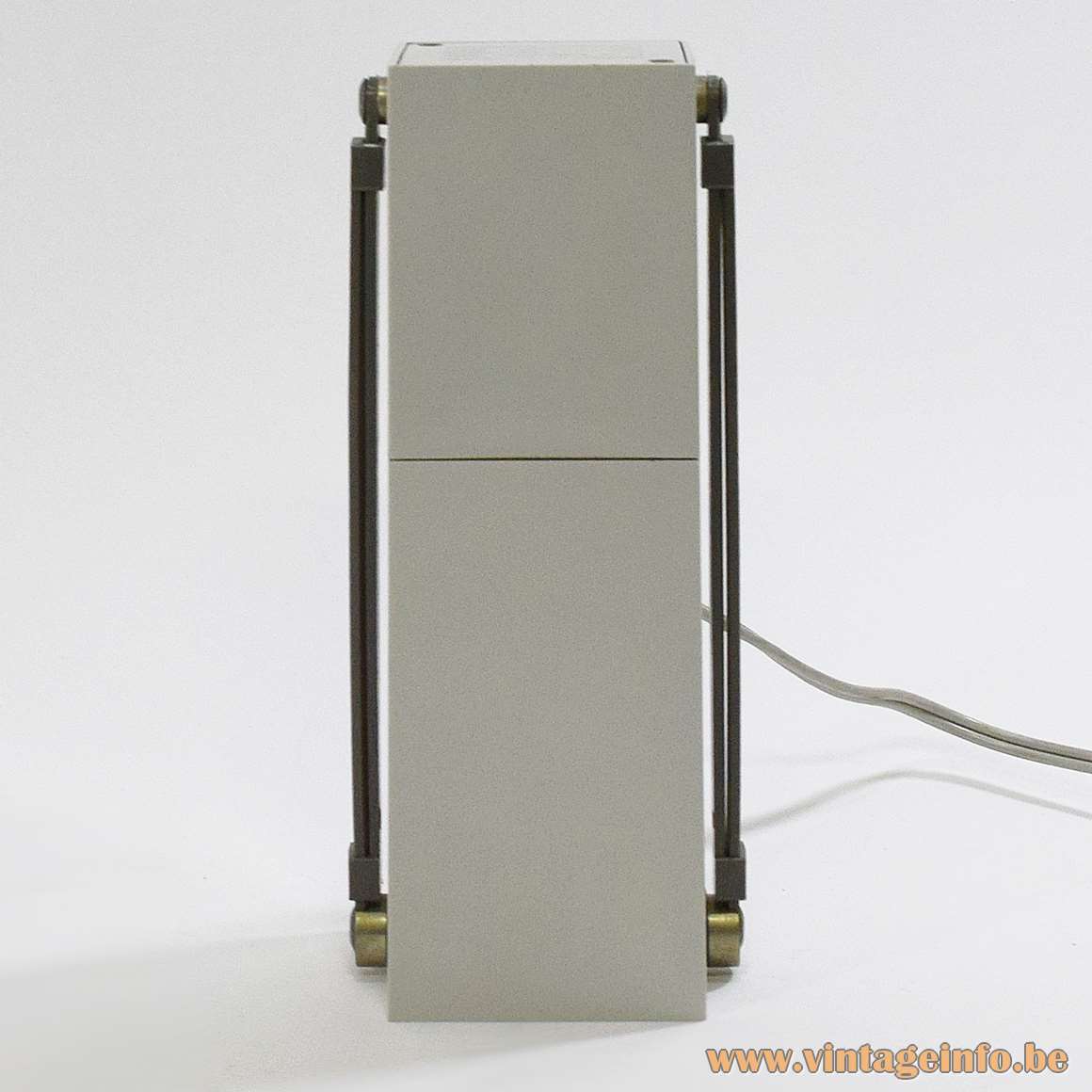
Closed and the bottom with the pressed company information and the name.

LamPetit Table Lamp – Catalogue Picture

Many thans to Kurt from lampesamleren.dk (archived) for the enlightening information.
LamPetit Table Lamp – Company Labels