- Categories
- Categories
Last 5 Viewed
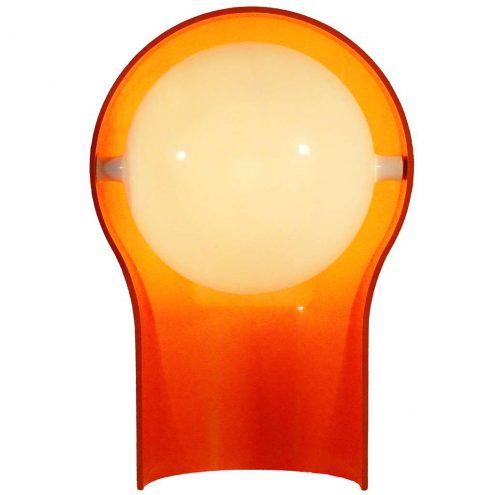
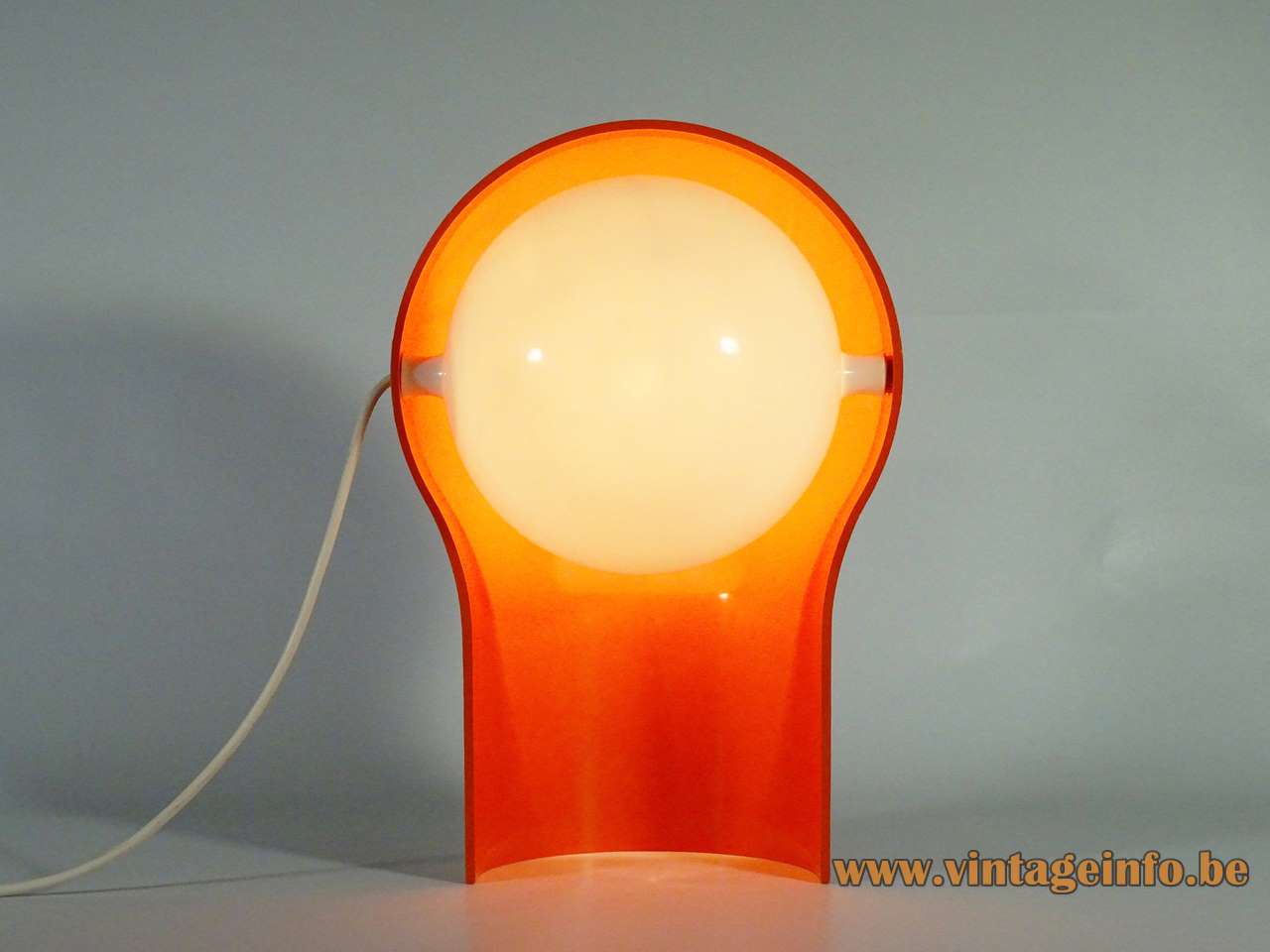
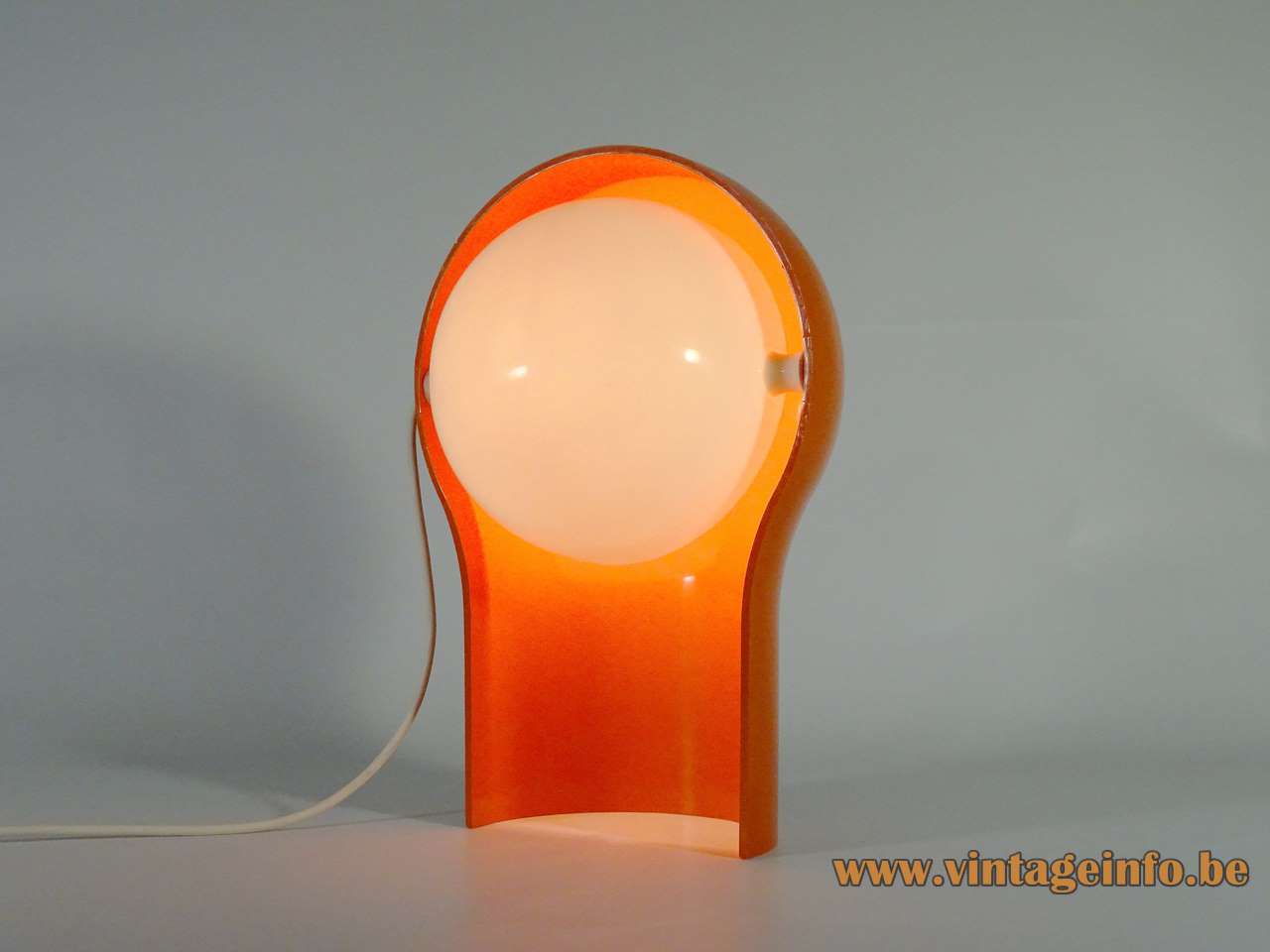
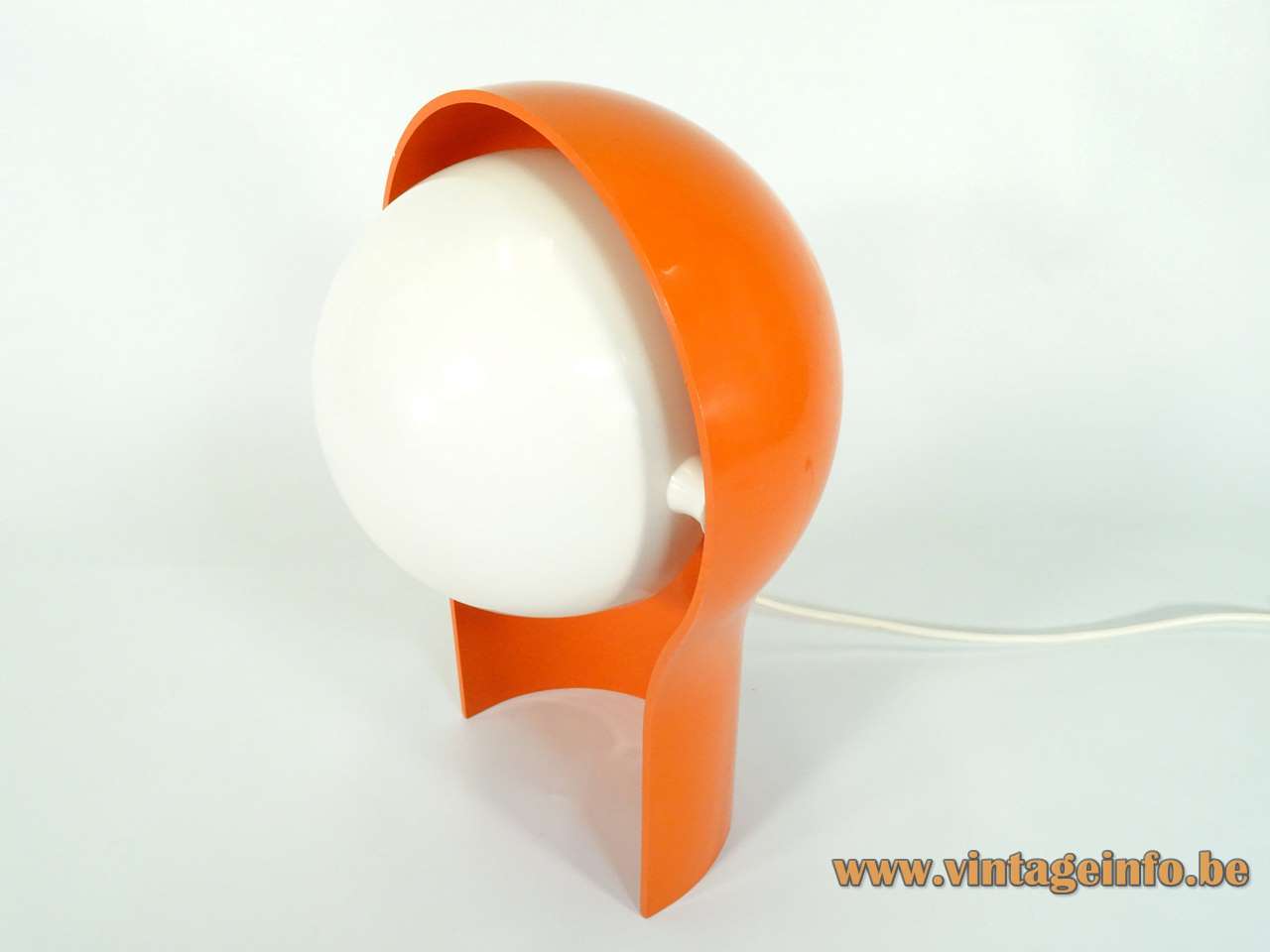
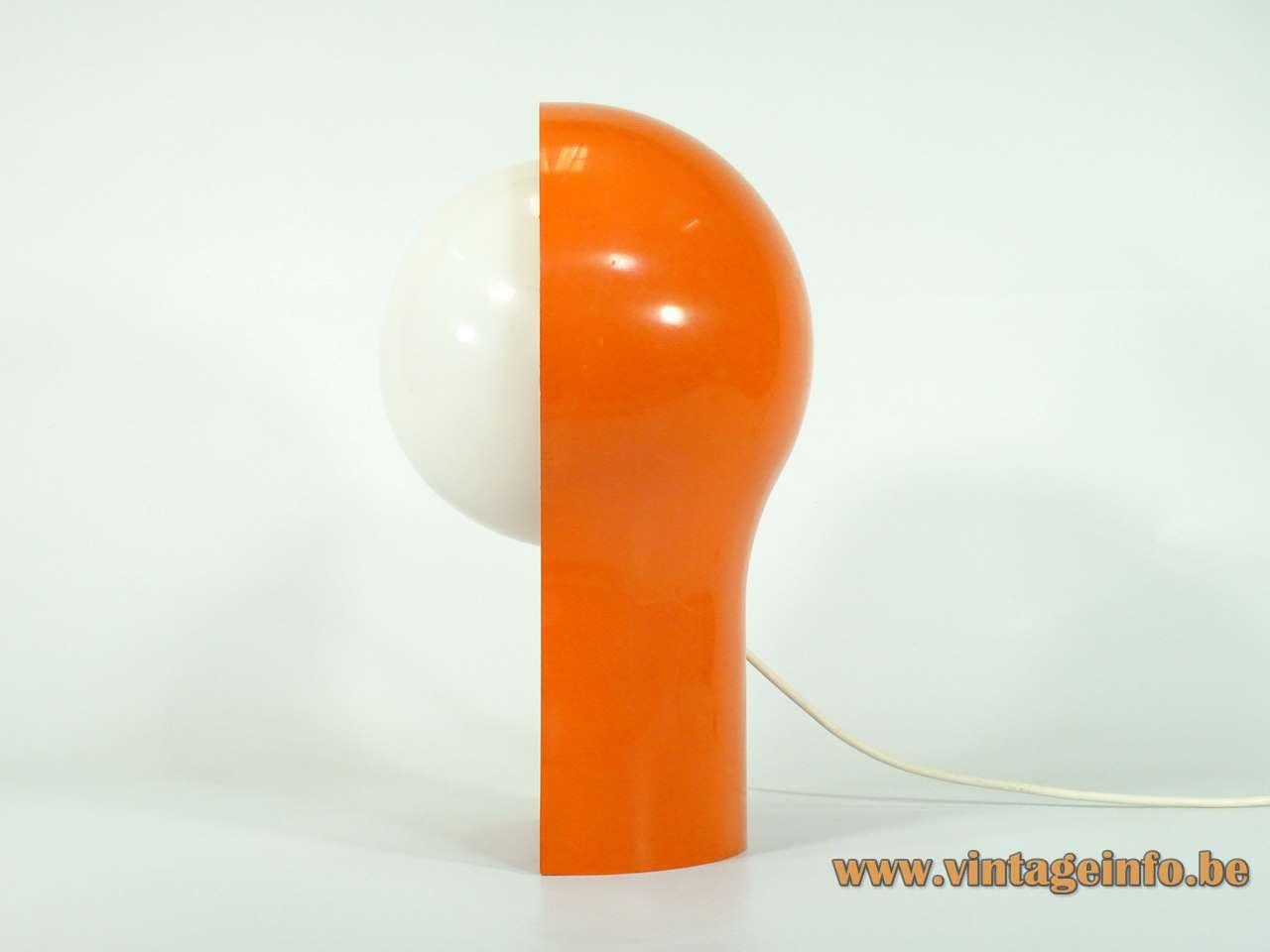
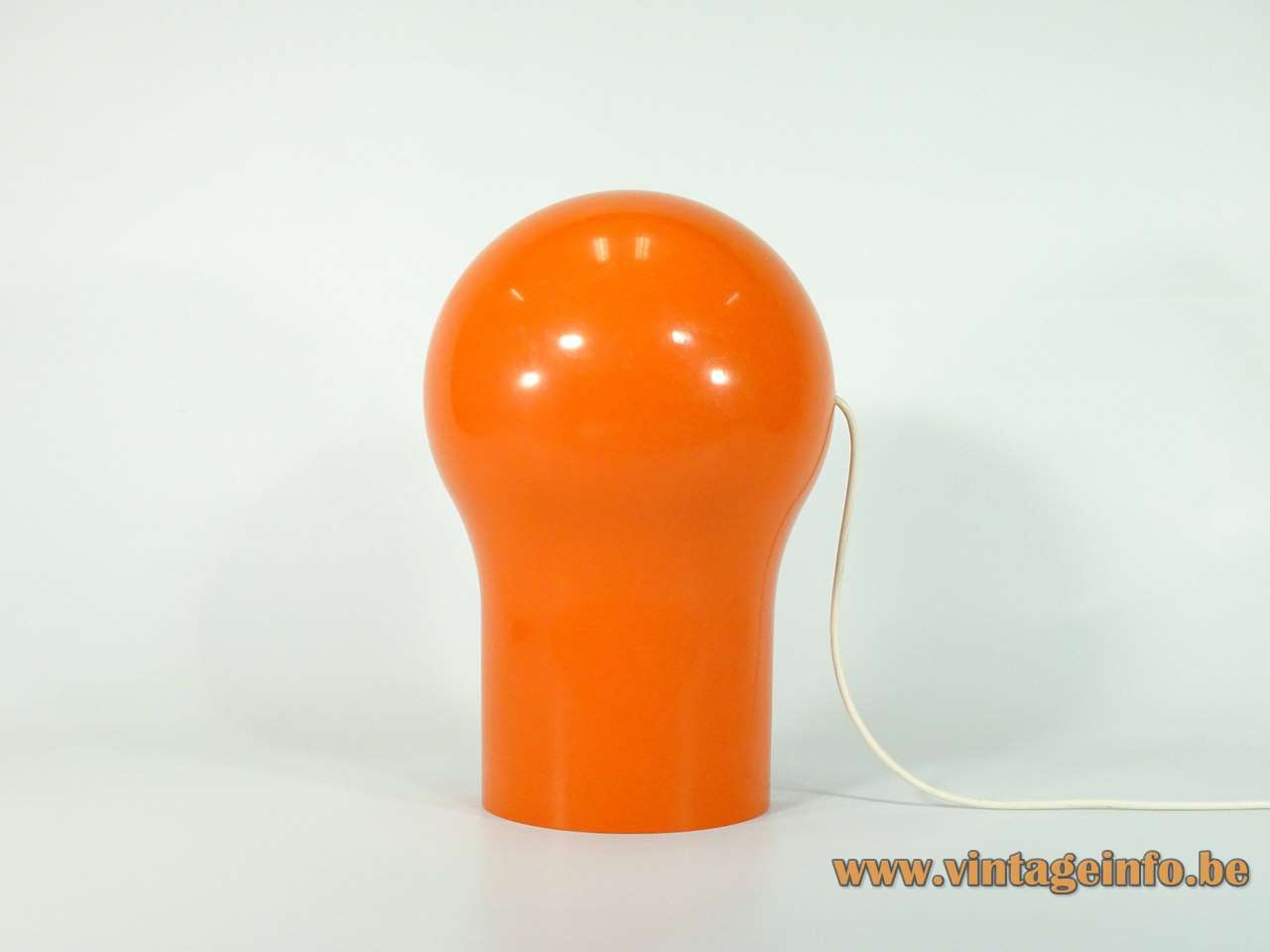
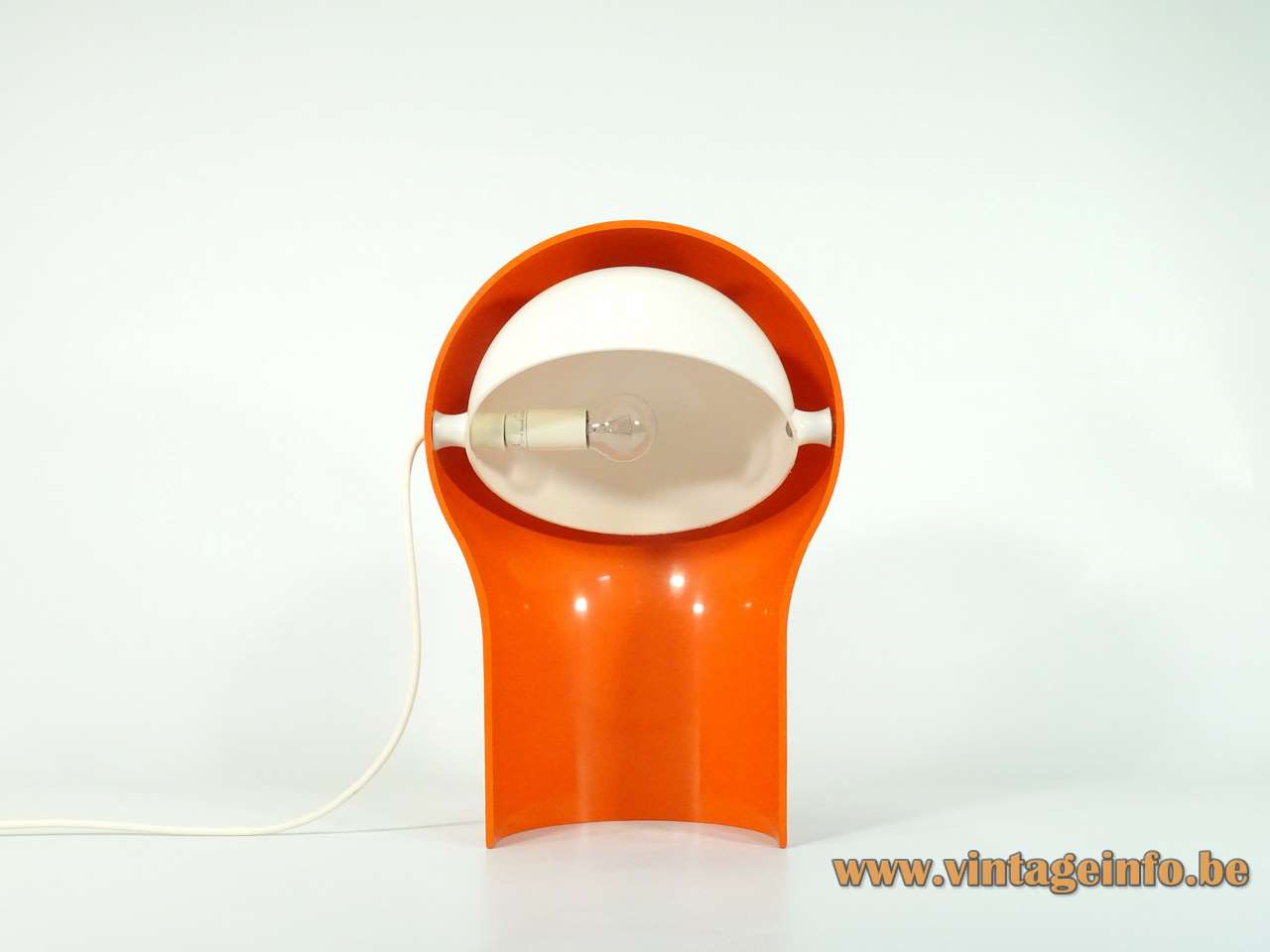
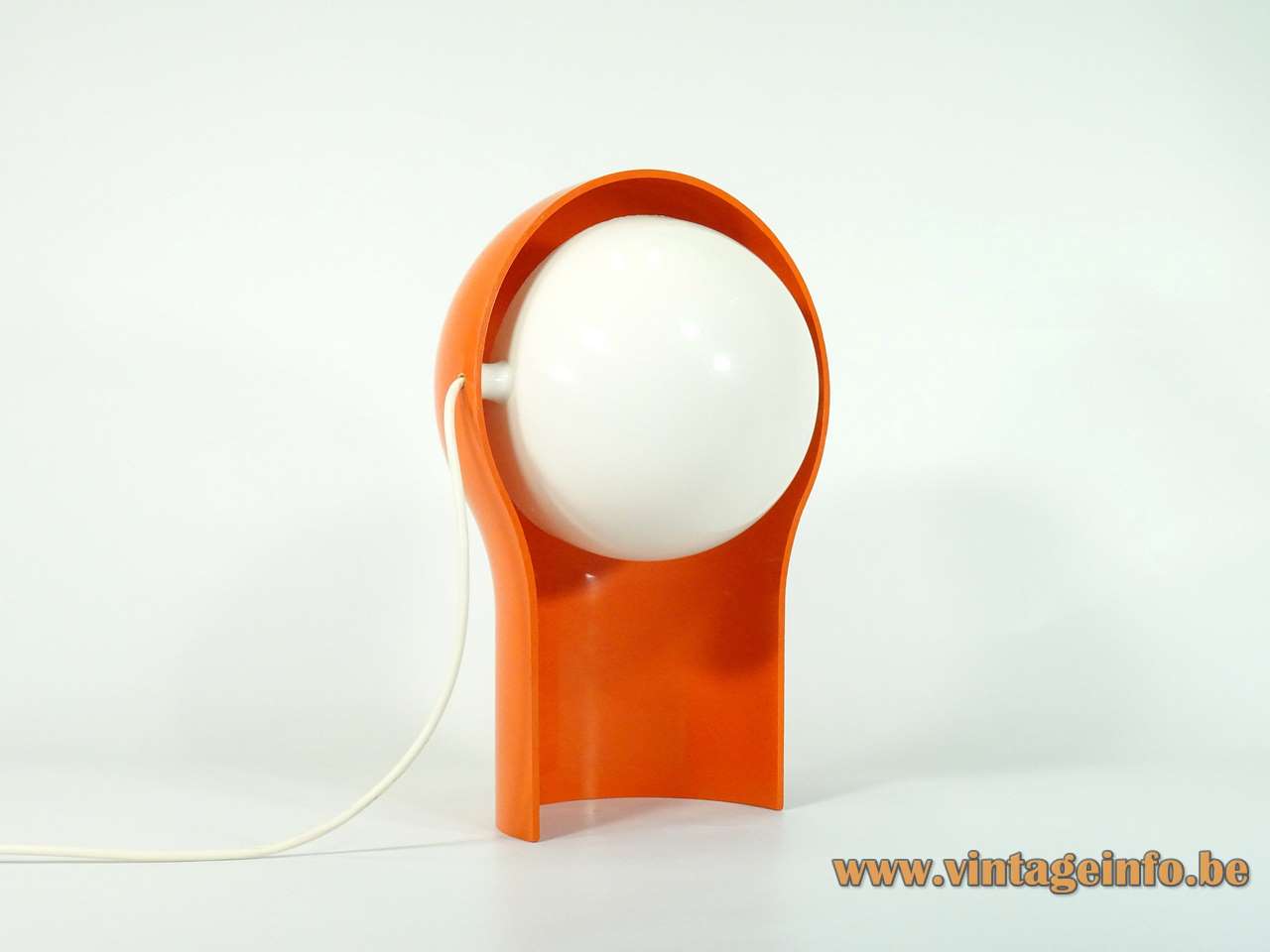
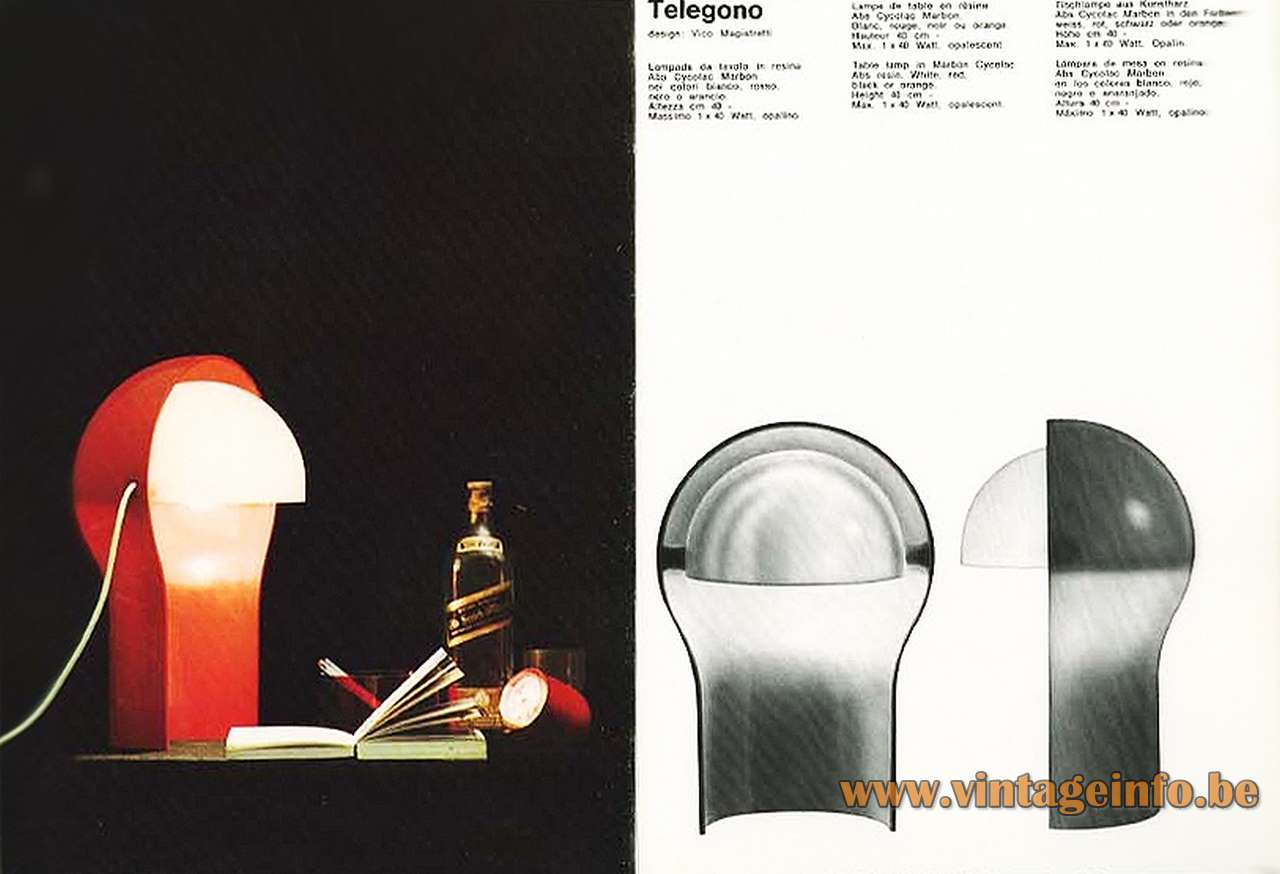
Artemide Telegono Table Lamp – 1970 Catalogue Picture
A red version in this catalogue picture.
Vico Magistretti & Artemide
The collaboration between Vico Magistretti and Artemide began in the early 1960s, at a moment when Italian design and industry were undergoing profound change. Having just completed his role as artistic director of the Milan Triennale, Magistretti found himself increasingly involved in industrial design projects rather than purely architectural work.
At that time, Artemide was still a very small company, essentially centred around Ernesto Gismondi, his wife Emma Schweinberger, and a handful of collaborators. What started as a professional commission quickly evolved into a close and lasting exchange of ideas. Rather than a traditional client–designer relationship, the collaboration grew into a shared exploration of how lighting could be rethought for a modern, industrial context.
Both sides later recalled how decisive this period was. For Magistretti, it represented a shift toward designing objects that responded to new ways of living and producing. At the time, Italian production was still largely influenced by traditional furniture-making practices, often referred to as “Cantù style”. For Artemide, it marked a clear break, and a move toward contemporary industrial design. Gismondi and his generation of industrialists understood that change was inevitable, and that collaboration with forward-thinking designers was essential.
One episode often cited to illustrate this working method took place during Magistretti’s first visit to Artemide’s early headquarters in Via Moscova, near the church of Sant’Angelo in Milan. During that meeting, Magistretti reportedly sketched a simple diagram on a piece of paper — little more than a circle and a few lines. From this minimal gesture emerged the Omega lamp, an early and emblematic result of their collaboration.
This spirit of simplicity, mutual trust and continuous dialogue would define the partnership for many years, leading to some of the most important lighting designs of post-war Italian design and establishing Magistretti as one of Artemide’s key designers.
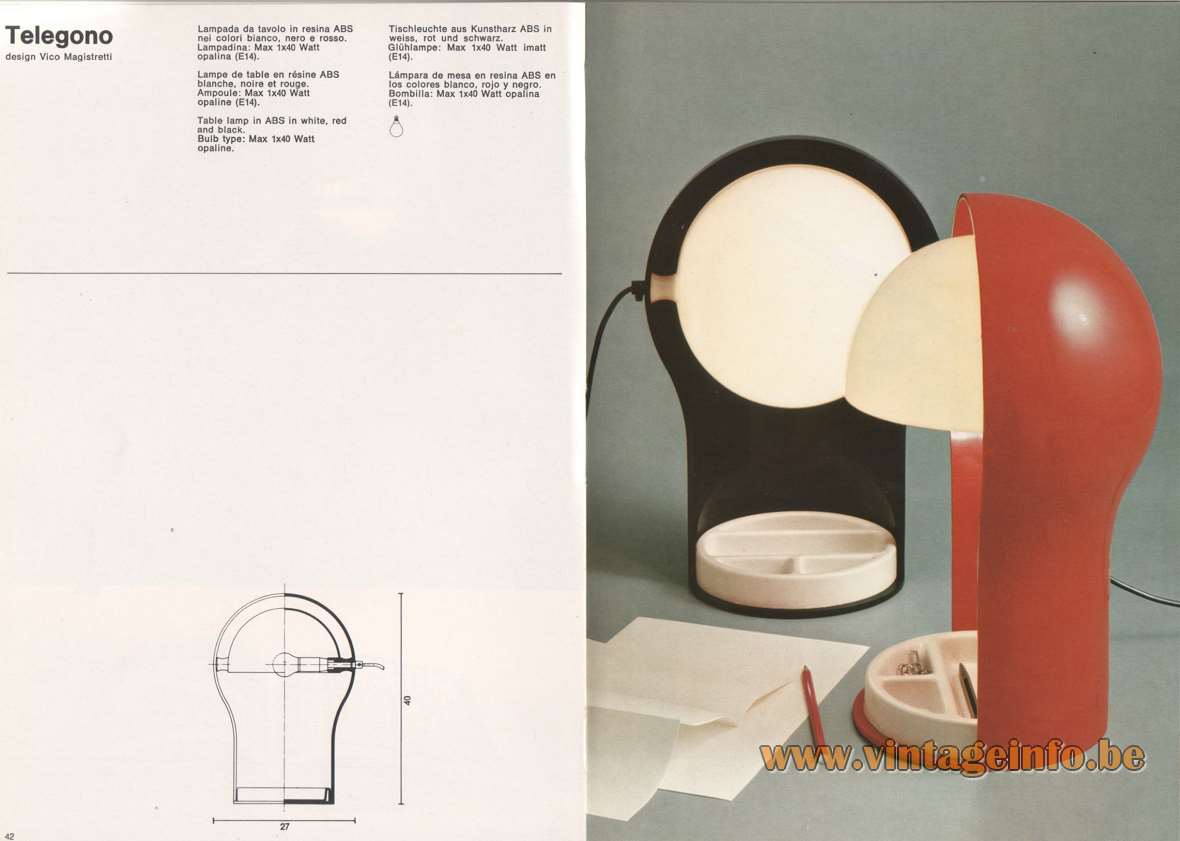
Artemide Telegono Table Lamp – 1976 Catalogue Picture
In this 1976 catalogue picture a black and red version. Also a scheme with the dimensions is printed on this page.
Lamps In The Movies
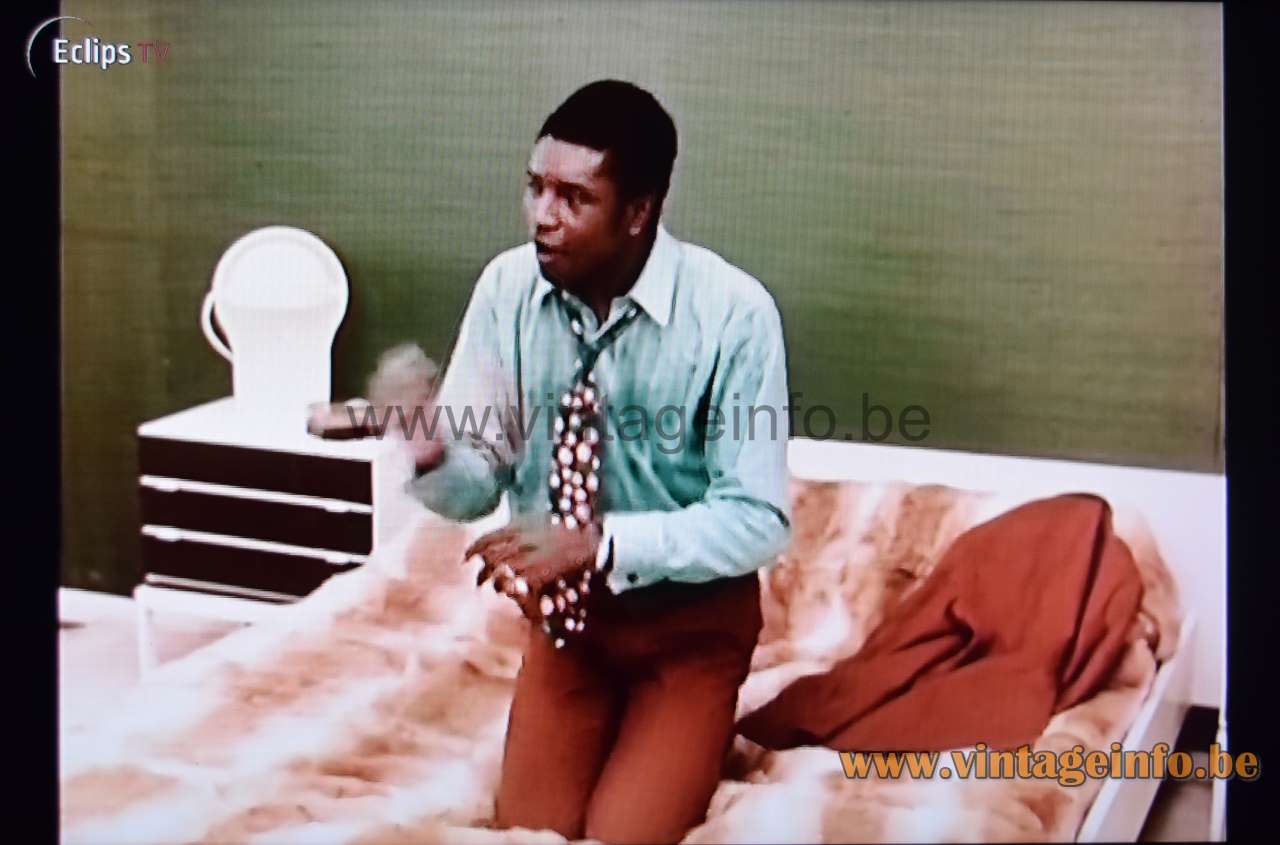
Palaver (1969)
An Artemide Telegono table lamp was used as a set decoration in the 1969 Belgian fantasy film Palaver directed by Emile Degelin. Starring Umberto Bettencourt and Christie Dermie.
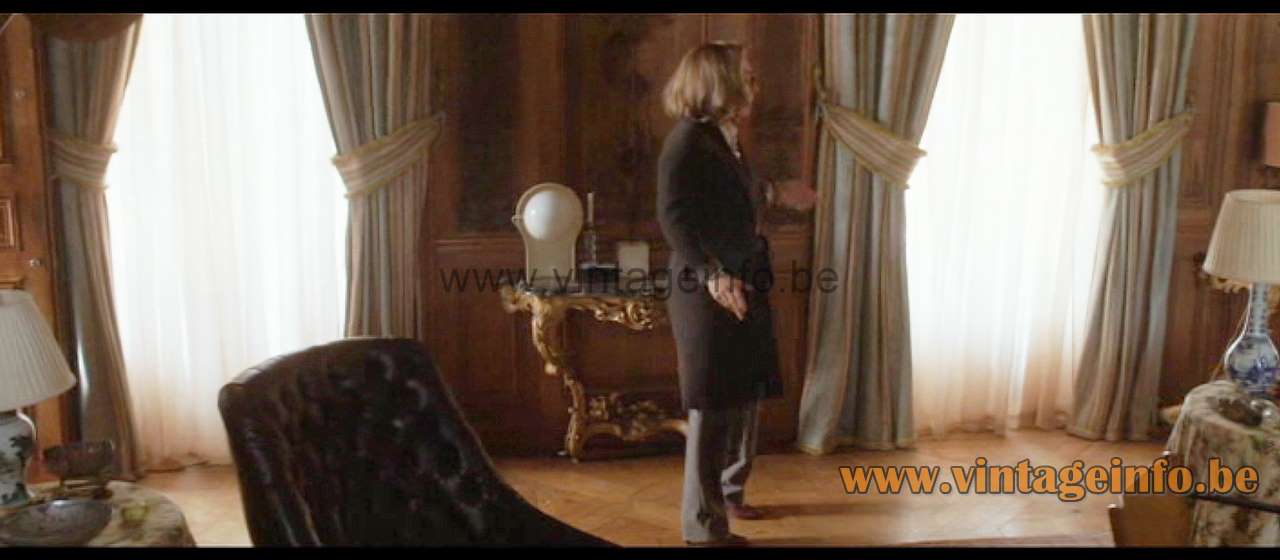
Les Garçons et Guillaume, à Table! (2013)
An Artemide Telegono table lamp was used as a set decoration in the 2013 French film Les Garçons et Guillaume, à Table! (Me, Myself and Mum). An autobiographical comedy written, directed by and starring Guillaume Gallienne.
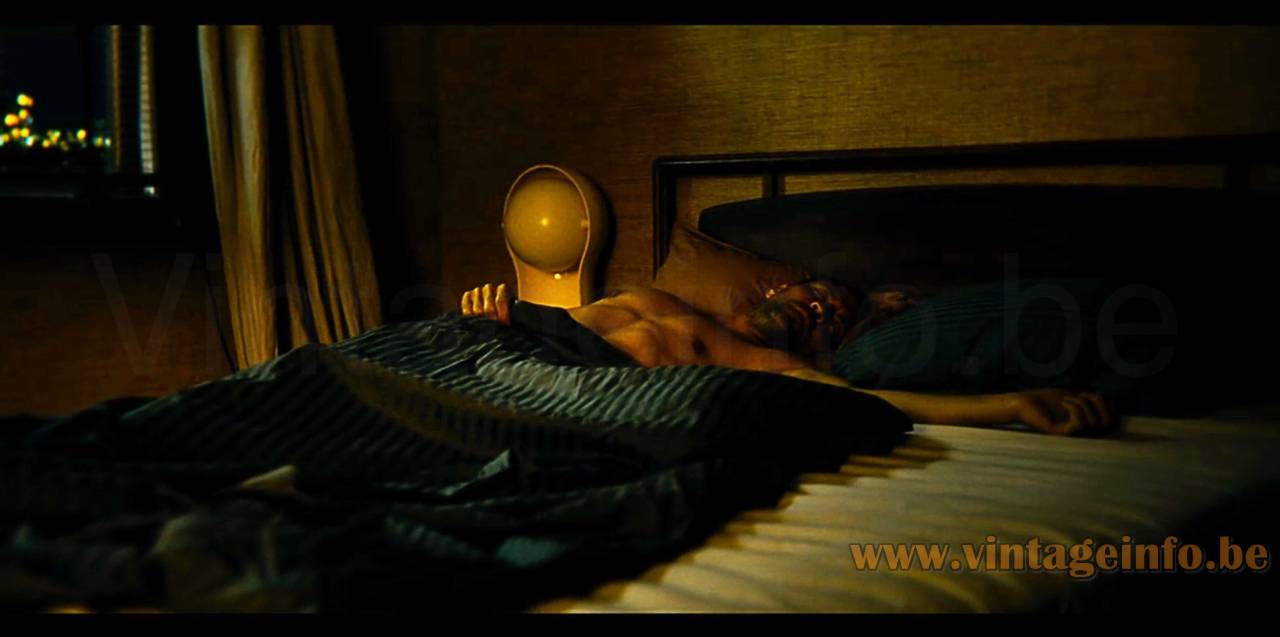
Harry Hole (2026) TV Series
An Artemide Telegono table lamp was used as a set decoration in the 2026 Norwegian crime drama television series Harry Hole. An adaptation of Jo Nesbø‘s Harry Hole novels, specifically the fifth instalment The Devil’s Star. Here in season 1, episode 2. Starring: Tobias Santelmann, Joel Kinnaman and Pia Tjelta.
Links (external links open in a new window)
Vico: il grande semplice – documentary
Interview with Vico Magistretti on the Designboom website
Article in The Guardian about Vico Magistretti
Les Garçons et Guillaume, à Table! (2013) film – Wikipedia
Les Garçons et Guillaume, à Table! (2013) film – IMDB
Palaver (1969) film – Wikipedia
Harry Hole (2026) TV series – Wikipedia
Harry Hole (2026) TV series – IMDb
Vintageinfo
Artemide Telegono Table Lamp
Materials: Base made of curved orange ABS plastic. White half round globe lampshade, diffuser. Some metal and plastic parts. Bakelite E14 socket.
Height: 40 cm / 15.74”
Width: 27 cm / 10.62”
Electricity: 1 bulb E14, 1 x 40 watt maximum, 110/220 volt.
No specific type of light bulb is required; different types can be used.
Period: 1960s, 1970s – Mid-Century Modern.
Designer: Vico Magistretti in 1968.
Manufacturer: Artemide, Pregnana Milanese, Milan, Italy.
Other versions: The Artemide Telegono table lamp was initially made in white, red and black and made in two versions. Made as a desk lamp with a pencil box and as a table lamp without a pencil box. Over the years many colours were produced.
Telegono or Telegonus, was the youngest son of Circe and Odysseus in Greek mythology.
Vico Magistretti
Vico Magistretti (1920–2006) was one of the most influential Italian designers of the 20th century, best known for his radical yet timeless approach to industrial design, furniture and lighting. Trained as an architect in Milan, Magistretti belonged to the post-war generation of designers who reshaped Italian design by combining rational thinking, technical innovation and poetic simplicity.
Although his work spans architecture, furniture and everyday objects, lighting design plays a central role in Magistretti’s legacy. From the late 1950s onward, he explored light not as decoration, but as a functional and sculptural element, often reducing a lamp to its absolute essence. His designs are characterised by clean geometries, intelligent use of materials, and ingenious technical solutions that remain visually light and accessible.
Magistretti collaborated extensively with Artemide, for whom he designed some of the most iconic lamps of the post-war period. Among these are the Eclisse table lamp (1965), a compact, playful design that allows the user to “eclipse” the light source, and the Dalù and Mezzachimera lamps, which further explore form, shadow and diffused light. Many of these designs are still in production today, underlining their enduring relevance.
Another key collaboration was with Oluce, where Magistretti created the legendary Atollo table lamp in 1977. With its pure geometric composition of cylinder, cone and hemisphere, Atollo has become one of the most recognisable lamps in design history and is often cited as a perfect synthesis of form and function.
In addition, Magistretti designed several important lamps for Candle (FontanaArte). Across all these collaborations, his lighting designs demonstrate a rare balance between intellectual rigor and everyday usability.
Beyond his design practice, Magistretti was also an influential teacher and thinker, shaping generations of designers through his lectures and writings. His work is preserved and documented by the Vico Magistretti Foundation in Milan, which houses his archive and studio and continues to promote his ideas and design philosophy. The museum (Via Conservatorio, 20, 20122 Milano, Italy) is open on Tuesday, on Thursday and on Saturday. More info on the website, click here.
Below the translated text from the Memomi website following a documentary that was made in 2016 and aired on Sky Arte HD on 19 September 2006, exactly ten years after the passing of Vico Magistretti. A Sky Arte HD production made with the collaboration of the Magistretti Foundation. You can watch it on their website (in Italian).
An elegant dandy, a refined classicist, designer and architect who has shaped the Milanese urban landscape, a lover of English culture and golf. Author of icons that have made history, Vico Magistretti has always pursued a simplicity that he called “the most complicated thing in the world”.
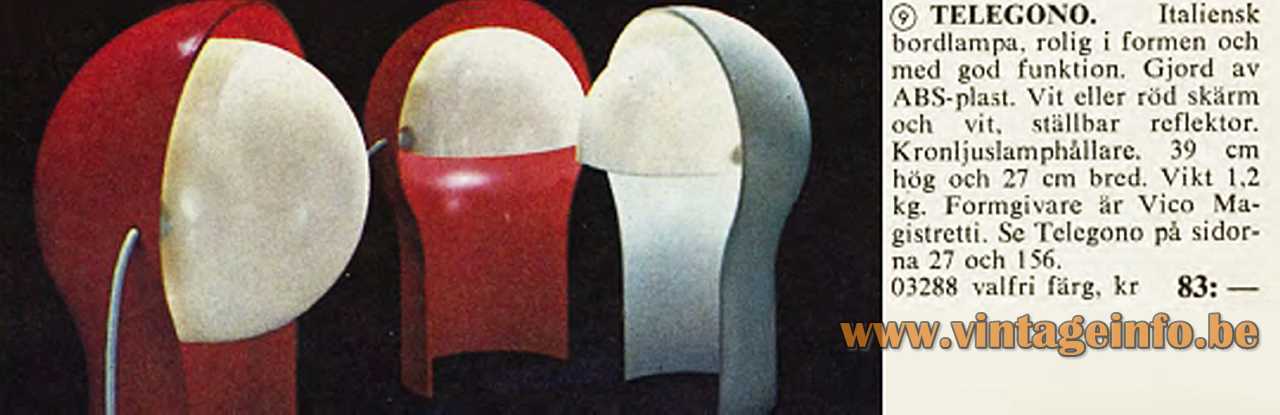
Artemide Telegono Table Lamp – 1971 IKEA Catalogue Picture
Also IKEA sold the Artemide Telegono table lamp. It appears in catalogues from 1970 and 1971. At that time the company was only active in Sweden, Denmark and Norway.
Artemide
In 1960, near Milan, Ernesto Gismondi and Sergio Mazza laid the foundation of Artemide. Right from the start, the company combined technological research with a strong sense of Italian design. Their very first iconic lamp was the Alfa — hence the name — designed around 1959–1960. Emma Schweinberger, Gismondo’s wife, designed the Chi table lamp in 1962. From there, Artemide quickly began collaborating with leading designers. The mid-1960s saw the company make waves with Vico Magistretti’s Eclisse, awarded in 1967, as well as Enzo Mari’s early contributions such as the Polluce floor lamp, designed together with Anna Fasolis in 1965. The Dalù table lamp (1966 – Vico Magistretti) and the Nesso (1965), designed by Giancarlo Mattioli & Gruppo Architetti Urbanisti Città Nuova, further established Artemid e’s reputation during this formative decade. Other notable designs from the late 1960s include the Lesbo table lamp, a 1967 design by Angelo Mangiarotti, Vico Magistretti’s Telegono (1968), the Pallade pendant by Studio Tetrarch, the Electra table lamp, designed by Giuliana Gramigna in 1968, all reflecting the experimental spirit of the era.
As the 1970s arrived, Artemide introduced what would become one of its most recognisable icons: the Tizio desk lamp, designed by Richard Sapper in 1972. Around the same period, Gae Aulenti designed the Pileino and Mezzopileo lamps, followed by Mezzoracolo in 1973. The famous Sintesi lamp series was designed by Ernesto Gismondi in 1975 and the Area 50 lamp series, a Mario Bellini design from 1975. The decade also saw the introduction of the Onfale lamp in 1978, designed by Luciano Vistosi, marking Artemide’s growing interest in glass and sculptural forms.
The 1980s marked a phase of international expansion. By 1980, Artemide had established a presence in the United States and continued to attract prominent designers, including Ettore Sottsass. His Callimaco floor lamp and Pausania table lamp, both designed during the 1980s, became distinctive statements within Artemide’s catalogue. Other important designs from this decade include the Polifemo floor lamp by Carlo Forcolini (1983). In 1987, Artemide launched the Tolomeo, designed by Michele De Lucchi and Giancarlo Fassina, which quickly became an icon of functional and timeless design.
During the 1990s, Artemide further expanded its scope by acquiring VeArt, bringing Murano glass expertise into the company. In 1996, Artemide introduced its “The Human Light” philosophy, focusing on the relationship between light, people and their environment. By the late 1990s, Artemide Architectural was established, bridging product design and large-scale architectural lighting projects. From the 2000s onward, Artemide increasingly focused on LED innovation while reissuing its historic designs within the “Modern Classic” collection.
In essence, Artemide represents a rich tapestry of Italian lighting history. Whether defined by the minimalist engineering of the Tizio, the organic curves of the Nesso, or the expressive presence of the Callimaco, Artemide has consistently blended design innovation with a deeply human approach to light. It is precisely this balance that makes these lamps — including the Pausania and many others — enduring icons of modern design.
Designers that collaborated with Artemide include, among others, Vico Magistretti, Emma Schweinberger, Gae Aulenti, Richard Sapper, Michele De Lucchi, Giancarlo Fassina, Ettore Sottsass, Enzo Mari, Gio Ponti, Sergio Mazza, Angelo Mangiarotti, Joe Colombo, Sergio Asti, Sergio Favre, Mario Marenco, Adelaide Bonati, Silvio Bonatti, Enrico De Munari, Carla Federspiel, Livio Castiglioni, Piero Castiglioni, Nanda Vigo, Luigi Caccia Dominioni, Mario Botta, Carlo Forcolini, Luciano Vistosi, Neri&Hu, Carlotta de Bevilacqua, Jean Nouvel, Karim Rashid, Neil Poulton, Studio Tetrarch, Zaha Hadid, Ron Arad, Herzog & de Meuron, Issey Miyake, Naoto Fukasawa, Aldo Rossi, Adrien Gardère, Stephen Philips, Carlo Colombo and Giulia Foscari.
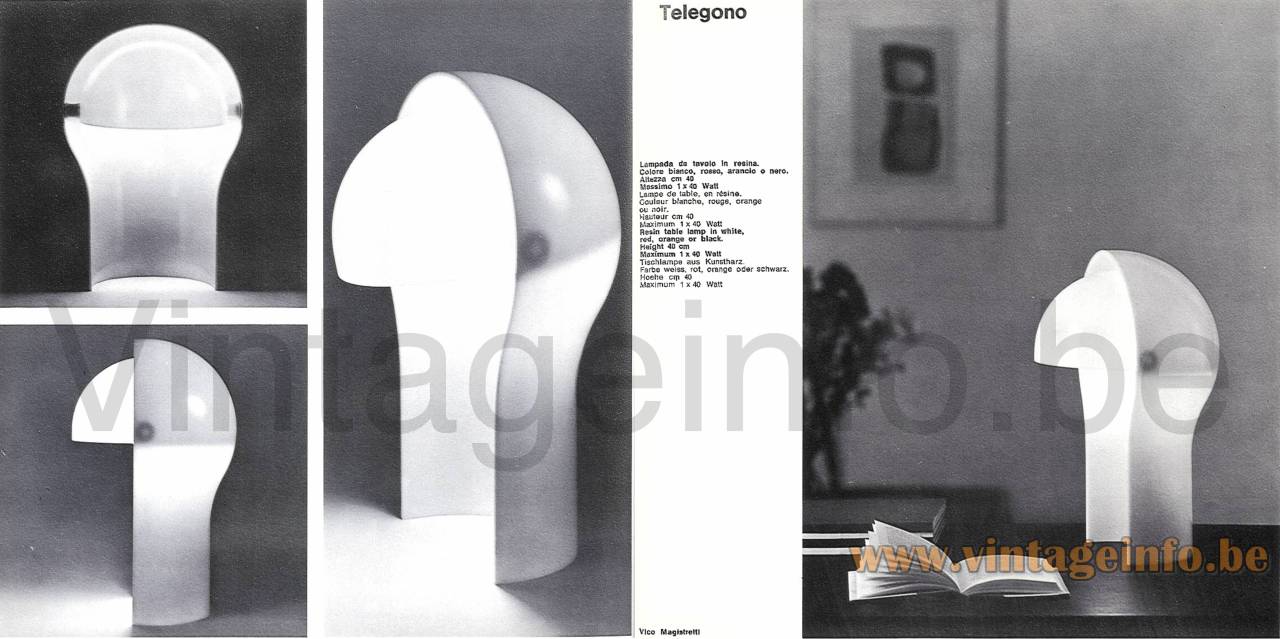
Artemide Telegono Table Lamp – 1969 Catalogue Picture
Black and white pictures in this 1969 catalogue picture, one year after the Telegono was designed.
Vico Magistretti – Artemide Lamps
For Vico Magistretti, lighting design for Artemide began in the early 1960s and resulted in a series of lamps that would become landmarks of Italian post-war design.
Lamps designed for Artemide include, among others:
Lambda (1961, wall lamp), Omicron (1961–1966, wall and floor lamp), Omega (1962, pendant lamp), Mania and Grande Mania (1963, wall lamps), Clitunno (1964, floor lamp), Erse (1964, table lamp), Veio (1965, table lamp), Cirene (1966, pendant and ceiling lamp), Cirene Giardino (1966, outdoor floor lamp), Dalù (1966, table lamp), Demetrio (1966, table lamp), Clinio (1967, wall lamp), Eclisse (1967, table lamp), Triclinio, Pentaclinio and Eptaclinio (1967, chandeliers), Telegono (1968, table lamp), Cetra (1969, pendant lamp), Giunone (1969, floor lamp), Ecatombe (1969, chandelier), Chimera (1969, floor lamp), Mezzachimera (1969, table lamp), Arcadia (1970, table lamp), Stadio (1970, table lamp), Teti (1970, wall and ceiling lamp), Triteti (1970, wall and ceiling lamp), Gaudì (1971, table lamp), Vicario (1971, table lamp), Impiccato (1972, pendant and ceiling lamp), Tessera and Mezzatessera (1972, wall lamps), Armilla (1975, table lamp), Troco (1975, table lamp), Porsenna Tavolo (1977, table lamp), Porsenna Parete (1977, wall lamp), Dui (1979, wall and ceiling lamp), Nemea (1979, table lamp), Kalea (early 1990s, chandelier).
There may be additional Artemide models not included here, and design dates can differ from catalogue publication or production dates.
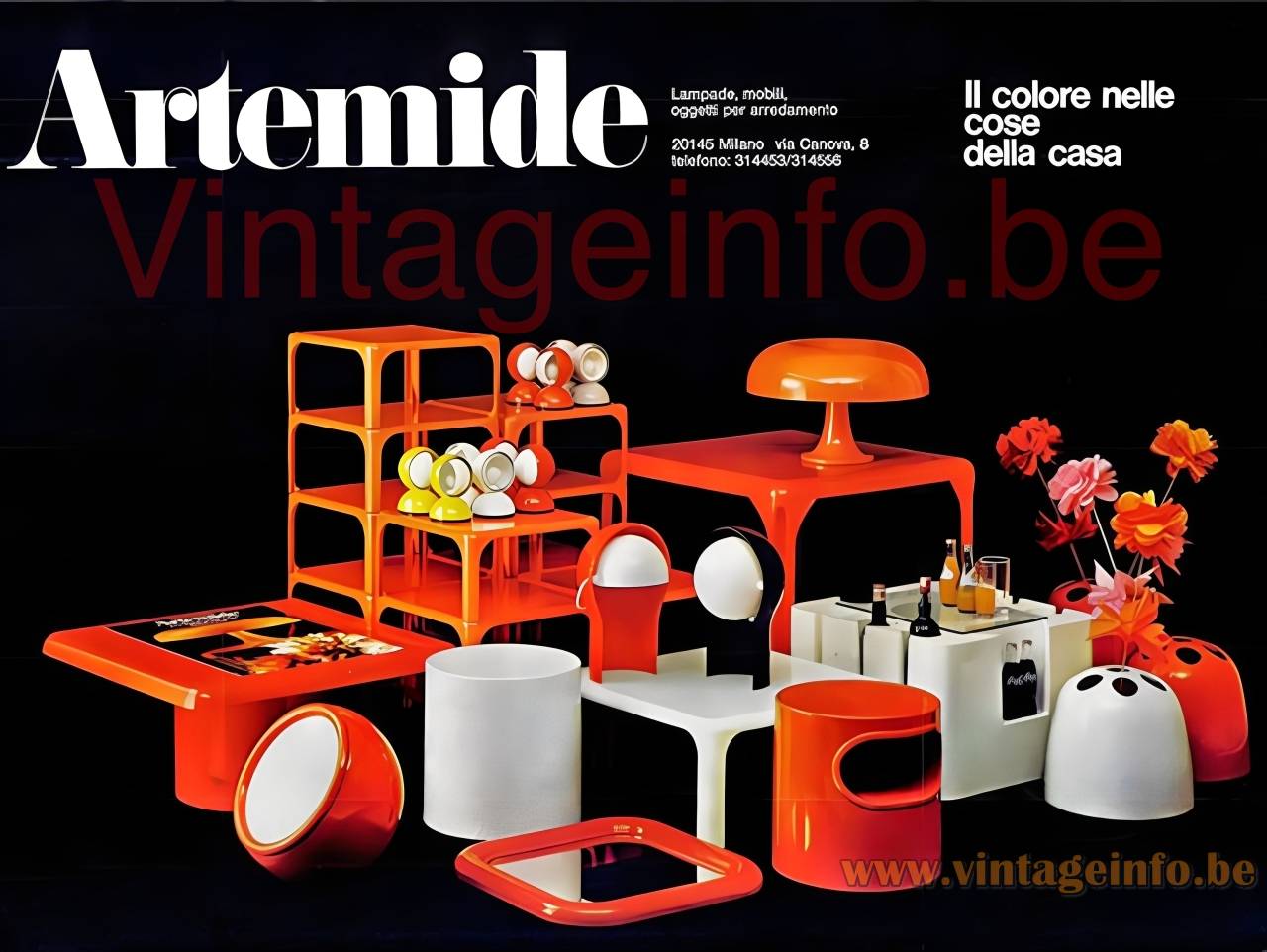
Artemide Telegono Table Lamp – 1960s Advertisement
1960s add with many of the Artemide icons: The Nesso table lamp, designed bt Giancarlo Mattioli & Gruppo Architetti Urbanisti Città Nuova, the Pallade floor lamp, designed by Studio Tetrarch. The Eclisse table lamp, the Arcadia, Elena and Demetrio tables designed by Vico Magistretti. The Bacco bar table and Delfo mirror designed by Sergio Mazza. And the Dedalo umbrella stand, the Giono Vano,Ara table, and the Giano Portavaso designed by Emma Gismondi Schweinberger.
Many thanks to Rok and Petra from TheFifthHandShop for the pictures. You can find their shop over here on Etsy.
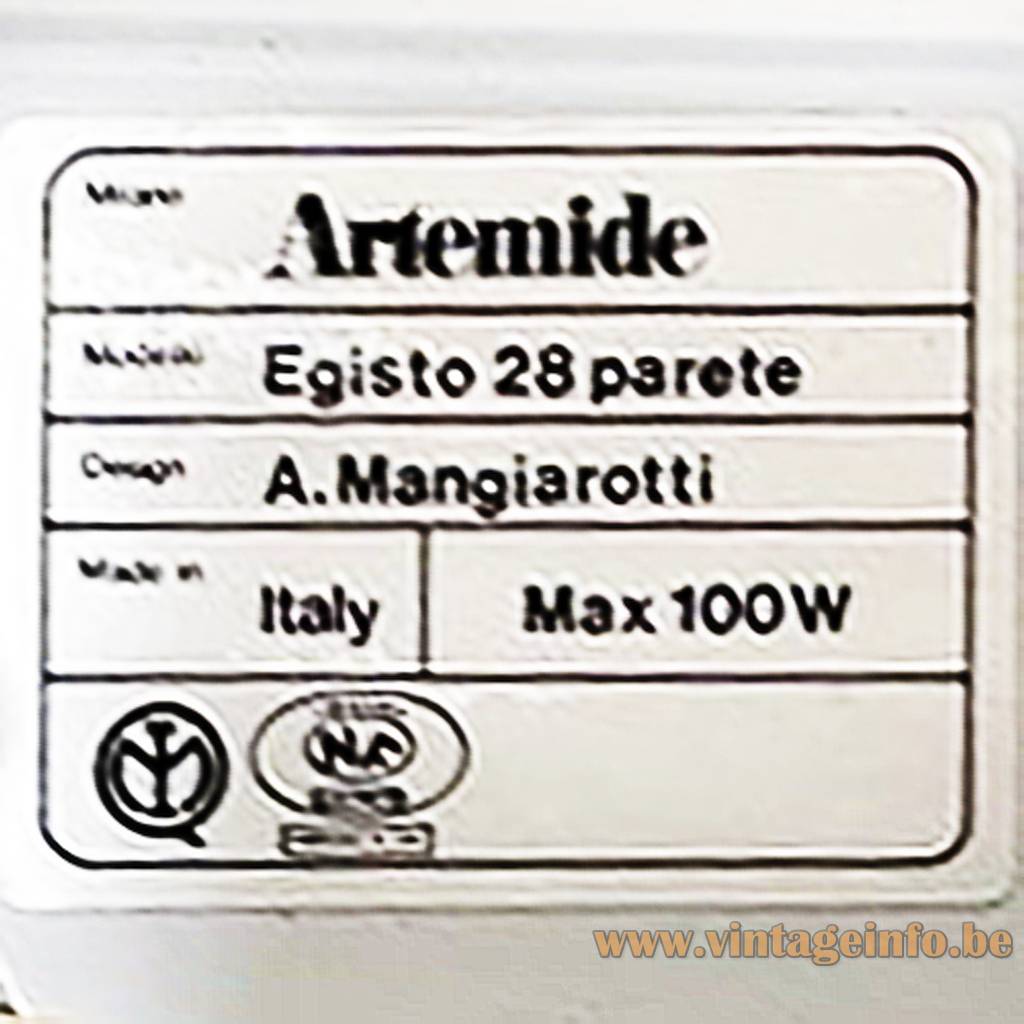
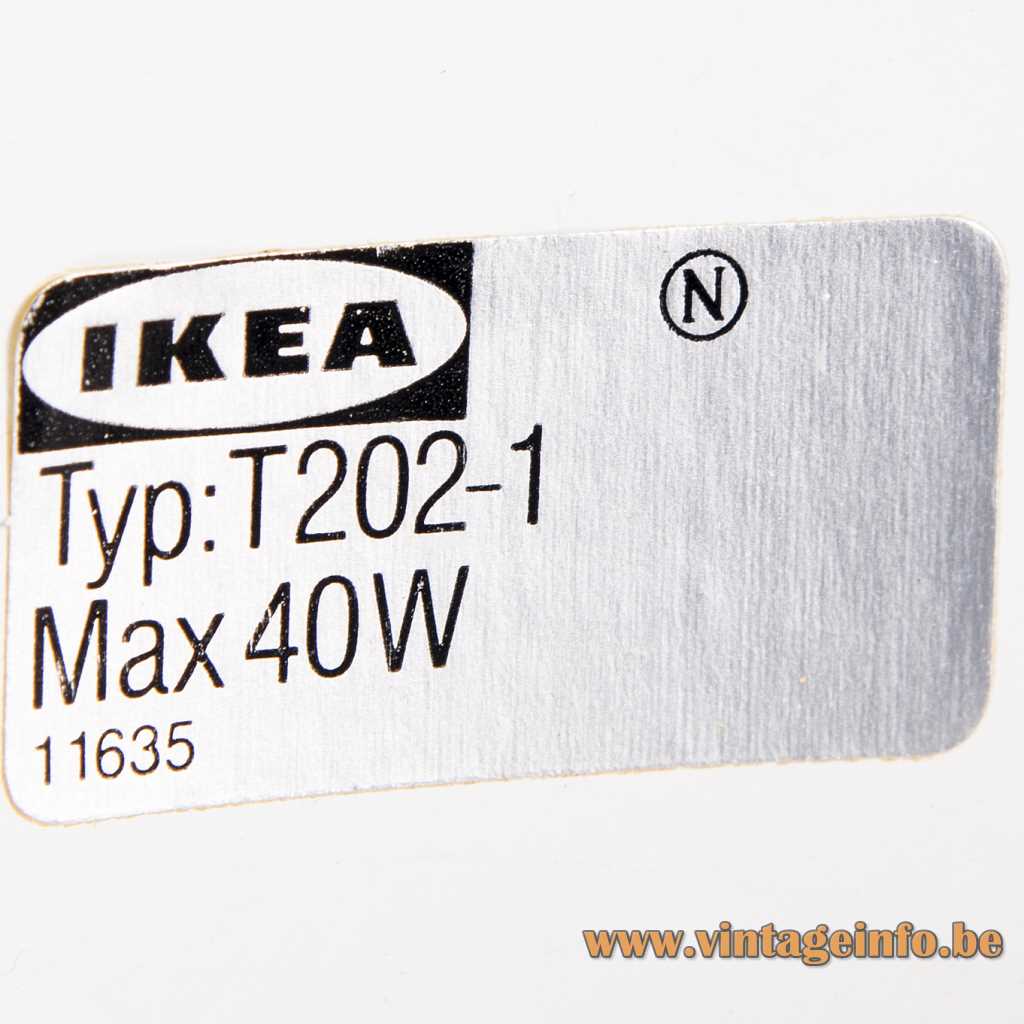
Artemide Telegono Table Lamp – Company Labels & Logos