- Categories
- Categories
Last 5 Viewed
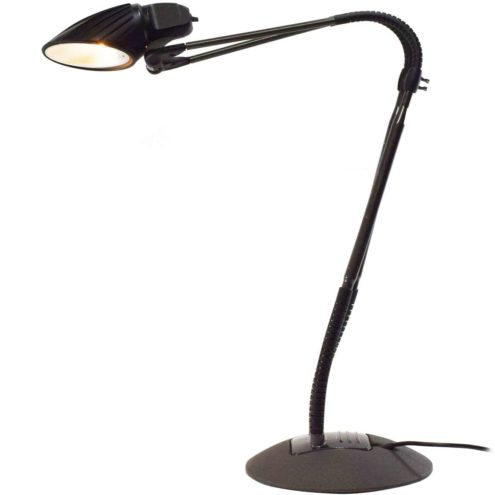
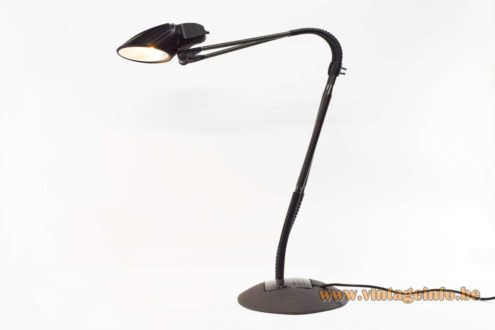
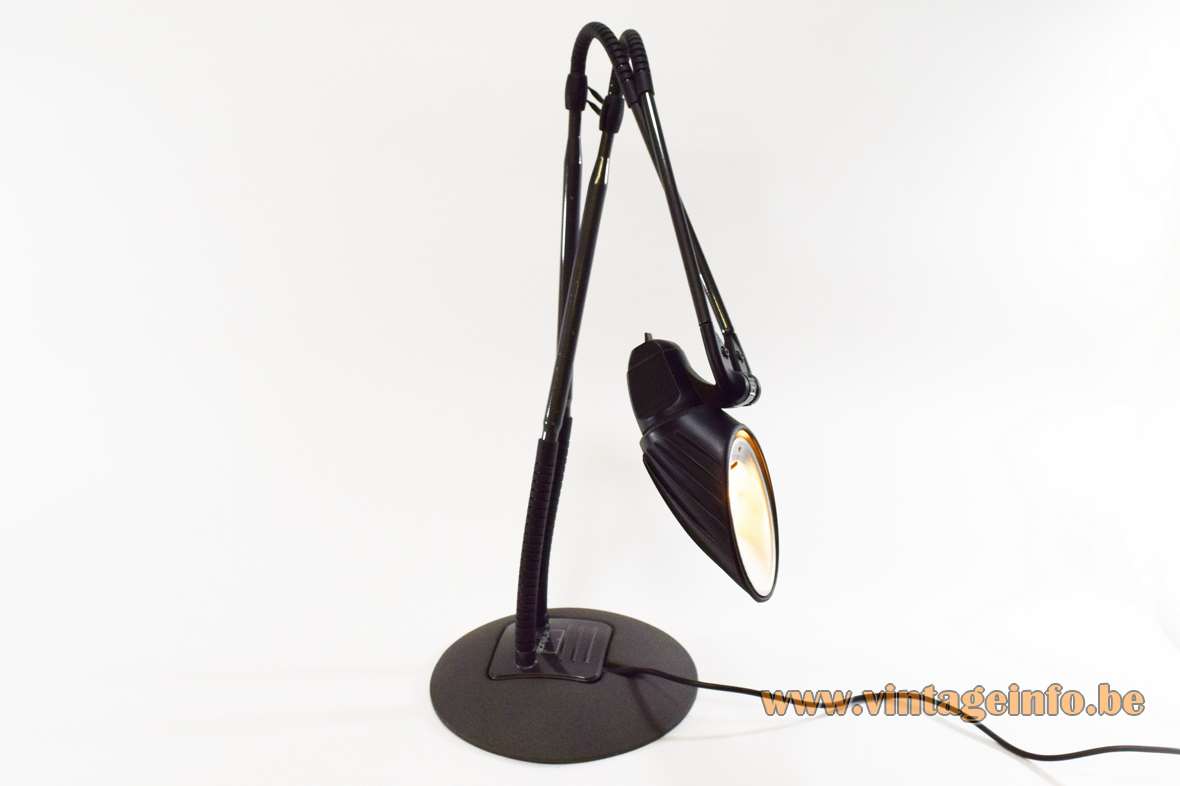
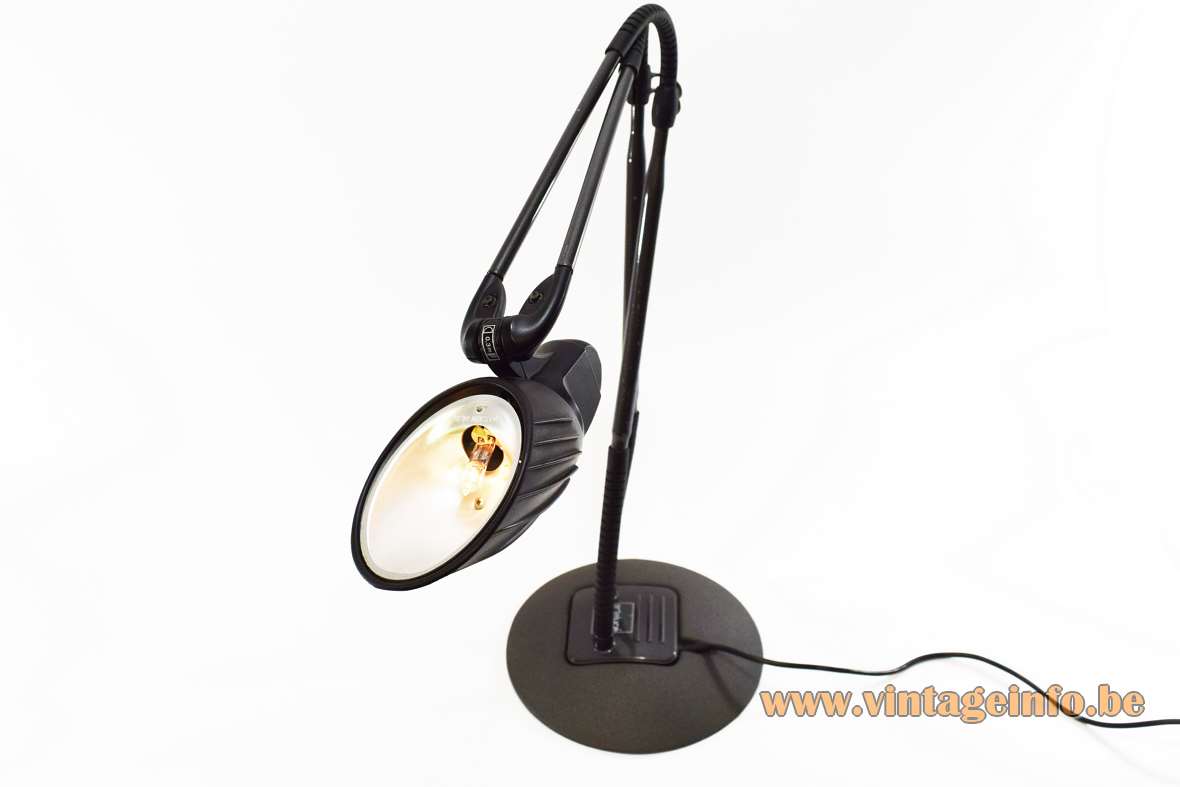
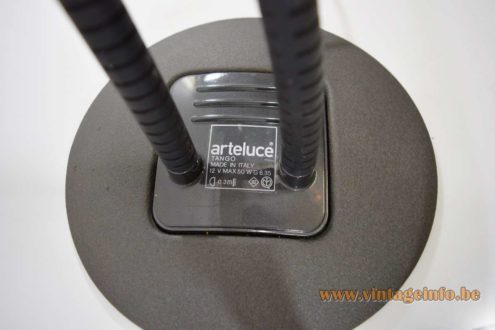
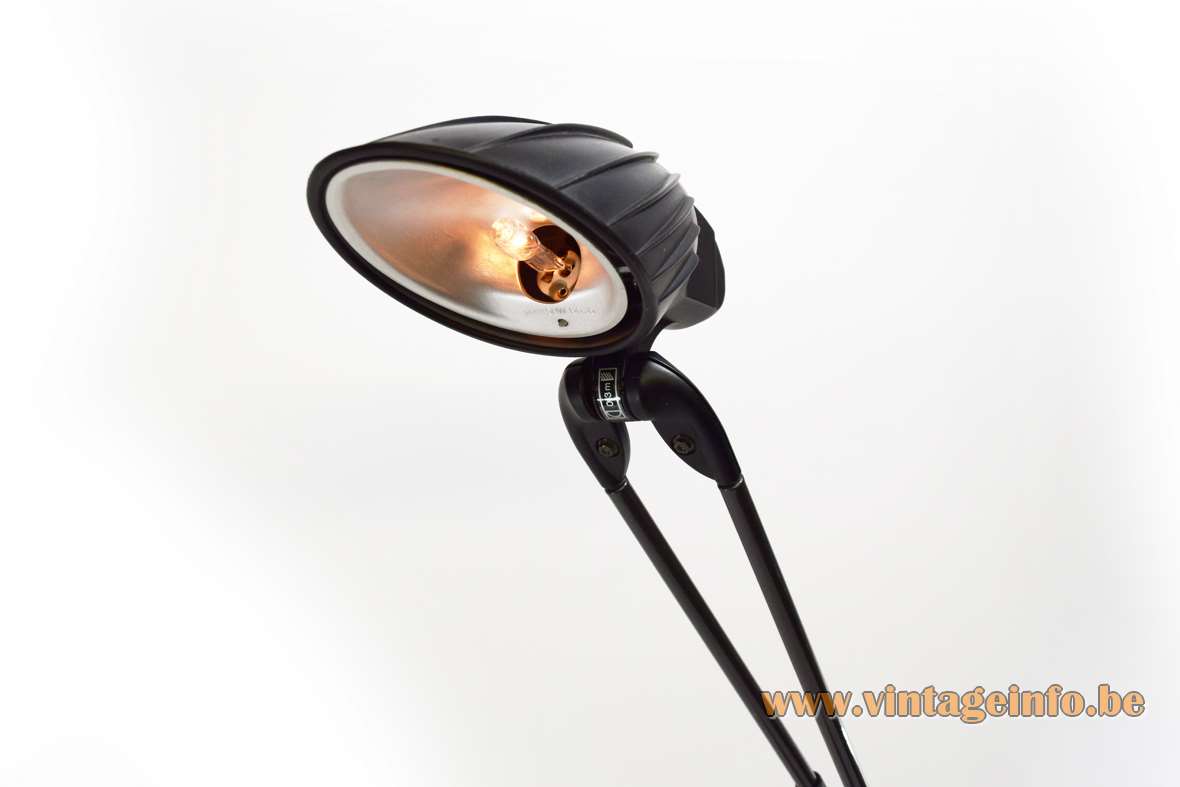
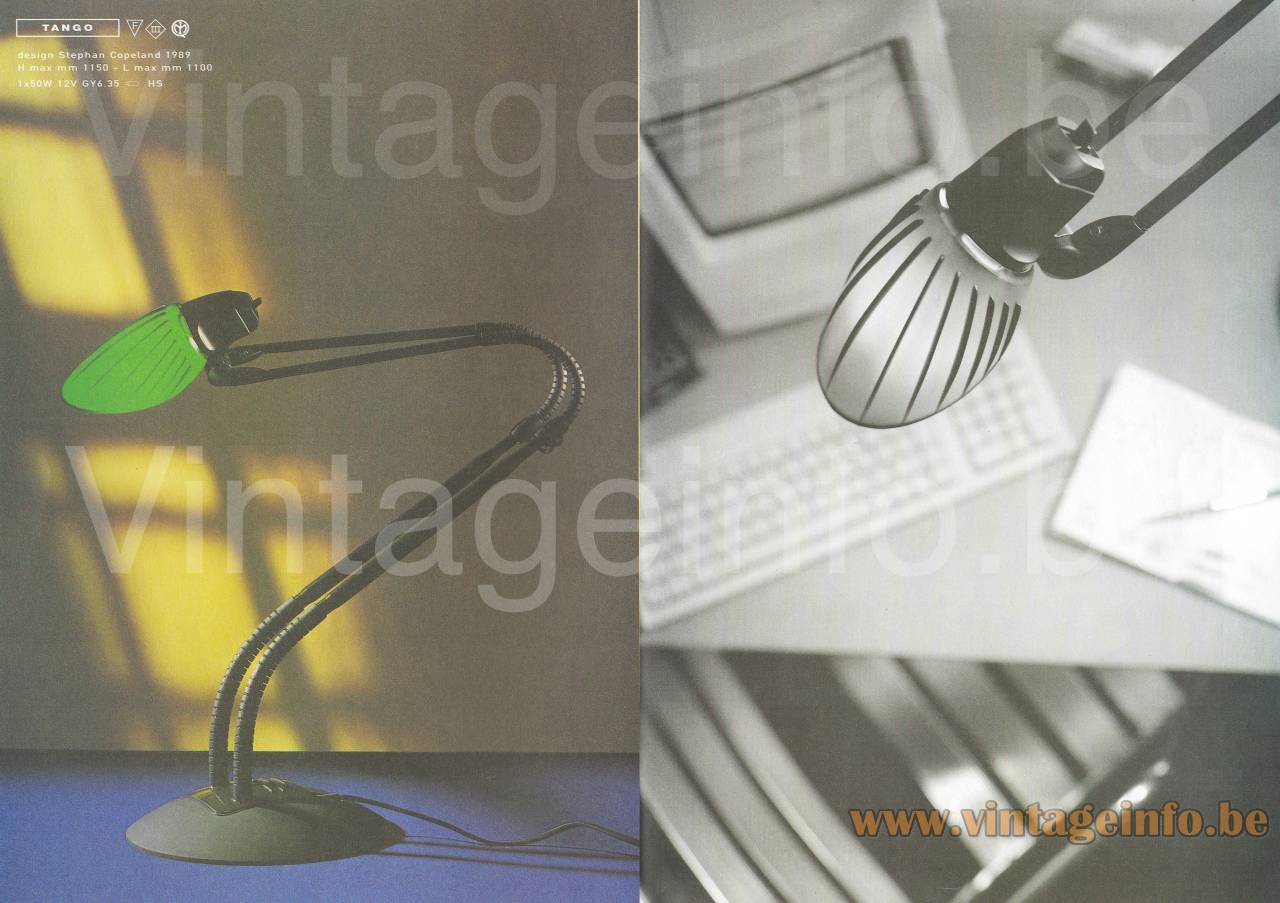
Arteluce Tango Desk Lamp – 1997 Catalogue Picture
Lamps In The Movies
The World Is Not Enough (1999)
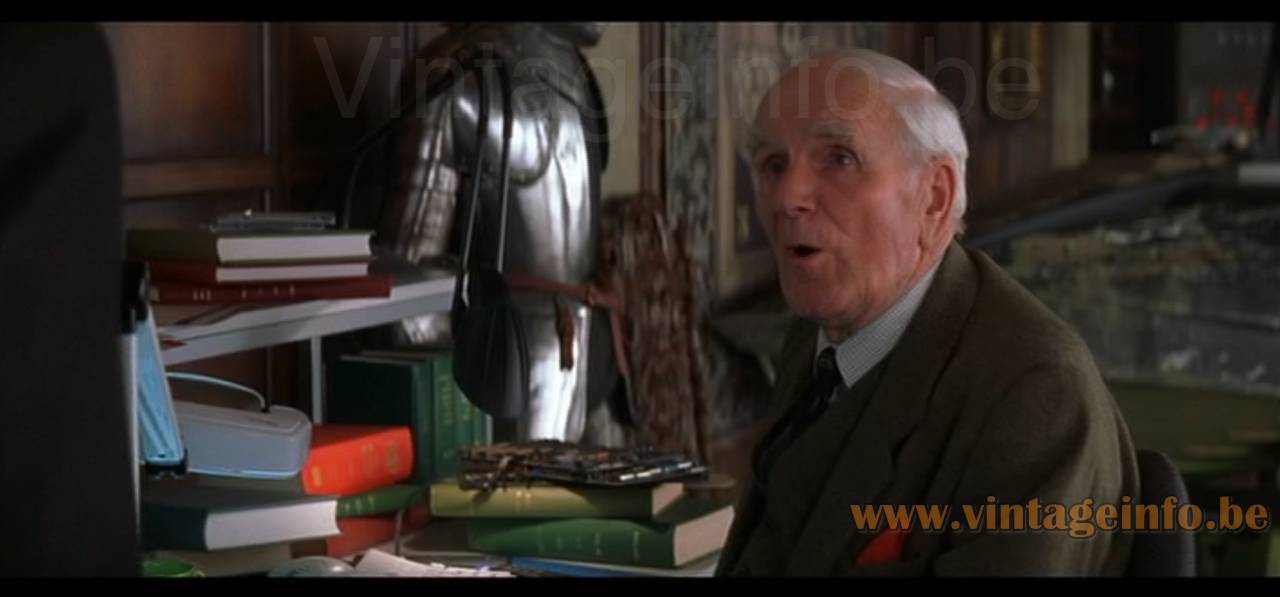
A black Arteluce Tango desk lamp was used as a set decoration in the 1999 action spy film The World Is Not Enough, the nineteenth in the James Bond series. Starring Pierce Brosnan, Sophie Marceau and Robert Carlyle. Here on the desk of Q, as portrayed by Desmond Llewelyn.
Meurtres à… (2014)
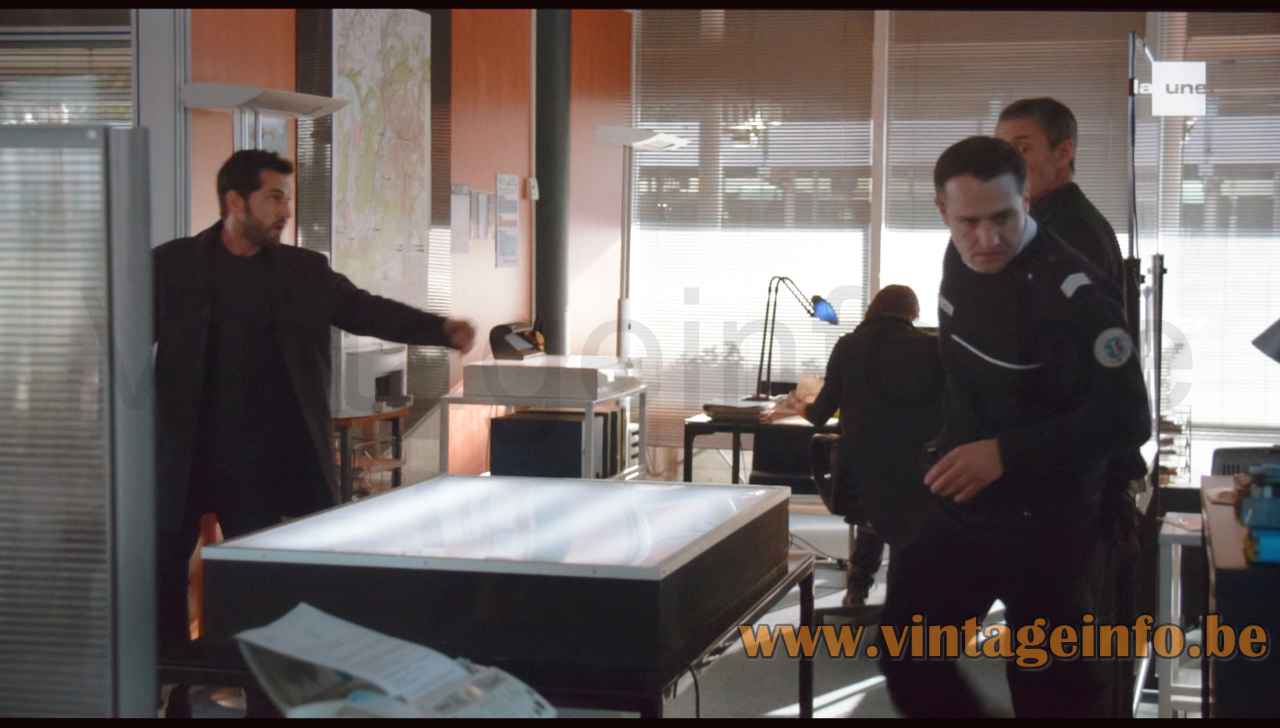
A blue Arteluce Tango desk lamp was used as a set decoration in the 2014 French Belgian TV series Meurtres à… (Murder At…). Here in season 1, episode 4, named Meurtres à l’Abbaye de Rouen (Murders at Rouen Abbey). Starring Isabel Otero and Frédéric Diefenthal.
Links (external links open in a new window)
Biography of Stephan Copeland on his website
Tango task lamp – the Stephan Copeland website
Arteluce in the Moma Museum New York
Gino Sarfatti bio – the FLOS website
Chandelier model 2097 – the FLOS website
Gino Sarfatti fanpage – Facebook
The World Is Not Enough (1999) James Bond Film – Wikipedia
The World Is Not Enough (1999) James Bond Film – IMDb
Meurtres à… TV Series (2013 – ) – IMDb
Vintageinfo
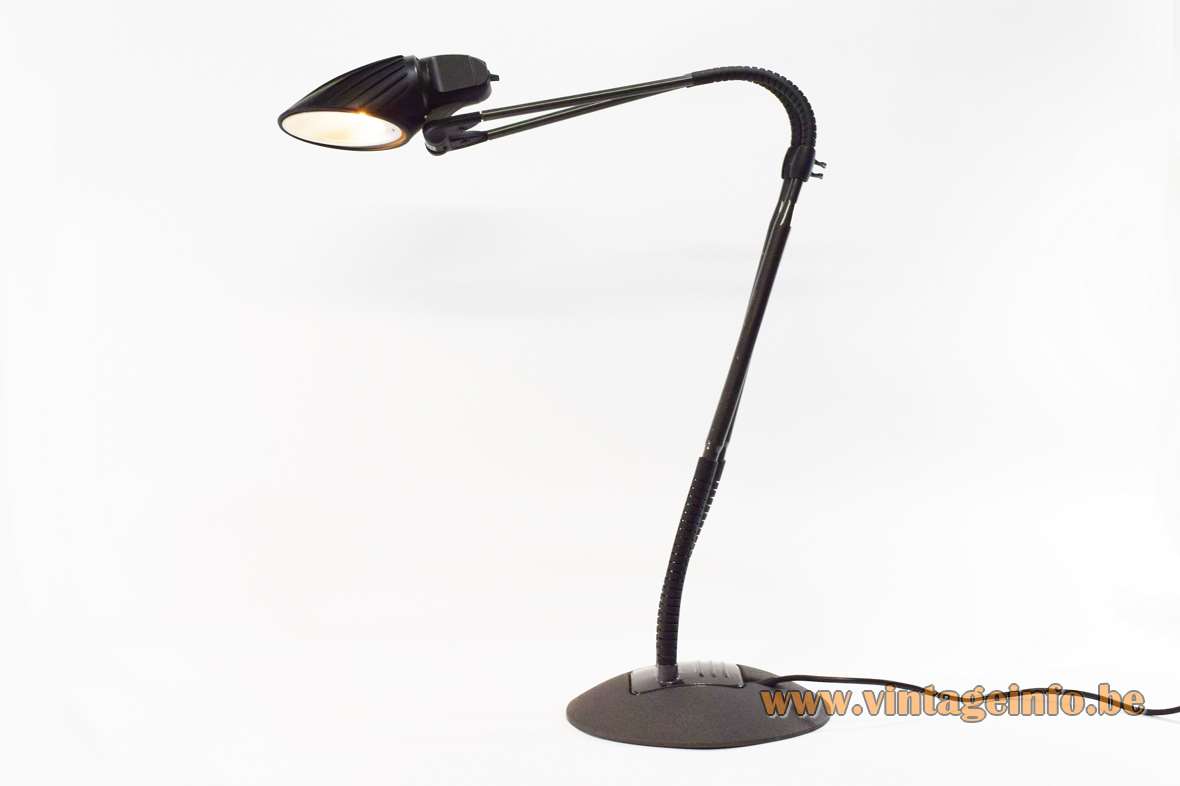
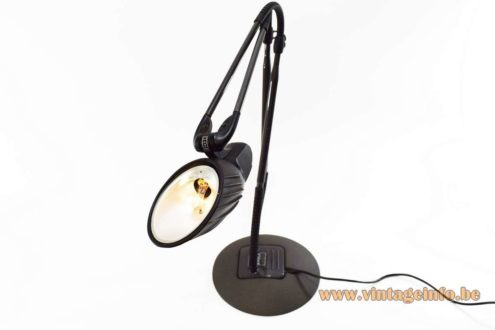
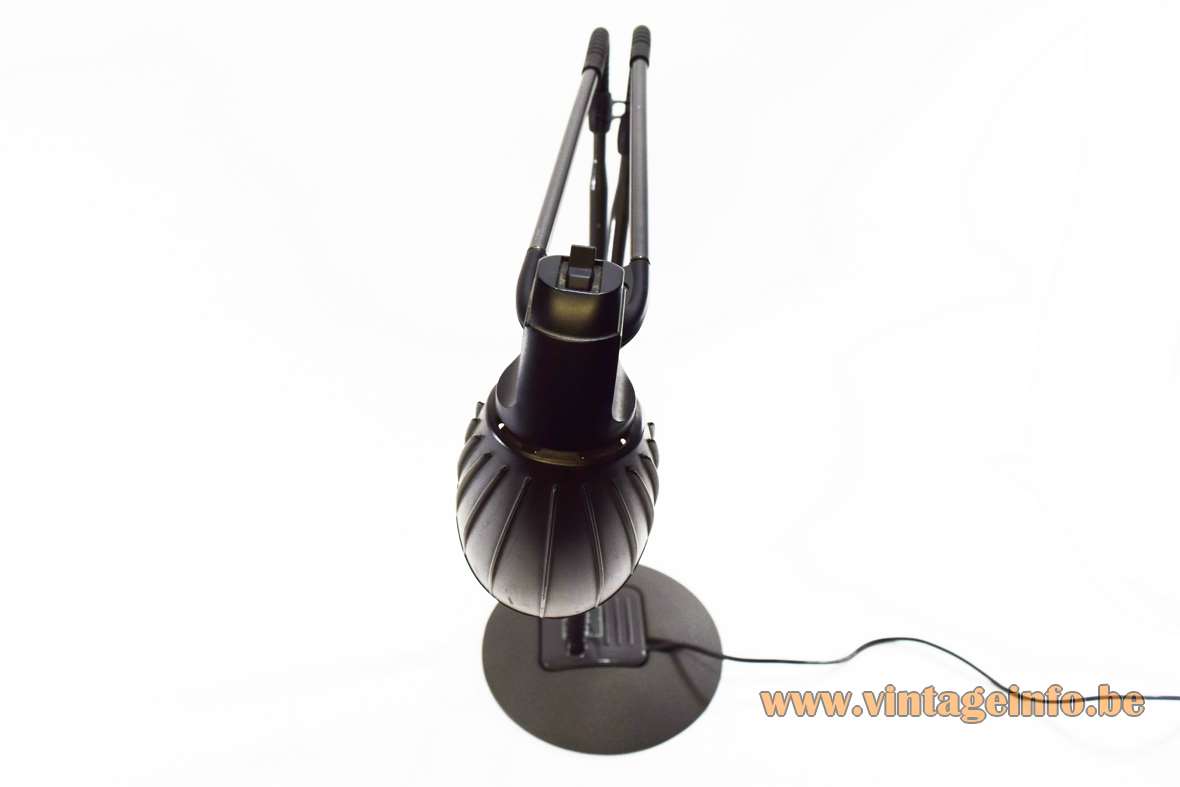
Arteluce Tango Desk Lamp
Materials: Round black-grey, anthracite, cast iron base. Plastic and rubber rods, tubes, metal inside. Elongated round Lampshade. Aluminium reflector. Porcelain G4 socket. Flexible revolving light, rotatable in all possible directions.
Lampshade: 21 x 10 cm / 8.26 x 3.93”
Max Height: 110 cm / 43.30”
Base: ∅ 24 cm / 9.44”
Electricity: 1 bulb G4 Halogen, 1 x 50 watt maximum, 12 volt/220 volt.
No specific type of light bulb is required; different types can be used.
Period: 1980s, 1990s.
Designer: Stephan Copeland in 1989.
Manufacturer:Arteluce, Via Spiga 23, 20121 Milan, Italy.
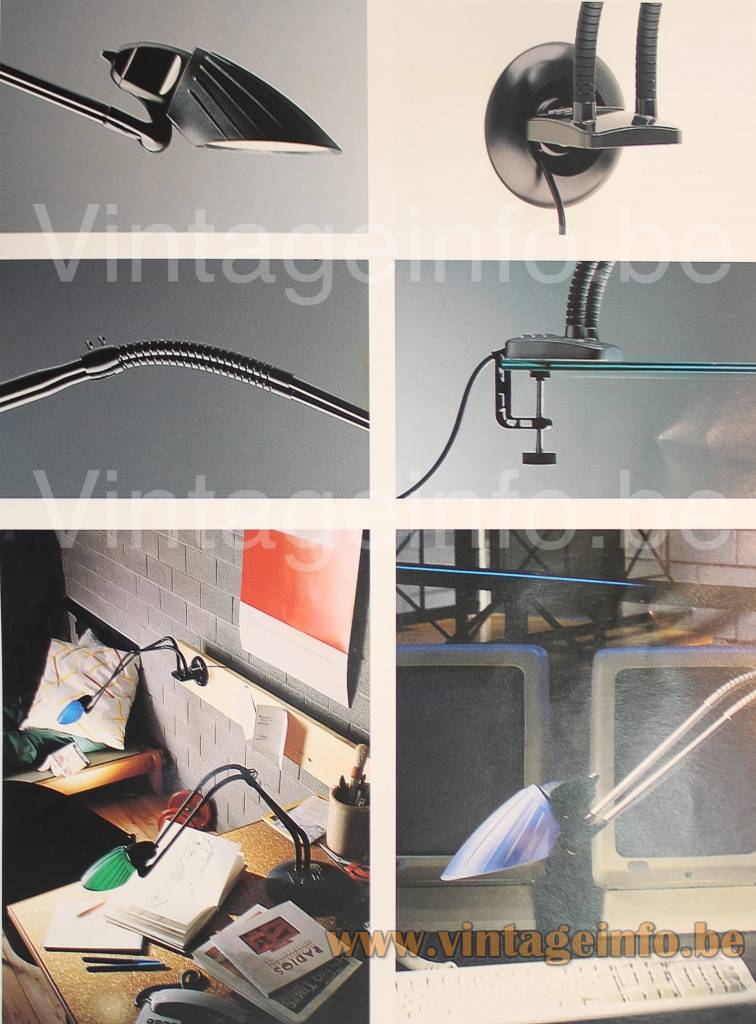
Other versions: The Arteluce Tango desk lamp comes in black with a black, green or blue lampshade and also in grey and grey with a white lampshade. Also made as a wall lamp and a clamp lamp, as you can see below.
These lamps have an external transformer that produces both 6 and 12 volts. The switch can thus be set to 3 positions. Low, high and off. It appears in Arteluce by FLOS catalogues until at least 1999.
Arteluce Tango Desk Lamp
Soon after its introduction, the Tango received significant international recognition. In the United States it was awarded the Gold Medal of the Institute of Business Designers, and it was highlighted in several design publications, including an in-depth presentation in MODO magazine and coverage in the New York Times. Reviewers praised the lamp’s anthropomorphic profile, its high level of mechanical resolution, and the playful yet functional flexibility of its shade and structure.
Stephan Copeland
Stephan Copeland was born in Montreal, Canada in 1960 from Irish parents and currently works in New York. Copeland has won several awards and been wildly published and exhibited for design innovation. He designed for FLOS, Knoll, Herman Miller, NASA and many more.
Text from his website about the lamp: “The Tango Lamp has received several international awards. With applications from the World Bank‘s Paris headquarters to James Bond films, Tango’s fluid functionality is unique among desk lamps.”
Within lighting design, Copeland is particularly associated with a series of technically sophisticated task lights in which movement is the central theme. Besides the Tango lamp for Arteluce, he developed several kinetic desk lights for major manufacturers, including the Copeland Light for Knoll and later the Amble LED task light for LightCorp. These lamps use articulated mechanisms, spring systems and gravity-balanced heads to allow light to be positioned with great freedom, shifting easily between focused and more diffuse illumination. Copeland often cites bicycles, toys and the moving human body as references for this work, and his lighting designs consistently aim to make mechanical complexity feel intuitive, playful and quietly ergonomic.
Arteluce Tango Desk Lamp – 1990 Catalogue Picture

Gino Sarfatti & Arteluce
Gino Sarfatti was born in Venice on 16 September 1912 and initially studied aero-naval engineering at the University of Genoa. He founded Arteluce in February 1939, a company that would become one of the most influential forces in Italian lighting design. Between 1937 and 1939, even before establishing the firm, Sarfatti created his first lighting models, and over the following decades he designed nearly 700 lamps. His work received numerous awards, including the Compasso d’Oro in 1954.
Arteluce quickly evolved into a reference point for modern lighting and collaborated with many of Italy’s most important designers. Among them were Franco Albini, Cini Boeri, Franca Helg, Antonio Macchi Cassia, Carlo Mollino, Vittorio Gregotti, Lodovico Meneghetti, Giotto Stoppino, Ico Parisi, and Massimo Vignelli.
In late 1973 Sarfatti sold Arteluce to FLOS and retired to his home in Griante, on Lake Como. He passed away on 6 March 1985 in Gravedona, Como. Today, several of his designs remain in production, most notably the chandelier Model 2097 from 1957, available in versions with 18, 30, or 50 bulbs.
FLOS and the continuation of Arteluce
FLOS was founded in 1960 in Merano, where designers and manufacturers experimented with new materials such as Cocoon, introduced by Arturo Eisenkeil. Throughout the 1960s and 1970s the company expanded rapidly, and in 1974 FLOS acquired Arteluce, integrating Sarfatti’s legacy into its own catalogue.
As a result, a number of Arteluce models—particularly those by Gino Sarfatti—continued their production lifecycle under the FLOS name. This acquisition ensured that Arteluce’s most significant designs remained available long after the original company ceased operations.
Today FLOS is still considered one of the leading lighting manufacturers, and the incorporation of Arteluce’s heritage remains an important chapter in its history. Since about the beginning of the century, the name Arteluce has no longer been used by FLOS, and the remaining models are now marketed solely under the FLOS brand.
Arteluce Tango Desk Lamp – 1993 Catalogue Picture
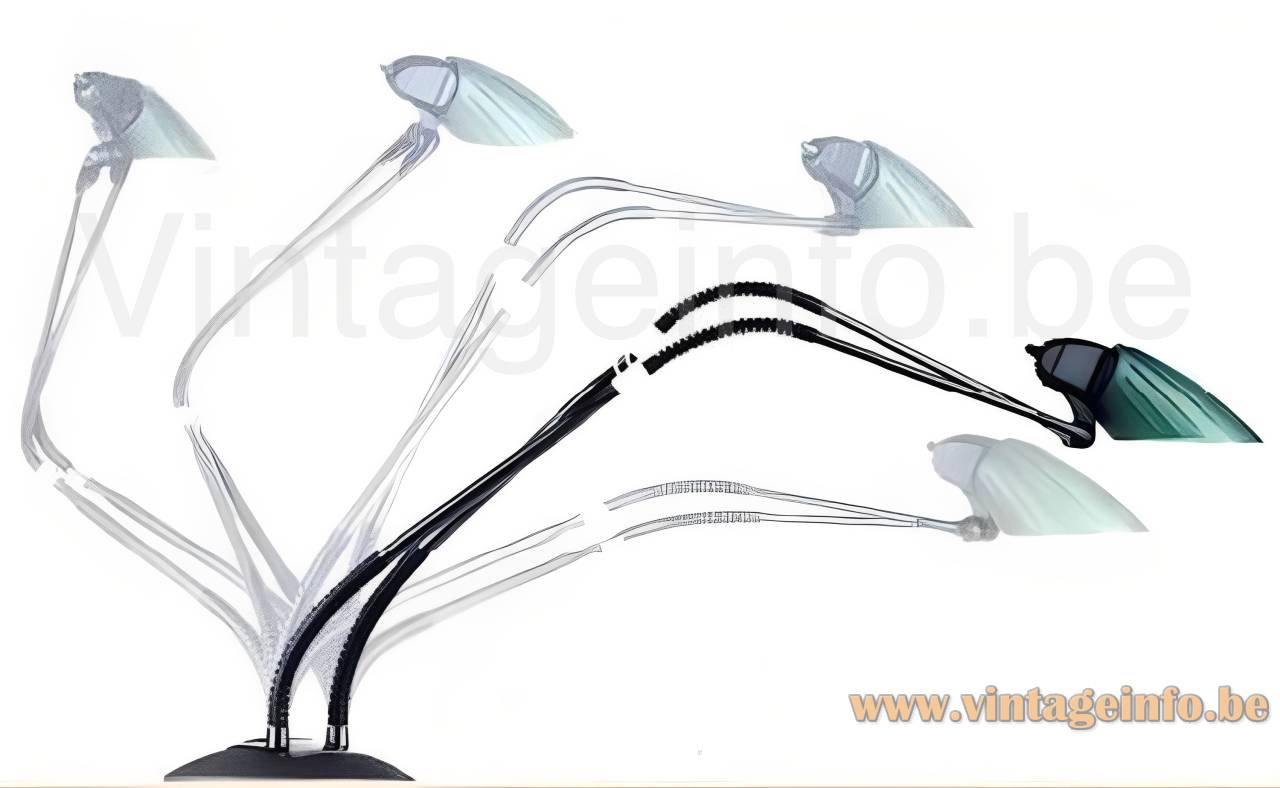
Arteluce Tango Desk Lamp – 1990 Catalogue Picture
Arteluce Tango desk lamp catalogue picture of the wall lamp and the clamp lamp version.
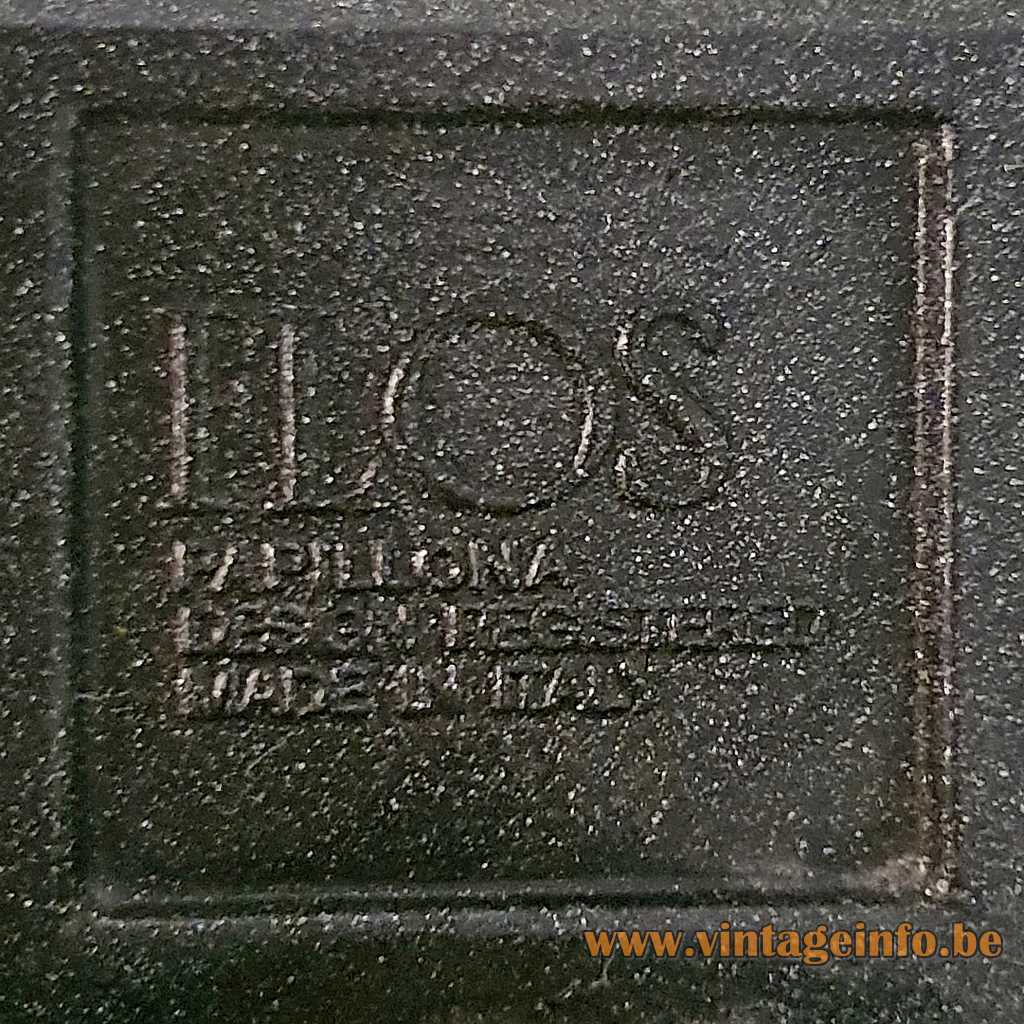
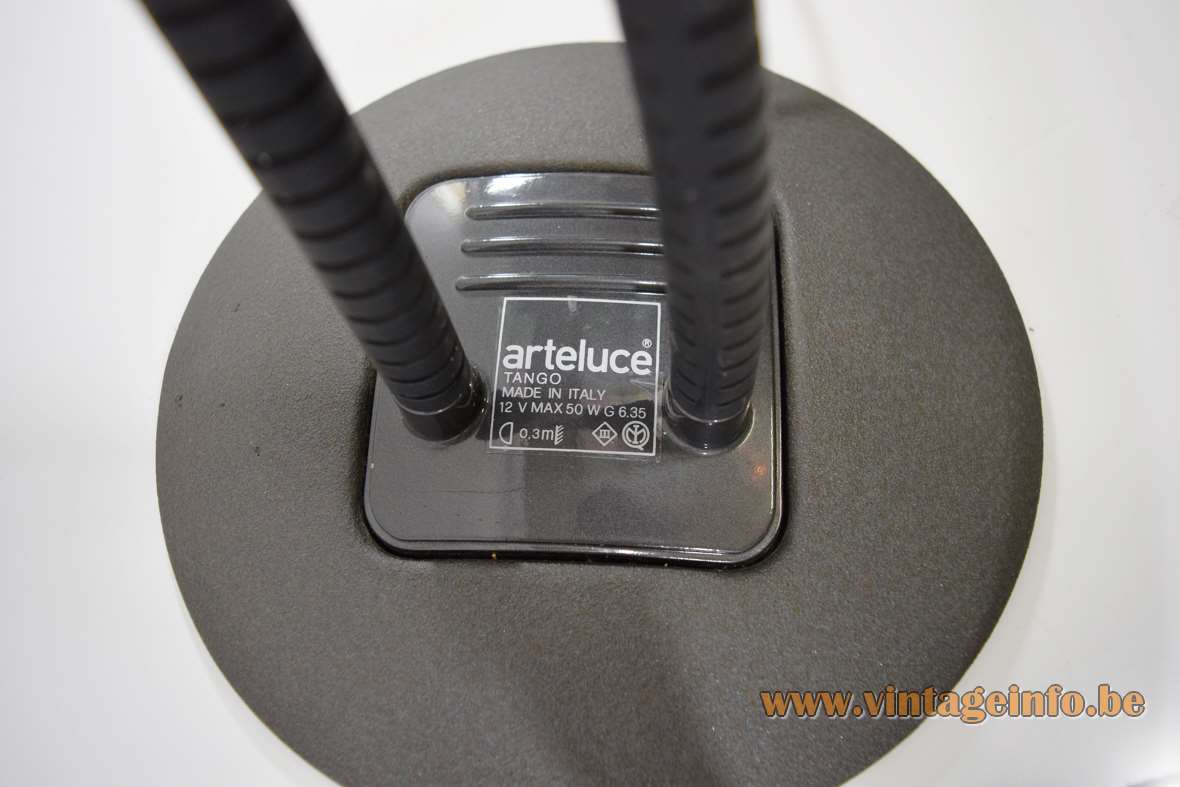
Arteluce Tango Desk Lamp – Company Labels & Logos