- Categories
- Categories
Last 5 Viewed
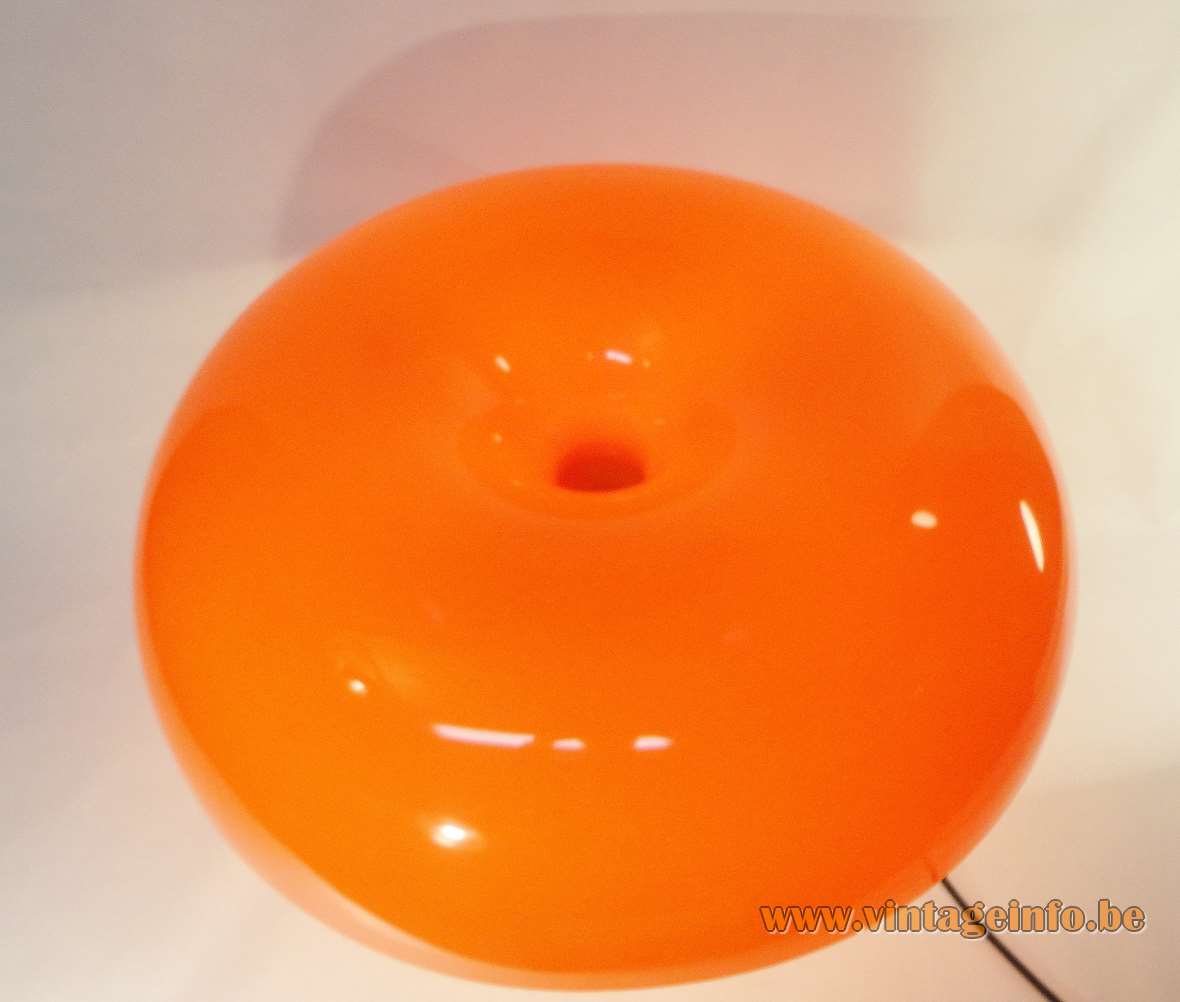
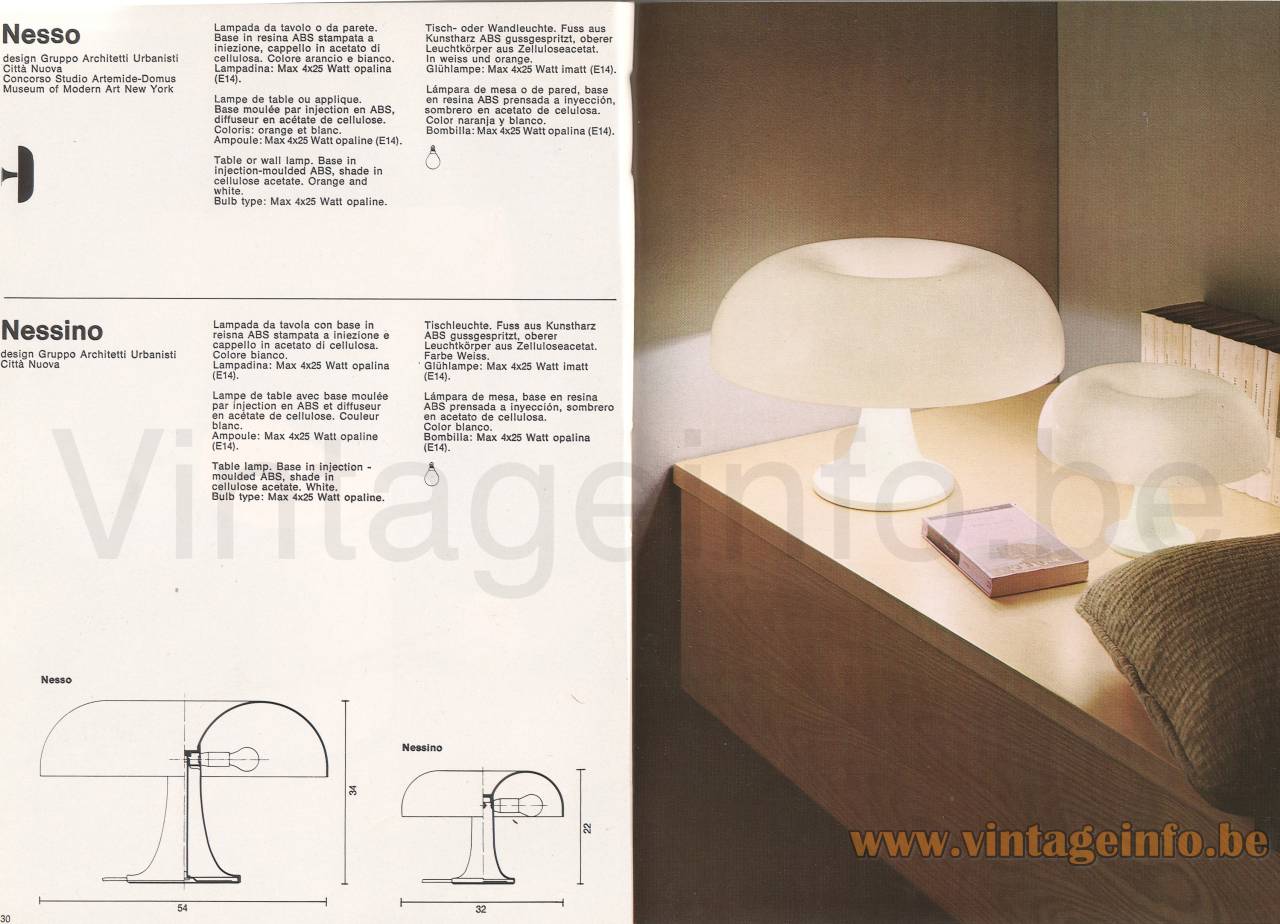
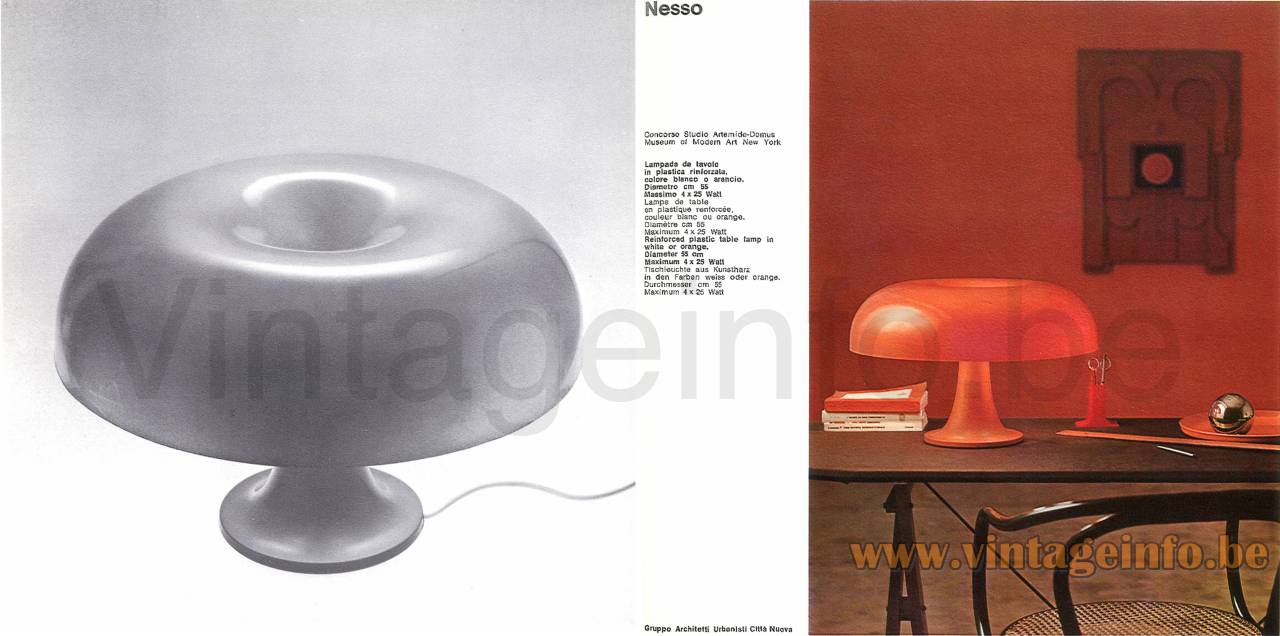
Artemide Nesso Table Lamp – 1976 Catalogue Picture
The Artemide Nesso and Nessino table lamps in the 1976 catalogue with a scheme and the dimensions.
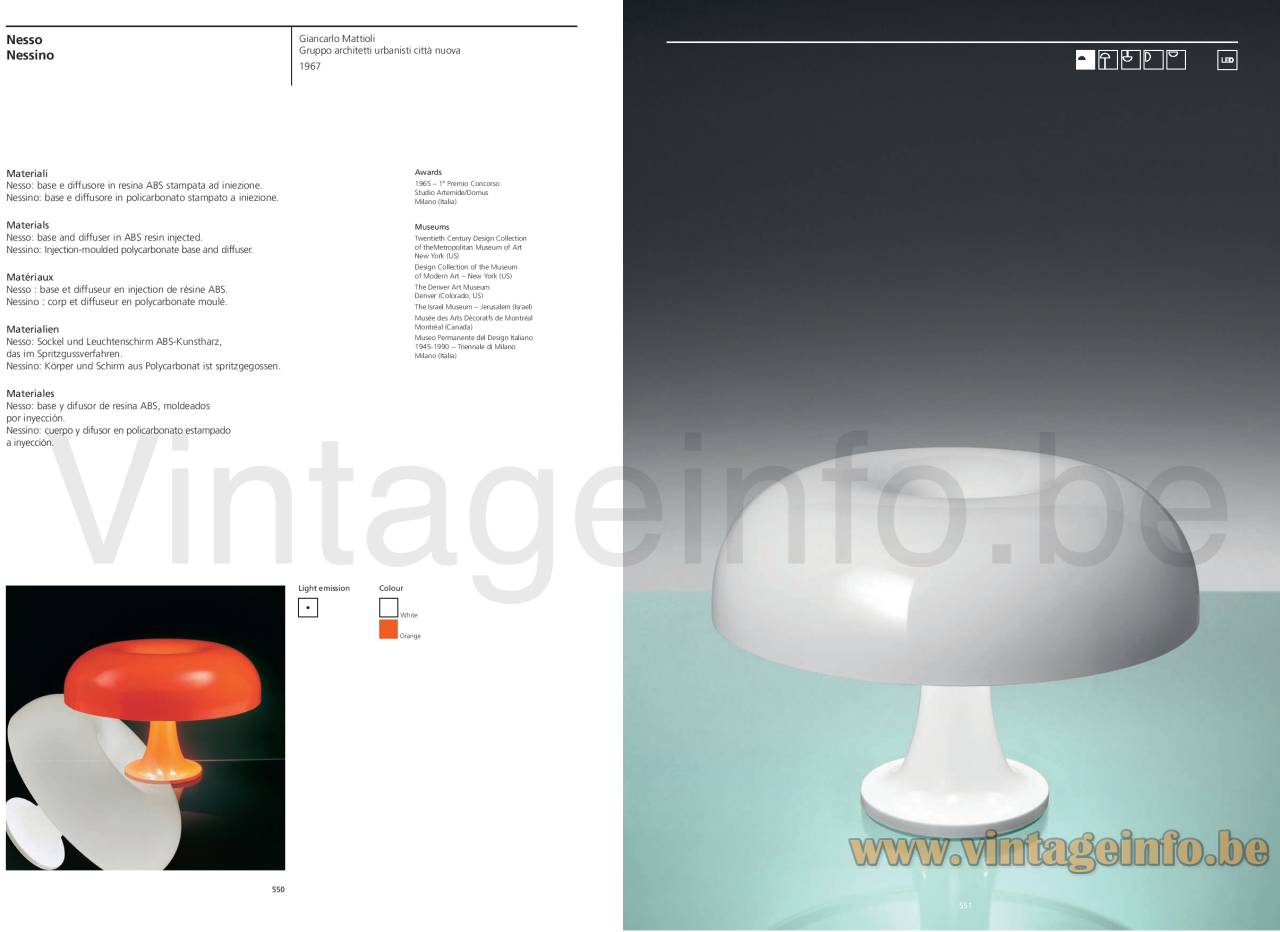
Artemide Nesso Table Lamp – 2017 Catalogue Picture
The Artemide Nesso and Nessino table lamps in the 2017 catalogue. It’s nice to see how catalogues are made some 50 years later.
Lamps In The Movies!
Tutto l’Amore Che C’è (2000)
An Artemide Nesso table lamp appears in the 2000 Italian film Tutto l’Amore Che C’è (All the Love There Is). It was directed by Sergio Rubini. Several design lamps appear in this movie as you can see below in a fragment on YouTube: The Chimera table and floor lamp and also the Lesbo table lamp, all by Artemide. Several other lamps such as the Harvey Guzzini Brumbry also appear in the movie.
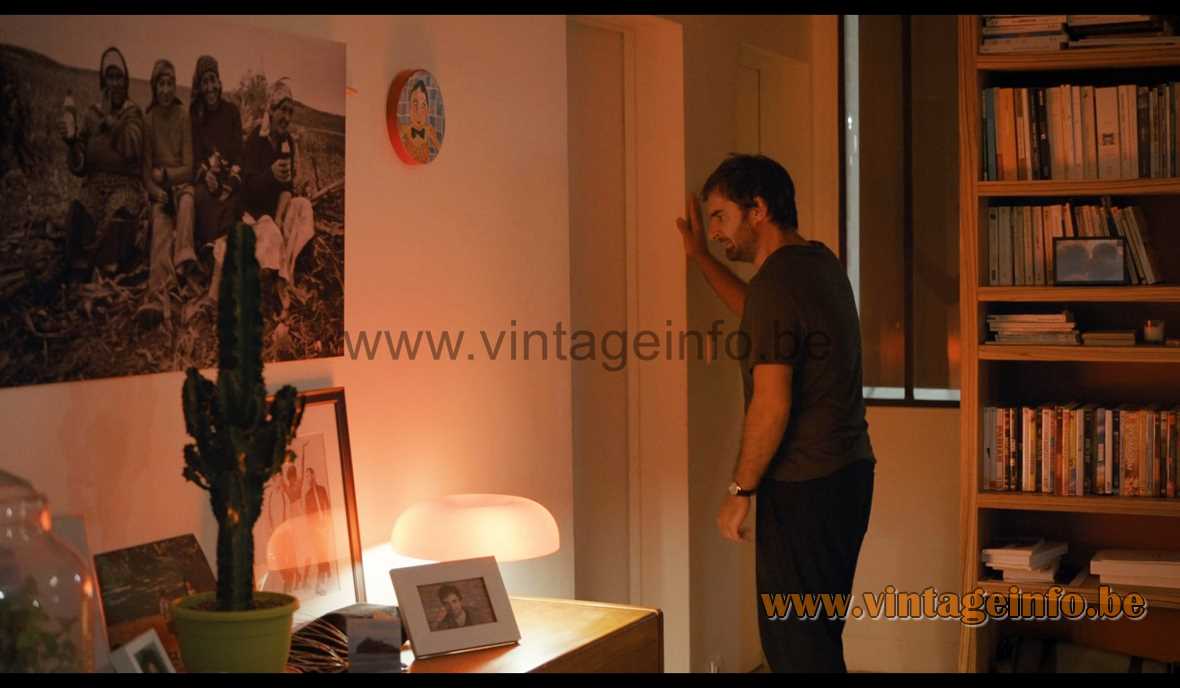
Dix Pour Cent (2017)
A white Artemide Nesso table lamp was used as a set decoration in the French TV series Dix Pour Cent (10%). English name: Call my agent. The Nesso table lamp appears in episode 5 of season 2 (2017). Guest stars in this episode: Guy Marchand and Julien Doré.
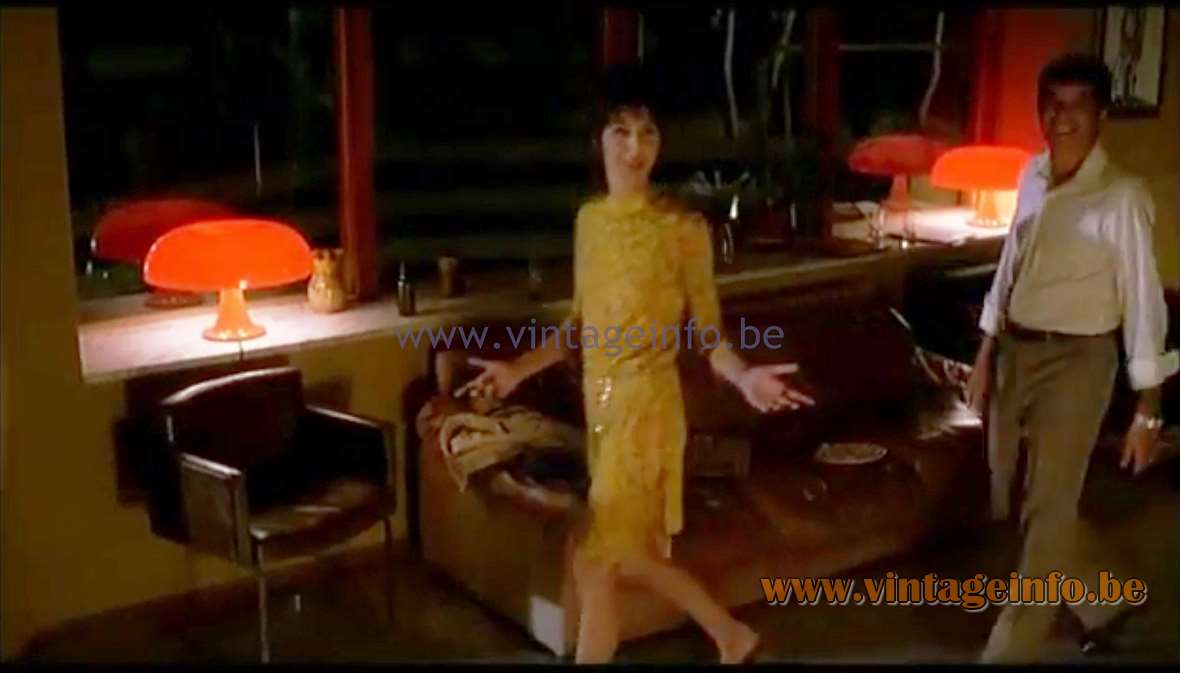
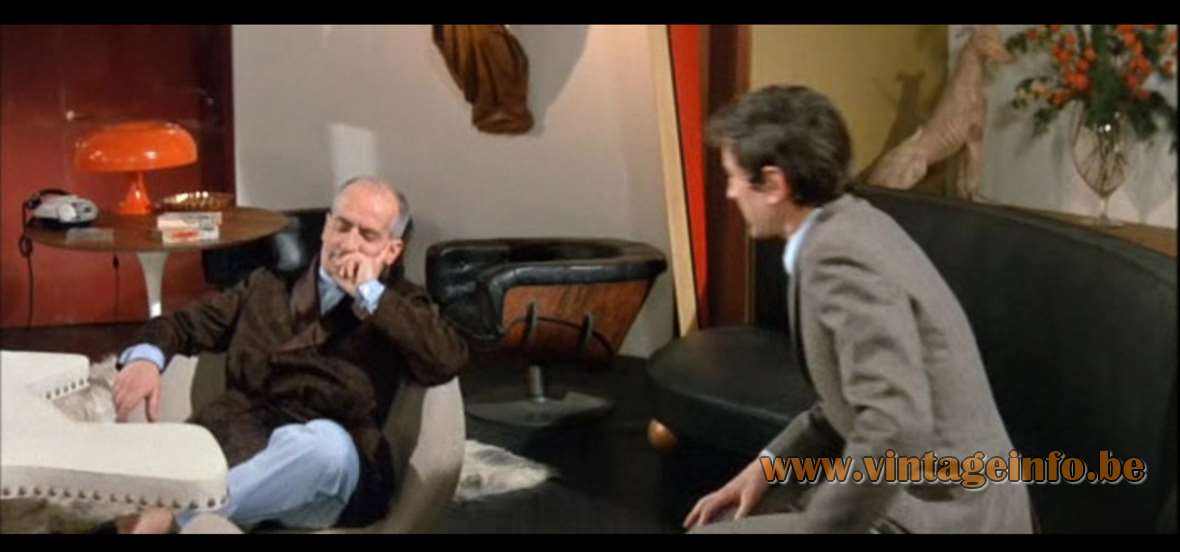
Oscar (1967)
An orange Artemide Nesso table lamp was used as a set decoration in the Edouard Molinaro comedy film Oscar from 1967. A movie with French comedy actor Louis de Funès (1914-1983). Several other lamps by Raak Amsterdam, Maison Jansen and others were used in this film.
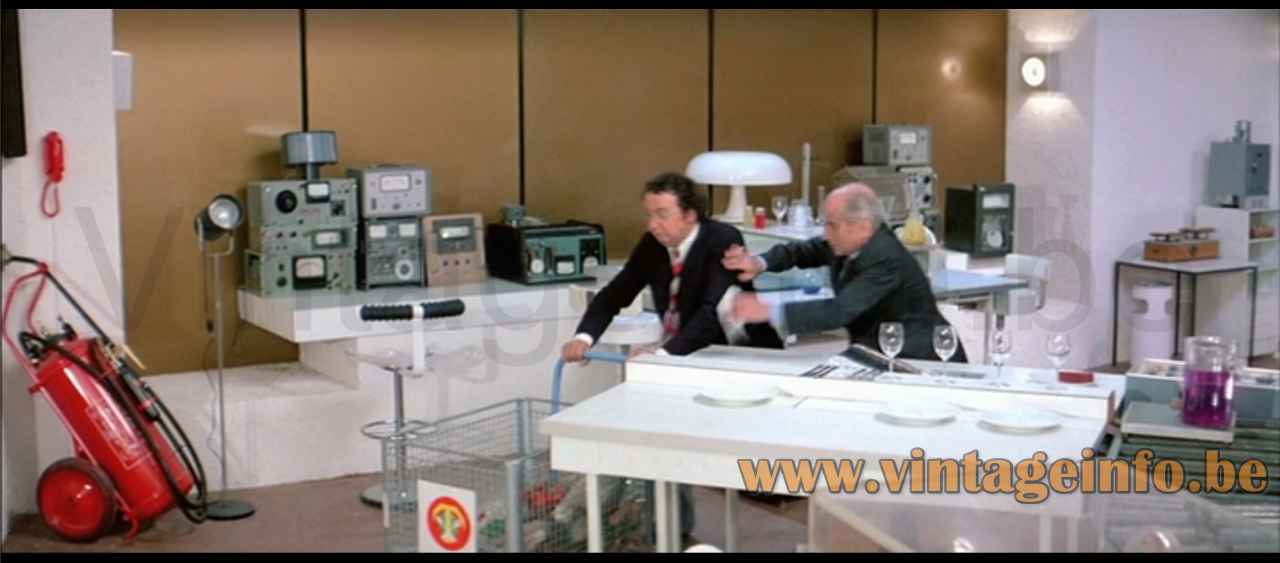
L’Aile ou la Cuisse (1976)
A white Artemide Nesso table lamp was used as a set decoration in the famous 1976 French comedy L’Aile ou la Cuisse (The Wing or the Thigh). Starring Louis De Funès and Coluche.
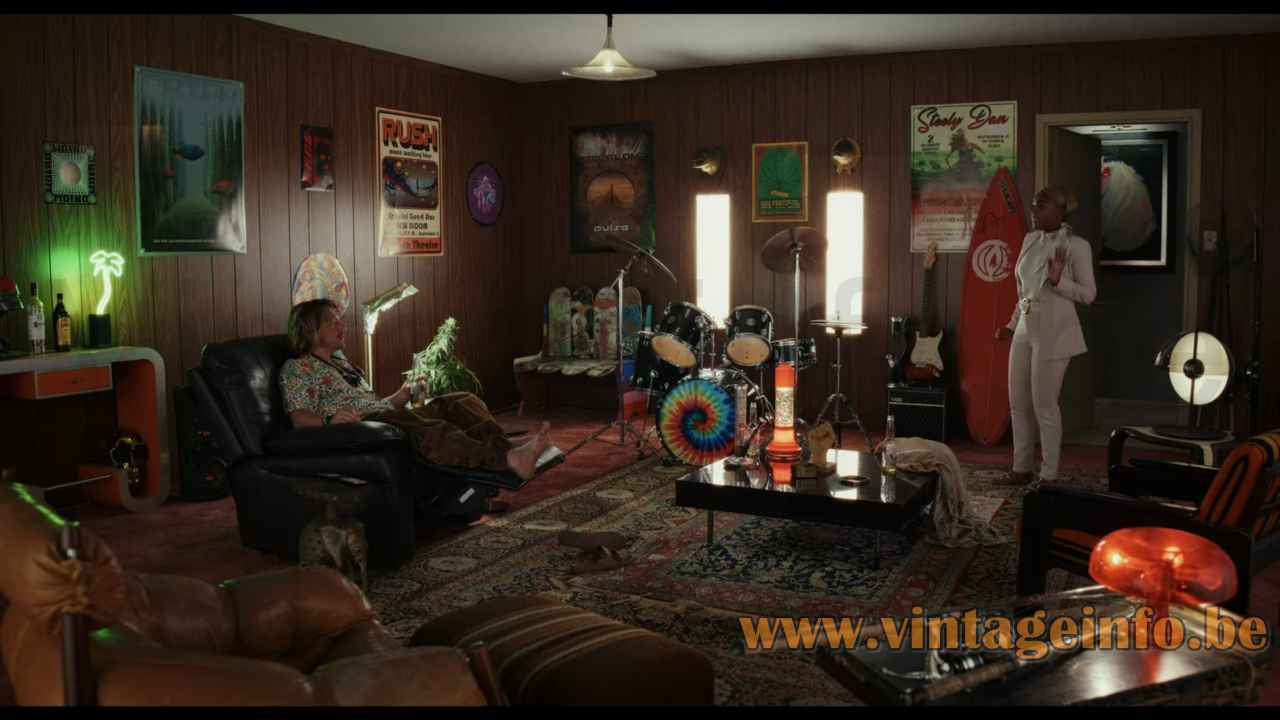
Glass Onion: A Knives Out Mystery (2022)
An Artemide Nesso table lamp (or is it a Nessino?) was used as a set decoration in the 2022American mystery film Glass Onion: A Knives Out Mystery. Starring Daniel Craig, Edward Norton and Janelle Monáe.
Links (external links open in a new window)
The Nesso table lamp in the MoMA Museum New York
The Nesso table lamp – Artemide website
Giancarlo Mattioli – Artemide website
Tutto l’amore che c’è (2000) film – Wikipedia
L’aile ou la cuisse (1976) – IMDb
L’aile ou la cuisse (1976) – Wikipedia
The Heineken Kidnapping (2011) film – Wikipedia
The Sicilian Clan (1969) film – Wikipedia
Dix Pour Cent (2015 – ) TV series – IMDb
9 Mois Ferme (2013) film – Wikipedia
9 Mois Ferme (2013) film – IMDb
Kramer vs. Kramer (1979) film – Wikipedia
Kramer vs. Kramer (1979) film – IMDb
Glass Onion: A Knives Out Mystery (2022) film – Wikipedia
Glass Onion: A Knives Out Mystery (2022) film – IMDb
Vintageinfo
1976 Artemide studioA Catalogue
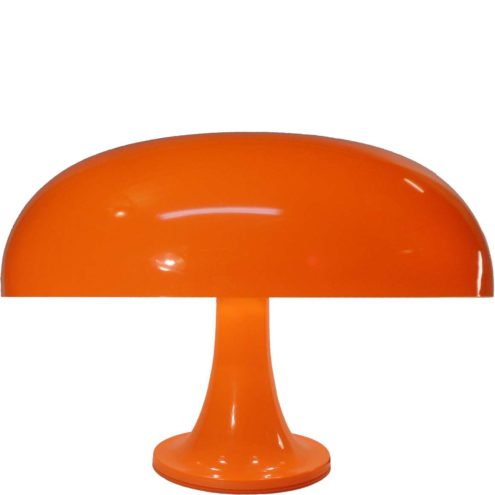
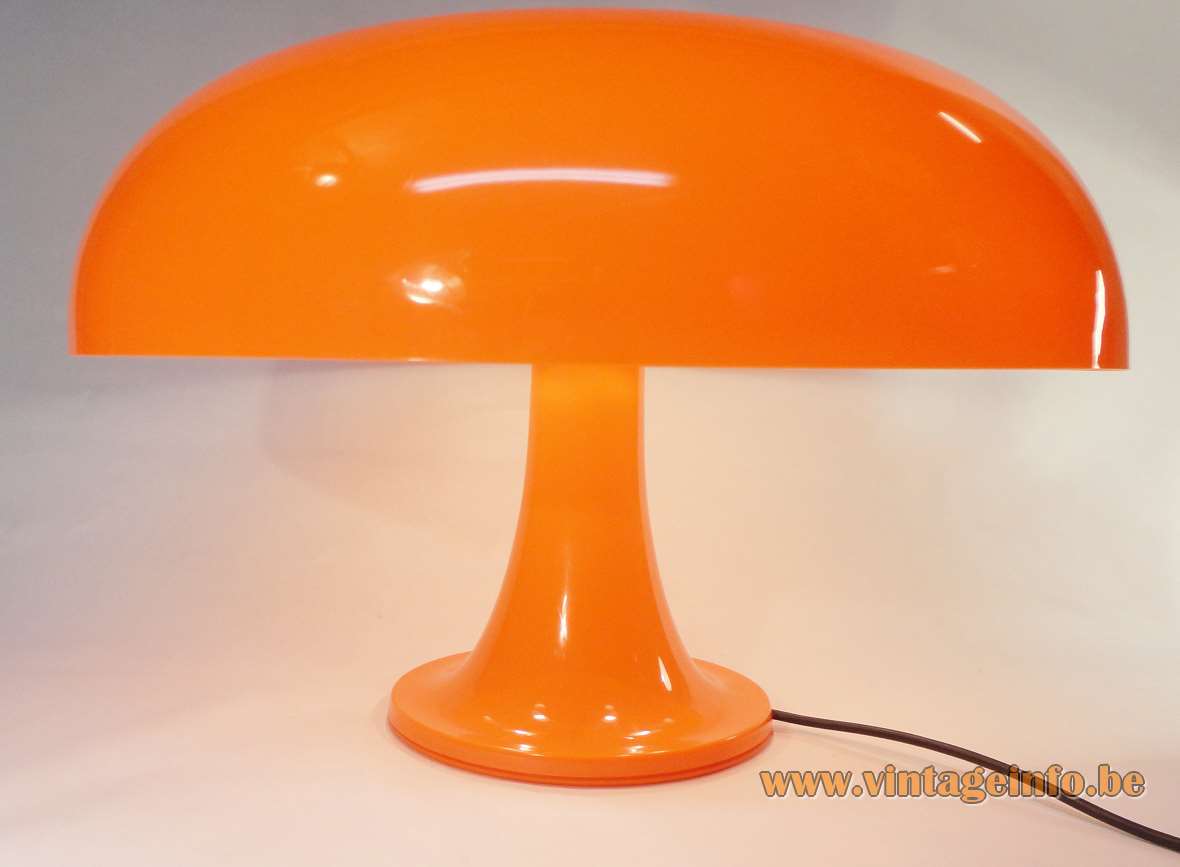
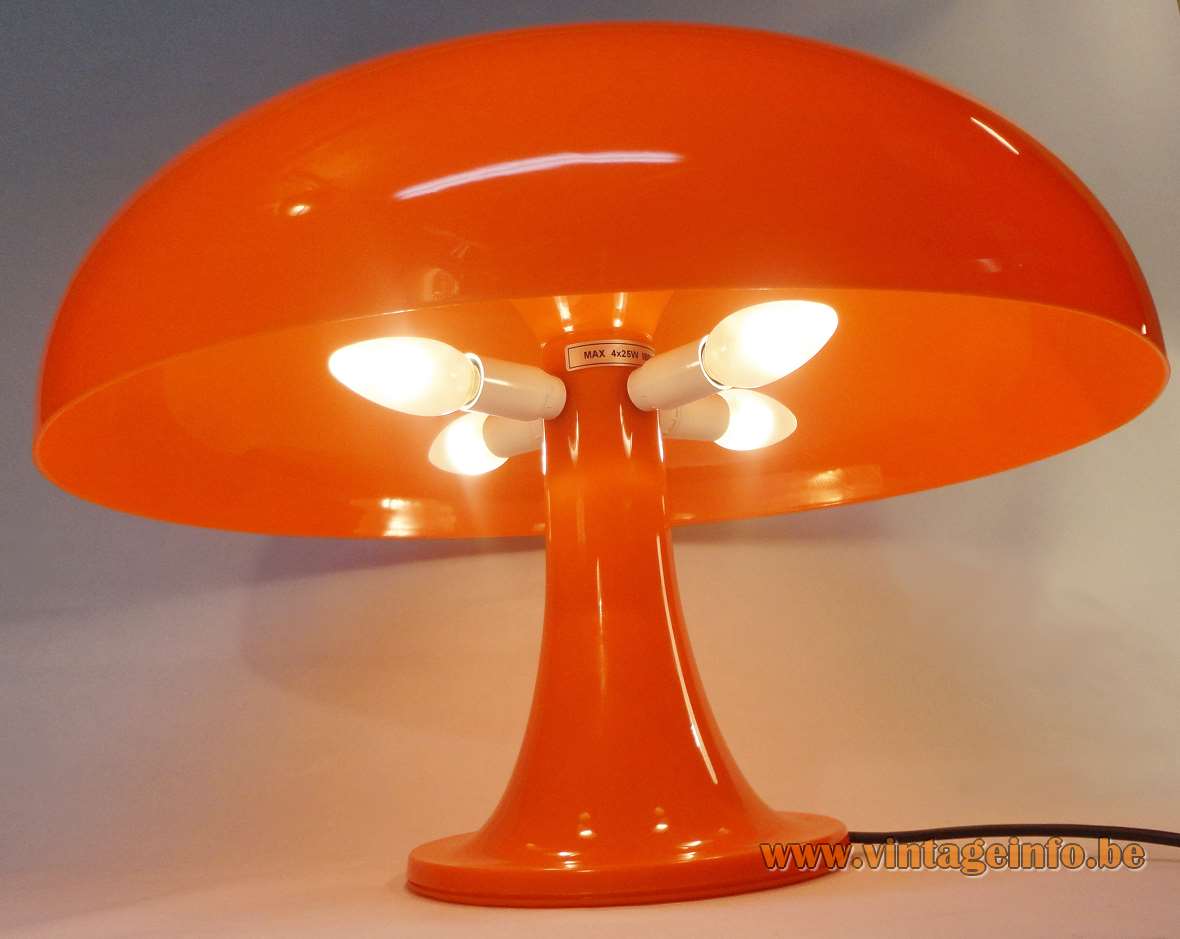
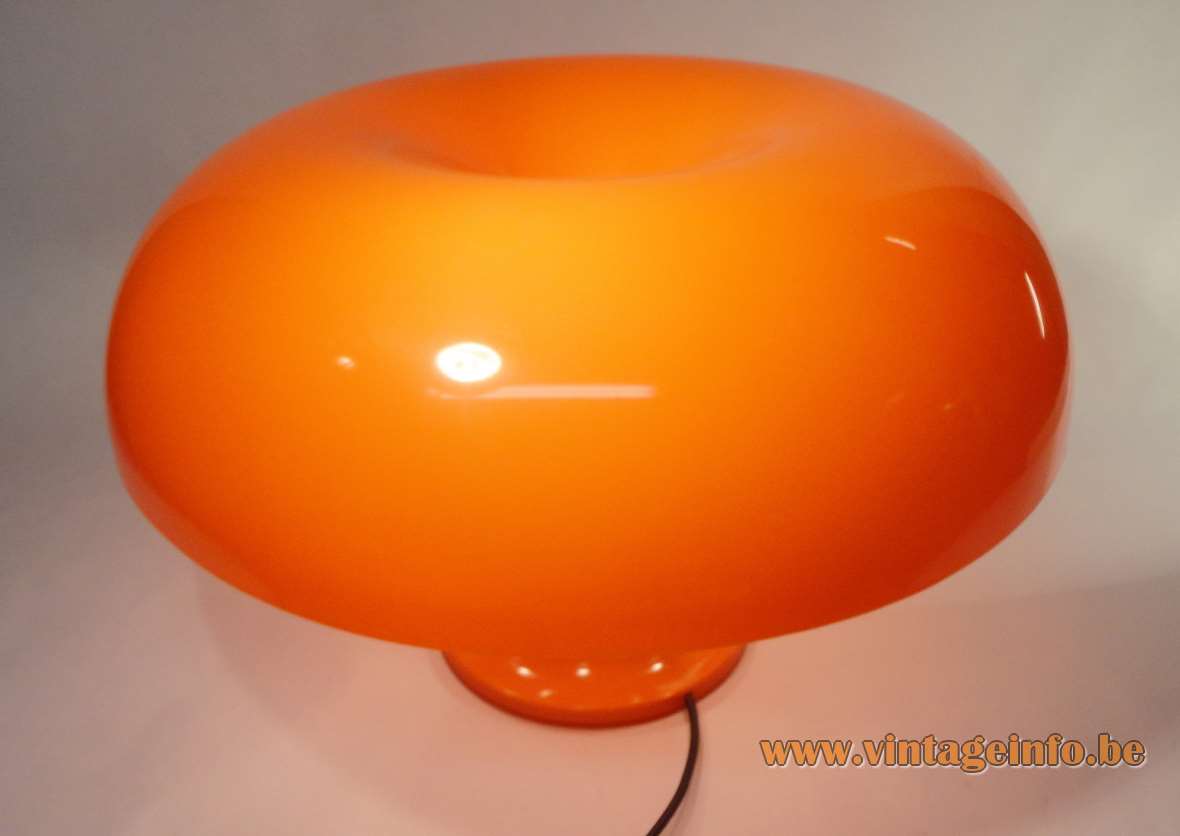
Artemide Nesso Table Lamp
Materials: Round curved conical orange ABS plastic base. Mushroom lampshade. Big metal screw. 4 white painted Bakelite E14 sockets.
Height: 34 cm / 13.38”
Width: ∅ 54 cm / 21.25”
Base: ∅ 21 cm / 8.26”
Electricity: 4 bulbs E14, 4 x 20 watt maximum, 110/220 volt.
Any type of light bulb can be used, not a specific one preferred.
Period: 1960s – Mid-Century Modern.
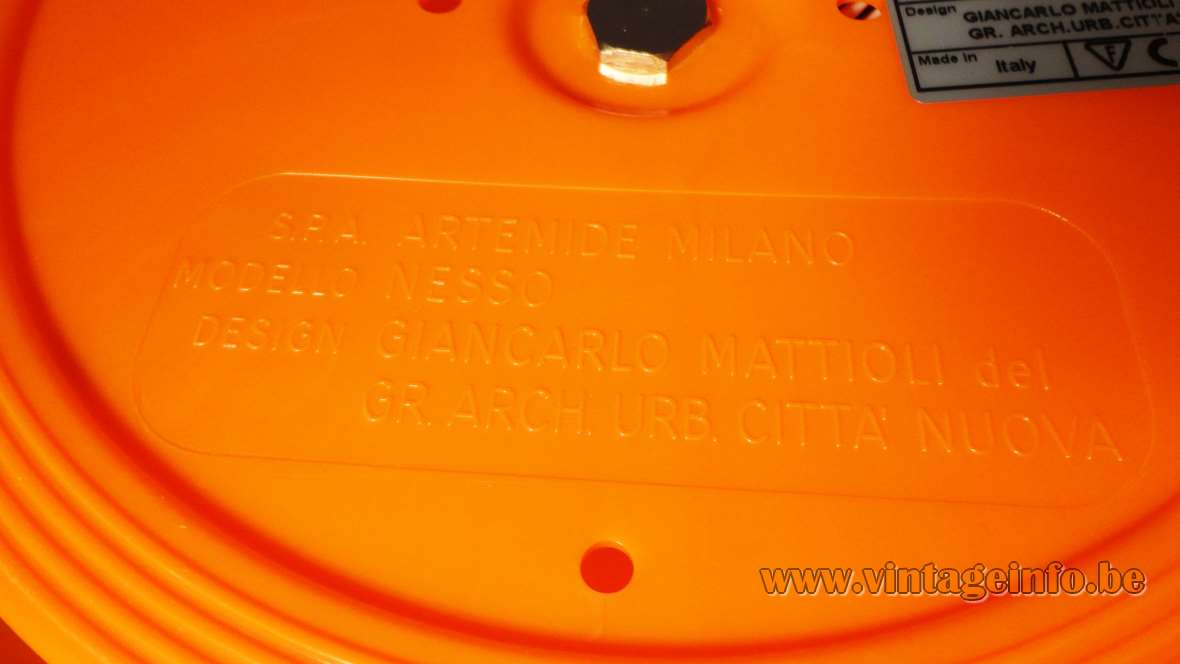
Designer: Giancarlo Mattioli & Gruppo Architetti Urbanisti Città Nuova.
Manufacturer: Artemide S.p.A., Pregnana Milanese, Milan, Italy.
Other versions: This Artemide Nesso table lamp comes in many colours. The first editions were made in polyester. The lamp on this page is from the nineties. The Nesso table lamp is still in production. The small version is named: Nessino.
This Artemide Nesso table lamp was designed in 1965. You can find it in the Artemide catalogues from 1973 and 1976, together with the Nessino table lamp. Early versions were made in fibreglass and polyester.
In Spain the Nesso and Nessino together with some other Artemide products were sold by the brand Idarco.
The Artemide Nesso table lamp was popular in films from the very beginning, as you can see. In the same year it was released, it appeared in the film “Oscar” starring Louis de Funès.
Giancarlo Mattioli
Giancarlo Mattioli (1933–2018) was an Italian architect, designer, urban planner and portrait artist, born in Bologna. Trained at an art high school and later graduating in architecture in Florence, he remained passionately devoted to pen-and-ink drawing throughout his life.
In 1961, Mattioli founded the Gruppo Architetti Urbanisti “Città Nuova” in Bologna together with Pierluigi Cervellati, Umberto Maccaferri, Franco Morelli, Gianpaolo Mazzucato and Mario Zaffagnini. The group consciously moved away from the idea of the architect as a solitary creator, instead embracing teamwork and a strong focus on local communities and the territory.
In 1965, Mattioli and Città Nuova entered the “Studio Artemide Domus di Milano” competition (run by Artemide and Editrice Domus), proposing a lamp inspired by the form of a jellyfish. Their goal was a discreet, ambient light in which the technical source—especially the bulb—would virtually “disappear.” The project won, and in 1967 it went into production as the Artemide Nesso, which became one of the emblematic lighting icons of the era and entered major museum collections, including the Museum of Modern Art (MoMA) in New York.
Beyond product design, Mattioli played a major civic role in Bologna’s post-war development. From the late 1960s onward he contributed to—and signed—important urban plans for the city, serving at the top of its technical offices without interruption until 1999. His work was connected to key planning phases such as initiatives for the historic centre, the hills, the industrial area, the 1985–89 master plan, and the new railway node.
Giancarlo Mattioli designed only one lamp: the Artemide Nesso, created with the Gruppo Architetti Urbanisti Città Nuova. No other lighting designs by Mattioli are documented in catalogues or archives.
Artemide Nesso Table Lamp – 1969 Catalogue Picture
Orange Artemide Nesso table lamp on a desk in the 1969 catalogue.
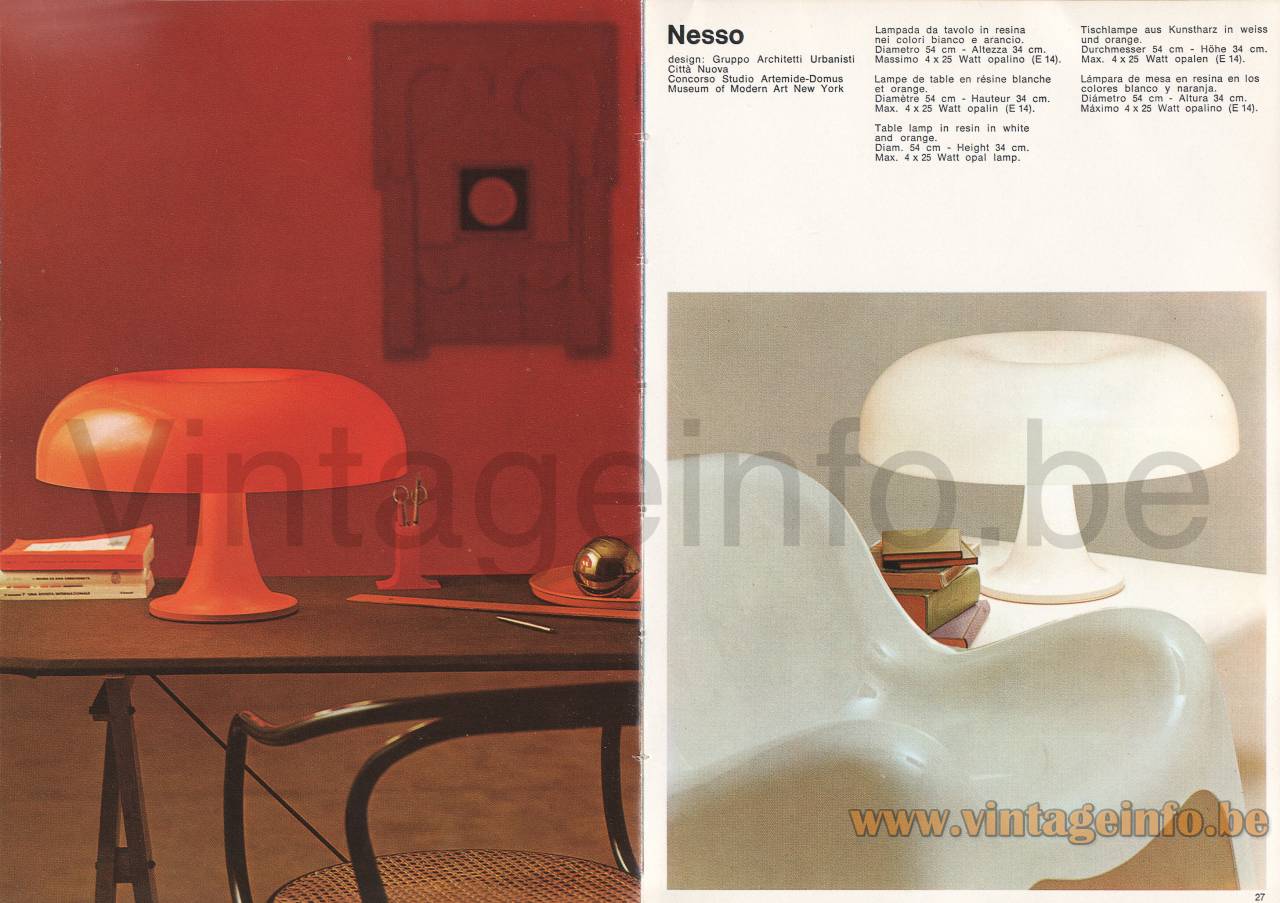
Artemide Nesso Table Lamp – 1973 Catalogue Picture
Orange and white Artemide Nesso table lamps in the 1973 catalogue.
Artemide
In 1960, near Milan, Ernesto Gismondi and Sergio Mazza laid the foundation of Artemide. Right from the start, the company combined technological research with a strong sense of Italian design. Their very first iconic lamp was the Alfa — hence the name — designed around 1959–1960. Emma Schweinberger, Gismondo’s wife, designed the Chi table lamp in 1962. From there, Artemide quickly began collaborating with leading designers. The mid-1960s saw the company make waves with Vico Magistretti’s Eclisse, awarded in 1967, as well as Enzo Mari’s early contributions such as the Polluce floor lamp, designed together with Anna Fasolis in 1965. The Dalù table lamp (1966 – Vico Magistretti) and the Nesso (1965), designed by Giancarlo Mattioli & Gruppo Architetti Urbanisti Città Nuova, further established Artemide’s reputation during this formative decade. Other notable designs from the late 1960s include the Lesbo table lamp, a 1967 design by Angelo Mangiarotti, Vico Magistretti’s Telegono (1968), the Pallade pendant by Studio Tetrarch, the Electra table lamp, designed by Giuliana Gramigna in 1968, all reflecting the experimental spirit of the era.
As the 1970s arrived, Artemide introduced what would become one of its most recognisable icons: the Tizio desk lamp, designed by Richard Sapper in 1972. Around the same period, Gae Aulenti designed the Pileino and Mezzopileo lamps, followed by Mezzoracolo in 1973. The famous Sintesi lamp series was designed by Ernesto Gismondi in 1975 and the Area 50 lamp series, a Mario Bellini design from 1975. The decade also saw the introduction of the Onfale lamp in 1978, designed by Luciano Vistosi, marking Artemide’s growing interest in glass and sculptural forms.
The 1980s marked a phase of international expansion. By 1980, Artemide had established a presence in the United States and continued to attract prominent designers, including Ettore Sottsass. His Callimaco floor lamp and Pausania table lamp, both designed during the 1980s, became distinctive statements within Artemide’s catalogue. Other important designs from this decade include the Polifemo floor lamp by Carlo Forcolini (1983). In 1987, Artemide launched the Tolomeo, designed by Michele De Lucchi and Giancarlo Fassina, which quickly became an icon of functional and timeless design.
During the 1990s, Artemide further expanded its scope by acquiring VeArt, bringing Murano glass expertise into the company. In 1996, Artemide introduced its “The Human Light” philosophy, focusing on the relationship between light, people and their environment. By the late 1990s, Artemide Architectural was established, bridging product design and large-scale architectural lighting projects. From the 2000s onward, Artemide increasingly focused on LED innovation while reissuing its historic designs within the “Modern Classic” collection.
In essence, Artemide represents a rich tapestry of Italian lighting history. Whether defined by the minimalist engineering of the Tizio, the organic curves of the Nesso, or the expressive presence of the Callimaco, Artemide has consistently blended design innovation with a deeply human approach to light. It is precisely this balance that makes these lamps — including the Pausania and many others — enduring icons of modern design.
Designers that collaborated with Artemide include, among others, Vico Magistretti, Emma Schweinberger, Gae Aulenti, Richard Sapper, Michele De Lucchi, Giancarlo Fassina, Ettore Sottsass, Enzo Mari, Gio Ponti, Sergio Mazza, Angelo Mangiarotti, Joe Colombo, Sergio Asti, Sergio Favre, Mario Marenco, Adelaide Bonati, Silvio Bonatti, Enrico De Munari, Carla Federspiel, Livio Castiglioni, Piero Castiglioni, Nanda Vigo, Luigi Caccia Dominioni, Mario Botta, Carlo Forcolini, Luciano Vistosi, Neri&Hu, Carlotta de Bevilacqua, Jean Nouvel, Karim Rashid, Neil Poulton, Studio Tetrarch, Zaha Hadid, Ron Arad, Herzog & de Meuron, Issey Miyake, Naoto Fukasawa, Aldo Rossi, Adrien Gardère, Stephen Philips, Carlo Colombo and Giulia Foscari.
Lamps In The Movies!
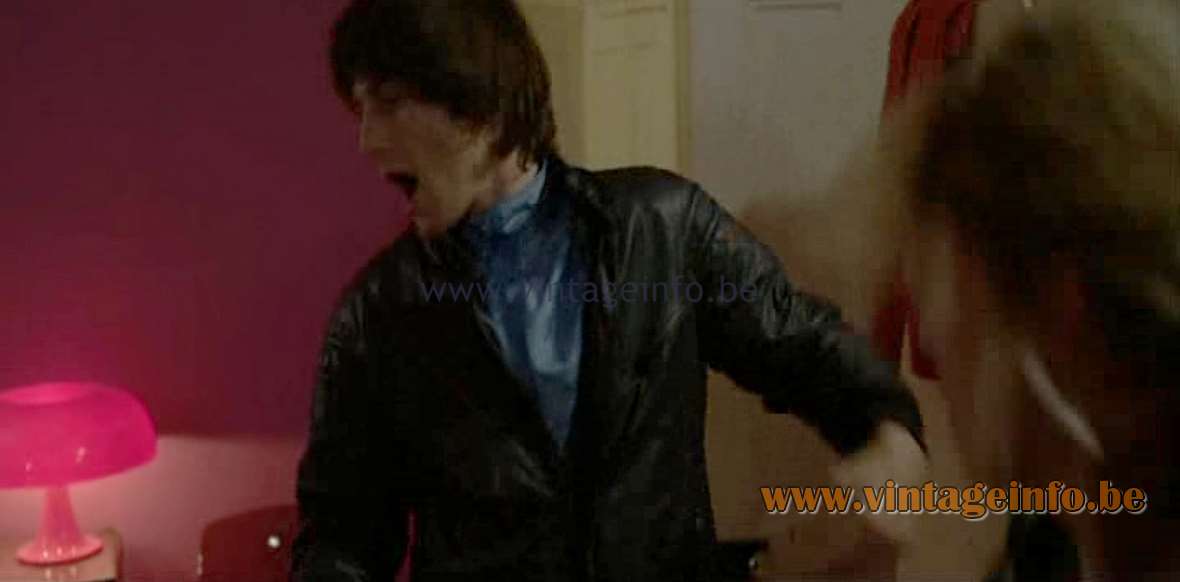
De Heineken Ontvoering (2011)
An Artemide Nesso table lamp or Nessino was used as a set decoration in the 2011 Dutch movie De Heineken Ontvoering (The Heineken Kidnapping), with Rutger Hauer as Freddy Heineken. Not to be confused with the American film Kidnapping Mr. Heineken with Anthony Hopkins from 2015.
Le Clan des Siciliens (1969)
An Artemide Nesso table lamp was used as a set decoration in the 1969 French film Le Clan des Siciliens (The Sicilian Clan). A gangster movie by Henri Verneuil featuring Alain Delon, Jean Gabin and Lino Ventura.

9 Mois Ferme (2013)
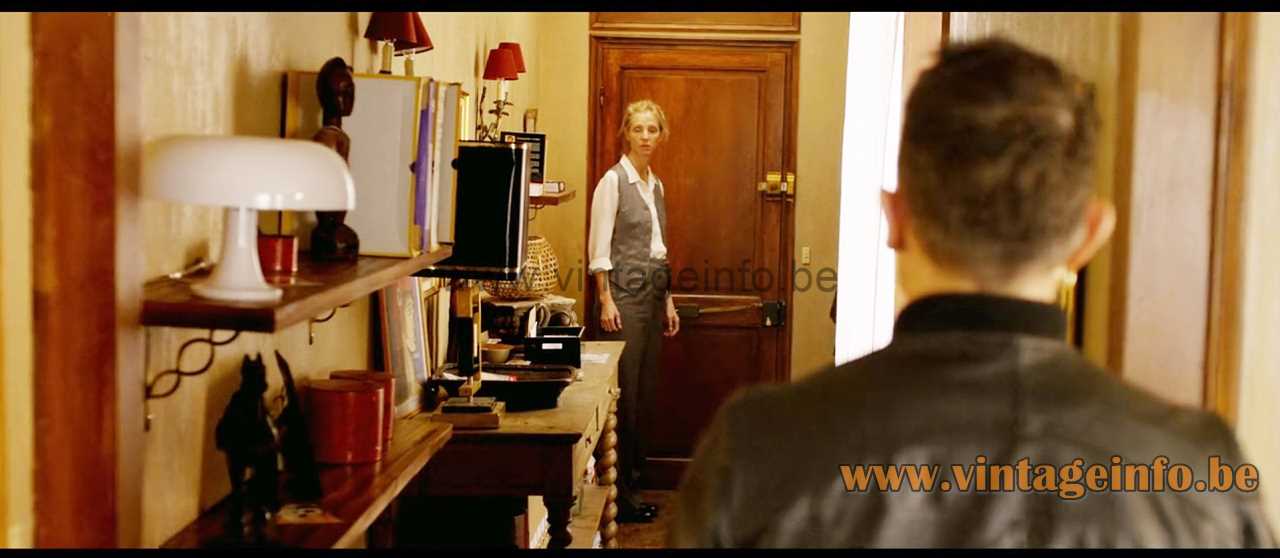
An Artemide Nesso table lamp appears in the 2013 French comedy film 9 Mois Ferme (9 Month Stretch). Starring Sandrine Kiberlain and Albert Dupontel.
Kramer vs. Kramer (1979)
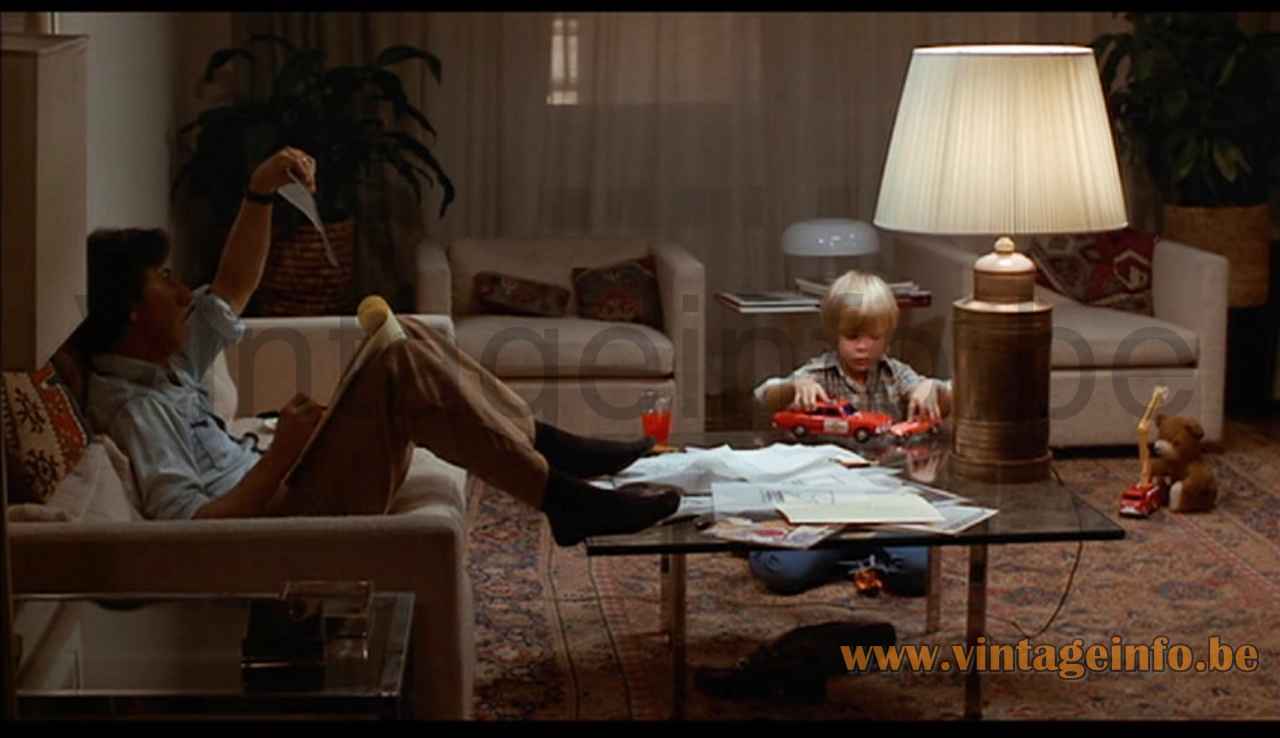
An Artemide Nesso table lamp was used as a set decoration in the 1979 American legal drama film Kramer vs. Kramer. Starring Dustin Hoffman, Meryl Streep and Jane Alexander.
Many thanks to Lir Tasho for the 1969 catalogue picture. You can find his Instagram page over here.
Many thanks to Artemide for the help.
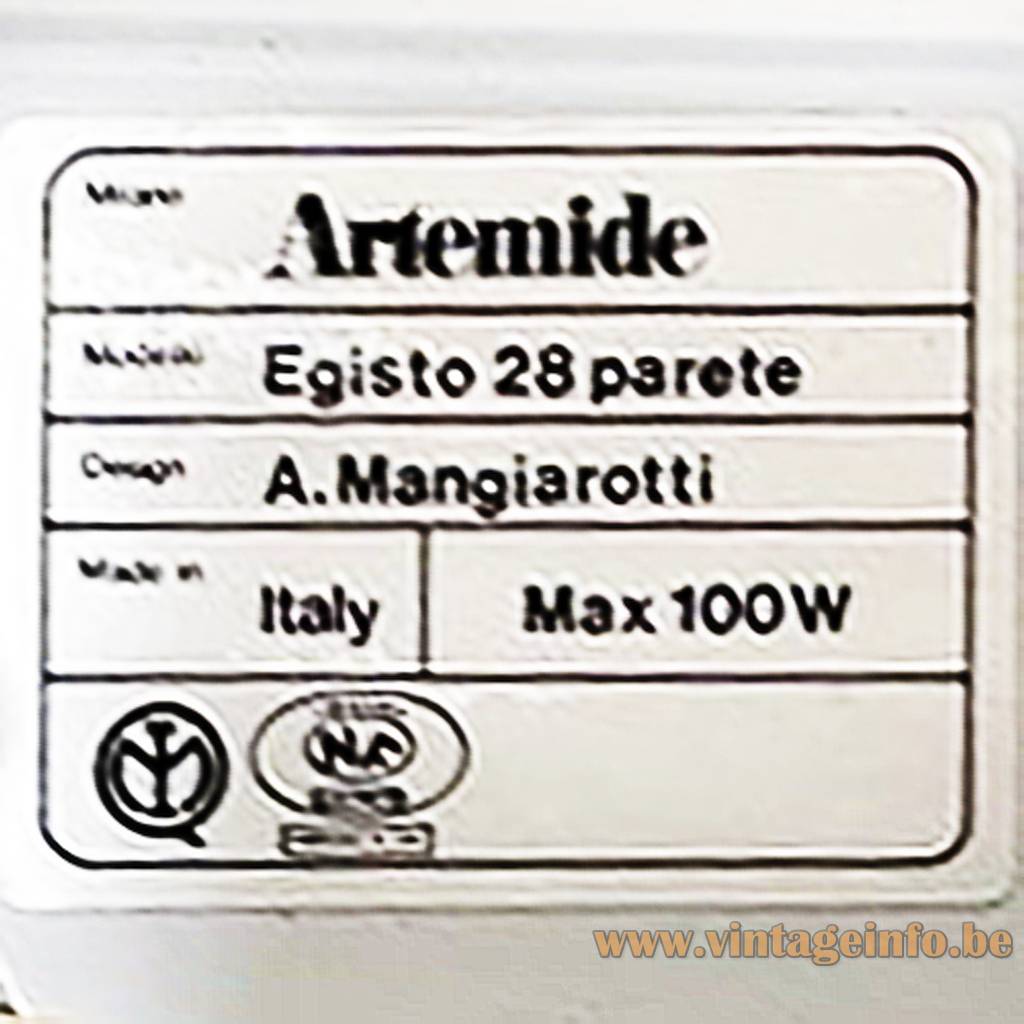
Artemide Nesso Table Lamp – Company Labels & Logos