- Categories
- Categories
Last 5 Viewed
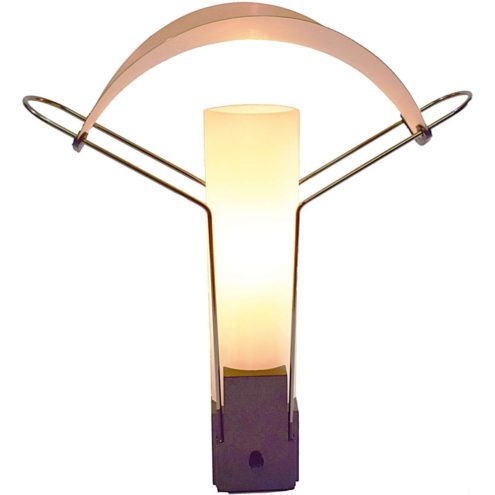
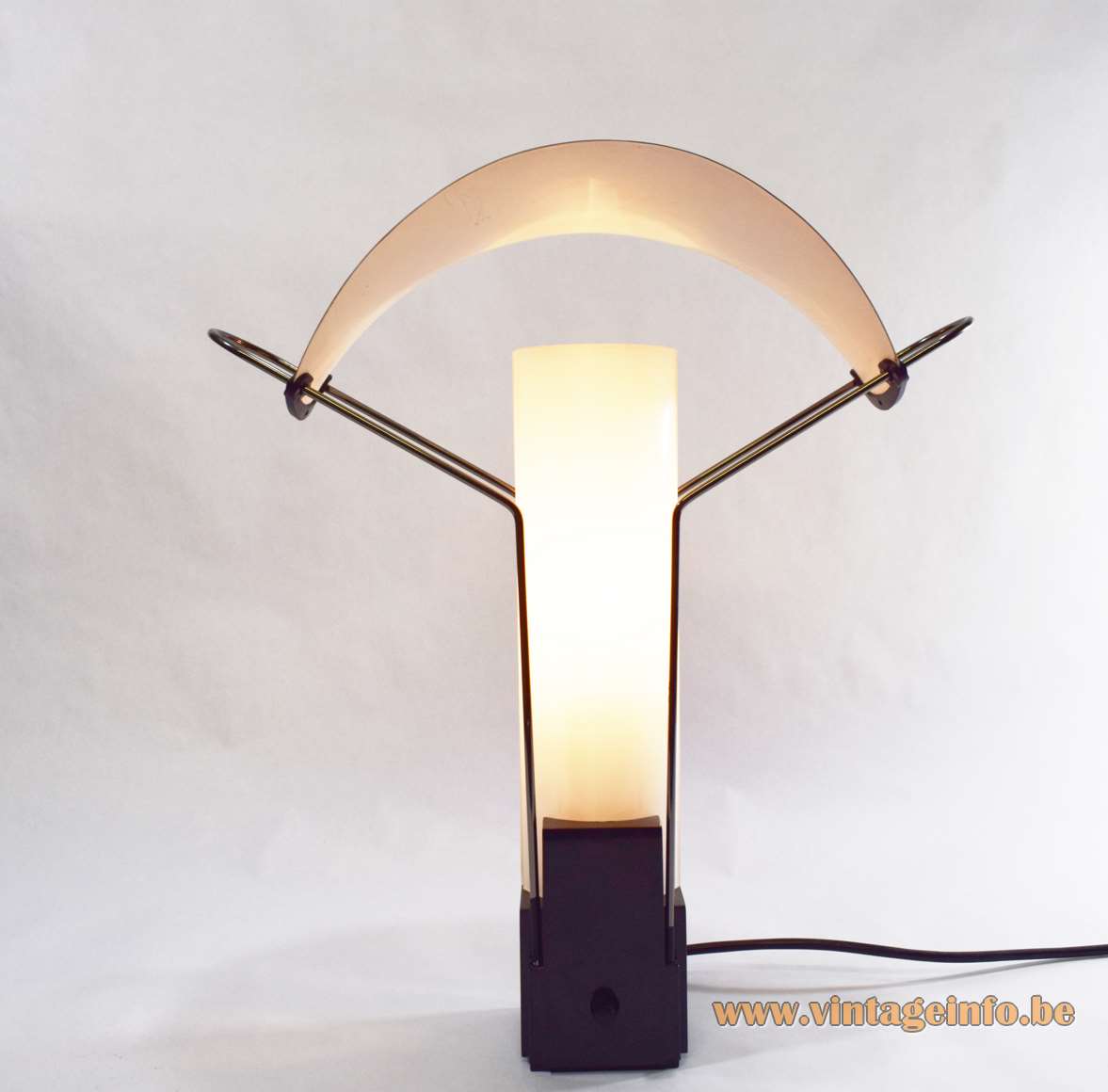


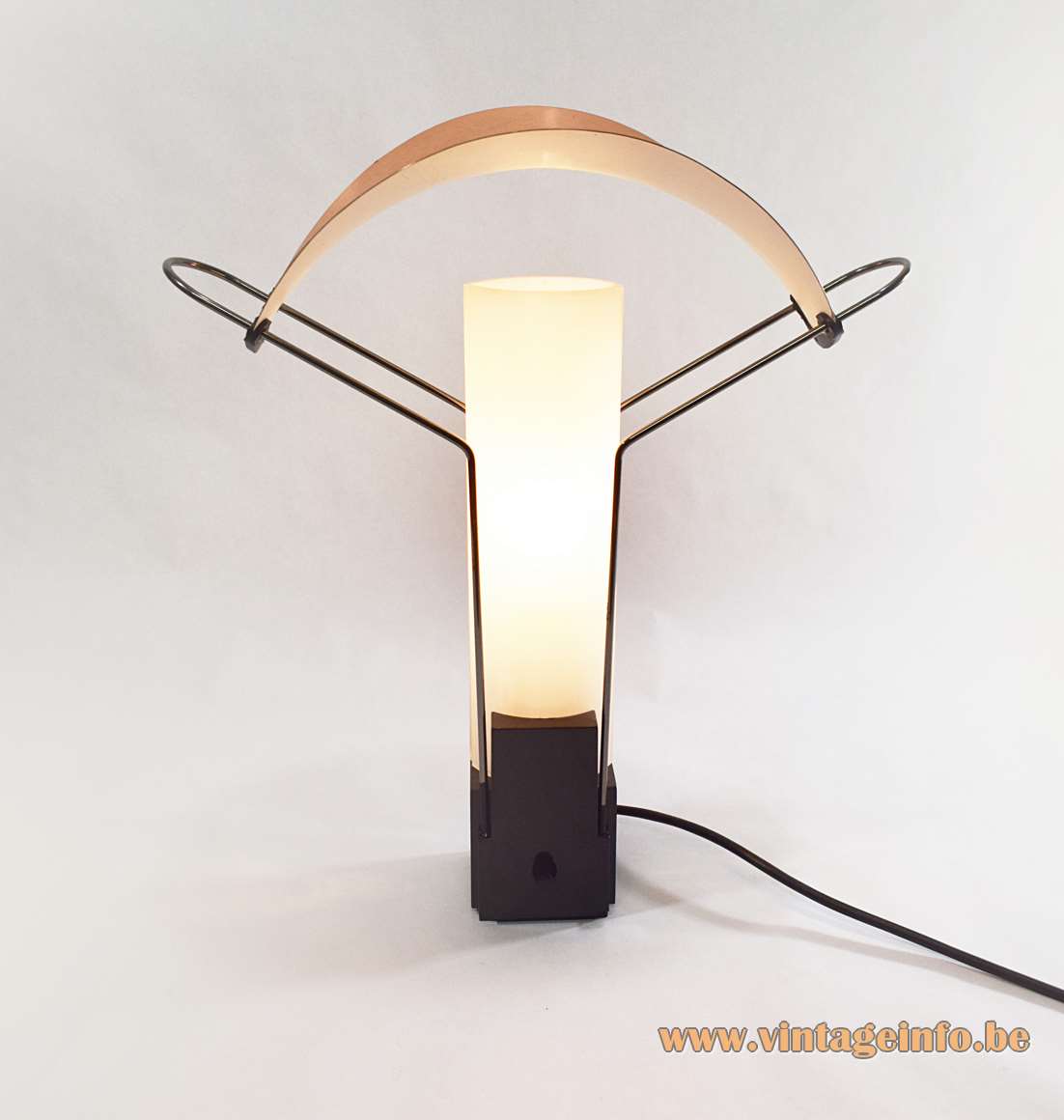




Arteluce Palio Table Lamp – 1994 Catalogue Picture
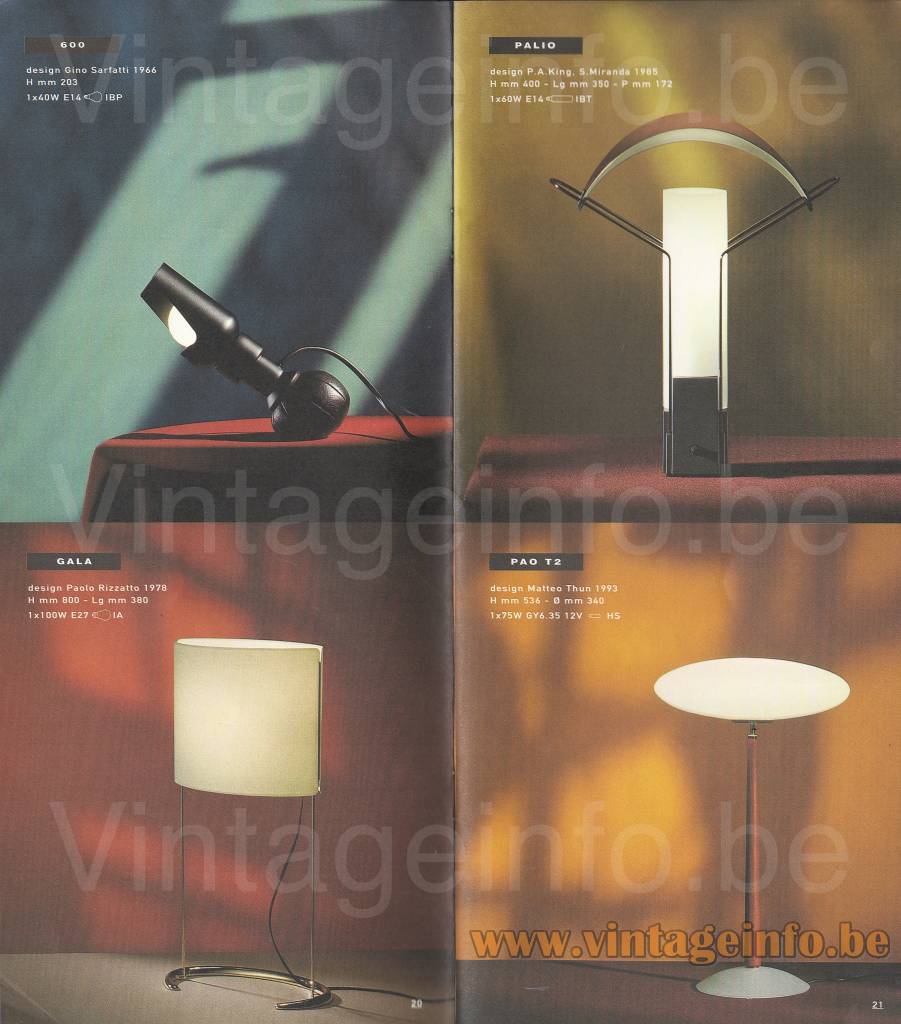
In this catalogue picture models: 600 table lamp, designed by Gino Sarfatti in 1966, and this Palio table lamp designed in 1984 by Perry King and Santiago Miranda, in production since 1985. Below the Gala table lamp, designed in 1978 by Paolo Rizzatto and the Pao T2 table lamp, designed Matteo Thun in 1991, in 1993 in production.
Perry King and Santiago Miranda

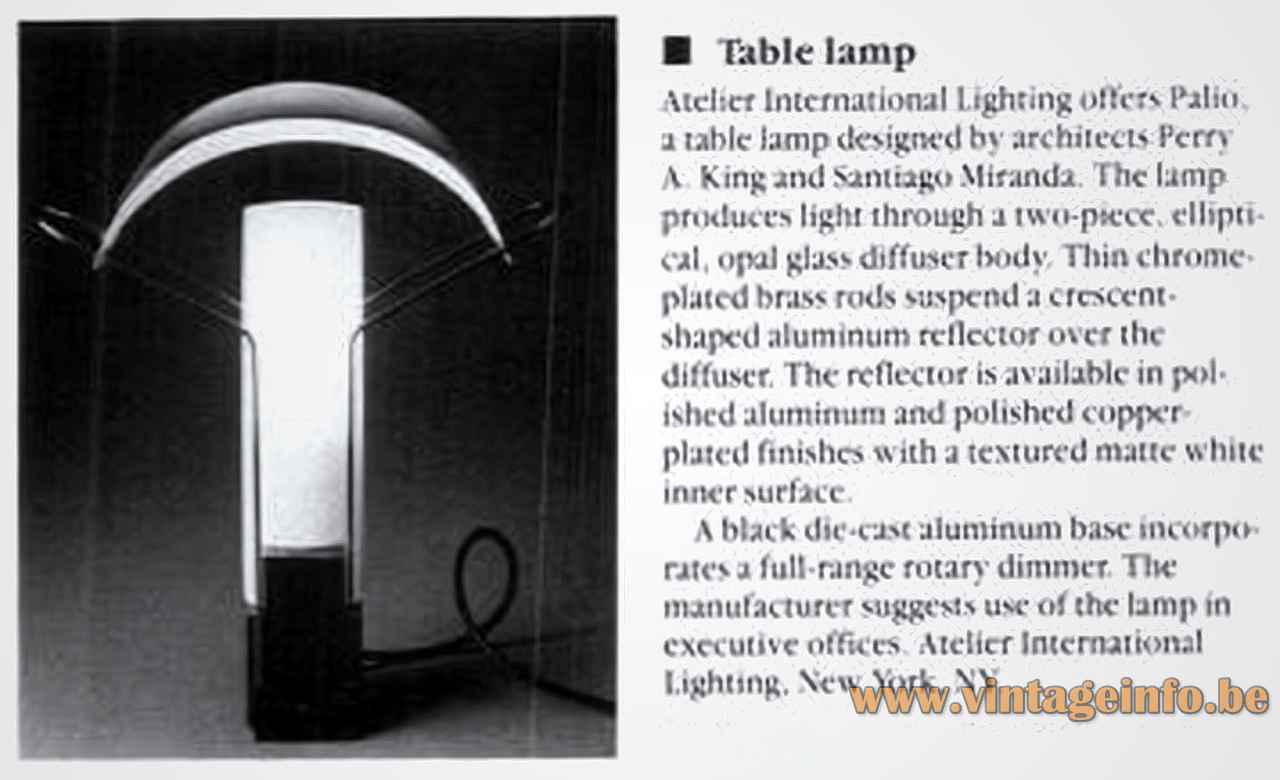
Arteluce Palio Table Lamp – 1987 Advertisement
Atelier International Lighting from New York sold this lamp in the USA.
Lamps In The Movies
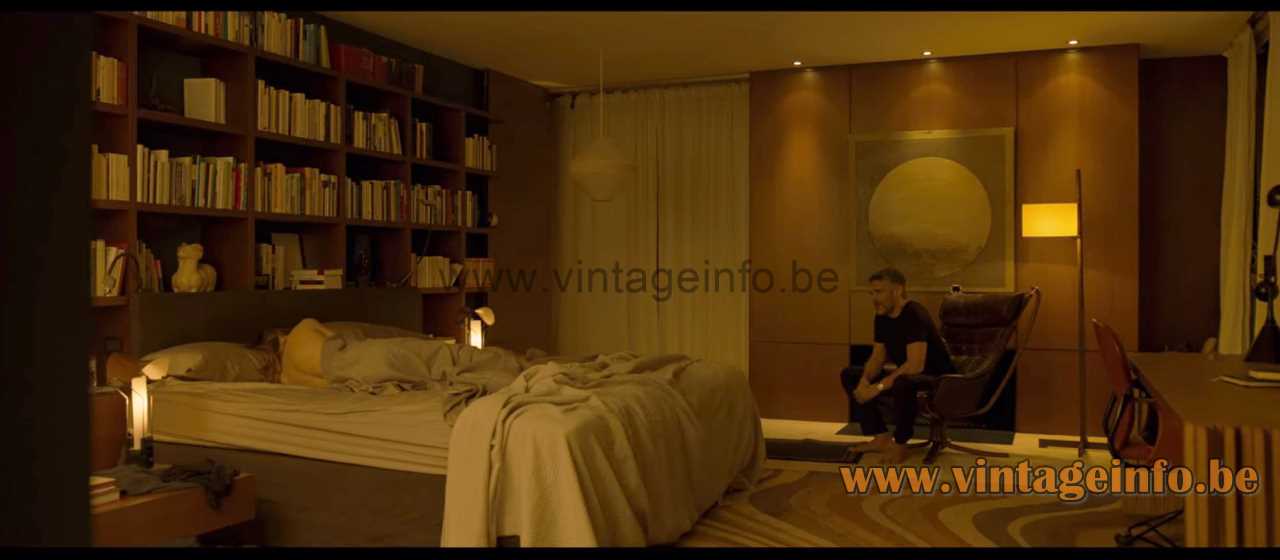
Ofrenda A La Tormenta (2020)
A couple Arteluce Palio table lamps were used as a set decoration in the 2020Spanish-German crime film Ofrenda A La Tormenta (Offering to the Storm). It is the third and final instalment in the Baztán Trilogy. In all 3 films many lamps appear. Although it is almost an overkill in this last film. Starring Marta Etura, Leonardo Sbaraglia and Paco Tous.
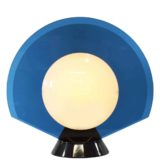
Arteluce Palio Table Lamp
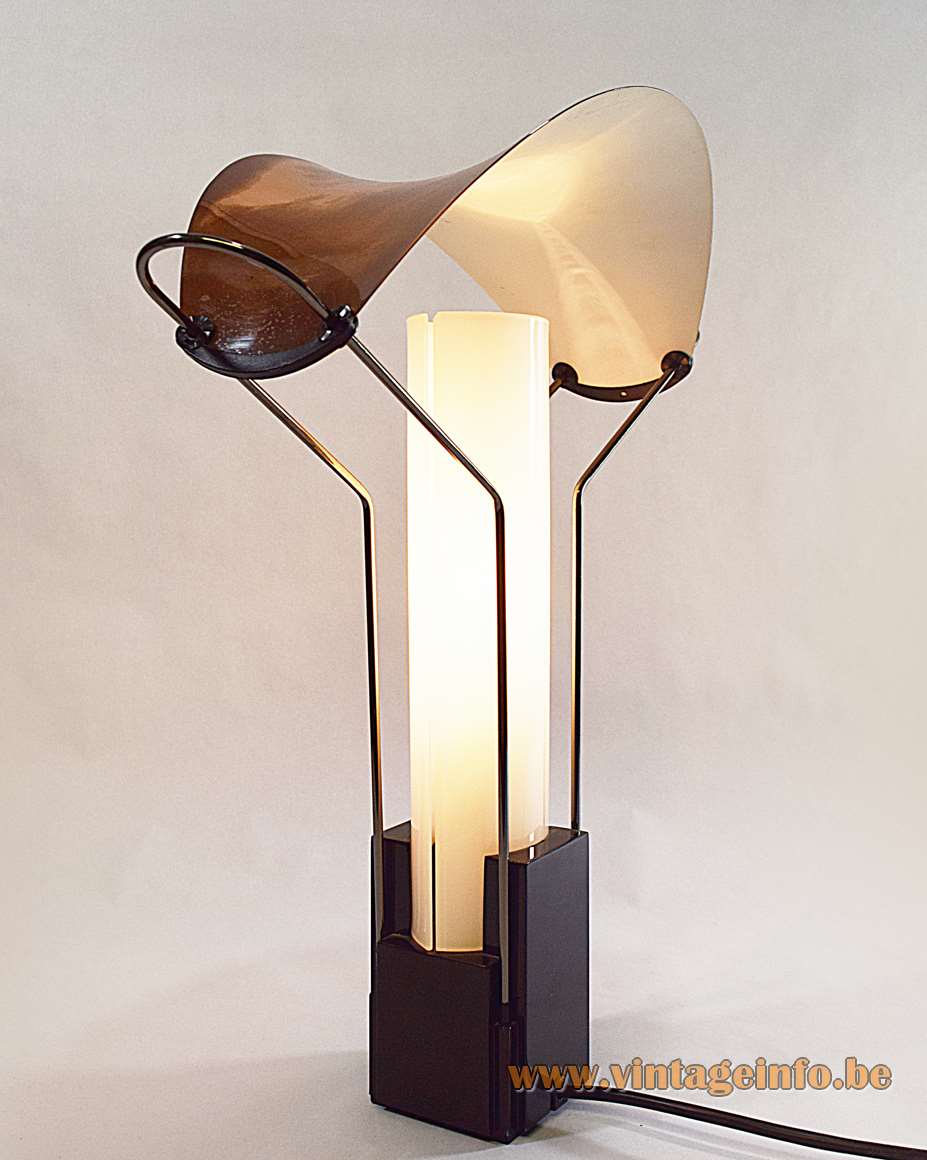
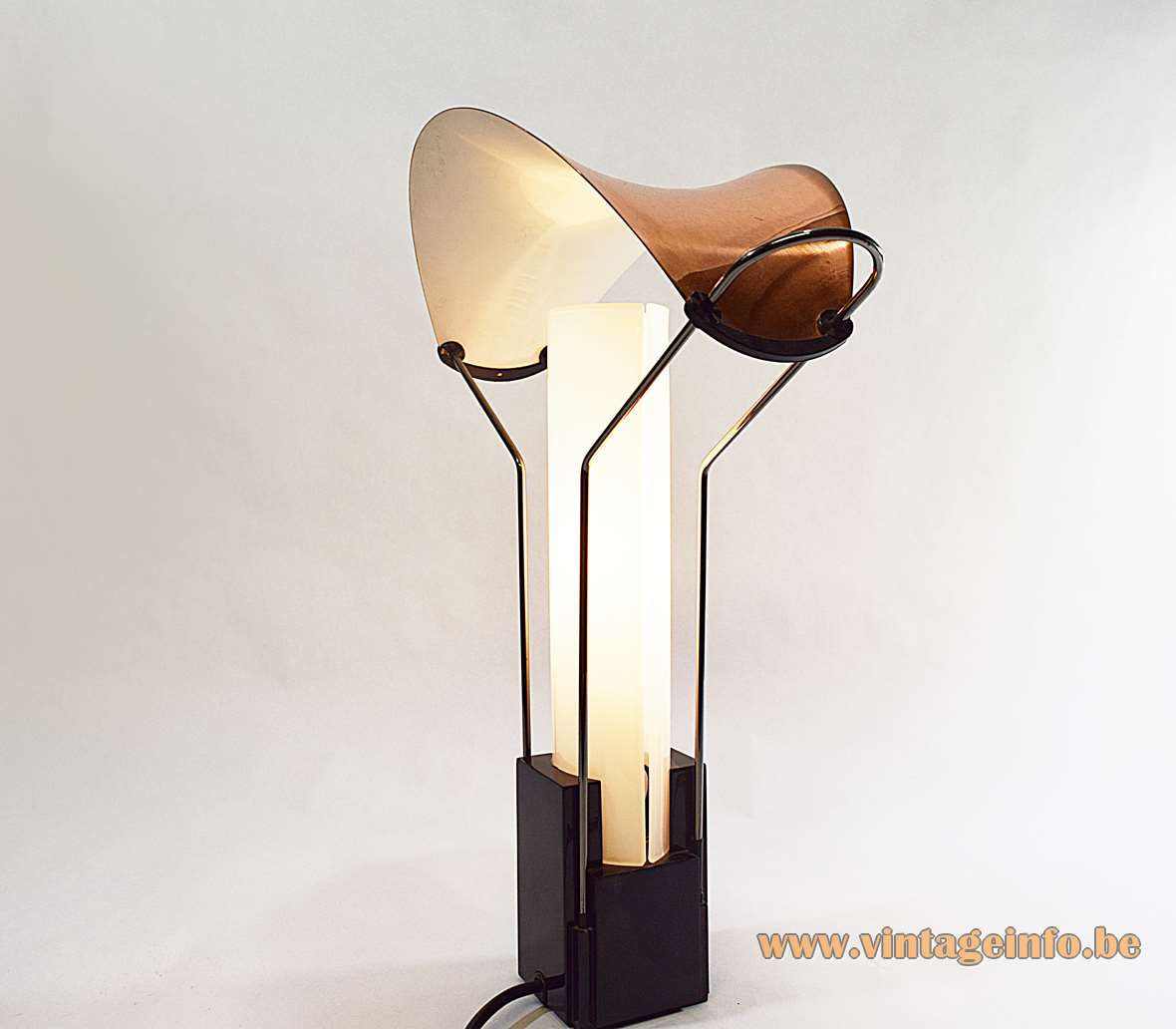
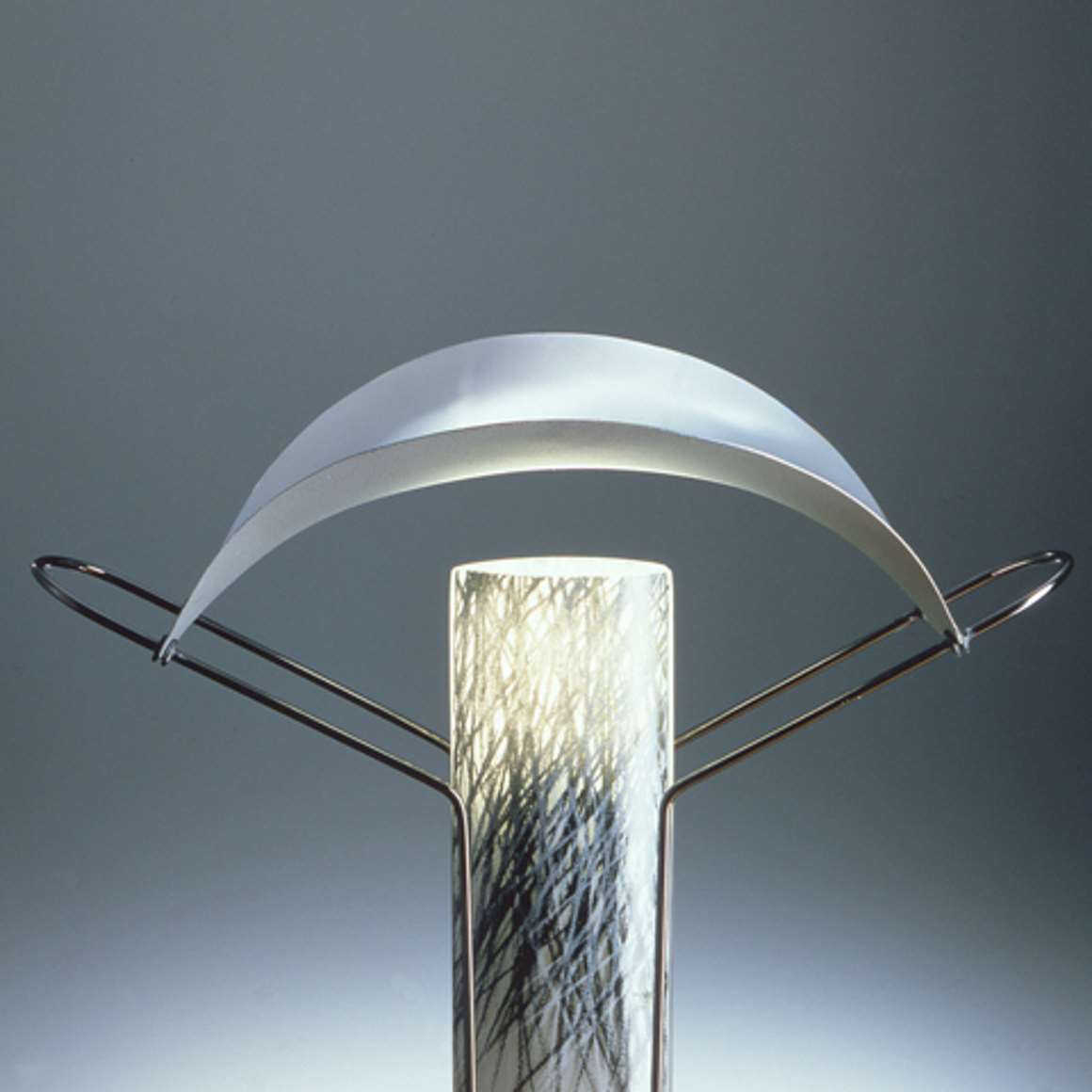
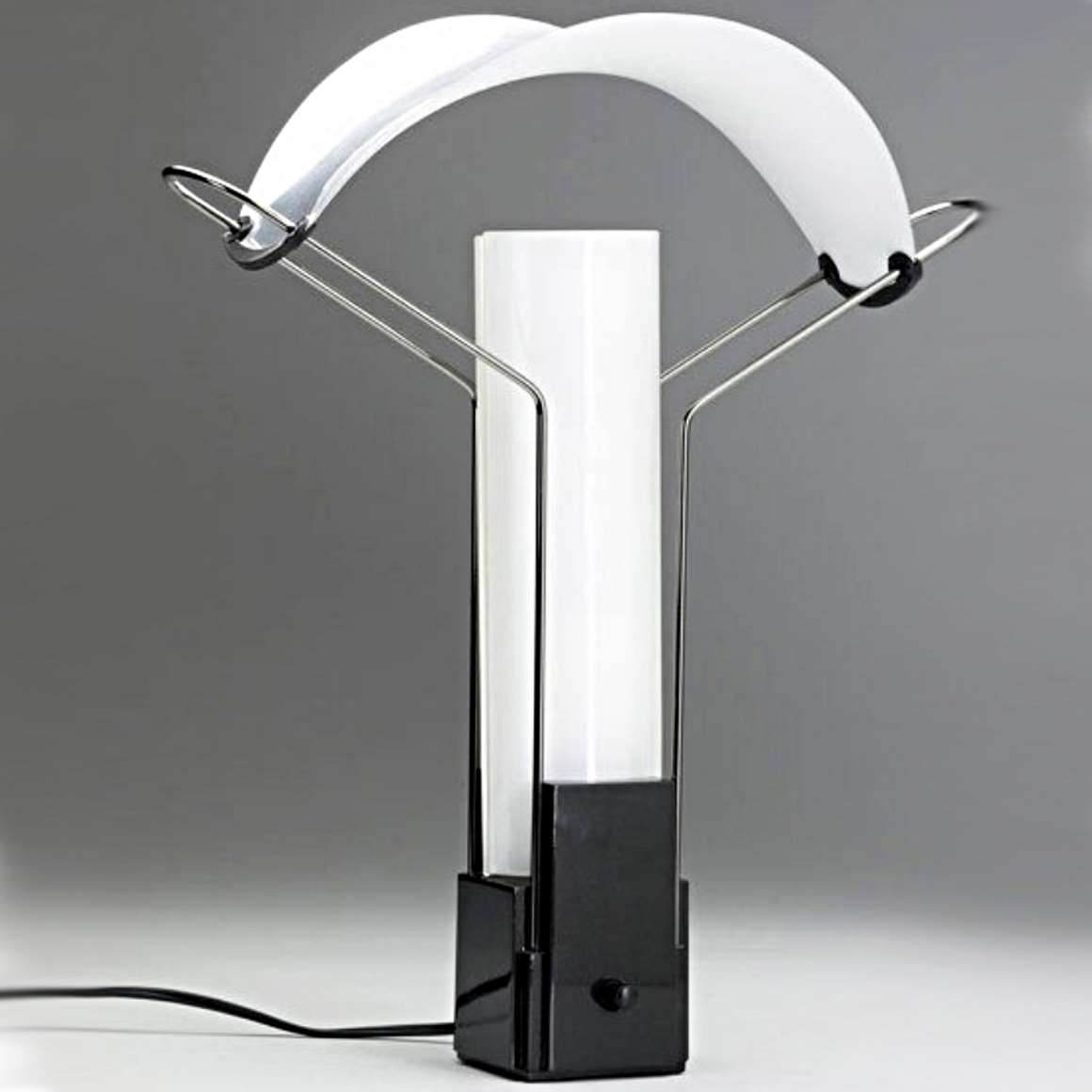
Materials: Square black base with a built-in intensity control switch (dimmer). Polished curved copper lampshade. Opal curved crystal glass diffusers. Chrome folded & curved rods. Bakelite E14 socket.
Height: 40 cm / 15.75”
Width: 35 cm / 13.78”
Base: 7.5 x 7.5 cm / 2.95 x 2.95”
Electricity: 1 bulb E14, 1 x 60 watt maximum, 110/220 volt.
Any type of light bulb can be used, but preferably a frosted tubular E14 bulb.
Period: 1980s.
Designer: Perry A. King & Santiago Miranda in 1984.
Manufacturer: Arteluce, Milan, Italy.
Other versions: The Arteluce Palio table lamp comes in several versions. It was also made with a white painted lampshade. Other lamps have paintings on the glass. Some versions have a paper FLOS label.
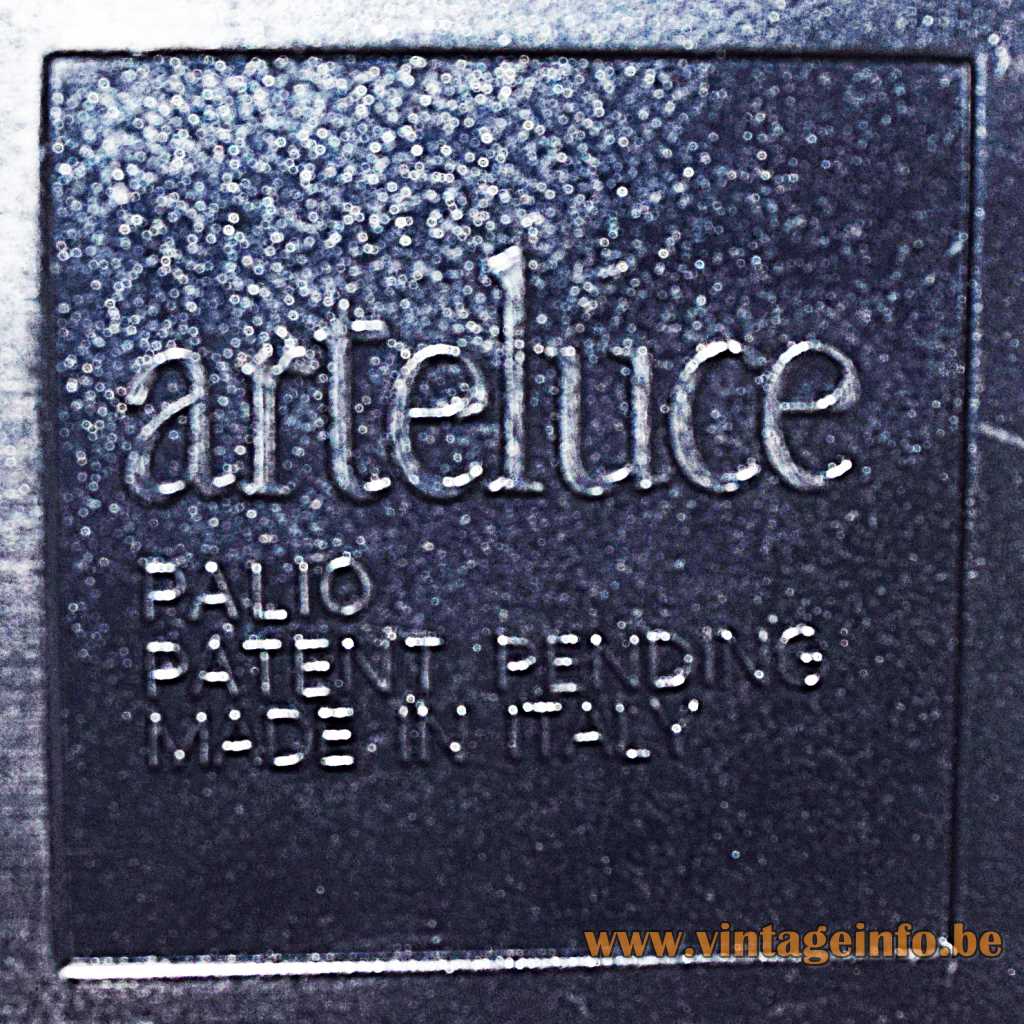
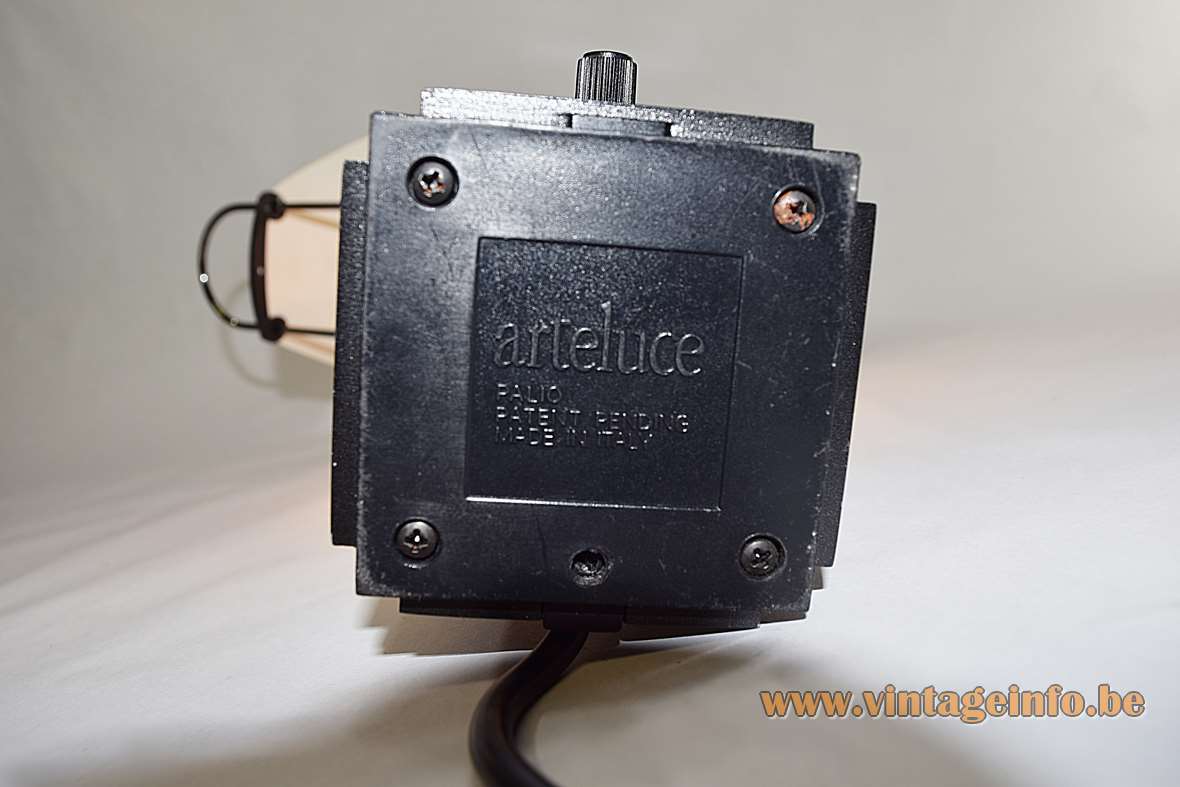
This lamp is a first edition, patent pending is pressed on the bottom of the base.
Perry King
Perry King is an English designer born in 1938 in the United Kingdom. King studied industrial design and moved to Italy in 1964 as a consultant to Olivetti. He takes part in the creation of the Valentine typewriter and the Sistema 45 with Ettore Sottsass. He was design coordinator for Corporate Image, his work included dot matrix fonts as well as books and posters, all designed with Santiago Miranda with whom he founded King Miranda Associati in 1976.
Santiago Miranda
Santiago Miranda was born in Écija near Seville in Spain in 1947. Miranda left to Italy in 1971 and he designed and wrote “Air Mail Transatlantic Pictures”, stories and images for an interactive park for lonely people, as well as working as a consultant to Olivetti. He was member of the Scientific Committee of the Istituto Europeo di Design (European Institute of Design – art academy) in Madrid and of the Scientific Committee of the University Pablo de Olavide in Seville, both in Spain. He is active in teaching and research.
Arteluce
Arteluce was an influential Italian lighting company founded in Milan in February 1939 by Gino Sarfatti. From the outset, the company positioned itself at the forefront of modern lighting design, combining technical innovation with a rational and functional design language that would strongly influence post-war Italian interiors.
Although Sarfatti himself was responsible for an exceptionally large part of the catalogue—designing several hundred lamps over the course of his career—Arteluce also developed into an important platform for many of Italy’s leading architects and designers. Through these collaborations, the company became closely connected to the broader development of modern Italian architecture and design, regularly exhibiting at major events such as the Triennale di Milano.
Among the designers who collaborated with Arteluce before the sale of the company were Franco Albini, Franca Helg, Antonio Macchi Cassia, Cini Boeri, Carlo Mollino, Vittorio Gregotti, Lodovico Meneghetti, Giotto Stoppino, Ico Parisi, Gae Aulenti, Vico Magistretti, Tobia Scarpa and Massimo Vignelli. The Arteluce catalogue ranged from highly technical lighting solutions to refined domestic lamps, many of which are now considered design classics.
Arteluce and FLOS
In 1973, Gino Sarfatti sold Arteluce to FLOS, a company founded in 1960 that had already gained international recognition for its experimental approach to materials and its close collaboration with contemporary designers. Following the acquisition, Arteluce was gradually absorbed into the FLOS structure, while a substantial part of the historical Arteluce catalogue—particularly designs by Sarfatti—remained in production under the FLOS umbrella.
For several decades after the takeover, the Arteluce name continued to appear within the FLOS catalogue, effectively functioning as a historical sub-brand that preserved the identity and legacy of Sarfatti’s work. Only around the beginning of the 2000s did FLOS finally discontinue the use of the Arteluce name, after which the remaining models were marketed exclusively as FLOS products.
Arteluce models still in production at FLOS
Following the acquisition, FLOS continued to produce a selection of the most important designs from the historical Arteluce catalogue. Several of these lamps, all designed by Gino Sarfatti, are still in production today and are considered cornerstones of the FLOS collection.
Among the most notable examples is the iconic chandelier Model 2097 from 1957, often referred to as the “Sarfatti chandelier”, which remains one of the best-known lighting designs of the 20th century. Also still produced is the suspension lamp Model 2065 (1950), along with a small number of other historically significant Arteluce designs that have been carefully reissued by FLOS using contemporary manufacturing standards while remaining faithful to the original concepts.
Designers after the acquisition by FLOS
After the acquisition of Arteluce by FLOS, the Arteluce name continued to be used for several decades as part of the FLOS catalogue. During this period, it no longer represented a single-author company, but rather functioned as a historical and experimental line within FLOS, open to new generations of international designers.
In the years following the takeover, a wide range of designers contributed to lamps that were developed, produced or marketed under the Arteluce / FLOS umbrella. Among the most notable names are Perry A. King, Santiago Miranda, Stephan Copeland, Ezio Didone, Matteo Thun, Rodolfo Dordoni and Pier Giuseppe Ramella.
These designers, along with many others, contributed to a period in which FLOS positioned itself as one of the most progressive lighting manufacturers worldwide. Although the Arteluce name was gradually phased out around the beginning of the 2000s, the experimental spirit and design culture associated with Arteluce continued to shape the identity of FLOS well beyond that point.
Links (external links open in an new window)
Palio Table lamp on the King & Miranda website
Pablo de Olavide University – Wikipedia
Istituto Europeo di Design – Wikipedia
Arteluce in the Moma Museum New York
Gino Sarfatti bio – the FLOS website
Chandelier model 2097 – the FLOS website
Gino Sarfatti fanpage – Facebook
Ofrenda A La Tormenta (2020) – Wikipedia
Ofrenda A La Tormenta (2020) – IMDb
Vintageinfo
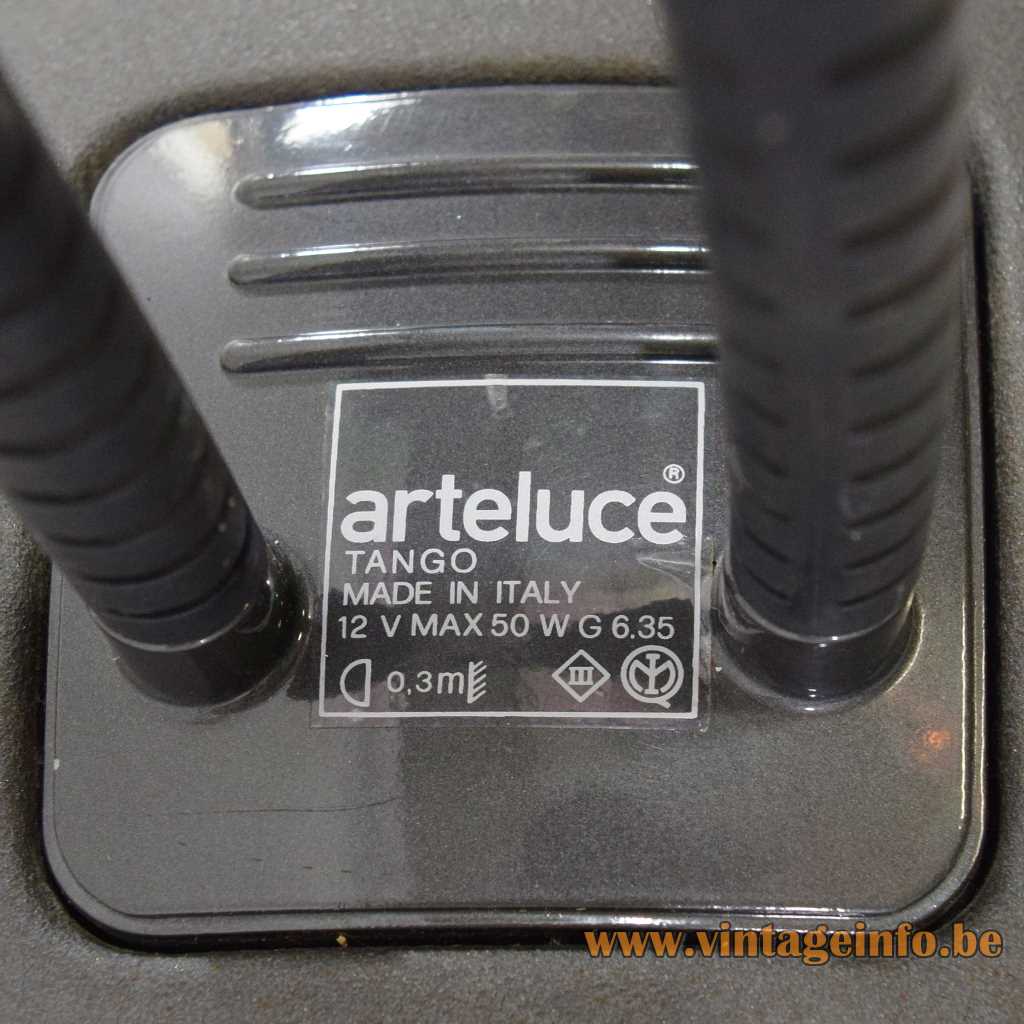
Arteluce Palio Table Lamp – Company Labels