- Categories
- Categories
Last 5 Viewed
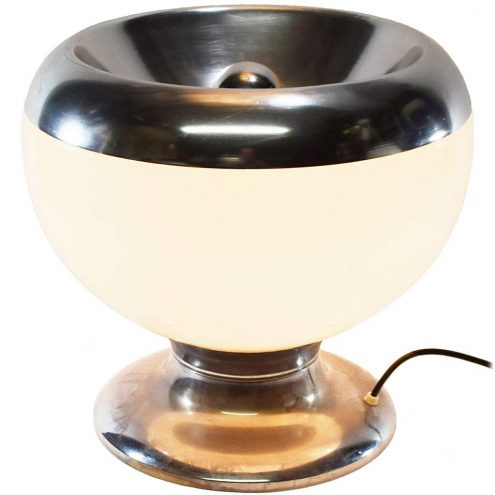
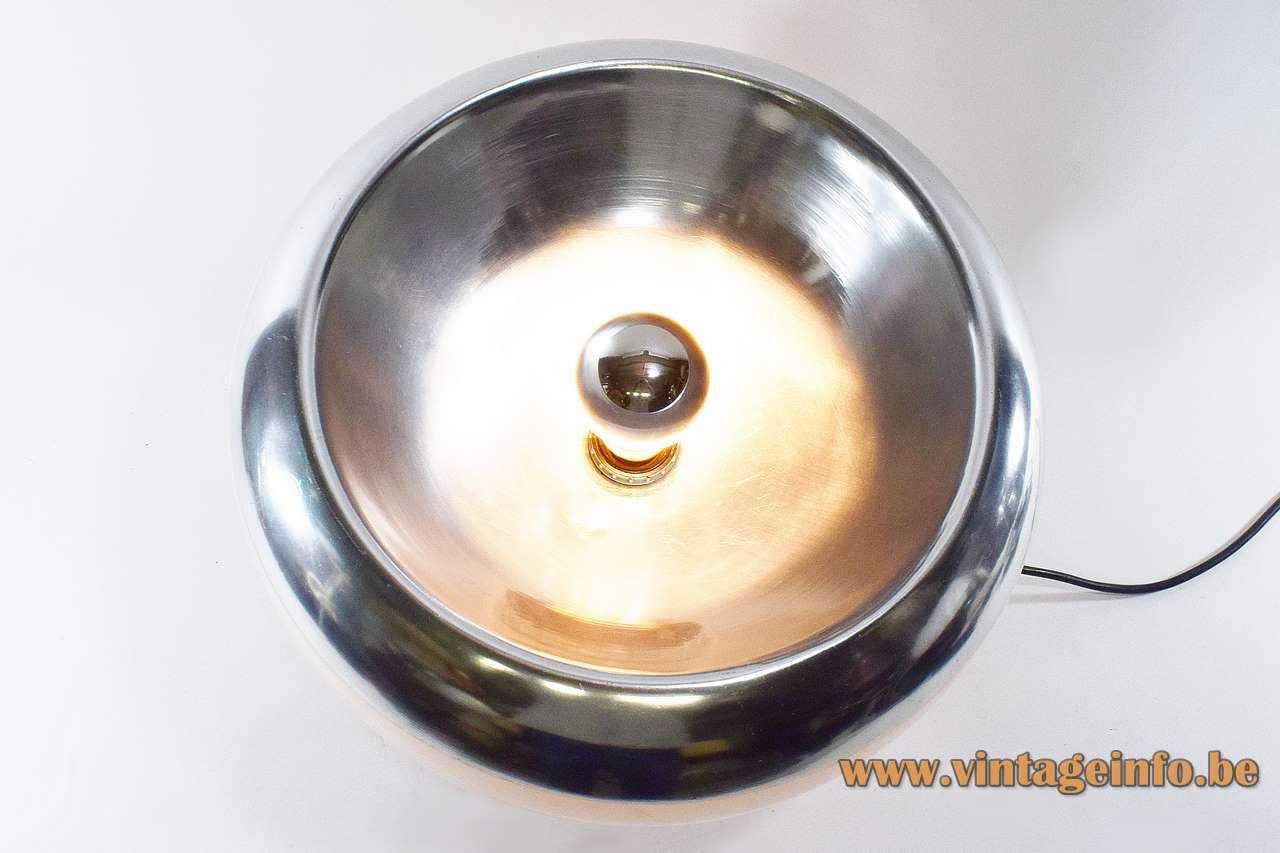
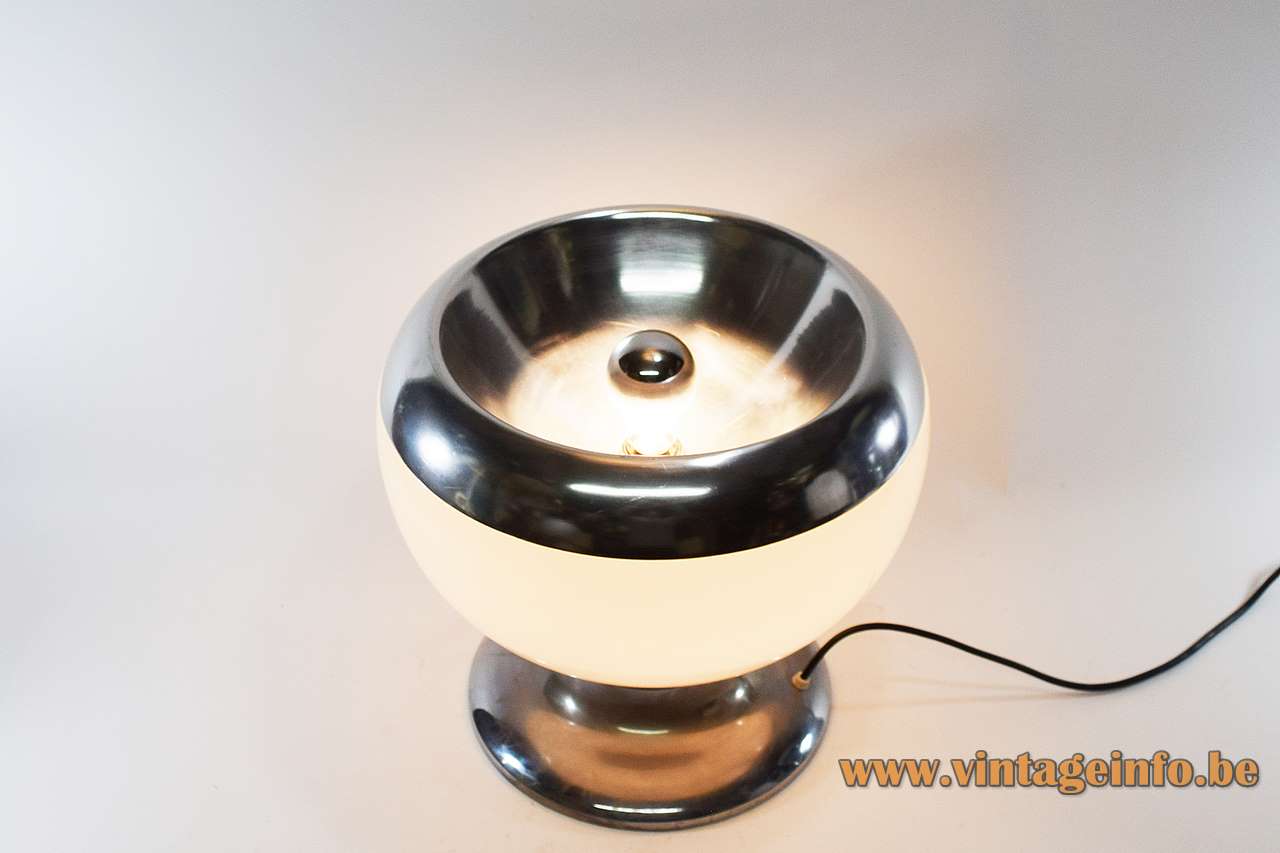
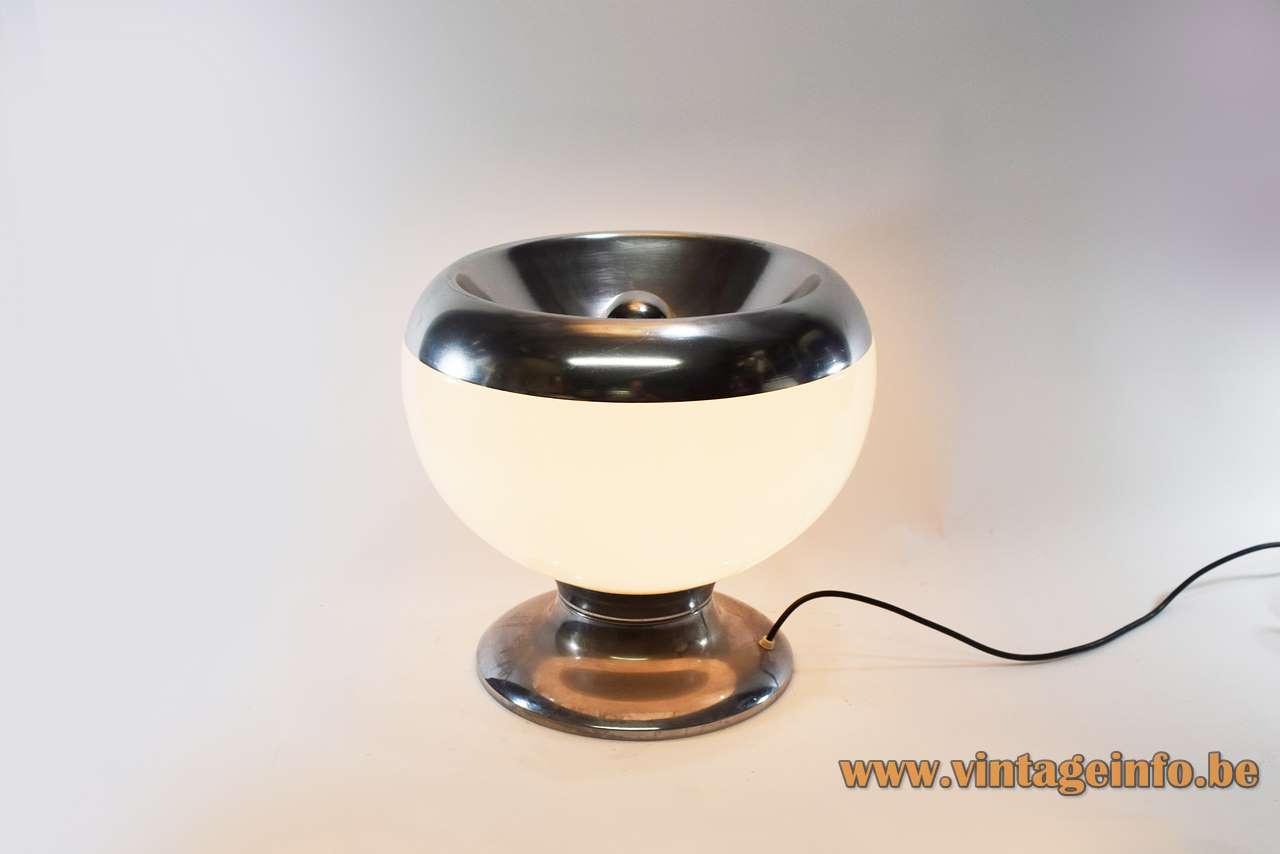
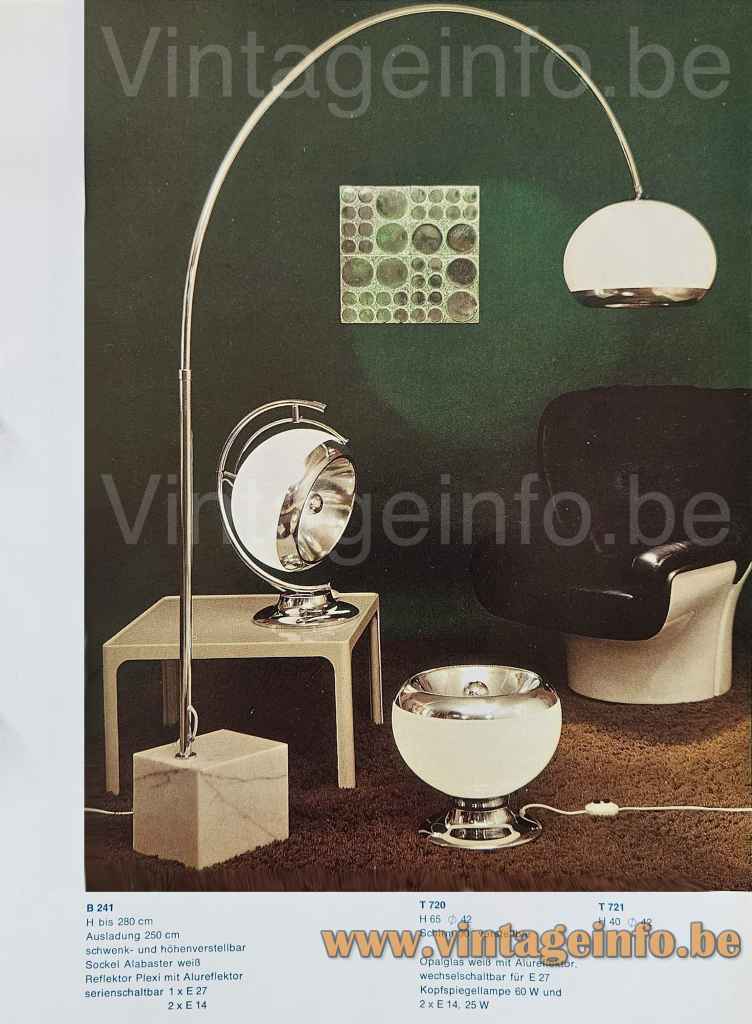
Acrylic Globe Floor Lamp – 1973 Leola Catalogue Picture
What’s odd about this catalogue photo is that the text says one is acrylic and the other is glass. I’ve never seen these lamps in glass before, so is that text a mistake? I wouldn’t rule it out, but it is strange.
Lamps In The Movies!
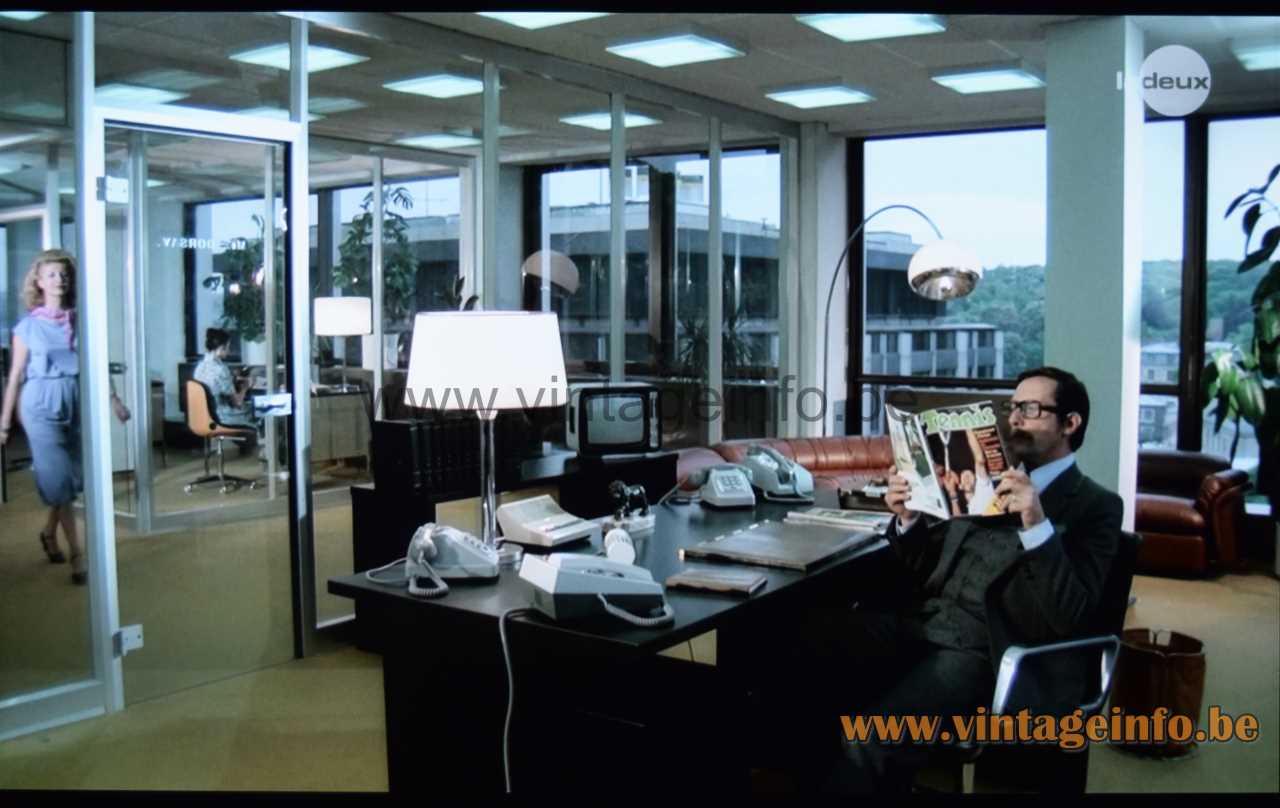
Un Éléphant Ça Trompe Énormément (1976)
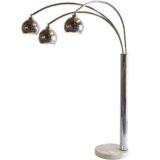
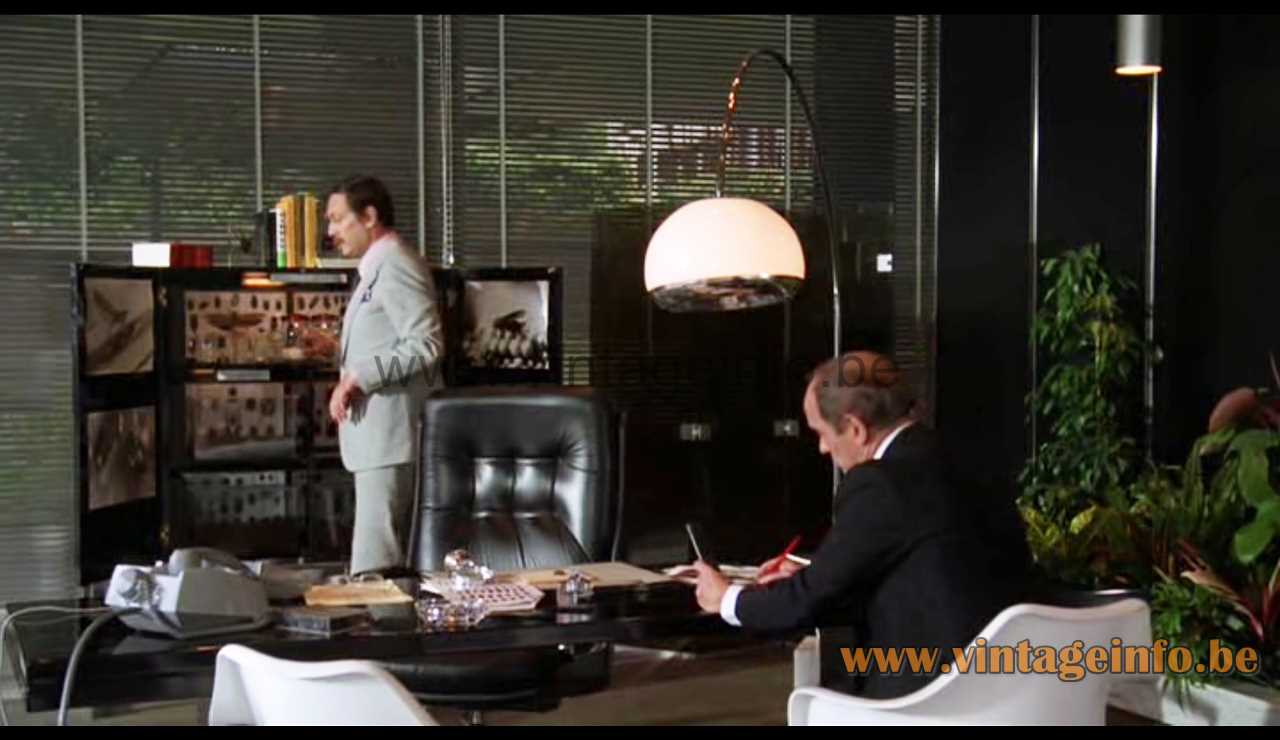
The arc floor lamp version of this acrylic globe floor lamp was used as a set decoration in the 1976 French comedy film Un Éléphant Ça Trompe Énormément (Pardon Mon Affaire). Starring Jean Rochefort, Claude Brasseur and Guy Bedos. Many other lamps appear in this movie.
Bloodline (1979)
The arc floor lamp version of this acrylic globe floor lamp appears in the 1979 thriller film Bloodline. Starring Audrey Hepburn, Ben Gazzara, James Mason, Romy Schneider and Omar Sharif.
Links (external links open in a new window)
Piero De Martini un’esperienza nel design 1970-20 – Book at Bol.com
Harvey (1950) – the movie – Wikipedia
Bloodline (1979 film) – Wikipedia
Un Éléphant Ça Trompe Énormément (1976) film – Wikipedia
Un Éléphant Ça Trompe Énormément (1976) film – IMDb
Vintageinfo
Curved chrome slats chandelier
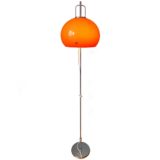
Acrylic Globe Floor Lamp
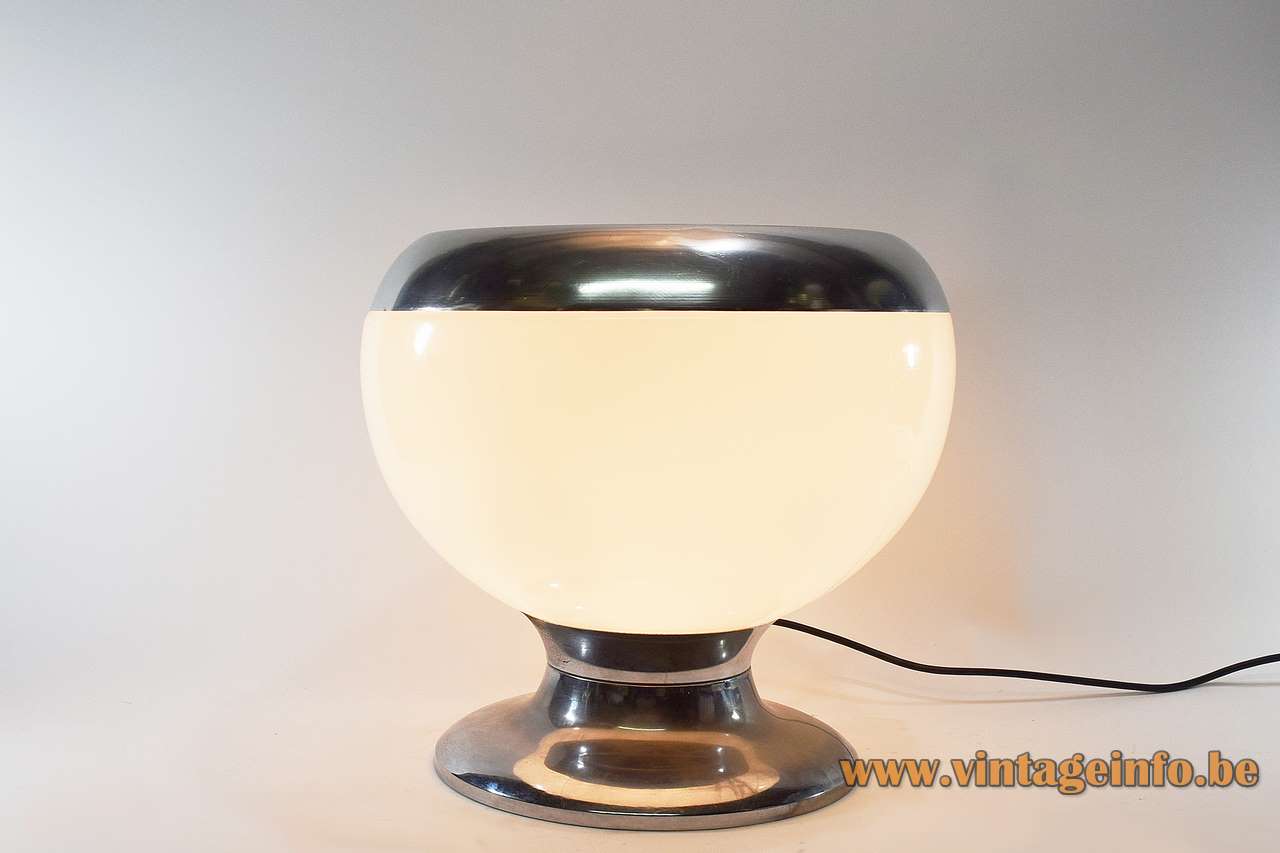
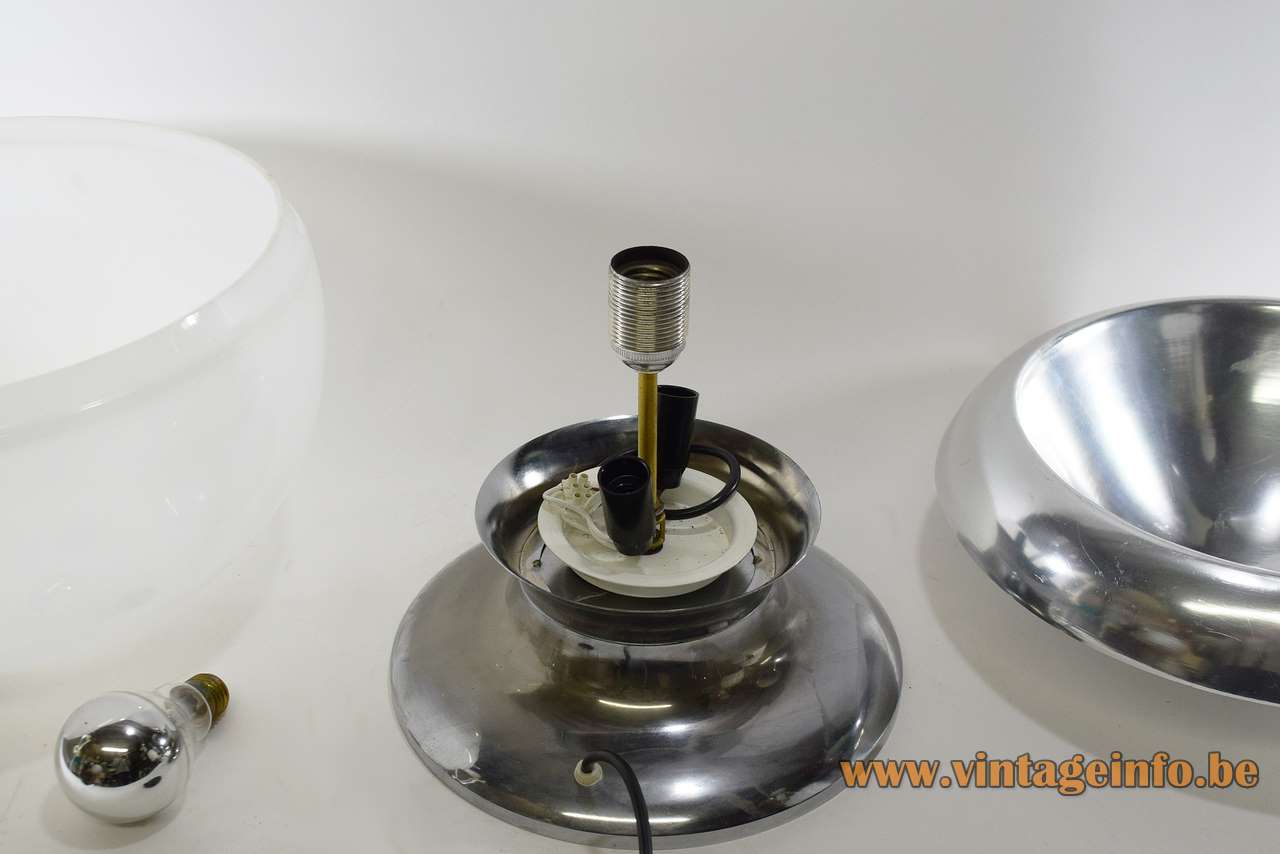
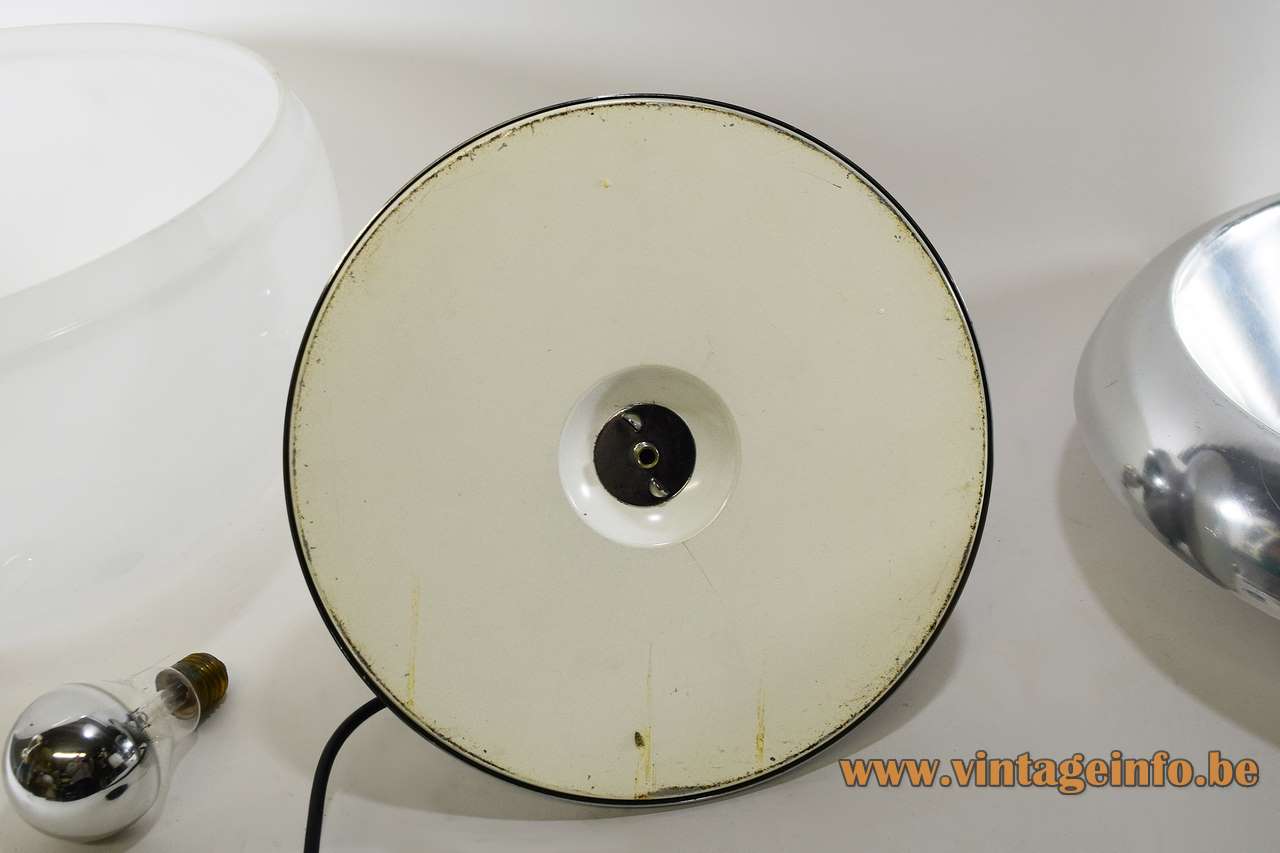
Materials: Chromed metal (iron) round base. Round metal lid on the bottom. Some metal and brass parts inside the base. Half round white acrylic lampshade. Some metal parts. Pressed aluminium reflector. 3 Bakelite sockets.
Height: 37 cm / 14.56”
Width: ∅ 40 cm / 15.74”
Base: ∅ 29,8 cm / 11.73”
Electricity: 1 bulb E27, 1 x 75 watt. 2 bulbs E14, 1 x 40 watt maximum, 110/220 volt.
No specific type of light bulb is required; different types can be used.
For this setup a silver cupped light bulb was used. Inside 2 frosted normal E14 bulbs.
Period: 1960s, 1970s – Mid-Century Modern.
Designer: To be appraised.
Manufacturer: Leola-Leuchte GmbH, Leyherstraße 14, Fuerth, Germany.
Other versions: This acrylic globe floor lamp exists in two versions: this model and an arc floor lamp with a cubic marble base. The light bulbs inside can be switched on separately. Pendant lamps were also made, with or without a rise-and-fall mechanism. There is also a floor lamp with the same mechanism as the table lamp shown in the 1973 catalogue photo on this page.
Harvey Guzzini – Laurel Lamp MFG
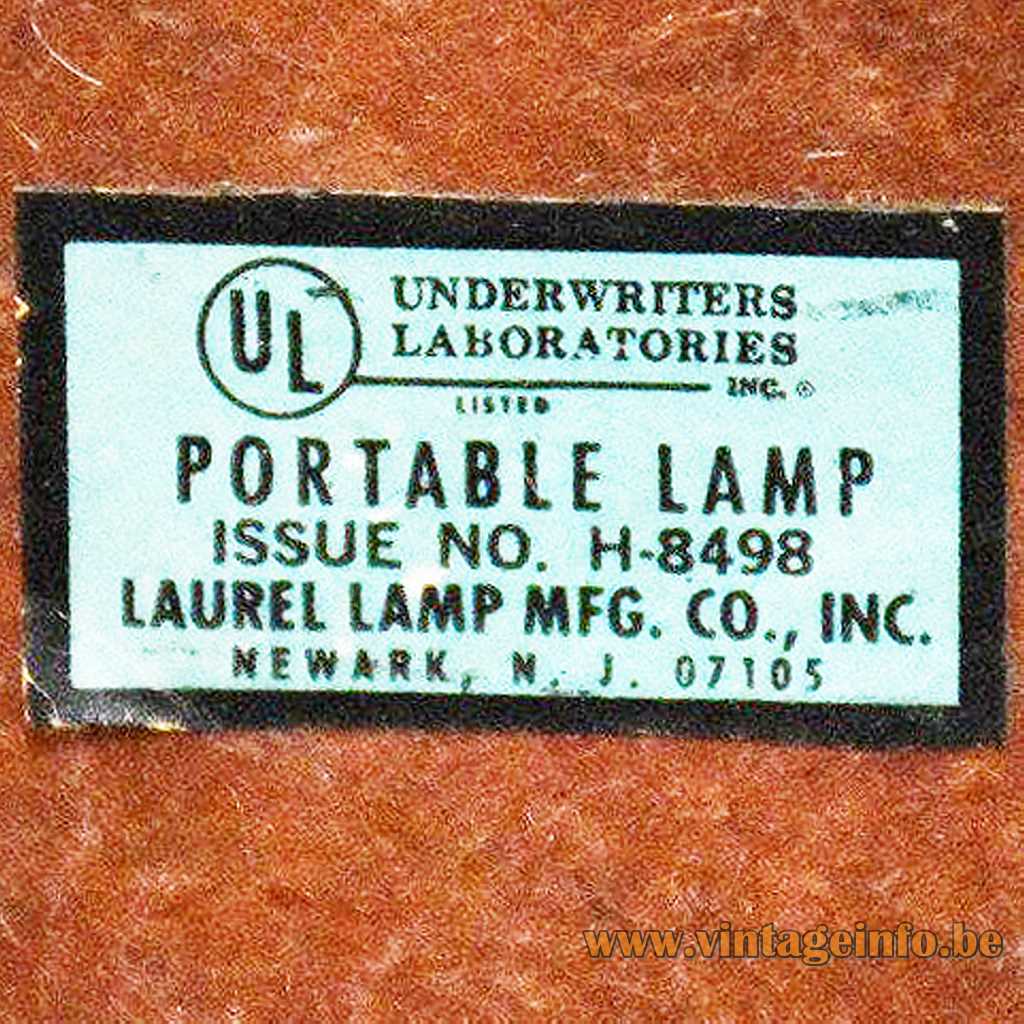
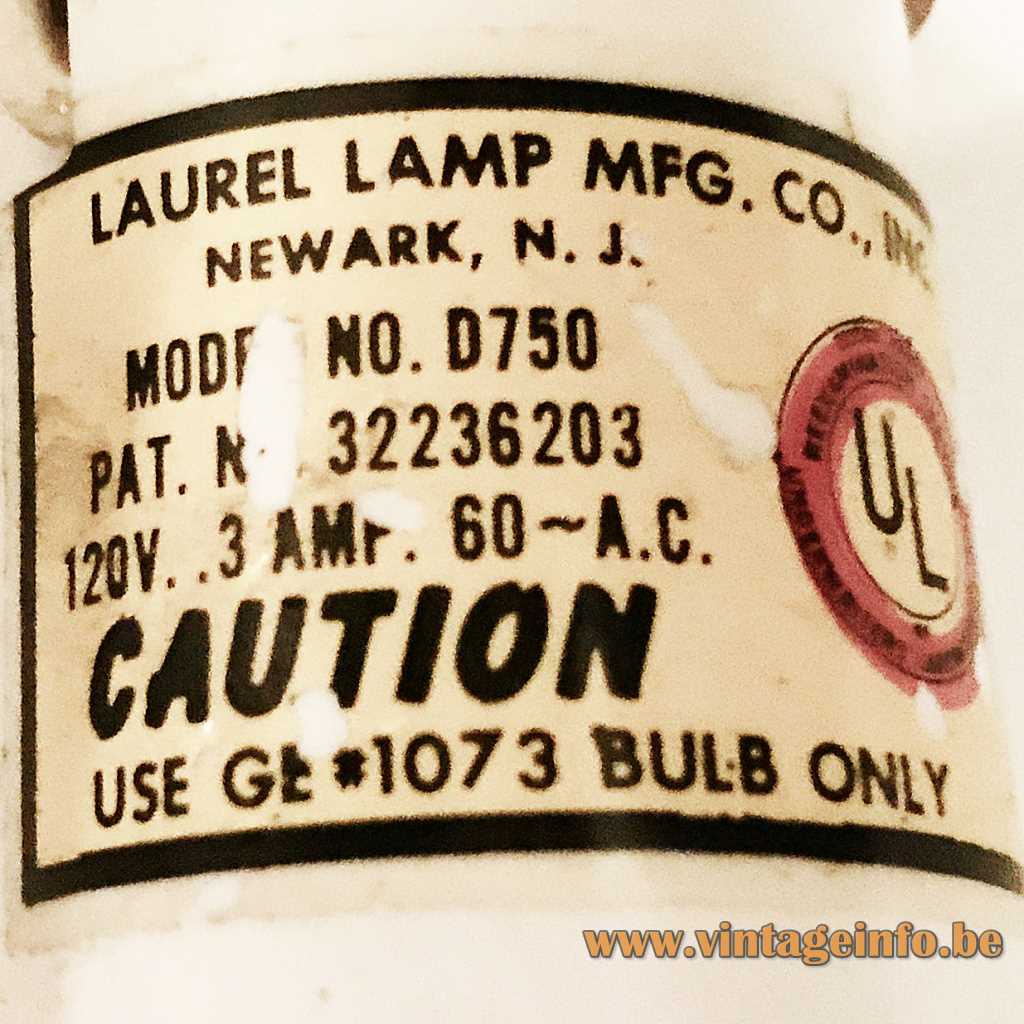
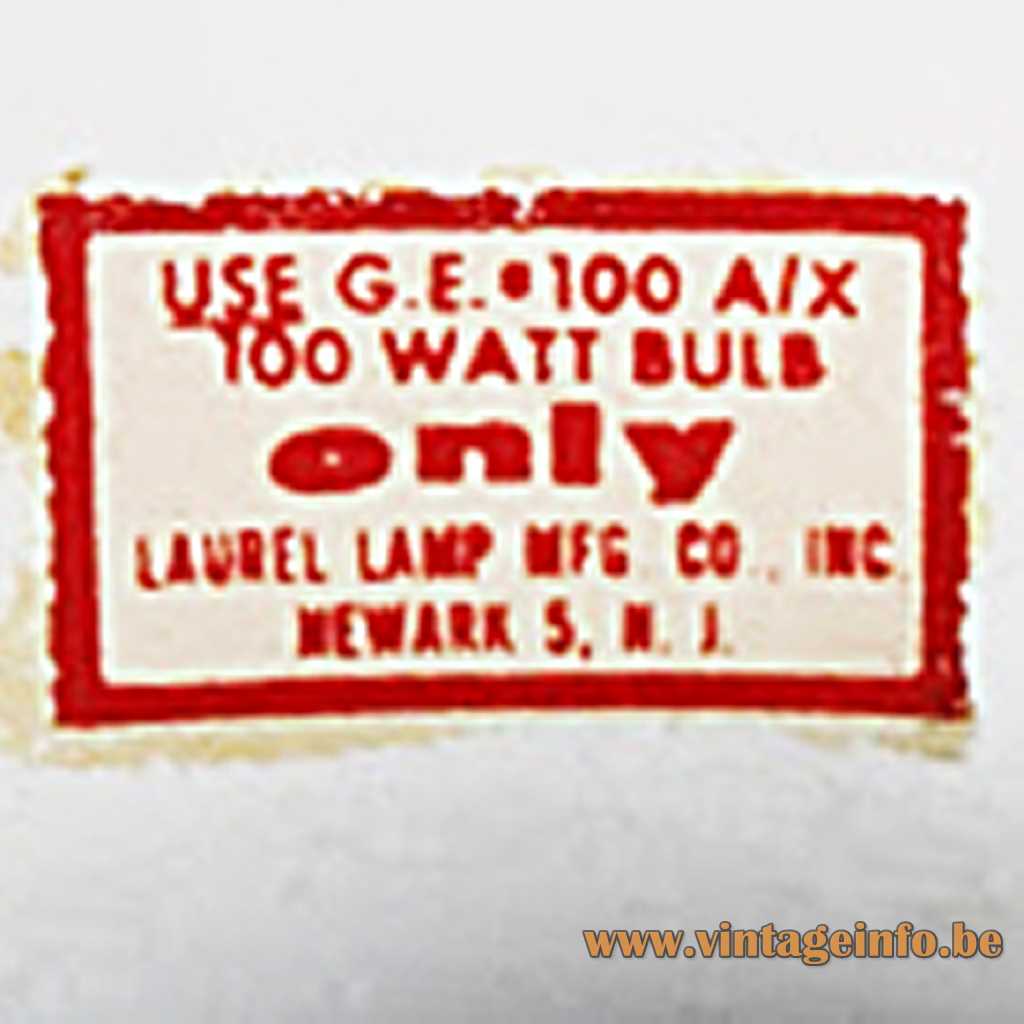
This floor lamp is rarely seen, while the arc floor lamp is much more common. The arc version has the same globe, the same parts and three lamp sockets. It is almost always described as a Harvey Guzzini floor lamp for Laurel, an American company. However, in more than 20 years, I have only seen one example with a label from Laurel Lamp MFG Co. Inc. I have never seen a label from Harvey Guzzini, which would be unusual for a lamp by that company. My own arc floor lamp and this acrylic globe floor lamp are also without a label.
It seems unlikely that Laurel produced these lamps, as my examples were found in Germany and Belgium. Many of these lamps also turn up in Europe, including in France, as shown here.
Certainly in the Harvey Guzzini style, but not a lamp by Guzzini.
De Martini, Falconi & Fois
This series of lamps shows the strongest resemblance to the lamps that De Martini, Falconi & Fois designed for Reggiani, although there may be minor differences.
Do you have more information? Please let us know through the contact form and help improve the accuracy of this website.
The German company LEOLA did sell this lamp, as shown in the 1973 catalogue photo, but the actual manufacturer was probably a different company. That catalogue includes many lamps made by other manufacturers.
LEOLA
The German company LEOLA was originally based at Leyherstraße 14 in Fürth. Its exact founding year is unknown for the moment, but this catalogue photo from 1973 confirms that the company was active by then.
In 2009, LEOLA relocated to Schweppermannstraße 77 in 90409 Nuremberg, and in 2012 it moved again to Ostendstraße 241. The company’s last managing director was Michael Pietsch.
While LEOLA distributed a wide range of lamps by other manufacturers, it also produced its own designs. Designers such as Cari Zalloni and Gaetano Sciolari also created pieces for the company.
LEOLA was officially liquidated in 2017, although its website remained online until 2020. An archived version of the site can still be accessed through the link below.
Laurel
The American Laurel Lamp Company was founded in 1946 in Newark, New Jersey, by Max, Murray and Harold Weiss, and remained active until 1981. The company designed and manufactured lighting and home furnishings at its Newark facility near Rome & Magazine Streets. Early 1980s trade listings also mention 111 Rome Street as the company’s address.
Laurel combined substantial in-house design work, led by Harold Weiss and including designs by Richard “Dick” Barr, with European collaborations, notably with the House of Salviati in Murano in 1971 and with Pierre Cardin in 1977.
In addition to its own designs, Laurel also distributed lamps from European manufacturers, including AV Mazzega from Murano and several other Italian and European makers. Although production took place in Newark, the company often incorporated imported glass, especially Murano glass, and other imported components.
The company was acquired by Instrument Systems Corporation in 1969 and was dissolved in 1981. The remaining assets were purchased by Westwood Lighting Group in 1983.
Martini Falconi Fois Architetti
Martini Falconi Fois Architetti was a design bureau founded by Piero De Martini, Laura Falconi and Francesco Fois. The studio designed several lamps for Reggiani. Piero De Martini, born in Milan in 1939, is the best-known designer of the three. He graduated in Architecture in 1964.
From 1969 onward he worked as a designer, and in 1975 he began collaborating with furniture maker Cassina. In addition to his work as a designer, he also devoted himself to music. In 2018, Piero De Martini published the book Le case della musica through Il Saggiatore.
Reggiani
Goffredo Reggiani founded the company in the Italian town of Monza in 1957 and designed most of the lamps himself. In the beginning, Goffredo often used plywood and satin opal glass in his designs, giving his lighting a Scandinavian character. Later, during the 1960s and 1970s, his focus shifted towards brass and chromed metal.
Designers and studios that have worked for Reggiani include Álvaro Siza, Arup, Bruno Gecchelin, D’Alesio & Santoro, Fabio Reggiani, Fisher Marantz Stone, L.A.P.D., MOMO Design, Rogers Stirk Harbour + Partners (RSHP), Setsu & Shinobu, Speirs + Major, and of course the in-house Reggiani design team.
The Reggiani company still exists today. It is active in 80 countries and has offices in Italy, the USA, the UK, China, France and Russia.
Acrylic: often referred to by commercial names such as Perspex, Plexiglas, Crylux, Acrylite and Lucite, is a thermoplastic material.
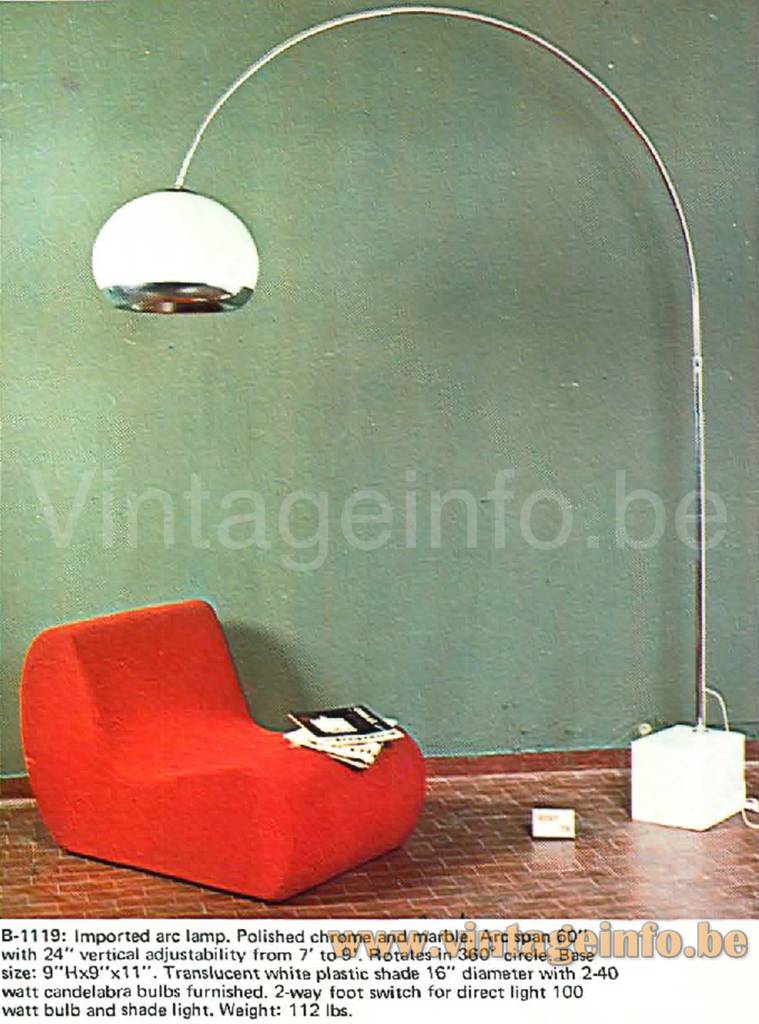
Acrylic Globe Floor Lamp – 1974 Laurel Lamp Company Catalogue Picture
The arc floor lamp of this globe floor lamp.
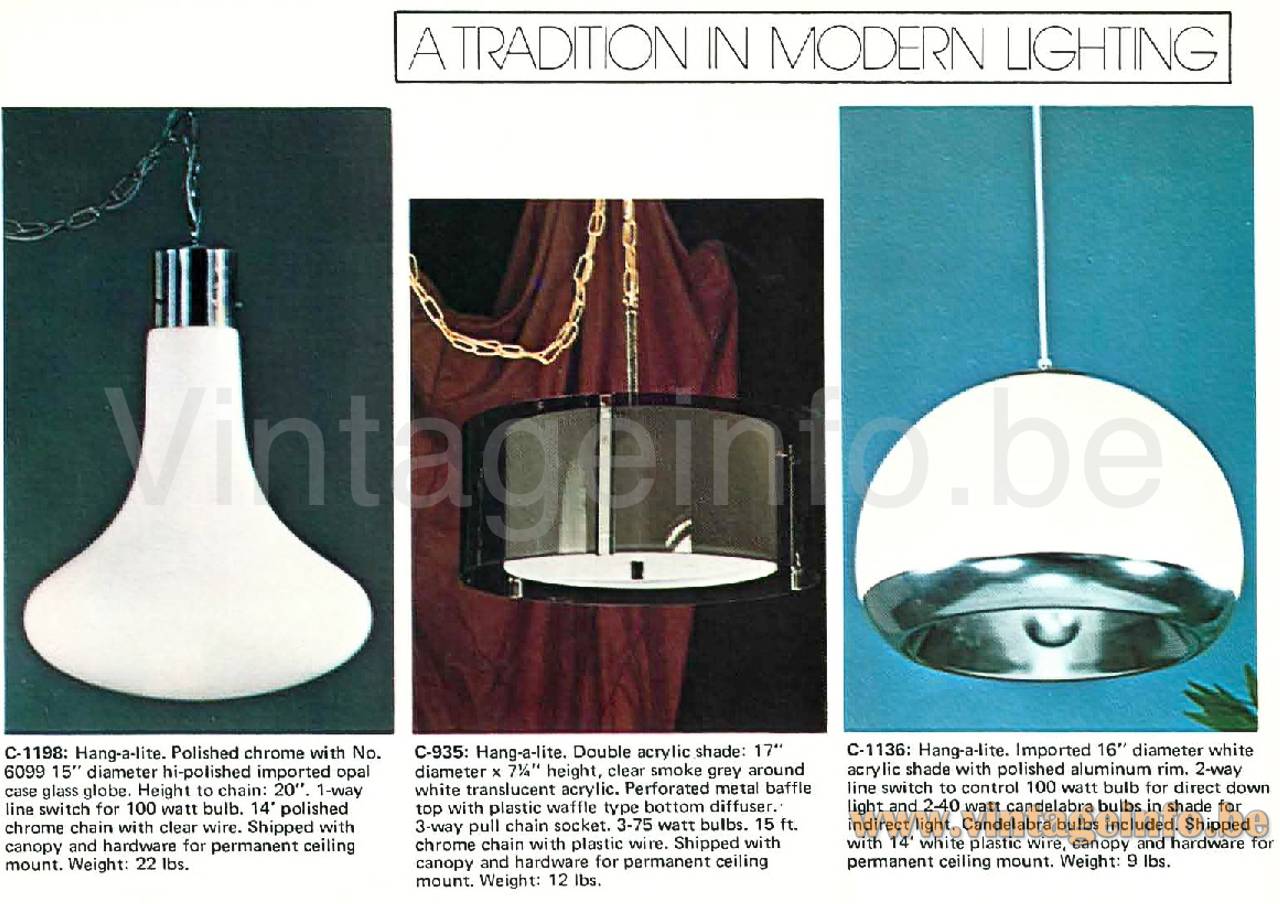
Acrylic Globe Floor Lamp – 1974 Laurel Lamp Company Catalogue Picture
This pendant lamp seems to be the hanging version of the globe floor lamp. The lamp on the left is an AV Mazzega design by Carlo Nason, in fact the upper part of his floor lamp model LT 220. Laurel may have marketed it as a pendant lamp, since this version does not appear in any AV Mazzega catalogue known to me.
Acrylic Globe Floor Lamp – Company Labels