- Categories
- Categories
Last 5 Viewed
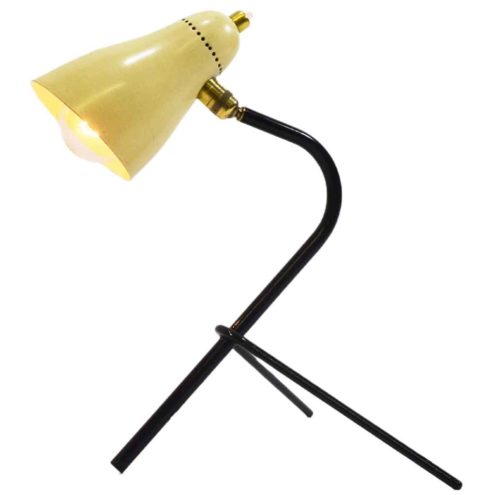
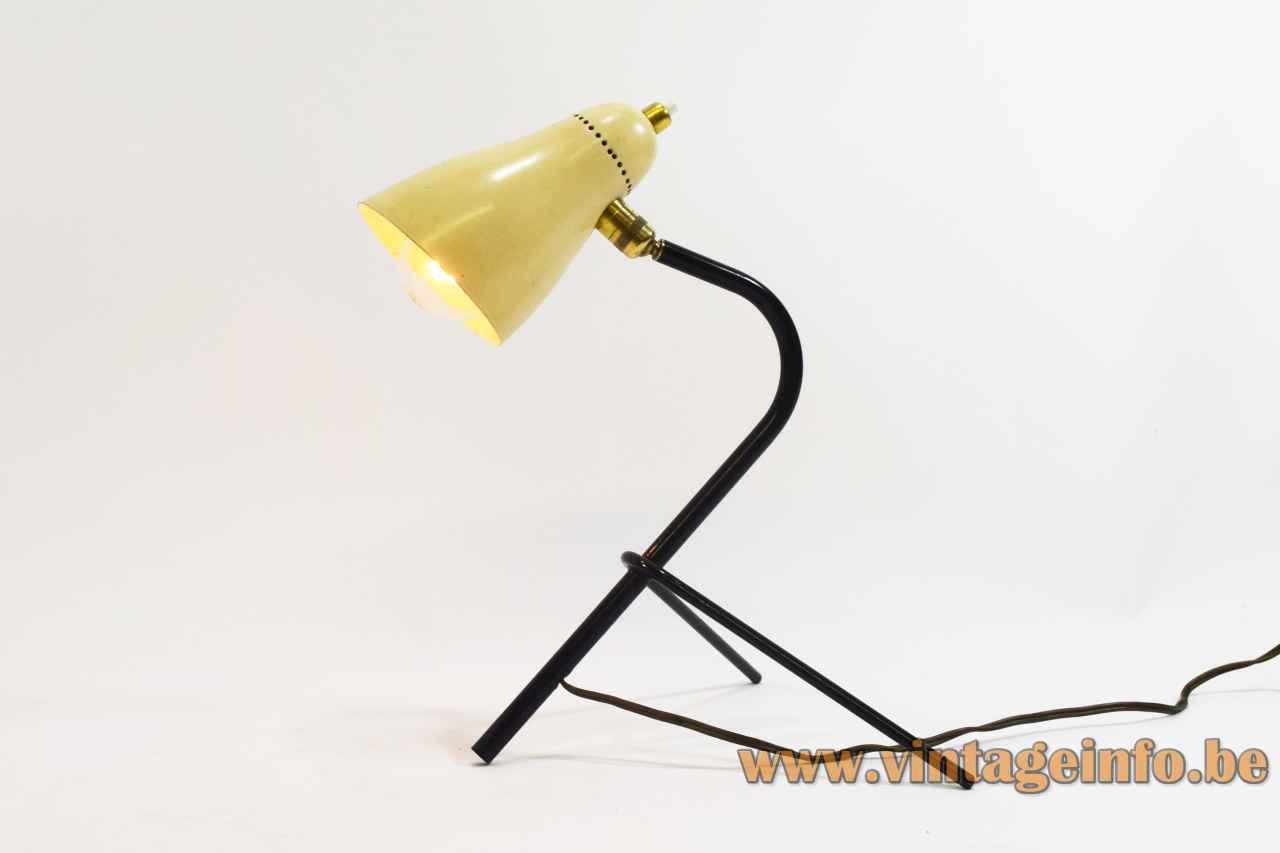
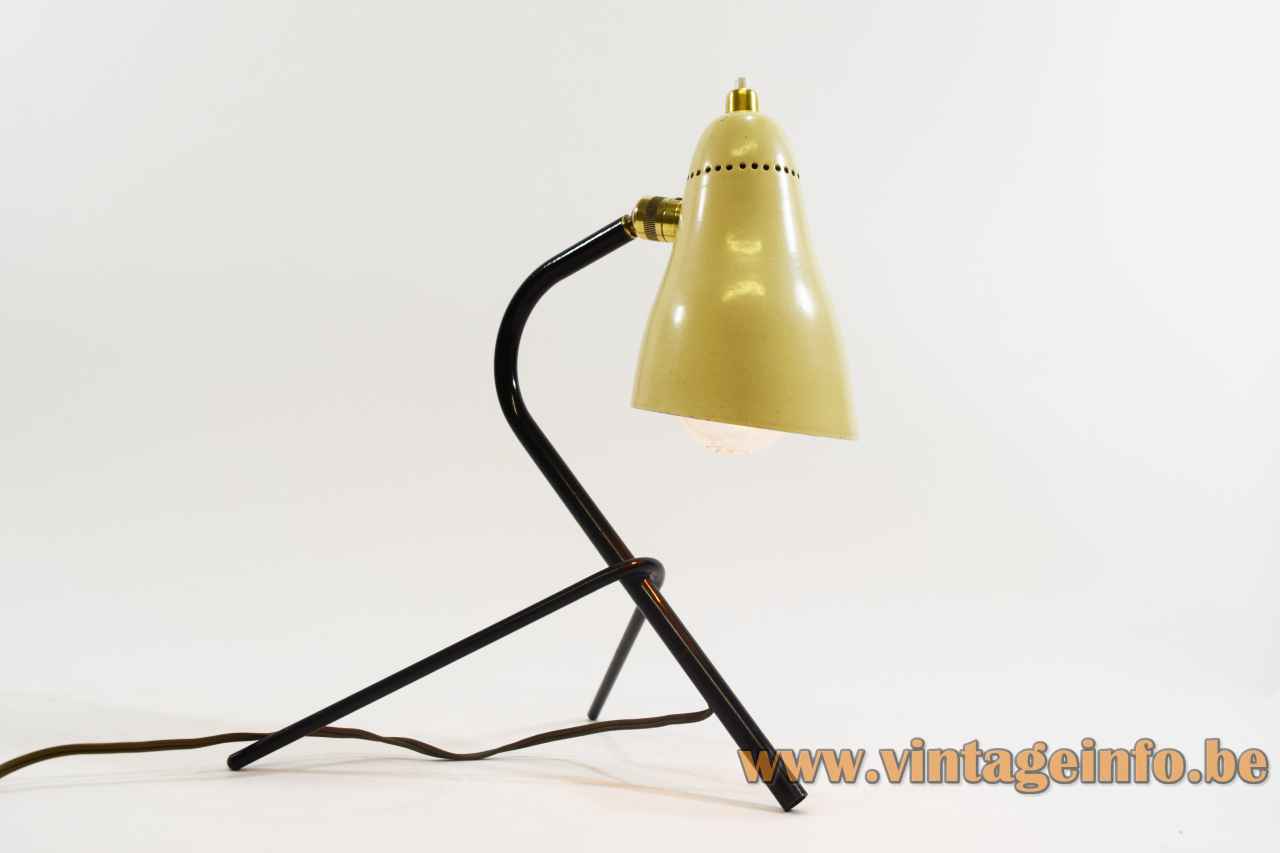
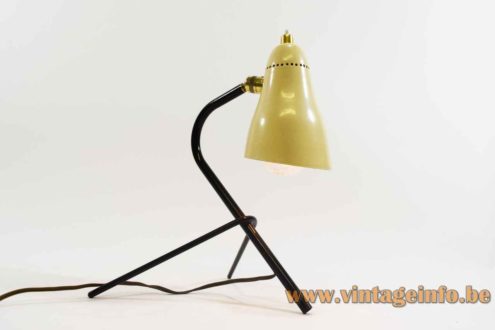
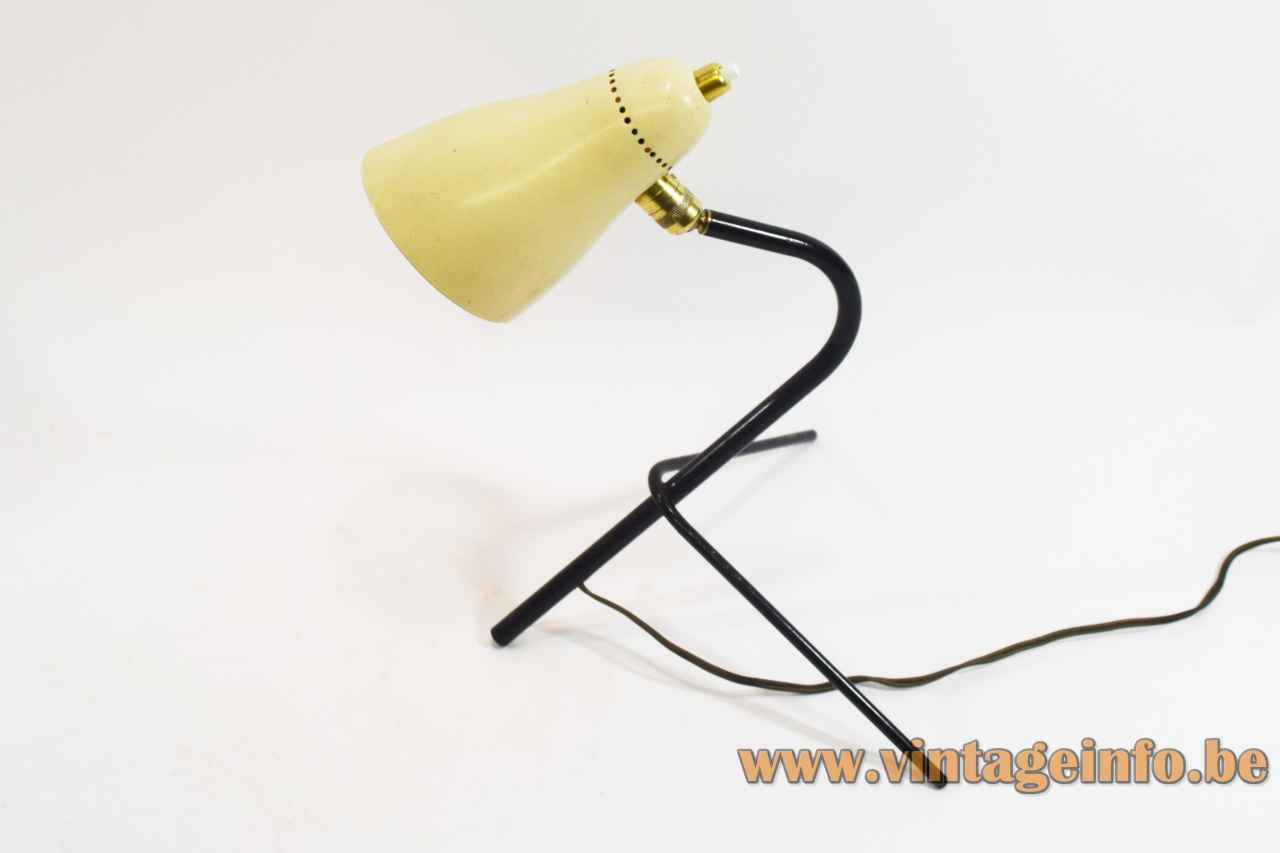
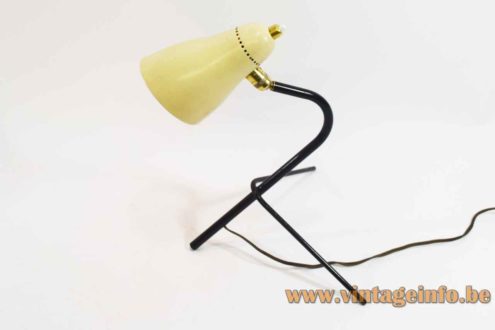
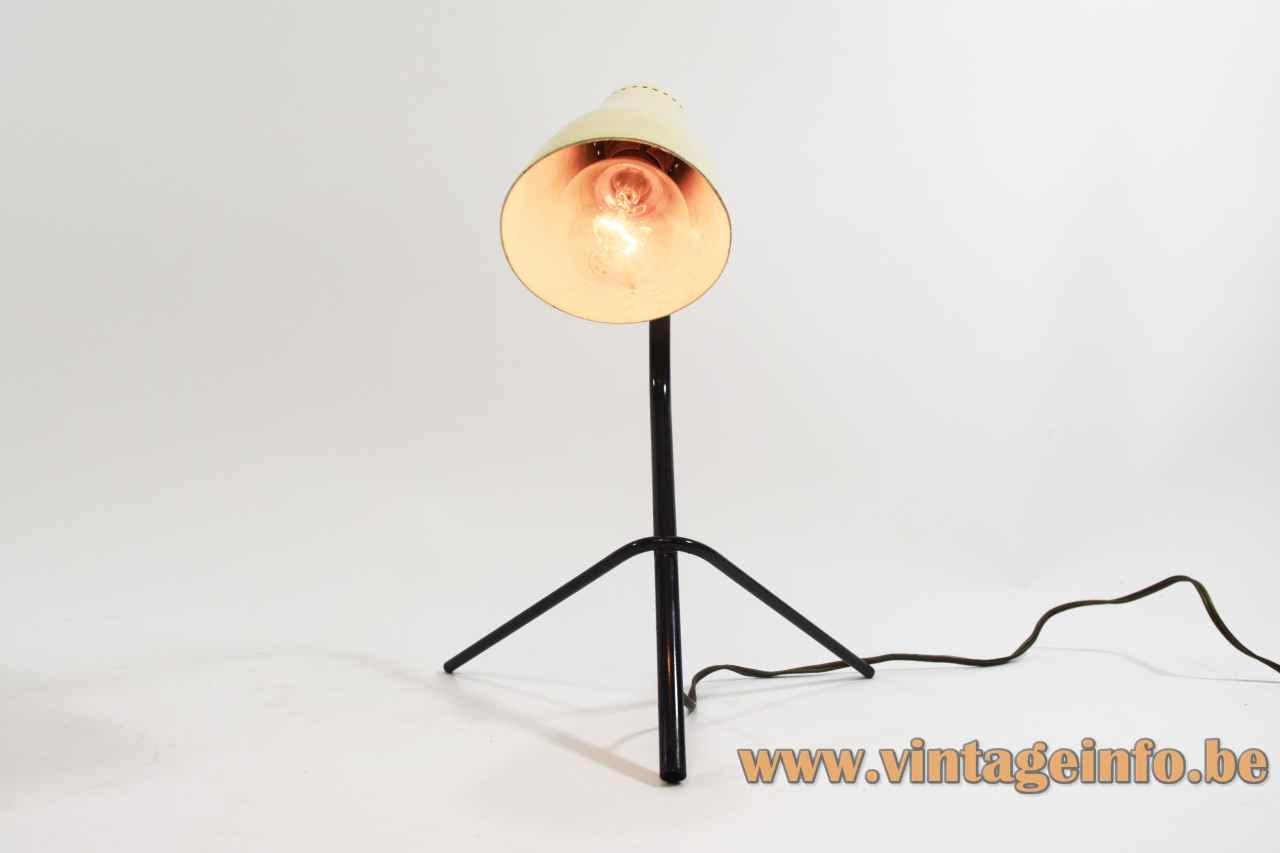
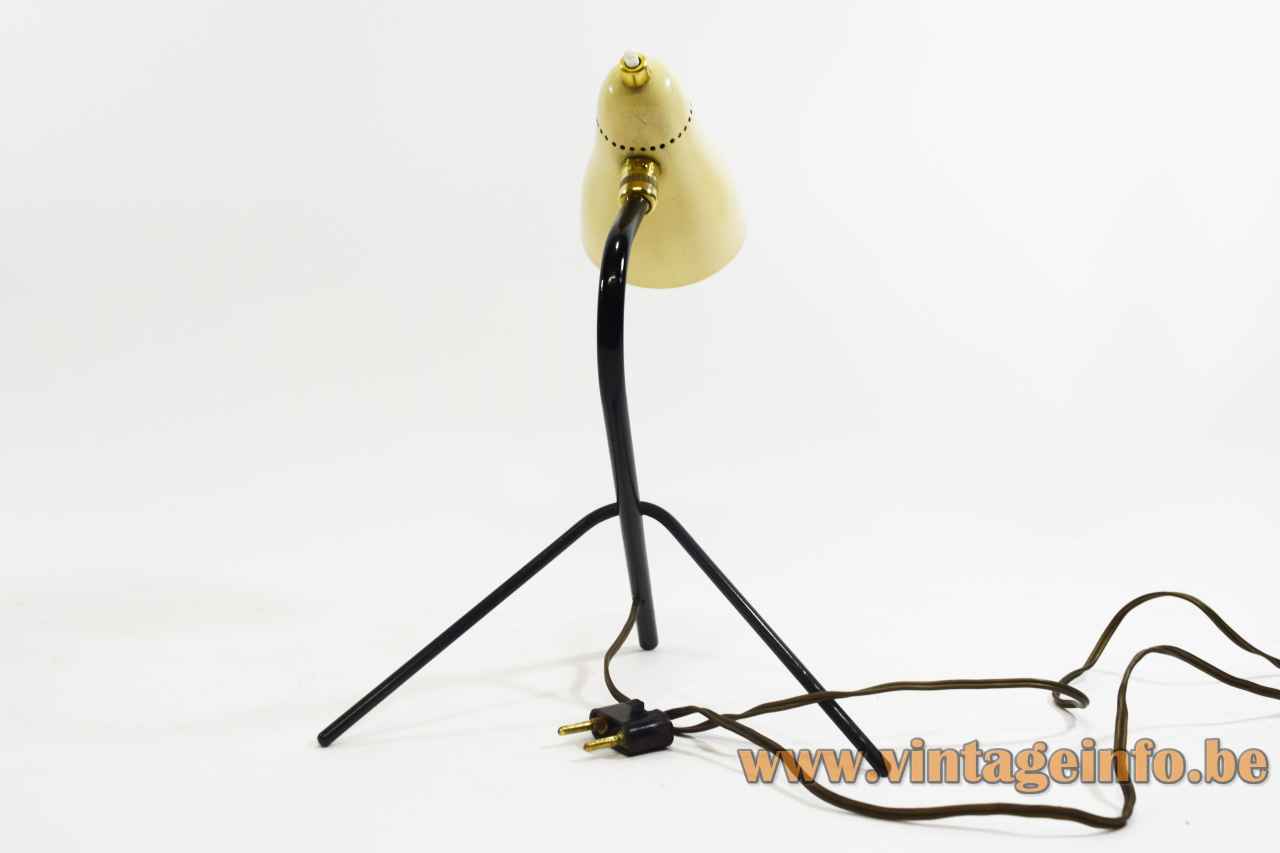
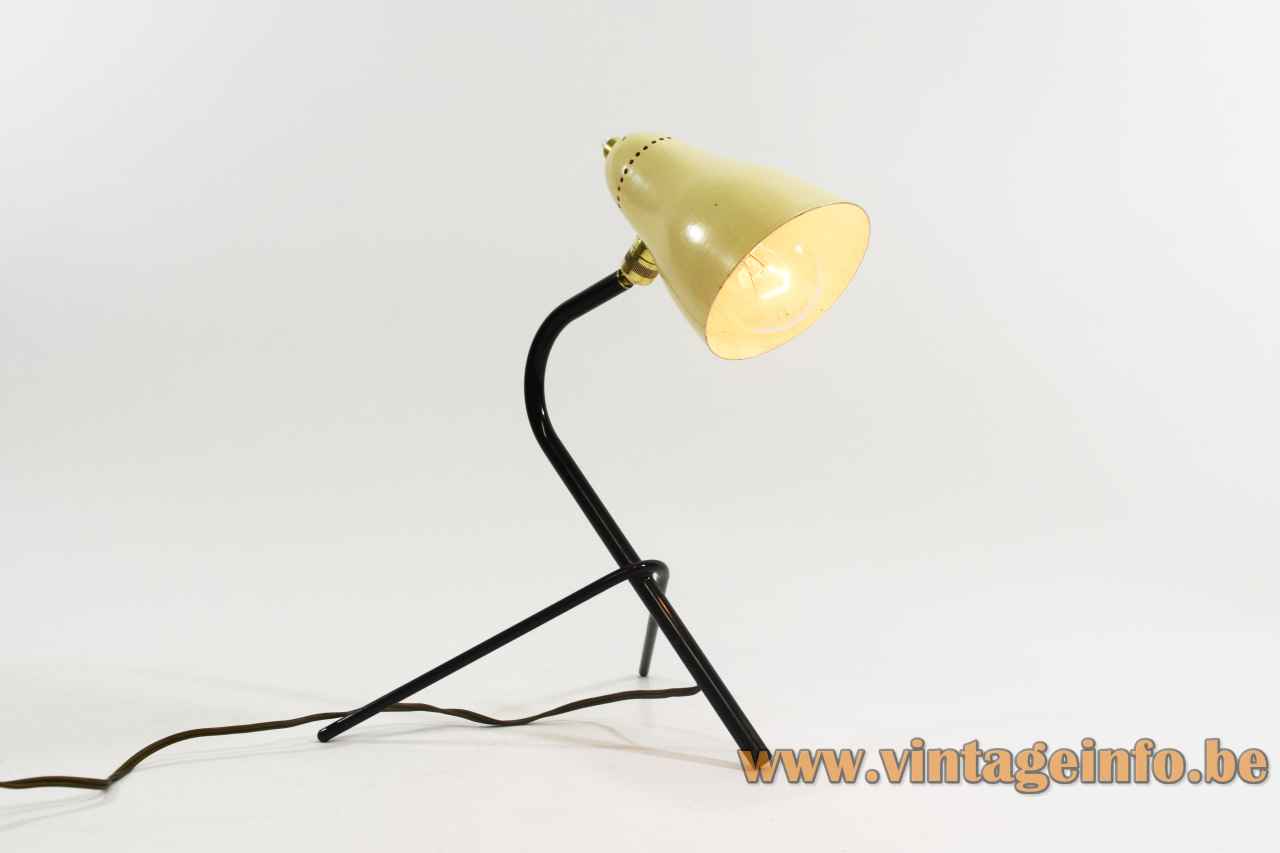
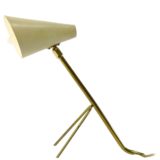
Oluce 1950s Tripod Desk Lamp
Giuseppe Ostuni
Giuseppe Ostuni (1907–1991) was an Italian designer and entrepreneur, best known as the founder of Oluce and as one of the key figures in post-war Italian lighting design. His work is characterised by a clear focus on functionality, construction and the careful refinement of form.
Among his most recognisable designs is the Ochetta table lamp, model 215 (1952). A defining element of this lamp is its metal lampshade: a simple, reduced volume that combines visual lightness with precise light control. Rather than treating the shade as a decorative cover, Ostuni conceived it as an integral architectural component of the lamp. The Ochetta lampshade exemplifies Ostuni’s approach to design. Its proportions, curvature and openness allow light to be directed while maintaining a clear, readable silhouette. This rational and adaptable shade design proved highly versatile and would later reappear, with variations, in other lamps produced and distributed by different companies.
The lampshade used on this lamp closely corresponds to that of the Ochetta model 215, confirming a direct formal and technical relationship. Such continuity of components was typical of Ostuni’s work and reflects the practical, modular thinking that underpinned much of early O-Luce production.
Through designs like the Ochetta, Giuseppe Ostuni helped establish a new language for modern Italian lighting—one in which clarity of form, technical logic and everyday usability were inseparable.
Oluce 1950s Tripod Desk Lamp
Materials: Black painted metal rods base. Adjustable yellow-ochre conical perforated aluminium lampshade. Brass joint. Some brass and metal parts. Brass B22 socket.
Height: 28 cm / 11.02”
Lampshade: ∅ 8,5 x 12,5 cm / 3.34 x 4.92”
Base: 20 x 20 cm / 7.87 x 7.87”
Electricity: 1 bulb B22, 1 x 60 watt maximum, 110/220 volt.
Any type of light bulb can be used. Not a specific one preferred.
Period: 1950s, 1960s.
Designer: Giuseppe Ostuni.
Manufacturer: Oluce, Via Brescia, 2, 20097, San Donato Milan, Italy – attributed.
Other versions: This Oluce 1950s tripod desk lamp comes in several colours. Several lamps with the same lampshade were made. Made with an E14 and a B22 socket.
Several Oluce lamps fitted with this Ochetta-type lampshade were also marketed outside Italy. In France, they were sold by Dek-A-Lux / DWEK, the company of Albert Dwek, while in Switzerland they were distributed by enzlinger + Schaerer. For these companies, Oluce produced the Ochetta models 215 and 216, and possibly additional variants.
The same lampshade design can also be found on lamps by other manufacturers, including Gilardi & Barzaghi in Italy and T.Pons in Spain. Whether these firms copied the lampshade independently, or whether it was produced for them by Oluce or a shared supplier, remains unclear.
Oluce – O-Luce
The Italian lighting company Oluce was founded in 1945 by Giuseppe Ostuni. It is widely regarded as the oldest Italian design company in the lighting sector still in operation today. From the very beginning, Oluce positioned itself at the intersection of industrial innovation, architectural thinking and high-quality craftsmanship.
During the post-war years, Oluce played a key role in shaping modern Italian lighting design. The company became known for its willingness to experiment with new materials, advanced production techniques and progressive forms, often anticipating broader developments in modern and contemporary design.
One of the defining moments in the history of Oluce was its long-standing collaboration with Joe Colombo, whose radical and futuristic designs perfectly matched the company’s experimental spirit. Iconic models such as the Spider lamp (1965), which won the Compasso d’Oro in 1967, and the Coupé lamp (1967), later designed by Joe Colombo and refined by Alberto Meda, became international design classics and remain in production to this day.
Another crucial figure in Oluce’s history is Vico Magistretti, whose work for the company resulted in some of its most enduring and recognisable designs. Lamps such as the Atollo (1977), awarded the Compasso d’Oro in 1979, have become timeless icons of Italian design and are today part of the permanent collections of major international museums.
Over the decades, Oluce collaborated with an impressive roster of renowned designers and architects. Among them are Angelo Ostuni, Achille, Livio and Pier Giacomo Castiglioni, Franco Buzzi, Joe and Gianni Colombo, Marco Zanuso, Tito Agnoli, Angeletti & Ruzza, Antonia Astori & Nicola De Ponti, Bruno Gecchelin, Stefano Casciani, Francesco Rota, Victor Vasilev, Ferdi Giardini and many others.
Oluce has received numerous international design awards over the years, including several Compasso d’Oro awards, confirming its central role in the history of Italian and international lighting design.
Throughout its history, Oluce has consistently balanced innovation with continuity, maintaining a strong connection to its design heritage while continuing to work with contemporary designers. This approach has ensured the lasting relevance of the brand within the international design landscape.
For a complete overview of the company’s current collections and official history, see the Oluce website.
Links (external links open in a new window)
Vintageinfo
Oluce 1950s Tripod Desk Lamp – Company Labels & Logos