- Categories
- Categories
Last 5 Viewed
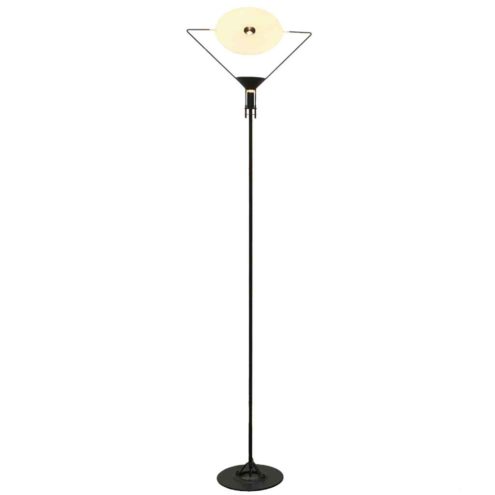
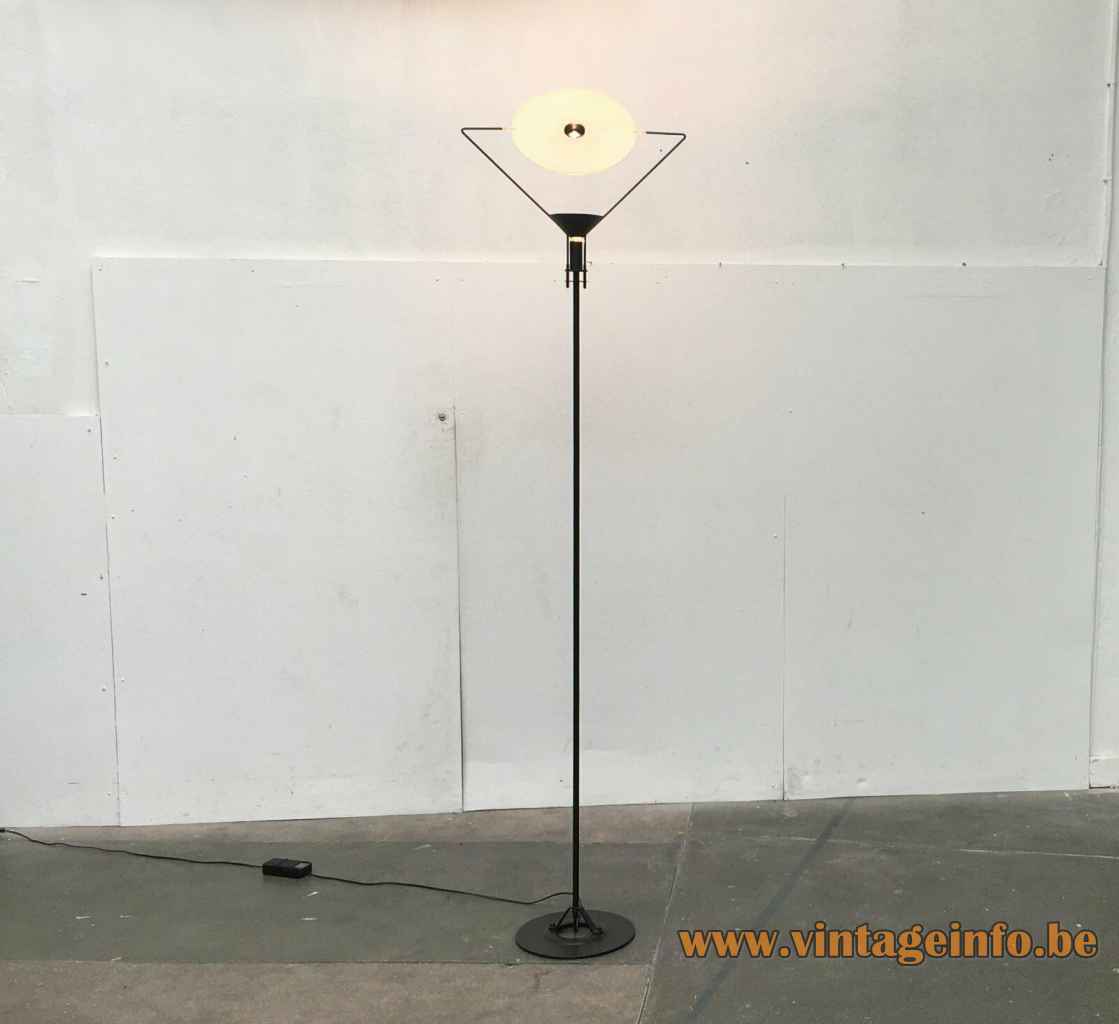
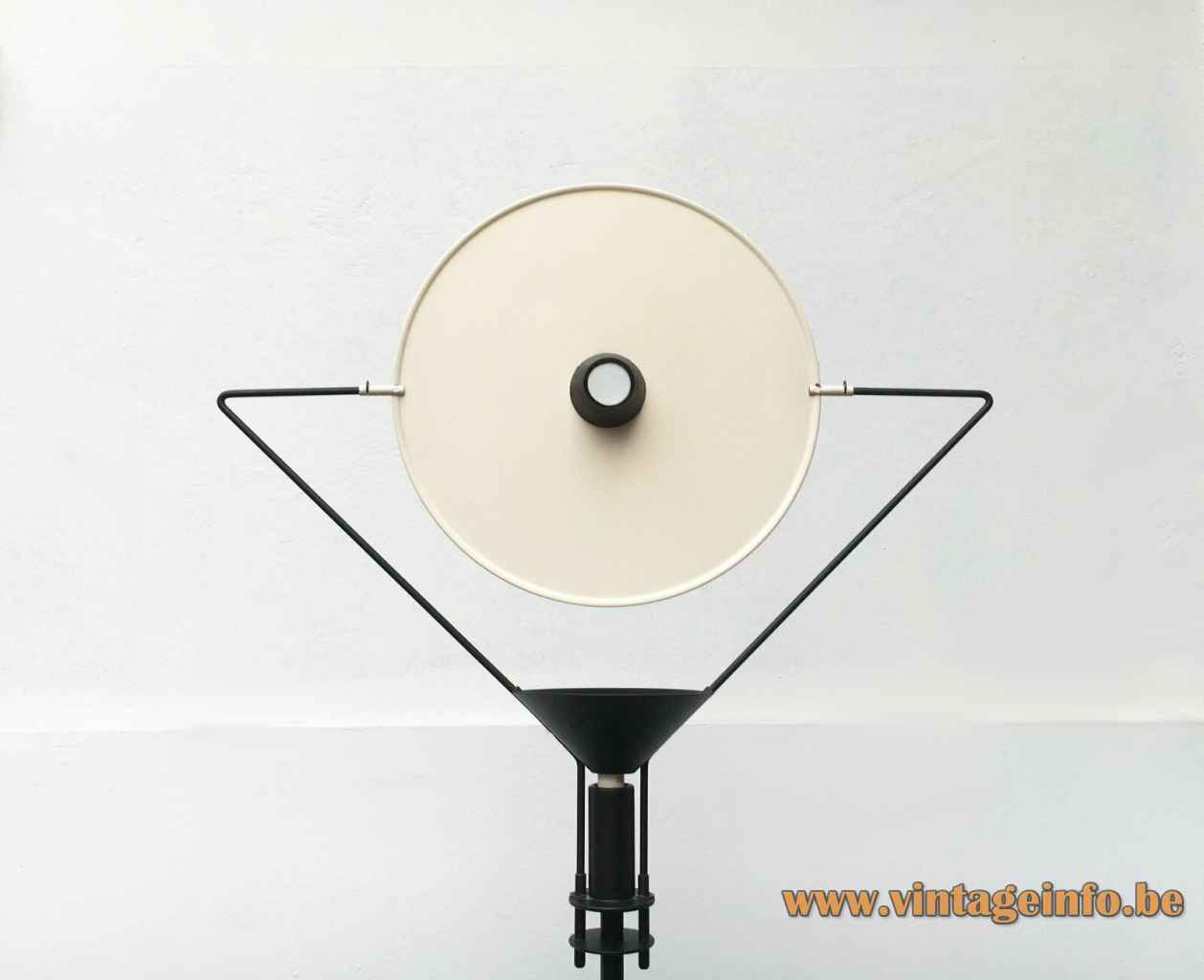

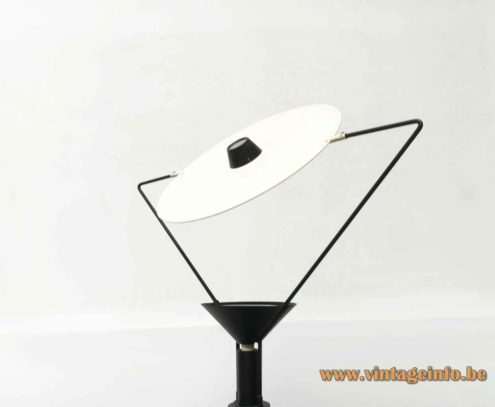
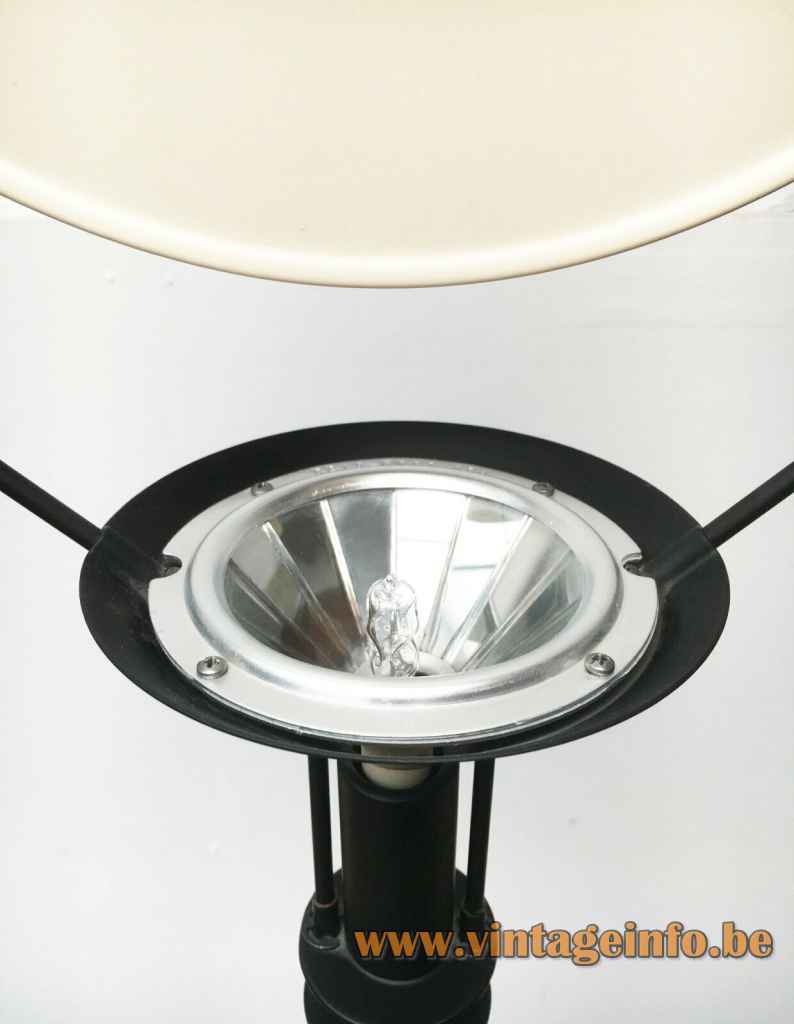
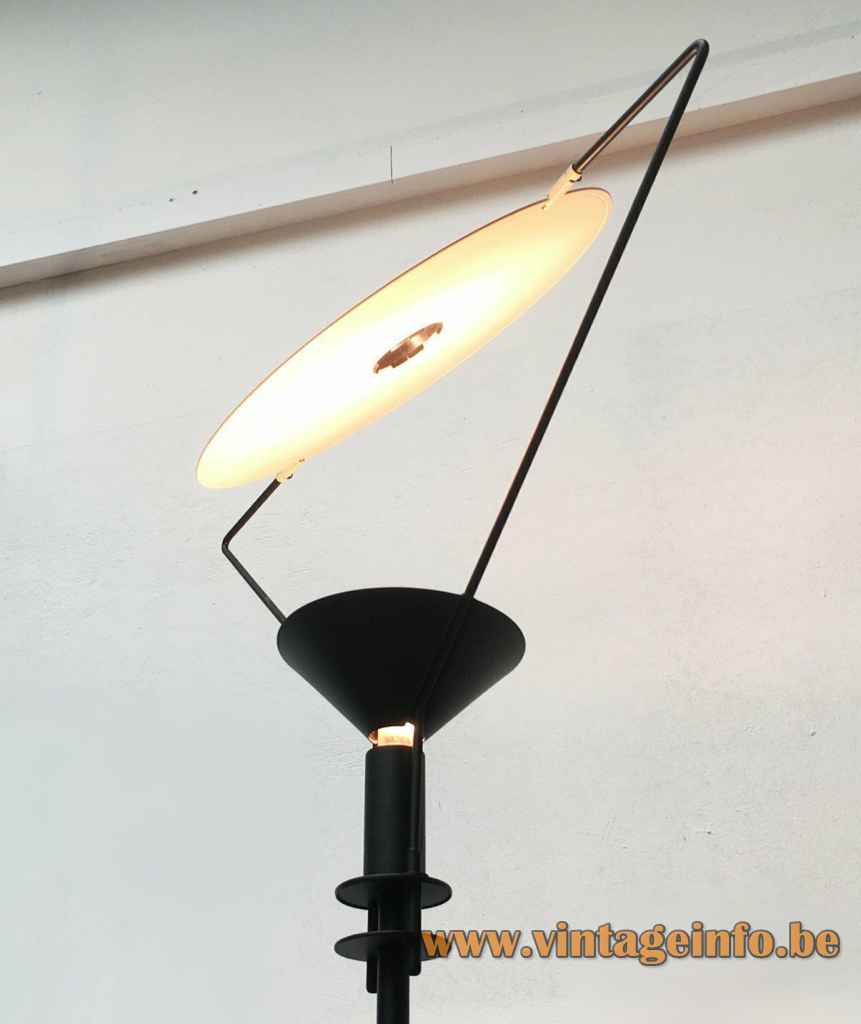
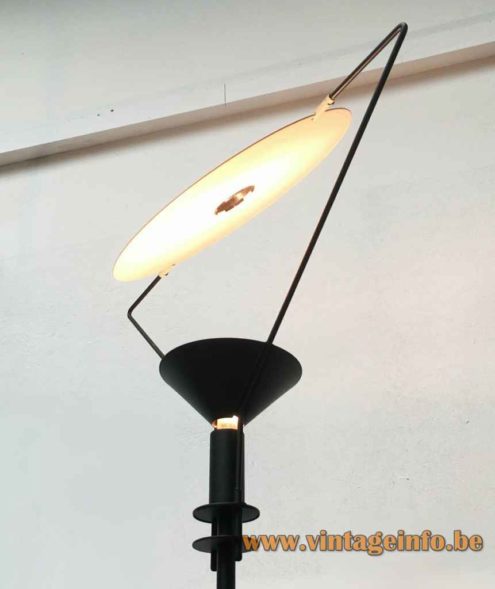
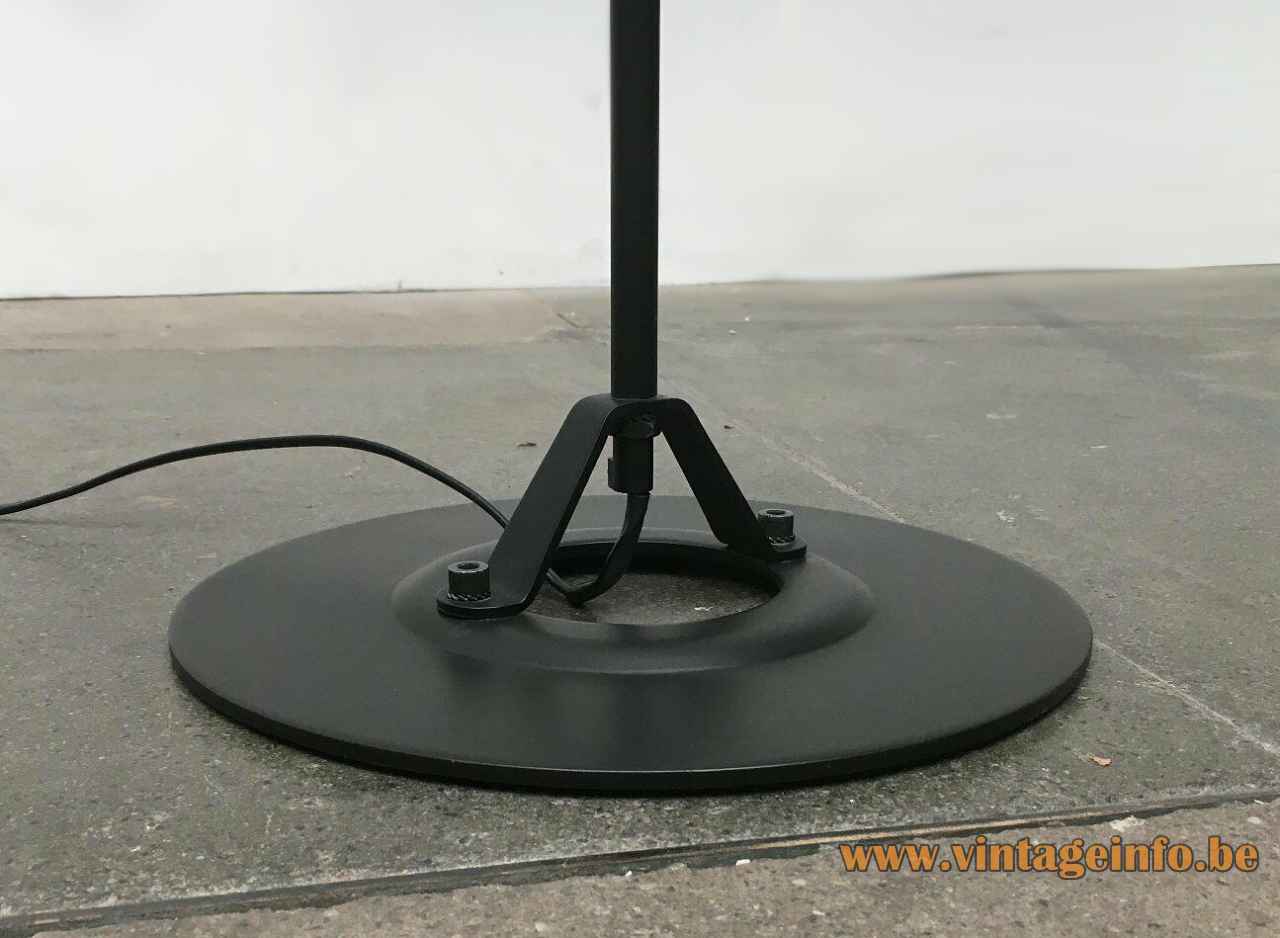
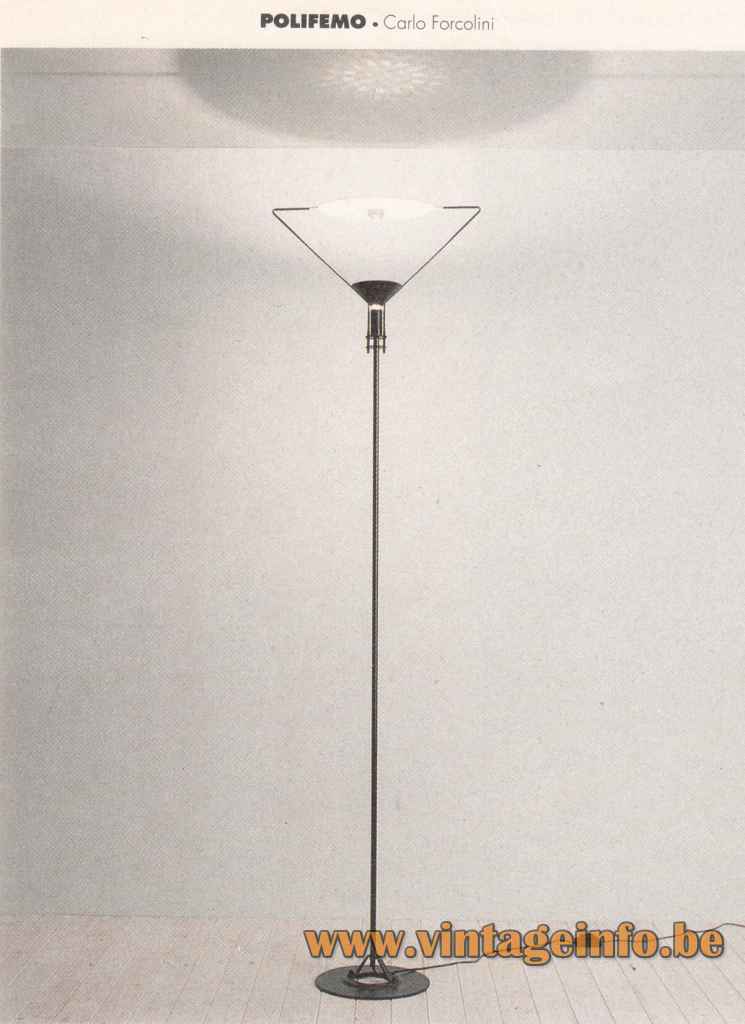
Artemide Polifemo floor lamp – 1992 catalogue picture
Links (external links open in a new window)
Carlo Forcolini – Artemide website (archived)
Artemide design in the MoMA – Museum of Modern Art NY
Vintageinfo
The Artemide Polifemo in the 1992 catalogue
Many thanks to Frank from nullviernull raum+kommunikation for the pictures. You can find his shop over here on Pamono.
Artemide Polifemo Floor Lamp
Materials: Black painted metal round base. Black painted metal rod. 2 folded black rods. Adjustable glass disc with an inner lens. Some metal and plastic parts. Mirror halogen reflector. Porcelain B15d socket.
Height: 215 cm / 84.64”
Width: 50 cm / 19.68”
Base: ∅ 30 cm / 11.81”
Electricity: 1 halogen light bulb, 1 x 250 watt maximum. 110/220 volt.
Period: 1980s.
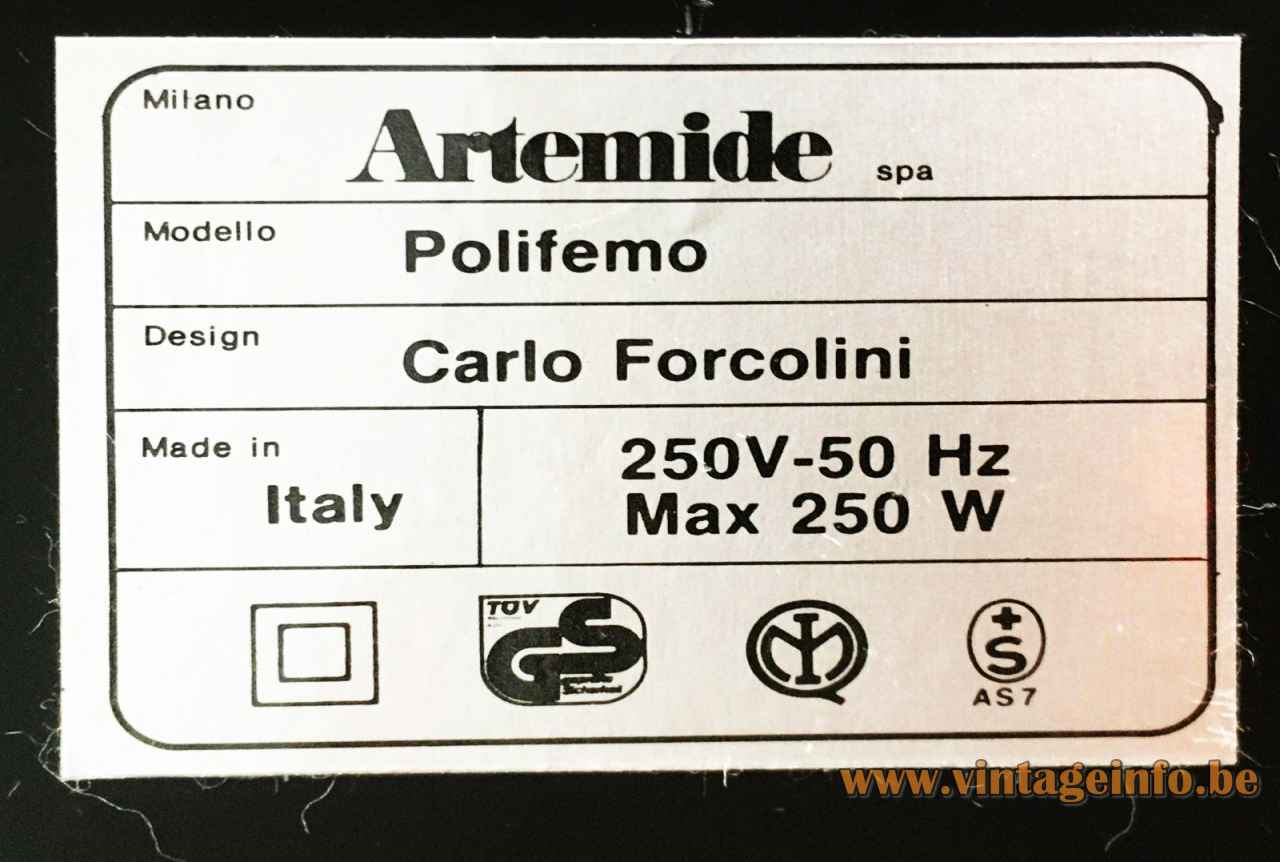
Designer: Carlo Forcolini in 1983.
Manufacturer: Artemide, Pregnana Milanese, near Milan, Italy.
Other versions: This Artemide Polifemo floor lamp is also made in white.
Carlo Forcolini
Carlo Forcolini (born 1947, Como, Italy) is an Italian designer, entrepreneur and key figure in post-war Italian industrial design. He studied at the Brera Academy of Fine Arts in Milan, graduating in 1969.
In the early 1970s, Forcolini began his professional career as both a designer and businessman. Early on, he briefly collaborated with Achille and Pier Giacomo Castiglioni, an experience that strongly influenced his approach to design, combining conceptual clarity with industrial feasibility.
Throughout his career, Forcolini worked as a product designer and creative director for numerous international companies and foundations, including Artemide, Cassina, De Padova, Luceplan, Nemo, Valenti, Zumbtobel, Pomellato, Gervasoni and Caimi. Parallel to his design work, he was also active as a co-founder and managing director of several design-oriented companies, among them Alias, Amar Collezioni, Nemo and OY Light, playing a decisive role in their strategic and international development.
Between 1978 and 1984, Forcolini lived and worked in London, where he established Alias UK and served as director of Artemide UK, contributing significantly to the diffusion of Italian design in the British market.
From 2002 to 2008, Carlo Forcolini was National President of ADI (Associazione per il Disegno Industriale), the Italian Association for Industrial Design, underlining his importance not only as a designer, but also as a cultural and institutional figure within the design world.
For Artemide, Forcolini designed several lighting fixtures, including Alessia, Dinarco, Icaro, Nestore, Nestore Lettura, Nemo, Nemo Lagoon and Olimpia. His best-known lighting design is the Fire Ball, a spherical lamp that has become emblematic of late-1960s experimental lighting and remains one of his most recognisable works.
Artemide Polifemo Floor Lamp – 1987 German Advertisement
Publicity

Artemide
In 1960, near Milan, Ernesto Gismondi and Sergio Mazza laid the foundation of Artemide. Right from the start, the company combined technological research with a strong sense of Italian design. Their very first iconic lamp was the Alfa — hence the name — designed around 1959–1960. Emma Schweinberger, Gismondo’s wife, designed the Chi table lamp in 1962. From there, Artemide quickly began collaborating with leading designers. The mid-1960s saw the company make waves with Vico Magistretti’s Eclisse, awarded in 1967, as well as Enzo Mari’s early contributions such as the Polluce floor lamp, designed together with Anna Fasolis in 1965. The Dalù table lamp (1966 – Vico Magistretti) and the Nesso (1965), designed by Giancarlo Mattioli & Gruppo Architetti Urbanisti Città Nuova, further established Artemide’s reputation during this formative decade. Other notable designs from the late 1960s include the Lesbo table lamp, a 1967 design by Angelo Mangiarotti, Vico Magistretti’s Telegono (1968), the Pallade pendant by Studio Tetrarch, the Electra table lamp, designed by Giuliana Gramigna in 1968, all reflecting the experimental spirit of the era.
As the 1970s arrived, Artemide introduced what would become one of its most recognisable icons: the Tizio desk lamp, designed by Richard Sapper in 1972. Around the same period, Gae Aulenti designed the Pileino and Mezzopileo lamps, followed by Mezzoracolo in 1973. The famous Sintesi lamp series was designed by Ernesto Gismondi in 1975 and the Area 50 lamp series, a Mario Bellini design from 1975. The decade also saw the introduction of the Onfale lamp in 1978, designed by Luciano Vistosi, marking Artemide’s growing interest in glass and sculptural forms.
The 1980s marked a phase of international expansion. By 1980, Artemide had established a presence in the United States and continued to attract prominent designers, including Ettore Sottsass. His Callimaco floor lamp and Pausania table lamp, both designed during the 1980s, became distinctive statements within Artemide’s catalogue. Other important designs from this decade include the Polifemo floor lamp by Carlo Forcolini (1983). In 1987, Artemide launched the Tolomeo, designed by Michele De Lucchi and Giancarlo Fassina, which quickly became an icon of functional and timeless design.
During the 1990s, Artemide further expanded its scope by acquiring VeArt, bringing Murano glass expertise into the company. In 1996, Artemide introduced its “The Human Light” philosophy, focusing on the relationship between light, people and their environment. By the late 1990s, Artemide Architectural was established, bridging product design and large-scale architectural lighting projects. From the 2000s onward, Artemide increasingly focused on LED innovation while reissuing its historic designs within the “Modern Classic” collection.
In essence, Artemide represents a rich tapestry of Italian lighting history. Whether defined by the minimalist engineering of the Tizio, the organic curves of the Nesso, or the expressive presence of the Callimaco, Artemide has consistently blended design innovation with a deeply human approach to light. It is precisely this balance that makes these lamps — including the Pausania and many others — enduring icons of modern design.
Designers that collaborated with Artemide include, among others, Vico Magistretti, Emma Schweinberger, Gae Aulenti, Richard Sapper, Michele De Lucchi, Giancarlo Fassina, Ettore Sottsass, Enzo Mari, Gio Ponti, Sergio Mazza, Angelo Mangiarotti, Joe Colombo, Sergio Asti, Sergio Favre, Mario Marenco, Adelaide Bonati, Silvio Bonatti, Enrico De Munari, Carla Federspiel, Livio Castiglioni, Piero Castiglioni, Nanda Vigo, Luigi Caccia Dominioni, Mario Botta, Carlo Forcolini, Luciano Vistosi, Neri&Hu, Carlotta de Bevilacqua, Jean Nouvel, Karim Rashid, Neil Poulton, Studio Tetrarch, Zaha Hadid, Ron Arad, Herzog & de Meuron, Issey Miyake, Naoto Fukasawa, Aldo Rossi, Adrien Gardère, Stephen Philips, Carlo Colombo and Giulia Foscari.
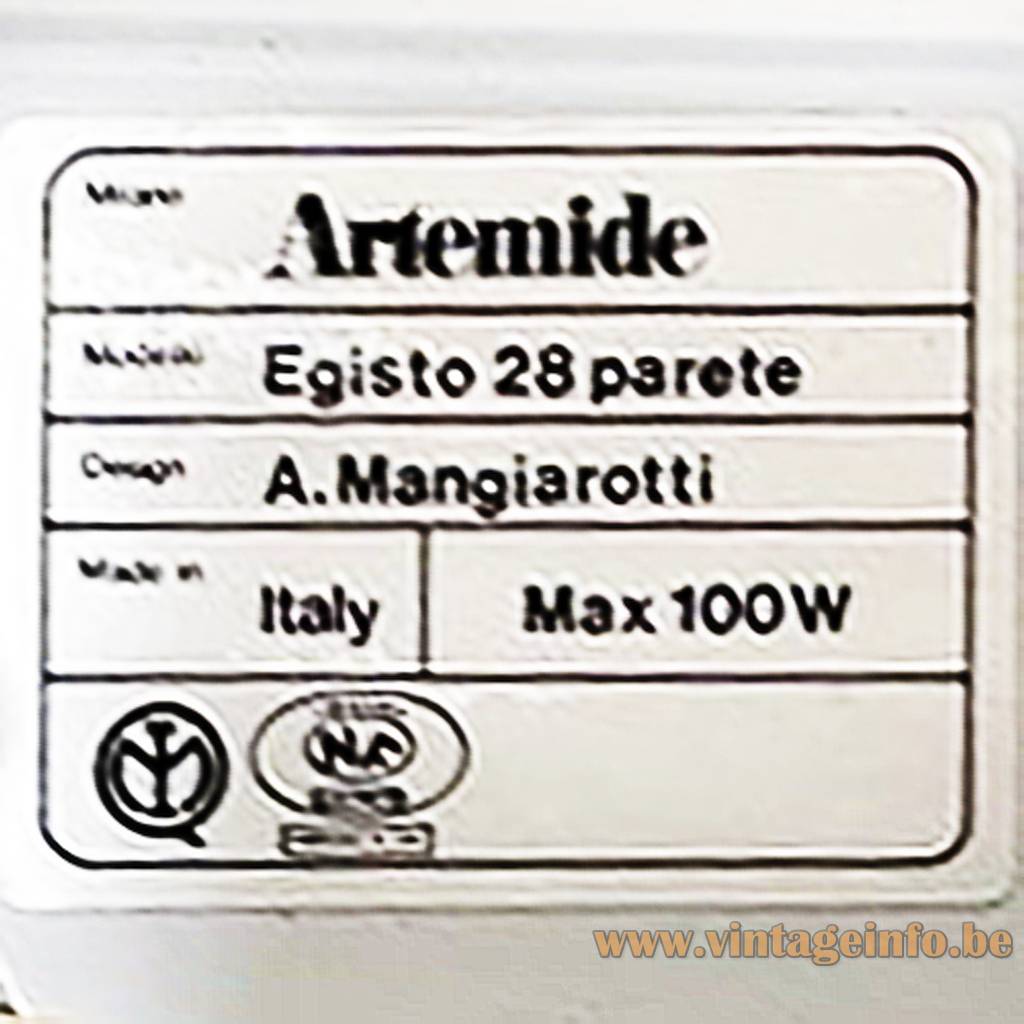
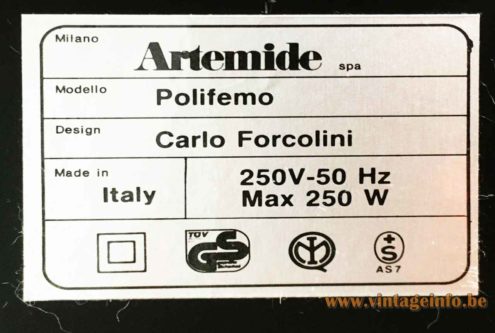
Artemide Polifemo Floor Lamp – Company Labels & Logos