- Categories
- Categories
Last 5 Viewed
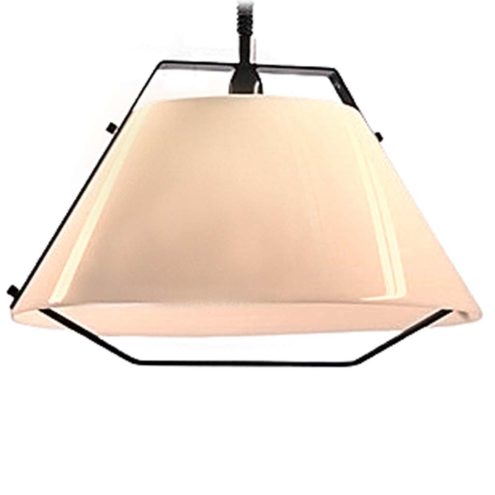
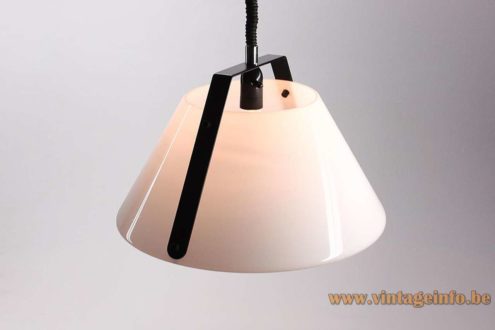
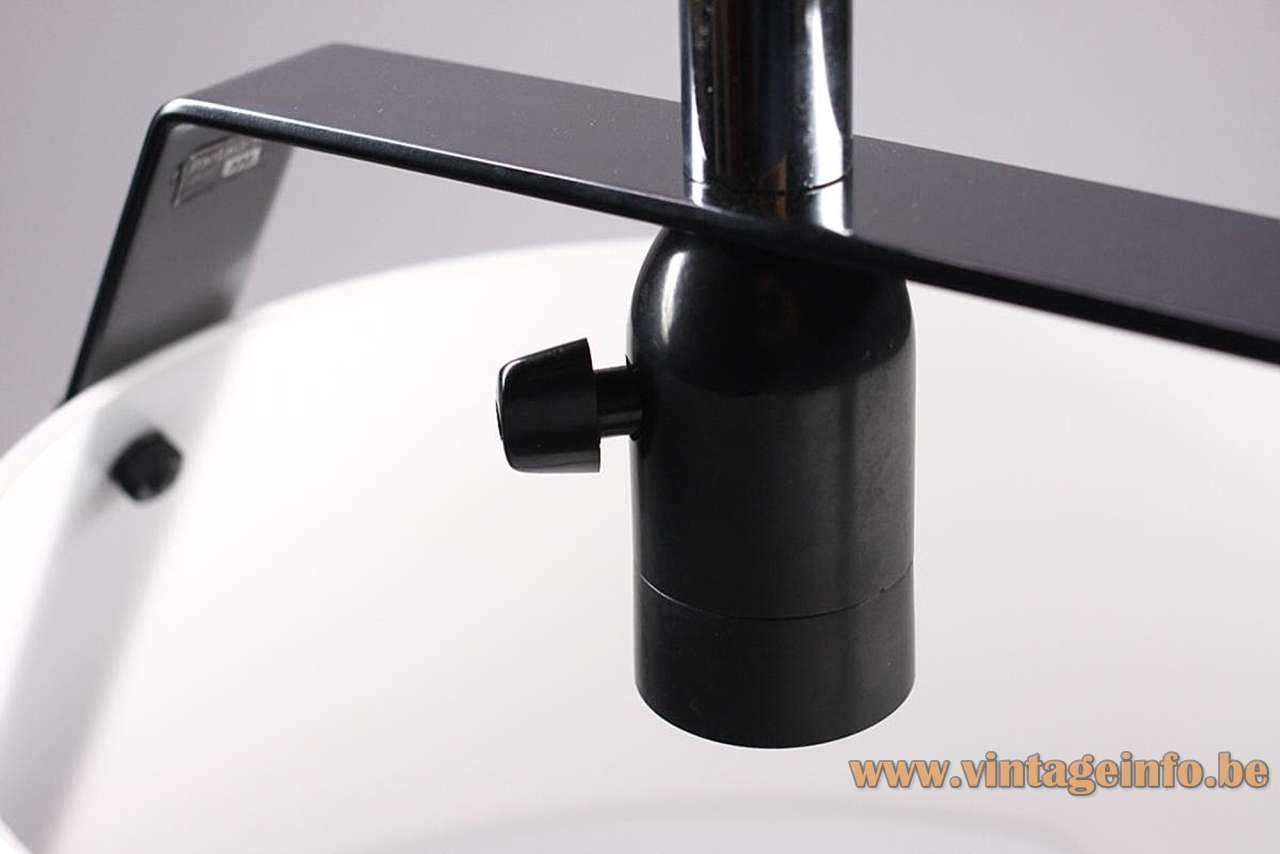
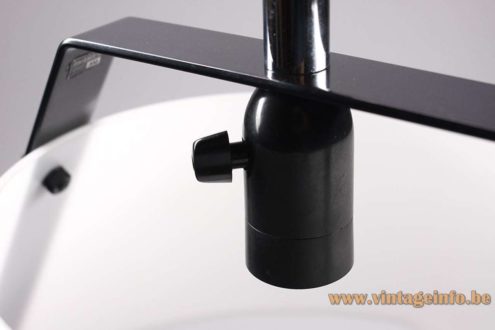
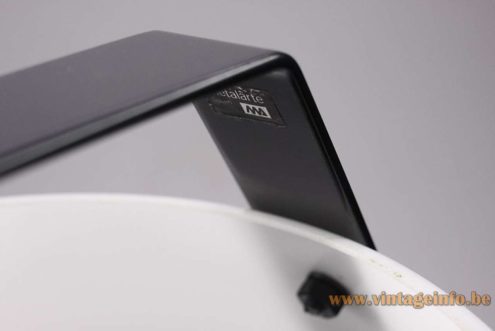
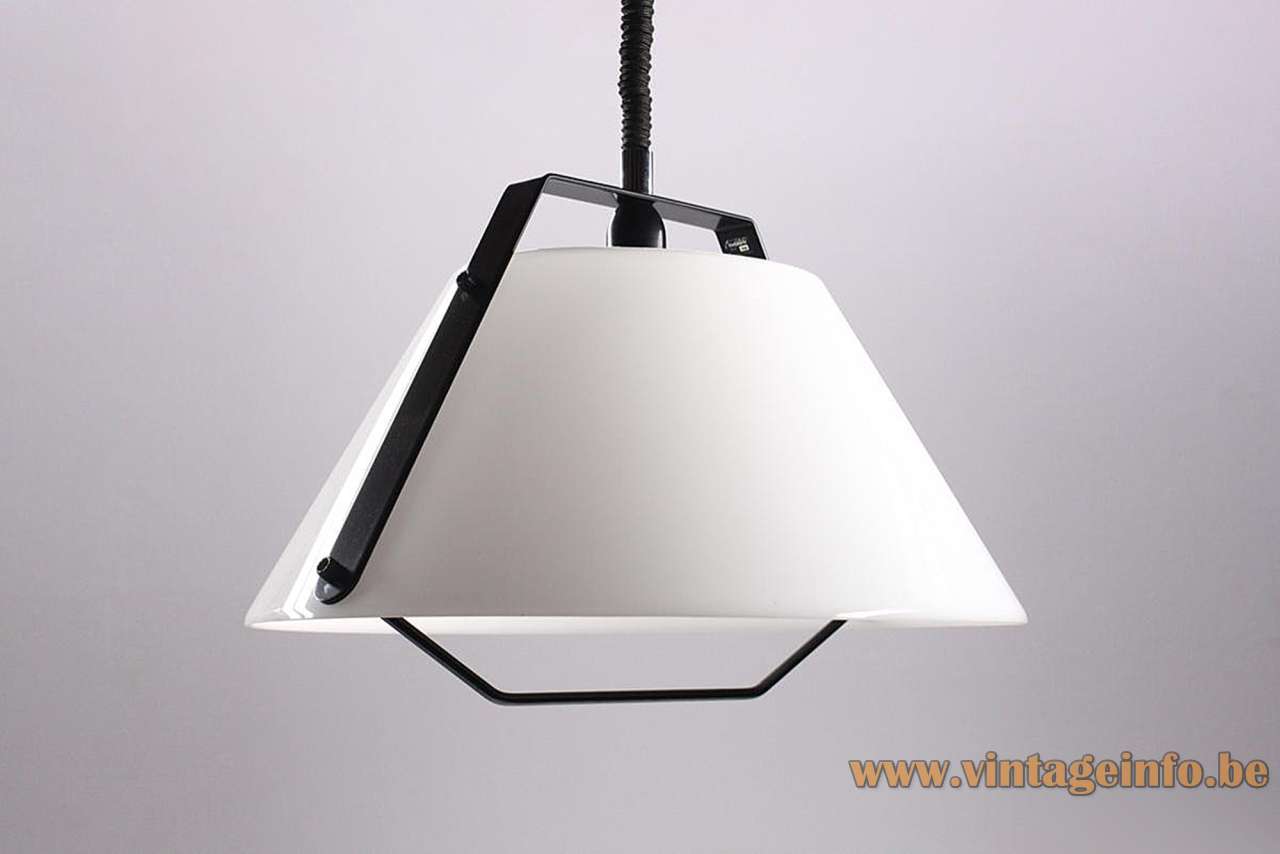
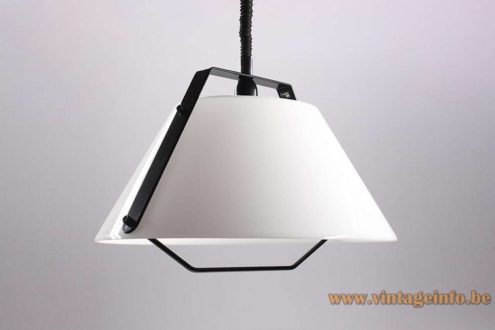
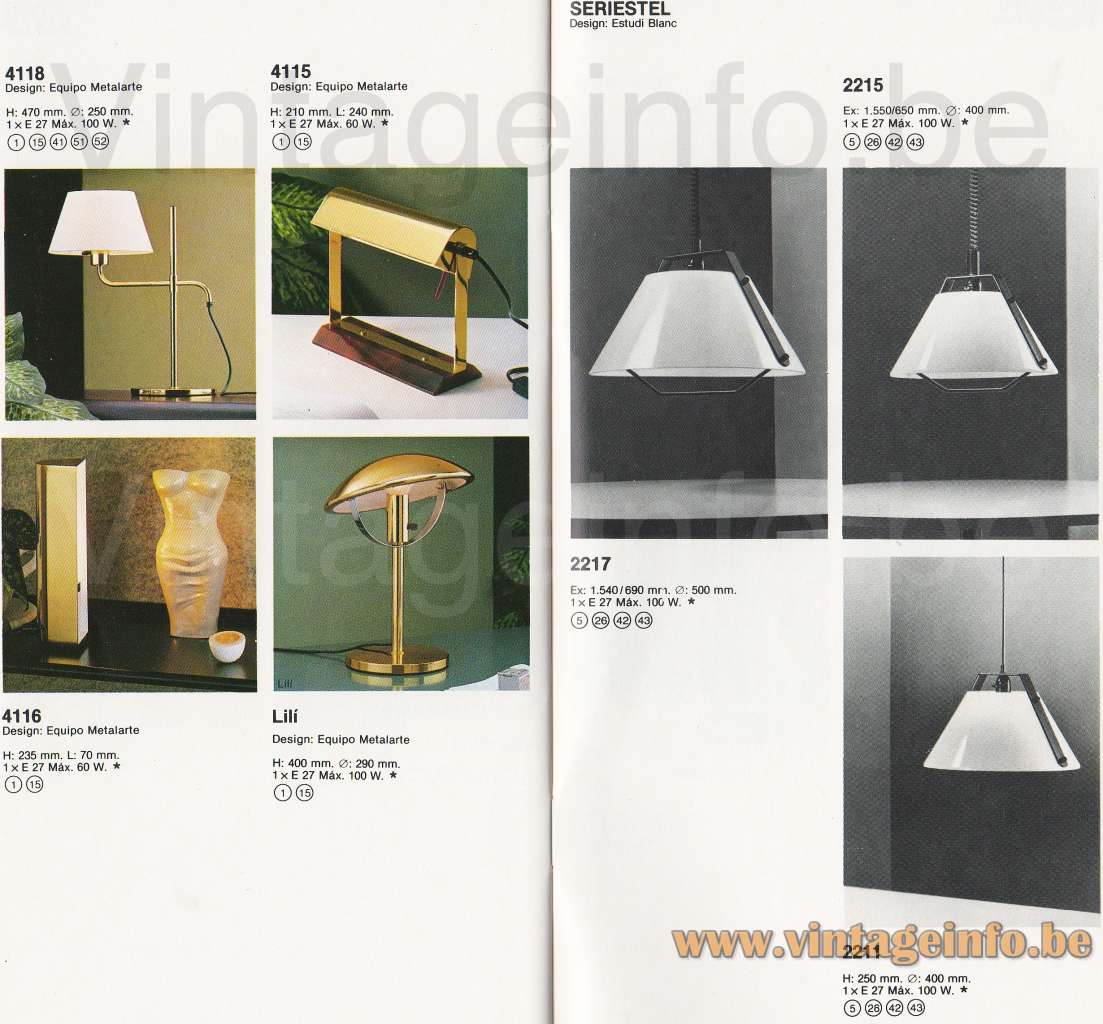
Metalarte Estel Pendant Lamp – 1983 Catalogue Picture
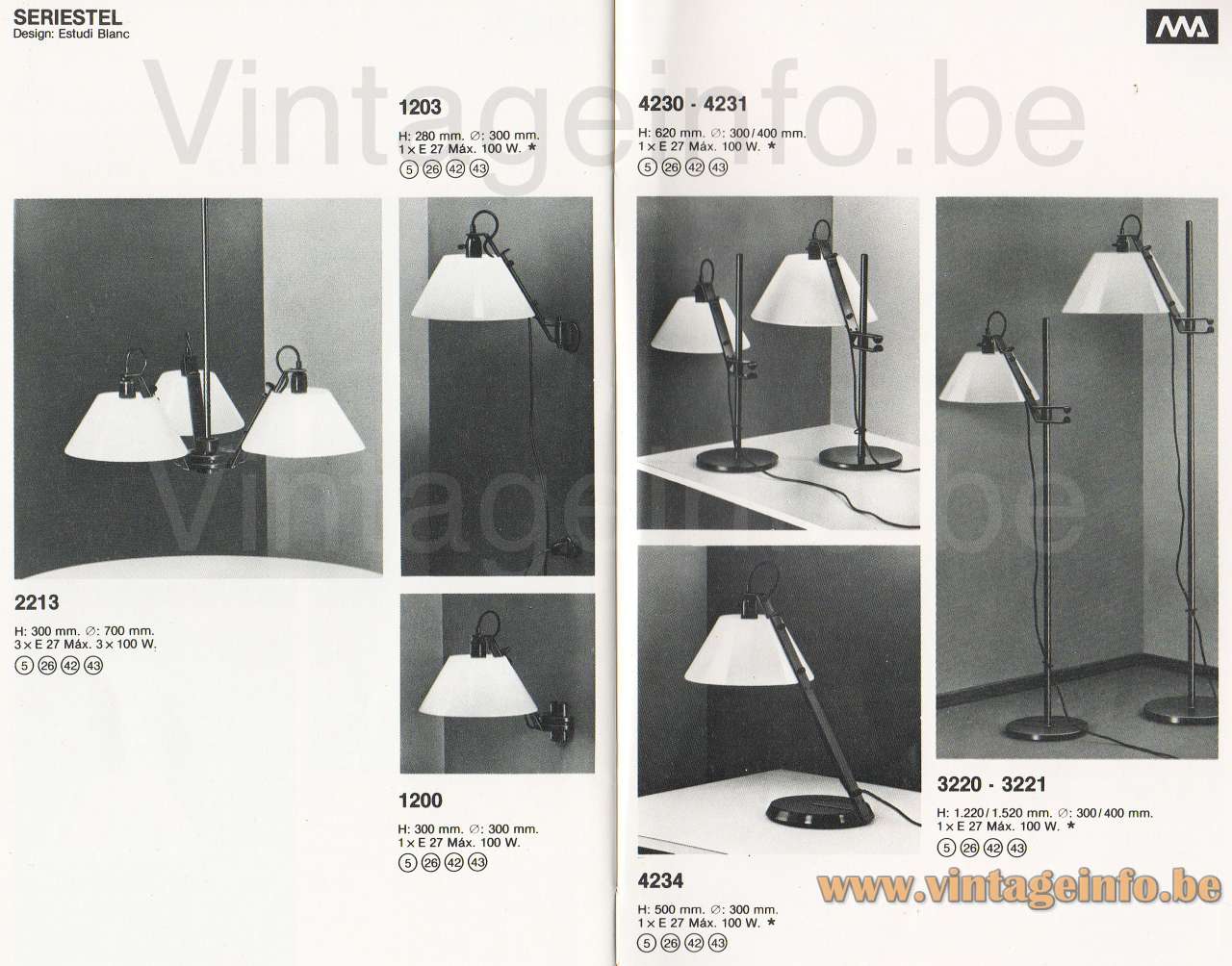
Serie Estel, design Estudi Blanc. Table lamp model 4234, Floor lamps models: 3220 & 3221. Chandelier model: 2213, Wall lamps model: 1200 & 1203.
Metalarte Estel Pendant Lamp – 1983 Catalogue Picture
Pendant lamp, with or without rise & fall mechanism, models: 2215 and 2217. On the other page lamps designed by the design team of Metalarte. Models: 4115, 4116, 4118 and Lili.
Many thanks to Lluís from Eclectique Vintage for the photos.
Many thanks to Max from AfterMidnight for all the pictures.
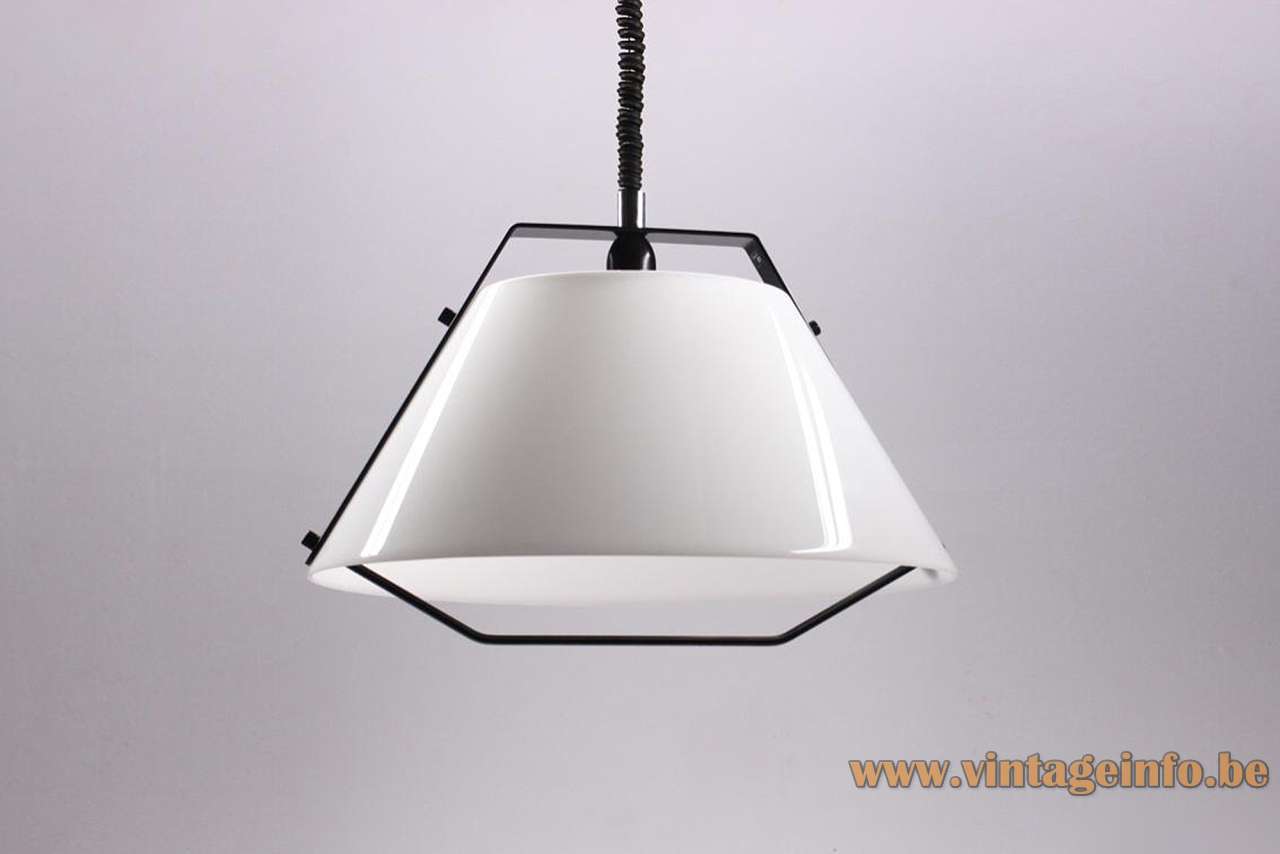
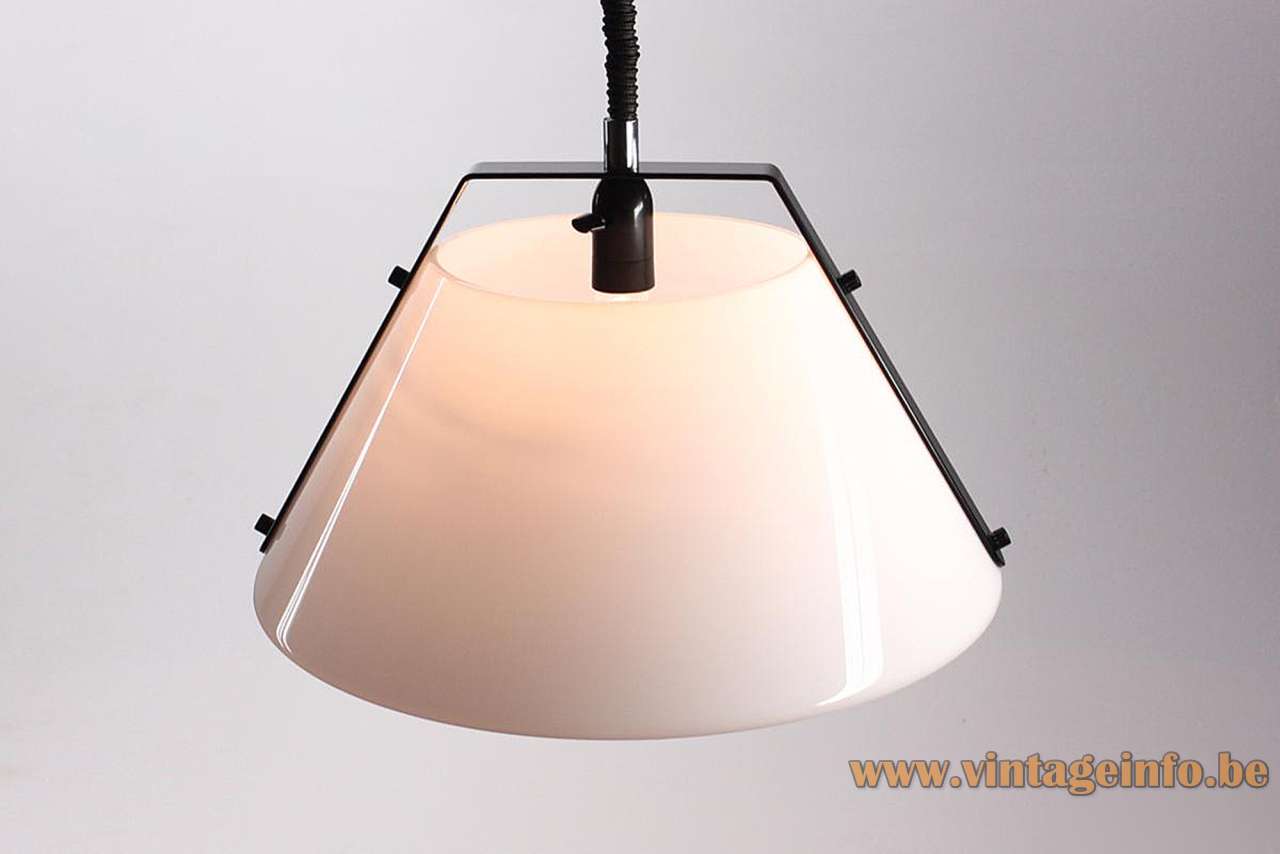
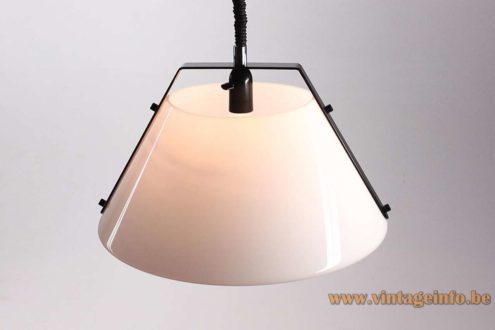
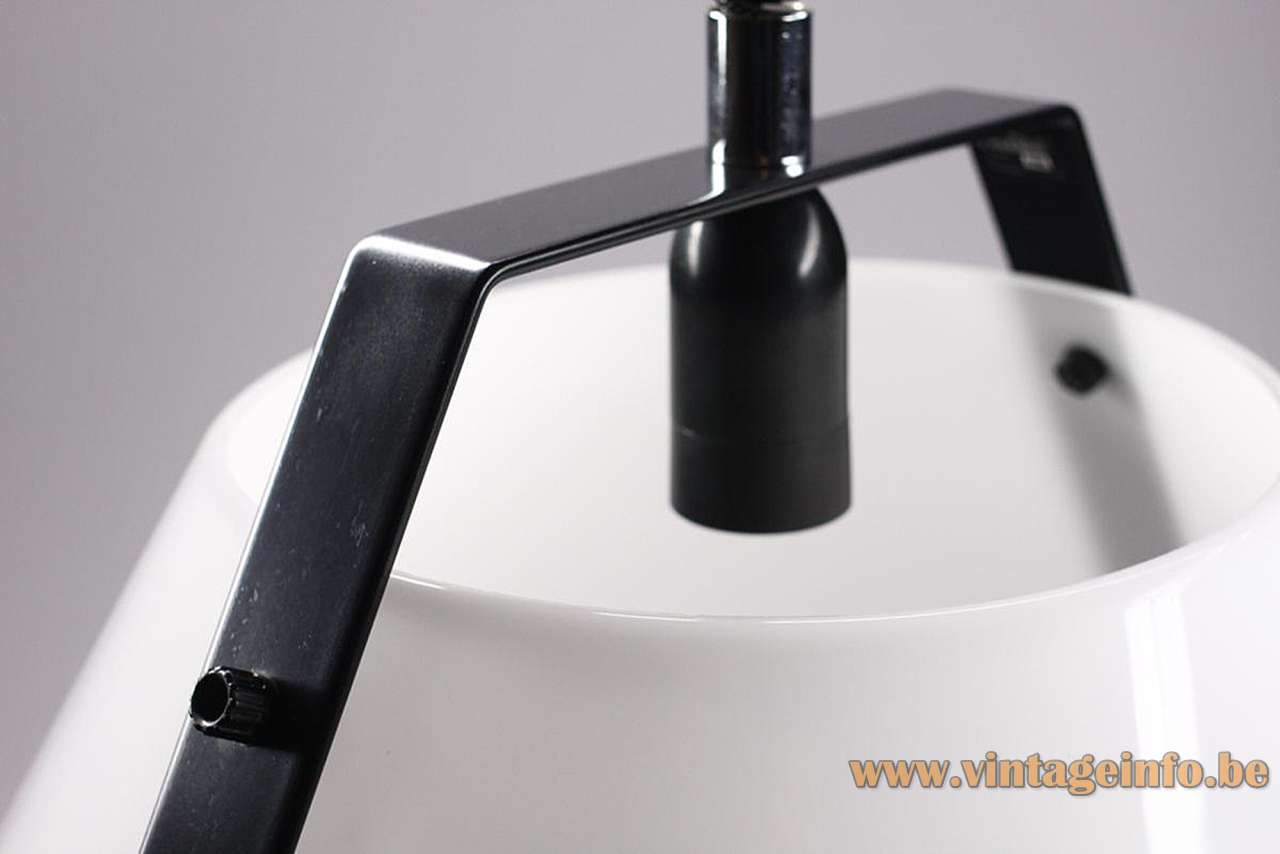
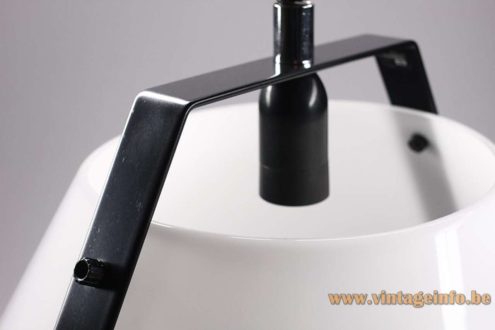
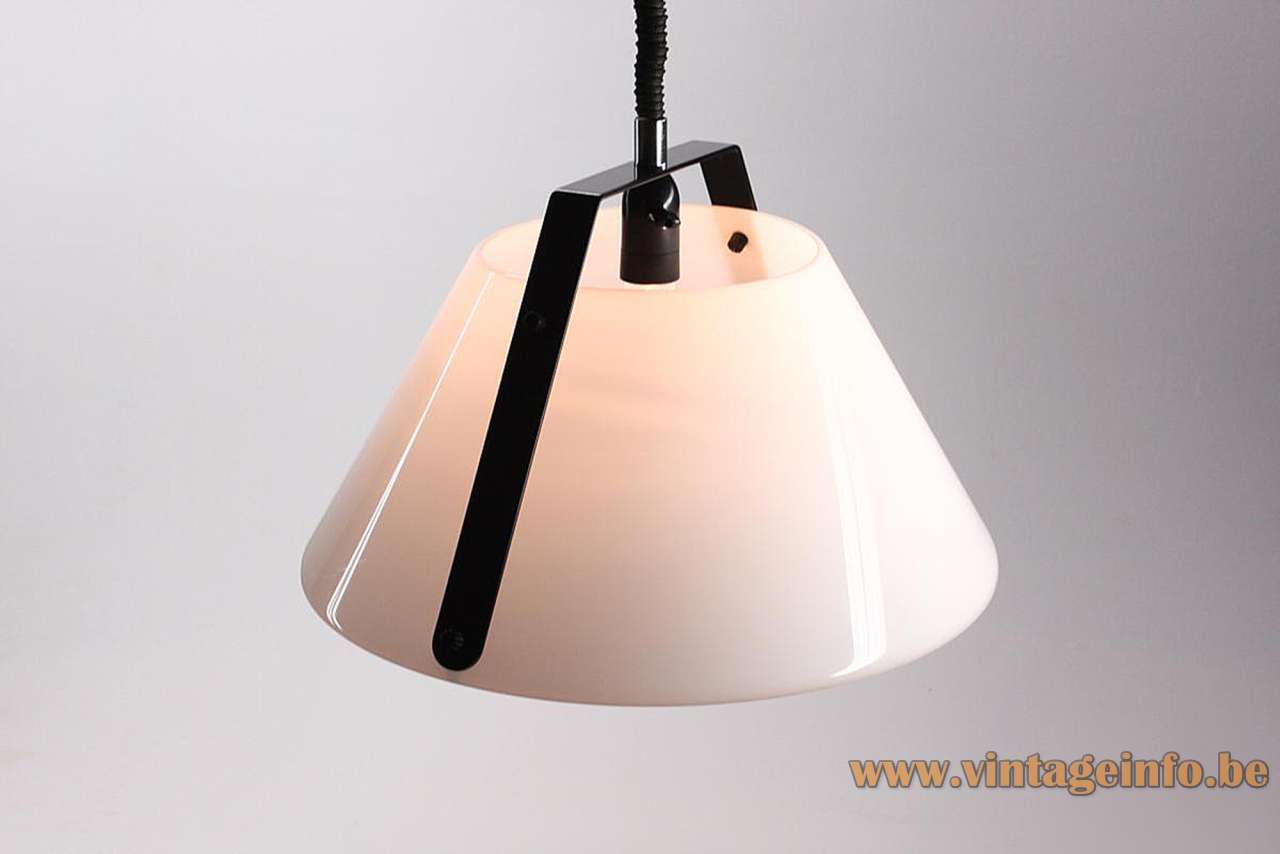
Metalarte Estel Pendant Lamp
Materials: Conical white acrylic lampshade. Black painted metal handle and parts. Rise & fall mechanism. Bakelite E27 socket with a built-in switch.
Height: 32 cm / 12.59”
Width: ∅ 50 cm / 19.68”
Electricity: 1 bulb E27, 1 x 100 watt maximum, 110/220 volt.
No specific type of light bulb is required; different types can be used.
Period: 1980s.
Designer: Estidu Blanc.
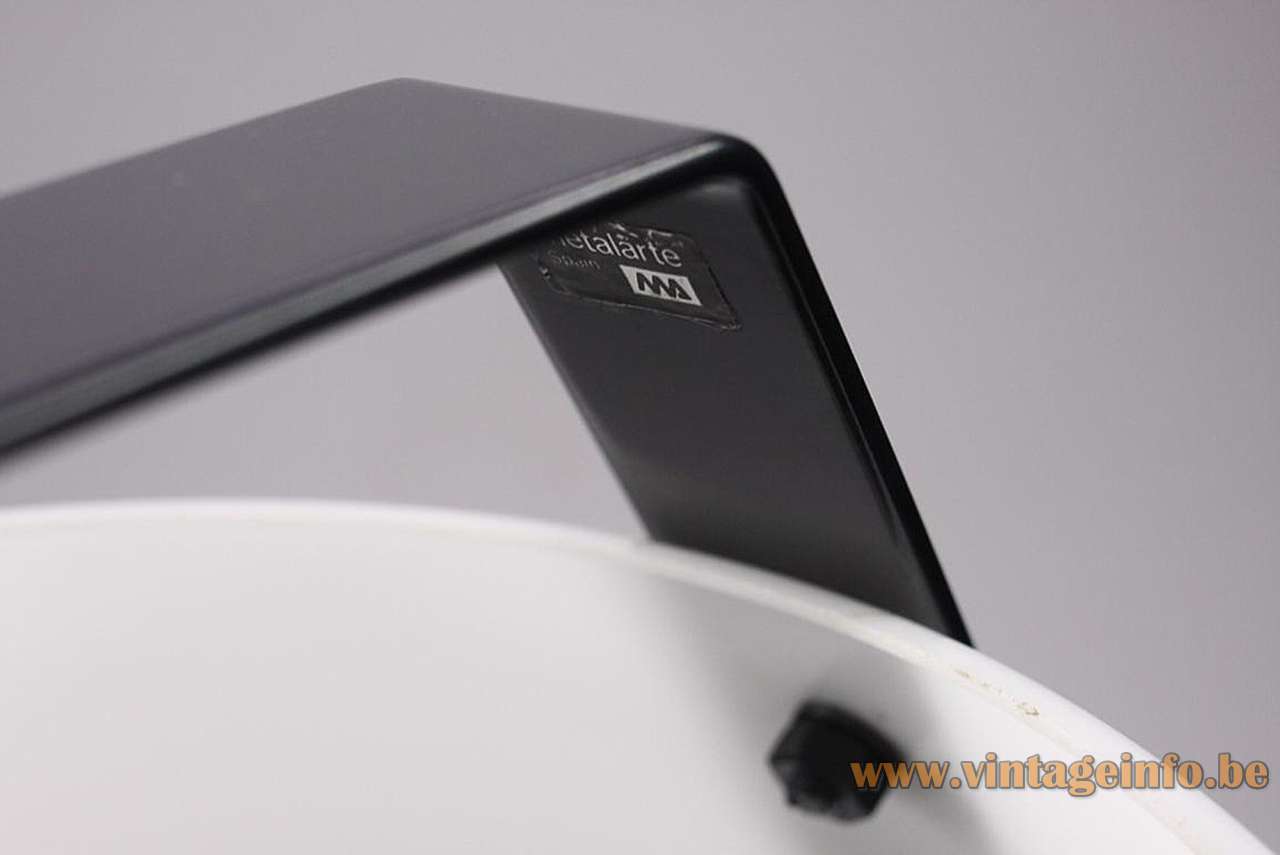
Manufacturer: Metalarte, Paseo de la Ribera 115, Canovelles, Barcelona, Spain.
Other versions: As you can see, this Metalarte Estel pendant lamp comes in several versions: wall lamps, a table lamp, a chandeliers and a floor lamp. A pendant lamp without a rise & fall mechanism was also made. This one is model 2217, the smaller version is model 2215.
Acrylic: often named by its commercial name: Perspex, Plexiglas, Crylux, Acrylite, Lucite, is a thermoplastic.
Joan Antoni Blanc
Joan Antoni Blanc was born in 1940 in Tortosa, Tarragona, Spain. Together with his brother Oriol Blanc and Pau Joan Vidal he founded the design firm Estudi Blanc. They designed many items over the years. Lamps were designed for Tramo, Metalarte, Santa & Cole…
Joan Antoni Blanc was also involved in the birth of the EINA design school in 1967. EINA is the University Centre for Design and Art of Barcelona. It seems that he designed this series of lamps in the same year.
Metalarte
Metalarte was founded in 1932 in Canovelles, a town about 30 km from Barcelona, in Catalonia, Spain. The company started as a metalworking workshop and gradually evolved into one of the most important lighting manufacturers in Spain. From the 1940s onward, Metalarte focused increasingly on functional and architectural lighting, laying the foundations for its later design-oriented identity.
During the 1960s and 1970s, Metalarte went through a major transformation. The company renewed its catalogue and actively collaborated with external designers, embracing contemporary industrial design rather than relying solely on in-house production. In this period, Metalarte also distributed lamps by international manufacturers such as Louis Poulsen (Denmark) and Italian firms including Arteluce and Stilnovo, reflecting its strong international outlook.
Metalarte worked with a wide range of designers who played a key role in shaping Spanish lighting design, including André Ricard, Gaetano Sciolari, Enric Franch, Josep Lluscà, Estudi Blanc, Josep Aregall, Òscar and Sergi Devesa, Antoni Arola, Lievore Altherr Molina, Ricard Ferrer, George W. Hansen, Héctor Serrano, Jordi Llopis, Ana Mir, Emili Padrós, Otto Canalda and Ramón Úbeda.
Several Metalarte designs from the 1970s became international references for functional lighting. A notable example is the Calder halogen lamp (1974) by Enric Franch, which is included in the permanent collection of the Museum of Modern Art (MoMA) in New York.
Today, Metalarte is part of the Luxonia Group, together with brands such as Troll and Sagelux. While this integration ensured continuity and industrial backing, it also marked the end of Metalarte as an independent, design-driven manufacturer rooted in its original Catalan context.
Vintageinfo
Metalarte Estel Pendant Lamp – Company Labels & Logos