- Categories
- Categories
Last 5 Viewed
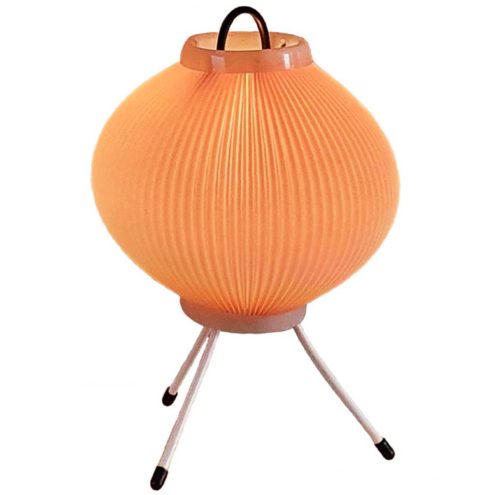
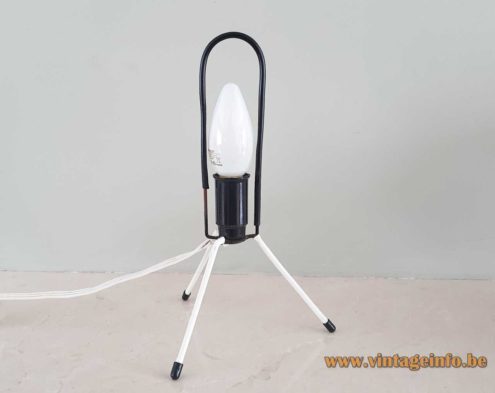
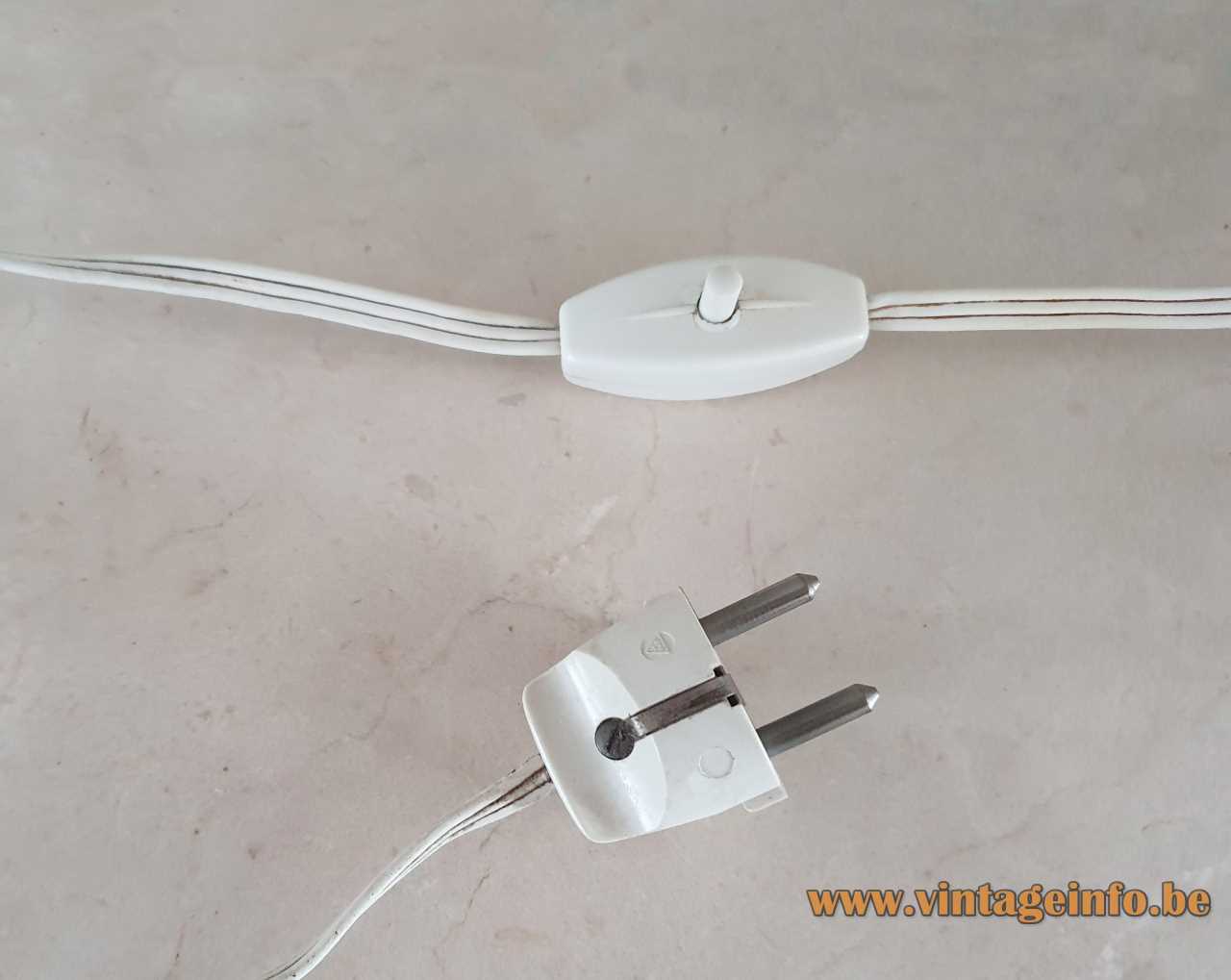
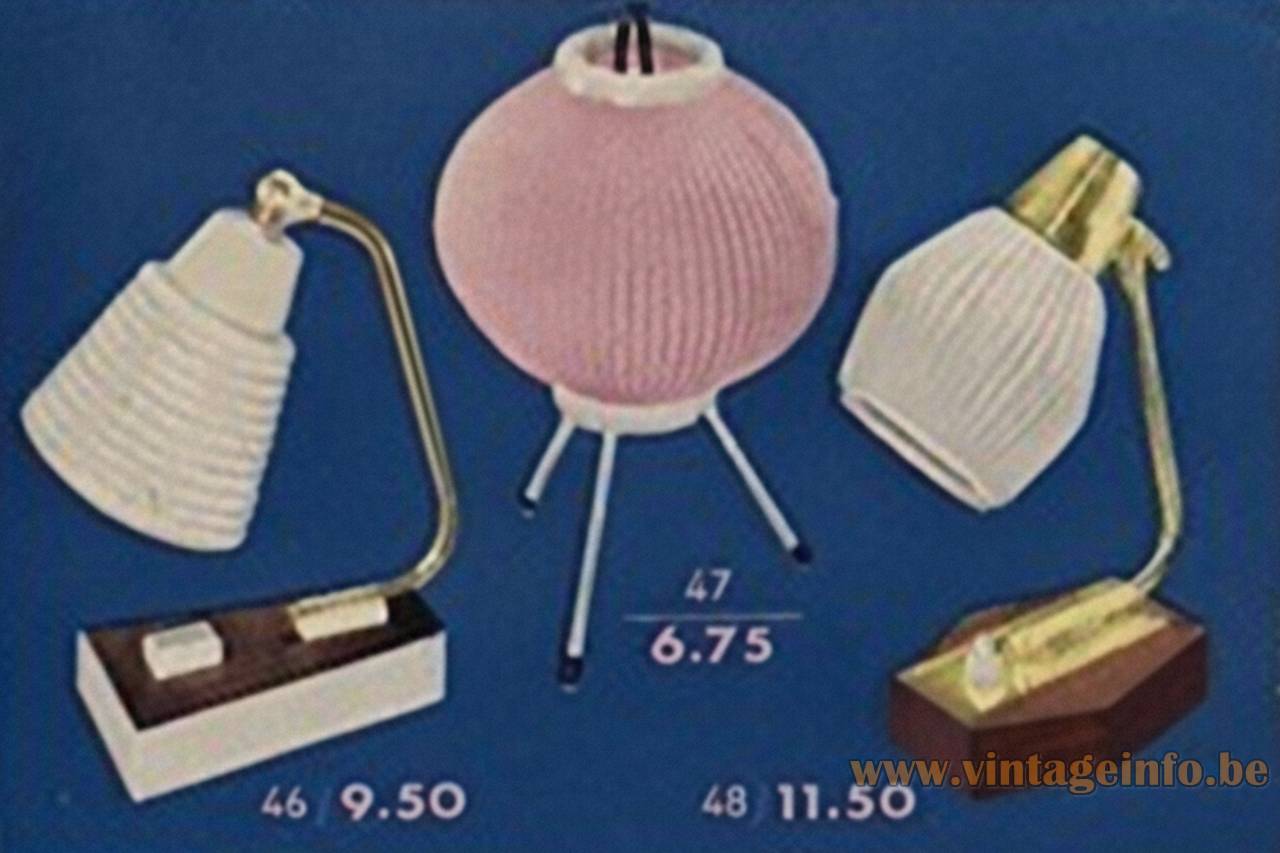
Celluloïd Globe Tripod Table Lamp – 1960s HEKA Catalogue Picture
In this section of the catalogue, you’ll see three nightlights. Prices are in German marks. 1 euro is approximately 2 marks.
Links (external links open in a new window)
Vintageinfo
Some other lamps in the folded/pleated cuff style on Vintageinfo
Italian 1950s ‘Rhodoïd’ floor lamp
Diabolo pendant lamps
Tripod hairpin rocket floor lamp
Celluloid floor lamp
Many thanks to Ger for the pictures.
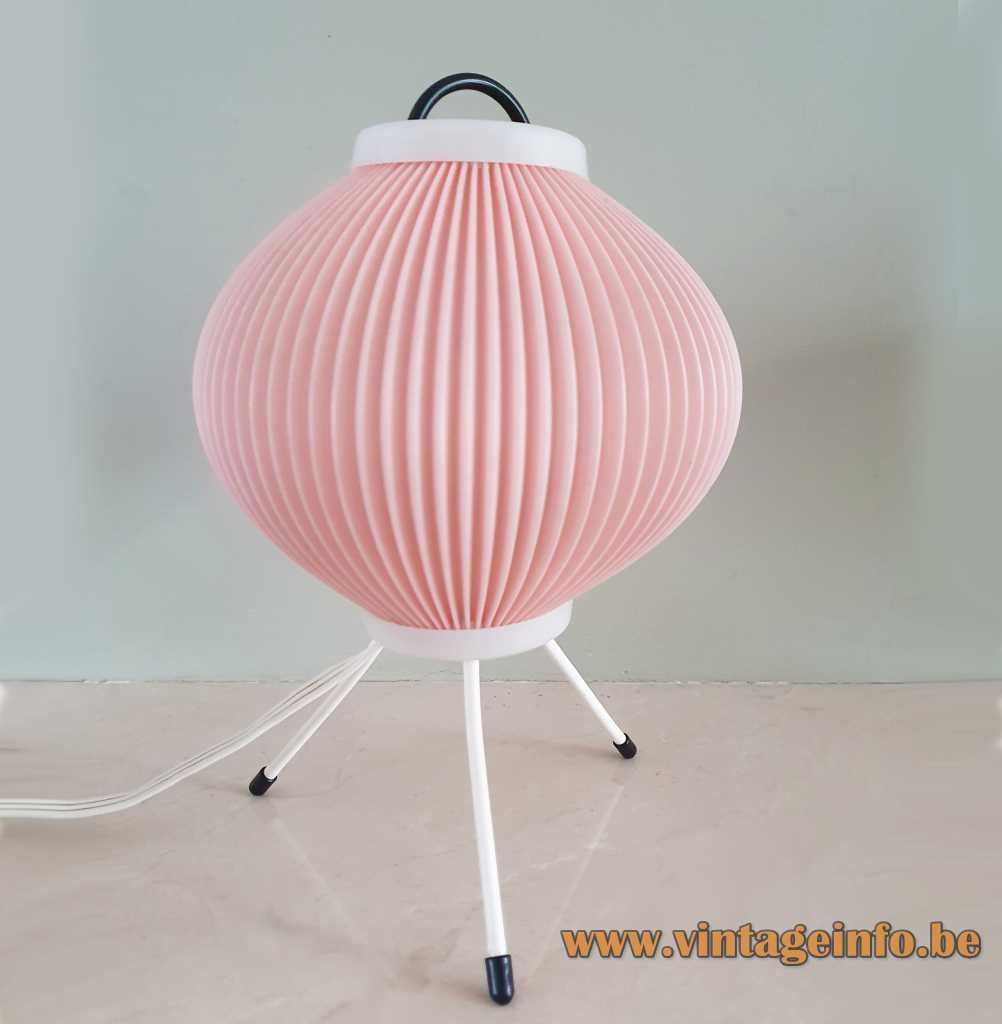
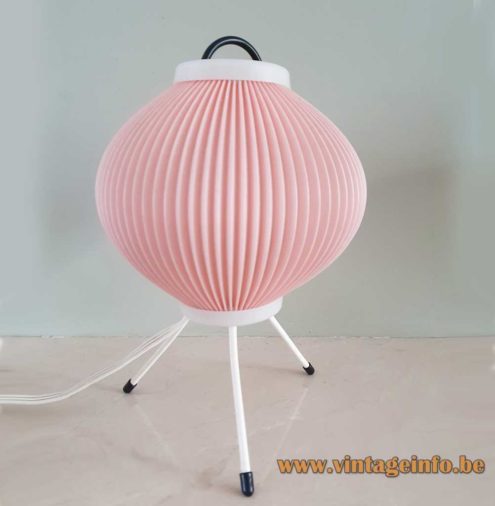
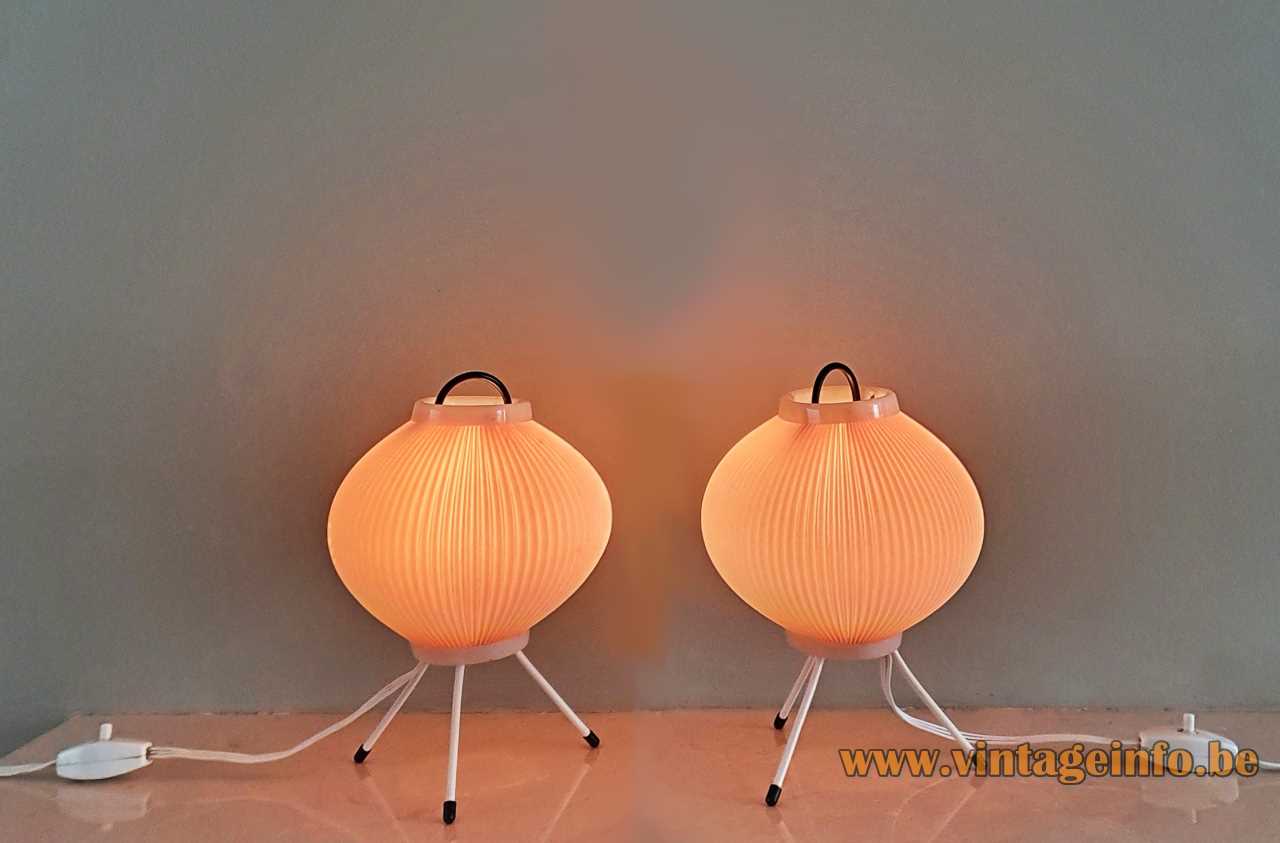
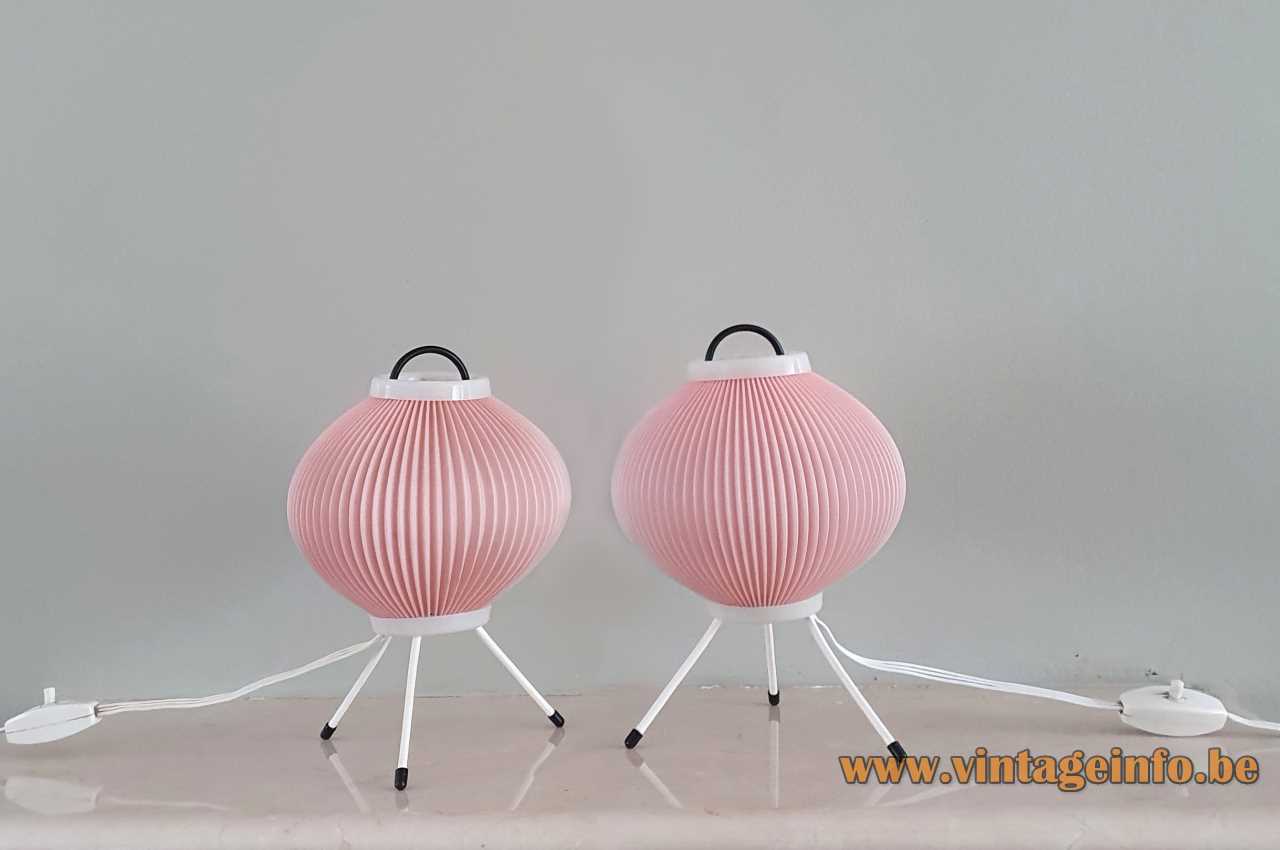
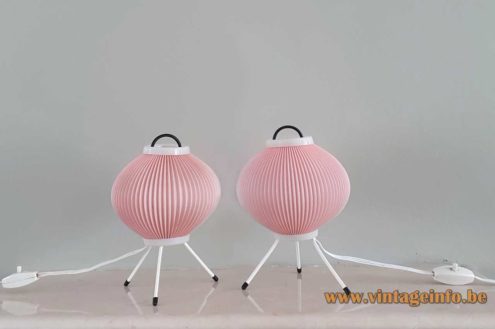
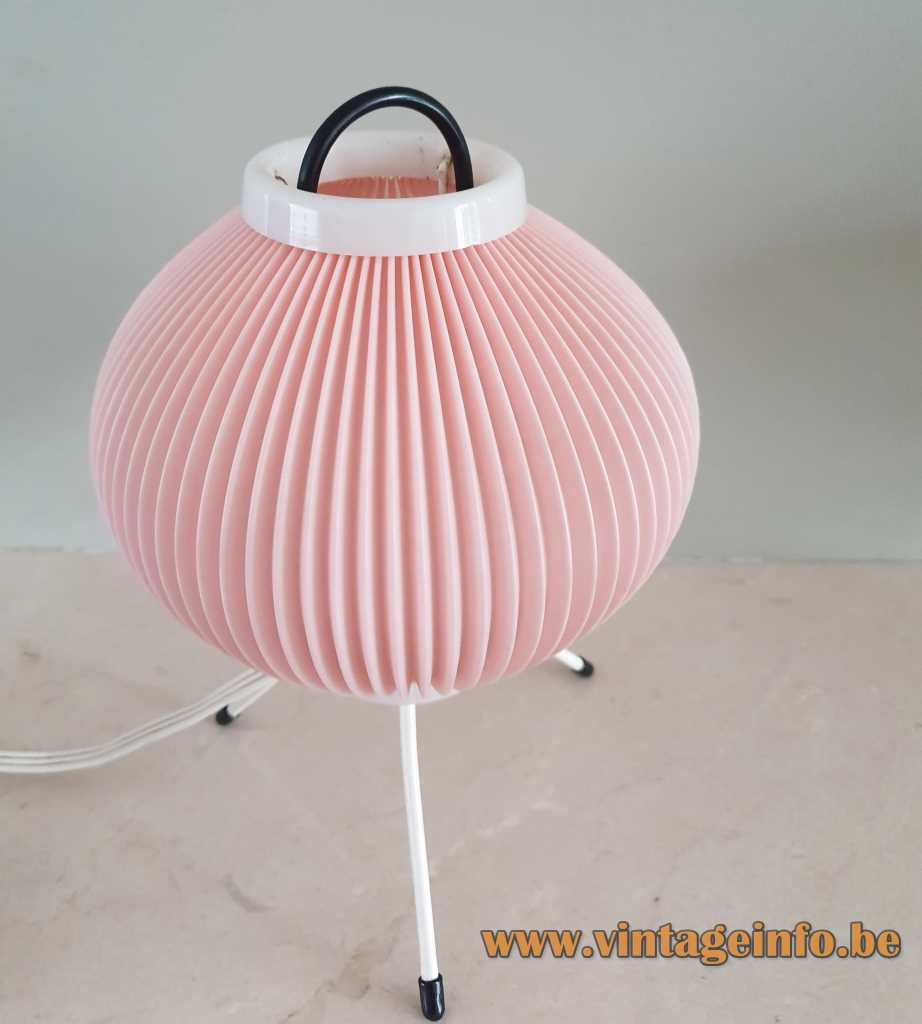
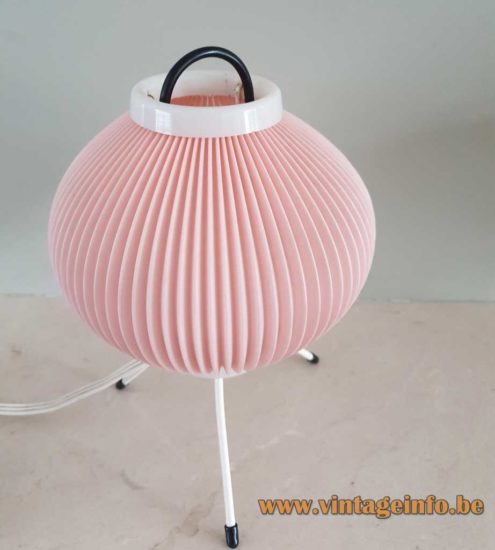
Celluloid Globe Tripod Table Lamp
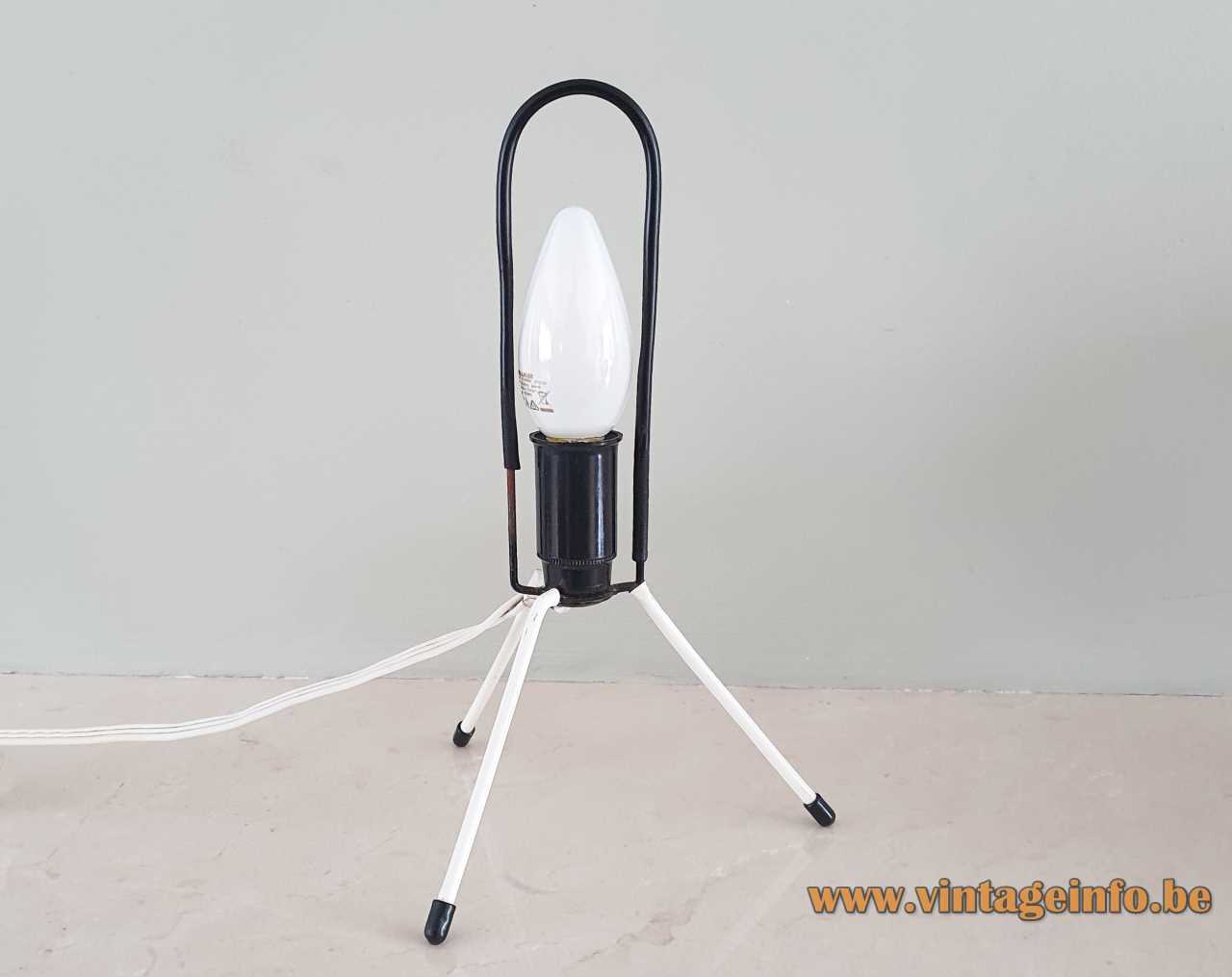
Materials: 3 white metal (iron) rods base with black caps base. Black handle. Hard pink plastic globe lampshade with white Bakelite rims. Bakelite E14 socket.
Height: 25 cm / 9.84”
Lampshade: ∅ 16 cm / 6.29”
Electricity: 1 bulb E14, 1 x 40 watt maximum, 110/220 volt.
Any type of light bulb can be used. Not a specific one preferred.
Period: 1960s, 1970s – Mid-Century Modern.
Designer: To be appraised.
Manufacturer: HEKA, Nuremberg, Germany.
Other versions: This celluloid globe tripod table lamp comes in several colours.
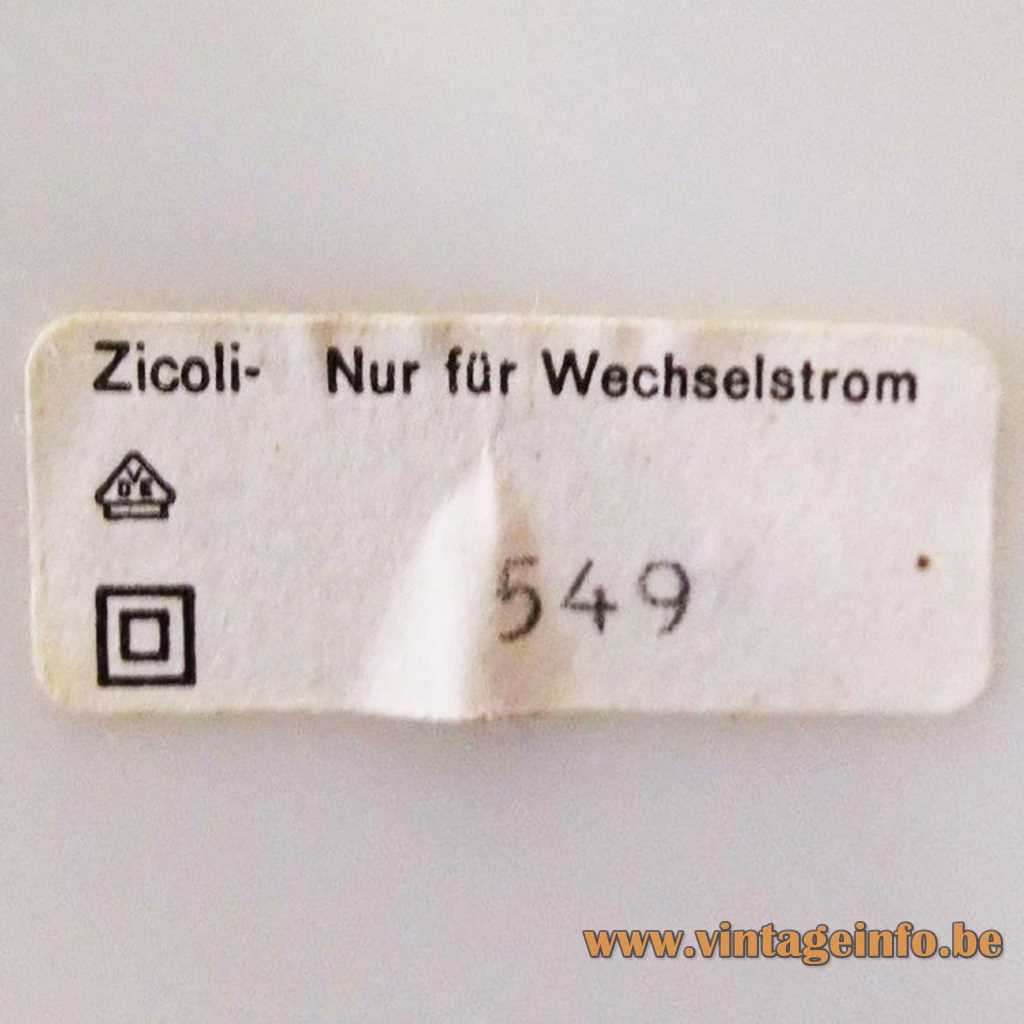
Similar table lamps were produced by Emmrich & Schöning of Berlin and Zicoli, both German lighting producers. This lamp was probably made by Zicoli, but sold by HEKA. HEKA was not a lamp manufacturer. In other HEKA catalogues you see Zicoli lamps appearing, hence the conclusion.
HEKA
HEKA (an abbreviation for Hennig & Katzenstein) was a prominent department store in Nuremberg, Germany, known for its iconic building on the city’s central Ludwigsplatz. It was a significant local retail institution during the mid-20th century, though the original store’s physical presence was relatively short-lived.
The company’s origins date back to September 15, 1910, when it was founded by August Hennig and the Katzenstein family. The store quickly became a landmark location in the heart of Nuremberg’s shopping district.
During the 1930s, the business was affected by the “Aryanization” policies of the Nazi regime, which forced the Katzenstein family to leave the enterprise. August Hennig subsequently took full control of the store.
After World War II, the business was restarted and operated under the Hennig family’s leadership.
The store, known for its distinctive architecture and various product lines including the kind of mid-century modern lighting featured in your brochure, operated successfully in the post-war era.
The main HEKA store on Ludwigsplatz was eventually closed in 1966. The building was demolished to make way for a new, larger department store operated by the Hertie chain (which later merged into the present-day Galeria Karstadt Kaufhof group).
While the main building is gone, the name HEKA remained associated with smaller branches in the surrounding region for some time. Today, the location remains a central hub for shopping in Nuremberg’s city center.
Celluloid
Celluloid is cellulose nitrate. This lamp is made of cellulose acetate. The names are often mixed.
Cellulose acetate
Cellulose acetate is an early plastic, sold under the trade names Rhodoid in France and Great Britain, Tenite in the USA and Cellon in Germany. It was first prepared in 1865. Cellulose acetate is used as a film base in photography, for eyeglasses, cigarette filters and playing cards. Acrylic (1930s) and PVC (1920s) were discovered before World War II, but was only widely used since the late 1950s.
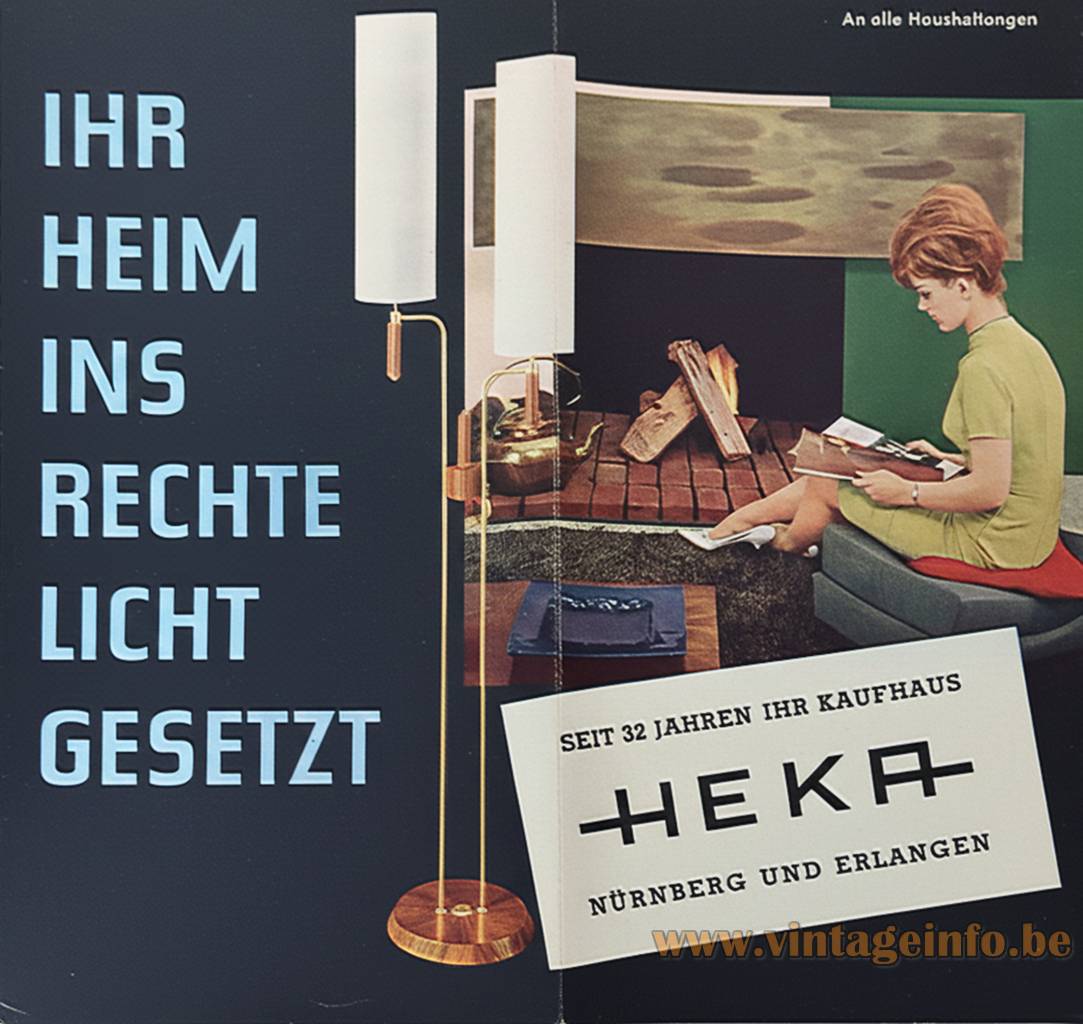
Celluloïd Globe Tripod Table Lamp – 1960s HEKA Catalogue Picture
Cover photo of the small catalogue. Ihr heim ins rechte licht gesetzt – Your home put in the right light.
Celluloid Globe Tripod Table Lamp – Company Label