- Categories
- Categories
Last 5 Viewed
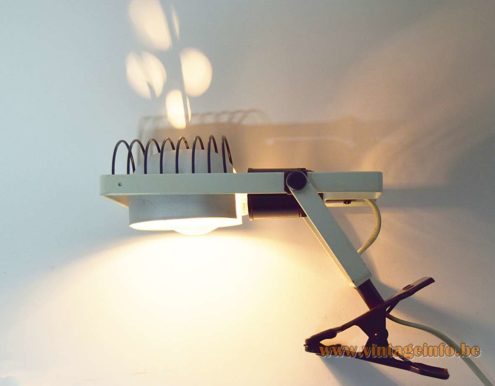
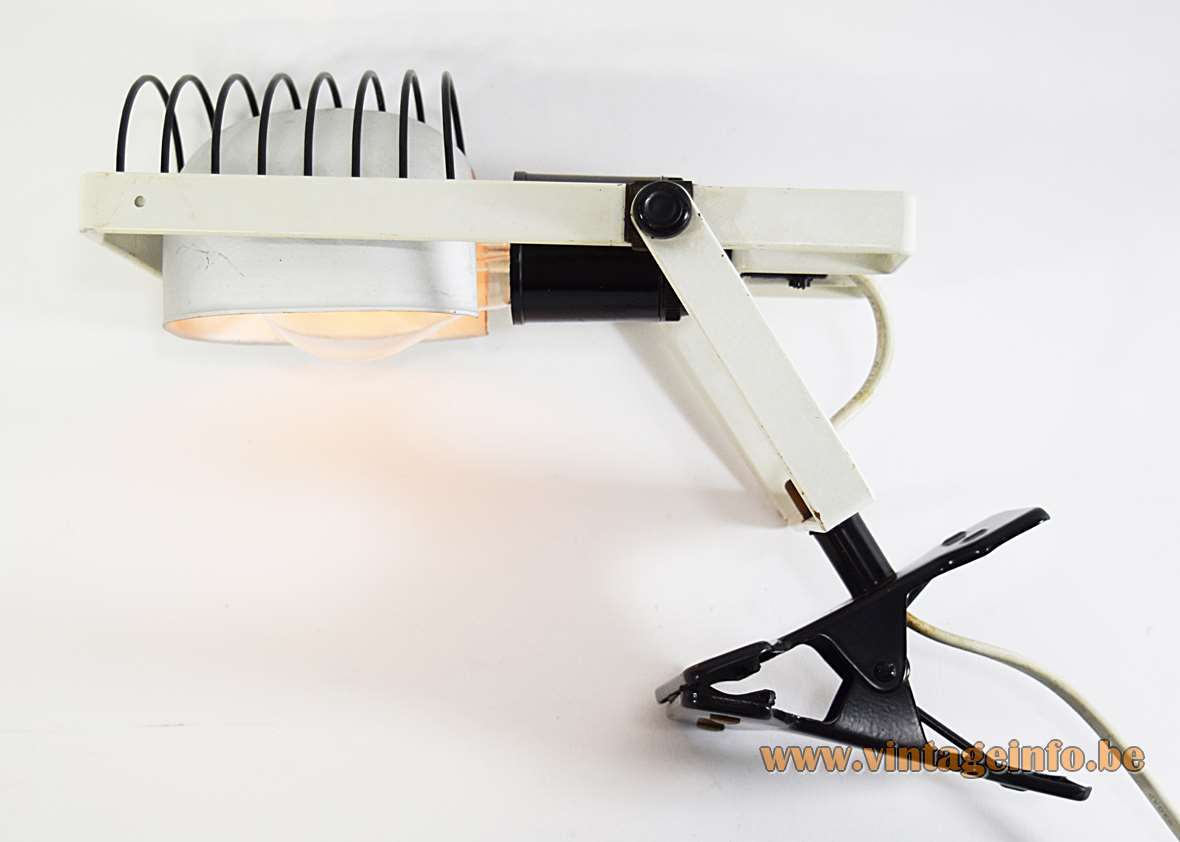
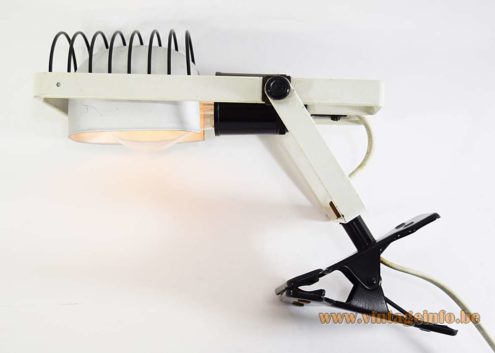
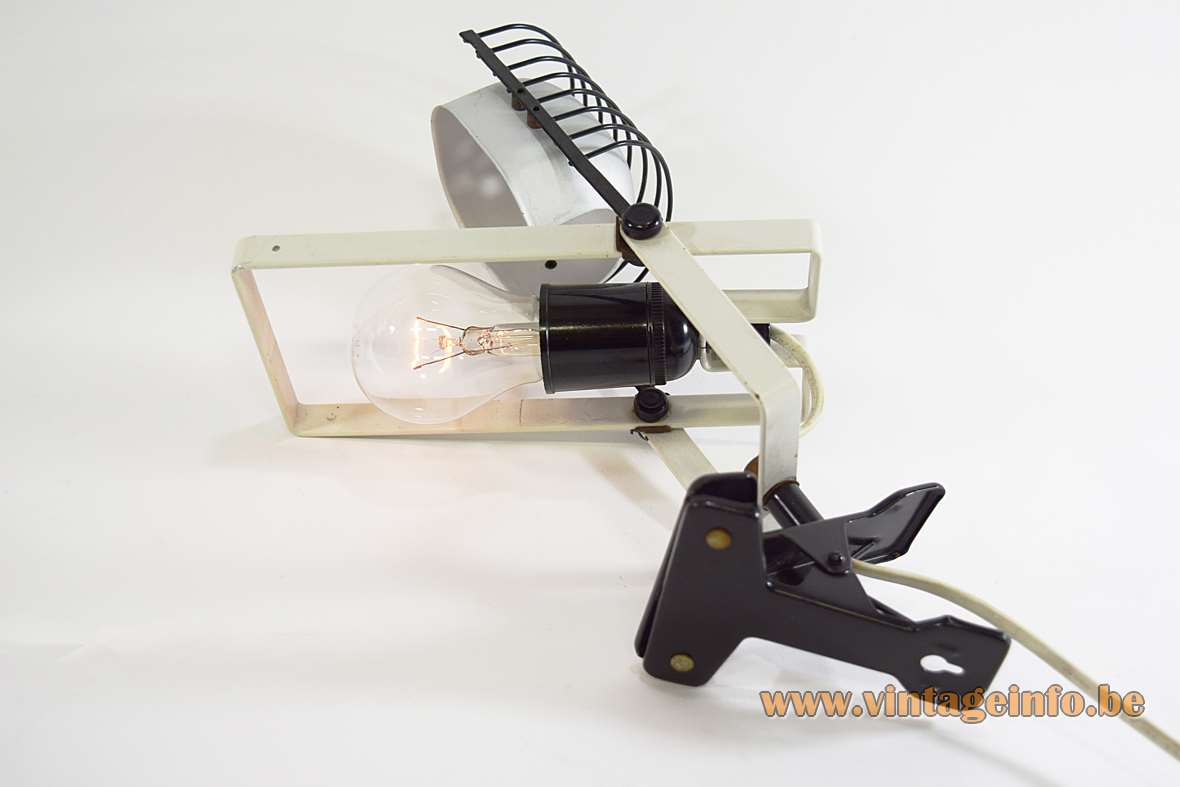
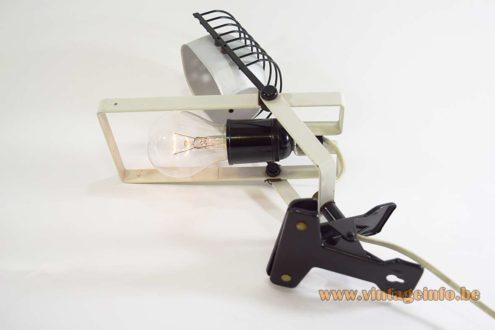
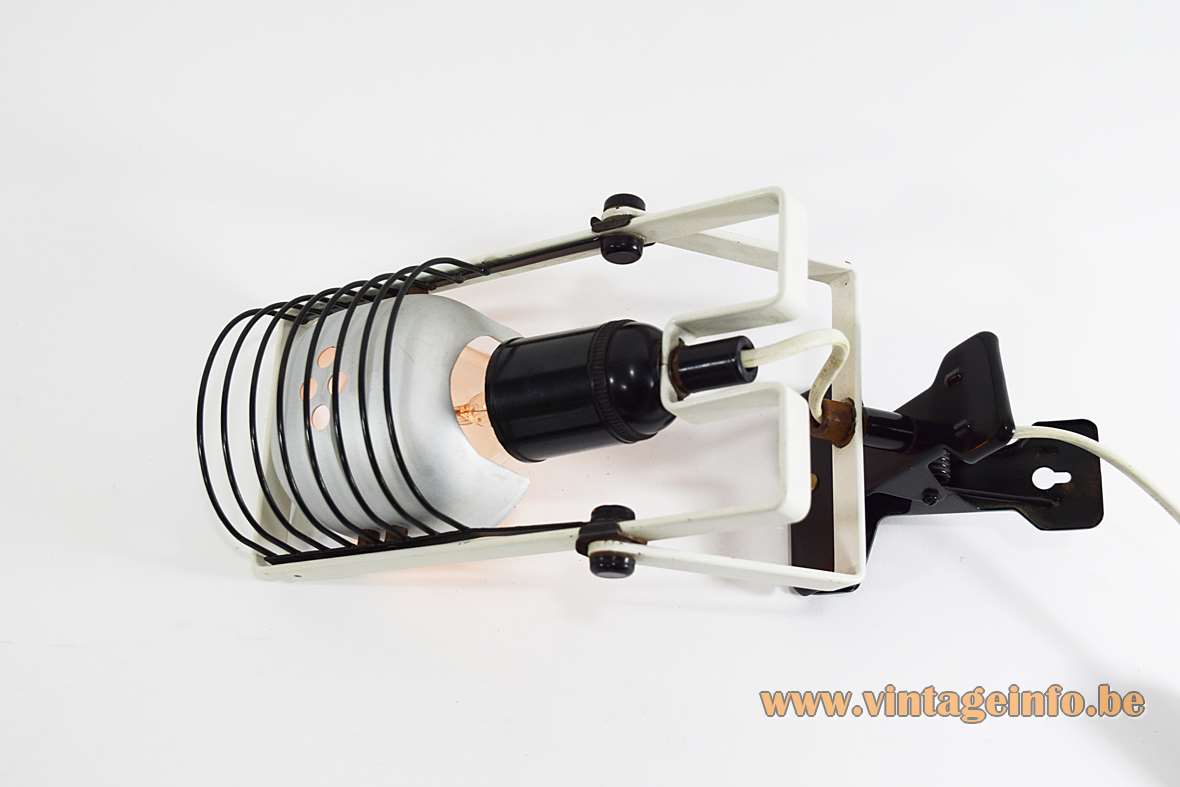
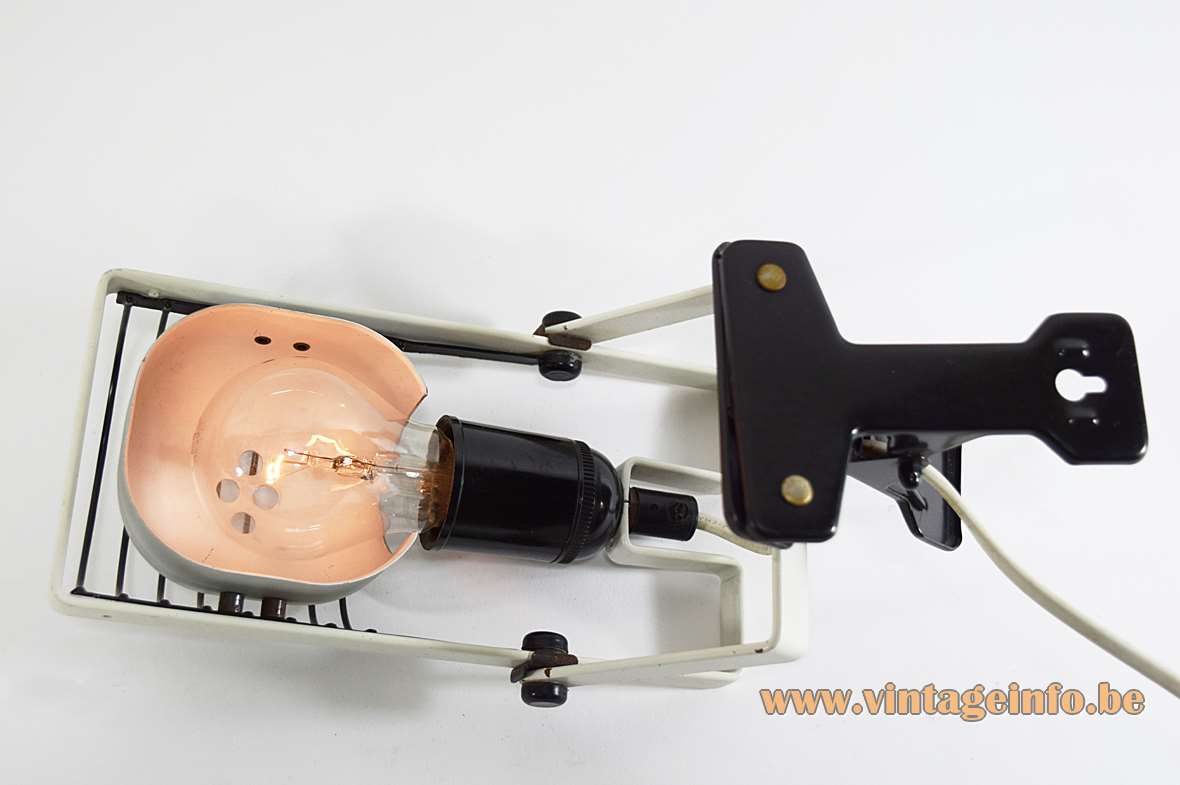
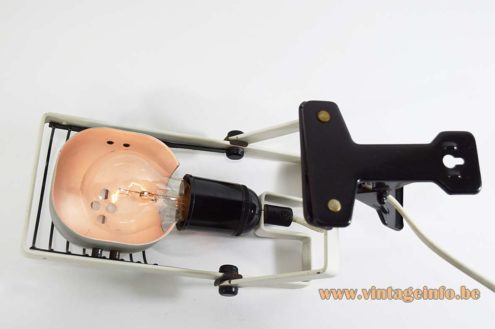
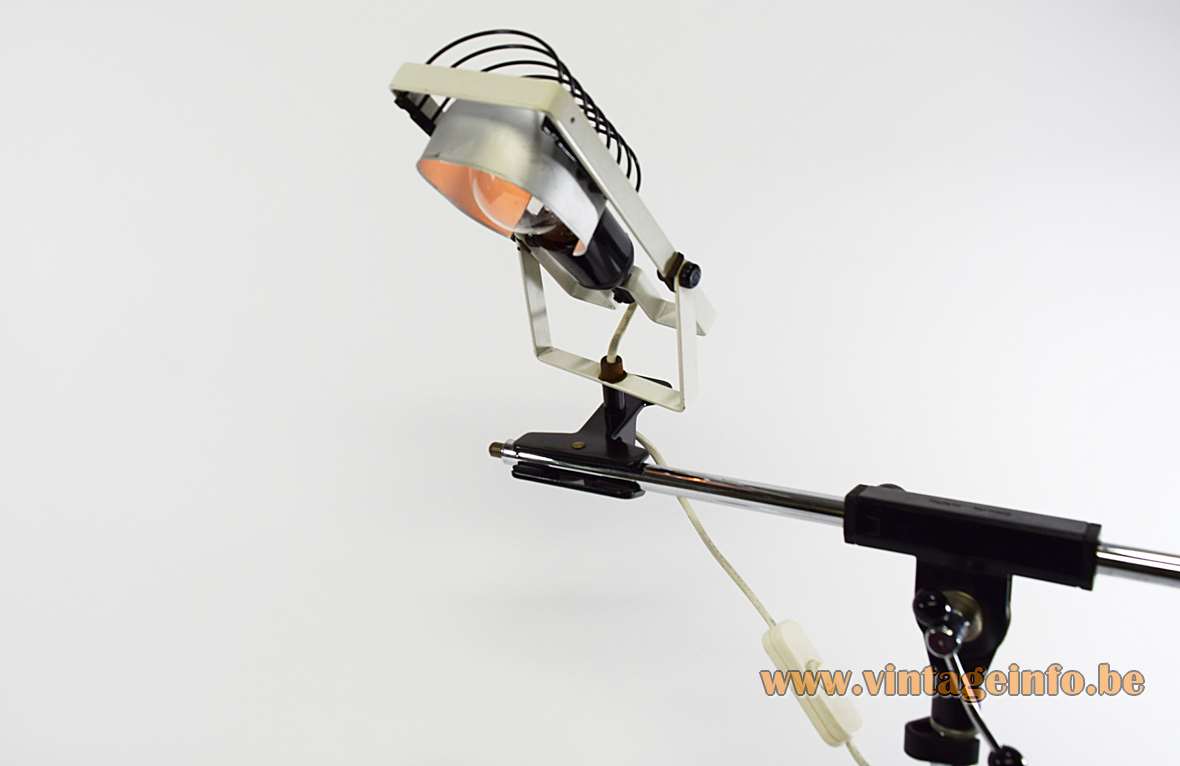
Artemide Sintesi Pinza Clamp Lamp – 1992 Catalogue Picture
In this part of the 1992 catalogue picture the Sintesi, Sintesi Pinza and Sintesi Faretto Tavolo. The complete catalogue can be explored over here.
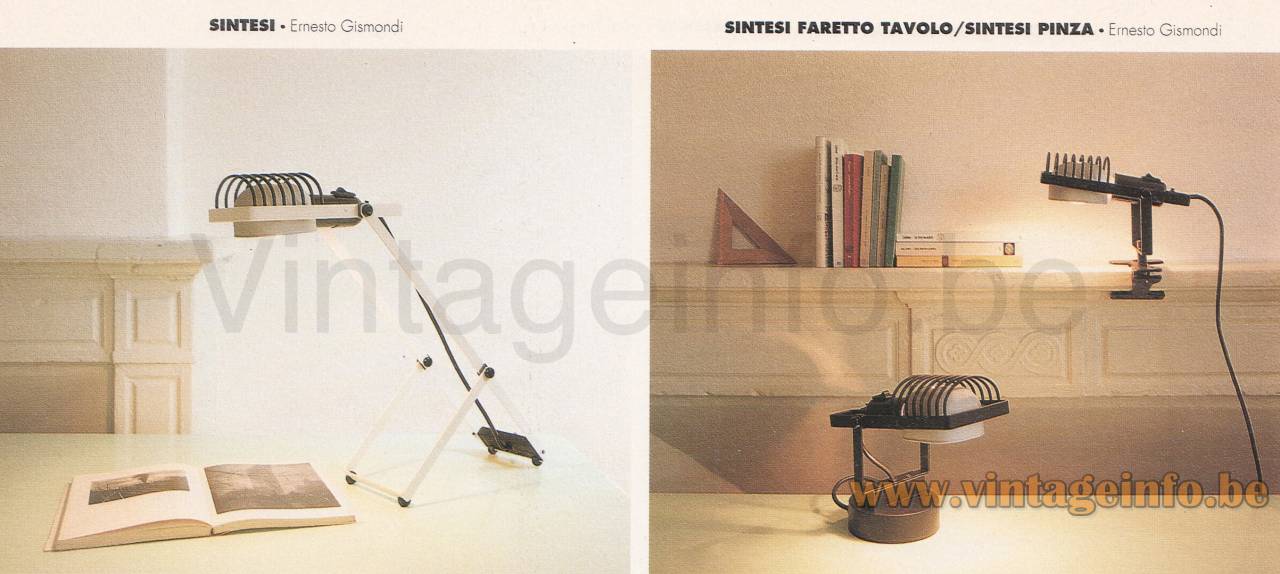
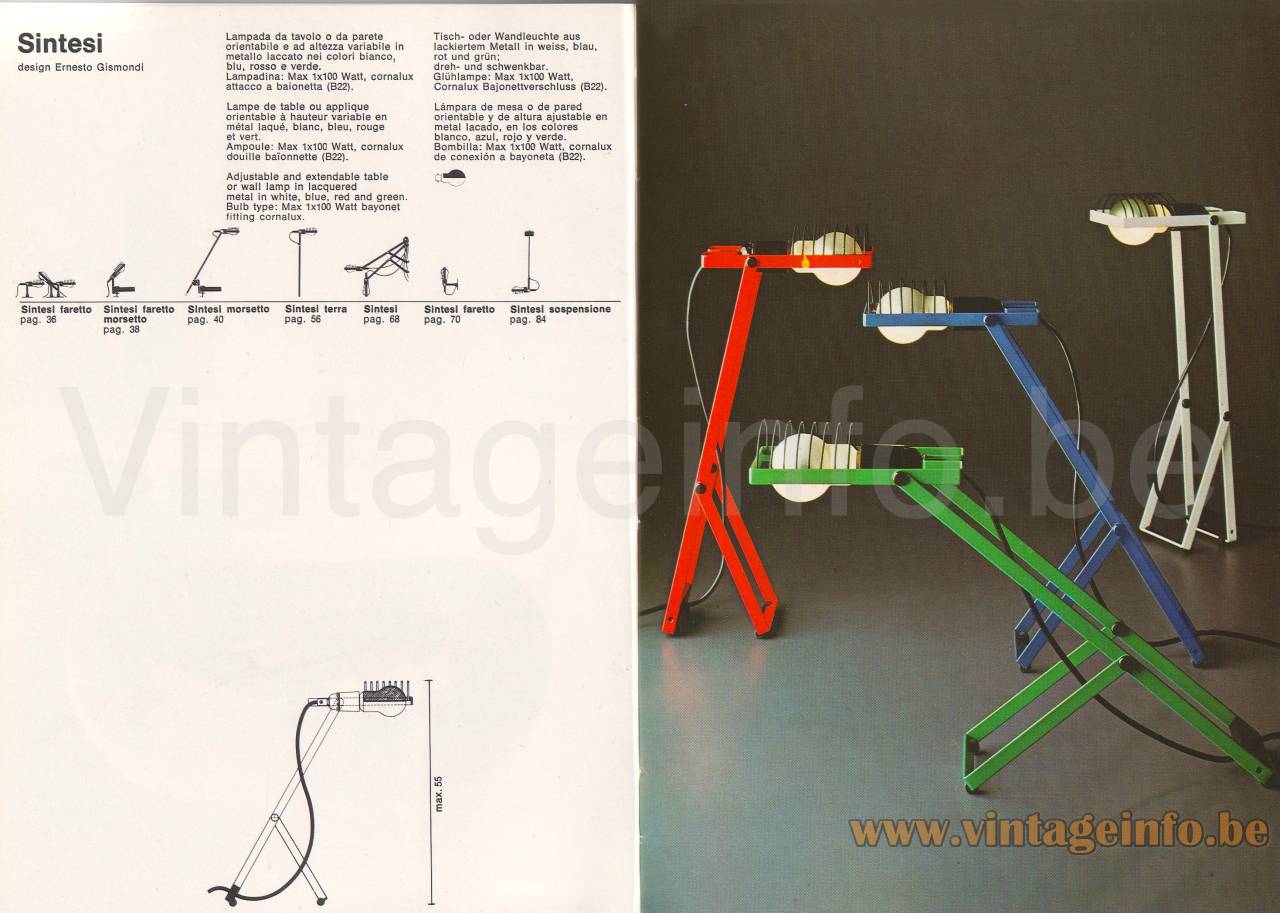
Artemide Sintesi Pinza Clamp Lamp – Model: Faretto A Morsetto
Adjustable lamp with fixing device in lacquered metal in white. blue. red and green. Bulb type: Max 1 x 100 Watt bayonet fitting cornalux. A similar style clamp lamp.
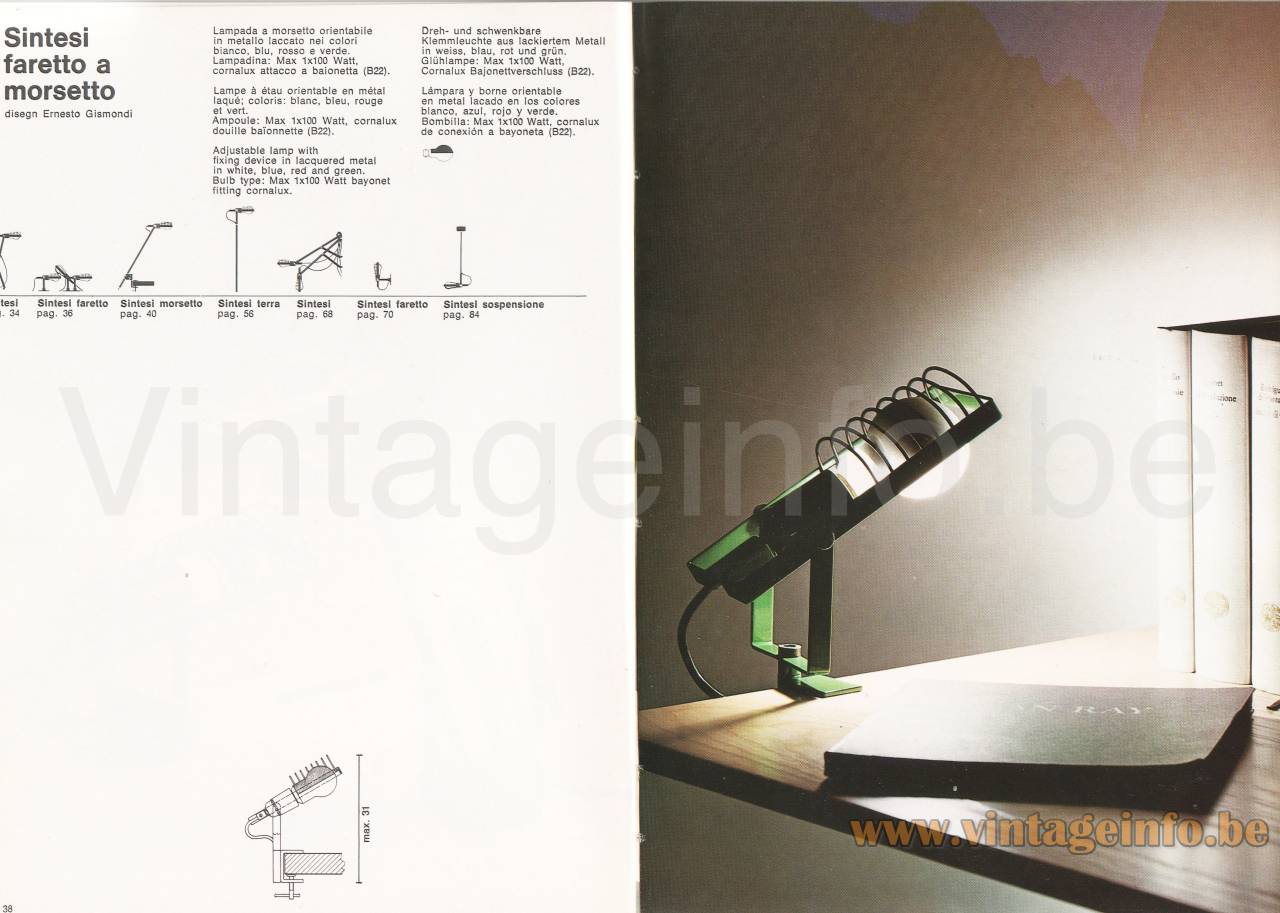
Artemide Sintesi Pinza Clamp Lamp – Model: Sintesi
Adjustable and extendable table or wall lamp in lacquered metal in white, blue, red and green. Bulb type: Max 1 x 100 Watt bayonet fitting cornalux. It is the table lamp used as a wall lamp.

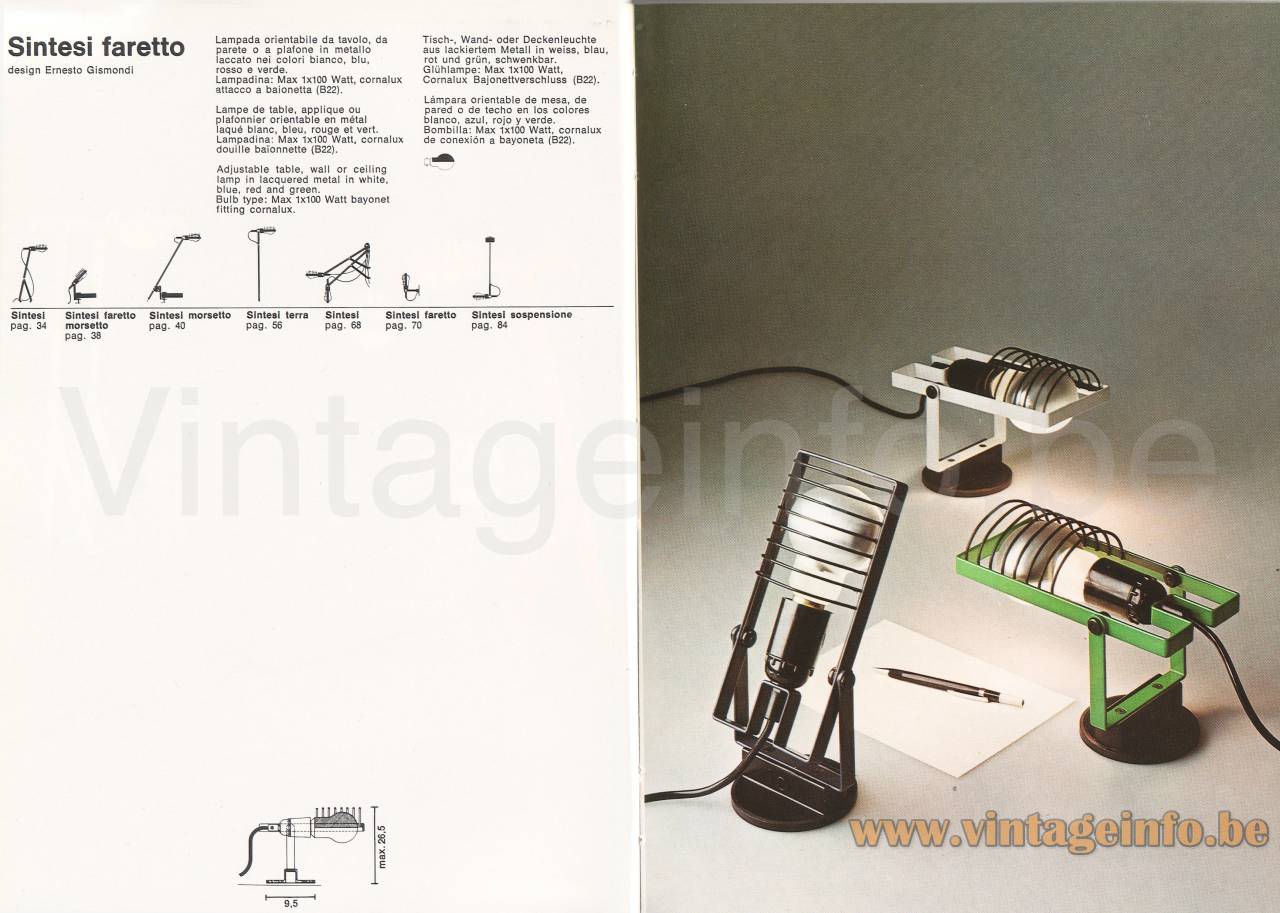
Artemide Sintesi Pinza Clamp Lamp – Model: Faretto
Adjustable table, wall or ceiling lamp in lacquered metal in white, blue, red and green. Bulb type: Max 1 x 100 Watt bayonet fitting cornalux.
Artemide Sintesi Pinza Clamp Lamp – Model: Sintesi Terra
Adjustable and extendable floor lamp in lacquered metal, white, blue, red and green. Bulb type: Max 1 x 100 Watt bayonet fitting cornalux. In the 1992 catalogue a Sintesi Terra Snodo appears, it has an adjustable rod. There are also 2 versions of the Sintesi floor lamp with an adjustable tripod base, as used for a camera.

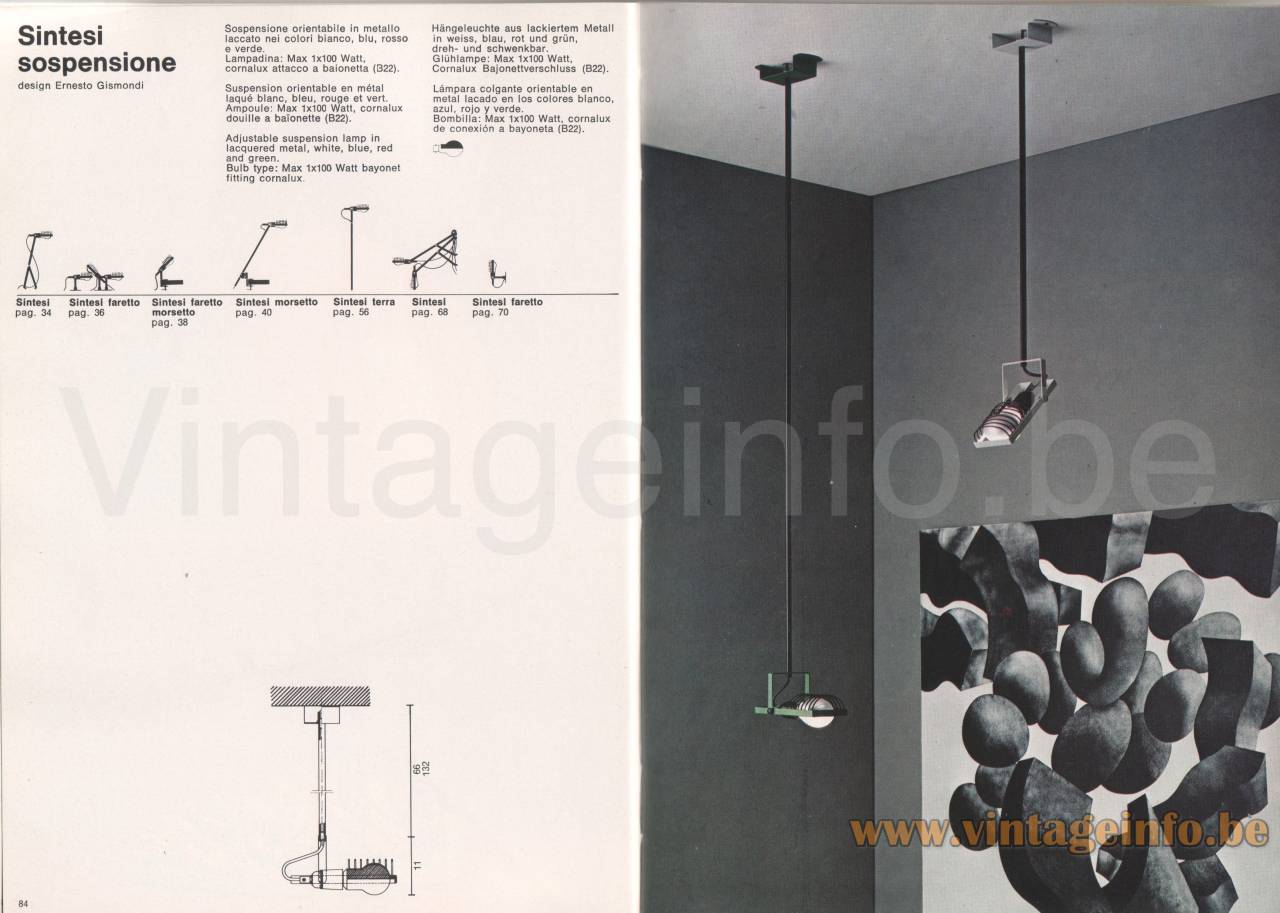
Artemide Sintesi Pinza Clamp Lamp – Model: Sospensione
Adjustable suspension lamp in lacquered metal, white, blue, red and green. Bulb type: Max 1 x 100 Watt bayonet fitting cornalux.
Links (external links open in a new window)
MoMA: Artemide design – Museum of Modern Art NY
Vintageinfo
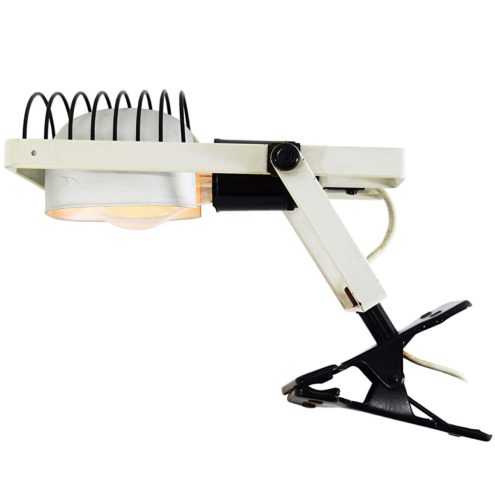
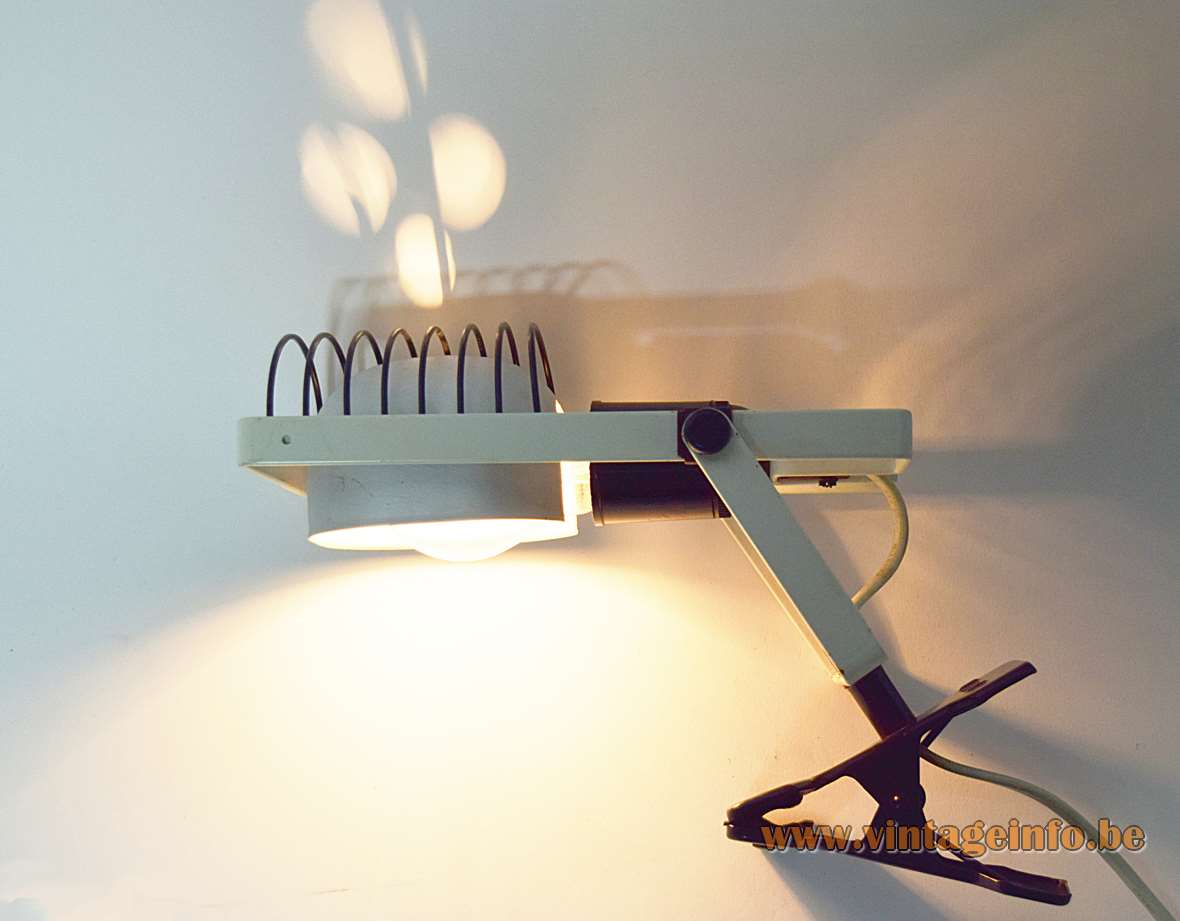
Artemide Sintesi Pinza Clamp Lamp
Materials: Clip-on lamp in white painted metal and a black painted metal clamp. Black grid above the adjustable silver painted aluminium lampshade. Bakelite E27 socket.
Height: 32 cm / 12.59”
Width: 12 cm / 4.72”
Electricity: 1 bulb E27, 1 x 100 watt maximum, 220 volt.
Any type of light bulb with an E27 socket can be used, not a specific one preferred.
Period: 1970s – Mid-Century Modern.
Designer: Ernesto Gismondi in 1975.
Manufacturer: Artemide, Pregnana Milanese, near Milan, Italy.
Other versions: This Artemide Sintesi Pinza clamp lamp comes in many versions, all with a different name, as you can see on this page.
A few years after the release of these lamps, a different design was quickly adopted. The Cornalux bulb with a B22 socket was replaced by an E27 bulb, and an adjustable silver-painted lampshade was installed. This to reduce the costs for the consumer because the Cornalux light bulb is expensive.
This clamp lamp isn’t listed in the earliest catalogues. It wasn’t produced until the late 1970s. In the 1980s, it was called Sintesi Professionale Pinza, along with the Sintesi.
Cornalux
Cornalux Bulb: The Oluce Cornalux with its famous “hammerhead” is symbolic of some of the most famous lamps made by Oluce, such as the “Agnoli 387” designed by Tito Agnoli in 1954 and then in 1965, the “Spider” series by Joe Colombo. The Cornalux lamp is still available.
The first lamp of the Artemide company was the Alfa table lamp, designed by Sergio Mazza in 1959, in production from 1960 until today.
Ernesto Gismondi
Ernesto Gismondi was born in San Remo, Italy, on December 25, 1931. He graduated in Aeronautical Engineering at the Politecnico di Milano in 1957 and obtained a second degree in Missile Engineering at the Professional School of Engineering in Rome in 1959. His strong technical background would profoundly shape his approach to lighting, where research, engineering and innovation were always central.
In 1960, together with architect and designer Sergio Mazza, he founded Artemide, conceived from the outset as a research-driven lighting company rather than a purely stylistic brand. Alongside his role as founder, entrepreneur and artistic director, Gismondi also designed a number of lamps for Artemide, including the Sintesi series, his first design for the company in 1975. Other lighting designs are, among others: Ettore, Camera, Utopia, Zen, Aton, Girasole, Mitasi, Stria, Tebe, Tholos, Serapide, Alistro and Macumba, designs that reflect his interest in architectural scale and technically intelligent light. Most of these lamps can be found here in the 1992 catalogue.
Beyond his own designs, Ernesto Gismondi was a key cultural figure in Italian design, fostering collaborations with many leading designers of the second half of the 20th century and participating as one of the protagonists in the Memphis movement. He received numerous international awards during his lifetime, while Artemide itself was honoured multiple times with the Compasso d’Oro. Gismondi remained closely involved with the company until his death in 2020, leaving a lasting legacy rooted in research, technology and human-centred lighting.
Artemide Sintesi Pinza Clamp Lamp – Model: Sintesi
Adjustable and extendable table or wall lamp in lacquered metal in white, blue, red and green. Bulb type: Max 1 x 100 Watt bayonet fitting cornalux.
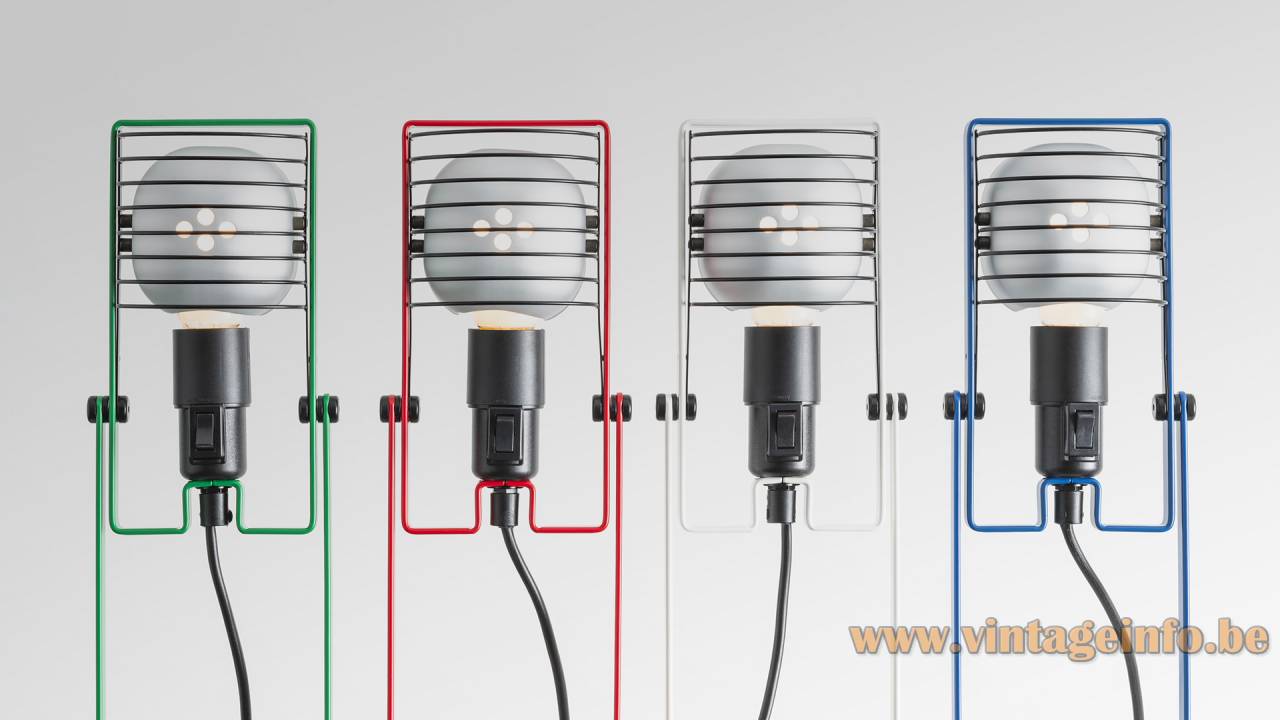
To celebrate the 50th anniversary of this lamp series in 2025, this model, the Sintesi, was reissued. There are a few differences: a different (plastic) socket with built-in switch and the designer’s name, Ernesto Gismondi, is printed on the lamp (photo below). It was released in the original colours; white, red blue and green. But otherwise, the differences are significant enough to distinguish between old and new.
Artemide
In 1960, near Milan, Ernesto Gismondi and Sergio Mazza laid the foundation of Artemide. Right from the start, the company combined technological research with a strong sense of Italian design. Their very first iconic lamp was the Alfa — hence the name — designed around 1959–1960. Emma Schweinberger, Gismondo’s wife, designed the Chi table lamp in 1962. From there, Artemide quickly began collaborating with leading designers. The mid-1960s saw the company make waves with Vico Magistretti’s Eclisse, awarded in 1967, as well as Enzo Mari’s early contributions such as the Polluce floor lamp, designed together with Anna Fasolis in 1965. The Dalù table lamp (1966 – Vico Magistretti) and the Nesso (1965), designed by Giancarlo Mattioli & Gruppo Architetti Urbanisti Città Nuova, further established Artemide’s reputation during this formative decade. Other notable designs from the late 1960s include the Lesbo table lamp, a 1967 design by Angelo Mangiarotti, Vico Magistretti’s Telegono (1968), the Pallade pendant by Studio Tetrarch, the Electra table lamp, designed by Giuliana Gramigna in 1968, all reflecting the experimental spirit of the era.
As the 1970s arrived, Artemide introduced what would become one of its most recognisable icons: the Tizio desk lamp, designed by Richard Sapper in 1972. Around the same period, Gae Aulenti designed the Pileino and Mezzopileo lamps, followed by Mezzoracolo in 1973. The famous Sintesi lamp series was designed by Ernesto Gismondi in 1975 and the Area 50 lamp series, a Mario Bellini design from 1975. The decade also saw the introduction of the Onfale lamp in 1978, designed by Luciano Vistosi, marking Artemide’s growing interest in glass and sculptural forms.
The 1980s marked a phase of international expansion. By 1980, Artemide had established a presence in the United States and continued to attract prominent designers, including Ettore Sottsass. His Callimaco floor lamp and Pausania table lamp, both designed during the 1980s, became distinctive statements within Artemide’s catalogue. Other important designs from this decade include the Polifemo floor lamp by Carlo Forcolini (1983). In 1987, Artemide launched the Tolomeo, designed by Michele De Lucchi and Giancarlo Fassina, which quickly became an icon of functional and timeless design.
During the 1990s, Artemide further expanded its scope by acquiring VeArt, bringing Murano glass expertise into the company. In 1996, Artemide introduced its “The Human Light” philosophy, focusing on the relationship between light, people and their environment. By the late 1990s, Artemide Architectural was established, bridging product design and large-scale architectural lighting projects. From the 2000s onward, Artemide increasingly focused on LED innovation while reissuing its historic designs within the “Modern Classic” collection.
In essence, Artemide represents a rich tapestry of Italian lighting history. Whether defined by the minimalist engineering of the Tizio, the organic curves of the Nesso, or the expressive presence of the Callimaco, Artemide has consistently blended design innovation with a deeply human approach to light. It is precisely this balance that makes these lamps — including the Pausania and many others — enduring icons of modern design.
Designers that collaborated with Artemide include, among others, Vico Magistretti, Emma Schweinberger, Gae Aulenti, Richard Sapper, Michele De Lucchi, Giancarlo Fassina, Ettore Sottsass, Enzo Mari, Gio Ponti, Sergio Mazza, Angelo Mangiarotti, Joe Colombo, Sergio Asti, Sergio Favre, Mario Marenco, Adelaide Bonati, Silvio Bonatti, Enrico De Munari, Carla Federspiel, Livio Castiglioni, Piero Castiglioni, Nanda Vigo, Luigi Caccia Dominioni, Mario Botta, Carlo Forcolini, Luciano Vistosi, Neri&Hu, Carlotta de Bevilacqua, Jean Nouvel, Karim Rashid, Neil Poulton, Studio Tetrarch, Zaha Hadid, Ron Arad, Herzog & de Meuron, Issey Miyake, Naoto Fukasawa, Aldo Rossi, Adrien Gardère, Stephen Philips, Carlo Colombo and Giulia Foscari.
Artemide Sintesi Pinza Clamp Lamp – 2025 Reissue
The 2025 reissue of the Sintesi looks like this, beautifully made enough to convince even the collector to buy this lamp. The built-in switch is also very nicely done. We’ve seen it before with other Sintesi models. Older lamp models of the Sintesi used a wired switch. This switch, model 450 from VLM Components, was designed by Achille Castiglione. More information can be found here.

Lamps In The Movies
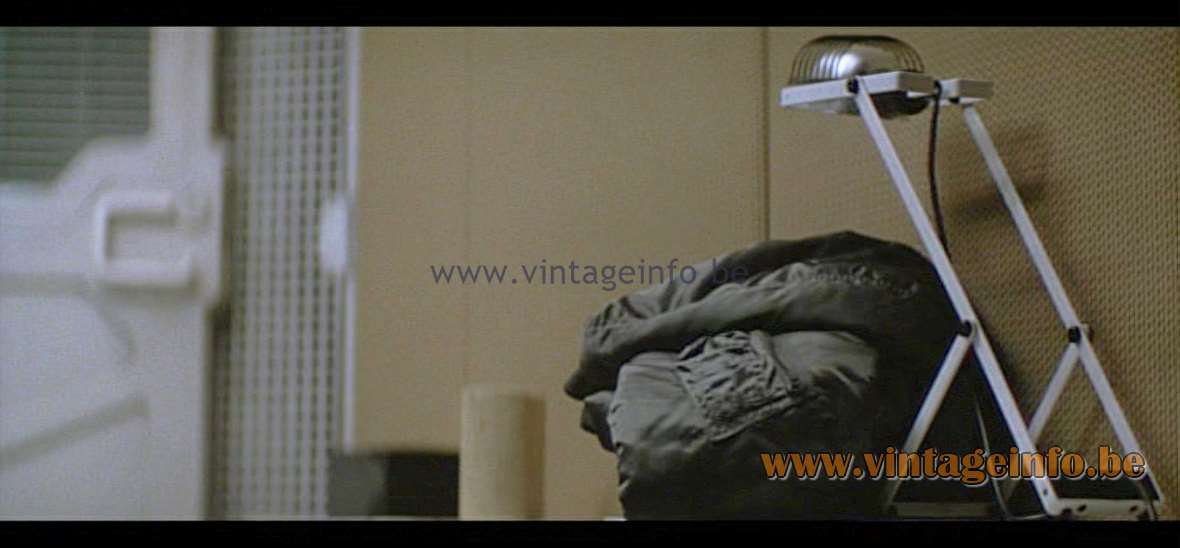
Outland (1981)
The Artemide Sintesi was used as a set decoration in the 1981 film Outland. A British science fiction thriller written and directed by Peter Hyams. Starring Sean Connery, Peter Boyle and Frances Sternhagen.
Artemide Sintesi Pinza Clamp Lamp – Company Labels & Logos