- Categories
- Categories
Last 5 Viewed
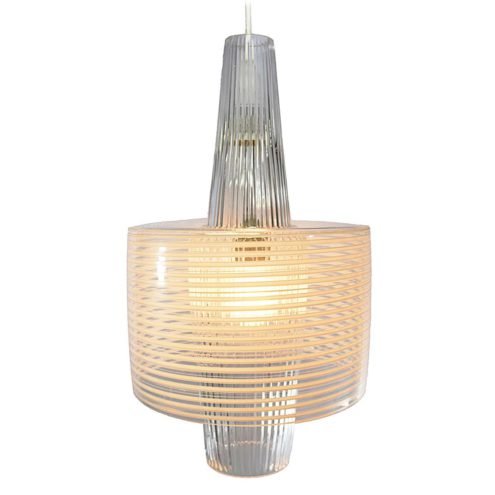
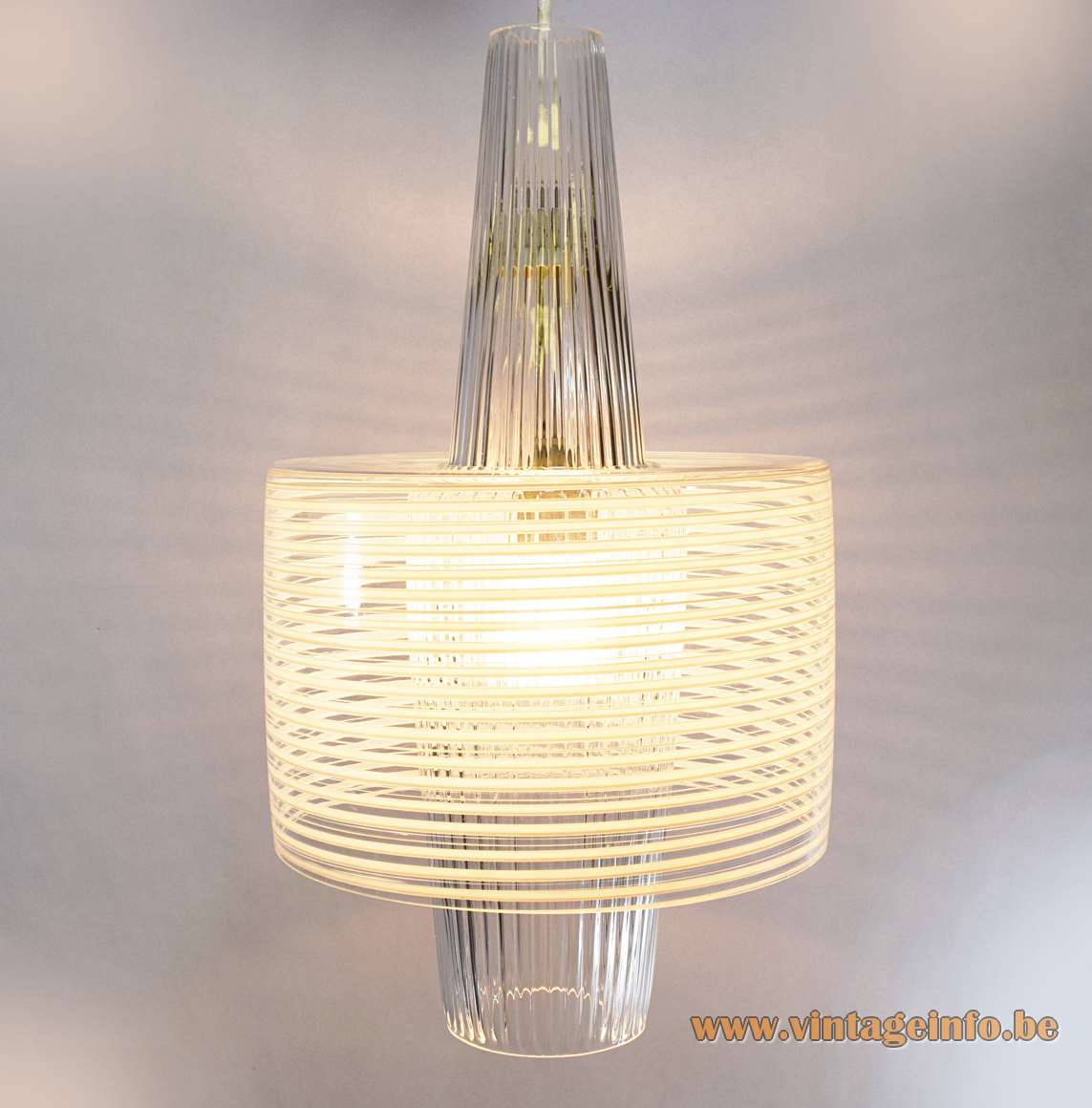
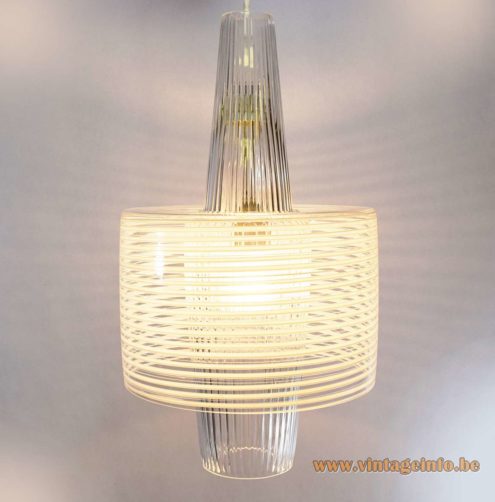

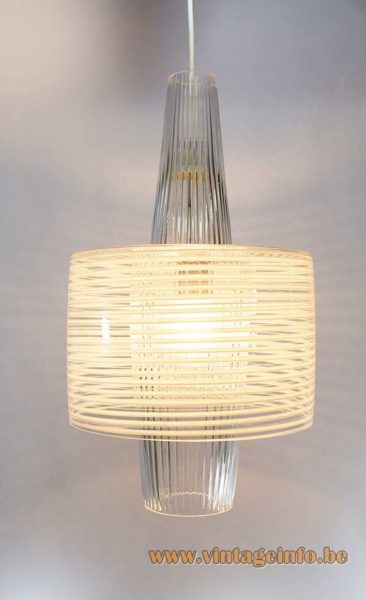
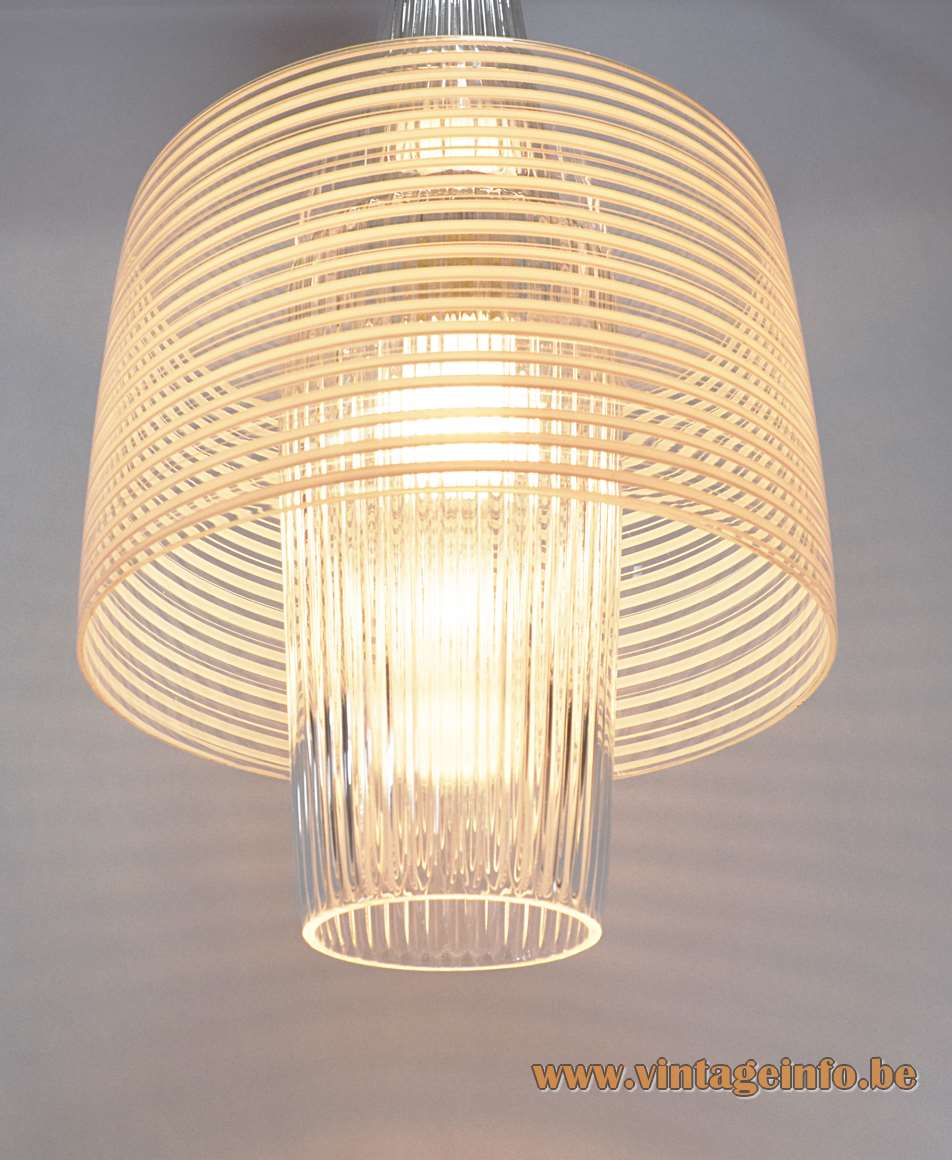
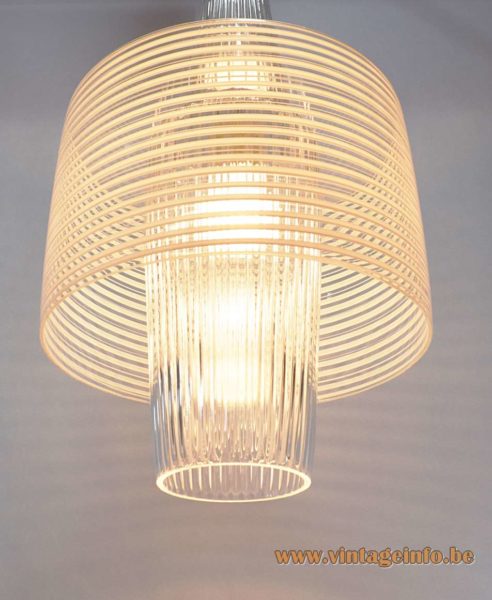

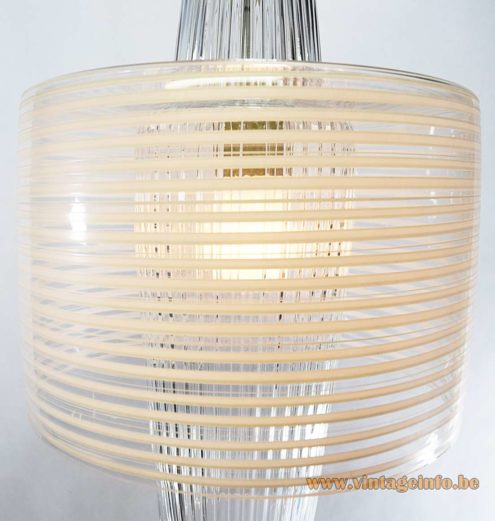
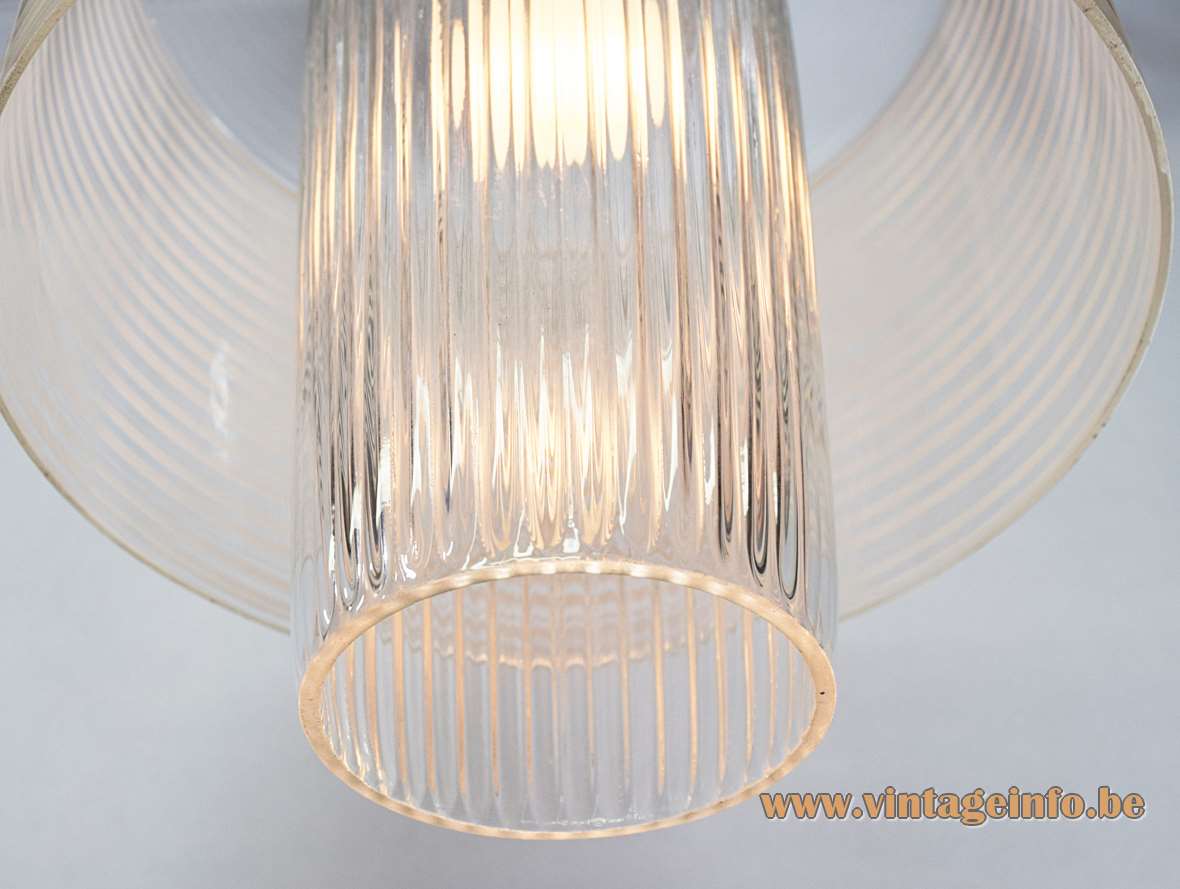
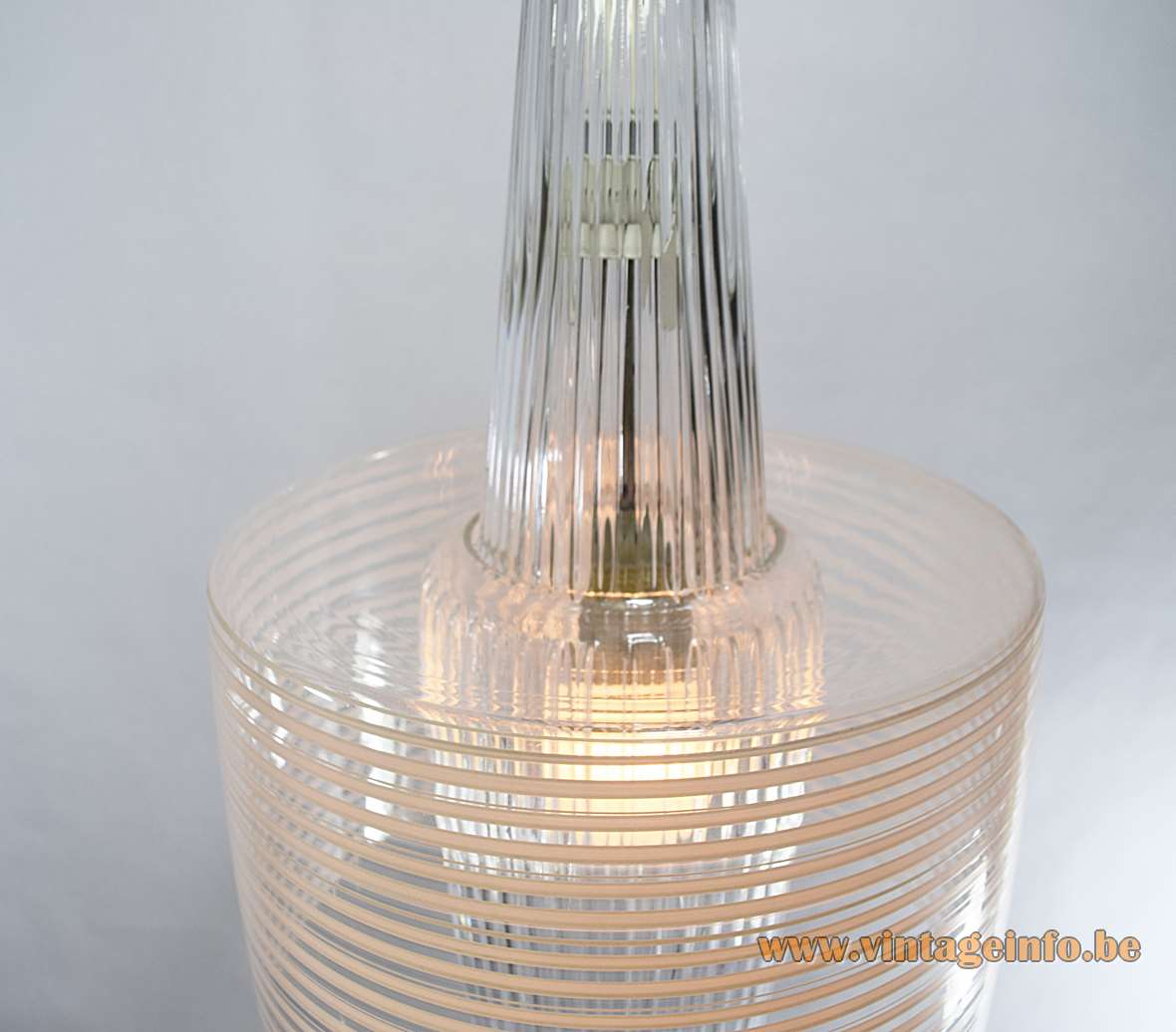
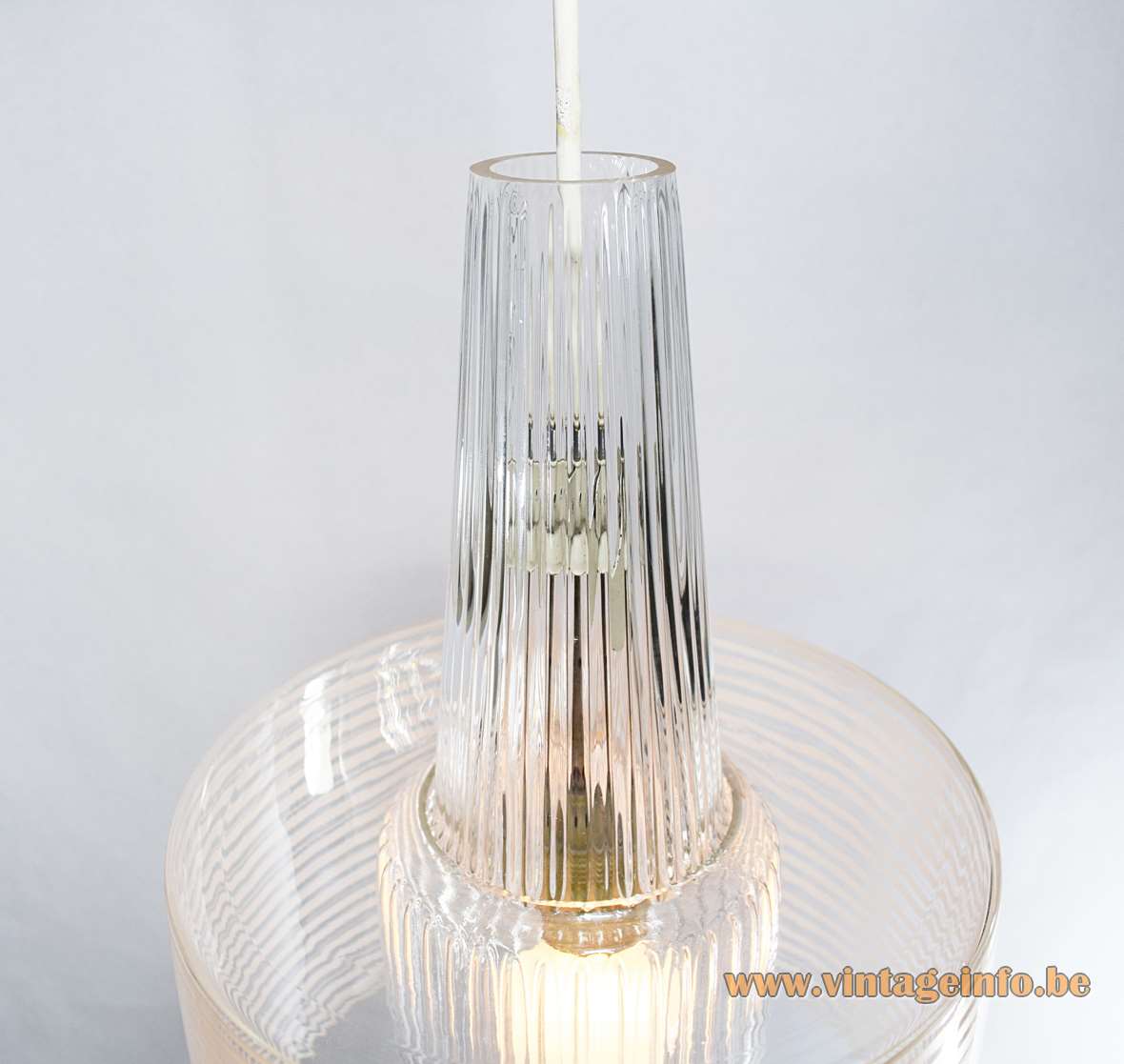
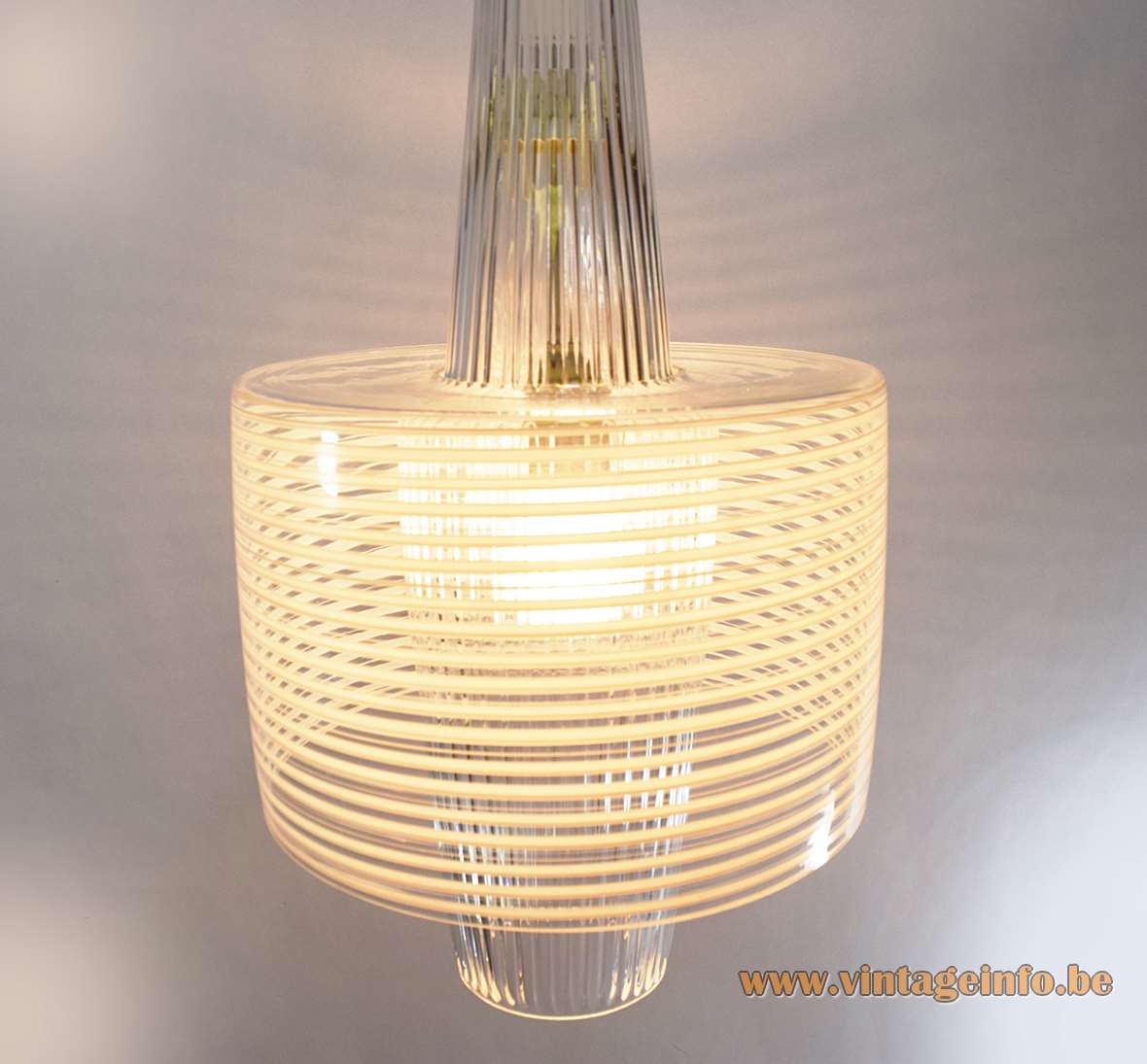
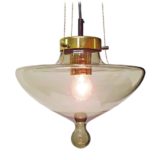
Aloys Ferdinand Gangkofner Pendant Lamp Venezia – 1962 Raak 5 Catalogue Picture
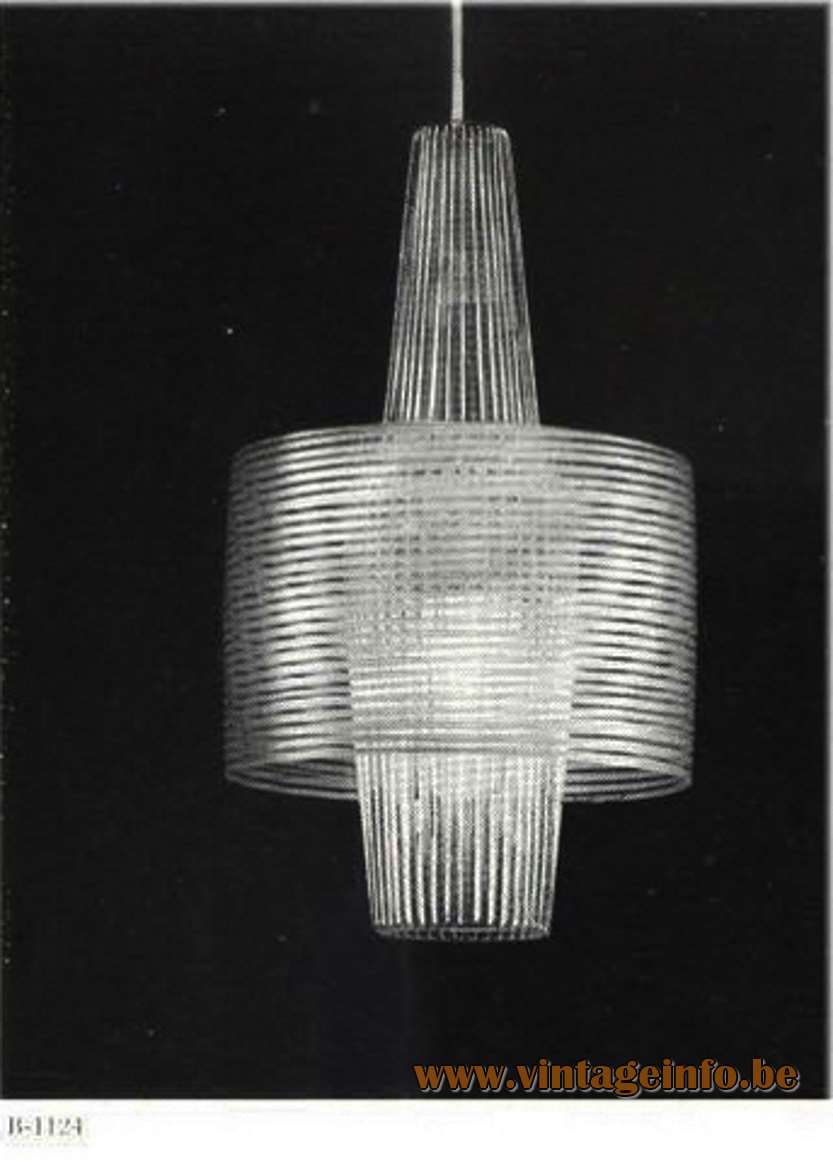
Aloys Ferdinand Gangkofner Pendant Lamp Venezia
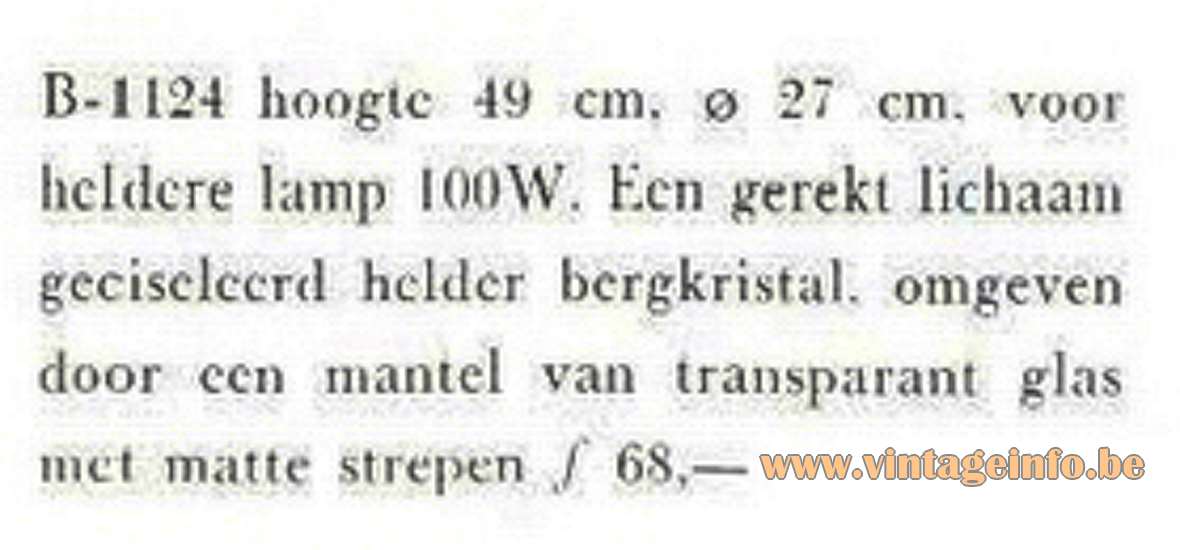
Text in Dutch from the Raak 5 catalogue – 1962
“B-1124 hoogte 49 cm. Breed 27 cm. Voor heldere lamp 100W. Een gerekt lichaam geciseleerd helder bergkristal omgeven door een mantel van transparant glas met matte strepen.” – 68 Gulden (34 euro in 1960)
English
“B-1124 height 49 cm. 27 cm wide. For a bright bulb 100W. A stretched body
surrounded by chiselled clear rhinestone in a casing of transparent glass with matte stripes.” – 68 Gulden (34 euro in 1960 +- 36 dollar at time, a lot of money in 1960!)
Links (external links open in a new window)
This lamp on the Aloys Ferdinand Gangkofner website
Aloys Ferdinand Gangkofner website
René-Jean Caillette – Wikipedia
Parscot, 12 rue du Moulin-vert Paris, old building – Google maps
Vintageinfo
1958 Raak Additional Catalogue 4
The Aloys Ferdinand Gangkofner Pendant Lamp Venezia – Raak B-1124 in the Raak catalogue 5 from 1962
Lamps by Aloys Ferdinand Gangkofner
Aloys Ferdinand Gangkofner Pendant Lamp Venezia
Materials: Transparent and opaque striped hand-blown crystal glass. Made of two glass parts. Metal socket.
Cord Length: 80 cm / 31.49’’
Height: 49 cm / 19.29”
Width: ∅ 27 cm / 10.62”
Electricity: 1 bulb E27, 1 x 100 watt maximum, 110/220 volt.
Any type of light bulb can be used. But preferably a white/opaque bulb, a clear bulb creates stripes on the wall.
Period: 1950s, 1960s – Mid-Century Modern.
Designer: Aloys Ferdinand Gangkofner (1920-2003).
Manufacturer: Made and sold by Peill+Putzler in Düren, Germany and also produced for Raak, Amsterdam, The Netherlands, Parscot, Paris, France and the Swedish company Lilux Belysning AB. Probably also made for some other companies.
Other versions: The Aloys Ferdinand Gangkofner Pendant Lamp Venezia was also sold without the hood. In that case it is calledPisa. Made in clear, opal white and smoked glass.
Aloys Ferdinand Gangkofner
Aloys Ferdinand Gangkofner (1920–2003) was a German glass and lighting designer from Reichenberg in the Bavarian Forest. He trained at the Staatliche Fachschule für Glasindustrie in Zwiesel and worked as a glass grinder at Riedlhütte, before developing a lifelong interest in the relationship between glass, form and light.
In 1952, Gangkofner began working at the Lamberts glass factory in Waldsassen, where he rediscovered and explored old glassmaking techniques. From 1953 he worked as a freelance designer for Peill+Putzler in Düren, creating a series of blown-glass lamps that helped define the company’s post-war lighting production. His designs often used double-layered glass, opal and clear glass effects, ribbed surfaces and subtle optical depth, combining artisanal glassmaking knowledge with serial production.
From 1959, Gangkofner also designed for ERCO Reininghaus & Co. in Lüdenscheid. At ERCO, a company specialised in modern lighting and plastic materials, his work took on a more geometric and restrained character. This makes his career especially interesting: for Peill+Putzler he developed expressive glass forms rooted in traditional glass craftsmanship, while for ERCO he explored a more modern, synthetic and architectural lighting language.
Alongside his industrial lighting designs, Gangkofner created large-scale glass and light installations, often using prisms, crystal elements and repeated glass forms. In 1954, his free-blown glass vessels were awarded a Gold Medal at the Milan Triennale. He also designed for Hessenglaswerke and worked on industrial glass projects, including collaborations connected with Corning in the United States.
Gangkofner taught for many years at the Academy of Fine Arts in Munich. He became Honorary Professor in 1973, and in 1983 the independent Chair for Glass and Light was created there. He died in Munich in 2003.
Several of his mid-century lighting designs have been reissued by mawa design, including the renewed gangkofner edition launched in 2025.
Peill+Putzler
Glashüttenwerk Peill und Sohn was founded in 1903 in Düren, Germany. In 1947, after the Second World War, the company merged with Putzler, whose origins go back to 1869, and continued under the name Peill+Putzler Glashüttenwerke. Over the following decades, Peill+Putzler developed into one of Germany’s best-known producers of glass and lighting. In its peak years, the company employed up to 1,500 people and was one of the largest employers in Düren.
The company worked with important designers such as Wilhelm Wagenfeld, Wilhelm Braun-Feldweg, Helmut Demary, Aloys Ferdinand Gangkofner, Horst Tüselmann, Dieter Sieger and others. Peill+Putzler became especially known for its high-quality glass production and for a wide range of modern lighting designs, many of which received iF Design Awards. Peill+Putzler received many design awards, not only for its lighting designs. Over the years, the company won 86 iF Design Awards.
Peill+Putzler also supplied glass components to other European lighting companies, including Raak, Philips, Müller & Zimmer and Van Doorn in the Netherlands, and Massive in Belgium. These lamps often combined Peill+Putzler glass with electrical parts made or specified by the companies under whose names they were sold.
In the mid-1990s, production was gradually moved from Düren to Slovenia, Poland and the Czech Republic. Only the trading of lamps and glass remained in Düren. Although the company was able to celebrate its 100th anniversary, insolvency proceedings followed in 2005.
For a number of years after that, the Peill+Putzler name continued to be used, including for Wagenfeld lighting marketed by the German company Paul Neuhaus. The former factory site in Düren, now known as Glashütte Düren, has since been converted into a multifunctional complex with various businesses and event spaces.
The Peill+Putzler name was revived again in recent years and is now used by Peill+Putzler Leuchten GmbH & Co. KG in Hemer, Germany. A new catalogue has been online since 2025, including reissues of some of the company’s best-known models, such as the Lido table lamp.
Aloys Ferdinand Gangkofner Pendant Lamp Venezia
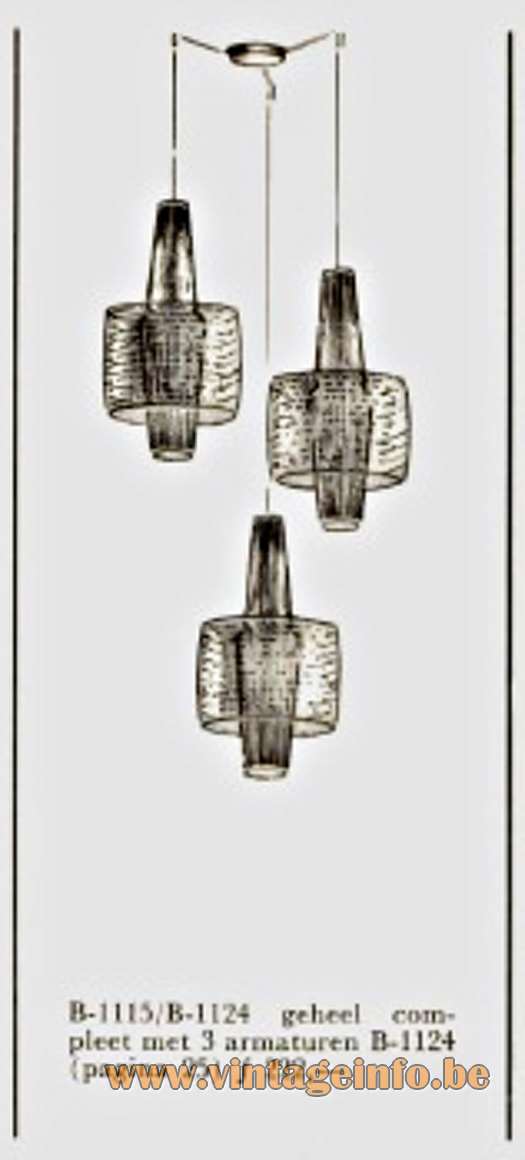
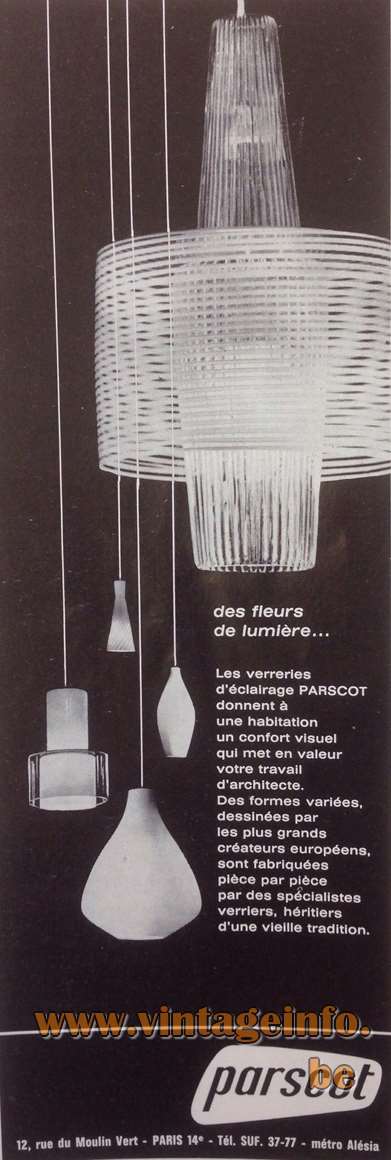
Raak & Parscot Catalogue Pictures
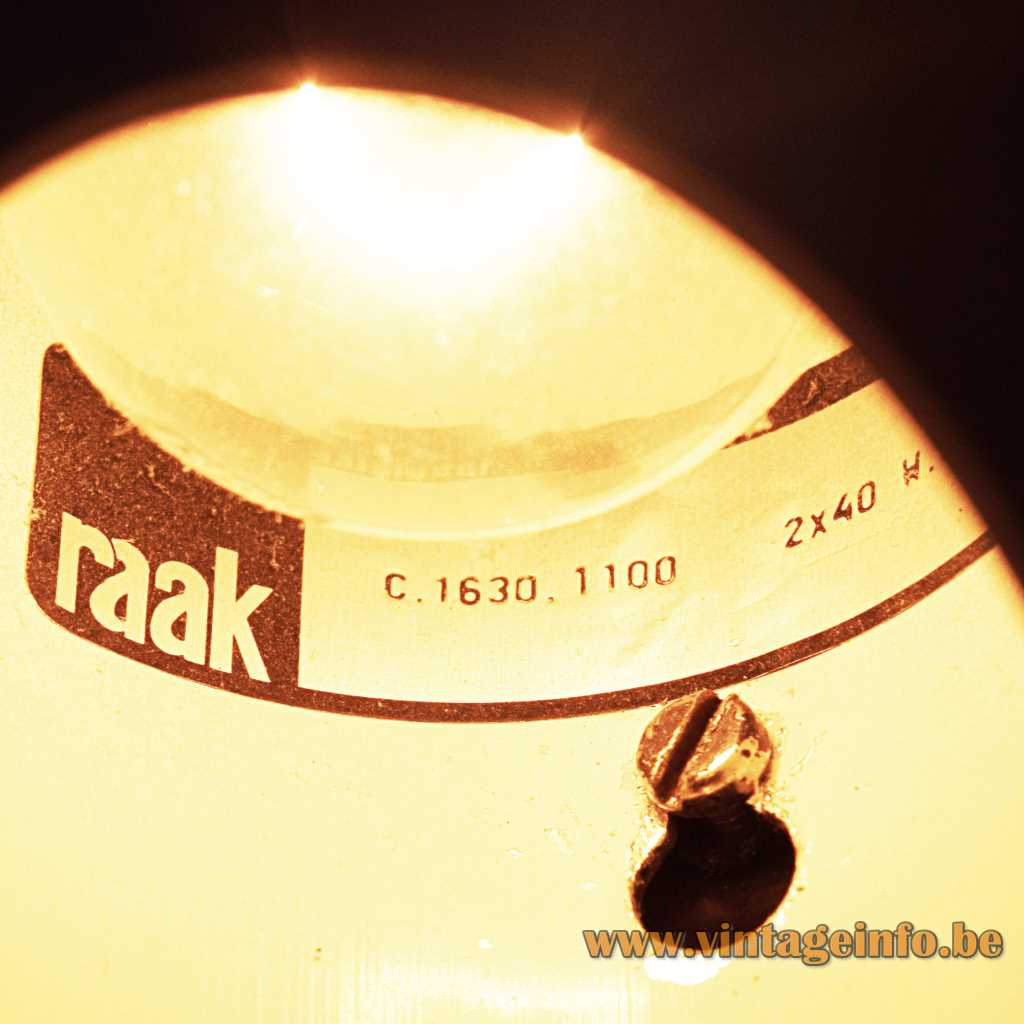
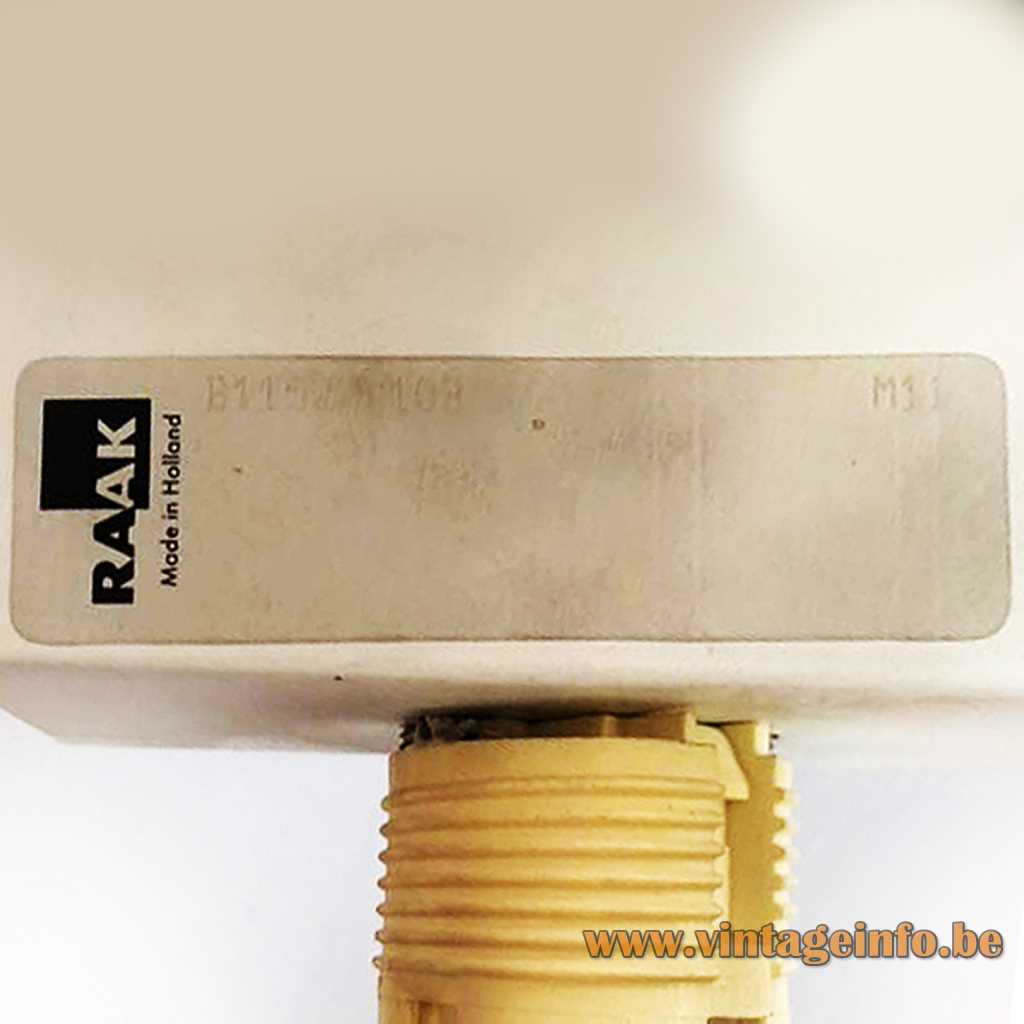
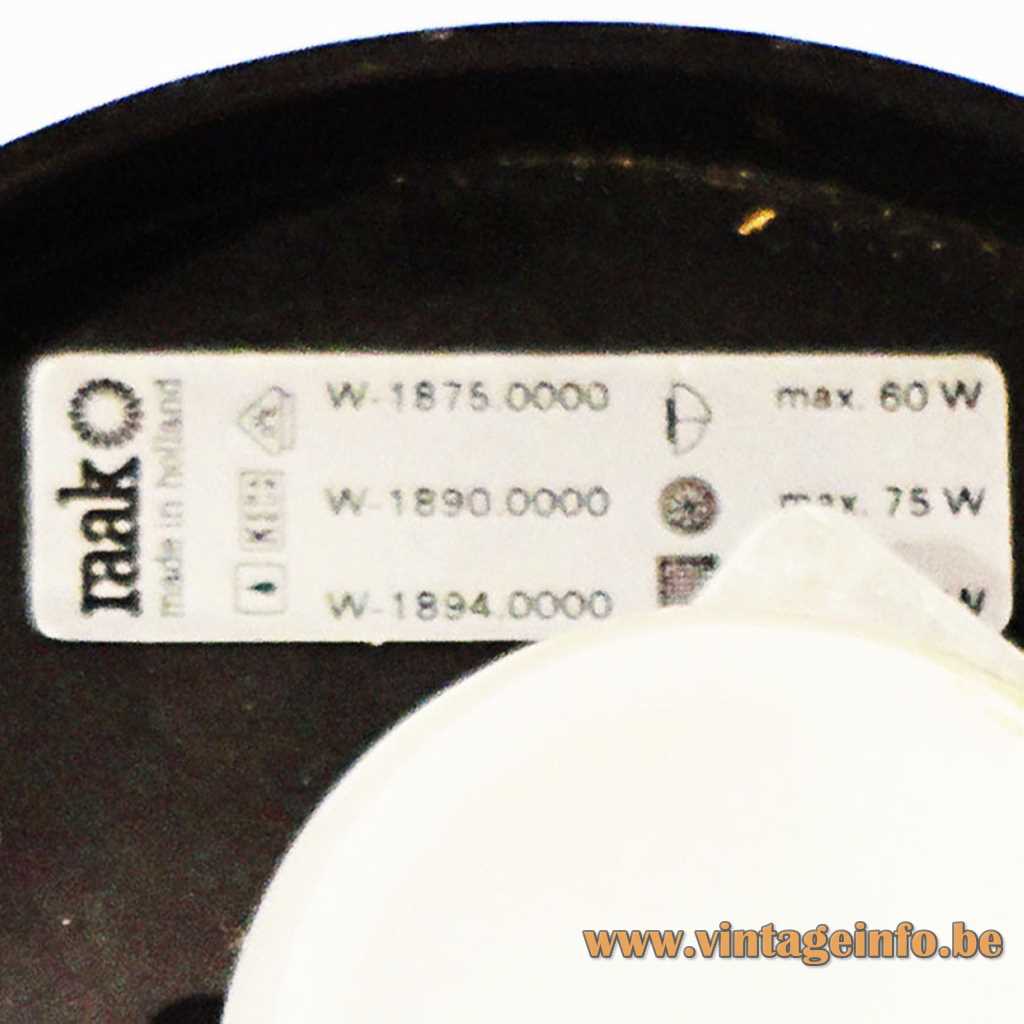
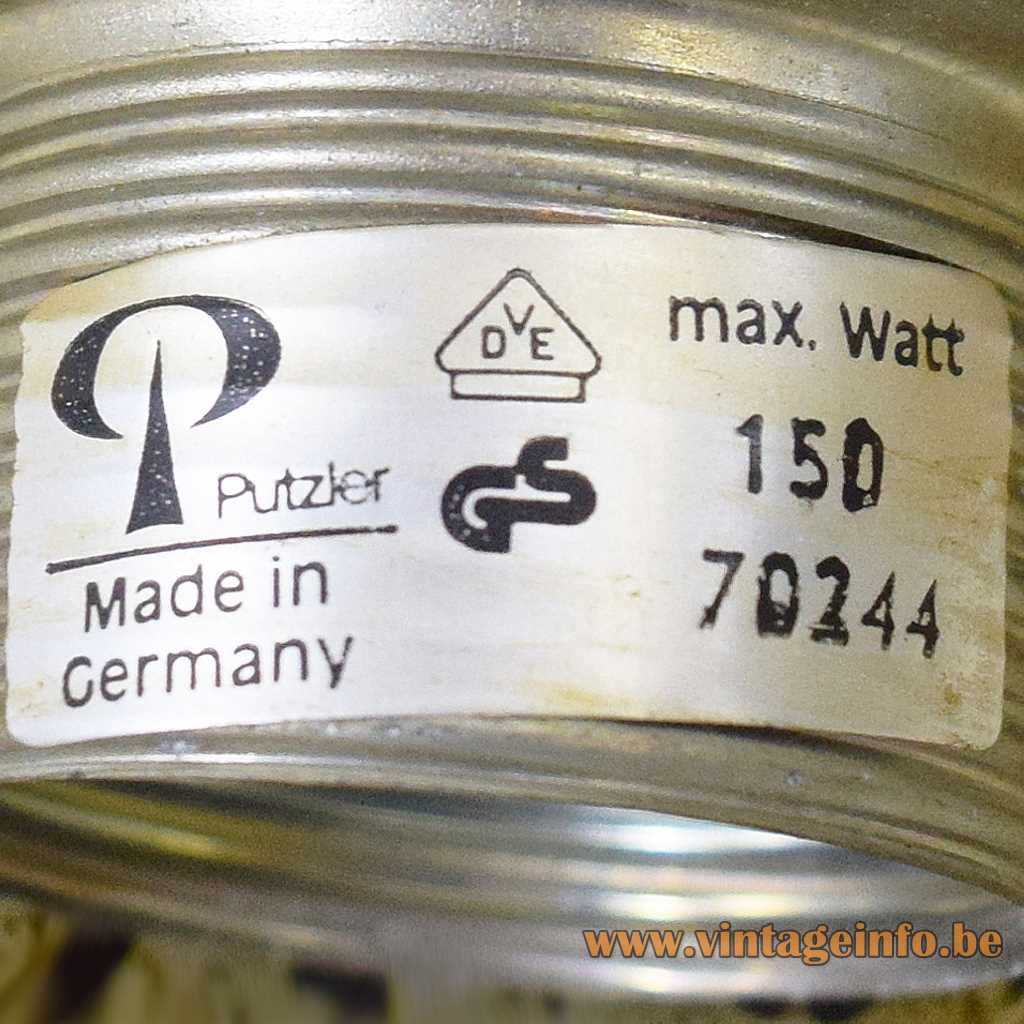
Aloys Ferdinand Gangkofner Pendant Lamp Venezia – Company Labels & Logos