- Categories
- Categories
Last 5 Viewed
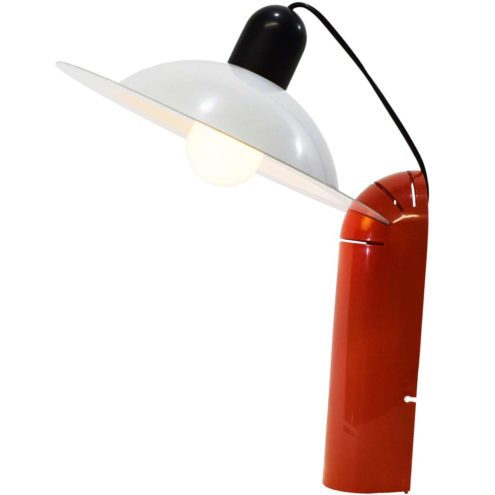
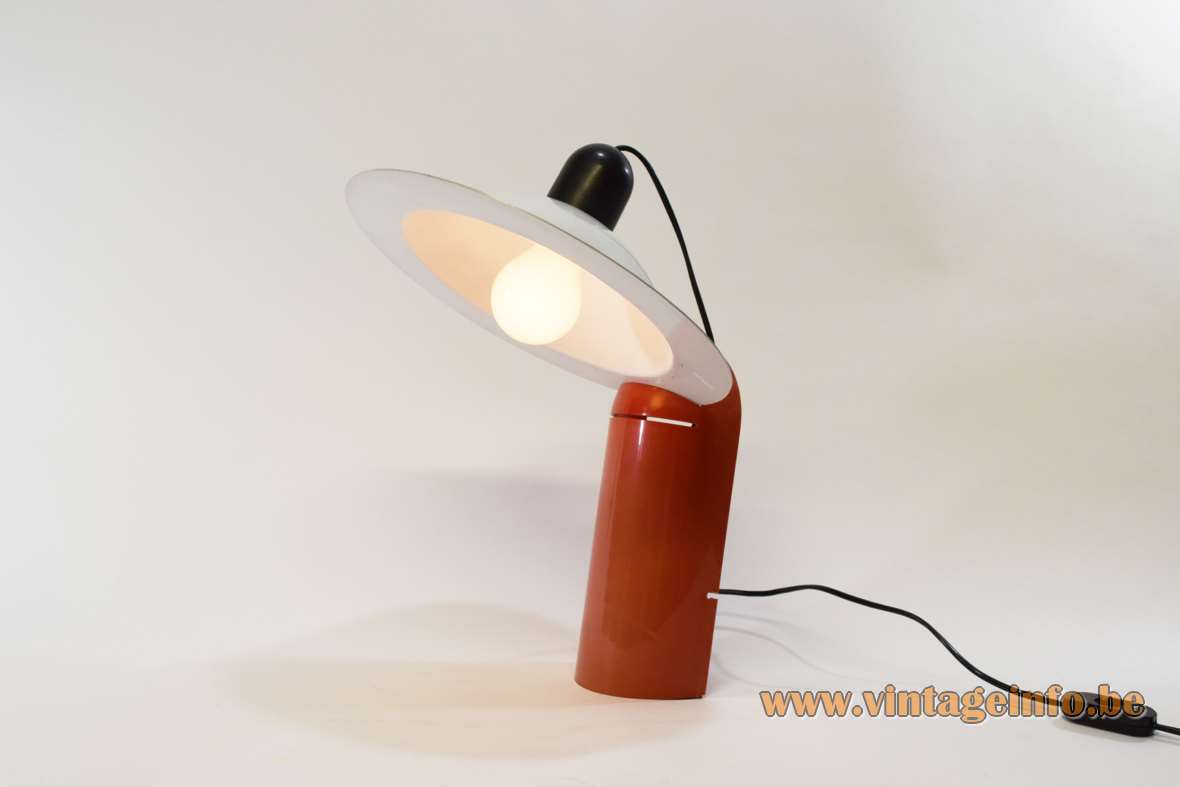
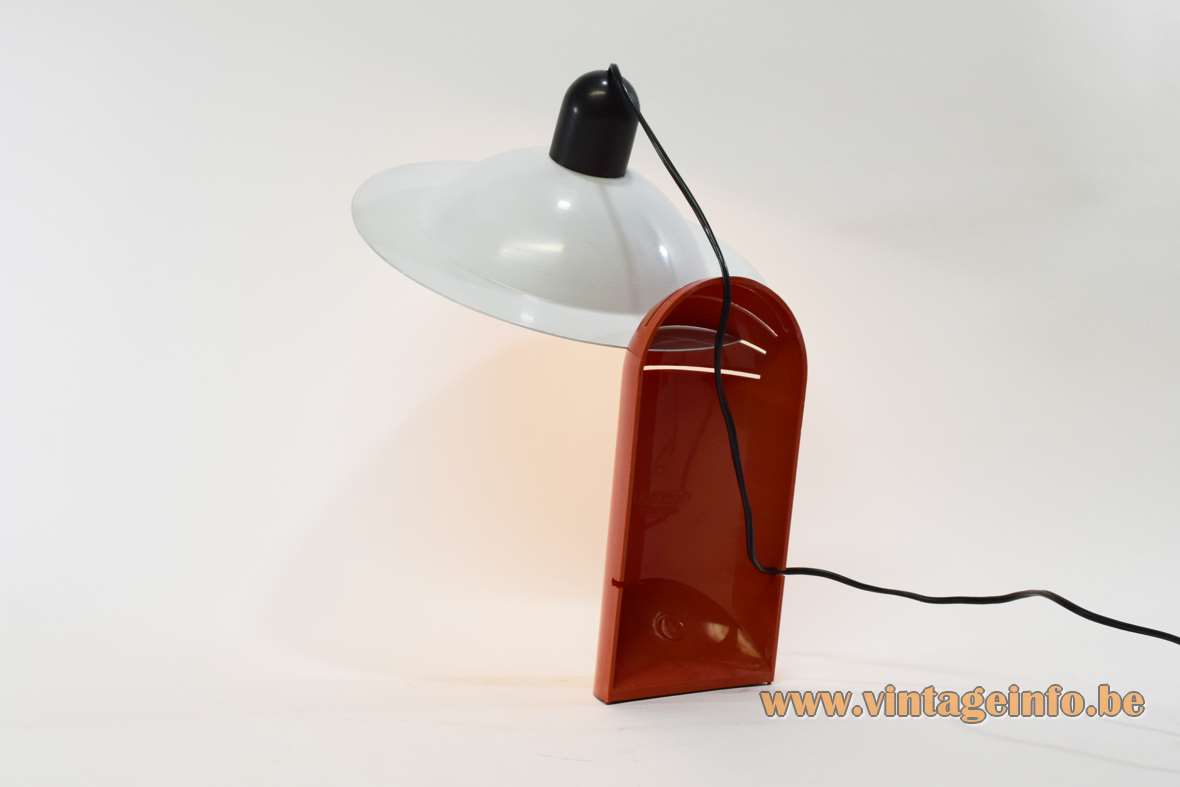
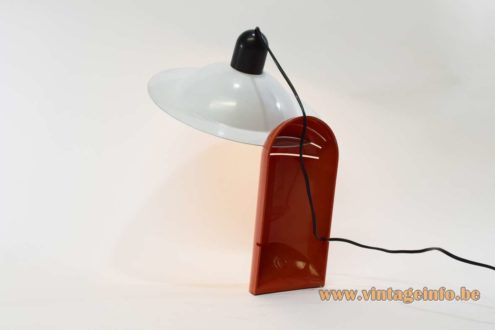
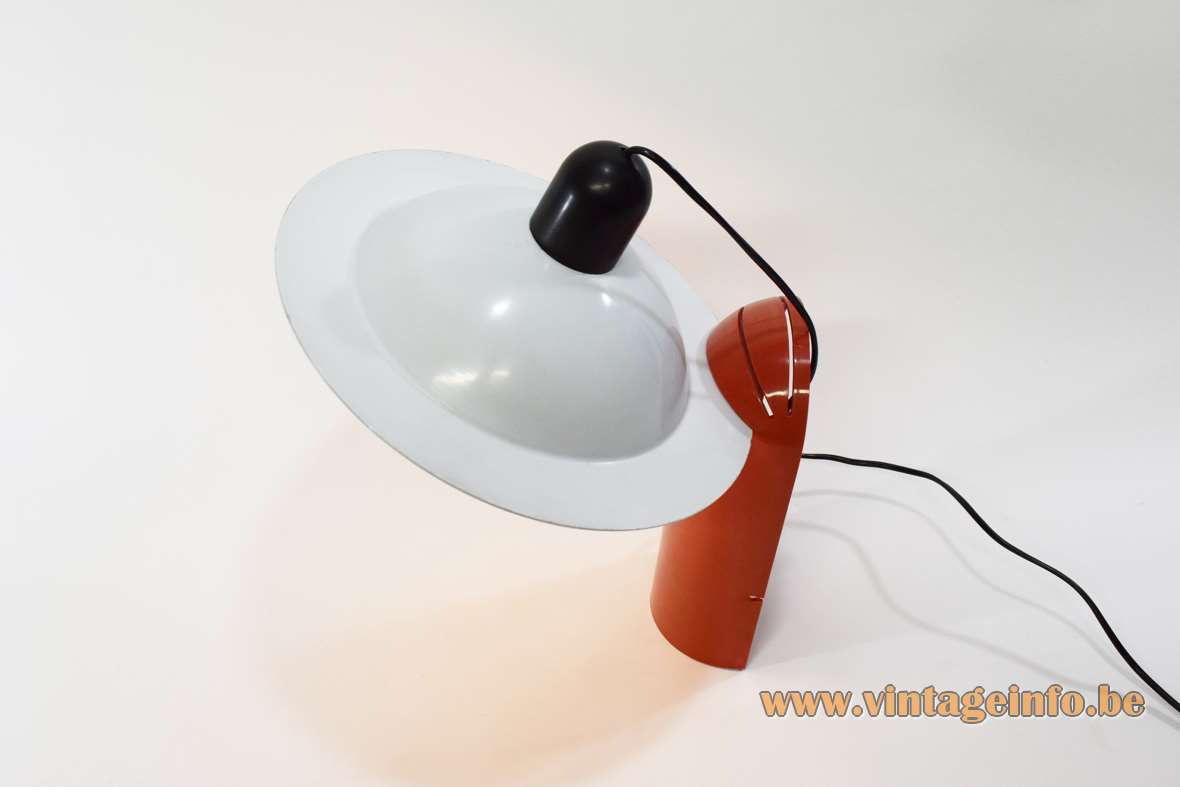
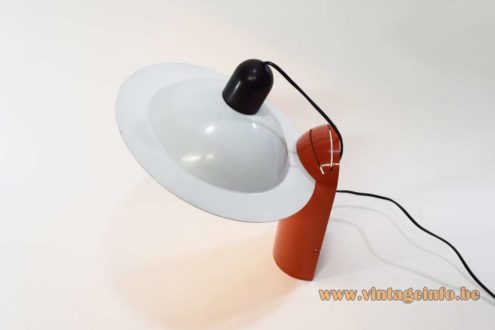
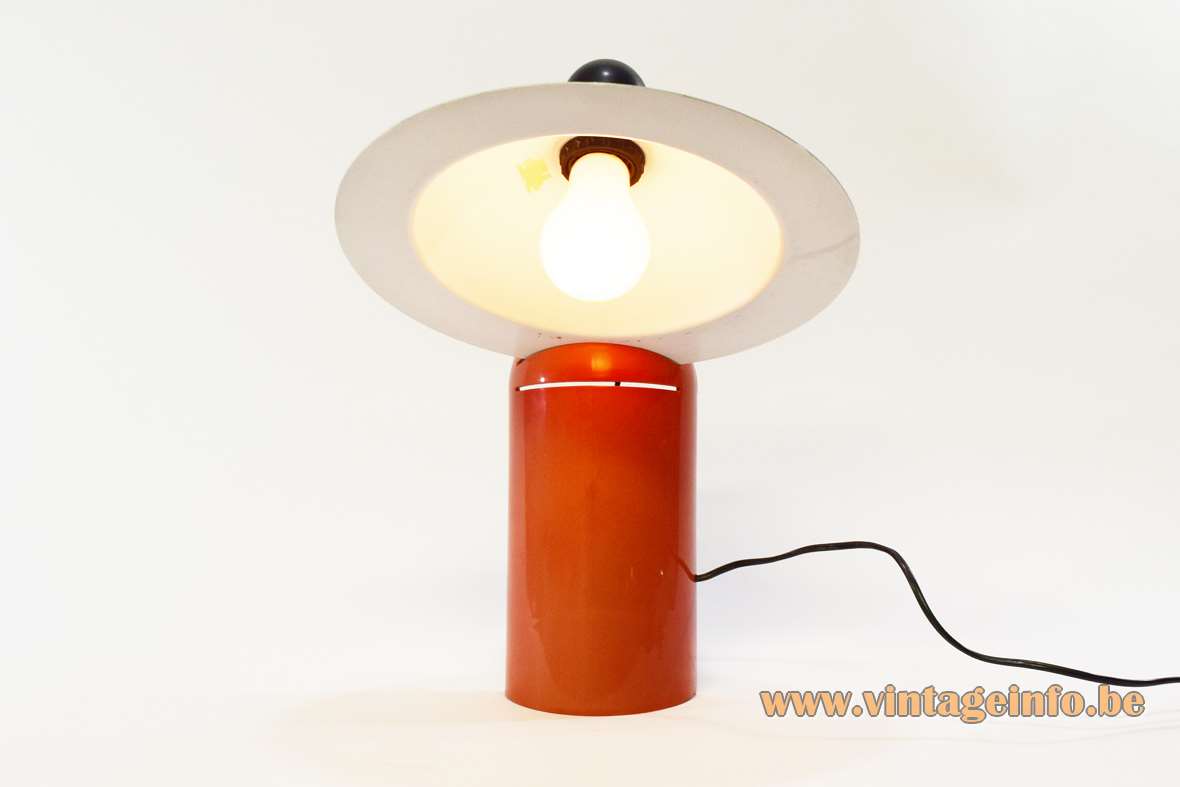
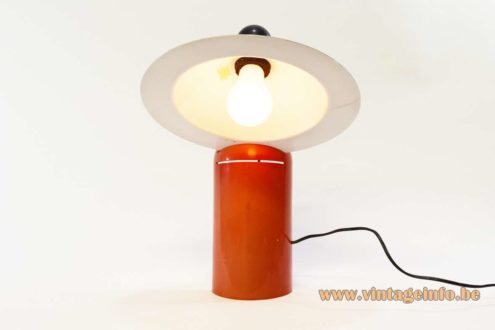
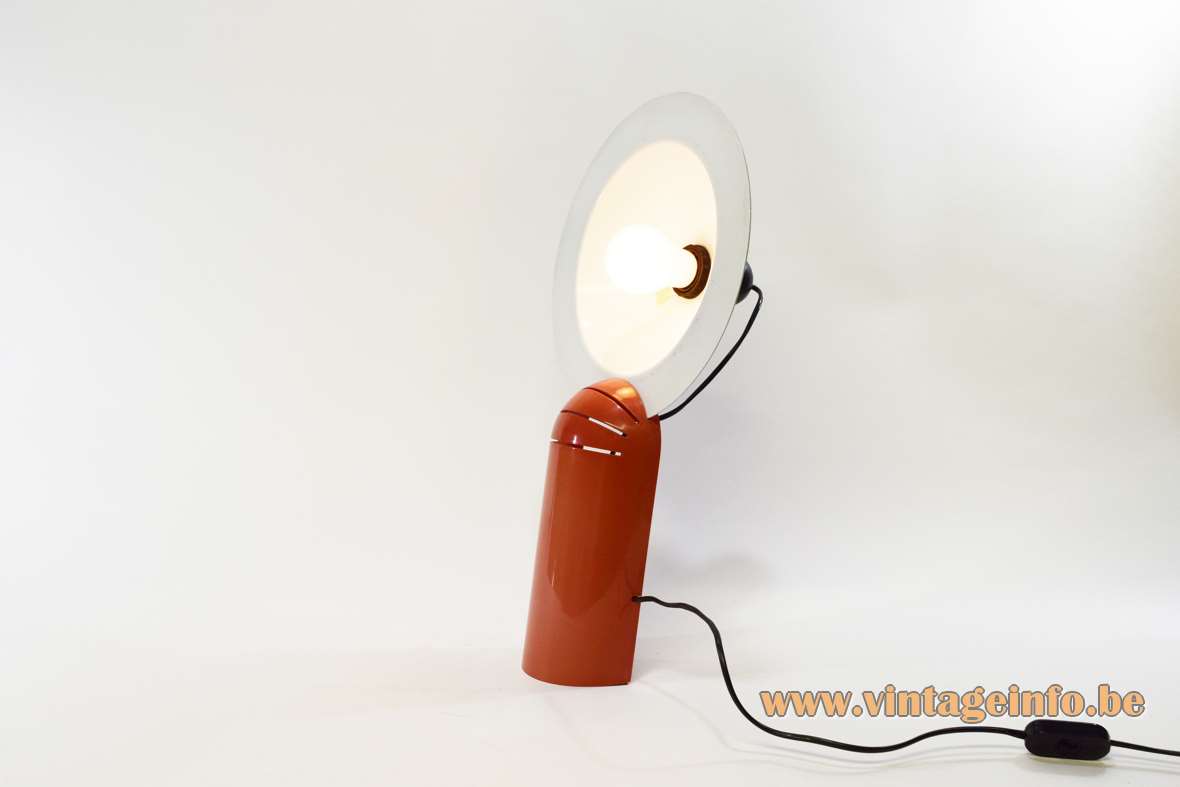
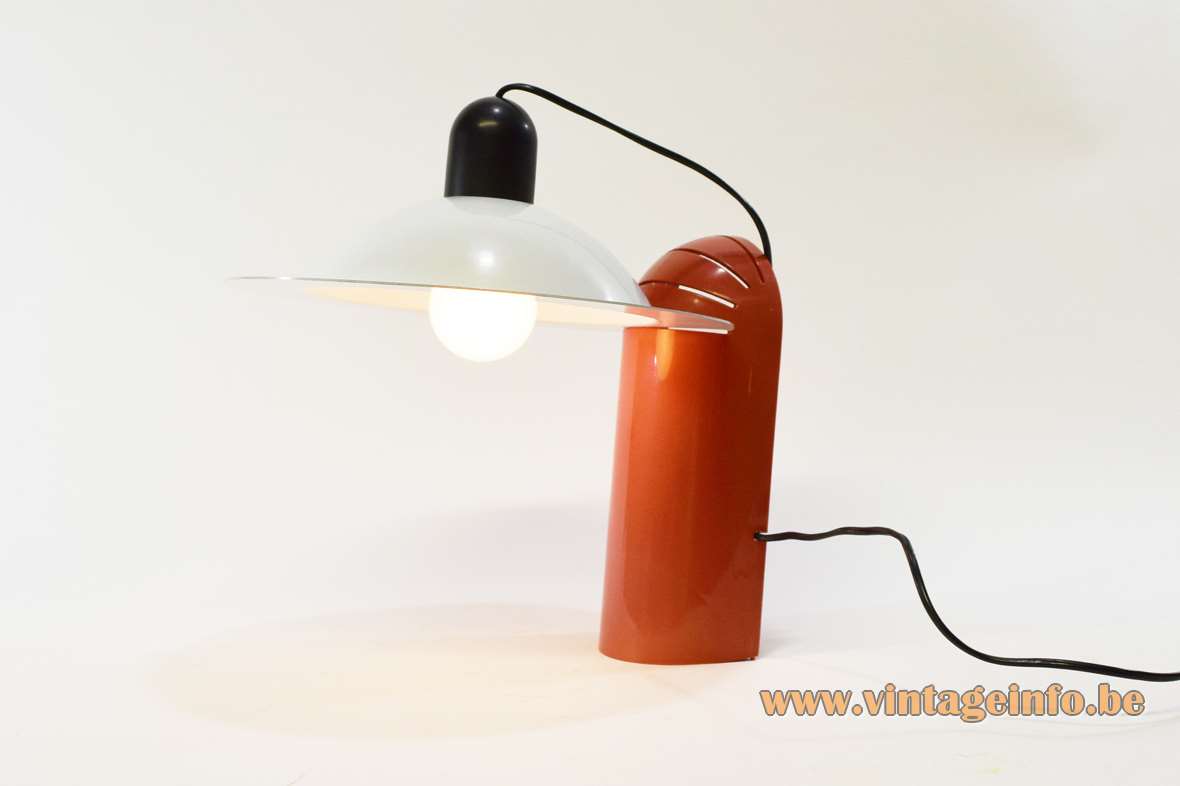
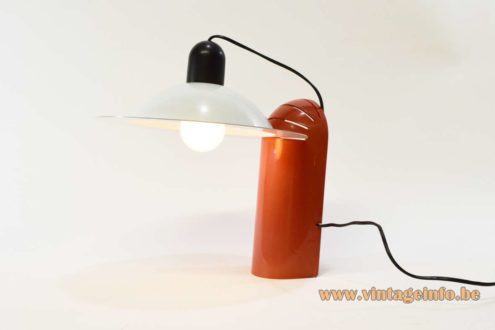
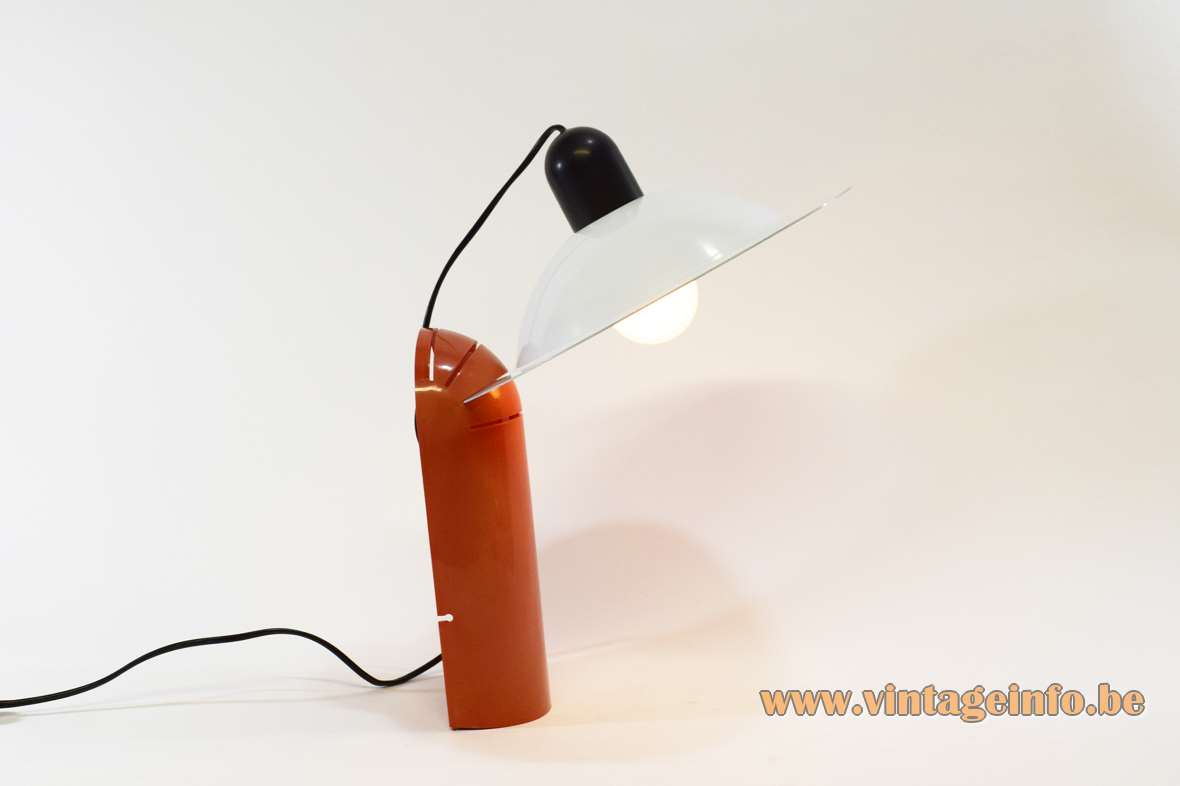
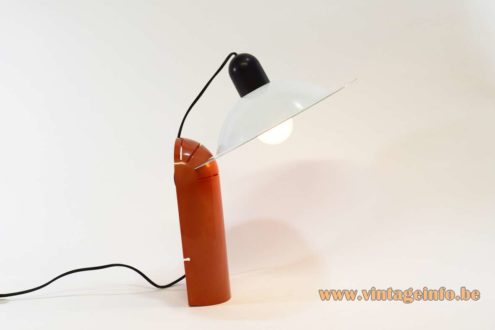
Stilnovo Lampiatta Table Lamp – 1970s Catalogue Picture
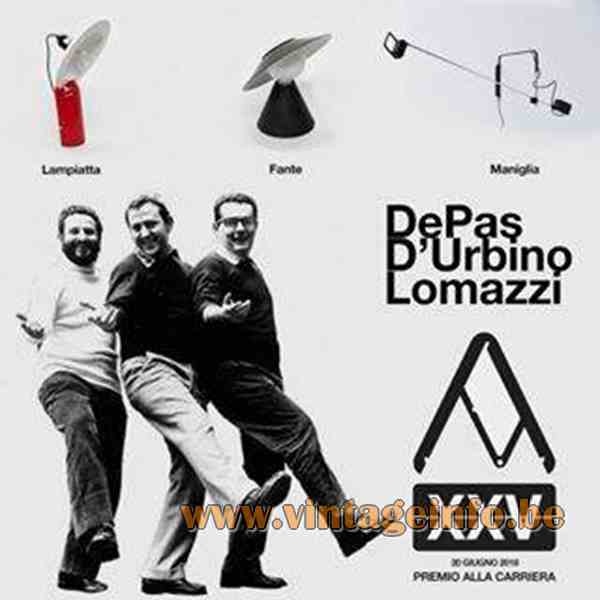
Stilnovo Lampiatta Table Lamp
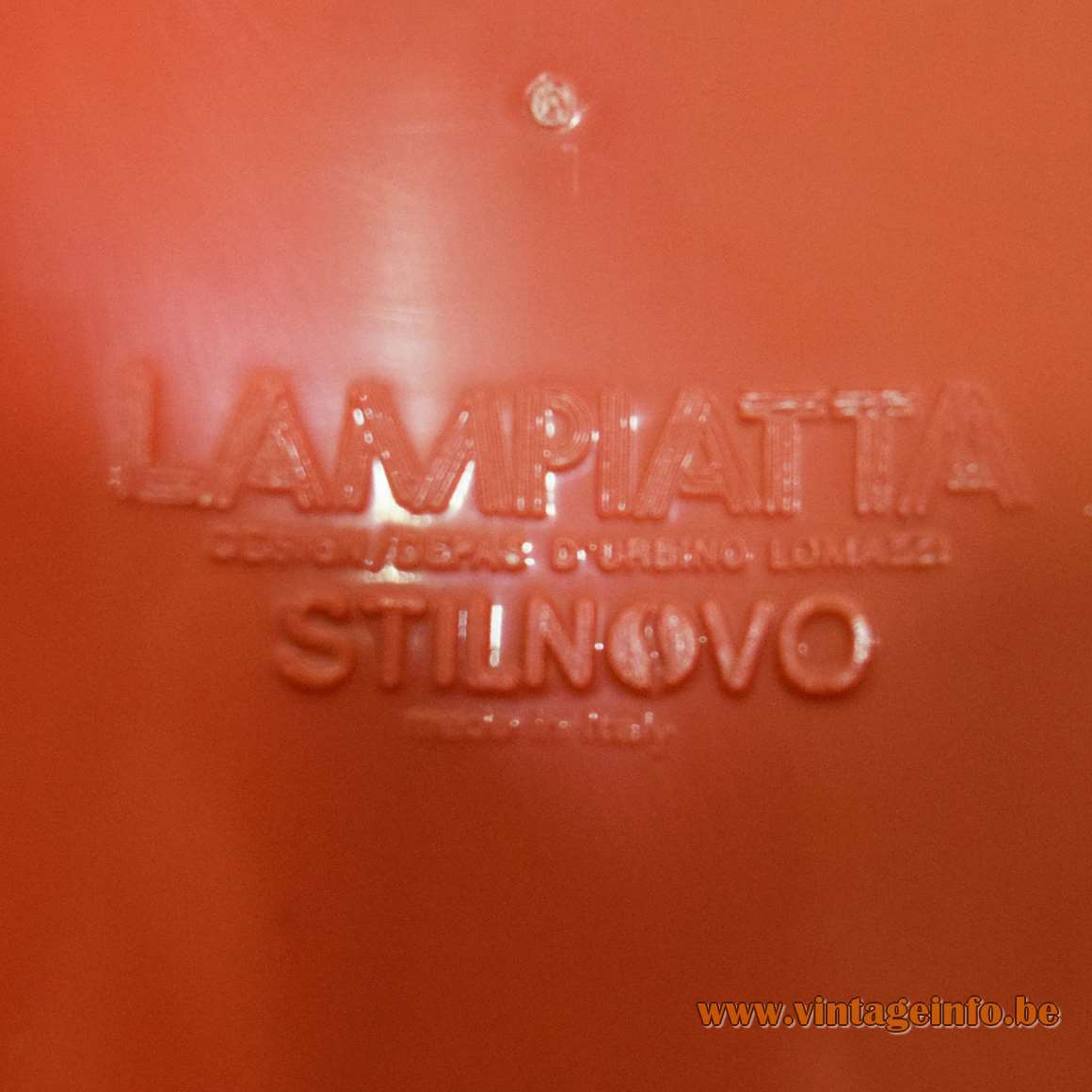
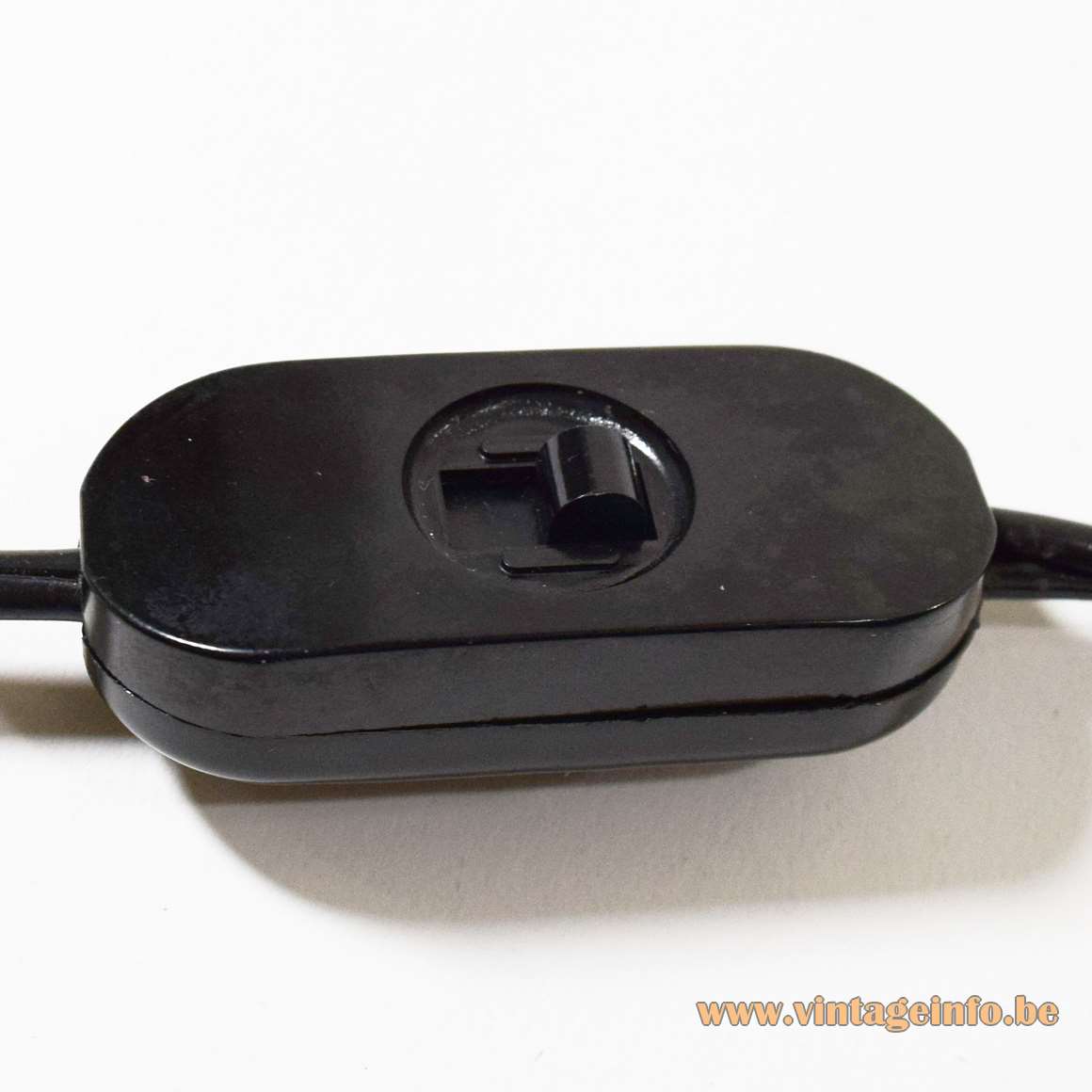
Moulded logo in the lamp base and model 450 switch made by VLM Components (Relco) and designed by Achille Castiglioni.
VLM Components
All electrical components were manufactured by VLM Components, a company founded in 1945 in Buccinasco, a small town near Milan, Italy. VLM Components later became part of the Relco Group, established in 1967. Today, the group owns and operates the brands Relco, Leuci, Relco Lighting, VLM Components, and Segno.
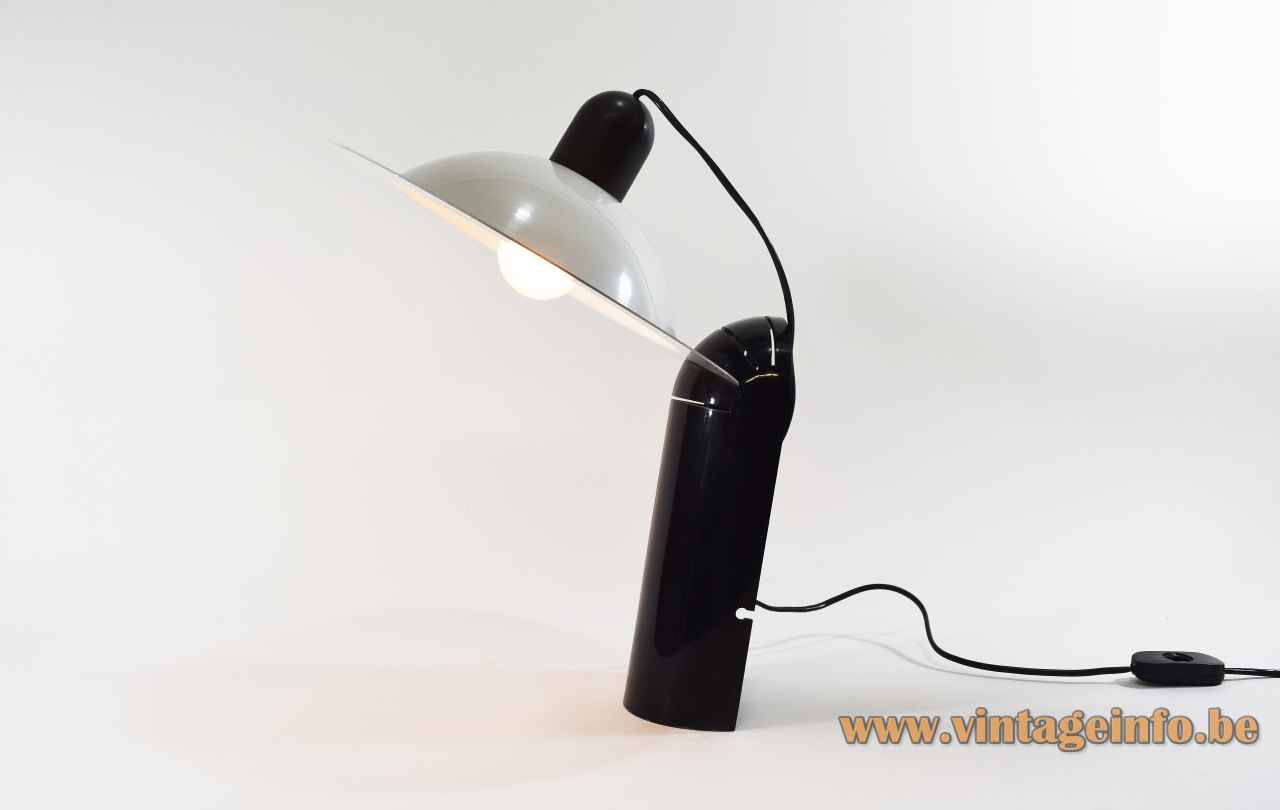
Stilnovo Lampiatta table lamp – Black version
The New Stilnovo
Although the original company no longer exists, in 2017 the Stilnovo Scientific Committee was established with the aim of preserving and reinterpreting the brand’s historical legacy. The committee consists of Decio G. R. Carugati, Roberto Fiorato, Francesco Morace, Danilo Premoli, Franco Pagliarini, and Andrea Cucci, operating under the name Stilnovo Italia Srl.
According to the new company, the goal is not merely to revive the brand, but to carry its heritage into the future. A manifesto has been created defining guidelines and criteria for future creations, emphasizing an identity that does not ignore Stilnovo’s historical past but rather celebrates and elevates it. The re-edition of iconic designs, alongside the creation of entirely new pieces inspired by contemporary Italian and international design, forms the foundation of this renewed vision, with a continued commitment to craftsmanship and 100% Made in Italy production.
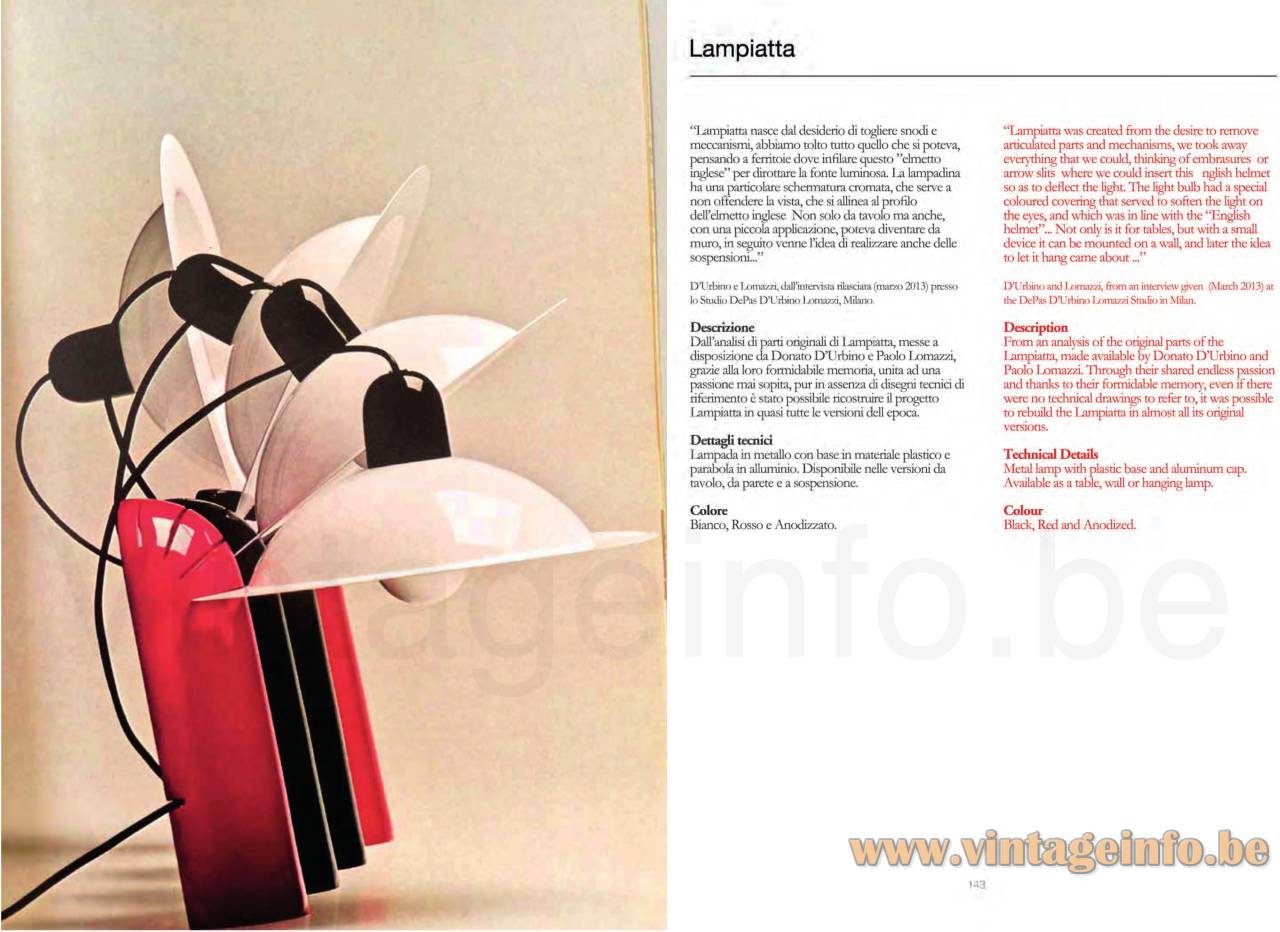
Stilnovo Lampiatta Table Lamp – 2018 Catalogue Picture – Reissue
The photo used for this 2018 catalogue picture was used for the first time in the 1970s catalogues.
Links (external links open in a new window)
De Pas, D’Urbino, Lomazzi – Wikipedia
De Pas, D’Urbino, Lomazzi in the MoMA, New York
Vintageinfo
Many thanks to Tinneke for the black lamp.
Stilnovo Lampiatta Table Lamp
Materials: Curved red plastic (ABS) base with elongated slots. Cast iron counterweight inside. Adjustable white painted round aluminium lampshade. Black Bakelite rounded top and E27 lamp socket.
Lampshade: ∅ 28 cm / 11.02”
Height Base: 24,5 cm / 9.64”
Width Base: 12 cm / 4.72”
Total Height: 37 cm / 14.56” (total height in normal position)
Electricity: 1 bulb E27, 1 x 60 watt maximum, 110/220 volt.
Any type of light bulb can be used, not a specific one preferred.
Period: 1970s – Mid-Century Modern.
Designer: Jonathan De Pas, Donato D’Urbino, Paolo Lomazzi.
Manufacturer: Stilnovo, Milan, Italy.
Other versions: The Stilnovo Lampiatta table lamp or desk lamp exists in black, white and red. Also made as a pendant lamp in two sizes. Early versions have a VLM switch 450, designed by Achille Castiglioni. Later editions have different switches, all made by VLM.
The Lampiatta table lamp was produced for many years, probably until the end of the Stilnovo company as we can learn from the switches that were used. Since 2017 the lamp is back in production in a slightly different size by the new Stilnovo company.
The Lampiatta table lamp can also be used as a wall lamp. A recess is provided.
The base is marked on the inside (moulded) with “Lampiatta, design De Pas d’Urbino Lomazzi, Stilnovo, Made in Italy”.
Lampiatta – Concept and Origin (from interview)
“Lampiatta was created from the desire to eliminate joints and mechanical parts. We removed everything that could be removed, imagining simple embrasures or slits into which we could insert this ‘English helmet’ in order to direct the light. The light bulb itself has a specially coloured coating to soften the light and avoid glare, and its shape follows the profile of the ‘English helmet’.
Initially conceived as a table lamp, with a small additional fitting it could also become a wall lamp, and later the idea of a suspended version emerged.”
— Donato D’Urbino and Paolo Lomazzi, interview conducted in March 2013 at the De Pas D’Urbino Lomazzi Studio, Milan. (2018 Stilnovo catalogue picture on this page)
Jonathan De Pas, Donato D’Urbino & Paolo Lomazzi
Jonathan De Pas (1932–1991), Donato D’Urbino (born 1935) and Paolo Lomazzi (born 1936) began working together in 1966 when they founded their Milan-based design studio DDL – De Pas, D’Urbino, Lomazzi. Their work spans architecture, interiors, exhibition design and industrial design, but they became especially well known for bold, often playful pieces that captured the spirit of late-1960s and 1970s Italian design.
Among their most famous projects is the Blow inflatable armchair for Zanotta (1967), widely cited as the first mass-produced inflatable chair and now in major museum collections such as MoMA. Another iconic piece is the Joe armchair for Poltronova (1970), an oversized baseball glove conceived as a tribute to the legendary American player Joe DiMaggio. They also created the folding coat stand Sciangai for Zanotta (designed 1973), which received the Compasso d’Oro in 1979.
The trio also designed several notable lights for Stilnovo, including this Lampiatta (1971) and the sculptural Fante (designed 1978). Their works are represented in important international design collections and exhibitions, including institutions such as the Triennale di Milano and MoMA.
After the death of Jonathan De Pas in 1991, the studio continued as Studio D’Urbino Lomazzi (active until 2016). In 2018, ADI (Associazione per il Disegno Industriale) awarded Donato D’Urbino and Paolo Lomazzi the Compasso d’Oro Career Award.
The studio was located at Corso XXII Marzo 39, Milan. Studio D’Urbino Lomazzi previously had an official website, which has been offline for years; the former domain name is currently unrelated to the original studio (www.durbinolomazzi.it).
Stilnovo
Founded in Milan in 1946 by Bruno Gatta, Stilnovo became one of the most important Italian lighting companies of the post–World War II period. From the very beginning, the company stood out as a symbol of modern lighting design and soon became synonymous with the idea of Made in Italy.
Before World War II, modern lighting concepts developed by the German Bauhaus, French modernists, certain Dutch architects, and Poul Henningsen were seen as a radical break from decorative historicism, favoring simplicity and functionality instead. In Italy, however, this modern approach only gained real momentum after 1945. With the exception of FontanaArte—whose lighting designs were shaped by Pietro Chiesa—and the companies Arteluce (founded by Gino Sarfatti) and Arredoluce (founded by Angelo Lelli), nearly all significant Italian lighting firms devoted to modern design were established only after the war.
Stilnovo was officially founded on June 1, 1946, by Bruno Gatta in Milan, with its headquarters located at Via Borgonuovo 18. The company was formally registered with the Milan Chamber of Commerce on June 22, 1946. Only a few months after its foundation, Gatta had already succeeded in making both his company and its lamps widely known. The first documented mention of Stilnovo appeared in October 1946 through an advertisement published by Gatta in the magazine Stile. By December of the same year, the first Stilnovo lamps were already being discussed editorially in Domus and introduced to an interested group of buyers.
Bruno Gatta, born in Milan on September 23, 1904, had gained substantial experience in production, business management, and innovation from an early age. His father, Dino Gatta, originally from Turin, had co-founded the company C.G.S. (Centimetro Grammo Secondo) in 1896 together with Camillo Olivetti and Michele Ferrero. C.G.S. specialized in the design and manufacture of electrical measuring instruments. In 1903 the company moved from Turin to Milan, and a year later it was incorporated into the Measuring Instruments division of Tecnomasio Gabella. In 1907, Olivetti withdrew from the company and Dino Gatta assumed leadership as president and manager. A year later, he became one of the founding members of Ing. Olivetti & C., created by Camillo Olivetti in 1908, holding key leadership positions in the decades that followed.
Bruno Gatta and his brother Paolo grew up in an environment shaped by continuous innovation and forward-thinking ideas. After 1945, the rapid electrification of Italian households created a sharp rise in demand for electric lighting. At that time, hundreds of small and micro-businesses in Milan produced handmade residential lighting, often characterized by opulent decorations, glass ornaments, glass bowls, and ornate fabric shades, catering mainly to an affluent middle-class clientele.
Gatta’s decision to focus on modern lighting production was therefore a logical response to an emerging market, rapid social change, and a growing appreciation for a new design language. At the same time, it represented a considerable entrepreneurial risk, as Gio Ponti himself pointed out in the foreword to a Stilnovo catalogue. Nevertheless, Stilnovo quickly distinguished itself through a modern, forward-looking vision.
Unlike many competitors, Bruno Gatta understood early on the importance of marketing and public relations. From the start, he consistently placed advertisements in leading magazines such as Domus, Stile, and Casa e Turismo Arredamento, rapidly establishing a high level of brand recognition for Stilnovo. This strategic visibility, combined with strong design identity, helped position Stilnovo as a leading name in modern Italian lighting. Bruno Gatta was also the founder of Stilux, another famous Italian lighting company. More information can be found here.
In 1963, Bruno Gatta’s children, Silvana and Dino Gatta, officially joined the company and were granted powers of procuration (legal signing authority). The book does not describe a specific creative or “head of design” role for Dino Gatta; his presence is documented as part of the company’s management structure.
By the late 1960s, despite ongoing commercial activity, Stilnovo faced increasing competition from firms such as Artemide, Flos, and Kartell, and the company’s identity became less sharply defined than in its early years. This period triggered a renewed push toward more progressive designs and material experimentation through collaborations with leading designers.
A milestone of that renewed phase is the Periscopio floor lamp (designed in 1967 by Danilo & Corrado Aroldi), which was exhibited in 1972 at the Museum of Modern Art in New York as part of the landmark exhibition Italy: The New Domestic Landscape.
Gaetano Sciolari and Stilnovo
During the 1950s and into the 1960s, Gaetano Sciolari played a central role in shaping Stilnovo’s design identity. He acted as head designer and artistic coordinator, defining much of the company’s visual language during its formative years. Sciolari’s work for Stilnovo is characterized by elegant proportions, refined use of brass and metal, and a strong architectural clarity. Under his direction, Stilnovo established a recognizable modern aesthetic that laid the foundation for the company’s international reputation in the decades that followed.
Over the decades, Stilnovo collaborated with a remarkable number of influential designers, including Gaetano Sciolari, Joe Colombo, Gae Aulenti, Alberto Fraser, Valentino Benati, Vittorio Introini, Ettore Sottsass, Danilo & Corrado Aroldi, Giorgio Longoni, Marcello Pietrantoni, Roberto Lucci, Cini Boeri, Jonathan De Pas, Donato D’Urbino, Piero Castellini, Carlo Villigiardi, Peter De Bruyne, Angelo Mangiarotti, Marcello Cuneo, Valentino Benati, Gianluigi Gorgoni, Paolo Lomazzi, Antonio Macchi Cassia, and Roberto Beretta, among others. Together, they produced a body of work that remains highly regarded for its technical innovation, formal clarity, and expressive use of materials.
For a substantial part of Stilnovo’s early production, individual designers remain undocumented. In the late 1940s and early 1950s, many lamps were developed internally and presented solely under the Stilnovo name, without attribution to a specific designer. This reflects a common practice of the time, in which collective design processes and brand identity were emphasized over individual authorship, making precise attributions difficult or impossible today.
All original Stilnovo lamps are marked with the Stilnovo name; many early pieces also include the original sticker “Stilnovo Milan”.
Stilnovo also collaborated with brands such as Metalarte from Spain, AMBA from Switzerland and Staff from Germany.
The company ended business in 1988.
Stilnovo Lampiatta Table Lamp – Company Labels & Logos