- Categories
- Categories
Last 5 Viewed
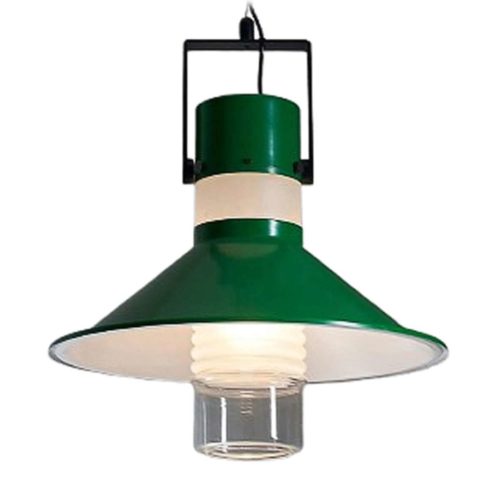
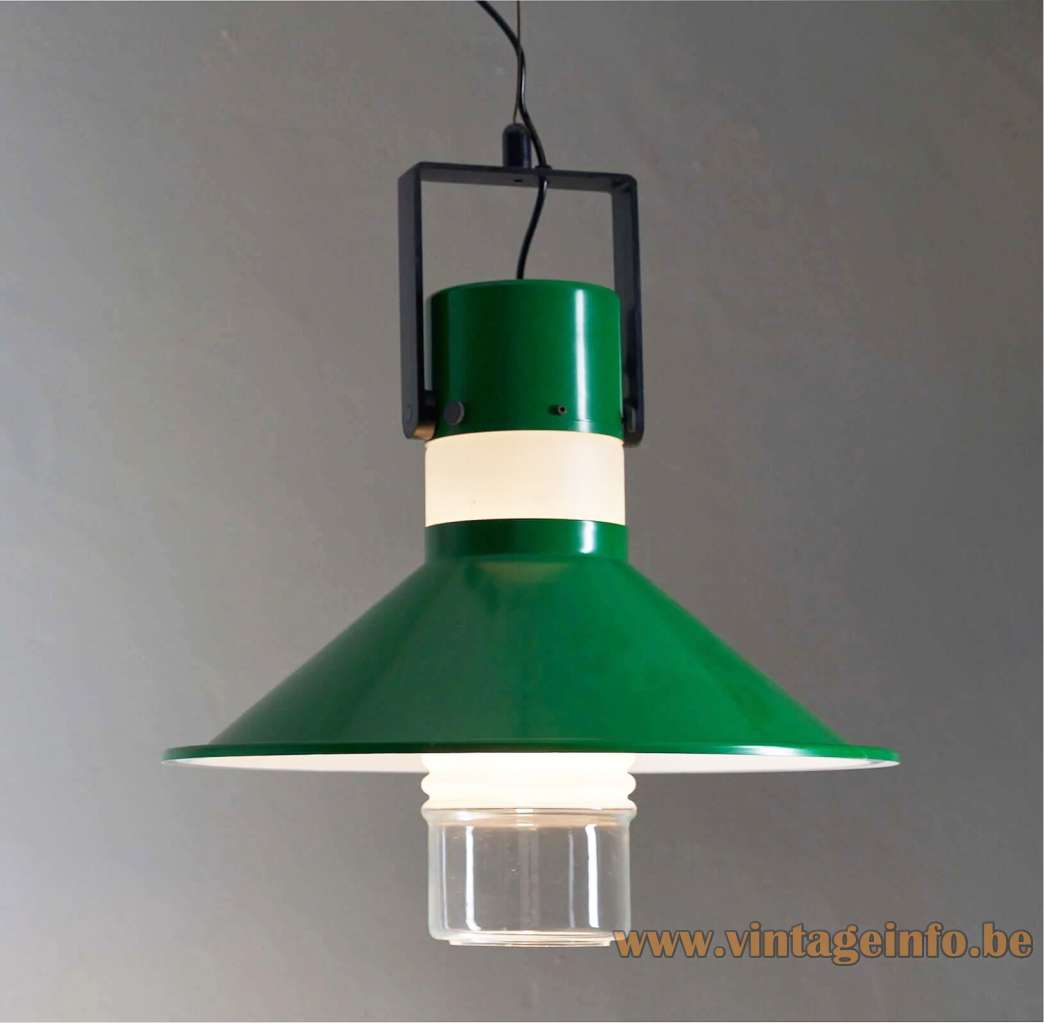
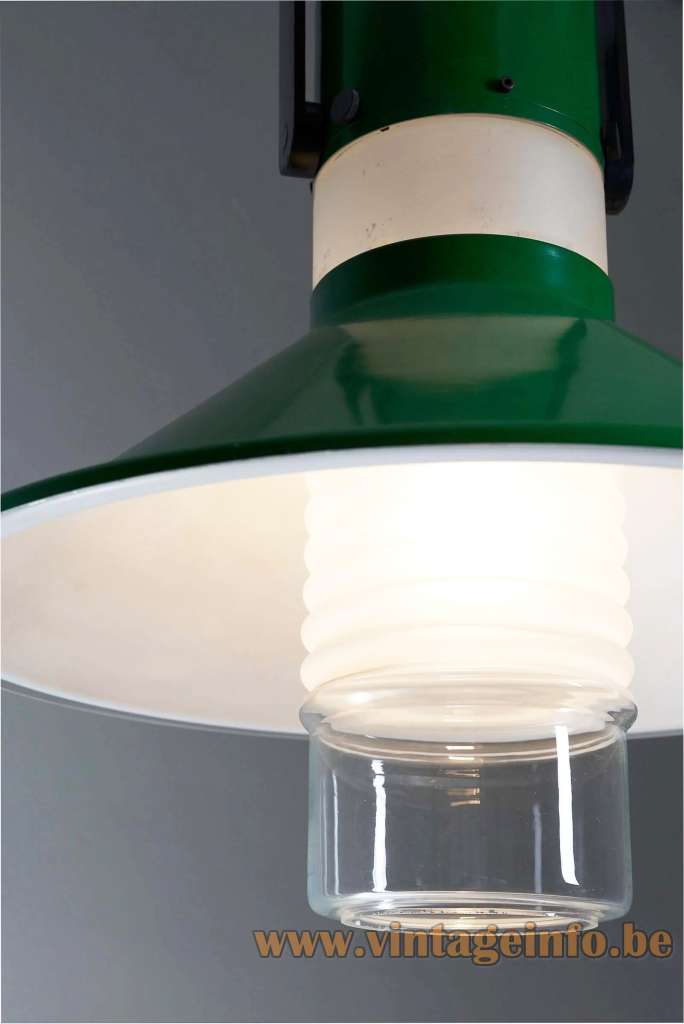
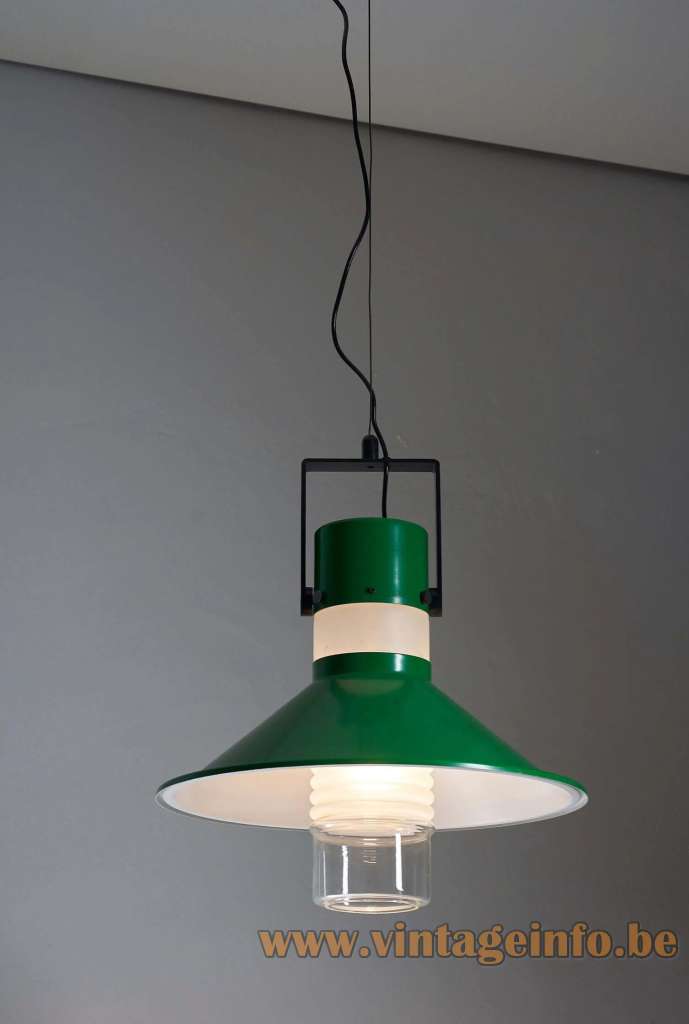
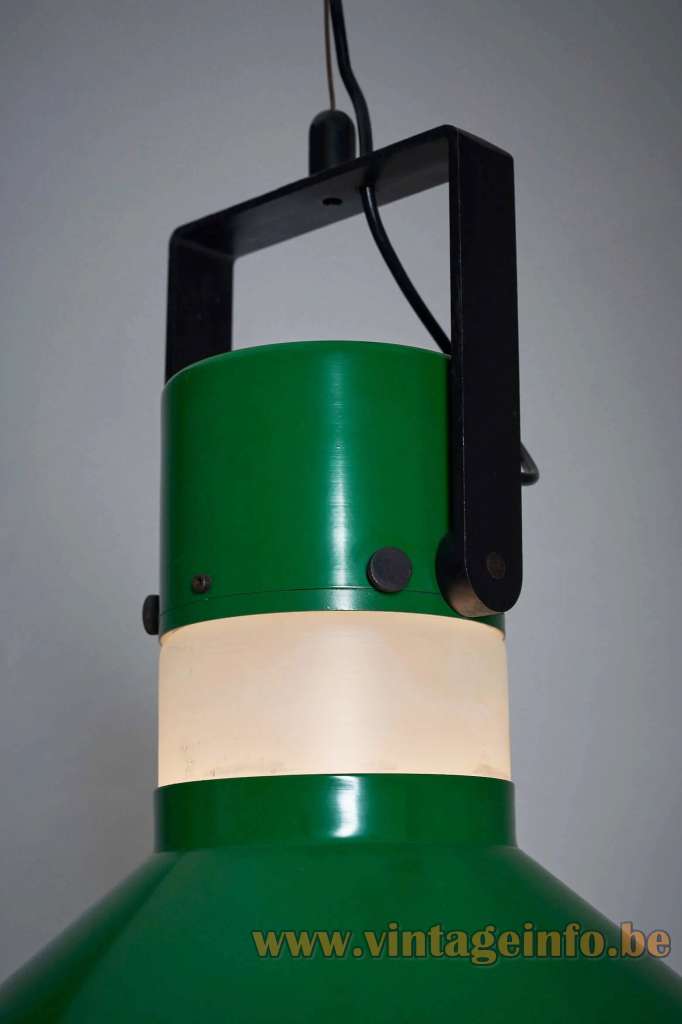
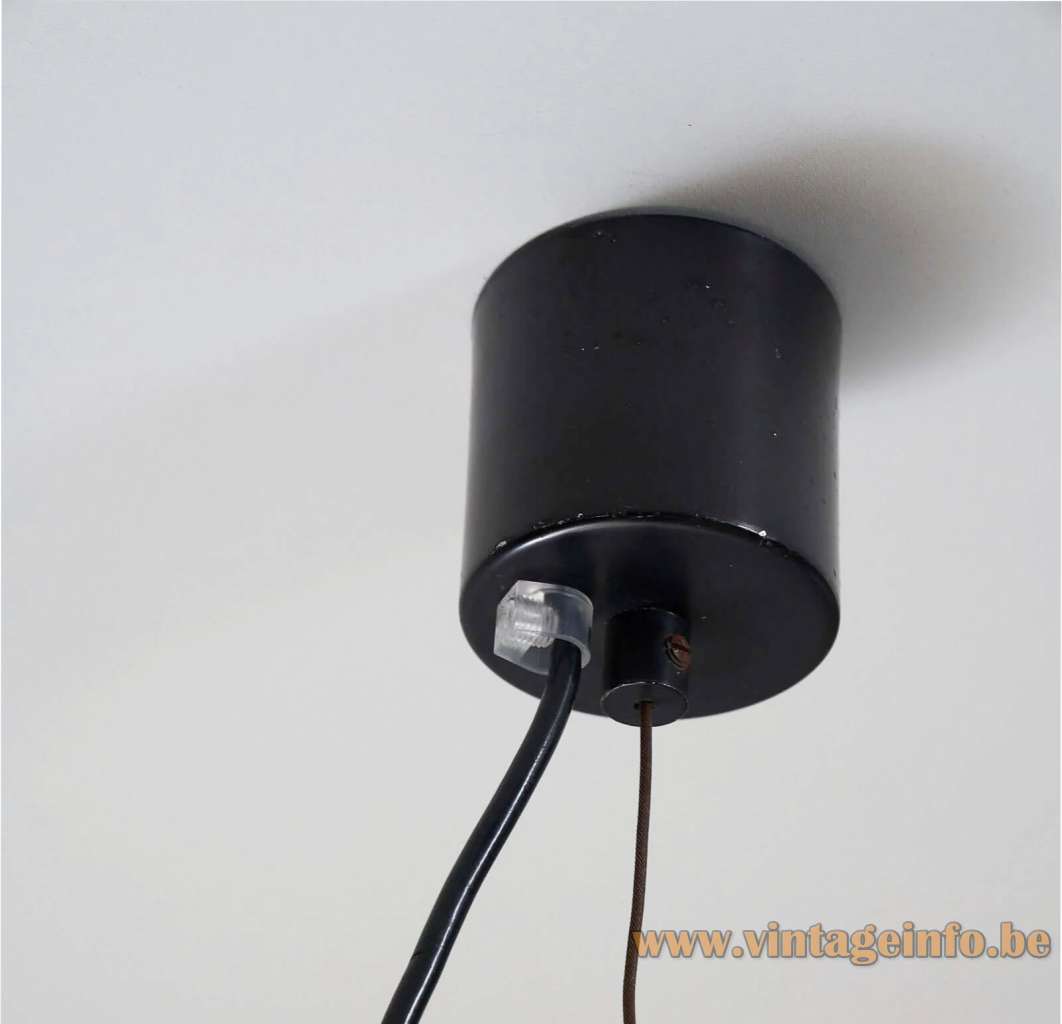
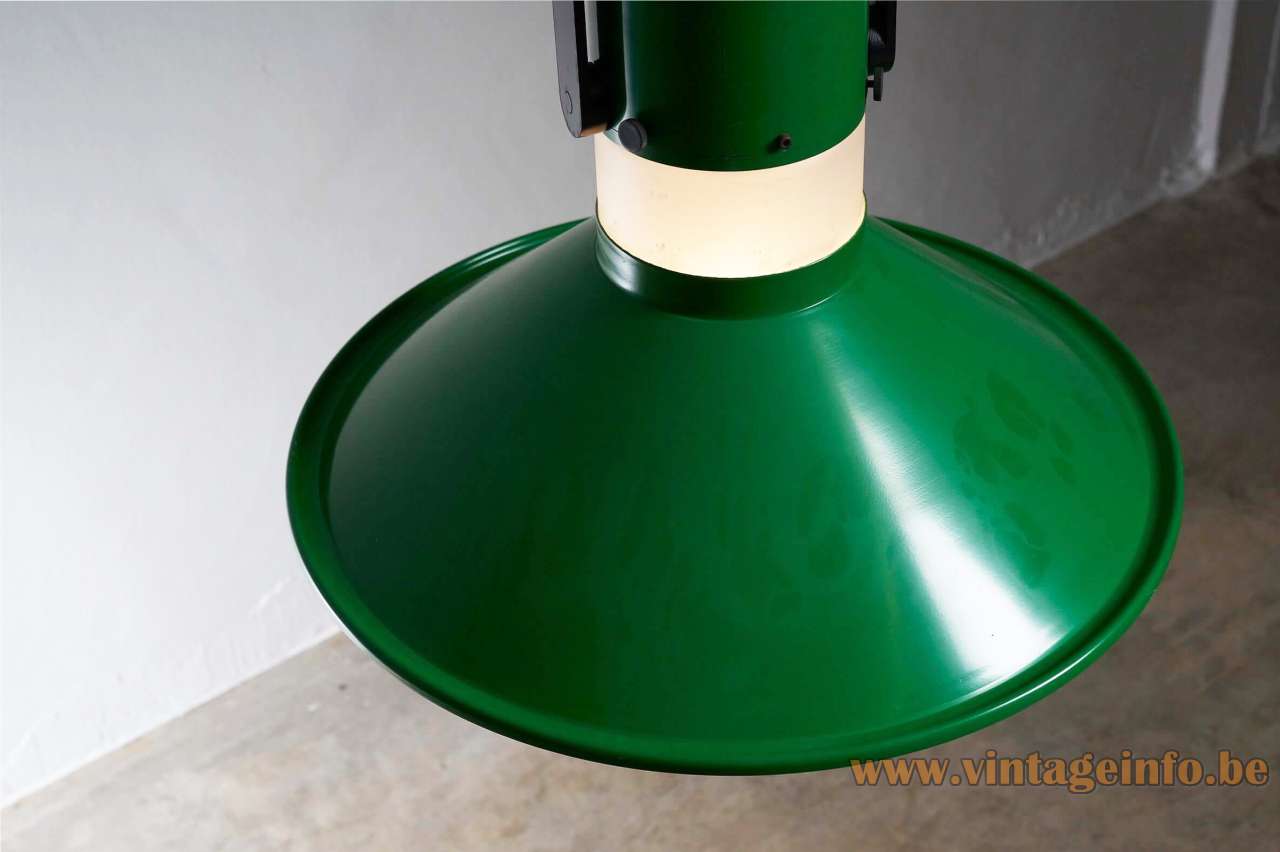
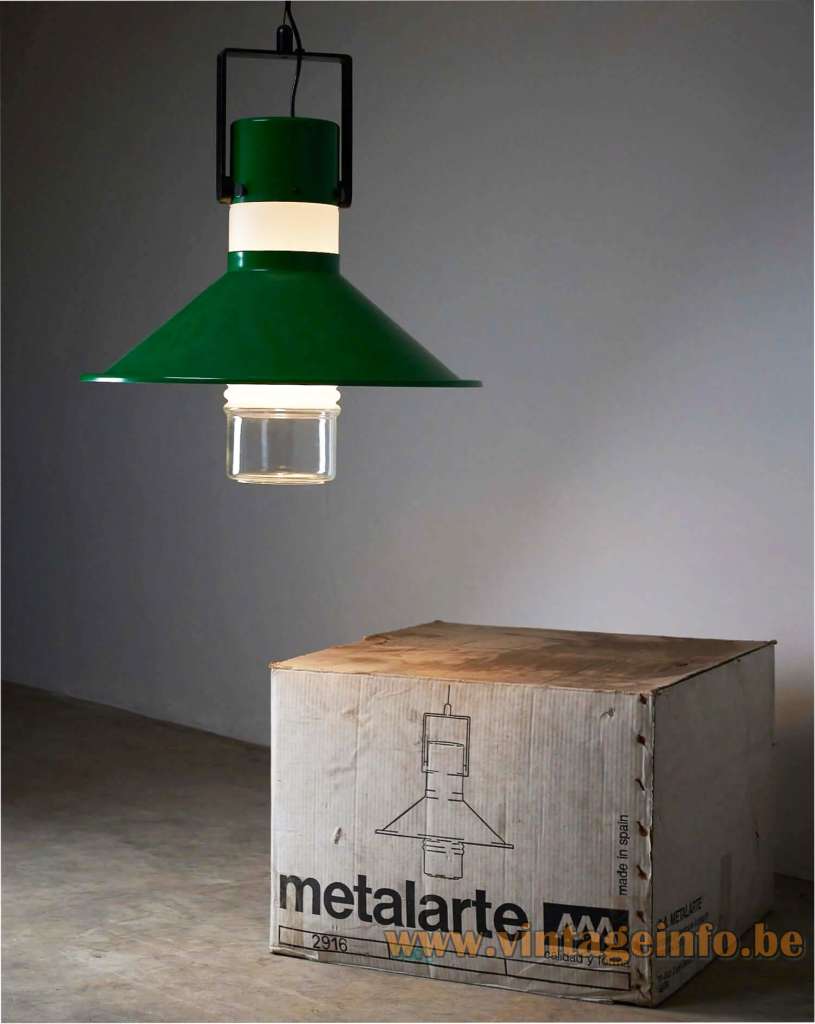
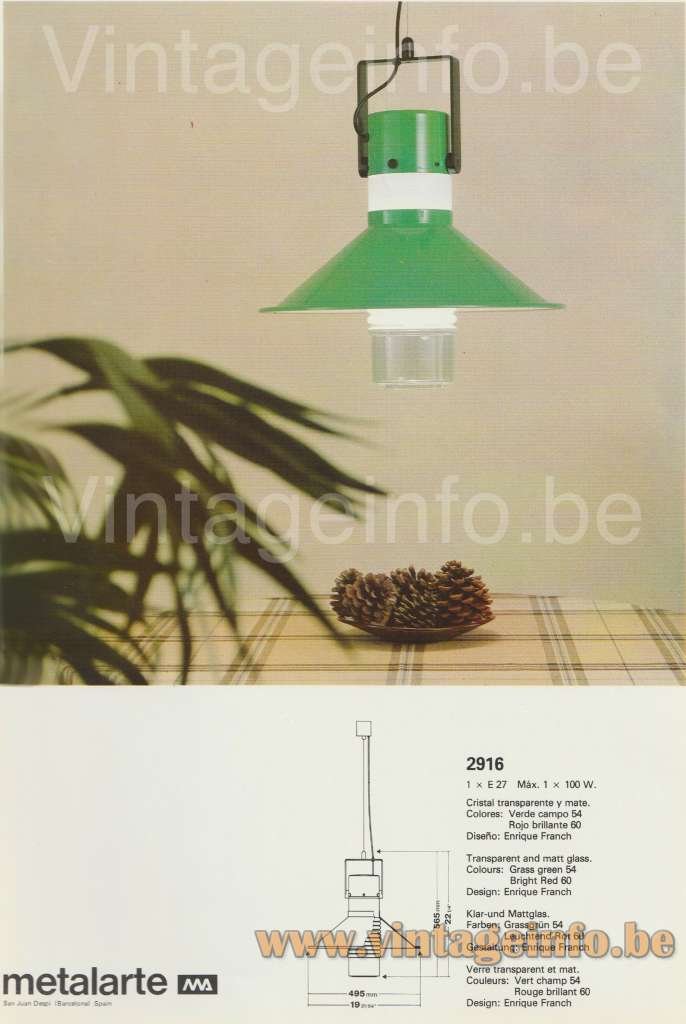
Metalarte Pendant Lamp 2916 – 1973 Catalogue Picture
1973 catalogue picture, design: Enric (Enrique) Franch Miret, E27 socket, max 100 watt, plus dimensions and 2 colours.
Metalarte
Metalarte was founded in 1932 in Canovelles, a town about 30 km from Barcelona, in Catalonia, Spain. The company started as a metalworking workshop and gradually evolved into one of the most important lighting manufacturers in Spain. From the 1940s onward, Metalarte focused increasingly on functional and architectural lighting, laying the foundations for its later design-oriented identity.
During the 1960s and 1970s, Metalarte went through a major transformation. The company renewed its catalogue and actively collaborated with external designers, embracing contemporary industrial design rather than relying solely on in-house production. In this period, Metalarte also distributed lamps by international manufacturers such as Louis Poulsen (Denmark) and Italian firms including Arteluce and Stilnovo, reflecting its strong international outlook.
Metalarte worked with a wide range of designers who played a key role in shaping Spanish lighting design, including André Ricard, Gaetano Sciolari, Enric Franch, Josep Lluscà, Estudi Blanc, Josep Aregall, Òscar and Sergi Devesa, Antoni Arola, Lievore Altherr Molina, Ricard Ferrer, George W. Hansen, Héctor Serrano, Jordi Llopis, Ana Mir, Emili Padrós, Otto Canalda and Ramón Úbeda.
Several Metalarte designs from the 1970s became international references for functional lighting. A notable example is the Calder halogen lamp (1974) by Enric Franch, which is included in the permanent collection of the Museum of Modern Art (MoMA) in New York.
Today, Metalarte is part of the Luxonia Group, together with brands such as Troll and Sagelux. While this integration ensured continuity and industrial backing, it also marked the end of Metalarte as an independent, design-driven manufacturer rooted in its original Catalan context.
Many thanks to Max from AfterMidnight for all the pictures.
Metalarte Pendant Lamp 2916
Materials: Industrial style grass green painted metal lampshade, painted white inside. Clear and opal glass diffusser below. Black painted metal handle on top. Steel wire, some metal parts. Porcelain E27 socket.
Cord Length: 120 cm / 47.24”
Height: 56,5 cm / 22.24”
Lampshade: ∅ 49,5 cm / 19.48”
Electricity: 1 bulb E27, 1 x 100 watt maximum, 110/220 volt.
No specific type of light bulb is required; different types can be used.
Period: 1970s – Mid-Century Modern.
Designer: Enrique Franch.
Manufacturer: Metalarte, Paseo de la Ribera 115, Canovelles, Barcelona, Spain.
Other versions: This Metalarte pendant lamp 2916 comes in 2 colours: Grass green 54 and bright red 60.
Enrique Franch
Enric (Enrique) Franch Miret (Barcelona, 1943 – 31 March 2024) was an influential Catalan industrial designer, exhibition designer and educator. In Metalarte catalogues and some international sources he is credited as “Enrique Franch”, but this is simply the Castilian version of his name – it refers to the same designer.
Franch trained at several Barcelona institutions, including the Escola de Pèrits Industrials, the Escola Massana, the Faculty of Fine Arts of the University of Barcelona and the Higher School of Social Sciences, and later completed further specialist studies abroad.
He began his professional activity in 1968 and soon became involved in the emerging Catalan design scene. He was a member of major design organisations such as ADP, ADI-FAD, BEDA and the Design Research Society, and served on the board of FAD from 1976 to 1979 under the presidency of architect Antoni de Moragas.
From the early 1970s he directed DPC (Disseny / Diseño i Produccions Culturals), a studio focused on integrated design, communication and cultural projects for both private industry and public institutions. Much of his career was devoted to exhibition design and museography: among many projects he worked on the heritage plan and visitor facilities for Cardona (Parc Cultural de la Muntanya de la Sal and Centre Cardona Medieval), the image and museological projects for the Museu Nacional de la Ciència i de la Tècnica de Catalunya in Terrassa, and several museum and exhibition programmes in Asturias, including the Museu del Poble d’Astúries and the masterplan for the region’s network of ethnographic museums.
Franch was also active as a curator, notably for the Primavera del Disseny cycles in 1995 and 1997 and the International Forum Barcelona Primavera del Disseny in 1997.
In parallel he developed an important teaching career, especially at ELISAVA, Escola Superior de Disseny de Barcelona (1985–2006), and he lectured widely in Spain and internationally.
He published numerous articles and essays on design, communication, exhibitions and museums, and was regarded by colleagues as both an intellectual and a practicing designer.
In product and lighting design, Franch is best remembered for his collaboration with Metalarte, where he worked as a freelance designer between 1969 and 1979.
His most iconic piece is the “Calder” halogen table lamp (1974/75), a sculptural counterbalanced desk lamp with a long oscillating arm and conical base. The Calder was Metalarte’s first halogen lamp and became the first Spanish design to enter the permanent collection of the Museum of Modern Art (MoMA) in New York, as well as being held by the Design Museum of Barcelona.
Through his combination of rigorous thinking, cultural engagement and formally innovative objects such as the Calder lamp, Enric (Enrique) Franch Miret left a lasting mark on Spanish and international design.
Links (external links open in a new window)
Barcelona Design Museum – Enric Franch Calder lamp
Vintageinfo
Floor lamp model 3821 – another Franch design
Metalarte Pendant Lamp 2916 – Company Labels & Logos