- Categories
- Categories
Last 5 Viewed

Umberto Riva
Umberto Riva, born June 16, 1928, Milan, Italy, studied architecture in Venice, where he was a pupil of Carlo Scarpa, graduating in 1959.
Riva began his professional activity in Milan in 1960. He was an architect, furniture and lighting designer.
He designed lighting for companies such as FontanaArte, Barovier&Toso, Francesconi, Bieffeplast and VeArt.
Umberto Riva passed away in Palermo, Sicily, June 25, 2021.
He designed these lamp models for VeArt, among others: Scarabeo table lamp, Medusa table lamp, Campanula pendant lamp, the Bubbola and Bubbolina table lamp, wall lamp and ceiling lamp series, and the Amanita table lamp, wall lamp and ceiling lamp series.
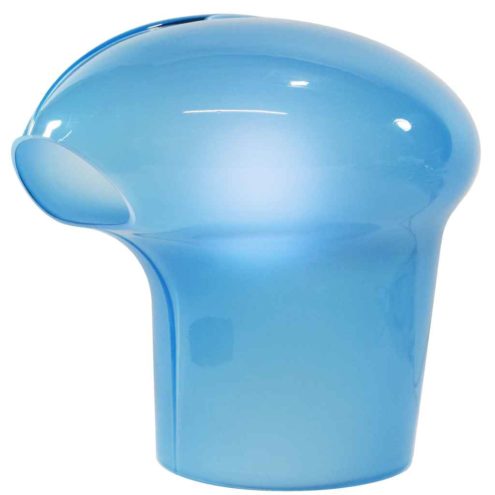
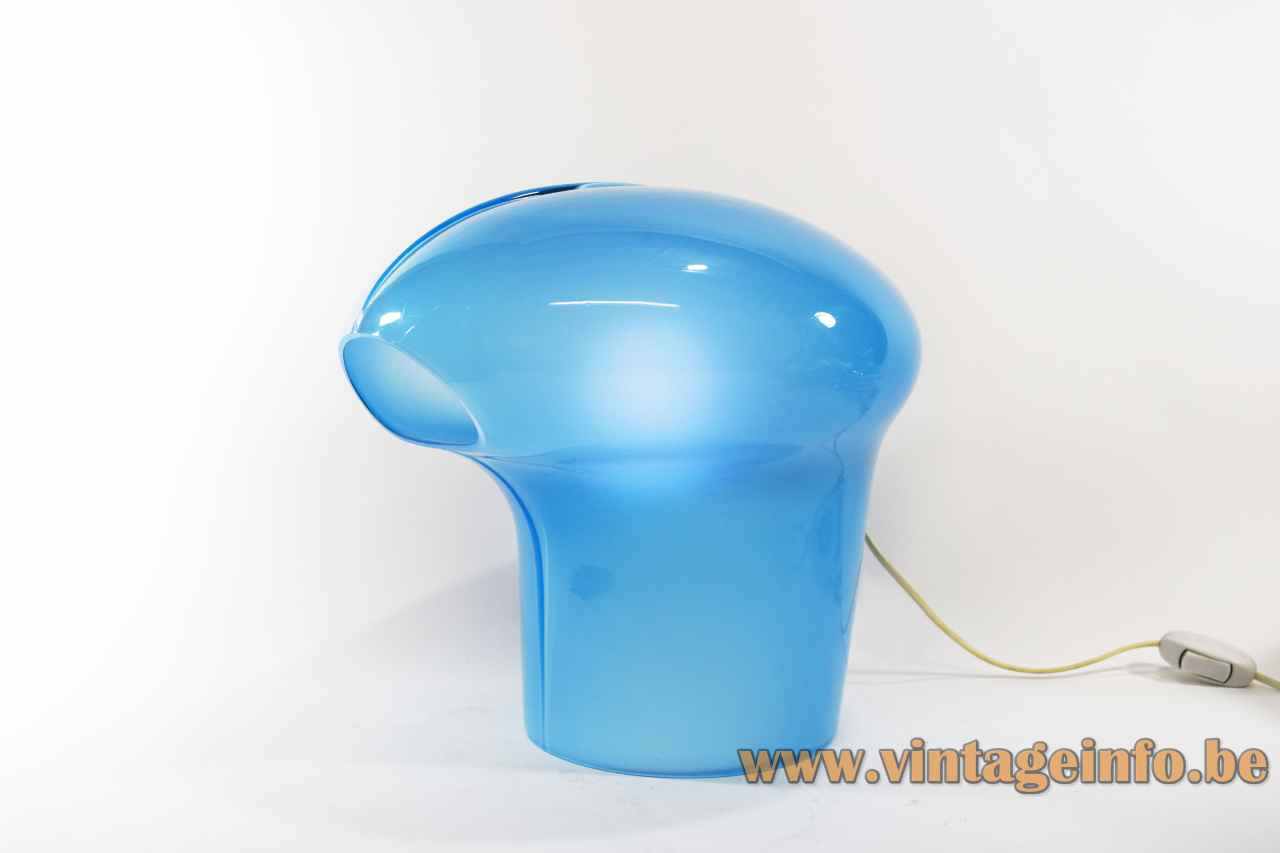
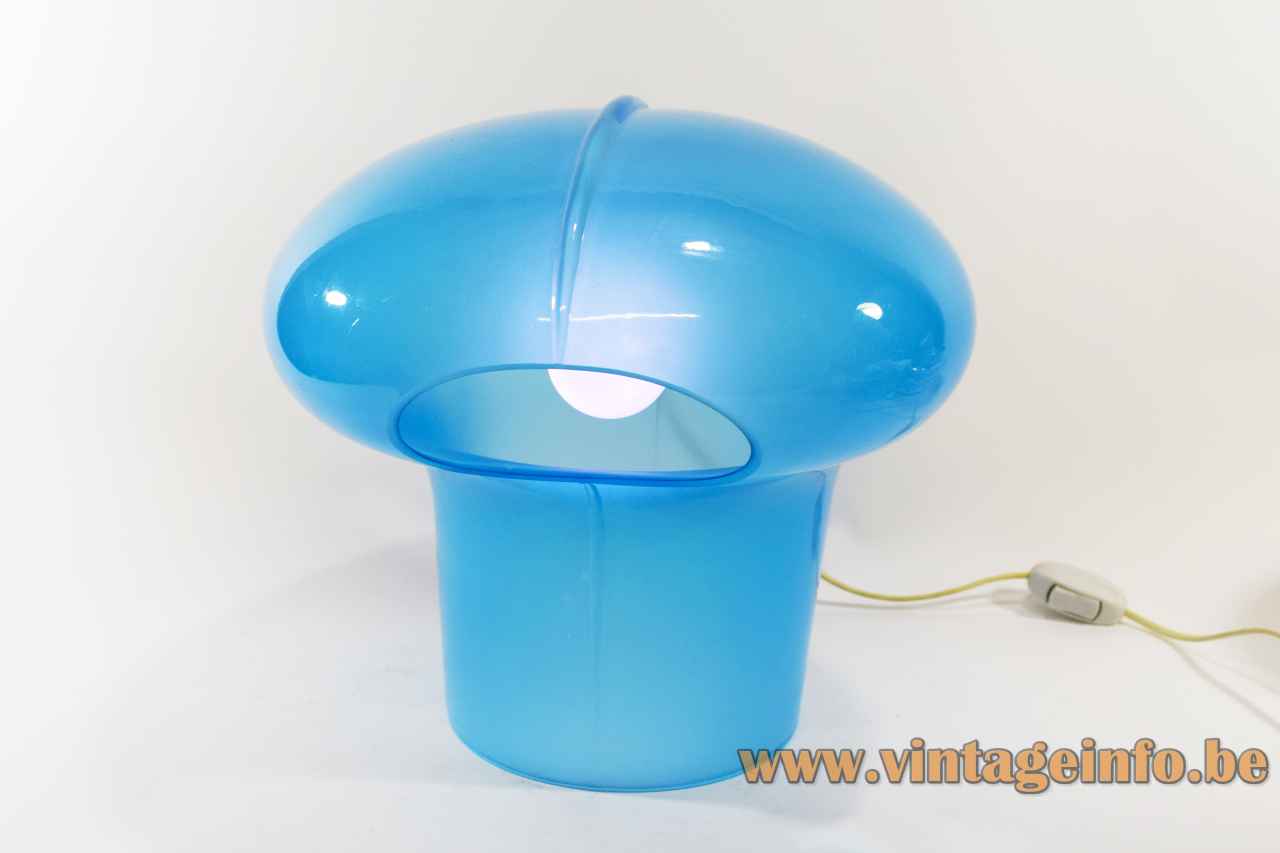
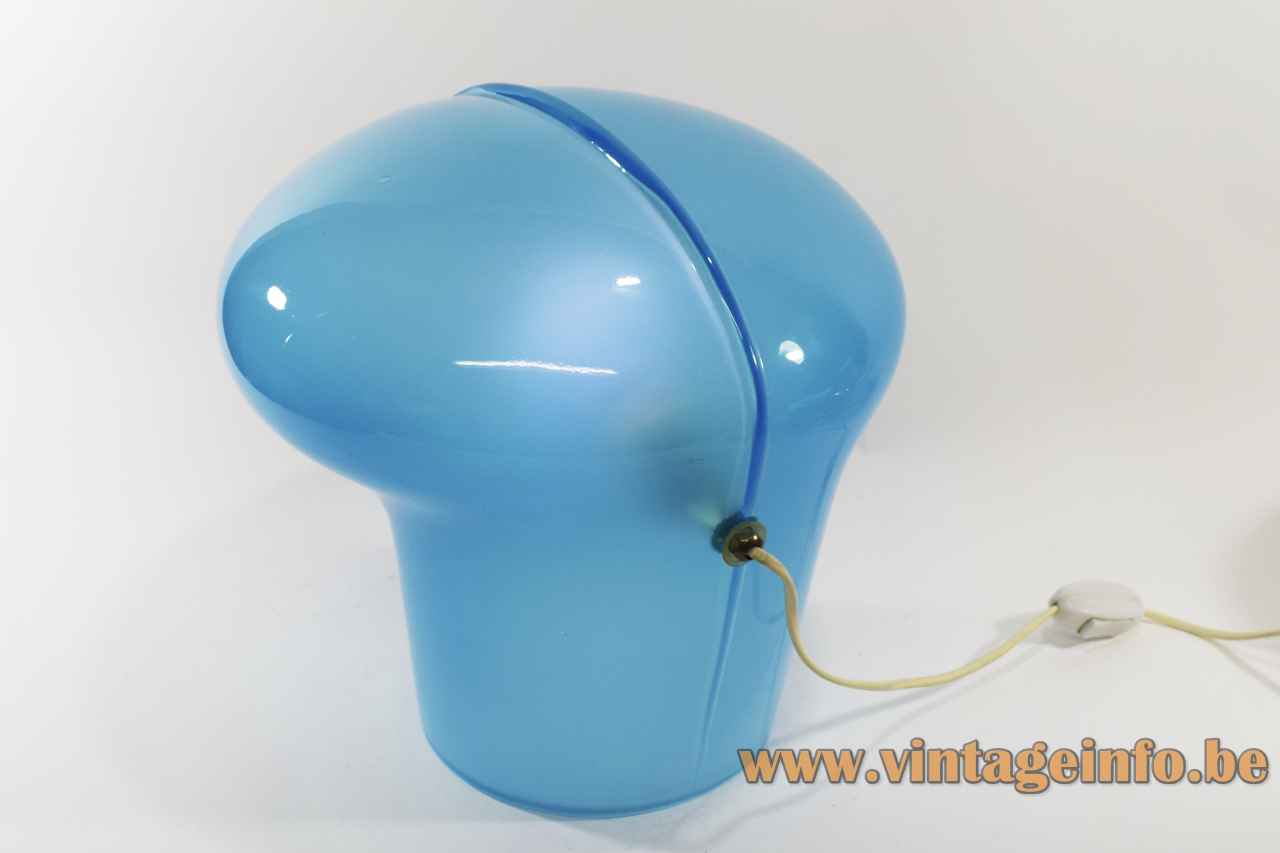
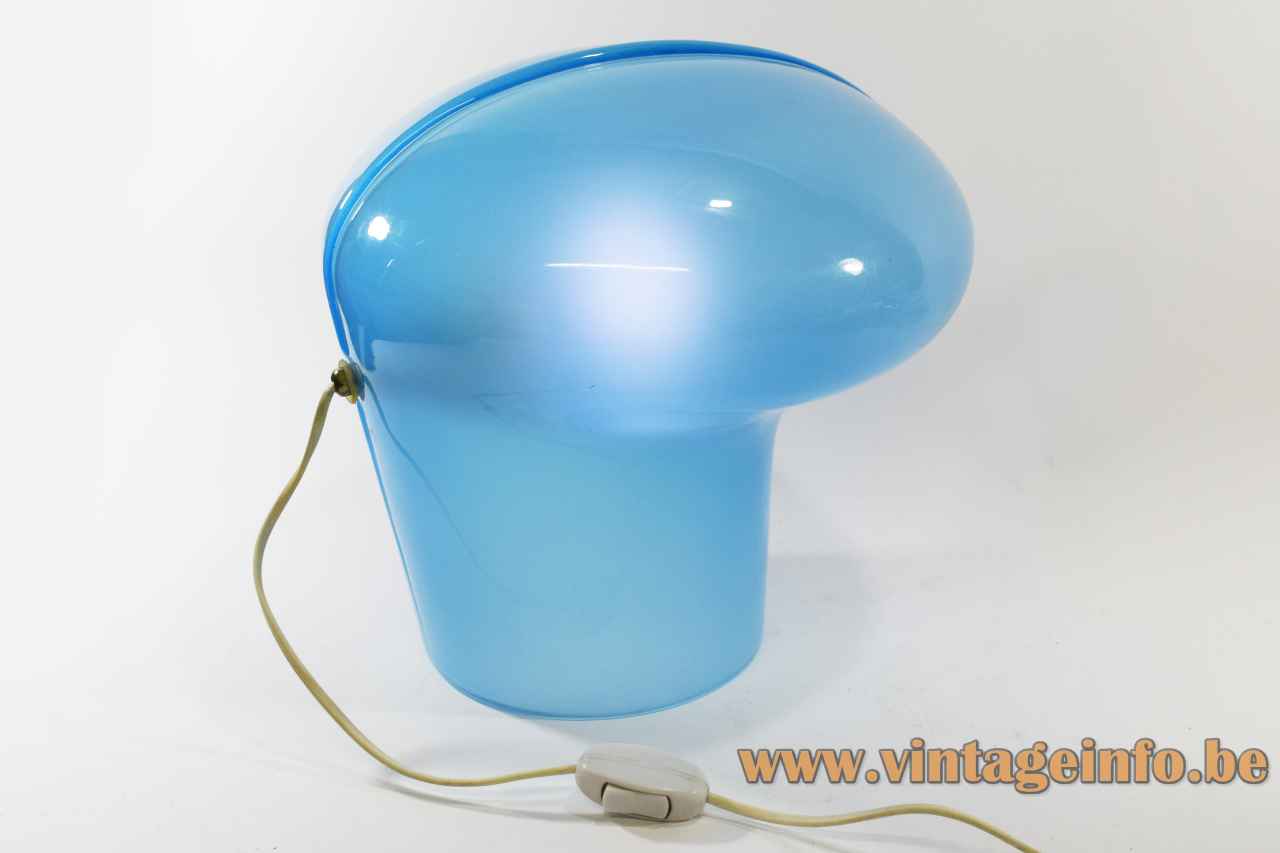
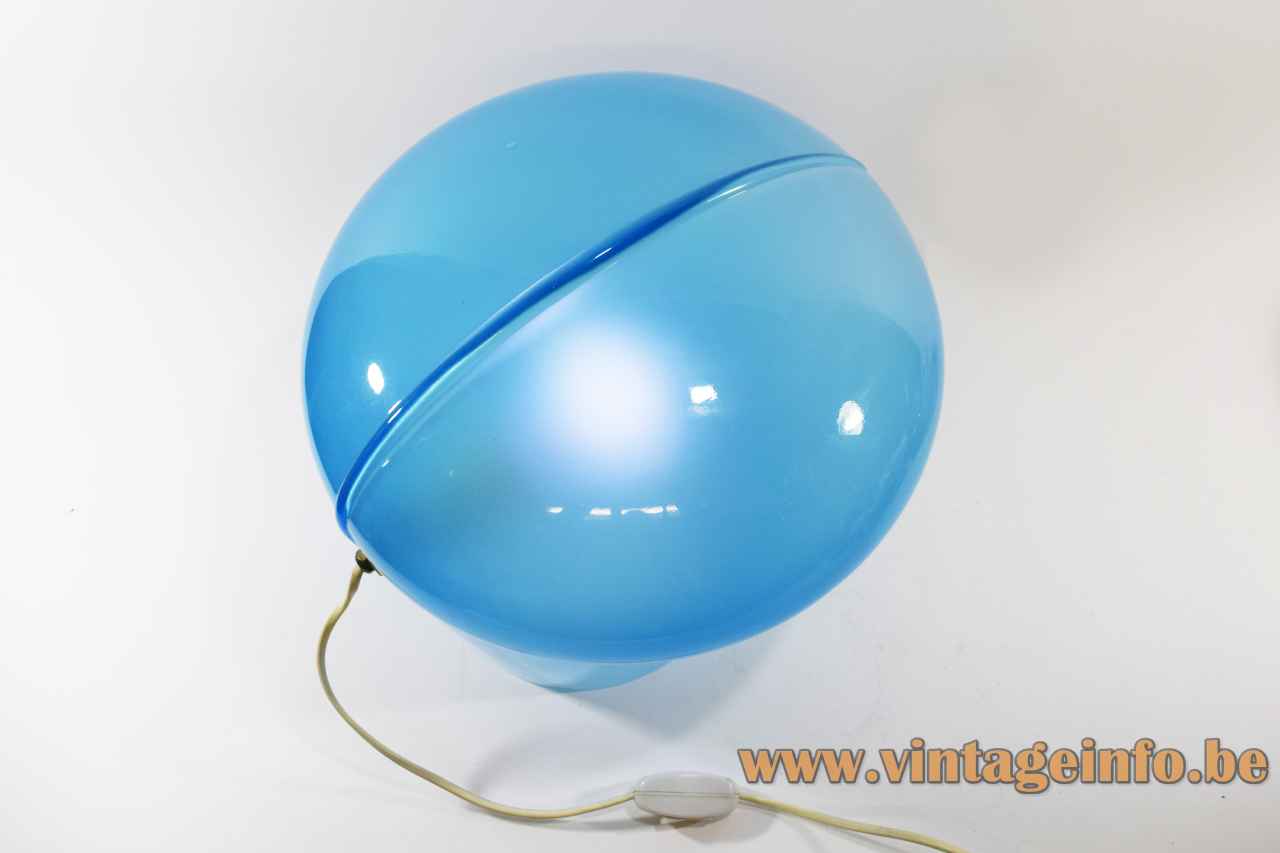
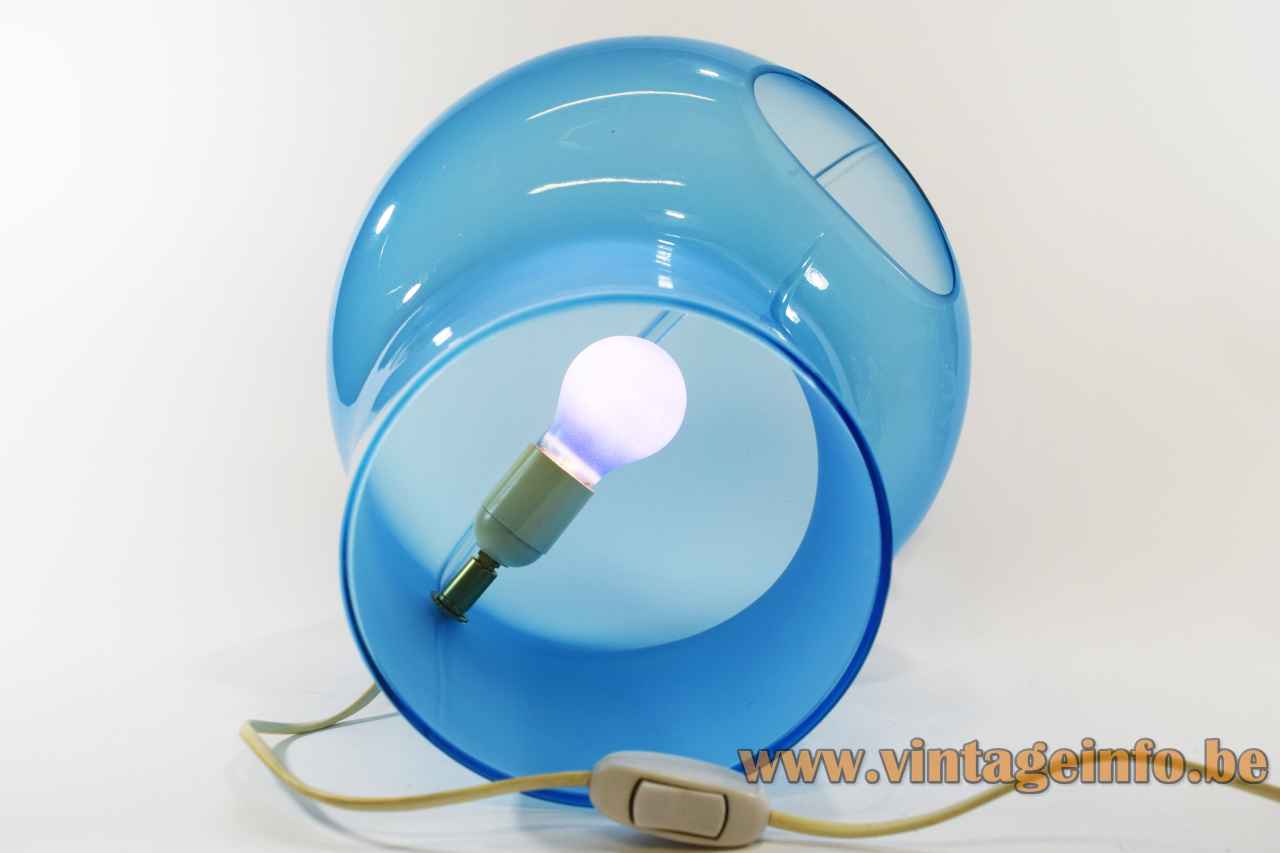
1970s VeArt Table Lamp
Materials: Round open glass base. Hand-blown translucent blue Murano glass lampshade, frosted inside. Brass joint and parts. White painted Bakelite E27 socket.
Height: 31 cm / 12.20”
Width: 32 cm / 12.59”
Base: ∅ 18,5 cm / 7.28”
Electricity: 1 bulb E27, 1 x 100 watt maximum, 110/220 volt.
Any type of light bulb can be used. Not a specific one preferred. For this setup a blue 25 watt incandescence light bulb was used.
Period: 1970s, 1980s – Mid-Century Modern.
Designer: Umberto Riva – attributed.
Manufacturer: VeArt, VE-ART, Via Moglianese, 30037, Scorzè, Venice, Italy.
Other versions: This 1970s VeArt table lamp was made in several colours and 2 sizes. The smaller model is 20 cm / 7.87” high. A comparable lamp, with the same line on top, model VT. 67, named Medusa is also by his hand.
Vistosi produced a table lamp in this style, also with a hole on the side. That’s why this lamp is often wrongly attributed to Vistosi. But just looking at the metal parts used, it is clear that this cannot be a Vistos i lamp.
VeArt
VeArt (initially written as Ve-Art) was founded in 1965 by Sergio Biliotti and Ludovico Díaz de Santillana. The company is generally described as a Venetian glass and lighting producer, active from the mid-1960s until the early 1990s.
Ludovico Díaz de Santillana (1931–1989) was born in Rome. Trained as an architect in Venice, he also worked in education and became closely connected to the Murano glass world through his marriage to Anna Venini, daughter of Paolo Venini of the renowned Venini glass company. After Paolo Venini’s death (1959), Ludovico Díaz de Santillana took on a leading role at Venini (together with the Venini family), a position he held for decades. He died in 1989.
VeArt produced art glass and lighting, often characterised by bold forms, strong colour contrasts and the expressive use of Murano techniques. In later sources and the vintage market, Mario Ticco is frequently mentioned as an artistic director associated with VeArt, reflecting the firm’s close ties to the Venetian glass scene.
Designers and artists associated with VeArt (as credited in catalogues and market documentation) include, among others: Tobia Scarpa, Renato Toso, Noti Massari, Toni Zuccheri, Paolo Zanotta, Umberto Riva, Lino Tagliapietra, Luciano Bartolini, Gigi Basso, Luisa Calvi, Giorgio de Ferrari, Sergio Asti and Guido Rosati, among others.
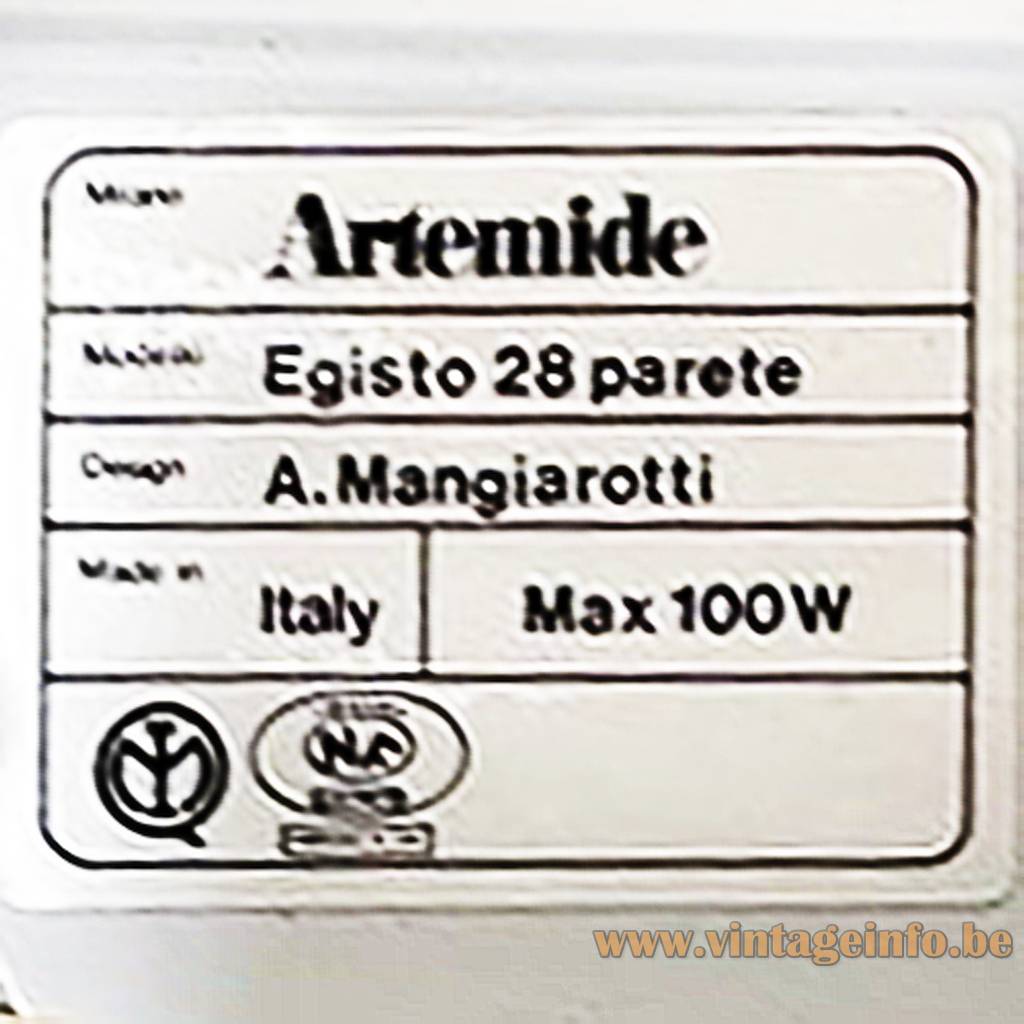
In the early 1990s, VeArt was acquired by Artemide. Artemide’s own company timeline records the acquisition in 1991 and notes that it enabled the launch of mouth-blown glass collections under the Artemide umbrella.
VeLuce: VeArt also marketed lamps under the name VeLuce. Both names appear together in the same catalogues. In these catalogues the VeLuce models are typically identified by numbers only rather than product names. VeArt was positioned as the more “high-end” line, but the design quality of VeLuce is certainly not inferior.
1970s VeArt Table Lamp – Company Labels & Logos