- Categories
- Categories
Last 5 Viewed
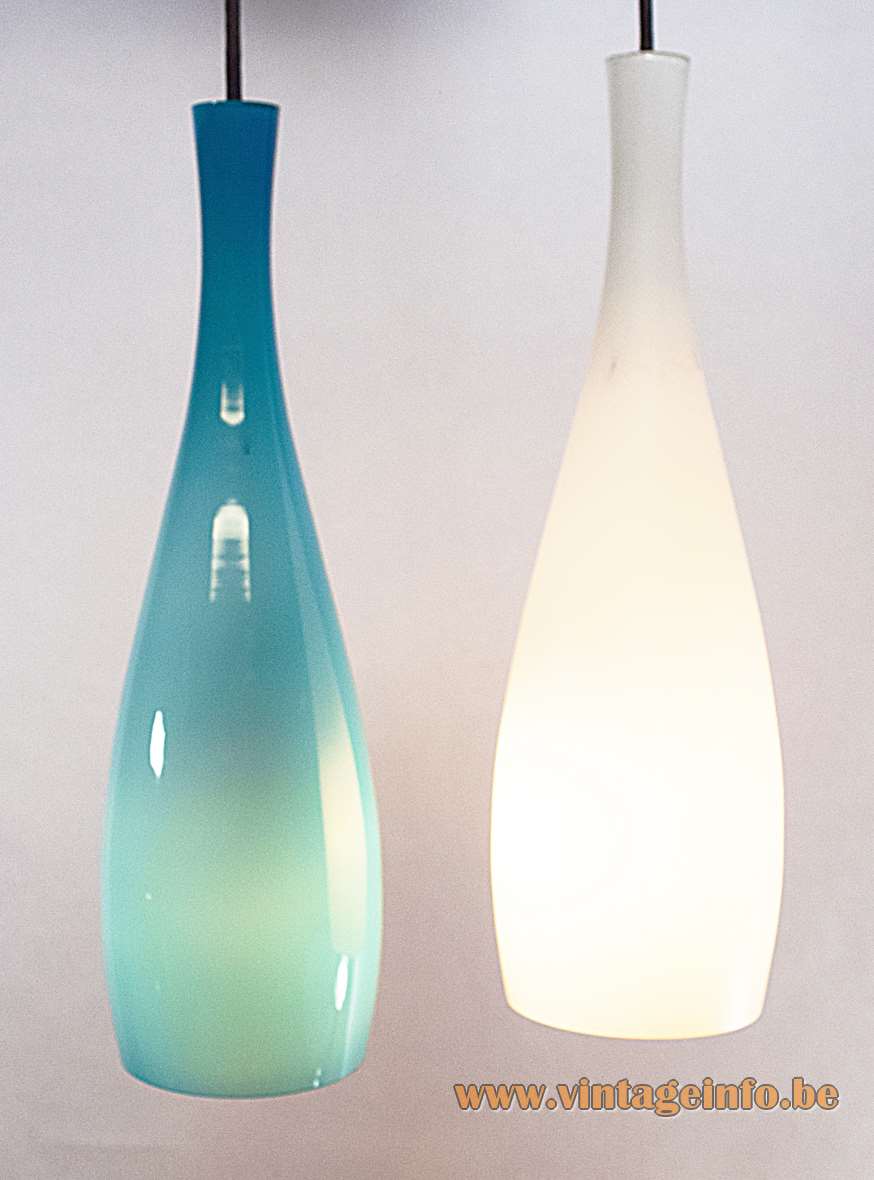
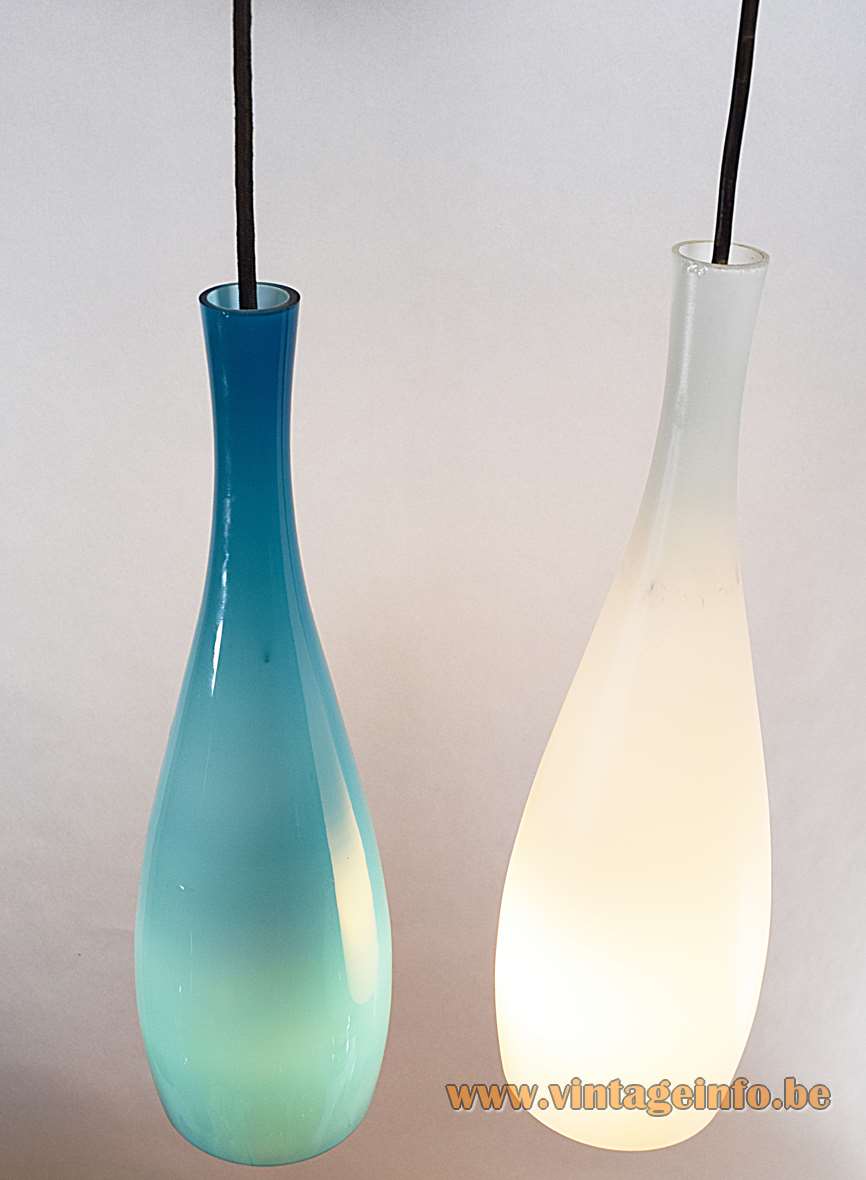
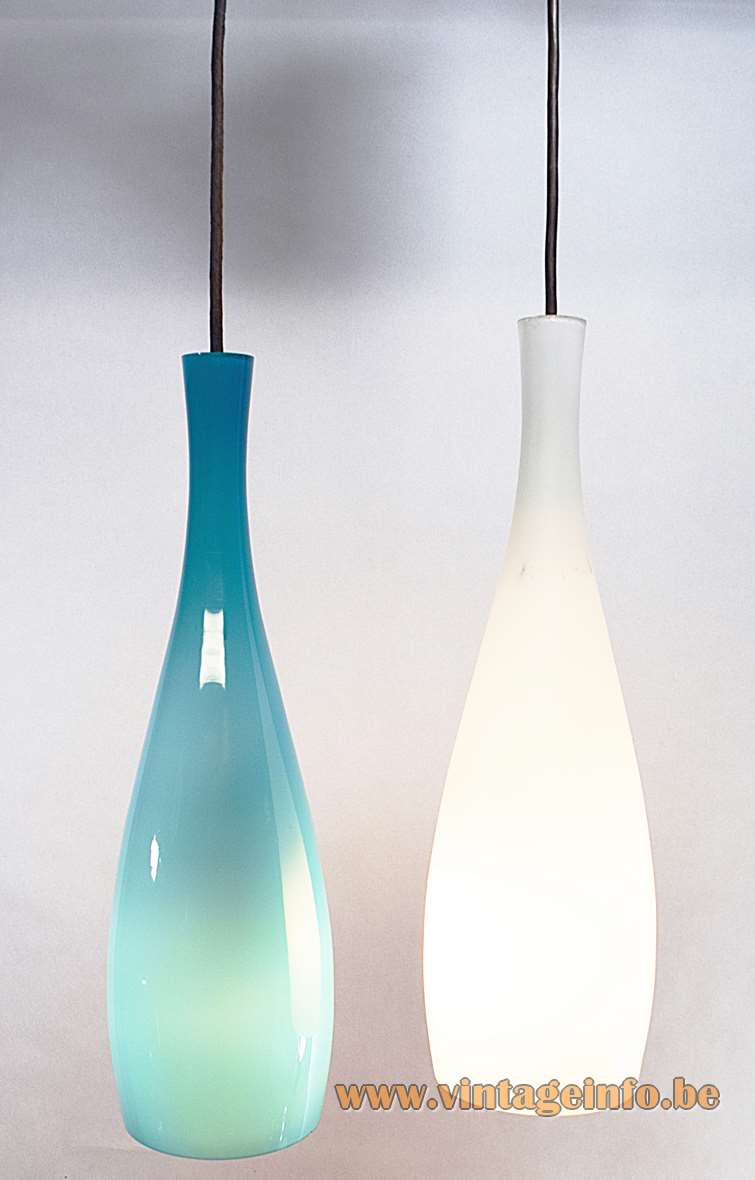
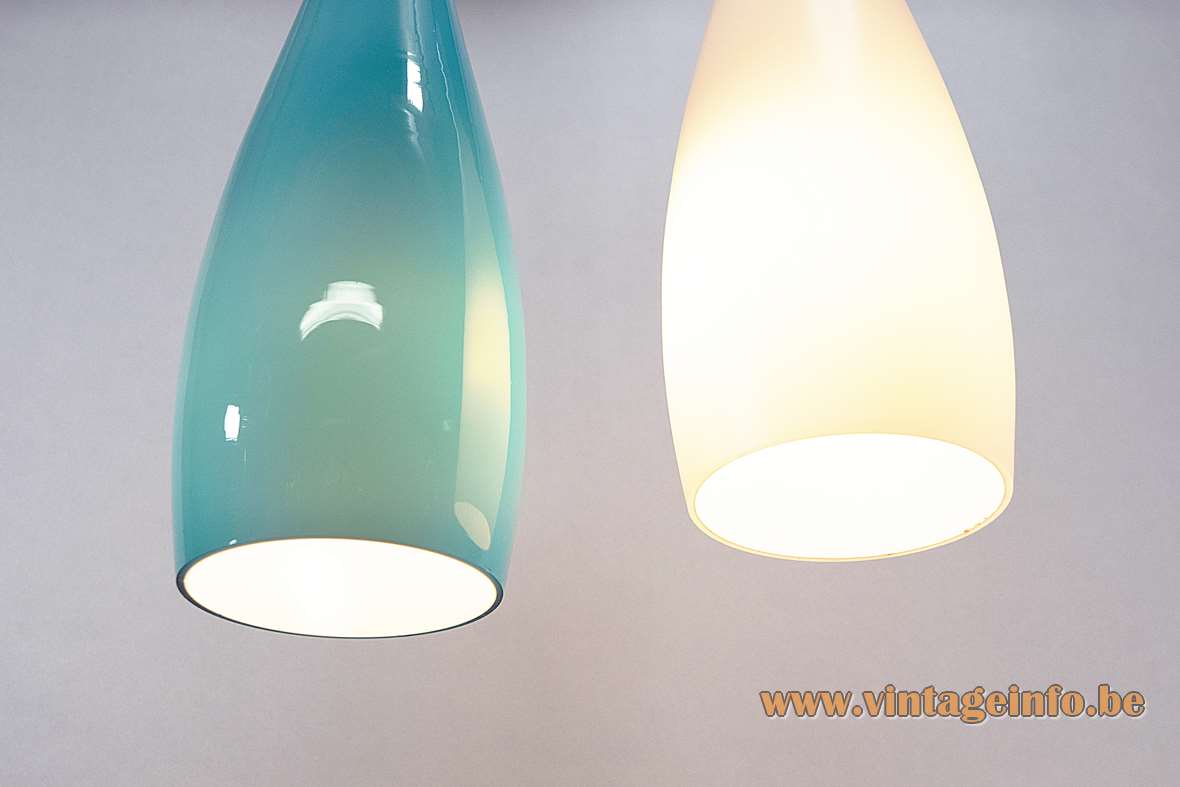
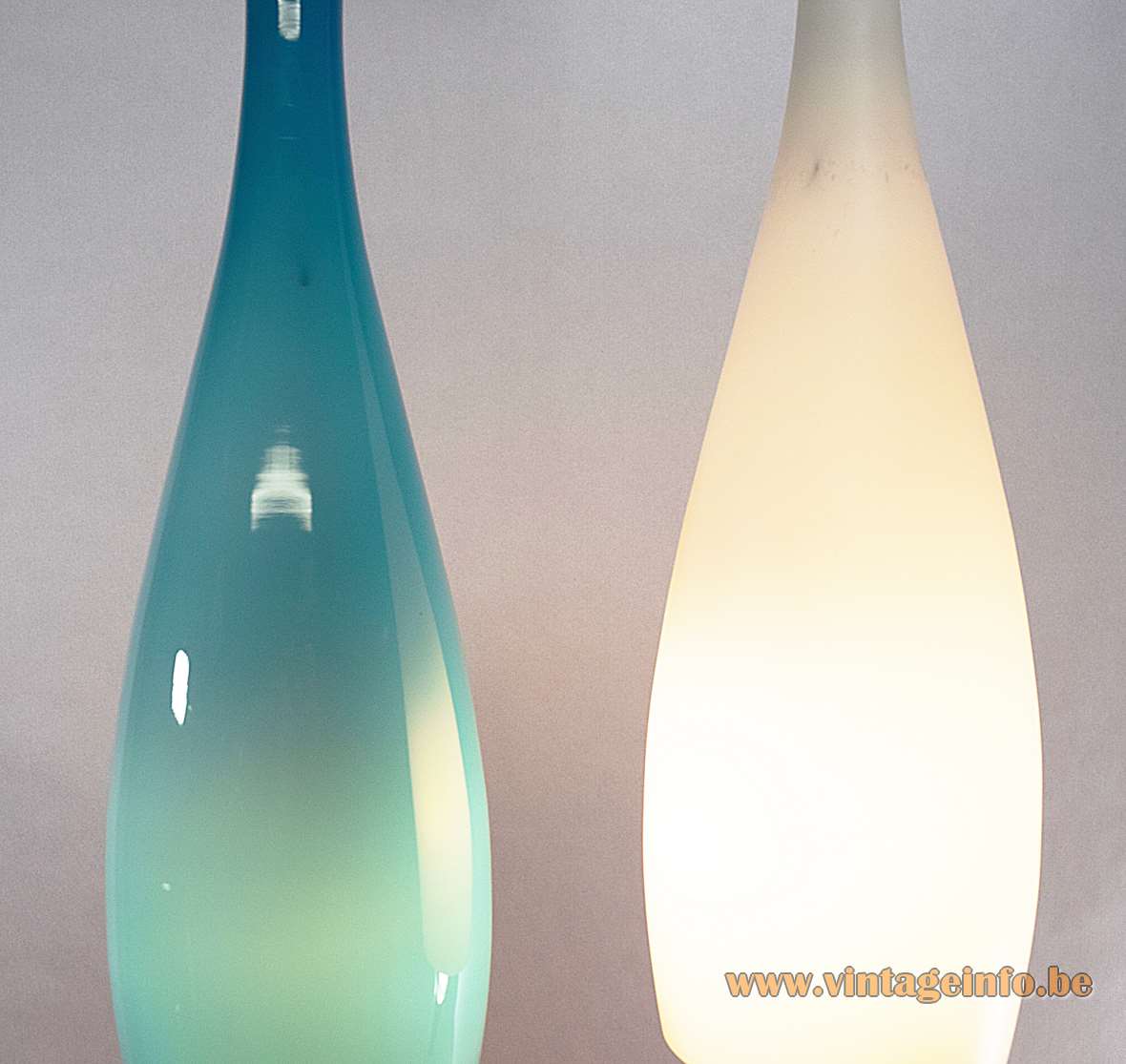
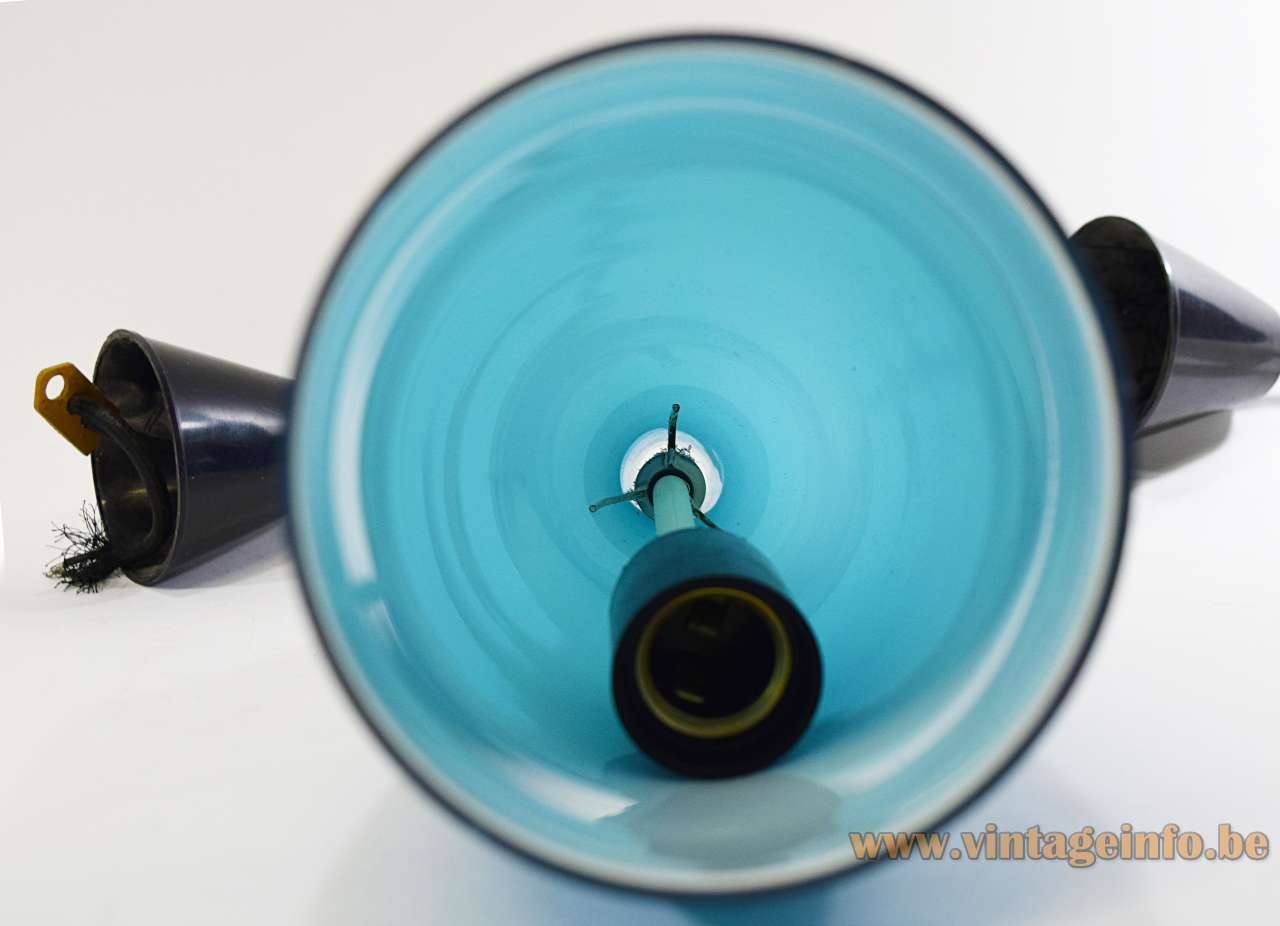
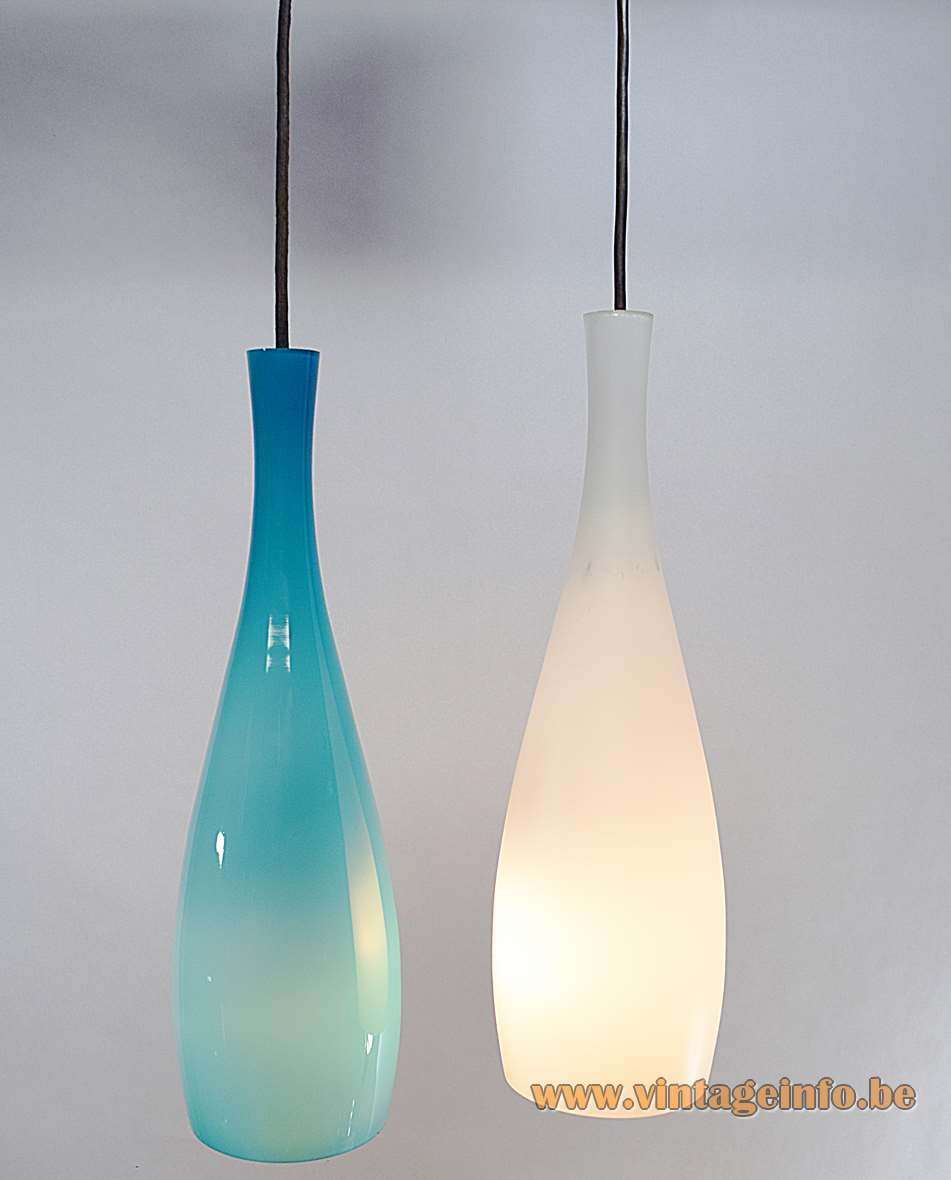
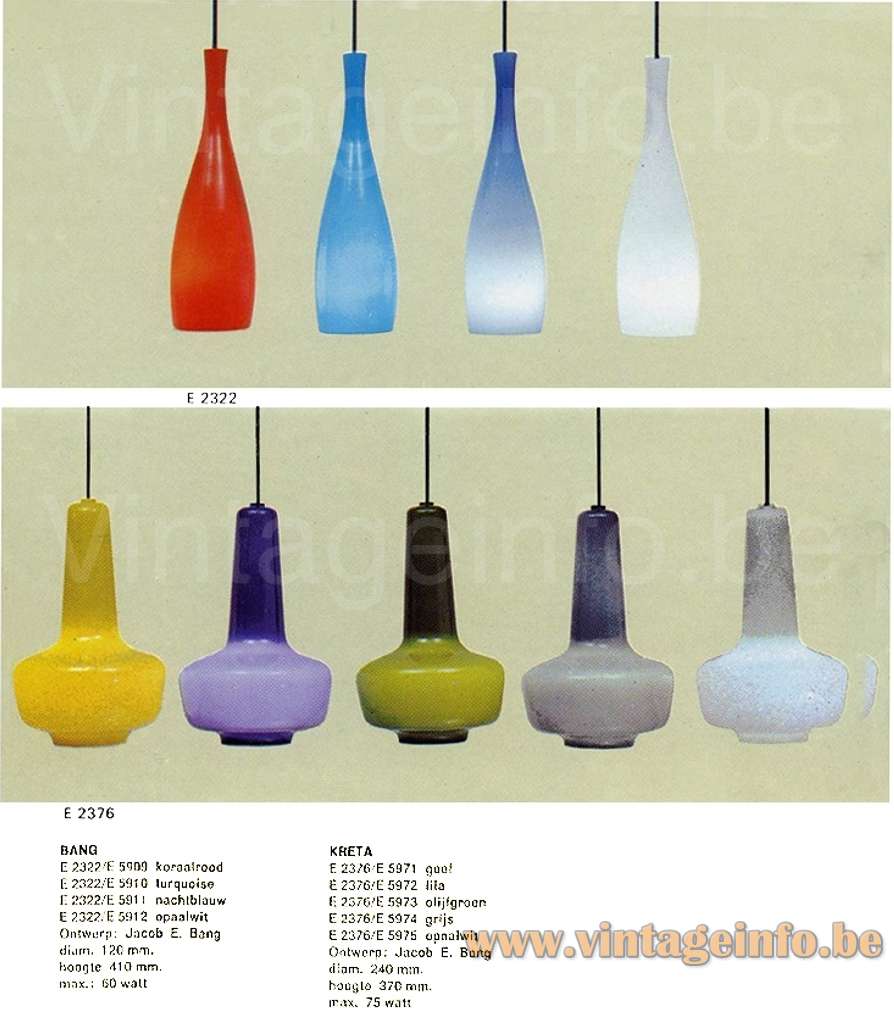
Fog & Mørup Bang Pendant Lamp – 1960s Catalogue Picture
Links (external links open in a new window)
Jacob Eiler Bang bio on Fjørn Scandinavian
The story of Fog & Mørup, Danish modern lighting’s superstar
Lightyears – Republic of Fritz Hansen
Horn Belysnign history on Danish Vintage Design
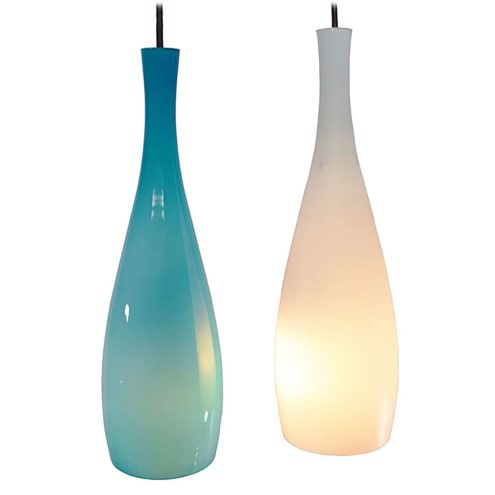
Fog & Mørup Bang Pendant Lamp
Materials: Droplet style convex lampshades. Made of clear turquoise and opal crystal hand-blown glass. White opal glass on the inside (incamiciato). Bakelite E27 sockets.
Cord Length: 60 cm / 23.62’’
Height: 41 cm / 16.14”
Width: ∅ 12 cm / 4.72”
Electricity: 1 bulb E27, 1 x 60 watt maximum, 110/220 volt.
Any type of light bulb can be used. But preferably a white/opaque or frosted bulb.
Period: 1960s – Mid-Century Modern.
Designer: Jacob Eiler Bang (1899 – 1965).
Manufacturer: Fog & Mørup A/S with Kastrup Glasværk, Denmark.
Other versions: This Fog & Mørup Bang pendant lamp was made in several colours, as shown here. The first colours were turquoise, opaque white, coral and night blue.
Very similar, almost identical lamps were also made by Base from Murano, Italy in the same period.
Incamiciato: A type of overlay glass in which lattimo, or milky white glass, is covered with a layer of transparent coloured glass. The term is Italian and the technique is closely associated with the glassmakers of Murano.
These pendant lamps were designed by Jacob Eiler Bang in 1963 for Fog & Mørup, only a few years before his death in 1965. The model was aptly named Bang after its designer.
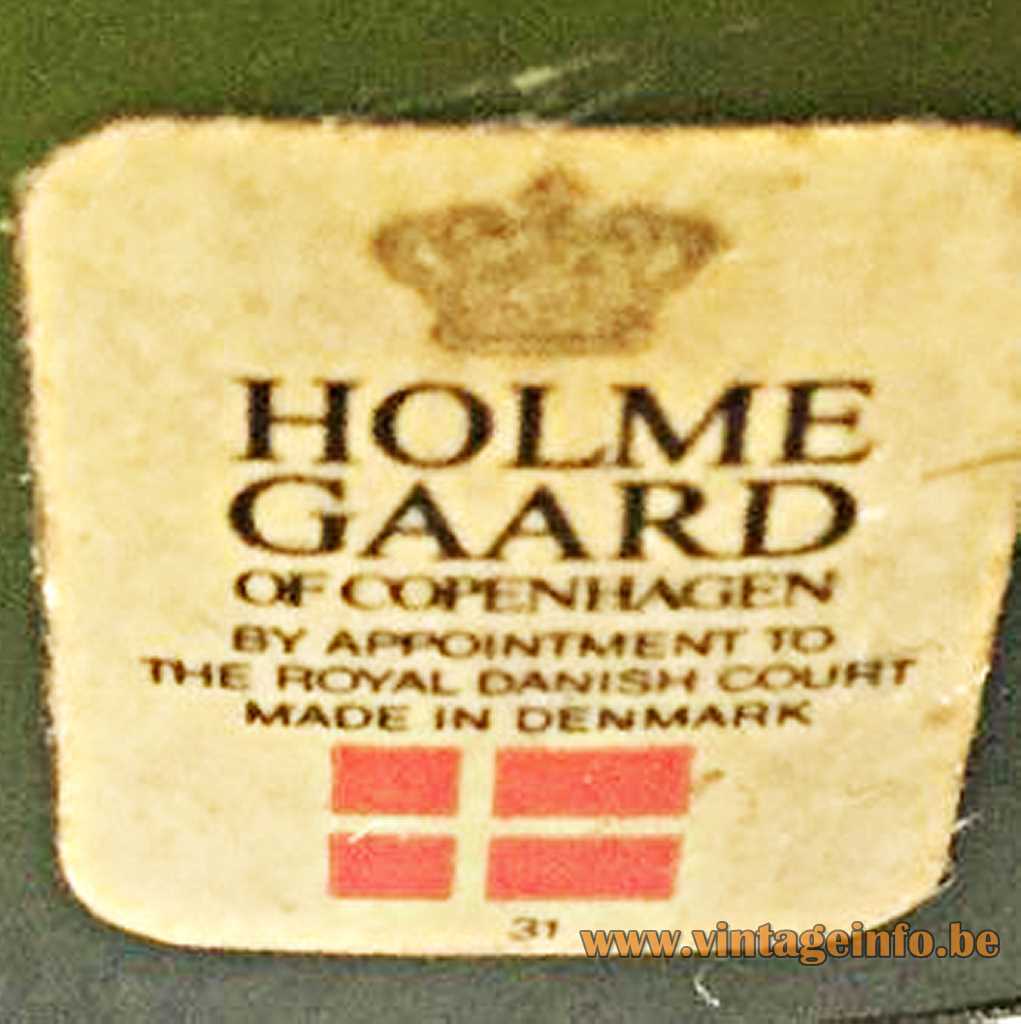
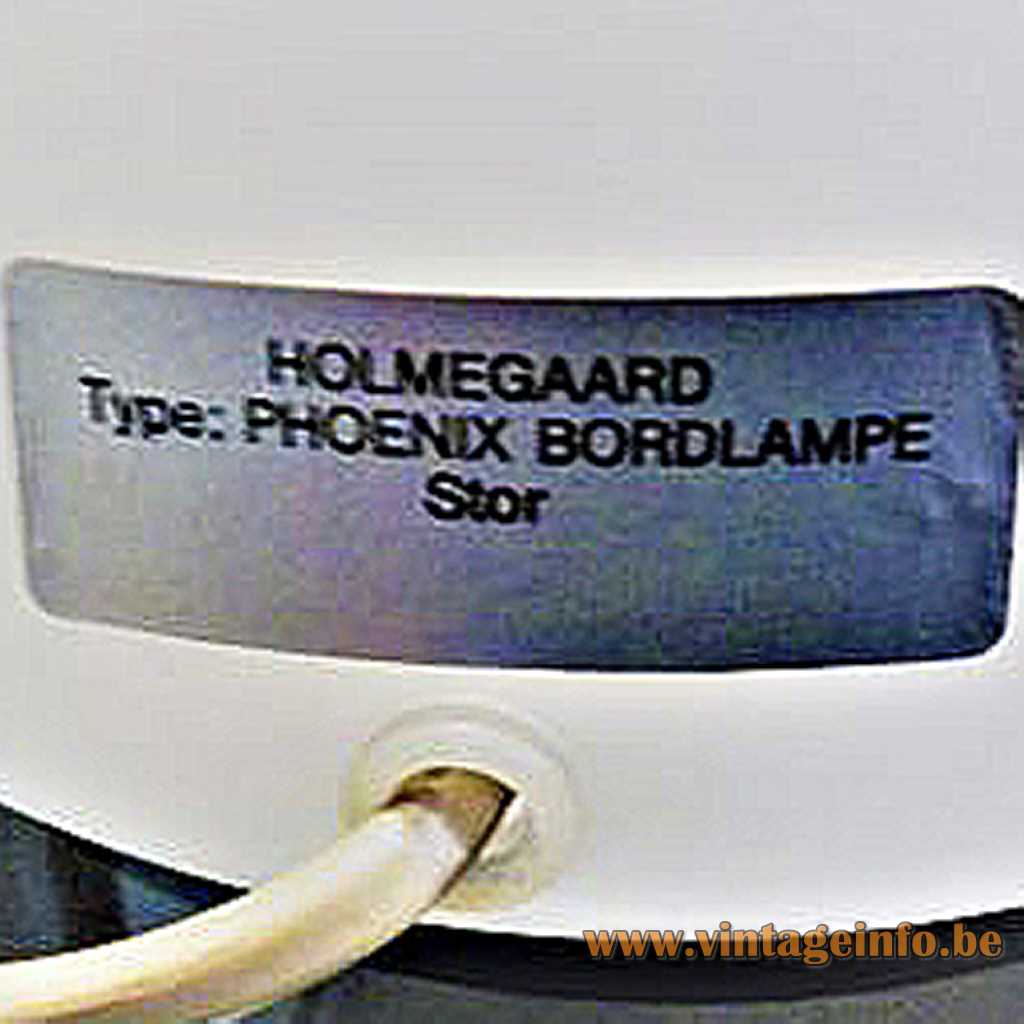
The glass for these Fog & Mørup Bang pendant lamps was produced in collaboration with a Danish glassworks, variously described in the literature as Kastrup, Holmegaard or Kastrup-Holmegaard.
Jacob Eiler Bang
Jacob Eiler Bang was born in Frederiksberg, Denmark, on 19 December 1899. Trained as an architect, he soon turned to glass design. He first came to the attention of Holmegaards Glasværk in connection with the 1925 Paris Exhibition, and in 1928 he joined Holmegaard, where he became one of the most important figures in Danish modern glass.
His functionalist designs received considerable international acclaim and helped shape the identity of Holmegaard during the 20th century. Besides his work for Holmegaard, he also designed glass pendant lamps for Fog & Mørup, including models such as the Bang and Kreta.
Jacob Eiler Bang died on 16 March 1965 in Kongens Lyngby, Denmark.
Fog & Mørup
Fog & Mørup was founded in 1904 by Ansgar Fog (1880–1930) and Erik Mørup (1879–1972), originally as a metalwork wholesaler. In 1906 the company moved to Copenhagen and gradually developed into one of Denmark’s leading lighting manufacturers. Its strongest creative period began after Jo Hammerborg joined the company in 1957 as head of design, helping to establish Fog & Mørup as a major name in Danish modern lighting.
Designers and architects associated with the company include Jo Hammerborg, Claus Bonderup, Torsten Thorup, Sidse Werner, Sophus Frandsen, Jørgen Bo, E. Balslev, Peter Avondoglio, Karen Clemmensen, Ebbe Clemmensen and Hans Due.
Lyfa
Lyfa was founded in 1903 as Kjøbenhavns Lampe- og Lysekronefabrik. By the mid-20th century it had become one of the most important Danish lighting manufacturers, working with designers such as Bent Karlby, Louis Weisdorf, Piet Hein, Finn Juhl, Nils and Eva Koppel and others. In the late 1970s, Lyfa merged with Fog & Mørup, although both brands continued for a time to be marketed separately.
In the early 1980s, the combined Lyfa–Fog & Mørup business was taken over by Lyskær, after which the Fog & Mørup name gradually disappeared. Lyskaer–Lyfa remained active until 1991, when it was incorporated into Horn Belysning A/S.
Horn Belysning
Horn Belysning A/S, originally E.S. Horn, was founded in 1952 in Aalestrup, Denmark. In 1963 the company adopted the name Horn Belysning. It grew into a major volume producer for the Scandinavian and European market and counted IKEA among its important customers. By the 1980s, Horn was one of the largest lighting companies in Denmark.
In 1991, Horn Belysning acquired Lyskaer–Lyfa, which by then also included brands such as Lyfa, Fog & Mørup and ABO. In 2005, Horn was restructured: the outdoor lighting activities were sold to Nordlux, while the remaining company was relaunched as Lightyears. Lightyears was later acquired by Fritz Hansen.
Vintageinfo Links
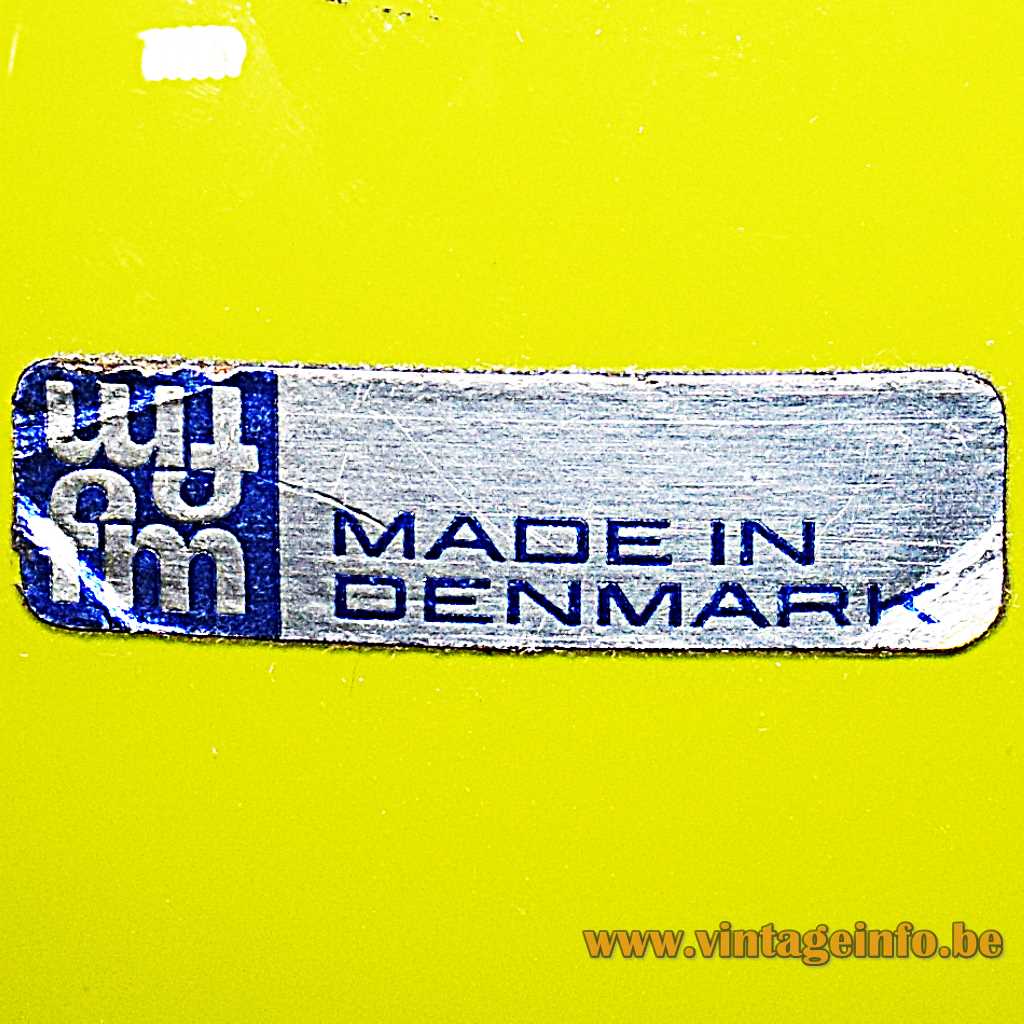
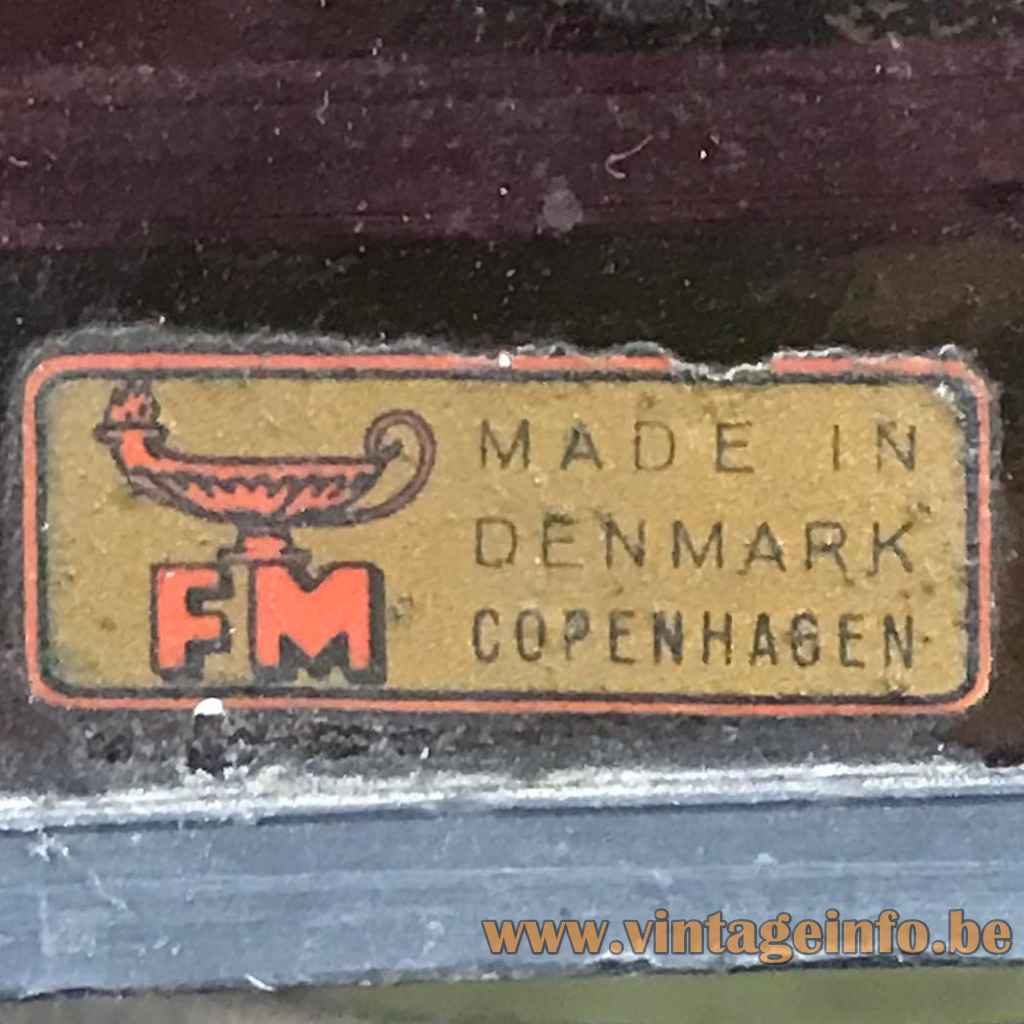
Fog & Mørup Bang Pendant Lamp – Company Labels & Logos