- Categories
- Categories
Last 5 Viewed
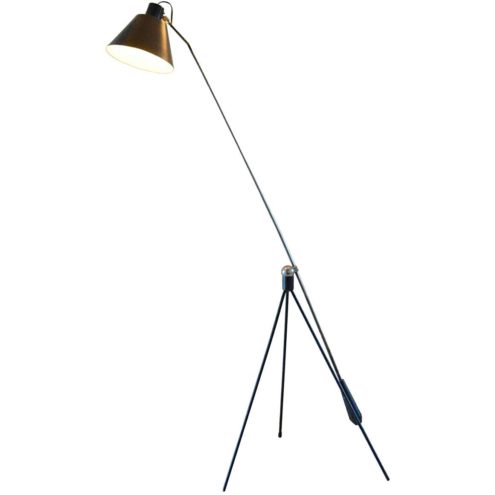
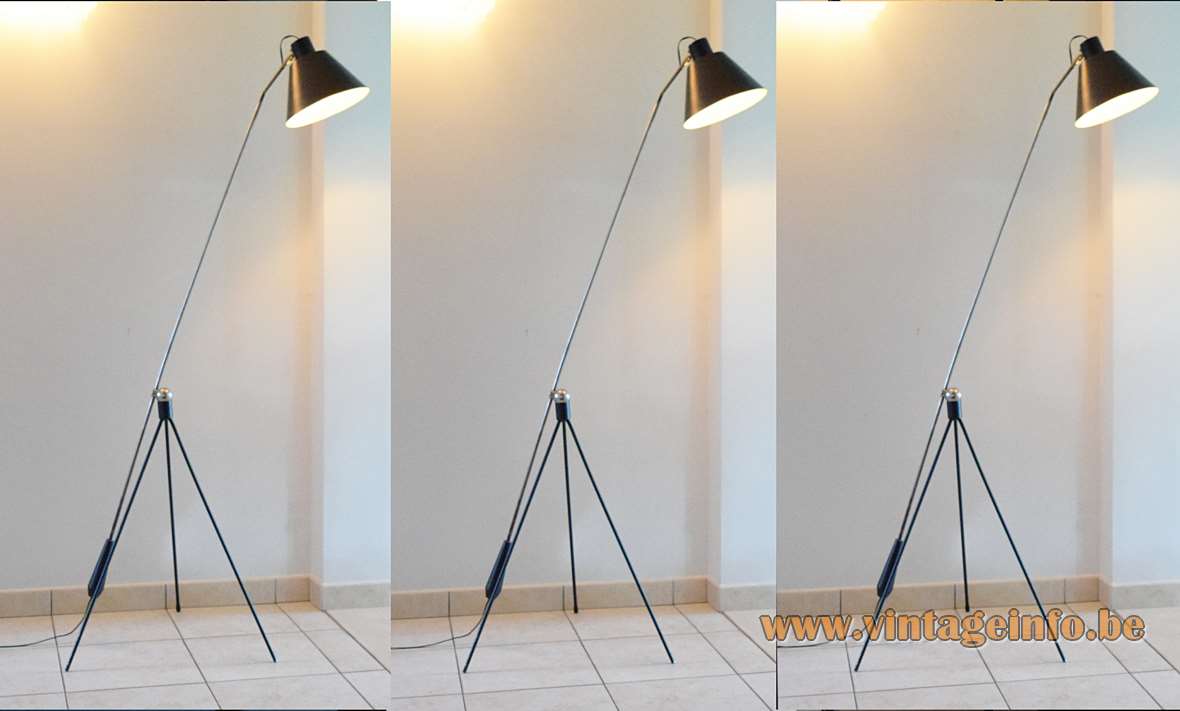

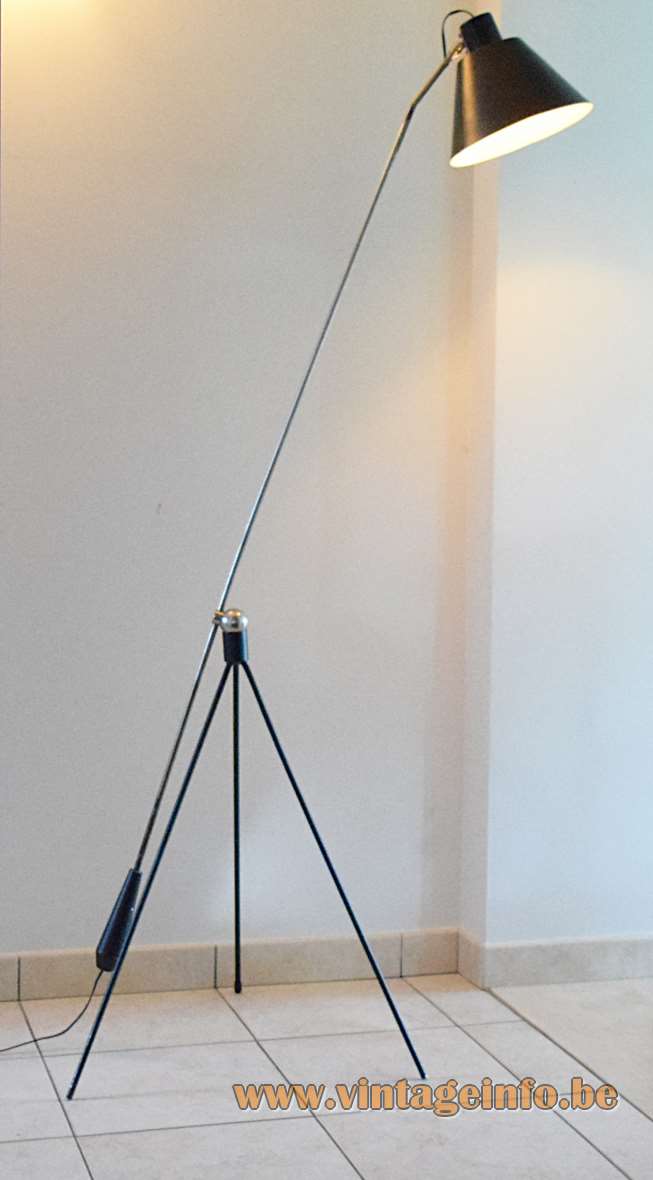

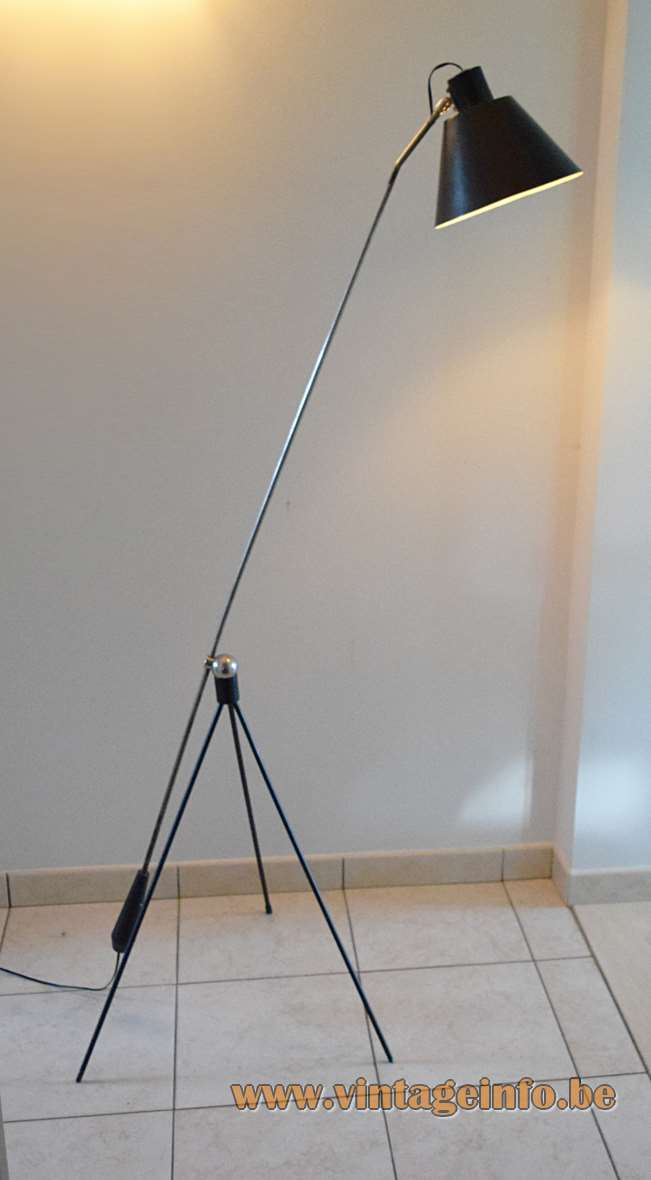

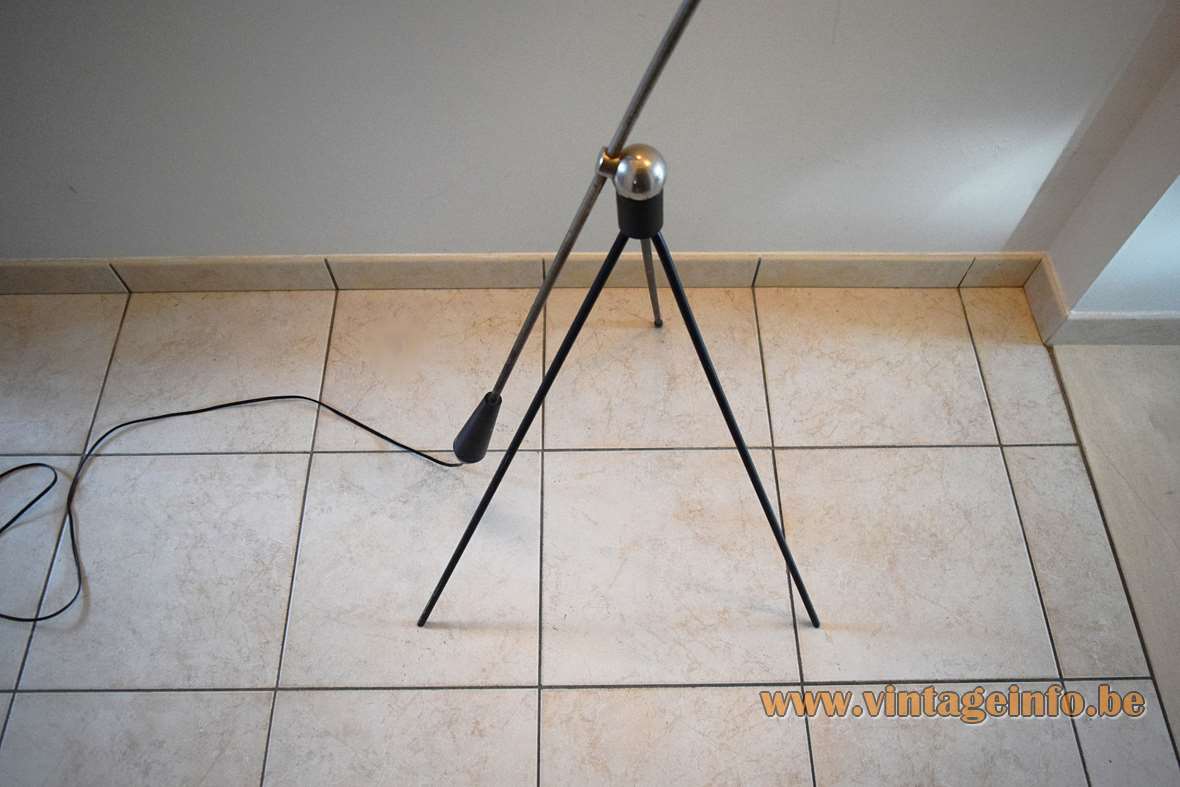

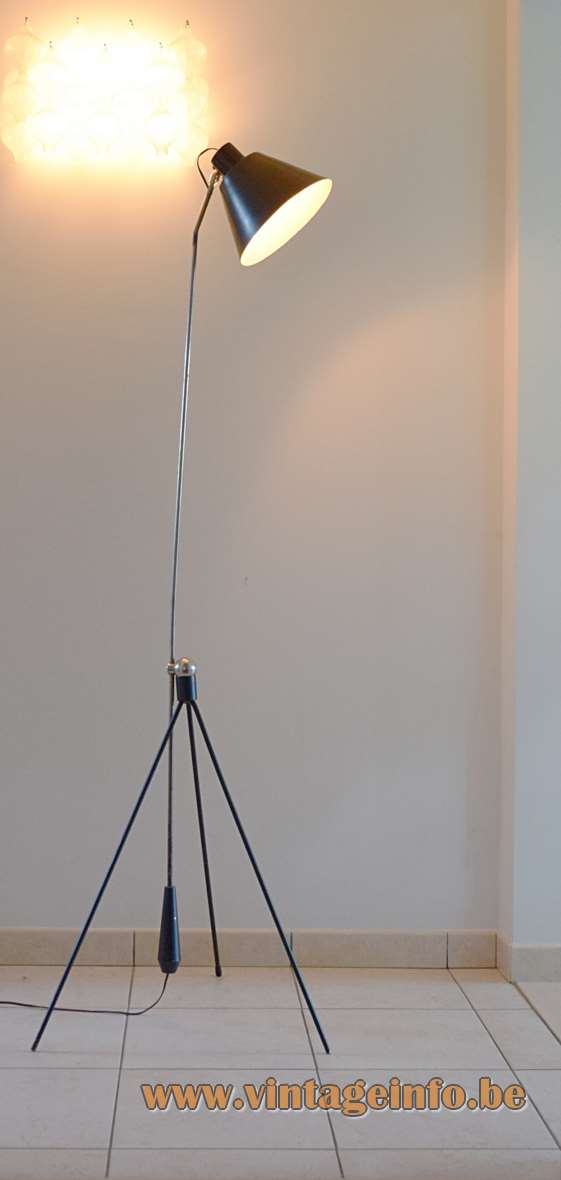
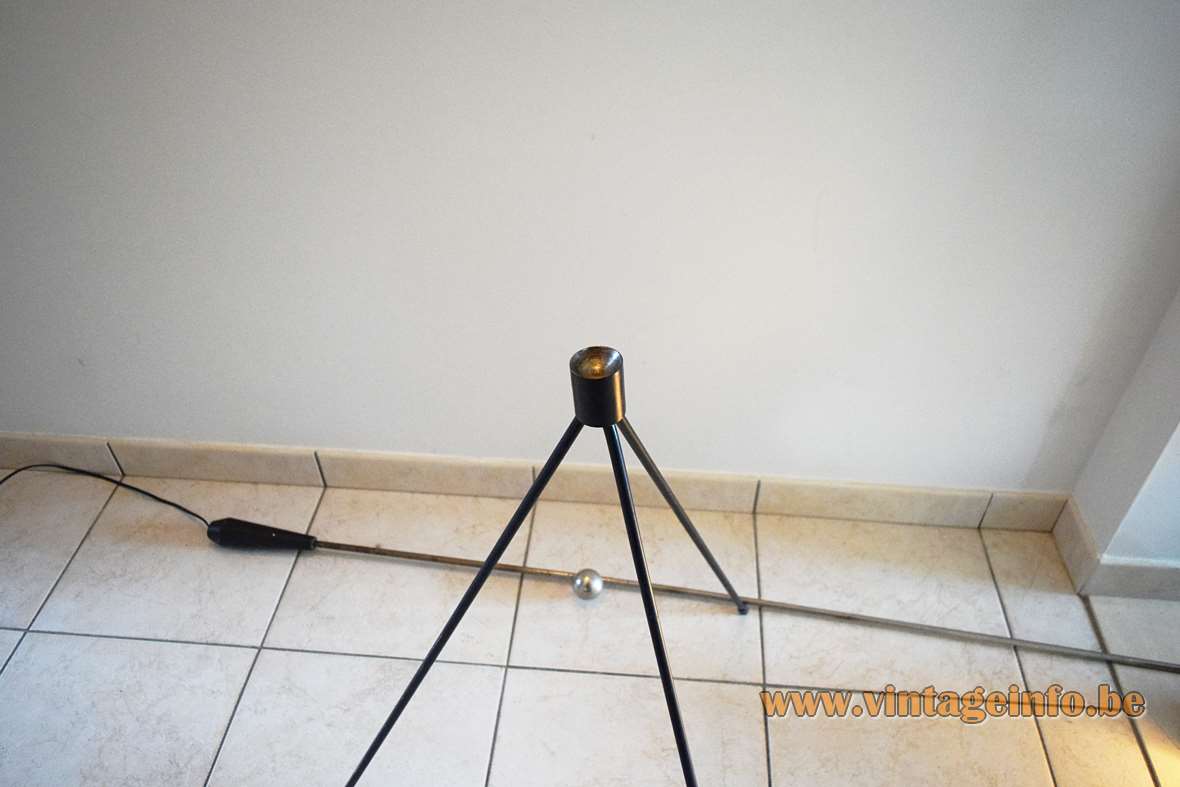

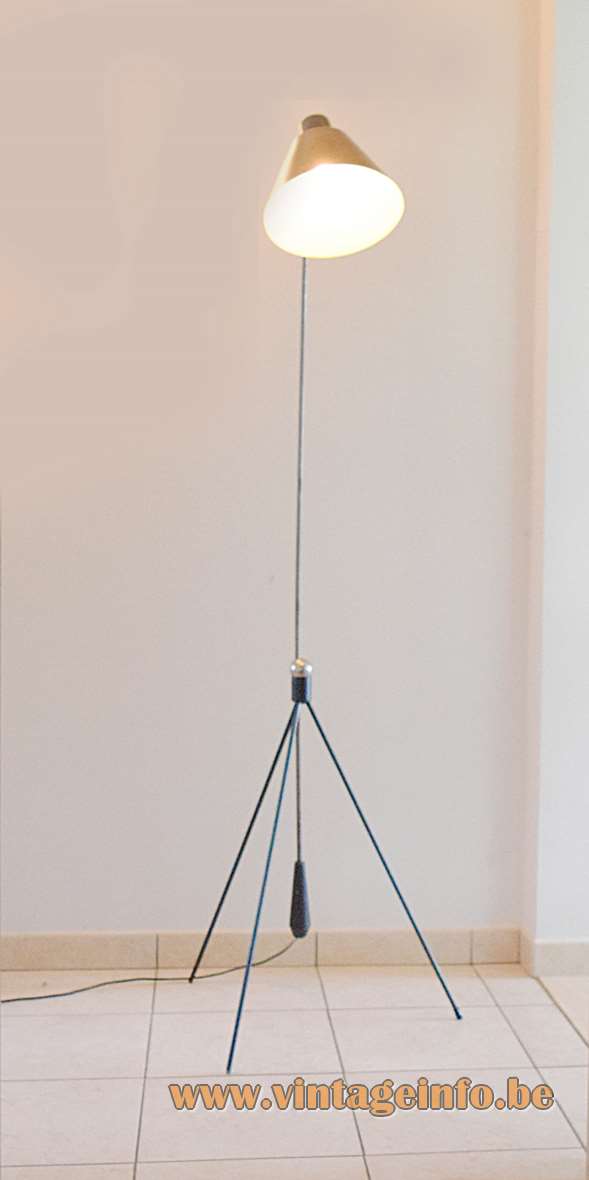
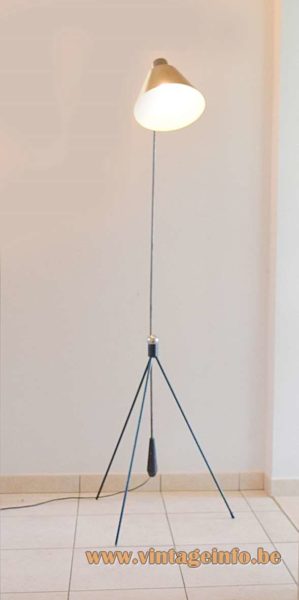
Artiforte Magneto Floor Lamp – Details
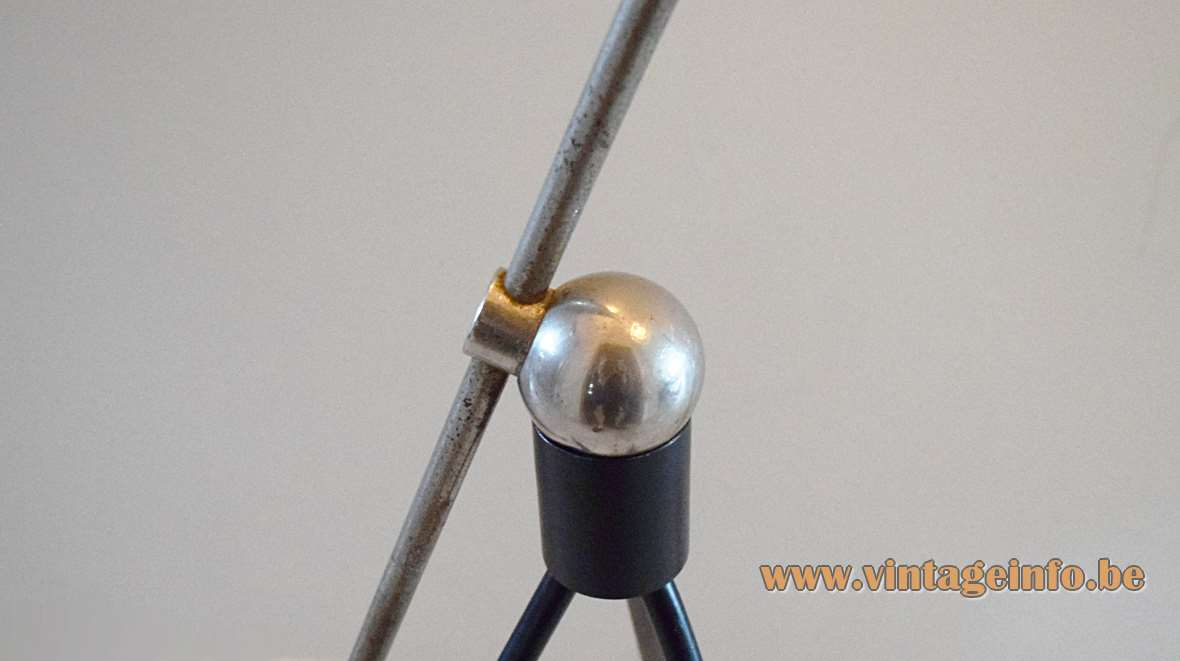
Tripod base in which the chrome metal ball balances.
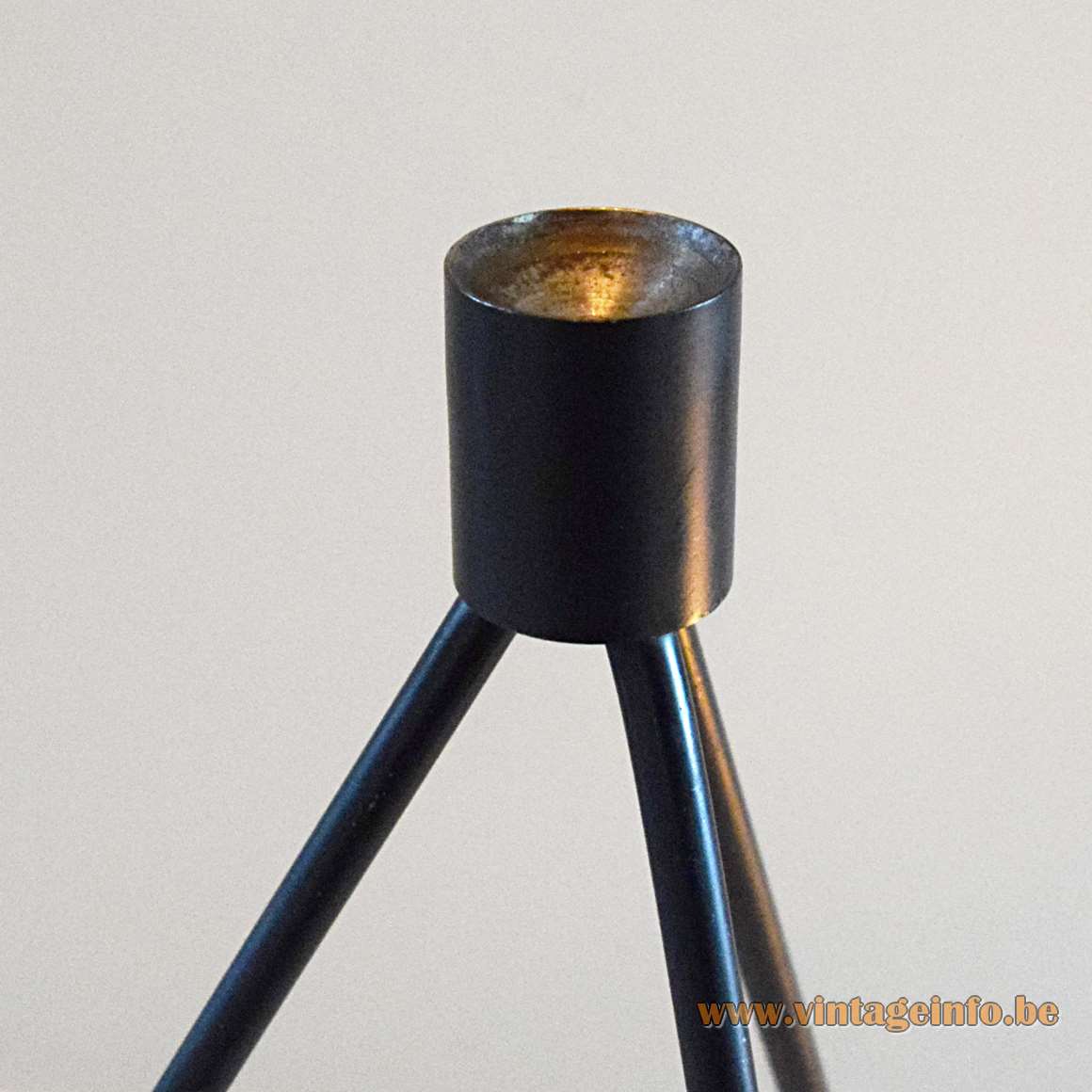
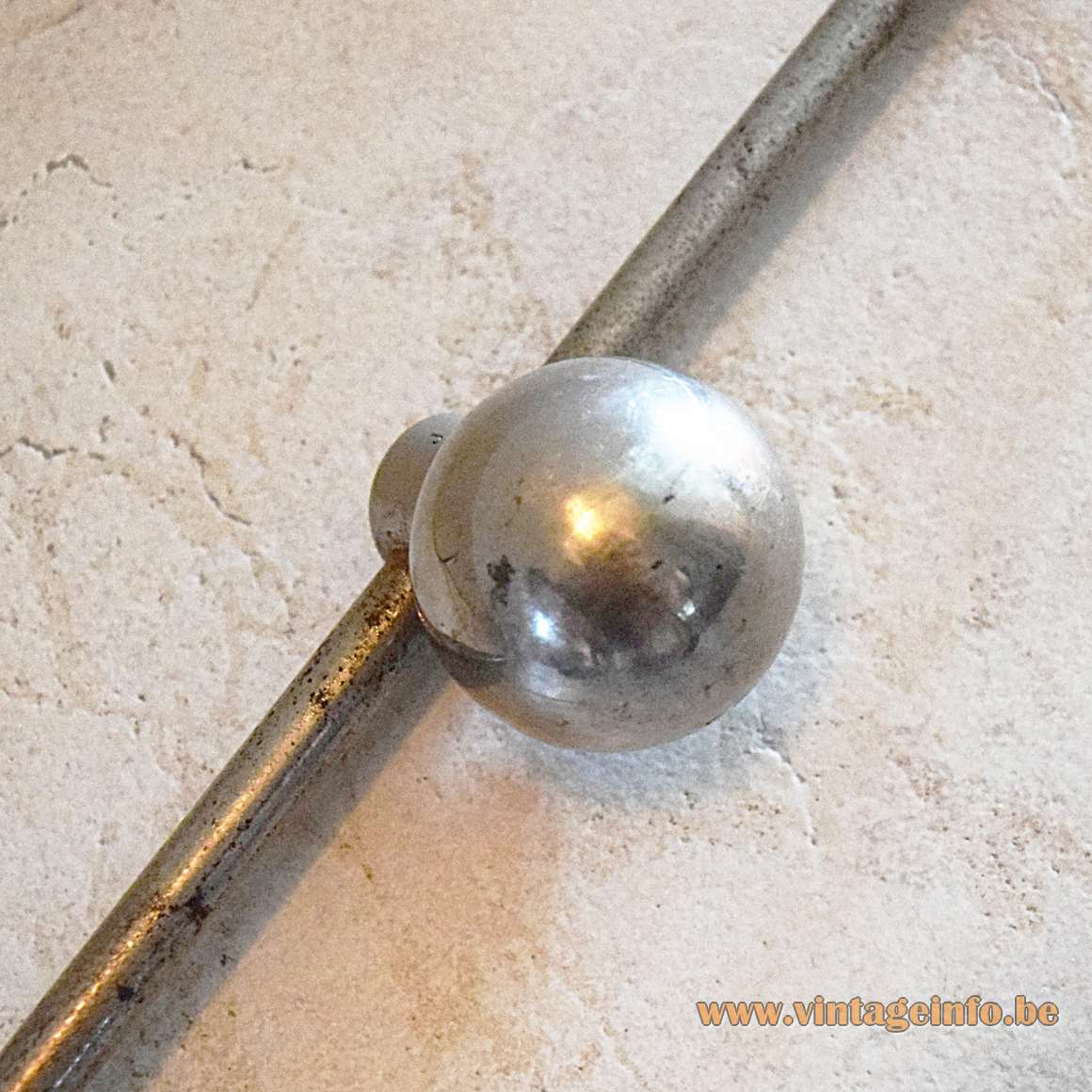
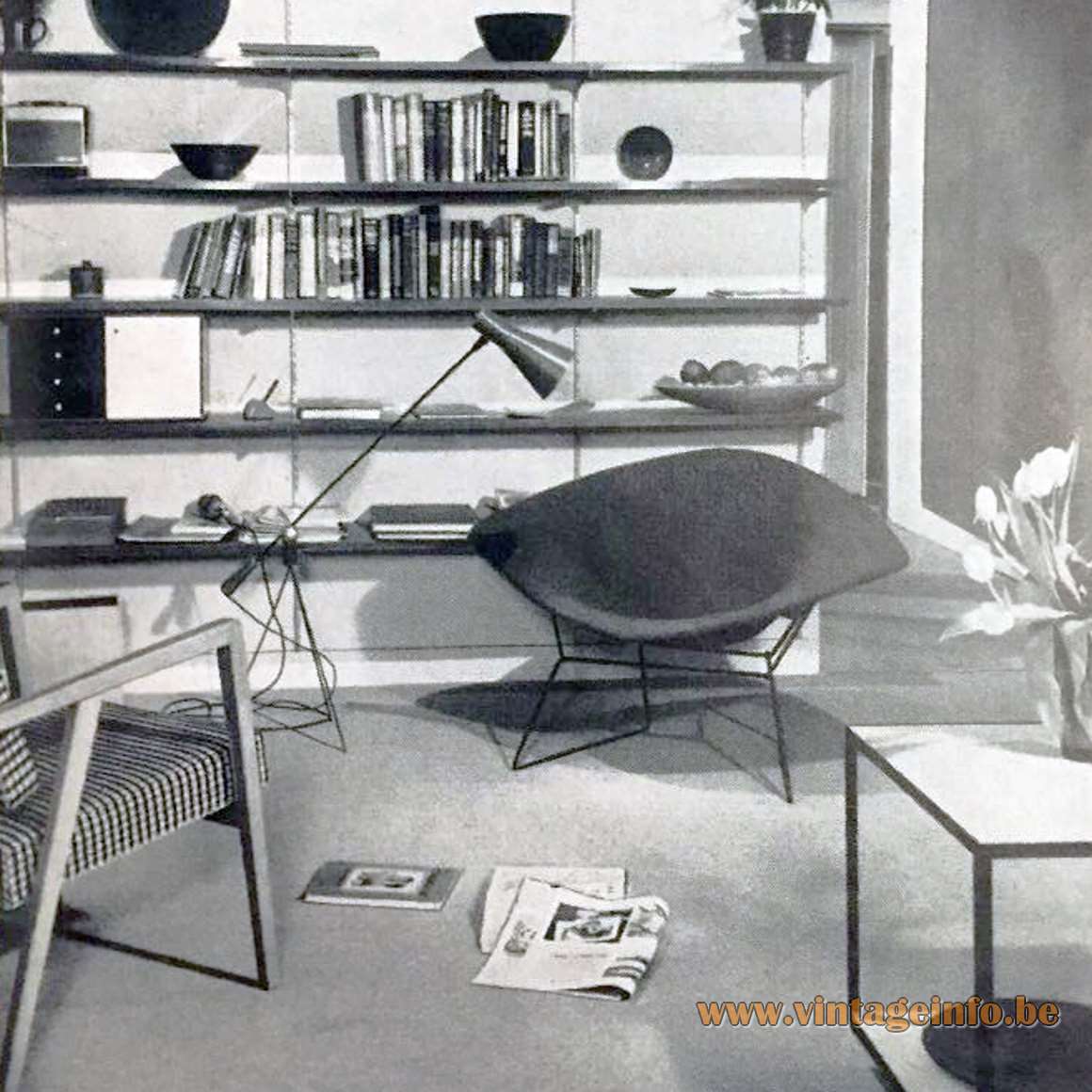
Artiforte Magneto Floor Lamp – Heifetz Catalogue Picture
Magneto floor lamp, 1950 design by Gilbert Allen ‘Gil’ Watrous, produced by Heifetz.
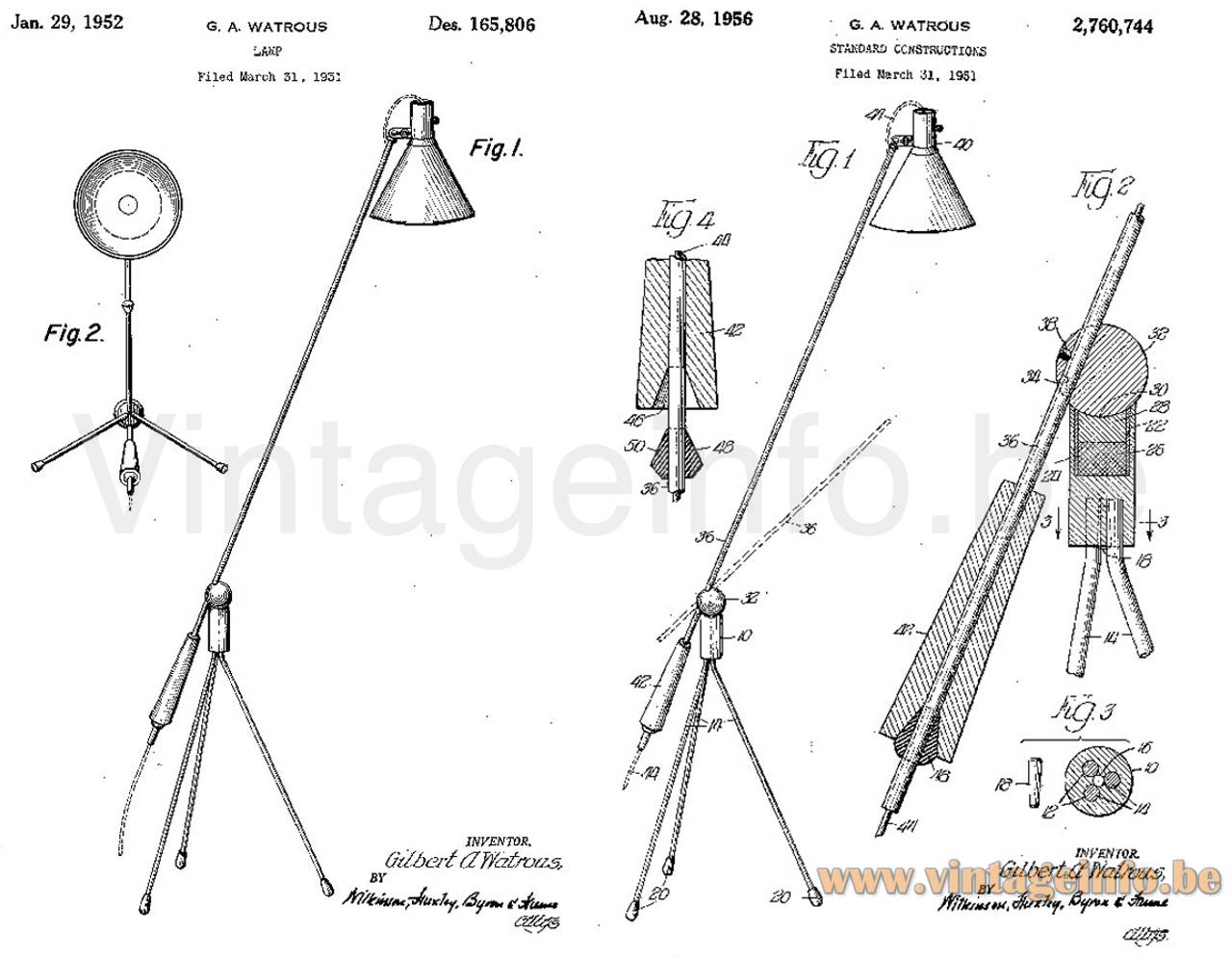
Artiforte Magneto Floor Lamp – Gilbert Allen Watrous Scetches
1952 and 1956 Gilbert Allen Watrous scetches filed for patent.
Links (external links open in a new window)
Gilbert Allen Watrous floor lamp on the MOMA website
Gilbert Allen Watrous biography on the Modern San Diego website
Table lamp and floor lamp in 1000 Lights: 1878-1959 (Taschen & Google books – Charlotte Fiell, Peter Fiell)
Kho Liang Ie – Wikipedia (only in Dutch)
Vintageinfo
Artiforte Magneto Floor Lamp
Materials: Black-painted iron tripod base. Long chromed iron rod. Solid chromed magnetic sphere. Black-painted, conical iron counterweight. Black-painted aluminium lampshade, white-painted on the inside.Bakelite E27 lamp socket.
Height (max): 168 cm – 66.14” – adjustable
Lampshade: ∅ 23 cm / 9.05”
Height base: 66,5 cm / 26.18”
Width base: ∅ 52 cm / 20.47”
Electricity: 1 bulb E27, 1 x 60 watt maximum, 110/220 volt.
No specific type of light bulb is required; different types can be used.
Period: 1950s – Mid-Century Modern.
Designer: After the design by Gilbert Allen ‘Gil’ Watrousin 1950.
Manufacturer: Artiforte, Rotterdam, The Netherlands.
Other versions: The lampshade of this Artiforte Magneto floor lamp exists in several colours and shapes. Artiforte also produced other magnetic floor lamps based on the same balancing principle.
This type of floor lamp was first produced in the United States by the American company Heifetz, after Gilbert Watrous (1918–1991) won the 1951 design competition organised by the Museum of Modern Art (MoMA) in New York. Heifetz subsequently produced the design in numerous variations, including table-lamp versions.
Artiforte
Artiforte (not to be confused with the Dutch furniture company best known for the seating designs of Pierre Paulin) was a small Dutch lighting manufacturer based in Rotterdam. The company was active from approximately the 1930s until the 1980s. Although relatively little primary archival documentation has survived, Artiforte is remembered today for a number of highly distinctive and technically refined lighting designs.
According to research carried out in recent years — including archival investigation and inquiries with the Fillekes family — Atelier Artiforte was already active as an atelier around 1930, initially under the direction of J.J. Buchter. The first formal registration with the Dutch Chamber of Commerce followed later, on 16 January 1934. After the Second World War, the atelier was taken over by Hendrik (“Henk”) Fillekes and Johan van Wierst.
During the post-war period, Artiforte developed a recognisable catalogue of floor lamps, wall lamps and table lamps, combining solid metal construction with a restrained, functional design language. While many designs are attributed to Henk Fillekes, the company also collaborated with external designers.
Among the lamps produced by Artiforte are the ST46 floor lamp and the Libra floor lamp, both designed by Kho Liang Ie (1927–1975), a Dutch designer of Chinese descent. Kho Liang Ie is also well known for his work on interior designs for Amsterdam Airport Schiphol, where his clear and functional approach had a lasting influence.
One of the most frequently discussed Artiforte models is the Magneto floor lamp, which was produced approximately from the mid-1950s until around 1960. The lamp consists of a tripod base and a round chromed metal sphere containing a powerful magnet. When placed on the tripod, the sphere appears almost “glued” in position, yet it can be smoothly rotated in any direction. This stability is achieved through a precise balance between the lampshade and the internal counterweight.
The design of the Magneto lamp has often been attributed to H. Fillekes, mainly because his name appears in several contemporary Dutch design magazines, such as Goed Wonen. However, no designer is mentioned in the original Artiforte catalogues, and there is no documentary proof that Fillekes designed this specific lamp. While Fillekes did design numerous lamps for Artiforte and was also associated with the company as an owner, this alone does not constitute evidence of authorship.
What is often overlooked is that the core concept of the Magneto lamp — a magnetically balanced, freely orientable lighting head — was already patented in the United States in 1952 by Gilbert Allen Watrous. This patent predates the Artiforte Magneto and establishes Watrous as the originator of the fundamental design principle. The Artiforte Magneto should therefore be understood as a European execution of an existing patented concept, rather than an original invention by Fillekes.
Like many Dutch lighting manufacturers of the period, Artiforte also acted as a seller and distributor of lamps by foreign manufacturers. Documented examples include a pendant lamp designed by Yki Nummi and produced by the Finnish company Sanka Oy for Stockmann ORNO, among others.
Since 2023, the Magneto lamp has been reissued by Atelier Artiforte (RSGA Design), a contemporary company that presents itself as the successor to Artiforte. While this firm claims to hold the production rights, it should be noted that any original design rights — if they ever existed — had long expired, and that the underlying concept itself is based on the earlier work of Gilbert Watrous. The modern production should therefore be regarded as a re-edition, not as a continuation of an original proprietary design.
Artiforte Magneto Floor Lamp – 1960 Catalogue Picture
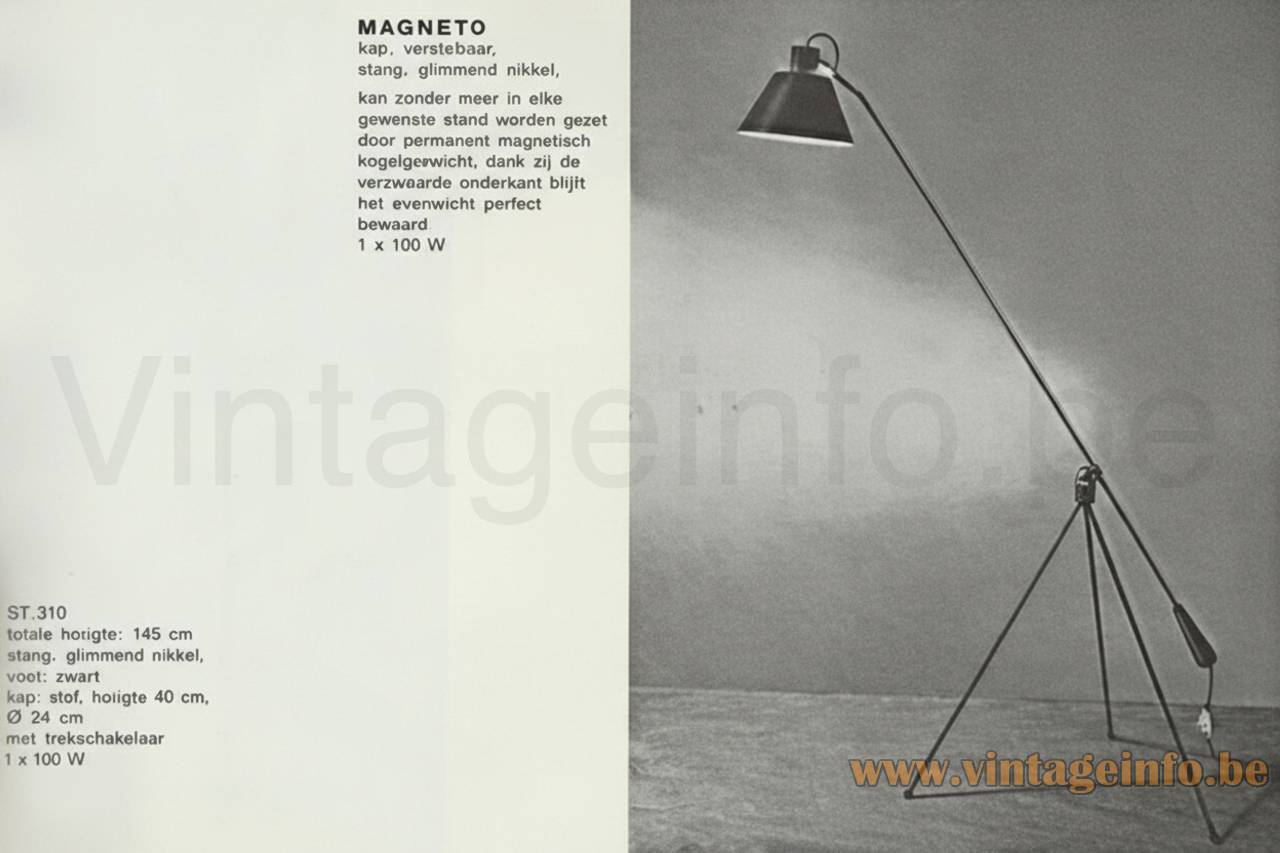
Artiforte Magneto Floor Lamp – 1960 Catalogue Picture
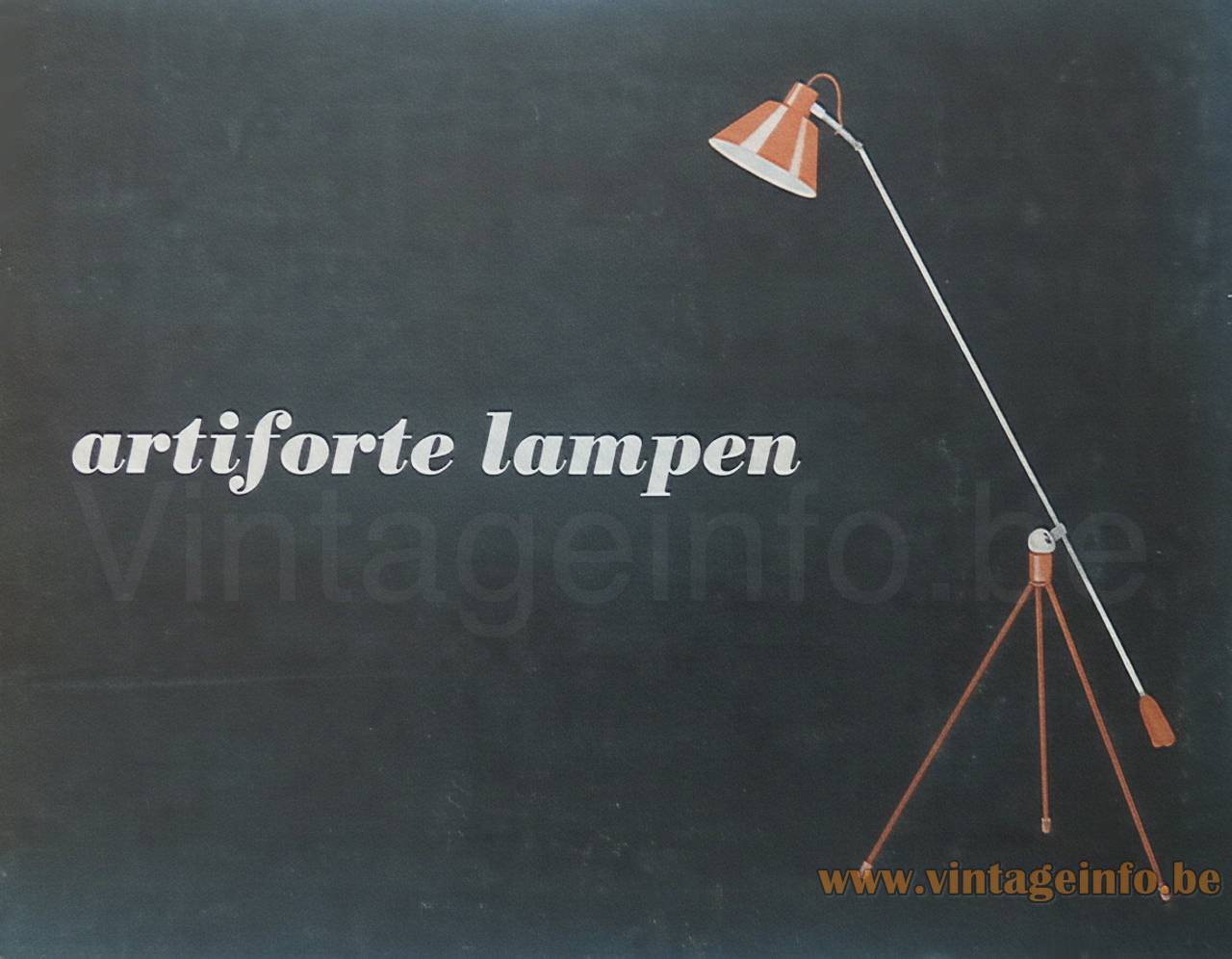
Many thanks to Max from AfterMidnight for the Artiforte catalogue pictures.
Artiforte Magneto Floor Lamp – Company Logo