- Categories
- Categories
Last 5 Viewed

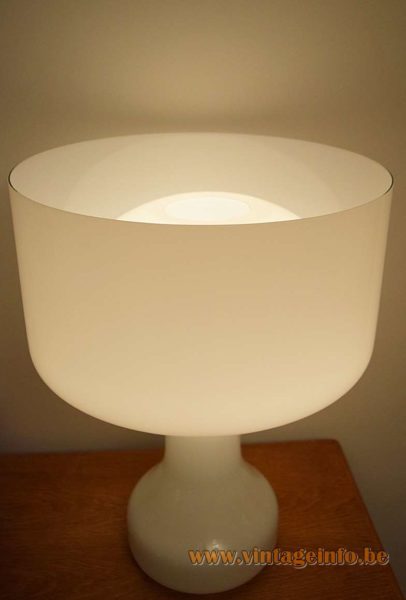
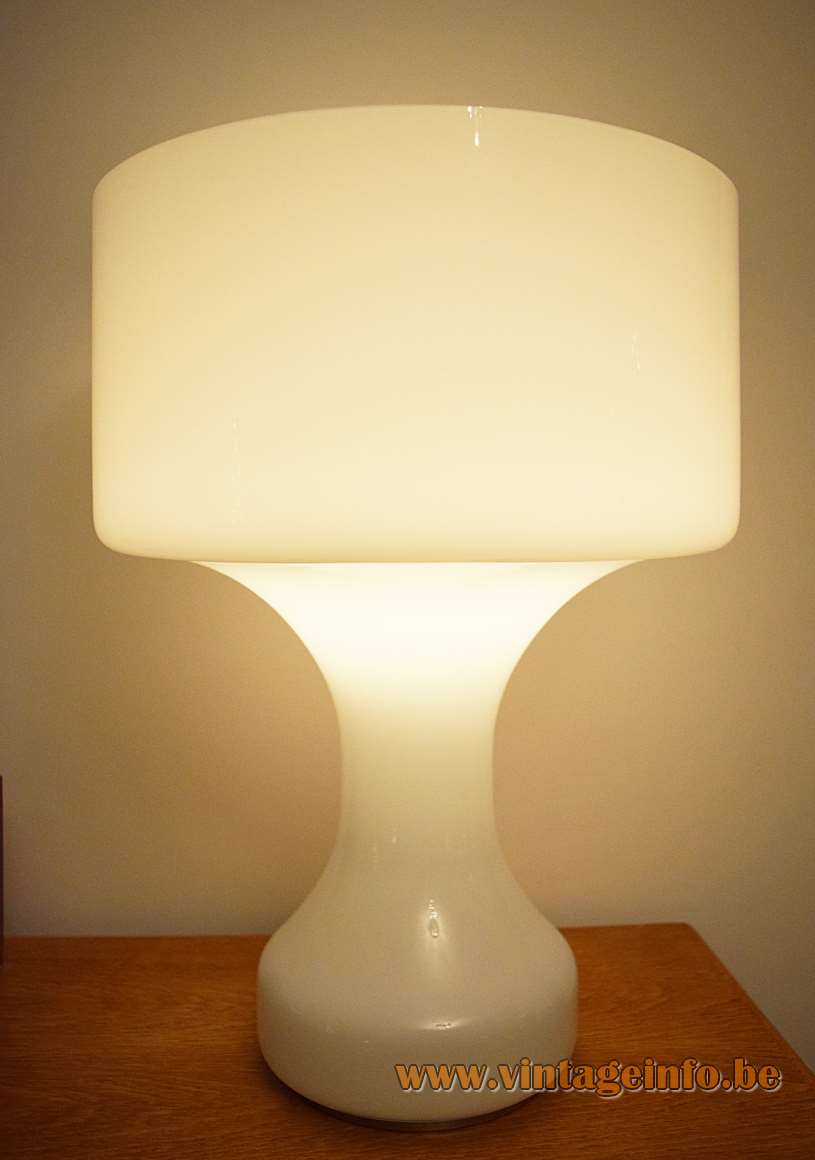
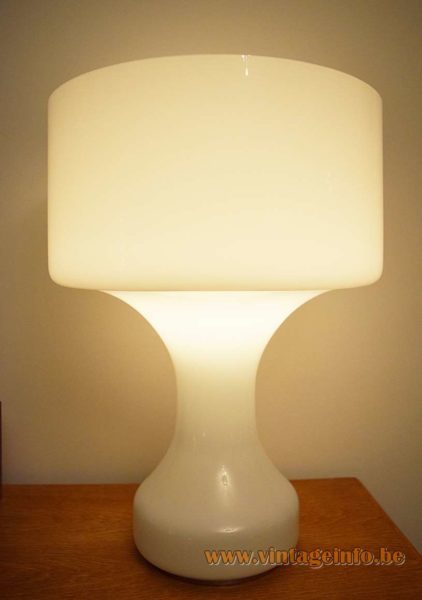
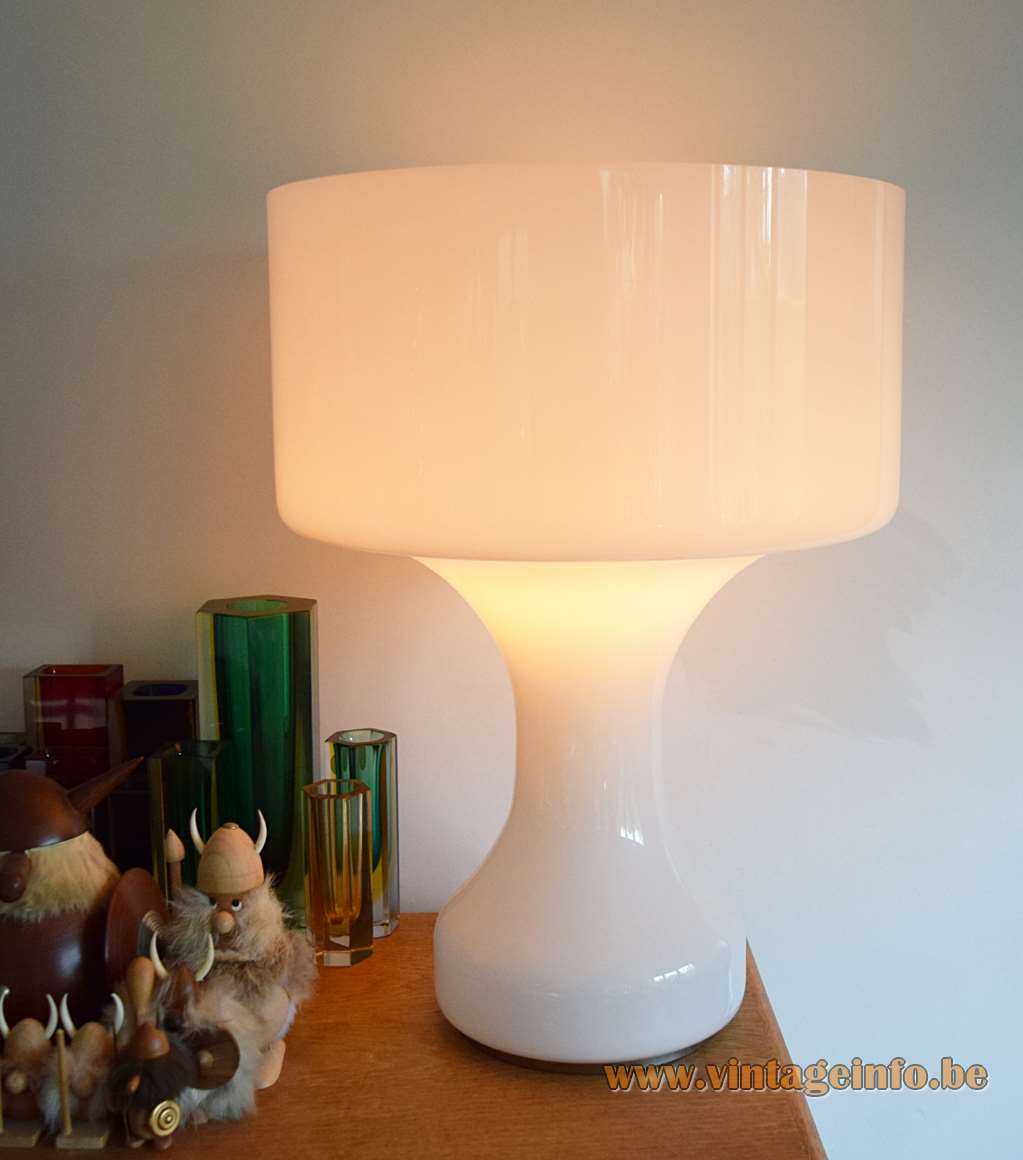
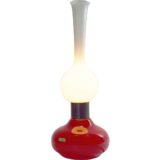
Vistosi Sebenica Table Lamp (Sculpture)
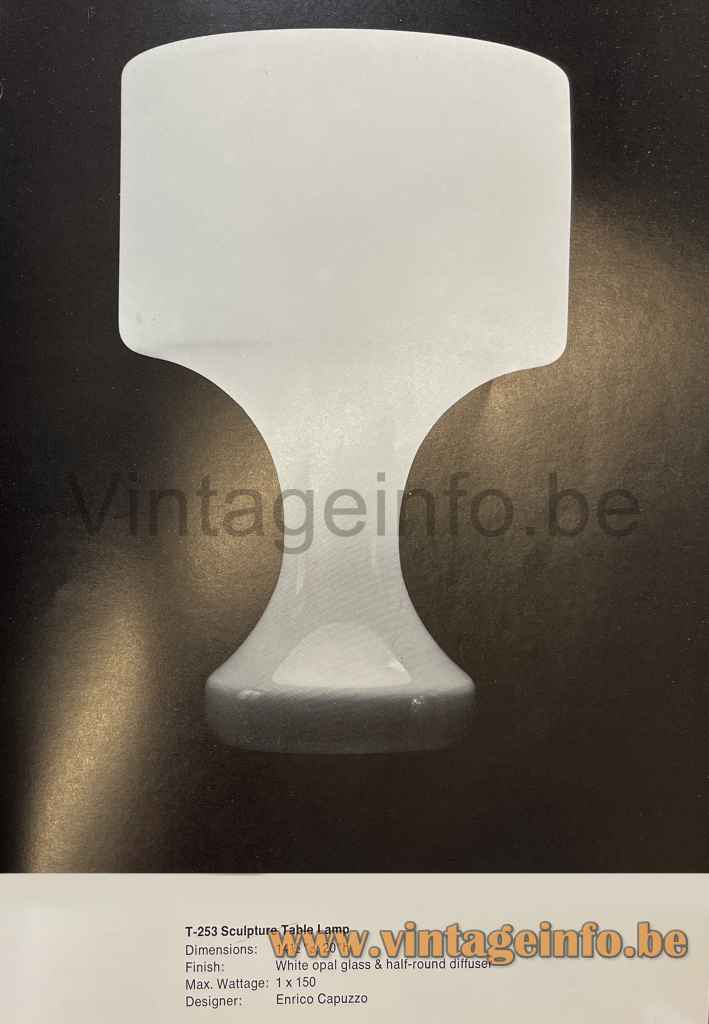
1972 Koch + Lowy Catalogue Picture
Links (external links open in a new window)
Vistosi history – Vistosi website
Luciano Vistosi – Murano Glass Museum
Vintageinfo
Many thanks to Peter from BGgalleries for the catalogue picture, you can find his shop over here on 1stDibs.
Many thanks to Max from AfterMidnight for the Vistosi catalogue picture.
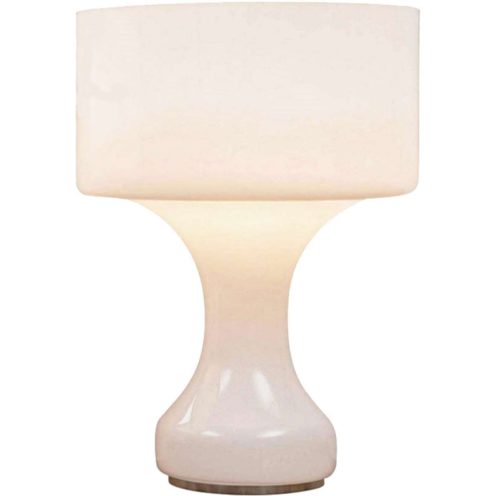
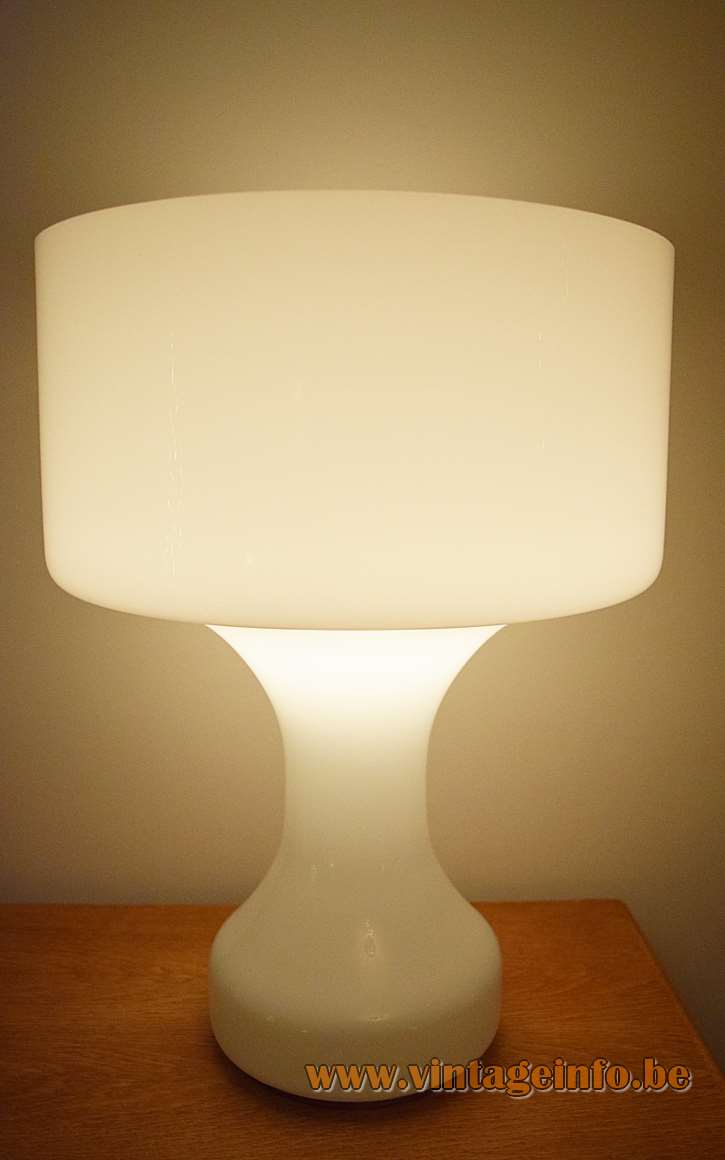
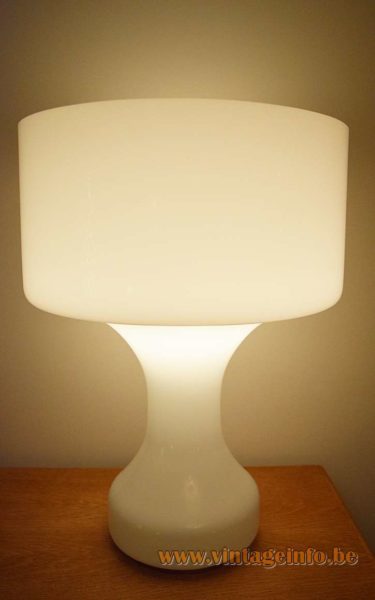
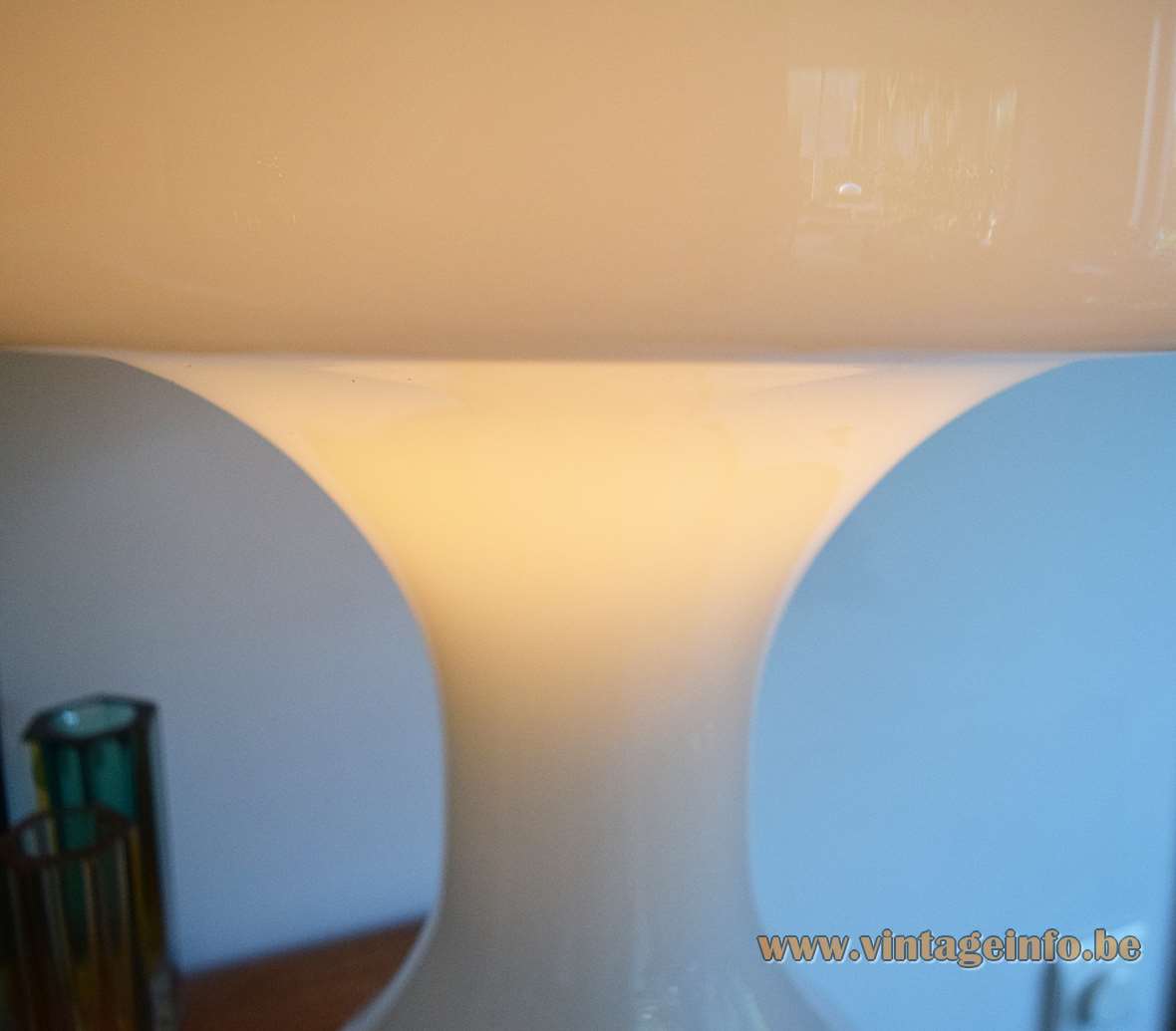
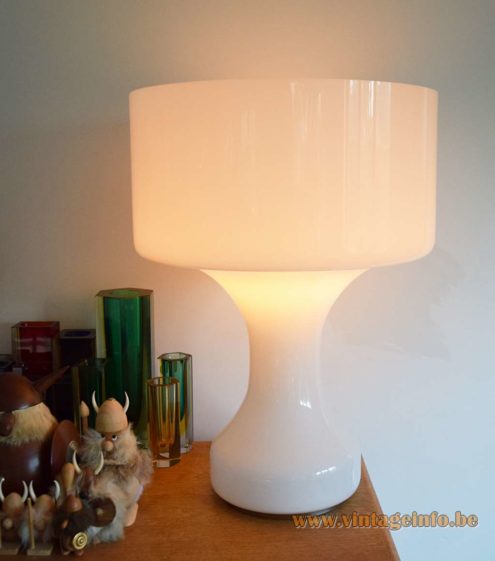
Vistosi Sebenica Table Lamp
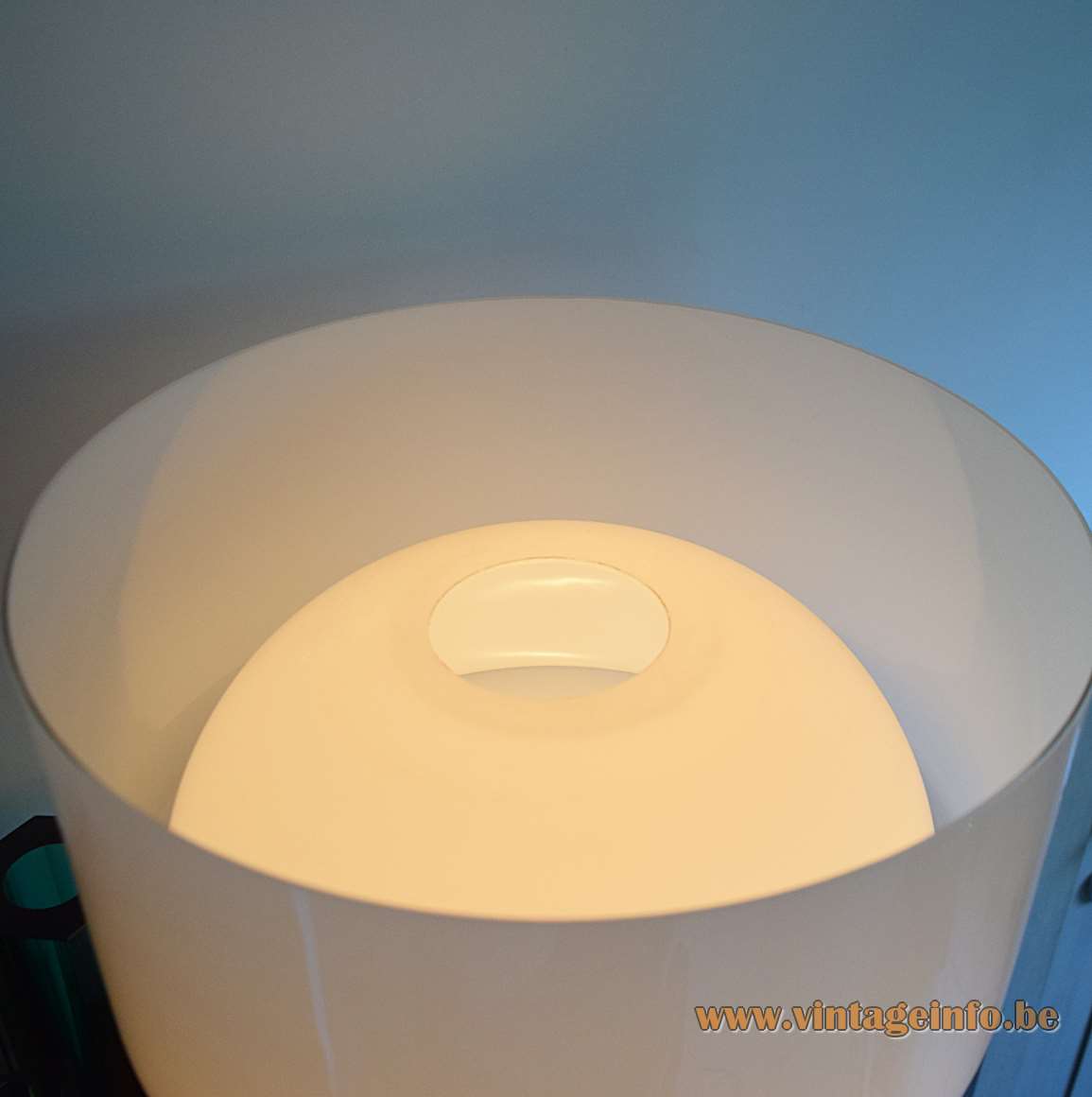
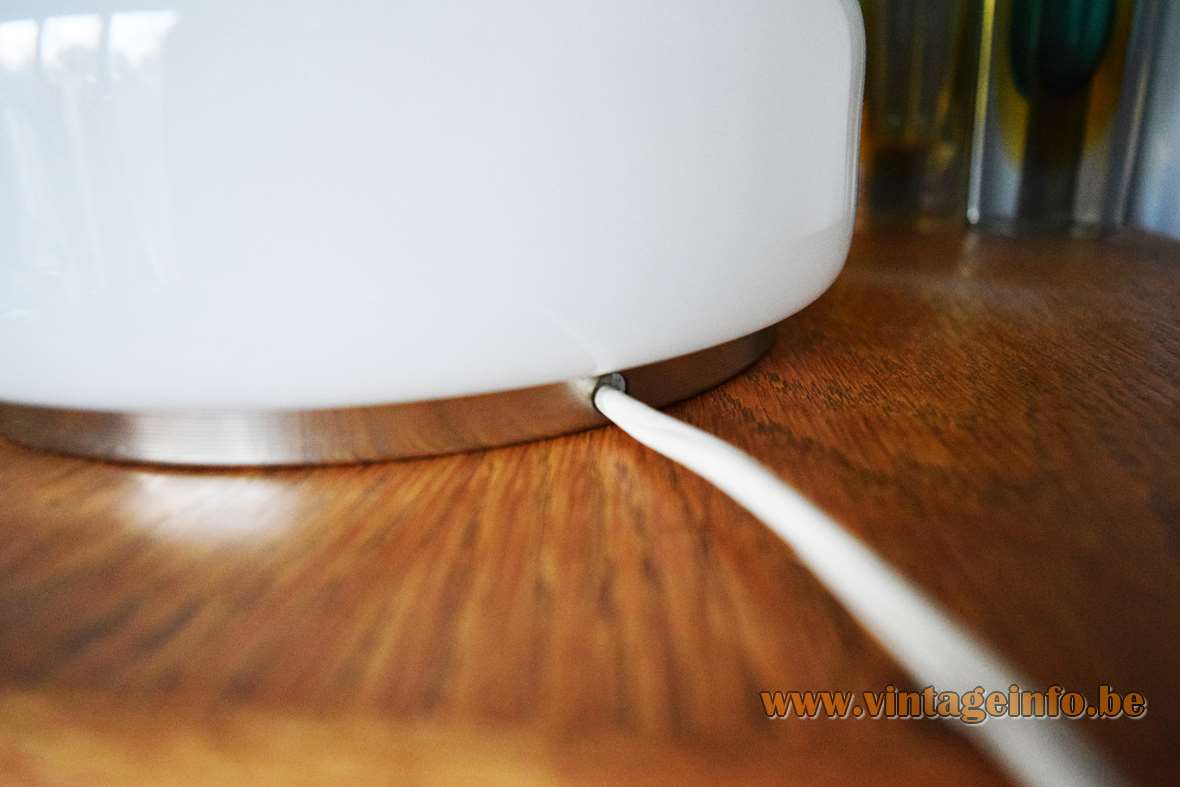
Materials: White opal hand-blown crystal Murano glass concave base. Aluminium bottom. Opal glass diffuser inside/on top. Metal (galvanised iron) rod inside. Bakelite E27 socket.
Height: 53 cm / 20.86”
Width: ∅ 38 cm / 14.96”
Base: ∅ 19 cm / 7.48”
Electricity: 1 bulb E27, 1 x 150 watt maximum, 110/220 volt.
Any type of light bulb can be used, preferably a white/opaque bulb.
Period: 1960s – Mid-Century Modern.
Designer: Enrico Capuzzo in 1965.
Manufacturer:Vistosi, Murano, Italy.
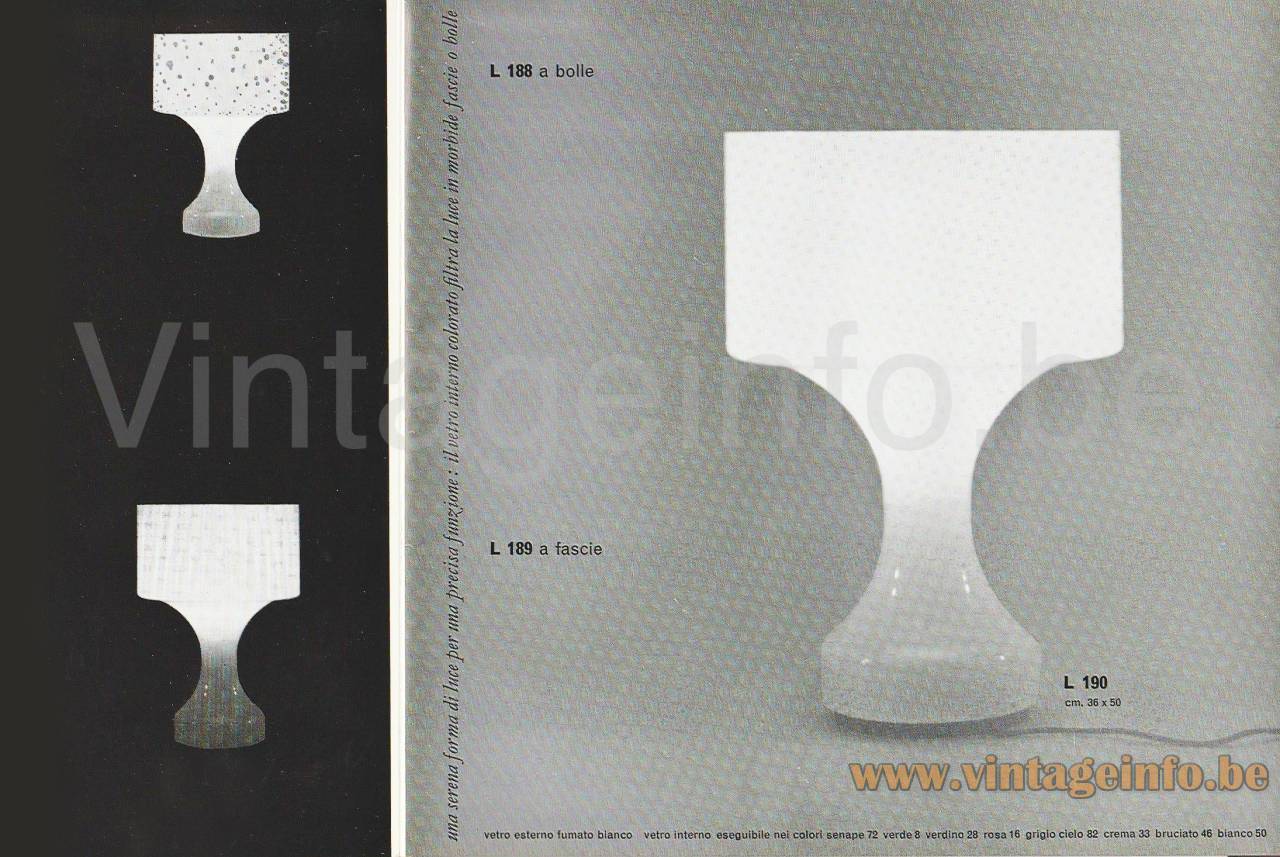
Other versions: This Vistosi Sebenica table lamp was also made in a version with a closed top, made in one piece. Made in several colours and made with stripes (L 189) and spotted (L 188). This one is model L 190. As these lamps are hand-blown, slight variations in dimensions may occur.
Sebenica is the historical name for the Croatian city of Šibenik.
In the USA this lamp was sold by Koch + Lowy, they named it Sculpture.
Enrico Capuzzo
Enrico Capuzzo designed several lamps and glass objects for the Murano glassmaker Vistosi. One of his best-known designs is the Sebenica table lamp. Other Vistosi designs include the Bianca table lamp (model L-252), the Futura table lamp (model L-248), the Venetian table lamp (model L-239) and the Cumulus table lamp (model L-249), all designed around 1965.
Capuzzo also worked with Venini. Together with Paolo Venini, he designed the Barchetta ceiling light (circa 1958), produced by Venini & C., Murano.
Besides lighting, Capuzzo was active as an architect. In Venice he designed the Palasport “Giobatta Gianquinto” (also known as the Palasport Arsenale), a Brutalist sports hall built in 1977, in collaboration with engineer Giandomenico Cocco.
Vistosi Sebenica Table Lamp – Catalogue Picture
Translated text: Models L 188 a bolle and L 189 a fasce represent an extreme form of light conceived for a precise function. The coloured inner glass filters the light, creating soft bands (fasce) or bubble-like effects (bolle).
Model L 190 has dimensions of 36 × 50 cm. The lamp features a white smoked outer glass, combined with an inner glass element available in the following colours: sapphire (12), green (8), light green (28), pink (15), warm yellow (42), cream (33), amber or burnt tone (46), and white (50).
Vistosi
Early Origins
The story of Vistosi begins in Murano with the Gazzabin family, who acquired the Al Bastian furnace in 1640. Soon after, the family name “Vistosi” emerged, and by 1791Gio-Batta Vistosi had become Gastaldo dell’Arte, head of the Murano glassmakers’ guild.
A New Beginning after the War
In 1945Guglielmo Vistosi, heir of the Gazzabin family, opened a new furnace in Murano right after World War II, focusing on lighting. Following his premature death, his sons Gino and Luciano, together with their uncle Oreste, laid the foundation of the modern Vistosi company.
The Design Revolution of the 1950s–1980s
The arrival of Venetian architect Alessandro Pianon in 1956 marked a turning point. With Gino and Luciano, he transformed the company into a pioneer of innovation and modern design.
From the late 1950s to the 1980s, Vistosi collaborated with some of the most influential names in design, such as Angelo Mangiarotti, Gae Aulenti, Ettore Sottsass Jr., Massimo Vignelli, Adalberto Dal Lago, Stefania Giannotti, Elleonore Peduzzi Riva, Vico Magistretti, Michele De Lucchi and many others. This golden era produced some of the most iconic Vistosi lighting, now highly sought after by collectors.
The Moretti Era
In 1989 the brand was acquired by Murano businessman Giancarlo Moretti, who had long experience in the glass industry. His son Matteo Moretti later relaunched the company after a short closure in the 1990s, expanding it with the acquisition of brands such as Alox, G2 and Triade.
The last of the founding generation, Luciano Vistosi (1930 – 2010), devoted his later life to research and glass sculpture, leaving a lasting artistic legacy.
Innovation and Recognition since the 2000s
From the early 2000s, Vistosi entered a new phase of experimentation and recognition. Collections such as Rina, Cheope09 and Minigiogali updated traditional techniques for contemporary forms. Later came Giogali 3D, a new interpretation of the famous chandelier, and Diadema, created with a unique patented rod process. Award-winning designs like Futura, Nodo, Trepai, Jube, Sata, Stone and Armonia confirmed Vistosi’s relevance in international design.
In 2019 the company celebrated the 50th anniversary of Giogali, and in the following years it was recognised among the 100 Eccellenze Italiane, partnered with the Venice Glass Week, and launched a Virtual Museum, e-commerce platform and LED collections.
Designers of the Contemporary Period
Under the Moretti family, Vistosi worked with a wide range of contemporary designers, including Chiaramonte & Marin, Mauro Olivieri, Barbara Maggiolo, Paolo Crepax, Monica Agnolazza, Silvio Zanon, Giovanni Barbato, Matthias Hickl, Roberto Maci, Alberto Nason (son of Carlo), Romani Saccani Architetti Associati, Gregorio Spini, Emmanuel Babled, Oriano Favaretto, Marco Acerbis, Castaglia Associati, Pio e Tito Toso, Renato Toso, and Noti Massari & Associates.
A Defining Design
A remarkable fact in Vistosi’s history concerns the famous Giogali chandelier series. Although countless catalogues, books and online sources credit the design to Angelo Mangiarotti, it was in fact created by Gino Vistosi himself – according to Gino Vistosi’s daughter.
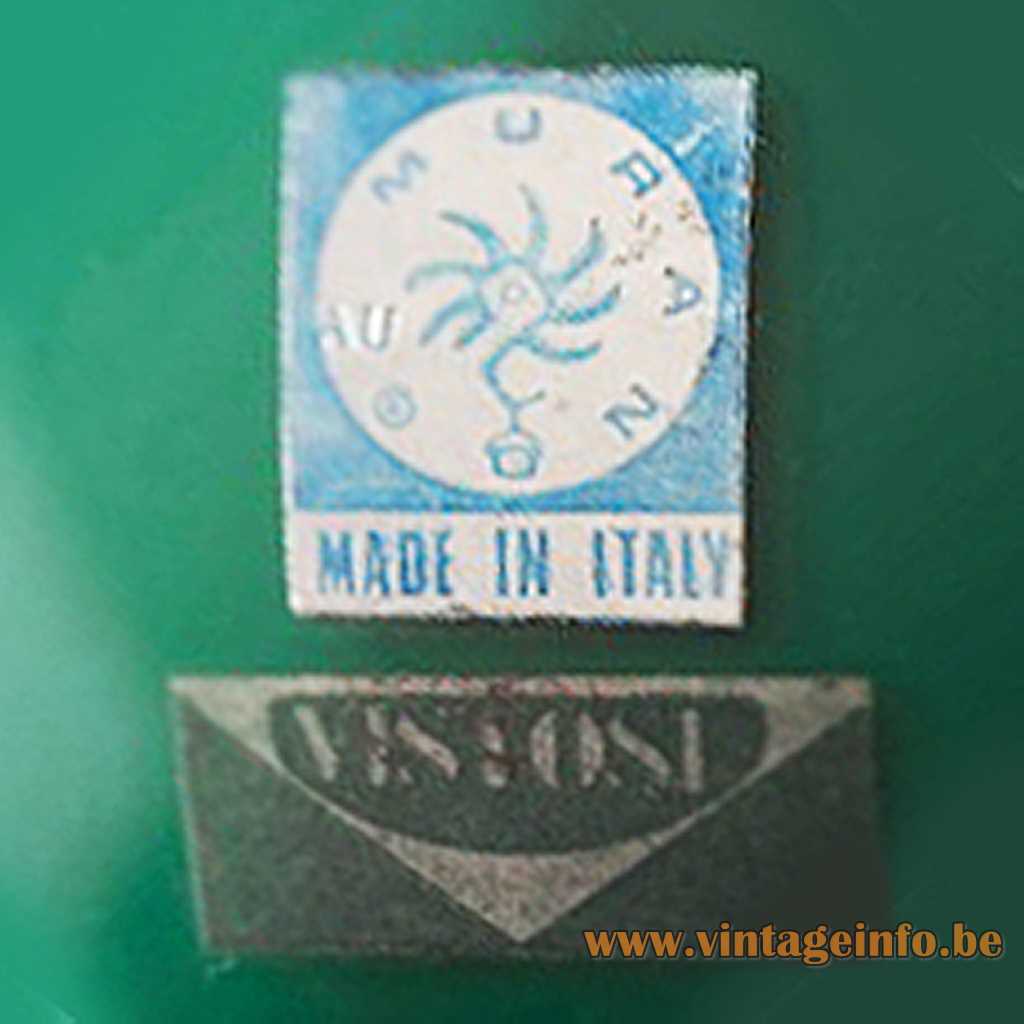
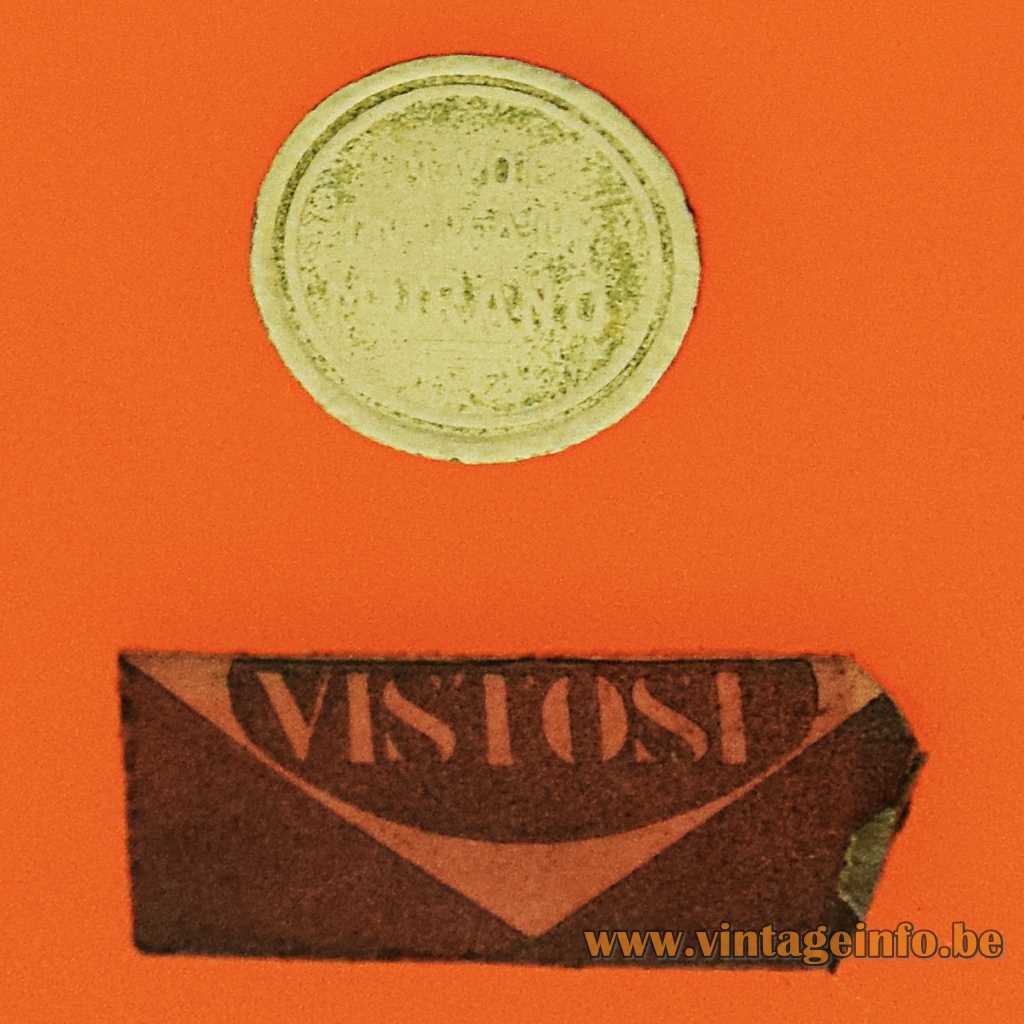
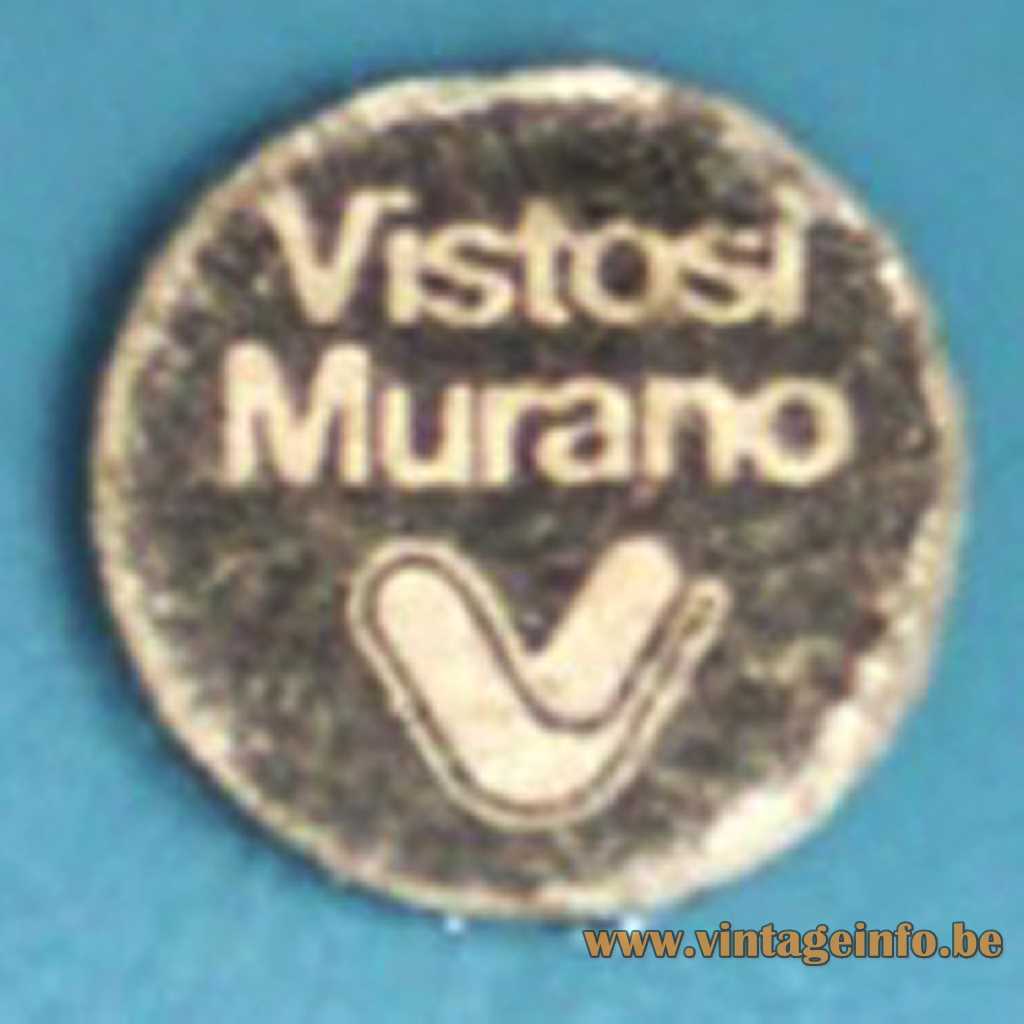
Vistosi Sebenica Table Lamp – Company Labels & Logos