- Categories
- Categories
Last 5 Viewed

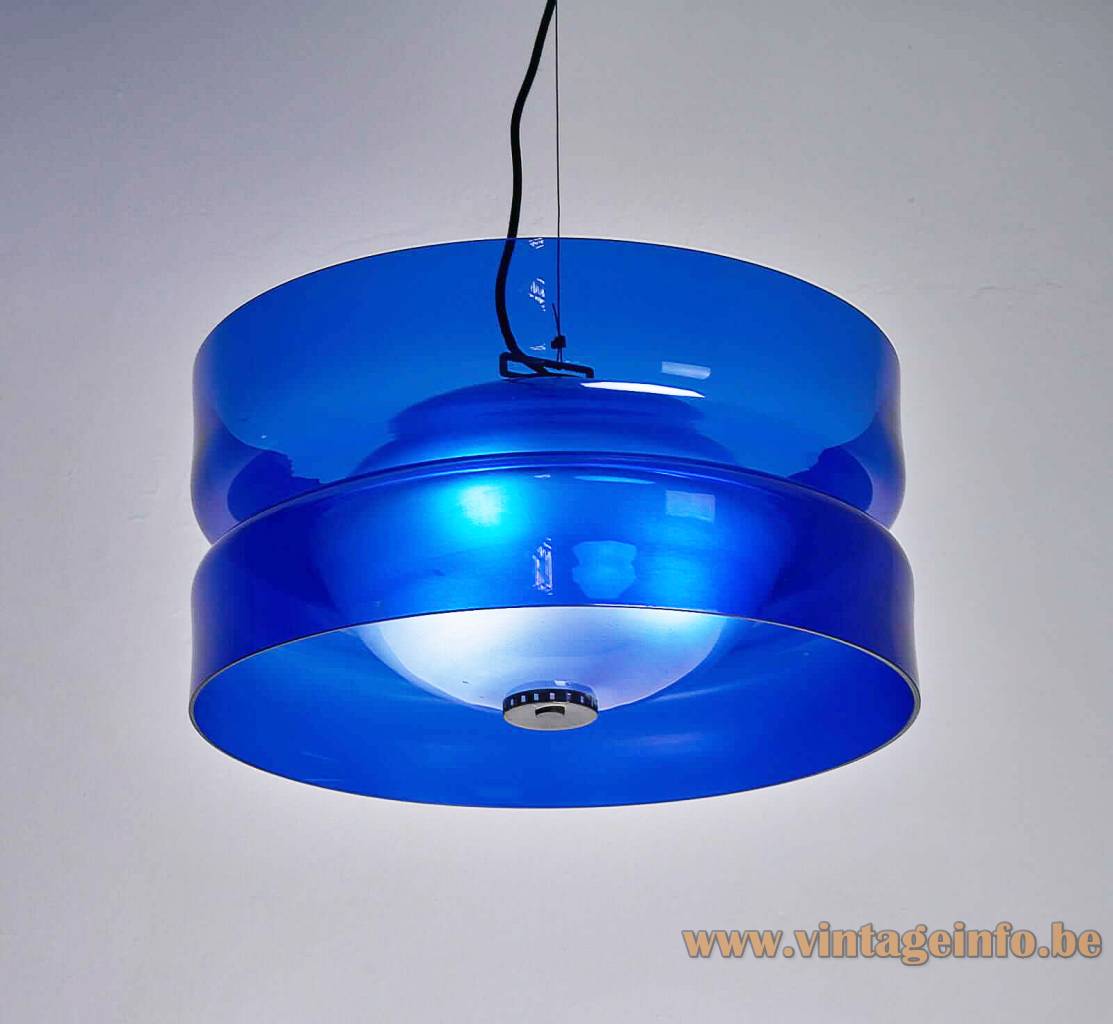
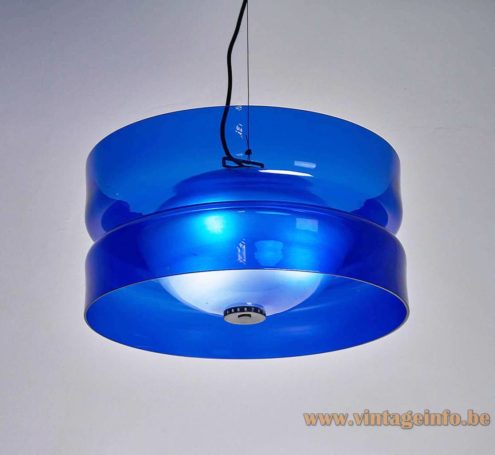
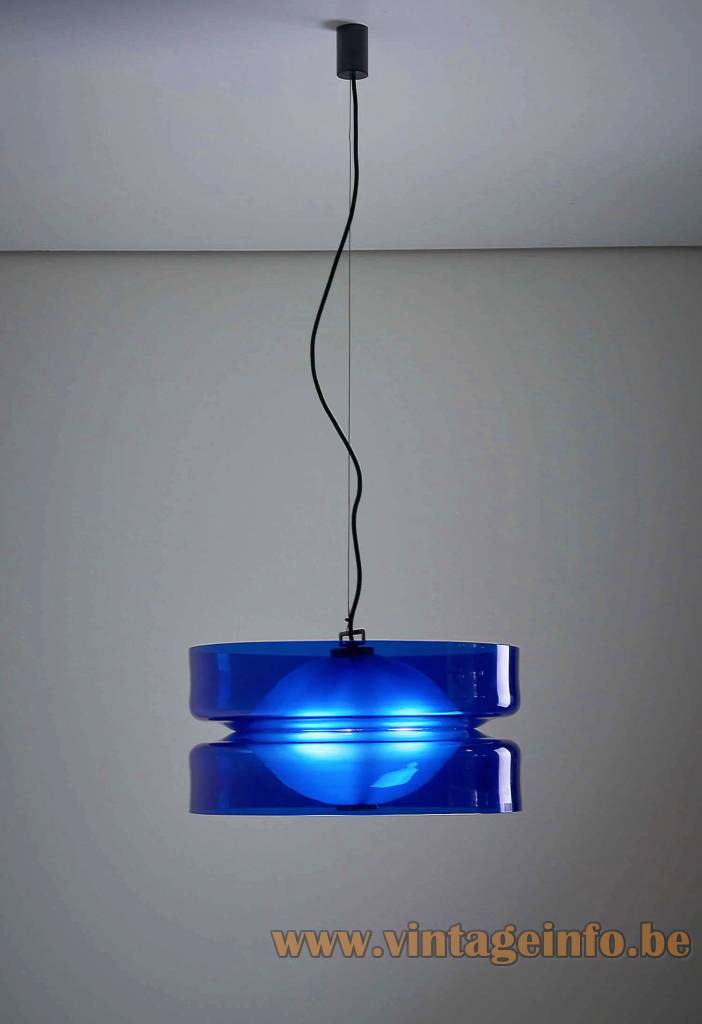
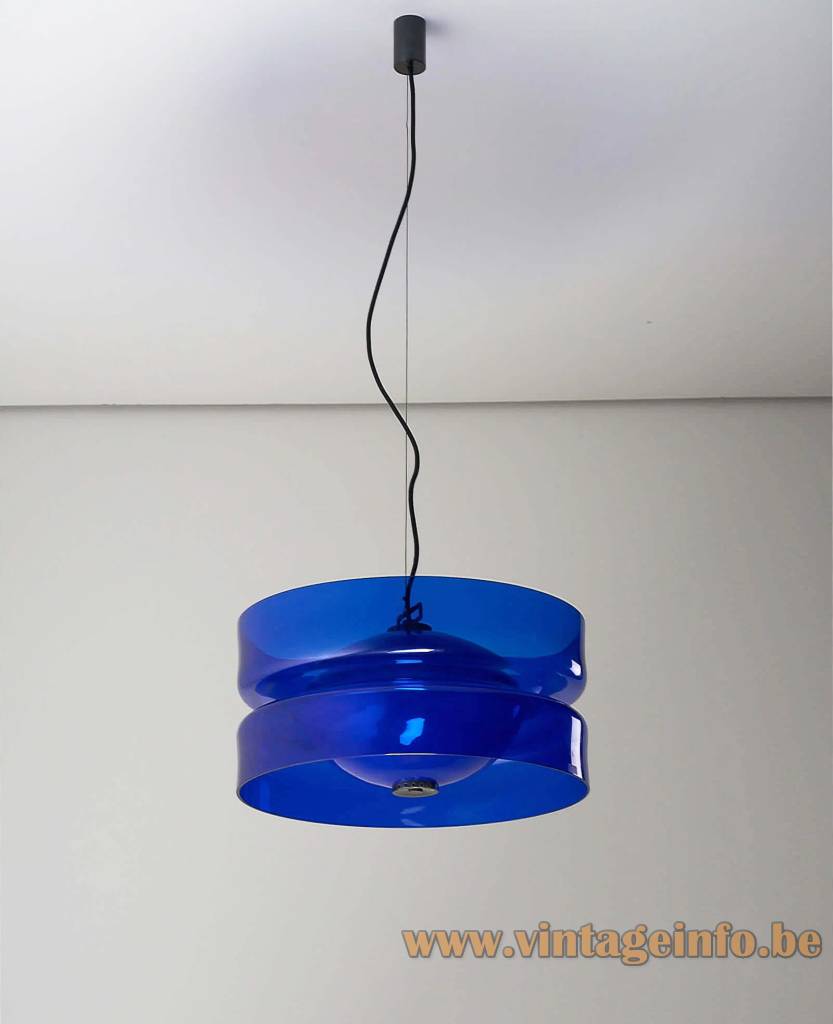
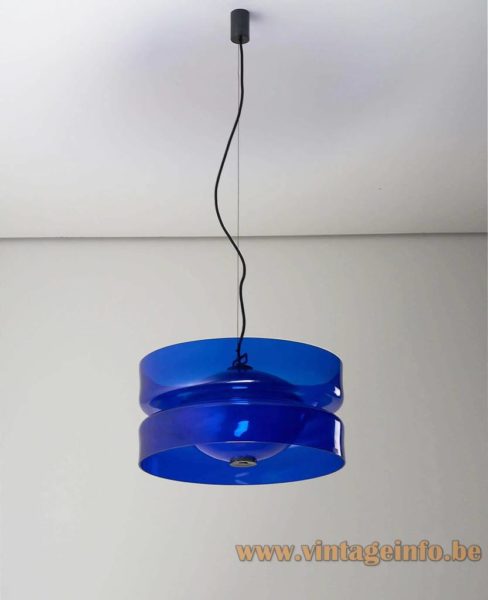
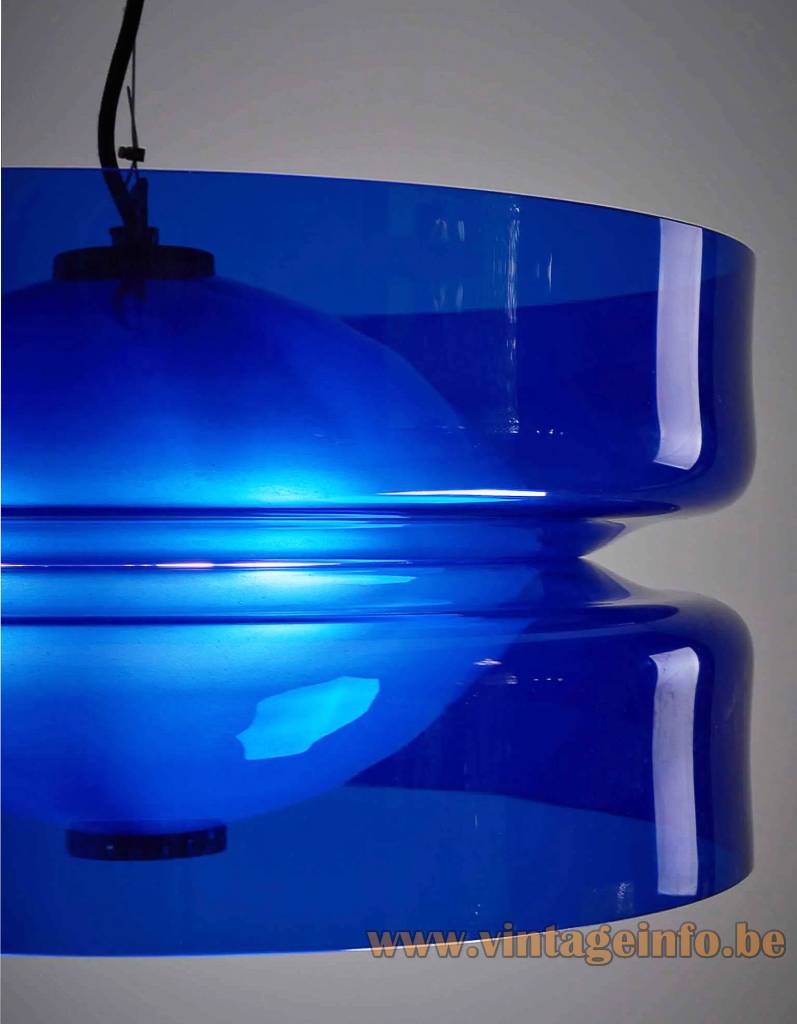
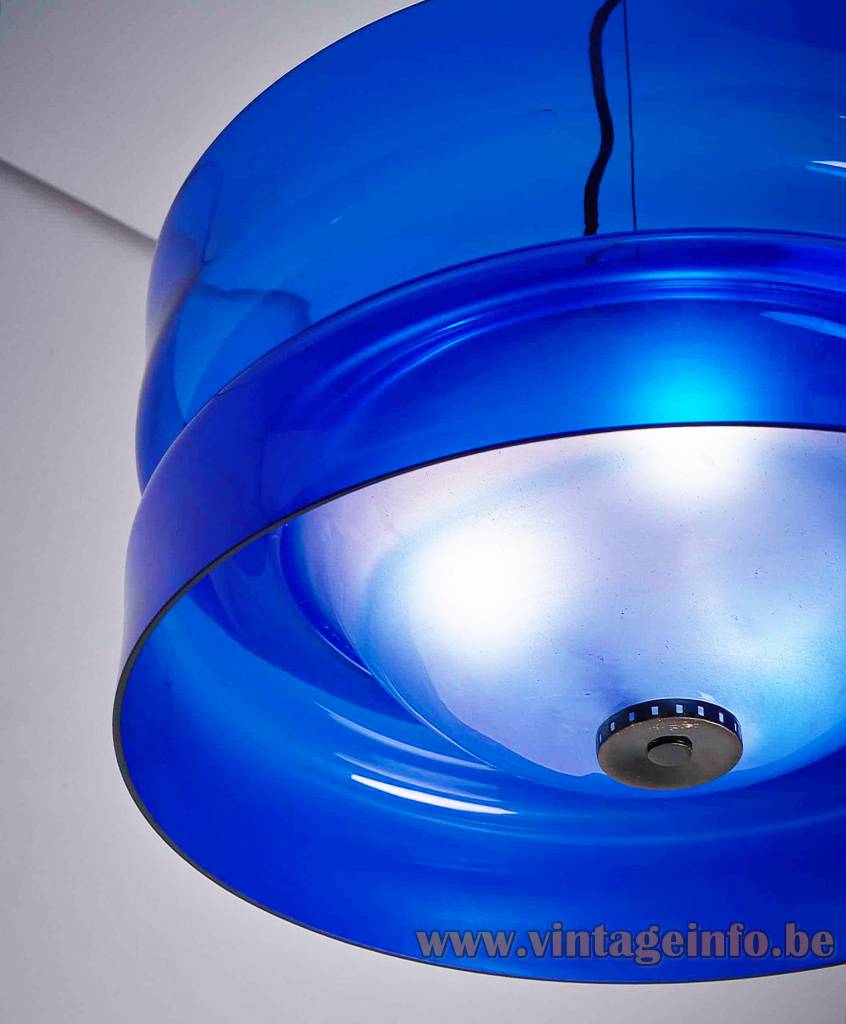
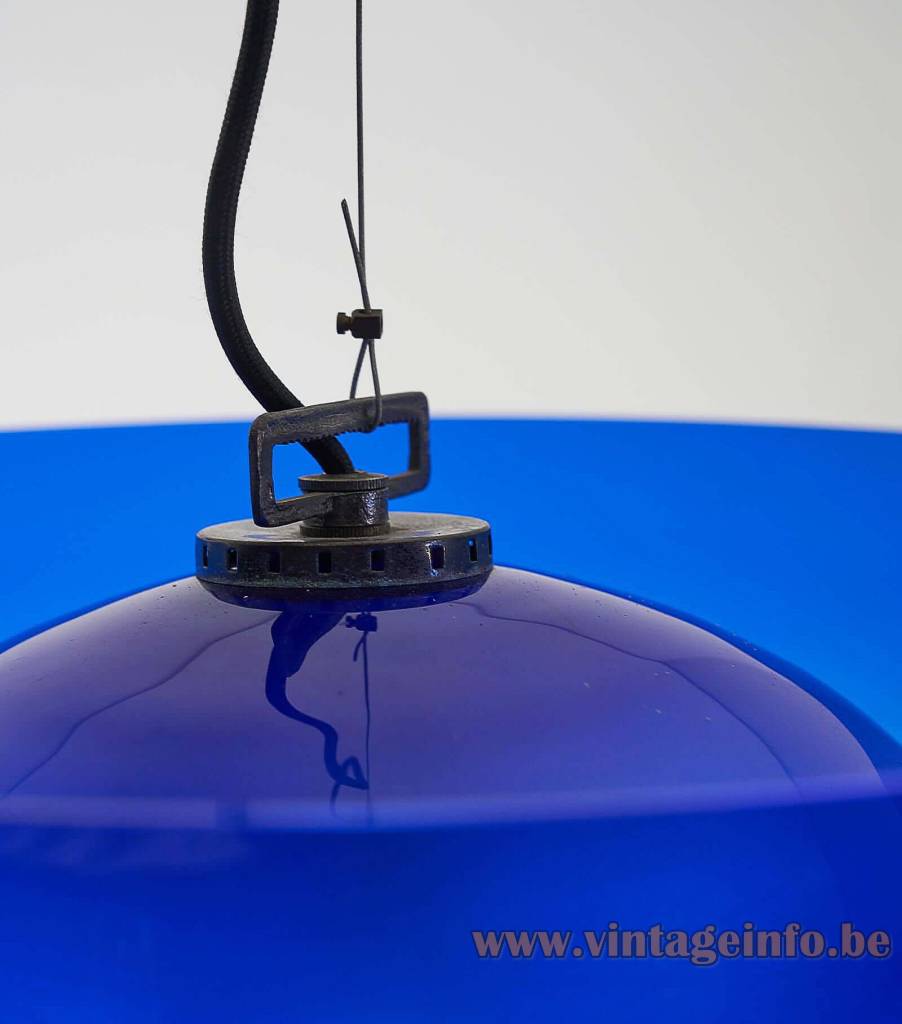
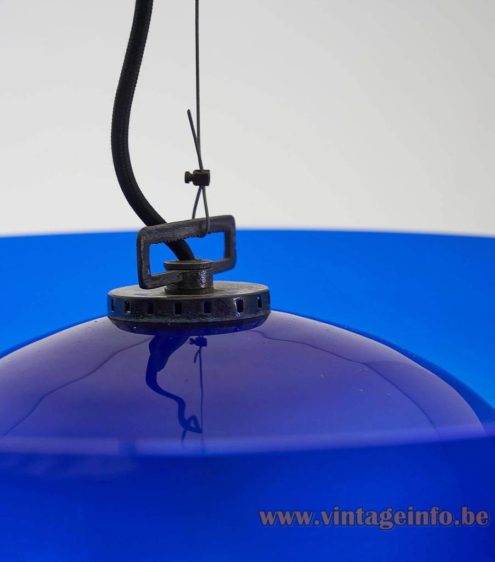
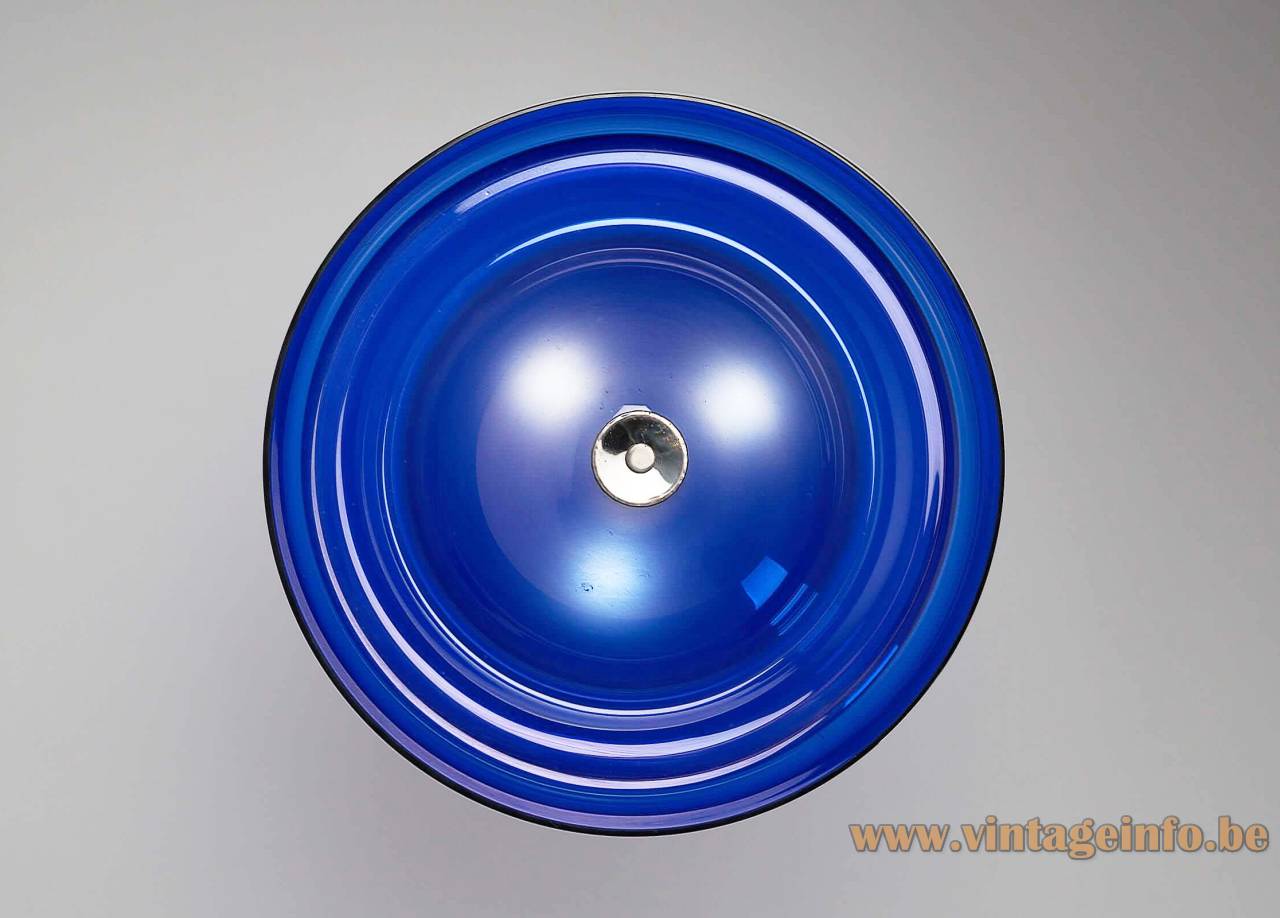
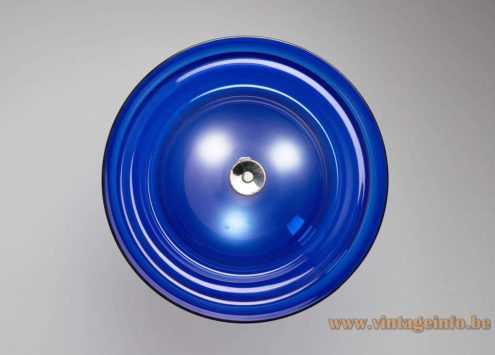
Vistosi L134 Glass Chandelier – 1960s Design: Ereste Vistosi
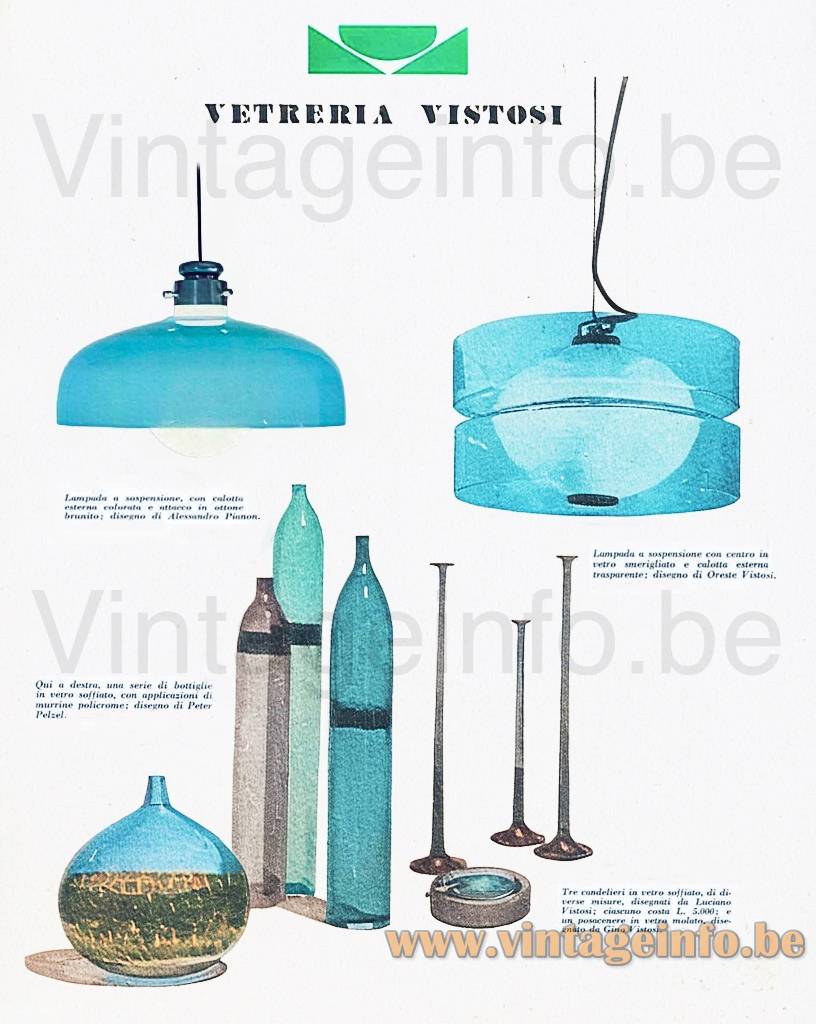
This image features a model L72 pendant lamp by Allesandro Pianon, this Vistosi L134 glass chandelier by Oreste Vistosi, 3 tall model S204 vases and a round model S202 vase designed by Peter Pelzel, the candlesticks, model S165, are the work of Luciano Vistosi and finally the model S182 ashtray is a design by Gino Vistosi.
Links (external links open in a new window)
Vistosi history – Vistosi website
Luciano Vistosi – Murano Glass Museum
Vintageinfo
Vistosi L134 Glass Chandelier
Materials: Adjustable round hand-blown dark azure blue Murano glass lampshade. Frosted round crystal glass diffuser inside. Some metal parts, steel wire. 3 E27 lamp sockets.
Cord: 100 cm / 39.37”
Height: 22,5 cm / 8.85”
Width: ∅ 45 cm / 17.71”
Electricity: 3 bulbs E27, 3 x 60 watt maximum, 110/220 volt.
Any type of light bulb can be used, but preferably a white/opaque bulb.
Period: 1960s – Mid-Century Modern.
Designer: Oreste Vistosi.
Manufacturer:Vistosi, Murano, Italy.
Other versions: This Vistosi L134 glass chandelier comes in several colours and at least 2 sizes.
Oreste Vistosi
Oreste Vistosi (Murano, 1917–1982) was the younger brother of Guglielmo Vistosi and played a key role in the post-war relaunch of Vetreria Vistosi. After Guglielmo’s death, he took over the direction of the glassworks together with his nephews Gino and Luciano, steering production towards lighting and modern industrial design while experimenting with new forms based on traditional Murano techniques.
Although he worked as a designer for only a few years, he helped to radically renew the firm’s lighting range; documented pieces from this period include the L114 pendant pendant lamp, created around 1962 in collaboration with Peter Pelzel and the L185 globe table lamp with glass balls inside. Oreste designed numerous lamps for the company.
The Vistosti L134 glass chandelier is usually linked to the same phase of experimentation: its stacked glass volumes and fully enclosed bulbs reflect Oreste’s interest in sculptural forms that diffuse the light softly through thick, hand-blown glass.
Vistosi
Early Origins
The story of Vistosi begins in Murano with the Gazzabin family, who acquired the Al Bastian furnace in 1640. Soon after, the family name “Vistosi” emerged, and by 1791Gio-Batta Vistosi had become Gastaldo dell’Arte, head of the Murano glassmakers’ guild.
A New Beginning after the War
In 1945Guglielmo Vistosi, heir of the Gazzabin family, opened a new furnace in Murano right after World War II, focusing on lighting. Following his premature death, his sons Gino and Luciano, together with their uncle Oreste, laid the foundation of the modern Vistosi company.
The Design Revolution of the 1950s–1980s
The arrival of Venetian architect Alessandro Pianon in 1956 marked a turning point. With Gino and Luciano, he transformed the company into a pioneer of innovation and modern design.
From the late 1950s to the 1980s, Vistosi collaborated with some of the most influential names in design, such as Angelo Mangiarotti, Gae Aulenti, Ettore Sottsass Jr., Massimo Vignelli, Adalberto Dal Lago, Stefania Giannotti, Elleonore Peduzzi Riva, Vico Magistretti, Michele De Lucchi and many others. This golden era produced some of the most iconic Vistosi lighting, now highly sought after by collectors.
The Moretti Era
In 1989 the brand was acquired by Murano businessman Giancarlo Moretti, who had long experience in the glass industry. His son Matteo Moretti later relaunched the company after a short closure in the 1990s, expanding it with the acquisition of brands such as Alox, G2 and Triade.
The last of the founding generation, Luciano Vistosi (1930 – 2010), devoted his later life to research and glass sculpture, leaving a lasting artistic legacy.
Innovation and Recognition since the 2000s
From the early 2000s, Vistosi entered a new phase of experimentation and recognition. Collections such as Rina, Cheope09 and Minigiogali updated traditional techniques for contemporary forms. Later came Giogali 3D, a new interpretation of the famous chandelier, and Diadema, created with a unique patented rod process. Award-winning designs like Futura, Nodo, Trepai, Jube, Sata, Stone and Armonia confirmed Vistosi’s relevance in international design.
In 2019 the company celebrated the 50th anniversary of Giogali, and in the following years it was recognised among the 100 Eccellenze Italiane, partnered with the Venice Glass Week, and launched a Virtual Museum, e-commerce platform and LED collections.
Designers of the Contemporary Period
Under the Moretti family, Vistosi worked with a wide range of contemporary designers, including Chiaramonte & Marin, Mauro Olivieri, Barbara Maggiolo, Paolo Crepax, Monica Agnolazza, Silvio Zanon, Giovanni Barbato, Matthias Hickl, Roberto Maci, Alberto Nason (son of Carlo), Romani Saccani Architetti Associati, Gregorio Spini, Emmanuel Babled, Oriano Favaretto, Marco Acerbis, Castaglia Associati, Pio e Tito Toso, Renato Toso, and Noti Massari & Associates.
A Defining Design
A remarkable fact in Vistosi’s history concerns the famous Giogali chandelier series. Although countless catalogues, books and online sources credit the design to Angelo Mangiarotti, it was in fact created by Gino Vistosi himself – according to Gino Vistosi’s daughter.
Many thanks to Max from AfterMidnight for the pictures.
Vistosi L134 Glass Chandelier – Company Labels & Logos