- Categories
- Categories
Last 5 Viewed
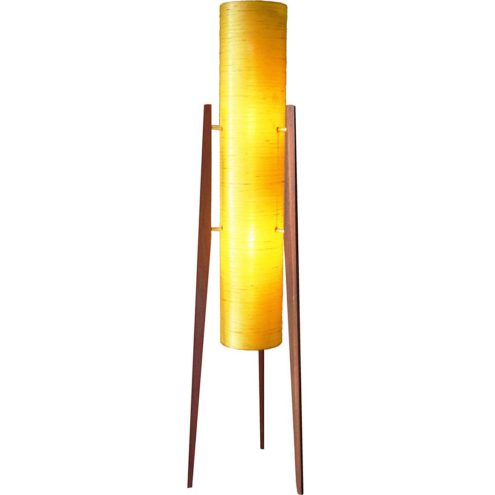

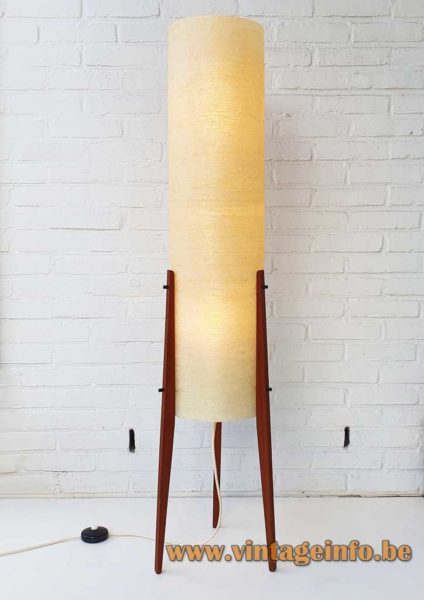
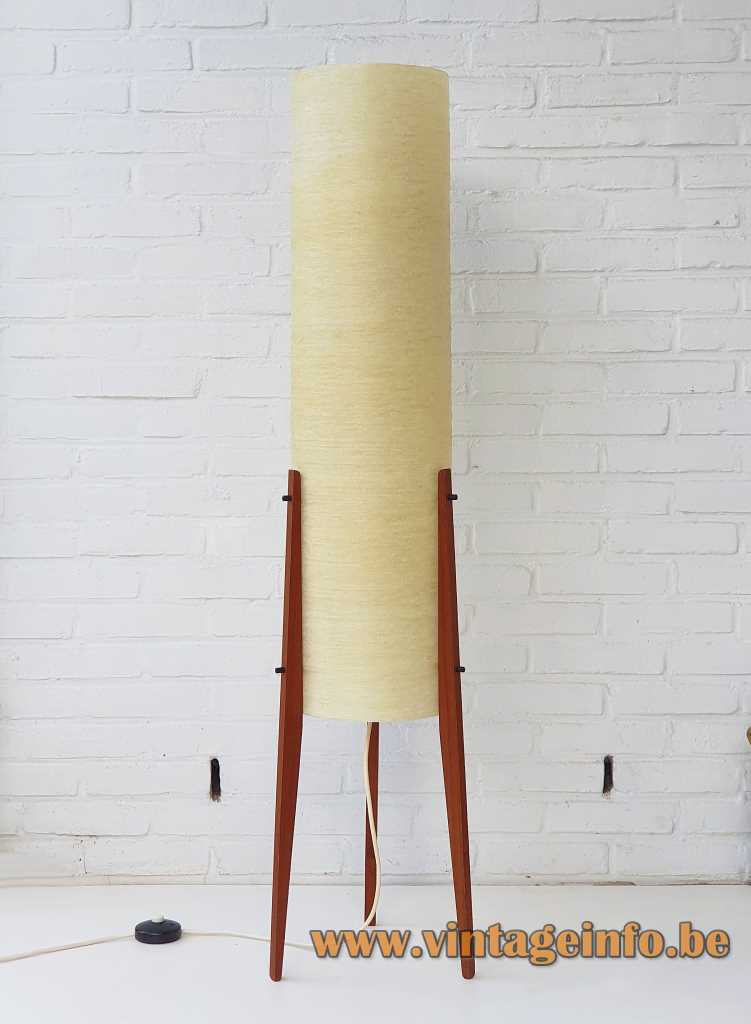
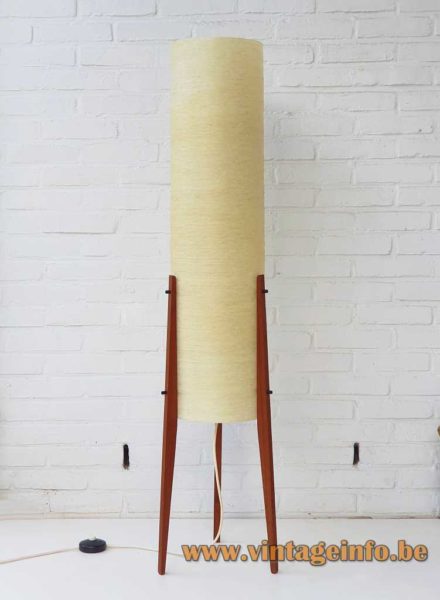

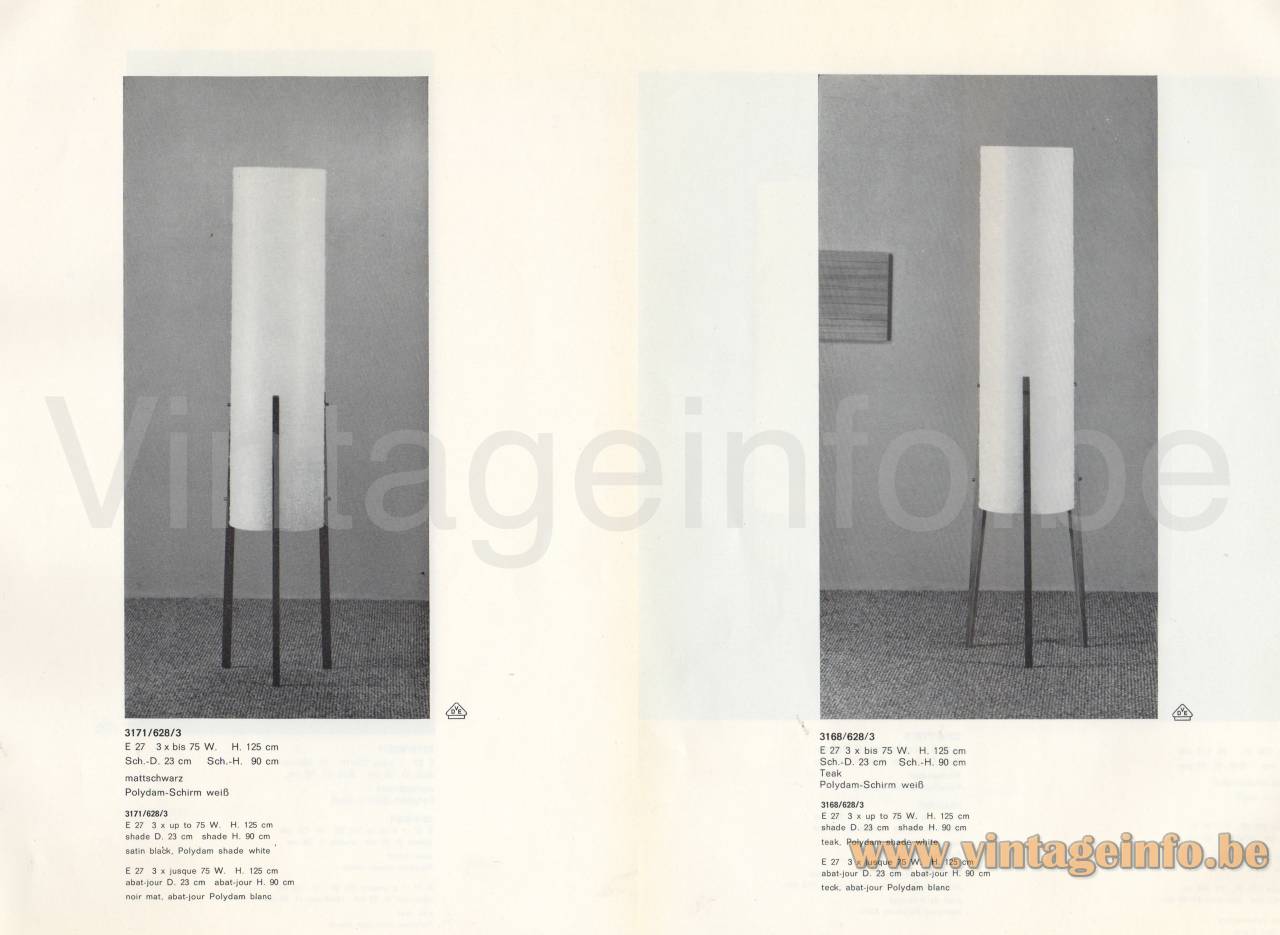
Tripod Rocket Floor Lamp – 1967 Catalogue Picture
Two rocket floor floor lamps in catalogue 44 from August 1967. Models: 3171/628/3 (black painted wood legs) and 3166/628/3 (teak legs).
Links (external links open in a new window)
Neheim, lamp capital of Germany – Wikipedia
Vintageinfo
Rocket floor lamp – This lamp with black painted legs
1950s gold coloured pendant lamps
Fibreglass triple rocket floor lamp
Other rocket lamps
Conical tripod rocket floor lamp
Leclaire & Schäfer rocket floor lamp
Many thanks to Ger for the pictures.
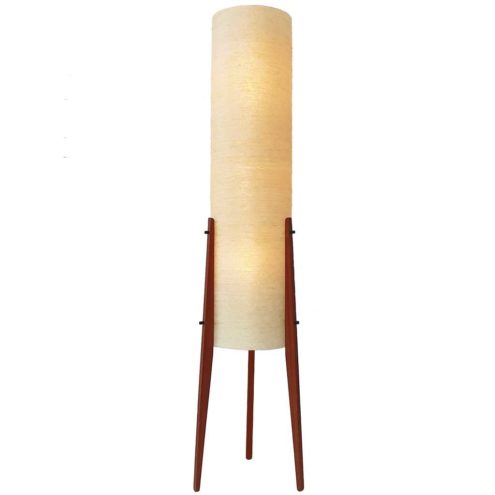
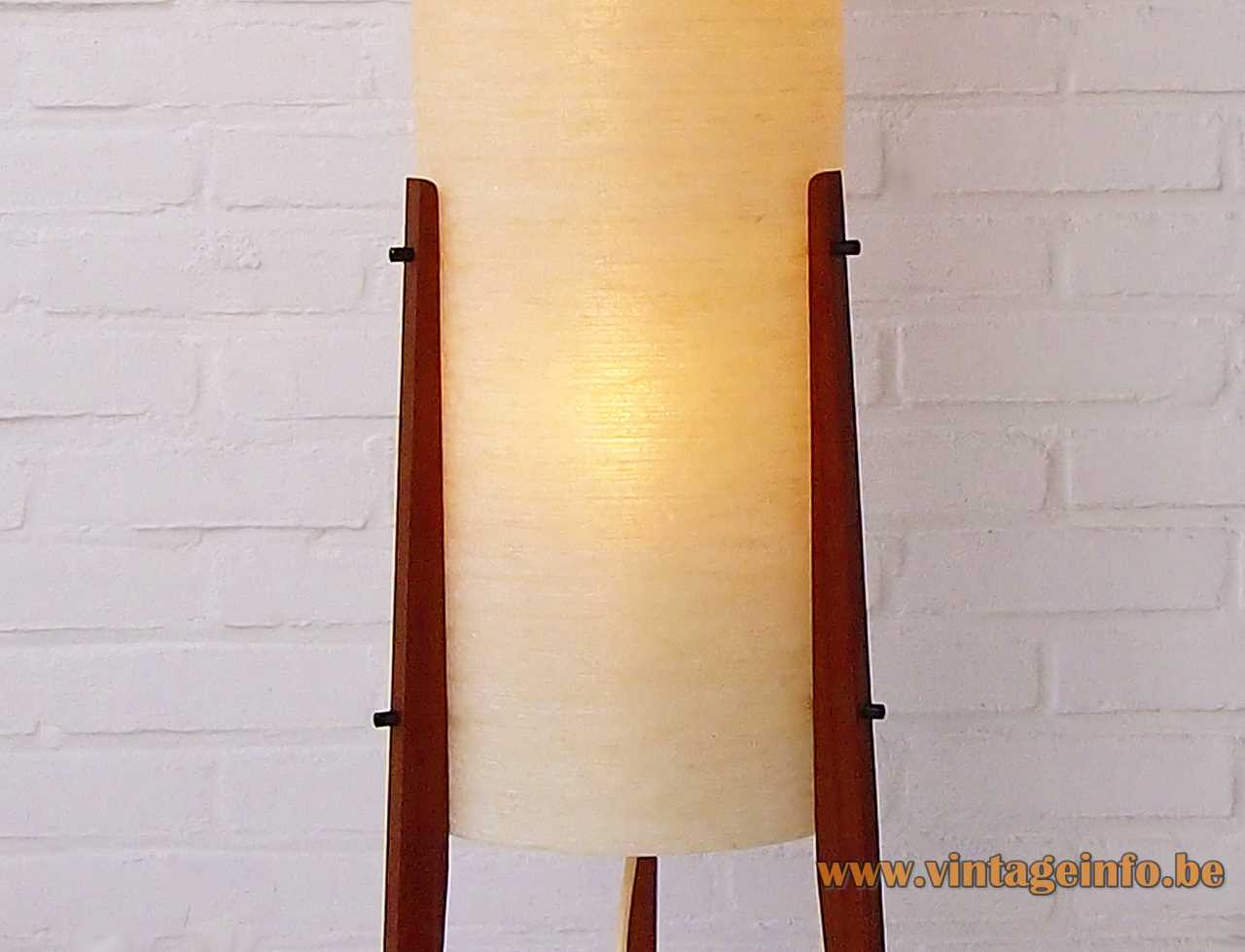
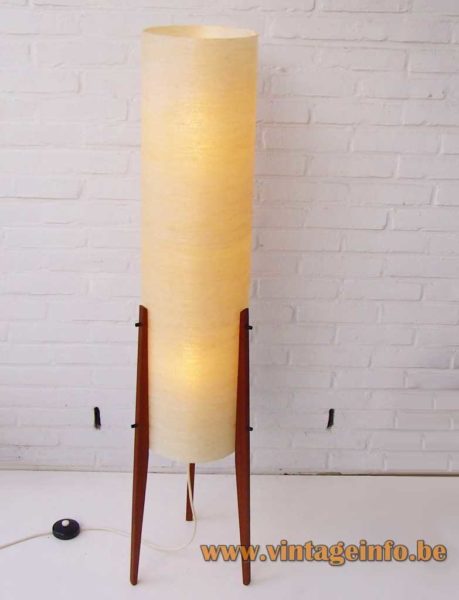
Tripod Rocket Floor Lamp
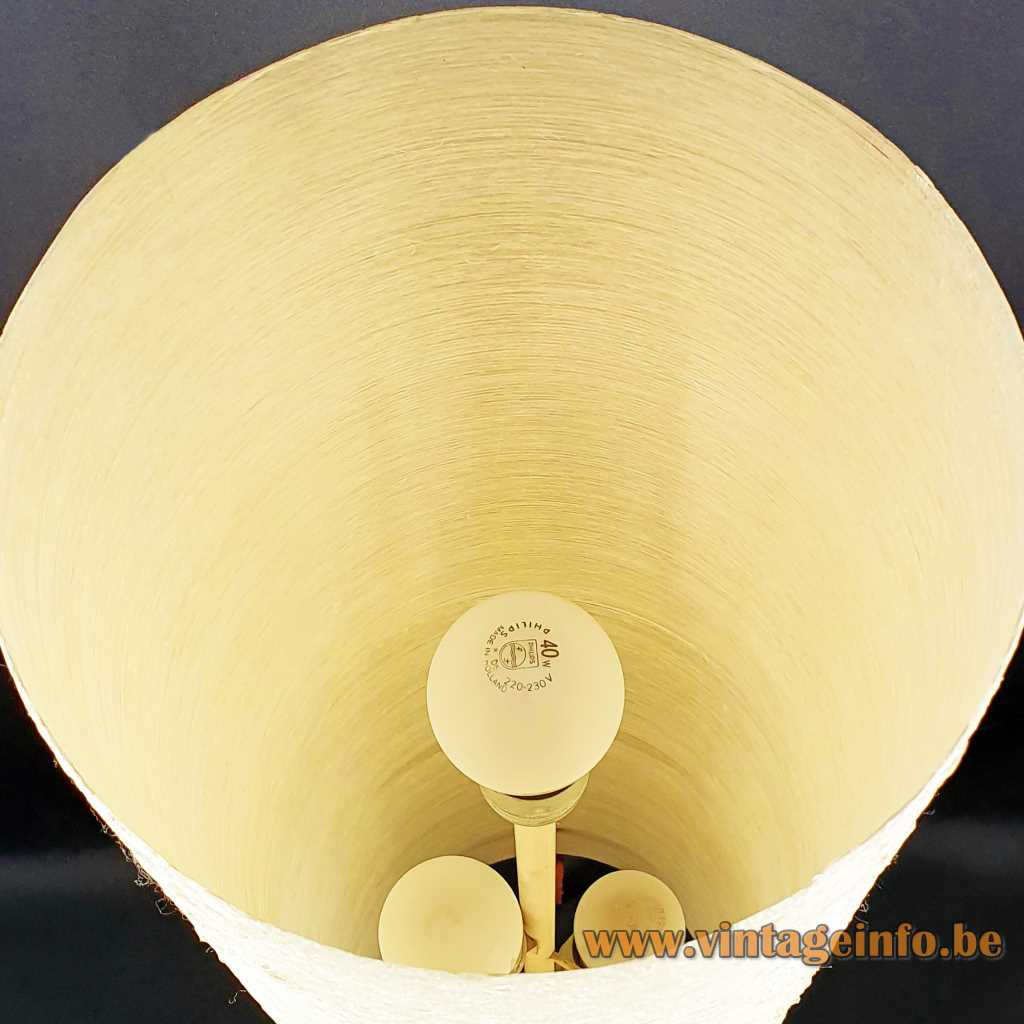
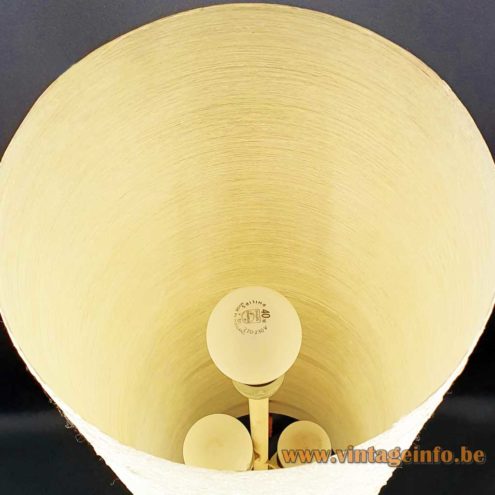
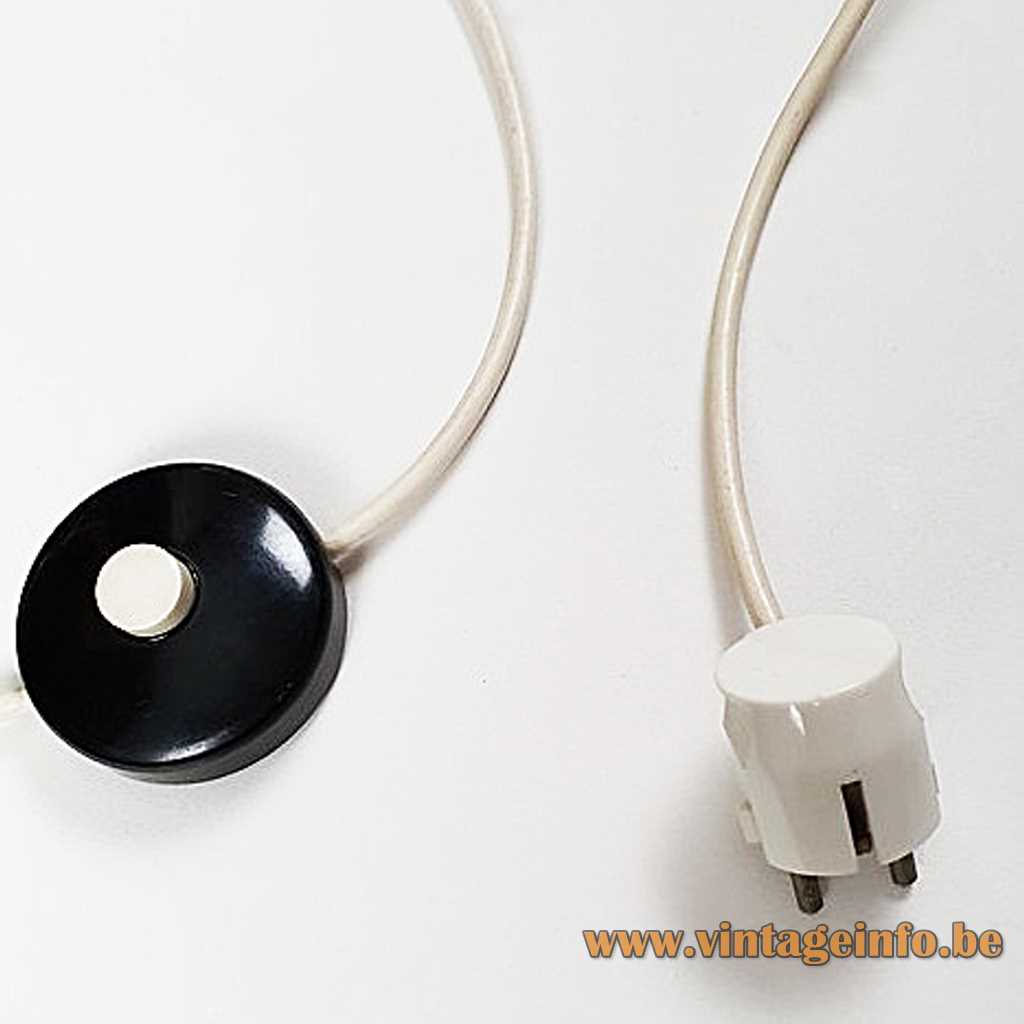
Materials: Teak tripod base. 6 ornamental screws. Some metal parts. Orange-yellow fibreglass tubular lampshade. 3 Bakelite E27 sockets.
Height: 125 cm / 44.48”
Width: ∅ 23 cm / 9.05”
Electricity: 3 bulbs E27, 3 x 75 watt maximum, 110/220 volt.
Any type of light bulb can be used. Not a specific one preferred.
Period: 1950s, 1960s – Mid-Century Modern.
Designer: To be appraised.
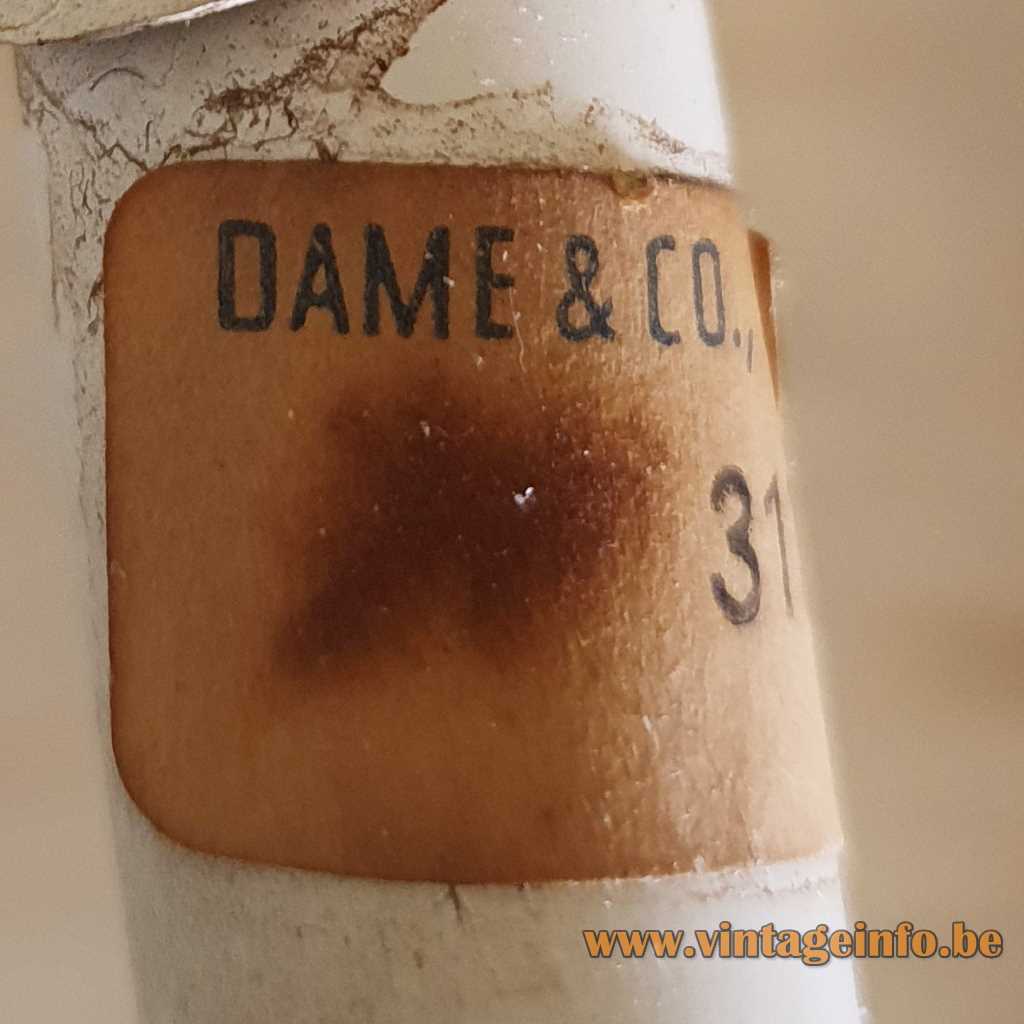
Manufacturer: Dame & Co, Neheim-Hüsten, Germany
Other versions: This fibreglass rocket floor lamp comes in several versions. A version with black painted wooden legs can be found here.
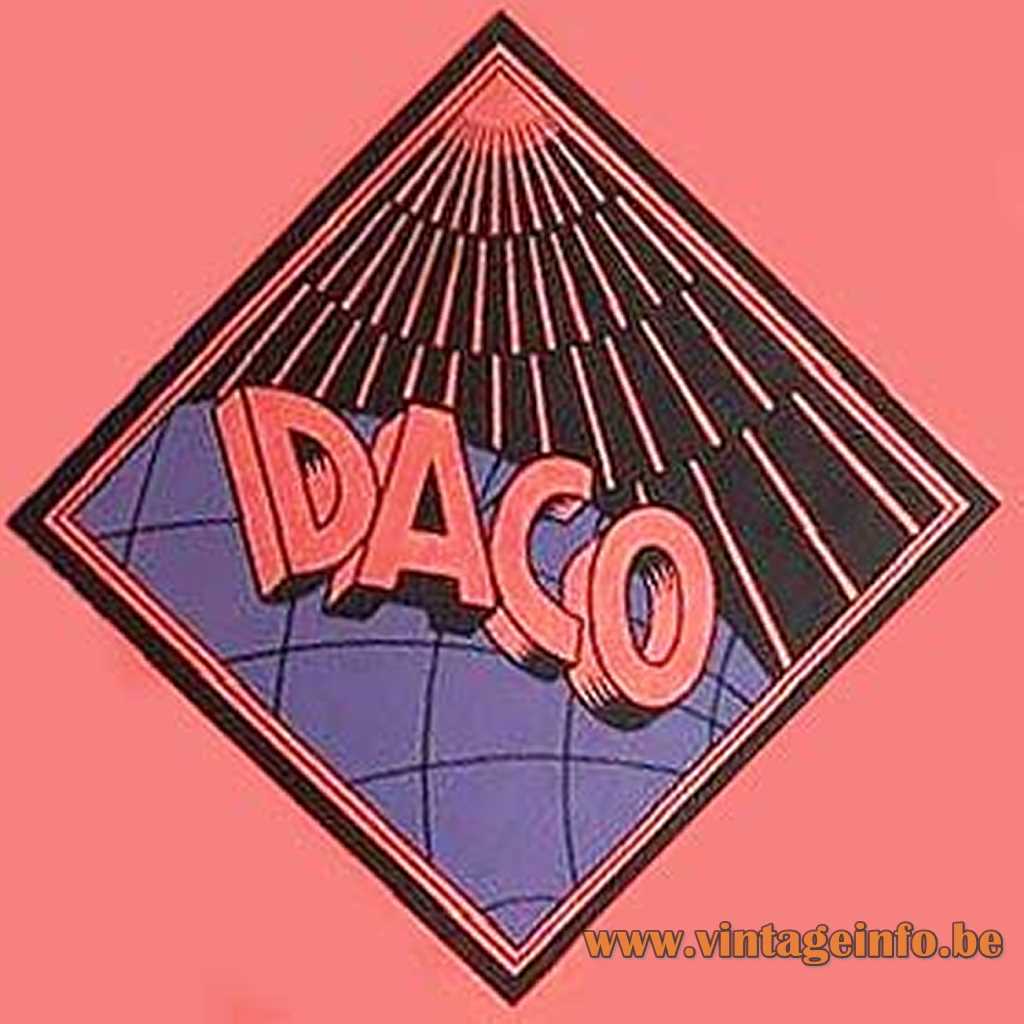
Dame & Co (DACO)
Dame & Co, also known under the abbreviated brand name DACO, was a German lighting manufacturer based in Neheim-Hüsten, one of the historic centres of the German lighting industry.
The company was founded in 1893, as confirmed by period logos bearing the inscription “DACO – gegründet 1893”.
By the interwar period, Dame & Co had grown into a large-scale industrial manufacturer.
Company letterheads from 1935 identify the firm as a Beleuchtungskörper-Fabrik, with extensive banking, postal and telecommunication facilities, indicating nationwide commercial activity.
Dame & Co regularly exhibited at major trade fairs, including the Leipzig Trade Fair, one of the most important industrial exhibitions in Europe at the time.
The company produced a wide range of lighting fixtures and issued extensive catalogues.
Catalogue numbering shows a long continuity of production, with main catalogues and supplements already exceeding number 30 by the mid-1930s, and continuing into the post-war decades.
In the 1950s, Dame & Co received international recognition when the company was awarded two iF Design Awards (1957), one for a table lamp (this one?) and one for a television lamp (Fernsehleuchte).
The iF documentation confirms the manufacturer and location, although no designer names are listed.
During the 1950s and 1960s, Dame & Co also embraced modern materials.
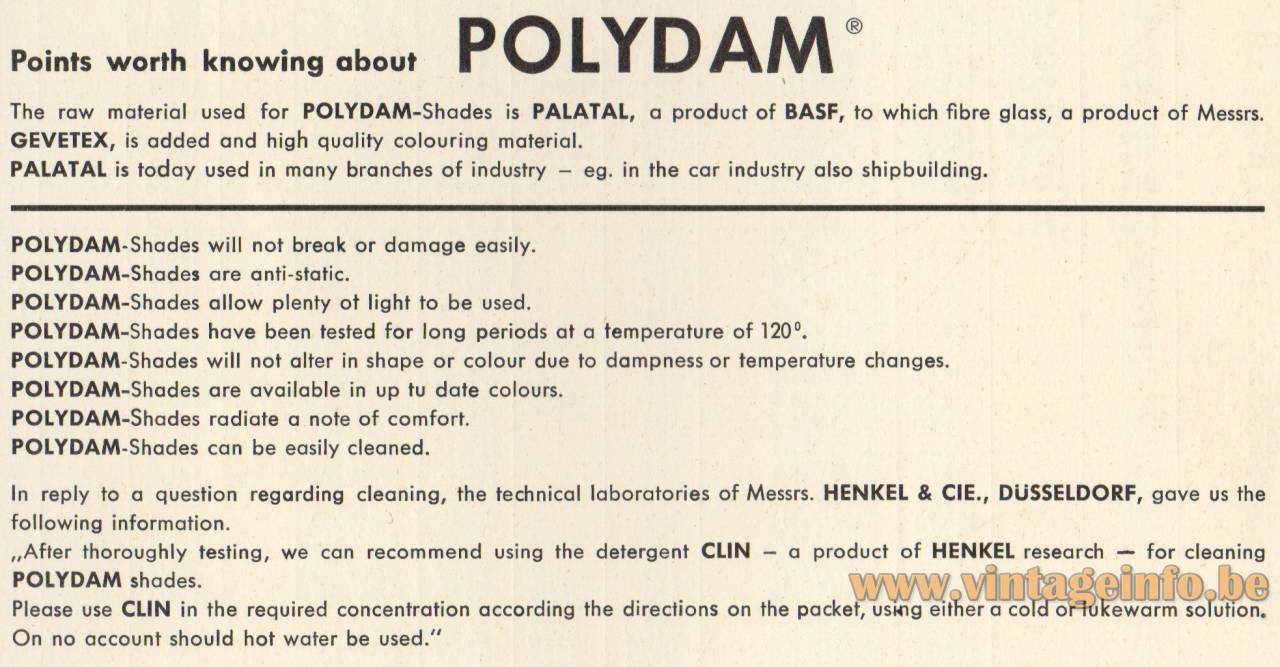
The company introduced lamp shades made from a proprietary fibreglass-reinforced material marketed under the name POLYDAM.
According to catalogue descriptions, POLYDAM shades were produced using PALATAL, a synthetic resin supplied by BASF, combined with glass fibre.
These shades were promoted as durable, heat-resistant, anti-static, colourfast and easy to clean.
Many Dame & Co lamps were sold without explicit designer attribution and were distributed through various retailers and wholesalers, both in Germany and abroad.
As a result, numerous models are today frequently misattributed to better-known designers or manufacturers.
Original catalogue documentation, however, clearly places these lamps within the production of Dame & Co / DACO.
The company no longer exists, and the exact date at which it ceased operations remains unclear.
Nevertheless, surviving catalogues and lamps demonstrate that Dame & Co played a significant role in German industrial lighting production from the late 19th century through the mid-20th century.
Dame & Co Rocket Floor Lamp – Polydam
Points worth knowing about POLYDAM ®
The raw material used for POLYDAM-Shades is PALATAL, a product of BASF, to which fibre glass, a product of Messrs. GEVETEX, is added and high quality colouring material.
PALATAL is today used in many branches of industry – eg. in the car industry also shipbuilding.
POLYDAM-Shades will not break or damage easily.
POLYDAM-Shades are anti-static.
POLYDAM-Shades allow plenty of light to be used.
POLYDAM-Shades have been tested for long periods at a temperature of 120°.
POLYDAM-Shades will not alter in shape or colour due to dampness or temperature changes.
POLYDAM-Shades are available in up to date colours.
POLYDAM-Shades radiate a note of comfort.
POLYDAM-Shades can be easily cleaned.
In reply to a question regarding cleaning, the technical laboratories of Messrs. HENKEL & CIE., DÜSSELDORF, gave us the following information.
“After thoroughly testing, we can recommend using the detergent CLIN – a product of HENKEL research – for cleaning POLYDAM shades.
Please use CLIN in the required concentration according the directions on the packet, using either a cold or lukewarm solution.
On no account should hot water be used.”
Tripod Rocket Floor Lamp – Company Labels & Logos