- Categories
- Categories
Last 5 Viewed
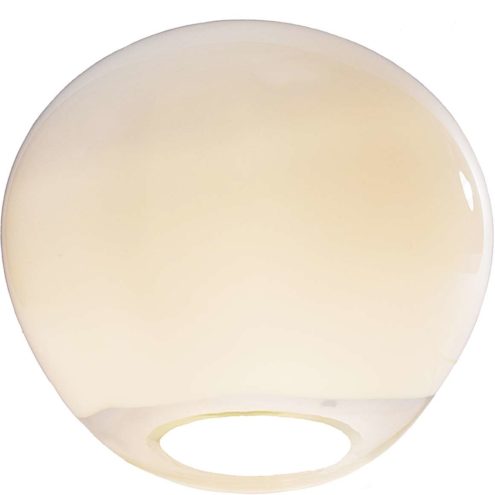
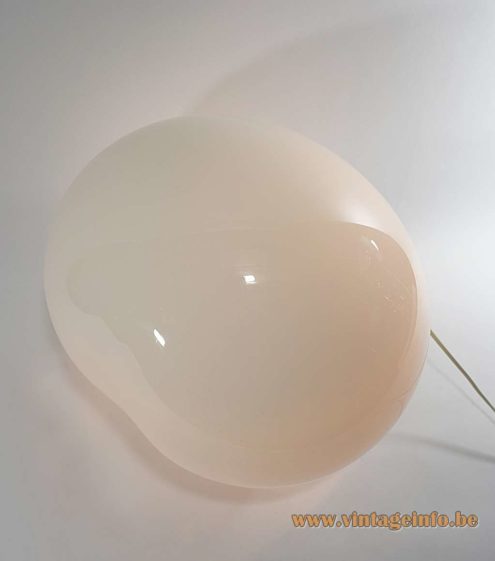

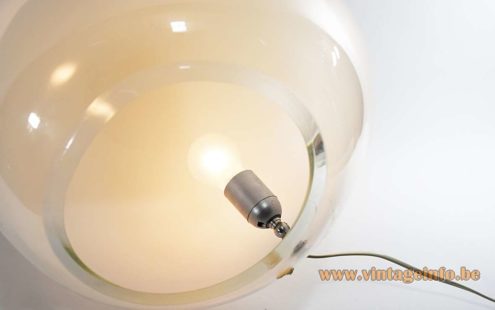
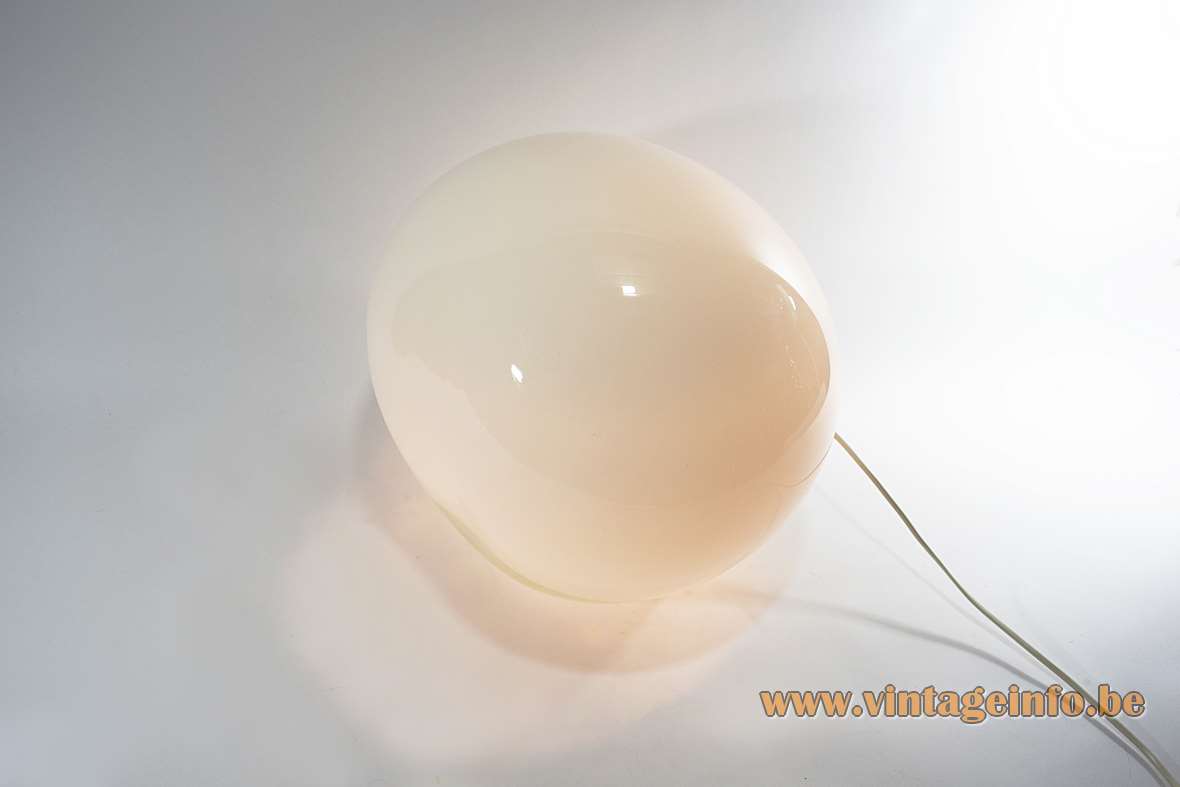
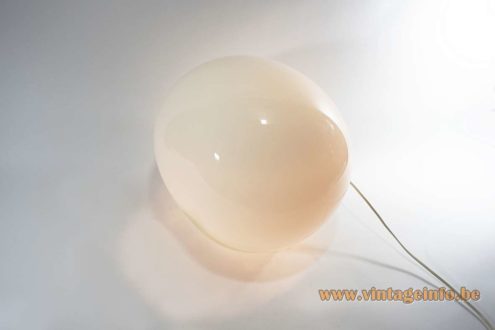
Vistosi Nessa Table Lamp – 1970s Catalogue Picture
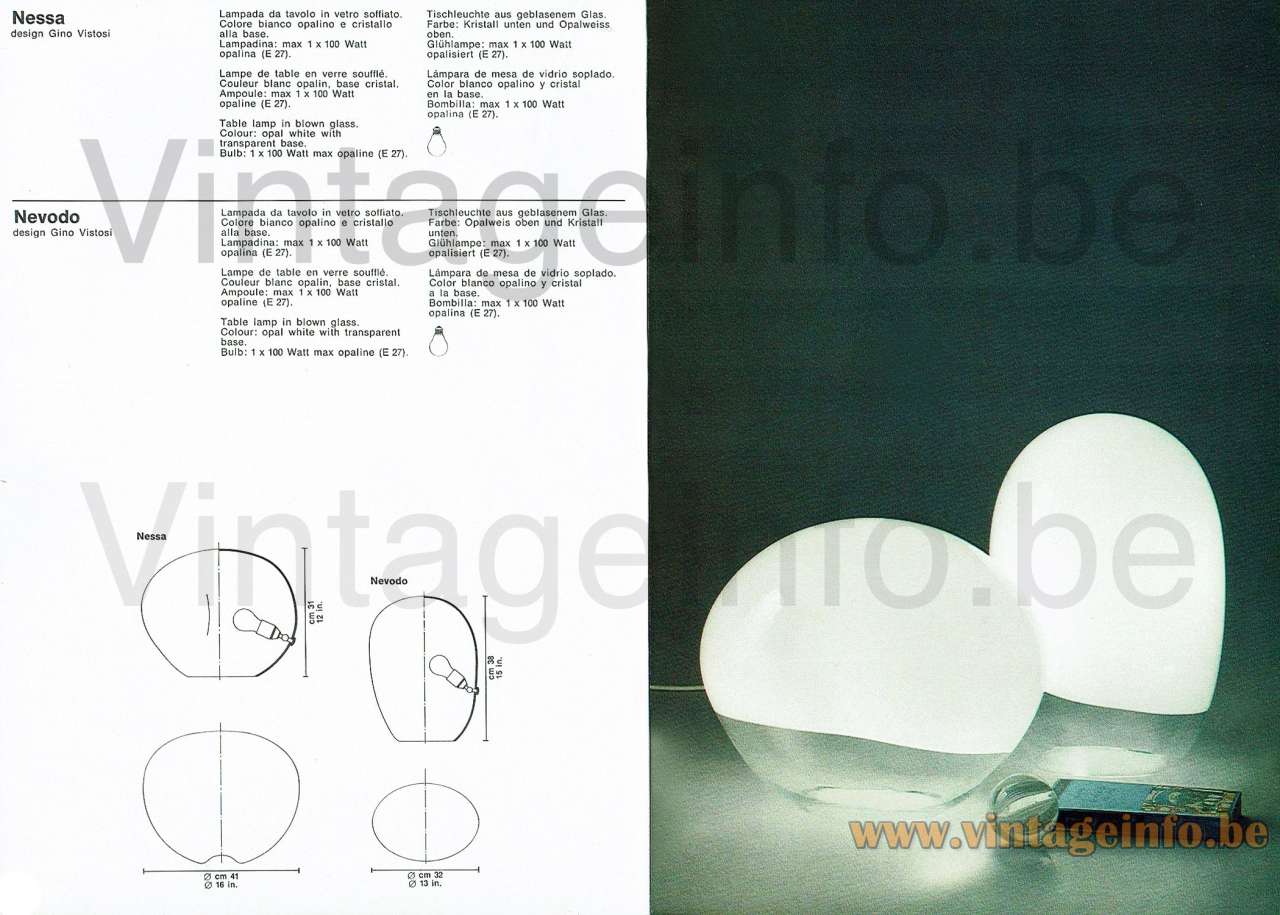
On this page of the catalogue the Nessa and Nevodo table lamp. Both designed by Gino Vistosi.
VLM Components
All the electric parts of this lamp were made by the VLM Components company from Buccinasco, near Milan in Italy. Today VLM Components is owned By Relco. It is one of the biggest suppliers of switches, cords and plugs in Europe. VLM Components became famous for its switches, designed by Achille Castiglioni.
Links (external links open in a new window)
Vistosi history – Vistosi website
Luciano Vistosi – Murano glass Museum website
Biography of Luciano Vistosi – Murano Glass Museum website
Inexhibit: The sculpture of Vistosi at the Murano Glass Museum
Murano glass blowing Wikipedia
Vintageinfo
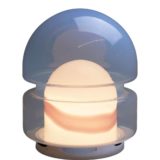
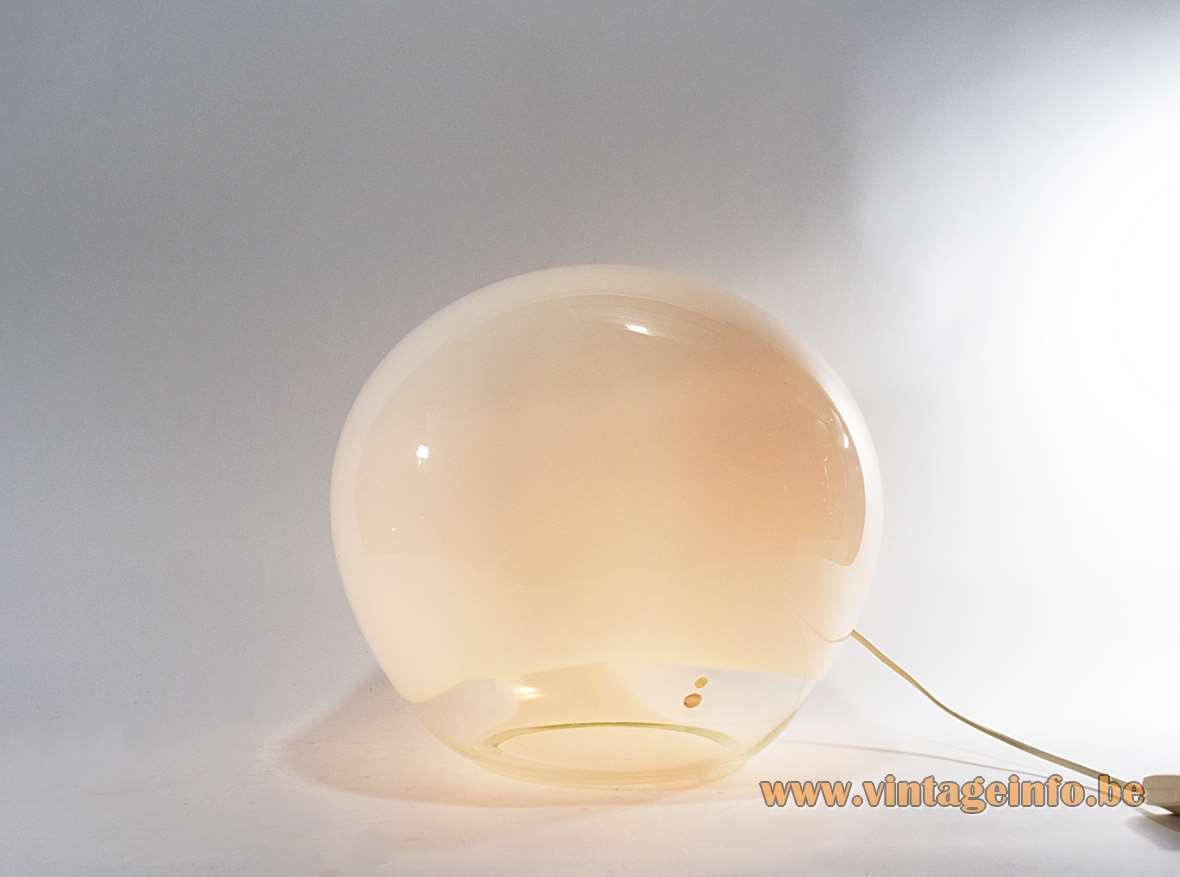
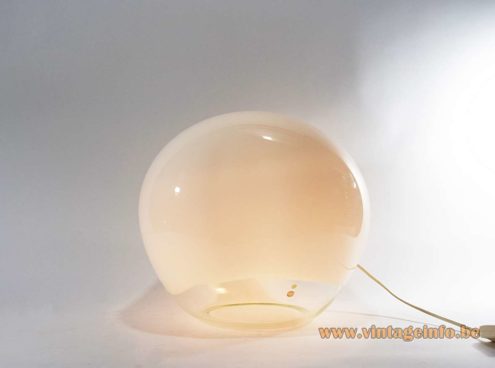
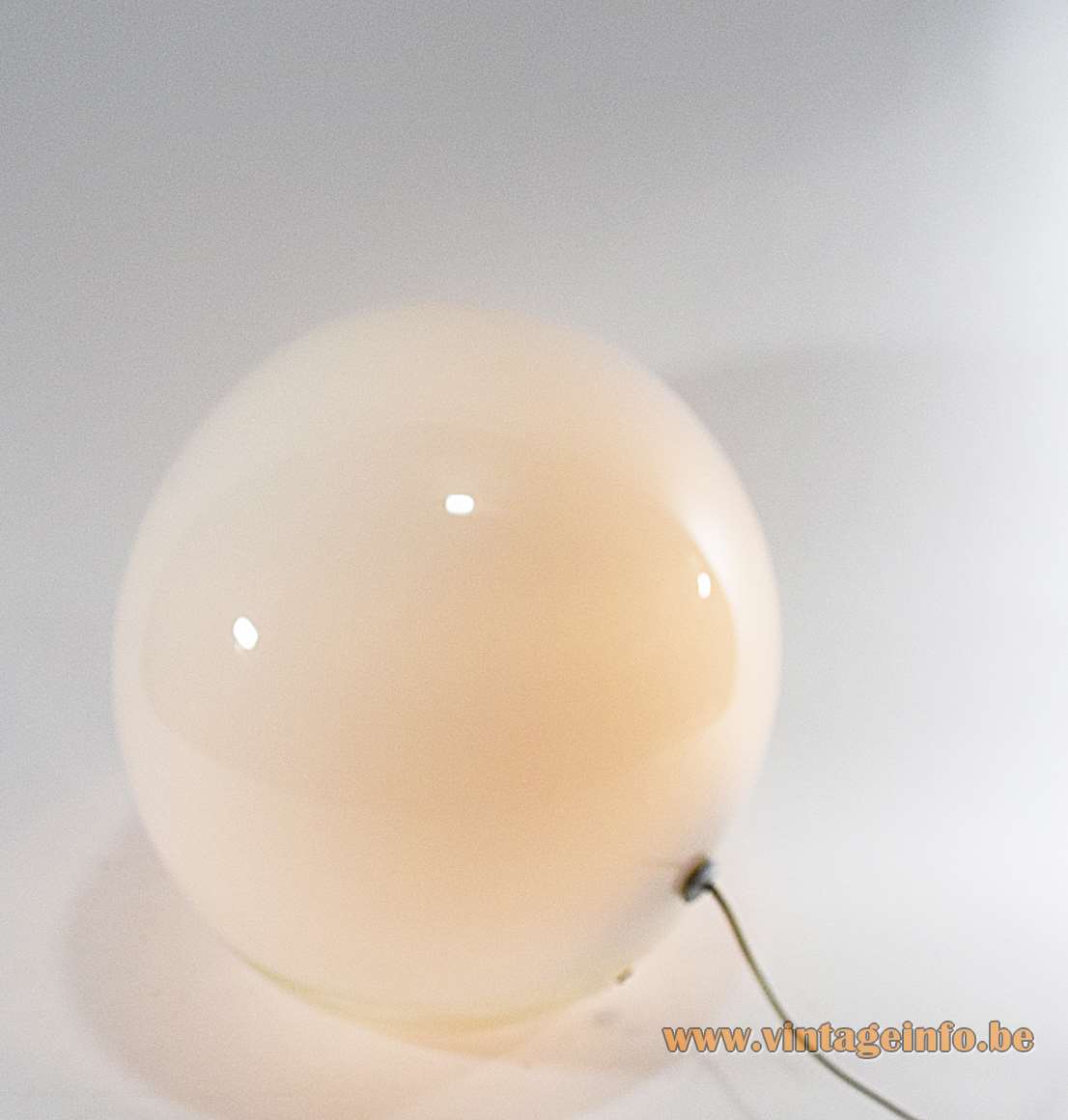
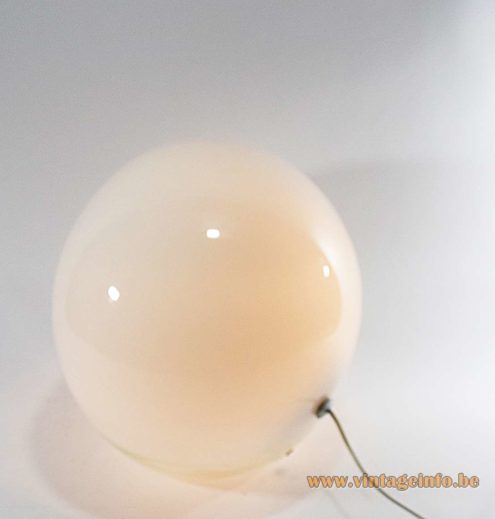
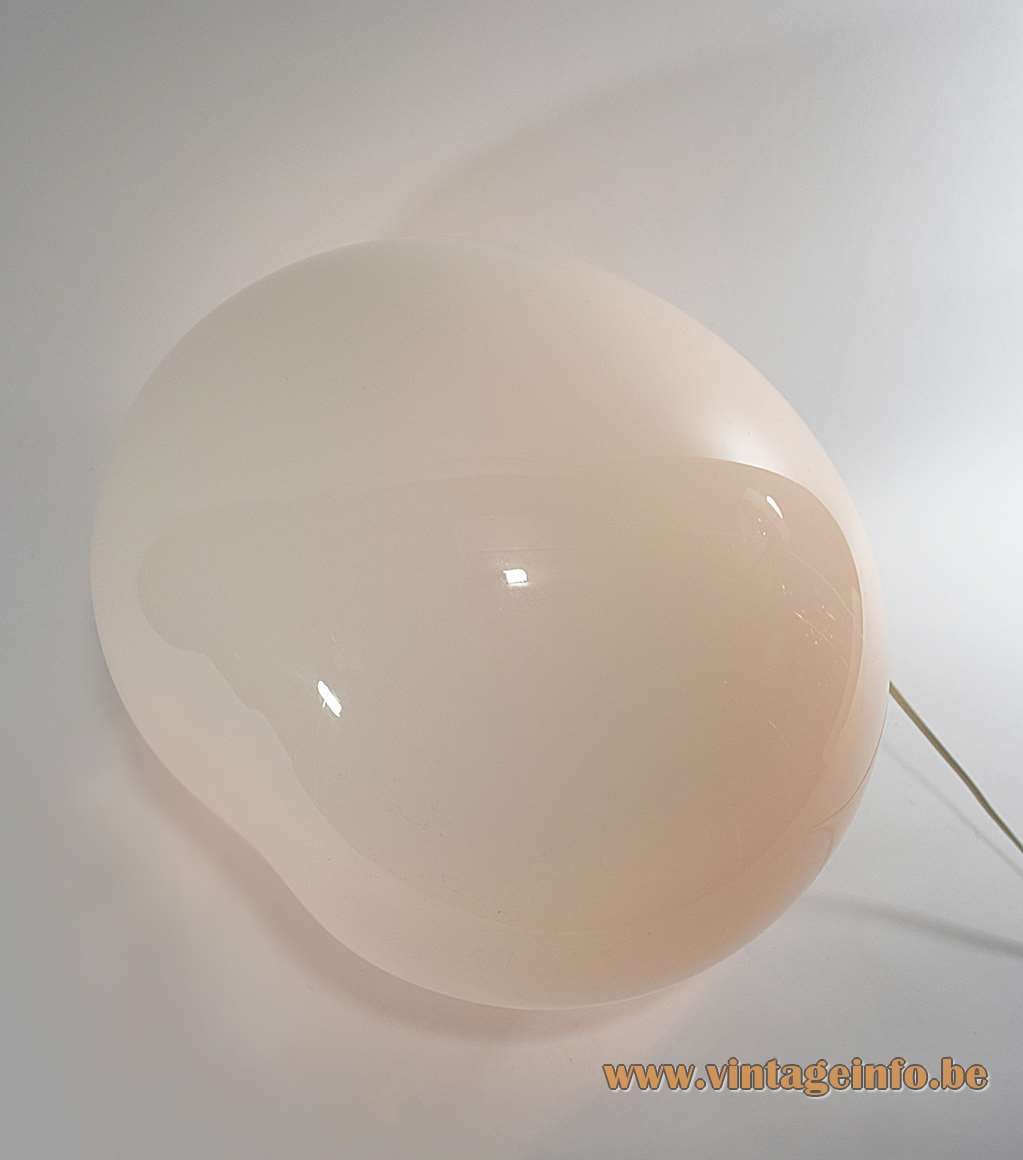
Vistosi Nessa Table Lamp
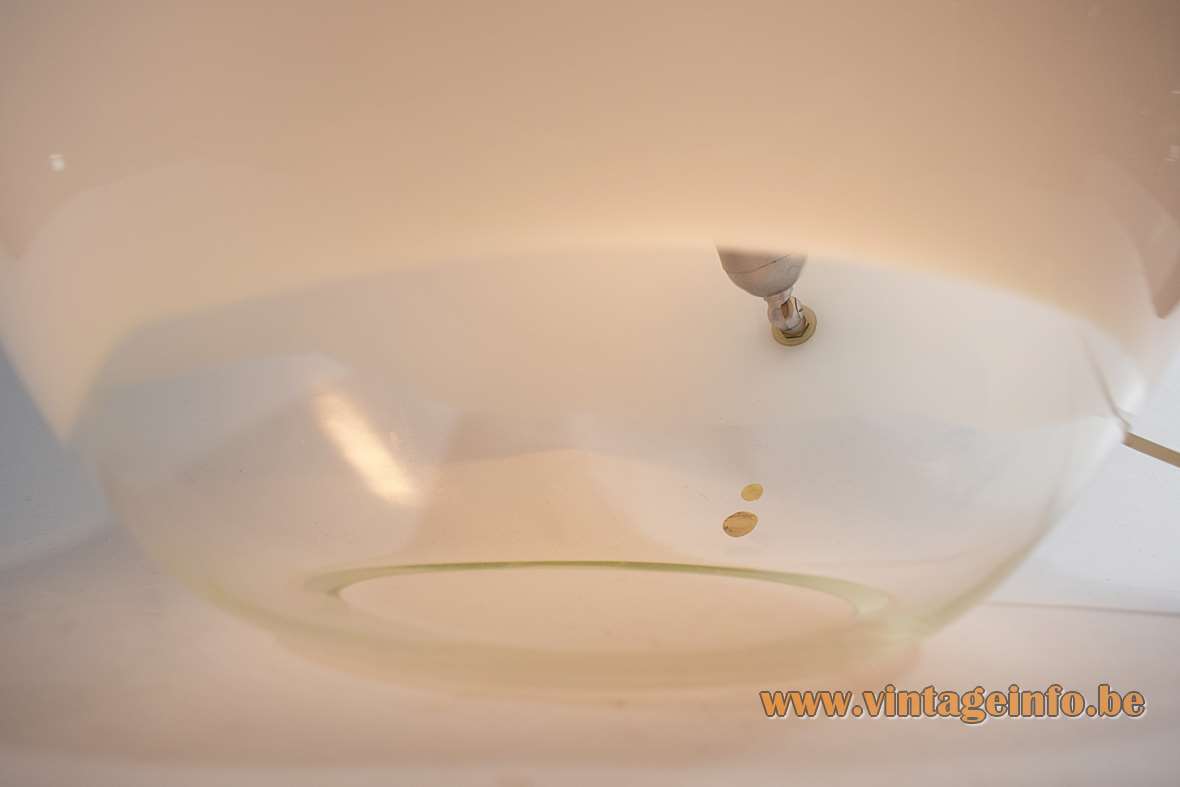
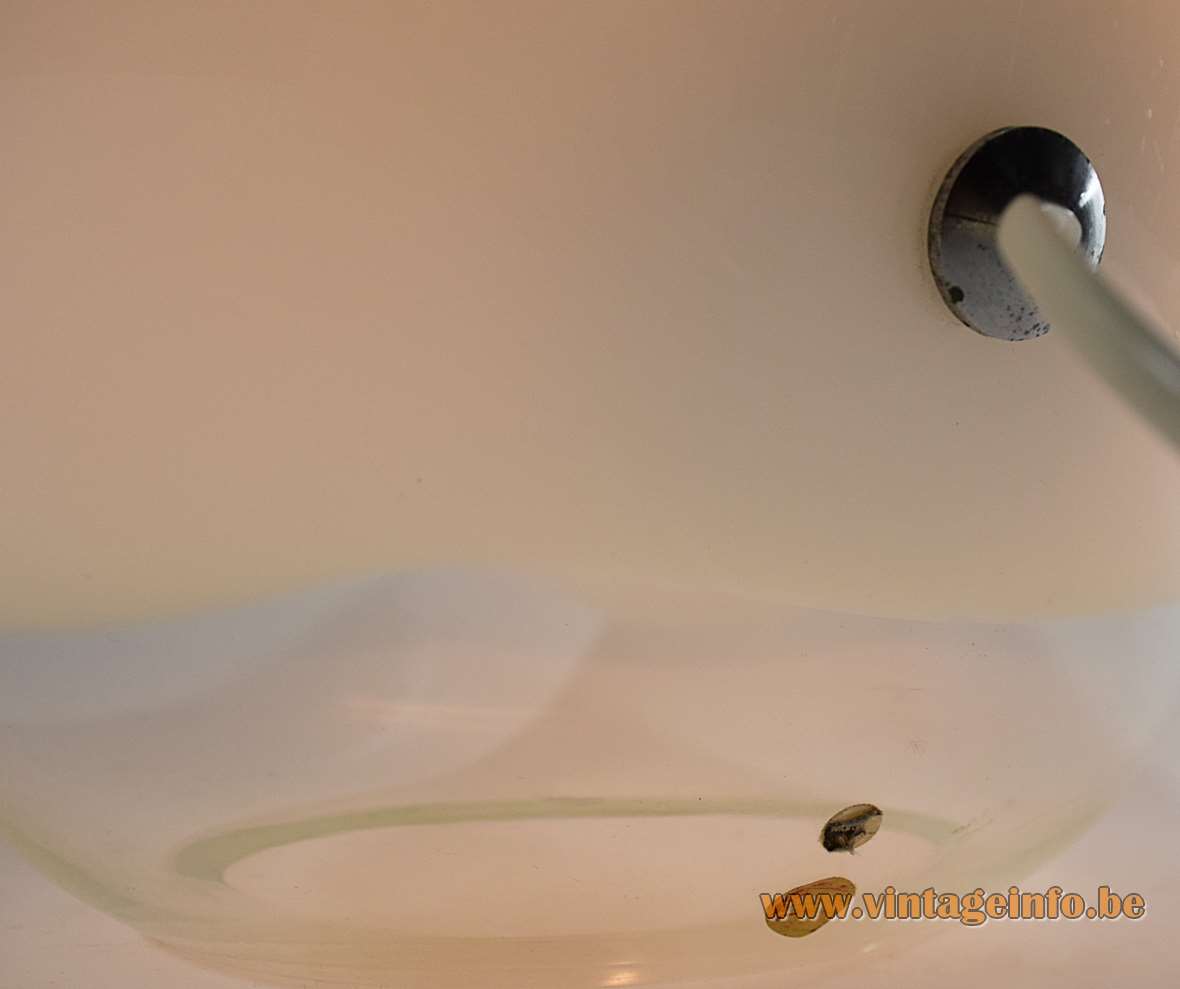
Materials: White opal hand-blown crystal Murano glass globe, terminating clear at the base. Chromed metal round adjustable joint to connect the silver painted Bakelite E27 socket to the glass.
Height: 38 cm / 14.96”
Width: 40 cm / 15.74”
Electricity: 1 bulb E27, 1 x 75 watt maximum, 110/220 volt.
Any type of light bulb can be used. Preferably a white/opaque or frosted one.
Period: 1970s – Mid-Century Modern.
Designer: Gino Vistosi in 1972.
Manufacturer:Vistosi, Murano, Italy.
Other versions: No other versions of this Vistosi Nessa table lamp exists. Similar lamps were designed by Luciano and Gino and made by Vistosi, but they all have a different name.
The Vistosi Nessa table lamp is listed in some catalogues as being designed by Luciano Vistosi, I’ve been told. But unfortunately, they refuse to provide proof. In any case, I have it listed in two catalogues as Gino Vistosi’s design.
On the Vistosi website, they don’t know and simply list Vistosi as the designer. That’s always correct, of course. A few years ago there was no designer listed (before 2025).
The electric parts of this lamp were made byVLM Components from Buccinasco, near Milan, also in Italy.
Gino Vistosi
Gino Vistosi (Murano, 1925–1980) was a key figure in the post-war transformation of the family glassworks into the modern lighting company Vistosi. After the Second World War he worked alongside his brother Luciano and their uncle Oreste to relaunch the furnace in Murano, focusing increasingly on lighting and on a more industrial, design-driven approach.
Within the company Gino was both entrepreneur and designer. Together with collaborators such as Alessandro Pianon he helped steer Vistosi toward contemporary Italian design, opening the doors to the many external architects and designers who would define the firm’s output from the late 1950s to the 1980s. At the same time he created numerous models himself; among his best-known works are the Nessa and Nevodo table lamps, the L77 pendant, Comare and Comareta, and the Zago and Zaghetto table lamps, and the Torcello chandelier series.
A particularly notable point in his legacy concerns the Giogali chandelier series. Although countless catalogues, books and online sources credit Giogali to Angelo Mangiarotti, according to Gino Vistosi’s daughter the design was in fact created by Gino himself.
Vistosi
Early Origins
The story of Vistosi begins in Murano with the Gazzabin family, who acquired the Al Bastian furnace in 1640. Soon after, the family name “Vistosi” emerged, and by 1791Gio-Batta Vistosi had become Gastaldo dell’Arte, head of the Murano glassmakers’ guild.
A New Beginning after the War
In 1945Guglielmo Vistosi, heir of the Gazzabin family, opened a new furnace in Murano right after World War II, focusing on lighting. Following his premature death, his sons Gino and Luciano, together with their uncle Oreste, laid the foundation of the modern Vistosi company.
The Design Revolution of the 1950s–1980s
The arrival of Venetian architect Alessandro Pianon in 1956 marked a turning point. With Gino and Luciano, he transformed the company into a pioneer of innovation and modern design.
From the late 1950s to the 1980s, Vistosi collaborated with some of the most influential names in design, such as Angelo Mangiarotti, Gae Aulenti, Ettore Sottsass Jr., Massimo Vignelli, Adalberto Dal Lago, Stefania Giannotti, Elleonore Peduzzi Riva, Vico Magistretti, Michele De Lucchi and many others. This golden era produced some of the most iconic Vistosi lighting, now highly sought after by collectors.
The Moretti Era
In 1989 the brand was acquired by Murano businessman Giancarlo Moretti, who had long experience in the glass industry. His son Matteo Moretti later relaunched the company after a short closure in the 1990s, expanding it with the acquisition of brands such as Alox, G2 and Triade.
The last of the founding generation, Luciano Vistosi (1930 – 2010), devoted his later life to research and glass sculpture, leaving a lasting artistic legacy.
Innovation and Recognition since the 2000s
From the early 2000s, Vistosi entered a new phase of experimentation and recognition. Collections such as Rina, Cheope09 and Minigiogali updated traditional techniques for contemporary forms. Later came Giogali 3D, a new interpretation of the famous chandelier, and Diadema, created with a unique patented rod process. Award-winning designs like Futura, Nodo, Trepai, Jube, Sata, Stone and Armonia confirmed Vistosi’s relevance in international design.
In 2019 the company celebrated the 50th anniversary of Giogali, and in the following years it was recognised among the 100 Eccellenze Italiane, partnered with the Venice Glass Week, and launched a Virtual Museum, e-commerce platform and LED collections.
Designers of the Contemporary Period
Under the Moretti family, Vistosi worked with a wide range of contemporary designers, including Chiaramonte & Marin, Mauro Olivieri, Barbara Maggiolo, Paolo Crepax, Monica Agnolazza, Silvio Zanon, Giovanni Barbato, Matthias Hickl, Roberto Maci, Alberto Nason (son of Carlo), Romani Saccani Architetti Associati, Gregorio Spini, Emmanuel Babled, Oriano Favaretto, Marco Acerbis, Castaglia Associati, Pio e Tito Toso, Renato Toso, and Noti Massari & Associates.
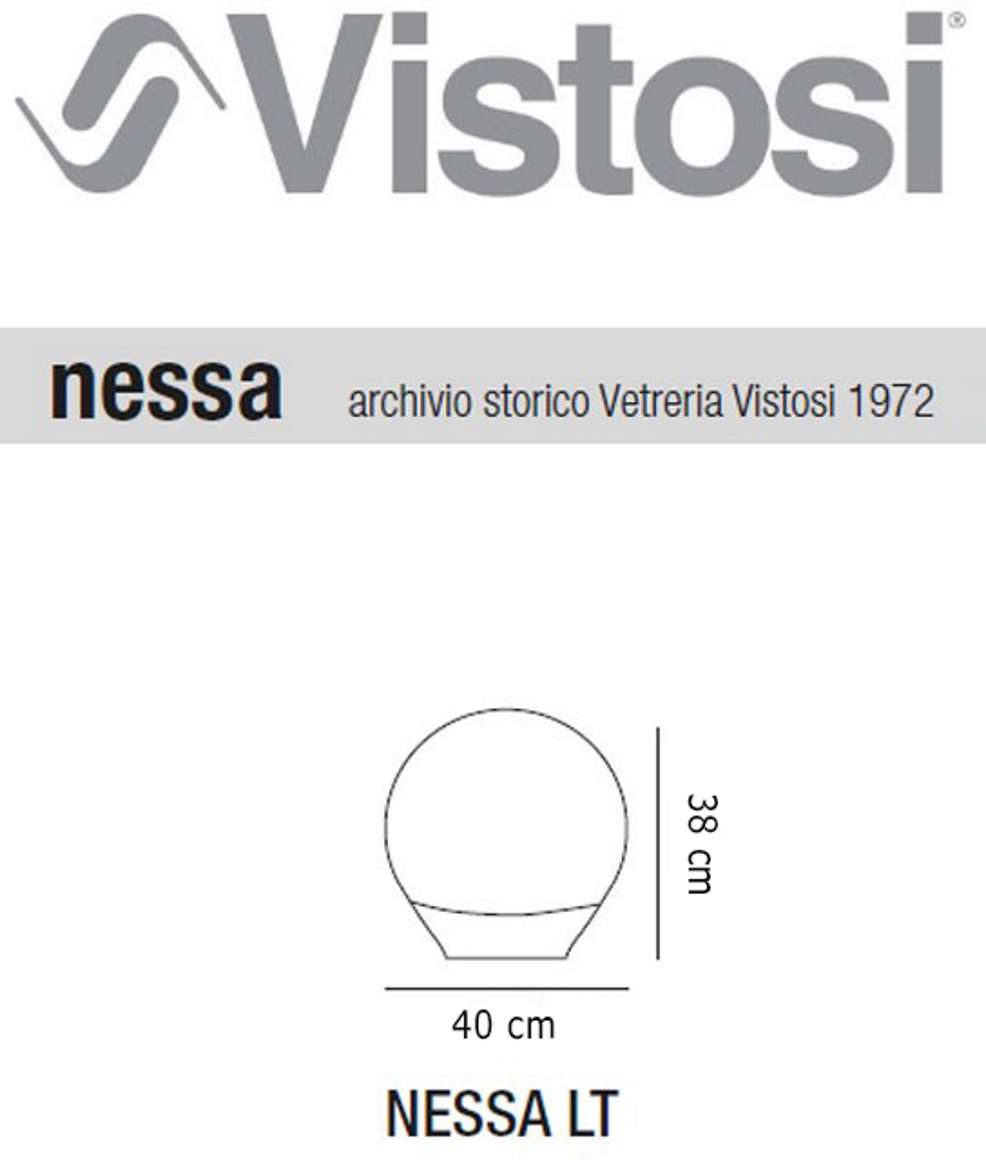
Vistosi Nessa Table Lamp – Company Labels & Logos