- Categories
- Categories
Last 5 Viewed
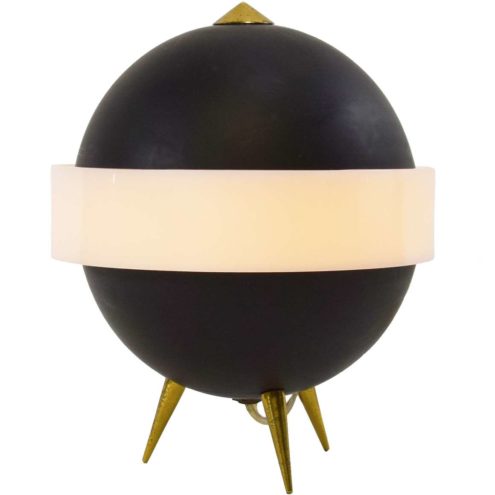
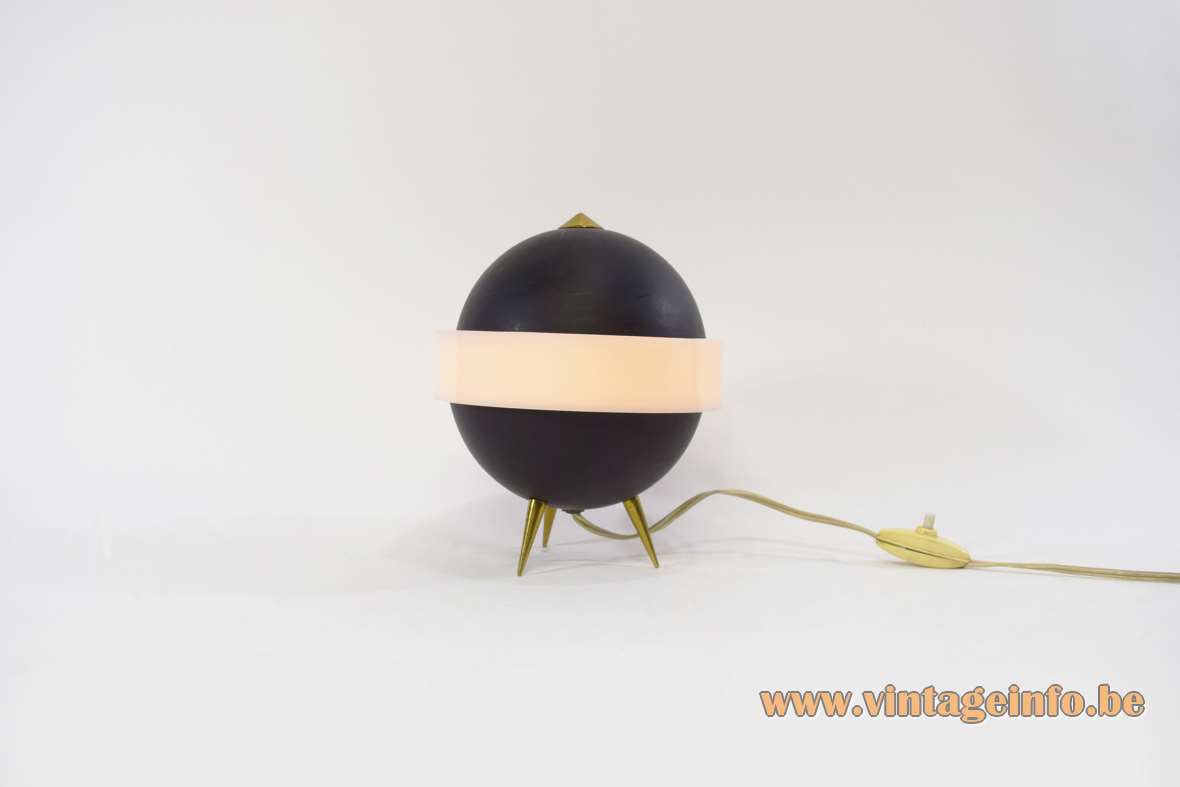
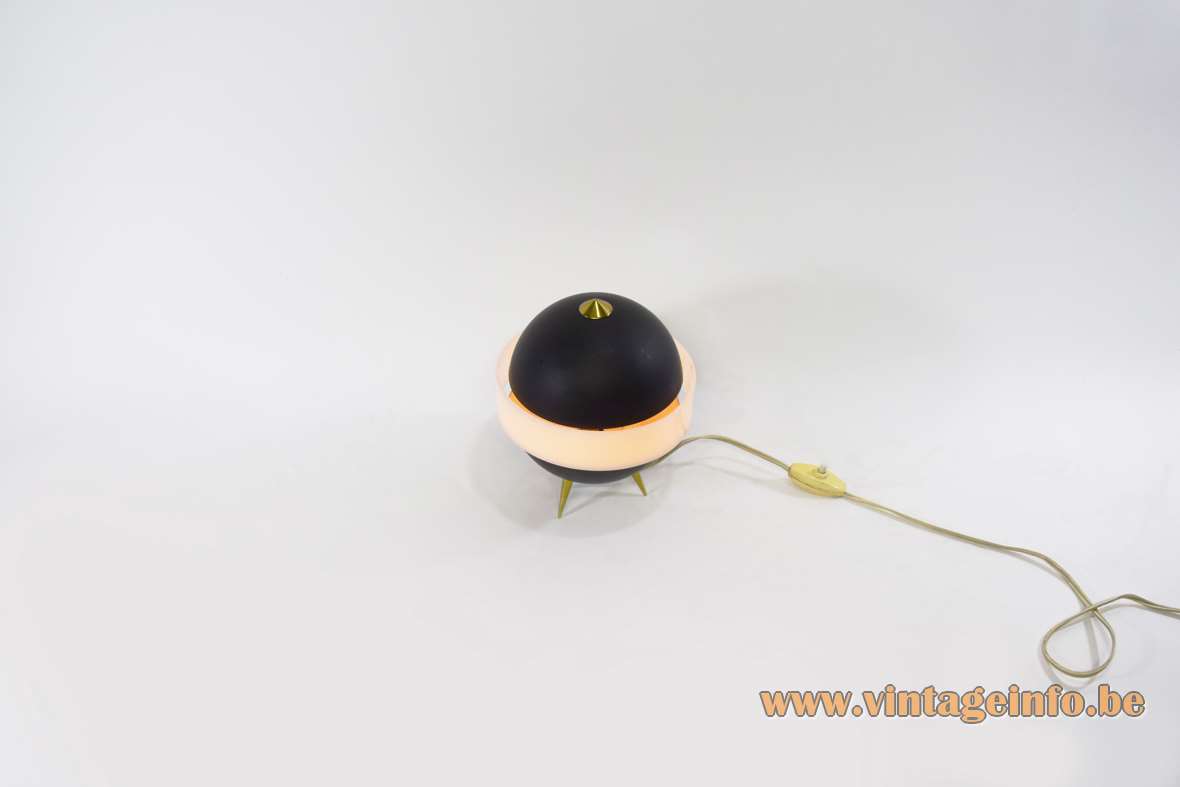
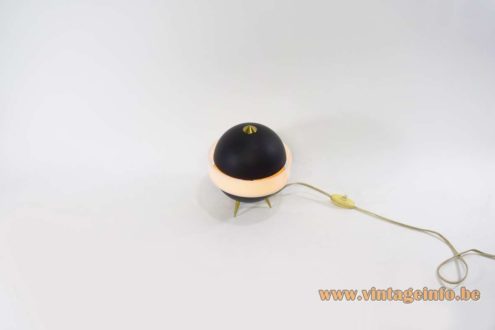
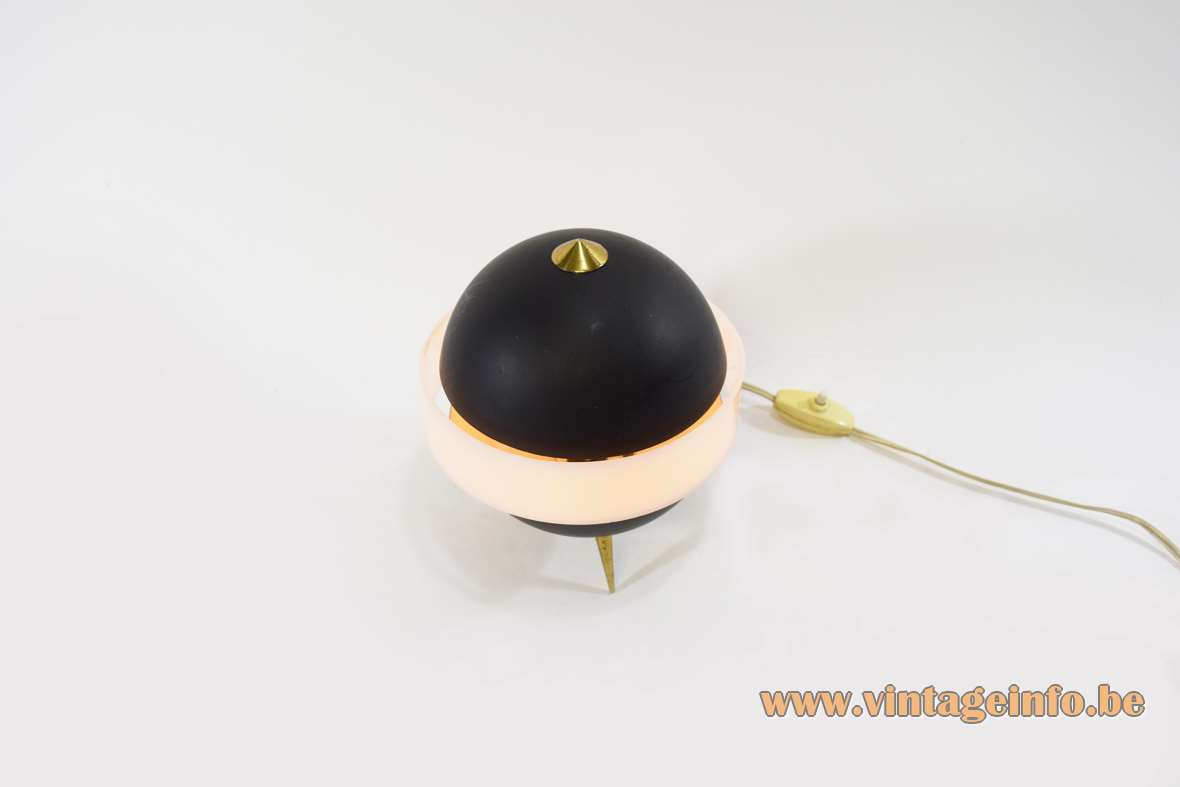
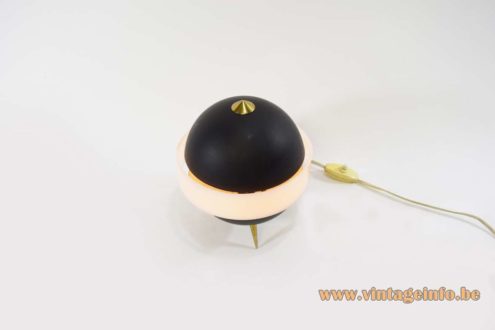
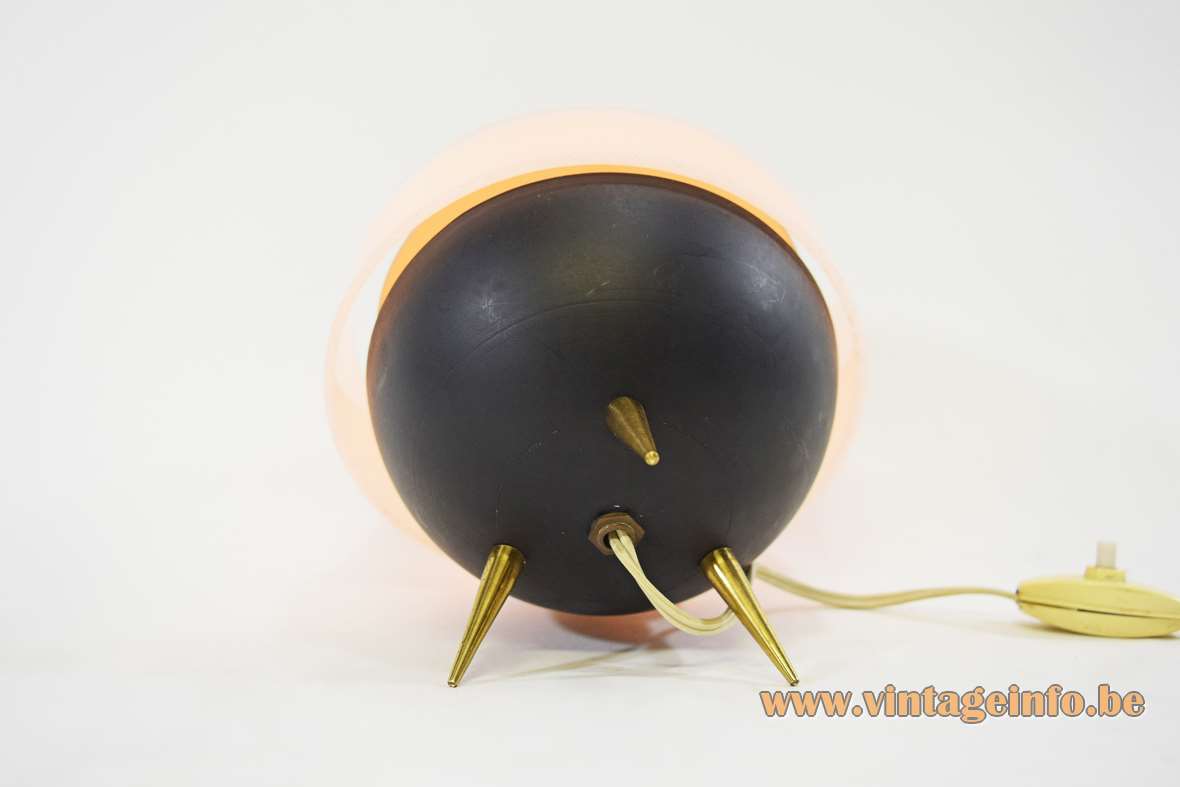
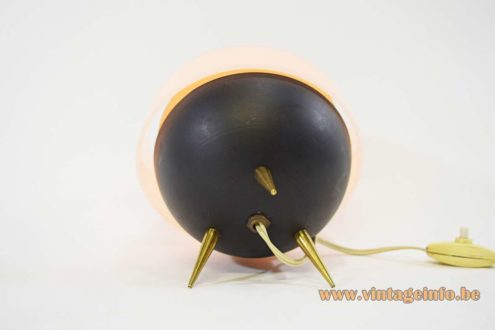
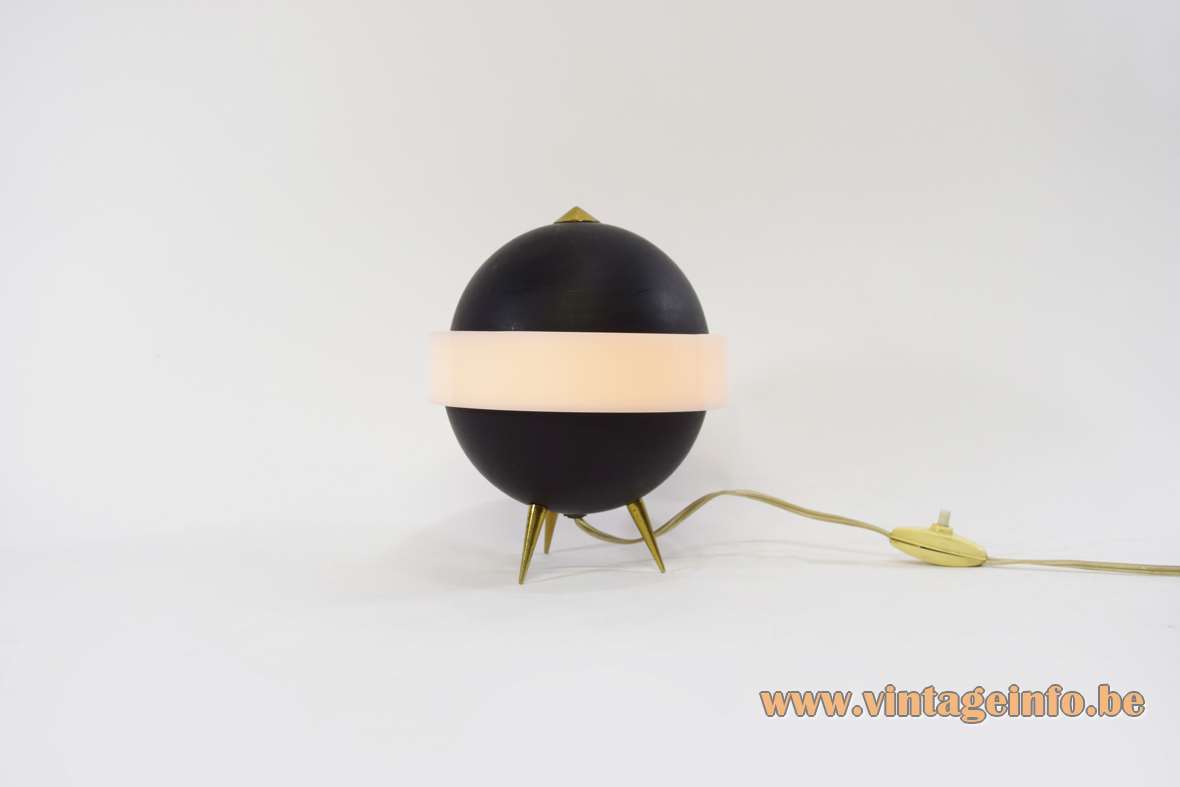
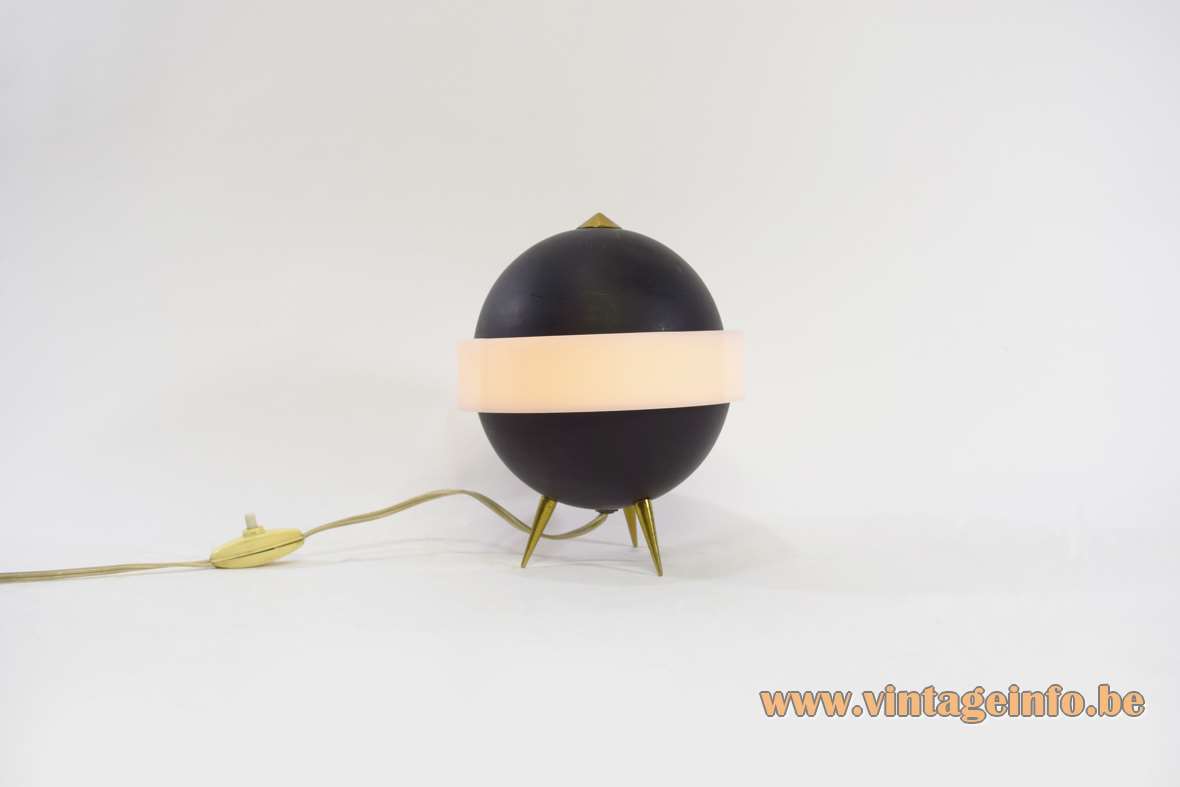
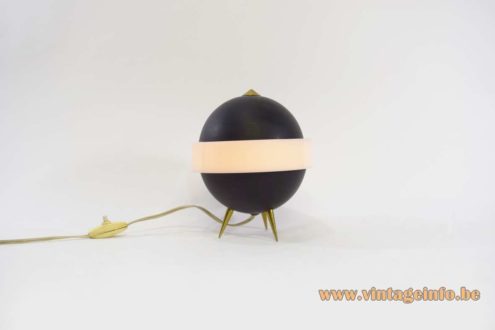
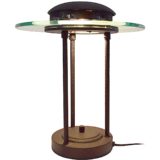
Saturn Tripod Table Lamp – Angelo Brotto design
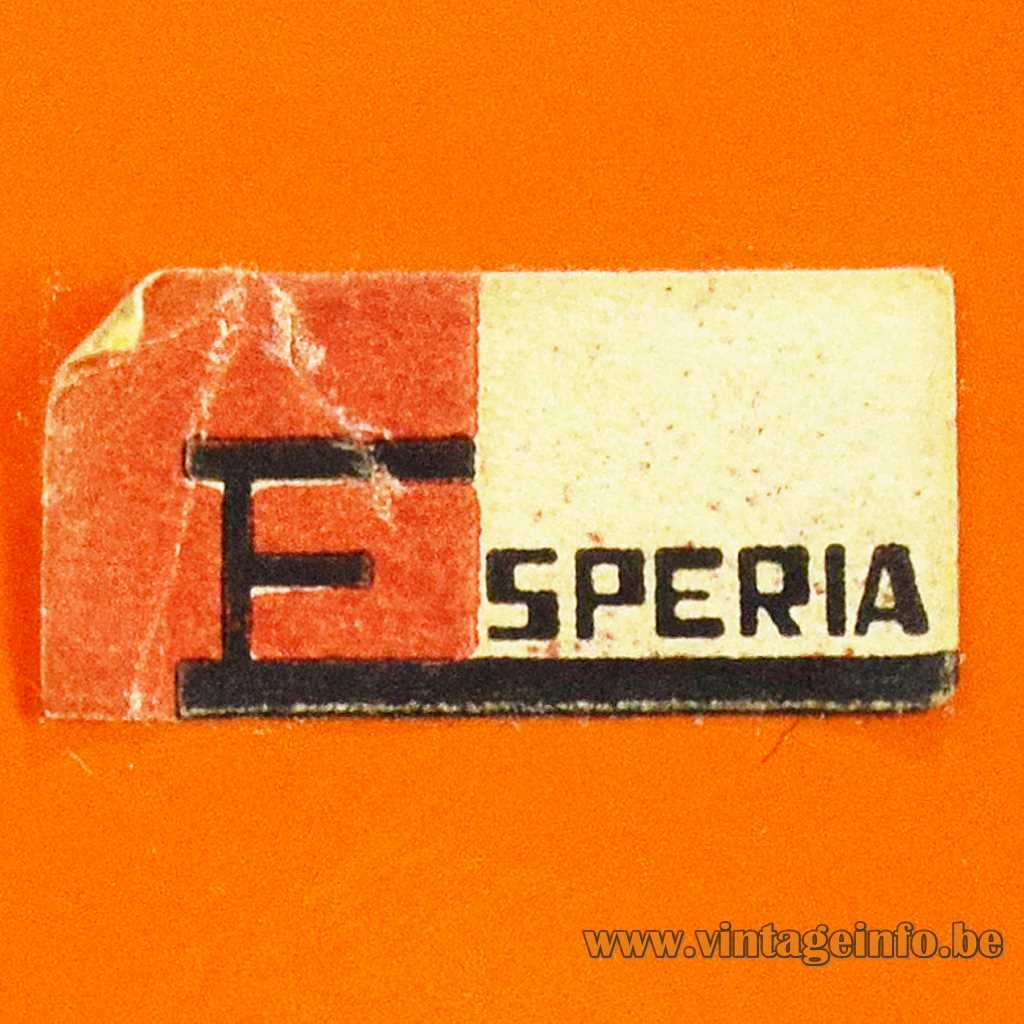
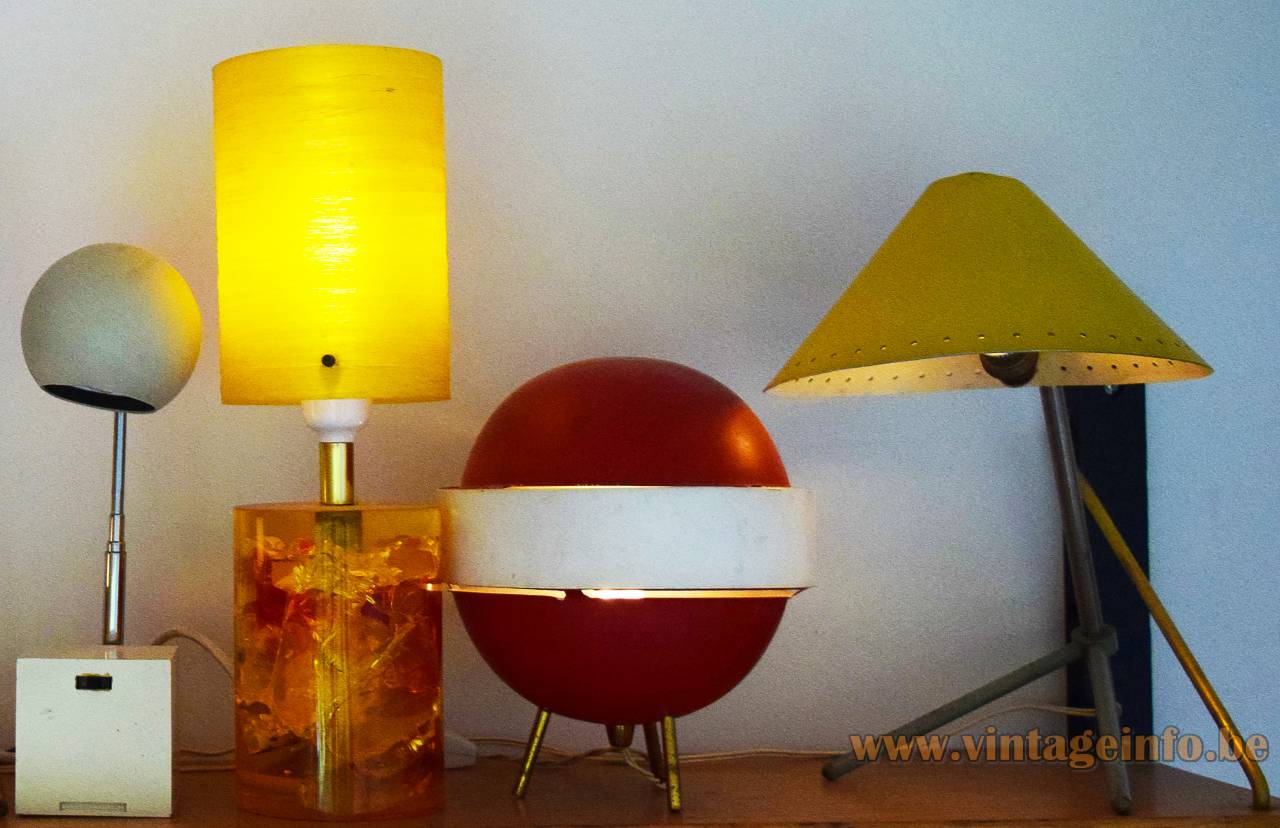
Another version of this Saturn tripod table lamp, it is labeled inside with an Esperia label, so this is definitely a lamp from the company. It is made entirely of metal, so not much light comes through. The top part slides over the bottom part.
The other lamps in this photo are, from left to right: the LightolierLytegem desk lamp, a Shatterlinefractal resin table lamp and a HalaPinocchio table lamp.
Saturn Tripod Table Lamp
This Saturn tripod table lamp together with 2 square Vistosi vases model S508 and S510 from the 1960s.

Links (external links open in a new window)
A.A.G. Stucchi history on their website
Vintageinfo
Many thanks to Giuliana from Esperia for all the information.
Saturn Tripod Table Lamp
Materials: Black painted aluminium globe lampshade, made of two parts. Painted white inside. White acrylic ring diffuser in the middle. 3 conical brass rods. Brass ornamental conical screw on top. Bakelite E14 socket.
Height: 21 cm / 8.26”
Width: ∅ 16 cm / 6.29”
Electricity: 1 bulb E14, 1 x 40 watt maximum, 110/220 volt.
Any type of light bulb with an E14 socket can be used, not a specific one preferred.
Period: 1950s – Mid-Century Modern.
Designer: Angelo Brotto (1914-2002) – attributed.
Manufacturer: Esperia, Via Campania, 1D, 53036 Poggibonsi, Italy – attributed.
Other versions: A few versions of this Saturn tripod table lamp exists. They were probably made by several different companies. A versions was made with a white metal ring instead of an acrylic one.
This lamp is mostly described as a lamp made by Stilux, but you also find it as the “Lumino” lamp designed by Angelo Brotto and made by Esperia.
Also described as a lamp made by Lumen, Italy. They also have straight legs instead of conical, and no brass top. Lumen and Lumino…. Coincidence?
Esperia
The Esperia company was founded in 1952, with the aim of producing chandeliers, table lamps, wall lamps, floor lamps, ceiling lights, wall light panels and furniture. Esperia is famous for the Quasar lamp from the 60s and 70s, designed by the Venetian designer professor Angelo Brotto. Brotto designed many beautiful lamps for Esperia in that period. The Esperia company still exists and they produce very beautiful lighting.
According to Esperia it could be a lamp that was produced by them. But it does not appear in their archives or in any catalogue. “This lamp could be Esperia because the style, the details, the thread and the switch are very similar to our productions. However, in the 50s and 60s many companies did this style of lamps, called ‘for television’ “, thus Esperia.
A lamp to put on your black and white TV to provide some contrast in the, at that time, dark living rooms. It was intended to reduce the fatigue of the eyes, because everybody was watching television in the dark. All the other lamps had bright light bulbs and there were few electrical outlets in houses. Today it is an ideal bedside or table lamp.
Lumen
The Lumen company from Milan, Italy no longer exists. It was a company active in the 1950s and 1960s.
A.A.G. Stucchi
The plug, switch and socket of this lamp were made by the A.A.G. Stucchi company from the north of Italy, some 50 km (31 miles) from the capital of all Italian lights: Milan. Stilux was one of those companies that used electric parts of A.A.G. Stuchi.
A.A.G. Stucchi was founded in 1944 and was first named Electra. In 1950 the name changed into A.A.G. Stucchi. The company’s founding members are Aristide,Arturo and Giuseppe Stucchi. A.A.G. Stucchi is located in the city of y.
Acrylic: often named by its commercial name: Perspex, Plexiglas, Crylux, Acrylite, Lucite, is a thermoplastic.
Stilux
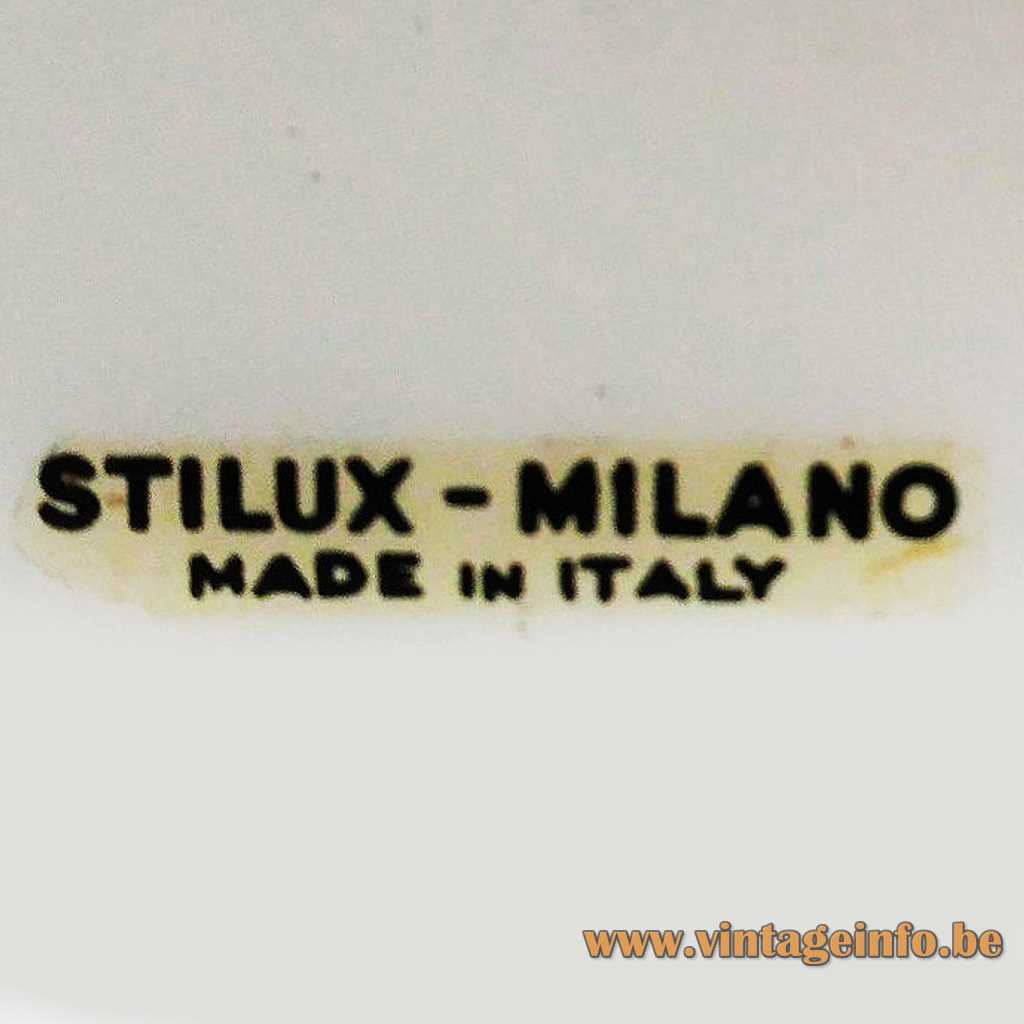
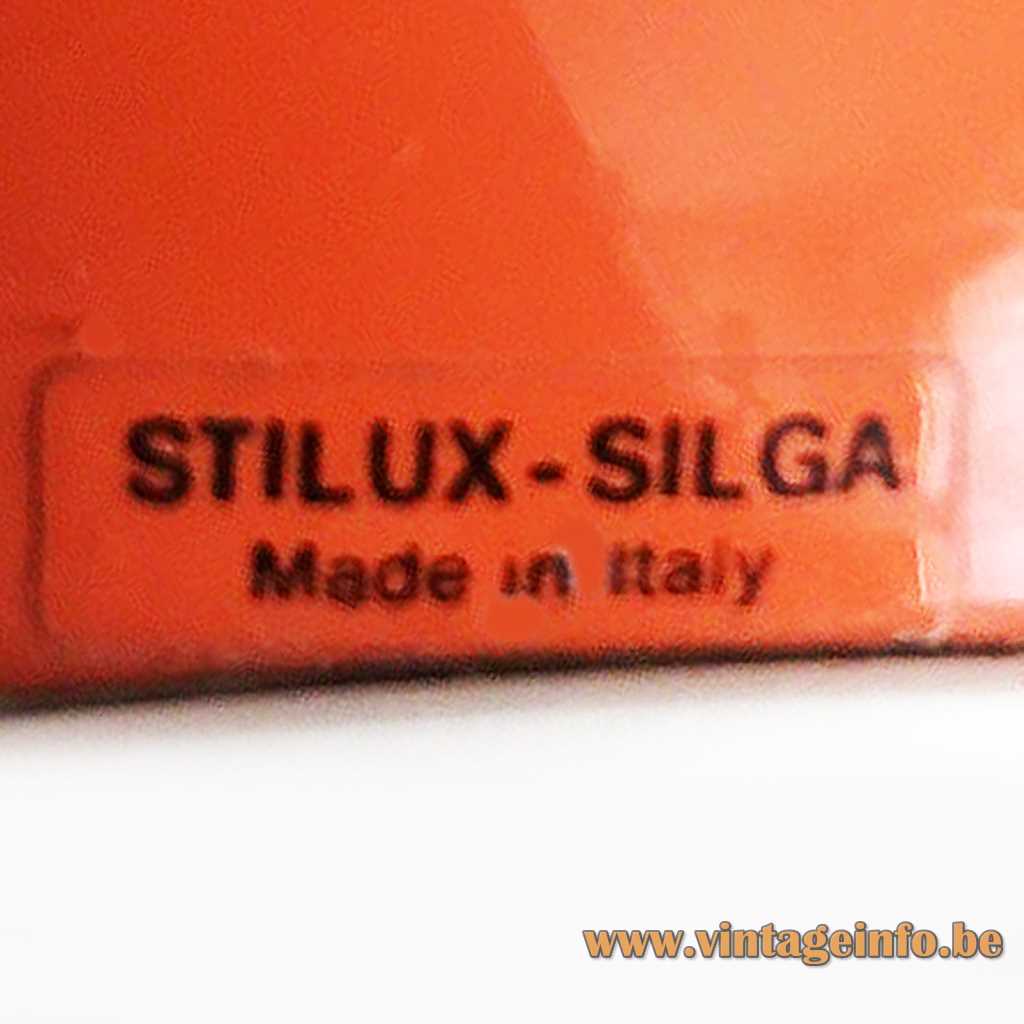
Unfortunately, very little information is available about the Stilux lighting company. The company no longer exists. According to Ennio Fedele, a former Arredoluce dealer in Trieste, Stilux was founded shortly after the Second World War by Bruno Gatta (1904–1976) from Verona, who developed lamps for both domestic and industrial use. This is written in the book Arredoluce 1943–1987: Catalogue Raisonné. Bruno Gatta later founded Stilnovo in 1946 in Lainate, an industrial suburb of Milan. What happened next with Stilux and Stilnovo, and Gatta’s further role, remains a mystery for now. Fortunately, there is much more information about Stilnovo.
A company called Stilux also exists in Milan, but it has nothing to do with lighting: “Stilux is a company that deals with professional printing and paper converting solutions for communication.”
There was also a company named Sti-lux that produced lamps in the 1990s, but that firm no longer exists either.
There is also a company called Stil-lux Lampadari based in Florence. Founded in 1972 by Marco and Lucia Innocenti, this company is still active. It is responsible, among other things, for the glass-tube “chain” lamps designed by Marco Innocenti, which are almost always attributed to AV Mazzega from Murano and supposedly designed by Aldo Nason. Today, the company operates under the name Stillux and still produces these “Lighting Lab” lamps.
If you have more information about the original Stilux company, please let us know via the contact form and help improve this website’s accuracy.
Lumen
The Lumen company from Milan, Italy no longer exists. It was a company active in the 1950s and 1960s. It’s one of the most highly regarded lamp companies among collectors. Small editions and beautiful lamps.
A.A.G. Stucchi
The plug, switch and socket of this lamp were made by the A.A.G. Stucchi company from the north of Italy, some 50 km (31 miles) from the capital of all Italian lights: Milan. Stilux was one of those companies that used electric parts of A.A.G. Stuchi.
A.A.G. Stucchi was founded in 1944 and was first named Electra. In 1950 the name changed into A.A.G. Stucchi. The company’s founding members are Aristide,Arturo and Giuseppe Stucchi. A.A.G. Stucchi is located in the city of y.
Acrylic: often named by its commercial name: Perspex, Plexiglas, Crylux, Acrylite, Lucite, is a thermoplasti
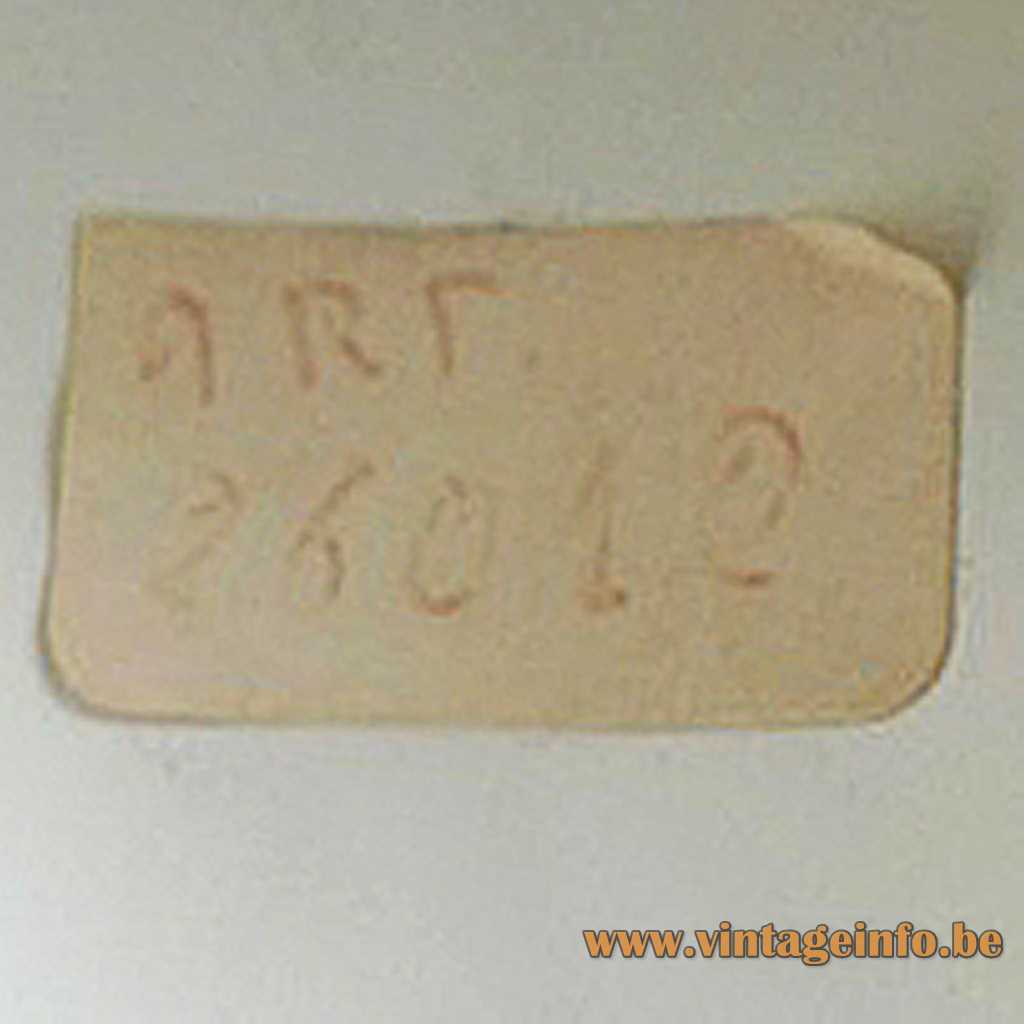
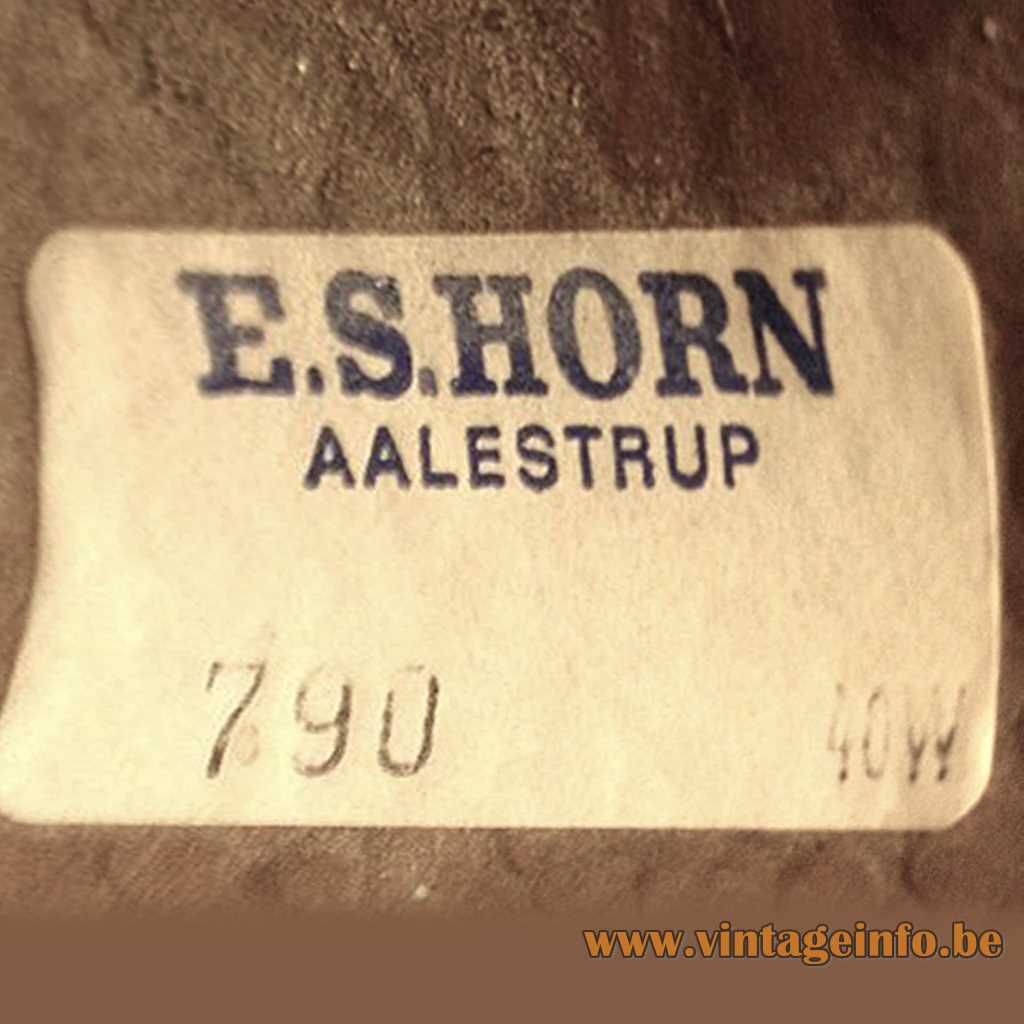
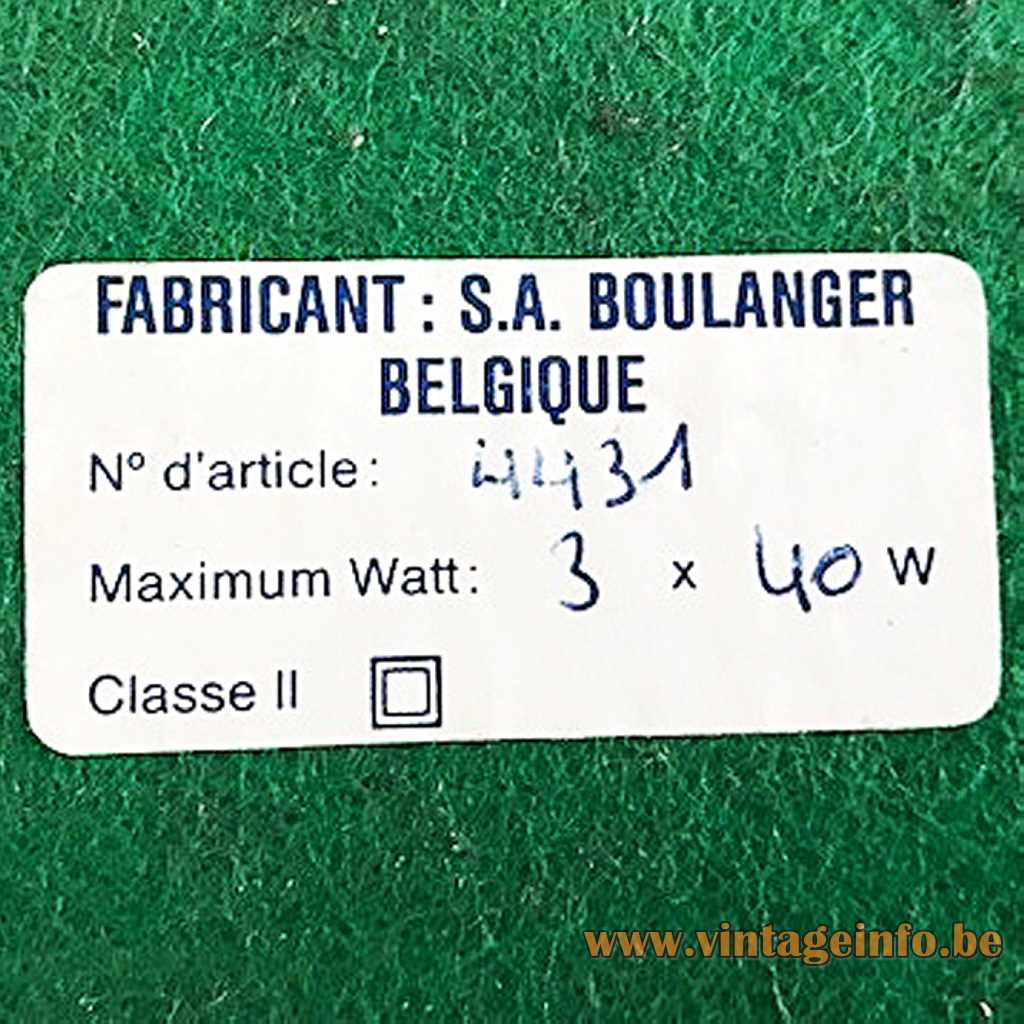
Saturn Tripod Table Lamp – Company Labels & Logos