- Categories
- Categories
Last 5 Viewed
Jordi Vilanova Table Lamp – Jordi Vilanova
Lighting designs
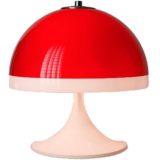
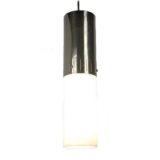
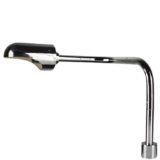
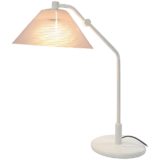
Jordi Vilanova’s lighting should be seen as an extension of his furniture-making and interior practice rather than as a classic “designer-for-industry” story. From his Barcelona studio and shop on Carrer Freixa (corner Ganduxer), he offered his own selection of furniture, lights and home accessories, and the same address also served as the base for interior projects and custom-made work for private homes, hotels, offices and public institutions. This studio-driven context helps explain why many lamps attributed to Vilanova circulate without a separate manufacturer name or catalogue reference.
One of his best documented lamp designs is Fanal, an original design from 1965. The name refers to a hand lantern (“fanal” in Catalan), and the model was conceived as a versatile light object that could be used as a table lamp or as a hanging/ceiling light. The design has later been reissued in contemporary editions, which underlines how strongly his lighting vocabulary is tied to everyday use, portability and atmosphere rather than purely decorative form.
More broadly, surviving Vilanova lamps reflect a consistent studio approach: clear construction, practical materials, and a calm modernist language often shaped by Nordic influences. In the late 1960s and 1970s, materials such as opal acrylic (methacrylate/Plexiglas) appear regularly in Spanish design for their durability and soft diffusion—perfectly aligned with small-series production and interior projects.
Links (external links open in a new window)
Jordi Vilanova – Barcelona Design Museum
Jordi Vilanova i Bosch – Wikipedia (only Spanish)
Vintageinfo
Many thanks to Lluís from Eclectique Vintagefor the photos.
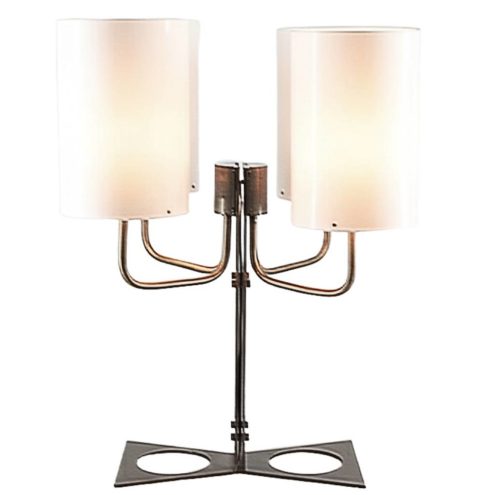
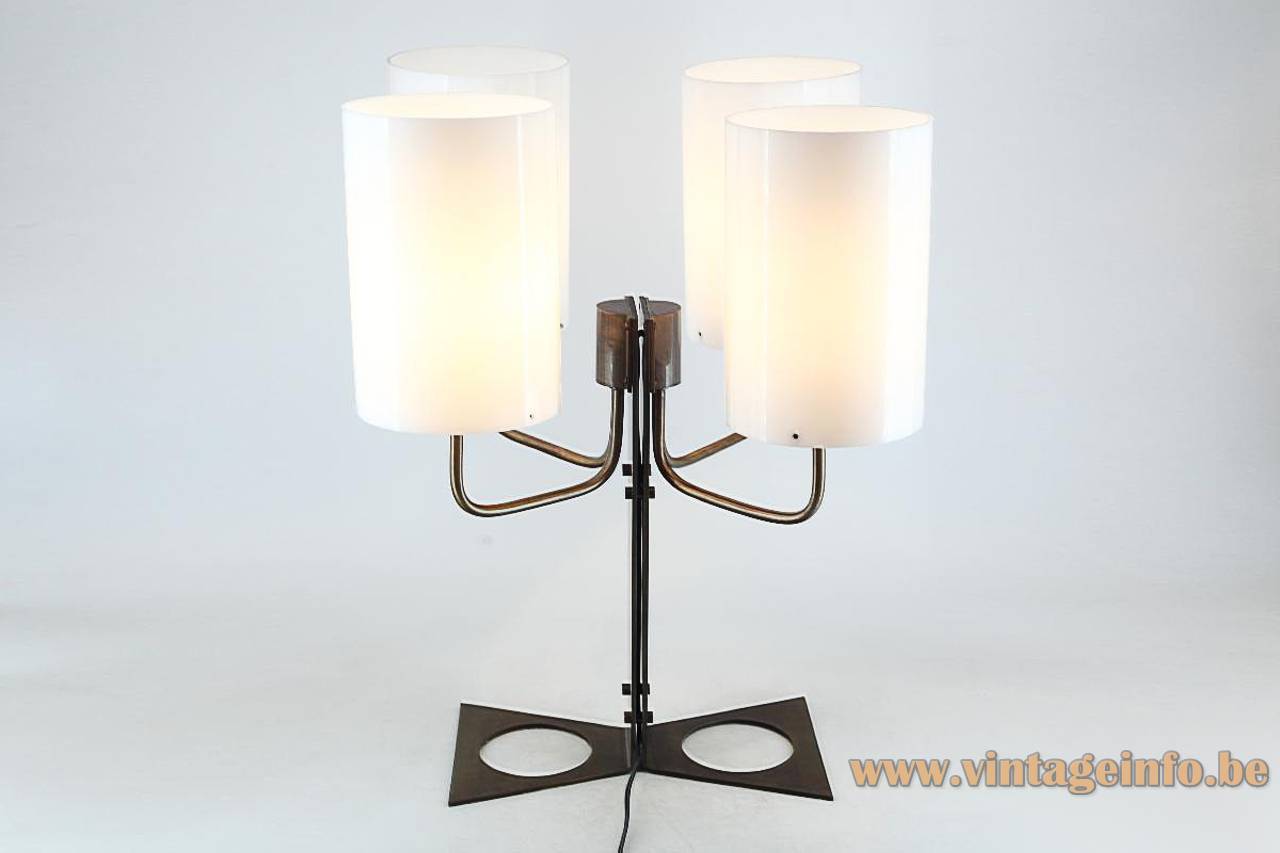
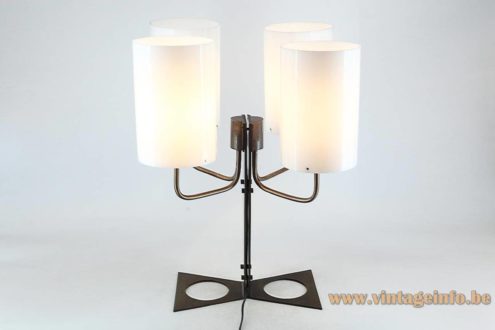
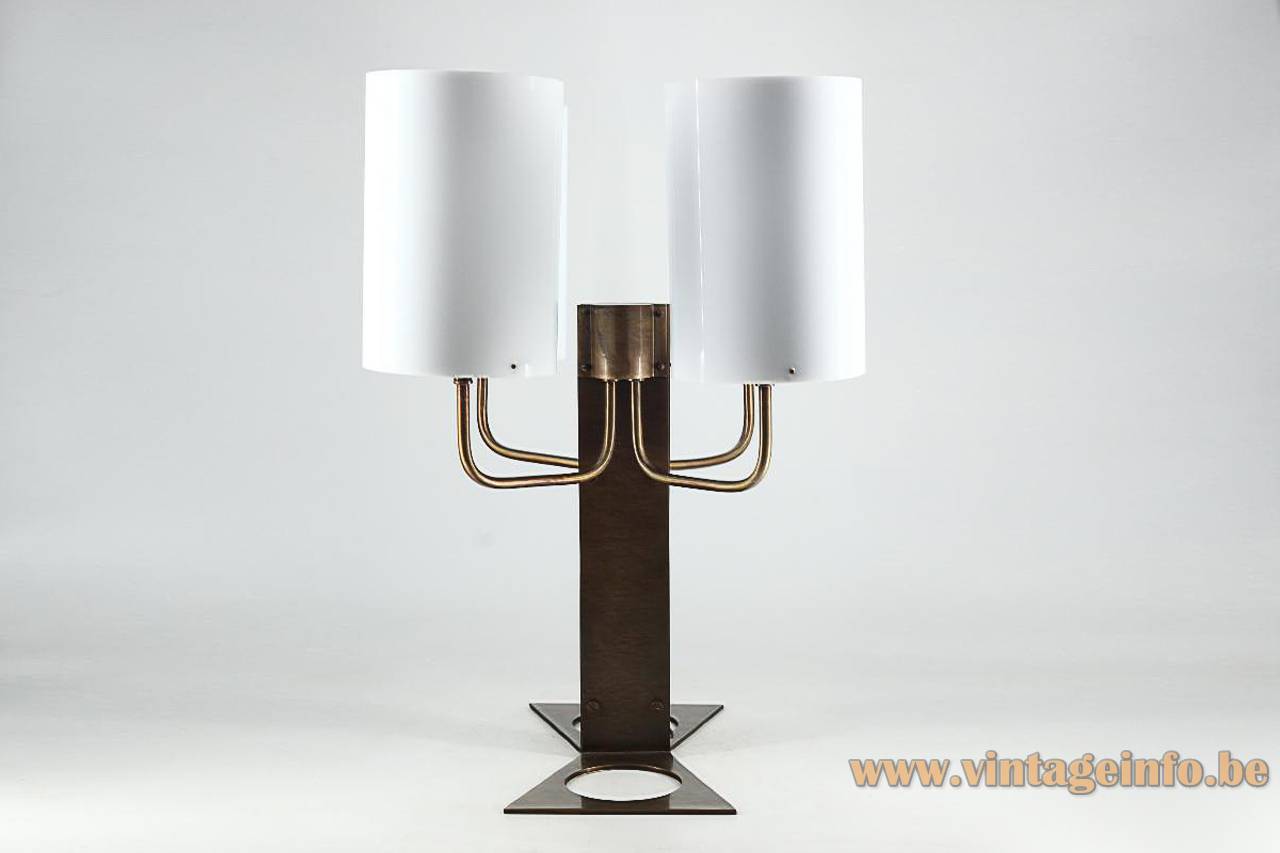
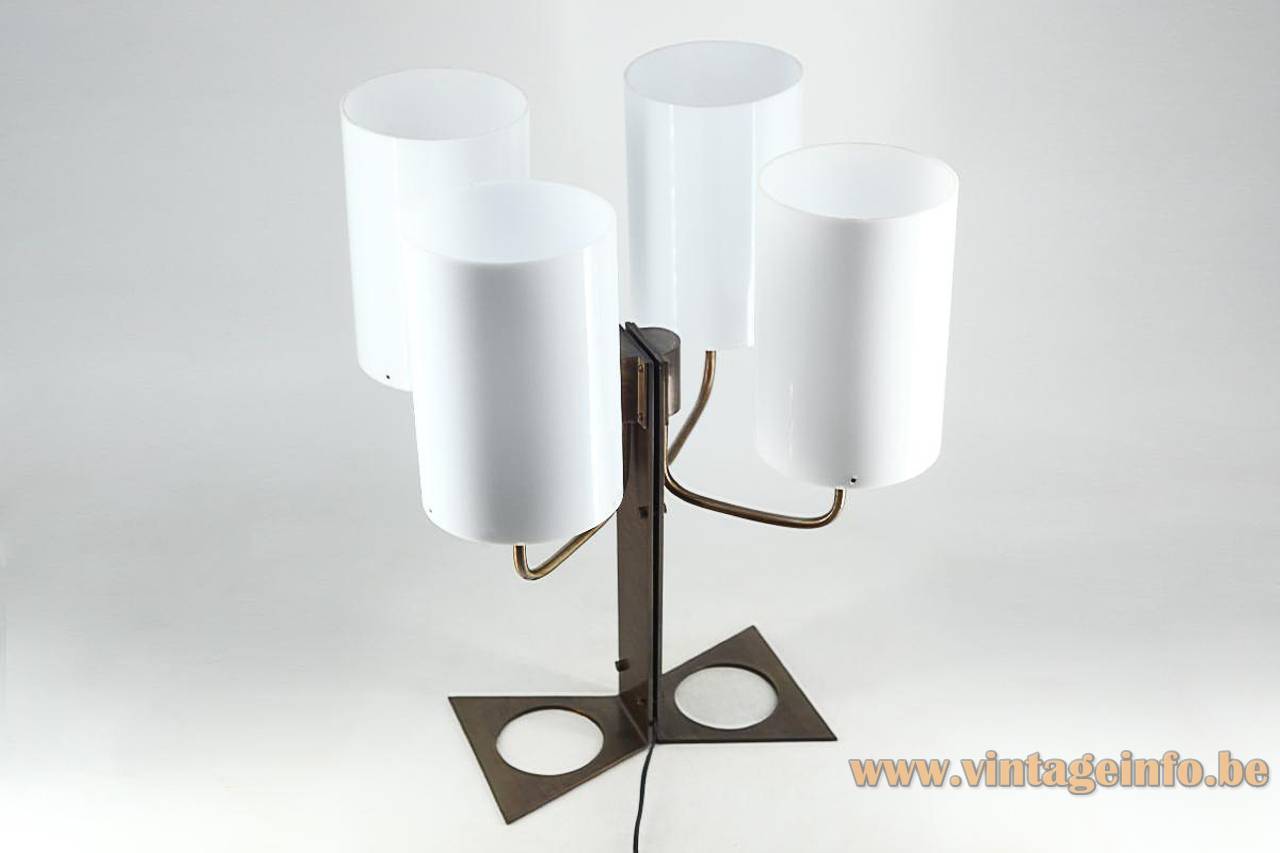
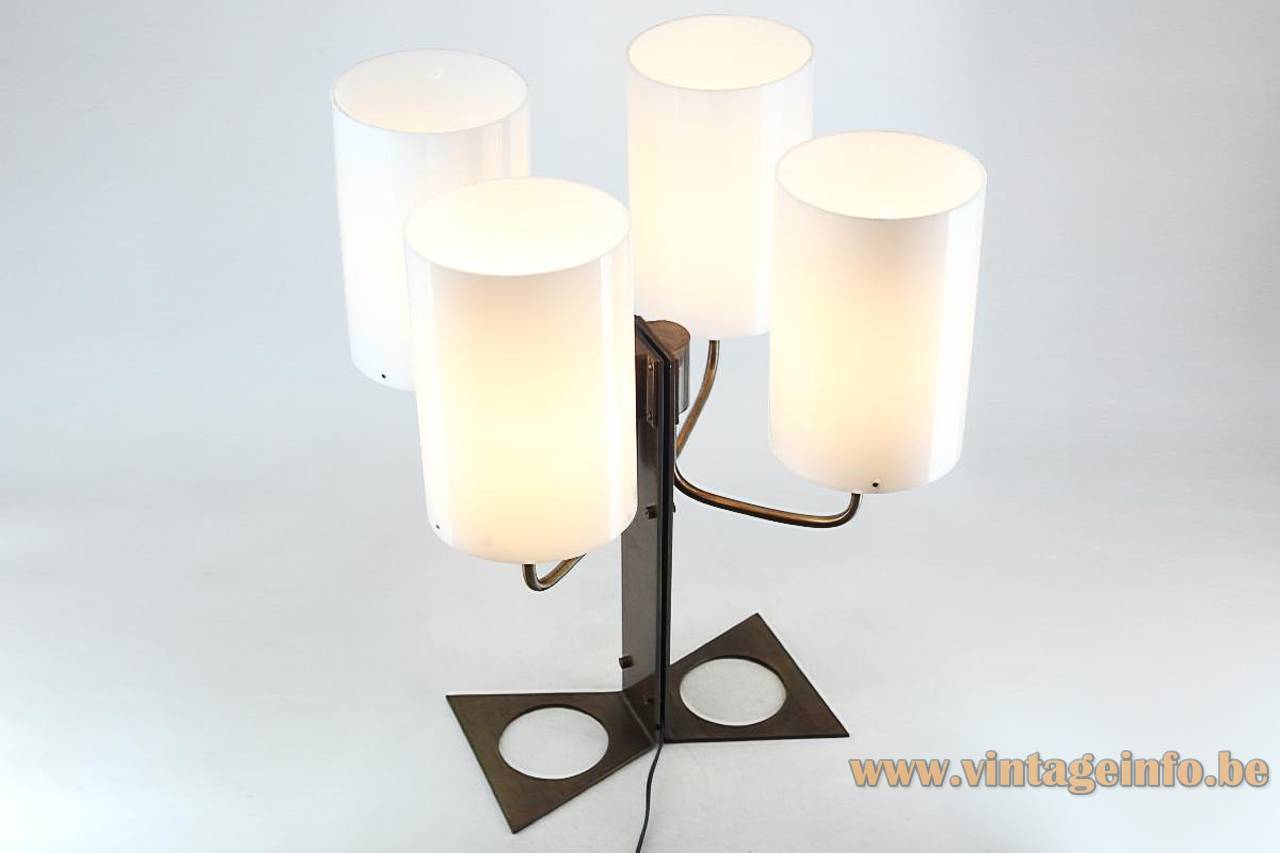
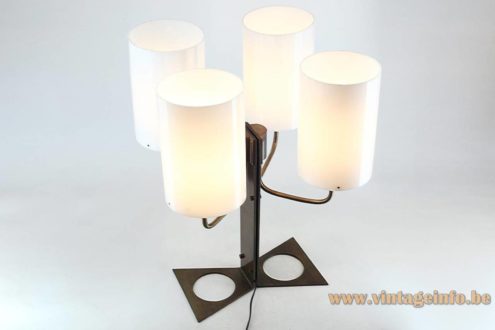
Jordi Vilanova Table Lamp
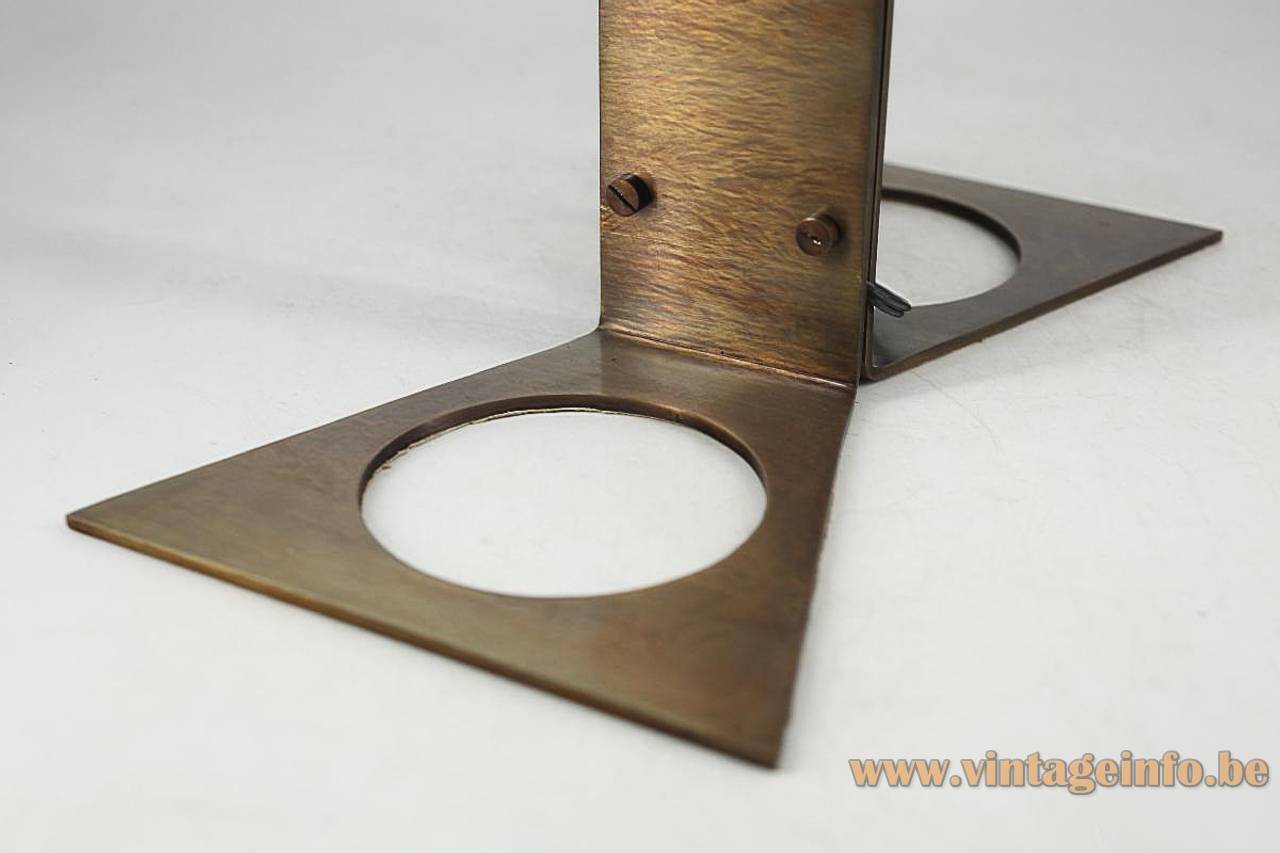
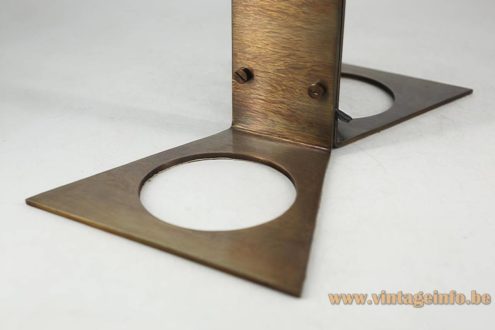
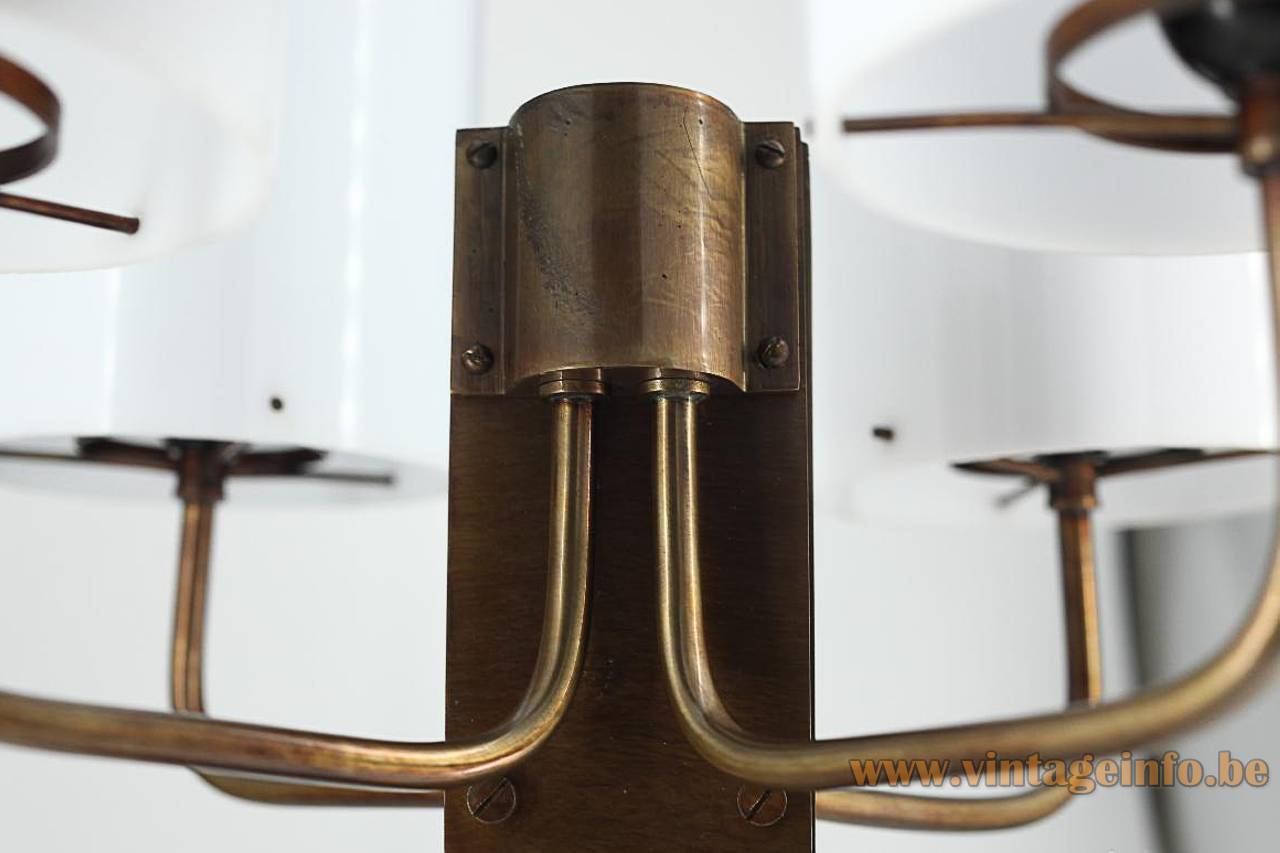
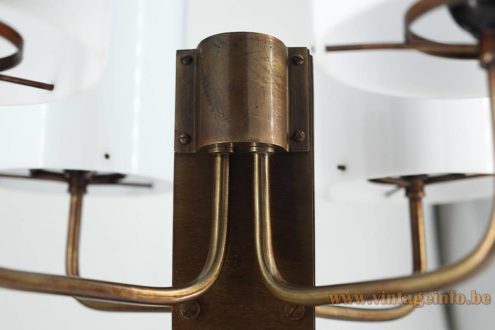
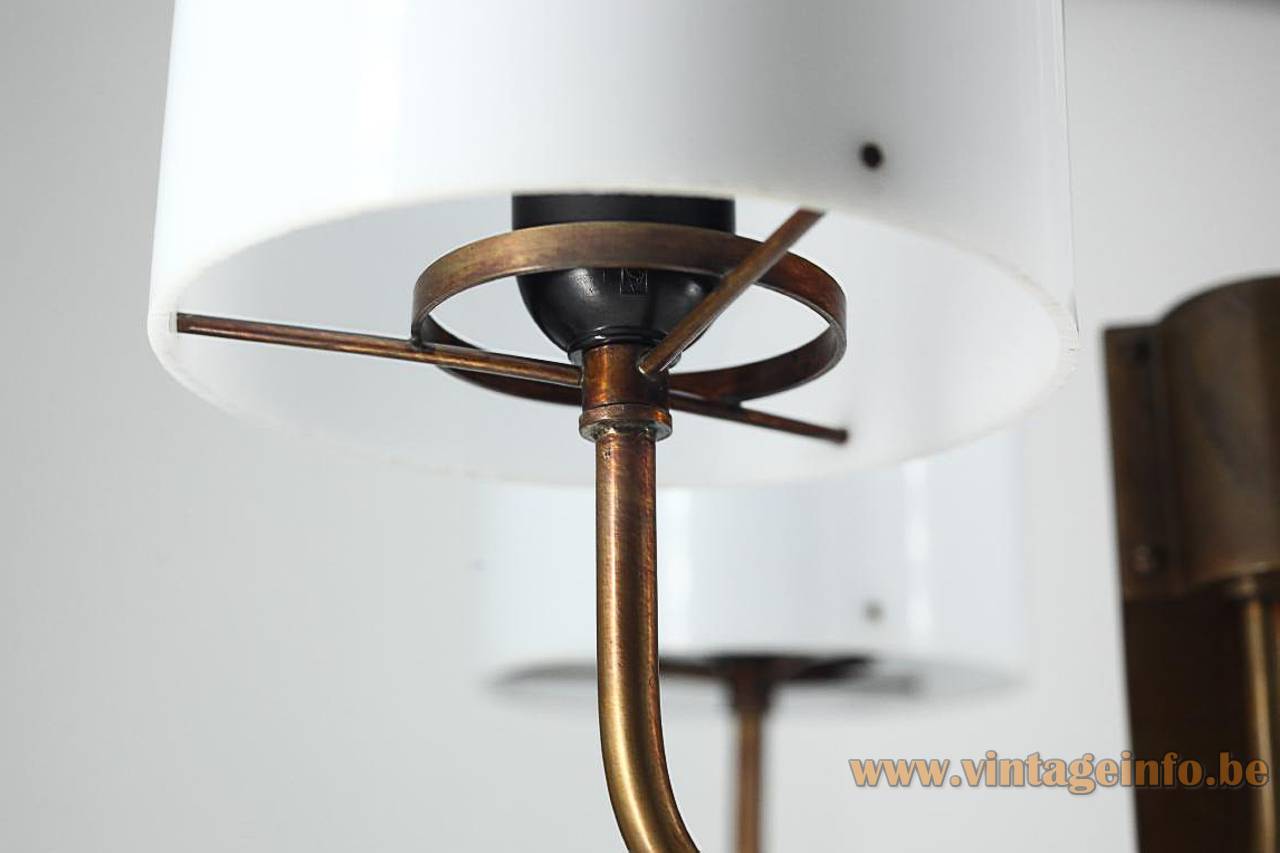
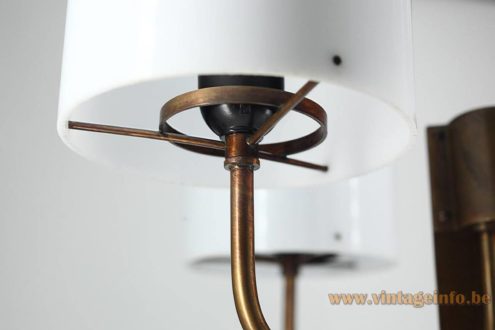
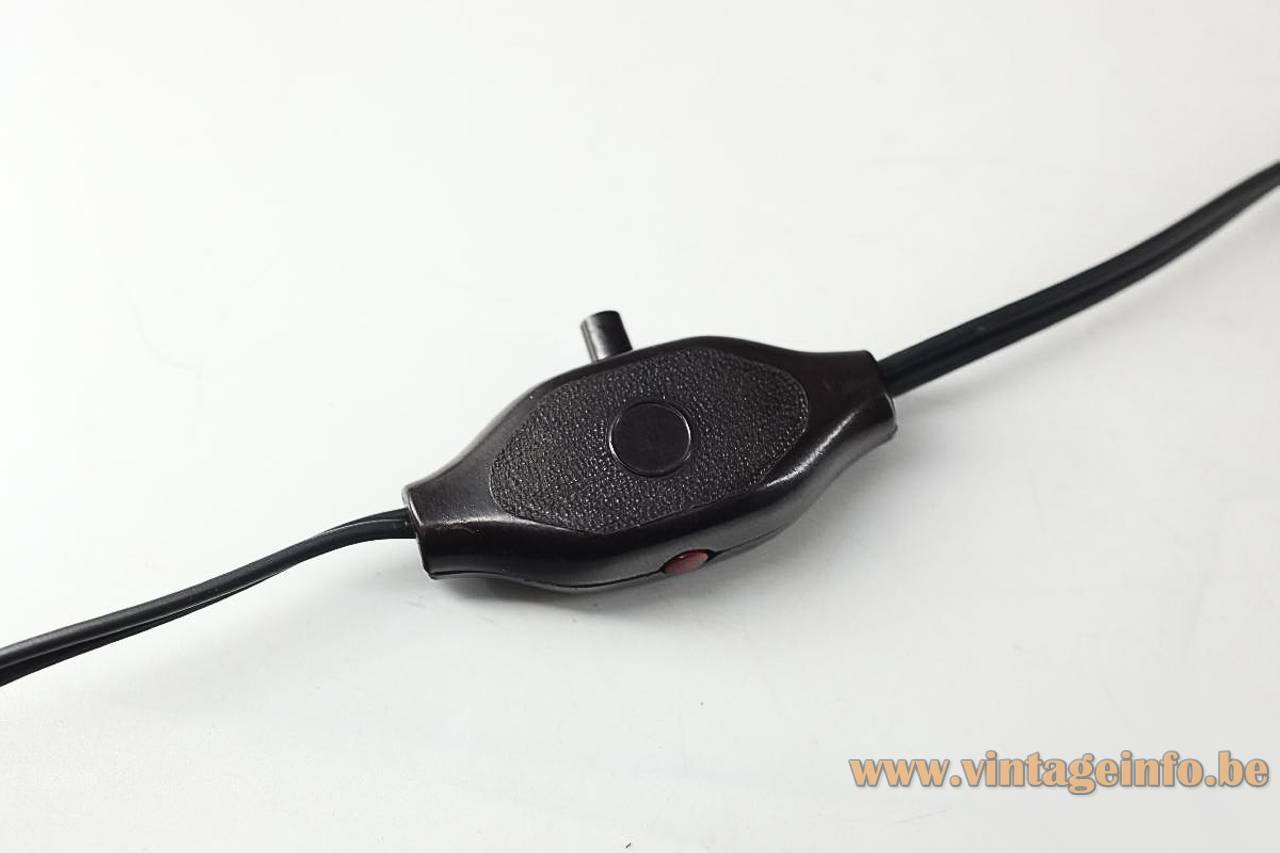
Materials: Butterfly style bronze-colored brass base, rods and parts. 4 tubular white acrylic lampshades. 4 Bakelite E27 lamp sockets.
Height: 56 cm / 22.04”
Width: 41 cm / 16.14”
Depth: 38 cm / 14.96”
Electricity: 4 bulbs E27, 4 x 60 watt maximum, 110/220 volt.
No specific type of light bulb is required; different types can be used.
Period: 1960s – Mid-Century Modern.
Designer: Jordi Vilanova.
Manufacturer: Jordi Vilanova, Barcelona, Spain.
Other versions: This Jordi Vilanova table lamp comes in a few variations. Also wall lamps, floor lamps and chandeliers were made. Jordi Vilanova created many lamps in this style.
Jordi Vilanova
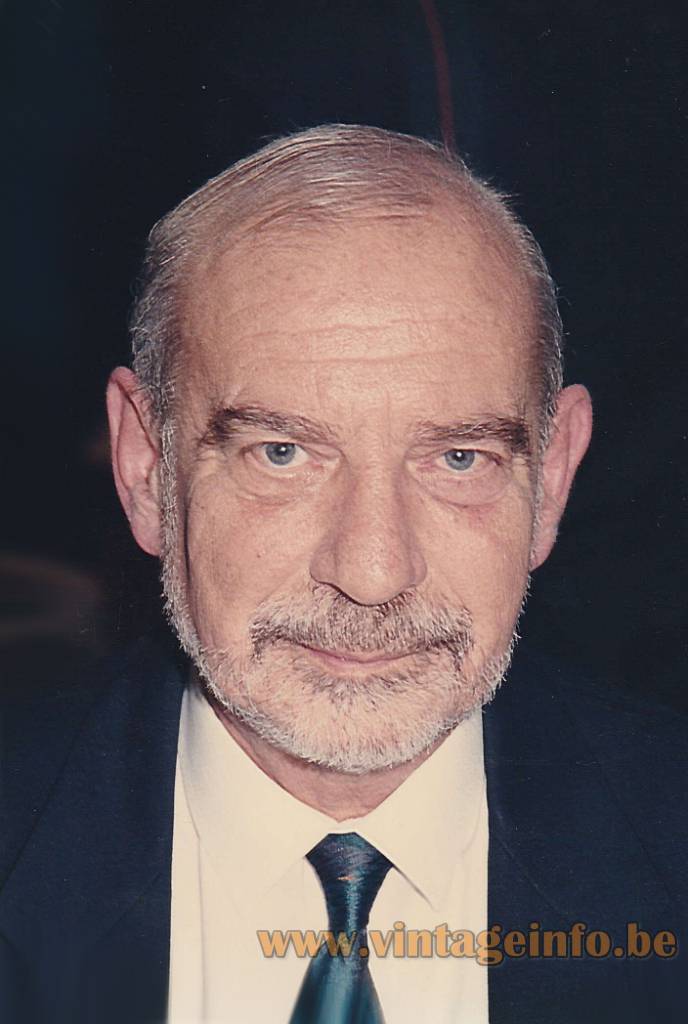
Jordi Vilanova i Bosch (Barcelona, 1925 – 1998) was a Catalan cabinetmaker, furniture designer, lighting designer and interior architect whose work developed largely outside the logic of industrial mass production. His career was closely tied to his own workshop and studio practice in Barcelona, where design, craftsmanship and interior architecture were treated as a single, integrated discipline.
Education and early career
Vilanova began his training in 1939 at the Escuela Industrial and the Escuela de la Lonja in Barcelona. At the same time, he worked as an apprentice cabinetmaker, first at Casa Busquets, a well-known workshop specialised in artistic furniture and interior decoration, and later in the studio of cabinetmaker Lluís Gili. This dual education—formal training combined with hands-on craftsmanship—would remain a defining aspect of his work throughout his career.
In 1952, Jordi Vilanova established himself independently as an interior designer and furniture maker, and shortly afterwards also began designing lighting. From 1955 onwards, he focused increasingly on research and design for children’s and youth furniture and interiors, developing innovative and functional proposals that departed from conventional domestic furniture of the period.
Recognition and awards
Vilanova’s work gained wider recognition in the early 1960s. In 1964, he was awarded the Delta de Plata by ADI FAD for the Delta children’s stool, a design that exemplifies his interest in functionality, proportion and everyday use. This award firmly placed him within the progressive design culture of post-war Barcelona.
Studio, shop and atelier
In 1960, Jordi Vilanova opened a studio and shop at Carrer Freixa, on the corner with Ganduxer, in Barcelona. This space functioned simultaneously as a showroom, design studio and point of contact with clients. The shop remained active until 2005, well beyond Vilanova’s lifetime, underlining the continuity and coherence of his design philosophy.
From this location, Vilanova offered a personal and coherent collection of furniture, lighting and interior accessories, strongly influenced by Nordic design, yet adapted to Mediterranean domestic culture. The studio also developed custom interior and furniture projects for a wide range of contexts, including private homes, hotels, bank headquarters, shops, offices and social and healthcare facilities.
La Cantonada and small-series production
Between 1960 and 1975, Jordi Vilanova was a founding member of La Cantonada, a multidisciplinary group formed together with jeweller Aureli Obispo, painter Joan Vila-Grau, ceramist Jordi Aguadé and architect Jordi Bonet. The group advocated the production of objects in small series, adapted to everyday life and rooted in the values of craftsmanship, as a counterbalance to the growing acceleration and standardisation of industrial products.
La Cantonada regularly presented its work at Hogarotel between 1960 and 1972 and participated in several international fairs, including events in New York and Paris. In 1962, the group took responsibility for Ars Sacra, an institution dedicated to church restoration and decoration, with the aim of creating more austere and contemporary liturgical objects. The group also founded the magazine Cuestiones de Arte (1967–1974), further contributing to the theoretical and cultural debate around design and craftsmanship.
Lighting, furniture and interiors
Vilanova’s lighting designs should be understood within this broader context of studio-based production and interior design. His lamps were often conceived as part of complete interiors rather than as isolated commercial products. As a result, many designs were produced in limited numbers or as bespoke pieces, frequently without model names or manufacturer markings.
His furniture and lighting share a consistent approach: clear structural logic, restrained geometries, and a careful balance between modernist rigor and material warmth. Materials such as wood, metal and acrylic were used pragmatically and expressively, in line with his background as a cabinetmaker and interior architect.
Professional affiliations and legacy
Jordi Vilanova was a member of several professional and cultural organisations, including FAD, the College of Interior Decorators and Designers of Barcelona, the Colegio Nacional Sindical de Decoradores, and the American National Society of Interior Designers (NSID).
His professional archive, preserved at the Design Museum of Barcelona, documents nearly forty years of activity and includes drawings, plans, photographs, project documentation, exhibition material and an extensive specialised library. This archive confirms the breadth of his work and the central role of his own studio in both design and production.
Position within Spanish design
Jordi Vilanova occupies a distinctive position within Catalan and Spanish post-war design, representing a model in which designer, craftsman and producer often coincide. This context explains why many of his lamps and furniture pieces are today attributed simply to “Jordi Vilanova”, without reference to an external manufacturer: in many cases, the designer himself was also the maker.