- Categories
- Categories
Last 5 Viewed
Links (external links open in a new window)
Associazione Italiana di Illuminazione website (AIDI)
Vintageinfo
Many thanks to Frank from Flowermountain for the pictures.
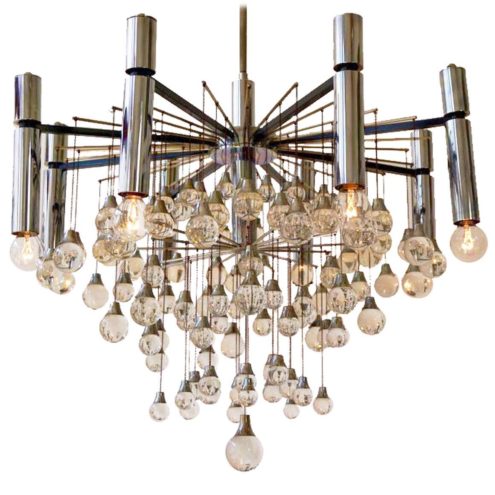
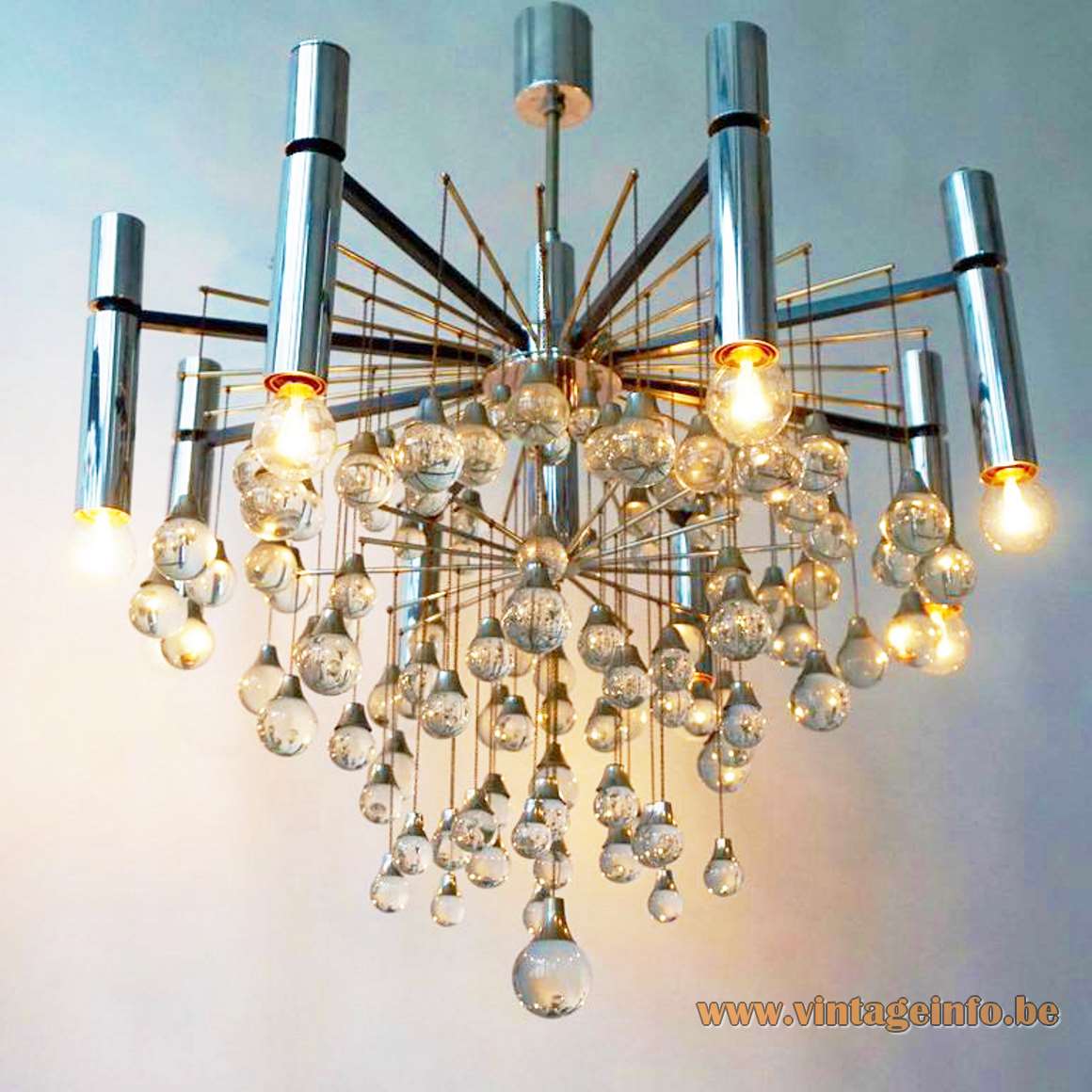
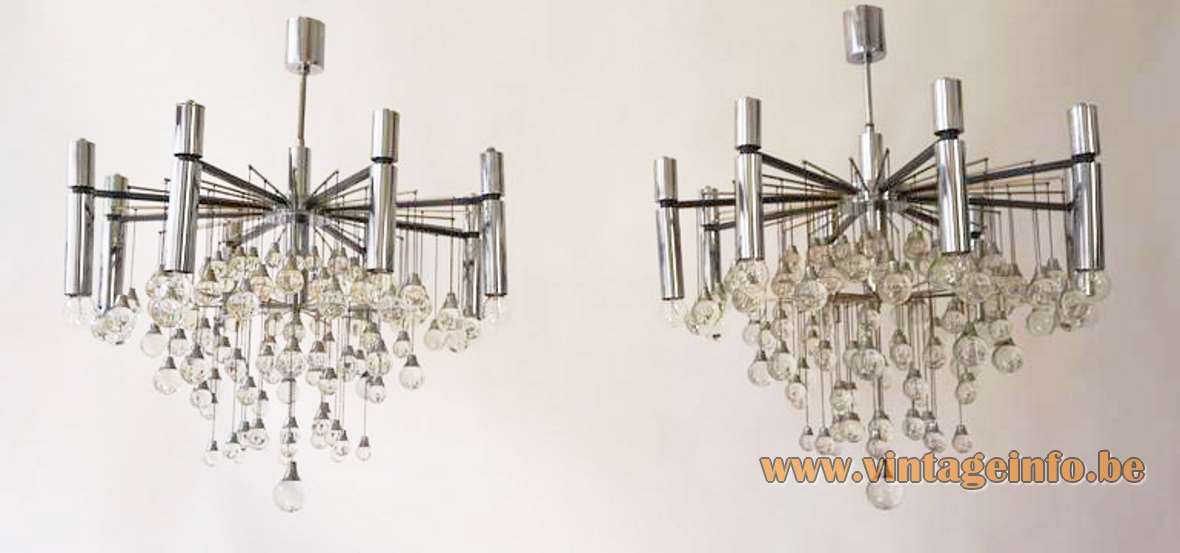
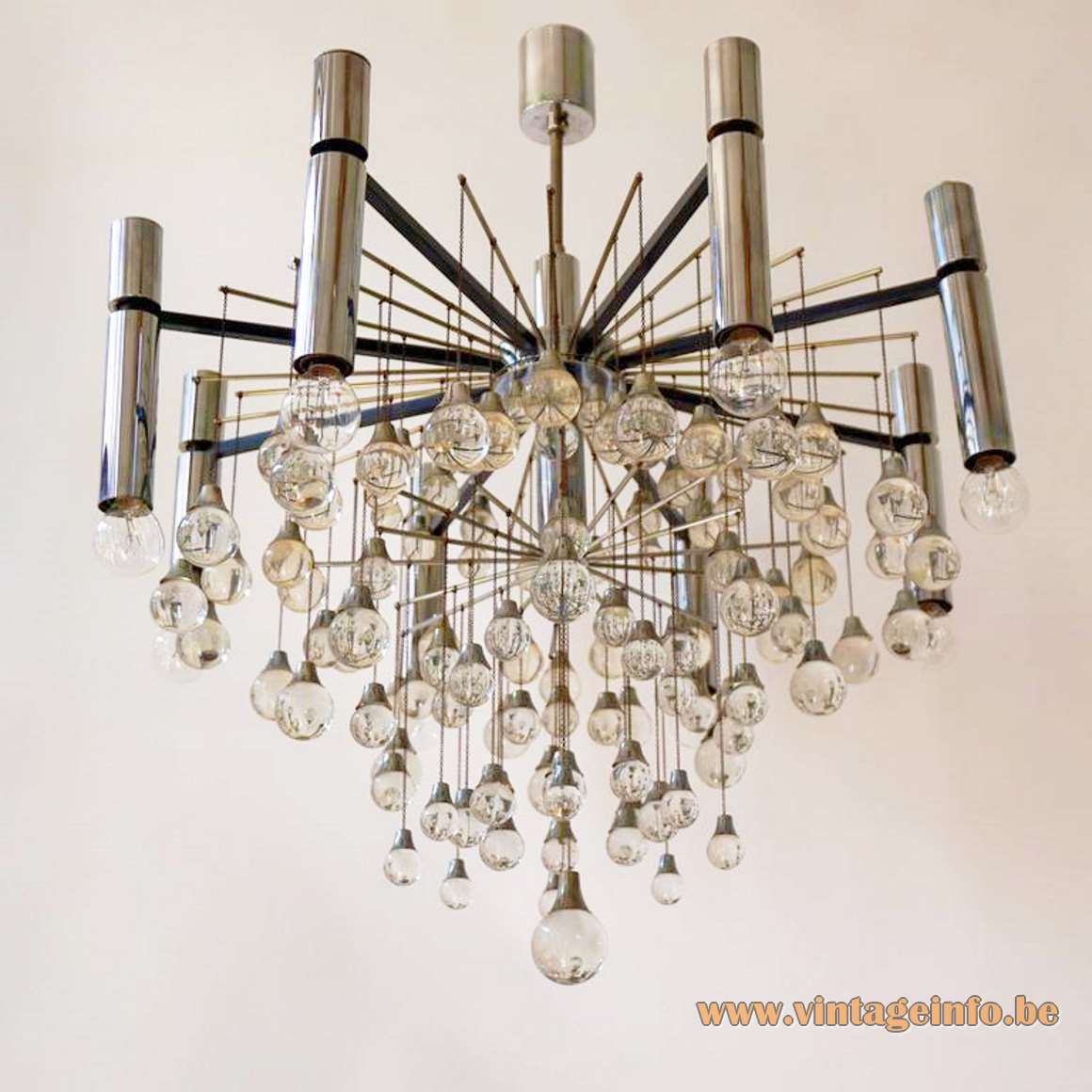
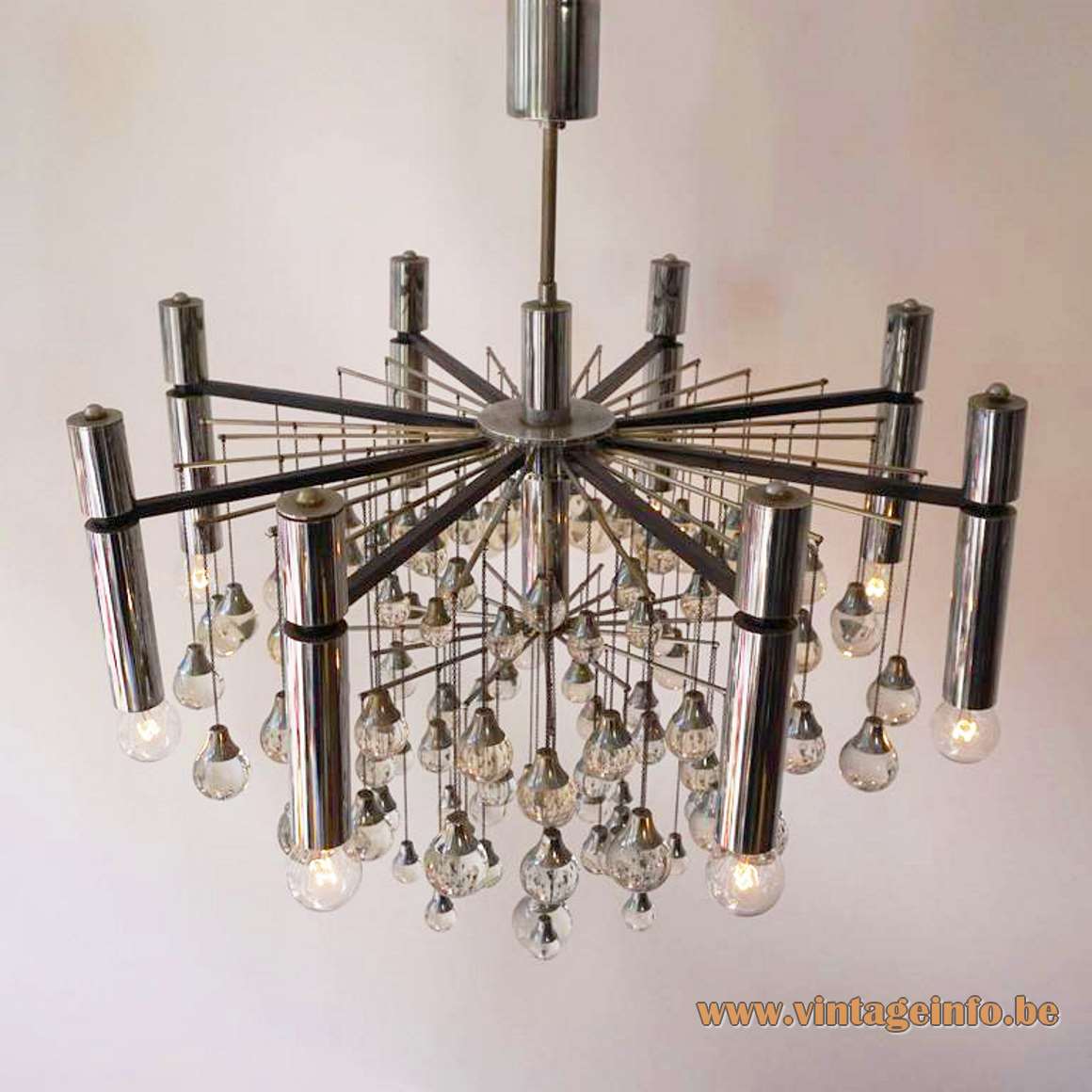
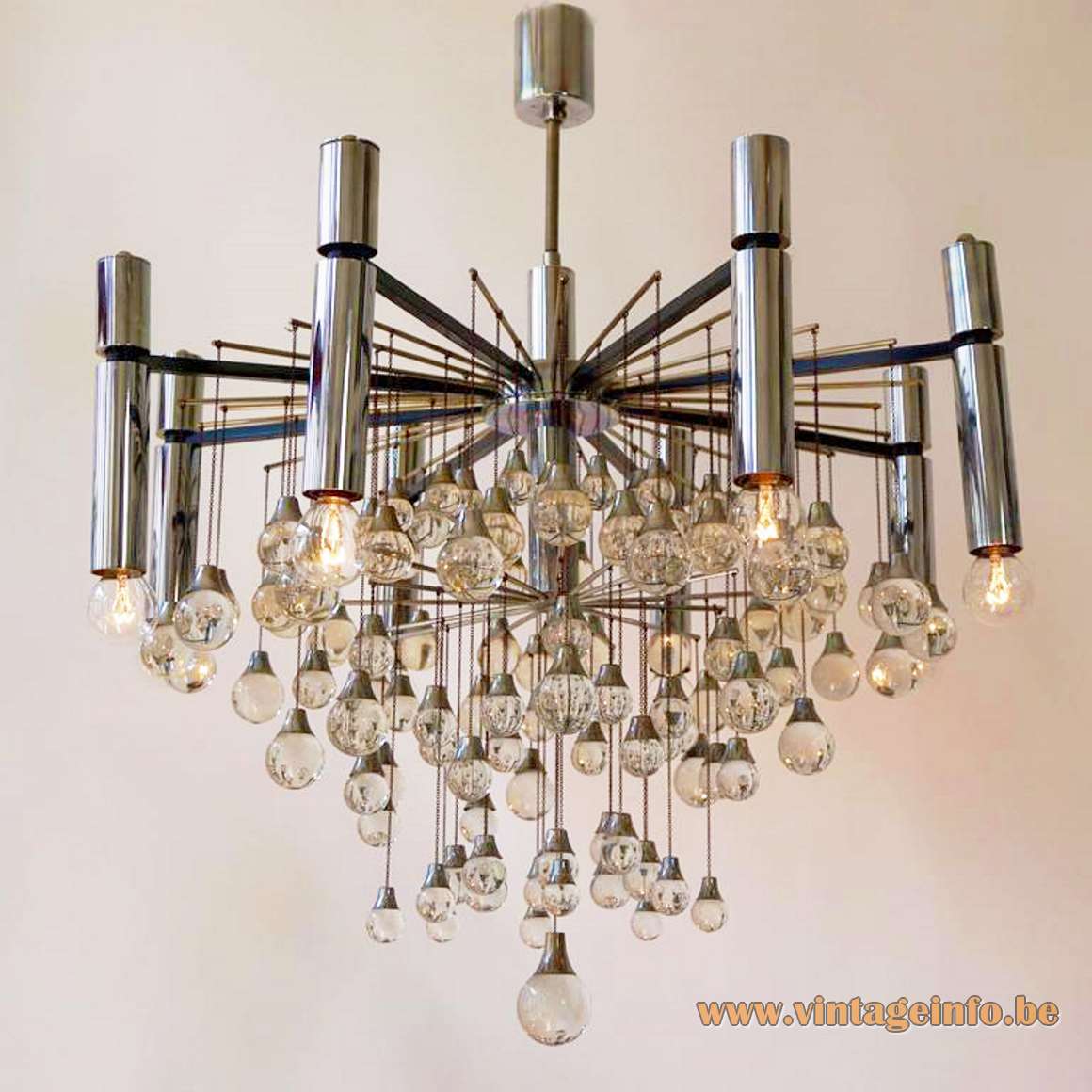
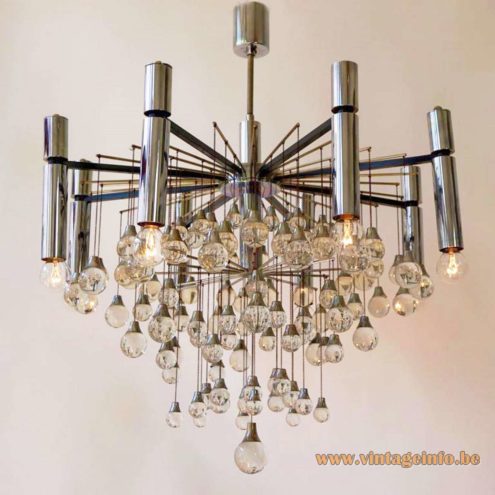
Gaetano Sciolari Crystal Drops Chandelier
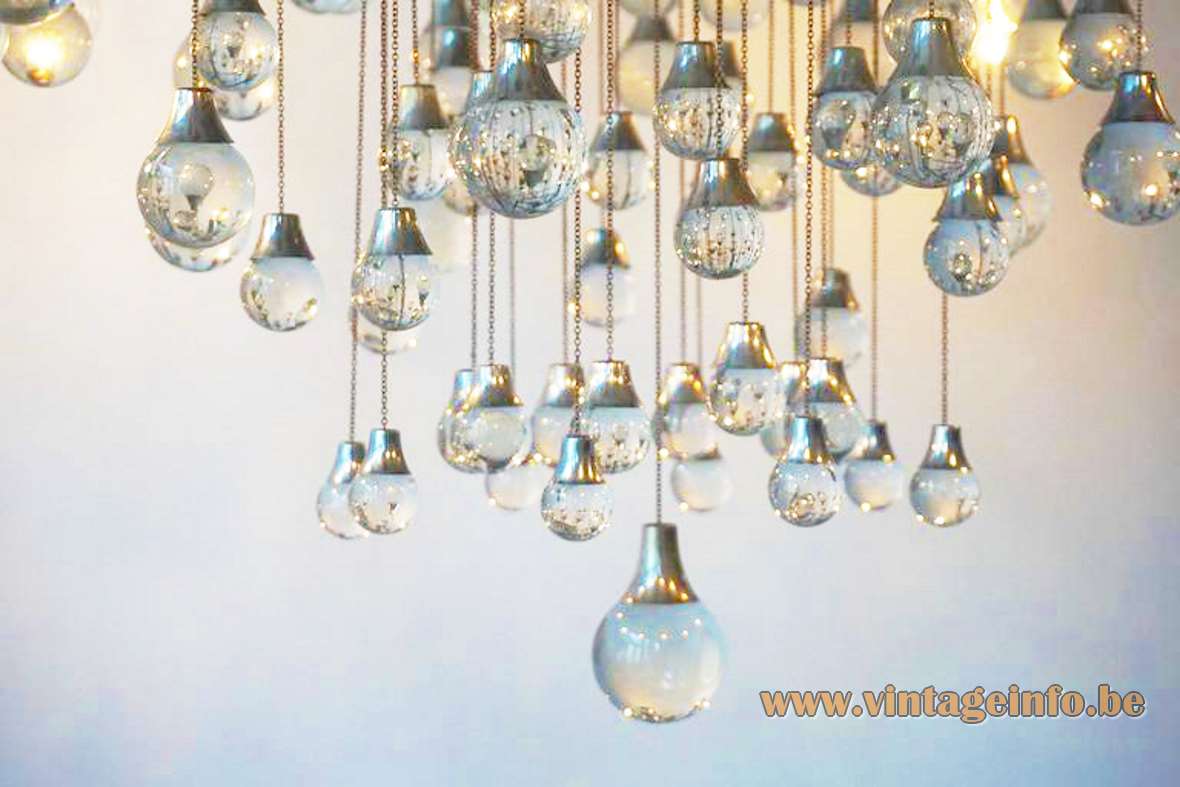
Materials: Round lampshade made of chromed metal rods, tubes and parts in iron and brass. Black rectangular rods. Thin brass rods. Crystal bubble glass beads or pearls in a drop form. Metal chains. Chrome rod and canopy. 8 Bakelite E14 sockets.
Total Height: 75 cm / 37.79”
Width: ∅ 65 cm / 21.25”
Electricity: 8 bulbs E14, 8 x 40 watt maximum, 110/220 volt.
No specific type of light bulb is required; different types can be used.
Period: 1960s, 1980s – Mid-Century Modern.
Designer: Gaetano Sciolari (1927-1994).
Manufacturer: Société Anonyme Boulanger, Anderlecht, Belgium.
Other versions: This Gaetano Sciolari crystal drops chandelier exists in several versions. The glass drops were used for several different chandeliers and wall lamps. They were also produced by Sciolari Illuminazione.
Angelo Gaetano Sciolari
Angelo Gaetano Sciolari (1927–1994) was an Italian designer and lighting manufacturer, celebrated for his sculptural chandeliers and modular, architectural lighting from the 1950s–1970s. Trained in architecture, he took over the family business in 1949 and expanded it into an internationally recognised brand. Sciolari’s most distinctive designs combine strong geometry with luxurious materials such as brass, chrome and crystal elements, resulting in dramatic yet refined compositions that became emblematic of 1960s and 1970s interiors. Besides producing lamps under his own name in Rome and Milan, he also designed for other manufacturers and distributors abroad, including Boulanger in Belgium. For a more extensive biography and additional background on Sciolari’s work and collaborations, see the full profile here.
S.A. Boulanger
S.A. Boulanger was founded in Anderlecht, Belgium in 1945. The company specialised in metal processing and manufactured high-end lighting fixtures.
Many of its models were designed by Gaetano Sciolari, which explains the strong stylistic overlap with Italian lighting of the period.
In the 1980s, the company changed its name to Les Ateliers Boulanger NV. For a long time, these were believed to be two separate companies, partly due to incorrect information circulated by traders who claimed the lamps were produced in Herstal (near Liège). However, this appears to have been a misunderstanding; the company originated in Anderlecht and later relocated.
In 1996, the company employed 11 people. In 1998, it moved to Martelarenlaan 155, 3010 Kessel-Lo (near Leuven). Between 1995 and 2001, Jean-Philippe Spalart served as CEO. During that period, feasibility studies were conducted to relocate production to China, Eastern Europe and Africa, including plans involving Zimbabwe.
Les Ateliers Boulanger ceased operations in 2006.
Massive & Boulanger
Over the years, Massive distributed several Boulanger models. The main differences typically concern the canopy (ceiling cap) and certain hardware components specific to Massive.
Company profile (1990s)
In the 1990s, Boulanger operated primarily in the high-end lighting segment in Belgium, Germany and Luxembourg, with growing export markets in the United States and South Africa. At that time, the company positioned itself in a competitive market by focusing on products with high added value. Most Boulanger lamps were low-voltage and halogen models (220V up to 300W or 12V up to 50W).
Products were distributed through retail channels. In Belgium, approximately 300 retail shops carried the brand, with around 40 additional retailers abroad (including Luxembourg, Germany, France and South Africa). Major Belgian competitors during that period included Massive (market leader in Europe at the time), Deknudt (Deerlijk), and several other domestic manufacturers of similar scale. The company remained relatively small, with an annual turnover of approximately 300,000 EUR.
Gaetano Sciolari Crystal Drops Chandelier – Company Label