- Categories
- Categories
Last 5 Viewed
Video: Lino Tagliapietra at work

Lino Tagliapietra at The Studio: Making “Africa”

Links (external links open in a new window)
Facebook Lino Tagliapietra Inc
Murano glass blowing – Wikipedia
Museo del Vetro – Murano glass Museum
Vintageinfo
Another Lino Tagliapietra table lamp
Many thanks to Frank from Flowermountain for the pictures.
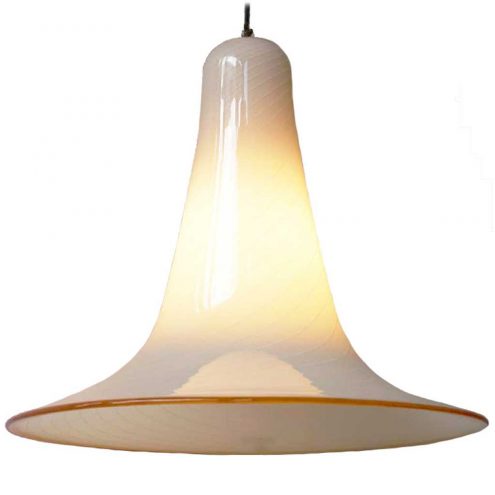
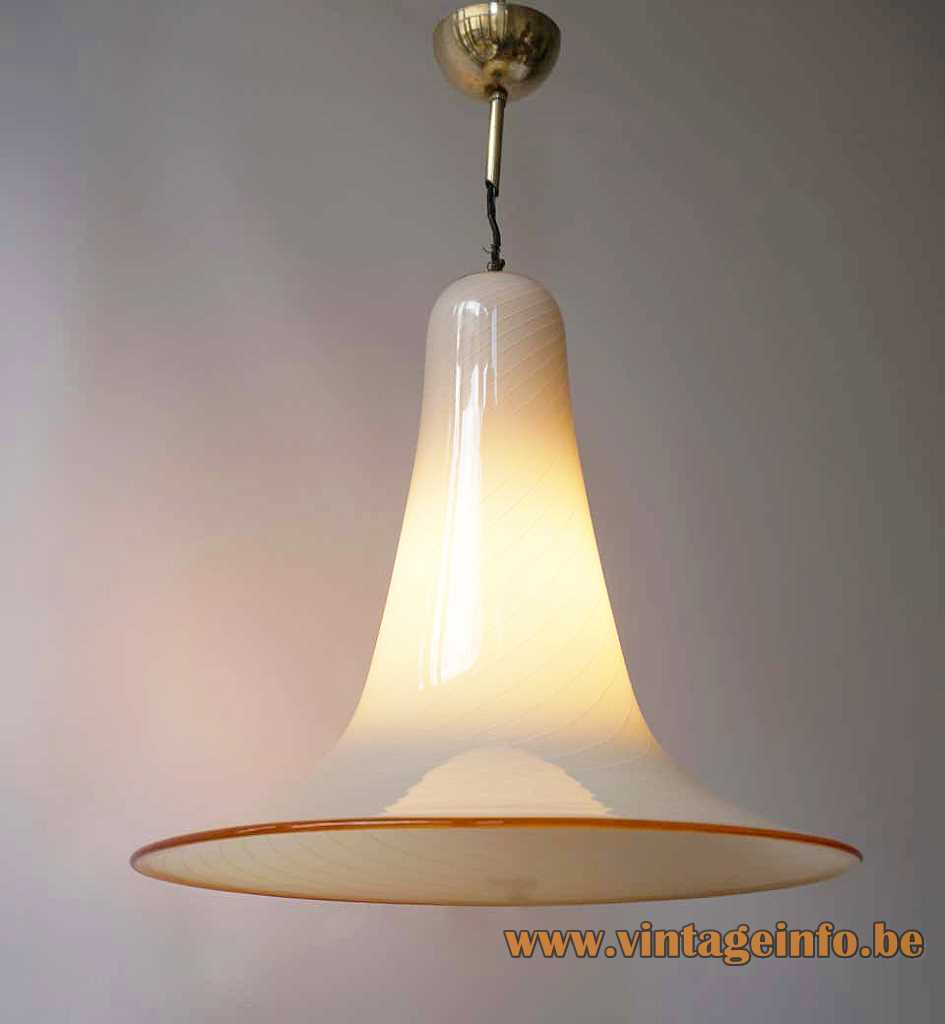
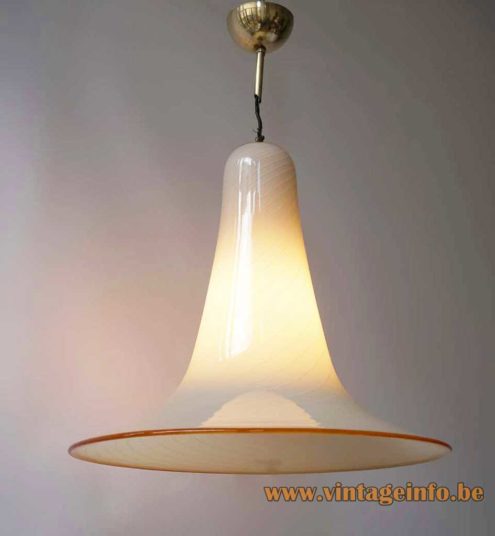
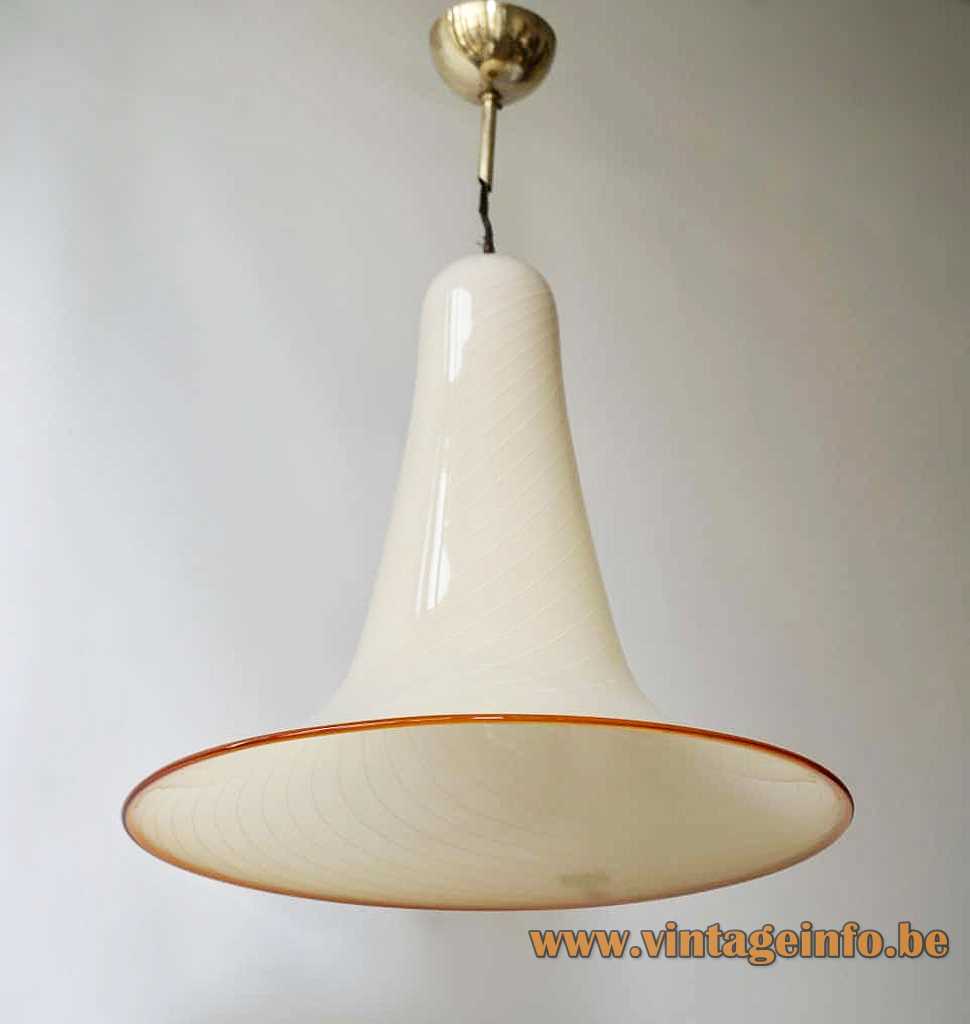
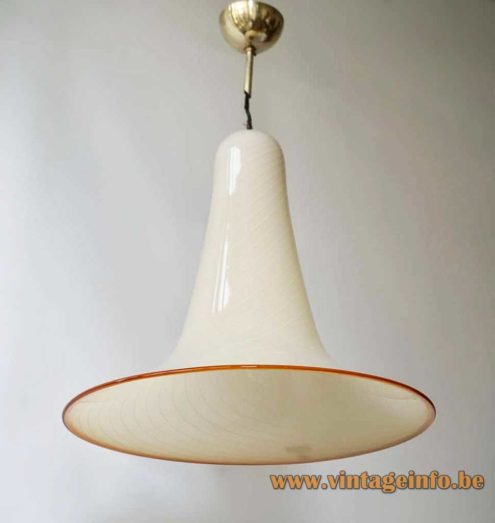
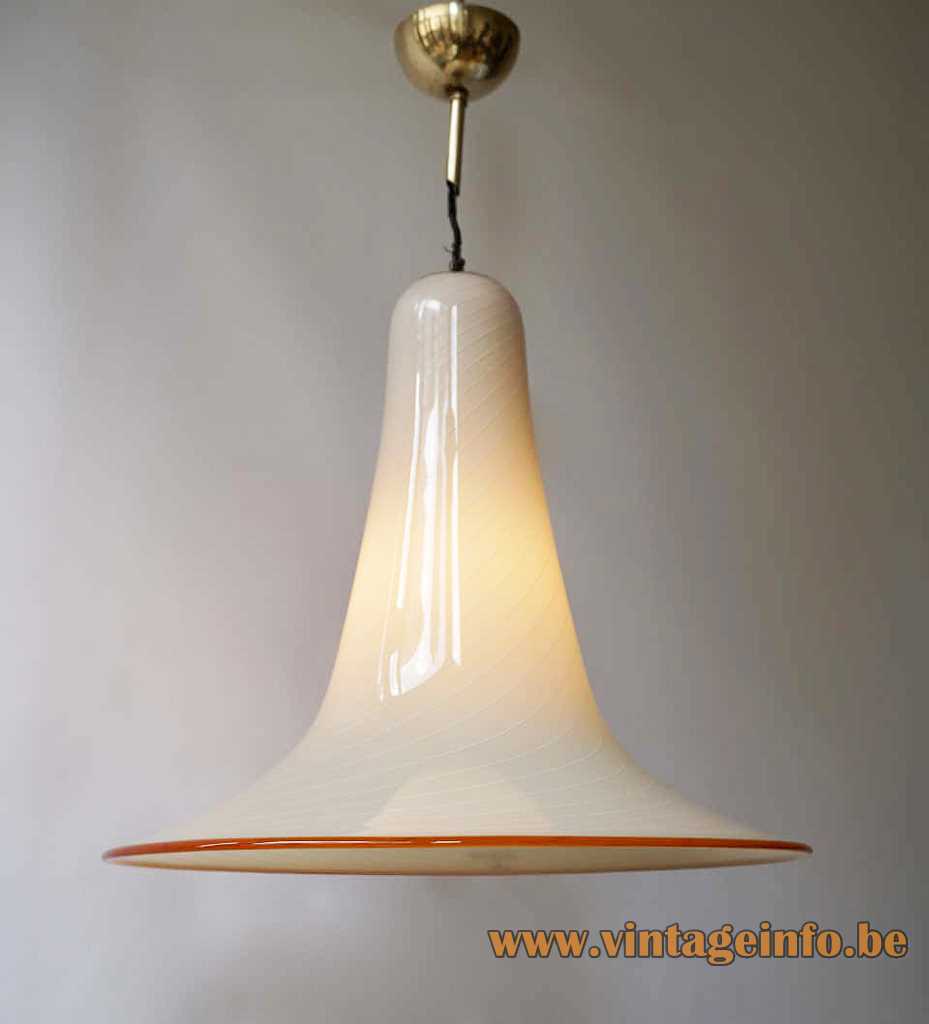
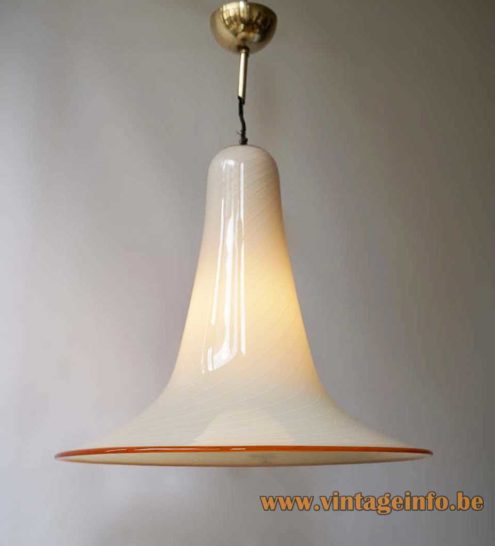
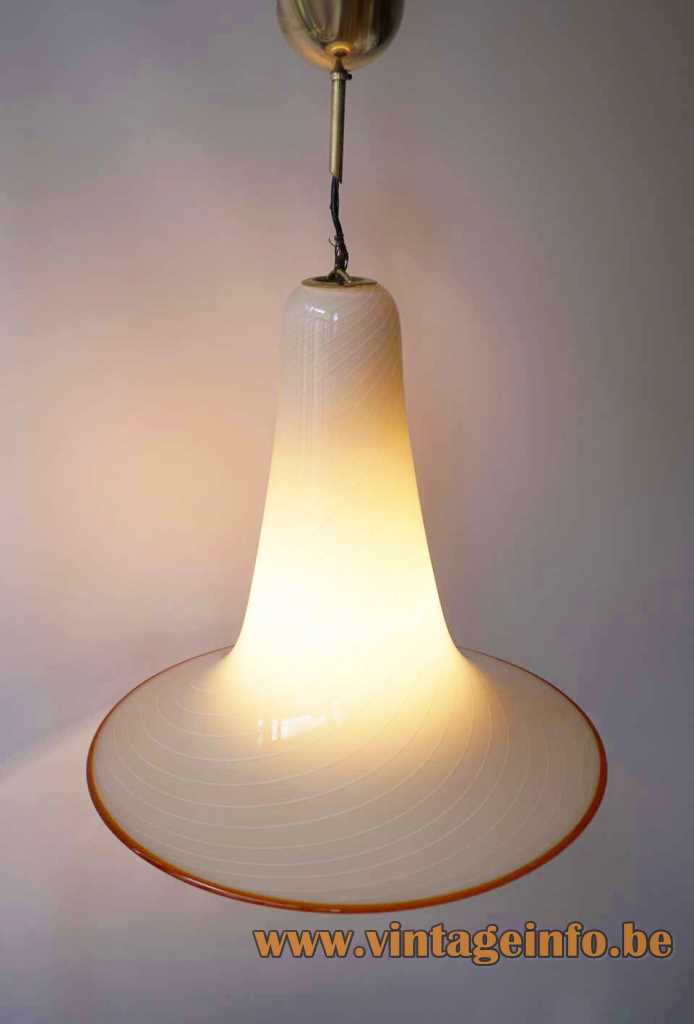
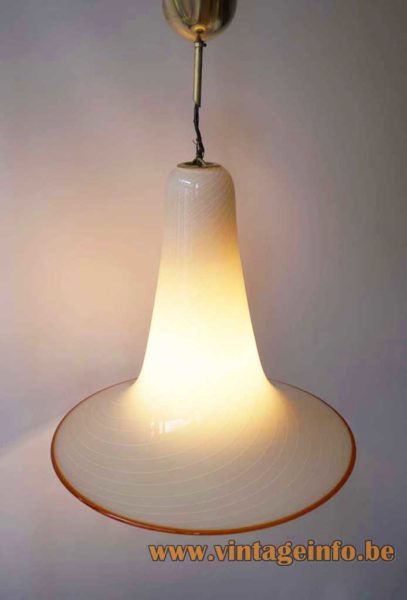
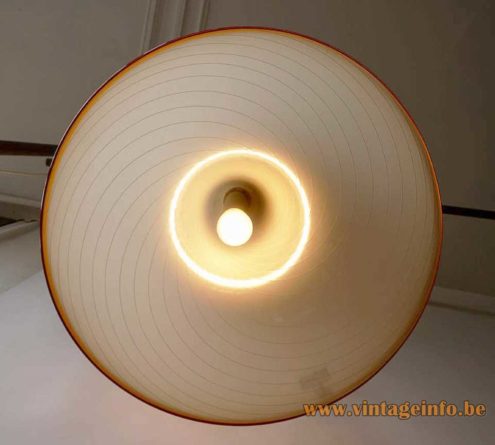
Effetre Murano Trumpet Pendant Lamp
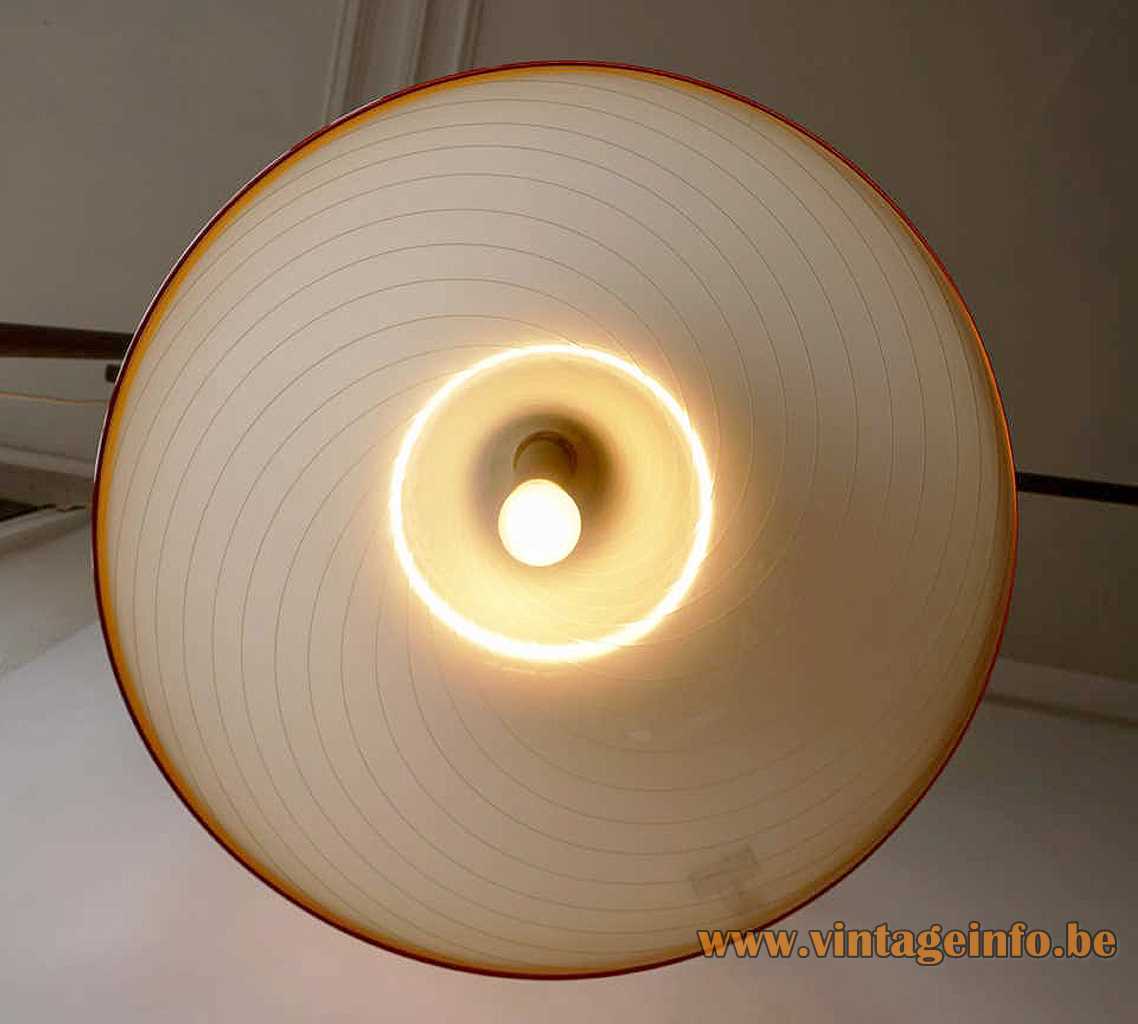
Materials: Hand-blown trumpet or bell style lampshade in white striped glass with a red rim. Some brass parts. Bakelite E27 socket.
Cord Length: 30 cm / 6.29”
Height: 50 cm / 23.62”
Width: ∅ 54 cm / 14.96”
Electricity: 1 bulb E27, 1 x 75 watt maximum, 110/220 volt.
No specific type of light bulb is required; different types can be used.
Period: 1970s, 1980s – Mid-Century Modern.
Designer: Lino Tagliapietra – attributed.
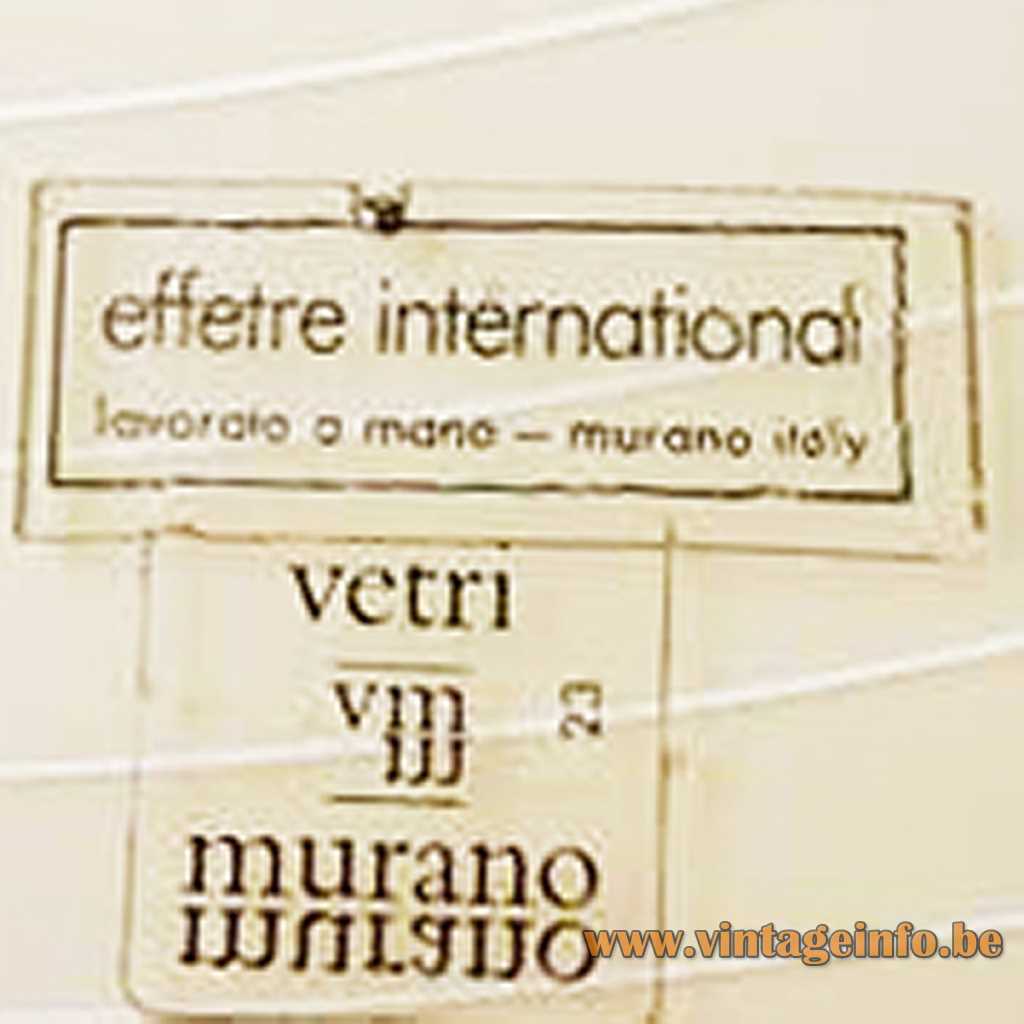
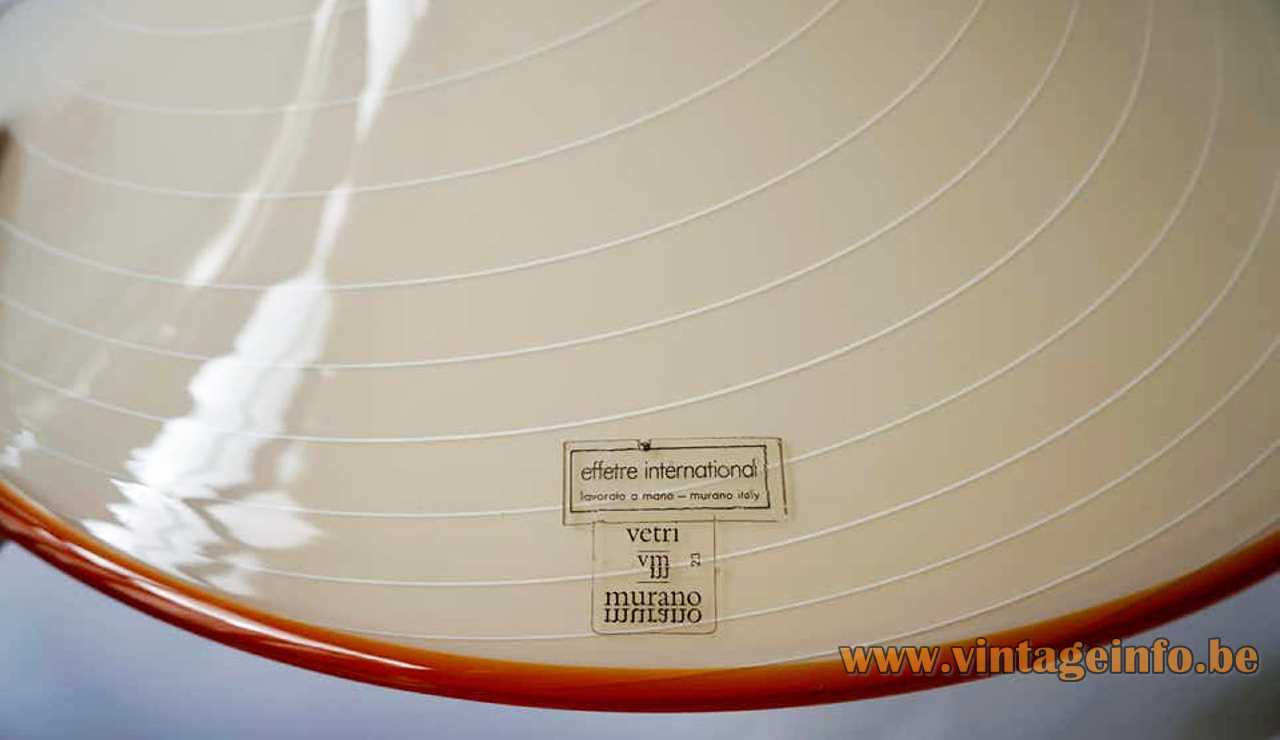
Manufacturer: Effetre International, Fondamenta San Giovanni Dei Battuti 4/A, 30141 Murano, Italy
Other versions: This Effetre Murano trumpet pendant lamp was in all probability produced in several variations.
Lino Tagliapietra
Lino Tagliapietra (born August 10, 1934) is a legendary Murano glass maestro whose influence reaches far beyond Venice. Raised on the island of Murano, he entered the furnace as a boy and became a maestro vetraio at a remarkably young age. Over the decades he helped carry traditional Venetian techniques into the international studio-glass world—especially through teaching and demonstrations in the United States—while continuing to refine a personal, instantly recognisable language of colour, rhythm and movement in glass.
Tagliapietra is celebrated for his command of classic Murano methods such as filigrana and zanfirico (cane/stripe work), reticello (net-lattice canework), and demanding hot-glass joins such as incalmo. Even when the technique is historic, the result feels contemporary: light, fluid, and “alive” in the hand.
Murano factories and collaborations
During his long Murano career, Tagliapietra worked in association with several of the island’s most important furnaces and glass companies, including Vetreria Galliano Ferro, Venini & C., La Murrina, Effetre International (where he served as Artistic and Technical Director, 1976–1989), and EOS – Design nel Vetro. This period shaped both his technical range and his ability to translate “factory” discipline into artistic freedom.
Lamps and lighting
While Tagliapietra is world-famous for his sculptural vessels and unique studio works, he also created designs that entered interiors as lighting. Most notably, a number of Murano glass lamps are attributed to him for La Murrina (especially in the 1970s), often featuring elegant striped canework and softly “deflated” or balloon-like forms that glow beautifully when lit. On the vintage design market you will also find lamps attributed to Tagliapietra in collaboration with Murano production (including La Murrina), ranging from table lamps to floor lamps.
Note for collectors: as with many Murano objects, attributions can vary depending on labels, provenance, and period documentation. When in doubt, compare known examples, factory labels, and period catalogues.
Teacher, mentor, and global influence
Tagliapietra played a key role in opening up Venetian know-how—once guarded as trade secrets—to a broader international community. From the late 1970s onward he became closely connected with the American studio-glass movement through workshops, schools, and collaborations, inspiring generations of artists and glassblowers worldwide.
Film: Sono Lino (released December 2025)
In December 2025, the documentary feature Sono Lino was released for streaming, focusing on Tagliapietra’s life, identity, legacy, and the reality of stepping away from the furnace after a lifetime with fire and glass. The film was directed/produced by Jacob Patrick and had earlier festival screenings before its wider release. More info: Official film site
“I don’t invent anything new; I personalise something … and that makes it something that nobody has done before.”
Effetre (Effetre Murano / “Moretti” glass)
Effetre Murano S.r.l. is one of the best-known Murano names in the world of glassmaking—especially because it is the only manufacturer on Murano specialised in semi-finished glass: rods, canes, murrine and related materials used by glass artists, lampworkers and furnaces worldwide. In practice, “Effetre” is often encountered as Moretti glass, a name still widely used by makers and collectors.
Effetre’s technical roots are closely connected to the revival of murrine (mosaic glass) in the 19th century. The company’s tradition is linked to the work of Vincenzo Moretti, who reintroduced and developed complex murrine methods and an extraordinary palette of colours and enamels—one of the reasons why the Effetre/Moretti name became synonymous with reliable, richly coloured Murano glass material.
What Effetre produces
Unlike many Murano furnaces that focus on finished artworks, Effetre is best known for supplying the building blocks of glassmaking: colour rods and canes, murrine, and other components used for lampworking, blown glass, and fusion. In the beadmaking world, “Effetre glass” commonly refers to a soda-lime glass with a COE around 104, appreciated for its broad colour range and practical working properties.
Effetre and Lino Tagliapietra
Effetre also connects directly to one of Murano’s most influential maestros: Lino Tagliapietra. From 1976 to 1989, Tagliapietra served as Artistic and Technical Director of Effetre International in Murano. This period is often described as a crucial bridge between factory discipline and the international studio-glass scene, with Tagliapietra becoming an important ambassador of Venetian techniques through demonstrations and teaching abroad.
Effetre and lighting
Because Effetre primarily produces glass materials rather than branded finished lamps, you will more often see Effetre mentioned indirectly: as the source of the glass used in Murano lighting and decorative objects. In other words, Effetre glass frequently ends up inside lamps (as canework, murrine, coloured elements, etc.), even when the final lamp is attributed to another maker, designer, or furnace.
Collector’s note: on vintage pieces the word “Moretti” or “Effetre” may refer to the glass material itself rather than a specific lamp manufacturer. Whenever possible, combine labels, provenance and period documentation to refine attributions.
Effetre Murano Trumpet Pendant Lamp – Company Label