- Categories
- Categories
Last 5 Viewed

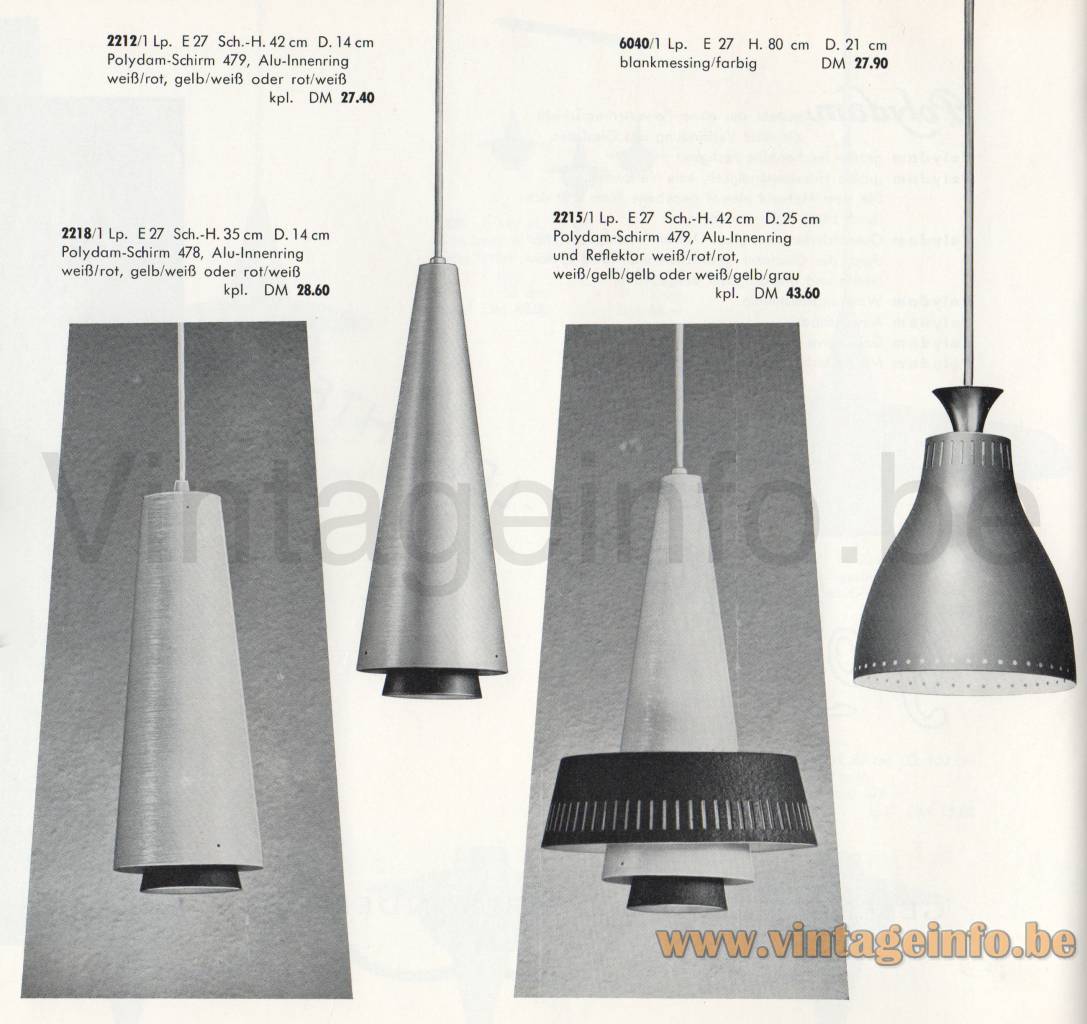
1950s Billiard Pendant Lamps – Dame & Co Catalogue Picture
Dame & Co catalogue picture with a brass model 6040 with elongated slits. Oother models on this page are: 2215, 2212 and 2218, all conical pendant lamps.
Links (external links open in a new window)
Neheim, lamp capital of Germany – Wikipedia
Vintageinfo
Fibreglass triple rocket floor lamp
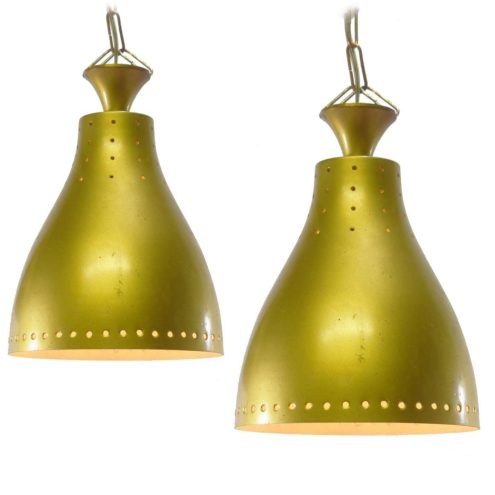
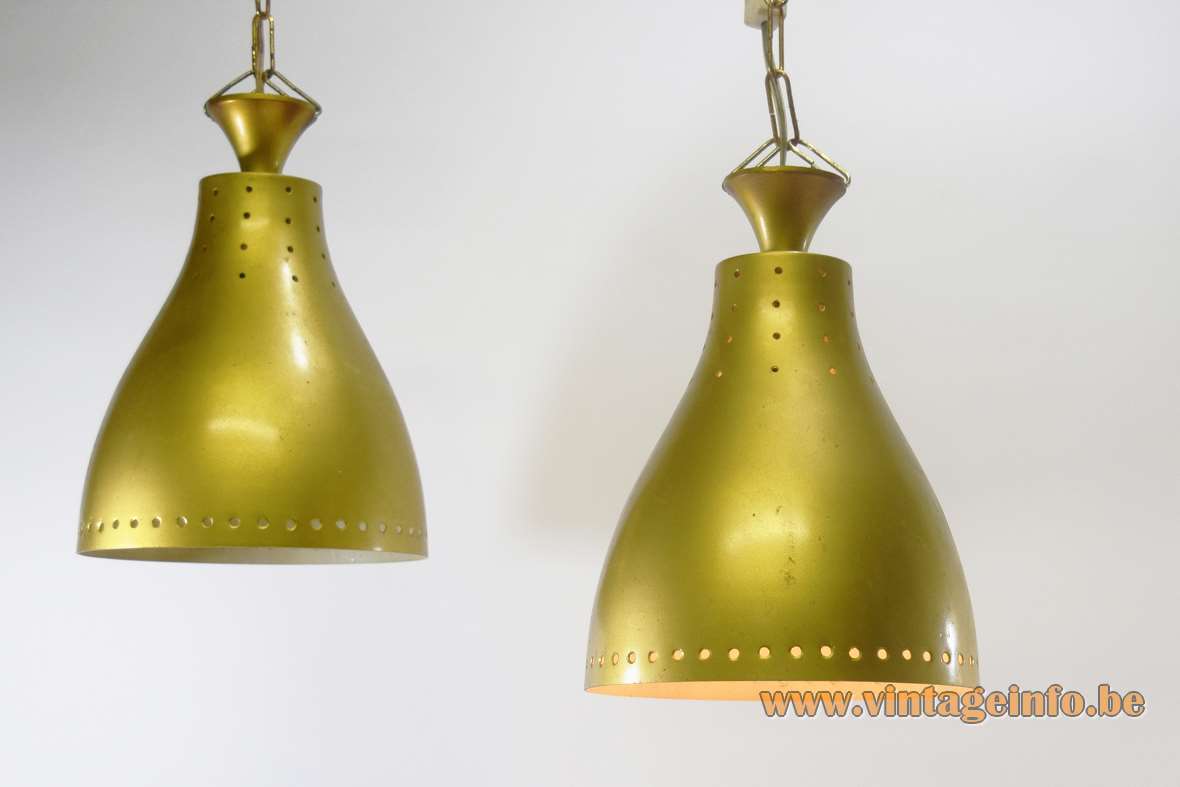
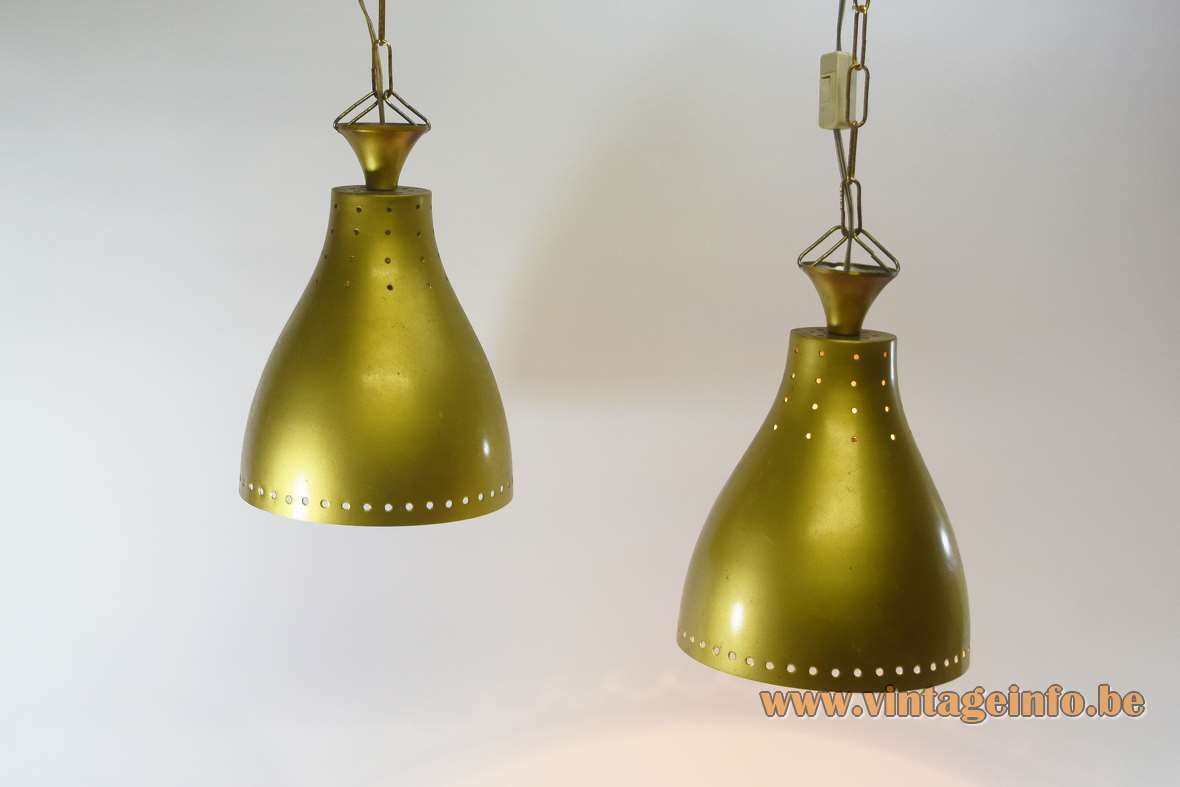
1950s Billiard Pendant Lamps
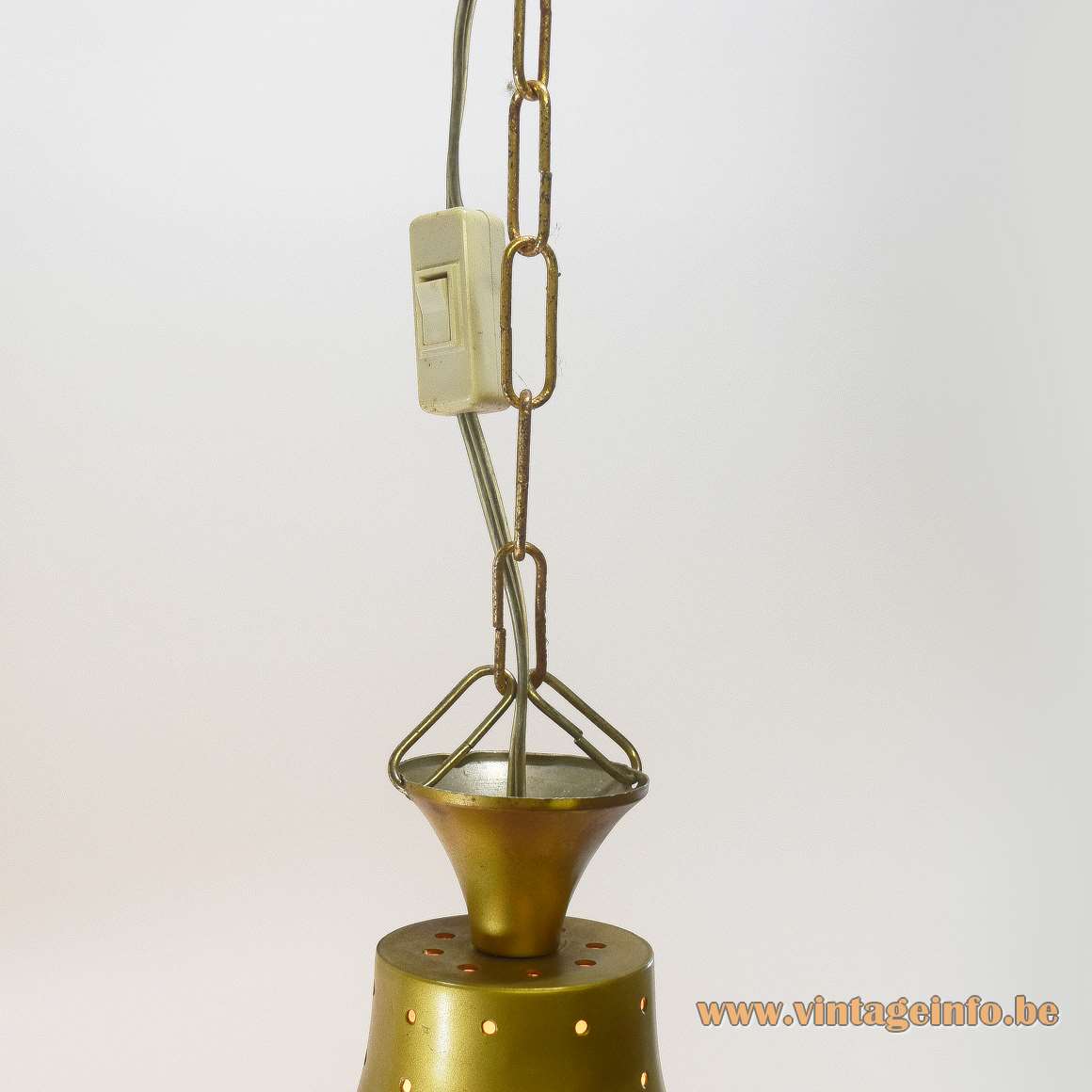
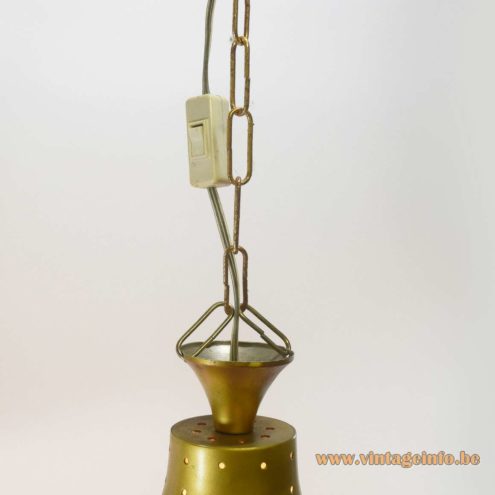
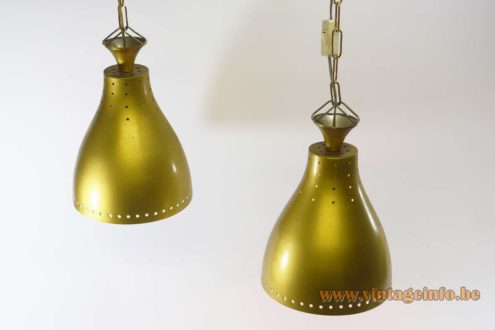
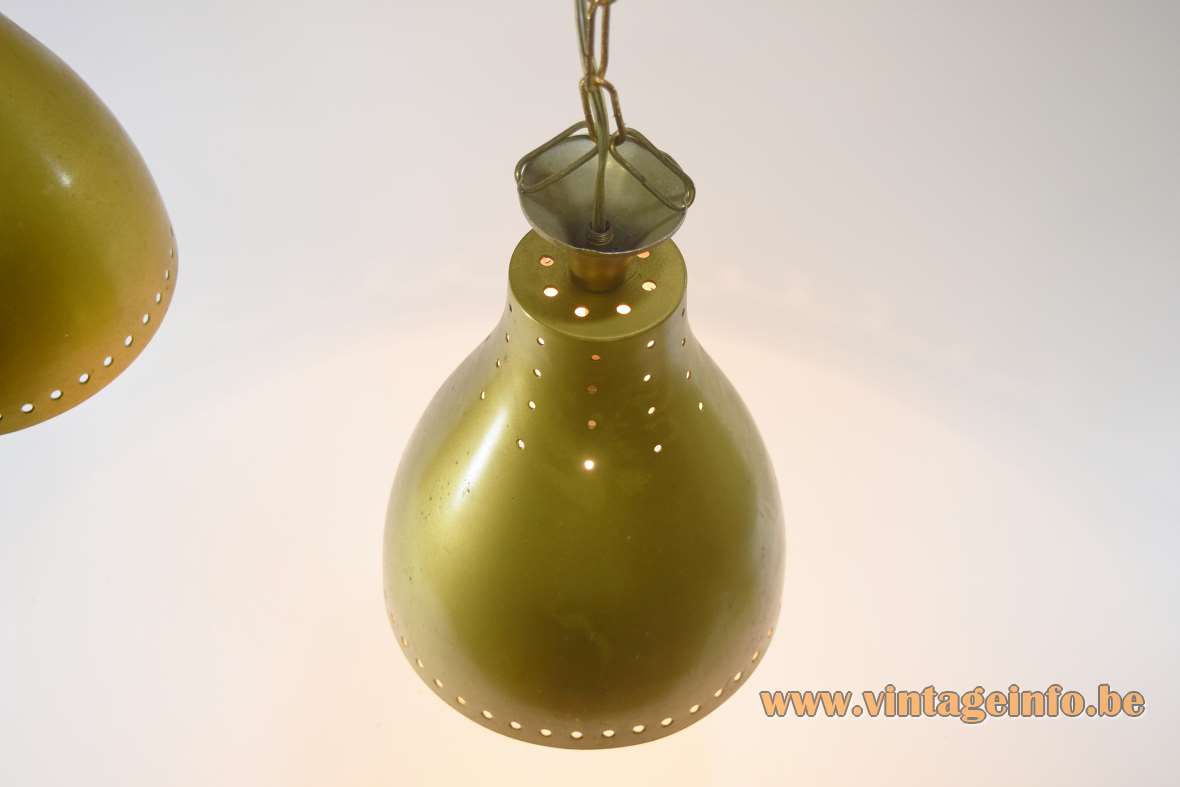
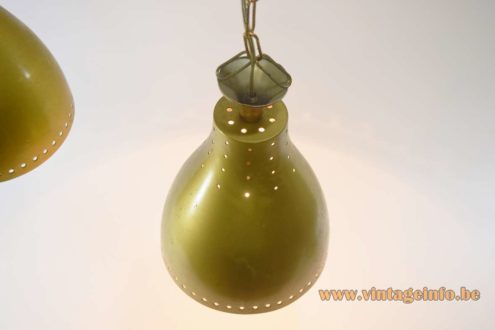
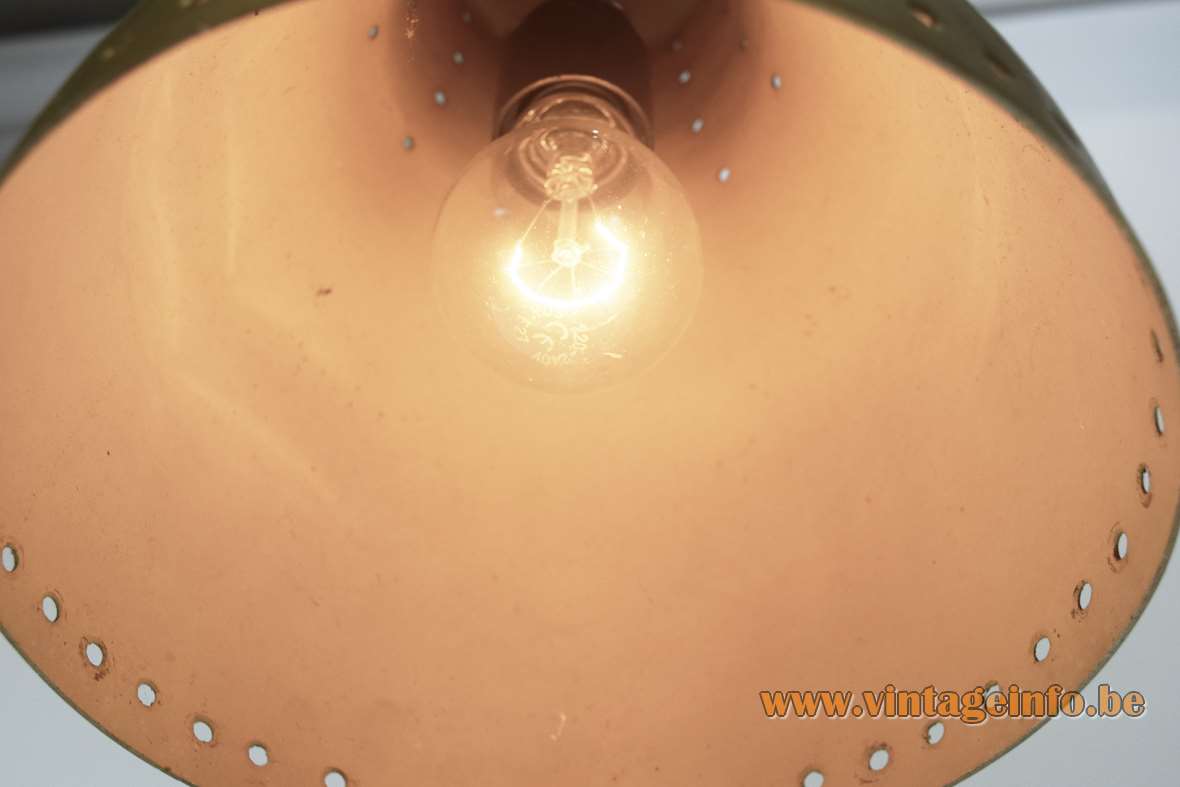
Materials: Almost conical, gold-painted aluminium lampshades, perforated with numerous round holes, white-painted inside. Brass chain. Small internal brass rod. Switch at the top. Aluminium canopy. Bakelite E27 lamp holders.
Chain Length: 60 cm / 23.62”
Height: 30 cm / 11.81”
Width: ∅ 22 cm / 8.66”
Electricity: 1 bulb E27, 1 x 100 watt maximum, 110/220 volt.
Any type of light bulb can be used, not a specific one preferred.
Period: 1950s, 1960s – Mid-Century Modern.
Designer: To be appraised.
Manufacturer: Dame & Co, Neheim-Hüsten, Germany.
Other versions: These 1950s billiard pendant lamps exist in slight variations, with some versions featuring elongated slits at the top of the lampshade instead of round holes.
It is far from certain that this was originally designed as a billiard lamp, but it was used as such in its place of origin. This explains the presence of a switch on the cord near the top.
Dame & Co (DACO)
Dame & Co, also known under the abbreviated brand name DACO, was a German lighting manufacturer based in Neheim-Hüsten, one of the historic centres of the German lighting industry.
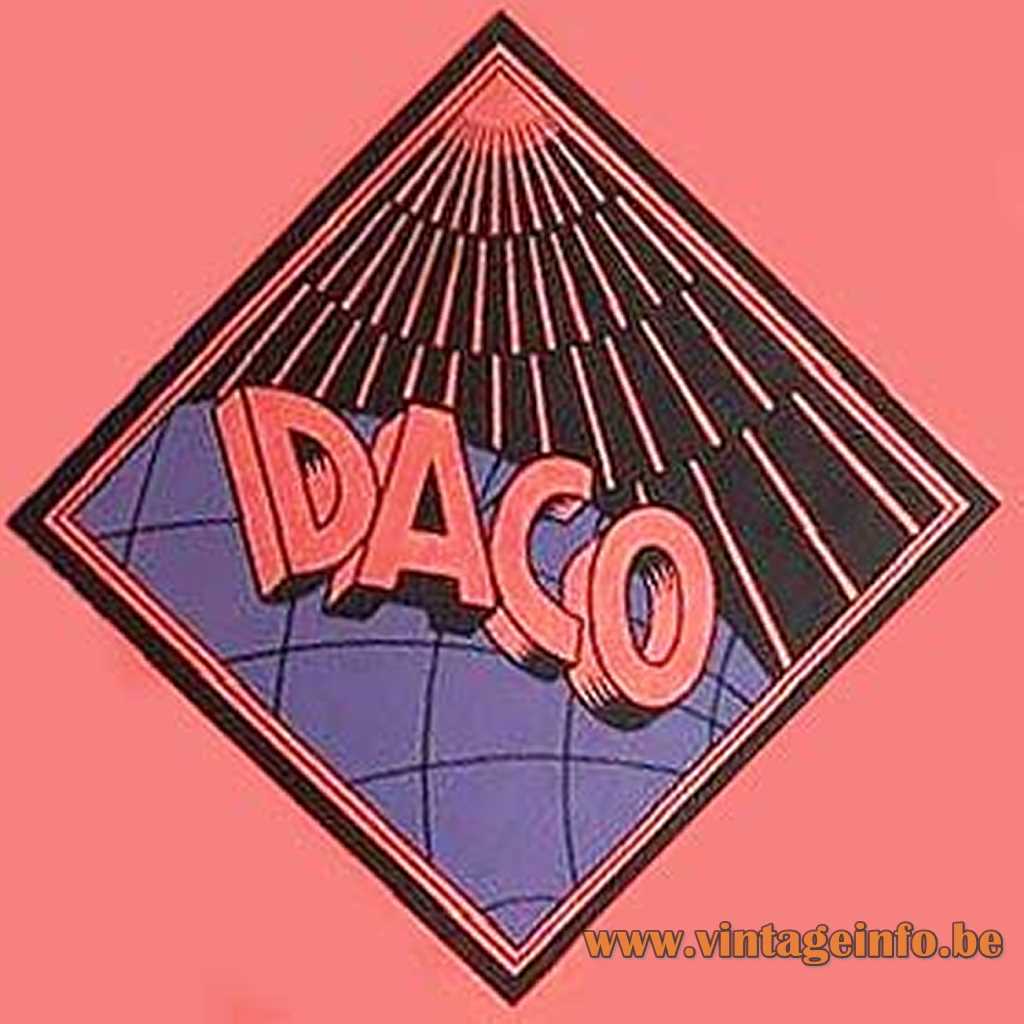
The company was founded in 1893, as confirmed by period logos bearing the inscription “DACO – gegründet 1893”.
By the interwar period, Dame & Co had grown into a large-scale industrial manufacturer.
Company letterheads from 1935 identify the firm as a Beleuchtungskörper-Fabrik, with extensive banking, postal and telecommunication facilities, indicating nationwide commercial activity.
Dame & Co regularly exhibited at major trade fairs, including the Leipzig Trade Fair, one of the most important industrial exhibitions in Europe at the time.
The company produced a wide range of lighting fixtures and issued extensive catalogues.
Catalogue numbering shows a long continuity of production, with main catalogues and supplements already exceeding number 30 by the mid-1930s, and continuing into the post-war decades.
In the 1950s, Dame & Co received international recognition when the company was awarded two iF Design Awards (1957), one for a table lamp (this one?) and one for a television lamp (Fernsehleuchte).
The iF documentation confirms the manufacturer and location, although no designer names are listed.
During the 1950s and 1960s, Dame & Co also embraced modern materials.
The company introduced lamp shades made from a proprietary fibreglass-reinforced material marketed under the name POLYDAM.
According to catalogue descriptions, POLYDAM shades were produced using PALATAL, a synthetic resin supplied by BASF, combined with glass fibre.
These shades were promoted as durable, heat-resistant, anti-static, colourfast and easy to clean.
Many Dame & Co lamps were sold without explicit designer attribution and were distributed through various retailers and wholesalers, both in Germany and abroad.
As a result, numerous models are today frequently misattributed to better-known designers or manufacturers.
Original catalogue documentation, however, clearly places these lamps within the production of Dame & Co / DACO.
The company no longer exists, and the exact date at which it ceased operations remains unclear.
Nevertheless, surviving catalogues and lamps demonstrate that Dame & Co played a significant role in German industrial lighting production from the late 19th century through the mid-20th century.
1950s Billiard Pendant Lamps
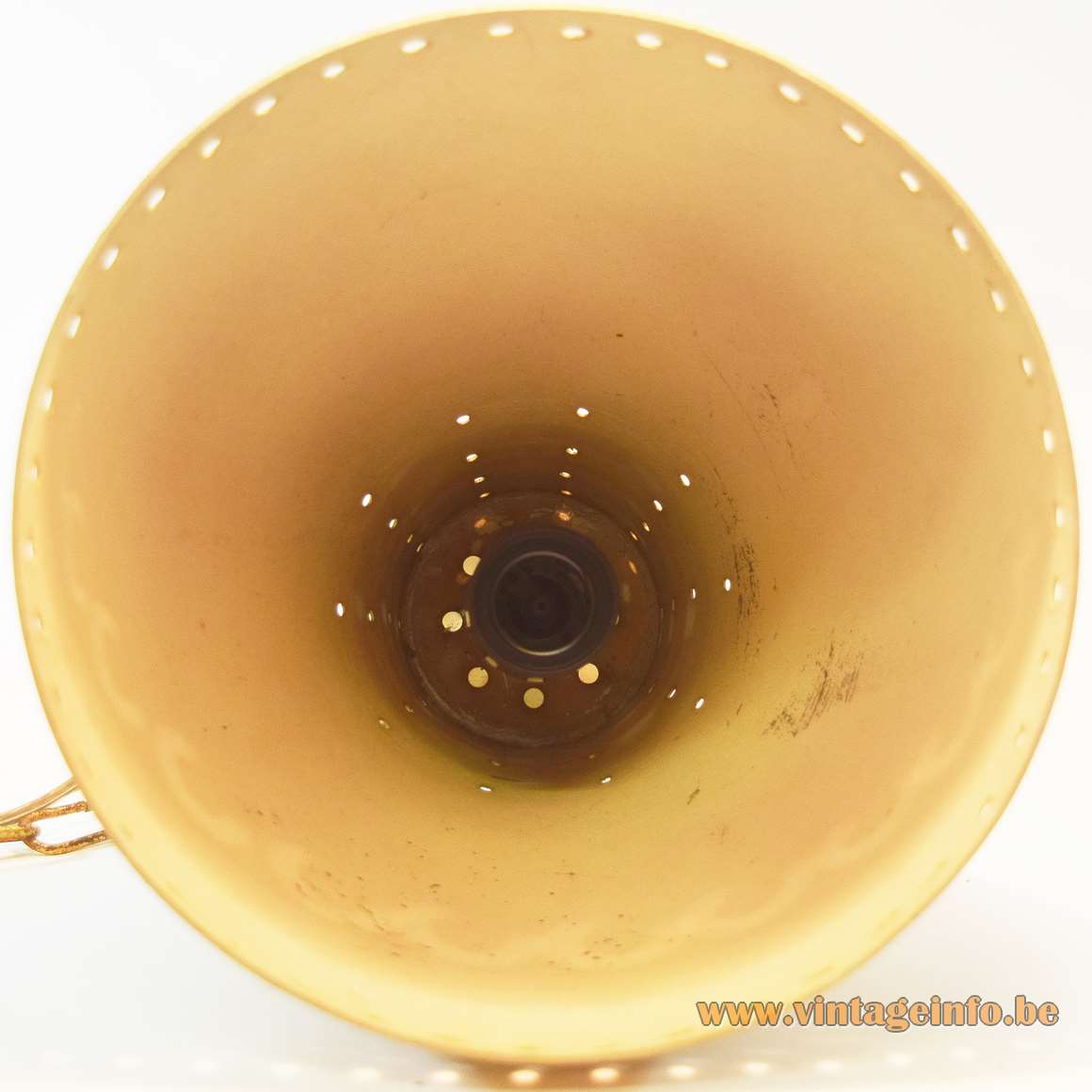
Chain with a non-original switch at the top of the lampshade, and an interior view.
Many thanks to Max from AfterMidnight for the catalogue pictures.
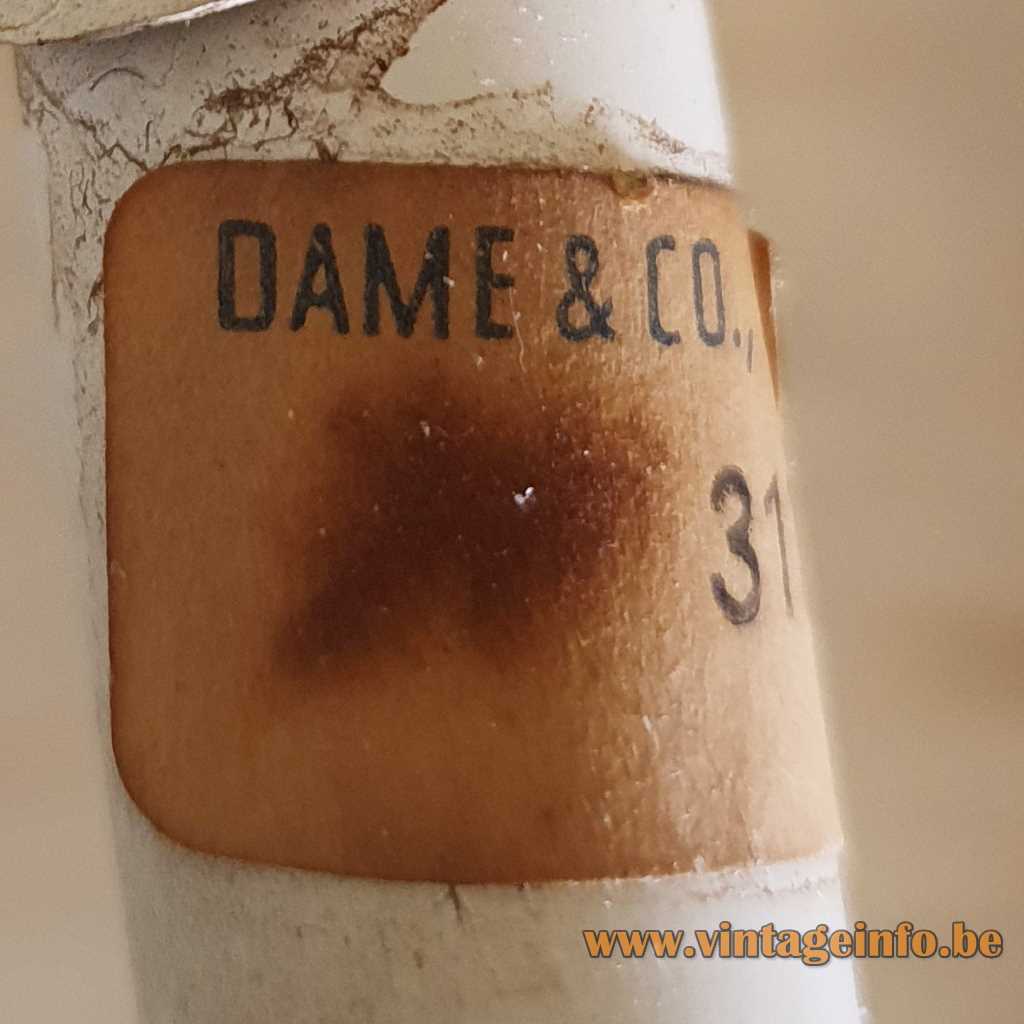
1950s Billiard Pendant Lamps – Company Labels & Logos