- Categories
- Categories
Last 5 Viewed
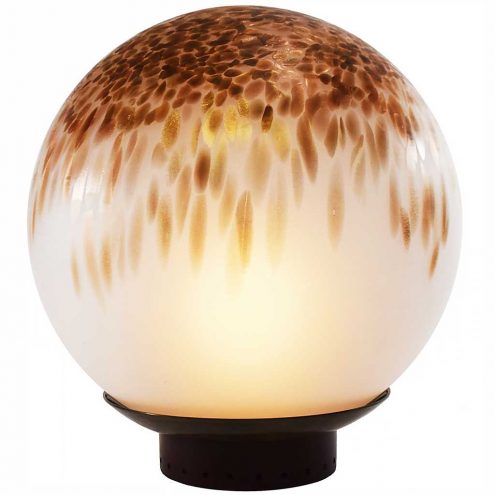
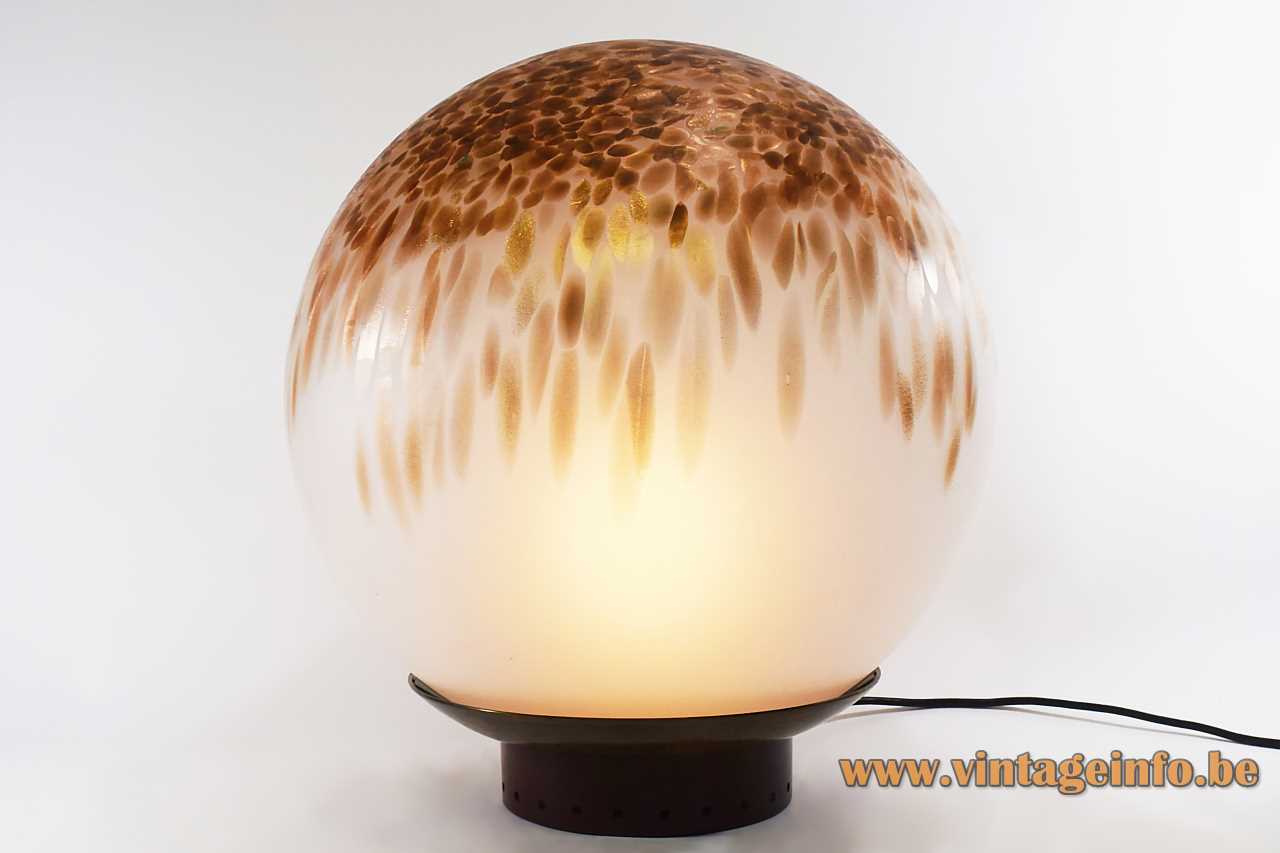
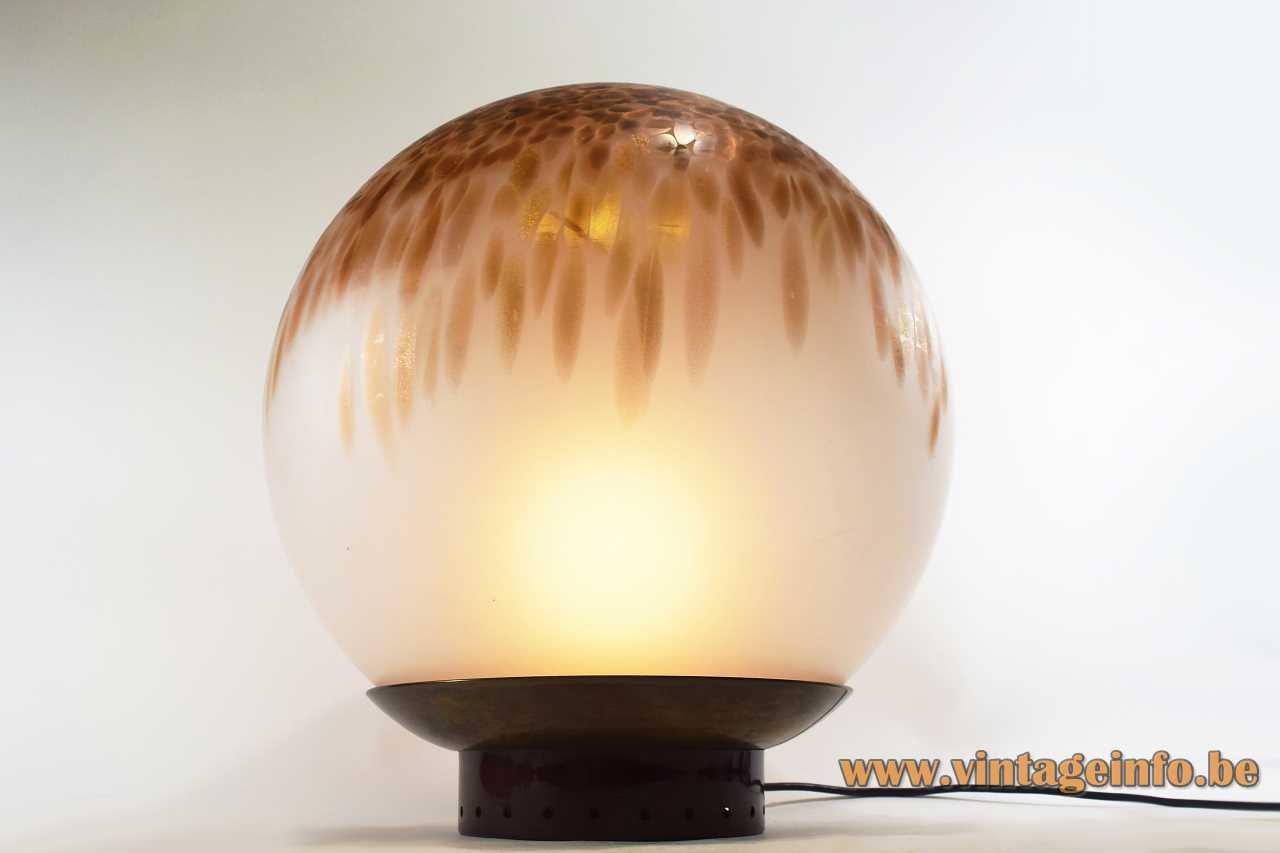
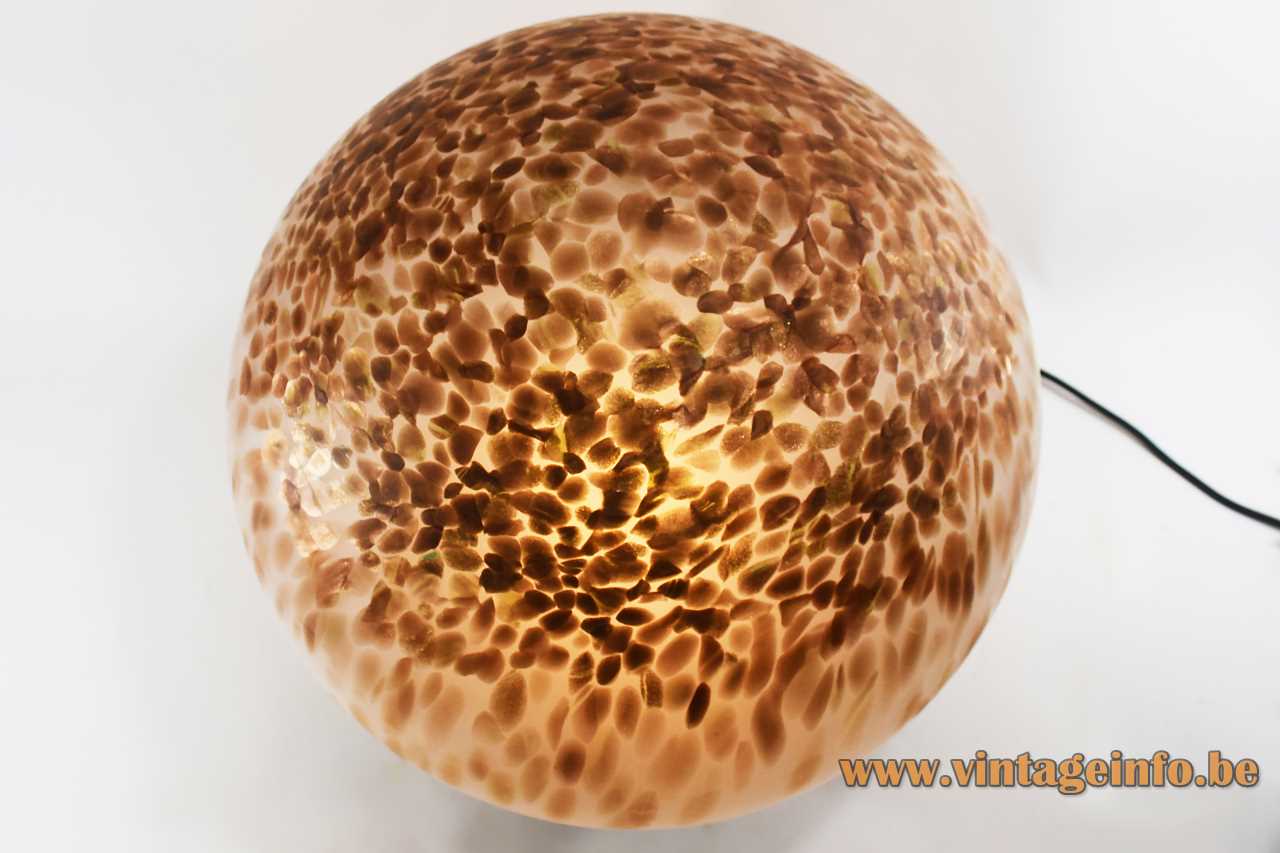
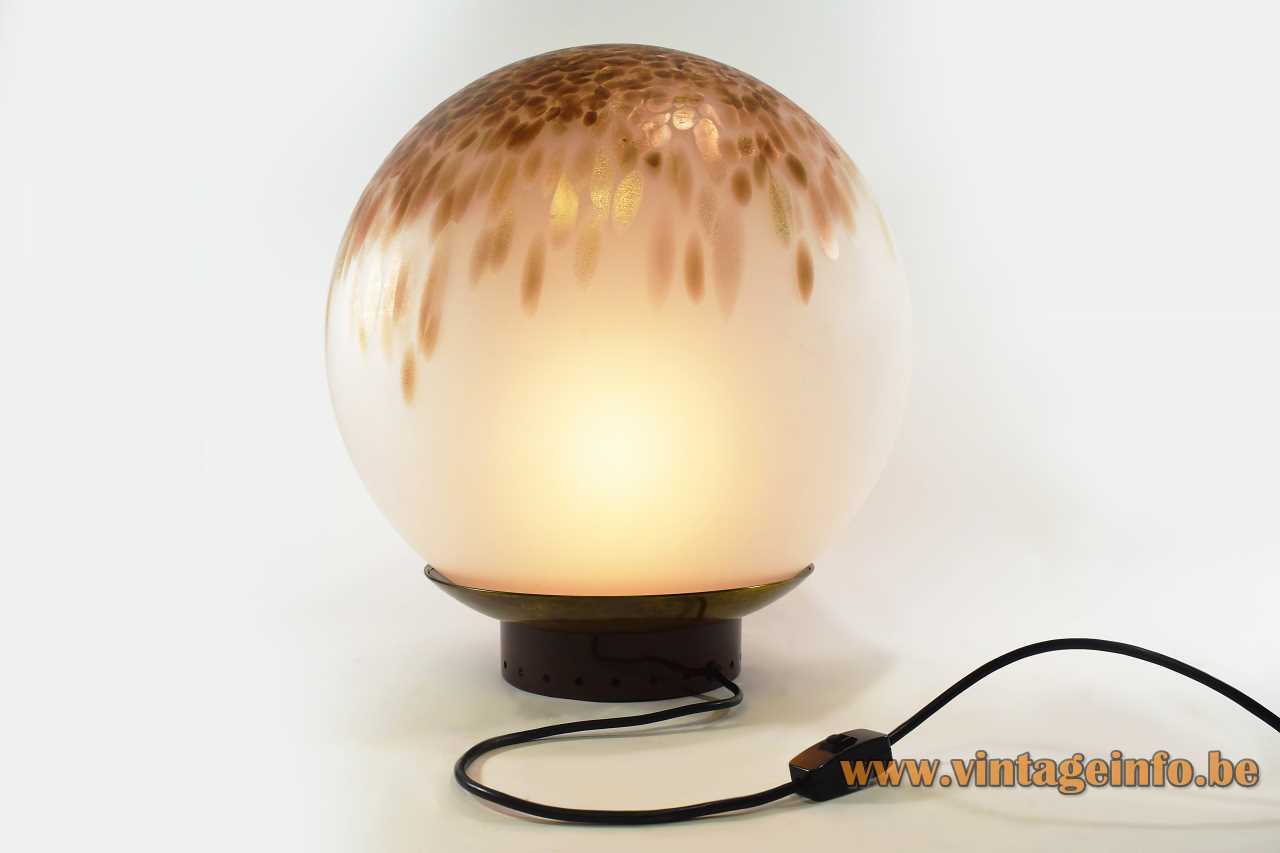
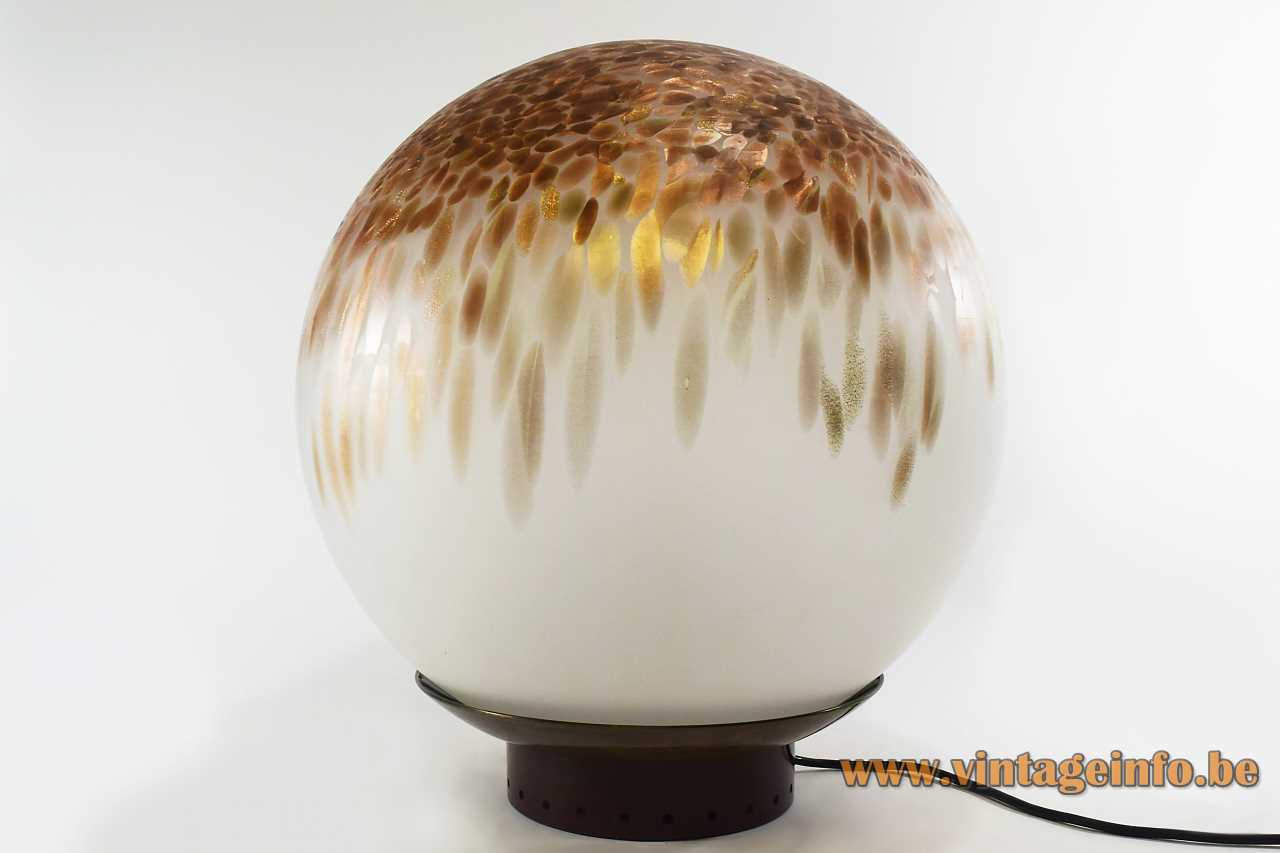
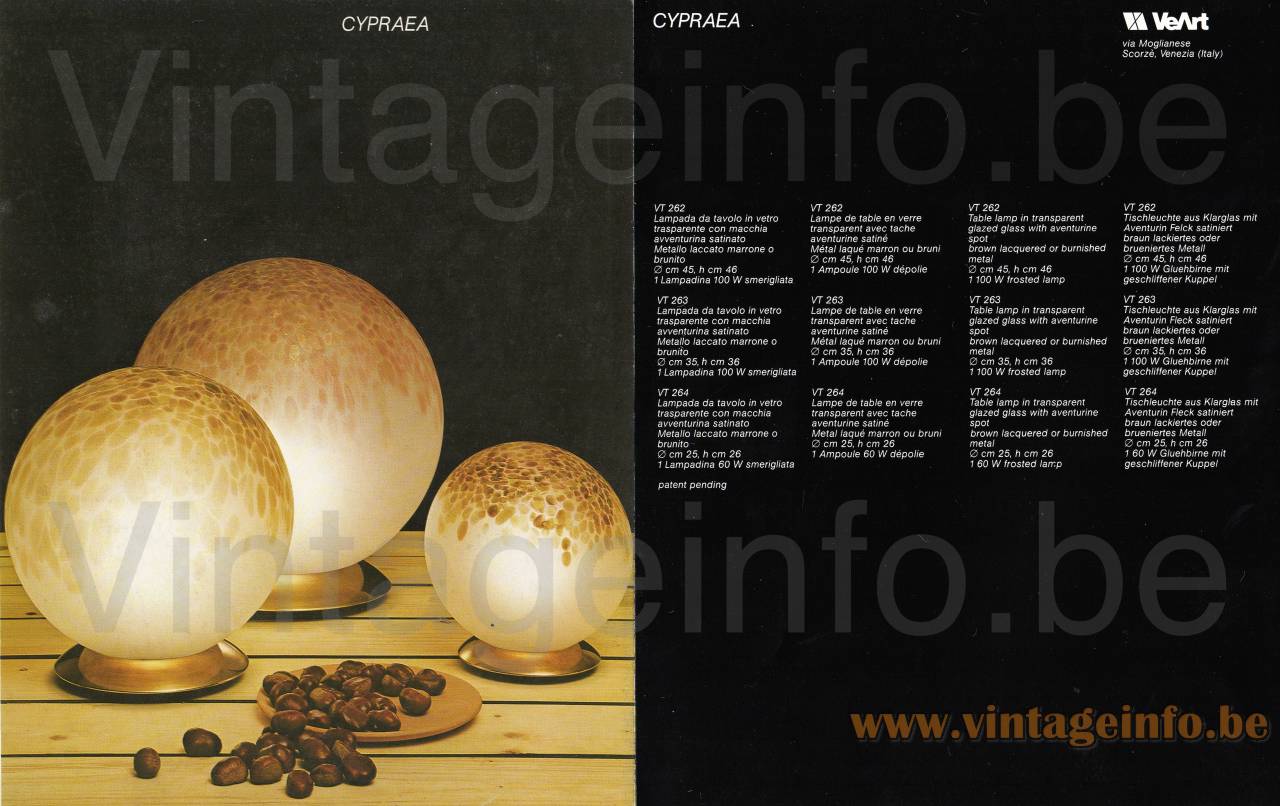
VeArt Globe Table Lamp Cypraea – 1970s Catalogue Picture
In this catalogue picture 3 models/sizes: VT262, VT263, and VT264, all in transparent glazed glass with aventurine spot. Brown lacquered or burnished metal 100 watt frosted light bulb, the smallest lamp a 60 watt light bulb
Links (external links open in a new window)
Vintageinfo
Many thanks to Max from AfterMidnight for the catalogue picture.
VeArt Globe Table Lamp Cypraea
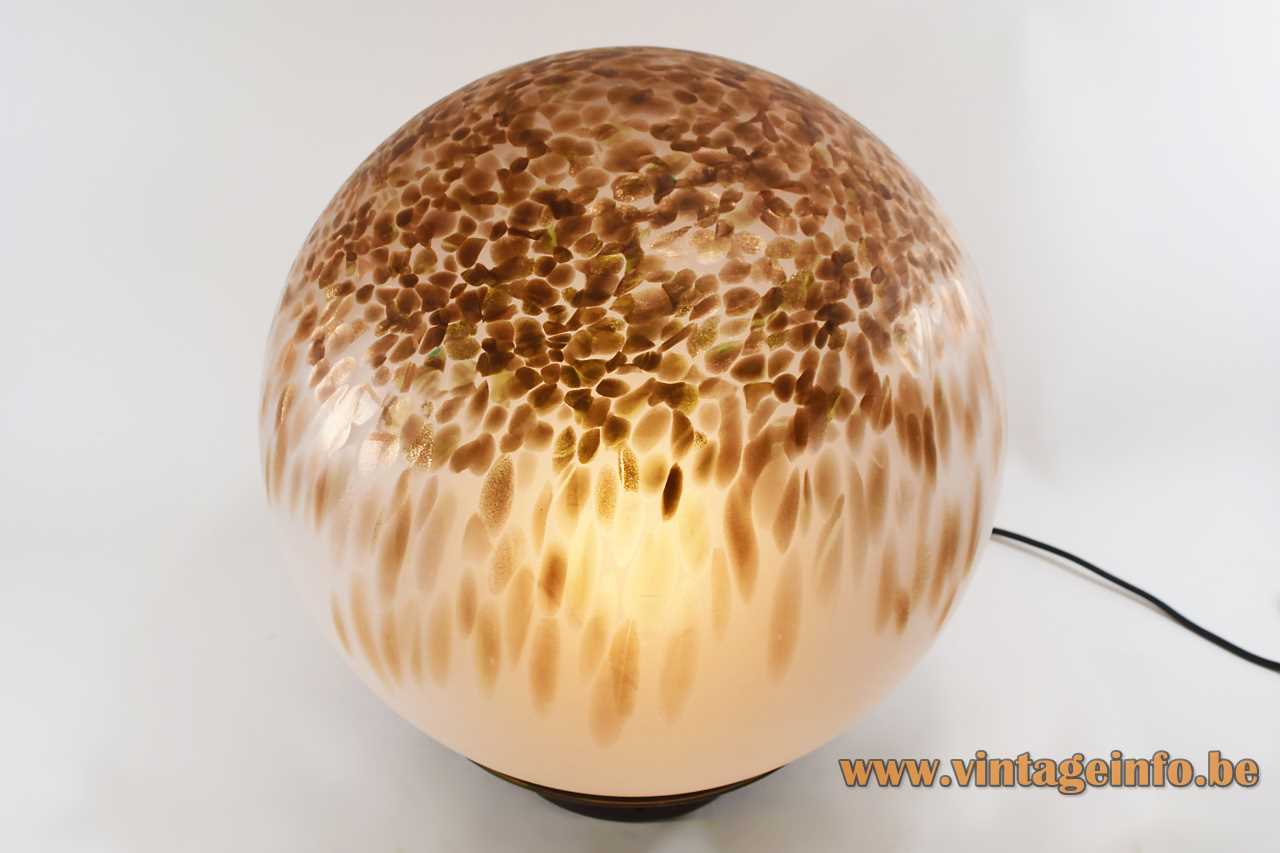
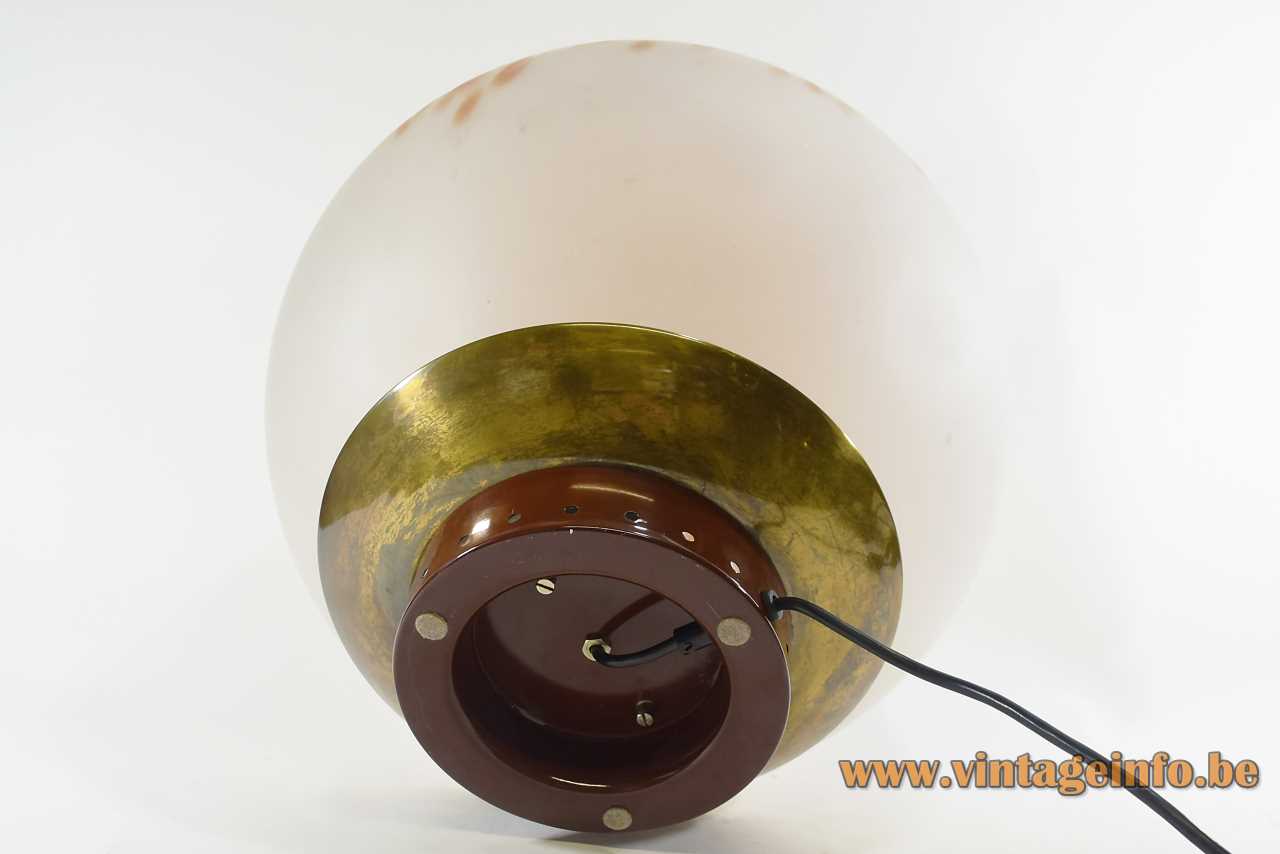
Materials: Round brown painted metal base with air-holes. Brass plated metal ring on top. Huge opal frosted hand-blown Murano glass globe lampshade with brown and powder gold spots. Some metal parts and screws. White painted Bakelite E27 socket.
Height: 47 cm / 18.50”
Globe: ∅ 45 cm / 17.71”
Base: ∅ 18 cm / 7.08”
Electricity: 1 bulb E27, 1 x 100 watt maximum, 110/220 volt.
Any type of light bulb can be used, but a frosted one is preferred.
Period: 1970s – Mid-Century Modern.
Designer: To be appraised.
Manufacturer: VeArt, Via Moglianese, 30037, Scorzè, Venice, Italy.
Other versions: This VeArt globe table lamp comes in a few sizes. This one is the biggest, model VT262. The others are 35 cm / 13.77” and 25 cm / 9.84”. It is named Cypraea. The lamp base comes in several designs and colours. Made in burnished metal and brown lacquered metal, such as this one.
This lamp base was also used for the Lata table lamp, another globe lamp. The bizarre thing about this Cypraea table lamp is that you always come across it with this brown and brass bottom, but never with the one in the catalogue photo. You find that base with other lamps. Did they change their minds at the last minute? Strange things have happened at VeArt before, like certain lamps in a catalogue being stamped with “Annulato” (cancelled). Printing a new catalogue is expensive, but it’s just individual pages in a cover, so only that page had to be reprinted. It’s a terrible job to start stamping in so many catalogues… This lamp may of course be listed with this base in other catalogues.
The spot technique was used for several other lamps. The best-known example is a cube-shaped lamp with a handle, named Pointer. There is also a bell-jar model (Dalmata) and several other designs, including animal-shaped lamps. They were all made in a similar brown-and-gold spotted glass or entirely in opal frosted glass. The spot pattern is very similar to that of the Pointer lamp designed by Giorgio de Ferrari, so he may have been the designer, but this is not mentioned in the catalogue.
Giorgio de Ferrari
Giorgio de Ferrari, born 1931, is an Italian designer and architect. Among others, he designed furniture for Elco and several lamps for Stilnovo and VeArt. He was also teacher at the Politecnico di Torino, the Polytechnic University of Turin.
VeArt
VeArt (initially written as Ve-Art) was founded in 1965 by Sergio Biliotti and Ludovico Díaz de Santillana. The company is generally described as a Venetian glass and lighting producer, active from the mid-1960s until the early 1990s.
Ludovico Díaz de Santillana (1931–1989) was born in Rome. Trained as an architect in Venice, he also worked in education and became closely connected to the Murano glass world through his marriage to Anna Venini, daughter of Paolo Venini of the renowned Venini glass company. After Paolo Venini’s death (1959), Ludovico Díaz de Santillana took on a leading role at Venini (together with the Venini family), a position he held for decades. He died in 1989.
VeArt produced art glass and lighting, often characterised by bold forms, strong colour contrasts and the expressive use of Murano techniques. In later sources and the vintage market, Mario Ticco is frequently mentioned as an artistic director associated with VeArt, reflecting the firm’s close ties to the Venetian glass scene.
Designers and artists associated with VeArt (as credited in catalogues and market documentation) include, among others: Tobia Scarpa, Renato Toso, Noti Massari, Toni Zuccheri, Paolo Zanotta, Umberto Riva, Lino Tagliapietra, Luciano Bartolini, Gigi Basso, Luisa Calvi, Giorgio de Ferrari, Sergio Asti and Guido Rosati, among others.
In the early 1990s, VeArt was acquired by Artemide. Artemide’s own company timeline records the acquisition in 1991 and notes that it enabled the launch of mouth-blown glass collections under the Artemide umbrella.
VeLuce: VeArt also marketed lamps under the name VeLuce. Both names appear together in the same catalogues. In these catalogues the VeLuce models are typically identified by numbers only rather than product names. VeArt was positioned as the more “high-end” line, but the design quality of VeLuce is certainly not inferior.
VLM Components
The wiring, plug, switch and socket are also Italian and they are made by VLM Components from Buccinasco near Milan in the seventies. The company became famous for the switches they produce since 1968, designed by Achille Castiglioni. You can find them over here.
VLM is part of the Relco Group, founded in 1967. Today they are the owners of the brands Relco, Leuci, Relco Lighting, VLM Components and Segno.
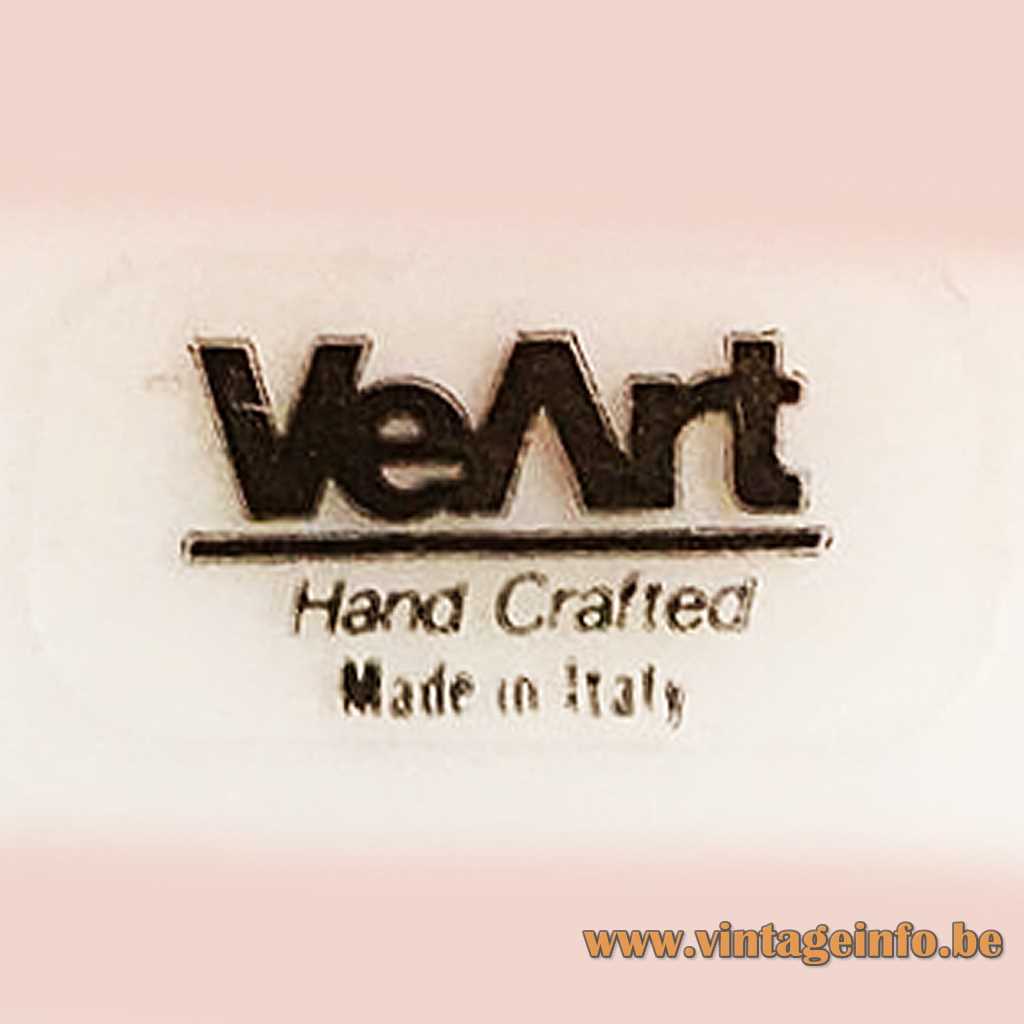
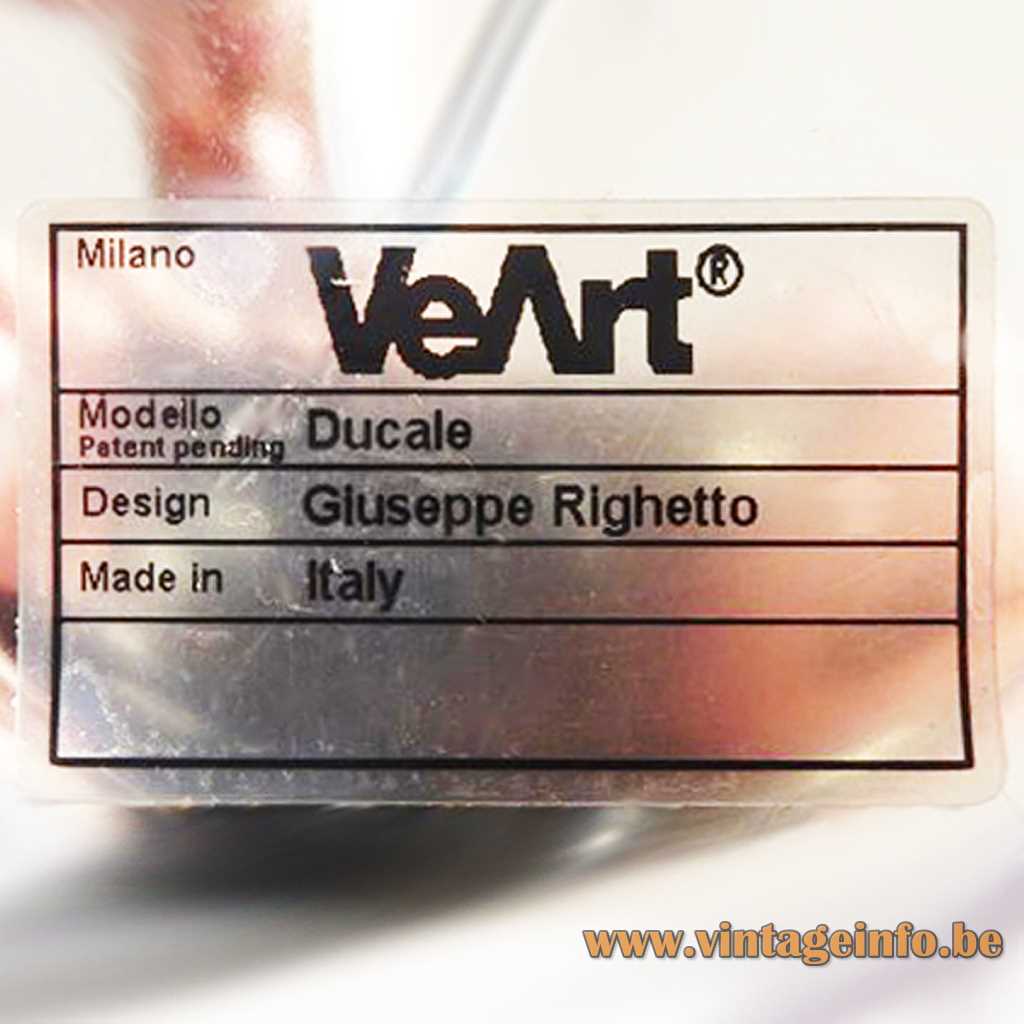
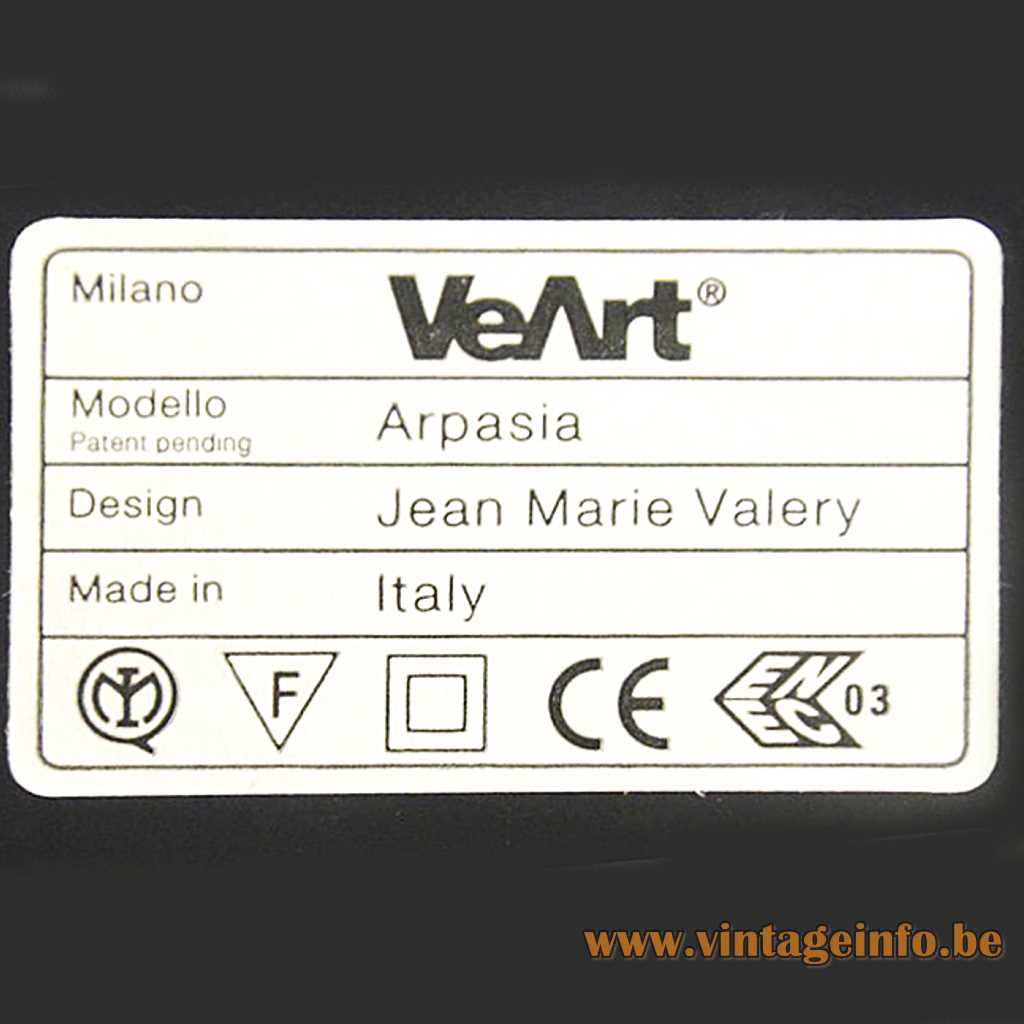
VeArt Globe Table Lamp Cypraea – Company Labels