- Categories
- Categories
Last 5 Viewed
La Murrina Globe Pendant Lamp
Lino Tagliapietra at work.

Links (external links open in a new window)
History of the La Murrina company
Murano glass blowing – Wikipedia
The glass museum on the Murano island
Vintageinfo
Many thanks to Lluís fromEclectique Vintage for the photos.
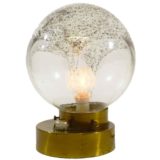
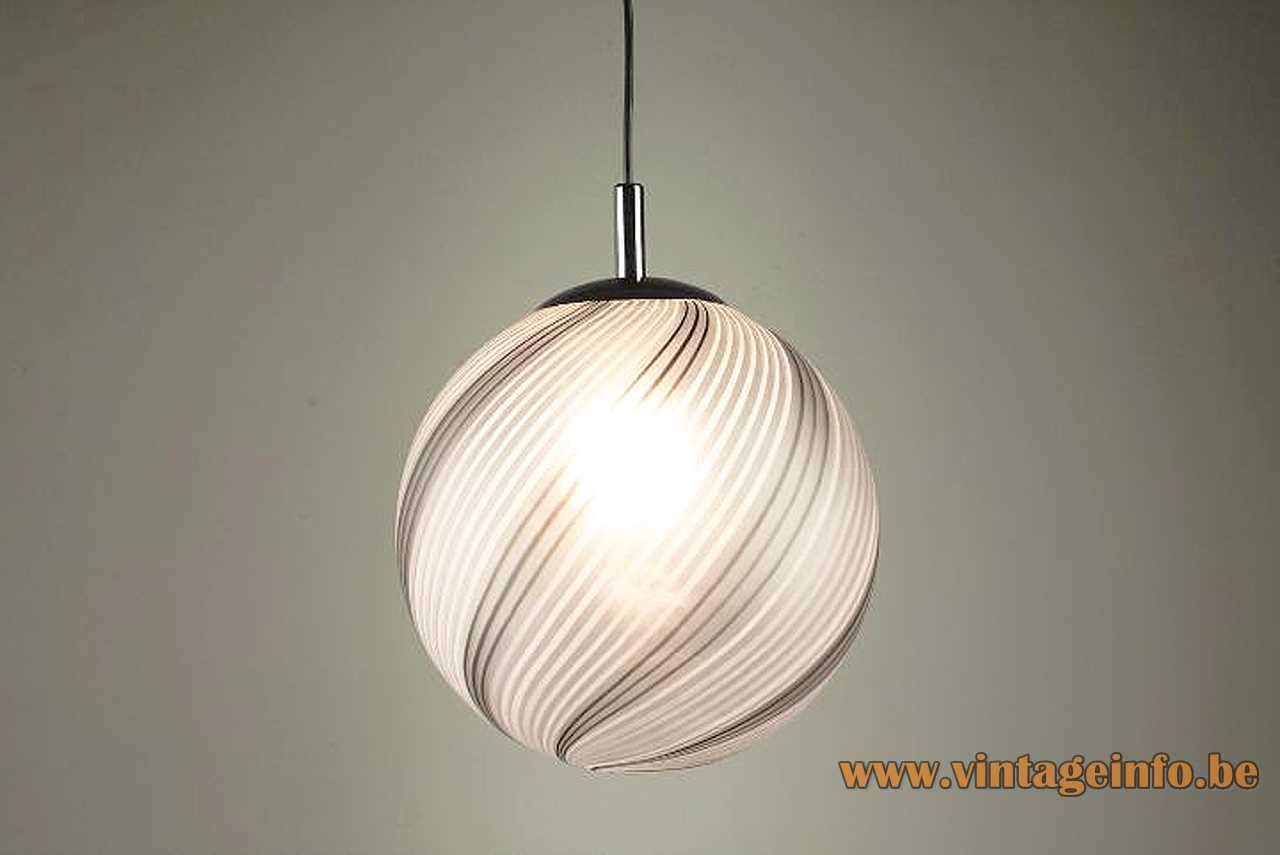
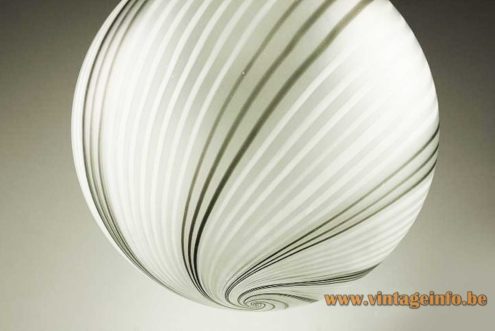
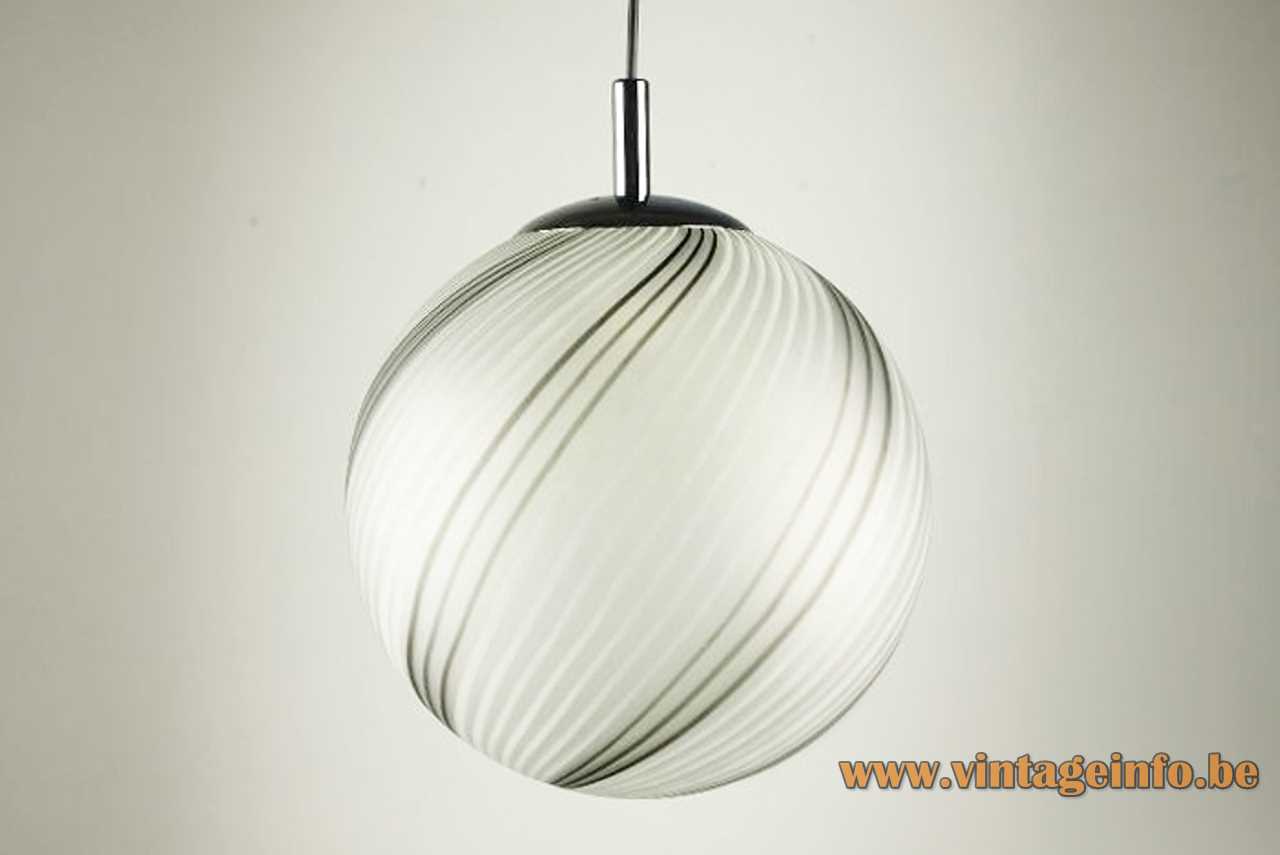
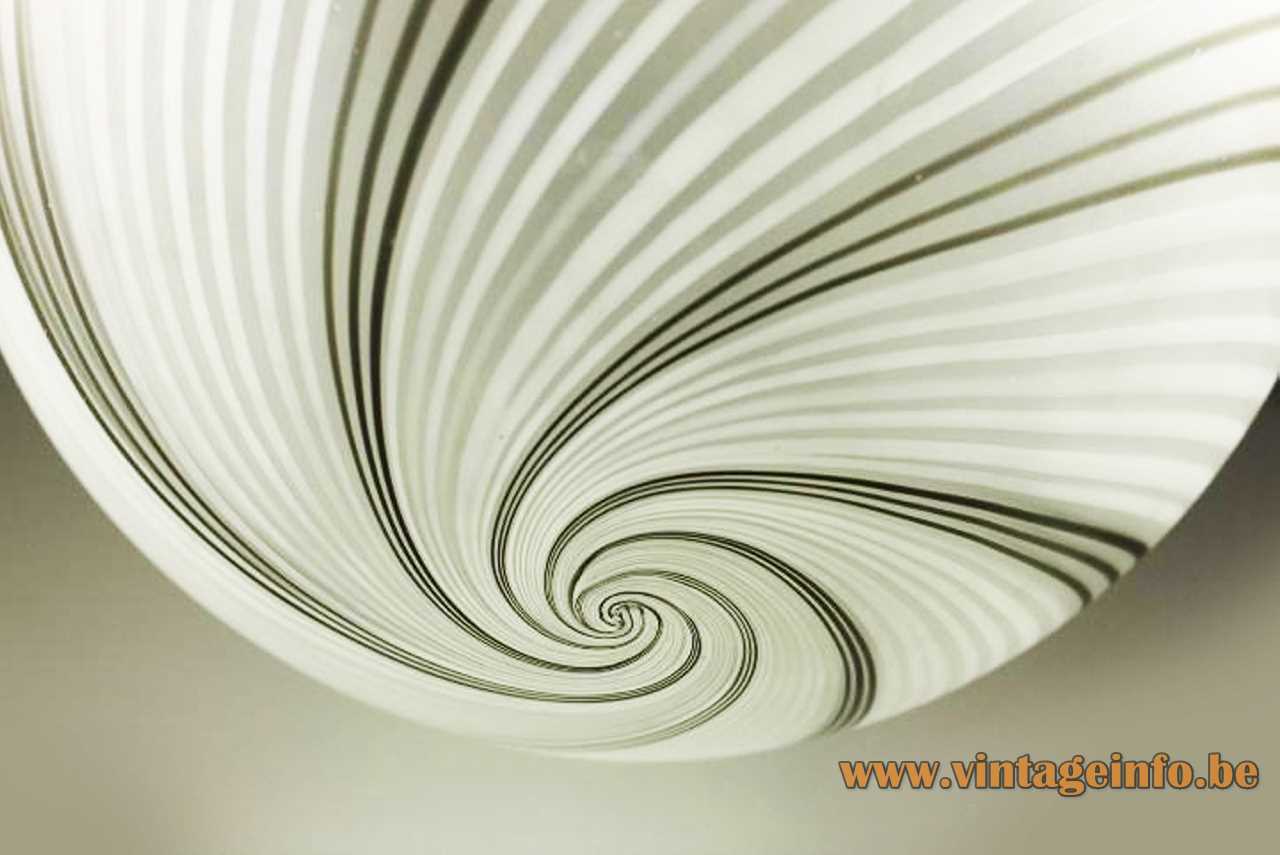
La Murrina Globe Pendant Lamp
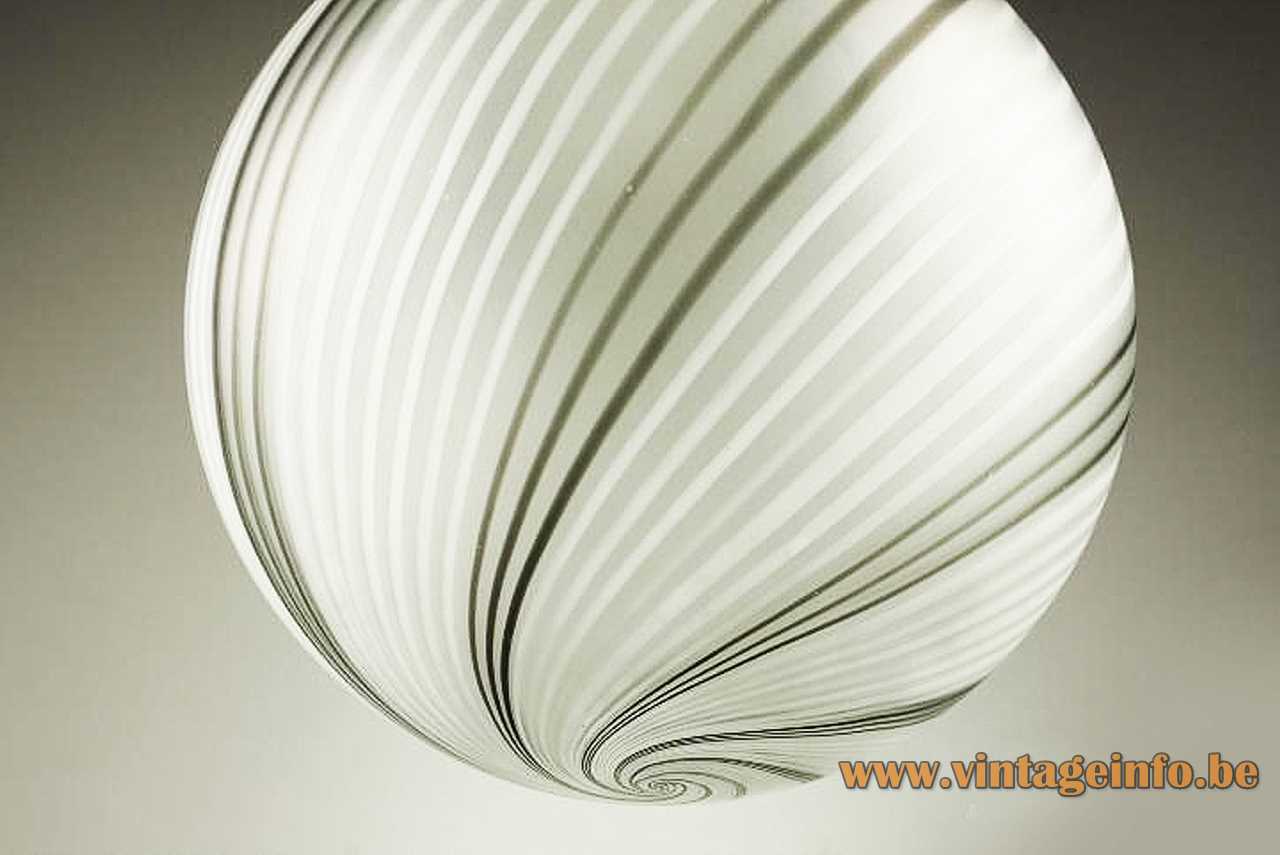
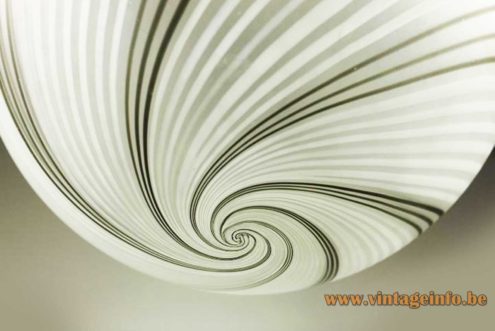
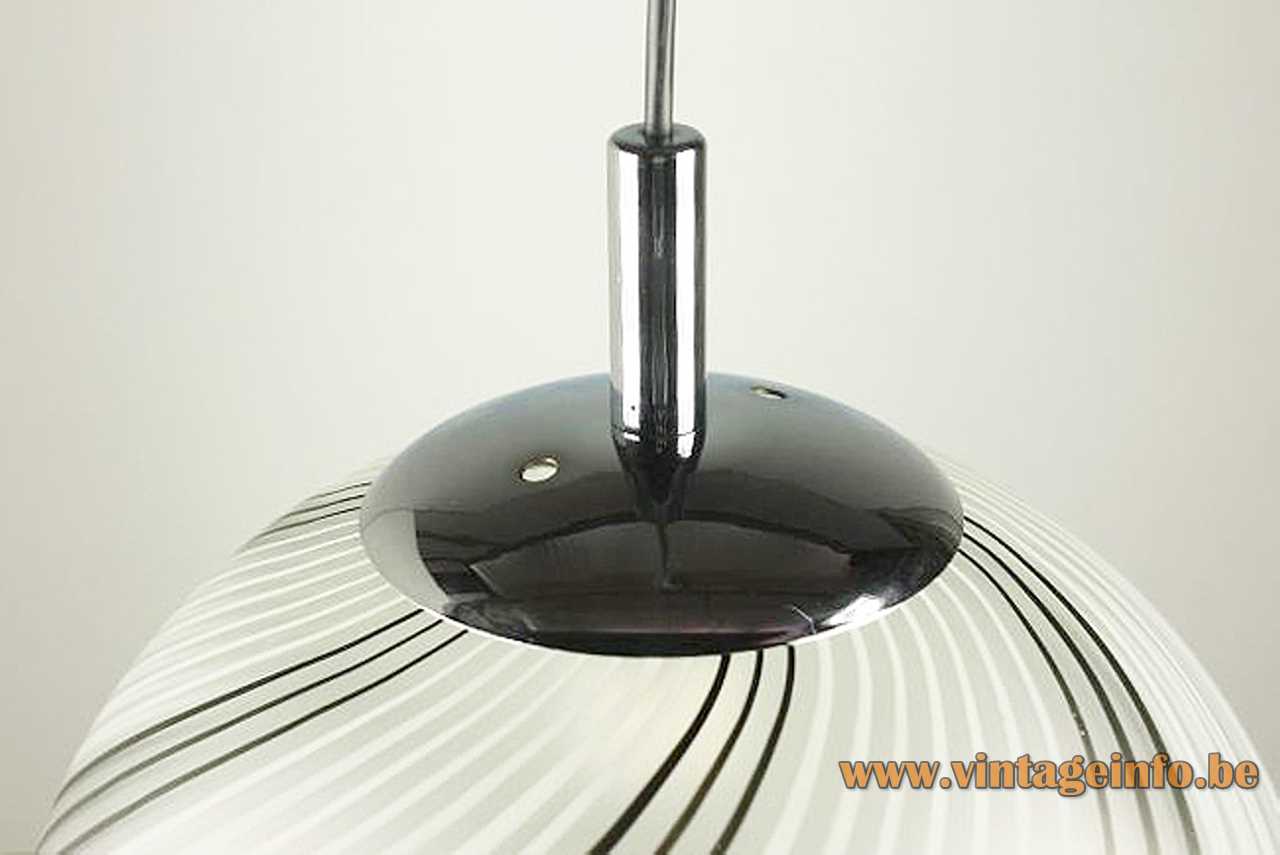
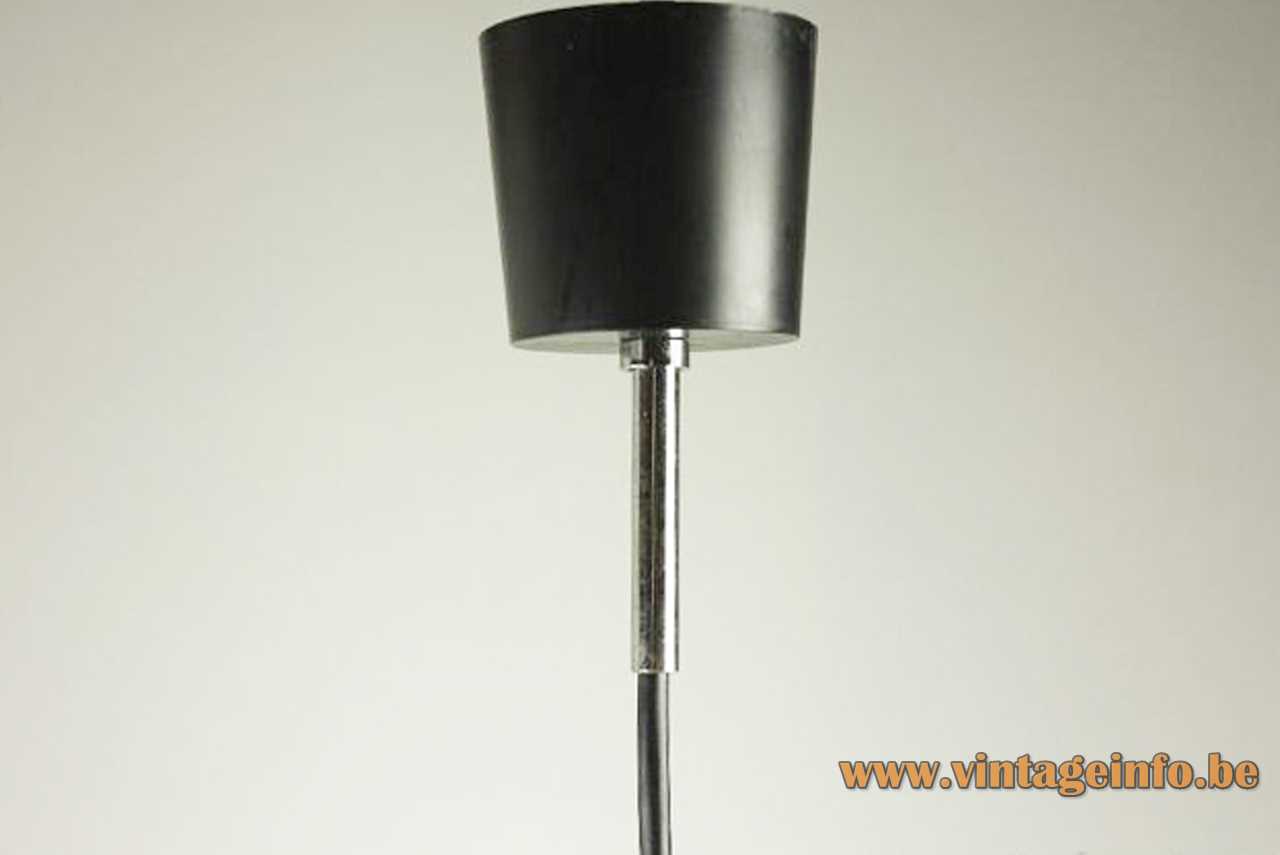
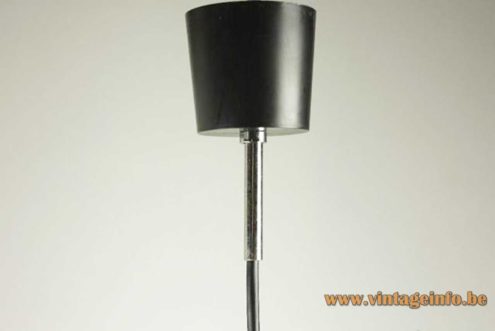
Materials: Big globe made of thick hand-blown crystal clear Murano glass with white & black swirl stripes. Chrome lid and rod. Bakelite E27 socket.
Total Height: 90 cm / 35.43”
Height: 45 cm / 17.71”
Width: ∅ 40 cm / 15.74”
Electricity: 1 bulb E27, 1 x 75 watt maximum, 110/220 volt.
No specific type of light bulb is required; different types can be used.
Period: 1970s – Mid-Century Modern.
Designer: Lino Tagliapietra – possibly.
Manufacturer: La Murrina, Murano Italy – attributed.
Other versions: This La Murrina globe pendant lamp exists in all probability in several versions and sizes.
Lino Tagliapietra
Lino Tagliapietra (born August 10, 1934) is a legendary Murano glass maestro whose influence reaches far beyond Venice. Raised on the island of Murano, he entered the furnace as a boy and became a maestro vetraio at a remarkably young age. Over the decades he helped carry traditional Venetian techniques into the international studio-glass world—especially through teaching and demonstrations in the United States—while continuing to refine a personal, instantly recognisable language of colour, rhythm and movement in glass.
Tagliapietra is celebrated for his command of classic Murano methods such as filigrana and zanfirico (cane/stripe work), reticello (net-lattice canework), and demanding hot-glass joins such as incalmo. Even when the technique is historic, the result feels contemporary: light, fluid, and “alive” in the hand.
Murano factories and collaborations
During his long Murano career, Tagliapietra worked in association with several of the island’s most important furnaces and glass companies, including Vetreria Galliano Ferro, Venini & C., La Murrina, Effetre International (where he served as Artistic and Technical Director, 1976–1989), and EOS – Design nel Vetro. This period shaped both his technical range and his ability to translate “factory” discipline into artistic freedom.
Lamps and lighting
While Tagliapietra is world-famous for his sculptural vessels and unique studio works, he also created designs that entered interiors as lighting. Most notably, a number of Murano glass lamps are attributed to him for La Murrina (especially in the 1970s), often featuring elegant striped canework and softly “deflated” or balloon-like forms that glow beautifully when lit. On the vintage design market you will also find lamps attributed to Tagliapietra in collaboration with Murano production (including La Murrina), ranging from table lamps to floor lamps.
Note for collectors: as with many Murano objects, attributions can vary depending on labels, provenance, and period documentation. When in doubt, compare known examples, factory labels, and period catalogues.
Teacher, mentor, and global influence
Tagliapietra played a key role in opening up Venetian know-how—once guarded as trade secrets—to a broader international community. From the late 1970s onward he became closely connected with the American studio-glass movement through workshops, schools, and collaborations, inspiring generations of artists and glassblowers worldwide.
Film: Sono Lino (released December 2025)
In December 2025, the documentary feature Sono Lino was released for streaming, focusing on Tagliapietra’s life, identity, legacy, and the reality of stepping away from the furnace after a lifetime with fire and glass. The film was directed/produced by Jacob Patrick and had earlier festival screenings before its wider release. More info: Official film site
“I don’t invent anything new; I personalise something … and that makes it something that nobody has done before.”
La Murrina
La Murrina is an Italian company known for high-end Murano glass lighting and decorative objects, combining traditional glassmaking techniques with contemporary design and modern production methods.
The origins of La Murrina go back to the 1960s on the island of Murano, where a small furnace was operated by a group of master glassmakers. In this early phase, the production consisted mainly of prestigious blown-glass objects created by the furnace owners themselves.
In 1974, the furnace came under the control of a family from Milan, already active in the production of lighting in glass and metal. From that moment on, the company was managed as a structured corporation, and the “La Murrina” trademark was registered internationally. Its collections were gradually distributed worldwide.
Around the year 2000, La Murrina expanded its activities through collaborations with architects and designers, introducing contemporary collections while continuing to rely on traditional Murano glassblowing techniques.
La Murrina S.R.L. operates in the high-end interior and lighting market, producing both standard collections and custom-made projects for private residences, hotels, and commercial interiors. The company positions itself in the luxury segment, where craftsmanship, technical know-how, and Italian design culture play a central role.
This company overview is based on historical corporate material and archived website content. The former official website (lamurrina.com) is no longer under the control of the company; archived versions can be consulted via the Wayback Machine.
Early designer attribution
An early La Murrina catalogue (circa 1974) includes a dedicated designer index explicitly attributing individual models to named designers and glassmakers. Among the designers listed are Peter Peisel, Potenza & Pelzel, Alessandro Lenarda, Gandini, and Lino Tagliapietra, each associated with specific article numbers.
Designers credited in recent years
In more recent catalogues, La Murrina occasionally credits external designers. The following names appear in published company material from the late 1990s onward: Samuele Mazza, Alessandro La Spada, Roberto Serio, Adriana Lohmann, Federico Visani, Oscar Tusquets, Giugiaro Architettura, Sottsass Associati, Marco Piva, Denis Santachiara, Matteo Thün & Antonio Rodriguez.
La Murrina Globe Pendant Lamp – Company Labels & Logos