- Categories
- Categories
Last 5 Viewed
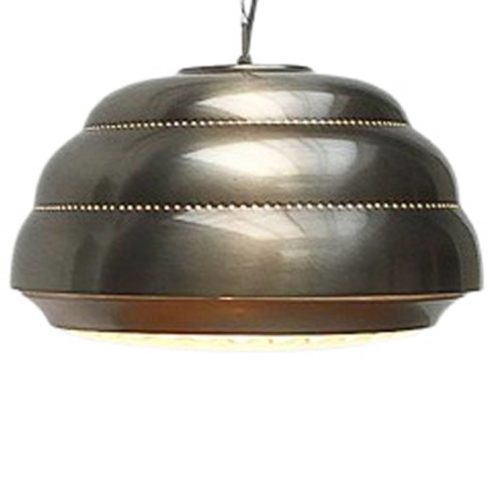
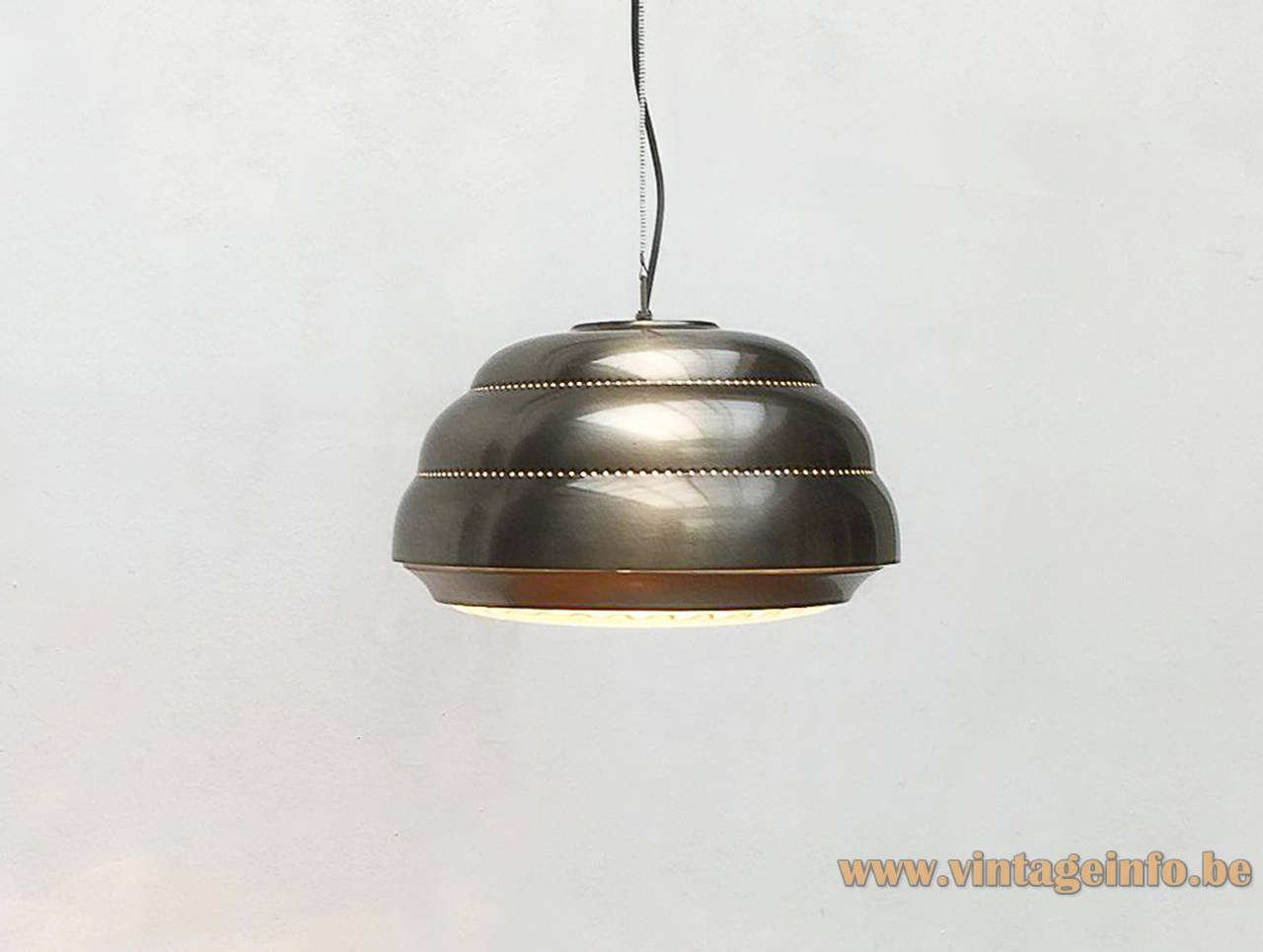
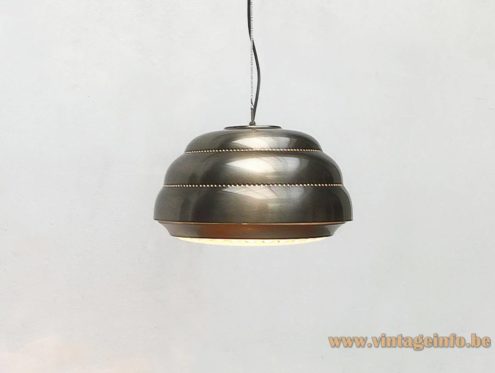
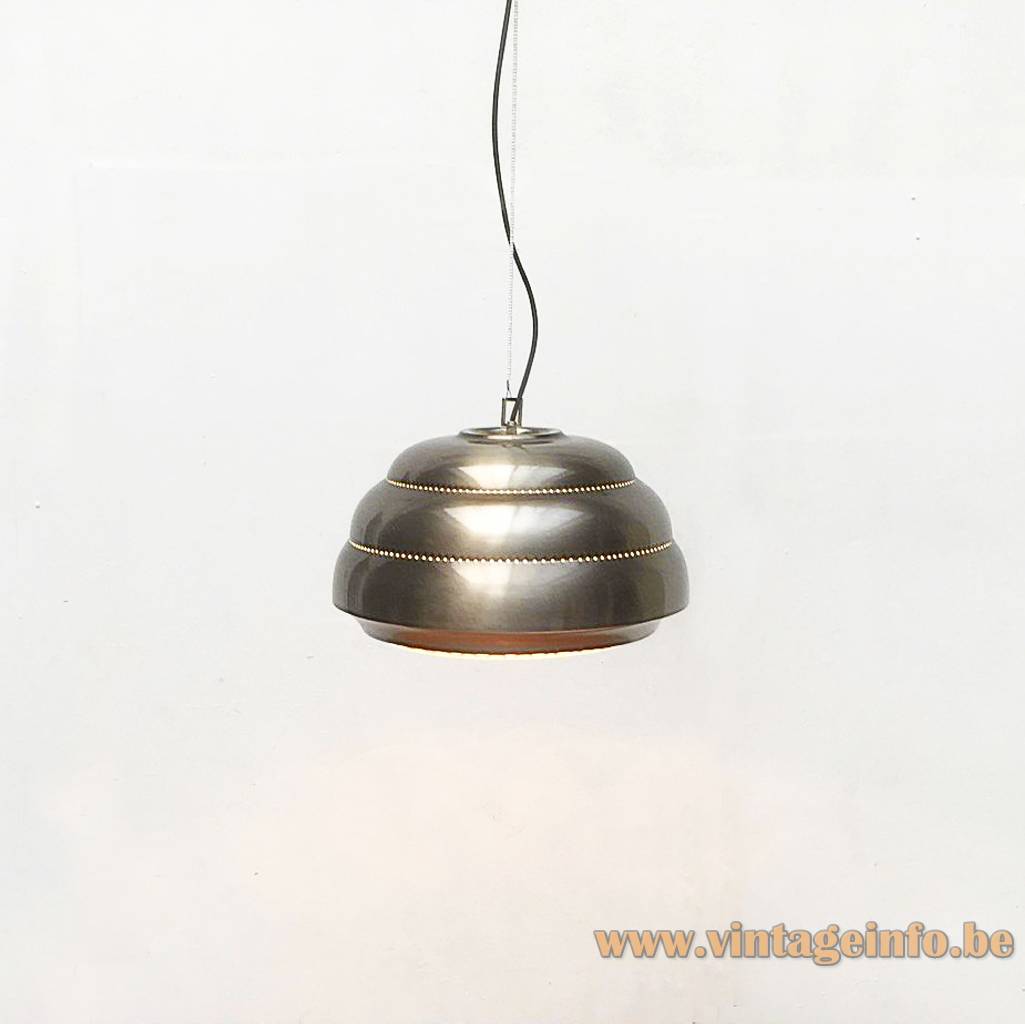
Candle Venezia Pendant Lamp – 1972 Catalogue Picture
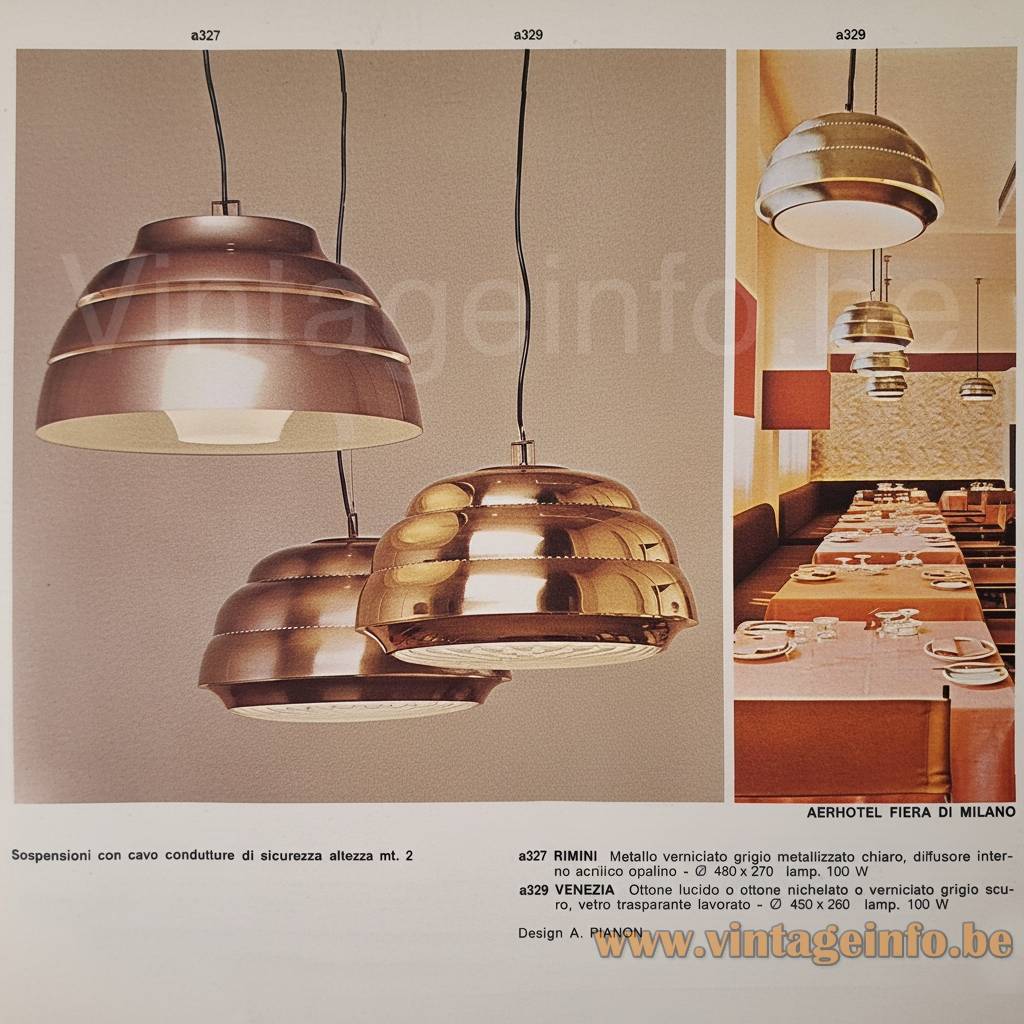
Pendant lamps with safety-conductor cable, height 2 metres
a327 RIMINI
Light metallic grey painted metal, internal opaline acrylic diffuser – Ø 480 x 270
lamp: 100 W
a329 VENEZIA
Polished brass, or nickel-plated brass, or dark grey painted finish, worked clear glass – Ø 450 x 260
lamp: 100 W
Design: A. Pianon
Aerhotel Fiera di Milano
Candle Venezia Pendant Lamp
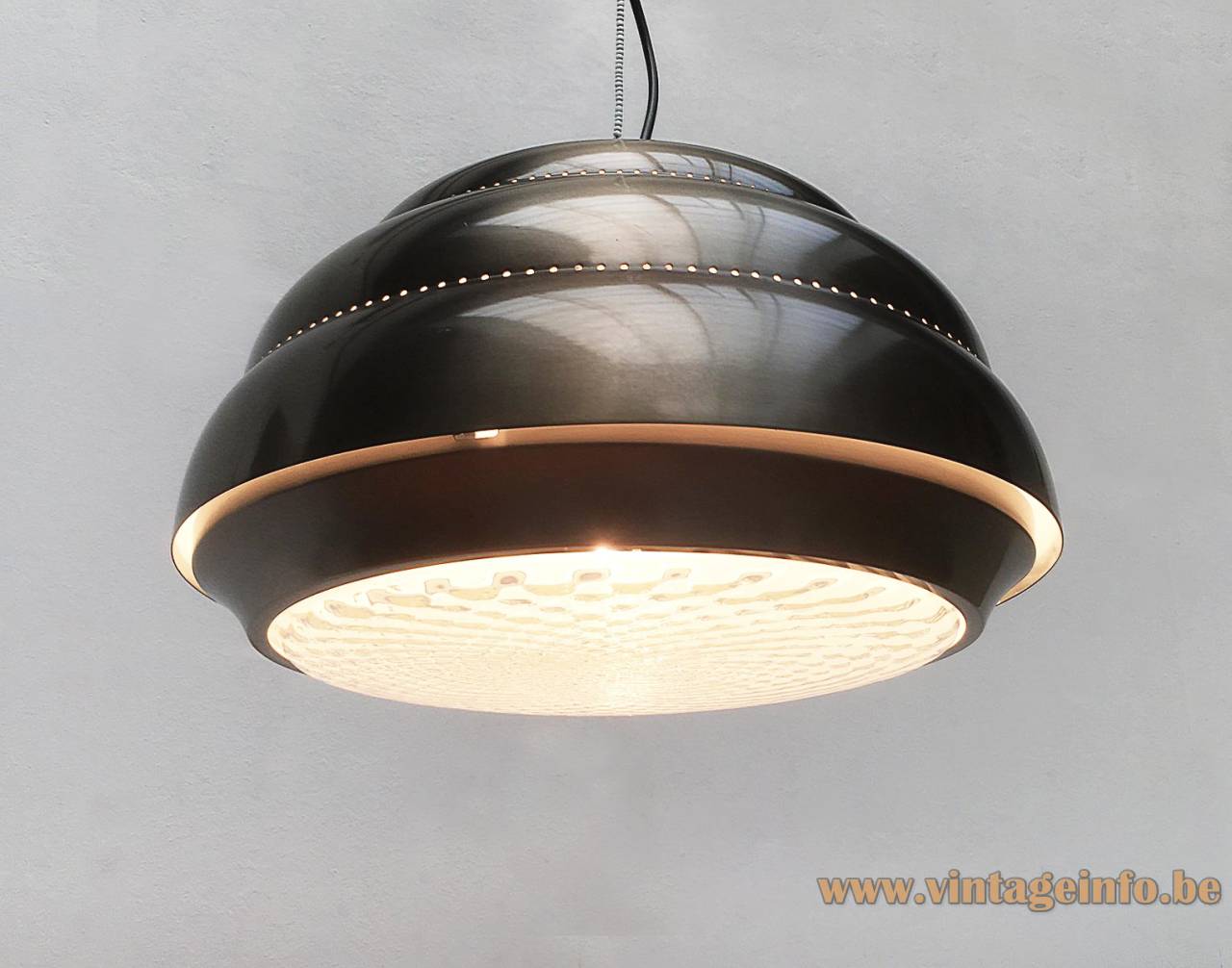
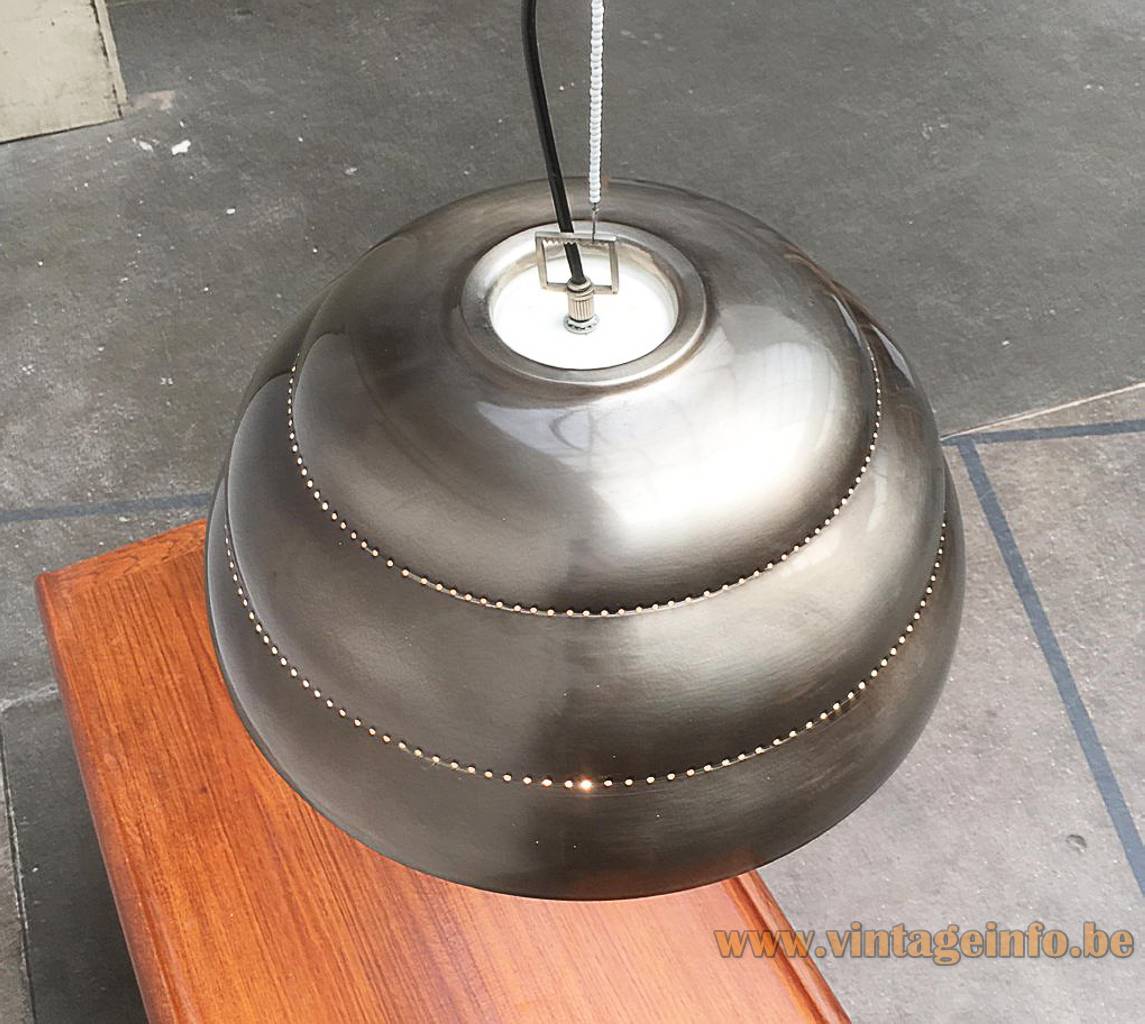
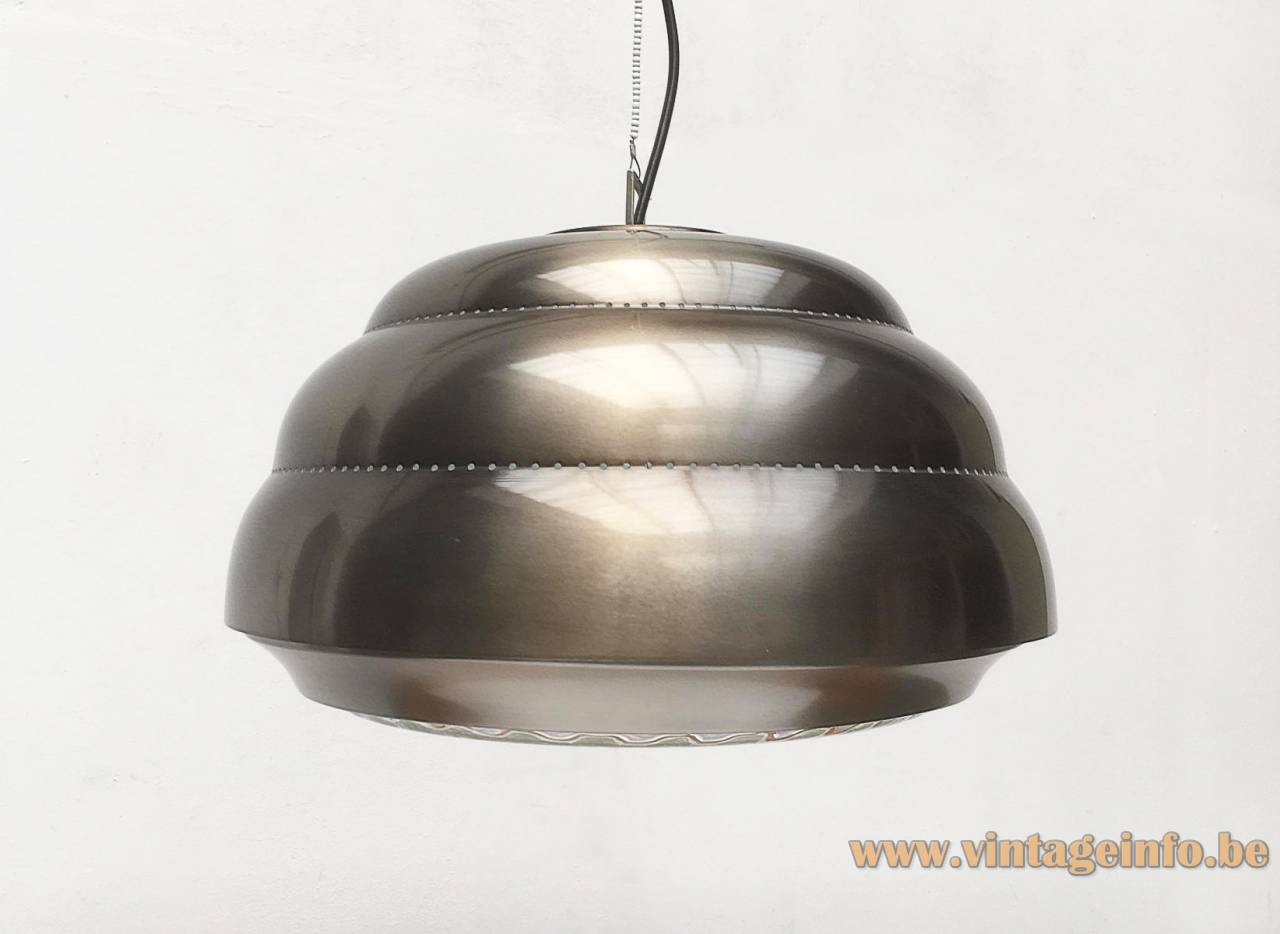
The Venezia pendant lamp was designed by Alessandro Pianon for the Milanese lighting company Candle. The lamp features a sculptural metal shade combined with a worked clear glass diffuser, creating a refined and elegant light effect.
The Venezia was produced in several finishes, including polished brass, nickel-plated brass, and dark grey painted metal. It is suspended from a safety-conductor cable with a standard drop of approximately two metres.
This model was specified with a single 100-watt lamp and was used in architectural and hospitality interiors, as illustrated here in the Aerhotel Fiera di Milano, where multiple Venezia pendants were installed in a dining setting.
Candle Venezia Pendant Lamp
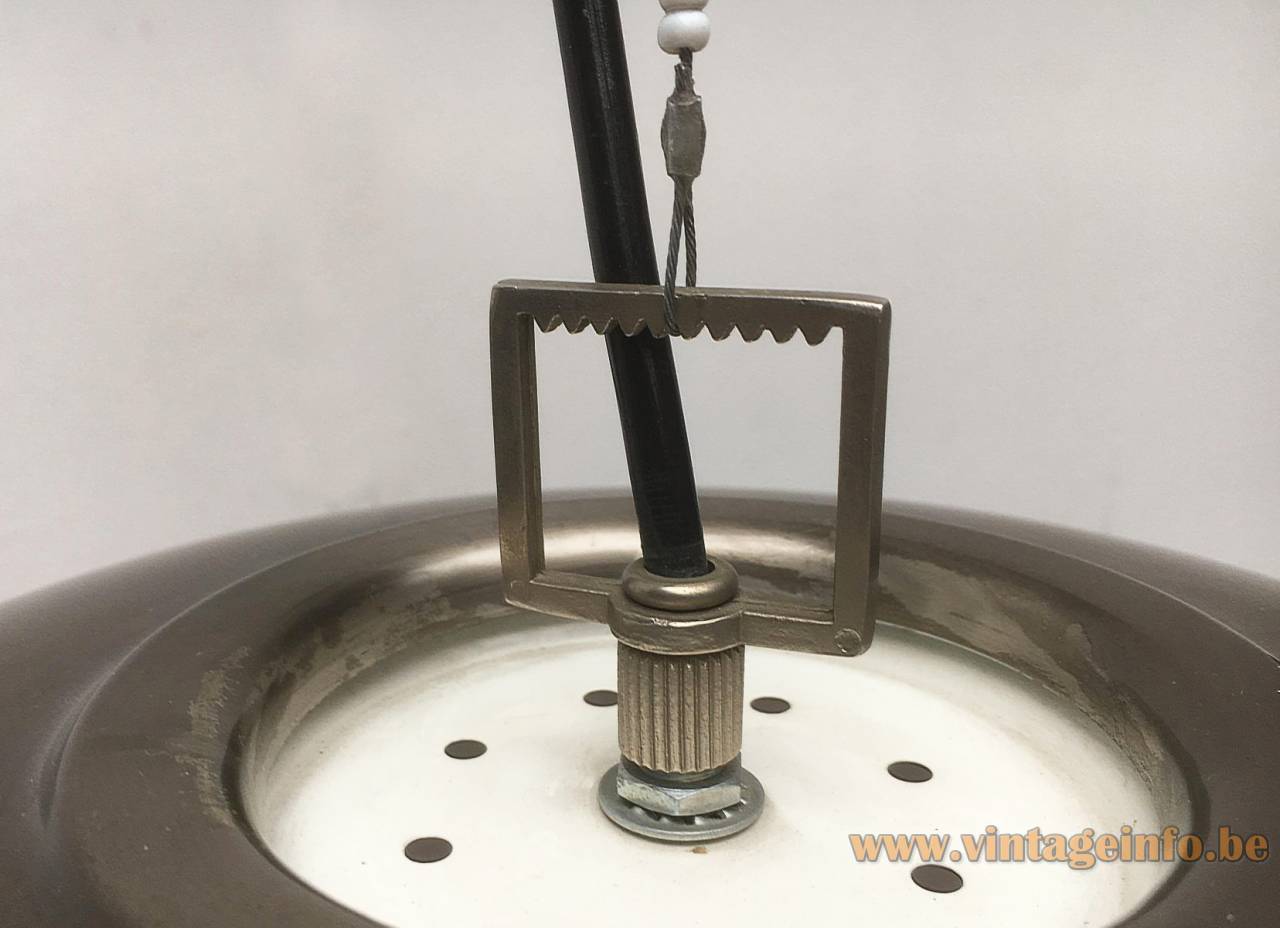
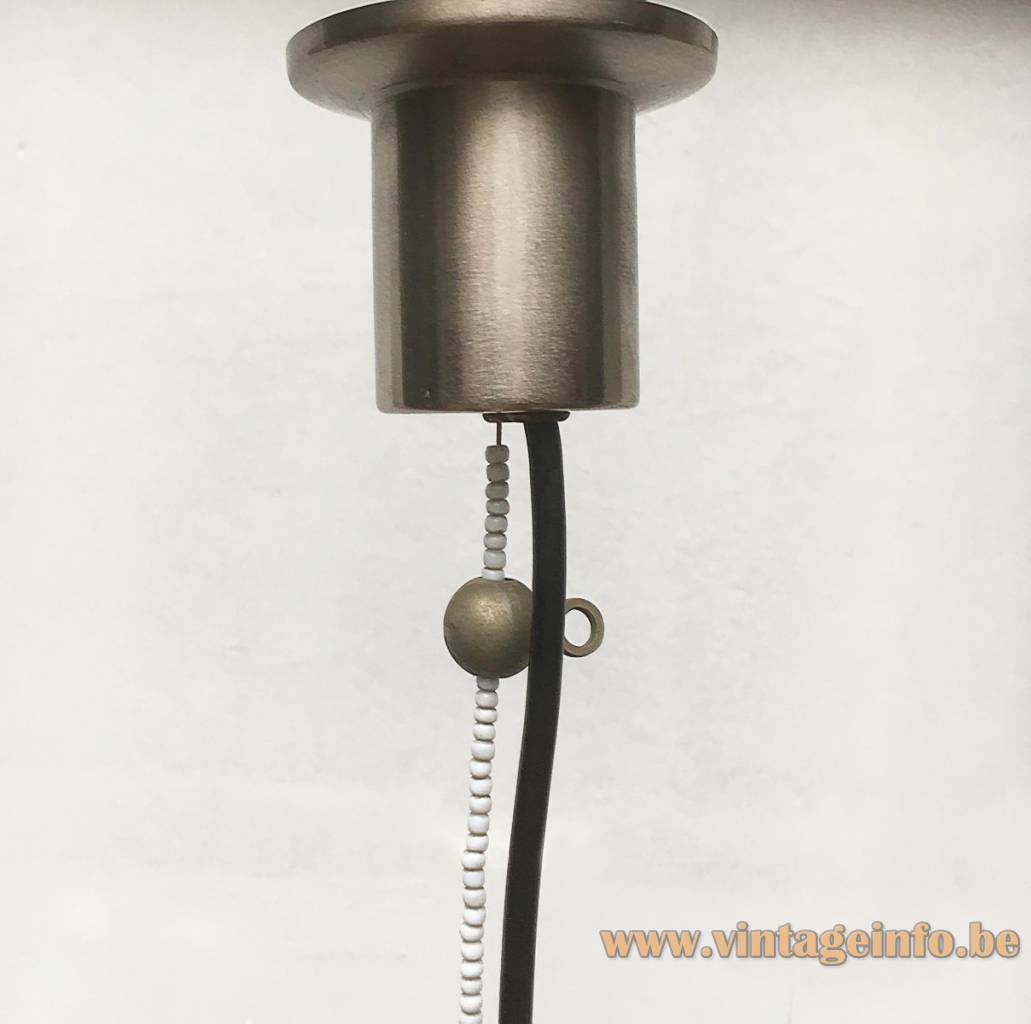
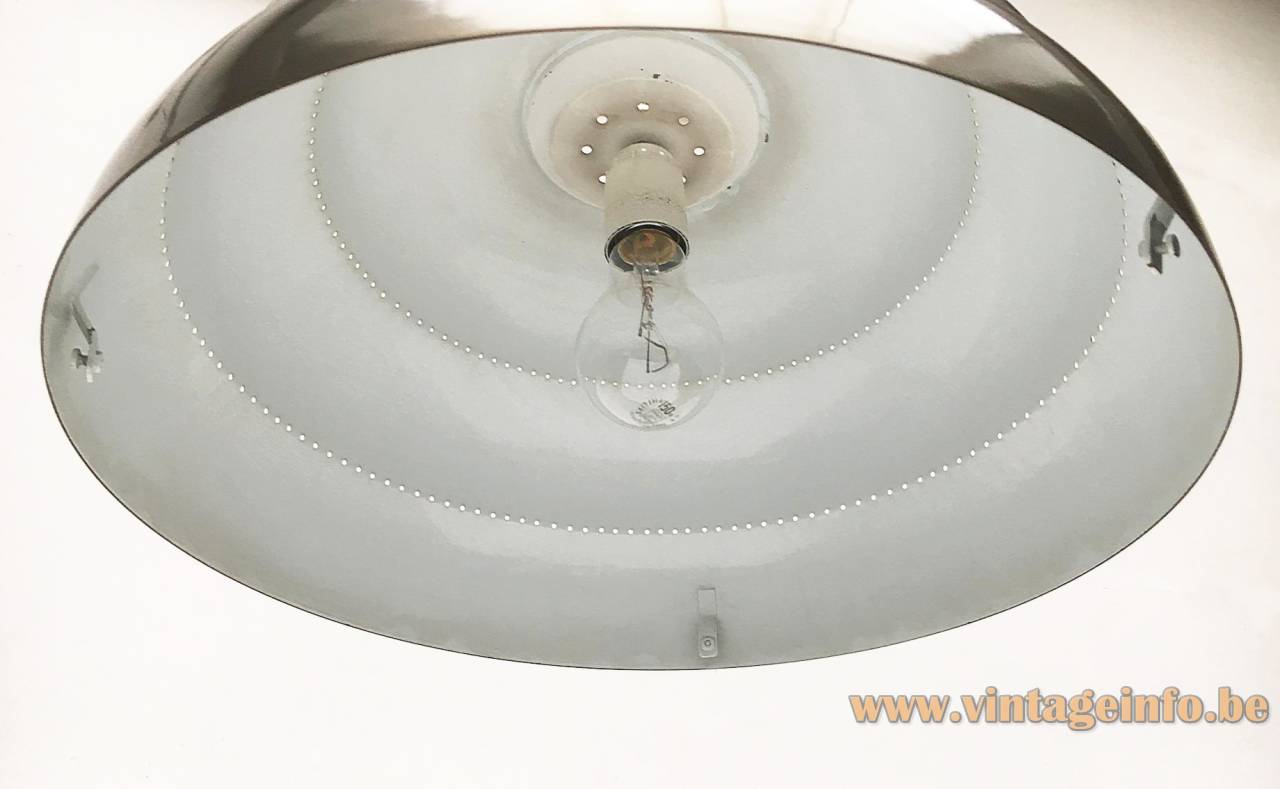
Materials: Round nickel-plated brass lampshade with 2 rings of perforated small round holes, white interior. Embossed round glass plate/diffuser underneath. 3 screws. White Bakelite E27 socket.
Cord: 200 cm / 78.74”
Height: 26 cm / 10.23”
Width: ∅ 45 cm / 17.71”
Electricity: 1 bulb E27, 1 x 100 watt maximum, 110/220 volt.
Any type of light bulb can be used, but an opal one is preferred.
Period: 1960s, 1970s – Mid-Century Modern.
Designer: Allesandro Pianon.
Manufacturer: Candle, Via Andrea Salaino 7, 20144 Milan, Italy.
Other versions: This Candle Venezia pendant lamp comes in 3 versions; brass, nickel-plated brass or dark grey painted finish.
Alessandro Pianon
Alessandro Pianon was born in Venice, Italy, in 1931. He studied architecture at the University of Venice, but soon moved towards industrial and product design, with a particular focus on glass.
In 1956 he began working for the Murano glass manufacturer Vistosi, where he not only designed lighting and objects, but also created the company’s logo. During his time at Vistosi, Pianon developed a highly recognisable design language characterised by soft, sculptural forms and refined colour palettes, perfectly suited to Murano glassmaking traditions.
In 1962 Pianon opened his own design studio. He became internationally known for his work in glass, especially for Vistosi, for whom he designed several iconic lamps. However, his greatest fame came from his series of glass chicks, the Pulcini, decorative objects that became a worldwide success and are today considered classics of Italian design.
Besides his work in Murano glass, Pianon also designed lighting for other Italian manufacturers. For the Milan-based company Candle, he created lamps such as the Capri, Ischia, Rimini, and this Venezia lamp, combining elegant metal structures with a refined, architectural approach to light.
Alessandro Pianon died in Venice in 1984, but his work remains highly regarded and collectible, both for his lighting designs and for his iconic glass objects.
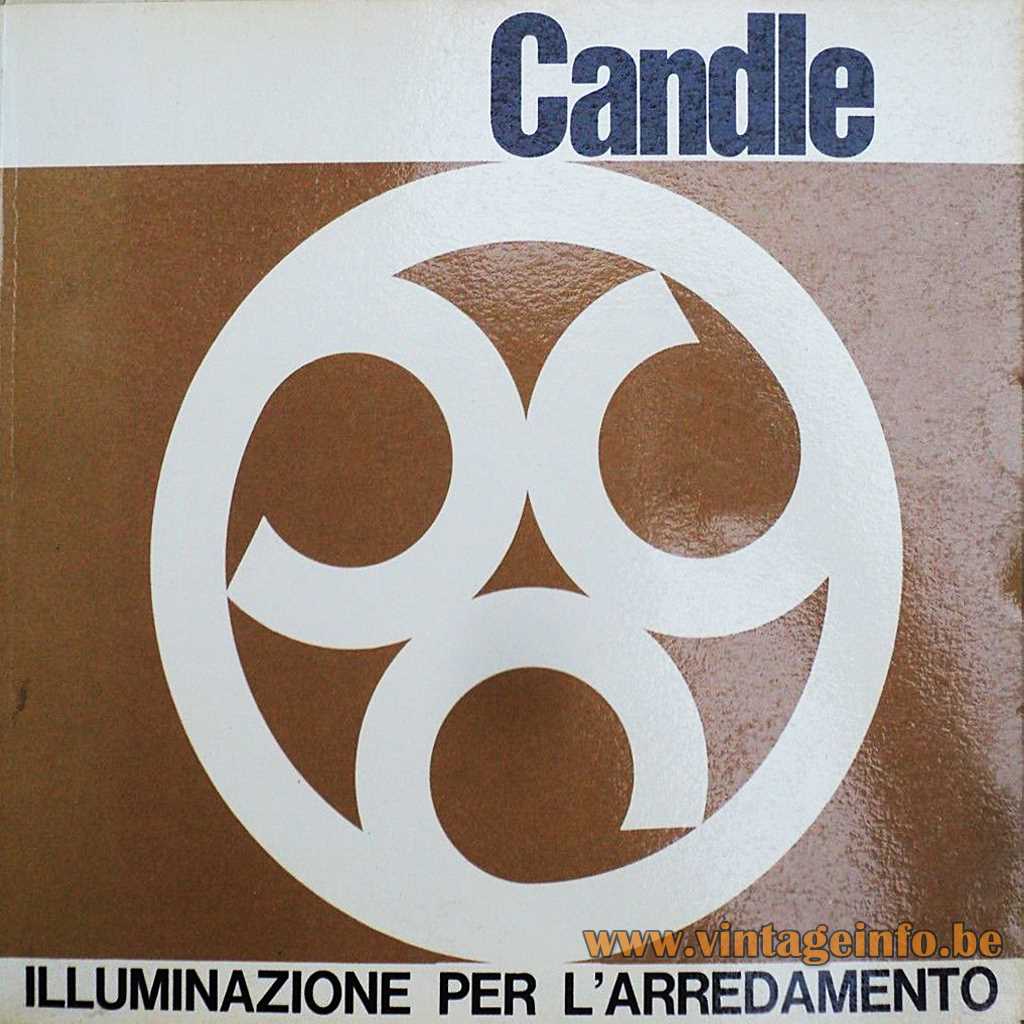
Candle
Candle Illuminazione was an Italian lighting manufacturer based in Milan, founded in the mid-1950s. The company became known for bold, sometimes eccentric and futuristic designs.
Over the decades, Candle worked with a wide range of designers. Names associated with Candle include, among others: Vico Magistretti, Gae Aulenti, Sergio Asti, M. Ferrari, Jonathan De Pas, Donato D’Urbino, Paolo Lomazzi, A. Fornaroli, G. Botturi, S. Lo Bianco – Bocola, Fernando and Humberto Campana, Angelo Mangiarotti, Giotto Stoppino, Allesandro Pianon, Giorgio and Max Pajetta, Rodolfo Bonetto,Riccardo Giovanetti, Francesco Gobbi, Luciano Pagani and Angelo Perversi, Charles Williams, Jonathan Daifuku, Silvio Caputo, Tim Power, Pierluigi Cerri, Christophe Pillet, and many more.
Company locations
Candle’s original headquarters and showroom were located at Via Ariberto 24, 20123 Milan, an address that appears in company catalogues of the late 1960s and early 1970s. From 1 April 1973, the company officially relocated to a new and larger site at Via Salaino 7, 20144 Milan. This address formed part of a broader industrial complex historically associated with Candle, including production-related facilities such as storage areas and service buildings.
In addition to its Milan base, Candle maintained affiliated showrooms in Rome (Via Monte Brianzo 56) and Turin (Piazza Arbarello 7), reflecting the company’s national presence within Italy during its most active period.
In 1993, FontanaArte acquired Candle and developed it as an additional division/line aimed at a younger audience, with projects by upcoming designers and more competitive pricing, supported by newer materials and production processes.
The Candle name is no longer commonly used as an independent brand; Candle designs and production are generally presented under FontanaArte.
Links (external links open in a new window)
Candle – FontanaArte history on the FontanaArte website (archived)
Vintageinfo
1960s Candle lighting catalogue
1970s Candle Novita lighting catalogue
Many thanks to Frank from nullviernull raum+kommunikation for the lamp pictures. You can find his shop over here on Pamono.
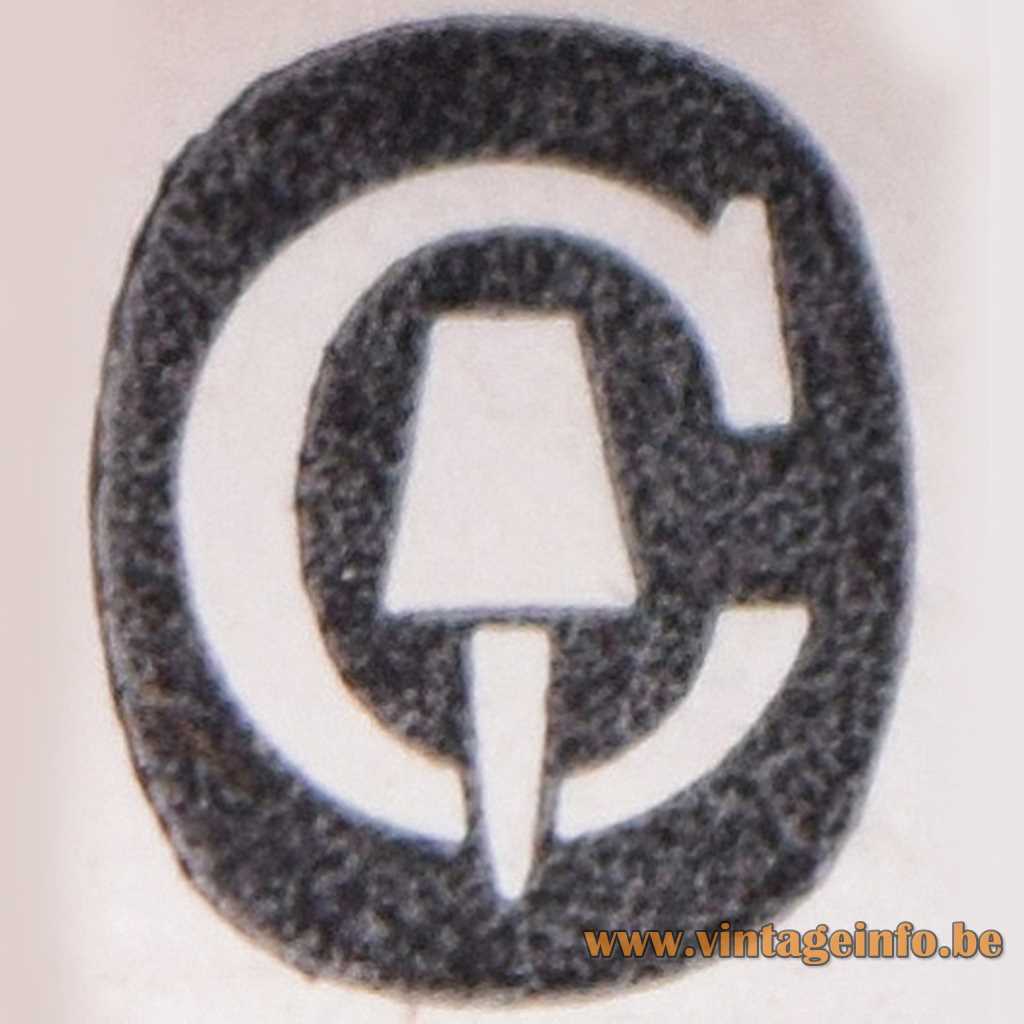
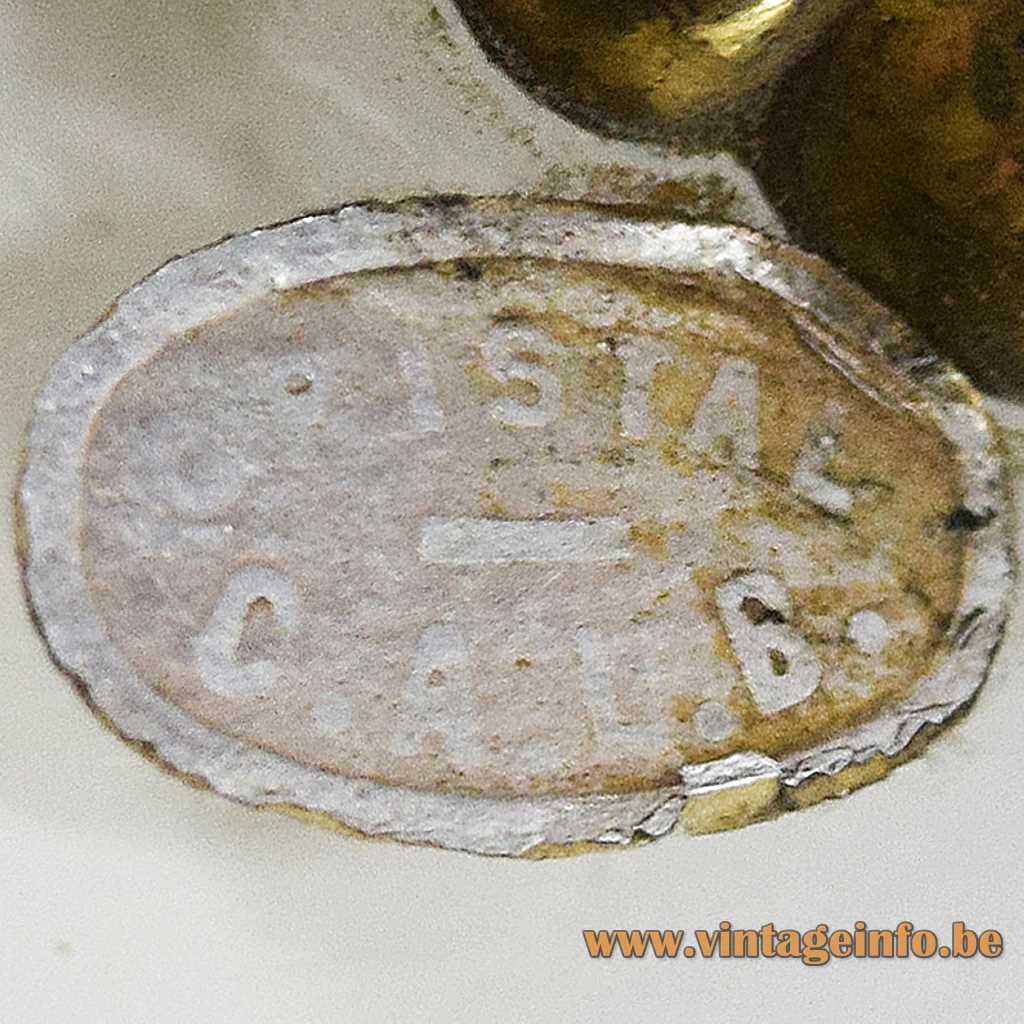
Candle Venezia Pendant Lamp – Company Labels & Logos