- Categories
- Categories
Last 5 Viewed
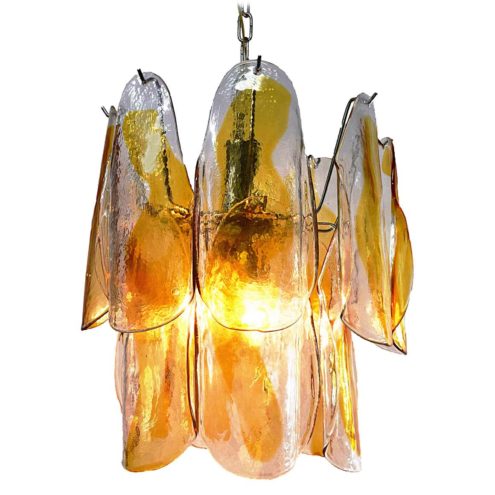

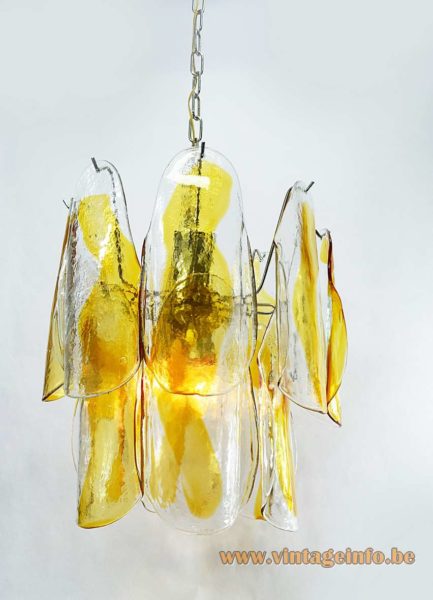

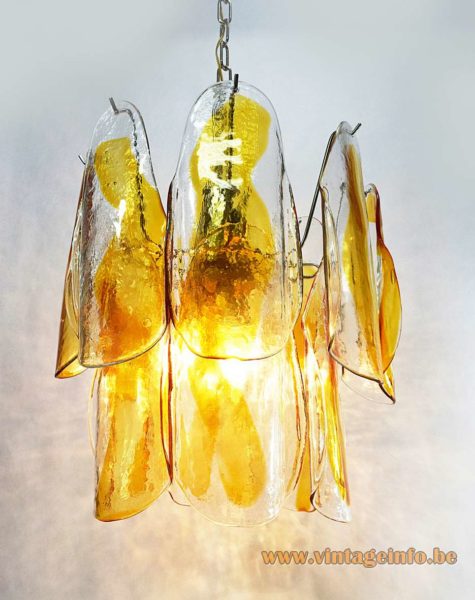
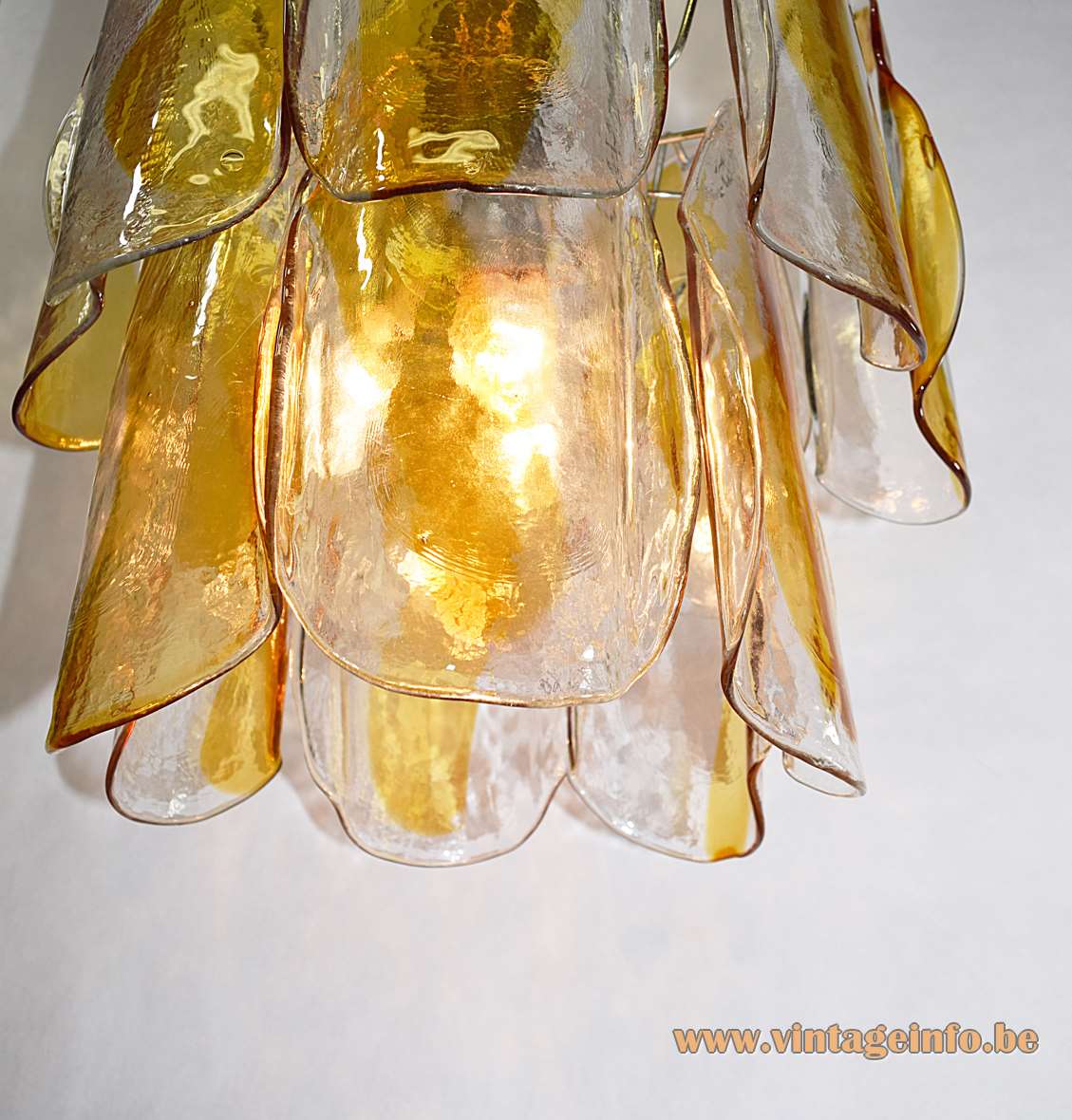
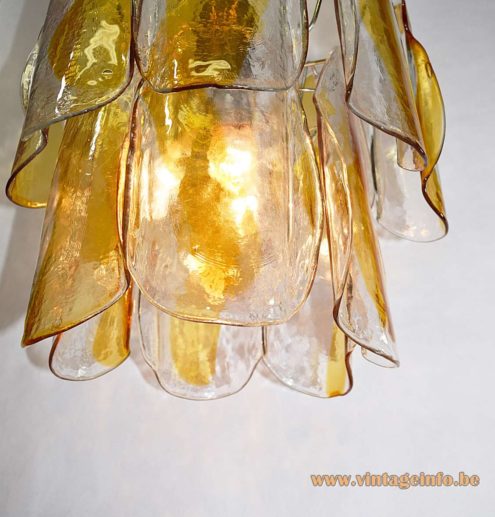
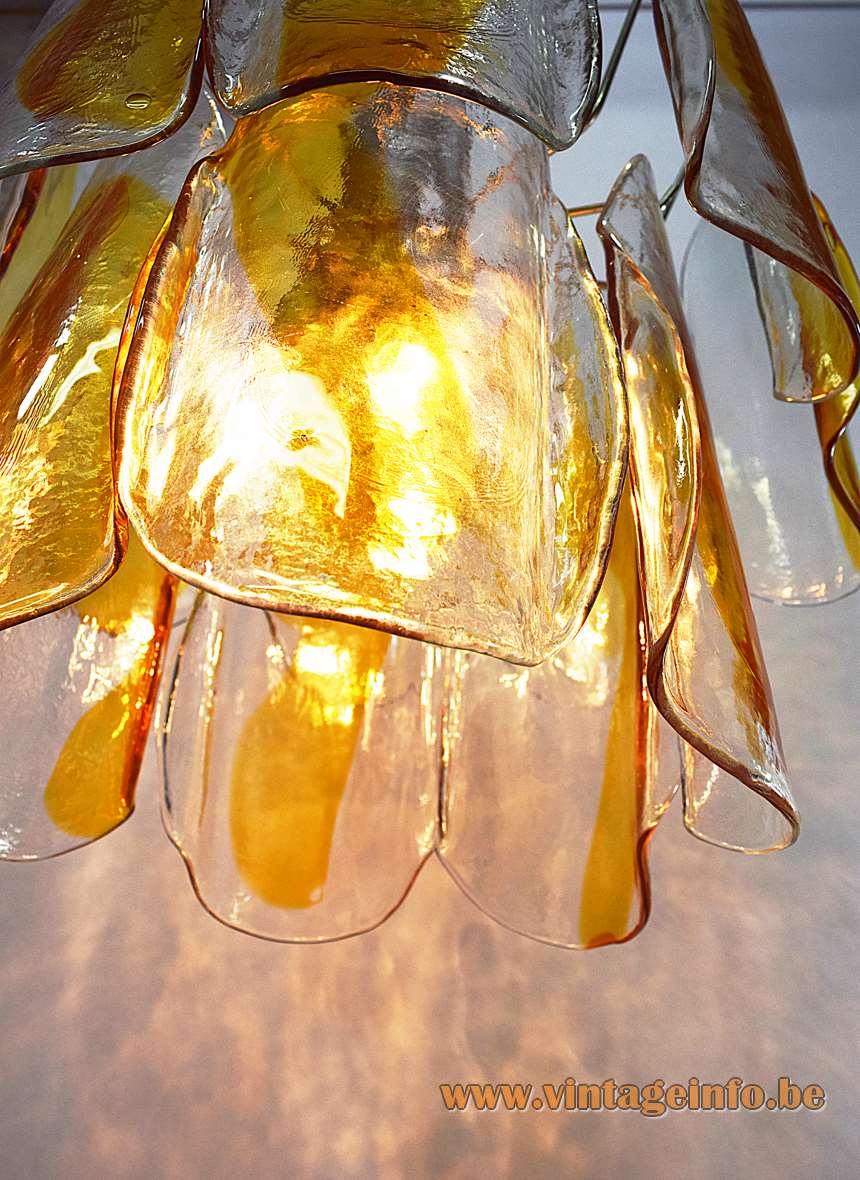


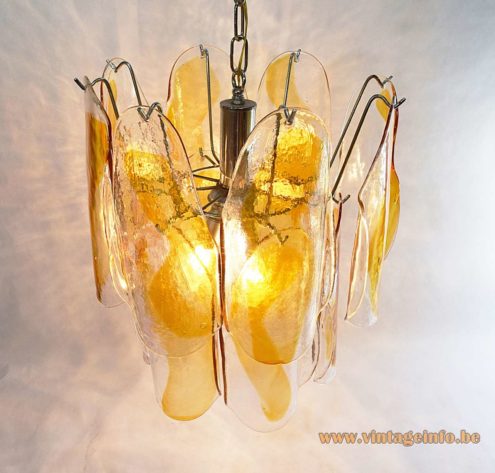
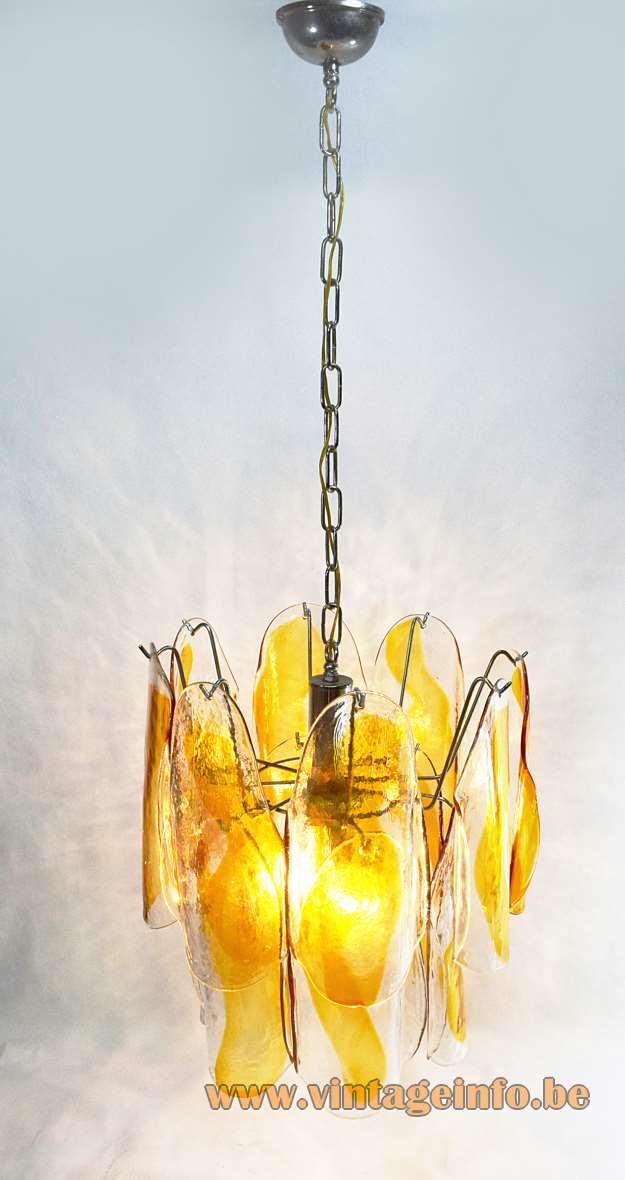
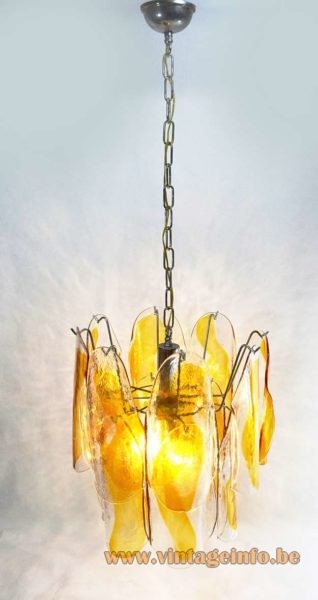
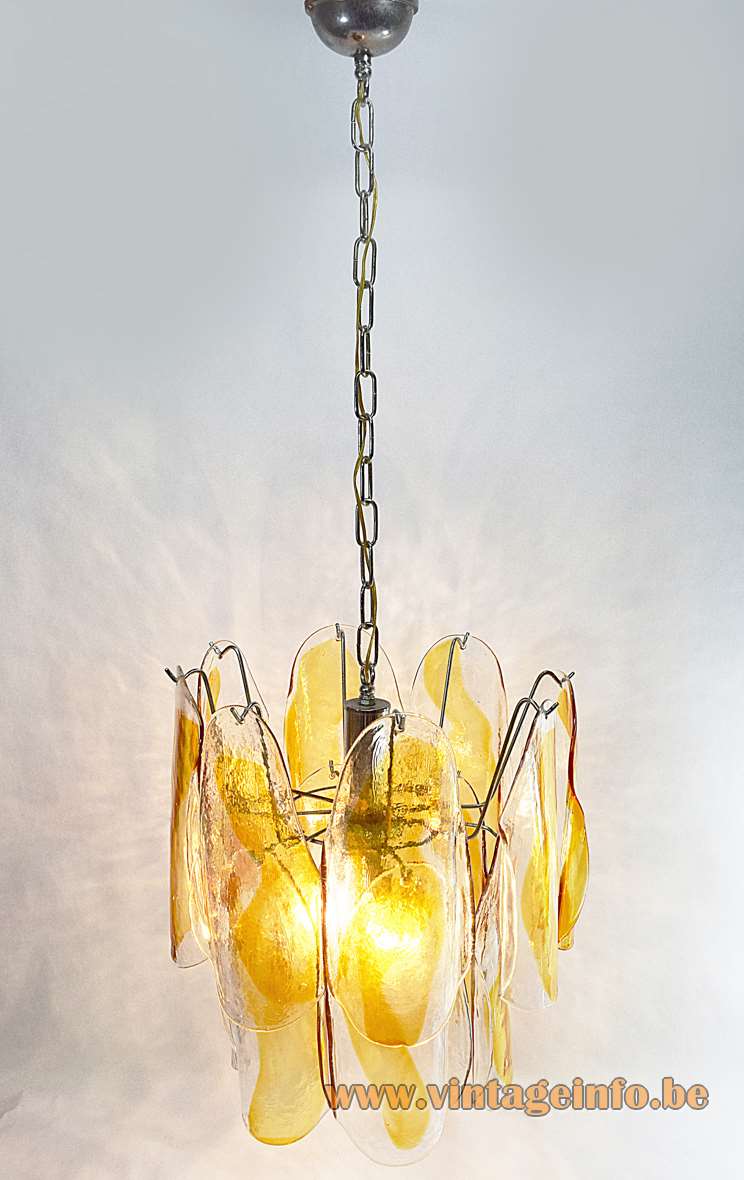
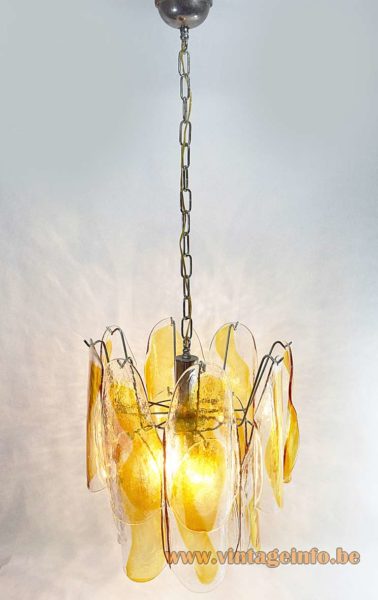
La Murrina Amber Glass Chandelier
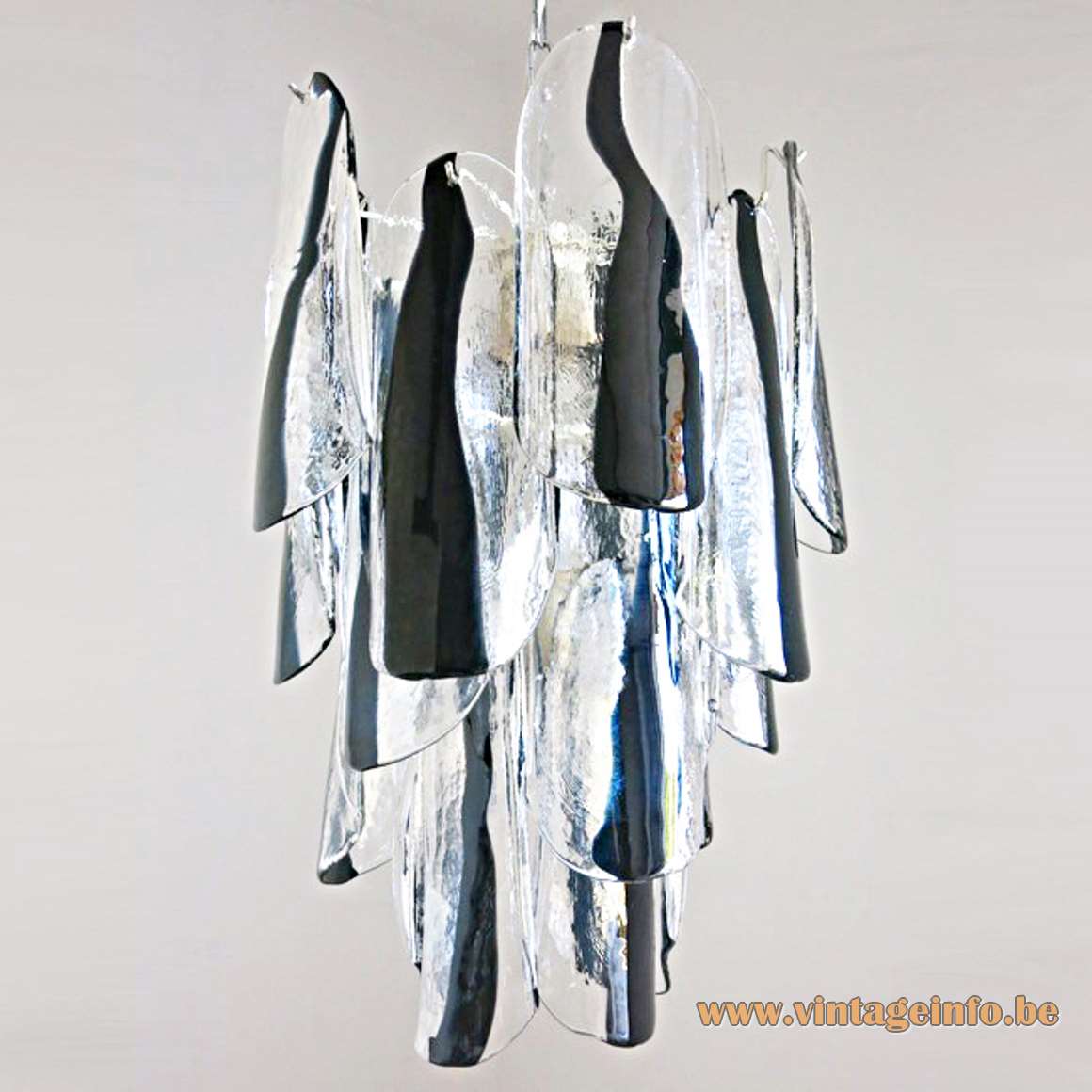
Black and white versions

Re-editions and uncredited legacy forms
Alongside explicitly credited designer collections, La Murrina catalogues also include models that strongly echo older Murano lighting typologies (including 1970s-era aesthetics), yet are presented without designer names. This suggests a mix of in-house designs, re-editions, and continued production of “classic” Murano forms where authorship was not emphasized in the company’s catalogue communication.
In the Daily Collection catalogue from 2014, for example, the company explicitly states that product variations in shape, colour, and size are normal and part of the value of artisan Murano workmanship, and that technical/aesthetic changes may occur without notice—context that fits ongoing production and revision of existing models over time.
Links (external links open in a new window)
La Murrina website (archived)
History of the La Murrina company (archived)
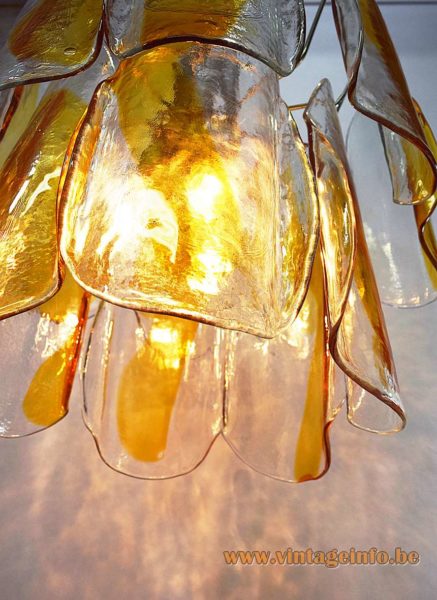
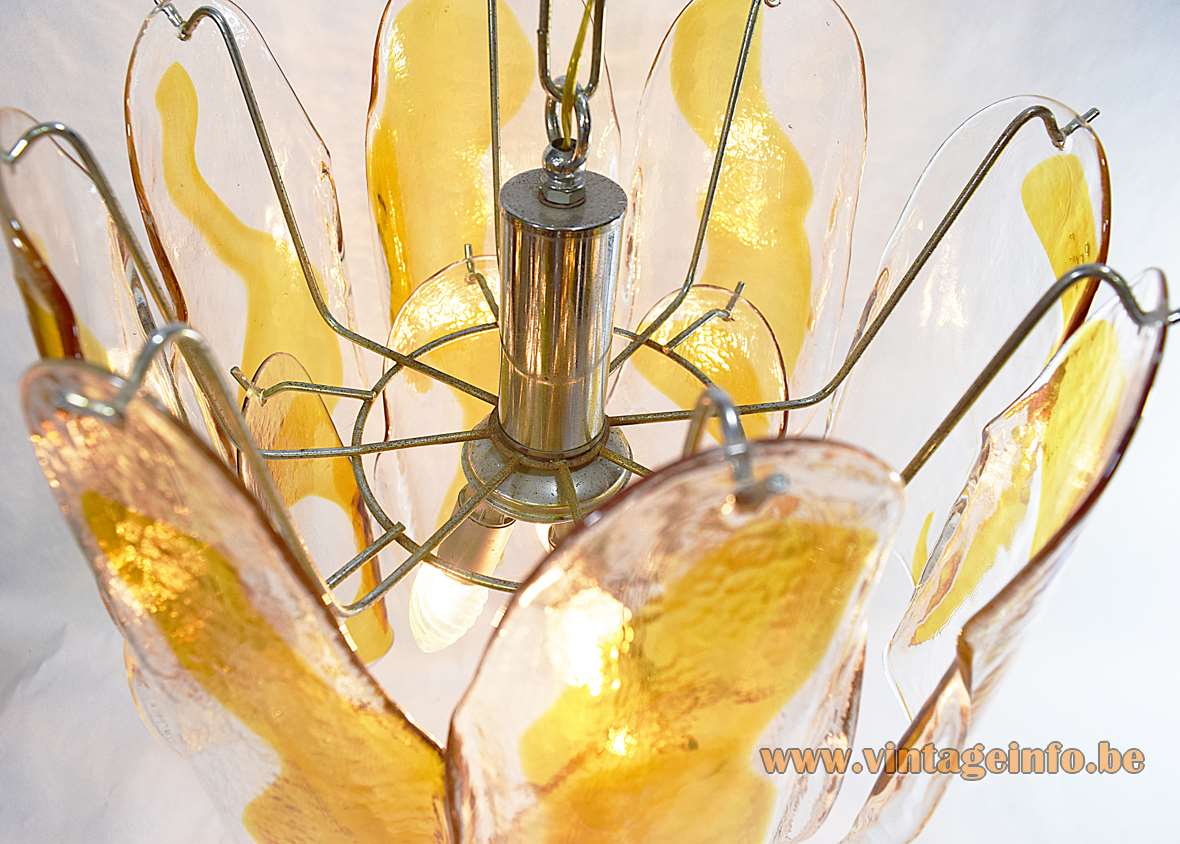
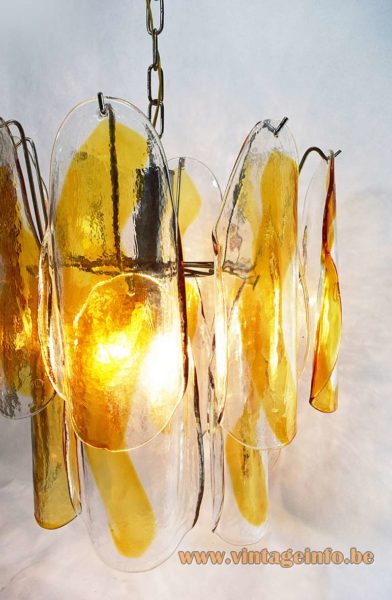
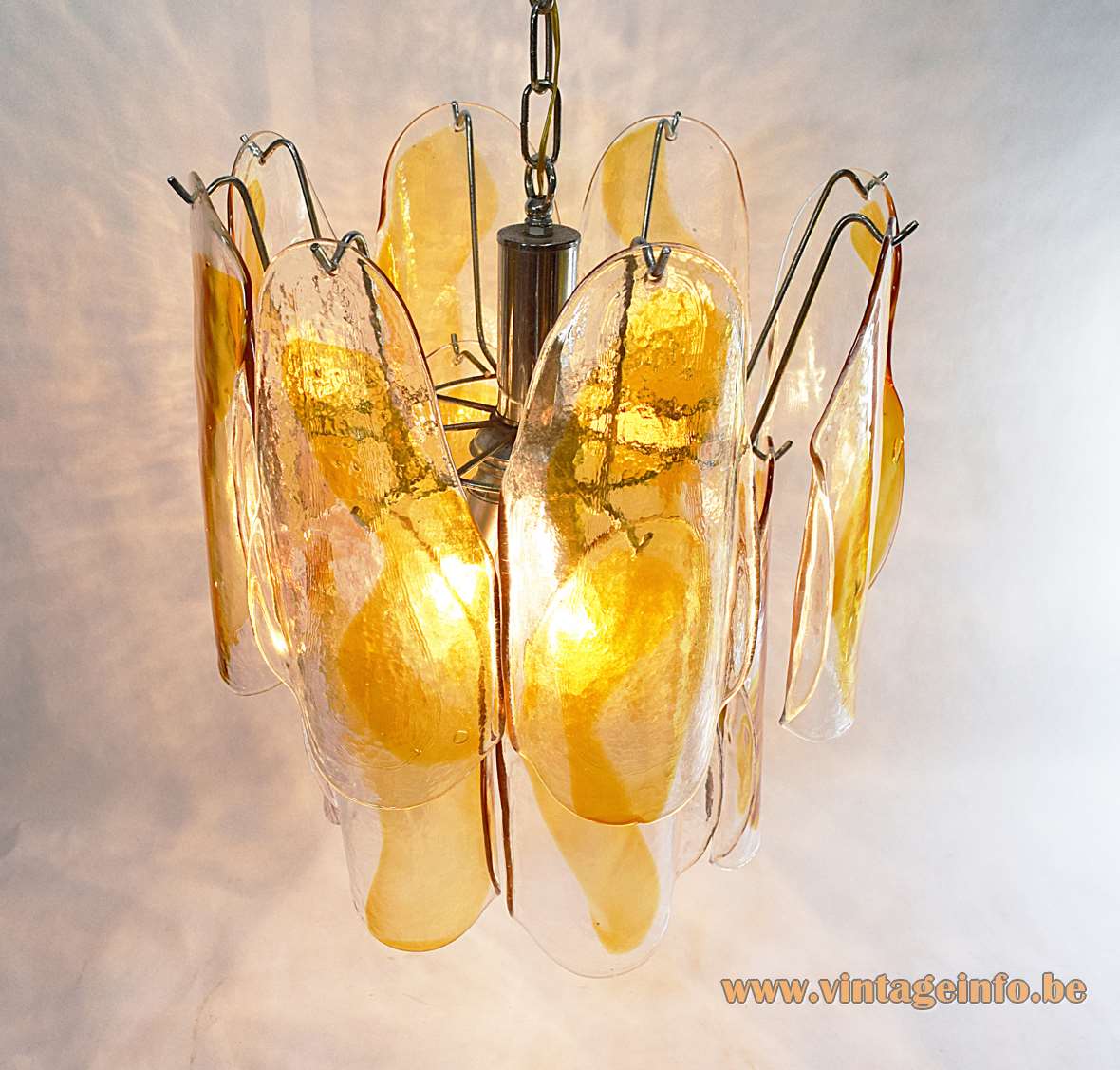
La Murrina Amber Glass Chandelier
Materials: Metal chromed (iron) frame. 14 amber and clear crystal hand-blown curved Murano glass plates. 3 Bakelite E14 sockets.
Chain Length: 80 cm / 31.49’’
Height: 36 cm / 14.17”
Width: ∅ 43 cm / 16.92”
Electricity: 3 bulbs E14, 3 x 60 watt maximum, 110/220 volt.
Any type of light bulb with an E14 screw base can be used. Not a specific one preferred.
Period: 1960s, 1970s – Mid-Century Modern.
Designer: To be appraised.
Manufacturer: La Murrina S.R.L., Via Isonzo 26, 22078 Turate (CO), Italy. Furnace: Riva Longa 17, Murano, Italy.
Other versions: This La Murrina amber glass chandelier exists as a flush mount and wall lamp and made in different colours.
La Murrina
La Murrina is an Italian company known for high-end Murano glass lighting and decorative objects, combining traditional glassmaking techniques with contemporary design and modern production methods.
The origins of La Murrina go back to the 1960s on the island of Murano, where a small furnace was operated by a group of master glassmakers. In this early phase, the production consisted mainly of prestigious blown-glass objects created by the furnace owners themselves.
In 1974, the furnace came under the control of a family from Milan, already active in the production of lighting in glass and metal. From that moment on, the company was managed as a structured corporation, and the “La Murrina” trademark was registered internationally. Its collections were gradually distributed worldwide.
Around the year 2000, La Murrina expanded its activities through collaborations with architects and designers, introducing contemporary collections while continuing to rely on traditional Murano glassblowing techniques.
La Murrina S.R.L. operates in the high-end interior and lighting market, producing both standard collections and custom-made projects for private residences, hotels, and commercial interiors. The company positions itself in the luxury segment, where craftsmanship, technical know-how, and Italian design culture play a central role.
This company overview is based on historical corporate material and archived website content. The former official website (lamurrina.com) is no longer under the control of the company; archived versions can be consulted via the Wayback Machine.
Early designer attribution
An early La Murrina catalogue (circa 1974) includes a dedicated designer index explicitly attributing individual models to named designers and glassmakers. Among the designers listed are Peter Peisel, Potenza & Pelzel, Alessandro Lenarda, Gandini, and Lino Tagliapietra, each associated with specific article numbers.
Designers credited in recent years
In more recent catalogues, La Murrina occasionally credits external designers. The following names appear in published company material from the late 1990s onward: Samuele Mazza, Alessandro La Spada, Roberto Serio, Adriana Lohmann, Federico Visani, Oscar Tusquets, Giugiaro Architettura, Sottsass Associati, Marco Piva, Denis Santachiara, Matteo Thün & Antonio Rodriguez.
Many thanks to Philippe for all the help!
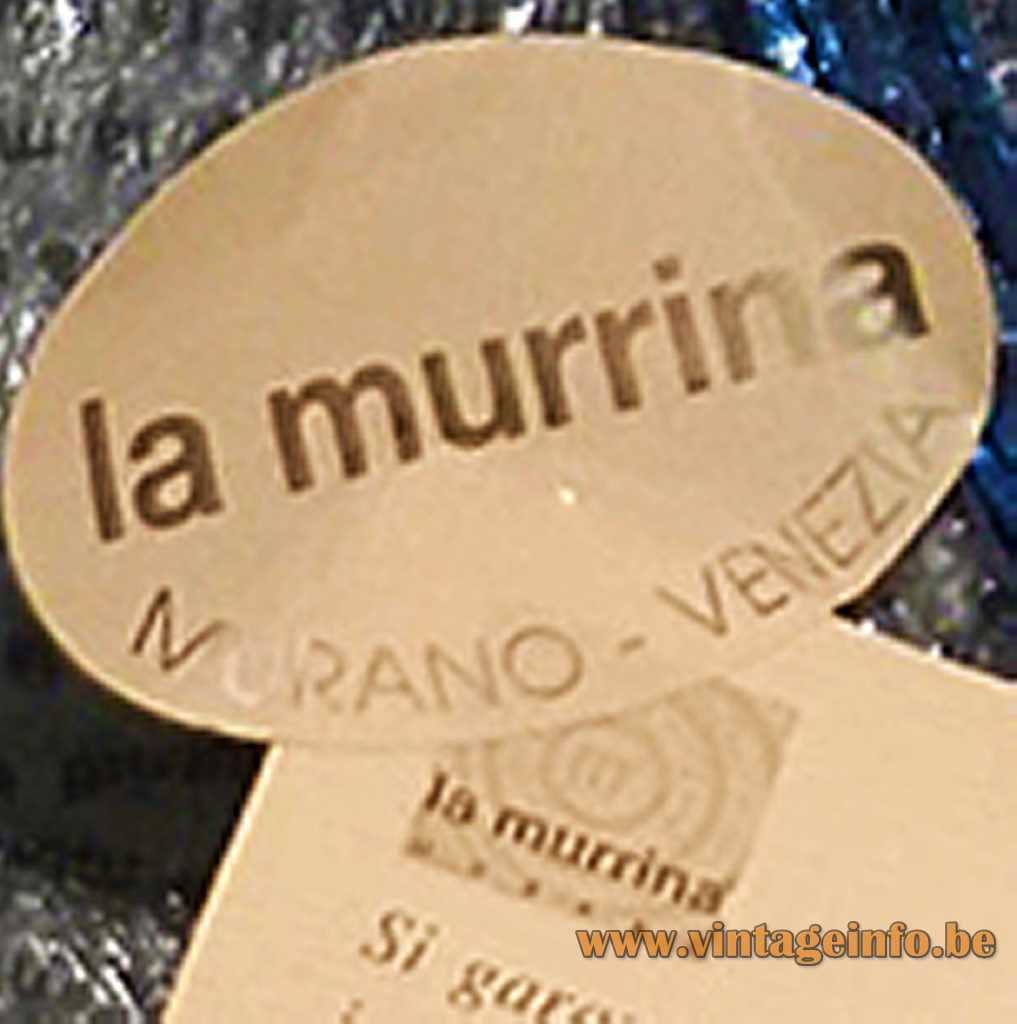
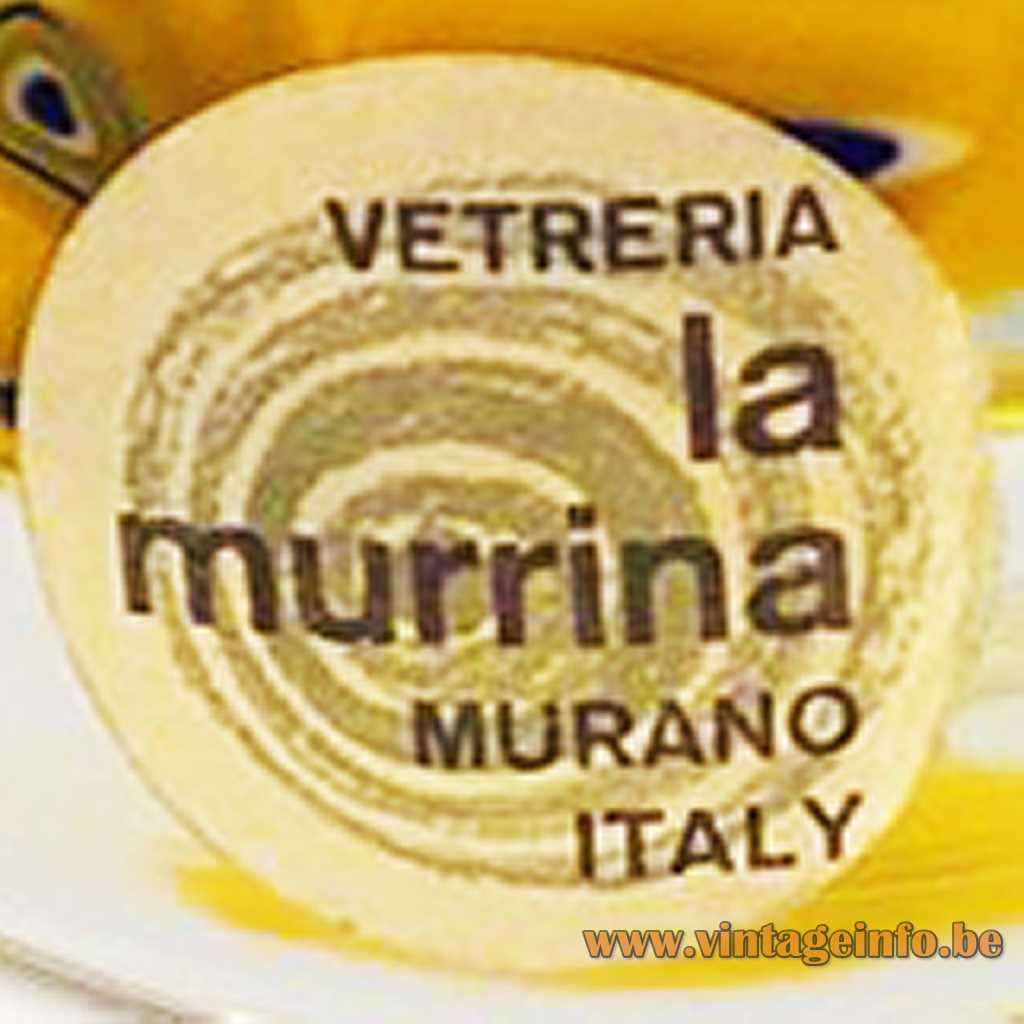
La Murrina Amber Glass Chandelier – Company Labels & Logos