- Categories
- Categories
Last 5 Viewed
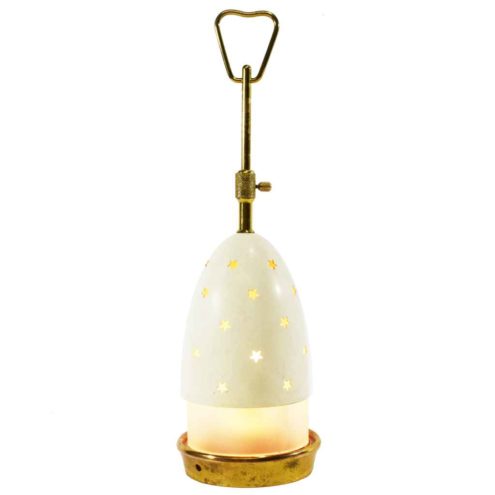
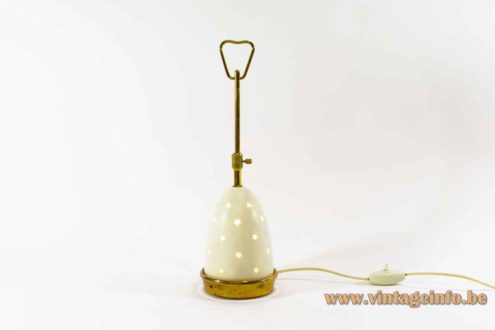
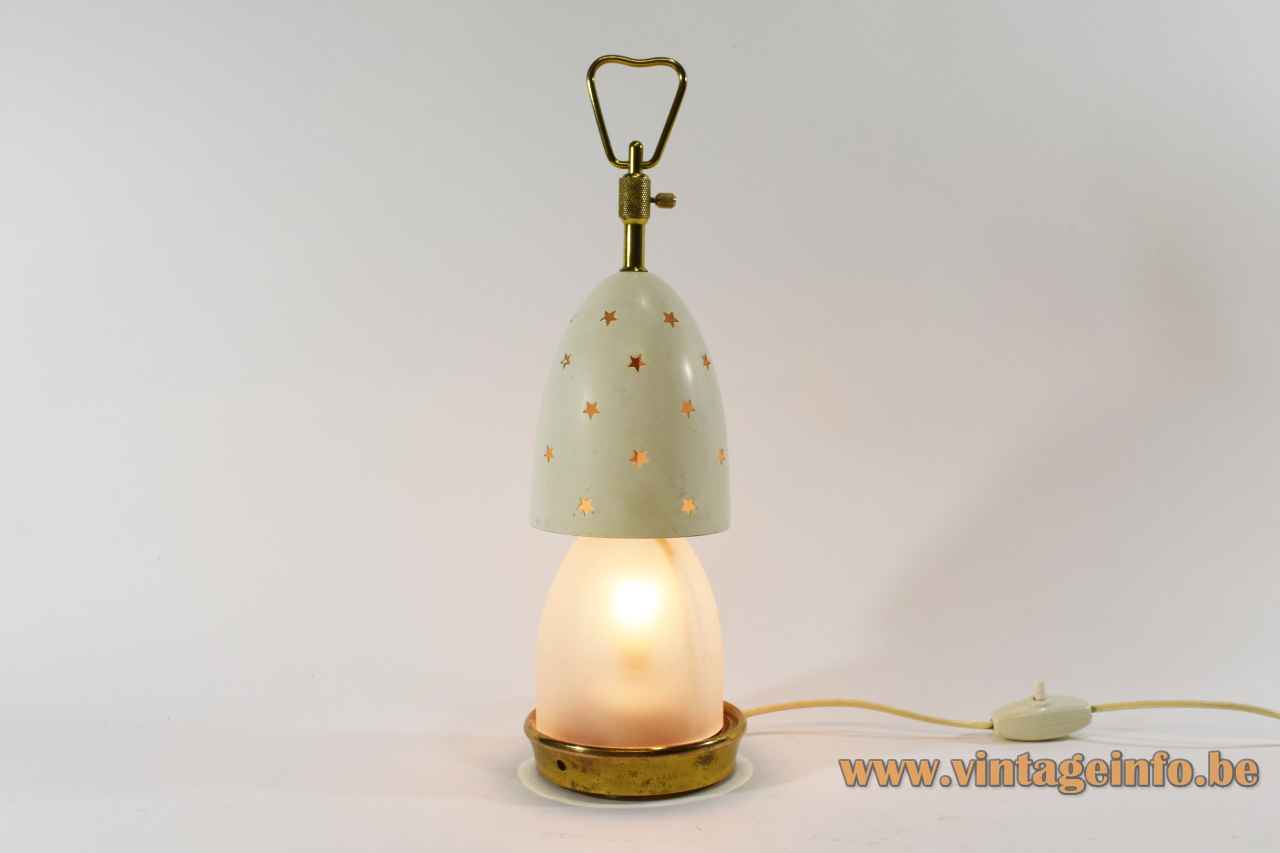
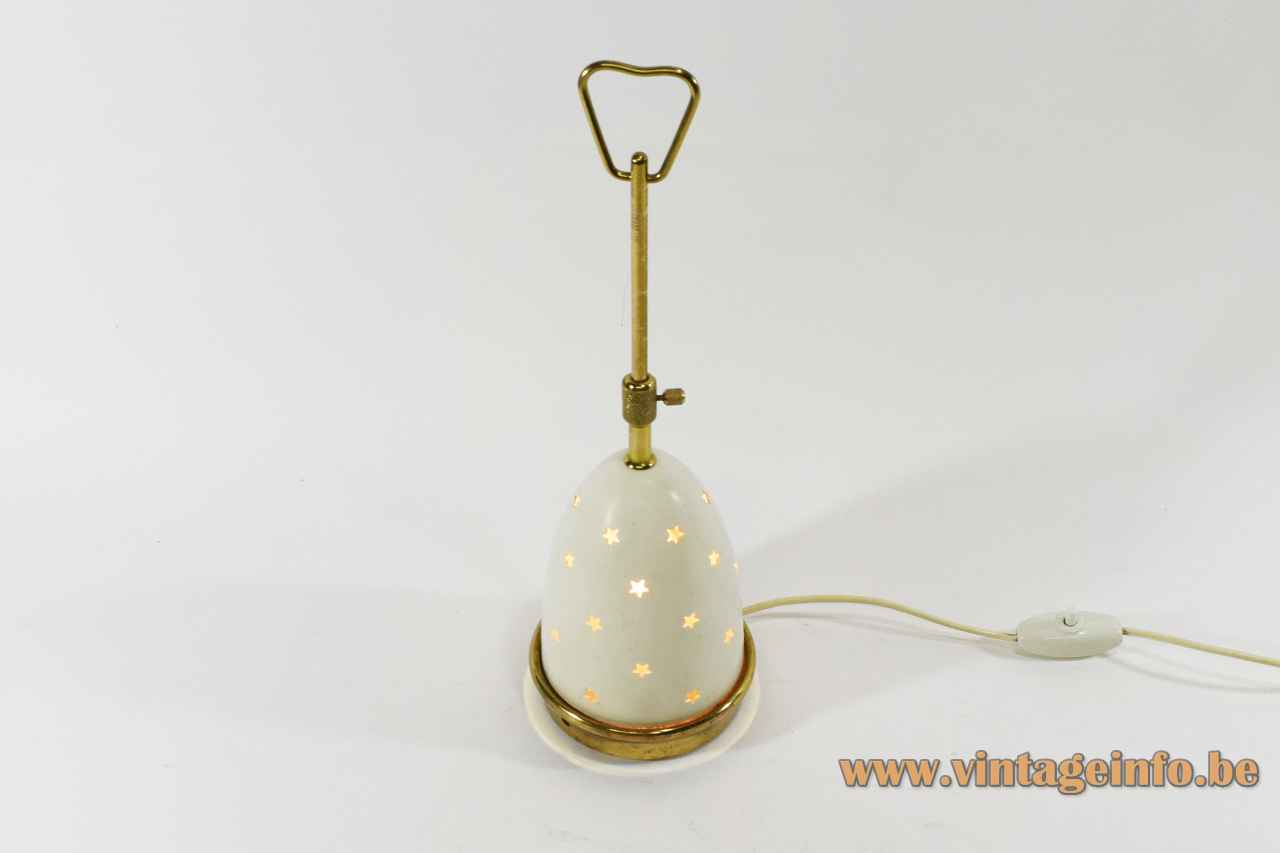
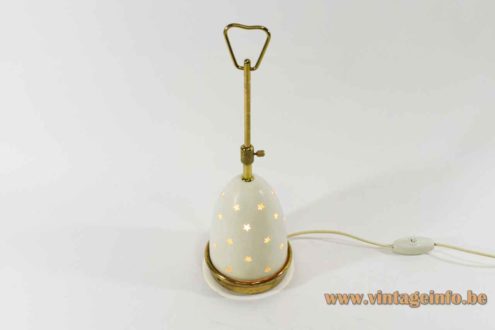
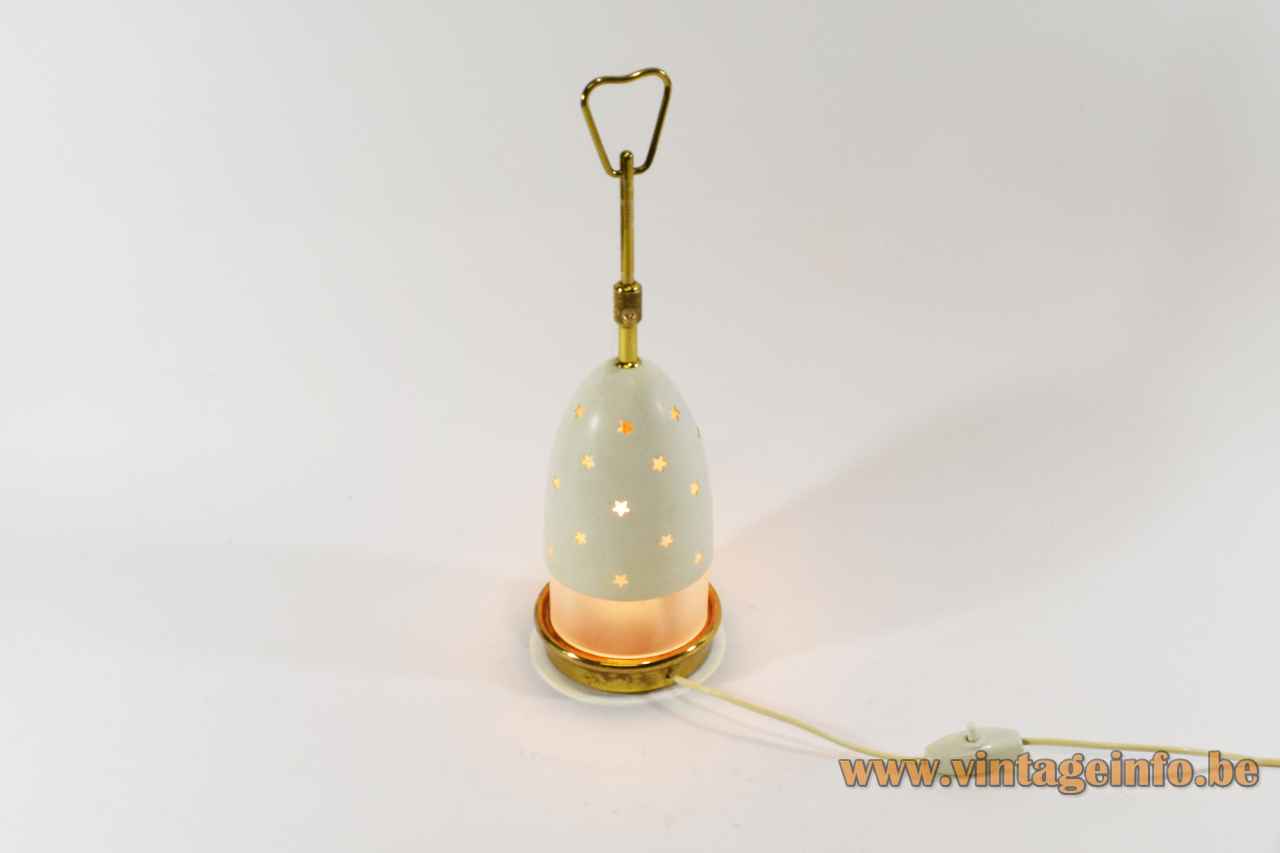
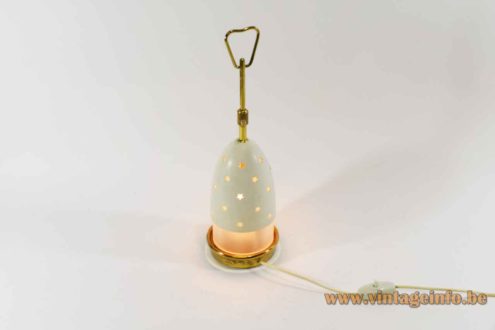
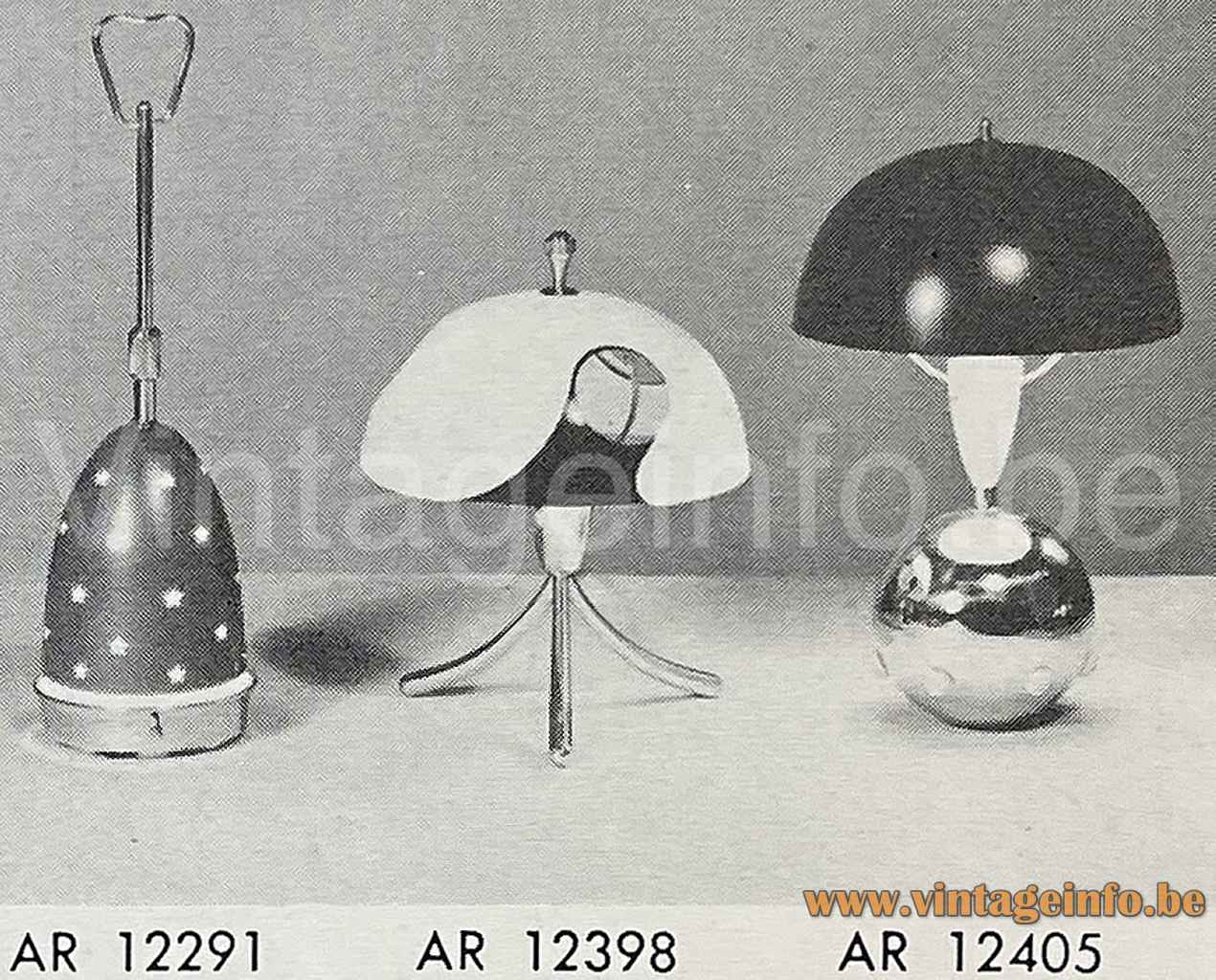
Arredoluce Stellina Table Lamp – 1960s Catalogue Picture
Altamira New York USA catalogue picture. Here together with 2 other lamps produced by Arredoluce, models AR 12398 and AR 12405.
Arredoluce Stellina Table Lamp – The Company
Arredoluce Stellina Table Lamp – Cobra Lamp
Links (external links open in a new window)
Silvana Editoriale website – publisher of the book
Vintageinfo
Many thanks to Peter from BGgalleries for the Altamira catalogue picture. You can find his website over here.
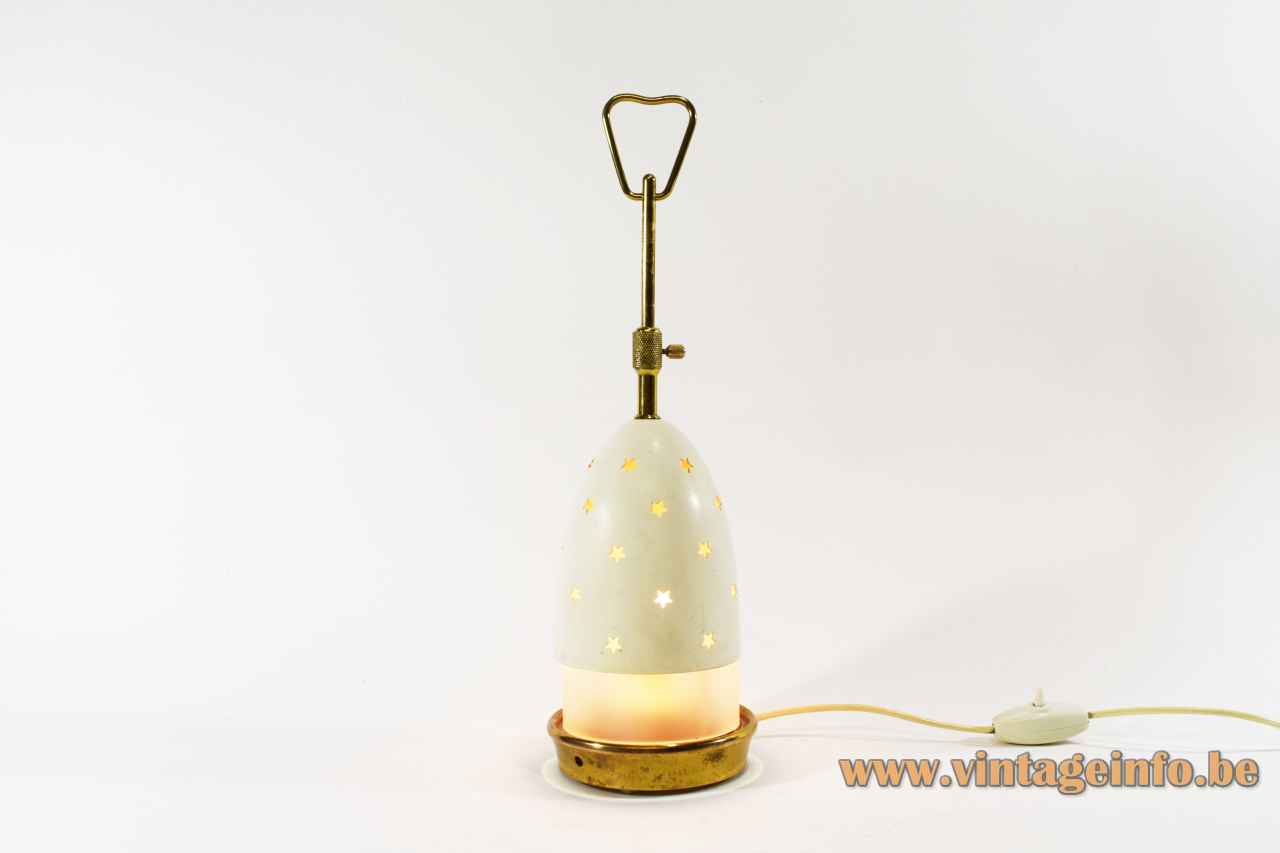
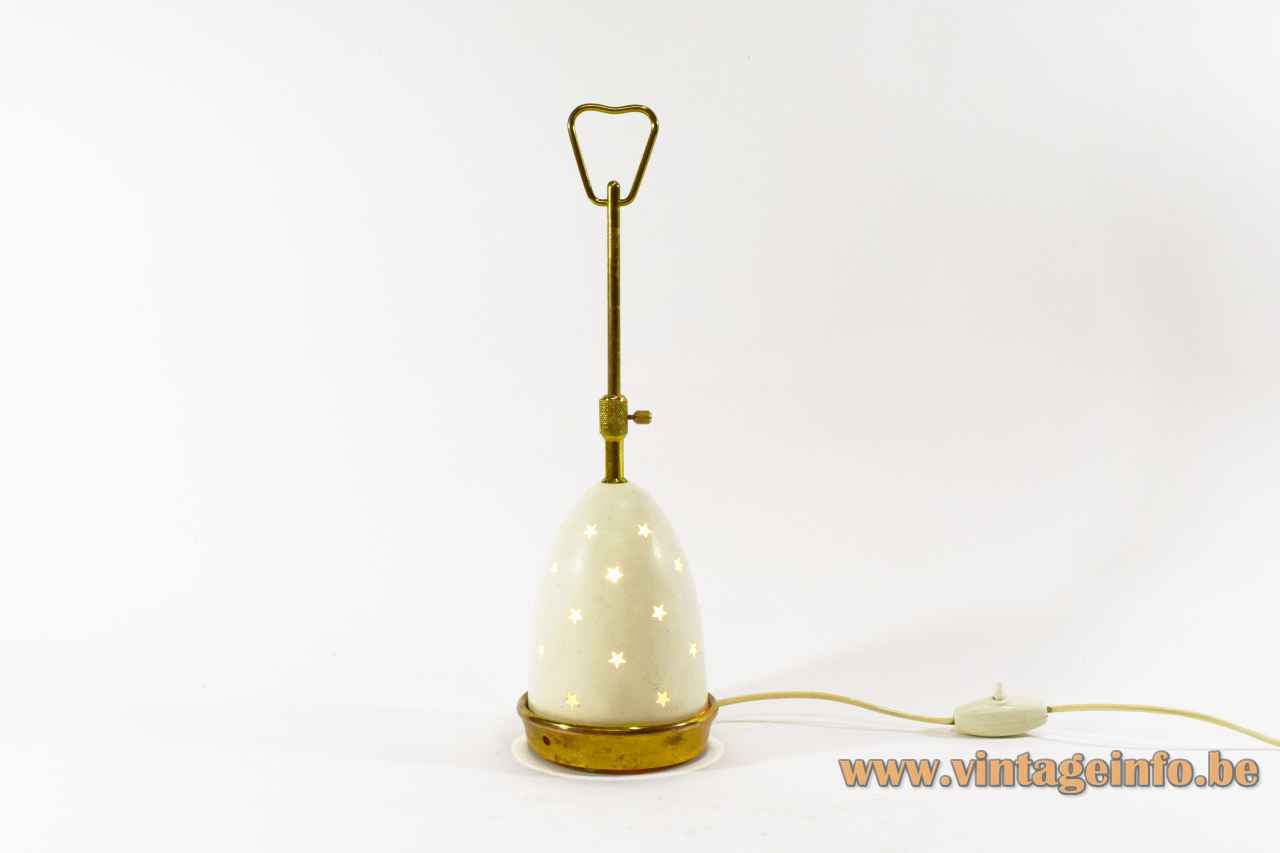
Arredoluce Stellina Table Lamp
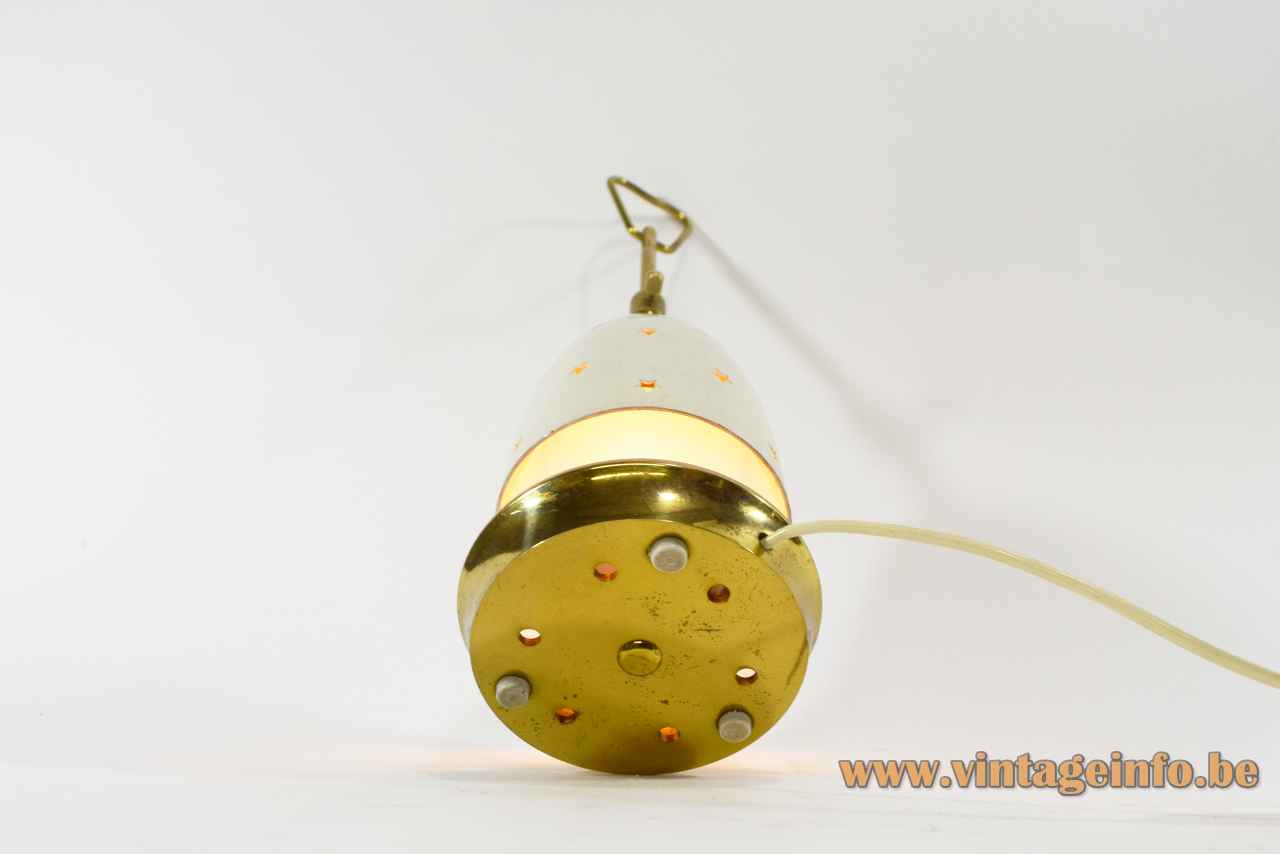
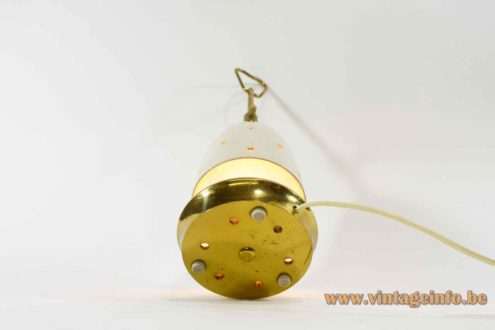
Materials: Round brass base. Rod with a handle. Brass ornamental screw. White painted adjustable conical stars lampshade. Frosted glass diffuser. Some brass parts. 3 rubber caps on the bottom. Brass & porcelain B22 socket.
Height: 34,5 cm / 13.58”
Width: ∅ 10 cm / 3.93”
Electricity: 1 bulb E14, 1 x 60 watt maximum, 110/220 volt.
Not any type of light bulb can be used, it has to be small one: refrigerator style.
Period: 1950s, 1960s – Mid-Century Modern.
Designer: Angelo Lelii around 1950.
Manufacturer: Arredoluce, Monza, Italy.
Other versions: The Arredoluce Stellina table lamp exists in several minor variations and was produced in a range of colours. This particular example features a knurled screw to adjust the lampshade, whereas most versions are fitted with a ball screw. Even among the ball-screw versions, differences in size can be observed.
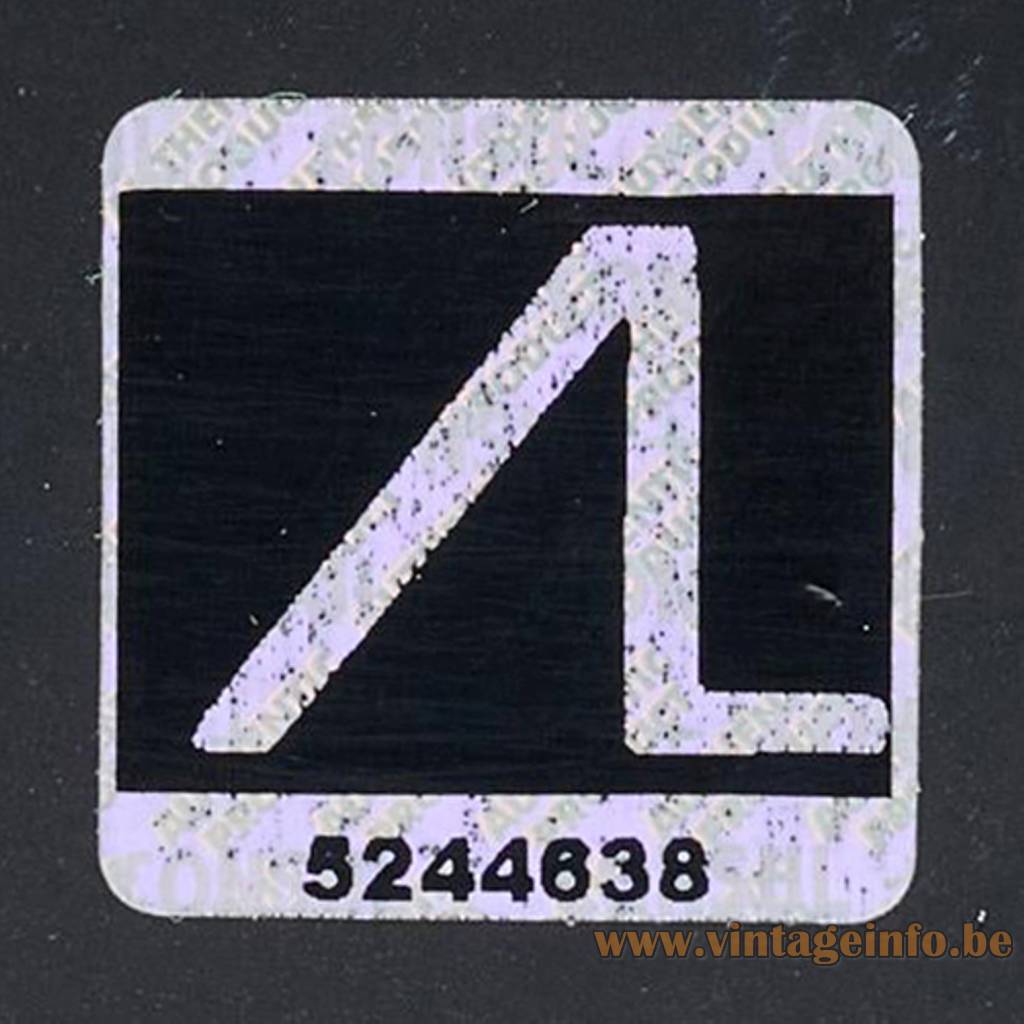
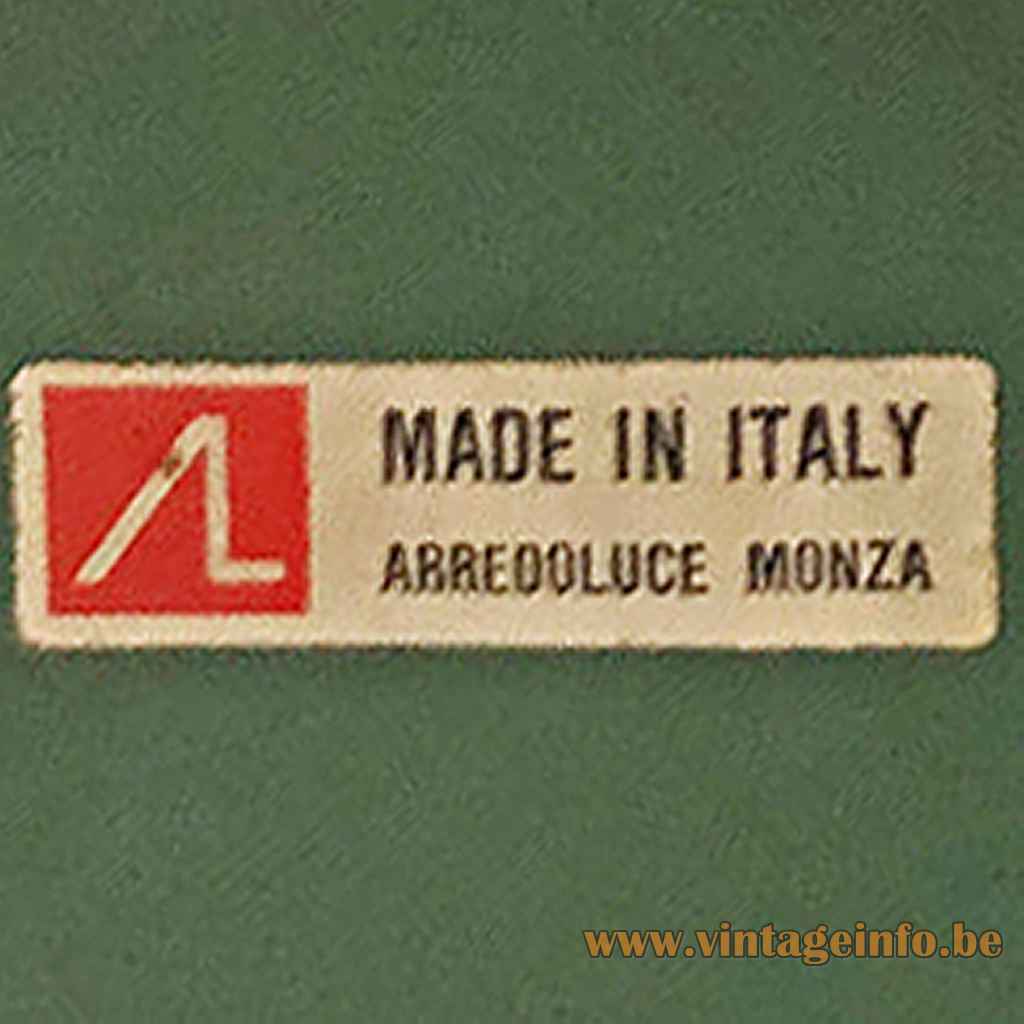
Some lamps are stamped on the base with the Arredoluce name, while others are not. Certain examples instead carry an original label.
Versions were produced with the switch mounted on the base, as well as with a switch on the cord. A more luxurious version was supplied with an additional base element: a brass disc on which the lamp could be placed.
The Arredoluce Stellina table lamp is documented in the reference book Arredoluce – Catalogo Ragionato 1943–1987 / Catalogue Raisonné, written by Anty Pansera, Alessandro Padoan and Alessandro Palmaghini, and published by Silvana Editoriale. The model is discussed on pages 15 and 121.
The Stellina lamp, model 12291, is often referred to as the “Kennedy” lamp, named after John F. Kennedy. According to tradition, Kennedy’s children received this lamp as a gift from Angelo Lelii, who was a strong admirer of the United States and its president.
An anecdotal detail associated with the lamp concerns the star-shaped cut-outs from the lampshade: these reportedly ended up in the pockets of Massimo Lelii, Angelo Lelii’s son, who was still a young boy at the time.
In the United States, these lamps were distributed by the New York–based company Altamira.
The electrical components and the lamp holder of this model were manufactured by VLM Components, while the switch and plug were produced by Vimar.
Angelo Lelii
Angelo Lelii (Ancona, 1915 – Monza, 1987), often also referred to as Angelo Lelli, was one of the most important figures in post-war Italian lighting design. He was not only a designer, but also a manufacturer, inventor and entrepreneur, with an unusually direct involvement in every stage of a lamp’s development, from the first idea to production.
Lelii approached lighting in a highly practical and inventive way. A bulb, a reflector, a metal joint or a new mechanical solution could become the starting point for an entirely original design. This constructive way of thinking gave his work a distinctive balance of technical intelligence, formal clarity and visual elegance.
Unlike many designers of his time, Lelii was deeply engaged with the manufacturing process itself. He continuously refined details, experimented with finishes and materials, and developed lamps in which movement, proportion and light distribution were carefully resolved. His work was never purely decorative: even his most elegant designs reveal a strong understanding of mechanics and function.
His output ranged from more restrained and classically balanced models to highly original and experimental designs that anticipated the spirit of later Italian modernism. In both cases, Lelii showed a remarkable sensitivity to the relationship between light, space and structure. This combination of invention and discipline is what makes his best lamps still feel so modern today.
Throughout his career, Lelii designed a large number of lighting models, many of which are now considered among the most significant examples of Italian modern lighting. Some were elegant and understated, others bold and technically daring, but the strongest of them all share the same qualities: precision, imagination and a highly personal sense of form.
As the founder and driving force behind Arredoluce, Lelii also created the framework in which many important collaborations could take place. Yet his own contribution remains distinct. He should be regarded not merely as the man behind a famous company, but as a designer of exceptional originality whose work helped define the language of Italian lighting in the decades after the Second World War.
Arredoluce
Arredoluce was founded in 1947 in Monza by Angelo Lelii and became one of the most original and technically refined lighting manufacturers of post-war Italy. The company remained active until 1987.
From the beginning, Arredoluce stood apart through its combination of engineering precision, architectural sensitivity and Italian craftsmanship. Its lamps were never merely decorative objects: they were conceived as carefully resolved lighting instruments, often featuring sophisticated mechanics, refined metalwork, adjustable structures and an inventive use of colour, brass, lacquered aluminium and glass.
Arredoluce developed rapidly during the late 1940s and 1950s, presenting itself not simply as a manufacturer but as a company closely connected to the most progressive ideas in Italian architecture and interior design. It gained early visibility at the 1947 Triennale and soon became involved in important residential, commercial and exhibition projects.
A major strength of Arredoluce was its role as a creative platform for leading architects and designers. Over the years, the company worked with figures such as Gio Ponti, Ettore Sottsass Jr., Vico Magistretti, Nanda Vigo, Mario Tedeschi, Egle Amaldi, Achille Castiglioni, Pier Giacomo Castiglioni, Luigi Radice, Franco Albini, Marco Comolli, Elio Monesi, Vincenzo Gozzini, Enrico Taglietti, Gregotti, Meneghetti & Stoppino, Cesare Lacca and Franco Giovanni Legler.
Arredoluce was also closely linked to important architectural commissions in Italy and abroad. Through its collaboration with Gio Ponti, the company supplied lighting for projects such as Villa Planchart in Caracas, the Alitalia offices in New York, the Time-Life Building Auditorium in New York, the Pakistan House Hotel in Islamabad, and the Parco dei Principi hotels in Rome and Sorrento. These projects show how naturally Arredoluce moved between domestic lighting, custom interiors and large architectural environments.
Rather than following mass-market trends, Arredoluce pursued a research-driven approach. Many of its models were technically ambitious and produced in relatively small numbers, which helps explain why original examples are often rare today.
After the company ceased operations in 1987, the name Arredoluce acquired an almost legendary status among collectors. The original firm founded by Angelo Lelii should not be confused with later, unrelated businesses using the same name.
Important note on the name “Arredoluce”: Today, the name Arredoluce is used by more than one unrelated company, which can easily cause confusion. The website arredoluce.com represents a modern initiative connected to the historic Arredoluce legacy: it explicitly states that “Arredoluce is a trademark owned by Auralis srl” and presents the brand as a continuation or reintroduction of the Monza tradition linked to Angelo Lelii.
By contrast, the company behind arredoluce.it is a separate and unrelated Italian business. Its own company history states that it was founded in 1986 in San Giovanni Lupatoto, near Verona, and focuses on lighting consultancy, projects and retail. No documented connection with the original Arredoluce of Monza is indicated on that site.
Arredoluce Stellina Table Lamp – Company Labels