- Categories
- Categories
Last 5 Viewed


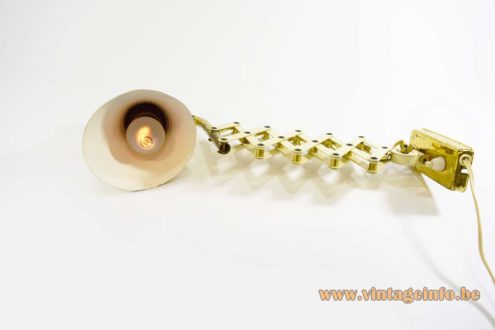
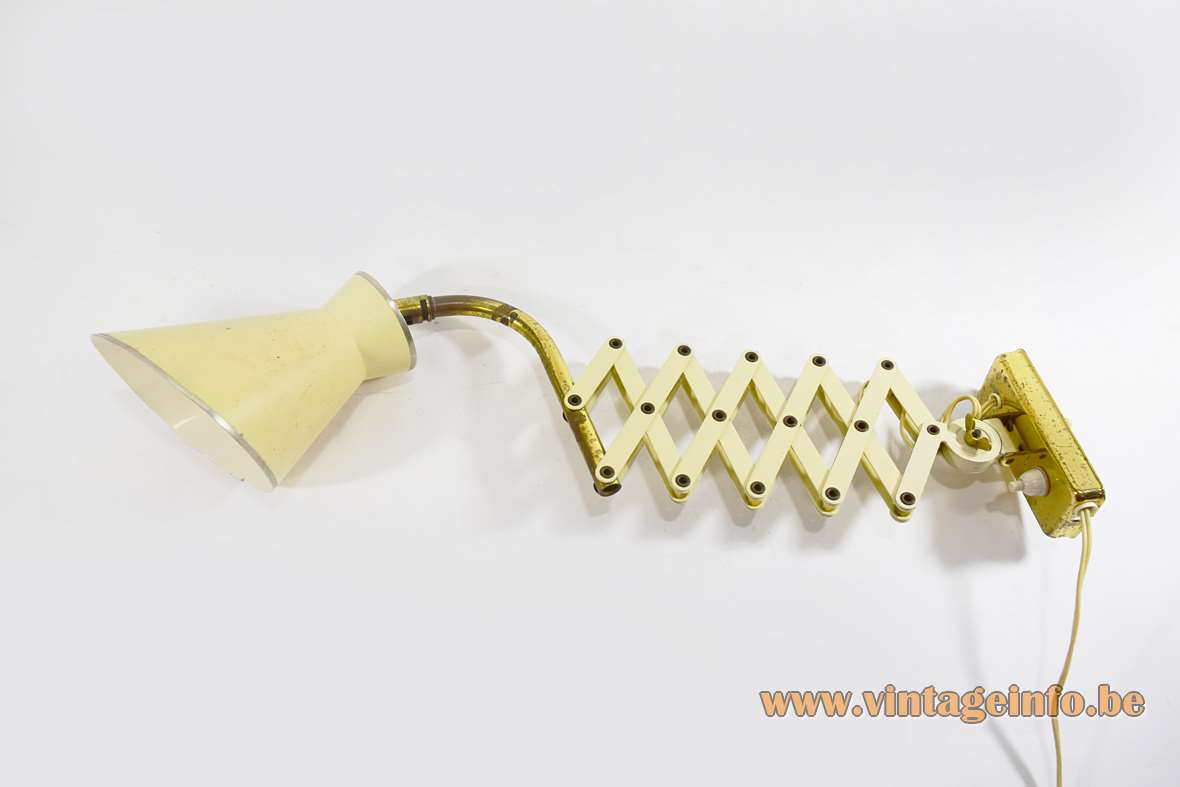
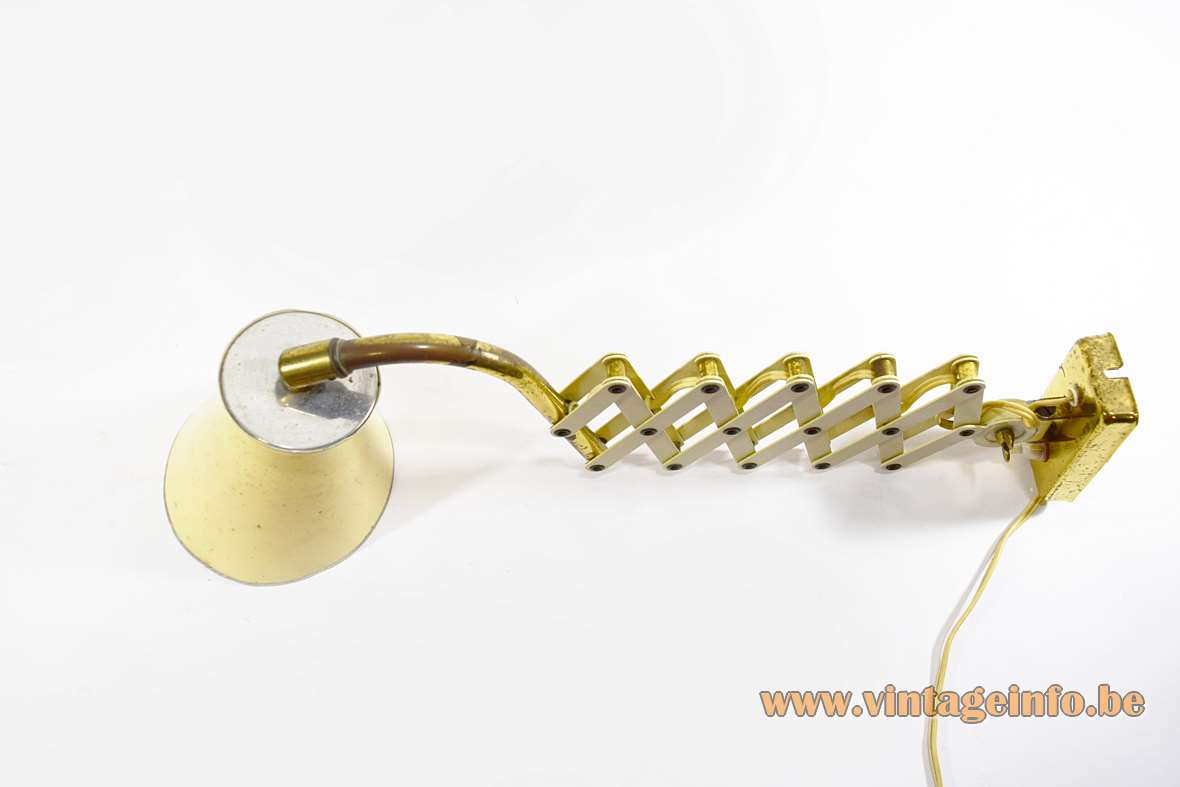
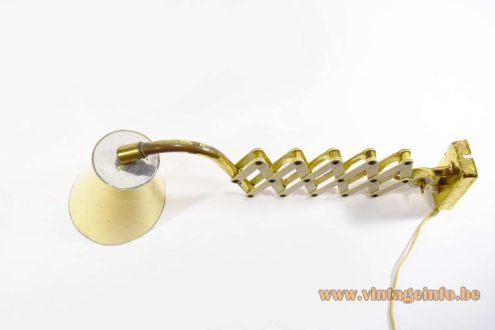

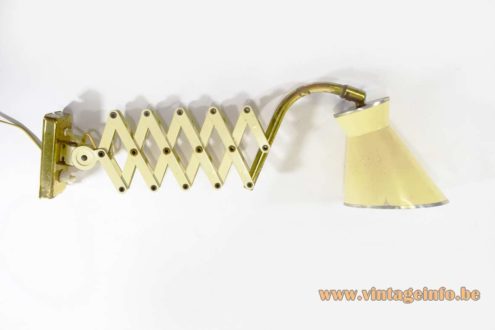


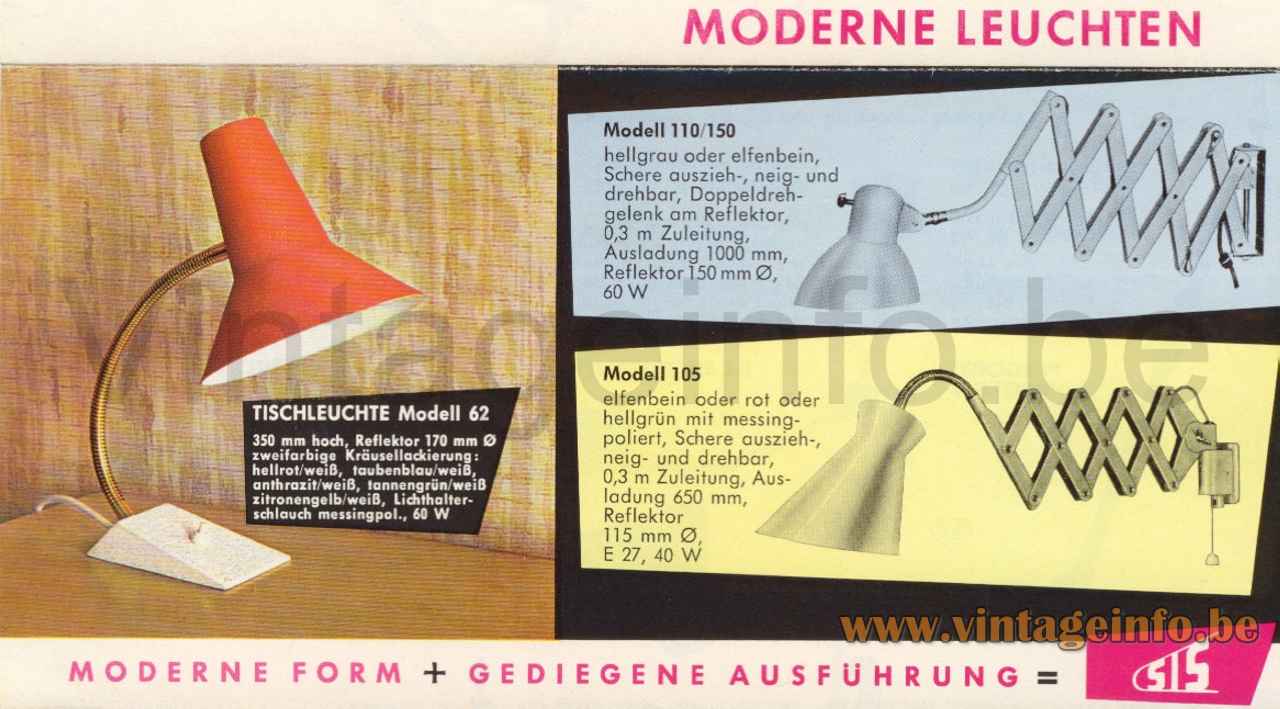
1950s Diabolo Scissor Wall Lamp – Model 105 – 1963 Catalogue Picture
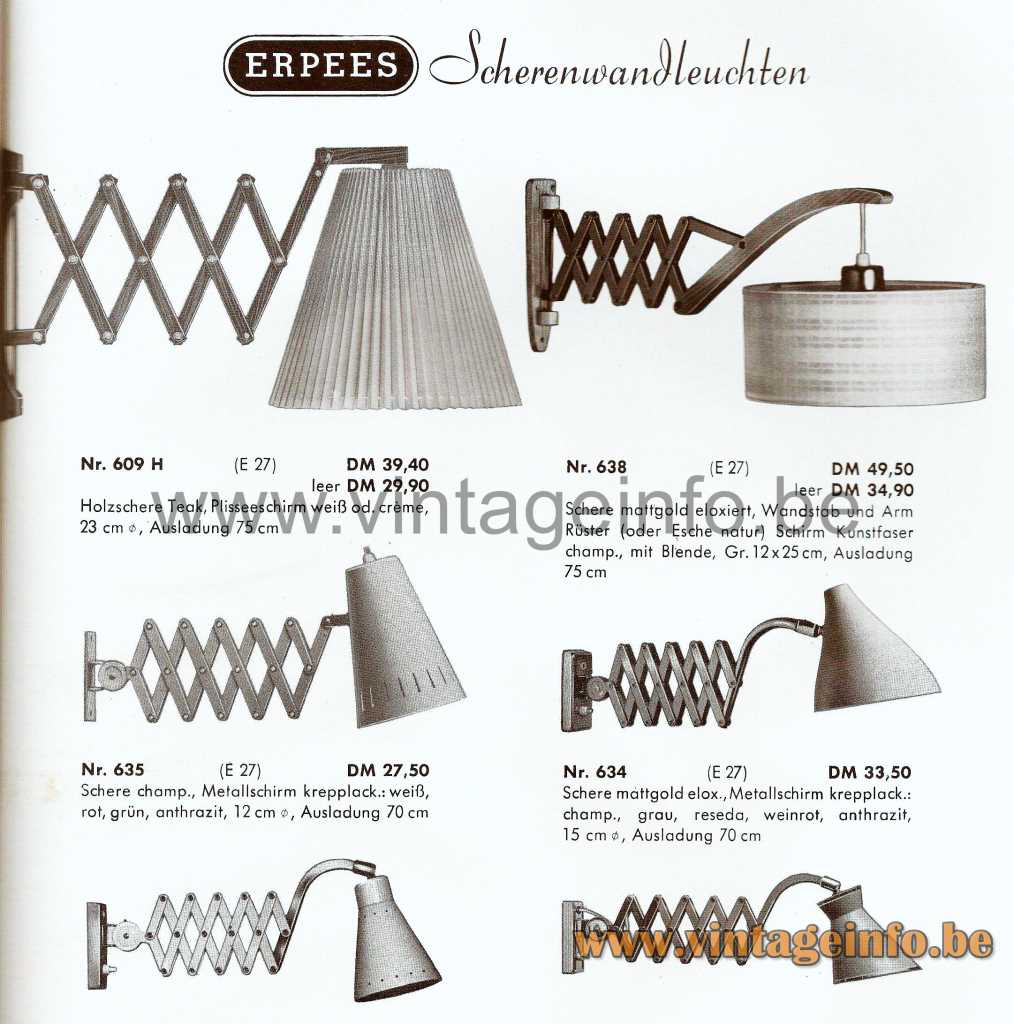
1950s Diabolo Scissor Wall Lamp – ERPEES 1964 Catalogue Picture
Links (external links open in a new window)
The website of SIS LIGHT Solutions
The city of Schweinfurt – Wikipedia
Official website of the city of Schweinfurt
Vintageinfo
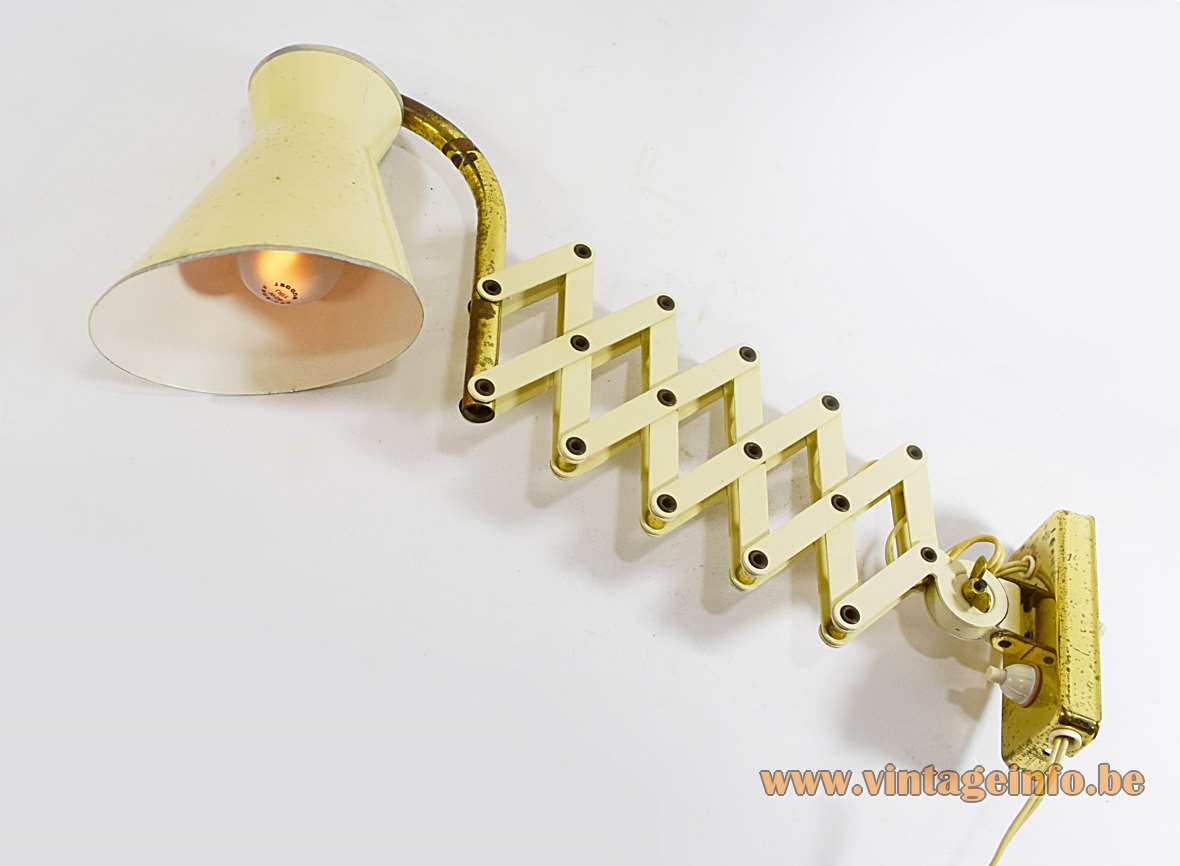
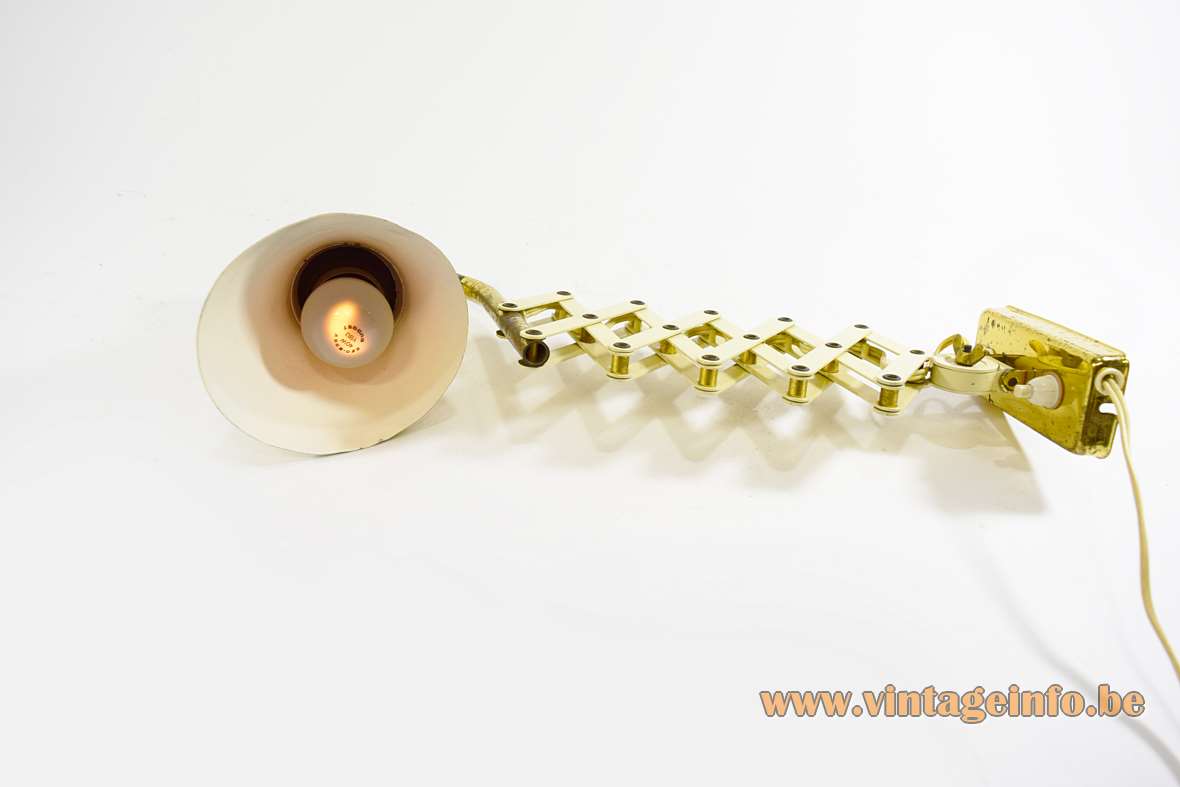
1950s Diabolo Scissor Wall Lamp
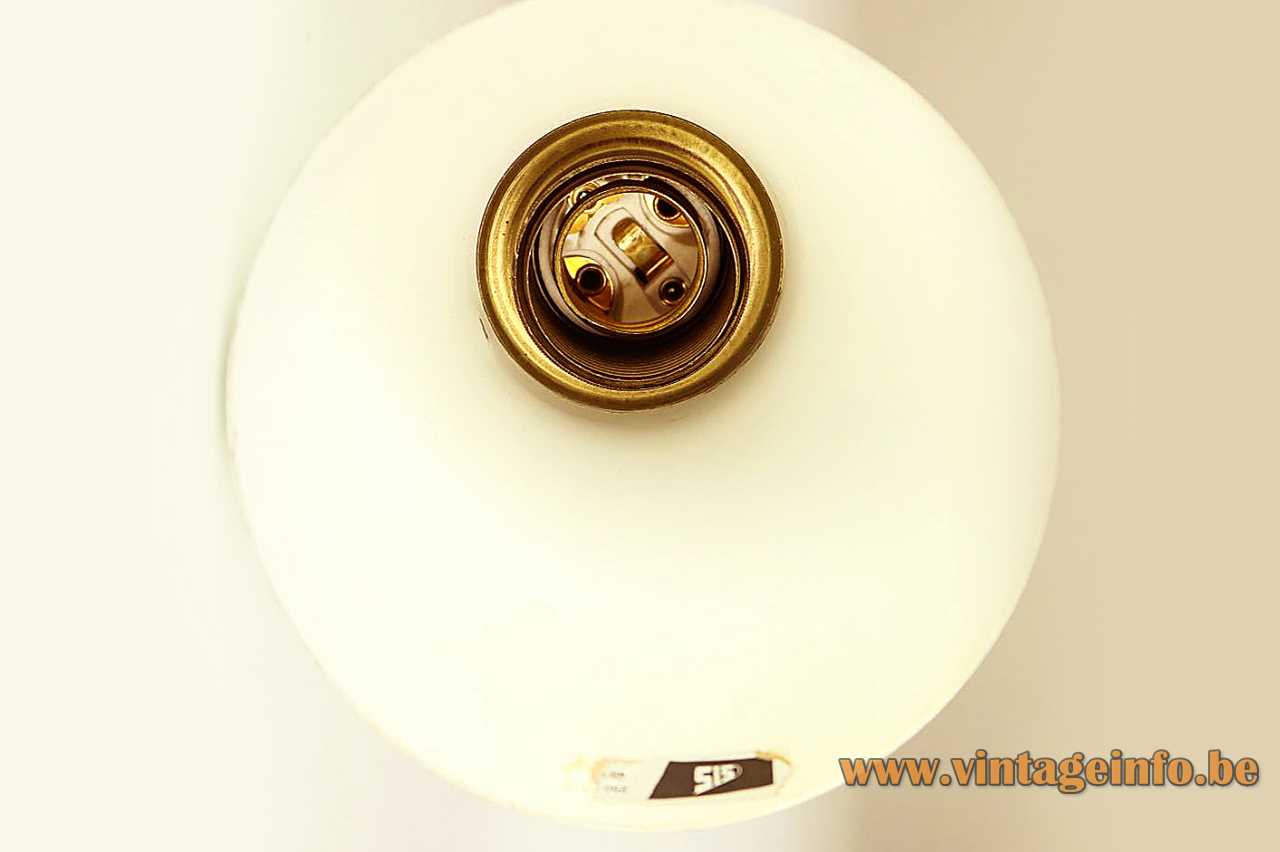
Materials: Brass wall mount and parts. Vanilla-cream painted brass scissor slats. Brass pleated curved rod. Vanilla-cream painted aluminium diabolo lampshade, painted white inside. Brass E27 socket.
Length stretched: 71 cm / 27.95”
Length folded: 27,5 cm / 10.82”
Lampshade: ∅ 12,5 cm / 4.92”
Wall Mount: 10 x 5 cm / 3.93 x 1.96”
Electricity: 1 bulb E27, 1 x 60 watt maximum, 110/220 volt.
Any type of light bulb can be used, preferably a small one.
Period: 1950s, 1960s – Mid-Century Modern.
Designer: Karl Lang.
Manufacturer: SIS LICHT Gebr. Lang GmbH & Co., Schweinfurt, Germany.
Other versions: This 1950s diabolo scissor wall lamp was produced in several colours and variations. It is known as model 105. Some wall-mounted versions feature different wall brackets. The lamp also exists in a version with a gooseneck instead of a brass rod at the lampshade. In addition, it was produced as a clamp lamp.
Lampshades are known with perforated star patterns. Versions were made with either a pull-cord switch or a switch on the cord. The same lampshade design was also used for a table lamp.
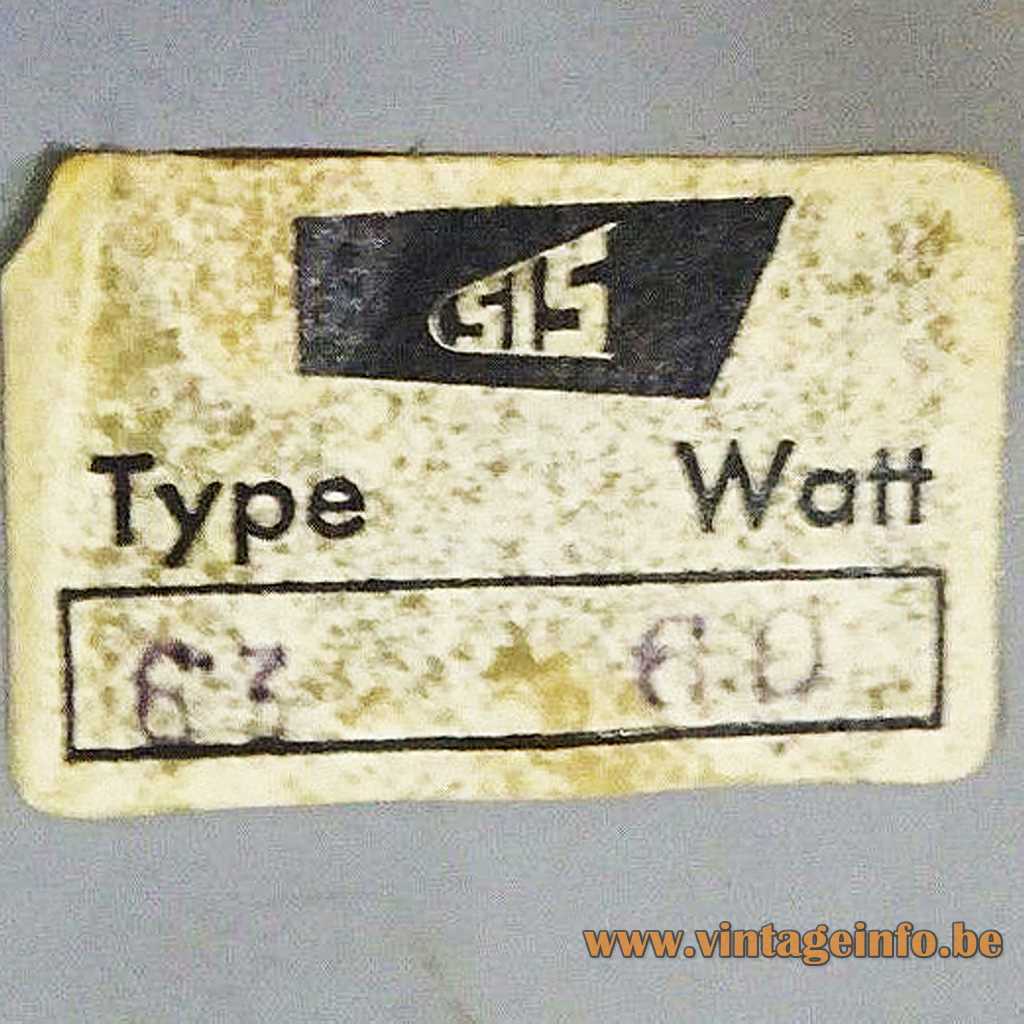
This lamp is often attributed to Hala (the Netherlands), while others suggest Anvia (the Netherlands) or even the Italian company Stilnovo. However, these attributions are incorrect. In some cases, the lamp is found with a paper SIS label on the inside of the lampshade, as shown here.
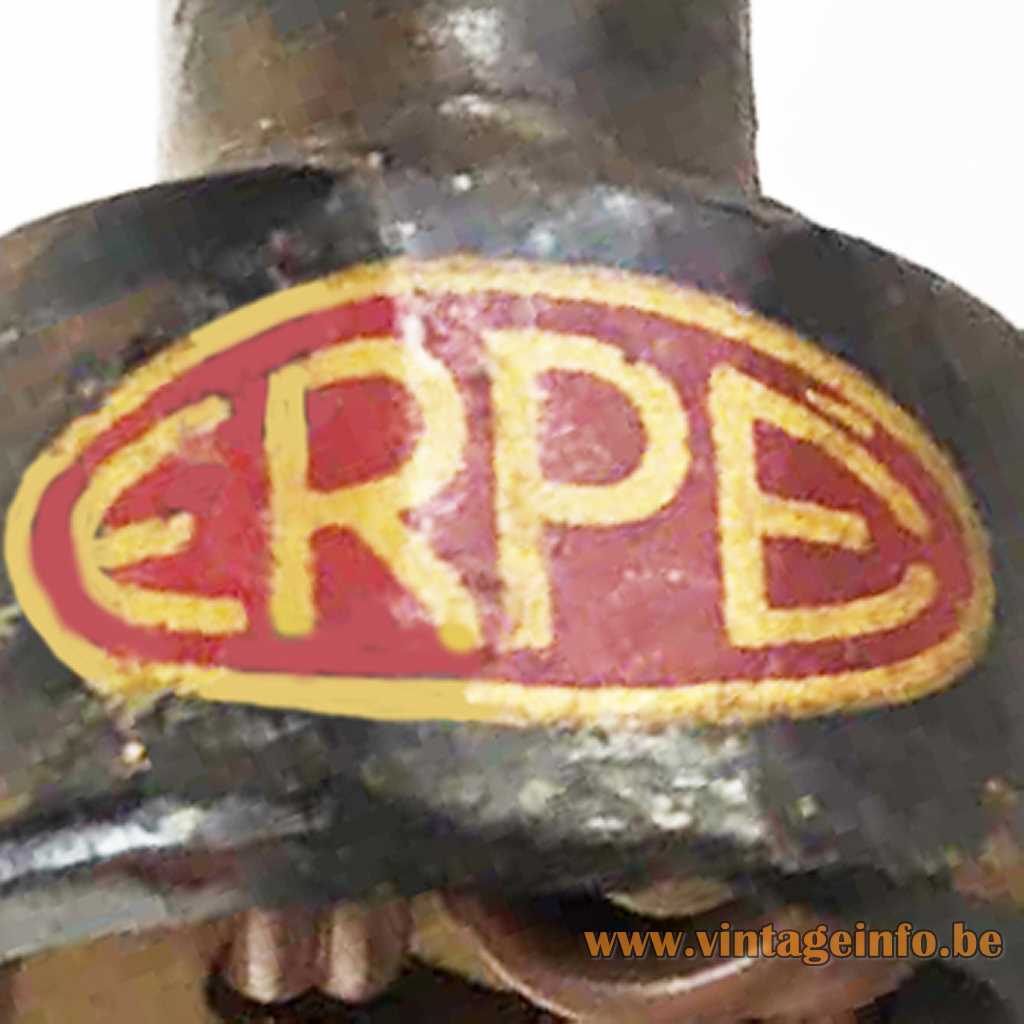
These scissor lamps were also sold under the ERPEES brand, a trade name used by Pfäffle Leuchten, another German manufacturer, as documented in a 1964 catalogue. In all probability, the lamp was manufactured by SIS LICHT, as it appears repeatedly in their catalogues over several years.
SIS LICHT
SIS LICHT – Light Solutions was founded in 1924 by Erich Lang together with his father Karl Lang Sr.. From the outset, the company operated as a metalworking factory with a clear focus on lighting production. The name SIS stands for Sirius Schweinfurt, referencing both the location of the company and the guiding star Sirius.
Over the decades, SIS LICHT developed into a well-established manufacturer of technical and industrial lighting, supplying luminaires for commercial, industrial and infrastructural applications. While the company’s contemporary focus lies firmly in the field of industrial lighting solutions, its historical production also included a wide range of functional and design-oriented luminaires.
Today, SIS LICHT remains a family-owned company and is led by Stefan Lang, representing the fourth generation of the Lang family to manage the business. This continuity underlines the company’s long-standing expertise in metalworking and lighting technology.
The company is based in Schweinfurt, a town of approximately 52,000 inhabitants (2016), located in north-western Bavaria on the right bank of the Main River. Schweinfurt has a long tradition in the metal and engineering industries and is widely recognised as one of Germany’s important industrial centres. In recent decades, the city has also been noted for its strong economic development and innovation potential.
Pfäffle Leuchten
In 1909, Robert Pfäffle founded an office for electrical engineering and wholesale electrical consumer goods in Villingen-Schwenningen, Germany. The town is located near the eastern edge of the Black Forest, close to the Austrian border.
After 1949, the company continued as a limited partnership under the name Robert Pfäffle KG – Electrical and Lighting Equipment Factory. The firm mainly produced table and bedside lamps, wall and mirror lights under the ERPEES brand, as well as universal tube lamps, ceiling lights and floor lamps.
Following insolvency proceedings in 1984, the company was officially removed from the commercial register in 1986.
The company’s best-known and most successful product is the Chronolux desk lamp, a 1970s design featuring a digital clock and alarm. Designed by Knox, the Chronolux was produced in many variations and remained in production for a considerable period.
Pfäffle Leuchten was also a regular supplier to the German mail-order company Neckermann. At the time, Neckermann operated exclusively as a mail-order business, offering a wide range of consumer goods, including lighting.
The relationship does not appear to have been exclusive. Neckermann also sold lamps produced by Aro Leuchten and likely by other manufacturers as well. Nevertheless, period catalogues confirm that Pfäffle / ERPEES lamps were part of Neckermann’s lighting range, establishing Pfäffle as one of its documented suppliers.
Many thanks to Claes for the catalogue picture and the help.
1950s Diabolo Scissor Wall Lamp – Company Labels & Logos