- Categories
- Categories
Last 5 Viewed
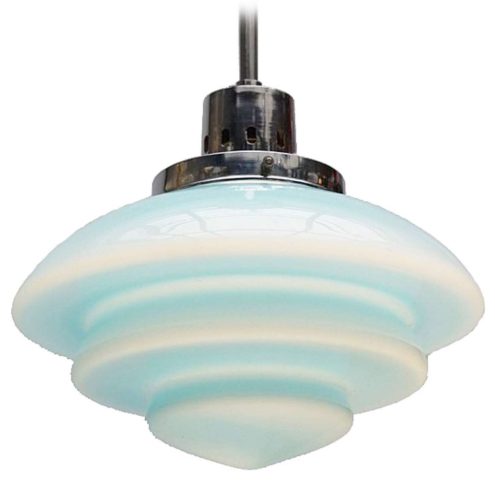
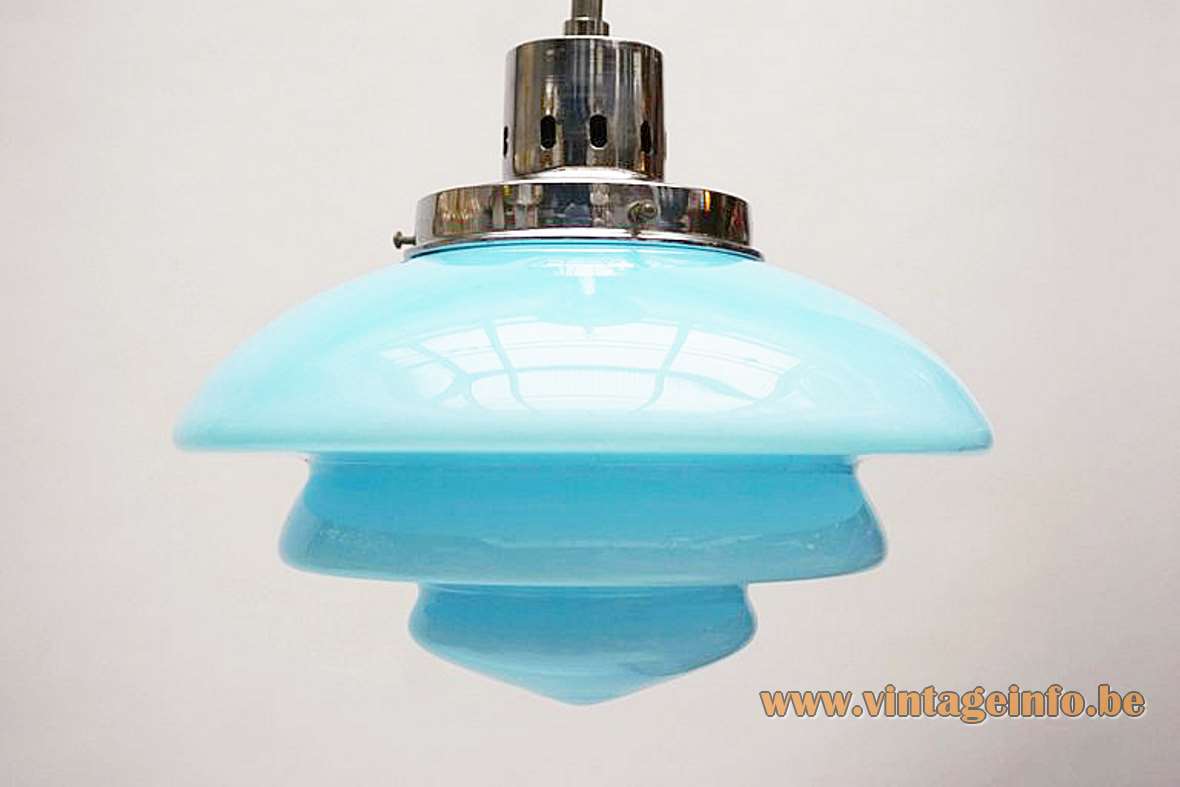
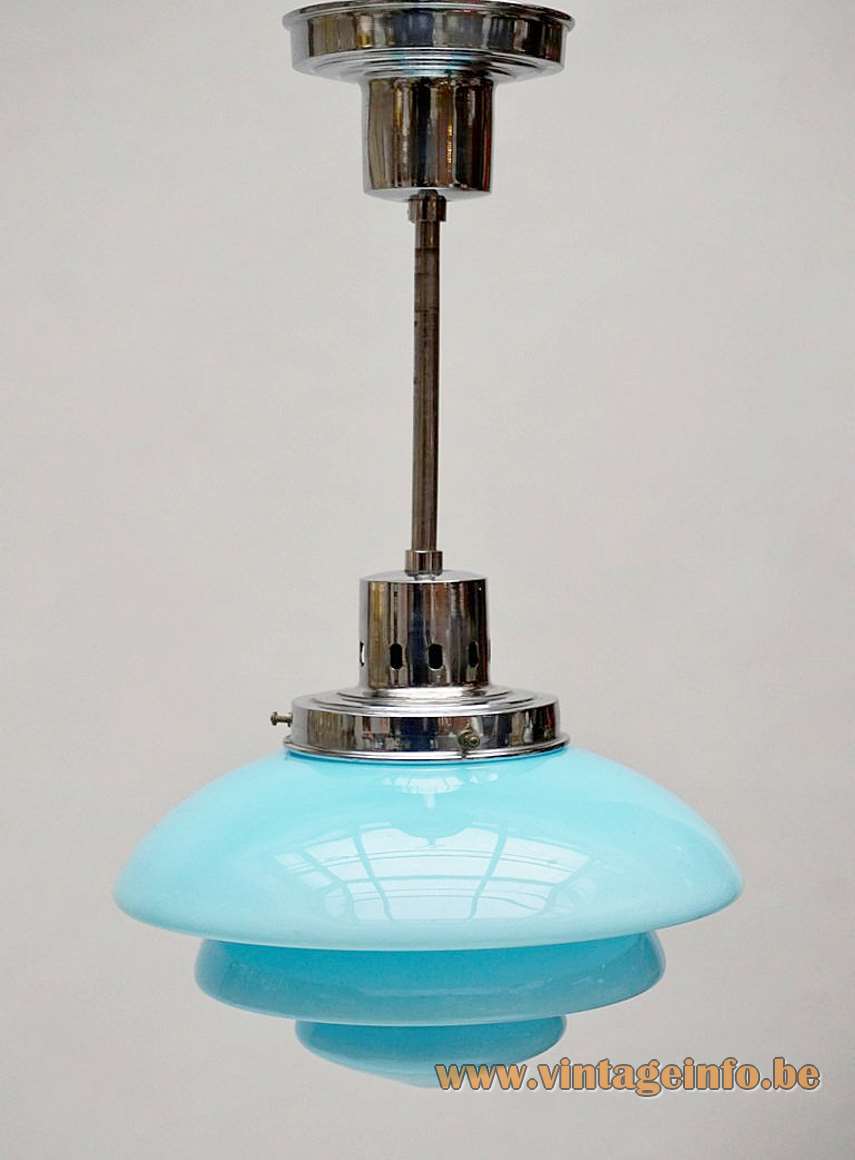
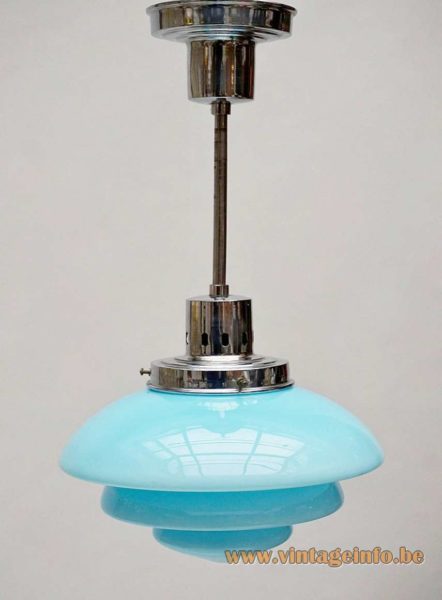
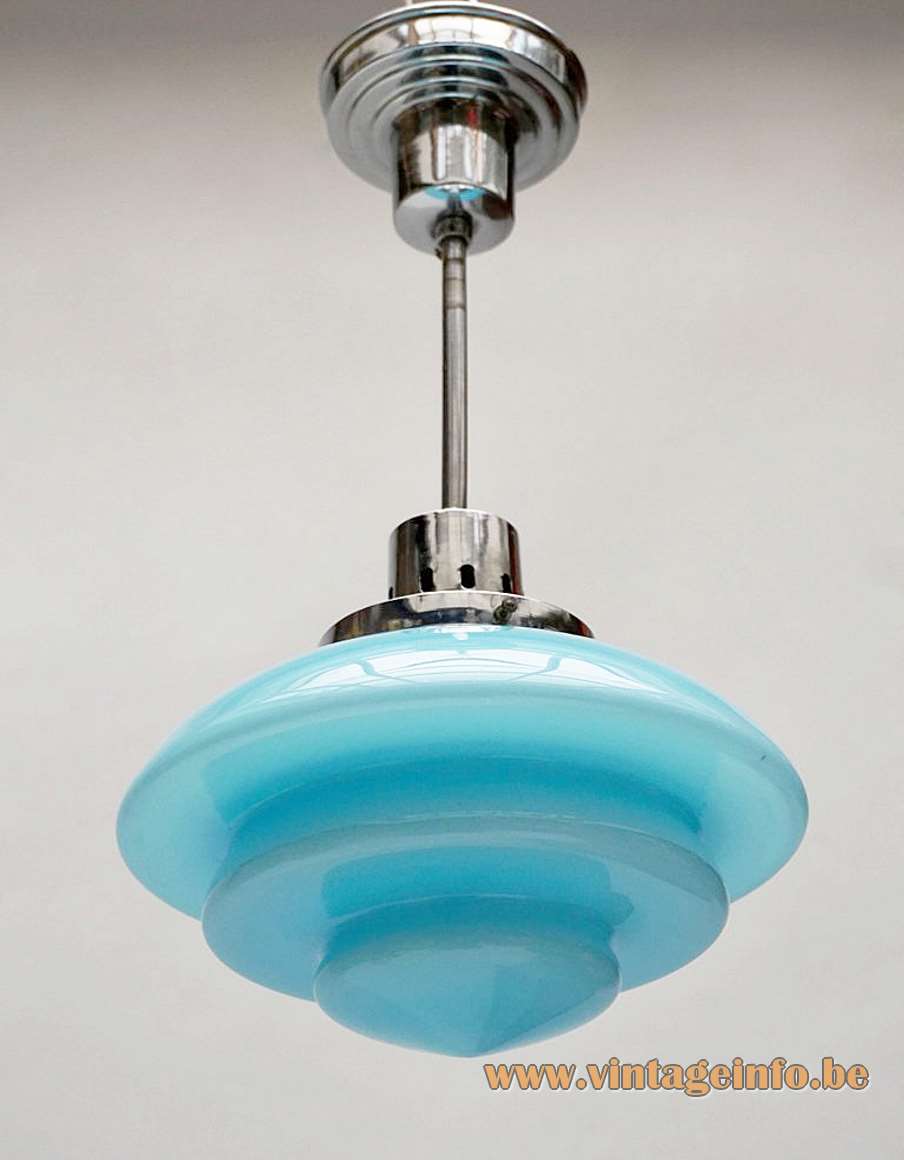
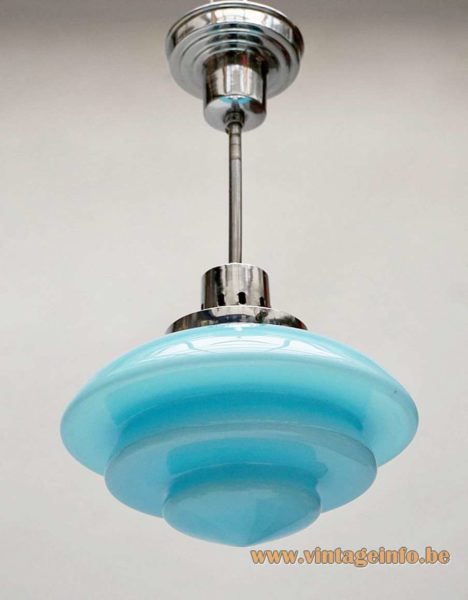
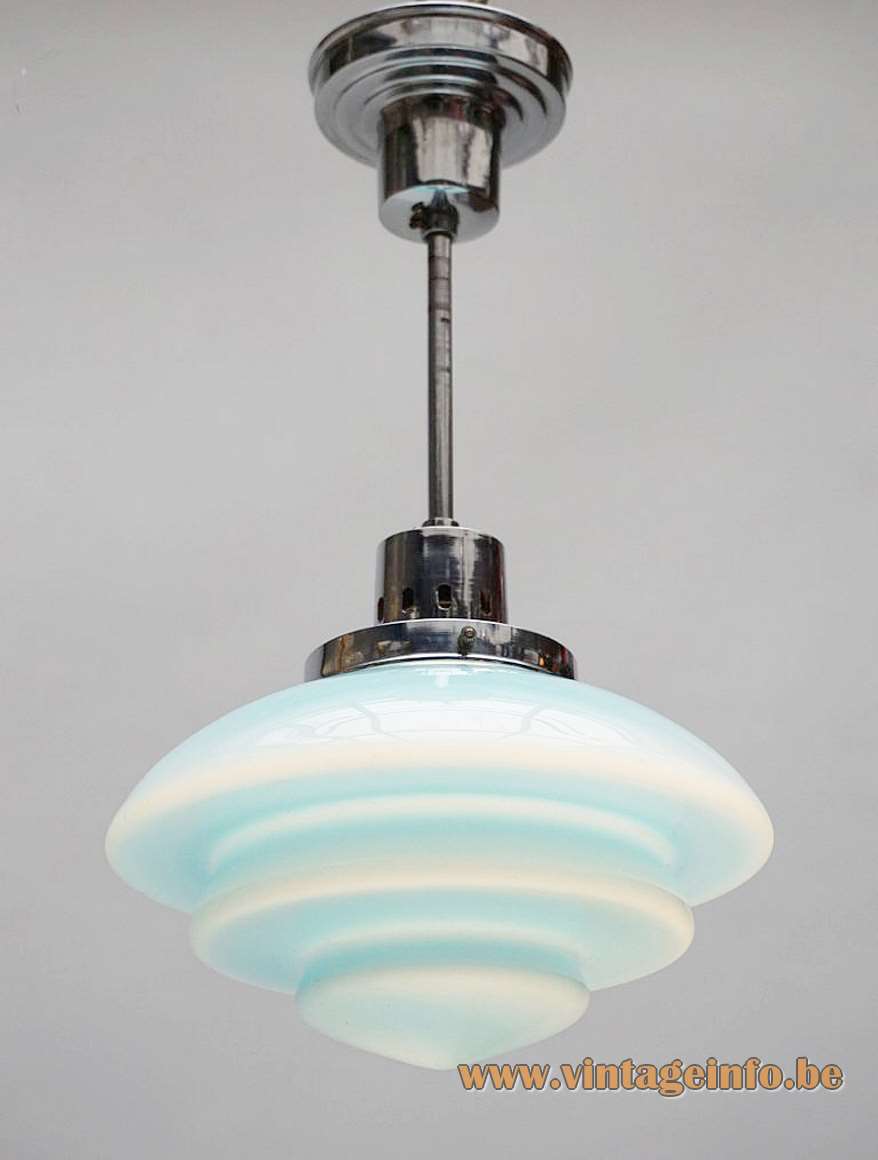
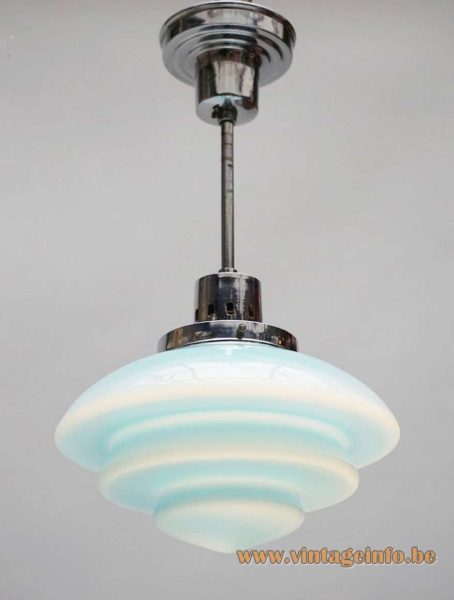
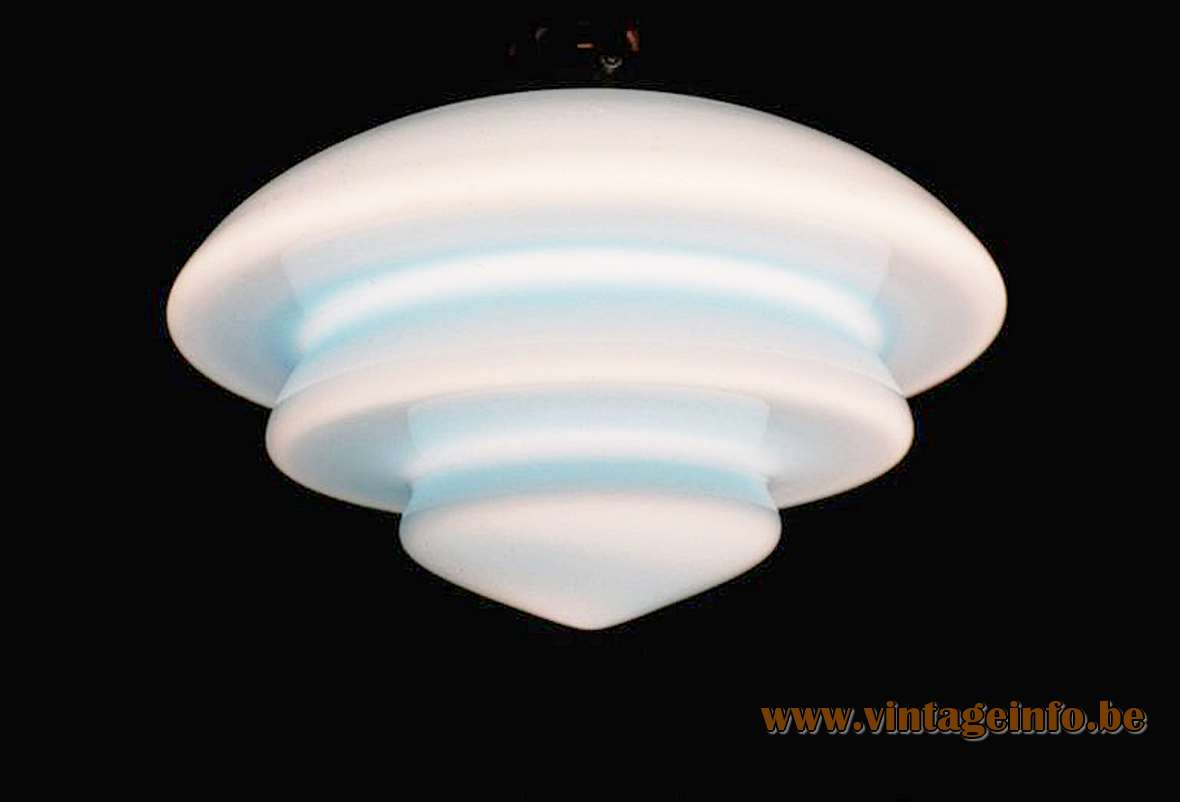
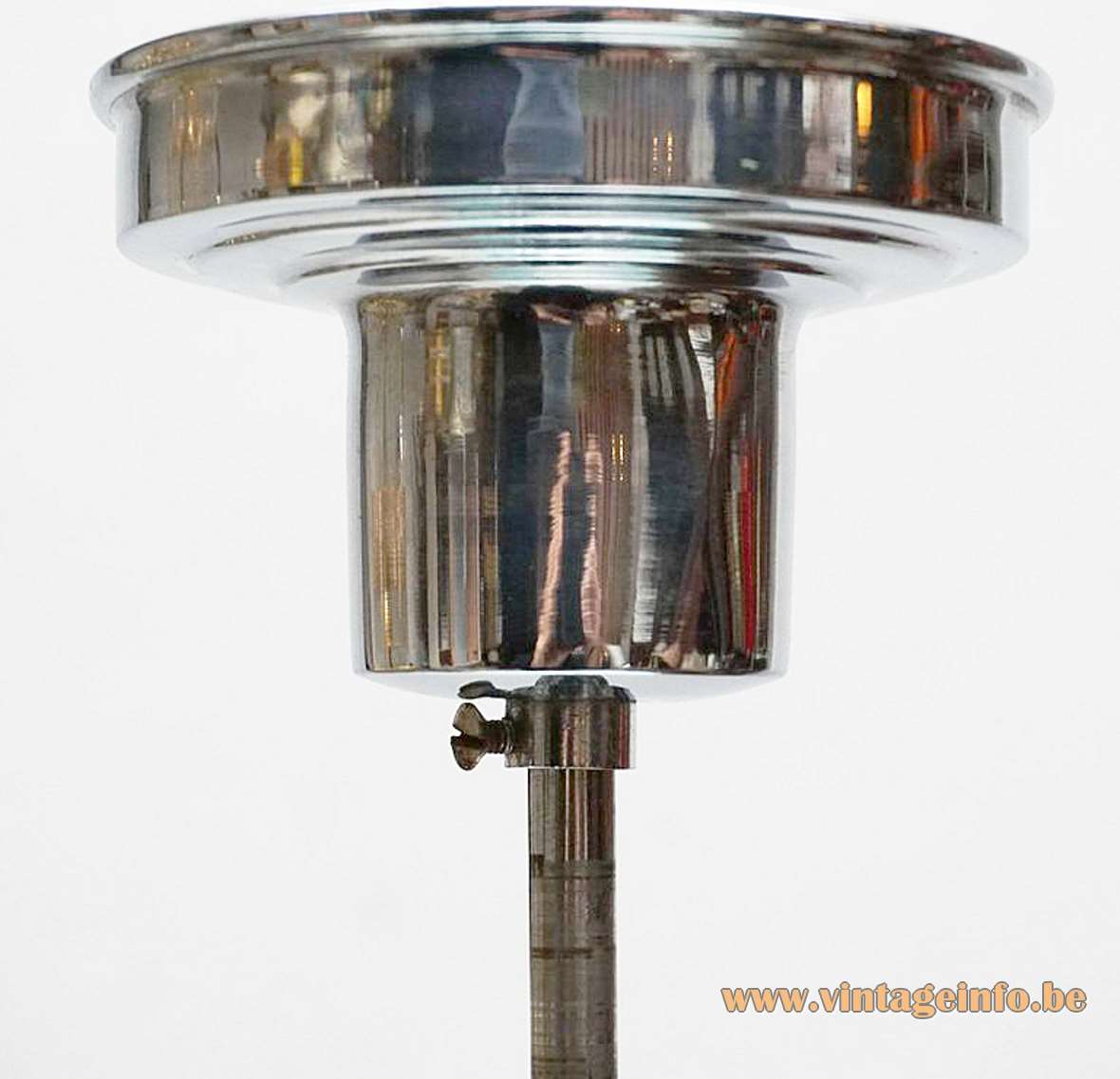
1930s Taito Art Deco Pendant Lamp – Catalogue Picture
This 1930s Taito art deco pendant lamp in the 1935 catalogue nr. 10.

Links (external links open in a new window)
Paavo Tynell website – archived
Interbellum/inter war period – Wikipedia
Vintageinfo
1930s Taito Lighting Catalogue
1935 Taito Lighting Catalogue 10
1936 Taito Lighting Catalogue 14
1940 Taito Lighting Catalogue 20
Marbled glass art deco Saturn pendant lamp
Many thanks to Frank from Flowermountain for the pictures. And many thanks to Alexander for the enlightening information.
1930s Taito Art Deco Pendant Lamp
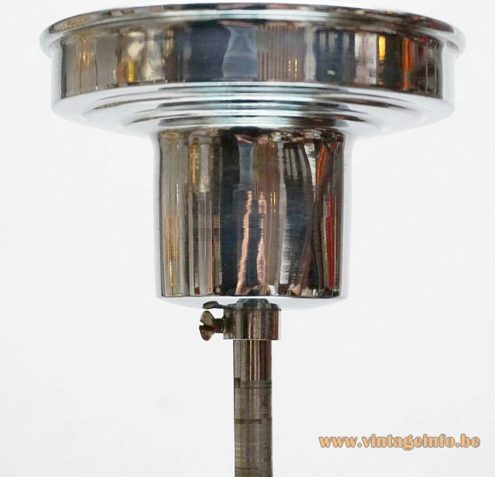
Materials: Chromed metal (iron and brass) rod, canopy and lampshade holder. Light blue hand-blown crystal opal glass lampshade. Some metal parts. Brass E27 socket with a ribbed porcelain ring.
Chain Length: 80 cm / 31.49”
Height: 44 cm / 17.32”
Width: ∅ 25 cm / 9.84”
Electricity: 1 bulb E27, 1 x 100 watt maximum, 110/220 volt.
No specific type of light bulb is required; different types can be used. For this setup a frosted light bulb was used. It gives a better result. Clear bulbs often create stripes on the walls.
Period: 1930s, 1940s – Bauhaus, Art Deco.
Designer: Paavo Tynell.
Manufacturer: Oy Taito AB, Finland.
Other versions: This 1930s Taito art deco pendant lamp was in all probability made in several colours and variations.
Many companies in Europe produced similar lamps during the interwar period. The Dutch company Gispen made a very similar pendant lamp in white glass.
Lamps in this style were, among others, designed by C.F. Otto Müller and produced by the German company Sistrah-Licht Gmbh from Carlsruhe. The lamps of Sistrah-Licht have a more sleek design but also the same light blue hand-blown glass colour was used.
Other German companies such as Siemens and AEG (Allgemeine Elektricitäts-Gesellschaft– General Electric Company) produced similar lamps at that time.
Paavo Tynell
Paavo Tynell was born on 25 January 1890 in Helsinki, Finland. He began his career as a tinsmith and metalworker and graduated as a master craftsman in 1913. He studied at the Central School of Applied Arts in Helsinki, where he later also taught metalwork for several years.
In 1918, together with Eric O. W. Ehrström, Frans Nykänen, Gösta Serlachius and Emil Wikström, he co-founded Oy Taito Ab. Tynell became the company’s leading designer and played a major role in establishing it as one of Finland’s most important lighting manufacturers.
During the 1930s and 1940s, Paavo Tynell became one of the central figures in Finnish lighting design. He worked closely with architects and interior designers, most notably Alvar Aalto, and designed lighting for a number of important public and private interiors. His work is associated with locations such as the Parliament House and Lasipalatsi in Helsinki, as well as later projects in the United States.
Tynell’s lighting is especially known for its elegant use of brass, often polished or perforated, combined with a light and refined decorative touch. His designs helped define the warm and sophisticated character of mid-century Finnish lighting, and he is still widely regarded as one of the most important designers in the history of Scandinavian lighting.
After the Second World War, Tynell became involved with Finland House in New York, which introduced Finnish design and lighting to the American market. His work became increasingly successful in the United States during the 1950s, while production continued in Finland.
Paavo Tynell passed away in 1973 in Tuusula, Finland.
Helena Tynell
Paavo Tynell was married to Helena Tynell, born Hellin Helena Turpeinen (1918–2016), one of the most important Finnish glass designers of the post-war period. She studied at the Central School of Industrial Design in Helsinki and graduated in 1943.
After working for Arabia, she was also employed by Oy Taito Ab, where she met her future husband Paavo Tynell. In 1946, she joined Riihimäki Glass, where she remained until 1976 and created many of her best-known designs.
Although Helena Tynell is especially remembered for her glass designs, she also worked as a freelance designer for several other companies, including Bega Leuchten and Glashütte Limburg. Her work played an important role in the development of modern Finnish glass design.
Oy Taito Ab
Oy Taito Ab was founded in 1918 in Helsinki, Finland. The company was co-founded by Paavo Tynell together with Eric O. W. Ehrström, Frans Nykänen, Gösta Serlachius and Emil Wikström. In its early years, the company focused mainly on decorative metalwork and handcrafted metal objects. Later, especially from the 1930s onward, lighting became an increasingly important part of its production.
Under the artistic direction of Paavo Tynell, Oy Taito Ab developed into one of the most important companies in the history of Finnish lighting. The firm worked closely with leading Finnish architects and designers, including Alvar Aalto, and produced lighting for a number of significant public and private interiors. Taito’s first catalogue devoted entirely to lighting was published in 1932.
The company became especially known for its refined brass lighting, often combining elegant forms with perforated decorative details. Many of the best-known designs associated with Paavo Tynell were produced by Oy Taito Ab, and today the company is regarded as one of the key names in twentieth-century Finnish lighting design.
In 1953, Oy Taito Ab was sold to Idman Oy, another important Finnish lighting company. Even after the sale, the legacy of Taito continued through the production of Tynell’s designs and through the company’s lasting influence on Finnish lighting history. This website also features an extensive selection of Taito catalogues, alongside catalogues from other Finnish lighting manufacturers such as Idman, Orno and Itsu.
Idman Oy
Idman Oy was a Finnish lighting company with roots in the business founded by Karl Hjalmar Idman. He first ran a shop in Pori and later moved to Helsinki, where Hjalmar Idman Oy was established in the early 1920s. Over time, the company developed into an important name in the Finnish lighting industry.
In 1953, Oy Taito Ab was sold to Idman Oy. This linked the company directly to the legacy of Paavo Tynell, whose designs continued to influence production after the sale. Some of Tynell’s best-known lighting models, including perforated brass ceiling lamps often referred to as the “Starry Sky” type, remained in production in different versions for many years.
Originally active as an electrical wholesaler as well as a lighting company, Idman later focused more strongly on lighting production. In the following decades, the company went through several ownership and name changes. Nokia acquired the company in 1981, after which it operated under names including SLO-Metal Oy and SLO-Idman Oy. In the 1990s, the business passed through new ownership and eventually became part of Philips. Since 2007, the Finnish operations have been known as Philips Oy.
Because of its takeover of Taito and its long production history, Idman Oy remains an important company in the history of Finnish lighting. This website also features an extensive selection of Idman catalogues, alongside catalogues from other Finnish lighting manufacturers such as Orno and Itsu.
1930s Taito Art Deco Pendant Lamp – Company Label