- Categories
- Categories
Last 5 Viewed
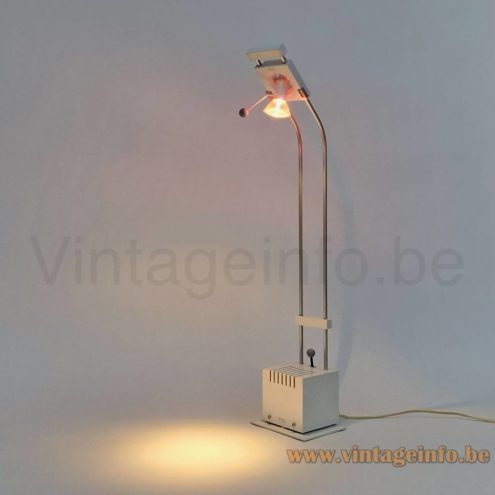
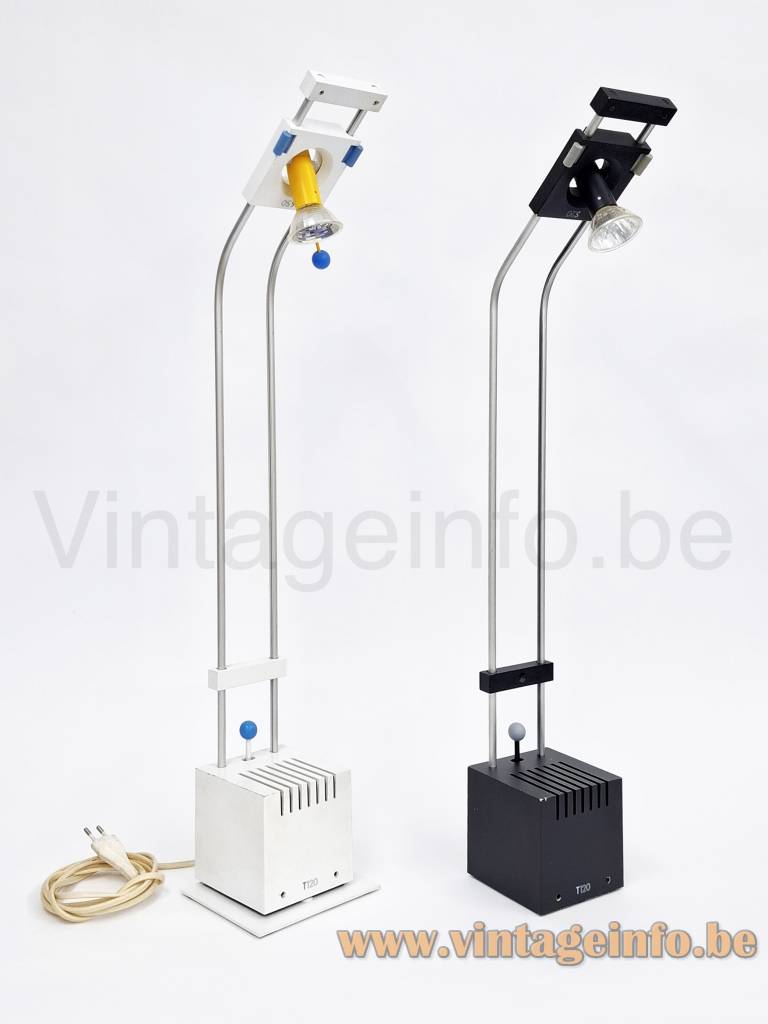
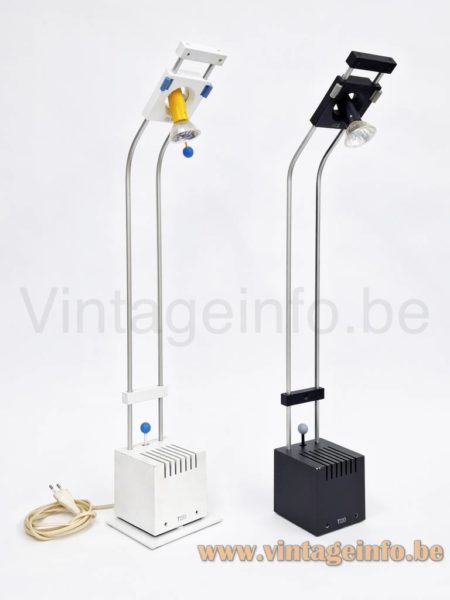
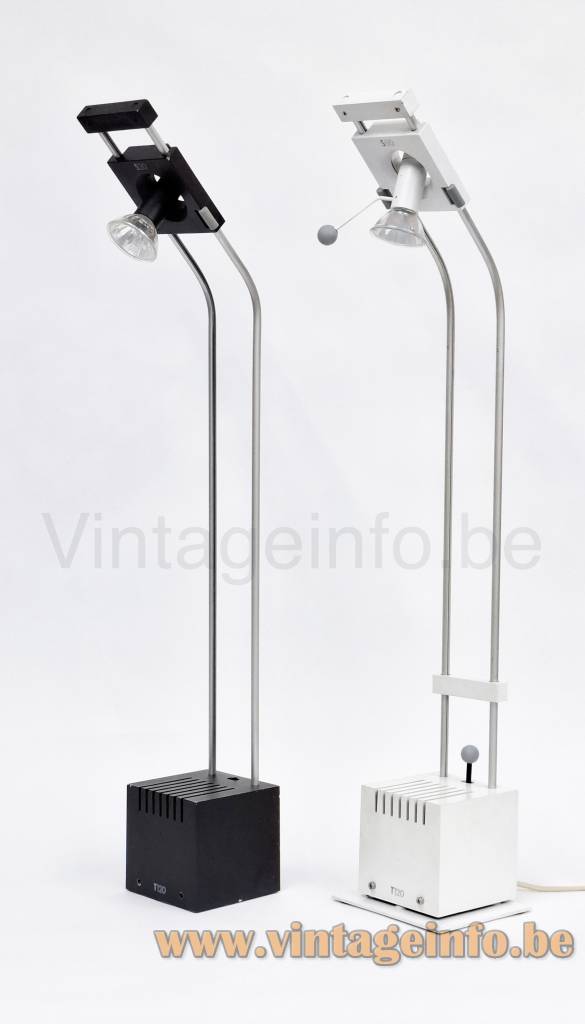
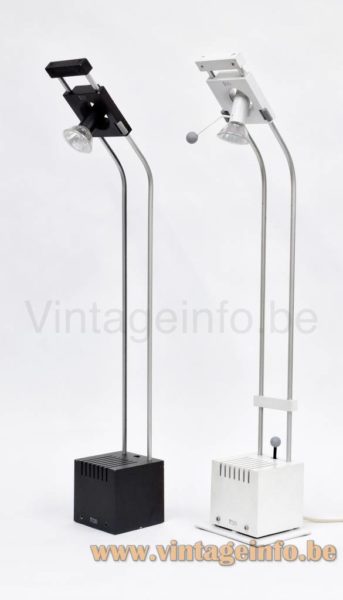
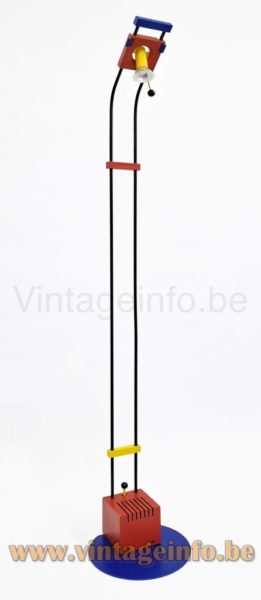
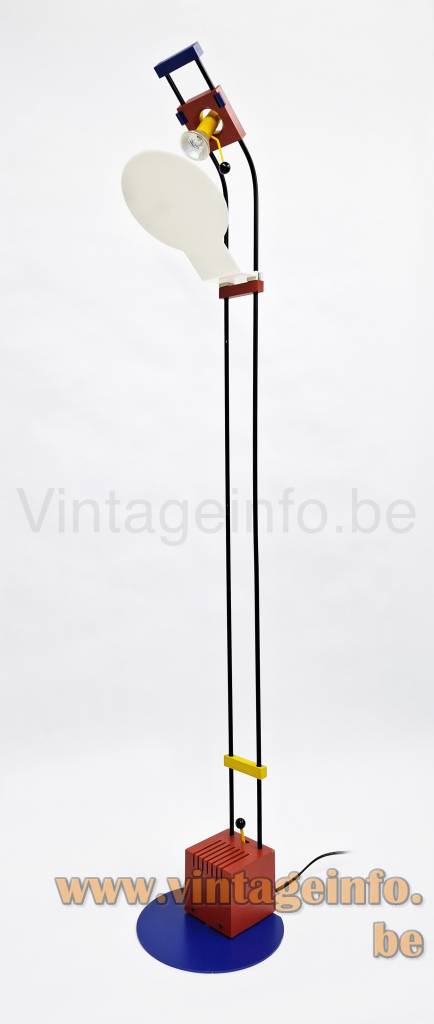
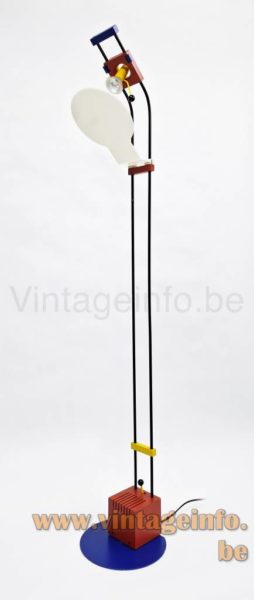
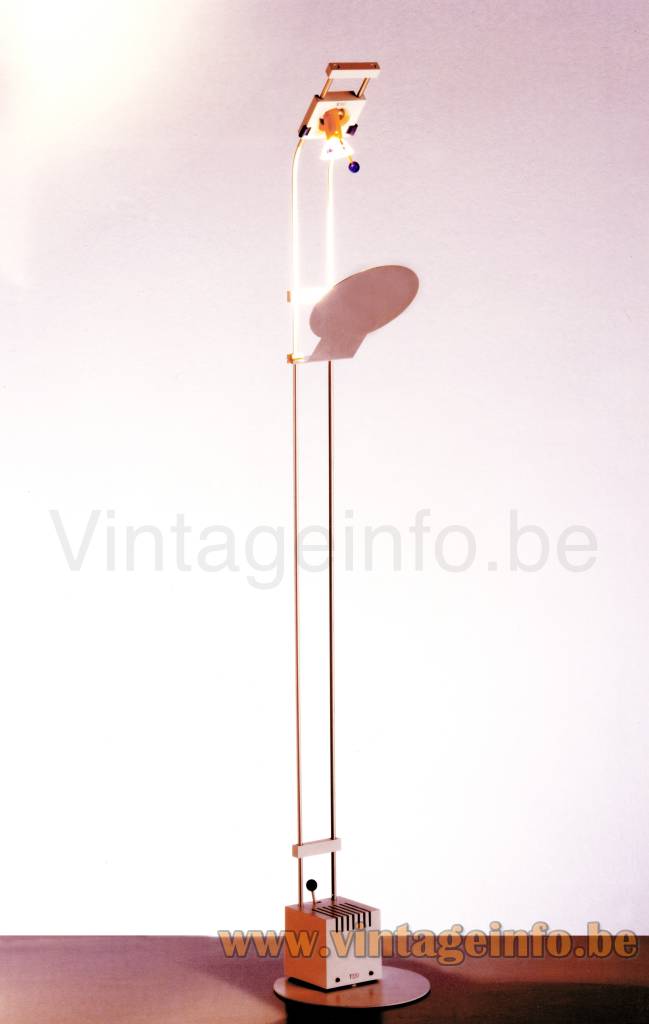
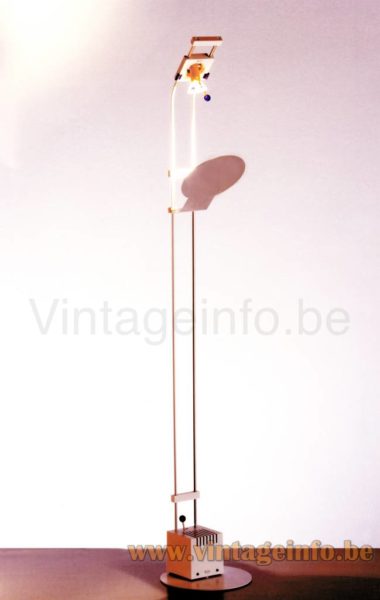
Linke.Plewa.Design TWI-LIGHT Desk Lamp G 365
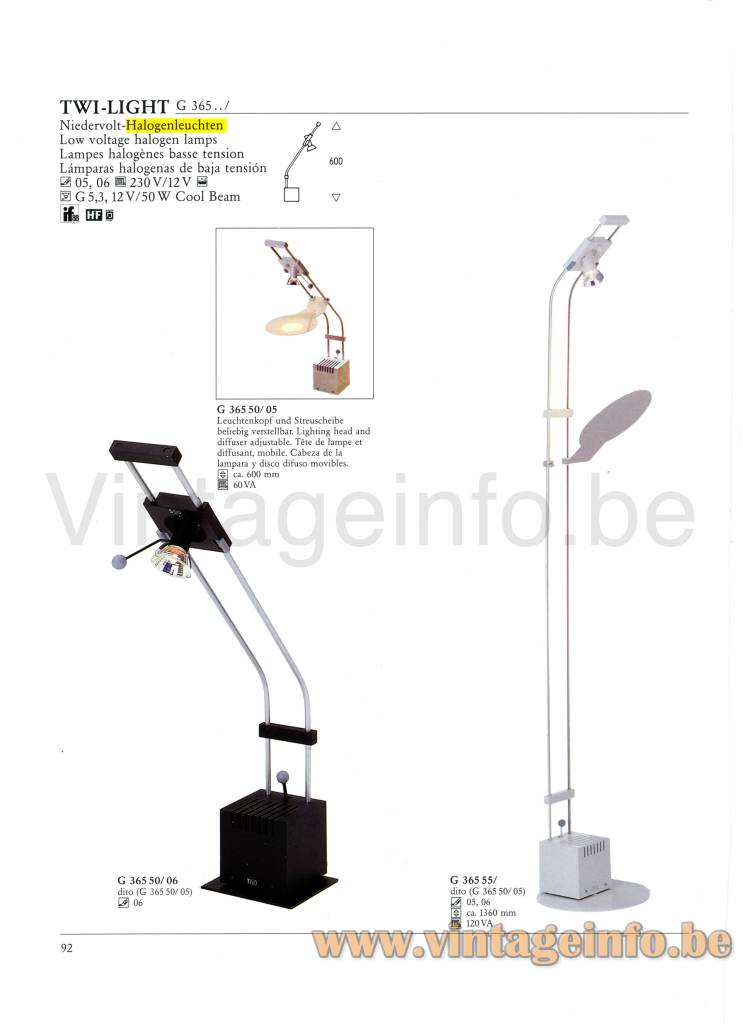
1980s Catalogue Picture – Desk and Floor Versions
This catalogue page illustrates the TWI-LIGHT G 365 models within the Brillantleuchten programme. The system was based on low-voltage halogen technology (12V), using compact G 5.3 / 50W cool beam light sources — a hallmark of early 1980s precision lighting.
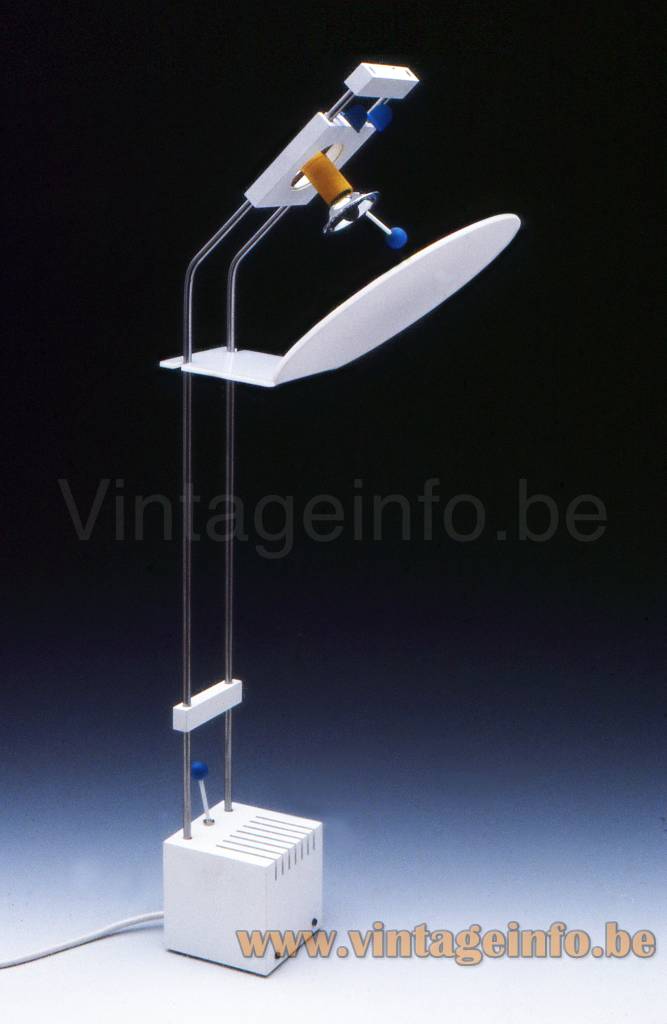
The desk version (G 365 50/05 and 50/06) and the taller floor model (G 365 55) demonstrate the modular logic of the system. The lighting head and diffuser are fully adjustable, allowing precise directional control. The transformer is integrated into the base unit, maintaining visual clarity while ensuring technical functionality.
The characteristic parallel rods and mechanical adjustment elements make the construction openly visible — a design language that combines engineering honesty with architectural restraint. Available in different finishes, the models reflect the system’s adaptability to both domestic and professional environments.
This page captures the TWI-LIGHT concept at its most complete: compact, technically expressive, and conceived as part of a larger modular lighting family.
Linke.Plewa.Design TWI-LIGHT Desk Lamp
TWI-LIGHT – Modular Ceiling Installation
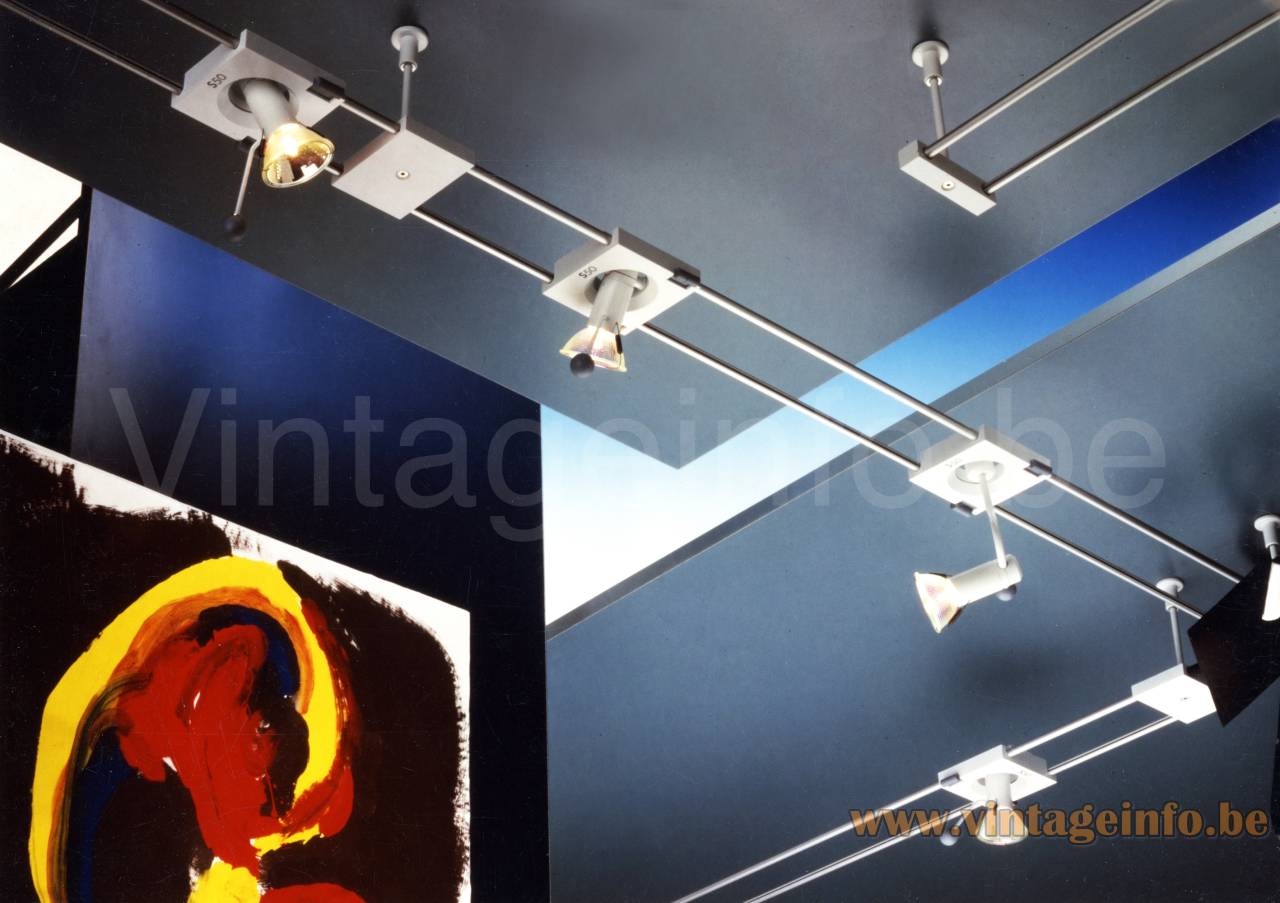
This installation photograph demonstrates the architectural potential of the TWI-LIGHT system. Instead of isolated fixtures, the lighting becomes an integrated spatial structure: parallel rods define direction and rhythm across the ceiling plane, while adjustable spotlight heads allow precise illumination of artworks and architectural elements.
The visible mechanical connections and mounting elements are not concealed but form part of the design language. Light, structure and construction are treated as a unified system. The modular nature of TWI-LIGHT allowed for individual configurations, adaptable to galleries, offices, retail spaces or private interiors.
Far from being a decorative object, TWI-LIGHT functioned as a flexible architectural tool — a low-voltage lighting system conceived with technical clarity and spatial intelligence.
Linke.Plewa.Design TWI-LIGHT Desk Lamp
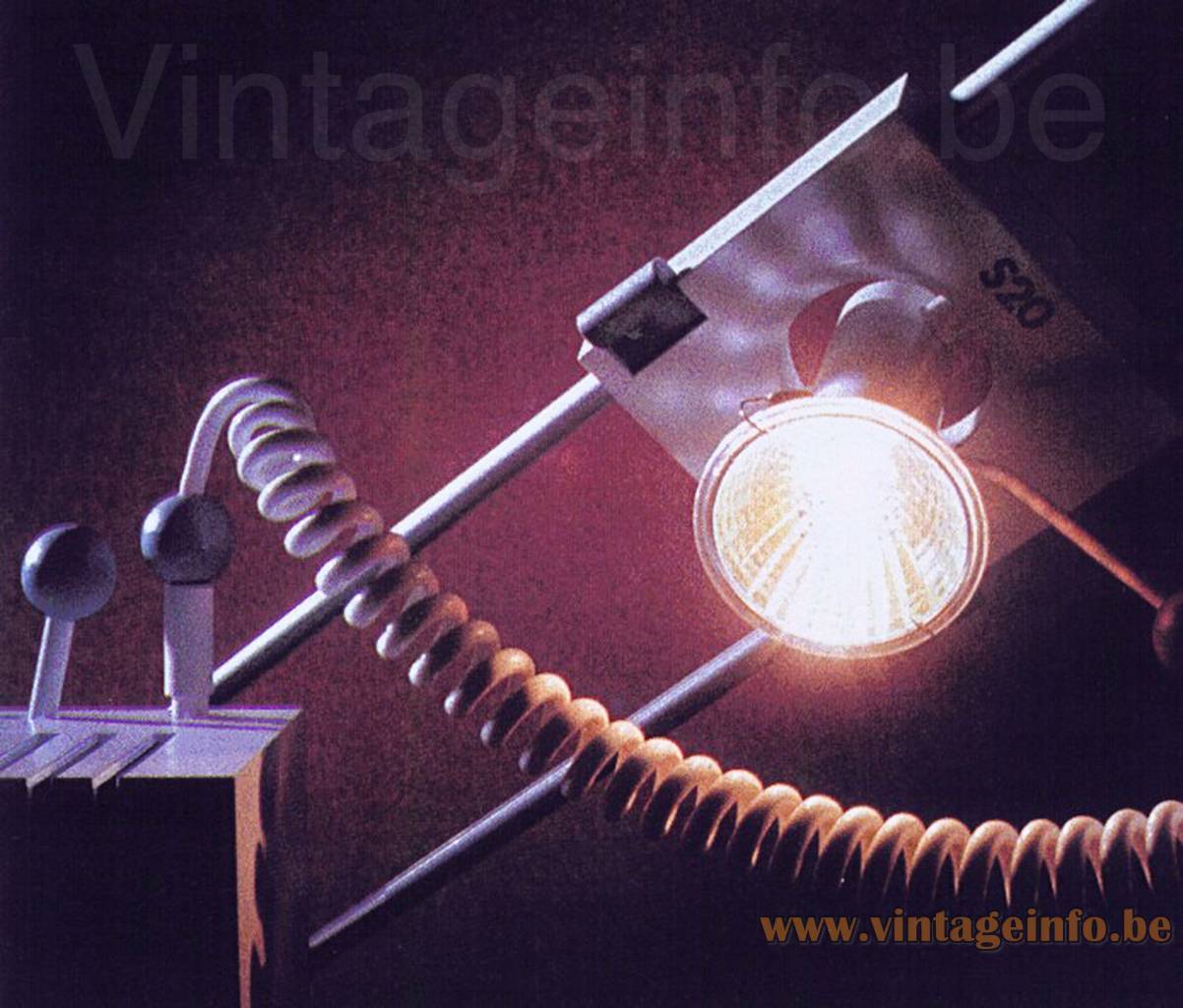
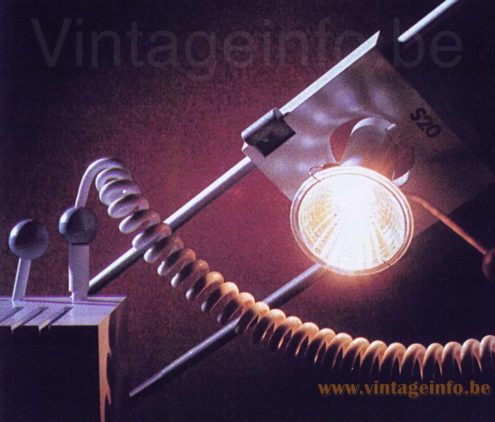
TWI-LIGHT – Adjustable Spotlight Modules
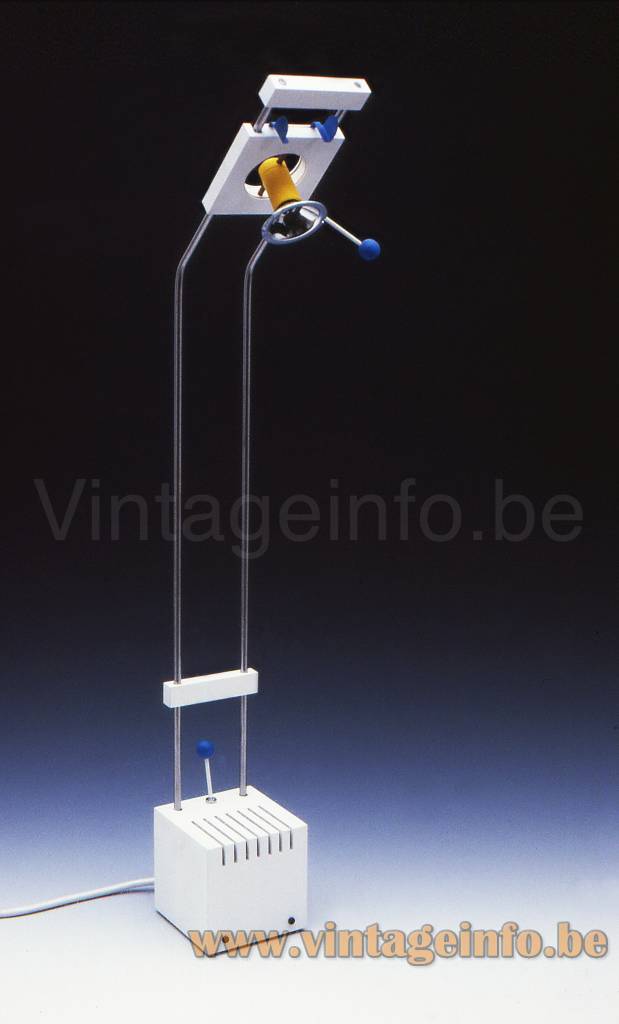
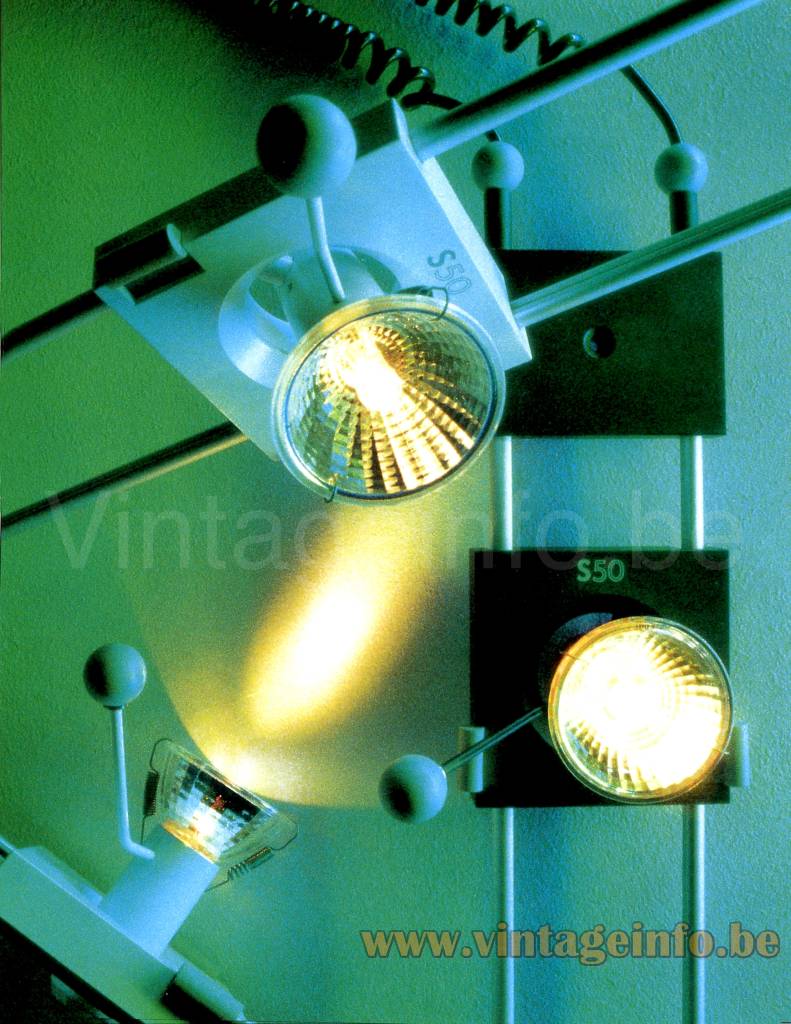
This close-up view highlights the mechanical precision of the TWI-LIGHT spotlight modules. The compact 12V halogen source (G 5.3 / 50W) is mounted within an adjustable head, allowing directional control through simple mechanical articulation.
The adapter connects seamlessly to the parallel rod system, making each luminaire both structurally integrated and individually adjustable. Spherical joints and exposed fastening elements are not hidden but intentionally visible, reinforcing the system’s engineering clarity.
Rather than concealing its construction, TWI-LIGHT celebrates it: light, mechanics and mounting logic remain legible. The result is a technically expressive lighting solution that reflects the early 1980s fascination with precision, modularity and low-voltage innovation.
Linke.Plewa.Design TWI-LIGHT Desk Lamp
TWI-LIGHT – Complete Modular System
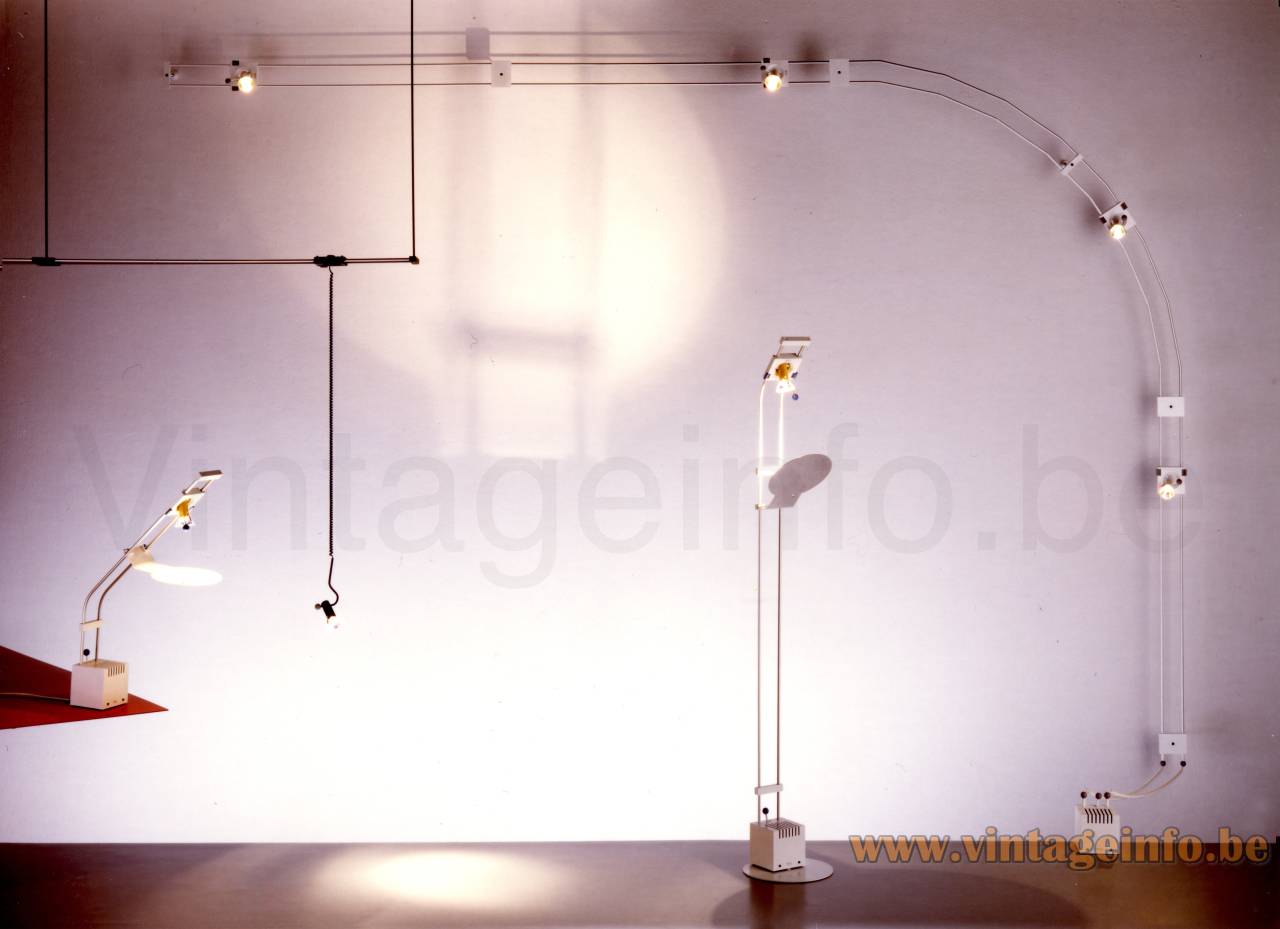
This image presents the TWI-LIGHT concept in its most comprehensive form: desk lamp, floor lamp and architectural rail installation united within one coherent system.
The parallel low-voltage rods define both direction and structure, while modular connectors allow linear and curved configurations. Individual spotlight heads can be positioned precisely where light is required, transforming the system into a flexible architectural tool rather than a fixed decorative object.
What makes TWI-LIGHT remarkable is its systemic clarity. Every element — transformer base, vertical supports, adapters, curved segments and spotlight modules — follows the same construction logic. The result is not a collection of lamps, but a fully developed lighting programme conceived as an expandable family.
Although technically resolved, award-winning and market-ready, the system was discontinued in 1991 after corporate restructuring at Brillantleuchten. Today, it stands as one of the most sophisticated early low-voltage halogen systems of its time — a design that ended not because of technical limitations, but because of business decisions.
Many thanks to Heico Linke for all the help, the additional photos and info.
Linke.Plewa.Design TWI-LIGHT Desk Lamp
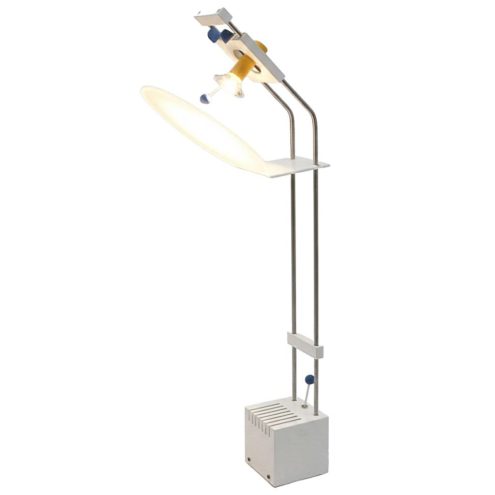
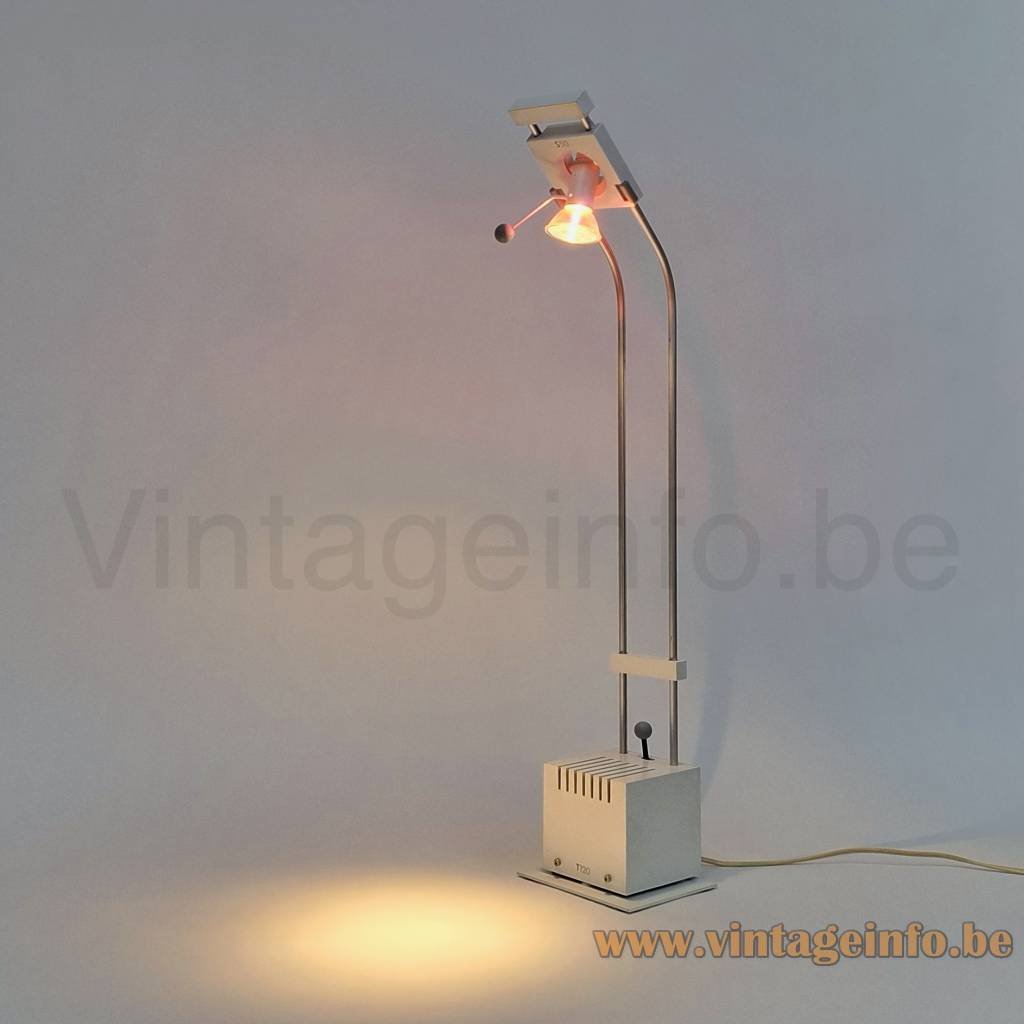
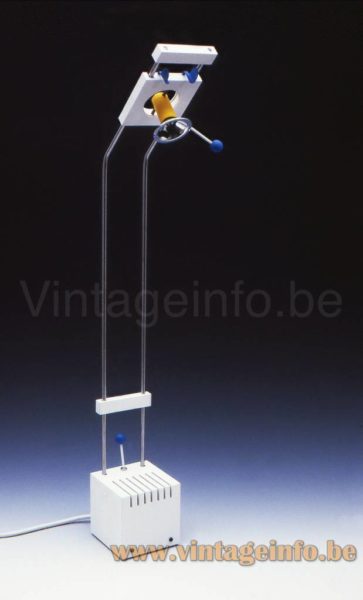
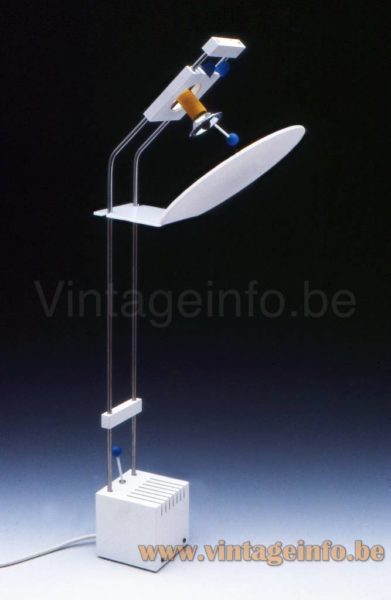
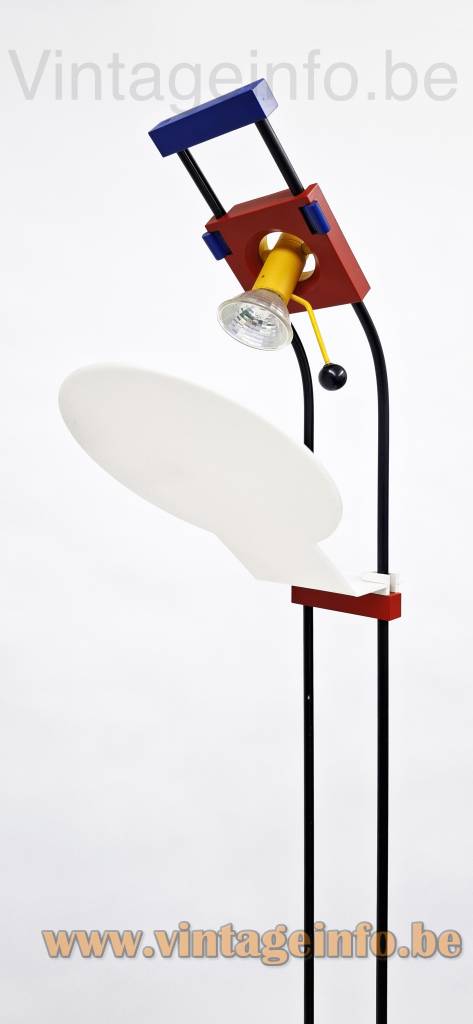
Materials: White plastic cube base with integrated switch. Built-in toroidal transformer. Two parallel metal rods. Adjustable square spotlight housing with tubular yellow socket holder and blue ball handle. Large white circular diffuser. Porcelain GU5.3 socket.
Lamp holder: 8 x 8 cm / 3.14 x 3.14”
Height: 71 cm / 27.95”
Base: 10 x 10 x 10 cm / 3.93 x 3.93 x 3.93”
Electricity: 1 × GU5.3 halogen bulb, max. 50W, 12V. Integrated 220V–12V transformer in the base. Compatible with any GU5.3 lamp. No specific bulb required. Two-level switch: 6V / 12V.
Period: 1980s – Memphis Milan Style.
Design: Heico Linke & Jens Plewa in 1986.
Manufacturer: Brilliant AG, Brilliantstraße 1, D-27442 Gnarrenburg, Germany.
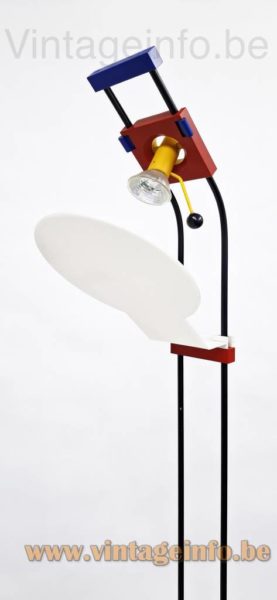
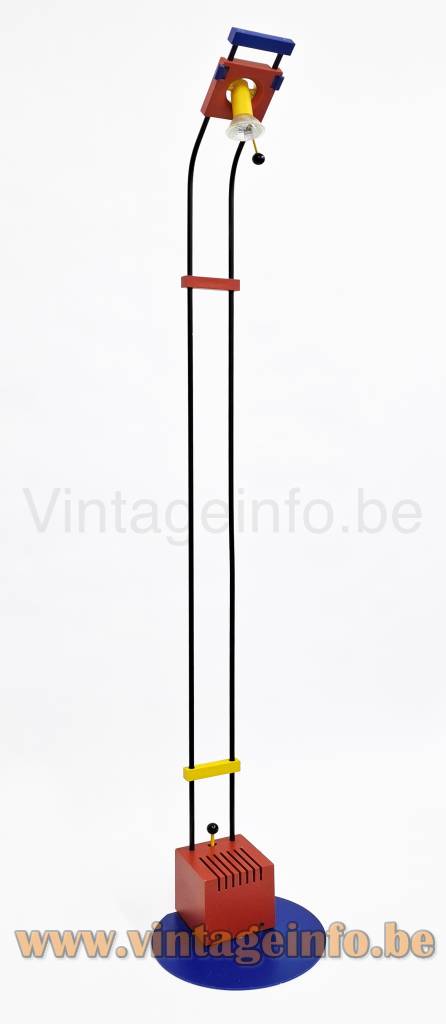
Other versions: This Linke.Plewa.Design TWI-LIGHT desk lamp was produced in several colour variations. The floor lamp is the larger version of the desk model.
The complete story of Linke.Plewa.Design can be found here.
LINKE.PLEWA.DESIGN – Brillantleuchten TWI-LIGHT System (1980s)
In the early 1980s, 12-volt halogen lighting suddenly became the new frontier of modern illumination. Compact automotive light sources made it possible to design fixtures that were smaller, brighter and more technically expressive than anything before. The success of lamps such as the Tizio had already demonstrated the enormous potential of low-voltage systems.
A popular solution at the time consisted of two tensioned steel wires stretched from wall to wall, carrying small halogen luminaires between them. Minimal, bright and visually daring — but structurally restrictive.
Linke.Plewa.Design appreciated the technological shift but questioned the limitations of cable systems. Track lighting had existed for years — so why not combine the flexibility of track systems with the precision and compactness of low-voltage halogen sources?
Instead of cables, the studio developed a system based on two parallel 6 mm solid silver-steel rods. A specially engineered adapter and a universal luminaire head allowed maximum adjustability while maintaining structural clarity. The concept was presented to Brillantleuchten, who immediately recognised its potential.
At the same time, the company Haloform (Eckhard Halemeier) introduced an innovative low-voltage lighting rail system using a protected current-carrying copper conductor integrated into a slim aluminium-plastic profile of only 6 mm diameter. The adapter designed by Linke.Plewa.Design proved perfectly compatible — an almost ideal technical convergence.
What followed was the development of a complete modular lighting programme:
desk lamps, floor lamps, spotlights, wall and ceiling configurations, adapters, and interchangeable components. The system was conceived not as a single product, but as an expandable architectural lighting family.
All technical challenges were solved, production tooling was completed, catalogues printed, and an initial series manufactured. The TWI-LIGHT system was presented at international trade fairs and received design awards, confirming its relevance within the rapidly evolving halogen movement of the 1980s.
And then — unexpectedly — it ended.
In 1991, the former owners of Brillant sold their shares. The newly formed Brilliant AG immediately and rigorously reduced the product portfolio. Despite being fully developed, market-ready and internationally recognised, the ambitious TWI-LIGHT system was discontinued for corporate reasons.
Today, TWI-LIGHT stands as one of the most sophisticated low-voltage lighting systems of its time: technically precise, modular in concept, and forward-thinking in construction. Its discontinuation was not a matter of design failure, but of business restructuring — a reminder that innovation alone does not guarantee longevity.
LINKE.PLEWA.DESIGN – Brillantleuchten TWI-LIGHT
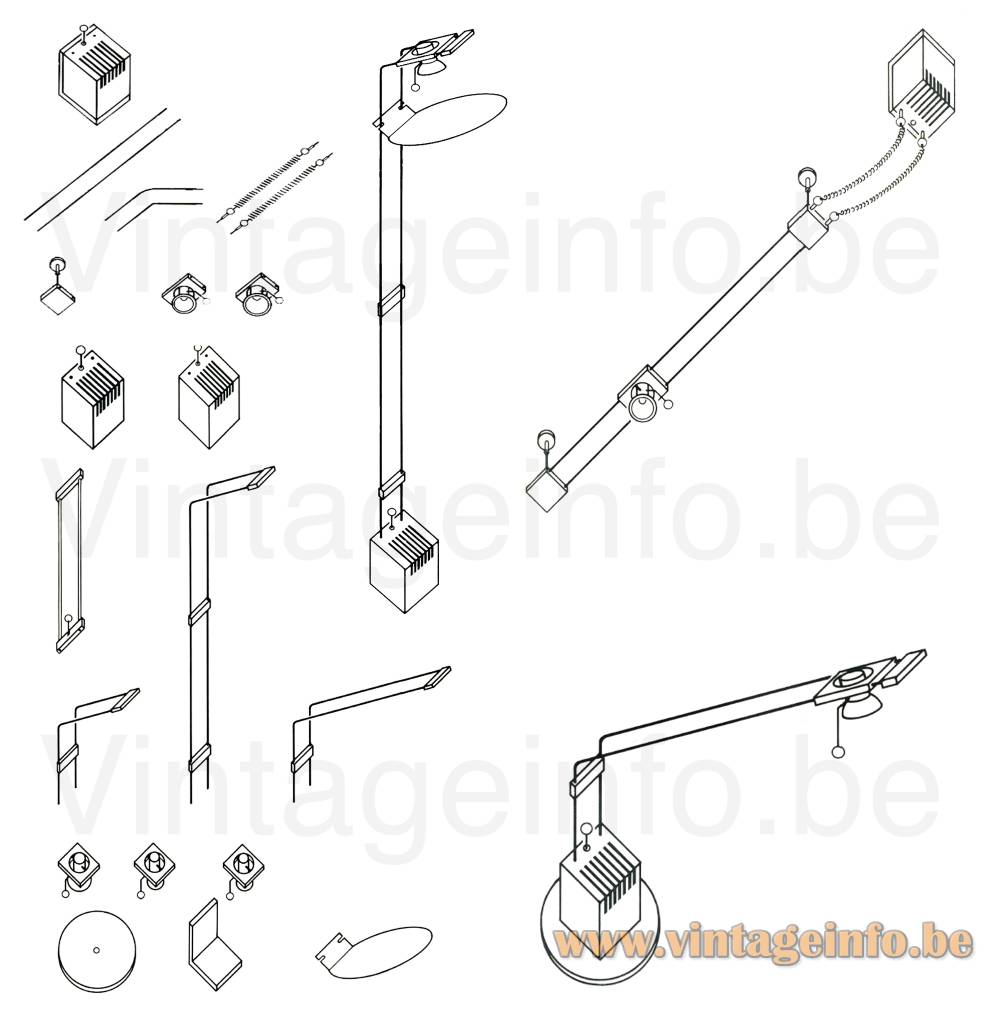
Halogen Lighting System – Sketches
LINKE.PLEWA.DESIGN (1978–1994)
Linke.Plewa.Design was a German industrial design studio founded in 1978 in Hamburg by Heico Linke and Jens Plewa. Emerging from the Hochschule für bildende Künste Hamburg (HfBK), the studio remained active until 1994 and developed a wide-ranging body of work spanning lighting systems, technical devices, consumer products, clocks, measurement instruments, toys, and packaging design.
From its first studio in St. Pauli overlooking the Hamburg harbour, the office worked in close collaboration with manufacturers and engineers, guiding projects from early concept studies and functional prototypes through to technical development and series production. Tooling, safety standards, and manufacturability were treated as integral components of the design process rather than secondary considerations.
Although lighting later became the most recognisable part of its output, Linke.Plewa.Design never positioned itself as a lighting-only studio. Its work reflects a broader industrial design culture rooted in technical clarity, mechanical intelligence, and functional precision rather than stylistic alignment.
Between 1986 and 1991, the studio collaborated intensively with Brillantleuchten AG, developing one of its most ambitious projects: the modular low-voltage halogen system TWI-LIGHT. The system was presented at major trade fairs, accompanied by printed catalogues, and received multiple iF Design Awards.
Following the dissolution of the studio in 1994, Jens Plewa founded PLEWA WORKS while Heico Linke continued his professional career as an employed designer. A more detailed documentation of the studio’s history and projects can be found at vintageinfo.be/linke-plewa-design.
Heico Linke & Jens Plewa: Linke.Plewa.Design – 1989
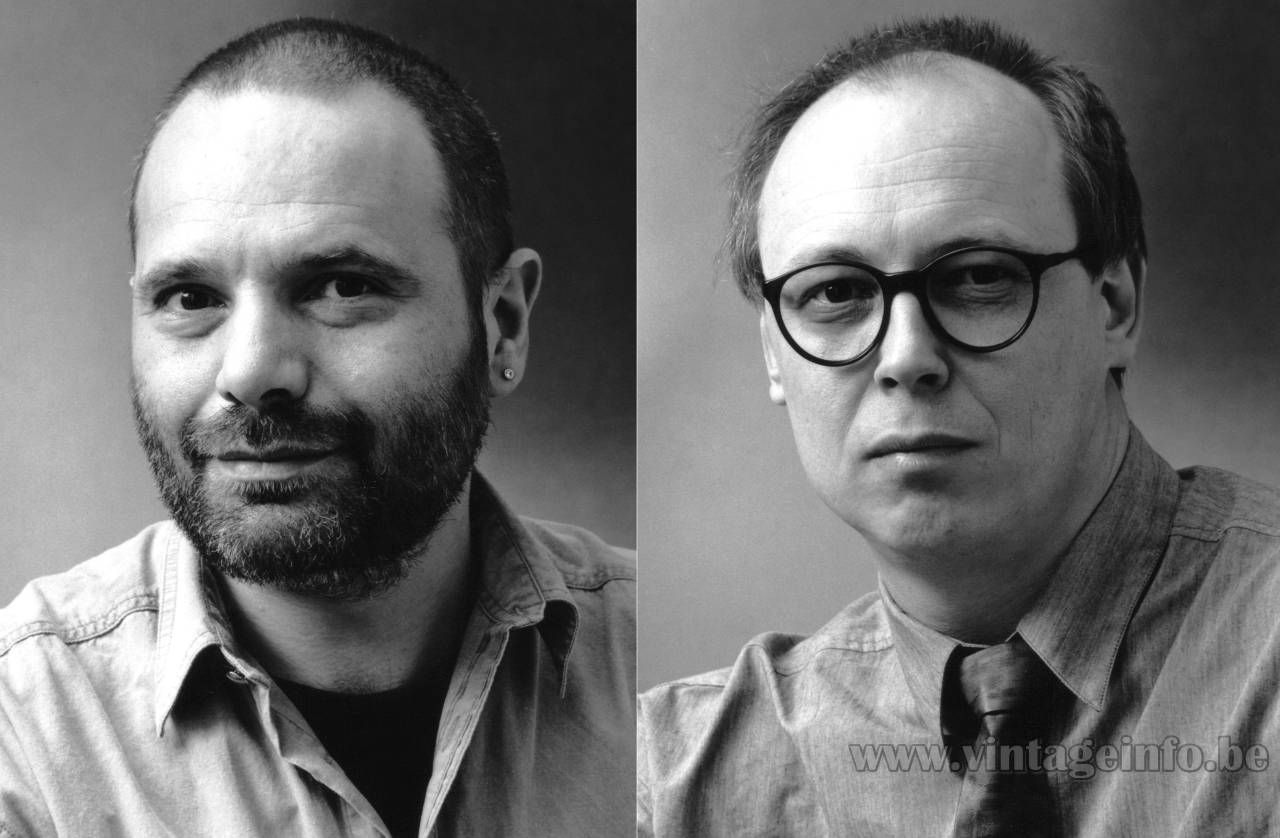
Heico Linke
Heico Linke is a German industrial designer who designed a wide range of products between the late 1970s and the early 1990s, including several important lighting designs for Brillantleuchten (later Brilliant AG).
He studied Industrial Design at the University of Fine Arts (HFBK) in Hamburg from 1974 until 1979. Several of his early lamp designs originated as semester projects during his studies, some of which later entered (limited) production.
In early 1978, Heico Linke founded the design studio Linke.Plewa.Design together with Jens Plewa (and briefly Reinhardt Buchner). The studio was based in Hamburg-St. Pauli and operated until 1994. During this period, the office worked for a large number of industrial clients, designing products ranging from lamps and light systems to electronics, packaging, tools, toys, furniture, and medical devices.
Between 1986 and 1991, Linke-Plewa designed an extensive range of lighting products for Brillantleuchten. Many of these designs were developed around the emerging popularity of 12V halogen lighting and modular lighting systems. After the takeover of Brillantleuchten in 1991 and its transformation into Brilliant AG, large parts of this product range were abruptly discontinued.
From 1995 onward, Heico Linke worked as an in-house designer for ZACK, a leading European brand specialising in stainless steel home accessories. He remained with the company until May 2014. After leaving ZACK, he briefly ran his own company again for several years and subsequently retired.
Several of Linke’s lamp designs, especially from the late 1980s, are today frequently associated with the Memphis style. This is particularly true for the Circo series, which is often offered on the secondary market at very high prices and regularly (and incorrectly) attributed to Italian Memphis designers.
Jens Plewa
Jens Friedrich Plewa was born in 1949 in Stade, Lower Saxony, Germany. He spent his early childhood in Himmelpforten, a small village with around 300 inhabitants at the time, where he lived until the age of ten.
After completing his Abitur in Stade, Plewa spent one year at sea, working on a cargo ship that sailed the Mediterranean and along the African coast as far south as the equator. This was followed by his mandatory military service.
Between 1973 and 1978, Jens Plewa studied Industrial Design at the Hochschule für bildende Künste (HfBK) in Hamburg. In 1978, he co-founded the design studio LINKE.PLEWA.DESIGN, which operated until 1994 and produced a wide range of industrial and product designs.
From 1995 until 2024, Plewa continued his professional work through his own studio, PLEWA WORKS, remaining active in the field of industrial and product design for nearly five decades.
Lamp designs by Linke.Plewa.Design
Brillantleuchten / Brilliant AG (1986–1991):
• TWILIGHT – Modular 12V halogen lighting system (tracks, spotlights, pendants, floor lamps). Fully developed system; discontinued after 1991.
• CIRCO – Table lamp. The most commercially successful design by Linke-Plewa. Produced in bold colour combinations; today often labelled as “Memphis”.
• SEGMA – Table lamp. Produced in several colour variants; sold at Karstadt.
• TRITON – Wall lamp, table lamp and floor lamp. Short production run around 1989.
• MECANO – Table lamp. Prototype only; never realised for production.
• KASKAD – Table lamp. Last project designed for Brillantleuchten; later adapted for IKEA.
• FUTURA – Ceiling spotlight system.
• ZORRO – Pendant lamp.
• MIKADO – Pendant lamp.
• ZIPPO – Pendant lamp.
• OUTDOOR – Modular outdoor lighting system integrating light, motion detector, socket, intercom and dusk switch; discontinued after 1991.
Other lighting projects:
• SYSTEM 8000 – Floor lamps and spotlights for OTT-International (1978); partially produced, project later cancelled.
• STAND BY – Portable lamp designed for ELKAMET / Lighthouse (1992); produced in large numbers, especially the smaller version for children’s rooms.
• HALOFORM / EUCOFORM / BRENDEL – Various ceiling lights, recessed lights and spotlight systems (late 1980s).
• IKEA “Kaskad” – Table lamp based on the earlier Brillantleuchten design; produced by HALOFORM for IKEA.
Brillantleuchten
Brilliant AG was founded in 1951 as Brillantglashütte oHG / Lippold und Tschammer in Gnarrenburg, Lower Saxony, Germany. The company originally operated as a glass factory, producing hand-blown lighting glass for light bulbs, using local peat and quartz sand as raw materials.
In 1953, the glassworks began producing glass pendant bowls, marking the first step towards the manufacturing of complete lighting fixtures. During the 1960s, the product range expanded and materials such as wood, metal, and plastic were introduced alongside glass.
In the 1970s, the company increasingly focused on the finishing and assembly of luminaires using externally sourced components. To accommodate this shift, the industrial glass production facility was sold, and the company was renamed Brillantleuchten AG.
During the 1980s, Brillantleuchten AG moved further away from glass production and specialised in spotlights and metal pendant lamps. In 1985, the (then still family-owned) company was listed on the stock exchanges in Frankfurt and Bremen.
In 1991, as part of its international expansion, the company adopted its final name: Brilliant AG. The word “Leuchten” was dropped and a second “i” was added to the brand name. Between 1994 and 1997, the Brilliant Industrial Park was developed in Gnarrenburg, including new warehouse buildings and a high-bay warehouse. By the late 1990s, exports accounted for almost 50% of total turnover.
In the 2000s, increasing international competition and price pressure led to the relocation of production abroad. Sales, administration, design, and logistics remained based in Gnarrenburg. On 24 September 2004, the British group The National Lighting Company Ltd became the main shareholder. This transition enabled a successful restructuring, and in 2006Brilliant AG returned to profitability.
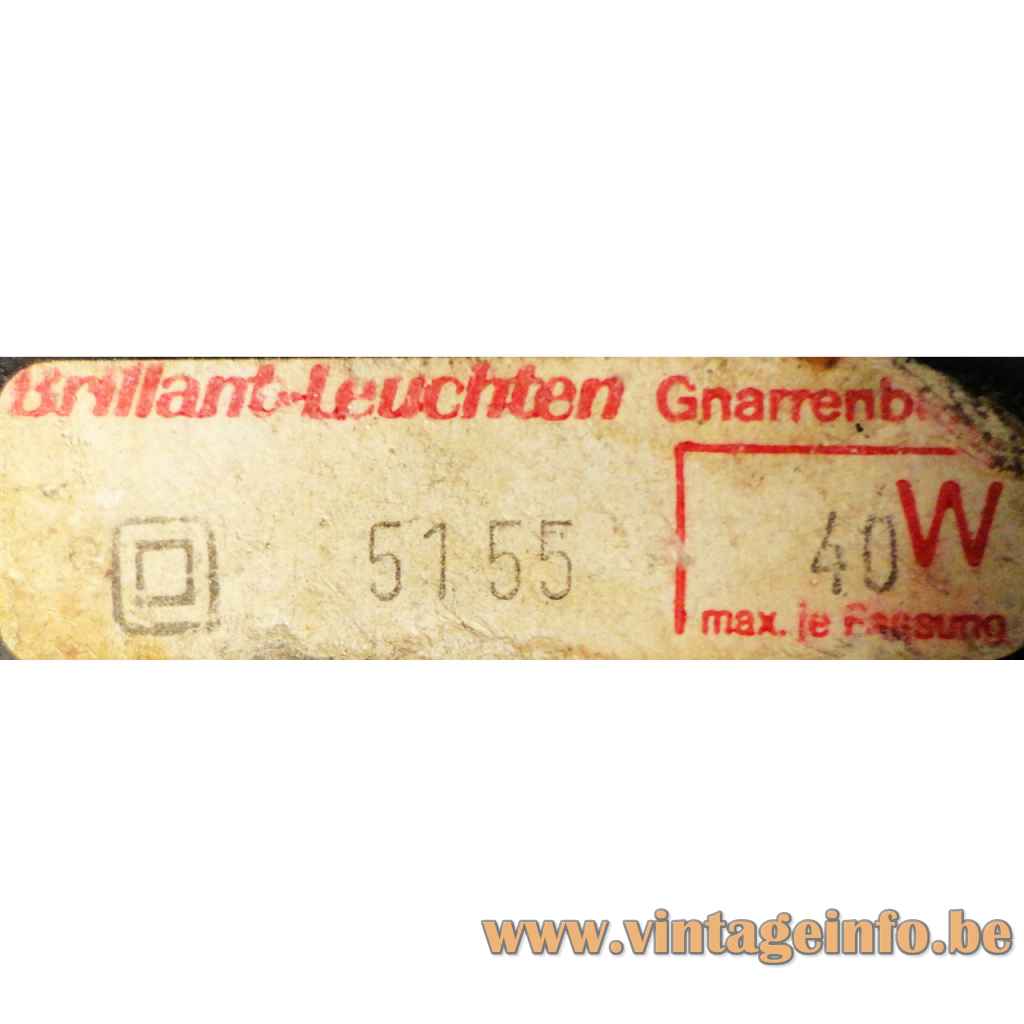
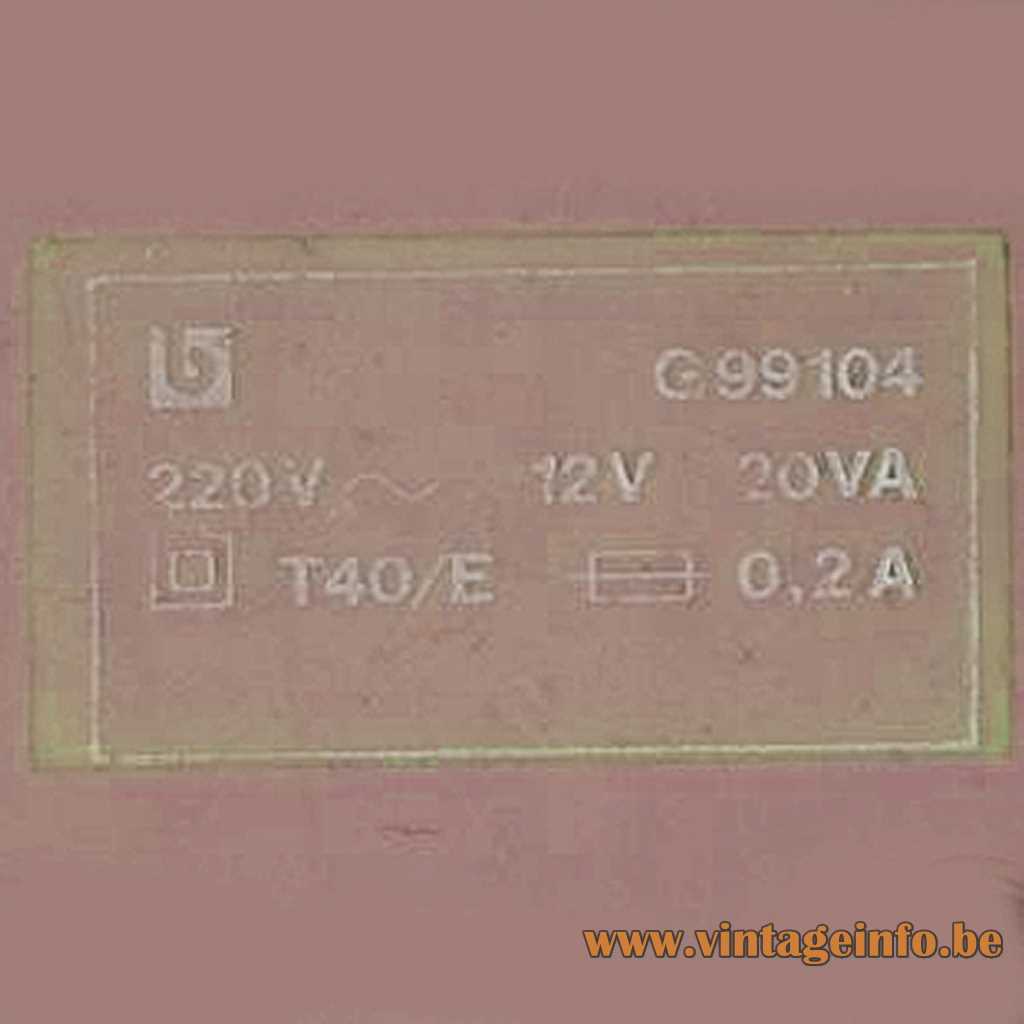
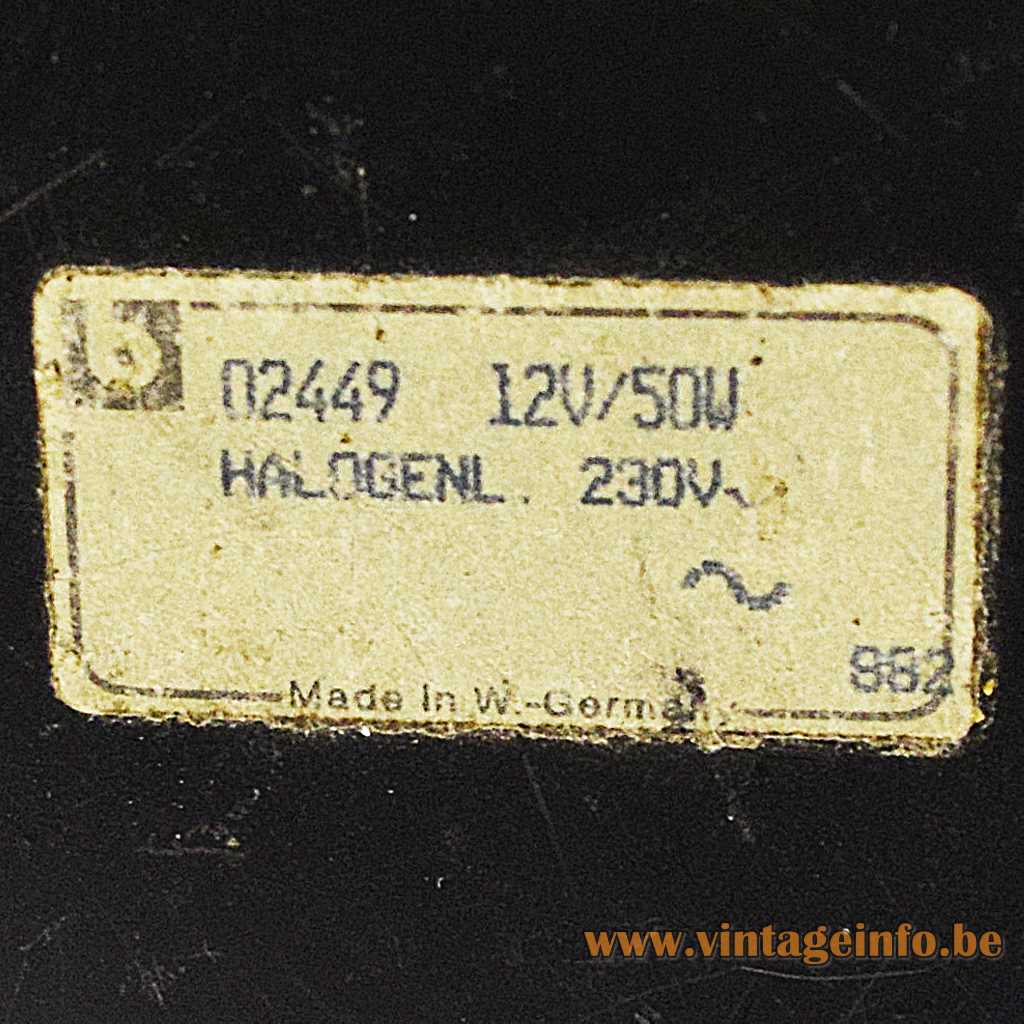
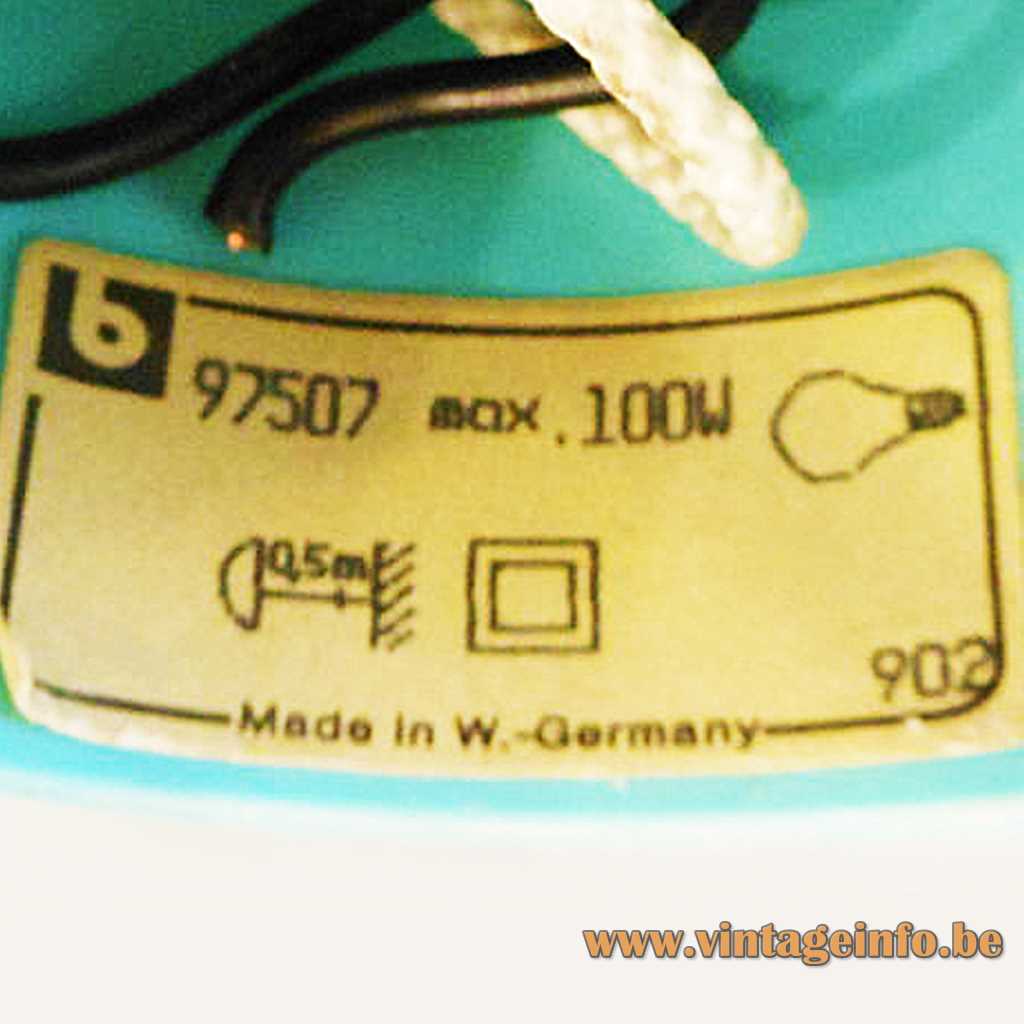
Linke.Plewa.Design TWI-LIGHT Desk Lamp – Company Labels & Logos