- Categories
- Categories
Last 5 Viewed
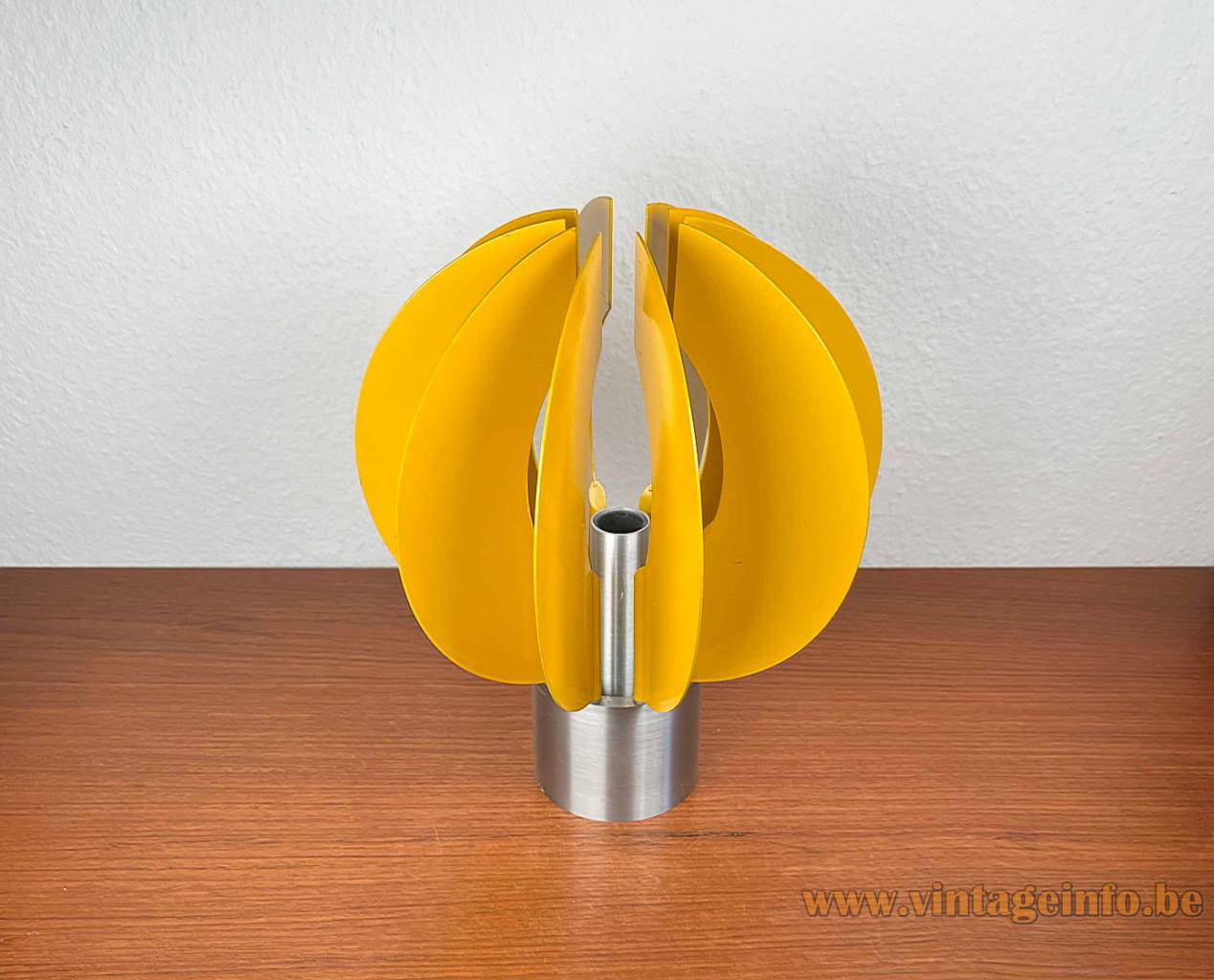
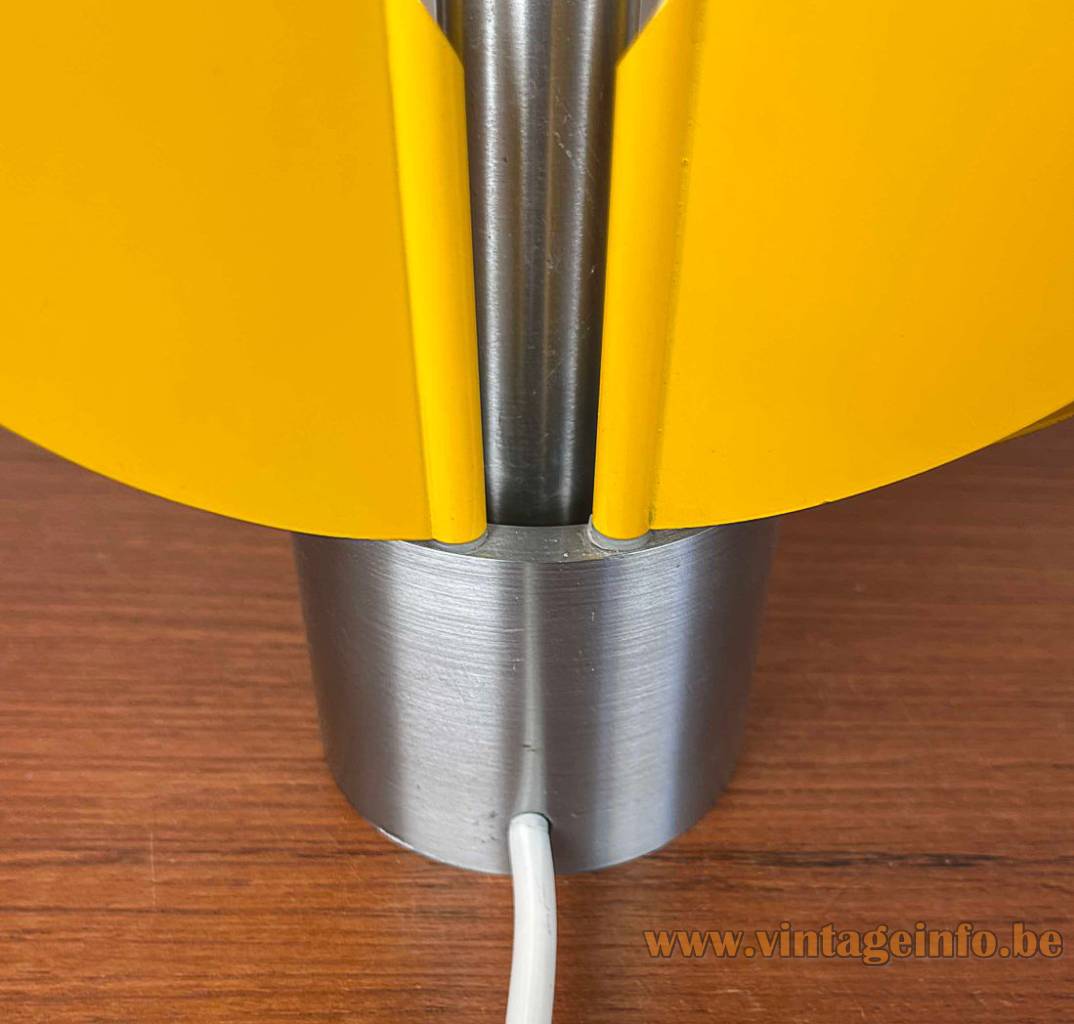
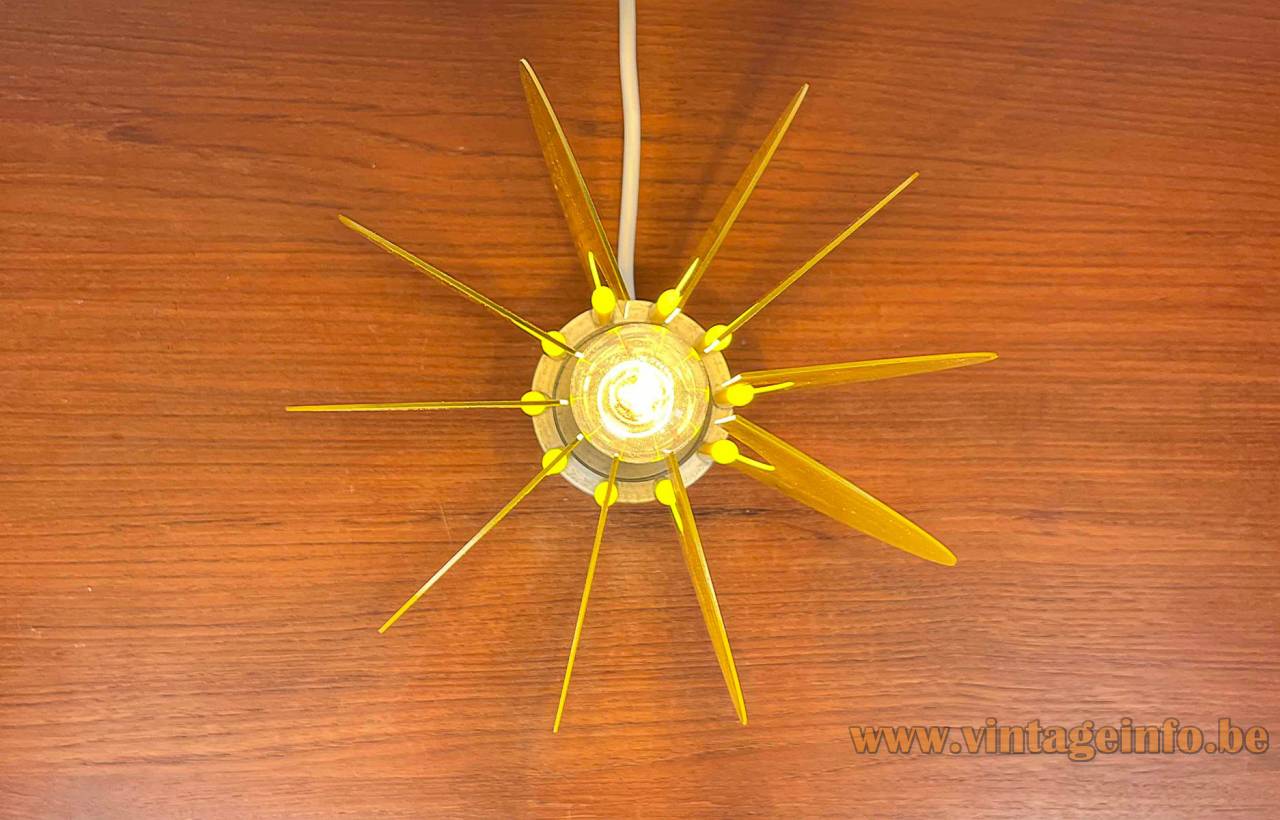
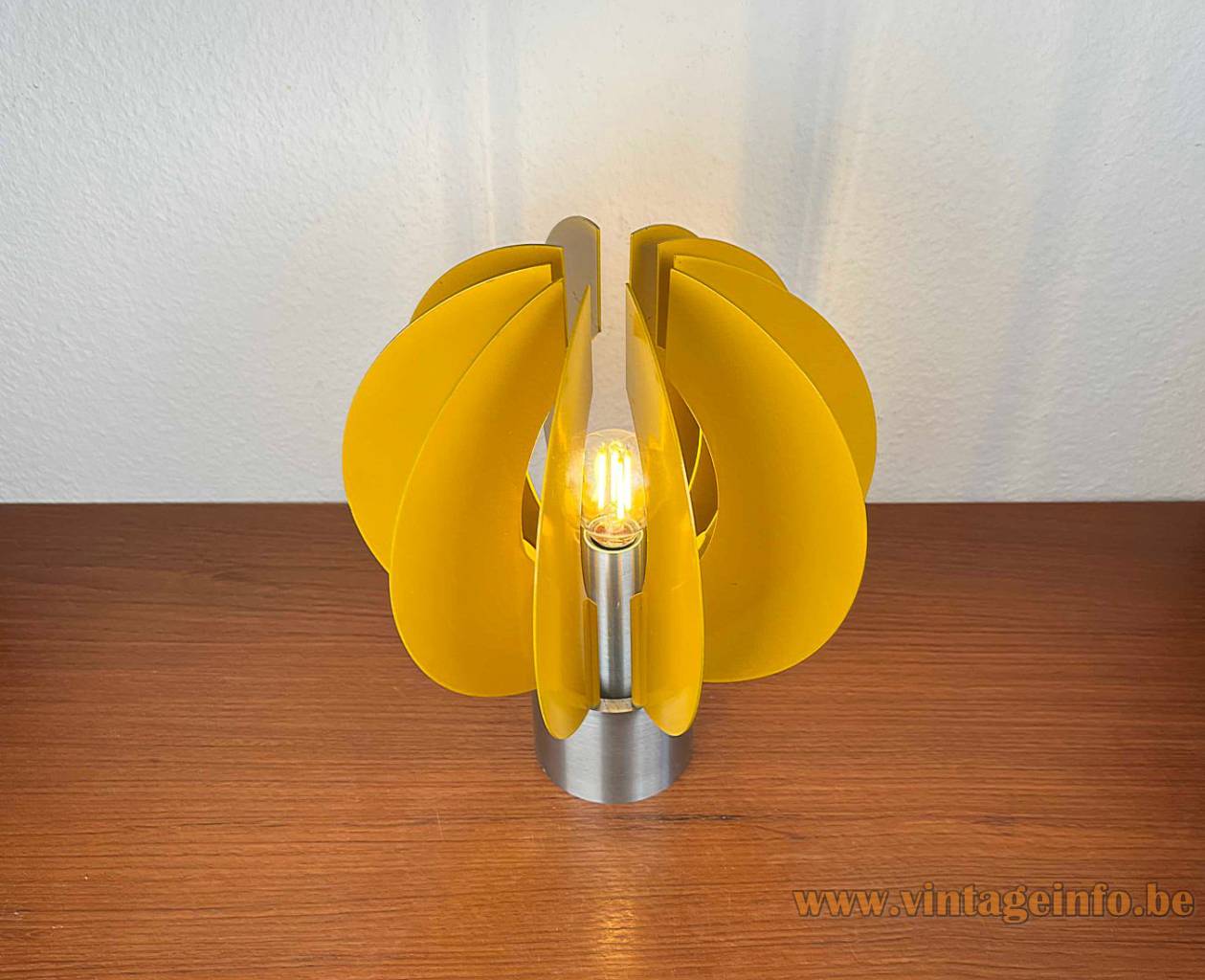
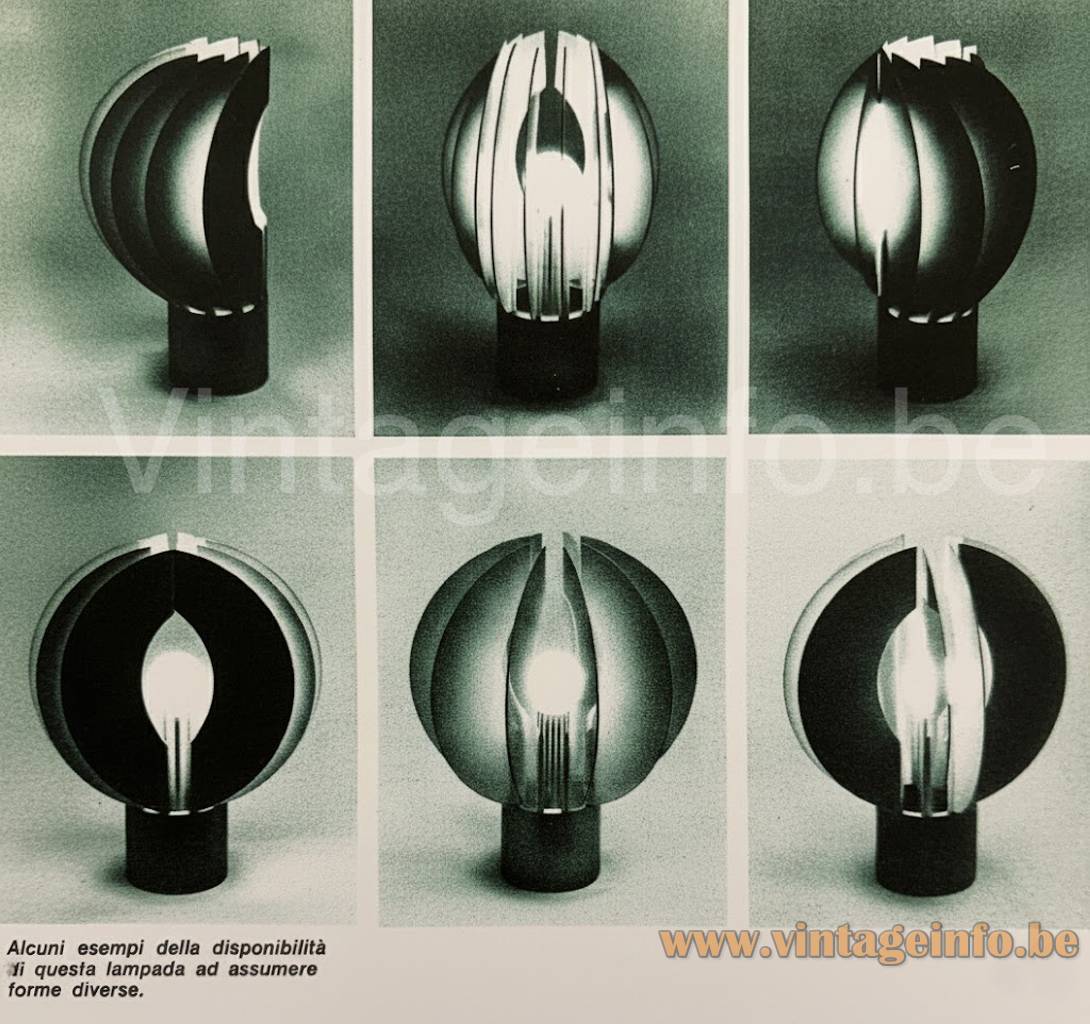
Ezio Zanobini Spicchio Table Lamp – 1970 Catalogue Picture
In this catalogue photo we see the lamp in its possible forms. Italian text: “Alcuni esempi della disponibilità di questa lampada ad assumere forme diverse.” – Some examples of the readiness of this lamp to take on different forms.
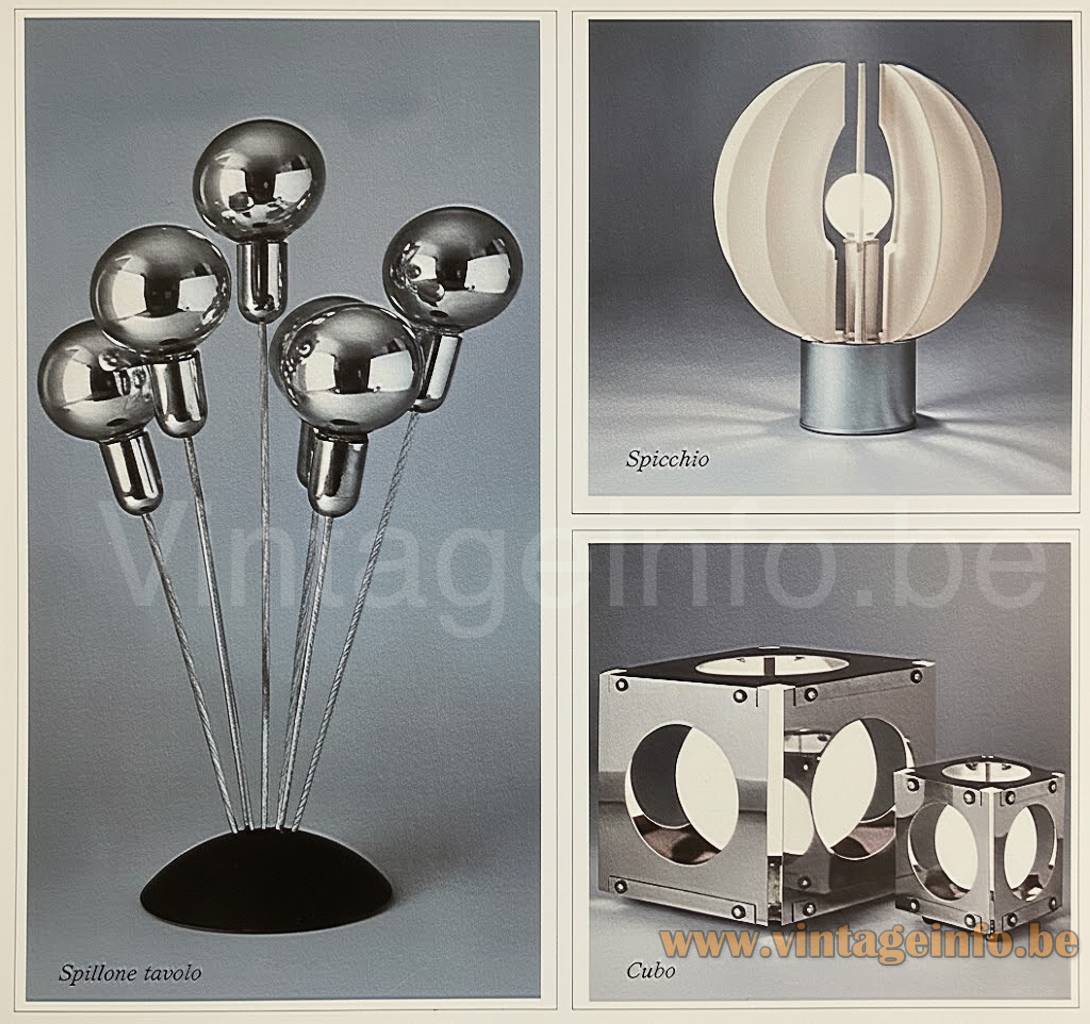
Ezio Zanobini Spicchio Table Lamp – 1970 Tronconi Catalogue Picture
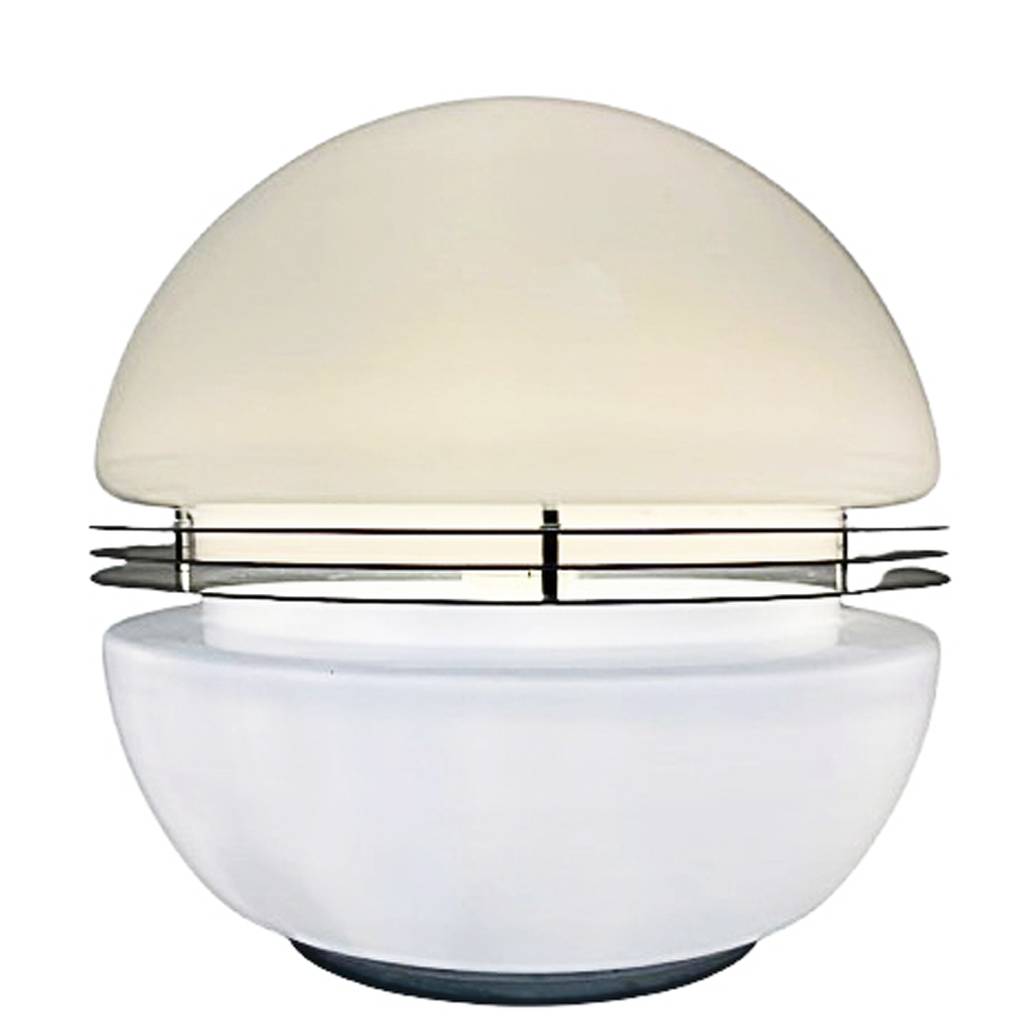
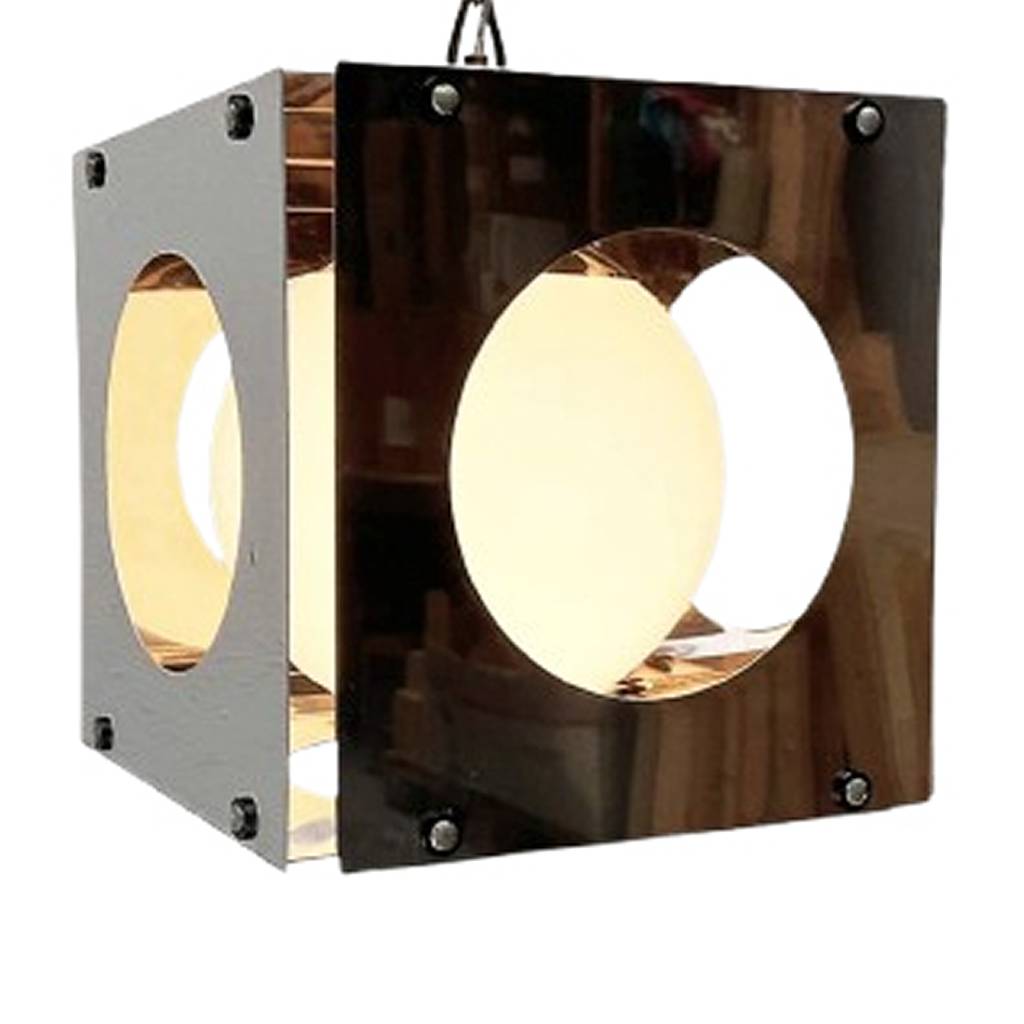
In this catalogue photo next to the Ezio Zanobini Spicchio table lamp the Pallone tavolo (big ball) and below the Cubo table lamp in two sizes. The pendant lamp of the Cubo is over here.
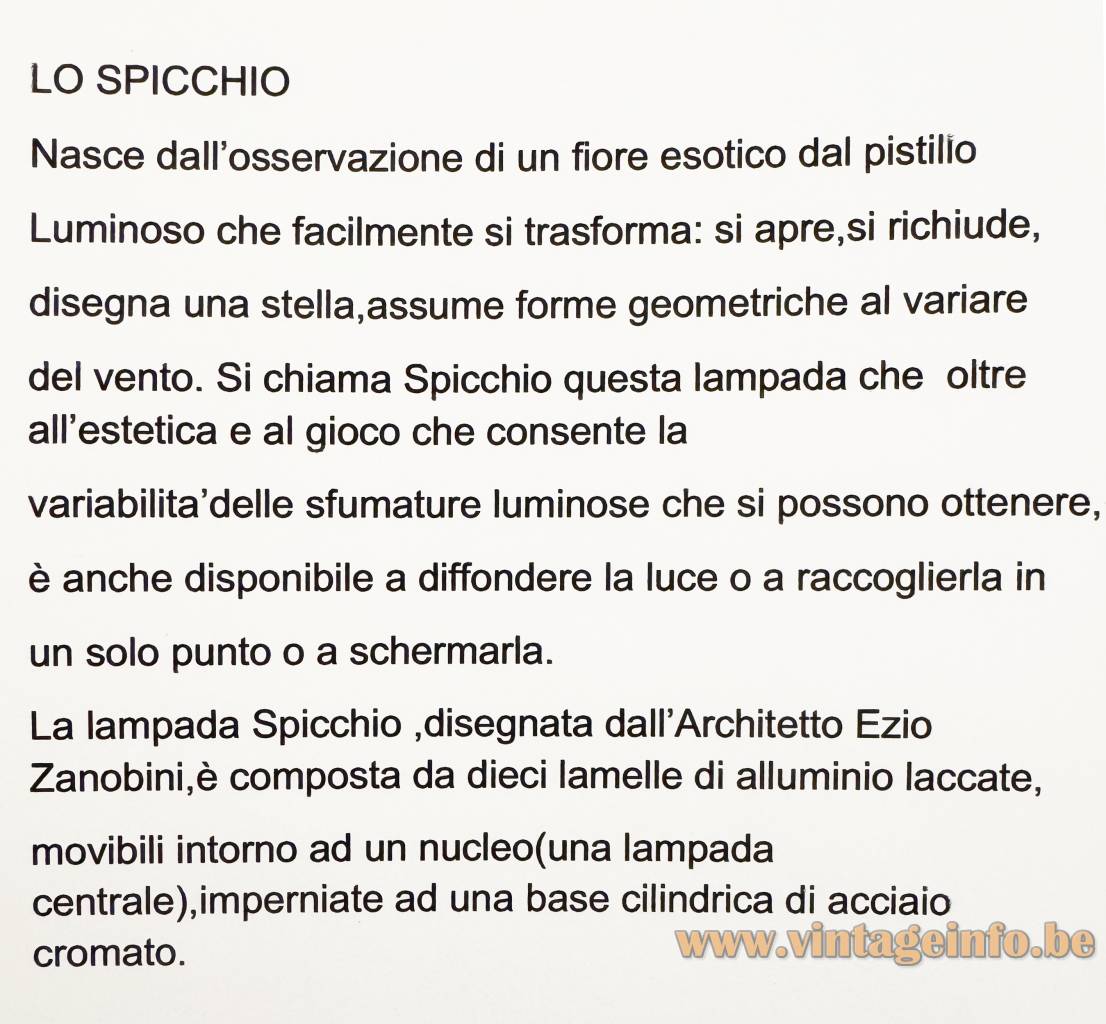
Below the translated text of this description of the Spicchio table lamp.
LO SPICCHIO
Is born from the observation of an exotic flower with a luminous pistil,
which easily transforms: it opens, it closes,
draws a star, takes on geometric forms as the wind changes.
This lamp is called Spicchio, which, beyond aesthetics and the play that allows
the variability of the luminous nuances that can be obtained,
is also capable of diffusing the light or concentrating it into a single point or screening it.
The Spicchio lamp, designed by Architect Ezio Zanobini,
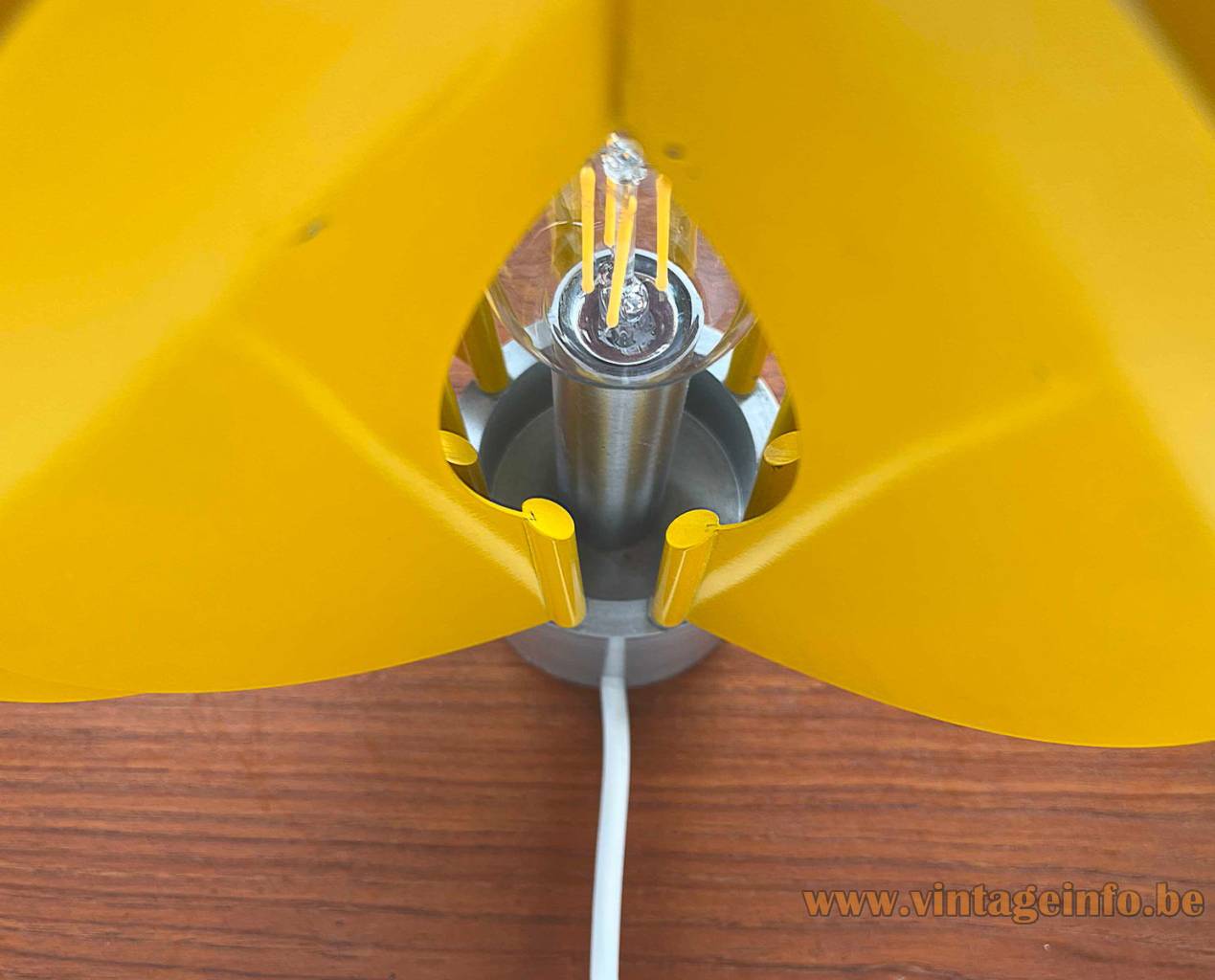
is composed of ten lacquered aluminium slats,
movable around a core (a central lamp),
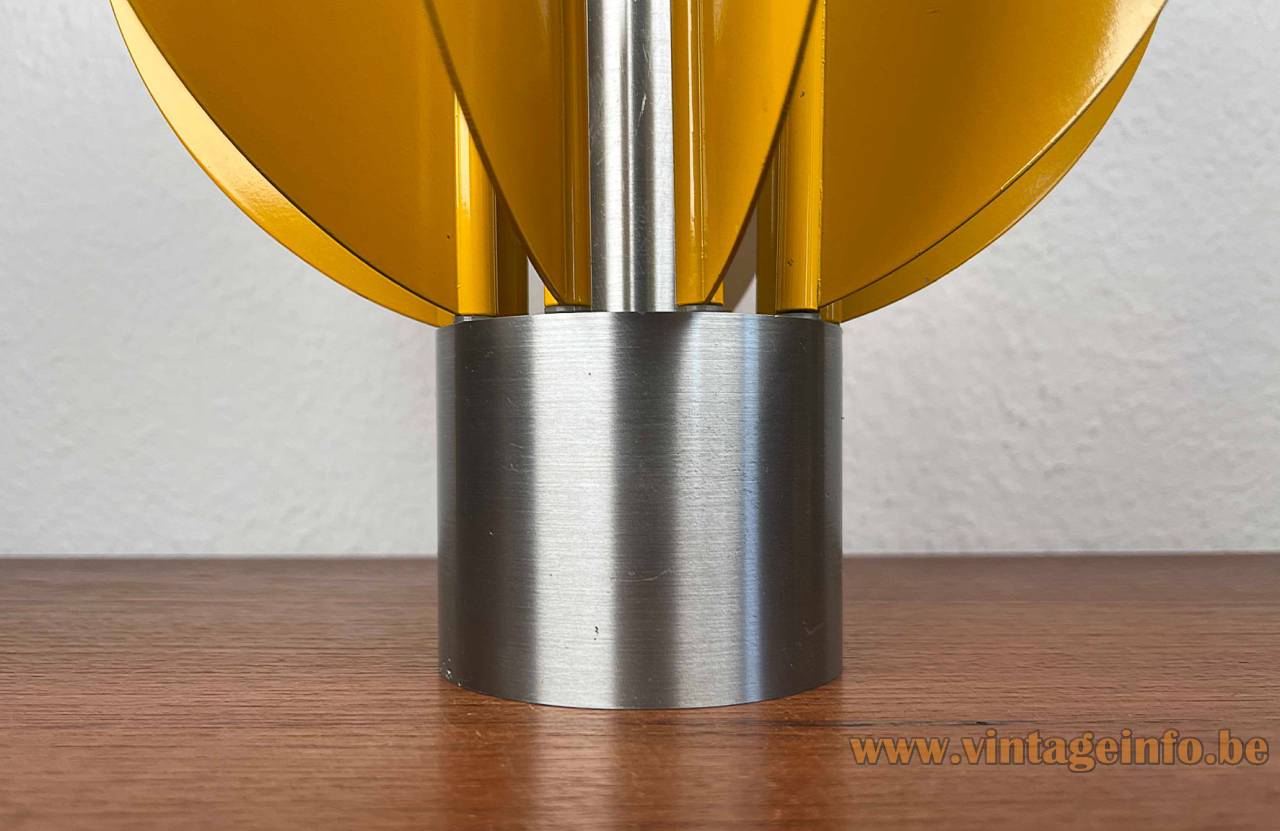
hinged to a cylindrical base of chrome-plated steel.
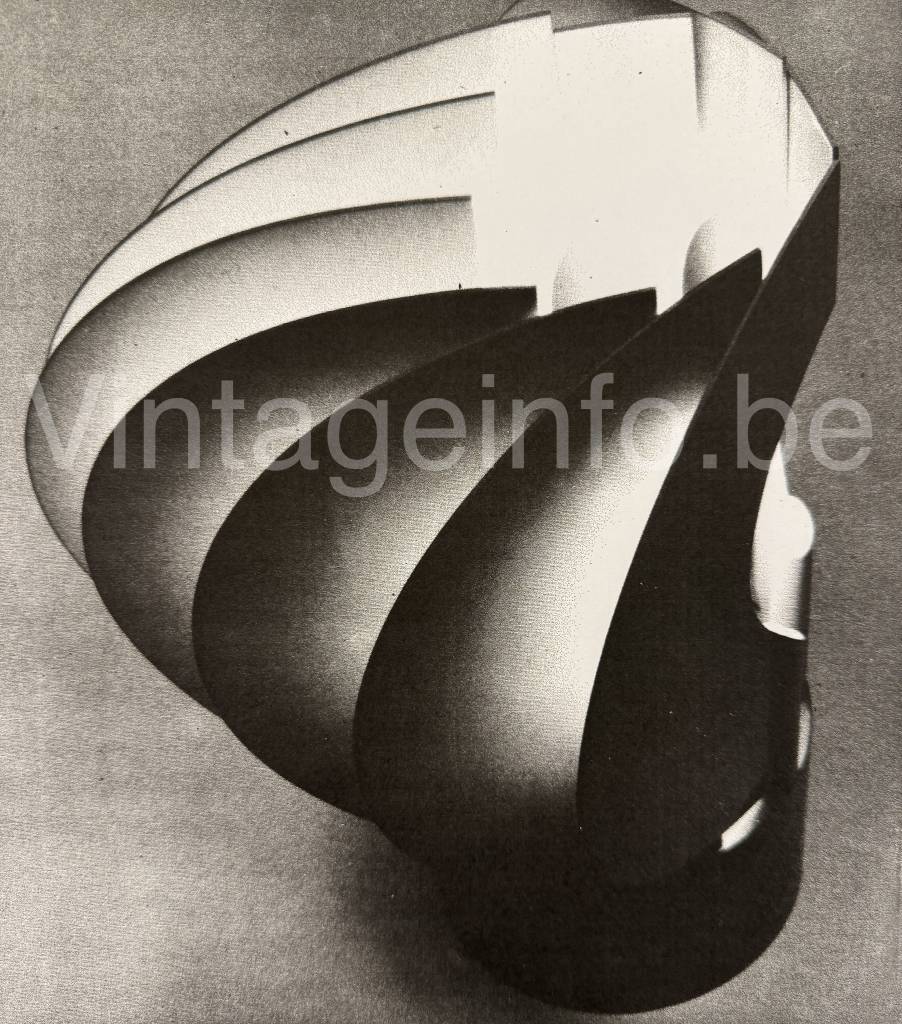
Ezio Zanobini Spicchio Table Lamp – Catalogue Picture
The catalogue photo that was also used in the magazines in 1970.
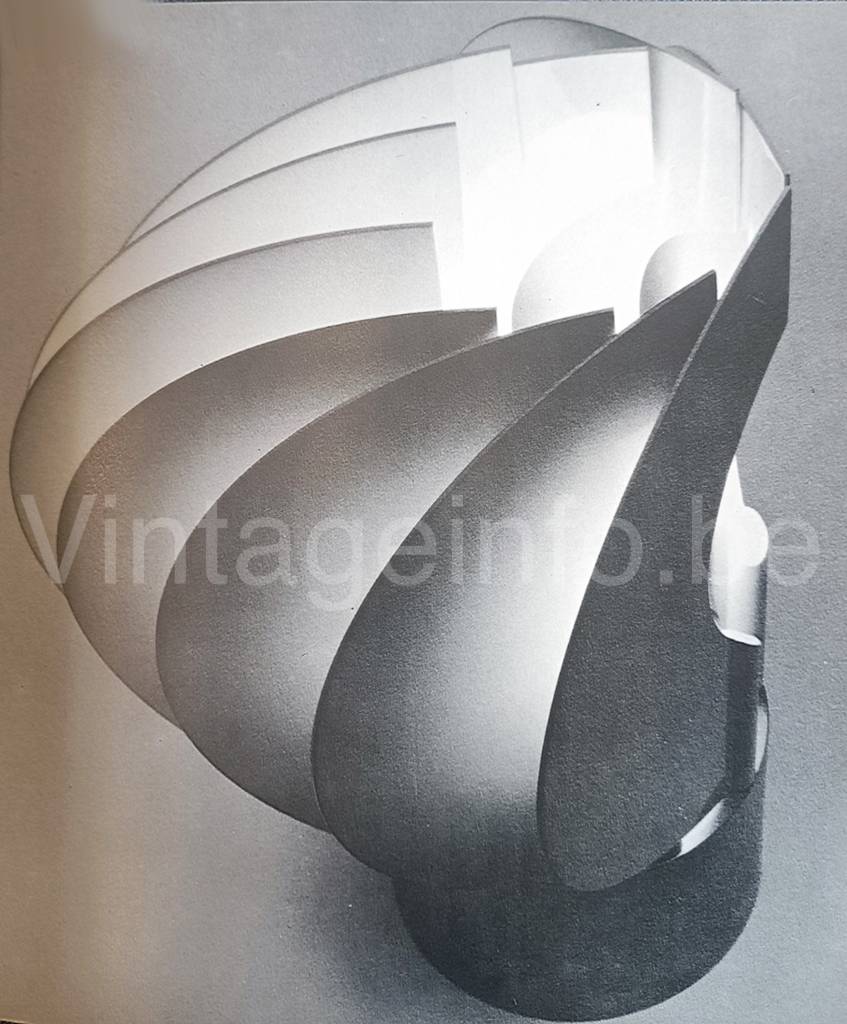
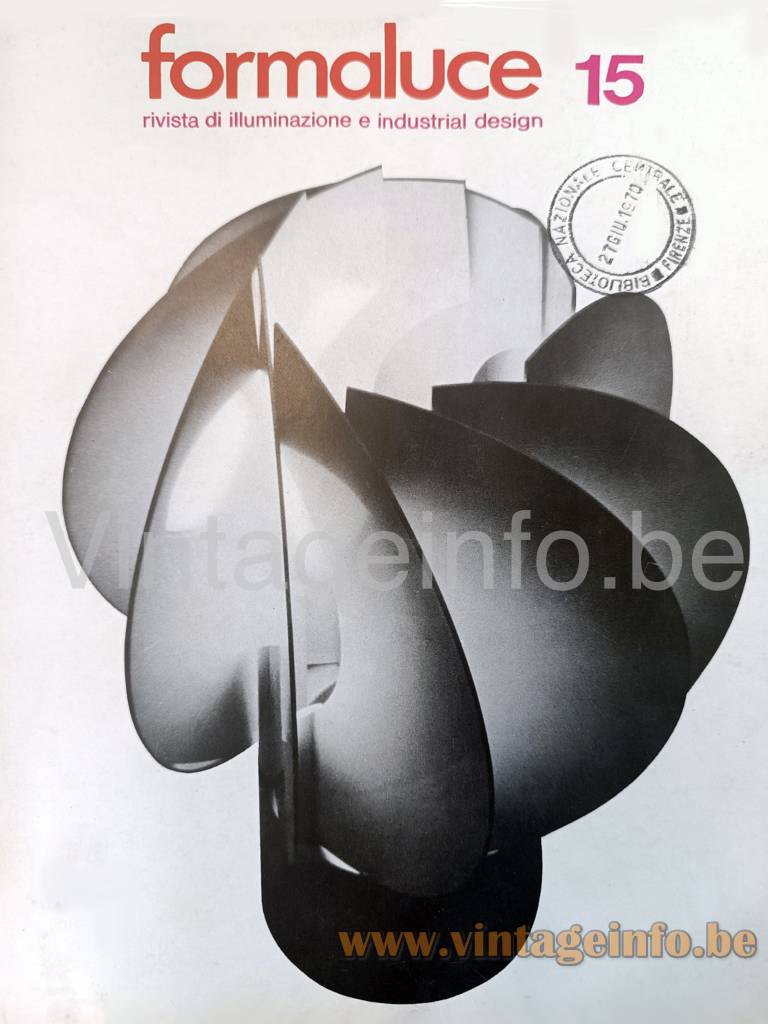
Ezio Zanobini Spicchio Table Lamp – Formaluce 1970 Cover Photo
Links (all external links open in a new window)
Vintageinfo – Tronconi Lamps
Many thanks to Luca Zanobini for all the help and the catalogue pictures.
Many thanks to Frank fromnullviernull raum+kommunikation for the lamp pictures. You can find his shop over here on Pamono.
Many thanks to Lir Tasho for the help and all the other pictures. You can find his Instagram page over here.
Many thanks to Hans for the help.
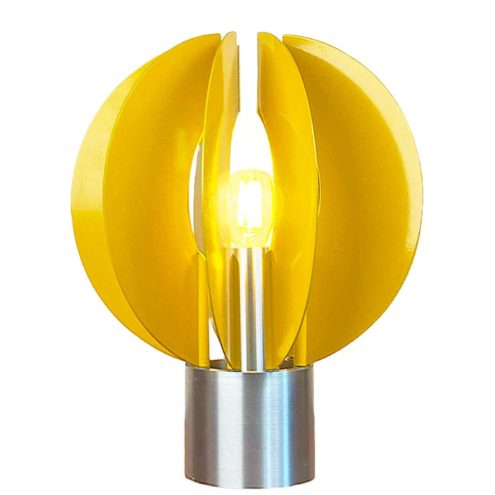
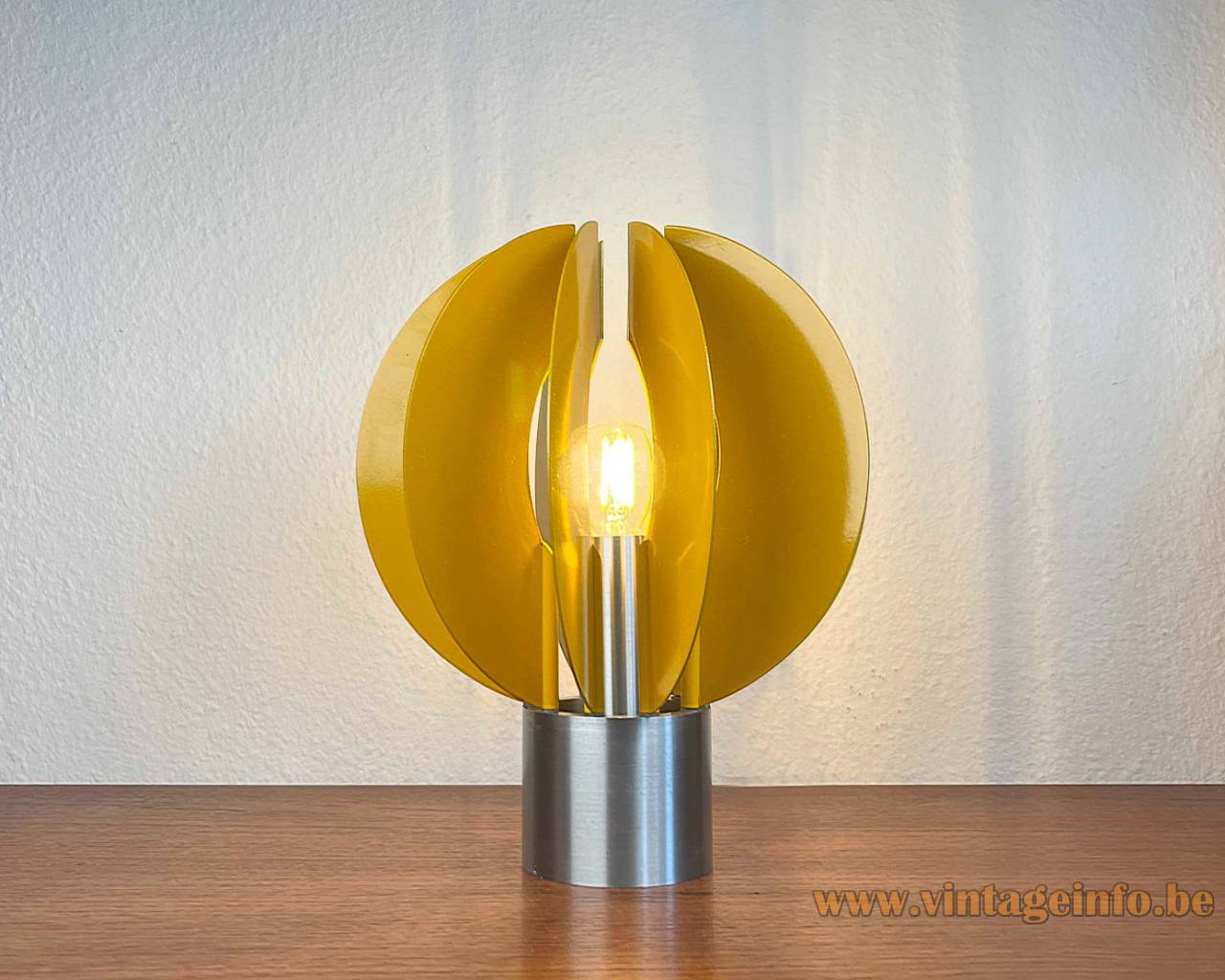
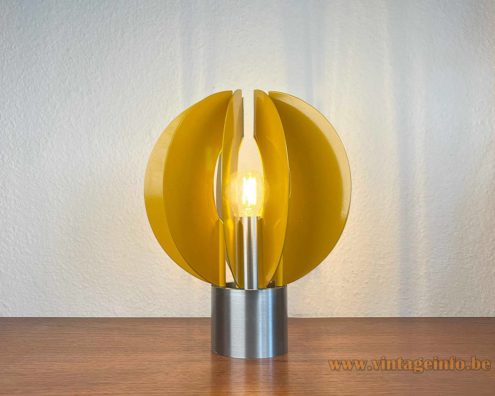
Ezio Zanobini Spicchio Table Lamp
Materials: Round brushed aluminium base. Ten adjustable yellow-painted aluminium flower-petal–slat lampshade. Bakelite E14 socket.
Height: 27 cm / 10.62”
Width: ∅ 20 cm / 7.87”
Base: ∅ 8 cm / 3.14”
Electricity: 1 bulb E14, 1 x 40 watt maximum, 110/220 volt.
No specific type of light bulb is required; different types can be used.
Period: 1960s, 1970s – Mid-Century Modern.
Designer: Ezio Zanobini in 1969.
Manufacturer: T2, tidue, industria apparecchi di illuminazione, viale Cassala 55, 20143 Milano.
Other versions: This Ezio Zanobini Spicchio table lamp was made in several colours.
Spicchio is the Italian word for clove. The clove flower is known for its taste and scent and is widely used in the kitchen.
Ezio Zanobini
Ezio Zanobini was born in Milan in 1935. He graduated in architecture in 1967 and, after working for various firms for a few years, chose to pursue an independent professional career.
From around 1970 onwards, Zanobini focused mainly on interior renovation and interior design, carrying out numerous projects, primarily for private clients, including residential interiors, villas and commercial spaces such as banks. His work reflects the climate of Italian architecture and design of the late 1960s and early 1970s, a period marked by experimentation, modular thinking and a close dialogue between architecture, objects and space.
In 1975 he founded his own architectural practice in Milan, later known as Studio Zanobini, which remained active over several decades. In 2004, his son, architect Luca Zanobini, joined the studio, gradually taking over and expanding the practice, while continuing to collaborate closely with his father.
Alongside his architectural activity, Ezio Zanobini also worked in the field of lighting design. Around the turn of the 1970s he designed the Spicchio lamp, produced by the Milanese manufacturer Tidue (T2). The lamp, based on a system of adjustable lacquered aluminium slats around a central light source, reflects his interest in transformable forms, light modulation and the relationship between object and movement. The design was patented in 1969 and documented in Italian design magazines such as Formaluce and Abitare in 1970.
Ezio Zanobini has remained professionally active well into later life, continuing his architectural work in collaboration with Studio Zanobini in Milan.
Ezio Zanobini Spicchio Table Lamp – Arbitare 1970 T2 Publicity
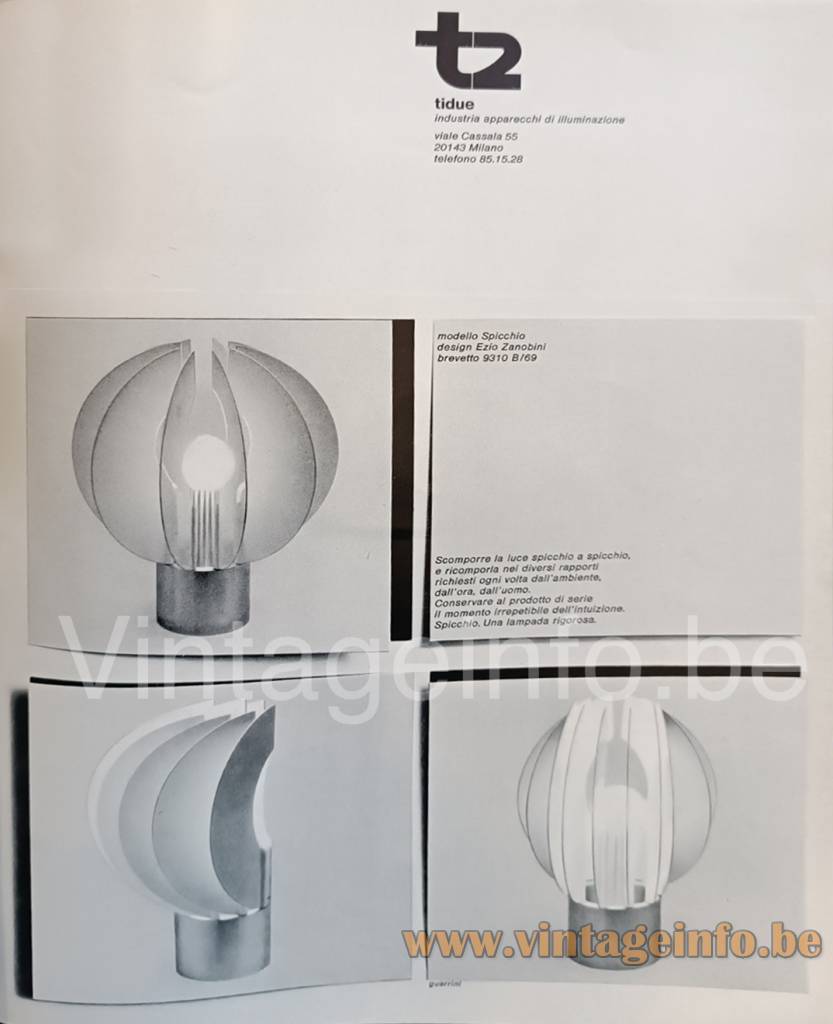
Tidue
Produced by Tidue (T2), an Italian lighting manufacturer based in Milan. Active in the late 1960s and early 1970s, the company was located at Viale Cassala 55, 20143 Milan (telephone 85.15.28). Little documented information about the firm has survived, but period catalogues and magazines confirm its activity as an independent manufacturer of lighting fixtures. The lamp is documented in Italian publications from 1970, including Formaluce (issue 15, 1970), Interni (issue 43, 1970) and Abitare (issue 84, 1970).
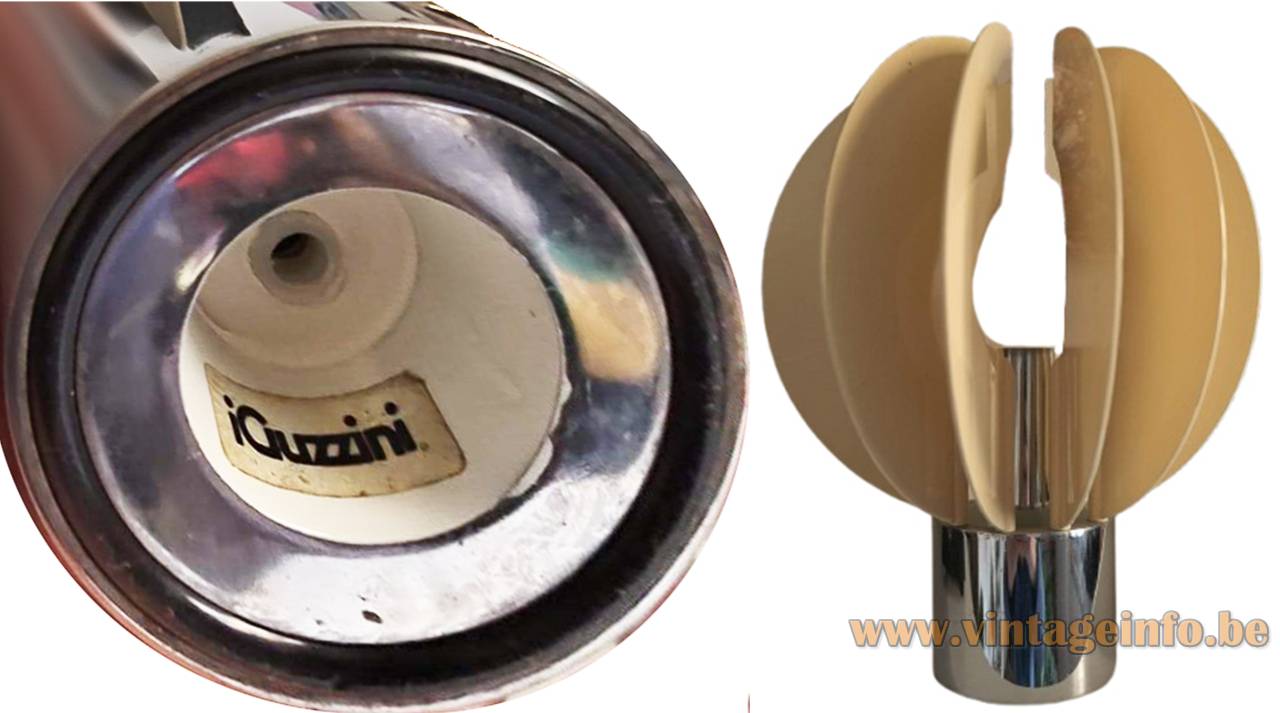
The Spicchio lamp was also marketed through other brands and distributors, including Tronconi and iGuzzini. The model is clearly listed in a Tronconi catalogue from 1970, and examples are known with a different base construction and an iGuzzini label, as shown here. The iGuzzini version features a chrome-plated base and plastic slats, whereas the Tronconi and Tidue version have an aluminium base and aluminium slats, like the example shown. According to the catalogue, the original version had a chrome-plated base.
However, despite the numerous photographs published in magazines, it is often difficult to determine whether a lamp base is polished or brushed aluminium or chrome-plated; in some cases it may in fact be brushed or polished stainless steel. The only version that can be identified with certainty as having a chrome-plated base is the iGuzzini example shown below. Since the iGuzzini name was only adopted from 1974 onwards (the company previously operated as Harvey Guzzini), this version must have been produced later than the others. It remains unclear whether a Harvey Guzzini–branded version of the Spicchio lamp ever existed; none has so far been documented in catalogues.
It is possible that the aluminium base was selected for practical manufacturing and cost reasons, either from the outset or as a late change. A turned aluminium base is straightforward to produce, while a steel/iron base usually involves additional processes such as forming/casting and chrome plating,
Ezio Zanobini Spicchio Table Lamp – 1970s iGuzzini Version
Chrome base with a rubber o-ring and labeled inside. It has plastic slats.
Ezio Zanobini Spicchio Table Lamp
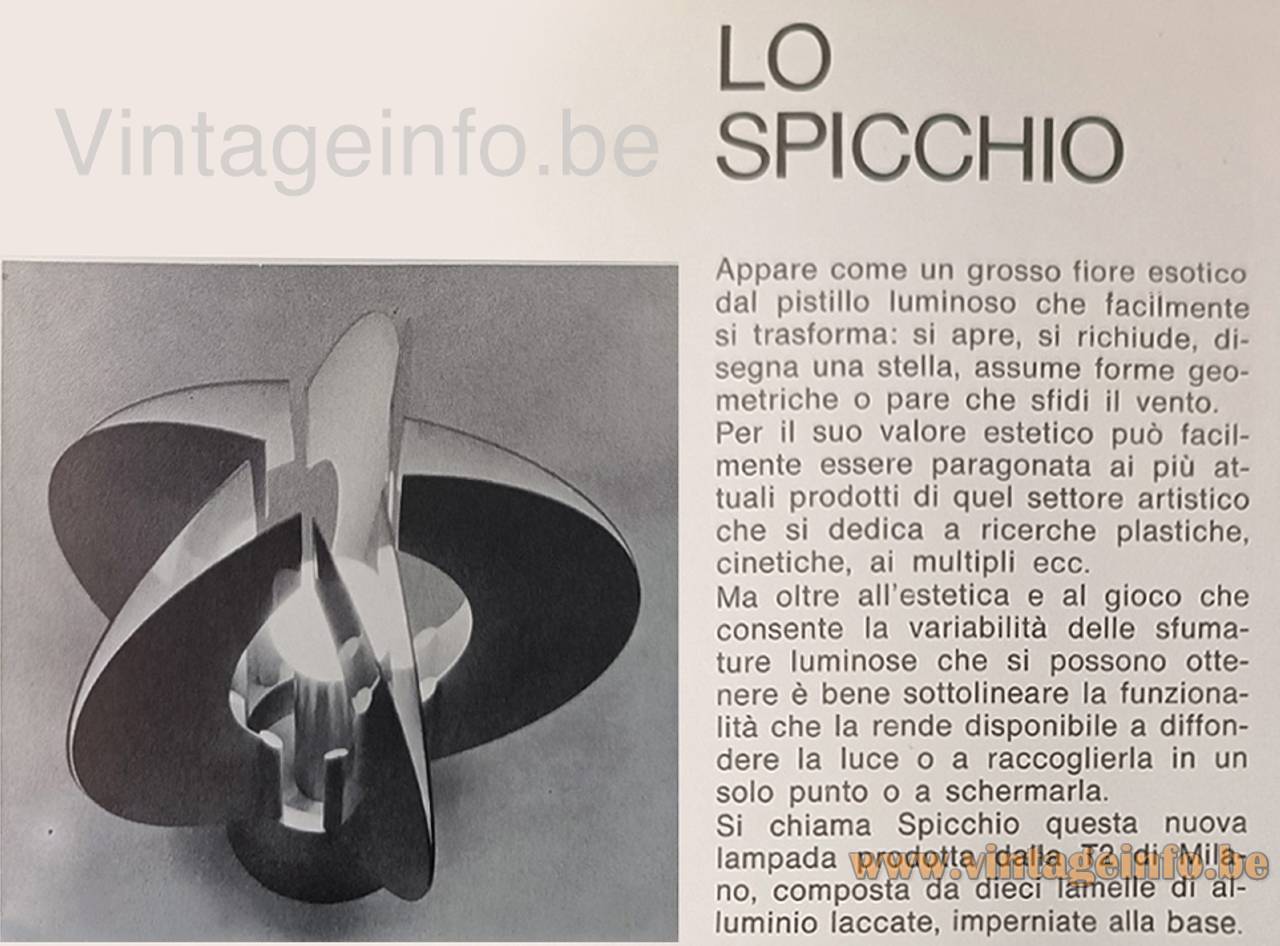
1970 Formaluce Magazine 15 Lo Spicchio Italian Text – Translated
LO SPICCHIO
Appears like a large exotic flower with a luminous pistil that easily transforms:
it opens, it closes, draws a star, assumes geometric or even forms that defy the wind.
For its aesthetic value it can easily be compared to the most current products of that artistic sector which is dedicated to plastic and kinetic research, to multiples, etc.
But beyond aesthetics and the play that allows the variability of the luminous shades that can be obtained, it is important to underline the functionality that makes it capable of diffusing the light or of gathering it into a single point or of screening it.
This new lamp is called Spicchio, produced by T2 of Milan, composed of ten lacquered aluminium slats, hinged to the base.
Tronconi
Tronconi was founded in 1956 by Enrico Tronconi in Milan with its first headquarters at via Bernini 5/7, Corsico. Later the company moved to Via XX Settembre 154, Conegliano (TV).. Initially producing lamps in a more traditional style, Tronconi quickly embraced the new design impulses of the 1970s. The brand became known for its experimental approach, balancing technological innovation with strong aesthetics.
During the 1970s and 1980s Tronconi introduced some of its most famous creations. Tronconi designed Bambu’ floor lamp (1971), followed by the Il Personaggi lamp series (1972) by Federico Rezzonico and Lorenzo Carmellini. Silvio Coppola created the sculptural Mezzaluna Don table lamp (1974), while Cini Boeri designed the iconic Abat-Jour lamp series (1975). In the same year Ettore Arcelli and Cesare Pattarino presented the Bull floor and table lamp, and Giotto Stoppino followed with the Drop table lamp and floor lamp (1976). In the 1980s, Romolo Lanciani designed the Tender table and floor lamps (1980), Raul Barbieri created the Bulbone table lamp (1983), and later returned with the Suite table and floor lamp (1998). These lamps became symbols of Italian modern lighting design.
Over the years, Tronconi collaborated with many important Italian and international designers, keeping the catalog dynamic and innovative. In 2006 the historic brand was acquired by Kundalini, a Milan-based company founded in 1996 and specialized in contemporary lighting. Kundalini continued developing products in the style and spirit of Tronconi, securing its legacy within Italian design history.
Designers
Giotto Stoppino, Bruno Gecchelin, Lorenzo Carmellini, Ettore Arcelli, Cesare Pattarino, Arik Levy, Silvio Coppola, Christophe Pillet, Cini Boeri, Raul Barbieri, Gabriella Montaguti, Giovanni Crosera, Giorgio Marianelli, Jean-Marie Massaud, Marco Sousa Santos, Mario Mazzer, Michael Sodeau, Palomba Serafini, Patricia Urquiola, Patrick Norguet, Romolo Lanciani, Theo Williams, and Tom Dixon.
Ezio Zanobini Spicchio Table Lamp – Company Labels & Logos