- Categories
- Categories
Last 5 Viewed
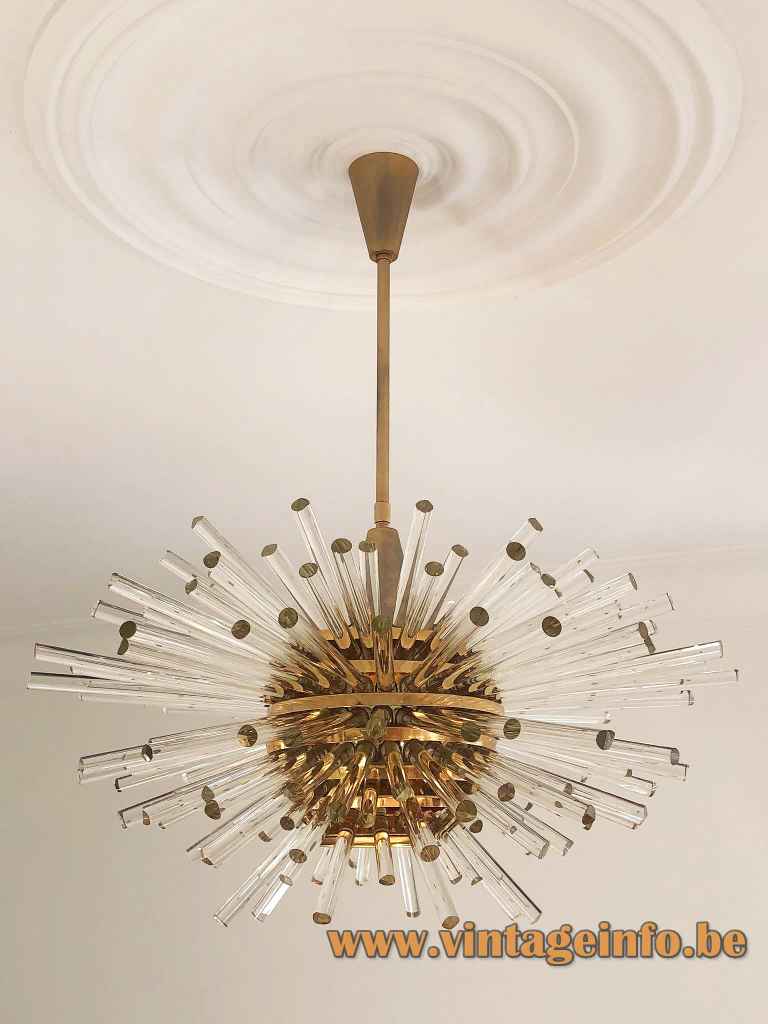
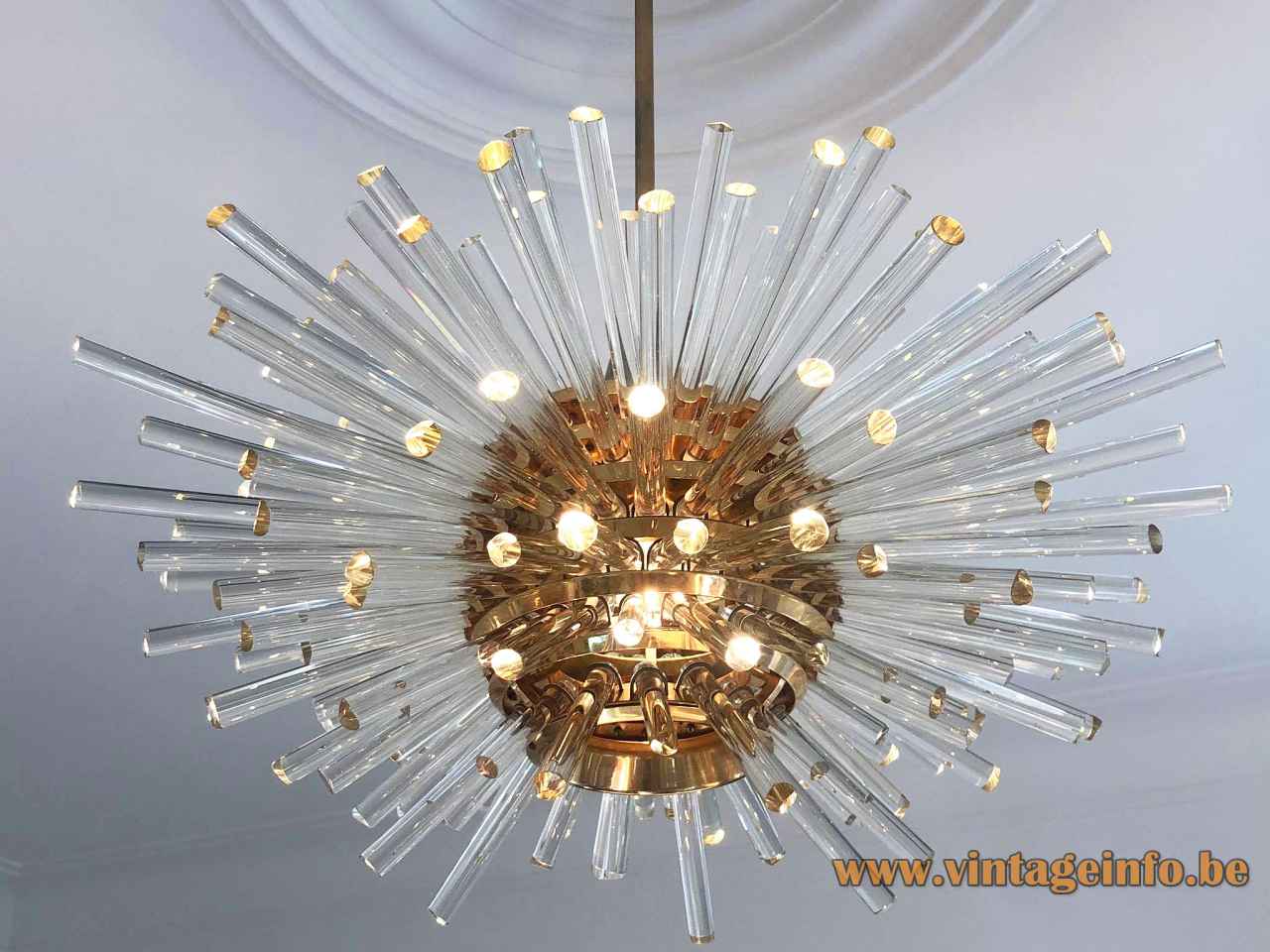
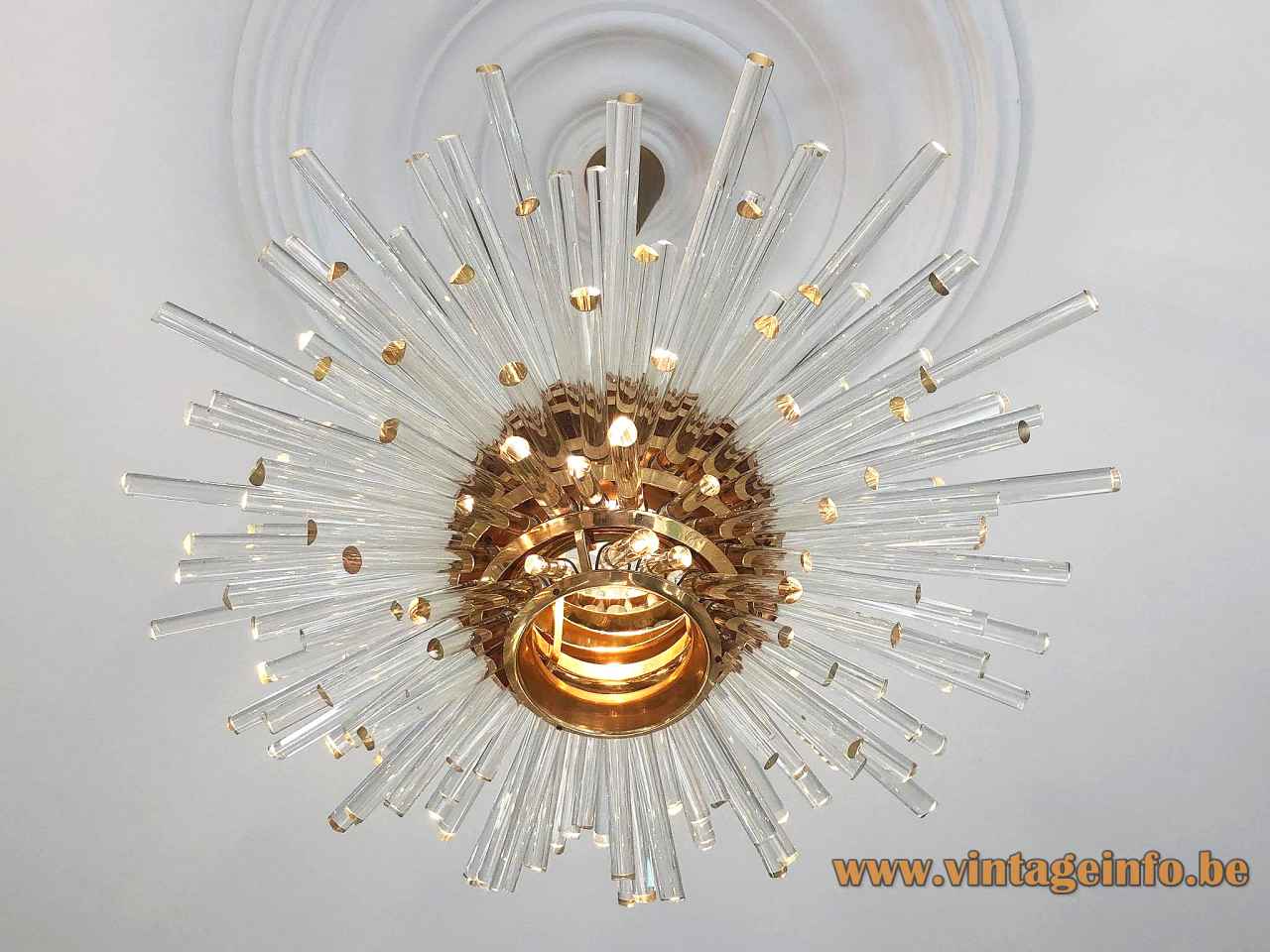
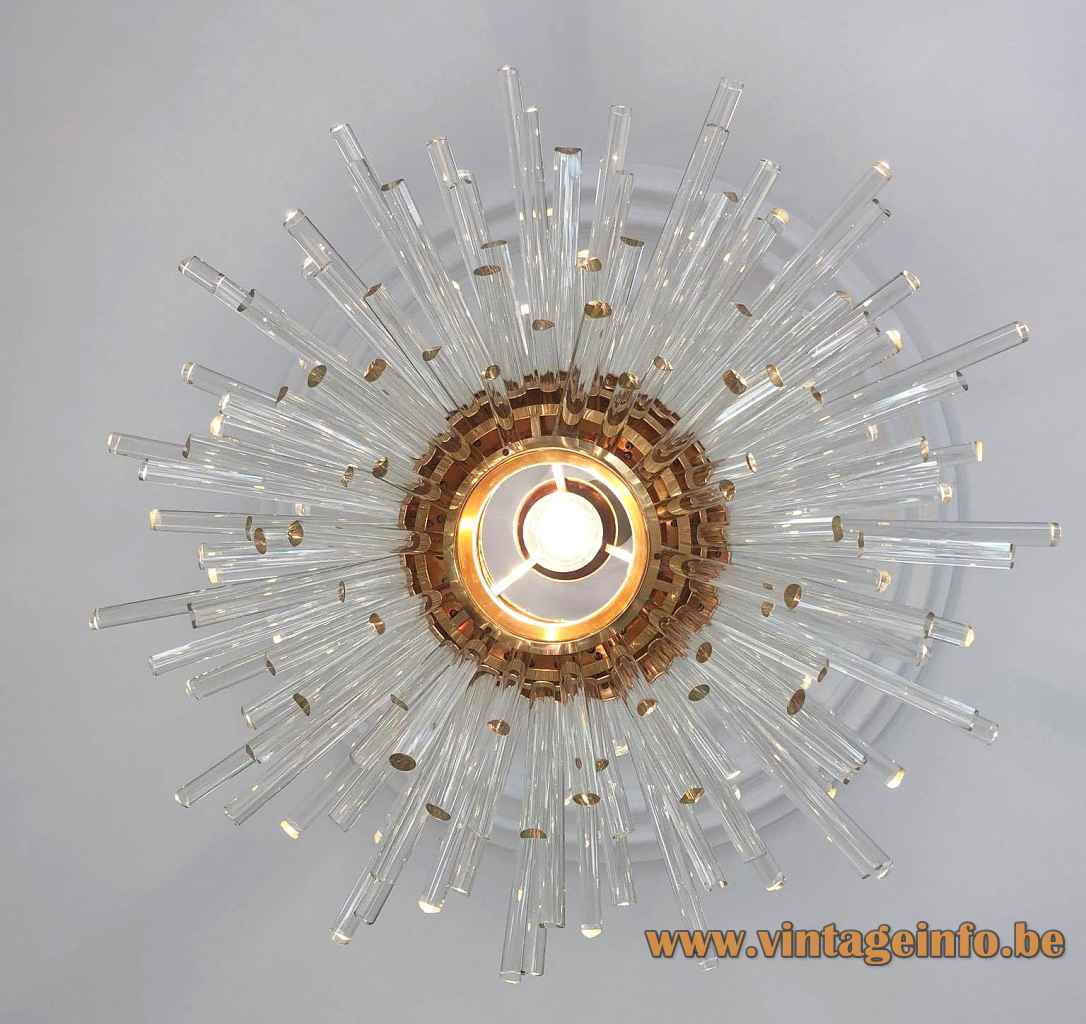
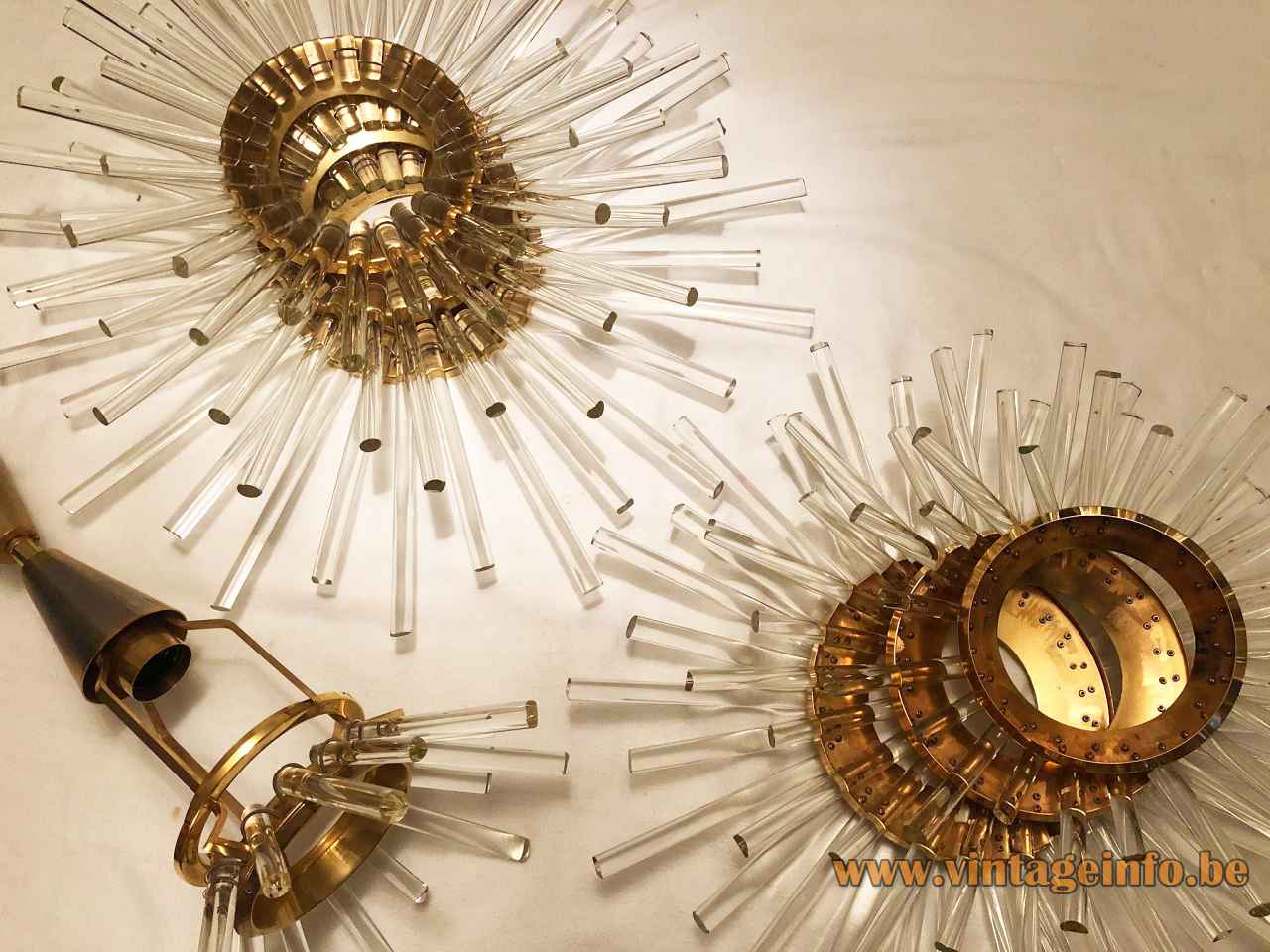
1960s Bakalowits Miracle Chandelier
Links (external links open in a new window)
The Bakalowits website and the company’s history: www.bakalowits.com
Facebook Bakalowits Licht Design GmbH
1960s catalogue and todays catalogue on the Bakalowits website – pdf
Vintageinfo
Many thanks to Koen for the beautiful pictures. You can find his Instagram account over here.
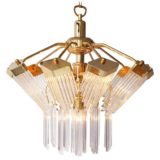
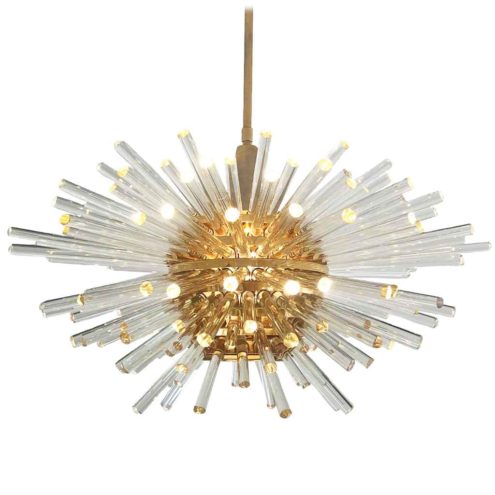
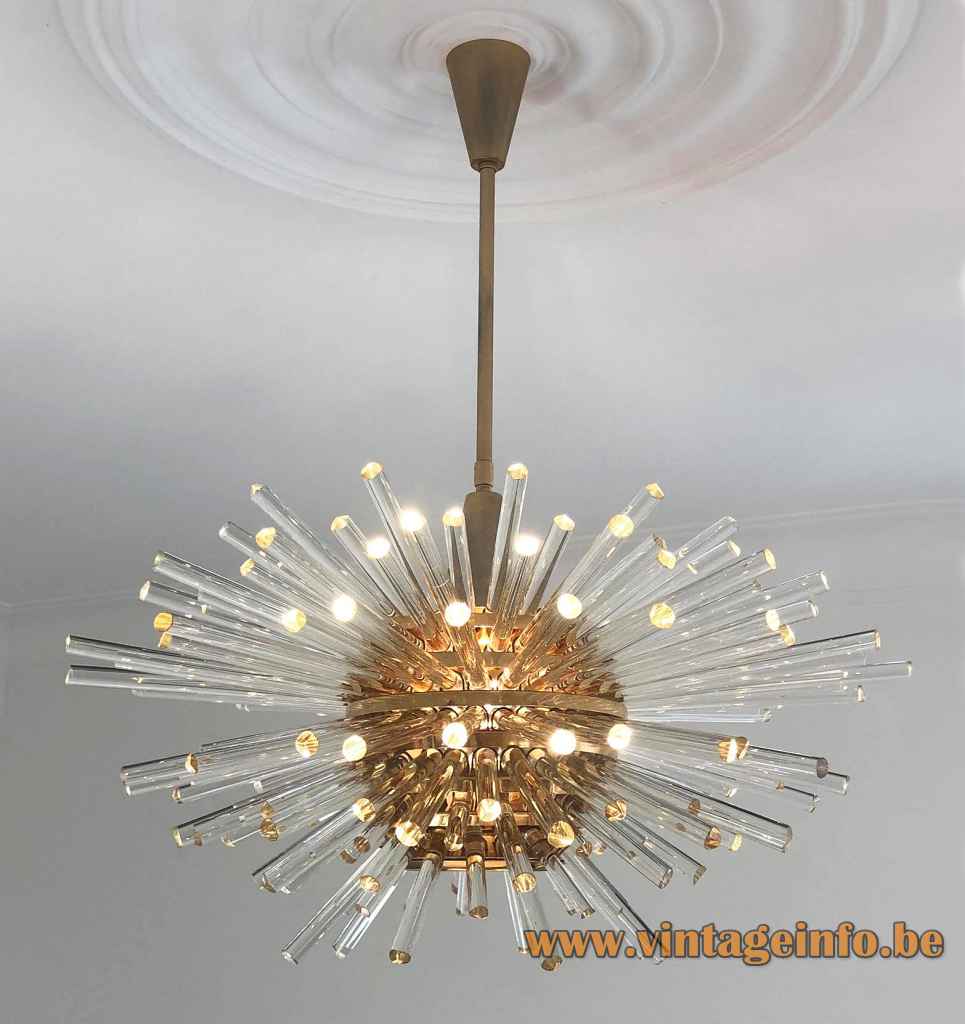
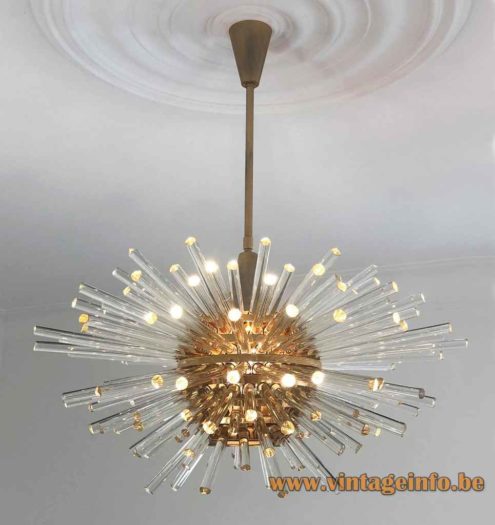
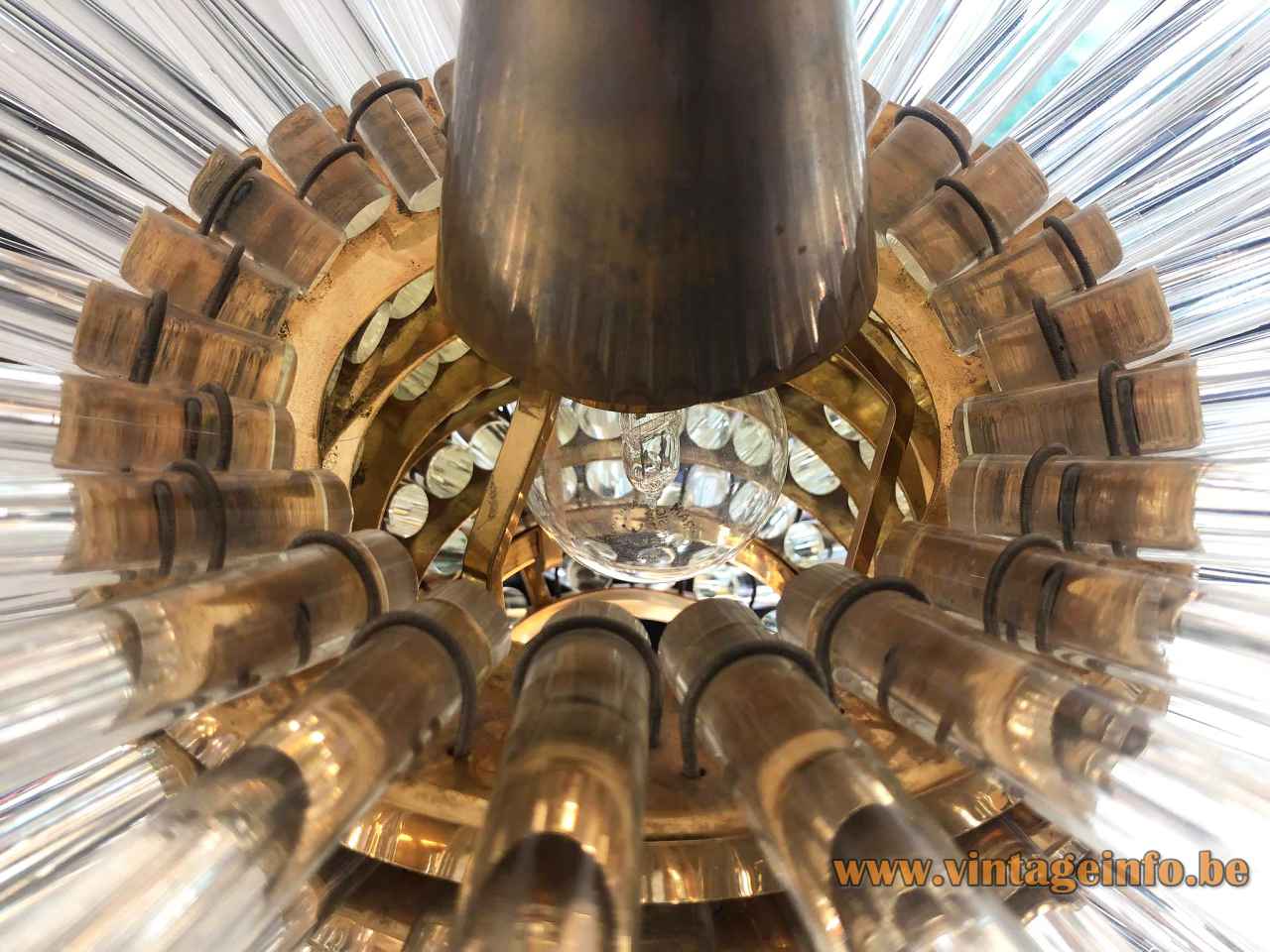
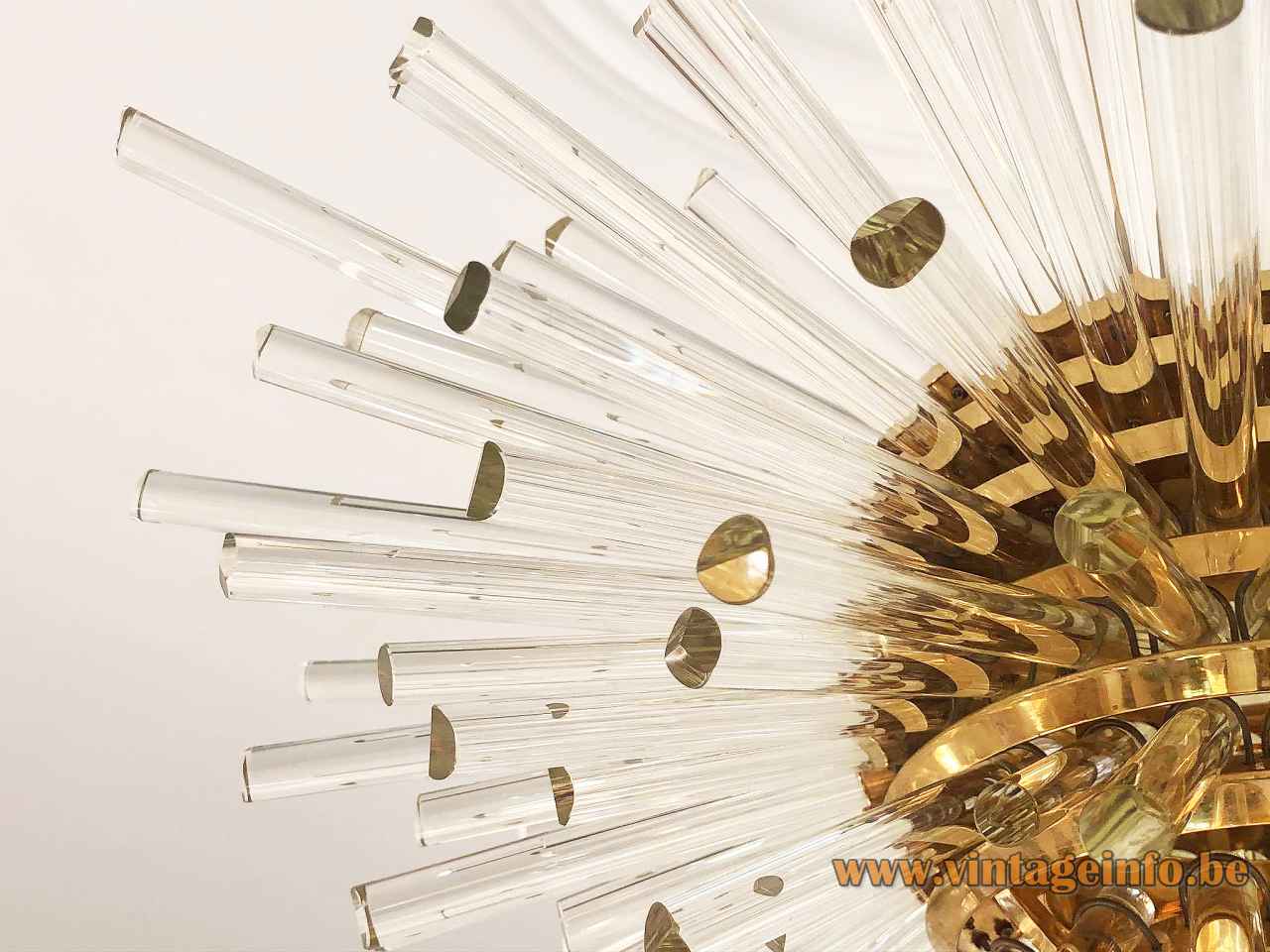
1960s Bakalowits Miracle Chandelier
Materials: Brass rings globe in the middle. Many round clear crystal glass rods, pointing in every direction, sputnik, sunburst style. Brass rod and conical brass canopy. Brass E27 socket.
Rod: 80 cm / 31.49”
Height: 35 cm / 13.77”
Width: ∅ 65 cm / 25.59”
Electricity: 1 bulb E27, 1 x 300 watt maximum, 110/220 volt.
Any type of light bulb with an E27 screw base can be used. But a Halogen bulb of 300 watt is recommended.
Period: 1960s – Hollywood Regency.
Designer: To be determined.
Manufacturer:Bakalowits & Sohne. Today Bakalowits Licht Design GmbH, Gumpendorfer Straße 32, 1060 Vienna, Austria.
Other versions: This 1960s Bakalowits Miracle chandelier is made in several versions. Made in 30, 55, 65, 100 and 140 cm (11.81, 21.65, 25.59, 39.37, 55.11”). It exists in chrome and was also made with a chain. Also a floor lamp was made, it is model 3317/BDL. The wall lamp is model 3317/W1.
This lamp is in production since 1964 and is still available today. It is always named Miracle, but this lamp is model 3317, no name is specified in the 1960s catalogue, also not today. And, in fact, it is not a chandelier, but a pendant lamp. Chandeliers have several light bulbs, pendant lamps only have one.
Bakalowits
Bakalowits Licht Design GmbH is a Vienna-based chandelier manufactory founded in 1845 by Elias Bakalowits, originally operating a glass and lighting shop near Vienna’s Hoher Markt. From these beginnings, the family firm grew into an international supplier of crystal luminaires for hotels, opera houses, public buildings, and private residences.
Around 1899–1903, Bakalowits collaborated closely with leading Viennese designers of the Secession era. Josef Hoffmann designed works for the company in late 1899, while Koloman (Kolo) Moser partnered with Bakalowits and Bohemian glassworks such as Johann Lötz Witwe and Meyr’s Neffe; this collaboration peaked in 1901–1902, with further notable patterns produced in 1903. These projects helped define a modern Viennese vocabulary for lighting and decorative glass.
In the decades after 1945, Bakalowits expanded its project work across Europe, the Middle East, and Asia, producing both historically inspired and contemporary pieces and building a reputation for large, site-specific commissions as well as restoration. One of the company’s most celebrated achievements came in the 1960s: the monumental crystal chandelier created for the Parliament building in Belgrade (today the National Assembly of the Republic of Serbia), frequently cited among the largest chandeliers ever installed.
The firm has remained family-owned since 1845 and is today led by the fifth generation, under CEO KR Prof. Friedl Bakalowits. The company continues to design and produce bespoke, hand-finished lighting in Vienna and to undertake restorations of heritage fixtures worldwide.
1960s Bakalowits Miracle Chandelier – 1960s Catalogue Picture

1960s Bakalowits Miracle Chandelier – Company Logos