- Categories
- Categories
Last 5 Viewed
LINKE.PLEWA.DESIGN – Brillantleuchten
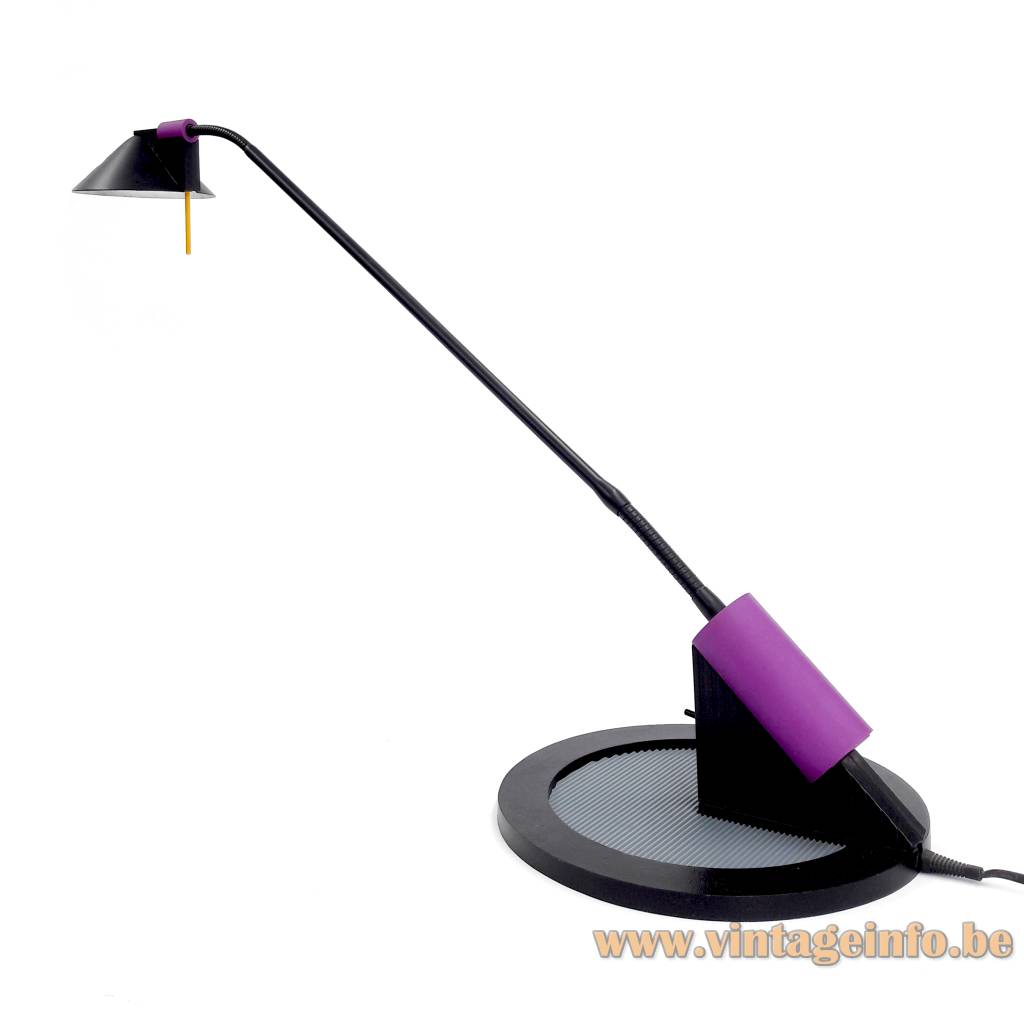
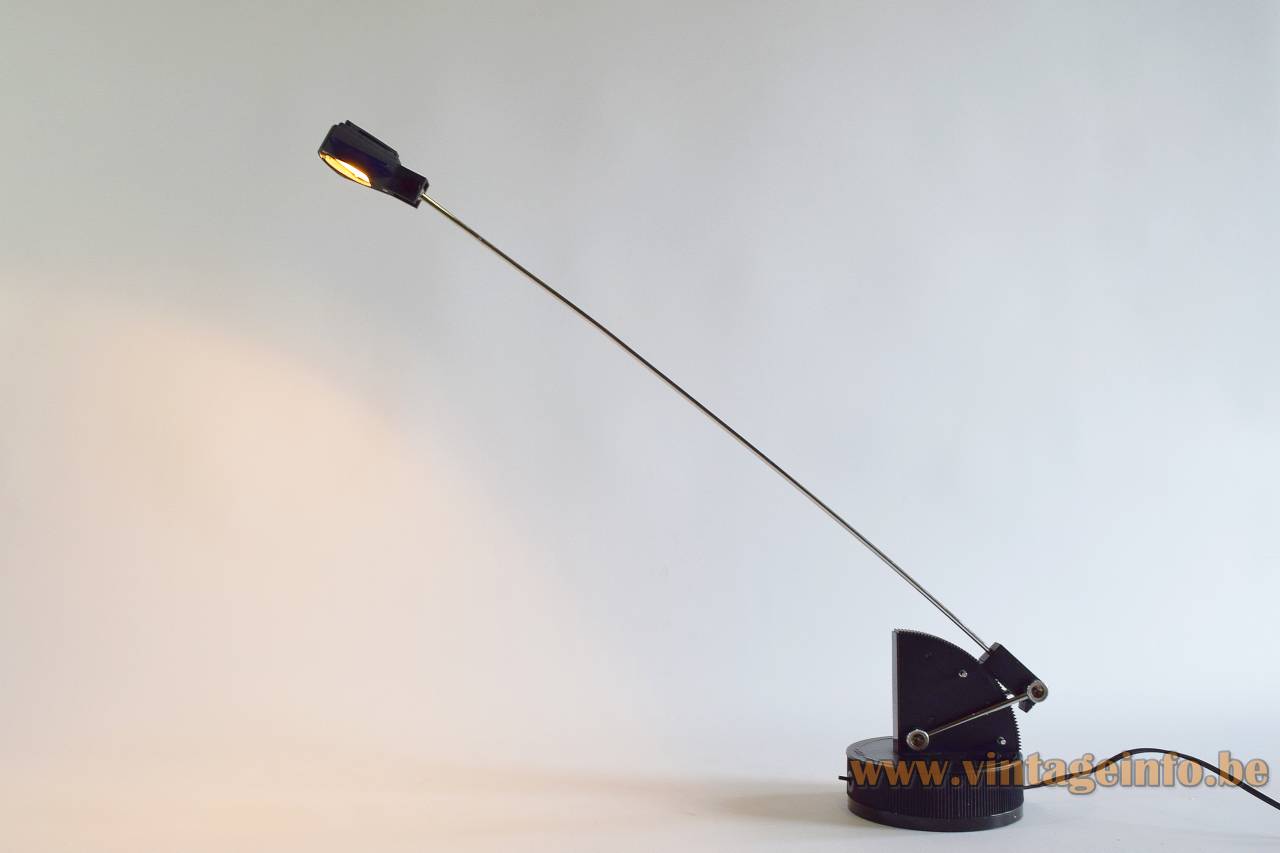
LINKE.PLEWA.DESIGN Triton Desk Lamp
Designed by LINKE.PLEWA.DESIGN for Brillantleuchten in 1989, the Triton desk lamp was the company’s first model with an integrated electronic transformer. Its angular form, bold colours and light technical construction make it a striking example of late 1980s German design. Explore the full documentation here: Triton desk lamp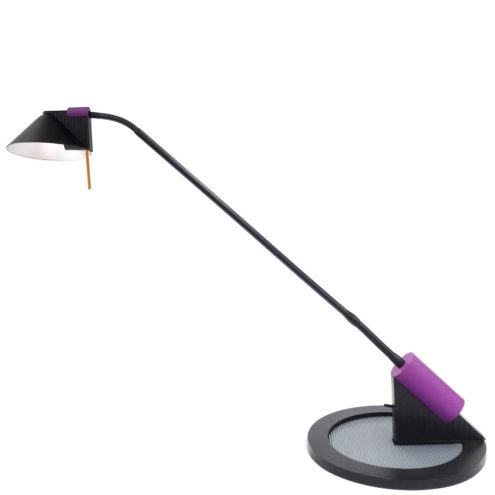
Triton desk lamp
Triton desk lamp, 1989 design by LINKE.PLEWA.DESIGN for Brillantleuchten.
.
LINKE.PLEWA.DESIGN Futura Ceiling Lamp
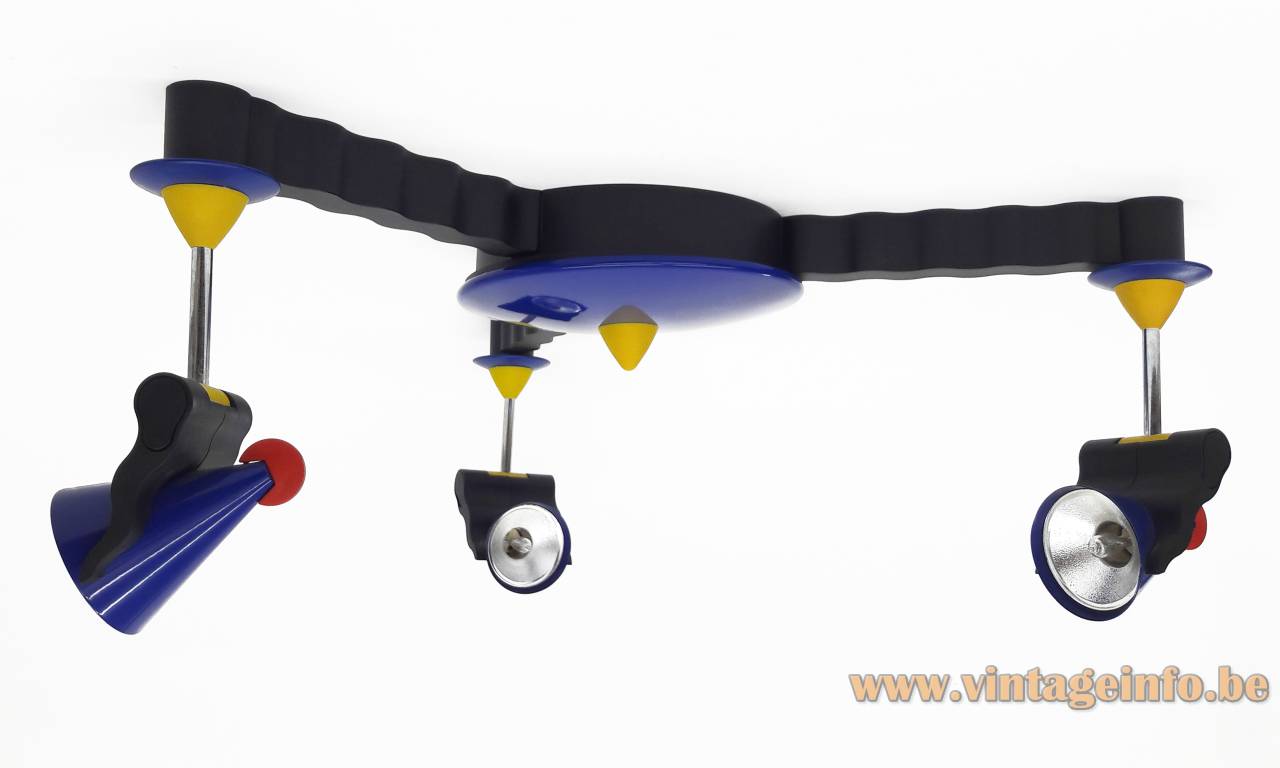
Designed by LINKE.PLEWA.DESIGN for Brillantleuchten in 1990, the Futura ceiling lamp is a three-light low-voltage halogen spotlight with a built-in 230V / 12V transformer. Its wavy arms, adjustable conical spotlights and bright blue, yellow and red colour accents give the lamp a playful and unmistakably early 1990s appearance. Explore the full documentation here: Futura ceiling lamp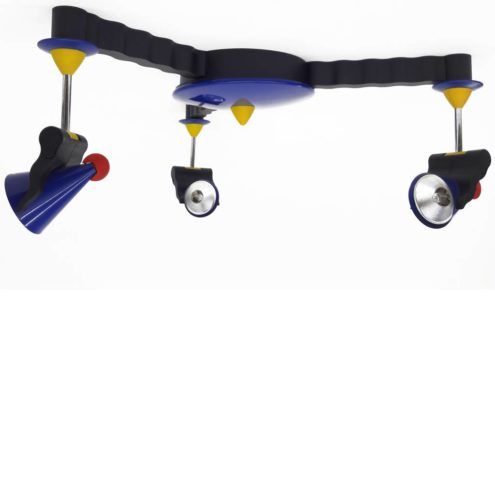
Futura ceiling lamp
Futura ceiling lamp, 1990 design by LINKE.PLEWA.DESIGN for Brillantleuchten.
LINKE.PLEWA.DESIGN Kaskad Desk Lamp
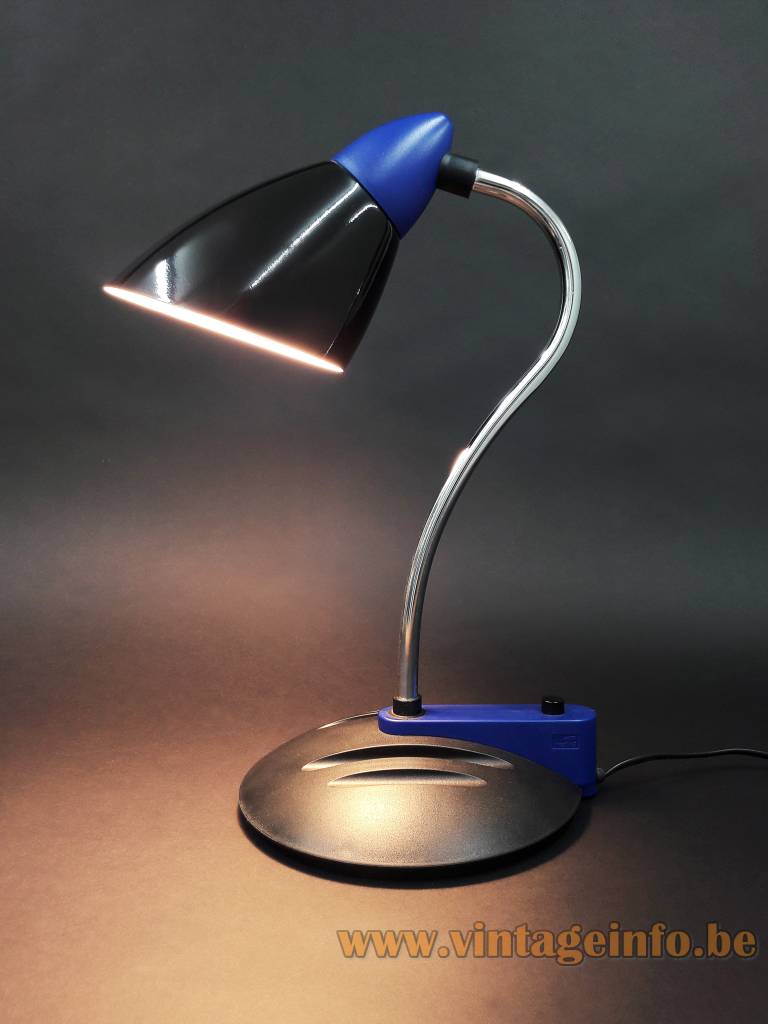
Designed by LINKE.PLEWA.DESIGN for Brillantleuchten in 1991, the Kaskad desk lamp was the final project created by the studio for the German lighting manufacturer. It combines a round black plastic base, a blue rear section with built-in switch, a slender curved chromed metal stem and a black conical metal shade with a blue plastic top.
Compared with some of the earlier and more expressive LINKE.PLEWA.DESIGN lamps for Brillantleuchten, the Kaskad has a simpler and more domestic character. Its design relies on the balanced curve of the stem, the compact proportions and the strong contrast between black, chrome and blue rather than on complex construction or decorative detail.
The lamp marks the end of the collaboration between Heico Linke, Jens Plewa and Brillantleuchten. A few years later, the basic concept was adapted into a simplified version produced for IKEA. Explore the full documentation here: Kaskad desk lamp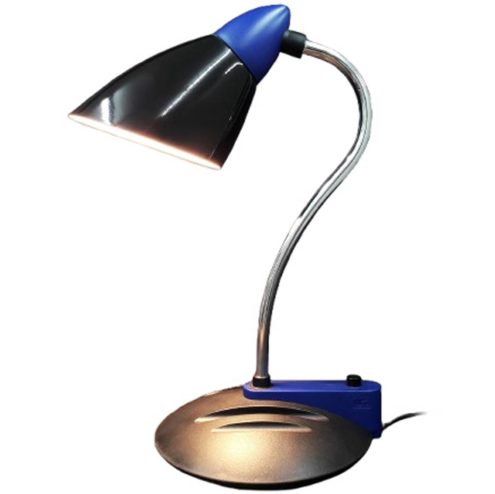
Kaskad desk lamp
Kaskad desk lamp, 1991 design by LINKE.PLEWA.DESIGN for Brillantleuchten.
LINKE.PLEWA.DESIGN Zippo Pendant Lamp
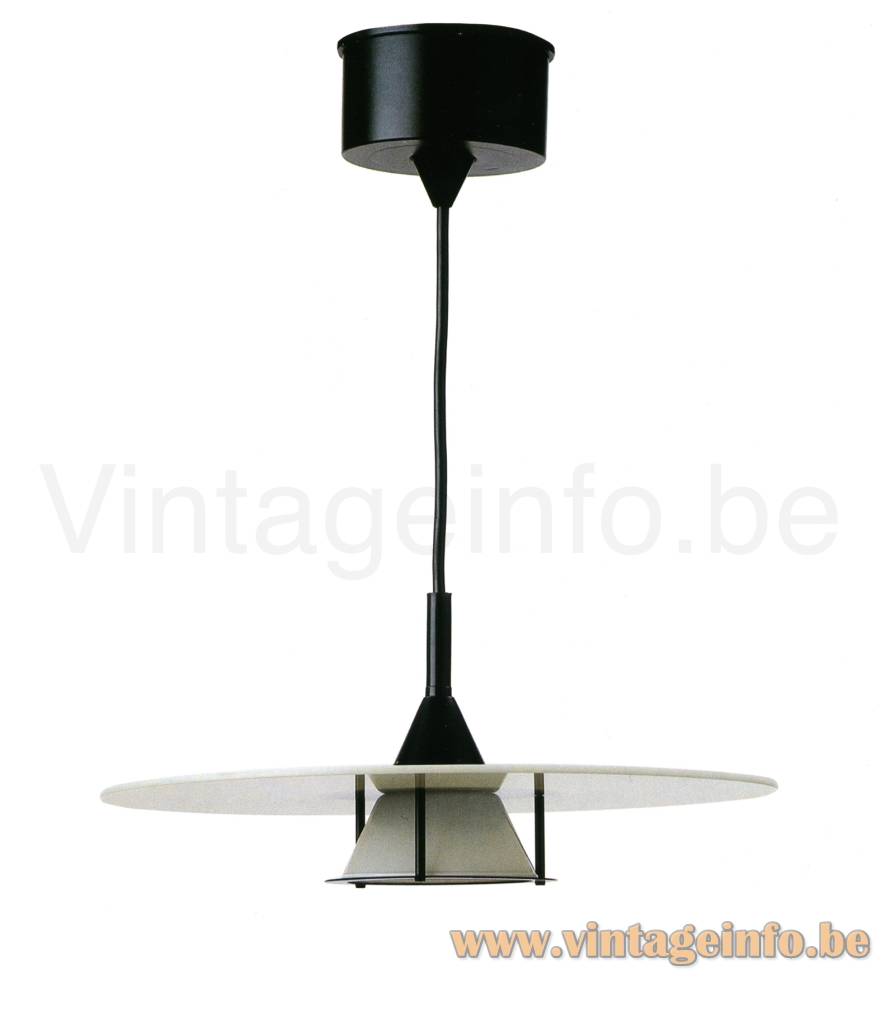
The Zippo pendant lamp was designed by LINKE.PLEWA.DESIGN for Brillantleuchten. The design combines a suspended black ceiling element with a flat circular diffuser and a compact lower shade construction. Its restrained black-and-white composition gives the lamp a more sober and architectural character than some of the studio’s more playful designs for Brillantleuchten.
The lamp belongs to the same period in which LINKE.PLEWA.DESIGN explored low-voltage halogen lighting, geometric forms and visible technical details. Although the Zippo is less expressive in colour, its construction still reflects the studio’s interest in balance, proportion and layered lighting effects.
LINKE.PLEWA.DESIGN Mikado Pendant Lamp
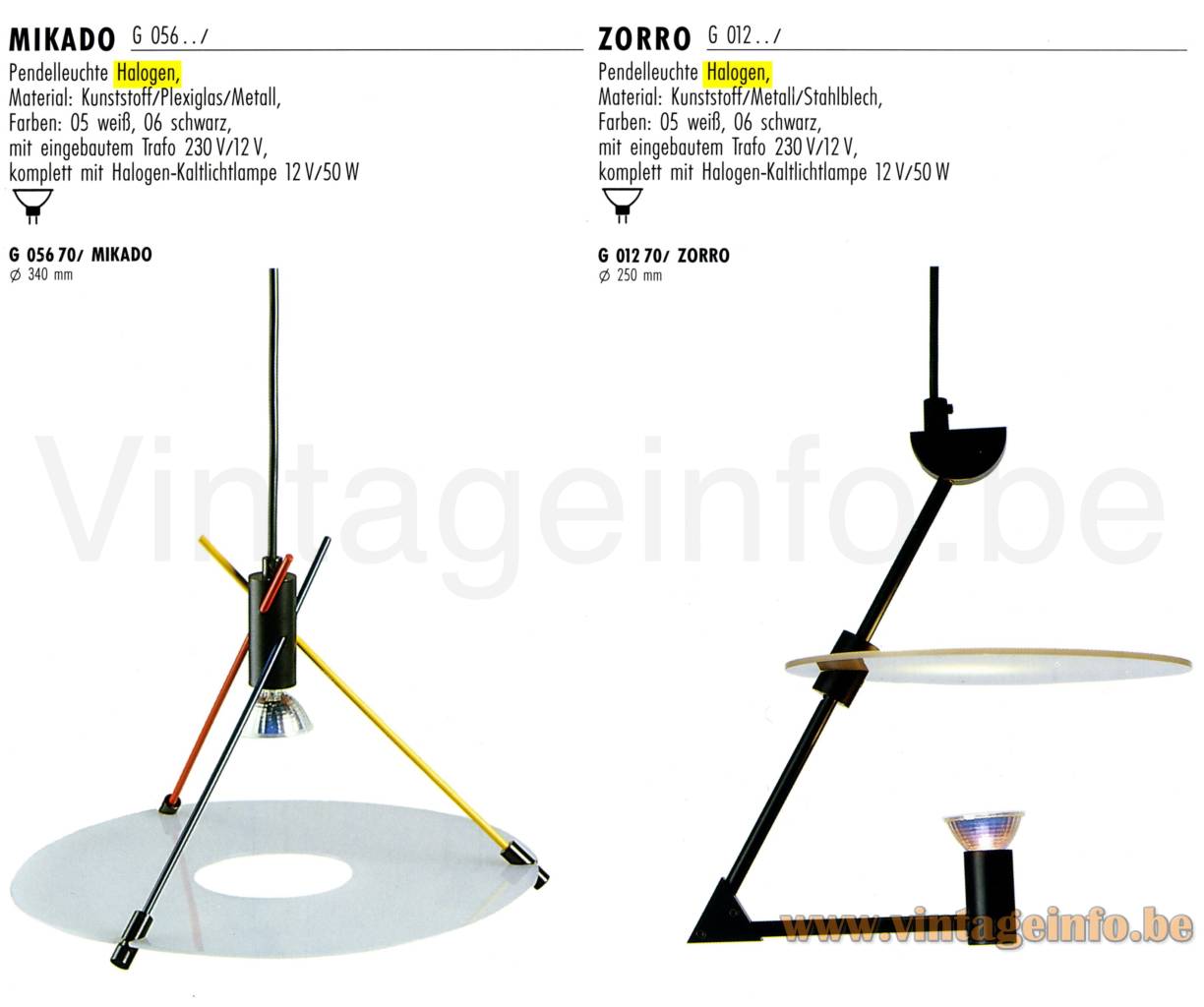
The Mikado pendant lamp was designed by LINKE.PLEWA.DESIGN for Brillantleuchten. The catalogue describes it as a halogen pendant lamp made of plastic, Plexiglas and metal, with a built-in 230V / 12V transformer and a 12V / 50W halogen cold-light reflector lamp.
With its crossed coloured rods, black central housing and large translucent disc, the Mikado has a playful and graphic appearance. The name refers to the pick-up sticks game, which is clearly reflected in the dynamic arrangement of the rods around the central light source.
LINKE.PLEWA.DESIGN Zorro Pendant Lamp
The Zorro pendant lamp was designed by LINKE.PLEWA.DESIGN for Brillantleuchten. The catalogue describes it as a halogen pendant lamp made of plastic, metal and sheet steel, with a built-in 230V / 12V transformer and a 12V / 50W halogen cold-light reflector lamp.
The design combines a long diagonal arm, a large flat diffuser and a small exposed reflector lamp in a sharply balanced composition. Compared with the more colourful Mikado, the Zorro has a more technical and constructivist character, relying on black linear elements and asymmetry for its visual impact.
Brillantleuchten
Brilliant AG was founded in 1951 as Brillantglashütte oHG / Lippold und Tschammer in Gnarrenburg, Lower Saxony, Germany. The company originally operated as a glass factory, producing hand-blown lighting glass for light bulbs, using local peat and quartz sand as raw materials.
In 1953, the glassworks began producing glass pendant bowls, marking the first step towards the manufacturing of complete lighting fixtures. During the 1960s, the product range expanded and materials such as wood, metal, and plastic were introduced alongside glass.
In the 1970s, the company increasingly focused on the finishing and assembly of luminaires using externally sourced components. To accommodate this shift, the industrial glass production facility was sold, and the company was renamed Brillantleuchten AG.
During the 1980s, Brillantleuchten AG moved further away from glass production and specialised in spotlights and metal pendant lamps. In 1985, the (then still family-owned) company was listed on the stock exchanges in Frankfurt and Bremen.
In 1991, as part of its international expansion, the company adopted its final name: Brilliant AG. The word “Leuchten” was dropped and a second “i” was added to the brand name. Between 1994 and 1997, the Brilliant Industrial Park was developed in Gnarrenburg, including new warehouse buildings and a high-bay warehouse. By the late 1990s, exports accounted for almost 50% of total turnover.
In the 2000s, increasing international competition and price pressure led to the relocation of production abroad. Sales, administration, design, and logistics remained based in Gnarrenburg. On 24 September 2004, the British group The National Lighting Company Ltd became the main shareholder. This transition enabled a successful restructuring, and in 2006Brilliant AG returned to profitability.
LINKE.PLEWA.DESIGN – Brillantleuchten Publicity
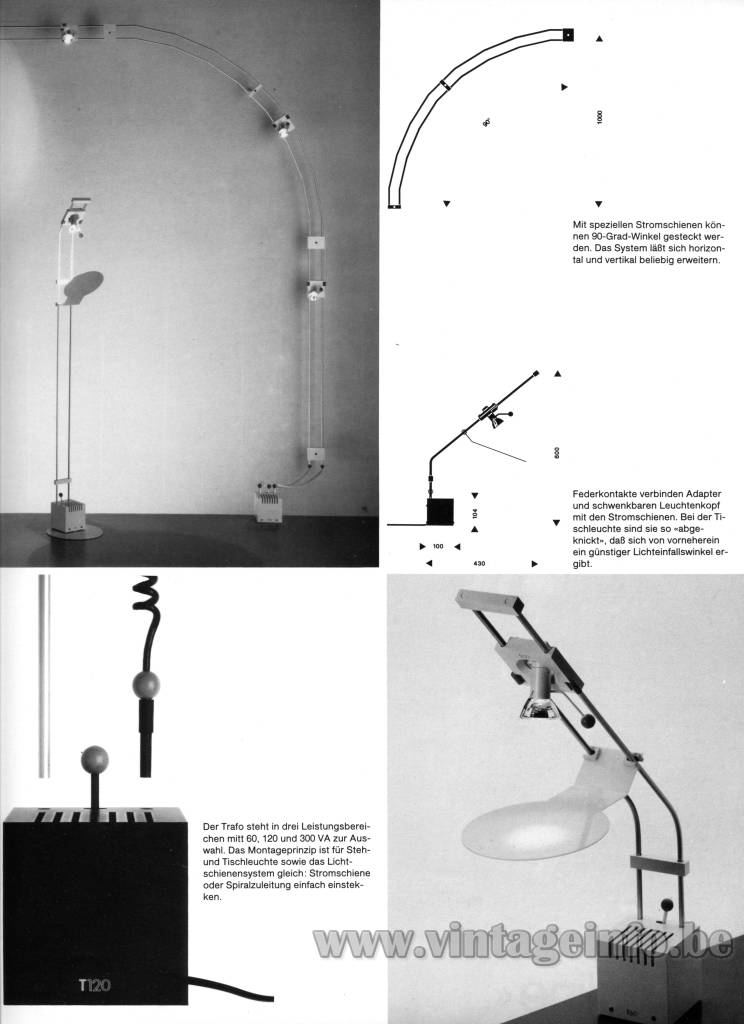
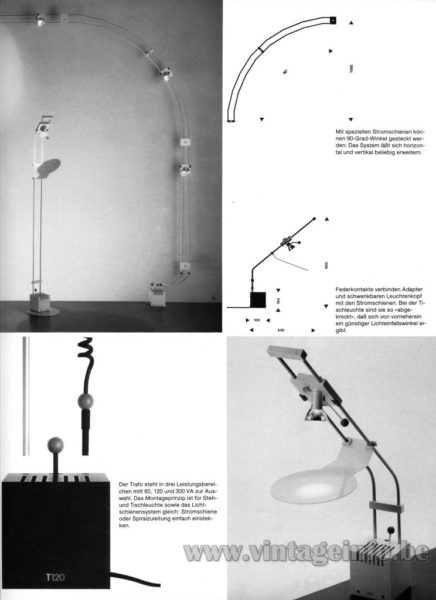
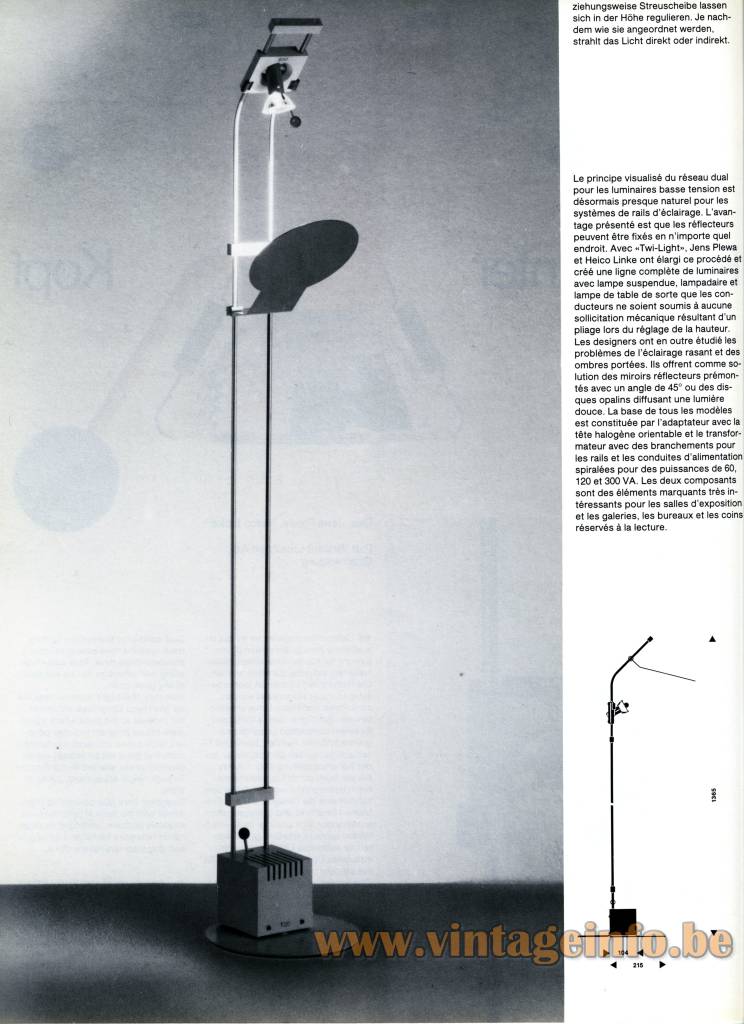
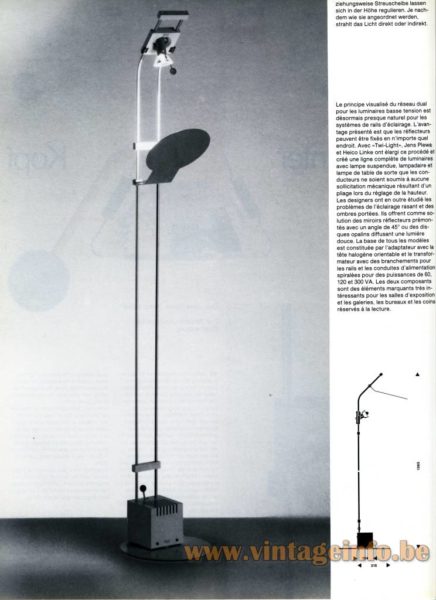
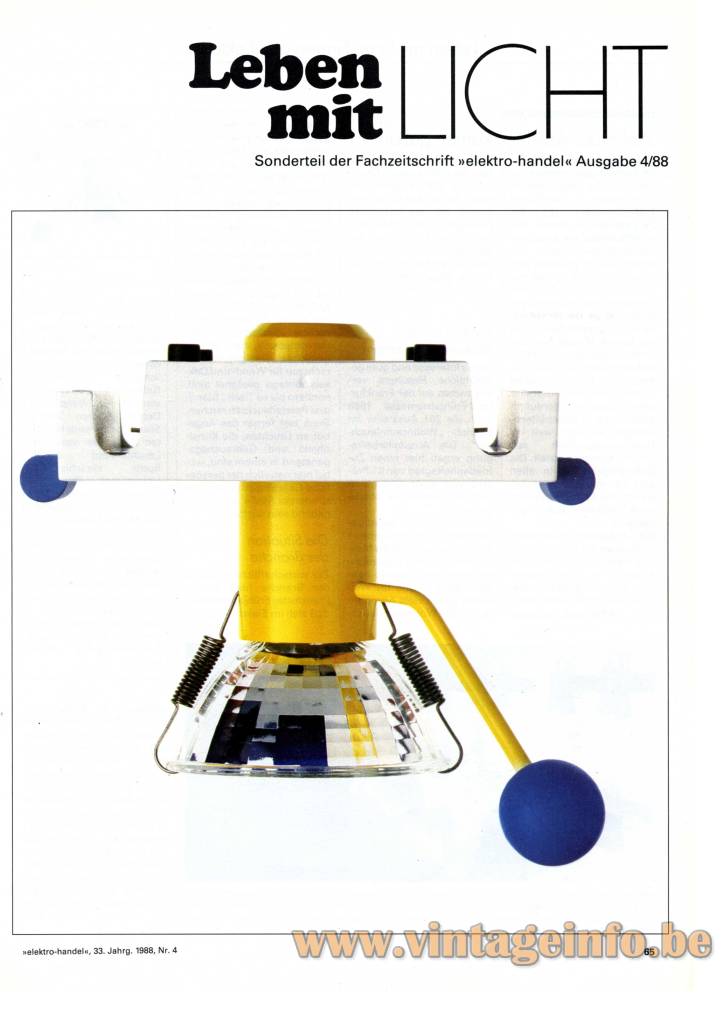
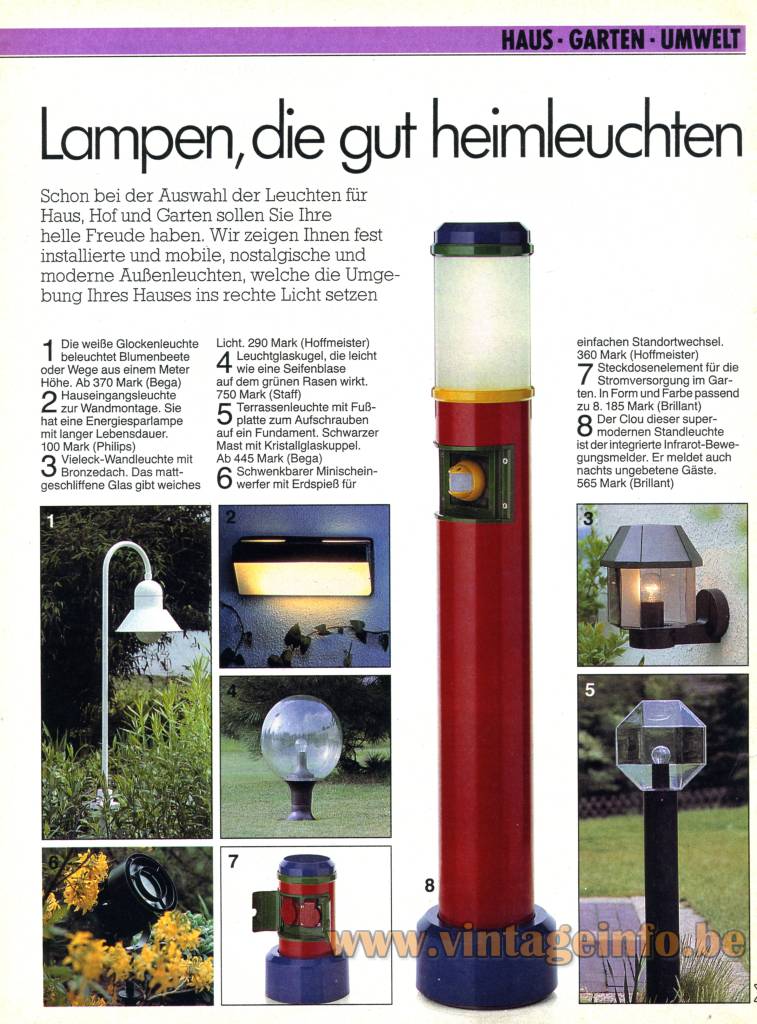
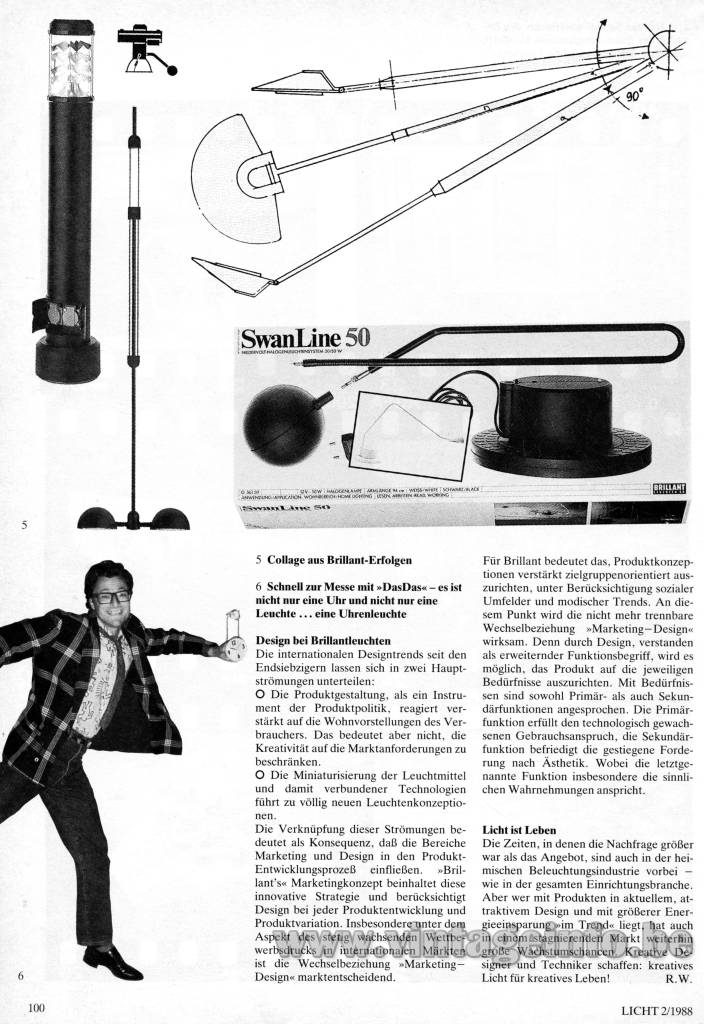
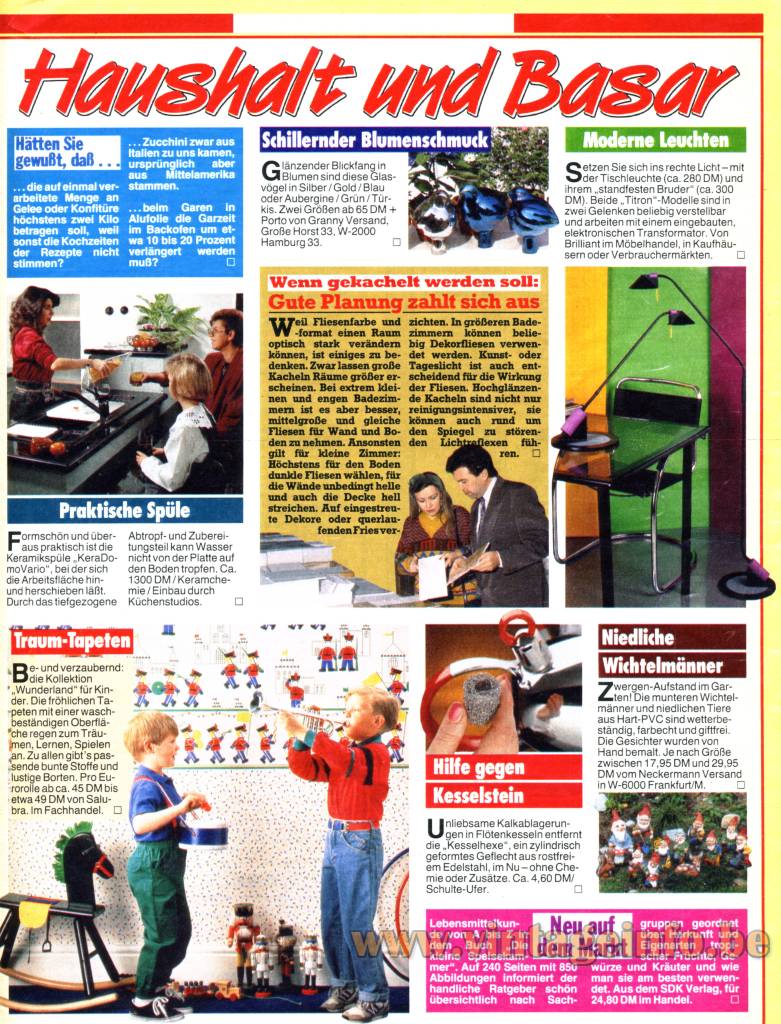
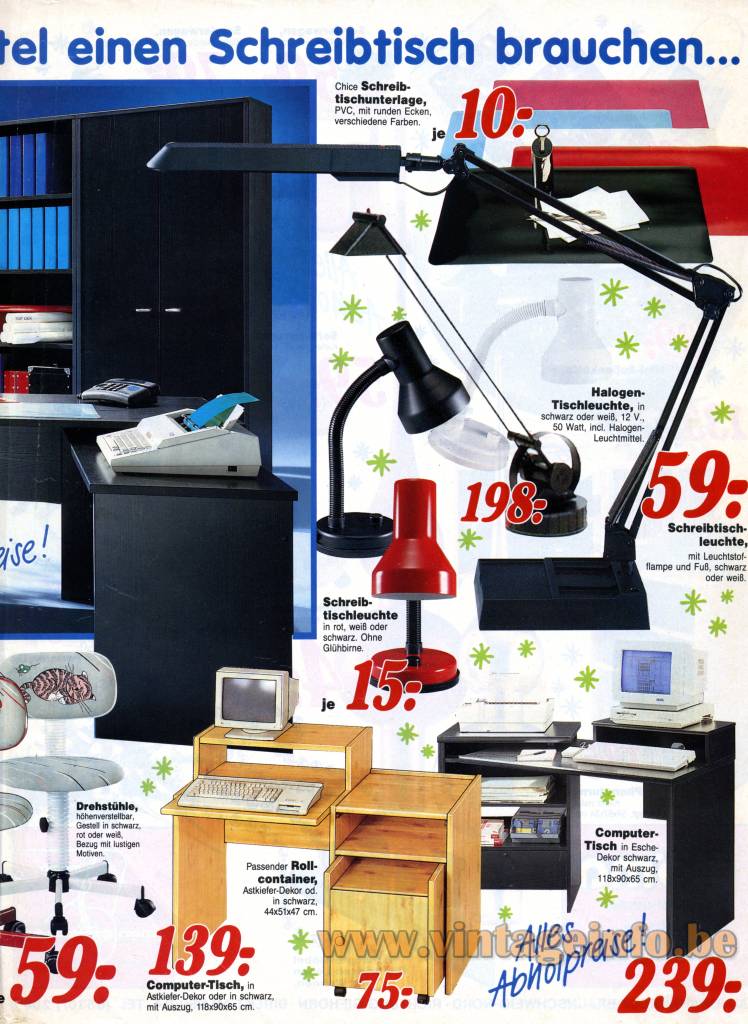
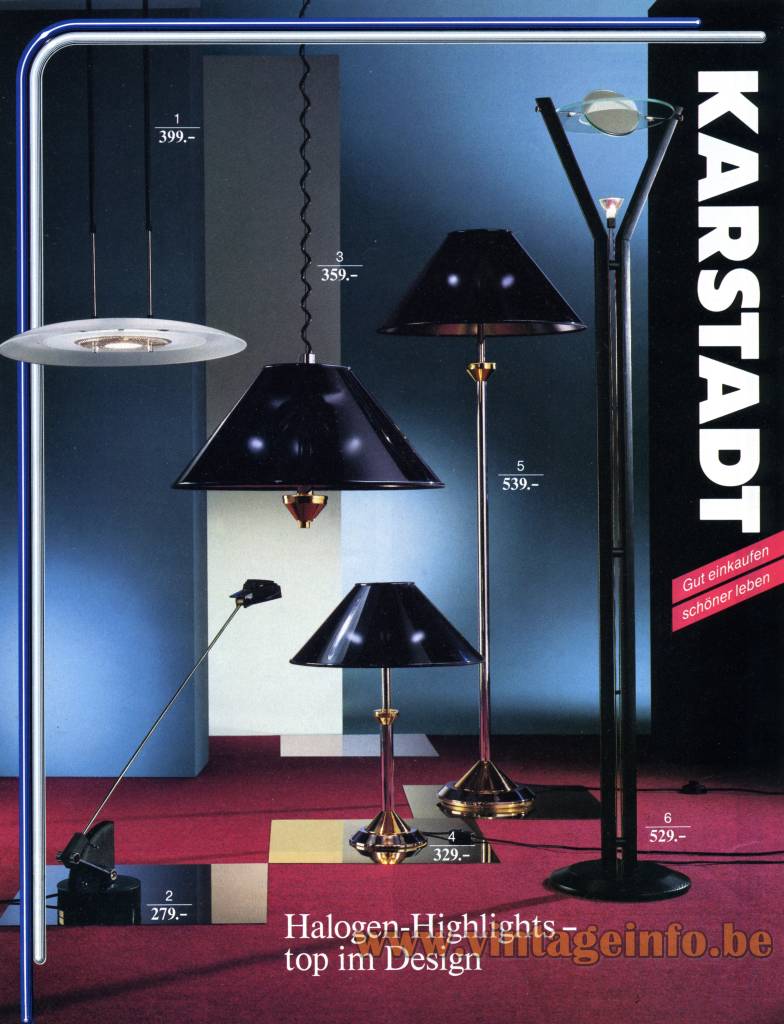
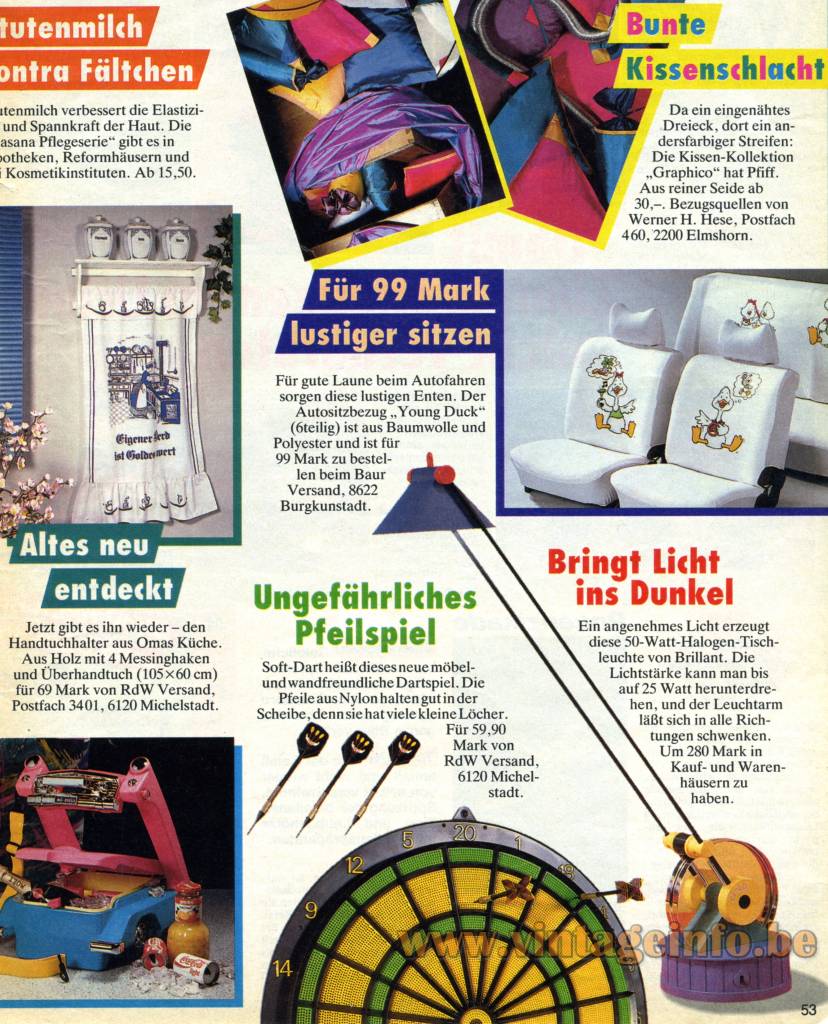
Many thanks to Heico Linke for all the images and help.
LINKE.PLEWA.DESIGN (1978–1994)
LINKE.PLEWA.DESIGN was a German industrial design studio founded in 1978 in Hamburg by Heico Linke and Jens Plewa. Emerging from the Hochschule für bildende Künste Hamburg (HfBK), the studio remained active until 1994 and developed a wide-ranging body of work spanning lighting systems, technical devices, consumer products, clocks, measurement instruments, toys, and packaging design.
From its first studio in St. Pauli overlooking the Hamburg harbour, the office worked in close collaboration with manufacturers and engineers, guiding projects from early concept studies and functional prototypes through to technical development and series production. Tooling, safety standards, and manufacturability were treated as integral components of the design process rather than secondary considerations.
Although lighting later became the most recognisable part of its output, LINKE.PLEWA.DESIGN never positioned itself as a lighting-only studio. Its work reflects a broader industrial design culture rooted in technical clarity, mechanical intelligence, and functional precision rather than stylistic alignment.
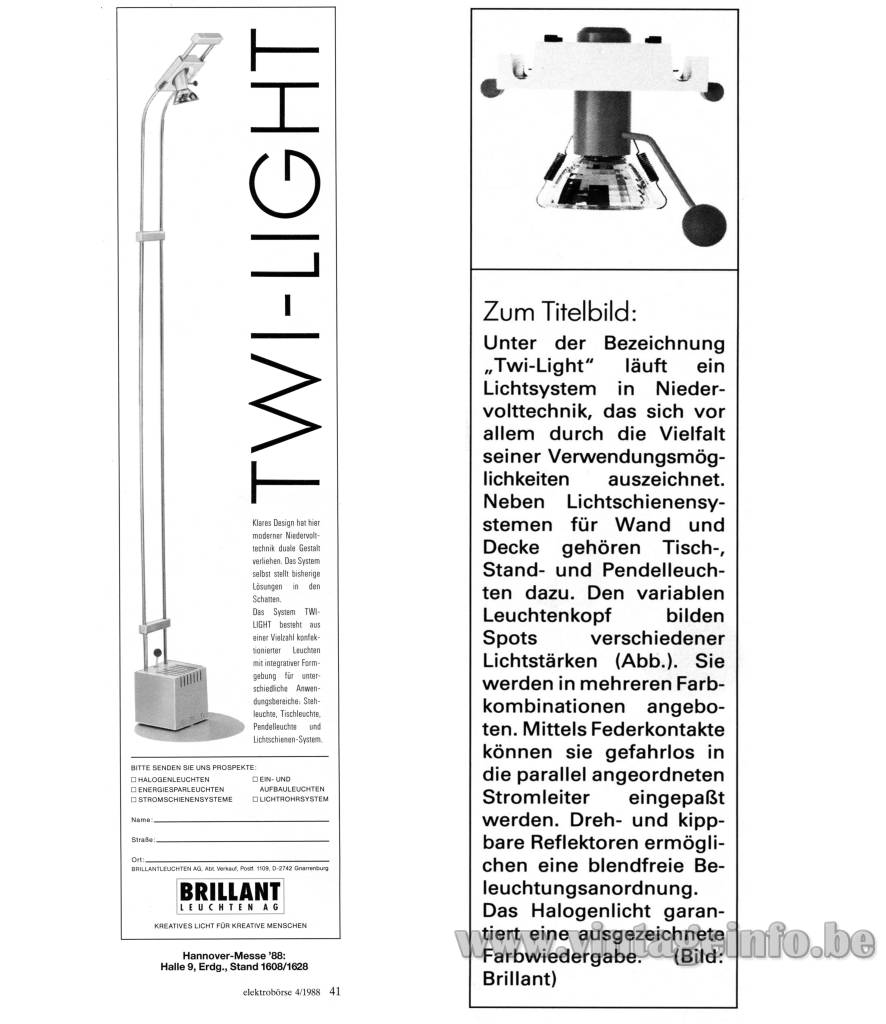
Between 1986 and 1991, the studio collaborated intensively with Brillantleuchten AG, developing one of its most ambitious projects: the modular low-voltage halogen system TWI-LIGHT. The system was presented at major trade fairs, accompanied by printed catalogues, and received multiple iF Design Awards.
Following the dissolution of the studio in 1994, Jens Plewa founded PLEWA WORKS while Heico Linke continued his professional career as an employed designer. A more detailed documentation of the studio’s history and projects can be found at vintageinfo.be/linke-plewa-design.
LINKE.PLEWA.DESIGN – Heico Linke, Jens Plewa
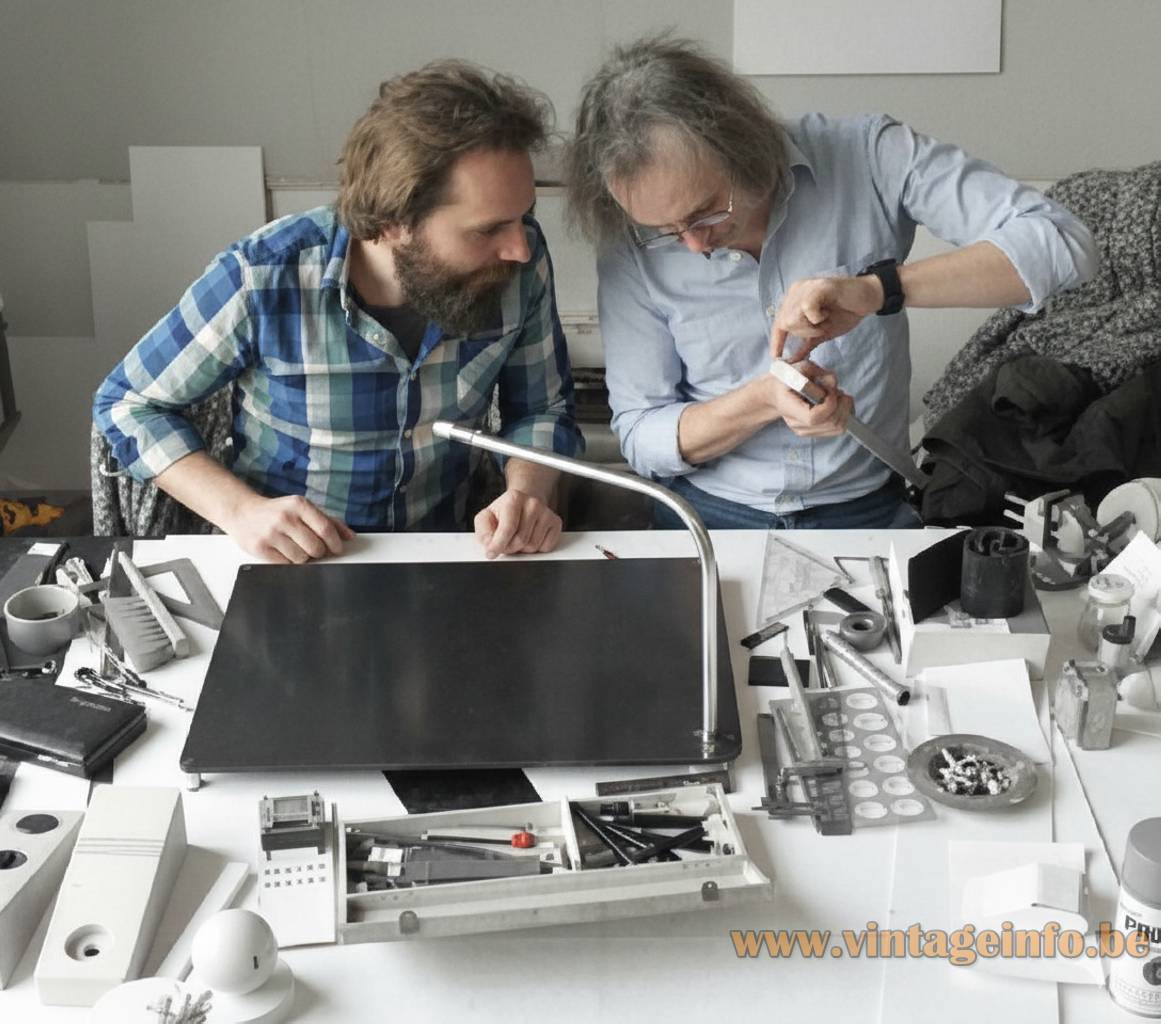
Heico Linke and Jens Plewa at work.
TWI-LIGHT — The Brillantleuchten Years (1986–1991)
Between 1986 and 1991, LINKE.PLEWA.DESIGN developed one of the most comprehensive low-voltage lighting programmes produced in Germany during the late 1980s: TWI-LIGHT (Twilight), manufactured by Brillantleuchten AG in Gnarrenburg.
At a time when halogen technology and low-voltage systems were redefining domestic and architectural lighting, TWI-LIGHT was conceived not as a single luminaire but as a modular ecosystem. The programme combined dual-conductor low-voltage rails, adaptable connectors, pivoting halogen spot heads, table lamps, floor lamps, pendants, transformers in multiple power ranges, and a range of wall and ceiling components into one coherent system. Rather than offering isolated products, it provided an expandable spatial lighting infrastructure.
The technical innovation of the system lay in its dual-conductor principle, which allowed reflectors and lamp heads to be fixed at virtually any point along the rails without placing mechanical stress on the conductors. Height adjustment, bending, and repositioning were possible without compromising electrical integrity. Spring contacts connected adapters and pivoting lamp heads securely to the current-carrying rails, while 90-degree rail elements enabled both horizontal and vertical expansion.
Unlike many expressive postmodern lighting objects of the period, TWI-LIGHT was grounded in constructive logic. Adjustable halogen heads, angled reflectors including 45-degree mirror reflectors, opal diffusers, articulated joints, and visible transformer bases addressed concrete lighting challenges such as glare control, indirect illumination, hard shadow reduction, and flexible task lighting. The transformer units were not concealed but deliberately integrated, forming architectural anchor points in the table and floor versions.
The system was presented at major trade fairs including Hannover Messe 1988 and widely published in German trade and design magazines. Contemporary articles described it as a complete fixture programme suitable for galleries, offices, and reading environments. Several components received iF Design Awards in 1988 in the Product Design category, confirming its professional recognition within the industry.
During the late 1980s, Brillantleuchten AG proved to be a technically ambitious manufacturer willing to invest in systemic development rather than short-term product cycles. The collaboration with LINKE.PLEWA.DESIGN resulted in one of the most structurally coherent low-voltage halogen systems on the German market at the time.
In 1991, however, Brillantleuchten was taken over and transformed into Brilliant AG. Following the restructuring, large parts of the existing product range were discontinued. Further developments of TWI-LIGHT, although technically mature and commercially launched, were terminated abruptly. What remains today are catalogues, award documentation, magazine publications, and surviving examples of the system, which together testify to a highly sophisticated industrial lighting programme that existed only briefly in its complete form.
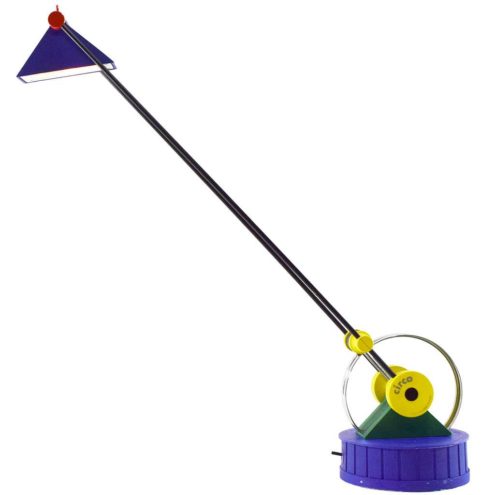
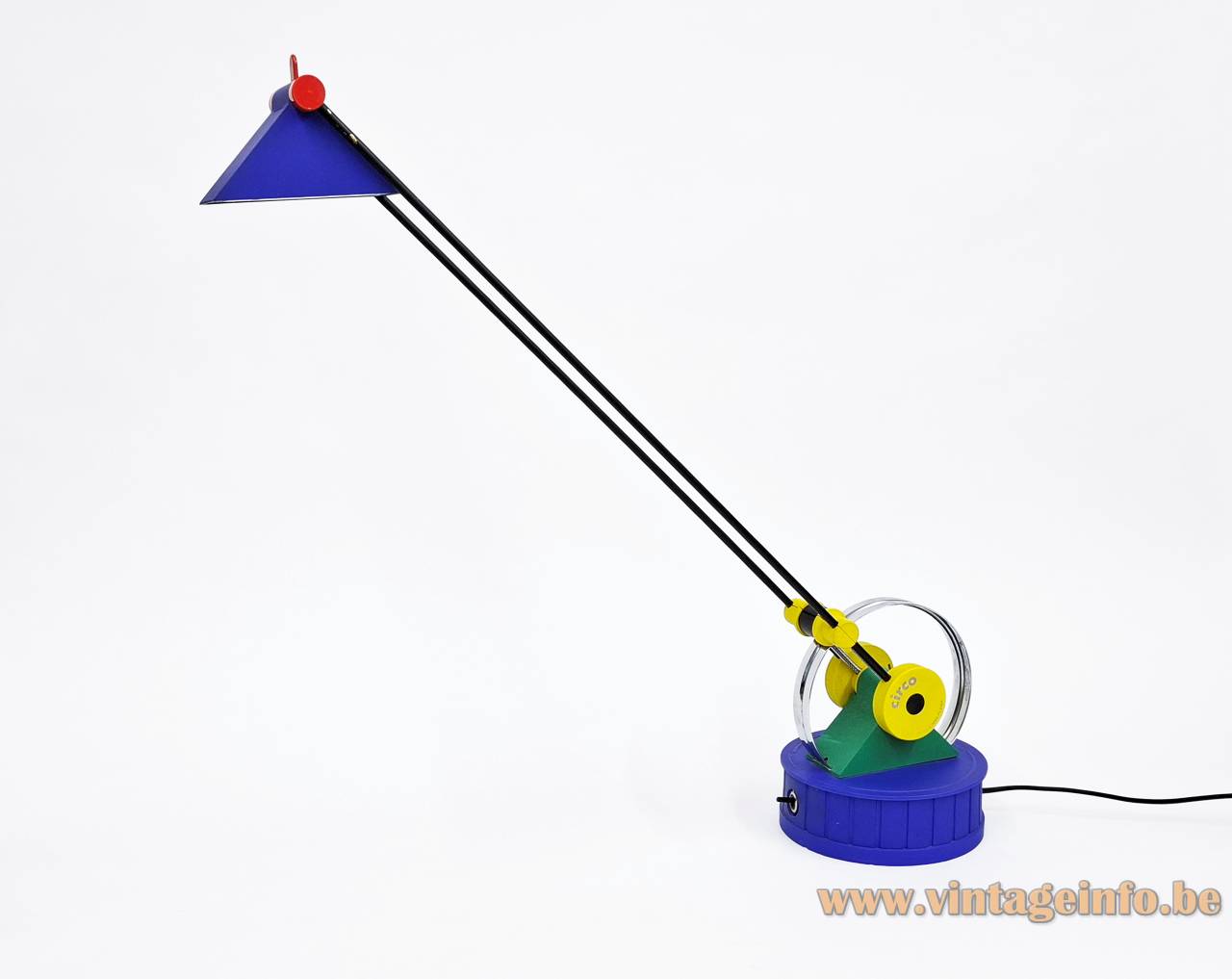
LINKE.PLEWA.DESIGN – 1986 Design: Circo Desk Lamp
The Circo table lamp was the most commercially successful model produced by Linke-Plewa under the Brillantleuchten label. According to the original catalogue, it was predominantly sold in “loud”, bold colour combinations, with additional versions in Black/Red and White/White.
Today the Circo frequently appears online and is often associated with the MEMPHIS style, sometimes offered at rather exuberant prices. While its playful geometry and striking colours certainly echo the spirit of the 1980s, the lamp remains firmly rooted in German postmodern design production. All information about the Circo desk lamp can be found here: Circo Desk Lamp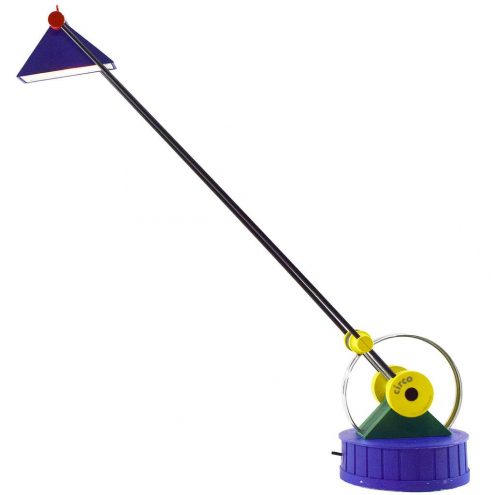
Circo Desk Lamp
Halogen desk lamp, 1986 design by LINKE.PLEWA.DESIGN for Brillantleuchten.
.
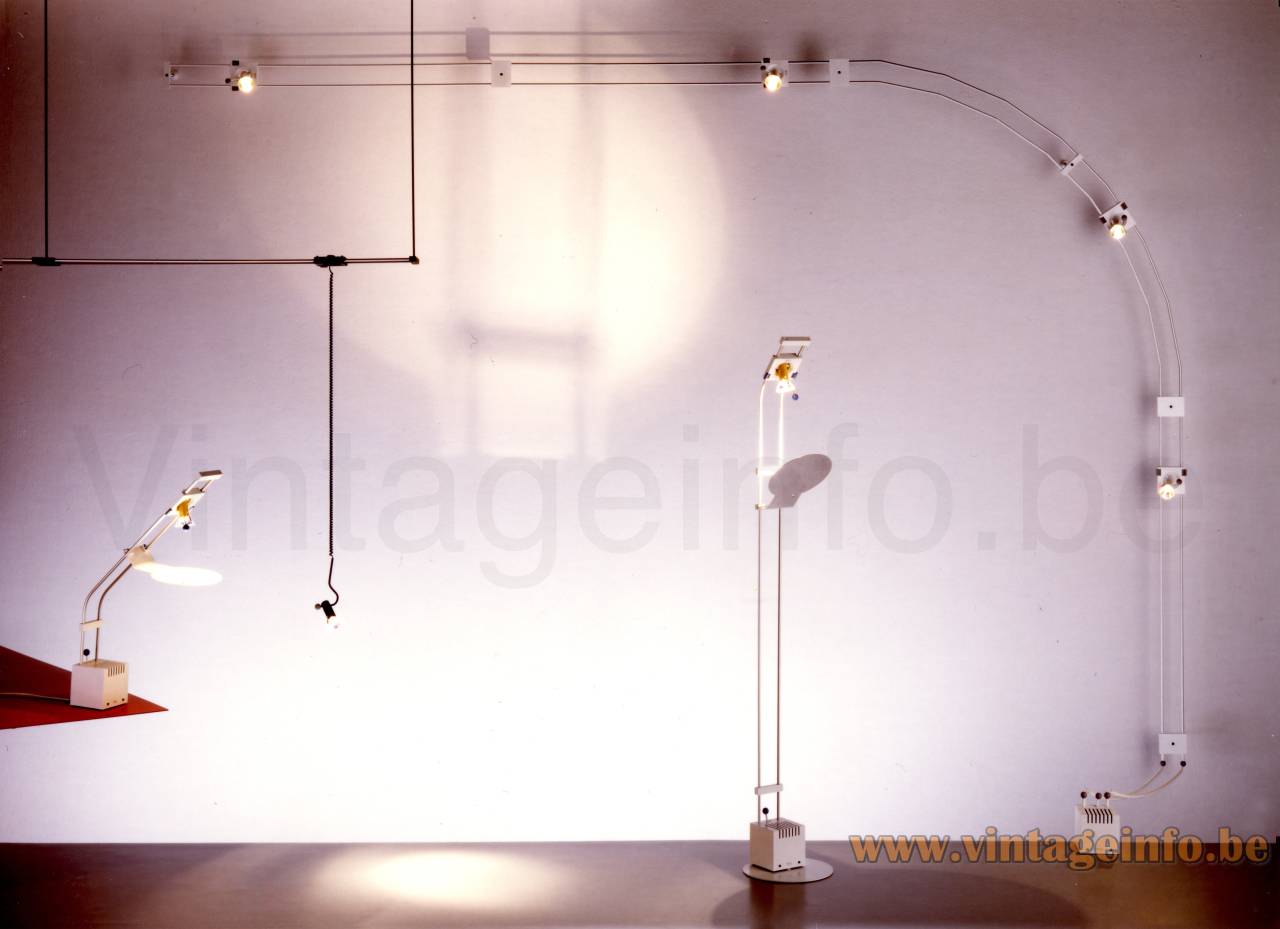
LINKE.PLEWA.DESIGN – Brillantleuchten TWI-LIGHT luminaires
The TWI-LIGHT programme by LINKE.PLEWA.DESIGN for Brillantleuchten translated early 1980s low-voltage halogen technology into a highly recognisable family of luminaires. Instead of decorative excess, the focus was placed on construction, modularity, and visible technical clarity.
Each luminaire is built around two parallel 6 mm steel rods combined with a precisely engineered adapter and a compact halogen head. The exposed 12-volt reflector lamp, often accentuated by coloured elements such as blue adjustment knobs and contrasting housings, gives the design its distinctive technical character. The light source is not hidden — it becomes part of the visual identity.
The programme included table lamps, floor lamps, wall-mounted configurations and rail-mounted spot modules. The floor and table versions, as shown here, combine a compact ventilated base with slender vertical rods and an adjustable head, allowing both direct task lighting and controlled ambient illumination.
The result is a lighting family that feels architectural rather than decorative — precise, functional and modular. Typical of early 1980s German design thinking, the TWI-LIGHT luminaires express structure, movement and light in their most essential form. All information about the TWI-LIGHT lighting System can be found here: TWI-LIGHT Desk Lamp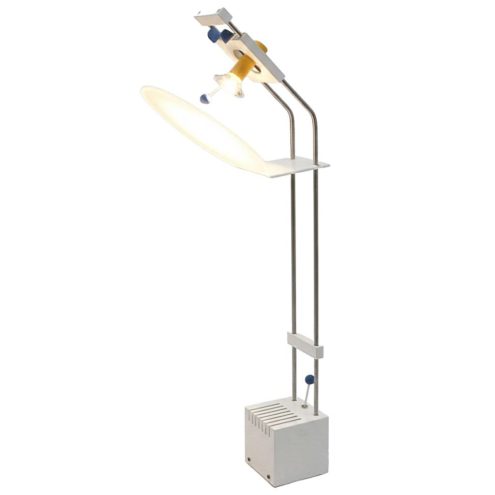
TWI-LIGHT Desk Lamp
Halogen desk lamp, 1986 design by LINKE.PLEWA.DESIGN for Brillantleuchten.
.
LINKE.PLEWA.DESIGN – Brillantleuchten TWI-LIGHT luminaires
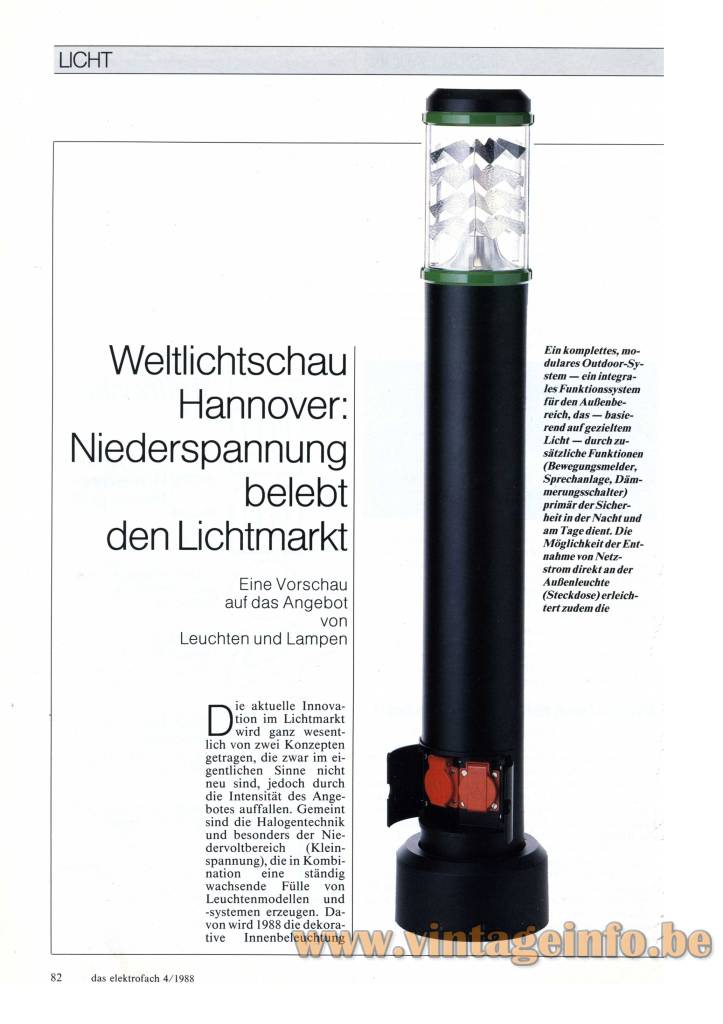
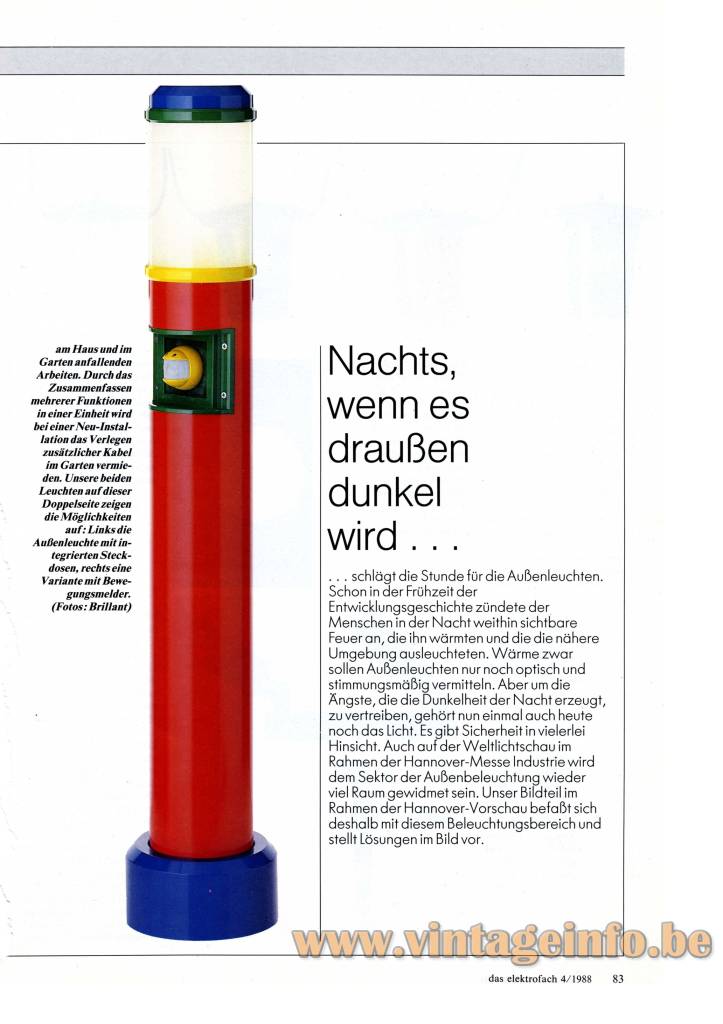
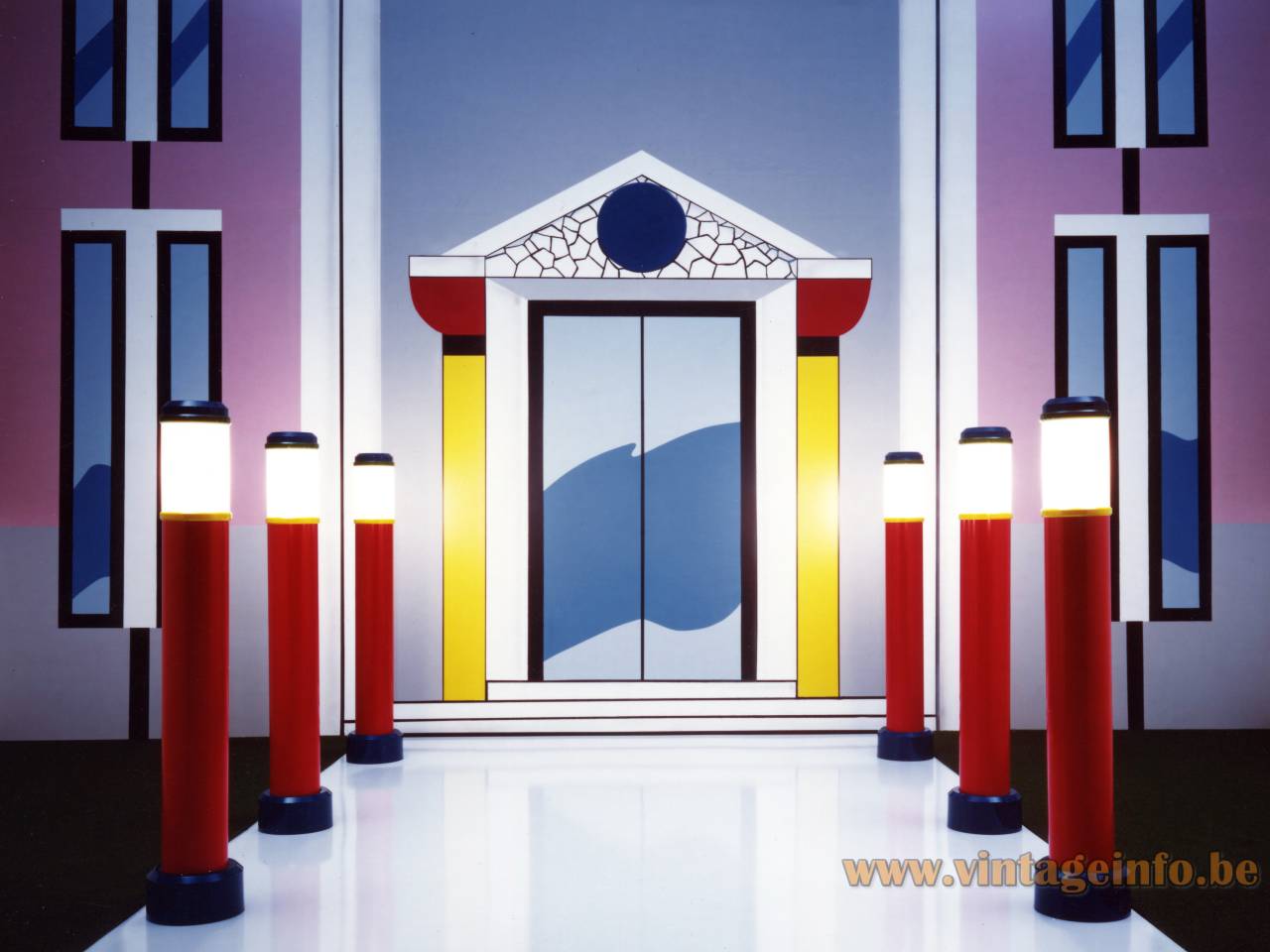
Outdoor Architecture by LINKE.PLEWA.DESIGN
Between 1986 and 1991, Brillantleuchten introduced a modular outdoor lighting system designed by LINKE.PLEWA.DESIGN. Rather than decorative garden lanterns, the series offered a structured, architectural approach to exterior illumination — combining system logic, functional integration and restrained industrial design.
Explore the full OUTDOOR-System documentation here: OUTDOOR Garden Lighting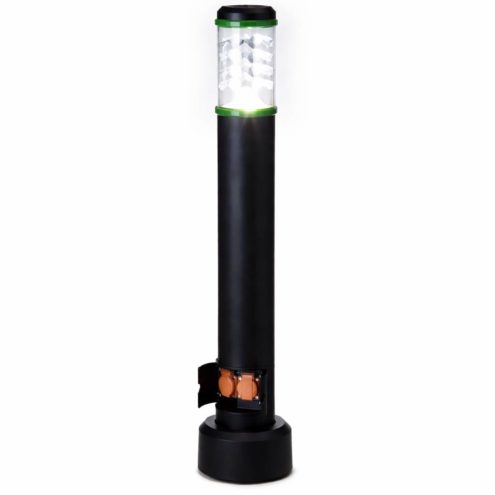
OUTDOOR Garden Lighting
OUTDOOR garden lighting, 1987 design by LINKE.PLEWA.DESIGN for Brillantleuchten.
.
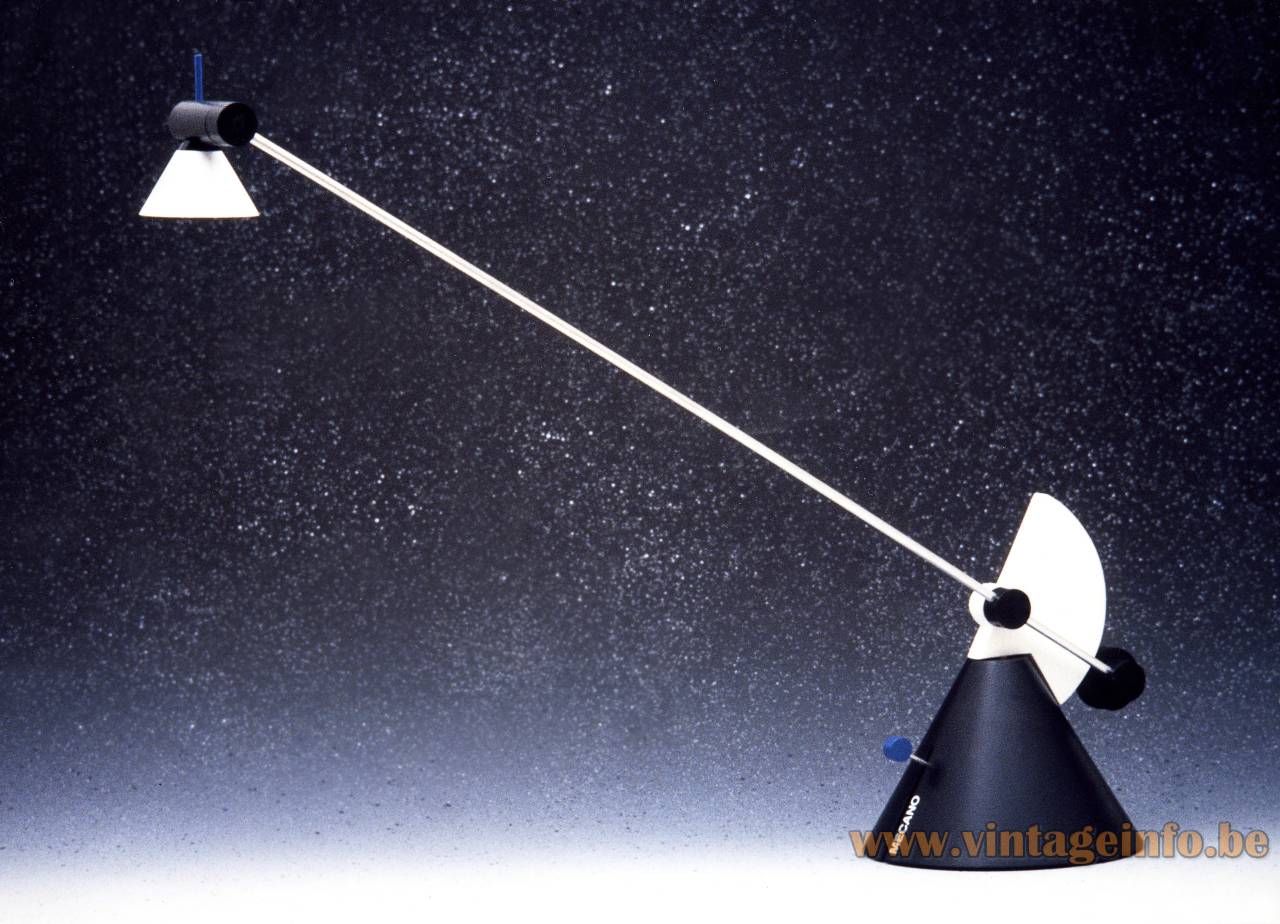
LINKE.PLEWA.DESIGN Mecano Desk Lamp
The Mecano desk lamp was designed in 1988 by LINKE.PLEWA.DESIGN for Brilliant Leuchten. The lamp reflects the technical and functional design language that characterised many of the studio’s projects during the late 1980s.
Although the model was developed and documented internally, the Mecano never entered serial production at Brilliant Leuchten. It therefore remained a prototype design and is rarely documented today.
Original documentation about the lamp is limited and the exact dimensions are unfortunately no longer known. Nevertheless, the Mecano remains an interesting example of the experimental work created by Heico Linke and Jens Plewa during their collaboration with Brilliant Leuchten.
Explore the full documentation here: Mecano desk lamp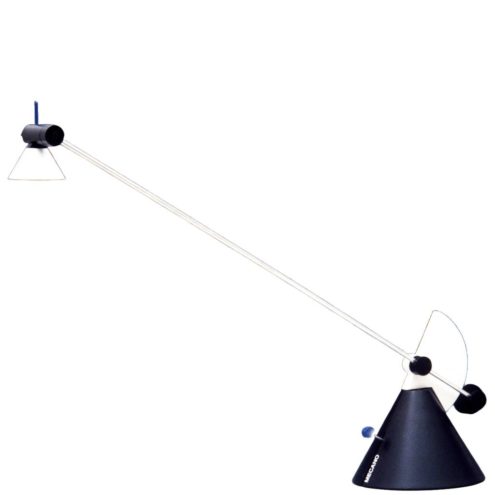
Mecano desk lamp
Mecano desk lamp, 1988 design by LINKE.PLEWA.DESIGN for Brillantleuchten.
.
LINKE.PLEWA.DESIGN Segma Desk Lamp
Designed by LINKE.PLEWA.DESIGN for Brillantleuchten in 1988, the Segma desk lamp combines geometric shapes with a light, technical construction. The result is a playful yet highly functional late 1980s design. Explore the full documentation here: Segma desk lamp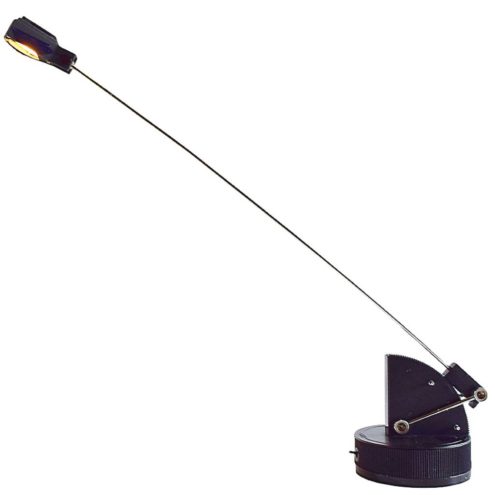
Segma desk lamp
Segma desk lamp, 1988 design by LINKE.PLEWA.DESIGN for Brillantleuchten.
.
Links (external links open in a new window)
LINKE.PLEWA.DESIGN – iF Design Awards
Art Light Cosmo desk lamp for sale on 1stdibs – Baltensweiler copy
Vintageinfo – Designs by Linke Plewea
ART LIGHT lamps – Under construction
Elkamet lamps – Under construction
OTT International lamps – Under construction
LINKE.PLEWA.DESIGN Clocks – Under construction
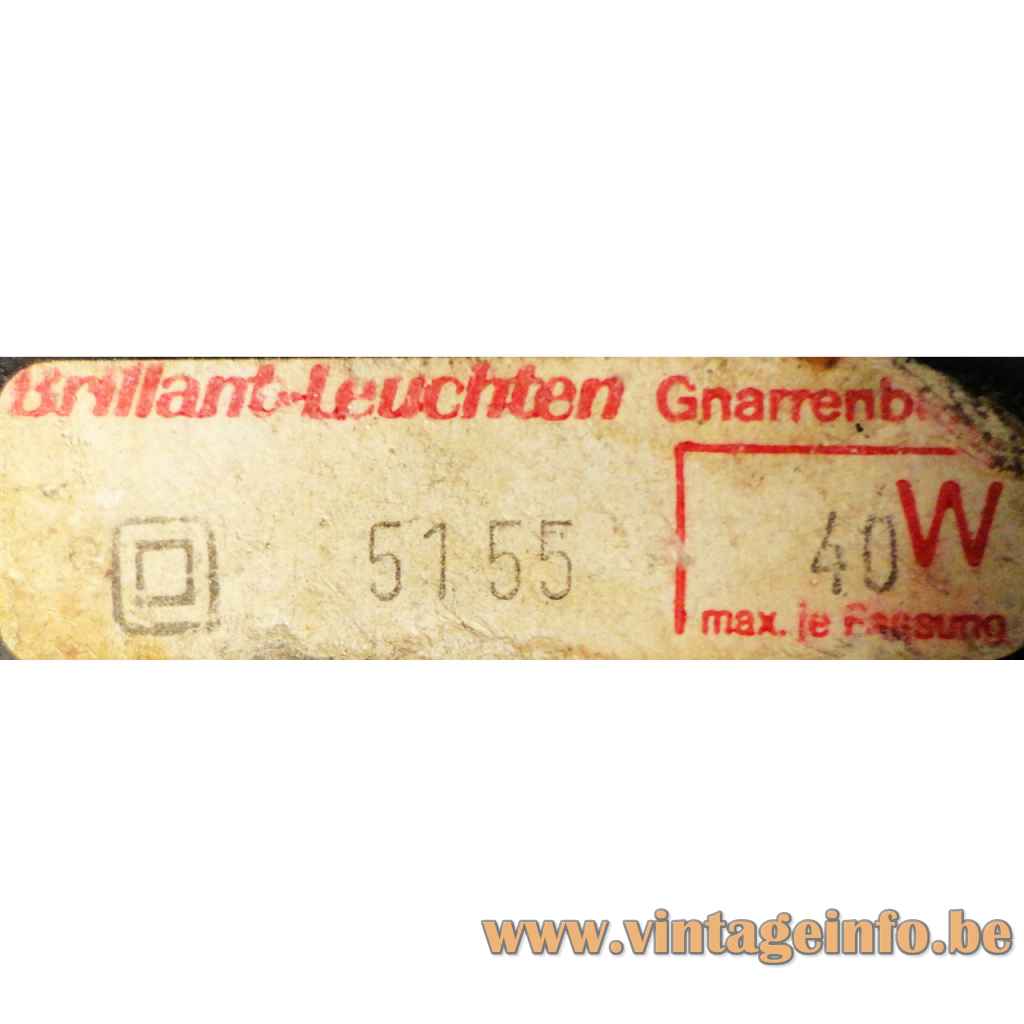
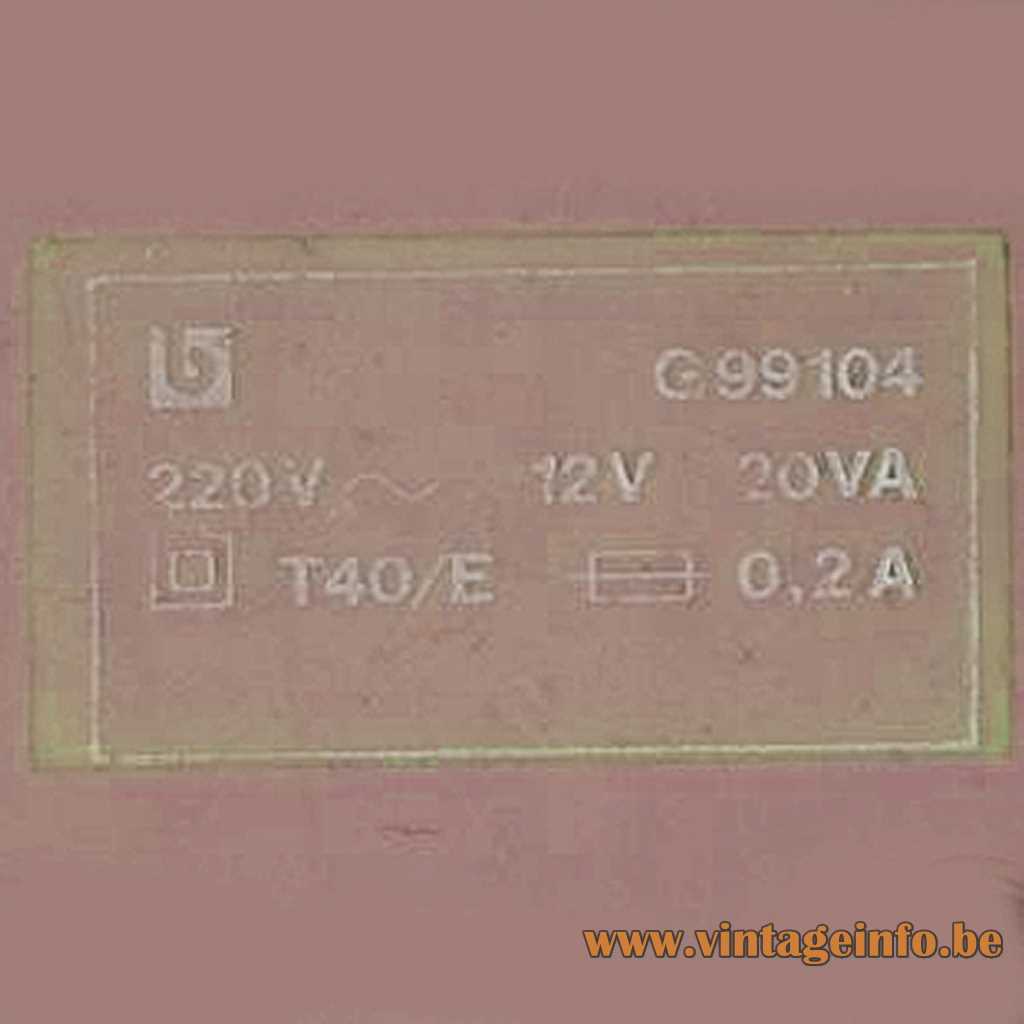
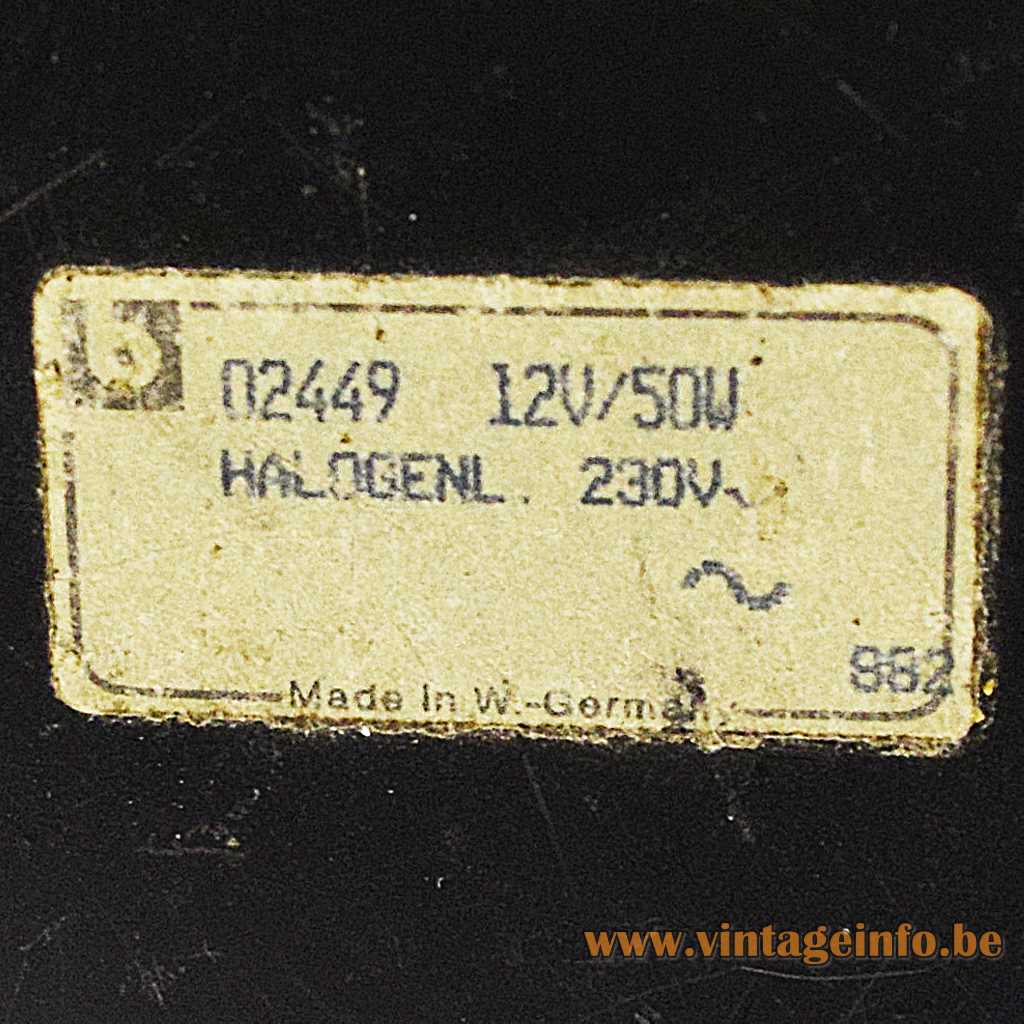
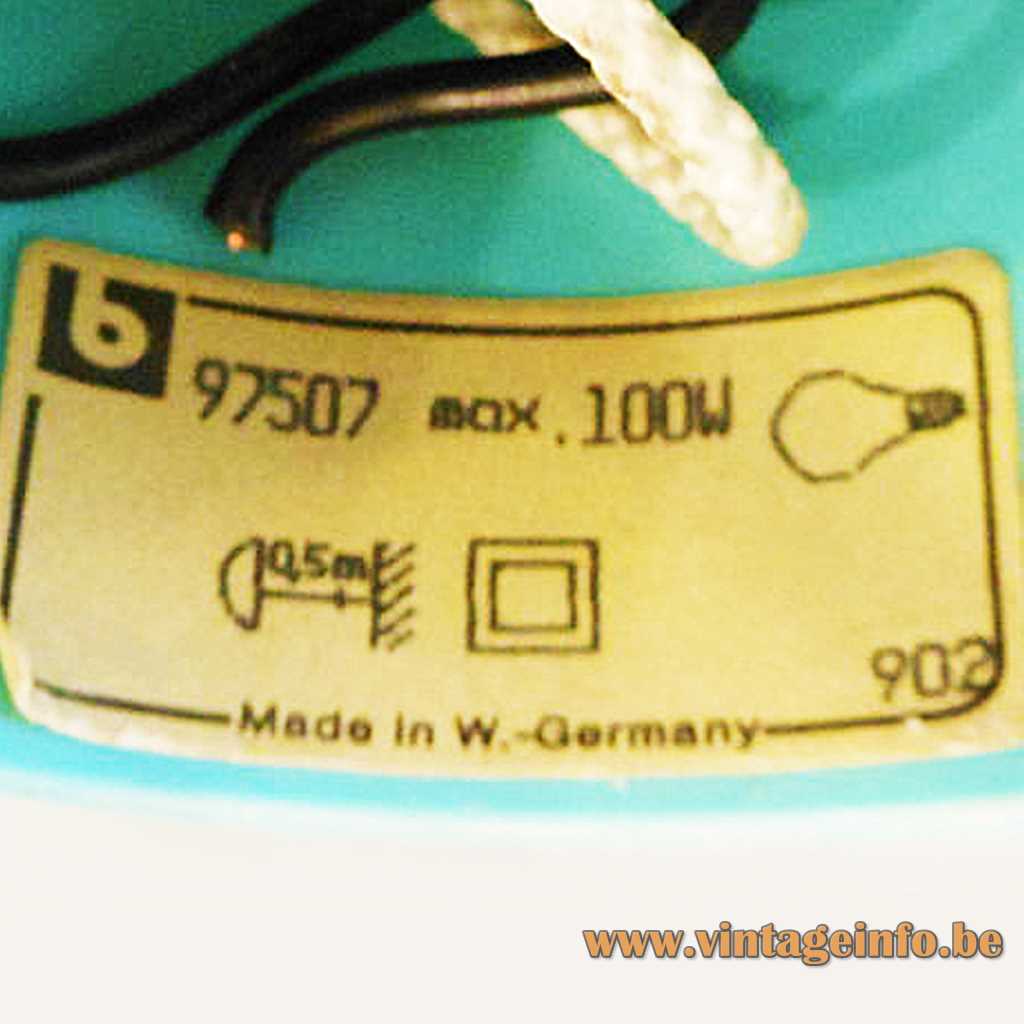
LINKE.PLEWA.DESIGN – Brillantleuchten – Company Labels & Logos